Bipolar Disorder: Types, Symptoms & Management

Bipolar Disorder is a chronic mental health condition marked by intense mood shifts—from extreme highs (mania or hypomania) to deep lows (depression). These changes are far more severe than ordinary mood variations and can disrupt energy levels, behaviour, thinking, sleep, and overall daily functioning. For example, a person may go through a period of unusually high confidence, rapid speech, and reduced need for sleep, and within days or weeks, shift into a phase of exhaustion, sadness, and difficulty concentrating. These unpredictable emotional swings can affect work performance, relationships, and the ability to carry out routine tasks.

Recognising these shifts early and understanding what they mean is important, as proper management can help individuals maintain balance and lead fulfilling, productive lives. This article explores the different types of Bipolar Disorder, key symptoms to be aware of, and effective management strategies that support long-term emotional wellbeing.

What Is Bipolar Disorder?

Bipolar Disorder is a mental health condition characterized by dramatic shifts in mood, energy, and activity levels. These changes are much more intense than ordinary emotional ups and downs. A person may feel unusually energetic, talkative, or confident during a manic episode, often taking on too many tasks or sleeping very little. In contrast, during a depressive episode, they may feel extremely sad, tired, unmotivated, or hopeless, finding it difficult to carry out everyday activities.

These episodes can last for days, weeks, or even months, and the sudden shifts between high and low moods can disrupt work, relationships, and overall quality of life. Despite these challenges, Bipolar Disorder is highly treatable. With the right combination of medication, therapy, routine, and lifestyle support, individuals can manage symptoms effectively and lead stable, fulfilling lives.

Types of Bipolar Disorder

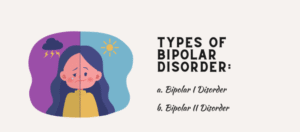
1. Bipolar I Disorder

Bipolar I Disorder is defined by at least one full manic episode that lasts for 7 days or is severe enough to require hospitalization. During this manic phase, the person may show extremely elevated mood, excessive energy, impulsive behavior, or reduced need for sleep. Alongside mania, individuals often experience major depressive episodes that can last for two weeks or longer, bringing intense sadness, fatigue, and loss of interest.

Example:
Rohan goes through a week where he feels unstoppable—sleeping only a few hours, spending money impulsively, talking rapidly, and taking on unrealistic projects. After this high-energy period, he crashes into weeks of deep depression, withdrawing from friends and struggling to function in daily life.

2. Bipolar II Disorder

Bipolar II Disorder is characterized by recurring hypomanic episodes, which are periods of elevated energy and mood that are noticeable but not as extreme or disruptive as full mania. People often feel unusually productive, confident, or talkative during hypomania, but these episodes do not typically require hospitalization. Alongside hypomania, individuals experience major depressive episodes that are often long-lasting, emotionally painful, and significantly impair daily functioning. A key distinction is that Bipolar II does not include any full manic episodes.

Example:
Ananya has days when she feels highly energetic, accomplishes multiple tasks, and talks faster than usual—this is hypomania. But soon after, she falls into weeks of intense sadness, fatigue, and hopelessness, making it hard to work or socialise.
3. Cyclothymic Disorder (Cyclothymia)

Cyclothymic Disorder is a milder but long-lasting form of bipolar disorder. It involves numerous periods of mild hypomanic symptoms and mild depressive symptoms that continue for at least 2 years (1 year in children and adolescents). While the mood changes are not as intense as the full manic or major depressive episodes seen in Bipolar I or II, they are persistent and unpredictable, often causing emotional instability and disruptions in daily life.

Because symptoms are less severe, many people with cyclothymia may not recognise their mood shifts as a mental health condition and may simply describe themselves as “moody,” “sensitive,” or “unstable.” However, the chronic nature of the disorder can interfere with relationships, work consistency, and overall wellbeing.

Example:
Kabir experiences frequent emotional ups and downs for years—days of increased energy and confidence followed by days of low mood or irritability. Although he never reaches full-blown mania or severe depression, the constant mood fluctuations affect his routine and relationships.

4. Other Specified & Unspecified Bipolar Disorders

These categories are used when a person shows clear signs of bipolar-related mood instability but does not meet the full diagnostic criteria for Bipolar I, Bipolar II, or Cyclothymic Disorder. The individual may experience episodes of elevated mood, irritability, increased energy, or depressive symptoms, but the duration, frequency, or intensity may not fit neatly into the established diagnostic patterns.

Despite not fitting the exact criteria, these symptoms can still cause significant emotional distress and disruption in daily life. People in this category often struggle with unpredictable mood swings, functional difficulties, and challenges in maintaining routines or relationships. Proper assessment is important so they can receive appropriate care and support.

Symptoms of Bipolar Disorder

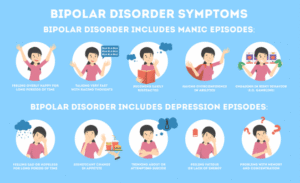
Symptoms appear in two distinct phases:

A. Manic Episode Symptoms

A manic episode is a period of abnormally elevated, overly excited, or intensely irritable mood that significantly affects how a person thinks, behaves, and functions. During mania, energy levels rise sharply, and a person may feel unusually active, confident, or unstoppable.

Common symptoms include:

  • Increased energy and restlessness, often moving or talking more than usual

  • Reduced need for sleep, sometimes going days with very little rest

  • Rapid speech or racing thoughts, making it hard to slow down or stay on one topic

  • Impulsive behaviours, such as overspending, risky driving, substance use, or sudden big decisions

  • Unrealistic beliefs about abilities or importance, such as feeling invincible or overly powerful

  • Irritability or agitation, especially when others try to slow them down

  • Difficulty concentrating, jumping quickly between activities or ideas

  • Excessive optimism or confidence, sometimes leading to risky or dangerous actions

Real-life Example:
During a manic phase, a person might suddenly start several new projects, spend large amounts of money impulsively, talk rapidly, or stay awake for days feeling “full of energy” and unstoppable.

B. Hypomanic Episode Symptoms

A hypomanic episode is similar to mania but less intense and does not cause major impairment in daily functioning. However, the changes in mood and energy are still noticeable to the person and those around them. Hypomania lasts for at least 4 days and represents a clear shift from typical behavior.

Common symptoms include:

  • Increased productivity, often taking on more tasks and working for long hours with unusual efficiency

  • Elevated or unusually cheerful mood, sometimes feeling overly confident or upbeat

  • Mild impulsive behavior, such as making quick decisions, spending more than usual, or talking faster

  • A noticeable change in energy levels, motivation, and activity

  • Behaviour that is visible to others, even though it may not cause severe disruptions

Unlike full mania, hypomania does not usually lead to hospitalization or severe consequences, but it can still be a sign of underlying bipolar disorder, especially when followed by depressive episodes.
C. Depressive Episode Symptoms

A depressive episode represents the opposite extreme of mania or hypomania. During this phase, energy levels drop significantly, and the person may feel emotionally drained, unmotivated, and disconnected from daily life.

Common symptoms include:

  • Persistent sadness or emptiness, often without a specific cause

  • Loss of interest in hobbies, work, or activities that once felt enjoyable

  • Fatigue or low energy, making simple tasks feel overwhelming

  • Changes in sleep patterns, such as insomnia or sleeping excessively

  • Changes in appetite, leading to noticeable weight loss or gain

  • Difficulty concentrating, slowed thinking, or trouble making decisions

  • Feelings of guilt or worthlessness, even when nothing is wrong

  • Thoughts of self-harm or suicide, which require immediate attention and support

Real-life Example:
Someone in a depressive episode may stay in bed for most of the day, avoid social interactions, struggle to complete routine tasks, and feel deeply hopeless—even when there is no specific triggering event.

Causes & Risk Factors

Bipolar Disorder does not have a single cause—rather, it develops due to a combination of biological, genetic, and environmental factors. These influences interact in complex ways, increasing a person’s vulnerability to mood episodes.

  • Genetics:
    Bipolar Disorder often runs in families. If a parent or sibling has the condition, the risk is higher, although not guaranteed. Genetics play a major role in shaping how the brain regulates mood.

  • Brain Chemistry:
    Imbalances in neurotransmitters—such as serotonin, dopamine, and norepinephrine—can affect mood stability, energy, and emotional regulation. These chemical disruptions are strongly linked to manic and depressive episodes.

  • Stressful Life Events:
    Experiences like trauma, the loss of a loved one, financial difficulties, or major lifestyle changes can trigger or worsen symptoms. Stress doesn’t directly cause bipolar disorder, but it can activate underlying vulnerabilities.

  • Biological Factors:
    Hormonal changes, chronic sleep disruption, and irregular circadian rhythms can significantly influence mood swings. Many individuals report that changes in sleep patterns often precede manic or depressive episodes.

Diagnosis

Diagnosis

Diagnosing Bipolar Disorder requires a careful and comprehensive evaluation by a mental health professional, as the condition can often resemble other mental health issues—especially depression. A thorough assessment typically includes:

  • Clinical interviews:
    A psychologist or psychiatrist discusses your mood patterns, behaviour changes, and emotional experiences over time.

  • Symptom history:
    The professional examines how long symptoms have lasted, how often they occur, and how they impact daily functioning.

  • Mood tracking:
    Keeping a record of mood changes, sleep patterns, energy levels, and triggers helps create a clearer picture of mood cycles.

  • Family history:
    Because bipolar disorder has strong genetic links, understanding whether close family members have mood disorders is an important part of assessment.

  • Medical evaluation:
    Blood tests or physical exams may be conducted to rule out medical conditions that can mimic mood symptoms.

  • Rule-out of other conditions:
    Disorders such as thyroid issues, ADHD, PTSD, borderline personality disorder, or substance use can appear similar to bipolar symptoms. These must be differentiated for accurate diagnosis.

A correct diagnosis is crucial, because Bipolar Disorder is frequently misdiagnosed as depression—especially Bipolar II—leading to ineffective or even harmful treatment approaches. Proper identification ensures the right treatment plan and better long-term outcomes.

Management & Treatment Options

Bipolar Disorder is highly manageable with consistent care.

1. Medication

Medication is often the foundation of treatment for Bipolar Disorder because it helps stabilize mood, reduce the intensity of episodes, and prevent future relapses. Since bipolar symptoms vary from person to person, medication plans are highly individualized.

  • Mood stabilizers (e.g., Lithium, Valproate):
    These are commonly prescribed to control manic episodes and maintain long-term stability. Lithium, in particular, is considered a gold-standard treatment for bipolar disorder.

  • Antipsychotics:
    Used when symptoms like severe mania, hallucinations, agitation, or rapid mood swings occur. They can also be combined with mood stabilizers for better control.

  • Antidepressants:
    These may be prescribed during depressive episodes but must be used with caution, as they can sometimes trigger mania if not paired with a mood stabilizer.

A psychiatrist carefully designs and adjusts the medication plan based on the person’s symptoms, episode pattern, medical history, and response to treatment. Regular follow-ups are important to monitor effectiveness and manage side effects.

2. Psychotherapy

Psychotherapy plays a vital role in helping individuals understand their condition, recognize early signs of mood shifts, and develop healthier coping strategies. While medication stabilizes the biological aspect of bipolar disorder, therapy addresses the emotional, behavioural, and relational challenges that come with it.

Common therapeutic approaches include:

  • Cognitive Behavioral Therapy (CBT):
    Helps individuals identify negative thought patterns, challenge unhelpful beliefs, and build practical skills to manage depressive or impulsive behaviours.

  • Dialectical Behavior Therapy (DBT):
    Useful for regulating intense emotions, improving distress tolerance, and developing mindfulness and interpersonal effectiveness.

  • Psychoeducation:
    Teaches individuals and families about bipolar disorder, treatment options, early warning signs, and ways to prevent relapse. Knowledge empowers better self-management.

  • Interpersonal & Social Rhythm Therapy (ISRT):
    Focuses on creating stable daily routines—especially sleep, eating, and activity patterns—to reduce mood swings triggered by rhythm disruptions.

  • Family Therapy:
    Helps family members understand the disorder, communicate more effectively, and create a supportive environment at home.

Psychotherapy enhances emotional resilience, reduces relapse risk, and helps individuals maintain long-term stability.

3. Lifestyle & Self-Care Strategies

Lifestyle habits play a crucial role in managing Bipolar Disorder. While they don’t replace medication or therapy, they significantly reduce the frequency and intensity of mood episodes and support long-term stability.

  • Maintain regular sleep routines:
    Consistent sleep-wake cycles help regulate mood. Irregular sleep is a common trigger for both manic and depressive episodes.

  • Healthy diet and regular exercise:
    Balanced nutrition and physical activity improve energy levels, reduce stress, and support overall emotional wellbeing. Even light activities like walking can help.

  • Reduce caffeine and alcohol:
    These substances can disrupt sleep, increase anxiety, and trigger mood changes, especially in vulnerable individuals.

  • Track mood changes:
    Using a journal or an app to record mood, energy, sleep, and triggers helps identify patterns and early warning signs of episodes.

  • Limit screen time at night:
    Excessive screen use—especially before bed—can interrupt sleep, overstimulate the brain, and destabilize mood rhythms.

  • Stress management (yoga, breathing, mindfulness):
    Relaxation techniques calm the nervous system, reduce emotional reactivity, and help prevent mood swings.

  • Build a supportive social network:
    Staying connected with trusted friends, family, or support groups provides emotional grounding, accountability, and encouragement during difficult periods.

Incorporating these habits consistently can greatly enhance stability and improve quality of life for individuals living with bipolar disorder.

4. Crisis Support

During severe mood episodes, safety becomes the top priority. It’s important to seek immediate help if there are signs of:

  • Suicidal thoughts or self-harm urges

  • Extreme mania, such as dangerous impulsive behaviour or total loss of control

  • Hallucinations or seeing/hearing things that aren’t there

  • Aggressive, risky, or unsafe behaviour that puts the person or others in danger

In such situations, professional intervention is essential. Emergency services, crisis helplines, or the nearest hospital emergency department can provide urgent support, stabilize the situation, and ensure safety. Reaching out quickly can prevent harm and provide the immediate care needed during a crisis.

Living With Bipolar Disorder

With proper treatment, many people live stable, productive, and fulfilling lives. Consistency is key—regular medication, ongoing therapy, and balanced lifestyle routines help reduce the frequency and severity of mood episodes while strengthening overall emotional health. Staying committed to a treatment plan is one of the most important steps toward long-term stability.

Support from family, friends, and mental health professionals also plays a vital role in maintaining wellbeing. If you’d like guidance or professional support, you can visit our Counselling Services page to learn more about how therapy can help.

Reference

Major Depressive Disorder: Early Signs You Shouldn’t Ignore

Major Depressive Disorder (MDD) is one of the most common yet most misunderstood mental health conditions. Many people dismiss early symptoms as “just stress” or “a bad phase,” which delays timely support. In reality, depression often begins quietly—through subtle emotional changes like persistent sadness, emptiness, or losing interest in activities once enjoyed. For example, Aparna, a teacher, woke up every day feeling emotionally numb without knowing why, while Rohan suddenly stopped playing cricket even though he once loved it.

Another early sign is constant fatigue or changes in sleep and appetite. People may feel exhausted even after resting or struggle with sleeping too little or too much. Neha found simple tasks like cooking overwhelming because she felt drained all the time, and Arjun began waking up at 4 AM every night without reason. Some individuals, like Priya, lose appetite and unintentionally lose weight, while others turn to emotional eating for comfort. Irritability, difficulty concentrating, or withdrawing from friends—like Shalini avoiding calls because conversations felt exhausting—also appear in the early stages of MDD.

These early signs matter because they often go unnoticed until symptoms worsen. When emotional heaviness, low energy, negative thoughts, or withdrawal persist for more than two weeks, it’s time to seek professional support. Major Depressive Disorder is a clinical condition where a person experiences a persistent low mood, loss of interest, and emotional or physical symptoms for at least two weeks. It affects daily life—work, relationships, sleep, appetite, energy, and even physical health. Early intervention makes treatment more effective and recovery much faster.

MDD is highly treatable, and reaching out for help early is a strong, positive step toward healing. Recognizing the signs and taking action can prevent symptoms from becoming severe and help individuals regain balance and well-being.

Early Signs You Shouldn’t Ignore

1. Persistent Sadness or Emptiness

Feeling sad once in a while is normal, but depression brings a constant emotional heaviness that stays for days or even weeks. This sadness doesn’t always have a reason—you may wake up feeling low even when nothing is wrong externally. For some, it feels like carrying a weight on the chest; for others, it’s a deep sense of emptiness or emotional numbness, as if the world has lost its colour.

Real-life Example:
Aparna, a 28-year-old teacher, noticed that she woke up every morning with a heavy, sinking feeling. She couldn’t explain it—her job was stable, her family supportive, and nothing “bad” had happened. Yet she felt emotionally disconnected and struggled to smile genuinely. She kept telling herself it was “just stress,” but the sadness stayed with her every day.

This persistent sadness or emptiness is one of the earliest signs of Major Depressive Disorder. When it continues for more than two weeks and begins affecting your motivation and mood, it should not be ignored. Early awareness helps in seeking timely support and preventing symptoms from worsening.

2. Losing Interest in Activities You Once Enjoyed

One of the most noticeable early signs of Major Depressive Disorder is anhedonia—a loss of interest or pleasure in activities that once made you feel happy, motivated, or fulfilled. This isn’t just “getting bored” or “growing out of a hobby.” It’s a deeper emotional disconnect where things that once brought joy suddenly feel dull, tiring, or meaningless.

You may start avoiding hobbies, social gatherings, or even simple conversations that used to excite you. Music may no longer feel soothing, favourite shows don’t hold your attention, or you stop engaging in creative activities, sports, or outings. Gradually, life may begin to feel “colourless,” as if the emotional spark has dimmed.

Real-life Example:
Rohan loved playing cricket every Sunday with his friends. It was the highlight of his week. Over a few months, he started skipping matches, saying, “I just don’t feel like going.” Watching cricket on TV also stopped giving him joy. He didn’t understand why—nothing had changed in his routine. This quiet withdrawal from something he once loved was actually an early symptom of depression.

Losing interest in meaningful activities is not laziness—it’s a sign that your emotional system is struggling. If this pattern continues, it’s important to seek support before it worsens.

3. Fatigue and Low Energy

One of the earliest and most overlooked signs of depression is persistent fatigue—a deep, unexplained tiredness that doesn’t match your daily activities. Unlike normal tiredness, this exhaustion doesn’t improve even after a full night’s sleep. You may wake up feeling drained, struggle to get out of bed, or feel like your body is moving through heavy water.

Simple, everyday tasks like bathing, cooking, cleaning, or even replying to messages can start to feel overwhelming. It’s not a lack of motivation or willpower—your mind and body are genuinely fatigued due to emotional overload.

Real-life Example:
Neha, a 32-year-old working professional, noticed she would come home after work and collapse on the bed. Even on weekends, she felt too exhausted to do basic chores. Making breakfast felt like a mountain to climb, and she often postponed simple activities because she “didn’t have the energy.” Despite sleeping 8–9 hours, she woke up tired every morning. She blamed herself for being lazy, but this persistent exhaustion was actually an early symptom of depression.

This type of low energy is a significant red flag. When tiredness comes without physical exertion and affects your daily functioning, it’s important to take it seriously and consider emotional factors behind it.

4. Changes in Sleep Patterns

Sleep is often one of the first areas disrupted when depression begins to surface. These changes can show up in different ways—difficulty falling asleep, waking up multiple times during the night, or waking up far earlier than usual and being unable to go back to sleep. On the other hand, some people experience the opposite: oversleeping, yet still feeling tired and unrefreshed.

Even when you sleep for long hours, you may wake up with a heavy mind and body, as if you didn’t rest at all. This happens because depression affects the quality of sleep, not just the hours. Over time, chronic sleep disturbances can worsen mood, increase irritability, reduce concentration, and intensify depressive symptoms.

Real-life Example:
Arjun, who usually slept soundly for 7 hours, suddenly began waking up at 3 or 4 AM every day without any reason. Even if he tried to sleep again, his mind felt restless and heavy. Meanwhile, his sister Sneha started sleeping 10–12 hours daily but still woke up exhausted. Both assumed it was just “stress” or “weakness,” but these patterns were early signs of underlying depression.

If your sleep cycle has changed noticeably and remains disturbed for weeks, it’s important to pay attention—it could be more than just temporary fatigue.

5. Changes in Appetite or Weight

Depression can affect your appetite in two opposite ways—either you start eating much more than usual or you lose interest in food completely. These changes often happen slowly, so many people don’t notice them at first. You might skip meals without realizing it or, on the other hand, find yourself constantly craving snacks or comfort foods. When these shifts happen without any change in routine or diet, it can be a warning sign.

Sudden weight loss or weight gain—especially when you’re not trying—is often linked to emotional dysregulation and changes in stress-related hormones. Your body may react to emotional strain by suppressing hunger signals or increasing cravings for sugary, salty, or high-calorie foods. Over time, these patterns can affect both physical health and mood, making symptoms of depression worse.

Real-life Example:
Priya, a college student, noticed she no longer felt hungry during the day. She frequently skipped meals and lost 4 kg in just one month without trying. Meanwhile, her friend Imran found himself overeating late at night because food made him feel “a little better” emotionally. Both thought these were just temporary habits, but their appetite changes were actually early signs of depression.

If your eating habits or weight change noticeably and without a clear reason, it’s important to pay attention—your emotional health might be sending you a signal.

6. Irritability or Anger

Depression doesn’t always appear as sadness. For many people—especially teens and young adults—it shows up as irritability, anger, or restlessness. You may find yourself getting annoyed at small things, snapping at people without meaning to, or feeling constantly “on edge.” Even minor inconveniences, like slow internet or a delay in plans, may trigger frustration more quickly than usual.

This emotional sensitivity happens because the brain is under stress, making it harder to regulate emotions. Instead of crying or shutting down, some individuals express their low mood through irritability. Adults often mistake this as “losing patience” or “being moody,” not realizing it can be an early symptom of depression.

Real-life Example:
Manish, a 30-year-old software engineer, noticed he was becoming unusually short-tempered. He snapped at colleagues during meetings and felt irritated even when family members asked simple questions. He wasn’t sad—just constantly frustrated. What he didn’t realize was that this irritability was his mind’s way of signaling emotional distress, an early sign of depression.

If you find yourself getting angry more easily than before or feeling irritated without a clear reason, it’s important to look deeper. Sometimes, irritability is the emotional mask depression wears.

7. Difficulty Concentrating or Making Decisions

Depression doesn’t only affect emotions—it also impacts cognitive functioning. Many people experience mental fog, where thinking feels slower, heavier, or unclear. You may find it hard to focus on work, studies, or even simple daily tasks. Decisions that once felt easy—like choosing what to eat or what to wear—may suddenly feel overwhelming.

Common descriptions include:

  • “My brain feels slow.”

  • “I keep forgetting things.”

  • “I can’t think clearly.”

This difficulty happens because depression affects the brain’s ability to process information, organize thoughts, and stay attentive. It’s not a lack of intelligence or effort—it’s the mind struggling under emotional pressure.

Real-life Example:
Meera, usually a sharp and efficient employee, began noticing she couldn’t concentrate during team meetings. She read the same email multiple times but still couldn’t understand it. She forgot small things like where she kept her keys or what task she was doing. She blamed herself for being careless, but her “foggy” mind was actually an early cognitive symptom of depression.

When concentration consistently declines or decision-making becomes unusually difficult, it’s important to consider emotional health as a possible cause.

8. Feelings of Worthlessness or Excessive Guilt

A harsh inner critic is one of the most common early signs of Major Depressive Disorder. You may start feeling not good enough, even when there’s no real reason to think so. Small mistakes can feel huge, and you might blame yourself for things that are completely out of your control. Thoughts like “I’m a burden,” “Everything is my fault,” or “I don’t deserve happiness” may slowly become frequent.

These negative self-beliefs usually begin subtly—perhaps as occasional self-doubt—but over time they grow stronger and more constant. Depression makes the mind interpret situations more negatively, leading to an exaggerated sense of guilt, shame, or failure. Even positive feedback or achievements may not feel meaningful anymore.

Real-life Example:
Akash, a bright graduate student, started feeling guilty for not being able to help everyone around him. When a friend didn’t return a call, he assumed he had done something wrong. If he made even a small mistake at work, he spent hours criticizing himself, feeling like a complete failure. His family reassured him repeatedly, but the feelings of worthlessness continued to grow. What he didn’t realize was that these intense, irrational guilt feelings were early signs of depression affecting his self-esteem.

Persistent feelings of worthlessness are not a reflection of who you are—they’re symptoms of emotional distress. Recognizing them early can help you seek support before they intensify.

9. Withdrawal from People

Social withdrawal is one of the early and most easily overlooked signs of depression. You may begin avoiding calls, messages, or social interactions—even with people you genuinely care about. It’s not that you stop loving your friends or family; rather, engaging with others starts to feel emotionally exhausting. The thought of talking, explaining yourself, or even pretending to be fine can feel overwhelming.

This isolation is not a personality change or preference—it’s the mind’s way of shutting down due to emotional overload. When the brain is struggling, it reduces social connection as a form of self-protection, even though it often makes the person feel more lonely.

Real-life Example:
Shalini, who usually enjoyed chatting with her friends every evening, began ignoring their messages. She stopped attending get-togethers and often turned off her phone for long hours. When friends asked what was wrong, she simply said, “I just don’t feel like talking.” In reality, even replying to a simple text felt like too much effort. This gradual retreat from people was one of the first signs that she was slipping into depression.

If you or someone you know is slowly pulling away from social life, it’s important to look deeper. Withdrawal is rarely about disinterest—it’s often a sign of emotional overwhelm.

10. Physical Symptoms with No Clear Medical Cause

Depression doesn’t only affect the mind—it often shows up in the body. Many people experience real, persistent physical symptoms that have no identifiable medical cause. These may include frequent headaches, digestive issues like nausea or stomach aches, muscle pain, body heaviness, chest tightness, or unexplained aches throughout the body. Even though medical tests come back normal, the discomfort continues.

This happens because depression affects the brain chemicals that regulate pain and the connection between the brain and the body. As a result, emotional distress can manifest as physical discomfort or tension. Unfortunately, many people spend months treating only the physical symptoms without realizing there may be an emotional root.

Real-life Example:
Vikas, a 35-year-old office worker, frequently experienced headaches and a heavy, tight feeling in his chest. He visited multiple doctors and did several tests, but everything came back normal. Despite this, his discomfort persisted. It wasn’t until a psychologist asked about his stress levels and mood that he realized these unexplained physical symptoms were linked to early depression.

If physical symptoms keep recurring even when medical reports show nothing is wrong, it’s worth considering emotional health as part of the picture.

Why Early Detection Matters

When the early signs of depression are overlooked or dismissed, the condition can gradually worsen and affect every aspect of life. What begins as mild sadness or fatigue can turn into severe depressive episodes that are much harder to manage. In some cases, prolonged emotional suffering may lead to suicidal thoughts, creating a situation that requires urgent intervention.

Untreated depression also puts pressure on relationships. People may become distant, irritable, or emotionally unavailable, causing strain with partners, friends, and family. At the same time, difficulty concentrating, low motivation, and constant tiredness can cause a noticeable decline in job or academic performance, leading to missed deadlines, poor grades, or workplace conflicts.

Over time, the stress of unaddressed depression can contribute to chronic health issues, including sleep disorders, weakened immunity, digestive problems, and persistent body pain. The longer these symptoms continue without help, the more challenging recovery becomes.

The earlier you seek support, the better the outcome. Early intervention not only prevents symptoms from getting worse but also makes treatment more effective, helping you regain emotional balance and quality of life much faster.

When You Should Consider Seeking Professional Help

Reach out to a psychologist or psychiatrist if:

  • Symptoms persist for more than two weeks and don’t seem to improve on their own.

  • Your daily life is affected—whether it’s your work, studies, relationships, or ability to manage routine tasks.

  • You feel hopeless most days, as if nothing will get better.

  • You notice strong or persistent negative thoughts, especially ones that make you doubt your worth or question your purpose.

  • Friends or family express concern about your mood, behavior, or changes in your routine.

Seeking help is not a sign of weakness—it’s an important step toward healing. Mental health professionals can provide therapy, help you build healthier coping strategies, recommend lifestyle changes, and, if necessary, guide you with medication to stabilize your mood. Early professional support can make recovery smoother, safer, and much more effective.

You Are Not Alone

With the right support—therapy, medication (if needed), and healthy lifestyle adjustments—most people recover and regain control of their lives. If you want to learn more about how professional guidance can help, you can explore our Counselling Services for detailed information on support options.

Reaching out for help is an act of strength, not weakness. The earlier you take that step, the closer you are to healing, stability, and emotional wellbeing.

Reference 

American Psychological Association (APA). Depression. Available at:
https://www.apa.org/topics/depression

National Institute of Mental Health (NIMH). Depression: Overview. Available at:
https://www.nimh.nih.gov/health/topics/depression


Social Anxiety Disorder: Signs, Triggers & Coping Strategies


Social Anxiety Disorder (SAD), also known as Social Phobia, is a common yet often misunderstood mental health condition. It goes far beyond normal shyness or introversion. People with social anxiety experience intense fear about being judged, embarrassed, or humiliated in social situations—even when there is no real threat.

For example, a person with SAD may worry for days before attending a simple family gathering, imagining that everyone will notice their nervousness or criticize the way they speak. Someone else might avoid answering phone calls because they fear sounding “stupid” or making a mistake. Even routine activities like eating in public, introducing themselves in a meeting, or walking into a room full of people can trigger overwhelming anxiety.

This constant fear can interfere with everyday life—making it difficult to form friendships, participate in class or meetings, attend social events, or explore career opportunities. Many individuals skip job interviews, avoid promotions, or decline invitations simply because of the discomfort social situations bring.

Understanding the signs, causes, and coping strategies of social anxiety can help make the condition more manageable and less overwhelming. With awareness and support, people living with SAD can gradually rebuild confidence and learn to navigate social interactions with greater ease.

What Is Social Anxiety Disorder?

Social Anxiety Disorder is a persistent fear of social or performance situations where a person feels they are being watched, evaluated, or judged by others. This fear isn’t just mild nervousness—it’s a deep worry rooted in the belief that one might say or do something embarrassing, look awkward, or be rejected.

For example, someone may avoid speaking up in class or meetings because they fear others will think their ideas are “wrong” or “silly.” Another person might rehearse simple sentences repeatedly before ordering food at a restaurant, worried that their voice might shake or they might stutter. Even everyday moments—like walking past a group of people or making eye contact—can feel like intense pressure when someone believes others are scrutinizing them.

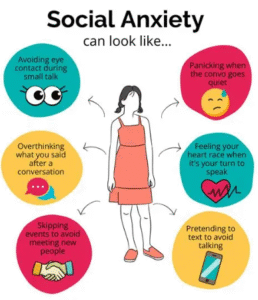
Social anxiety affects people of all ages, from school children who freeze during presentations to adults who decline work events, weddings, or parties. It can show up in different forms, such as avoiding conversations, canceling plans last minute, or experiencing extreme fear during public speaking, to the point where the person feels their heart racing, hands shaking, or mind going blank.

Common Signs & Symptoms

Social anxiety can show up emotionally, physically, and behaviourally. Many people experience a combination of these symptoms in different situations.

1. Emotional & Cognitive Symptoms

🔹 Fear of being judged or criticized
For example, a person may avoid giving opinions during meetings because they fear others will think they are “wrong” or “not smart enough.”

🔹 Intense worry before social events
Even a simple birthday party or office lunch can cause days of worry—thinking about what to wear, what to say, or how others might perceive them.

🔹 Overthinking past social interactions
Someone might replay a conversation repeatedly, thinking, “Did I sound rude?” or “Why did I say that?” even when nothing went wrong.

🔹 Fear of embarrassment or humiliation
A person may avoid eating in public because they fear spilling food or being noticed while chewing.

🔹 Feeling “on the spot” in social situations
Even when no one is paying attention, the individual may feel like all eyes are on them, especially when they walk into a room or speak in a group.

2. Physical Symptoms

🔹 Rapid heartbeat
Before speaking or meeting people, the heart may race as if facing danger.

🔹 Sweating or trembling
Hands may shake while holding a glass, or sweat may appear even in air-conditioned rooms.

🔹 Dry mouth
The person may struggle to speak properly during introductions or presentations.

🔹 Blushing
Many individuals fear their face turning red, which further increases their anxiety.

🔹 Nausea or stomach discomfort
Some people feel like their stomach is “twisting” before talking to strangers or participating in group activities.

🔹 Feeling faint or dizzy
Intense social fear can make someone feel weak, lightheaded, or disconnected from their surroundings.

3. Behavioural Symptoms

🔹 Avoiding social situations
They may skip gatherings, presentations, or group discussions to avoid anxiety.

🔹 Leaving events early
Someone might attend a function but leave within minutes because the pressure becomes overwhelming.

🔹 Difficulty making eye contact
Not because they are rude—but because making eye contact increases their self-consciousness.

🔹 Staying quiet or hiding in the background
The person may stay near a corner of the room or avoid engaging in conversation so they won’t be noticed.

🔹 Relying on a “safe person” in social settings
They may only attend events if a trusted friend or family member is with them, and they depend on that person to speak or make decisions for them.

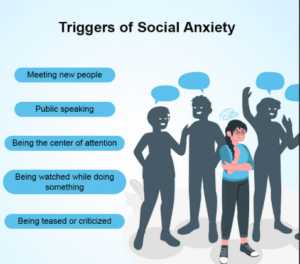
Common Triggers of Social Anxiety

Different people experience different triggers, but some common ones include:

1. Speaking in Public

Presentations, meetings, or giving opinions can trigger intense anxiety.
Example: A student may avoid giving a class presentation because their mind goes blank, or an employee may dread team meetings because they fear stumbling over their words.

2. Meeting New People

Fear of negative evaluation often peaks during introductions.
Example: Someone may practice their introduction repeatedly before meeting a friend’s family or new colleagues, worried that they will make a bad impression.

3. Being the Center of Attention

Birthdays, group discussions, or being called on unexpectedly can feel overwhelming.
Example: A person might feel panicked when everyone sings “Happy Birthday” to them or when a teacher asks them to answer a question in front of the class.

4. Social Gatherings

Parties, family functions, or crowded places can trigger discomfort.
Example: A person may enter a party but instantly feel overwhelmed by the noise, people, and social expectations, causing them to withdraw or leave early.

5. Performance Situations

Singing, dancing, or doing anything in front of others can heighten fear.
Example: Even if they enjoy singing, they might decline karaoke because they fear their voice will shake or people will laugh.

6. Eating or Writing in Public

The fear of being watched or judged plays a big role.
Example: Someone may avoid eating lunch at a restaurant alone because they worry about spilling food or being judged for how they eat.
Similarly, writing in front of others—like filling out a form at a counter—may cause trembling hands.

7. Being Observed by Others

Even simple tasks like walking or sitting can feel uncomfortable.
Example: A person may feel anxious walking across a room because they think others are judging their posture, clothes, or movements.

What Causes Social Anxiety Disorder?

Social anxiety develops due to a combination of factors, not just one single reason. Understanding these influences can help individuals be kinder to themselves and reduce self-blame.

1. Genetic Predisposition

Some people are naturally more sensitive or anxious because it runs in their family.
Example: If a parent or sibling struggles with anxiety, a child may also be more likely to develop similar symptoms due to inherited traits.

2. Traumatic Social Experiences

Negative or embarrassing events can have a long-lasting impact.
Example: A child who was bullied in school for their appearance or made fun of during a class presentation may grow up fearing similar situations.
Even one episode of public embarrassment—like forgetting lines on stage—can leave deep emotional marks.

3. Overprotective or Critical Parenting

How a child is raised shapes their confidence and perception of the world.
Example:

  • Overprotective parents who constantly warn, “Don’t talk to strangers” or “You will mess up” can unintentionally make the child believe social situations are threatening.

  • Critical parents who highlight mistakes more than achievements may cause a child to fear judgment from others.

4. Temperament (Naturally Shy or Introverted)

Some individuals are born with a quiet or cautious temperament.
Example: Children who take longer to warm up in new environments or hesitate before joining group activities may carry this sensitivity into adulthood.
This natural tendency doesn’t cause social anxiety alone, but it makes someone more vulnerable if combined with other factors.

5. Overactive Fear Response in the Brain

In people with social anxiety, the brain’s “alarm system” reacts strongly even in non-threatening situations.
Example:
The amygdala (fear center) may interpret a simple situation—like someone glancing at them—as a danger signal, causing physical symptoms like sweating or a racing heart.

Understanding These Factors Matters

Knowing the roots of social anxiety helps individuals realise:

  • It’s not their fault

  • They are not “weak” or “overreacting”

  • Their anxiety has understandable causes

This understanding builds self-compassion and motivates people to seek healthy coping strategies without guilt.

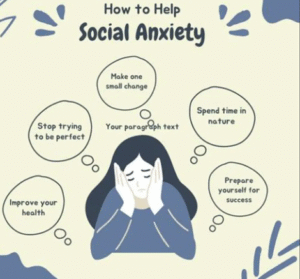
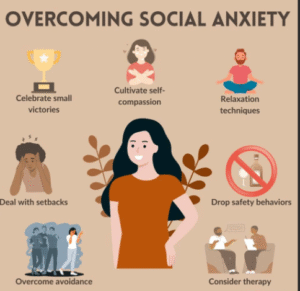
Coping Strategies for Social Anxiety

While social anxiety feels overwhelming, it is highly manageable with the right strategies, consistent practice, and professional guidance. Here are evidence-based coping methods explained with clear examples:

1. Practice Slow, Deep Breathing

Deep breathing helps calm the nervous system and reduces physical symptoms like a racing heart or trembling hands.
Example:
Before walking into a meeting or social event, take a moment to inhale for 4 seconds, hold for 2 seconds, and exhale for 6 seconds. This signals the brain that you’re safe.

2. Challenge Negative Thoughts

People with social anxiety often assume the worst (“Everyone will think I’m awkward”). Challenging these thoughts can reduce fear.
Ask yourself:

  • “Is this fear based on facts or assumptions?”

  • “What evidence do I have that something bad will happen?”

Example:
If you think, “Everyone will laugh at me if I speak up,” challenge it:
Evidence against: People rarely remember small mistakes; everyone else is focused on themselves.

This technique is part of Cognitive Behavioural Therapy (CBT).

3. Gradual Exposure

Instead of avoiding situations, slowly face them in manageable steps.
Example ladder:

  • Step 1: Make small talk with a shopkeeper

  • Step 2: Join a small group discussion

  • Step 3: Attend a social gathering for 20 minutes

  • Step 4: Share an opinion in a meeting

Over time, your fear reduces as your brain learns that the situation isn’t dangerous.

4. Develop Social Skills

Simple skills can boost confidence in interactions.
Examples:

  • Practice greeting people with a smile

  • Use active listening (nodding, maintaining comfortable eye contact)

  • Learn basic assertive responses like “I need a moment to think” or “I’d prefer something else”

Improving these skills builds a sense of control in social situations.

5. Mindfulness Practices

Mindfulness helps you stay in the present rather than worrying about what others are thinking.
Example:
During a conversation, notice sensations like your feet on the ground or the sound of the person’s voice. This grounds you and reduces overthinking.

screenshot 2025 11 21 175359

6. Limit Safety Behaviours

Safety behaviours temporarily reduce anxiety but keep the fear alive long-term.
Examples of safety behaviours:

  • Avoiding eye contact

  • Rehearsing lines before speaking

  • Hiding behind your phone

  • Relying on a friend to talk for you

Reducing these gradually builds authentic confidence.

7. Healthy Lifestyle Choices

A healthier body supports a calmer mind.
Examples:

  • Adequate sleep: Improves emotional regulation

  • Regular exercise: Releases mood-boosting hormones

  • Reducing caffeine: Helps prevent jitteriness that mimics anxiety

  • Balanced diet: Stabilizes mood and energy

These habits reduce overall anxiety levels.

8. Professional Support

Reaching out to a mental health professional can fast-track progress.
Effective therapies include:

  • Cognitive Behavioural Therapy (CBT)

  • Exposure therapy

  • Mindfulness-based interventions

Example:
A therapist may guide you through gradual exposure exercises, help identify unhelpful thinking patterns, and teach coping skills tailored to your triggers.

In some cases, medication prescribed by a psychiatrist can help manage severe symptoms alongside therapy.

When to Seek Help

You should consider reaching out to a mental health professional if:

• Anxiety interferes with work, studies, or relationships

Example: You skip meetings, avoid group assignments, or struggle to talk to colleagues or classmates, and it’s affecting your performance or connections.

• You avoid important opportunities

Example: You turn down promotions, social events, or interviews simply because they involve interacting with people, even when you truly want those opportunities.

• You experience panic attacks in social situations

Example: Your heart races, breathing becomes difficult, or you feel faint when walking into a crowd, entering a classroom, or speaking to strangers.

• Your fear feels uncontrollable

Example: Even when you logically know nothing bad will happen, your body reacts with intense fear that you can’t manage on your own.

Seeking help is a strength—not a weakness.

Reaching out to a therapist or counselor shows courage and self-awareness. With the right support, many people learn effective tools to reduce anxiety, build confidence, and regain control over their social life.

Final Thoughts

Social Anxiety Disorder is highly treatable, and many people recover with the right combination of awareness, self-help strategies, and professional guidance. With small, consistent steps, individuals can gradually rebuild confidence, strengthen communication skills, and create meaningful relationships without the constant fear of judgment.

Example: Someone who once avoided social gatherings may slowly find themselves enjoying conversations, participating in group activities, or even speaking comfortably in meetings—all because they took the first step toward understanding and managing their anxiety.

You don’t have to face social anxiety alone. Whether it’s learning coping skills, seeking therapy, or opening up to a trusted person, healing begins with one small, brave step. With patience and support, a calmer, more confident version of you is absolutely possible.

Reference


Panic Attacks vs Anxiety Attacks: What’s the Difference?


Many people use the terms panic attack and anxiety attack interchangeably, but in reality, they are two different experiences. While both involve intense fear, physical symptoms, and emotional distress, they differ in their triggers, intensity, duration, and how suddenly they appear. Understanding these differences is essential because it helps individuals recognize what they are going through and choose the most effective way to manage it.

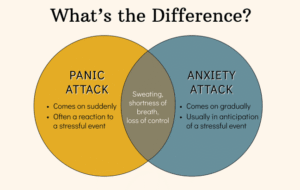
A panic attack often appears suddenly and without warning, reaching peak intensity within minutes. It can feel overwhelming, frightening, and physically alarming—so much so that many people mistake it for a heart attack or medical emergency. Anxiety attacks, on the other hand, build gradually, usually in response to stress, worry, or a triggering situation. They may last longer and feel more emotionally exhausting rather than sharply intense.

Recognizing whether you are experiencing a panic attack or an anxiety attack allows you to better understand your mind and body. It also helps mental health professionals provide the right support and develop effective coping strategies.

What Is a Panic Attack?

A panic attack is a sudden and intense episode of fear or discomfort that reaches its peak within minutes. It often occurs unexpectedly, even during calm moments, and may not have any clear or identifiable trigger. Because panic attacks come on so quickly and forcefully, they can feel overwhelming and often lead individuals to believe something is seriously wrong.

People who experience panic attacks commonly describe the episode as feeling like:

  • “I thought I was dying.”

  • “I felt like I was losing control.”

  • “I couldn’t breathe.”

These descriptions highlight how frightening and distressing a panic attack can be. Even though panic attacks are not life-threatening, they feel extremely real and can leave a person feeling shaken long after the episode has passed.

Common Symptoms of a Panic Attack

Panic attacks involve a combination of extreme physical and psychological symptoms, including:

✔ Sudden, overwhelming fear

An intense wave of terror appears abruptly with no clear reason.

✔ Rapid heartbeat or chest pain

Many people feel heart palpitations or tightness, leading them to fear a cardiac event.

✔ Shortness of breath

Breathing may feel shallow or difficult, creating a sensation of suffocation.

✔ Dizziness or faintness

A person may feel lightheaded, unsteady, or as if they may faint.

✔ Sweating or chills

Sudden temperature changes or clammy skin are common.

✔ Trembling or shaking

Hands or the whole body may shake uncontrollably.

✔ Numbness or tingling

Sensations often occur in the hands, feet, or face due to hyperventilation.

✔ Feeling detached from reality

Some people experience derealization (feeling like things are unreal) or depersonalization (feeling disconnected from oneself).

✔ Fear of going crazy or losing control

A terrifying sense that one might scream, faint, or collapse.

Panic attacks typically last 10–20 minutes, but the emotional shock, exhaustion, and fear of another attack can linger for hours. Over time, this fear may lead individuals to avoid certain places or situations, sometimes developing into panic disorder if left untreated.

What Is an Anxiety Attack?

“Anxiety attack” is not an official clinical term in diagnostic manuals like the DSM-5, but it is widely used to describe a period of intensified anxiety that builds up gradually over time. Unlike panic attacks—which strike suddenly—anxiety attacks usually occur in response to a specific stressor, worry, or ongoing pressure.

An anxiety attack often starts with mild worry or tension that slowly becomes stronger, eventually leading to physical and emotional distress. The person may feel overwhelmed, unable to relax, or mentally drained.

Unlike panic attacks, anxiety attacks:

  • Develop slowly
    The symptoms build over minutes, hours, or even days.

  • Are linked to a specific trigger or thought
    Such as work pressure, relationship problems, health fears, or financial stress.

  • Are less intense but longer-lasting
    They don’t usually reach the sharp, sudden peak of panic attacks.

  • Feel like prolonged worry or fear
    The mind stays active and restless, often replaying fears repeatedly.

Common Symptoms of an Anxiety Attack

Anxiety attacks involve a mix of emotional and physical symptoms, often tied to ongoing stress:

✔ Excessive Worry

Persistent fear or overthinking about a specific problem or a future event.

✔ Restlessness

Feeling unable to sit still, constantly tense, or “on edge.”

✔ Feeling Overwhelmed

A sense that everything is too much to handle, even simple tasks.

✔ Irritability

Heightened sensitivity to stress, frustration, or minor inconveniences.

✔ Muscle Tension

Stiffness or tightness in the neck, shoulders, jaw, or back.

✔ Trouble Concentrating

Difficulty focusing due to intrusive or racing thoughts.

✔ Rapid Heartbeat

An elevated heart rate that may increase with worry or stress.

✔ Difficulty Sleeping

Struggling to fall asleep or waking repeatedly because of anxious thoughts.

✔ Stomach Discomfort

Nausea, indigestion, bloating, or IBS-like symptoms.

Anxiety attacks can last for hours or even days, depending on the stress level and the intensity of the underlying worry. Although they may not feel as dramatic as panic attacks, they are emotionally draining and can significantly impact daily life if not addressed.

⭐ Key Differences Between Panic Attacks and Anxiety Attacks

Feature Panic Attack Anxiety Attack
Onset Sudden, unexpected Gradual, builds over time
Triggers Often none Clear stressor/worry
Intensity Very intense Mild–moderate
Duration 10–20 minutes Hours to days
Symptoms Physical, severe Emotional + physical
Feeling Loss of control, fear of dying Overthinking, dread
After-effects Exhaustion, trembling Tiredness, irritability


Why Do They Happen?

Causes of Panic Attacks

Panic attacks can occur suddenly and may feel unpredictable, but they often stem from deeper biological and psychological factors. Some of the most common causes include:

✔ Genetics

A family history of anxiety, panic disorder, or other mental health conditions increases the likelihood of experiencing panic attacks.

✔ Chronic Stress

Long-term stress can overload the nervous system, making the body more reactive and prone to sudden fear responses.

✔ Traumatic Experiences

Past trauma, such as accidents, loss, abuse, or major life changes, can heighten sensitivity to internal and external triggers.

✔ Overactive Fight-or-Flight Response

Panic attacks occur when the body’s survival system activates too strongly or without a real threat. This leads to rapid heartbeat, shortness of breath, and intense fear.

✔ Thyroid or Hormonal Imbalance

Medical conditions—such as hyperthyroidism, hormonal fluctuations, or adrenal issues—can trigger physical sensations that mimic or provoke panic attacks.

Causes of Anxiety Attacks

Anxiety attacks typically develop in response to ongoing stress or emotional pressure. They arise more gradually and are often associated with persistent worry.

✔ Continuous Worry

Chronic overthinking about everyday challenges—work, health, family—can build up and lead to an anxiety attack.

✔ Work or Study Pressure

Deadlines, high expectations, exams, or demanding responsibilities can cause sustained anxiety that intensifies over time.

✔ Relationship Stress

Conflicts, misunderstandings, or emotional distance in relationships can lead to emotional tension and worry.

✔ Financial Concerns

Money-related stress—such as bills, job insecurity, or debt—often contributes to ongoing anxiety.

✔ Health Fears

Worrying excessively about symptoms, illnesses, or medical conditions can trigger anxiety attacks.

✔ Overthinking or Perfectionism

Individuals who set extremely high standards for themselves or constantly replay situations in their mind are more vulnerable to developing anxiety attacks.

Real-Life Examples

Real-Life Examples

Real-life scenarios can help clarify the difference between panic attacks and anxiety attacks. Here are two simple but powerful examples that demonstrate how each one typically occurs.

Panic Attack Example

Rina is walking through a busy shopping mall on a normal afternoon. Without any warning, she suddenly feels her heart pounding rapidly, her chest tightening, and her breathing becoming shallow. A wave of dizziness hits her, and she believes she might faint or collapse. Terrified, she rushes outside, convinced she is having a heart attack.
Within minutes, the episode reaches its peak and slowly begins to ease, leaving her exhausted and shaken.
This experience is a classic panic attack—sudden, intense, and overwhelming.

Anxiety Attack Example

Aman has an important exam approaching. Over several days, he constantly worries about whether he will perform well. He struggles to sleep, his mind replaying “what if” thoughts. He feels tense, restless, and irritable, and he notices increasing stomach discomfort.
His anxiety gradually intensifies as the exam date gets closer, making it difficult to focus or relax.
This slow, stress-linked buildup is typical of an anxiety attack, which develops over time and is tied to a specific worry or situation.

Treatment Options

Treatment Options for Panic and Anxiety Attacks

Both panic attacks and anxiety attacks are highly treatable with the right combination of therapy, lifestyle adjustments, and professional support. Treatment helps individuals understand their symptoms, regain control, and reduce the frequency and intensity of future episodes.

✔ Cognitive Behavioural Therapy (CBT)

CBT is one of the most effective treatments for both panic and anxiety attacks.
It helps individuals:

  • Identify and challenge fearful or irrational thoughts

  • Break the cycle of catastrophic thinking

  • Learn healthier coping skills

  • Reduce the tendency to expect the worst

CBT empowers individuals to understand how thoughts influence emotions and physical sensations, making attacks less frequent and less intense over time.

✔ Exposure Therapy (Especially for Panic Triggers)

Exposure therapy is particularly helpful for panic attacks related to specific fears, such as crowded places, driving, or physical sensations.
It involves:

  • Gradually facing feared situations or sensations

  • Reducing avoidance behaviors

  • Desensitizing the body’s fight-or-flight response

Over time, exposure decreases sensitivity to triggers and builds confidence.

✔ Medication (If Needed)

For some individuals, medication can be an important part of treatment. A psychiatrist may prescribe:

  • SSRIs (Selective Serotonin Reuptake Inhibitors)

  • SNRIs (Serotonin-Norepinephrine Reuptake Inhibitors)

  • Short-term anti-anxiety medications (in specific situations)

Medication helps stabilize mood, reduce fear responses, and support progress in therapy.

✔ Mindfulness and Relaxation Techniques

These techniques calm the nervous system and help manage symptoms during stressful moments:

  • Deep breathing to slow down racing heart and breathing

  • Grounding exercises such as the 5-4-3-2-1 sensory method

  • Progressive muscle relaxation to release built-up tension

Practicing these regularly can reduce attack intensity and improve emotional regulation.

✔ Lifestyle Changes

Healthy daily habits support long-term anxiety reduction:

  • Reducing caffeine, which can trigger jitteriness or rapid heartbeat

  • Improving sleep with a consistent routine and relaxation techniques

  • Regular exercise to release endorphins and reduce stress

  • Journaling to process thoughts and reduce overthinking

  • Limiting stress triggers by setting boundaries and adjusting workload

These changes strengthen emotional resilience and help prevent future episodes.

screenshot 2025 11 21 175502

When to Seek Help

It’s important to understand that occasional anxiety is a part of life, but frequent panic or anxiety attacks are not something you should manage alone. Professional support can provide clarity, reassurance, and effective strategies to regain control.

You should consult a mental health professional if:

✔ Panic or anxiety attacks happen frequently

Recurring episodes may indicate an underlying condition that requires proper diagnosis and treatment.

✔ You avoid places out of fear

Avoidance—such as skipping social events, public spaces, driving, or crowded places—can signal that anxiety is beginning to control your daily choices.

✔ Symptoms interfere with daily life

If your work, studies, relationships, or routine tasks are affected by constant worry or fear, it’s time to seek support.

✔ You feel constantly overwhelmed

Persistent emotional overload, restlessness, or difficulty coping with stress are strong signs that professional guidance would be beneficial.

✔ Physical symptoms feel severe or frightening

Chest tightness, rapid heartbeat, shortness of breath, dizziness, or numbness can feel alarming. If these symptoms occur repeatedly, a mental health evaluation can help rule out medical conditions and address anxiety effectively.

Why Early Support Matters

Early intervention helps prevent anxiety from becoming chronic or more disruptive. With timely help—through therapy, lifestyle changes, and coping strategies—most people experience significant improvement and learn to manage their emotions with confidence.

Reaching out is not a sign of weakness; it is a proactive step toward rebuilding calm, strength, and balance in your life.

Final Thoughts

While panic attacks and anxiety attacks share several overlapping symptoms, understanding the difference between them is essential for effective management and long-term healing. Knowing whether your symptoms come on suddenly and intensely (panic attack) or build gradually in response to stress (anxiety attack) helps you respond appropriately and seek the right kind of support.

The hopeful reality is that both conditions are highly treatable. With the right combination of therapy, healthy lifestyle changes, and ongoing professional guidance, individuals can significantly reduce the frequency and intensity of these episodes. Approaches like CBT, grounding exercises, mindfulness, and stress management can make a meaningful difference in everyday life.

If you or someone you know is struggling with persistent fear, overwhelming worry, or sudden bursts of panic, remember that you are not alone—and you do not have to manage it by yourself. Reaching out for help is the first step toward regaining control, rebuilding confidence, and restoring emotional balance.

Healing begins when you take that step.

About Us Page

https://monoprovacounselling.in/ 

2. Contact / Book Appointment

https://monoprovacounselling.in/contact-us/ 

Reference 

 National Institute of Mental Health (NIMH) – Panic Disorder & Anxiety

👉 https://www.nimh.nih.gov/health/topics/panic-disorder

Anxiety & Depression Association of America (ADAA)

👉 https://adaa.org/

World Health Organization (WHO) – Mental Health

👉 https://www.who.int/health-topics/mental-health


Generalized Anxiety Disorder (GAD): Symptoms, Causes & Treatment

Generalized Anxiety Disorder (GAD) is a long-term mental health condition where a person experiences persistent, excessive, and uncontrollable worry about everyday life situations. This worry is not limited to one specific event or problem—it continues even when there is no obvious reason for concern. People with GAD often feel like their mind is always anticipating danger, imagining worst-case scenarios, or feeling responsible for things beyond their control.

Many describe their mind as “always on,” “overthinking everything,” or “unable to relax,” even during situations others find calm. This constant state of alertness can feel like carrying an invisible weight—one that never fully goes away. Tasks that seem simple to others, such as making decisions, going to work, or interacting socially, may feel overwhelming due to continuous mental pressure.

Over time, this continuous worry begins to affect daily life in significant ways. It can disrupt sleep, reduce concentration, cause physical tension, and strain personal or professional relationships. People with GAD may feel exhausted, irritable, or mentally drained, even on days when nothing stressful has happened.

Because GAD is often misunderstood as “normal stress” or “just being too sensitive,” many individuals struggle silently without realizing they are experiencing a diagnosable and treatable disorder.

In this article, we will explore the symptoms, causes, risk factors, and evidence-based treatment options for Generalized Anxiety Disorder, helping you understand the condition more deeply and recognise when it may be time to seek support.

What Is Generalized Anxiety Disorder?

Generalized Anxiety Disorder (GAD) involves chronic anxiety, excessive worrying, and constant tension that lasts for at least six months and is difficult to control. Unlike normal stress—which comes and goes based on specific situations—GAD affects a person’s entire lifestyle, influencing their thoughts, emotions, and even physical health. The worry feels continuous and overwhelming, often interfering with daily decisions, routine tasks, and overall well-being.

People with GAD tend to worry about a wide range of topics, including:

  • Health: fearing illness or imagining worst-case medical scenarios

  • Work or studies: worrying about performance, deadlines, or making mistakes

  • Relationships: overthinking conversations, fearing conflict or disapproval

  • Money or responsibilities: stressing about bills, future plans, or family duties

  • Small everyday matters: such as being late, forgetting something, or minor inconveniences

Even when the person tries to relax or reassure themselves, the worry returns automatically—often stronger than before. This cycle of persistent fear can feel uncontrollable, leaving the person mentally tired, tense, and constantly on edge.


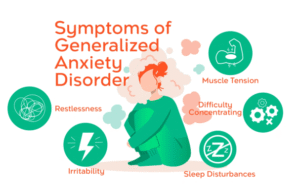
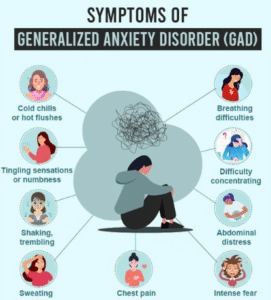
Symptoms of Generalized Anxiety Disorder

GAD symptoms fall into two categories: psychological symptoms and physical symptoms.

Psychological & Emotional Symptoms of GAD

Generalized Anxiety Disorder affects the mind in several ways, often creating a constant sense of uneasiness or fear. These psychological symptoms can make daily life feel overwhelming, even when there is no real threat or problem.

✔ Excessive Worry

People with GAD often worry about many different things at the same time—health, future events, responsibilities, or minor issues. This worry comes without a specific cause and feels impossible to stop, even when the person knows their concerns may not be realistic.


✔ Difficulty Controlling Worry

The mind may feel like it is “on a loop,” constantly replaying fears or imagining negative situations. Even when they try to relax or distract themselves, the worry returns quickly, often jumping to worst-case scenarios.


✔ Restlessness or Feeling On Edge

A person may experience constant mental and physical tension. They may find it difficult to sit still, feel nervous without reason, or feel like “something bad” might happen. This restlessness often lasts throughout the day.


✔ Trouble Concentrating

Anxiety can make it hard to focus on tasks, conversations, or decisions. People with GAD may feel their mind goes blank or gets stuck in overthinking, making simple tasks feel more difficult and time-consuming.


✔ Irritability

Constant worry and mental fatigue can lead to frustration or irritability. The person may get annoyed easily, feel overwhelmed by small problems, or become emotionally sensitive to stress.


✔ Fear of Bad Outcomes

GAD often makes people expect negative outcomes even in normal or safe situations. They may fear that things will go wrong, that they will fail, or that something terrible might happen—even when there is no real evidence to support these thoughts.

2. Physical Symptoms

Generalized Anxiety Disorder doesn’t only affect the mind—it has a significant impact on the body as well. When the brain is constantly in a state of worry, the nervous system becomes overactive, leading to physical symptoms that can feel uncomfortable and sometimes frightening. Many people with GAD first notice these bodily signs before realizing they are related to anxiety.

✔ Muscle Tension

Tightness in the neck, shoulders, and jaw is extremely common. Some people clench their jaw or grind their teeth without noticing, especially at night, leading to soreness and stiffness.

✔ Headaches or Migraines

Chronic tension in the body often triggers frequent headaches or migraines. These may worsen during stressful periods or after long hours of worrying.

✔ Rapid Heartbeat

The heart may race even when the person is resting. This can feel like palpitations, fluttering, or a pounding heartbeat, which can be alarming and mistaken for a heart problem.

✔ Sweating

Excessive sweating—especially in the palms, underarms, or face—can occur during anxious moments or even without a clear trigger.

✔ Fatigue or Low Energy

The constant mental pressure drains energy, leaving the person feeling tired, weak, or emotionally exhausted throughout the day.

✔ Stomach Problems (IBS, Indigestion, Nausea)

Anxiety strongly affects the digestive system. People with GAD may experience nausea, stomach cramps, indigestion, bloating, or irritable bowel syndrome (IBS).

✔ Trembling or Shakiness

The body may shake or tremble during moments of intense worry. Hands or legs may feel shaky, especially when under pressure.

✔ Difficulty Sleeping (Racing Thoughts at Night)

Many people with GAD struggle to fall or stay asleep. Thoughts race at night, replaying events or worrying about the next day. This lack of rest further increases fatigue and irritability.


These physical symptoms are often mistaken for medical conditions such as thyroid imbalance, heart issues, blood pressure problems, or gastrointestinal disorders. Because of this, many individuals visit multiple doctors before discovering that anxiety is the underlying cause.

Common Causes of GAD

There is no single cause of Generalized Anxiety Disorder. Instead, GAD typically develops due to a combination of biological, psychological, and environmental factors. These factors interact over time, making some people more vulnerable to chronic worry and anxiety.

✔ 1. Genetic Factors

Research shows that GAD can run in families. Individuals with a parent or close relative who has anxiety or mood disorders are at a higher risk. Genetics does not guarantee the development of GAD, but it increases vulnerability.


✔ 2. Brain Chemistry

Imbalances in neurotransmitters such as serotonin, dopamine, and norepinephrine can affect mood regulation and emotional responses. When these chemicals are disrupted, the brain may become more reactive to stress, leading to persistent worry.


✔ 3. Personality Traits

Certain personality patterns make individuals more prone to anxiety. People who are:

  • Highly sensitive

  • Perfectionistic

  • Overthinkers

  • Easily stressed

  • Self-critical

are more likely to develop GAD. These traits can make ordinary challenges feel overwhelming or unpredictable.


✔ 4. Stressful Life Experiences

Life events can play a major role. Factors such as:

  • Childhood trauma or neglect

  • Strict or overprotective parenting

  • Academic pressure

  • Job stress

  • Financial uncertainty

  • Losing a loved one

  • Change in relationships

can trigger or worsen anxiety. Long-term exposure to stress can also rewire the brain’s stress response system.


✔ 5. Medical Conditions

Certain health issues can contribute to increased anxiety, including:

  • Chronic illnesses (diabetes, heart conditions, asthma)

  • Hormonal imbalances (thyroid problems, PCOS, menopause)

  • Chronic pain

  • Neurochemical disorders

These conditions can create physical discomfort, which in turn triggers excessive worry.


✔ 6. Environmental Factors

A person’s surroundings and lifestyle also influence the development of GAD. These include:

  • High work pressure or job insecurity

  • Unstable or toxic relationships

  • Caregiving responsibilities

  • Lack of social support

  • Frequent life changes or uncertainty

When a person constantly faces stress, instability, or emotional strain, anxiety can become chronic.

How GAD Affects Daily Life

Generalized Anxiety Disorder impacts far more than just thoughts—it can disrupt nearly every aspect of a person’s daily functioning. Because the mind is constantly in a state of worry or alertness, even routine tasks can feel overwhelming or exhausting.

GAD can interfere with:

✔ Work or Academic Performance

Constant worry makes it difficult to focus, complete tasks on time, or make decisions. People may double-check their work excessively or fear making mistakes, leading to decreased productivity.

✔ Decision-Making

Even simple choices—like what to wear or what to eat—can feel stressful. Individuals with GAD often fear choosing “wrong,” leading to hesitation, overthinking, or avoidance.

✔ Sleep Quality

Racing thoughts, tension, and nighttime overthinking can make falling asleep or staying asleep difficult. Poor sleep then increases anxiety the next day, creating a difficult cycle.

✔ Social Relationships

Overthinking social interactions, fearing judgment, or worrying about others’ opinions can strain friendships and family relationships. The person may withdraw or avoid social situations.

✔ Productivity

Mental fatigue reduces motivation and energy. Tasks take longer, and the person may feel unable to finish responsibilities due to constant distraction or stress.

✔ Physical Health

Chronic anxiety can lead to health issues like headaches, digestive problems, high blood pressure, or weakened immunity. The body remains in “fight or flight” mode for too long.


People with GAD often feel:

  • Drained: mentally and physically exhausted from constant worry

  • Overwhelmed: small tasks may feel large or unmanageable

  • Mentally stuck: unable to move forward or make clear decisions

  • Fearful of future events: expecting danger or failure even without evidence

  • Unable to relax: feeling tense even in safe or calm situations

Over time, untreated GAD can significantly affect one’s quality of life and lead to additional mental health challenges.


Potential Complications

If GAD is not addressed early, it may increase the risk of:

  • Depression

  • Panic disorder

  • Substance use

  • Chronic stress-related illnesses

  • Burnout

Recognizing these effects early can help individuals seek timely and effective treatment.

Diagnosis of GAD

Diagnosing Generalized Anxiety Disorder requires a careful, detailed evaluation by a mental health professional, psychologist, or psychiatrist. Because GAD symptoms can overlap with other conditions—such as depression, panic disorder, thyroid problems, or heart-related issues—a proper assessment helps ensure accurate diagnosis and effective treatment.

A clinician typically assesses the following:

✔ Duration of Symptoms (6 Months or More)

For a diagnosis of GAD, excessive worry and anxiety must be present more days than not for at least six months. The worry should feel difficult to control and be present across different situations.

✔ Intensity and Frequency of Worry

The professional examines how persistent the worry is, what triggers it, and whether the person shifts from one concern to another quickly.

✔ Impact on Daily Life

They look at how anxiety affects work, relationships, sleep, concentration, decision-making, and overall functioning. Significant interference indicates clinical anxiety.

✔ Physical Symptoms

Because anxiety often shows up physically, symptoms like headaches, muscle tension, stomach issues, rapid heartbeat, and fatigue are evaluated to rule out medical conditions.

✔ Family History

Since anxiety disorders can run in families, understanding genetic vulnerability helps form a clearer picture of the condition.

✔ Sleep Patterns

Difficulty falling asleep, frequent waking, or racing thoughts at night are key indicators. Sleep disruption is often an early sign of GAD.

Diagnostic Criteria (DSM-5)

GAD is diagnosed based on guidelines from the Diagnostic and Statistical Manual of Mental Disorders (DSM-5). According to DSM-5, the person must experience:

  • Excessive anxiety and worry for 6 months or more

  • Difficulty controlling the worry

  • At least three additional symptoms (such as restlessness, fatigue, irritability, muscle tension, sleep disturbance, or difficulty concentrating)

  • Significant distress or impairment in daily functioning

A proper diagnosis ensures that the individual receives the right treatment approach tailored to their needs.

Treatment Options for Generalized Anxiety Disorder

The good news is that GAD is highly treatable with therapy, lifestyle changes, and sometimes medication.


1. Cognitive Behavioural Therapy (CBT)

Cognitive Behavioural Therapy (CBT) is widely recognized as the most effective and evidence-based treatment for Generalized Anxiety Disorder. It focuses on understanding how thoughts, emotions, and behaviors are connected—and teaches practical tools to break the cycle of chronic worry.

CBT helps individuals:

✔ Challenge Negative Thought Patterns

People with GAD often assume the worst or jump to negative conclusions. CBT teaches individuals to identify these automatic thoughts, examine their accuracy, and replace them with more balanced and realistic thinking.

✔ Reduce Overthinking and Worst-Case Imagining

CBT helps individuals recognize when their mind is slipping into “what if” thinking or catastrophizing. Through structured techniques, they learn to interrupt these patterns and regain control over their thought process.

✔ Learn Healthier Coping Strategies

Therapists introduce practical tools such as grounding exercises, thought reframing, problem-solving skills, and stress-management techniques. These skills help reduce anxiety during triggering moments.

✔ Build Emotional Regulation Skills

People with GAD often feel overwhelmed by their emotions. CBT teaches how to manage fear, worry, and tension more effectively, helping individuals respond calmly rather than react out of anxiety.


CBT is usually delivered in weekly sessions and can show significant improvement in 8–12 weeks, depending on the severity of symptoms. When practiced consistently, it empowers individuals to manage anxiety long-term, even after therapy ends.


2. Mindfulness & Relaxation Techniques

Mindfulness and relaxation practices play a powerful role in managing Generalized Anxiety Disorder. These techniques help calm the nervous system, reduce physical tension, and bring attention back to the present moment—breaking the cycle of constant worry and overthinking.

These techniques help individuals reconnect with their bodies, slow down racing thoughts, and build a sense of inner stability.

✔ Deep Breathing

Controlled, slow breathing activates the body’s relaxation response. Techniques like diaphragmatic breathing or box breathing reduce rapid heartbeat, calm the mind, and ease physical tension.

✔ Meditation

Mindfulness meditation teaches individuals to observe thoughts without reacting to them. Over time, meditation reduces the intensity of anxious thoughts and improves emotional balance.

✔ Progressive Muscle Relaxation (PMR)

PMR involves tensing and relaxing different muscle groups, helping release stored tension caused by chronic anxiety. It also increases body awareness and relaxation.

✔ Grounding Techniques

Grounding exercises—such as the 5-4-3-2-1 sensory method—help bring the mind back to the present moment when anxiety spirals. They are especially useful during moments of intense worry.

✔ Body Scan Exercises

A body scan guides individuals through noticing sensations in each part of the body. This increases mindfulness, reduces stress, and promotes deep relaxation.


Practicing mindfulness and relaxation regularly can significantly reduce anxiety symptoms, improve sleep quality, and enhance overall emotional well-being. These techniques work well alone or alongside therapy like CBT.

3. Lifestyle Changes

Lifestyle modifications can play a major role in reducing anxiety and supporting long-term recovery from Generalized Anxiety Disorder. These healthy habits help regulate the nervous system, improve mood, and strengthen emotional resilience. When practiced consistently, they complement therapy and create a more balanced and stable daily routine.

✔ Regular Exercise

Physical activity releases endorphins—natural mood boosters that reduce stress and tension. Even simple activities like walking, yoga, or light stretching can significantly lower anxiety levels and improve sleep.

✔ Balanced Sleep Schedule

A regular sleep routine helps stabilise mood and reduce fatigue, which is crucial for managing anxiety. Sleeping and waking at consistent times supports better emotional regulation and clearer thinking throughout the day.

✔ Reducing Caffeine

Caffeine stimulates the nervous system, which can worsen symptoms like racing heart, restlessness, and overthinking. Limiting coffee, tea, and energy drinks can help reduce physical and mental anxiety.

✔ Healthy Diet

Eating balanced meals rich in fruits, vegetables, whole grains, omega-3 fats, and protein supports brain health. Maintaining stable blood sugar levels can also reduce irritability and anxiety spikes.

✔ Journaling

Writing down thoughts helps release mental stress and makes worries feel more manageable. Journaling can also help identify unhelpful thinking patterns, track triggers, and express emotions safely.

✔ Spending Time Outdoors

Sunlight, fresh air, and nature significantly improve mood and reduce anxiety. Even 10–15 minutes outdoors can calm the mind, increase vitamin D levels, and support overall well-being.

Lifestyle changes don’t cure GAD on their own, but they strengthen the mind and body, making therapy more effective and helping individuals feel more in control of their daily life.

4. Medication

In some cases, psychiatrists may prescribe:

  • SSRIs (Selective Serotonin Reuptake Inhibitors)

  • SNRIs

  • Anti-anxiety medication

Medication helps reduce persistent anxiety and is often combined with therapy.


When to Seek Help

It’s important to understand that anxiety is a normal part of life. However, when worry becomes constant, overwhelming, and difficult to control, it may be a sign of Generalized Anxiety Disorder. Seeking help early can prevent symptoms from worsening and allow you to regain balance and emotional strength.

You should consult a mental health professional if:

✔ Anxiety lasts more than several weeks

If your worry persists day after day and does not seem to improve over time, it may indicate a deeper issue that requires support.

✔ Worry feels uncontrollable

When your thoughts spiral, jump to worst-case scenarios, or feel impossible to shut off—despite your efforts to relax or calm yourself—professional help can make a significant difference.

✔ Sleep is disturbed

Difficulty falling asleep, waking frequently, or lying awake with racing thoughts are common signs of GAD. Poor sleep affects mood, energy, and overall health.

✔ Everyday tasks become difficult

If simple tasks such as concentrating at work, making decisions, or managing responsibilities start to feel overwhelming, anxiety may be interfering with daily functioning.

✔ You feel constantly tense or overwhelmed

Persistent restlessness, irritability, or physical symptoms like tight muscles, rapid heartbeat, or nausea can indicate anxiety that needs attention.

✔ Anxiety affects work, relationships, or health

When worry begins to affect your performance, communication, or overall well-being, it’s time to reach out for support.


Why Early Help Matters

Early intervention is key. Without support, GAD can gradually become more intense and long-lasting. However, with timely treatment—including therapy, lifestyle changes, and sometimes medication—most people experience significant relief and regain control of their lives.


Final Thoughts

Generalized Anxiety Disorder is far more common than many people realize, and it is important to understand that it is not a personal weakness, nor something a person can simply “snap out of.” Anxiety of this intensity is a real psychological condition—one that deserves compassion, awareness, and proper treatment.

People living with GAD often face silent battles: constant worry, physical tension, sleep problems, and overwhelming thoughts. These challenges can make everyday life feel heavy and exhausting. But the hopeful truth is that GAD is highly treatable, and countless individuals recover with the right support.

Through evidence-based therapies like CBT, mindfulness practices, healthy lifestyle changes, and professional guidance, individuals can:

  • reduce excessive worry

  • rebuild confidence

  • improve emotional regulation

  • develop healthier thought patterns

  • regain a sense of calm and control

Recovery does not happen overnight, but every step forward makes a difference. With patience, understanding, and the right help, people can lead balanced, meaningful, and fulfilling lives.

Healing begins when you reach out—and taking that first step is a sign of strength, not weakness.

Reference

National Institute of Mental Health (NIMH) – GAD Overview

👉 https://www.nimh.nih.gov/health/topics/generalized-anxiety-disorder-gad 

Anxiety & Depression Association of America (ADAA)

👉 https://adaa.org/

About Us Page

👉 https://monoprovacounselling.in/about-us/

Contact / Book Appointment Page

👉 https://monoprovacounselling.in/contact/ 

OCD Symptoms: Understanding the Signs of Obsessive-Compulsive Disorder

Obsessive-Compulsive Disorder (OCD) is a mental health condition where a person experiences unwanted thoughts (obsessions) and repeatedly engages in certain behaviours (compulsions) to reduce anxiety. These thoughts may feel intrusive, irrational, or disturbing—yet extremely difficult to ignore. Compulsions temporarily reduce the anxiety, but the relief doesn’t last, causing the cycle to repeat.

OCD can affect anyone—children, teenagers, or adults—and often becomes overwhelming if not identified early. Many people misunderstand OCD as simply “liking cleanliness” or “being too organised,” but in reality, it is a distressing cycle of fear, doubt, and repetitive behaviors that the person cannot control.

In this article, we will explore the most common symptoms of OCD, how they appear in real life, and when to seek professional help.

What Are Obsessions?

Obsessions are intrusive, distressing, and repetitive thoughts, images, or urges that enter a person’s mind without their control. Even when the person knows these thoughts are irrational, they still feel extremely real and disturbing. These obsessions create intense anxiety or discomfort, leading the person to perform certain actions (compulsions) to feel relieved.

Obsessions are not simply “overthinking”; they are persistent mental intrusions that interfere with daily life.


Common Obsession Symptoms (With Examples)

  1. Fear of Contamination

A persistent worry about germs, dirt, illness, or infection.

Example:
Rita avoids touching elevator buttons and washes her hands repeatedly because she fears she might catch a deadly disease—even though she is physically healthy.


  1. Intrusive Aggressive Thoughts

Unwanted thoughts of harming oneself or others, even though the person has no intention to act on them.

Example:
A father has sudden, disturbing images of accidentally harming his baby while holding them. These thoughts shock him, but they are completely unwanted and against his nature.


  1. Fear of Losing Control

A feeling that one might suddenly act out of character—shout, insult someone, or break something.

Example:
A student avoids sitting near windows in class because he fears he might impulsively throw something out, even though he never has.


  1. Perfectionism and Excessive Doubt

Endless worry about making mistakes or fear when things don’t feel “just right.”

Example:
Meera rewrites her notes again and again until the letters look perfect, causing her to fall behind in studying.


  1. Unwanted Sexual Thoughts

Disturbing, intrusive sexual images or urges that contradict a person’s values and cause guilt or confusion.

Example:
A teenager feels distressed because inappropriate sexual images pop into his mind during class. He doesn’t want these thoughts, but they keep returning.


  1. Religious or Moral Obsessions (Scrupulosity)

An intense fear of committing sin, breaking religious rules, or being spiritually impure.

Example:
Arjun repeats his prayer multiple times because he feels he did not recite it “perfectly,” fearing God will be displeased.

What Are Compulsions?

Compulsions are repetitive actions or mental rituals that a person feels forced to perform in order to reduce the anxiety created by obsessions. Even though these behaviors may bring temporary relief, the anxiety quickly returns—creating a difficult and exhausting cycle. Over time, compulsions begin to interfere with daily life, routines, relationships, and emotional well-being.

Common Compulsion Symptoms (With Examples)

  1. Checking Behaviors

Repeatedly checking things due to fear, doubt, or imagined danger.

Examples:

  • Checking the door lock 10–20 times before sleeping because “maybe it wasn’t locked properly.”

  • Re-checking the stove even after leaving home, leading to repeated trips back.

  • Reviewing a message again and again before sending it to ensure nothing “wrong” was written.

  • A student repeatedly checks if they kept their pen, notebook, or ID in their bag.

  1. Excessive Cleaning or Washing

Over-cleaning to reduce contamination-related fear.

Examples:

  • Washing hands so frequently that the skin becomes dry and cracked.

  • Taking long showers multiple times a day to feel “clean.”

  • Cleaning the same table or object repeatedly even when it is already spotless.

  • Avoiding touching objects in public, then sanitizing excessively when they do.

  1. Repeating Actions

Doing an action a certain number of times or in a specific sequence so that it “feels right.”

Examples:

  • Touching the doorknob 4 times before leaving the room.

  • Walking back and forth on the same line until it feels balanced.

  • Repeating a sentence until it sounds “perfect.”

  • Tapping a surface several times to prevent something “bad” from happening.

  1. Arranging or Ordering

Objects must be in perfect order—symmetrical, aligned, or placed in a specific pattern.

Examples:

  • Rearranging books, pens, or clothes repeatedly until they look “exact.”

  • Becoming anxious if someone moves an item even slightly.

  • Spending excessive time organizing a desk because the items do not “feel right.”


  1. Mental Rituals

Compulsions that happen inside the mind instead of through physical actions.

Examples:

  • Repeating prayers silently again and again to neutralize a disturbing thought.

  • Counting numbers mentally (e.g., 1–8 repeatedly) to feel safe.

  • Mentally reviewing past conversations to ensure they didn’t offend anyone.

  • Creating “good thoughts” to cancel out “bad thoughts.”

  1. Avoidance

Avoiding situations, people, or places that trigger obsessions.

Examples:

  • Avoiding hospitals or public transport due to fear of germs.

  • Staying away from knives or sharp objects due to intrusive harm-related thoughts.

  • Avoiding children because of unwanted intrusive thoughts.

  • Skipping religious spaces due to guilt or perfectionism around prayers.

How OCD Affects Daily Life

Living with OCD can impact a person far beyond their thoughts and rituals. Because obsessions and compulsions take up significant mental and emotional energy, daily functioning gradually becomes harder. People with OCD often face challenges that others may not immediately notice, leading to frustration, fatigue, and emotional overwhelm.

Common Ways OCD Affects Everyday Life

  1. Taking a long time to finish simple tasks

What should take a few minutes—like getting ready, locking the door, or writing an email—can take much longer because of repeated checking, correcting, or cleaning.

  1. Feeling anxious, guilty, or ashamed

Intrusive thoughts can feel frightening or morally wrong, even when the person has no intention of acting on them. This creates unnecessary guilt and shame, making them hide their struggles from others.

  1. Experiencing disturbed sleep

Constant worry, mental rituals, or late-night compulsions disrupt sleep patterns. Many people stay awake replaying events in their mind or performing rituals to feel safe.

  1. Struggling with relationships

OCD can create misunderstandings. Loved ones may not understand the fears, rituals, or anxieties, causing tension or emotional distance. The person with OCD may avoid opening up to prevent judgment.

  1. Avoiding responsibilities or outings

If certain places or situations trigger obsessions—like contamination fears or intrusive thoughts—the person may avoid social gatherings, work tasks, or daily responsibilities.

  1. Feeling mentally exhausted or “stuck” in their own mind

The constant cycle of fear and ritual drains emotional energy. Many describe feeling trapped, overwhelmed, or mentally blocked, even when they want to move forward.

Long-Term Impact of Untreated OCD

If OCD is not treated, the symptoms often intensify with time. This can lead to:

  • Increased stress and burnout

  • Higher risk of depression

  • Social withdrawal and isolation

  • Lower productivity at school or work

  • Reduced self-esteem and confidence

Early identification and treatment can prevent these long-term effects and help individuals return to a balanced, emotionally healthier life.

When to Seek Help

Recognising when OCD symptoms are becoming unmanageable is a crucial step toward healing. Many people try to cope silently, hoping their thoughts or rituals will “go away on their own,” but OCD rarely improves without proper support. Seeking help early can prevent symptoms from worsening and make treatment more effective.

Professional help is important if:

  • Symptoms continue for more than 2–4 weeks

If intrusive thoughts or compulsive behaviours persist for several weeks, it’s a sign that the brain is stuck in an anxiety–relief cycle that needs intervention.

  • Daily routine is affected

When ordinary tasks—such as getting ready, studying, working, or leaving the house—start taking longer than usual or feel overwhelming, OCD may be interfering with day-to-day functioning.

  • Anxiety becomes uncontrollable

If fears, doubts, or mental images create intense stress that feels difficult to manage, it’s a strong indication that professional guidance is needed.

  • You spend more than 1 hour a day on obsessions or compulsions

OCD often consumes mental and emotional energy. Spending long periods checking, cleaning, repeating, or performing rituals is a clear signal to seek support.

  • You feel embarrassed, guilty, or trapped by your thoughts

Many people with OCD feel ashamed or afraid to talk about their experiences. If your thoughts feel intrusive, disturbing, or “not like you,” reaching out to a mental health professional can help you understand what is happening without judgement.

Treatment Options

The good news is that OCD is one of the most treatable mental health conditions. The most effective treatment options include:

  • CBT (Cognitive Behavioural Therapy)

Specifically, Exposure and Response Prevention (ERP) helps individuals face their fears gradually while reducing compulsive behaviors, breaking the anxiety cycle.

  • Medication

In some cases, psychiatrists may prescribe medication (such as SSRIs) to help reduce intrusive thoughts and anxiety, allowing therapy to work more effectively.

Seeking help is not a sign of weakness—it is a sign of strength and self-care. With the right treatment, individuals can regain control, reduce their symptoms, and lead a healthy, fulfilling life.


Final Thoughts

OCD is a challenging condition, but the most important truth to remember is this: it is highly treatable, and recovery is absolutely possible. Many people live healthy, balanced, and fulfilling lives once they receive the right support and intervention. Early awareness plays a crucial role—it allows symptoms to be recognised before they become overwhelming, reducing emotional distress and improving daily functioning.

Understanding OCD also helps remove the shame often attached to intrusive thoughts or repetitive behaviours. These symptoms are not a sign of weakness, lack of control, or “overreacting”—they are part of a clinical condition that responds well to evidence-based treatment such as Cognitive Behavioural Therapy (CBT), especially Exposure and Response Prevention (ERP), and sometimes medication.

If you or someone you know is experiencing symptoms of OCD, remember that you don’t have to struggle alone. Reaching out to a mental health professional can be the first step toward healing. With consistent support, compassion, and the right therapeutic approach, the cycle of obsessions and compulsions can be broken, allowing individuals to regain control of their thoughts, behaviours, and life.

Healing is not only possible—it is within reach. All it takes is the courage to seek help and the willingness to take the first step toward recovery.

Reference

International OCD Foundation (IOCDF): Evidence-based resources on OCD
https://iocdf.org/

If you’re new here, learn more about our mission at
👉 Mono Prova Counselling – About Us

If you feel OCD is affecting your daily life, you can connect with us directly at
👉 Book a Counselling Session

Signs of Depression: Understanding the Silent Struggle

Depression is not just “feeling sad.” It is a complex mental health condition that affects the way a person thinks, feels, behaves, and functions in daily life. Many people hide their symptoms behind a normal-looking face, making it difficult for others to understand what they are going through. Recognizing the early signs can help in seeking timely support and treatment.

Below are the most common and clinically recognized signs of depression:

1. Persistent Sadness or Low Mood

One of the core symptoms of depression is a long-lasting sense of sadness or emotional heaviness that doesn’t seem to lift, even with rest, distraction, or positive events. This isn’t the kind of sadness that comes and goes with daily stress—it’s a continuous emotional state that lasts for weeks, months, or even longer.

People often describe this feeling in different ways:

  • A deep, dull emptiness that makes life feel colorless or meaningless

  • A constant heaviness in the chest, as if carrying an invisible weight

  • Emotional numbness, where they cannot feel joy, excitement, or connection

  • A sensation of being disconnected from their own life or surroundings

  • Feeling hopeless about the future, as if nothing will ever improve

This persistent sadness can seep into every part of the day—mornings may feel especially difficult, evenings may feel lonely, and activities that once brought joy may no longer feel satisfying. Even when something positive happens, the person may struggle to genuinely feel happy or hopeful.

Over time, this chronic low mood can affect motivation, energy levels, relationships, and overall quality of life. Recognizing this as a sign of depression—not a personal weakness—is the first step toward seeking help and beginning the healing process.

2. Loss of Interest in Daily Activities

Another major sign of depression is anhedonia, a psychological term that describes the loss of interest or pleasure in activities that once felt enjoyable or meaningful. This shift is often subtle at first, but gradually becomes more noticeable and distressing.

People experiencing anhedonia may:

  • Stop enjoying hobbies they once loved, such as reading, painting, cooking, or playing games

  • Lose motivation to work, study, or pursue goals that previously excited them

  • Avoid social interactions, not because they don’t care, but because they feel emotionally drained

  • Feel detached from relationships that were once important

  • Experience a lack of enthusiasm or curiosity about life

This loss of interest isn’t a choice—it’s a symptom. Even simple daily tasks like getting out of bed, taking a shower, or planning meals can feel exhausting, meaningless, or overwhelming. Things that once sparked joy now feel bland or emotionally flat.

Anhedonia deeply affects one’s identity, productivity, and relationships. It may make the person feel guilty or confused, wondering “Why don’t I enjoy anything anymore?” But the truth is, this is not laziness or lack of willpower—it’s a clinical feature of depression that requires compassion and support.

Recognizing this symptom early can help someone regain connection, pleasure, and purpose with proper treatment and care.

3. Changes in Appetite and Weight

Depression can significantly affect the body’s natural hunger and fullness cues, leading to noticeable changes in appetite and weight. These changes are often sudden, unintentional, and confusing for the person experiencing them.

Loss of Appetite and Weight Loss

For some individuals, depression causes a sharp decrease in appetite. Eating feels like a chore, food loses its taste, or the person simply “doesn’t feel hungry.” They may skip meals unintentionally or feel nauseated at the thought of food.
This can lead to significant, unplanned weight loss, often accompanied by low energy, weakness, and nutritional deficiencies.

Common experiences include:

  • Forgetting to eat

  • Eating only small portions

  • No desire for favorite foods

  • Feeling full quickly

  • Decreased interest in cooking or preparing meals

Increased Appetite and Weight Gain

On the other hand, some people experience emotional overeating. Food becomes a source of temporary comfort or escape from pain, sadness, or stress.
This often leads to craving high-calorie, sugary, or carbohydrate-rich foods, causing unintentional weight gain.

Common signs include:

  • Eating more frequently, especially during emotional distress

  • Night-time snacking

  • Using food as a coping mechanism

  • Cravings for comfort foods

These changes are not about dieting or lifestyle choices—they happen as a response to the emotional and biological effects of depression. Shifts in brain chemicals like serotonin and dopamine also play a role in altering appetite and motivation to eat.

Whether the change is more eating or less eating, it is a meaningful symptom that affects physical health and emotional well-being. Recognizing this can help in early diagnosis and timely intervention.

4. Sleep Disturbances

Sleep problems are very common in depression because the condition disrupts the body’s natural sleep-wake cycle. These issues can appear in different ways:

Insomnia

Many people struggle to fall asleep or stay asleep. They may wake up often during the night, lie awake for hours, or experience light, restless sleep.

Early Morning Waking

A classic symptom is waking up much earlier than usual and being unable to fall back asleep. Mornings may feel emotionally heavy or filled with worry.

Hypersomnia (Sleeping Too Much)

Some individuals sleep excessively—10 to 14 hours a day—yet still feel unrefreshed. This often becomes a way to escape emotional pain.

Feeling Tired Despite Sleeping

Even after long hours of sleep, the person may wake up exhausted, foggy, or low on energy. Depression affects the quality of sleep, not just the quantity.

5. Fatigue and Low Energy

Depression often brings a deep, persistent sense of tiredness that doesn’t improve with rest. This is not the usual tiredness after a long day—it is a constant physical and mental exhaustion.

People may feel:

  • Low energy from the moment they wake up

  • Heavy or slowed movements

  • Difficulty starting or completing tasks

Even simple daily activities—like cooking, bathing, dressing, or getting out of bed—can feel overwhelming or draining. This ongoing fatigue can reduce productivity, motivation, and the ability to participate in normal life activities.

6. Feeling Worthless or Excessive Guilt

Many people with depression struggle with harsh self-judgment and negative beliefs about themselves. They may blame themselves for situations that are not their fault or feel responsible for things completely beyond their control.

Common experiences include:

  • Feeling like they “fail” at everything

  • Believing they are a burden to family or friends

  • Thinking they are “not good enough” no matter how much they try

  • Constantly apologizing or feeling guilty without a real reason

These thoughts can deepen feelings of sadness, lower self-esteem, and make it harder to ask for help. Recognizing this as a symptom—not a truth—is an important step toward recovery.

7. Difficulty Concentrating

Depression doesn’t only affect emotions—it also impacts cognitive functions, making it harder to think clearly or stay mentally organized.

People may experience:

  • Trouble focusing on conversations, tasks, or reading

  • Forgetfulness, such as missing appointments or losing track of things

  • Difficulty making decisions, even about simple matters

  • Slow thinking or a feeling that the mind is “foggy”

These changes can interfere with work performance, academic tasks, and even daily responsibilities. The person may feel frustrated or helpless, but these cognitive difficulties are a common and treatable part of depression.

8. Restlessness or Slowed Movements

Depression can affect the body as much as the mind, leading to noticeable changes in movement and behavior.

Some individuals experience restlessness, such as:

  • Feeling agitated or on edge

  • Pacing or fidgeting

  • Being unable to relax or sit still

Others show psychomotor retardation, which means:

  • Moving more slowly than usual

  • Speaking softly or taking longer to respond

  • Feeling physically heavy or sluggish

These changes are not a lack of effort—they are physical symptoms of depression that reflect how deeply the condition affects the nervous system.

9. Increased Irritability

Depression doesn’t always appear as sadness—sometimes it shows up as irritability or anger, especially in adolescents and men. Small inconveniences or minor issues may trigger frustration, impatience, or emotional outbursts.

People may notice:

  • Becoming annoyed very easily

  • Feeling tense, restless, or “on edge”

  • Overreacting to small problems

This irritability is not intentional. It often comes from emotional overload, low energy, and difficulty managing stress—common effects of depression.

10. Physical Symptoms Without Medical Cause

Depression doesn’t always show up emotionally—sometimes it appears through persistent physical discomfort. These symptoms often continue even when medical tests show no clear physical problem.

Common physical signs include:

  • Headaches that come and go without a medical reason

  • Body aches or a general sense of soreness

  • Digestive issues, such as nausea, constipation, or stomach pain

  • Chest discomfort or tightness

  • Muscle tension or unexplained pain

These physical symptoms happen because depression affects the brain chemicals that control both mood and the body’s pain response. When emotional distress remains untreated, the body often expresses it through continual aches or discomfort.

11. Social Withdrawal

People with depression often begin to pull away from social interactions, even from those they care about deeply. They may avoid friends, family gatherings, phone calls, or everyday conversations.

This withdrawal happens because:

  • They feel emotionally drained

  • Interactions seem overwhelming

  • They worry about being a burden

  • They lack the energy to engage

Over time, isolation becomes a coping mechanism, even though they may secretly long for understanding and support. This distancing can worsen feelings of loneliness, making depression feel even heavier.

  1. Thoughts of Death or Suicide

This is the most serious and urgent sign of depression. It can appear in different forms, ranging from subtle hopelessness to active plans of self-harm.

People may experience:

  • A general feeling that life has no meaning or purpose

  • Passive thoughts, such as “I wish I could disappear” or “It would be easier if I wasn’t here”

  • Active thoughts about harming themselves or ending their life

These thoughts are not attention-seeking—they are signs of deep emotional pain. Immediate support from a mental health professional is essential.
If someone expresses these feelings, they need compassion, understanding, and quick intervention.

Why Early Recognition Matters

Depression is highly treatable, and recovery is absolutely possible. With the right combination of therapy, supportive relationships, healthy routines, and in some cases, medication, individuals can heal and regain a sense of balance in their lives.

Early recognition of symptoms is crucial because:

  • It prevents the condition from deepening
  • It allows timely access to professional help
  • It reduces the impact on work, relationships, and daily functioning
  • It empowers individuals to take control of their emotional well-being

Understanding the signs is the first step. Reaching out for help is the next—and it can make all the difference in someone’s journey toward recovery.

When to Seek Help

If you or someone you know has been experiencing five or more symptoms for at least two weeks, it may be a sign of clinical depression. This is not something to ignore or manage alone.

A mental health professional can provide:

  • A proper assessment and diagnosis
  • Evidence-based therapy
  • Practical coping strategies 
  • Guidance on lifestyle adjustments 
  • Medication support, if needed

Reaching out for help is a sign of strength, not weakness. Early intervention can prevent symptoms from getting worse and support a faster, healthier recovery.

Final Thoughts

Depression is not a sign of weakness, nor is it something a person can simply “snap out of.” It is a genuine medical condition that deserves the same compassion, care, and attention as any physical illness. Understanding this helps reduce stigma and encourages people to reach out rather than suffer silently.

Speaking up about what you’re feeling, seeking professional help, and offering support to those who are struggling can create a life-changing impact. With patience, empathy, and the right guidance, healing is not only possible—it is highly achievable.

Reference


For clinical criteria, see the American Psychiatric Association (APA).
(https://www.psychiatry.org/patients-families/depression)


The Colors of My Quiet World

The Colors of My Morning

In the morning, it is as though I am the only one listening to soft music playing. My blanket is cozy, it is a hug that never wants to leave. The sun rays through my curtains in golden lines on my wall. I prefer the way the light is playing across my ceiling–like it has a secret it is telling me and nobody can hear.

My name is Noah. I’m seven years old. I have a condition known as autism, mom. I do not always know what that entails, but I am aware that my brain thinks otherwise. The colors, sounds, and shapes in my world are even more loud, big or small and sometimes quite soft or quite quiet than it is with other people.

There is the smell of toast and honey in the kitchen, one of my favorite smells. The low buzz of the refrigerator is my constant companion, my constant companion. Dad calls me to breakfast, however, occasionally I would like to have an extra few minutes to see how the sun is moving or count the small dots on the wallpaper.

I squeeze my hands and take a slow breath just as Mom used to do. It comes in handy when the world is too noisy or hectic.

My Quiet Place

The garden is an eloquent kingdom outside. The leaves do not rustle; they tell tales as the wind blows. I am crouching very closely by the lavender, and I see a ladybug come crawling up the stem very slowly. It is not in a hurry as were the town people.

At other times, people just talk with me and their words sound like popping bubbles, and one can hardly hear them. I prefer them to talk in a low tone or simply sit with me.

The halls at the school are exceedingly noisy. The buzzing lights come and go and it is as though swarms of bees were in my head. I carry a special blue blanket with me. When I get too sentimental I squeeze. It is my little boat in a great ocean.

Lily, My Friend

Lily is my best friend. She does not mind when I require silence or flapping my hands when I am delighted. We do not necessarily play the same games but we do know each other like some secret language.

One day, Lily came to me and offered me a box of crayons and told me, Let us draw what colors we feel in us. We were sitting in the shade of the big oak tree, and I chose bright yellow to the sun that gives me a happy heart. then a still blue to indicate the silent spots of my brain.

Drawing will assist me in narrating my story when I am stuck or lost in words. The colors, the shapes run out of me like a mild river and people can peep in my world through it.

When the World Breaks.

There are those days the world is heavy, like a silent storm within me. The bang of a school bell or a crowd makes my chest tight and my mind spins at a fast pace. I wish sometimes to shrink behind the leg of Mom or make a run to my secret quiet place.

One day the noisy fire alarm went on, and I had a buzzing of my head, and my heart going wild. I did not know what was going on and the world was shattered. I put my ears together and closed my eyes and attempted to seek peace in the storm.

Mom grasped my hand and mumbled, It is all right, Noah. ” You’re safe.”

Yet within, there was a protracted duration of the storm, and I was lost in the din.

Holding On

Back home, Mom and Dad would have me perfecting my world once again. We share some silent moments with music, some cuddling, and warm blankets. Mom says my brain is a puzzle, some parts go together quickly, and some are time-consuming and time-intensive.

I have good days and hard days. On bad days, I am frightened and lonely. But I do not forget about the smiles of Lily and the colors of my drawings. Gradually, the tempest within me dies away leaving in its place the light and hope.


To Noah in the Name of his Heart.

I sometimes get a mute storm in my head, feelings too large and loud to be expressed. That is what my brain is telling me: it requires some time to recover. I am not broken.

I am not a single puzzle, I am a combination of a great number of pieces of a variety of colors–they are all a part of me. The colors always shine within me, even when they swirl so fast, or become so quiet.

Any tender hand, any soft word, any silent sigh, is of benefit to me. The color of love in my world is the brightest one and it guides me home.

Remember, you are not alone, in case you ever get lost or are scared. Your story matters. And this world is better, your presence herein.

screenshot 2025 11 15 014250


Autism is not always loud—it’s the silence behind the noise,

the stillness where understanding blooms softly,

like a gentle flower opening in dawn’s first light.


cropped cropped screenshot 2025 10 30 153226 3.pngBaishakhi Das (MonoProva)


🌿 Anxiety Workbook: A Complete Guide to Understanding, Managing, and Reducing Anxiety

Anxiety is one of the most common psychological concerns today. It affects how we think, feel, and behave. Many people struggle silently, unsure of how to cope with constant worry, overthinking, panic, or restlessness.
An Anxiety Workbook is a powerful self-help tool that guides individuals through structured exercises to reduce anxiety and regain emotional control.

This article explains what an anxiety workbook is, why it works, and the most effective exercises you can include in one.

🧠 What Is an Anxiety Workbook?

An Anxiety Workbook is a step-by-step guide containing:

  • Practical exercises
  • Self-reflection prompts 
  • Cognitive-behavioral techniques 
  • Breathing and grounding tools 
  • Journaling activities

It helps individuals understand their emotional patterns and learn how to manage anxiety in daily life.

Workbooks are particularly effective because they encourage active participation, not just reading.

🌼 Why Is an Anxiety Workbook Helpful?

✔ 1. Helps you identify anxiety triggers

Many people struggle with anxiety without knowing what exactly causes it. A workbook guides you to observe your daily thoughts, emotions, and situations more closely. By writing down when anxiety appears, what you were doing, and how your body reacted, you begin to see clear patterns. These insights help you understand your personal triggers, which is the first step toward managing anxiety effectively.

  1. Makes Overwhelming Emotions Manageable

Anxiety often feels huge—like a storm you cannot control. But when you break it down into small, simple exercises, it becomes less frightening. A workbook simplifies your emotional experiences into steps you can handle one at a time. This makes your feelings more understandable, and suddenly the anxiety that felt “too much” becomes something you can work through slowly and gently.

  1. Teaches Scientifically-Proven Techniques

Most anxiety workbooks use evidence-based psychological tools, especially from Cognitive Behavioral Therapy (CBT). These techniques help you challenge negative thinking, replace unhelpful beliefs, and calm your body’s stress response. Because they are rooted in research, these methods are not just comforting—they are clinically effective and can lead to long-lasting improvement.

  1. Encourages Daily Practice and Routine

Healing from anxiety requires consistency, not perfection. A workbook motivates you to spend a few minutes each day reflecting, practicing grounding exercises, or updating your thought records. Over time, this daily practice strengthens emotional resilience, builds healthy coping habits, and makes you better equipped to handle stressful situations.

  1. Helps You See Your Progress Clearly

One of the most powerful parts of an anxiety workbook is the ability to look back and see how far you’ve come. You can visually track your reduction in anxiety scores, notice fewer triggers, or see how your thoughts have become more balanced. This sense of progress boosts confidence, encourages self-belief, and reinforces the idea that change is possible.

📘 What Should an Anxiety Workbook Include?

A complete Anxiety Workbook usually contains the following sections:

✨ 1. Understanding Your Anxiety

This section helps the reader reflect on:

  • When anxiety started
  • How often it happens
  • Physical symptoms
  • Common thoughts
  • Behavior changes

Exercise: Anxiety Mapping
Write down:

  • Your triggers
  • Your immediate thoughts
  • Your physical reactions
  • What you do to cope

This creates a clear picture of your anxiety cycle.

✨ 2. Identifying Your Triggers

Anxiety can be triggered by:

  • Stressful situations
  • People or conflicts
  • Past trauma
  • Uncertainty
  • Social situations
  • Work pressure

Trigger Log Template:

  • Date
  • What happened?
  • How I felt (emotion)
  • Anxiety level (0–10)
  • What thoughts came?

✨ 3. Thought Restructuring (CBT Technique)

One of the most powerful parts of an anxiety workbook.

Goal: Replace negative thoughts with balanced, realistic ones.

Exercise: Thought Record Sheet
Write:

  • “What am I thinking right now?”
  • “Is this thought based on facts or fear?”
  • “What is a more balanced way to see this?”
  • “What would I tell a friend in this situation?”

You train your brain to stop automatic anxious thinking.


✨ 4. Breathing & Grounding Techniques

When anxiety becomes physical, grounding exercises help immediately.

Effective Tools Include:

  • 4-7-8 Breathing
  • Box Breathing
  • 5-4-3-2-1 Sensory Grounding
  • Progressive Muscle Relaxation

These calm the nervous system within minutes.


✨ 5. Daily Anxiety Journal

Journaling helps express hidden emotions.

Prompts you can include:

  • What made me anxious today?
  • What helped me feel calm?
  • What negative thoughts did I challenge?
  • One thing I am proud of today.


✨ 6. Lifestyle Tracking

Anxiety improves when daily habits improve.

Include sections to track:

  • Sleep quality
  • Water intake
  • Exercise
  • Screen time
  • Caffeine consumption
  • Relaxation time

This shows people how lifestyle affects anxiety.

✨ 7. Creating a Personal Coping Plan

An effective Anxiety Workbook should end with a Personal Coping Plan—a simple, customized roadmap that helps the reader know exactly what to do when anxiety becomes intense. This plan becomes a personal guide they can return to whenever they feel overwhelmed, confused, or stuck. It brings clarity, structure, and a sense of safety during difficult moments.

A complete coping plan usually includes the following elements:


✔ 1. Five Daily Coping Habits

These are small, healthy actions that support emotional stability every day. They act like “mental vitamins,” strengthening the mind consistently.
Daily habits might include:

  • Practicing 5 minutes of deep breathing
  • Taking a short walk
  • Writing a quick mood journal
  • Limiting screen time in the evenings
  • Drinking enough water or having a calming tea

By repeating these habits daily, a person builds resilience and reduces overall anxiety levels.


✔ 2. Three Emergency Grounding Strategies

These are fast, practical tools for moments when anxiety spikes suddenly and feels out of control. They help bring the mind back to the present moment and calm the body quickly.

Examples include:

  • The 5-4-3-2-1 grounding method
  • Splashing cold water on the face
  • Focusing on slow, controlled breathing (e.g., 4-7-8 technique)

Having these written down ensures that during a panic or high-stress moment, the person doesn’t have to think—they just follow their plan.


✔ 3. Five Positive Affirmations

Positive affirmations help reshape anxious thinking and strengthen emotional confidence. They act as gentle reminders that the person is safe, capable, and in control.

Examples include:

  • “I am safe in this moment.”
  • “My feelings are temporary and manageable.”
  • “I have the strength to get through this.”
  • “I can pause, breathe, and choose calm.”
  • “I am doing the best I can—and that is enough.”

Repeating these daily rewires the brain toward calm and clarity.

screenshot 2025 11 04 002042

✔ 4. A List of Supportive People

This section encourages the reader to identify people who bring comfort, safety, or emotional support.
The list might include:

  • A close friend
  • A family member
  • A partner
  • A mentor
  • A therapist

Writing their names and contact details provides a sense of security. When anxiety feels overwhelming, knowing exactly who to reach out to can prevent isolation and panic.


🌿 Why This Plan Matters

A personal coping plan works like a mental health “toolbox.”
It keeps the person prepared, grounded, and supported during anxious moments. Instead of feeling lost or helpless, they can simply follow the steps they created for themselves. This reduces fear, builds independence, and gives them a stronger sense of control over their emotional world.

screenshot 2025 11 21 175502

🌱 Benefits of Using an Anxiety Workbook Regularly

✔ Reduces overthinking
✔ Improves emotional awareness
✔ Creates healthier thought patterns
✔ Strengthens coping skills
✔ Increases confidence
✔ Reduces fear-driven reactions
✔ Supports long-term healing

With consistent use, individuals feel calmer, more balanced, and more in control of their mental health.

🧩 Conclusion

An Anxiety Workbook is an excellent self-help resource for anyone struggling with stress, fear, or overthinking.
It offers structured exercises, CBT techniques, grounding tools, and journaling activities that support long-term emotional healing.

Whether you are a therapist, student, working professional, or parent, using an anxiety workbook daily can significantly improve your mental and emotional well-being.

Check your Anxiety Severity Score

Not at all = 0 Several days = 1 More than half the days = 2 Nearly every day = 3 Total score: sum of all 7 items → 0–21 Severity bands 0–4 → Minimal anxiety 5–9 → Mild anxiety 10–14 → Moderate anxiety 15–21 → Severe anxiety Minimal (0–4): “Your score suggests minimal anxiety. Keep up healthy routines and monitor changes.” Mild (5–9): “Mild anxiety. Practice daily coping skills (breathing, journaling, sleep hygiene). Re-check in 2 weeks.” Moderate (10–14): “Moderate anxiety. Consider speaking with a counselor and using CBT-based tools.” Severe (15–21): “Severe anxiety. Professional help is recommended. If distress is high, seek support promptly.”

Reference 

1. National Institute of Mental Health (NIMH)

Trusted scientific information on anxiety disorders:
👉 https://www.nimh.nih.gov/health/topics/anxiety-disorders

2. American Psychological Association (APA)

Evidence-based details on CBT and anxiety treatment:
👉 https://www.apa.org/ptsd-guideline/patients-and-families/cognitive-behavioral

Explore our anxiety and stress management services
👉 https://yourwebsite.com/services 

Human And Artificial Intelligence 

Human intelligence is an innate cognitive ability in humans that encompasses complex mental capacities such as learning from experience, adapting to new environments, abstract reasoning, creativity, empathy, emotional understanding, ethical judgment, and social interaction. It integrates both rational and emotional dimensions, allowing humans to innovate, empathize, and make nuanced moral decisions. Human intelligence enables multitasking, intuitive thinking, and dynamic problem-solving influenced by emotions and context.

screenshot 2025 11 17 005542

Artificial intelligence (AI), in contrast, is a technology that enables machines to simulate certain aspects of human intelligence, such as learning, problem-solving, decision-making, and pattern recognition, by processing data through algorithms. AI excels in speed, accuracy, handling large volumes of data, and performing repetitive or narrowly defined tasks consistently without fatigue. However, AI lacks consciousness, emotional depth, creativity, ethical reasoning, and the ability to generalize experiences beyond its programming. While AI is powerful in automation and augmenting human cognitive tasks, it cannot replicate the full range of human mental capacities, especially those related to creativity, empathy, and complex moral judgment.

Key Features of Human Intelligence

Human intelligence is characterized by key features including the ability to learn from experience and adapt to new environments, creativity and imagination, emotional understanding and empathy, ethical and moral reasoning, as well as capacity for teamwork, collaboration, and nuanced communication.

Regarding types of human intelligence, four major types with examples are:

  • Linguistic Intelligence: The ability to use language effectively, both written and spoken. People such as writers, poets, and orators exhibit this type of intelligence. For example, a poet crafting emotive verses shows strong linguistic intelligence.
  • Logical-Mathematical Intelligence: The ability to analyze problems logically, perform mathematical operations, and think in abstract terms. Scientists, mathematicians, and detectives often display high logical-mathematical intelligence. For instance, a mathematician solving complex equations exemplifies this intelligence.
  • Spatial Intelligence: The capacity to visualize and manipulate objects in three-dimensional space. Architects, artists, and engineers typically have strong spatial intelligence. For example, an architect visualizing a building design in 3D shows this intelligence.
  • Interpersonal Intelligence: The ability to understand, interact effectively, and communicate with others, recognizing moods and perspectives. Leaders, counselors, and social workers often exhibit interpersonal intelligence. For instance, a counselor empathetically understanding a client’s feelings demonstrates this intelligence.

These types highlight the multi-faceted nature of human intelligence, combining cognitive, emotional, and social skills that enable humans to adapt, innovate, and connect with others effectively

Key Features of Artificial Intelligence

  • Efficient Automation of Repetitive Tasks:
    AI excels at automating mundane, repetitive, and data-driven tasks with remarkable speed and accuracy, freeing humans to focus on complex work. For example, AI-powered robots on manufacturing assembly lines handle repetitive assembly tasks consistently.
  • Objective Decision-Making:
    AI makes decisions solely based on data and algorithms, without emotional bias or subjective influence. This enables consistent and unbiased outcomes, such as fraud detection systems that identify unusual transactions objectively.
  • Advanced Pattern Recognition and Analysis:
    AI systems can analyze massive datasets to detect intricate patterns and insights beyond human capability. For instance, deep learning in image recognition allows AI to identify objects or diseases in medical scans accurately.
  • Continuous Operation Without Fatigue:
    AI systems can operate 24/7 without breaks or loss of performance, which is useful for applications like customer support chatbots providing round-the-clock service and monitoring systems.
  • Foundation for Key Technologies:
    AI underpins technologies such as natural language processing (NLP), enabling voice assistants like Amazon Alexa to understand and respond to human language; machine vision that helps self-driving cars navigate roads by interpreting images; and expert systems that support medical diagnoses or financial decisions.

screenshot 2025 11 17 005718

In summary, AI transforms industries by automating routine tasks, making data-driven decisions, recognizing complex data patterns, and offering nonstop service through technologies like NLP, machine vision, and robotics. These features highlight AI’s role as a powerful tool augmenting human capabilities without replicating human emotional or ethical judgment.

Comparison Table: Human vs Artificial Intelligence


Feature Human Intelligence Artificial Intelligence
Learning Experience-based, flexible, and adaptive Data and algorithms, rule-based learning
Problem Solving Creative, can improvise and imagine new solution Effective with structured, known problems
Emotional Value Deep empathy, social awareness​ Limited or absent emotional capacity
Ethics/Morals Can reason about right/wrong; moral judgment No genuine sense of ethics; follows programmed guidelines
Speed/Accuracy Slower, biologically limited Rapid, high-precision processing
Creativity Abstract, innovative, imaginative Restricted to data patterns; minimal originality
Physical Limits Needs rest, susceptible to fatigue​ Can operate endlessly without fatigue​

How They Interact and Collaborate

Human and artificial intelligence interact and collaborate by combining their unique strengths to enhance decision-making, productivity, and innovation. While AI excels in handling large-scale data tasks rapidly and objectively, humans contribute creativity, empathy, ethical judgment, and inventiveness.


Examples of this collaboration include:

  • In healthcare, radiologists use AI systems to analyze complex medical images for cancer detection with higher accuracy. AI quickly spots patterns in the data, while doctors apply critical thinking and emotional understanding to make treatment decisions and provide compassionate care.
  • Financial analysts collaborate with AI algorithms that process vast market data to identify trends and risks. The analysts use their experience and intuition to make strategic decisions, creating a synergy of machine precision and human judgment.
  • In creative fields, digital artists leverage AI tools to generate multiple concept ideas during creative blocks. This human-AI partnership leads to innovative solutions and unexpected discoveries that would be difficult to achieve by humans or AI alone.
  • Manufacturing sees human-machine teams called cobots working safely alongside humans. Humans manage strategy, adaptability, and complex problem-solving, while cobots handle repetitive, physically demanding tasks, improving efficiency and safety.
  • Customer service agents receive real-time guidance from AI, such as chatbots categorizing tasks or AI providing context-specific advice. Human agents focus on personalized interaction and complex issues, resulting in faster response times and improved satisfaction.

This “augmented intelligence” approach leverages the complementary capabilities of humans and AI, where humans bring ethical depth, creativity, and empathy, and AI contributes speed, consistency, and data-driven insights. This collaboration enhances productivity and opens new possibilities across industries by blending human and machine strengths effectively.

Conclusion 

In conclusion, the collaboration between human and artificial intelligence represents a powerful synergy that maximizes the unique strengths of both. Humans contribute empathy, creativity, ethical judgment, and contextual understanding, while AI provides unparalleled speed, consistency, data processing, and pattern recognition. This augmented intelligence approach enhances decision-making, innovation, and productivity across various domains such as healthcare, finance, customer service, and manufacturing. The successful integration of human and AI capabilities depends on mutual respect, clear communication, and adaptability, enabling continuous learning and improvement. Ultimately, this partnership holds great promise for shaping the future of work and problem-solving by blending the depth of human intelligence with the efficiency of AI systems, leading to outcomes neither could achieve alone.


Reference:

Maryville University Online. (2024). AI vs. Human Intelligence. Retrieved from 

https://online.maryville.edu/blog/ai-vs-human-intelligence/