Anxiety and Stress Management: Practical Techniques to Calm the Mind

Introduction

Anxiety and stress are extremely common challenges that affect millions of people worldwide, especially in today’s fast-paced and uncertain environment. These conditions extend beyond temporary feelings of worry or pressure—they can significantly disrupt daily functioning, negatively impact relationships, and reduce overall quality of life. According to recent global statistics, anxiety disorders affect approximately 4% of the population, with rates rising sharply due to factors like the COVID-19 pandemic and ongoing economic and social uncertainties. Stress, on the other hand, is reported by over 75% of adults who experience symptoms ranging from headaches and fatigue to irritability and trouble sleeping. Prolonged stress and anxiety can contribute to serious health problems, including depression, cardiovascular disease, and impaired immune function.

Despite their prevalence, anxiety and stress are manageable through practical and accessible techniques. By understanding your personal triggers and learning mindfulness and relaxation strategies, you can develop greater control over anxious thoughts and bodily tension. Physical activity and setting healthy boundaries around media consumption also play powerful roles in calming the mind. Importantly, building a support network and seeking professional guidance when necessary enhances resilience and long-term mental well-being. This article explores effective, realistic methods that anyone can integrate into their daily routine to reduce anxiety and stress, helping to cultivate a calmer, more balanced life.

Understanding Your Anxiety Triggers

Understanding the triggers of your anxiety is an essential step toward gaining control over your mental health. Anxiety triggers are specific situations, thoughts, or conditions that provoke or worsen feelings of anxiety. These triggers vary widely from person to person. For some, anxiety may stem from common sources like work pressure or financial worries, while for others, it might be social situations, health concerns, or even particular sensory experiences.

For example, someone who experiences social anxiety might feel intense apprehension before a public speaking event or attending a busy social gathering. A person with generalized anxiety might worry excessively about daily responsibilities, such as paying bills or meeting deadlines, leading to persistent tension. Health-related anxieties can be triggered by a medical diagnosis or recurring physical symptoms, causing distress and fear about the future.

Financial stress is another prevalent trigger. Concerns about debt, job instability, or the ability to meet monthly expenses can cause constant worry and physical symptoms like restlessness or difficulty sleeping. Similarly, ongoing conflicts in personal relationships or fear of rejection can provoke anxiety, creating a cycle of emotional distress.

Beyond external events, internal factors such as negative thinking patterns—like catastrophizing where one imagines the worst possible outcome—also intensify anxiety. Even everyday habits, such as consuming excessive caffeine, skipping meals, or lack of sleep, can exacerbate anxious feelings.

Recognizing what specifically triggers your anxiety allows you to prepare and respond thoughtfully rather than reacting impulsively. For instance, if public speaking causes you anxiety, practicing relaxation techniques beforehand or seeking supportive environments can help lessen the impact. If financial worries are your trigger, creating a budgeting plan and seeking advice may reduce your stress.

screenshot 2025 11 21 175158

In sum, identifying your anxiety triggers—whether external events, internal thought patterns, or lifestyle factors—is the foundation for learning effective coping strategies and managing anxiety with greater calm and clarity.

Mindful Breathing to Reduce Anxiety

One highly effective technique for reducing anxiety is mindful breathing, which helps shift your focus from overwhelming, anxious thoughts to the present moment and bodily sensations. Mindful breathing encourages intentional, slow breaths that activate the body’s relaxation response, calming the nervous system and reducing stress hormones.

To practice, find a quiet, comfortable place to sit or lie down. Begin by sitting or standing with your feet roughly hip-width apart to maintain good posture. Close your eyes if you feel comfortable. Focus your attention on your natural breath, noticing the rise and fall of your chest or the expansion and contraction of your belly.

A simple technique is to inhale slowly through your nose for a count of four, hold the breath gently for four seconds, then exhale slowly through your mouth for a count of four. Repeat this ‘box breathing’ cycle several times (typically 5 to 10 cycles). This structured breathing pattern helps regulate your breath and mind.

Alternatively, you can extend the exhale longer than the inhale—for example, inhaling for 4 seconds and exhaling for 6 or 8 seconds—to promote deeper relaxation. Imagine your inhale as a calming wave washing over you, and your exhale carrying away tension and anxiety.

Some people find it helpful to silently repeat a calming word or phrase during each exhale, such as “peace” or “relax,” to anchor attention and deepen the sense of calm. If your mind wanders, gently bring your focus back to your breath without self-judgment.

Practicing mindful breathing for even a few minutes daily or when anxiety strikes can significantly reduce physical symptoms of stress, such as heart rate and muscle tension, while grounding your awareness in the here and now. This technique complements other self-care approaches and is accessible anytime, anywhere for immediate relief.

screenshot 2025 11 21 175359

By regularly incorporating mindful breathing into your routine, you build resilience to anxiety and cultivate more sustained calm and mental clarity.


Progressive Muscle Relaxation

Progressive muscle relaxation (PMR) is a technique to relieve stress by tensing and then relaxing different muscle groups. Start by sitting or lying in a quiet place. For example, curl your toes tightly for 5 seconds while breathing in, then slowly release the tension as you breathe out and feel the relaxation spread. Move up through your calves, thighs, abdomen, arms, shoulders, neck, and face, repeating the tension-release cycle.

For instance, when you reach your shoulders, shrug them up tightly, hold the tension while inhaling, then relax completely as you exhale. This helps you notice the difference between tension and ease, reducing muscle tightness and calming the mind. Doing this for 10 to 20 minutes daily can lower anxiety and improve overall relaxation.

screenshot 2025 11 21 175502

This easy exercise requires no equipment and can be done anywhere to help manage stress effectively.

The Role of Physical Activity

Physical activity is a powerful way to manage anxiety and improve overall mental health. Even simple activities like a short walk, gentle stretching, or light exercise can boost endorphin levels, which are natural chemicals in the brain that enhance mood and reduce stress. These activities also give your mind a break from anxious thoughts, allowing you to reset and regain focus.

Regular exercise supports better sleep quality, which is often disrupted by anxiety, helping the body and mind recover more effectively. Incorporating just 20-30 minutes of physical activity most days can make a significant difference in reducing anxiety symptoms and promoting emotional balance. Whether it’s yoga, walking, or cycling, moving your body regularly acts as a practical and accessible tool for calming the mind.

screenshot 2025 11 21 175607

Limiting Negative Media Exposure

Constant exposure to negative news and social media can significantly harm mental health by increasing anxiety, stress, and feelings of helplessness. For example, nonstop coverage of global crises or social media posts showcasing idealized lifestyles can overwhelm the mind and fuel unhealthy comparisons or fears. Studies show that heavy social media use is linked to higher risks of depression, loneliness, and anxiety.

To protect your mental well-being, it is important to consciously limit when and how you engage with the media. Setting specific times for news consumption, unfollowing emotionally triggering accounts, and taking regular breaks from screens can reduce unnecessary stress. Choosing quality over quantity and focusing on uplifting or balanced content helps maintain a healthier emotional state. Taking control of your media intake supports resilience and preserves your mental health in a world saturated with negative information.

screenshot 2025 11 21 175725

Building a Support System

Building a strong support system is essential for managing anxiety and improving mental health. Trusted friends, family members, or mental health professionals can provide emotional relief, practical advice, and a different perspective during difficult times. For example, sharing your worries with a close friend can help lighten the emotional load, while a therapist can offer coping strategies tailored to your needs.

Having people who listen without judgment and offer empathy helps reduce feelings of isolation, which commonly worsen anxiety. Support networks also encourage you to stay accountable in your mental health journey and remind you that you are not alone. Even small steps, like reaching out to one trusted person or joining a support group, can make a significant difference in your emotional well-being.

screenshot 2025 11 21 175831

Research shows that individuals with strong social support experience less depression and anxiety, recover faster from stressful events, and feel more connected and valued overall

Consistency and Patience

Managing anxiety is a gradual process that requires consistency and patience. Incorporating calming techniques like mindful breathing, progressive muscle relaxation, and physical activity into your daily routine won’t eliminate anxiety immediately, but small, regular efforts build resilience over time. For example, practicing mindful breathing every morning helps train your mind to respond calmly during stressful moments.

Research shows that those who consistently apply anxiety management strategies experience significant reductions in symptoms and improved emotional well-being. Therapy, when combined with daily self-care habits, reinforces coping skills, creating meaningful and lasting change. Remember, progress may feel slow, but persistence leads to greater control and mental balance in the long run.

screenshot 2025 11 21 175934

Conclusion

Managing anxiety is a journey that combines understanding your triggers with practical, evidence-based techniques like mindful breathing, progressive muscle relaxation, physical activity, and limiting negative media exposure. Building a strong support system and maintaining consistent practice of these strategies empower you to respond to anxiety with greater calm and clarity. While progress takes time, small daily efforts create lasting positive change. Embracing patience and persistence helps you regain control over your mental well-being and live with resilience amid life’s stresses.


Erikson’s psychosocial development model

Introduction

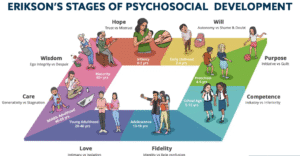
Erikson’s psychosocial development model outlines eight distinct stages, each characterized by a central conflict or crisis that must be resolved for healthy psychological growth. These crises, if navigated successfully, lead to the development of core virtues or strengths that serve as a foundation for future challenges and life transitions. Unlike Freud’s focus on innate drives, Erikson underscored the importance of social interactions and experiences during key periods of life, from infancy to old age.

Significance of the Theory

This lifespan approach highlights that personality development is an ongoing process, and that unresolved conflicts at any stage can influence later life outcomes. It emphasizes that social and cultural context, along with individual efforts, play crucial roles in shaping self-image, competence, and resilience. Overall, Erikson’s theory remains influential in clinical psychology, education, and social work, offering insights into how people face and adapt to various developmental challenges.

The Eight Stages Explained

  1. Trust vs. Mistrust (Infancy, 0-1.5 years): 

The first stage of Erikson’s theory, Trust vs. Mistrust, occurs from birth to about 18 months. Infants depend entirely on caregivers for food, comfort, and safety. When caregivers consistently meet these needs, infants develop trust and a sense of security, leading to the virtue of hope. For example, a baby whose cries are promptly responded to learns the world is safe. Conversely, neglect or inconsistent care leads to mistrust, anxiety, and fear, as the baby feels uncertain and insecure about others’ reliability. This stage forms the emotional foundation for future relationships and confidence in the world.


  1. Autonomy vs. Shame and Doubt (Early Childhood, 1-3 years):

The stage of Autonomy vs. Shame and Doubt (ages 1-3 years) is when toddlers strive to do things by themselves, like dressing or toilet training. When caregivers encourage and support their efforts, children develop a sense of independence and confidence, which Erikson called “will.” For example, a toddler allowed to feed themselves, even if messy, feels capable. However, harsh criticism or control makes them doubt their abilities, leading to shame and low self-esteem. This stage is key to building a child’s self-confidence and willingness to try new things.

  1. Initiative vs. Guilt (Preschool, 3-6 years):

In Erikson’s third stage, Initiative vs. Guilt (ages 3-6), children start taking charge by initiating activities and asserting control, such as leading play or making decisions. When caregivers encourage these efforts, children develop a sense of purpose and confidence. For example, a child who plans and organizes a game feels proud and motivated. However, if caregivers criticize or discourage these initiatives, the child may develop guilt, feeling hesitant to try new things. Successfully balancing initiative and guilt helps children build ambition and resilience for future challenges.

  1. Industry vs. Inferiority (School Age, 5-12 years):

In Erikson’s stage of Industry vs. Inferiority (ages 6-12), children focus on developing skills and comparing themselves with peers, especially in school. When they receive recognition and encouragement for their efforts, they build competence and confidence. For example, a child praised for good work in a school project feels capable and motivated. However, repeated failure or ridicule can lead to feelings of inferiority and low self-esteem. This stage is crucial for developing a strong sense of competence and a positive self-image.

  1. Identity vs. Role Confusion (Adolescence, 12-18 years):

During adolescence (ages 12-18), Erikson’s stage of Identity vs. Role Confusion is when teenagers explore their values, beliefs, and life goals to form a clear sense of self. When supported in this exploration, they develop fidelity—the ability to stay true to themselves and others. For example, a teenager trying different hobbies, social groups, or career ideas with encouragement gains confidence in their identity. If teens face pressure, lack opportunity, or feel confused, they may experience role confusion, leading to uncertainty about their future and difficulty committing to an identity. This confusion can cause insecurity, isolation, or rebellion. Successfully resolving this stage builds a strong identity foundation for adulthood.

  1. Intimacy vs. Isolation (Young Adulthood, 18-40 years):

Erikson’s stage of Intimacy vs. Isolation (ages 18-40) involves adults seeking deep, meaningful connections and intimate relationships. Success in this stage results in the ability to form loving, trusting bonds with partners and close friends. For example, a young adult who openly shares feelings and supports their partner develops love and emotional closeness. Failure to establish such connections leads to loneliness and isolation, which may cause emotional pain and social withdrawal. This stage is crucial for building lifelong relationships and emotional well-being.

  1. Generativity vs. Stagnation (Middle Adulthood, 40-65 years):

In Erikson’s stage of Generativity vs. Stagnation (middle adulthood, ages 40-65), the focus shifts to contributing to society through work, family, and community involvement. People who successfully engage in activities like parenting, mentoring, or meaningful work develop a sense of purpose and care for future generations. For example, an adult actively mentoring younger colleagues or raising a family experiences fulfillment. Conversely, those who feel disconnected or unproductive may experience stagnation, characterized by a lack of growth, involvement, and fulfillment. This stage is vital for leaving a positive legacy and maintaining psychological well-being.

  1. Integrity vs. Despair (Late Adulthood, 65+ years):

In Erikson’s final stage, Integrity vs. Despair (late adulthood, 65+ years), older adults reflect on their lives and evaluate them as either meaningful and fulfilling or full of regrets. When they feel a sense of completeness, acceptance, and pride in their accomplishments, they develop integrity and wisdom, enabling them to face the end of life with peace. For example, an elder who feels satisfied with their life and relationships embraces this wisdom. Conversely, those who focus on missed opportunities or unresolved conflicts may experience despair, bitterness, and fear about death. This stage is crucial for achieving emotional well-being in later life.

screenshot 2025 11 20 174925

Key Concepts

Erikson’s psychosocial theory incorporates several key concepts that provide depth to understanding human development:

Ego Identity

Ego identity is a central concept, referring to the conscious sense of self that emerges from successfully resolving the conflicts or crises at each stage of development. It is the integrated self-image that includes one’s values, beliefs, and goals, enabling effective interaction with society. For example, a teenager who navigates the Identity vs. Role Confusion stage by exploring career options and personal values forms a strong ego identity, leading to confidence in decision-making and social engagement later in life.

Virtues

Each stage of Erikson’s model presents a psychosocial crisis whose resolution grants a specific psychological strength or virtue. These virtues are essential for healthy development and provide the emotional tools needed for future challenges. Examples include:

  • Hope in the Trust vs. Mistrust stage, which fosters optimism and trust in others.
  • Will in Autonomy vs. Shame and Doubt, encouraging self-control and independence.
  • Purpose in Initiative vs. Guilt, supporting goal-directed behavior and leadership.
    These virtues accumulate across stages, shaping a resilient personality capable of adapting to life’s ups and downs.

screenshot 2025 11 20 175052

Epigenetic Principle

The epigenetic principle states that development unfolds in a predetermined, sequential order—each stage building on the outcomes of preceding ones. However, individual experiences and cultural influences impact how successfully each crisis is resolved. For example, a child raised in a supportive culture might resolve early stages like Trust vs. Mistrust more positively, creating a stronger foundation for later stages. Conversely, adverse experiences might delay or complicate resolution, affecting personality growth. This principle highlights the dynamic interaction between biological maturation and social context throughout life.

Integration and Example

A practical illustration is a young adult facing the Intimacy vs. Isolation stage. If they have formed a strong ego identity (from prior successful stages), embody virtues like love and will, and have been shaped by supportive experiences, they are more likely to form meaningful relationships. Conversely, unresolved crises or weak virtues may lead to isolation or loneliness.

In summary, Erikson’s key concepts—ego identity, virtues, and the epigenetic principle—explain how personality develops in a structured yet flexible way, shaped by both inherent sequencing and life experiences.

Application

Erikson’s theory is widely used in psychology and social work for understanding how individuals manage life’s challenges and transitions. It aids therapists, educators, and caregivers in identifying developmental strengths and areas of support.

Stage Age Range Crisis Virtue
Trust vs. Mistrust 0-1.5 yrs Reliable care vs. neglect Hope 
Autonomy vs. Shame 1-3 yrs Independence vs. excessive control Will
Initiative vs. Guilt 3-6 yrs Initiative vs. disapproval Purpose
Industry vs. Inferiority 5-12 yrs Competence vs. repeated failure Competence 
Identity vs. Role Confusion 12-18 yrs Exploration vs. confusion Fidelity 
Intimacy vs. Isolation 18-40 yrs Relationships vs. loneliness Love
Generativity vs. Stagnation 40-65 yrs Contribution vs. lack of growth Care 
Integrity vs. Despair 65+ yrs Acceptance vs. regret Wisdom 

Erikson’s psychosocial theory remains a foundational framework for understanding human growth, emotional health, and personal fulfillment throughout life

Conclusion 

Erikson’s psychosocial theory provides a profound framework for understanding human development as a lifelong process shaped by social interactions and cultural context. By navigating eight critical stages—from trust building in infancy to reflecting on life in old age—individuals cultivate essential virtues that form a resilient and coherent ego identity. The theory’s key concepts, including ego identity, virtues, and the epigenetic principle, highlight the dynamic interplay between biological maturation and personal experiences, influencing personality and social functioning throughout life. This comprehensive model remains foundational in psychology, guiding research, therapeutic practices, and education focused on human growth and well-being.

Attachment theory

Introduction 

Attachment theory is a psychological framework developed by John Bowlby that explains the importance of the emotional bond between an infant and their primary caregiver for the child’s survival and healthy social-emotional development. It posits that infants instinctively seek to form attachments to caregivers who are consistently sensitive, responsive, and available, providing a secure base for exploration and a safe haven during distress or danger. This bond serves as the foundation for the child’s feelings of security and influences their emotional regulation and relationship patterns throughout life.

Attachment theory is subdivided into distinct attachment styles that describe patterns of bonding and behavior between children and their caregivers, as well as later in adult relationships. These subdivisions were originally identified in infancy but are also relevant across the lifespan.

Attachment theory, originally developed by John Bowlby and further expanded by Mary Ainsworth, provides a comprehensive framework for understanding how early relationships with caregivers shape emotional development and interpersonal relationships throughout life.

Core Concepts of Attachment Theory

Core concepts of attachment theory include Attachment Behavior, Secure Base and Safe Haven, and Internal Working Models. These concepts explain the emotional bond between infants and their caregivers and how this bond shapes lifelong social and emotional functioning.

Attachment Behavior

Attachment behaviors are innate actions infants use to maintain closeness to caregivers, especially in times of distress or danger. Examples include crying, clinging, reaching, smiling, and following. For instance, a baby crying loudly when left alone signals distress and prompts the caregiver to provide comfort and safety. These behaviors serve the biological purpose of ensuring the infant’s survival by keeping the caregiver close for protection and care.

Secure Base and Safe Haven

The caregiver provides a secure base, which allows the child to explore their environment confidently, knowing they can return to the caregiver if needed. At the same time, the caregiver acts as a safe haven—a source of comfort and reassurance during times of stress or fear. For example, a toddler playing in a park may explore freely but runs back to the parent when frightened by a loud noise, seeking reassurance and protection.

Internal Working Models

Early interactions with caregivers lead children to form internal working models—mental frameworks about the self and others in relationships. These models guide expectations and behavior in future relationships. For example, a child with sensitive, responsive caregivers may develop a model of themselves as worthy of love and others as reliable and trustworthy, fostering positive social interactions. Conversely, inconsistent caregiving may lead to models where the self is seen as unworthy and others as unpredictable, influencing anxiety and mistrust in relationships throughout life.

Attachment Phases (Bowlby’s Model)

Bowlby’s Attachment Theory describes four key phases of attachment development in children, each characterized by specific behaviors and emotional milestones, with examples illustrating how the infant and caregiver interact at each stage:

Pre-attachment Phase (0-6 weeks)

Infants show no preference for a specific caregiver but use innate signals such as crying, smiling, and grasping to attract attention from any adult.

Example: A newborn baby cries and smiles to anyone who responds, and does not show distress if picked up by a stranger, signaling indiscriminate social responsiveness.

Attachment-in-the-making (6 weeks to 6-8 months)

Infants begin to show a preference for familiar caregivers over strangers and start to recognize the caregiver’s voice and face.

Example: A 4-month-old may calm more quickly when soothed by their mother than by a stranger and shows more frequent smiles directed at the caregiver, indicating growing trust but still accepts care from others.

Clear-cut Attachment (6-8 months to 18-24 months)

Strong attachment behaviors emerge: infants clearly prefer their primary caregiver, show distress on separation (separation anxiety), and display wariness of strangers.

Example: A 10-month-old may cry intensely when the mother leaves the room and runs to her upon return, using her as a secure base for exploration while also showing stranger anxiety.

Goal-corrected Partnership (from 18-24 months onwards)

Children develop cognitive understanding of the caregiver’s needs and plans and can adjust their behavior accordingly. They negotiate closeness with more flexibility and consider the caregiver’s perspective.

Example: A 3-year-old understands that the caregiver may not always be immediately available; they might express their needs verbally and wait patiently for the caregiver to respond, such as waiting for a snack rather than demanding it immediately.

screenshot 2025 11 20 001009

These phases reflect an evolving attachment system that helps ensure the child’s safety while fostering independence and emotional regulation. The process is foundational for secure emotional bonds and social development throughout life.

Detailed Breakdown of Attachment Styles

Attachment styles in children reflect distinct patterns of emotional bonding and responses to caregivers, which deeply impact their development and relationships.

  1. Secure Attachment: Children with secure attachment have caregivers who are consistently responsive and sensitive to their needs. These children feel confident about their worth and trust others. They seek comfort when distressed but also freely explore their environment, using the caregiver as a “secure base.”
    Example: A securely attached toddler happily plays with toys but looks back to their parent regularly. If distressed, they seek the parent’s comfort and are easily soothed, then return to play with renewed confidence.
  2. Anxious-Ambivalent Attachment :This style arises from inconsistent caregiving, where caregivers are sometimes available and sometimes neglectful or unresponsive. Children become clingy, overly dependent, and fearful of abandonment. They have difficulty calming down and may display heightened distress when separated.
    Example: An anxiously attached child may become extremely upset when a parent leaves and struggle to be comforted upon the parent’s return, often showing clinginess and needing constant reassurance.
  3. Avoidant Attachment: Children with avoidant attachment experience caregivers who are emotionally unavailable, rejecting, or unresponsive. These children suppress their attachment needs, seeming emotionally distant or indifferent. They avoid seeking comfort or showing vulnerability.
    Example: An avoidant child may not seek their caregiver when upset, may appear self-reliant, and avoid emotional closeness, even when frightened or hurt.
  4. Disorganized Attachment: Disorganized attachment often stems from trauma, neglect, or frightening caregiving. Children display contradictory and confused behaviors, such as approaching the caregiver while also showing fear or avoidance. Their behavior signals emotional conflict and confusion.
    Example: A child might freeze or show fear when the caregiver approaches or display both clinginess and withdrawal simultaneously, reflecting their conflicted feelings toward the caregiver. screenshot 2025 11 20 000712

These attachment styles significantly influence children’s emotional regulation, social development, and future relationship patterns. Understanding these examples helps caregivers and professionals provide appropriate support to foster secure, healthy attachments.


Attachment in Adults

These adult attachment styles influence how individuals approach relationships, handle conflict, and regulate emotions, often reflecting the internal working models developed in early childhood. Recognizing one’s attachment style can be empowering for personal growth and improving relationship dynamics.

Importance and Applications

Attachment theory plays a crucial role in several fields by providing practical tools and insights to enhance emotional wellbeing and interpersonal relationships, with real-world examples illustrating its impact:

Psychotherapy

Attachment theory informs therapeutic approaches by helping clinicians understand clients’ relational patterns and emotional regulation difficulties rooted in early attachment experiences. For example, therapists use attachment-based therapy to help clients with anxiety or trauma explore and heal early attachment wounds, fostering more secure relational dynamics. Emotionally Focused Therapy (EFT) for couples is a direct application, where partners learn to recognize attachment needs, respond sensitively, and rebuild trust, significantly improving relationship quality.

Parenting

Attachment theory guides parents toward responsive and sensitive caregiving that promotes secure attachment and healthy child development. Parenting programs often include psychoeducation and video feedback to help parents recognize their child’s signals and respond appropriately. For instance, a parent who learns to soothe a crying baby consistently helps the infant develop trust and emotional security, strengthening the parent-child bond and fostering the child’s resilience.

Education

Teachers applying attachment principles create supportive classroom environments where students feel safe to explore and learn. Programs like My Teaching Partner (MTP) train educators to act as a “secure base,” enhancing student engagement, emotional regulation, and academic success.

Healthcare and Social Care

Attachment-informed practices improve caregiving in hospitals, foster care, and social services by emphasizing consistent, nurturing relationships. For example, reducing caregiver turnover and promoting stable placements for children in foster care improves attachment security, leading to better mental health outcomes.

Relationships

Attachment awareness helps individuals understand their own and others’ relational behaviors. Couples can better navigate conflicts by recognizing attachment triggers and responding with empathy rather than defensiveness, fostering healthier, more secure partnerships.

Public Health and Policy

Attachment research has influenced child welfare policies by highlighting the importance of stable and sensitive caregiving for healthy development. Studies like Rene Spitz’s on hospitalism catalyzed reforms towards family-centered care in institutional settings, reducing childhood mortality and developmental delays.

In summary, attachment theory’s practical applications permeate psychotherapy, parenting, education, healthcare, relationships, and public policy, providing a universal framework to promote secure attachments and enhance emotional and social wellbeing throughout life.

Developmental Psychology

Attachment theory provides insights into emotional and social development milestones, highlighting how early attachment influences later mental health, social competence, and stress regulation. It informs research and interventions focused on promoting security and addressing vulnerabilities in childhood to foster lifelong wellbeing.

Overall, attachment theory is foundational in understanding human development and functioning, shaping clinical practice, parenting, and building stronger, more supportive relationships across the lifespan.

Conclusion

Attachment theory, pioneered by John Bowlby and expanded by Mary Ainsworth, emphasizes the crucial role early emotional bonds between infants and caregivers play in shaping social, emotional, and cognitive development throughout life.

The core concepts—attachment behaviors, secure base and safe haven, and internal working models—illustrate how infants instinctively seek proximity to sensitive and responsive caregivers for survival and emotional security. Bowlby’s attachment phases describe the evolving nature of this bond from birth through toddlerhood, highlighting the growing complexity of attachment behaviors and mutual understanding between child and caregiver.

Attachment styles—secure, anxious-ambivalent, avoidant, and disorganized—reflect patterns of caregiver responsiveness and shape the child’s expectations and strategies for managing relationships. These early attachments extend into adulthood, influencing romantic relationships and interpersonal dynamics, where secure attachment supports healthy intimacy while insecure styles may lead to difficulties in trust and emotional regulation.

The theory’s importance spans psychotherapy, parenting, relationships, and developmental psychology. Therapists use attachment insights to customize interventions that address relational issues and emotional trauma. Parenting guided by attachment principles promotes sensitive caregiving that fosters resilience and emotional well-being. Understanding attachment helps explain human behavior in relationships and guides efforts to support social and emotional development across the lifespan.

In conclusion, attachment theory provides a comprehensive framework to understand how foundational early relationships critically influence lifelong emotional health, social competence, and interpersonal fulfillment. It remains a cornerstone of psychological theory and practice, enriching clinical approaches, parenting, and research on human development.

References

Bowlby, J. (1969). Attachment and Loss.

Ainsworth, M. D. S. (1978). Patterns of Attachment.

“Attachment Theory: Bowlby and Ainsworth’s Theory Explained,” Verywell Mind.

“Attachment Theory,” Simply Psychology, 2025.

“Attachment Styles in Adult Relationships,” Attachment Project, 2025.

“Practitioner Review: Clinical applications of attachment theory,” PMC, 2011.

Positive Psychology, 2025, “Attachment Theory, Bowlby’s Stages & Attachment Styles.”

“Attachment theory,” Wikipedia, 2004


The Dance of Desire and Morality: Freud’s Psychosexual Stages Explained

Introduction


Psychodynamic theory was developed by Sigmund Freud in the late 19th and early 20th centuries during his clinical work treating patients with psychological disorders. Freud’s curiosity about the unconscious mind led him to discover that many psychological problems originated from unconscious conflicts, often rooted in early childhood experiences. His work laid the foundation for psychoanalysis, a therapeutic method aimed at uncovering these unconscious influences through talk therapy, dream interpretation, and free association.

Freud introduced a structural model of the mind comprising the conscious, preconscious, and unconscious levels. He believed the unconscious was particularly powerful in shaping behavior because it held desires, fears, and memories that individuals were unaware of but that strongly influenced emotions and actions.

His theory evolved over decades and sparked further development in psychology, influencing various psychodynamic approaches today, including object relations and ego psychology. Freud’s psychodynamic theory remains foundational, highlighting the role of unconscious processes and early experiences in shaping human behavior and mental health.

Core Components of Personality
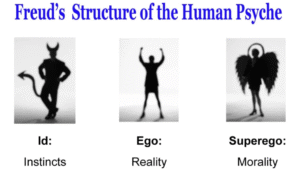
Freud identified three main parts of the personality:

  • Id

The id is the most primitive part of the personality, present from birth and entirely unconscious. It operates on the pleasure principle, meaning it seeks immediate gratification of all desires, wants, and needs. If these needs are not met, the individual experiences anxiety or tension. The id is impulsive and selfish, driven by instinctual biological drives such as hunger, thirst, and sexual desire, without consideration for reality or social appropriateness. Example: Imagine you are extremely hungry during an important meeting. Your id urges you to leave instantly and eat, ignoring social rules or consequences.


  • Ego

The ego develops from the id during infancy and functions mainly in conscious and preconscious levels. It operates on the reality principle, acting as a rational mediator that balances the impulsive demands of the id with the constraints of the external world and moral standards imposed by the superego. The ego uses logical thinking, problem-solving, and decision-making to satisfy the id’s desires in socially acceptable ways. It also employs defense mechanisms like repression or denial to manage conflicts and anxiety. Example: While feeling hungry, your ego reminds you that leaving the meeting abruptly is inappropriate. Instead, it suggests waiting for a break before eating.


  • Superego

The superego emerges around the age of five as a result of internalizing parental and societal values, functioning as the moral conscience. It strives for perfection by enforcing ethical standards and ideals, punishing the ego with feelings of guilt or shame when behavior falls short of these standards. The superego consists of two subsystems: the conscience (which punishes bad behavior) and the ego ideal (which rewards good behavior). It often conflicts with the id, placing strict demands to inhibit impulsive urges and encouraging socially appropriate behavior. Example: You may feel guilty for even thinking about leaving the meeting because it violates professional behavior standards, this feeling comes from the superego.


  • Interaction

These three components are in constant interaction, shaping thoughts, feelings, and behaviors. The ego tries to satisfy the id’s desires realistically while fulfilling the superego’s moral expectations, often facing tension and conflict in balancing these demands. For example, feeling angry (id) might be suppressed by the superego’s moral rules, with the ego mediating a socially acceptable response. Example: Suppose a friend insults you. Your id might push you to retaliate aggressively (immediate reaction), but your superego reminds you being aggressive is wrong and could harm your friendship. The ego tries to balance these urges by advising you to respond calmly and constructively, preserving the relationship.

screenshot 2025 11 19 012912

This dynamic interplay influences personality development and mental health, with disruptions potentially leading to psychological distress.

Unconscious Mind and Childhood Influence

Freud emphasized that much of human behavior is controlled by the unconscious mind, a vast reservoir of hidden desires, memories, and emotions that are not accessible to conscious awareness. These unconscious contents include repressed feelings, painful memories, and instinctual drives that are too threatening or anxiety-provoking to be consciously acknowledged. Despite being outside of awareness, the unconscious exerts a powerful influence on thoughts, emotions, and behaviors.

Childhood experiences are crucial in shaping the unconscious mind. Early relationships, especially with caregivers, create foundational patterns of attachment, emotional regulation, and self-concept. Conflicts or traumatic events in childhood may be repressed into the unconscious but continue to affect personality development and interpersonal relationships throughout life. For example, unresolved childhood anxiety about abandonment may unconsciously affect adult relationships by causing fears of rejection or clinginess.

Defense mechanisms, such as repression, denial, and projection, operate unconsciously to protect the individual from psychological distress by keeping unacceptable impulses or memories out of conscious thought. However, these repressed contents can manifest indirectly through dreams, slips of the tongue (Freudian slips), and neurotic symptoms.

Freud’s psychodynamic therapy aims to bring these unconscious contents into conscious awareness, helping individuals understand how past experiences influence current behavior and emotional difficulties. By resolving unconscious conflicts, people can achieve greater emotional insight and healthier functioning.

In modern psychology, the unconscious is recognized not only as a repository of repressed material but also as a functioning cognitive system that processes information automatically and efficiently, guiding much of human thought and behavior outside conscious control.

Thus, the unconscious mind and childhood experiences together form a dynamic foundation that shapes personality, motivations, and patterns of behavior throughout life.

Defense Mechanisms

Defense mechanisms are unconscious psychological strategies used by the ego to protect itself from anxiety, internal conflicts, or uncomfortable thoughts and feelings. They work by distorting or denying reality in various ways, allowing individuals to cope with stress and maintain emotional stability.


Common Defense Mechanisms:

  1. Repression: The unconscious blocking of unacceptable thoughts or traumatic memories from conscious awareness. For example, a person who experienced childhood trauma may have no memory of it but still exhibits anxiety symptoms.
  2. Denial: Refusing to accept reality or facts, instead acting as if a painful event or emotion does not exist. For instance, someone diagnosed with a serious illness might deny the severity of the condition.
  3. Projection: Attributing one’s own undesirable feelings or impulses onto others. For example, a person who feels hostile may accuse others of being hostile toward them.
  4. Sublimation: Channeling unacceptable impulses into socially acceptable activities, such as turning aggressive drives into sports or artistic creativity.
  5. Displacement: Redirecting emotions from a threatening target to a safer substitute. For instance, a worker angry at their boss may go home and take out frustration on family members.
  6. Reaction Formation: Acting in a way contrary to true feelings. A person who feels insecure might behave excessively confident or boastful.
  7. Rationalization: Creating logical but false explanations to justify unacceptable feelings or behaviors, such as blaming external factors for personal failures.
  8. Regression: Reverting to behaviors typical of an earlier developmental stage when faced with stress, such as throwing tantrums or seeking comfort objectsscreenshot 2025 11 15 012849

These mechanisms help reduce psychological distress by managing conflicts among the id, ego, and superego. However, excessive reliance on defense mechanisms can lead to maladaptive behavior and unresolved emotional issues. Psychodynamic therapy aims to bring these unconscious defenses to awareness to promote healthier coping and emotional growth.

Psychosexual Stages of Development

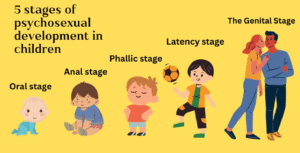
Sigmund Freud proposed that personality develops through five psychosexual stages, each focused on different erogenous zones where the child’s libido (sexual energy) is concentrated. He believed that unresolved conflicts or frustrations during any stage could lead to fixation, which manifests as specific personality traits or behavioral issues in adulthood. The stages are as follows:

Oral Stage (Birth to 18 months)

The focus is on the mouth—activities like sucking and biting provide pleasure. Fixation from unresolved issues (e.g., early or late weaning) may result in oral behaviors in adulthood such as smoking, nail-biting, overeating, or excessive talking.


Anal Stage (18 months to 3 years)

The libido centers on bowel and bladder control during toilet training. Fixation can lead to an anal-retentive personality (obsessive, orderly, and stubborn) or anal-expulsive personality (messy, disorganized, and rebellious).

Phallic Stage (3 to 6 years)

Pleasure focuses on the genitals, and children experience the Oedipus complex (boys’ desire for their mother and rivalry with father) or Electra complex (girls’ desire for their father and envy of the mother). Resolution leads to identification with the same-sex parent and development of the superego. Unresolved conflicts can cause difficulties with authority and sexual dysfunction.

Latency Stage (6 years to puberty)

Sexual impulses become dormant, and energy is directed toward socialization, learning, and developing new skills. There is little psychosexual development during this period.

Genital Stage (Puberty onwards)

Sexual urges reawaken and are directed toward peers of the opposite sex. Successful navigation leads to mature, healthy adult relationships. Fixation or unresolved conflicts at earlier stages may result in difficulties in forming intimate relationships.

screenshot 2025 11 19 013550

Freud stressed that early satisfaction and frustration during these stages shape adult personality and behavior, with each stage building upon the resolution of the previous one. Fixations lead to neuroses and maladaptive behaviors that psychodynamic therapy aims to address.

Therapeutic Application

Psychodynamic therapy is a form of depth psychology aimed at uncovering and resolving unconscious conflicts and defense mechanisms that influence a person’s emotional difficulties and behaviors. The therapy operates on the idea that by bringing these unconscious processes into conscious awareness, clients can gain insight, achieve self-understanding, and experience lasting psychological change.


Key Techniques:

  • Free Association: Clients are encouraged to speak freely about whatever comes to mind, without censorship or judgment. This process helps reveal unconscious thoughts, feelings, and conflicts that influence behavior.
  • Dream Analysis: Dreams are interpreted as symbolic expressions of unconscious desires and conflicts. Analyzing dreams provides access to hidden emotional material that can be explored and understood.
  • Interpretation: The therapist listens to the client’s verbal and nonverbal cues and offers interpretations that link current symptoms or behaviors to unconscious motives and past experiences. This helps clients connect their present struggles to deeper psychological roots.
  • Examination of Defense Mechanisms: Therapists identify defense mechanisms clients use to cope with internal conflicts and anxiety. By bringing these unconscious defenses into awareness, clients can understand their role and reduce reliance on maladaptive coping.
  • Transference Analysis: Clients often project feelings about significant others onto the therapist. Exploring these transference reactions helps uncover unresolved issues from past relationships that affect current behavior.
  • Working Through: The client and therapist repeatedly address and explore unconscious conflicts and patterns over time, facilitating emotional insight and behavioral change.

Goals and Benefits:

  • Enhance self-awareness and understanding of unconscious influences on thoughts, emotions, and behaviors.
  • Resolve internal conflicts and reduce symptoms like anxiety, depression, and relationship difficulties.
  • Improve emotional regulation and coping strategies by recognizing and modifying defense mechanisms.
  • Promote personal growth, healthier relationships, and greater psychological resilience.

Psychodynamic therapy is applicable to a range of mental health issues, including mood disorders, personality disorders, anxiety disorders, and trauma-related problems. It often requires a longer-term commitment compared to brief therapies but can lead to profound and enduring change by addressing the root causes of psychological distress rather than just symptoms.

Conclusion 

Psychodynamic theory, developed by Sigmund Freud, offers a profound understanding of human behavior by emphasizing the role of unconscious processes, early childhood experiences, and internal psychic conflicts. It highlights the dynamic interplay among the id, ego, and superego in shaping personality, and how unresolved conflicts during psychosexual stages can influence adult behavior. Defense mechanisms serve as unconscious strategies to protect the ego from anxiety, while psychodynamic therapy aims to uncover these hidden conflicts and promote lasting emotional insight and healing. Despite evolving psychological paradigms, psychodynamic theory remains foundational in mental health practice, providing valuable tools for exploring the depths of the human mind and fostering personal growth through increased self-awareness.


References:


Freud’s psychodynamic theory and components (id, ego, superego)​

Unconscious mind and childhood influence​

Defense mechanisms and their functions​

Psychosexual stages of development​

Psychodynamic therapy techniques and goals


Perception

Introduction 

Perception is the complex cognitive process through which humans interpret, organize, and make sense of sensory information received from the environment to create a meaningful experience of the world around them. It is not just passive reception but an active process influenced by the interplay of sensory inputs and cognitive factors, such as previous knowledge, expectations, emotions, cultural background, and attention.

In real life, perception enables individuals to become consciously aware of objects, relationships, and events, allowing them to respond appropriately. For example, when walking down a busy street, a person perceives the colors and shapes of traffic lights, the sounds of vehicles, and the movement of other pedestrians, integrating all this information to navigate safely. Similarly, when smelling freshly baked bread, the sensory input triggers a recognition of its aroma, evoking memories and feelings that influence the desire to eat.

screenshot 2025 11 15 145346


Expanded Real-Life Definition of Perception

Perception is essentially the mental process that transforms raw data from the senses into a coherent and usable understanding of one’s surroundings. This involves organizing sensory stimuli into recognizable patterns, interpreting their meaning based on context and prior experience, and forming a conscious awareness of the environment.

For example, reading text on a page involves perceiving the shapes of letters and words, interpreting their linguistic meaning based on learned language rules, and understanding the overall message. Another daily example is hearing a friend’s voice in a crowded room—using selective attention, the brain filters relevant sounds and interprets them while ignoring background noise.

Thus, perception acts as a filter between objective reality and an individual’s internal representation of the world. Because it is shaped by subjective influences and cognitive processes, different people may experience and interpret the same stimuli differently, underscoring the personalized nature of perception.

Stages of Perception

Perception is a multi-stage process through which sensory information is transformed into meaningful experiences. The major stages are as follows:

  1. Sensation
    • This is the initial stage where sensory organs (eyes, ears, skin, nose, tongue) detect stimuli from the environment.
    • Sensory receptors respond to stimuli like light, sound waves, pressure, odor molecules, and taste compounds.
    • Example: When you see a bright red apple, your eyes detect the color and shape as raw data.
  2. Attention
    • Focuses on selecting relevant stimuli from the environment while filtering out irrelevant or distracting information.
    • Selective attention allows you to concentrate on one conversation in a noisy room or spot a friend in a crowd.
    • Example: Hearing your name mentioned at a busy party while tuning out other noise.
  3. Organization
    • The brain organizes incoming sensory data into recognizable patterns, grouping elements based on factors like similarity, proximity, continuity, and closure (Gestalt principles).
    • It sorts shapes, sounds, and textures into meaningful units.
    • Example: Seeing a series of dots and perceiving them as a complete circle instead of separate elements.
  4. Interpretation
    • The brain assigns meaning to the organized data by integrating it with past experiences, knowledge, emotions, and expectations.
    • This stage can be subjective; different people may interpret the same stimuli differently.
    • Example: Seeing a person in a white coat and interpreting them as a doctor based on cultural knowledge.
  5. Perceptual Constancy
    • The tendency to recognize objects as unchanged despite changes in sensory input such as lighting, angle, distance, or context.
    • This helps maintain a stable perception of the environment.
    • Example: Recognizing a door is rectangular even when viewed from an angle that makes it appear trapezoidal.
  6. Memory and Recall
    • Experiences obtained through perception are stored in memory.
    • Later, this stored information is recalled to help interpret future stimuli and guide behavior.
    • Example: Remembering that a dog barked aggressively previously informs how you perceive and react to dogs in the future.

screenshot 2025 11 15 145540

Perception is thus a dynamic interaction between sensory input and cognitive processes, enabling humans to navigate, understand, and respond to their environment effectively.

This expanded model incorporating memory and recall reflects the complexity and adaptability of human perception, making it not merely a snapshot but an ongoing, evolving process shaped by experience.

Theories of Perception

  1. Bottom-Up Processing
    • This theory suggests that perception begins with raw sensory data flowing from sensory organs to the brain.
    • It is data-driven and works by building perception from the details received through senses without prior knowledge influencing it.
    • For example, when encountering an unfamiliar object, your brain pieces together sensory input like shape, color, and texture to identify it.
  2. Top-Down Processing
    • Here, perception is shaped by prior knowledge, experiences, expectations, and context.
    • The brain uses cognitive factors to interpret sensory data, sometimes filling in missing gaps or interpreting ambiguous information.
    • For example, when reading messy handwriting, past knowledge and the context help you understand the words despite unclear letters.
    • Top-down processing works in tandem with bottom-up, influencing what we attend to and how we make sense of stimuli.
  3. Gestalt Theory
    • This theory highlights that humans perceive entire patterns or configurations, not just individual elements.
    • Principles like proximity, similarity, closure, and continuity show how parts are grouped into wholes.
    • A classic example is perceiving a series of dots arranged in a circle as a complete circle rather than separate dots.
  4. Constructivist Theory
    • Perception is an active process constructed by combining sensory input with memory, experience, and context.
    • It is subjective and influenced by learning and culture.
    • For instance, cultural background may affect how gestures or signs are perceived in communication.
  5. Ecological Theory (Direct Perception)
    • Proposed by James Gibson, this theory argues that the environment provides rich sensory information that humans directly perceive without needing cognitive interpretation.
    • The focus is on “affordances,” or the possibilities for action that the environment offers.
    • For example, the perception of a chair as something to sit on happens directly through sensory interaction with it, without complex mental processing.

Summary

These theories together show perception as a combination of sensory inputs, cognitive interpretations, and environmental interactions. Bottom-up and top-down processing especially highlight how perception is both data-driven and influenced by prior knowledge, making them foundational concepts in understanding how we perceive our world. The Gestalt, Constructivist, and Ecological theories further explain the holistic, subjective, and environment-driven aspects of perception.

Perceptual Mechanisms

  1. Selective Attention
    Selective attention is the cognitive mechanism that filters incoming sensory information to focus on the most important or relevant stimuli while ignoring distractions. This process helps prevent sensory overload and enables effective interaction with the environment. For example, in a noisy café, you can focus on the conversation with your friend, tuning out background chatter.
  2. Perceptual Set
    A perceptual set is a mental predisposition to perceive or interpret stimuli in a particular way based on prior experiences, expectations, emotions, and cultural context. It acts as a filter that influences how new sensory information is processed. For instance, if someone has recently seen a lot of scary movies, they might interpret ambiguous noises at night as something threatening.
  3. Depth Perception
    Depth perception is the ability to perceive the world in three dimensions and judge distances between objects. It relies on visual cues such as binocular disparity (the difference in images between the two eyes), motion parallax, relative size, texture gradients, and shadows. This mechanism is essential for tasks like driving, catching a ball, or walking without bumping into objects.
  4. Perceptual Constancies
    Perceptual constancies allow us to recognize objects as stable and unchanging despite variations in sensory input caused by changes in lighting, distance, angle, or movement. Key types include size constancy, shape constancy, and color constancy. For example, a door is perceived as a rectangle whether it is open or closed, near or far, even though the retinal image changes.screenshot 2025 11 15 150436

These mechanisms ensure that perception is efficient, coherent, and meaningful, allowing humans to effectively interpret and engage with their complex and dynamic environments.

Examples of Perception

  • Visual Perception:
    When driving, visual perception allows a person to read traffic lights, recognize road signs, monitor the movement of other vehicles, and estimate distances on the road. For example, a driver uses visual cues to notice when a pedestrian is about to cross or when a traffic light changes from green to red, enabling timely and safe responses.
  • Auditory Perception:
    In a crowded and noisy environment like a party or café, auditory perception enables a person to focus on specific sounds, such as hearing their name being called or recognizing familiar voices, despite background noise. This ability is a demonstration of the “cocktail party effect,” allowing selective attention to auditory stimuli. screenshot 2025 11 15 150108
  • Tactile Perception:
    When touching a hot surface, such as a stove, tactile perception registers the high temperature through skin sensors, triggering a reflexive action such as quickly pulling away the hand to avoid burns. This immediate sensory input combined with perceptual processing ensures safety.screenshot 2025 11 15 150223
  • Social Perception:
    During conversations, social perception allows interpretation of nonverbal cues like facial expressions, body language, and tone of voice to infer emotions and intentions. For example, perceiving a friend’s smile and relaxed posture as indicators of friendliness or comfort, while recognizing crossed arms and averted gaze might be interpreted as discomfort or disinterest.

These examples illustrate how perception integrates sensory input and cognitive processing to help individuals navigate and understand various aspects of everyday life effectively.

Importance and Applications of Perception

Perception is fundamental in helping humans navigate, understand, and interact with their environment. It organizes sensory information into meaningful experiences, enabling effective responses to the world around us.

  • Navigating and Understanding Environment:
    Perception allows individuals to detect and interpret stimuli such as sights, sounds, and smells to move safely and efficiently. For example, perceiving the speed and distance of an oncoming vehicle helps avoid accidents. It also enables recognizing familiar places and objects, which guides everyday actions.
  • Influencing Decision-Making and Social Interactions:
    Perception shapes how people make judgments and decisions by interpreting situations and the behavior of others. Social perception, such as reading facial expressions and body language, is crucial in communication and building relationships. Misinterpretations can lead to misunderstandings or conflicts.
  • Usefulness in Various Fields:
    • Psychology: Understanding perception helps explain human behavior, cognitive function, and mental health challenges.
    • Marketing: Marketers use perception principles to influence consumer choices, brand recognition, and advertising effectiveness.
    • Education: Teaching methods leverage perception theories to design materials that enhance learning and retention.
    • Interface Design: UI/UX professionals apply perceptual principles to create intuitive digital and physical interfaces for better user experiences.
  • Awareness of Perception’s Subjectivity:
    Recognizing that perception is subjective—shaped by personal experiences, culture, and emotions—improves communication and conflict resolution. It fosters empathy by appreciating that people may view the same situation differently.

In summary, perception is not only the gateway to sensory experience but also a critical factor influencing cognition, behavior, and social dynamics, making its understanding vital in diverse practical contexts.

Conclusion

Perception is a vital cognitive process through which humans interpret and organize sensory information, creating a meaningful experience of the surrounding world. It is an active process influenced by both raw sensory input and cognitive factors such as prior knowledge, expectations, and attention. The stages of perception—sensation, attention, organization, interpretation, and perceptual constancy—work together to filter and make sense of incoming stimuli. Theories like Bottom-Up and Top-Down processing, Gestalt, Constructivist, and Ecological approaches provide diverse perspectives on how perception operates, highlighting the balance between sensory data and mental frameworks. Perceptual mechanisms, including selective attention, perceptual set, depth perception, and perceptual constancies, ensure efficient and coherent interpretation of stimuli.

Perception’s importance extends across daily life, influencing navigation, decision-making, social interactions, and various professional fields such as psychology, marketing, education, and technology design. Awareness of perception’s subjective nature can help improve communication and reduce conflicts, emphasizing empathy and understanding. Understanding perception equips us to better comprehend human behavior, optimize environments, and enhance interpersonal interactions, reflecting its foundational role in cognition and experience.

References

  • Study.com. (2014). Perception in Psychology | Definition, Importance & Types.
  • Wikipedia. (2002). Perception.
  • Verywell Mind. (2005). Perception: The Sensory Experience of the World.
  • Bruner, J. S. (Year). The Role of Perception in Defining Reality.
  • Gestalt Psychology principles.
  • Gibson, J. J. (Ecological Theory of Perception).
  • Cognifit.com. (2025). Perception- Cognitive ability CogniFit.
  • Lumen Learning. (2011). Introduction to Perception.


The Fractured Mind

The initial scream was as sharp in Birchwood as a glass crack. During the time during which Detective Sam Vega arrived at Grayfield Estate, the fire had already gained momentum. Timbers creaked, windows flew open and smoke swirled up into the morning fog.

Amid the confusion, Dr. Elise Moran fell off the ruins, pushing an unconscious woman, who was missing weeks, across the gravel. They both were dragged to safety by firefighters, and Elise continued to turn her head back and stare at the crumbling house.

He is inside there, she whispered.

Vega knelt beside her. “Who?”

Elise, said he, shaking thy shoulder. “Who?”

She met his eyes. “Nathaniel Gray. My patient.”

The name froze him in place.

The Mask Unveiled

Nathaniel had been a model prisoner converted to a patient–a man who was a story-collector like an antique collector. He did not talk much, but when he did, it was with a skewering accuracy whereby he reverted each question to the person who made it. Elise once referred to him as an echo chamber with mirrored walls: what you offered to him he returned in such a manner that you wondered at what you saw in the glass.

He disappeared days before the fire and when he did, the law enforcement thought that he did so on the ground. But Elise knew better. Nathaniel was not fleeing anything. He was redesigning his environment -shaping the town up the way he alone could interpret it.

At this point, there was just smoke left of the estate. His body was never found.

The Game

Reportedly, within weeks, there were reports. Windows remained open without anybody having touched it. Blank postcards, all with the same burnt edges, in the mail boxes. Some of them had sketches: rooms, stairs, and faces, without pupils.

Elise lived the days as though she was in water. She continued teaching at the university and continued to help trauma victims but every startling noise flinched her. Her sanity was strained.

One night she received a note under her office door.

“You left the door open. Again.”

That common line sunk in her heart. It had been penned in that same hand which had penned her patient files with questions regarding empathy, guilt, and human imitation.

She woke up Vega at once. “It’s him,” she said. “He’s alive.”

Vega sighed. “Or someone’s copying him.”

However, it was found that when forensics retrieved a print of the note, it was not a match anywhere in the database. Not Nathaniel Gray. Not any known identity.

Elise then had fancied she had understood–Nathaniel had wetted himself long before any of them could see.

The Revelation

The second wave was through students. Some of them were talking about a new visiting lecturer who had just been featured in their psychology course- a man purporting to be a specialist in behavioral architecture. His name in the list: Ian Grayson.

Elise read the name and felt the blood run out of her face. Gray. Son. The perfect disguise.

She had spent this night late at the university viewing security footage. She found him at 2:17 a. m.–strolling slowly along the west corridor, low-keyed coat, surgical precision in each stride. He moved straight below the camera, and looked up.

He smiled.

The Final Session

Elise made the confrontation on her own. The next night she entered Lecture Hall B, the light was very low, and the sound of her feet could be heard. Nathaniel–or Ian–was standing on the stage waiting as though the reunion was on time.

“Still chasing ghosts?” he asked.

Your death, you acted, she said. You were setting your house on fire to forget you.

He tilted his head. “Not erased. Redesign. People don’t fear death, Elise. They are afraid of losing their story”.

She stepped closer. “You killed Emily Carr.”

The first time his smile came faltering. I did not kill her because I did not want to kill her. Because you needed a witness. No good performance can be done without an audience.

Elise caught a glimpse of movement in the rear of him–a projector whirring into motion. There was a live video of her own house on the wall. The living room. A red light of the camera winking.

You have been a part of my experiment, you know, whispered him.

Elise sprang, and took the taser that was on her side. She fired. Nathaniel shook into a faint. Before she could breathe, an explosion of statical fire swept through the projector, then black.

Police arrived several minutes later and the hall was empty. Nathaniel–gone.

His voice alone was left, and he circled through the loudspeaker:

Kind-heartedness is your fault, doctor. You’ll never see me coming.”

The Return

Months passed. Birchwood became impatient.

Elise went back to her lectures. To normalcy, or something moulded out of it. On her desk every morning, however, there would be folded paper. Drawings,– staircases, corridors, faces without eyes.

She would find herself, sometimes, spending hours and hours, following every line to a message. She had other occasions where she burnt them without reading.

Nevertheless, she could not get rid of the feeling that Nathaniel had not disappeared. Only observing. Abiding, in the fog, perfecting the map of her brain.

As the fog always came back in Birchwood.

And now, here and there, it called her name. 

screenshot 2025 11 15 014250

Cognitive Psychology

Cognitive psychology 

Cognitive psychology is the science that deals with the cognitive phenomena that include perception, attention, memory, language, thinking, problem-solving, and decision-making. It tries to cognize how human beings learn, perceive, remember and retrieve information and how the cognitive processes affect the behavior and feelings. Cognitive psychology as opposed to behaviorism studies the inner processes of the mind as opposed to observable behavior.

As an example, consider a mental health blog post that you are reading. The words are initially perceived by your brain via your eyes (perception). You pay your attention to the text regardless of the noise in the background (attention). You remember the related information you have read before (memory), you know what sentences mean (language comprehension) and you think about the material critically (reasoning and problem-solving). The interaction of mental processes is also complex to explain cognitive psychology at work.screenshot 2025 11 15 010509

Eyewitness memory can also be considered another real-life example. Having observed something, a man is able to recollect specifics because of recalling the information which has been stored, however, this memory may be distorted and under the pressure or when the next questions are phrased in a certain way, it proves how cognitive activity influences perceptions and memory.

A therapist in the counseling profession applies cognitive processes in listening to nonverbal and verbal cues of clients, memorizing past sessions, reasoning about client issues, and problem-solving to come up with effective therapy approaches. These illustrations show how cognitive psychology can be used to explain the psychological processes behind the daily experiences and work practice.

Domains of Cognitive Psychology

The core domains of cognitive psychology include the following:

  • Perception: The arrangement of the sensory information, interpretation, and meaning. To give an example, whenever you know a face in a crowd or understand the tone of voice of a client, then it is a perceptual process.
  • Attention: The capacity to direct the mental resources towards certain stimuli to the exclusion of distractions. An example is to pay attention to a counseling conversation when there is background noise.
  • Memory: This involves encoding, storage and retrieval of information. This consists of sensory memory, working memory to store temporarily and long-term memory of facts and events.
  • Language: Interpreting, processing and producing spoken and written language. Following therapy dialogues or writing blogs relies on cognition of language.
  • Learning: This is the process of gaining new knowledge and abilities through experience, or through study or teaching. The acquisition of new counseling methods is a cognitive process of learning.
  • Problem-solving and Decision-making: The working out of strategies to solve the problems and make decisions based on the assessment of information. These domains are used to plan the therapy sessions or daily activities.
  • Reasoning and Intelligence: Rational thinking, inferences and application of knowledge. Thinking is involved in analyzing the behavior of a client or creating theories of psychology.screenshot 2025 11 15 010633

These domains interplay in daily life, such as when reading a blog, remembering a therapy technique, or planning one’s day.

History of Cognitive Psychology

  • The foundations of cognitive psychology are traced to antique philosophy but was defined as a scientific field in the middle of the 20th century.
  • Introspection dominated the initial psychology followed by behaviorism which dismissed the inner mental state in favor of visible behaviors.
  • Dissatisfaction with behaviorism increased in the 1950s-60s over its inability to describe complex mental processes such as language and memory.
  • The Cognitive Revolution was a reinvention of the scientific study of mental mechanisms occasioned by new computer science metaphors of information processing.
  • Classical theorists are George A. Miller (memory capacity), Noam Chomsky (language acquisition critiques of behaviorism), Jerome Bruner (perception and learning) and Ulric Neisser (popularized cognitive psychology).
  • Schools of research around Harvard and elsewhere led to growth, which included neuroscience, computer science, linguistics, and philosophy.

Major Theories and Models

Key cognitive theories include:

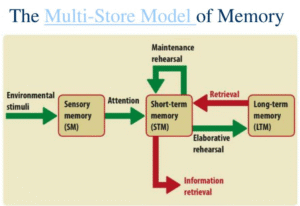
Information Processing Model is a classical theory in cognitive psychology, which describes the nature of cognition as a set of successive steps in which information flows. It compares the process of human thought to that of computers. In this model, the way information is can be thought of as cognition:

  1. Encoded: First, the environment sends through the senses, the information that is detected is encoded into a form that can be processed by the brain. As an illustration, when one is looking at a page, the eyes need to convert light into neural messages.
  2. Stored: The information is temporarily stored in various systems of memory as an encrypted form. It is first received by the senses in sensory memory (raw sensory input on a short-term basis (several seconds or less). It is the next stage, short-term/working memory where it is manipulated and processed. Lastly, the key information is stored in long-term memory to be stored more permanently.
  3. Retrieved: The information stored in the long-term memory on the occasion of need is retrieved back into working memory where it is used in the thinking process, problem solving or making decisions.screenshot 2025 11 15 010834

The model acknowledges that cognitive processing is complex interaction like attention (what information to pay attention), rehearsal (to maintain information in short term memory) and encoding plans (arranging information in a manner that facilitates the storage) of the information.

The fact that information processing may be serial (one step at a time) and parallel (several processes running concurrently) is also important and is determined by the nature of the tasks. As an example, when a person reads, the brain is able to recognize letters and interpret the meaning of the words together with comprehending the grammatical structure.

This model is very applicable in the study of memory formation, strategies in problem solving, language comprehension and learning. Indicatively, learning a second language entails encoding words, rehearsing them in the working memory and storing them in the long-term memory.

Schema Theory

Schema theory proposes that humans arrange knowledge in their mind in the form of mental frameworks known as schemes that are patterns that depict concepts and their connection. The schemas are used to help perceive, interpret, and remember new information. To illustrate, a schema of having a therapy session will make you predict the behaviors of the client and how the session is going to run, thus it will be simpler to process and react to new information during the counseling process.

The schemas affect memory and attention due to their expectations. They are also useful to fill the gaps on lack of information but at times, may cause biases or perceptional errors.

screenshot 2025 11 15 012622


Cognitive Dissonance Theory

Cognitive dissonance theory was invented by Leon Festinger; it is used to explain instances where individuals develop a sense of discomfort whenever they harbor contradictory beliefs or when their behavior conflicts with beliefs. This unease impels them to minimize inconsistency, which is usually achieved through belief transformation or justification of acts. As an illustration, a counselor may have a dissonance when he/she holds evidence-based practices but sometimes relies on the unproved methods causing them to change their practices or beliefs.

screenshot 2025 11 15 012849


Working Memory Model

The working memory model, introduced by Alan Baddeley, makes the concept of a short-term memory more specific by splitting it into several components:

  • Central Executive: It is the control system that determines attention to and organizes psychological processes.
  • Phonological Loop: Interprets verbal and auditory messages (such as repeating instructions of a client).
  • Visuospatial Sketchpad: Processes visual and spatial data (such as understanding body language of a client).
  • Episodic Buffer: This is where the information within domains is integrated and connected to the long-term memory.screenshot 2025 11 15 013015

This model describes the way individuals store and process information temporarily in order to perform relevant and complicated tasks like reasoning and understanding.

Dual-Coding Theory

Dual-coding theory is the theory that was developed by Allan Paivio and postulates that people have two different systems of stimulus processing of information: verbal system and nonverbal imagery system. The information that is encoded visually and verbally improves learning and memory. To illustrate, written explanations written on diagrams can be used in therapy or teaching, and these are better understood and remembered.


Social Cognitive Theory

According to the social cognitive theory proposed by Albert Bandura, people learn in a social environment by observing and imitating. It lays emphasis on cognitive processes including attention, memory and motivation in learning. Self-efficacy (belief in one’s abilities) is one of the fundamental ideas that may determine the way people approach challenges and continue learning or changing their behavior.

screenshot 2025 11 15 013506

Multi-Store Model of Memory

The presented model, which is suggested by Atkinson and Shiffrin, separates memory into three stores:

  • Sensory Memory: Stores the sensory impressions in a very short time.
  • Short-Term Memory: Limited capacity system The short term memory has a limited capacity to hold information between 20-30 seconds.
  • Long-Term Memory: Permanent and infinite repository of knowledge and experience.
  • screenshot 2025 11 15 013732

Information flows through these stores in a sequential manner where attention is the gateway to short term memory and rehearsal to the transfer to the long term memory.

Cognitive Behavioral Models

The cognitive behavioral models focus on the role dysfunctional thinking patterns play in emotions and behaviors. The concept behind Cognitive Behavioral Therapy (CBT) is that mental health can be enhanced by altering maladaptive thoughts. Cognitive theory has found practical relevance in the treatment process and models such as the Cognitive Triad by Aaron Beck indicate that negative perceptions about the self, the world and the future are the causes of depression and anxiety.

Research Methods and Experiments

Cognitive psychology employs various scientific methods to understand mental processes:

  • Laboratory Experiments: Experiments are strongly controlled environments in which variables are manipulated and their effect on behavior is examined, e.g. the capacity of memory or the Stroop effect in which the meaning of a word can interfere with the recognition of a color.
  • Field Experiments: Research on social interaction or interventions in real life.
  • Natural Experiments: The study of the effects following the occurrence of naturally occurring events without control.
  • Self-Reports and Case Studies: Gathering introspective information or individual studies to study cognition.
  • Neuropsychological Techniques: Scanning the brain and capturing neural activity in order to connect mental processing to brain regions.
  • Computer Simulations: AI and model simulations to simulate cognitive processes.

Two central measures in experiments are accuracy (correctness of responses) and response time, which help delineate underlying cognitive mechanisms.

Cognitive Psychology in Daily Life Examples

  • Episodic memory can be seen when a client prefers something or when he or she has had issues in the past.
  • Selective attention is maintained by spending focus on noisy online sessions.
  • Decision-making and reasoning are used in problem-solving on a daily schedule or therapy.
  • Language cognition is associated with writing blog posts or understanding therapy languages.
  • Cognitive learning is manifested through learning new psychotherapeutic techniques.
  • The perception of emotions of clients depends on the observation of their faces.

For example, a mental health professional integrates perception (reading client cues), memory (retaining theory knowledge), attention (focusing on sessions), language (communication), problem-solving (therapy planning), and reasoning (psychological analysis) to conduct effective counseling and content creation.

Conclusion 

This critical synthesis reports the fields of cognitive psychology, the history of its development, the key theoretical perspectives, research methodology, and applications. It creates a vivid image of the inner mental functioning and its impact on daily life and the practice. This knowledge is necessary to psychologists and educators and people, who are interested in the science of human thought and behavior. In case of further expansion or illustration, they can be attached accordingly as to a given focus.

References:

Anderson, J. R. (2015). Cognitive Psychology and Its Implications (8th ed.). Worth Publishers.

Matlin, M. W. (2013). Cognition (8th ed.). Wiley.

Eysenck, M. W. (2012). Fundamentals of Cognition (2nd ed.). Psychology Press.

Neisser, U. (1967). Cognitive Psychology. Appleton-Century-Crofts.

Miller, G. A. (1956). The Magical Number Seven, Plus or Minus Two: Some Limits on Our Capacity for Processing Information. Psychological Review, 63(2), 81-97.

Baddeley, A. D. (2003). Working Memory: Looking Back and Looking Forward. Nature Reviews Neuroscience, 4(10), 829–839.

Festinger, L. (1957). A Theory of Cognitive Dissonance. Stanford University Press.

Bandura, A. (1986). Social Foundations of Thought and Action: A Social Cognitive Theory. Prentice-Hall.

Tulving, E. (1983). Elements of Episodic Memory. Oxford University Press.

Memory and Stress

The human brain has one of the most basic functions known as memory since it forms the basis of our identity, learning and decision-making processes. However, it is possible that memory has a significant impact caused by our state of mind, and especially stress. Stress, which is a typical physiological and psychological reaction to a difficulty, is also multi- faceted in its connections with memory- in some incidents it strengthens it and in others it damages it.


What Is Stress?

Stress is how the body is supposed to respond to the perceived threat or demands, and it is a series of chemical and hormonal events that provide us with a way of coping. This is a fight or flight reaction that is organized by the hypothalamic-pituitary-adrenal (HPA), axis and releases cortisol and adrenaline that cause the body to be ready to meet the challenges of the moment. Although acute stress is good in brief periods, chronic stress, which is long-term and constant, is not only harmful to the health of the body and the mind, especially the memory.


The Two-fold Effects of Stress on Memory.

There are intricate effects of stress on memory based on the intensity, duration and time of occurrence.

Short-term, Low to moderate stress: In other instances, moderate acute stress may stimulate memory formation. The reason behind this is that the alertness and the concentration of the body becomes more alert leading to a situation when the big events are more memorable, this is a survival mechanism inscribed by evolution. As an example, emotionally charged or a stressful incident like an accident or a significant change in life tends to form a strong, long lasting memory (also known as flashbulb memories).


Chronic or High-Level Stress: Long-term exposure to stressful condition is associated with memory encoding, consolidation and retrieval impairment. The chronic stress levels that result in high cortisol levels may impair the neuron functioning and plasticity, especially in the hippocampus- a brain region that is important in declarative memory (facts and events). This may cause problems with the recollection of information, lack of ability to learn new things, and even brain atrophy in severe cases.


The Hippocampus and Amygdala Role.

Hippocampus and amygdala are important brain functions that deal with stress and memory.

Hippocampus: This framework is essential in the process of creating new memories and spatial-temporal organization of them. Hippocampal neurons are damaged by chronic stress and decrease its volume and performance adversely impacting memory retention and recall.

Amygdala: Emotional information is handled by the amygdala and influences the strength of memories, in particular, emotional memories. Stress activates the amygdala which increases emotional responses and usually enhances emotional memories but in some cases it distorts recall.

Stress and Various Forms of Memory.

Stress does not equally affect all memories:

Working Memory: Stress may have a negative influence on working memory -the short-term system which retains and manipulates information on a temporary basis. Due to the stress, the activity of the prefrontal cortex is decreased, which results in the inability to concentrate and solve problems.

Long-Term Memory: Although chronic stress impairs the consolidation of long-term memories, acute stress in the immediate after-effect around the time of encoding may promote it in case it is an important or emotionally charged event.

Procedural Memory: Skill-related and habit-related memory is less vulnerable to stress because it is a circuiting within the brain that involves other circuits and these are mostly the basal ganglia.


Physiological and Psychological effects of Stress-induced memory lapse.

Stress-related memory impairments are factors in a range of psychological problems:

Anxiety and Depression: Failure of memory systems in chronic stress conditions tends to increase negative recollection which contributes to anxiety and depressive moods.

Post-Traumatic Stress Disorder (PTSD): Intrusive memories and flashbacks are the characteristics of PTSD. The responses to stress which are altered lead to overactive signaling of the amygdala and impaired encoding of the hippocampal, disrupting memory integration.

Cognitive Decline in Aging: Chronic stress increases the age related memory loss and has been associated with the neurodegenerative diseases such as Alzheimer disease.


Managing stress and preserving memory.

Knowledge of the memory-stress relationship can be used to intervene:

  • Mindfulness and Meditation: Stress reduction practices enhance memory in the long run by balancing cortisol and enhancing the functions of hippocampal.
  • Physical Exercise: Frequent aerobic activity improves brain plasticity, neurogenesis of the hippocampus, and stress hormones.
  • Adequate Sleep: Sleep plays an important role in memory consolidation. Stress has a tendency of interfering with sleep patterns; the effects on memory can be alleviated by enhancing sleep hygiene.
  • Cognitive Behavioral Therapy (CBT): CBT methods assist in interrupting the negative cycles of thoughts that were developed by the stress and have a better control of emotion which indirectly enhances memory.
  • Social Support: Good interpersonal relationships counteract the impacts of stress and enhance mental strength.


Conclusion: Stress and Memory: Finding the Balance to Be Mentally Well.

The dance stress and memory are complex, but one that points to how delicate the balance our brains pull concerning life challenges is. Although there are positive effects of stress in survival, unmanaged or perennial stress worsens mental performance and mood. The enhancement of psychological well-being and memory protection can be ensured by the creation of awareness and adaptation of effective coping strategies.

With the adoption of methods that encourage relaxation, strength, and clarity of mind, we are in a position to manage stressful situations without being overwhelmed and losing track of the beautiful tapestry that is our memories, the very nature of our existence.