Burnout in Working Men: Signs and Recovery

A psychological perspective on stress, silence, and healing

https://media.licdn.com/dms/image/v2/D5612AQF1uTcrRkMVWw/article-cover_image-shrink_720_1280/article-cover_image-shrink_720_1280/0/1727425620754?e=2147483647&t=Wtl0qSJhuFraawPKhgZiI8vSaMEstCZQ_O_LQj9MbKI&v=beta

Introduction

Burnout has become one of the most common—yet least openly discussed—mental health issues among working men. Across many societies, men are expected to be productive, resilient, and emotionally steady, regardless of workload, pressure, or inner strain. Admitting exhaustion or emotional distress is often interpreted as weakness, which pushes many men to keep functioning on the surface while struggling internally. As a result, burnout in men frequently goes unrecognized and untreated until it reaches a breaking point.

Unlike temporary stress, burnout is a chronic condition involving physical, emotional, and mental exhaustion caused by sustained pressure without adequate recovery, rest, or emotional support. It develops gradually, often unnoticed, as men continue to meet external expectations while ignoring internal warning signs. For working men, burnout is commonly hidden behind long work hours, irritability, emotional withdrawal, silence, or numbness—signals that are often normalized rather than recognized as distress. Over time, this hidden exhaustion erodes motivation, well-being, and mental health, making recovery more difficult the longer it remains unaddressed.

Why Working Men Are Especially Vulnerable to Burnout

Working men face a unique combination of psychological, social, and cultural pressures that significantly increase their risk of burnout. These pressures often discourage rest and emotional expression, allowing stress to accumulate silently over time.

Identity Tied to Work and Providing

For many men, self-worth is closely linked to productivity, income, and professional success. Being a provider is often seen as a core measure of value. When work becomes overwhelming or performance drops, it can trigger deep feelings of inadequacy—pushing men to work harder rather than pause.

Emotional Suppression

Men are frequently conditioned to endure stress quietly. Expressing vulnerability or emotional exhaustion is often discouraged, while endurance is praised. As a result, stress is internalized rather than processed, increasing psychological strain.

Limited Support Systems

Many adult men have fewer emotionally intimate friendships. Without safe outlets to talk openly, stress has little opportunity to be released, making burnout more likely.

Fear of Appearing Weak

Asking for help—whether emotional support, rest, or flexibility—can feel threatening to identity or social status. This fear keeps many men stuck in silence, even when they are struggling.

Over time, these factors cause stress to build internally rather than discharge, leading to burnout instead of relief.

Common Signs of Burnout in Working Men

Burnout in men does not always look like sadness, tears, or collapse. More often, it appears through subtle emotional, mental, physical, and behavioral changes that are easily mistaken for normal work stress.

1. Emotional Signs

  • Emotional numbness or detachment
  • Irritability, anger, or frequent frustration
  • Loss of motivation or sense of purpose
  • Feeling “empty” or disconnected despite achievements

2. Mental Signs

  • Difficulty concentrating or making decisions
  • Cynicism or negativity toward work or life
  • Constant mental fatigue or brain fog
  • Feeling trapped, stuck, or helpless

3. Physical Signs

  • Persistent tiredness even after rest
  • Headaches, body pain, or digestive problems
  • Sleep disturbances or unrefreshing sleep
  • Frequent illness due to weakened immunity

4. Behavioral Signs

  • Overworking or inability to disconnect from work
  • Withdrawal from family, friends, or activities
  • Increased use of alcohol, nicotine, or other substances
  • Procrastination, mistakes, or declining performance

Many men misinterpret these signs as “normal stress” and continue pushing themselves harder. Unfortunately, this response deepens exhaustion and accelerates burnout rather than resolving it.

Key Insight

Burnout is not a failure of resilience—it is a warning signal that emotional and physical limits have been exceeded. Recognizing these signs early is the first step toward recovery.

Psychological Impact of Untreated Burnout

When burnout is ignored or normalized, its effects extend far beyond feeling tired or stressed. Untreated burnout gradually erodes mental health, emotional stability, and identity, especially in working men who continue functioning without support.

If left unaddressed, burnout can lead to:

  • Depression and anxiety
    Persistent exhaustion and hopelessness can evolve into clinical depression or chronic anxiety, often masked by irritability or emotional withdrawal.

  • Emotional shutdown and relationship conflicts
    Burned-out men may detach emotionally as a form of self-protection, leading to misunderstandings, distance, and frequent conflict in close relationships.

  • Increased risk of substance dependence
    Alcohol, nicotine, or other substances may be used to numb emotional pain or manage stress, creating harmful coping cycles.

  • Loss of self-esteem and identity confusion
    When productivity declines, men who tie identity to work may feel worthless, lost, or disconnected from their sense of self.

  • Higher risk of suicidal thoughts
    Prolonged emotional exhaustion combined with isolation can increase feelings of hopelessness and despair.

It is crucial to understand that burnout is not a lack of resilience or strength. It is a psychological signal that coping capacity has been exceeded for too long without adequate recovery or emotional support. Recognizing burnout early is not weakness—it is an essential step toward healing and long-term mental well-being.

Why Men Struggle to Acknowledge Burnout

Many men delay recognizing or admitting burnout because of deeply ingrained beliefs and external expectations that discourage rest and emotional honesty.

  • Rest is often equated with laziness, making breaks feel undeserved rather than necessary.

  • Fear of disappointing family, employers, or dependents pushes men to keep going even when exhausted.

  • Comparing their struggles to others leads many men to minimize their own distress—believing someone else “has it worse.”

  • Endurance is consistently rewarded, while self-care is rarely acknowledged or encouraged.

Over time, silence becomes a coping mechanism—a way to maintain responsibility and identity. However, this silence does not protect mental health. Instead, it deepens exhaustion, isolates emotional pain, and accelerates burnout, making recovery harder the longer it is postponed.

https://www.stewsmithfitness.com/cdn/shop/articles/ego-balance_1024x1024.png?v=1614173933
Recovery from Burnout: What Actually Helps

Recovering from burnout is not just about taking time off work. While rest is important, real recovery requires psychological, emotional, and lifestyle changes that address the root causes of exhaustion—not just its symptoms.

1. Recognizing Burnout Without Shame

The first and most critical step is acknowledging burnout as a health condition, not a personal failure. Burnout develops when demands exceed coping capacity for too long—not because someone is weak or incapable.

Naming the problem:

  • Reduces self-blame
  • Lowers internal pressure
  • Creates space for reflection and healing

Awareness itself is a powerful beginning.

2. Redefining Productivity and Masculinity

Recovery often requires challenging deeply ingrained beliefs such as:

  • “My worth equals my output”
  • “I must always be strong”
  • “Rest means weakness”

These beliefs keep men trapped in over functioning. Healthy masculinity includes self-awareness, boundaries, and emotional honesty. Productivity should support life—not replace it.

3. Restoring Emotional Expression

Burnout thrives where emotions are suppressed. Men benefit from learning to:

  • Identify emotions beyond anger or stress
  • Talk about pressure without minimizing it
  • Express needs clearly, calmly, and without guilt

Emotional expression allows stress to be processed instead of stored, reducing internal overload and emotional numbness.

4. Rebuilding Boundaries at Work

Burnout improves when men regain a sense of control over time and energy. Practical steps include:

  • Limiting work hours where possible
  • Scheduling non-negotiable rest
  • Reducing constant availability (emails, calls)
  • Taking breaks without guilt

Boundaries are not laziness—they are protective mental health tools.

5. Strengthening Support Systems

Burnout recovers faster in the presence of connection. Helpful supports include:

  • Trusted conversations with friends or family
  • Peer support groups
  • Mentors who model balance and self-respect
  • Therapy or counseling

Connection reduces isolation and reminds men they are not carrying everything alone. Social support is one of the strongest buffers against burnout.

6. Therapy as a Recovery Tool

Therapy provides a structured space for working men to:

  • Understand personal burnout patterns
  • Address perfectionism and chronic pressure
  • Heal emotional suppression
  • Develop sustainable coping strategies
  • Seeking therapy is not weakness—it is preventive mental healthcare and an investment in long-term well-being.

Preventing Burnout in the Long Term

Burnout prevention is an ongoing process, not a one-time fix. It involves:

  • Regular emotional check-ins
  • Maintaining interests and identity outside work
  • Building friendships not centered on productivity
  • Prioritizing sleep, movement, and rest
  • Allowing vulnerability without self-judgment

Burnout becomes less likely when life holds meaning beyond performance and when self-worth is not tied solely to output.

Conclusion

Burnout in working men is not a personal flaw—it is a systemic outcome of chronic pressure, emotional silence, and unrealistic expectations.

Men are not machines.
They are not meant to endure endlessly.

Rest is not quitting.
Asking for help is not weakness.
Recovery is responsibility.

When working men are allowed to slow down, speak up, and reconnect—with themselves and others—burnout loses its grip, and mental health finally has space to heal.

Frequently Asked Questions (FAQs)

1. What is burnout in working men?

Burnout in working men is a state of chronic physical, emotional, and mental exhaustion caused by prolonged work stress without sufficient rest or emotional support.

2. How is burnout different from normal stress?

Stress is usually temporary and situation-based, while burnout is long-term and leads to emotional numbness, reduced motivation, and mental exhaustion.

3. Why are men at higher risk of burnout?

Men often tie self-worth to productivity, suppress emotions, and hesitate to seek help, allowing stress to accumulate silently.

4. What are the early signs of burnout in men?

Early signs include irritability, emotional detachment, chronic fatigue, reduced concentration, and loss of motivation.

5. Can burnout affect relationships?

Yes. Burnout often leads to emotional withdrawal, poor communication, and increased conflict with partners and family members.

6. Is burnout linked to depression and anxiety?

Yes. Untreated burnout significantly increases the risk of depression, anxiety, substance use, and suicidal thoughts.

7. Why do men struggle to admit burnout?

Many men equate rest with laziness, fear disappointing others, and are socially rewarded for endurance rather than self-care.

8. Can taking leave alone cure burnout?

No. Leave helps temporarily, but full recovery requires emotional awareness, boundary setting, lifestyle changes, and support.

9. How does therapy help with burnout?

Therapy helps men understand stress patterns, challenge perfectionism, process emotions, and develop sustainable coping strategies.

10. Is seeking help a sign of weakness?

No. Seeking help is a sign of psychological maturity and preventive mental healthcare.

11. What role does emotional suppression play in burnout?

Suppressing emotions increases internal stress, leading to emotional numbness and faster burnout.

12. How can men prevent burnout long-term?

By maintaining work boundaries, nurturing relationships, prioritizing rest, and developing emotional literacy.

13. Does burnout only affect high-pressure jobs?

No. Burnout can occur in any job where effort is high and recovery or recognition is low.

14. Can burnout return after recovery?

Yes, if underlying patterns are not addressed. Sustainable changes reduce recurrence.

15. What is the most important step in burnout recovery?

Recognizing burnout without shame and seeking support early.

Written by Baishakhi Das

Counselor | Mental Health Practitioner
B.Sc, M.Sc, PG Diploma in Counseling


Reference 

  1. World Health Organization (WHO). Burn-out an “occupational phenomenon”
    https://www.who.int

  2. American Psychological Association (APA). Stress & Burnout
    https://www.apa.org

  3. Maslach, C., & Leiter, M. P. (2016). Understanding the Burnout Experience.
    World Psychiatry.

  4. Schaufeli, W. B., Leiter, M. P., & Maslach, C. (2009). Burnout: 35 years of research.
    Career Development International.

  5. McLeod, S. A. (2023). Burnout. Simply Psychology
    https://www.simplypsychology.org

  6. Anger Issues in Men: What’s Really Going On

This topic performs well due to rising searches around men’s mental health, workplace stress, and burnout recovery. Combining emotional insight with practical steps increases engagement and trust.

Male Loneliness Epidemic: Why Men Feel Isolated

A psychological and social perspective

https://www.fashionbeans.com/wp-content/uploads/2025/06/WhyGuysStruggleWithLonelinessMoreThanTheyAdmit2.jpg

Introduction

Loneliness has quietly become one of the most serious mental health challenges of modern times. While it affects people of all genders, research and clinical observation increasingly point to a male loneliness epidemic—a widespread pattern of emotional isolation, lack of close relationships, and deeply unexpressed psychological distress among men.

On the surface, many men appear socially functional. They work, provide, socialize, and fulfill expected roles. Yet beneath this appearance, a large number experience a persistent sense of being unseen, unsupported, and emotionally disconnected. Their lives may be busy, but emotionally empty. This kind of loneliness is often invisible to others—and sometimes even to the men themselves.

This isolation is not accidental or personal failure. It is shaped by cultural expectations, rigid gender norms, and psychological conditioning that begin early in life. From childhood, boys are often taught to suppress vulnerability, prioritize self-reliance, and equate emotional expression with weakness. Over time, these messages limit emotional awareness, reduce help-seeking, and make deep connection feel unfamiliar or unsafe.

As adults, many men are left without the language, permission, or social space to express emotional needs—resulting in loneliness that is silent, chronic, and profoundly impactful on mental health.

Understanding Male Loneliness

Male loneliness is not simply about physical isolation or being alone. Many men are surrounded by people—family, colleagues, acquaintances—yet still feel profoundly disconnected. At its core, male loneliness is about the absence of emotional intimacy, safe emotional expression, and meaningful connection.

In clinical and social settings, many men report experiences such as:

  • Having people around but no one they can truly talk to
  • Feeling emotionally invisible, as if their inner world goes unnoticed
  • Suppressing vulnerability to appear “strong,” independent, or in control
  • Difficulty forming or maintaining close friendships, especially those involving emotional openness

These patterns are often shaped by lifelong messages that discourage emotional expression and reward self-reliance. As a result, many men learn to manage distress privately, even when they deeply desire connection.

Loneliness in men is frequently silent and hidden, because admitting loneliness can feel like personal failure, weakness, or inadequacy. Instead of expressing it directly, loneliness may show up as withdrawal, irritability, emotional numbness, or overworking—signals that are often misunderstood or overlooked.

Understanding male loneliness requires moving beyond the idea of “being alone” and recognizing the deeper need for emotional safety, understanding, and genuine human connection.

Why Men Feel Isolated

Male loneliness does not arise from a single cause. It develops through a combination of social conditioning, emotional habits, relationship patterns, and stigma, most of which begin early and intensify over time.

1. Social Conditioning Around Masculinity

From childhood, boys are often taught clear but restrictive messages about emotions:

  • “Don’t cry”
  • “Be strong”
  • “Handle it yourself”

Emotional expression is discouraged, while independence and toughness are praised. Over time, this conditioning creates men who:

  • Struggle to name and understand emotions
  • Feel shame for needing help or comfort
  • Equate vulnerability with weakness or failure

As adults, many men do not lack the desire for connection—they lack the skills and permission to seek it. Asking for emotional support can feel unfamiliar, uncomfortable, or even unsafe.

2. Emotional Suppression and Limited Emotional Language

Psychologically, many men develop alexithymia-like patterns—difficulty identifying, labeling, and expressing emotions. This does not mean men feel less; it means they have been taught not to articulate what they feel.

Without emotional language:

  • Relationships remain surface-level
  • Partners may experience men as emotionally unavailable
  • Men feel misunderstood or unseen and withdraw further

This creates a painful cycle: the more misunderstood men feel, the less they express—deepening isolation.

3. Decline of Male Friendships

Research consistently shows that adult men have fewer close friendships than previous generations, and those friendships are often less emotionally intimate.

Common contributing factors include:

  • A work-centered identity where achievement replaces connection
  • Marriage or partnership replacing friendships instead of complementing them
  • Fear of appearing needy, dependent, or weak
  • Lack of socially accepted spaces for emotionally open male bonding

Unlike women, men are less likely to maintain friendships through emotional sharing. Their bonds often depend on activities rather than conversation, making them vulnerable when life circumstances change.

4. Romantic Relationships as the Only Emotional Outlet

Many men rely almost entirely on their romantic partner for emotional support. While intimacy is valuable, this emotional narrowing becomes risky.

When:

  • Relationships end
  • Conflict increases
  • Partners feel emotionally overloaded

Men may suddenly find themselves completely emotionally alone, with no backup support system. This often leads to profound loneliness, grief, and identity confusion.

5. Stigma Around Men’s Mental Health

Despite growing awareness, men continue to face strong stigma around:

  • Therapy
  • Emotional struggles
  • Depression, anxiety, and loneliness

As a result, men are more likely to:

  • Avoid seeking help
  • Minimize or rationalize distress
  • Cope through substances, overwork, or emotional withdrawal

This stigma reinforces the belief that struggling must be handled privately—turning loneliness into a chronic, silent condition.

Key Insight

Men’s isolation is not a personal failure. It is the outcome of long-standing cultural messages that discourage emotional connection while demanding self-sufficiency.

Until men are given permission—and tools—to feel, express, and connect, loneliness will continue to grow quietly beneath the surface.

Psychological Consequences of Male Loneliness

Long-term loneliness in men is not just emotionally painful—it has serious psychological and health consequences. Research and clinical experience consistently show that prolonged emotional isolation in men is linked to:

  • Depression – often hidden behind withdrawal, fatigue, or loss of purpose
  • Anxiety – especially around performance, relationships, or perceived failure
  • Anger and irritability – emotions that are socially permitted and therefore more easily expressed
  • Substance use – alcohol, drugs, or compulsive behaviors used to numb emotional pain
  • Increased suicide risk

Globally, men have higher suicide completion rates, a reality often connected not to a lack of resilience or strength, but to untreated emotional isolation and reluctance to seek help. Many men suffer silently for years before reaching a breaking point.

Importantly, loneliness does not always look like sadness. In men, it frequently appears as:

  • Silence
  • Emotional numbness
  • Irritability or rage
  • Excessive work or withdrawal

These expressions are often misunderstood, allowing loneliness to persist unnoticed.

Why Men Don’t Talk About It

Men often struggle to speak openly about loneliness because:

  • Many men hesitate to speak because they don’t want to burden others with their emotional struggles.
  • The fear of rejection, judgment, or ridicule often keeps them silent.
  • Growing up, few men have seen role models who demonstrate emotional openness, leaving them unsure how to express vulnerability.
  • Throughout life, men are frequently rewarded for emotional self-sufficiency, reinforcing the belief that handling pain alone is a strength.

From a psychological perspective, silence becomes a survival strategy—a way to protect dignity and identity. But over time, this silence slowly erodes mental health, increasing isolation rather than reducing it.

What Helps Reduce Male Loneliness

1. Redefining Strength

Psychological strength is not emotional suppression. True strength includes:

  • Emotional awareness
  • Asking for support when needed
  • Building mutual, reciprocal connections

Normalizing this redefinition of strength is essential for cultural and individual change.

2. Creating Safe Spaces for Men

Men benefit greatly from environments where connection feels acceptable and non-judgmental, such as:

  • Peer support groups
  • Therapy approaches that respect male socialization
  • Activity-based spaces (sports, skills, projects) that allow emotional openness

For many men, connection begins through shared action, and only later deepens through conversation.

3. Encouraging Emotional Literacy

Emotional expression is not instinctive—it is learned. Boys and men benefit from being taught to:

  • Name emotions accurately
  • Express distress safely and constructively
  • Validate their own inner experiences

Emotional literacy strengthens relationships and reduces isolation.

4. Therapy Without Shame

Therapy can help men:

  • Understand long-standing emotional patterns
  • Heal attachment wounds
  • Learn healthier coping strategies

Seeking help is not weakness. It is a sign of psychological maturity and self-respect.

A Societal Responsibility

The male loneliness epidemic is not an individual failure. It is a systemic issue shaped by:

  • Cultural expectations of masculinity
  • Emotional neglect
  • Stigma around men’s mental health

Meaningful change requires:

  • Education systems that allow boys to feel and express emotions
  • Families that validate emotional needs
  • Media that models emotionally healthy masculinity
  • Mental health systems that actively include and reach out to men Conclusion

Men are not emotionally disconnected by nature.
They have been trained to disconnect.

Loneliness in men is not a lack of desire for connection—it is a lack of permission to express it.

Men do not need to “man up.”
They need to open up.

When men are allowed to feel, speak, and connect without shame, loneliness loses its grip—and mental health finally has room to grow.

Frequently Asked Questions (FAQs)

1. What is the male loneliness epidemic?

The male loneliness epidemic refers to the widespread emotional isolation many men experience due to social conditioning, stigma, and lack of emotional support systems.

2. Why are men more likely to feel lonely than women?

Men are often discouraged from expressing vulnerability, which limits emotional intimacy and deep friendships.

3. Is male loneliness the same as being alone?

No. Male loneliness is about lack of emotional connection, not physical isolation.

4. How does masculinity contribute to male loneliness?

Traditional masculinity promotes emotional suppression, self-reliance, and avoidance of help-seeking, which increases isolation.

5. Why don’t men talk about loneliness?

Many men fear being judged, rejected, or seen as weak, and they lack role models for emotional openness.

6. What emotions does male loneliness often look like?

It may appear as anger, emotional numbness, irritability, withdrawal, or overworking rather than sadness.

7. How does loneliness affect men’s mental health?

It increases the risk of depression, anxiety, substance use, emotional burnout, and suicide.

8. Why do men have higher suicide completion rates?

Men are less likely to seek help and more likely to suffer in silence due to emotional isolation and stigma.

9. Do romantic relationships protect men from loneliness?

Not fully. Many men rely solely on partners for emotional support, which becomes risky if the relationship ends or struggles.

10. What is emotional suppression?

It is the habit of ignoring or hiding emotions, often learned early in life, which contributes to loneliness.

11. How can men reduce loneliness?

By building emotional literacy, maintaining friendships, seeking therapy, and redefining strength as openness.

12. Are men less emotional than women?

No. Men experience emotions just as deeply but are often taught not to express them.

13. Does therapy help male loneliness?

Yes. Therapy helps men understand emotions, heal attachment wounds, and develop healthier connections.

14. Is male loneliness an individual problem?

No. It is a systemic issue shaped by culture, gender norms, and emotional neglect.

15. What is the most important step in addressing male loneliness?

Creating safe environments where men can express emotions without shame or judgment.

Written by Baishakhi Das

Counselor | Mental Health Practitioner
B.Sc, M.Sc, PG Diploma in Counseling


Reference 

  1. American Psychological Association (APA) – Men & Mental Health
    https://www.apa.org

  2. World Health Organization (WHO) – Suicide and Mental Health
    https://www.who.int

  3. Hawkley, L. C., & Cacioppo, J. T. (2010). Loneliness Matters: A Theoretical and Empirical Review.
    Current Directions in Psychological Science.

  4. Courtenay, W. H. (2000). Constructions of Masculinity and Their Influence on Men’s Well-Being.
    Social Science & Medicine.

  5. McLeod, S. A. (2023). Gender Differences in Mental Health. Simply Psychology
    https://www.simplypsychology.org

  6. Anger Issues in Men: What’s Really Going On

This topic performs strongly because it addresses men’s mental health, emotional neglect, and loneliness stigma—issues with growing global search interest.

Behaviorism vs Cognitive Psychology

Understanding two major approaches to human behavior and the mind

https://ioannouolga.wordpress.com/wp-content/uploads/2018/08/behaviorism-cognitivism.gif?w=670

Introduction

Psychology has evolved through multiple schools of thought, each attempting to explain why humans think, feel, and behave the way they do. These perspectives developed in response to different questions—some focusing on what can be observed and measured, others exploring the invisible workings of the mind. Among these, Behaviorism and Cognitive Psychology stand out as two of the most influential—and contrasting—approaches in the history of psychology.

Behaviorism emerged in the early 20th century as a reaction against introspective methods. It argues that psychology should focus only on observable behavior and external consequences, because these can be scientifically measured and objectively studied. From this perspective, human behavior is shaped largely by the environment through learning, reinforcement, and punishment.

In contrast, Cognitive Psychology developed later, emphasizing that behavior cannot be fully understood without examining internal mental processes. It focuses on how people think, remember, interpret, problem-solve, and make meaning of their experiences. Cognitive psychologists view humans as active processors of information, whose beliefs, perceptions, and thoughts strongly influence emotions and actions.

Understanding the differences between behaviorism and cognitive psychology is essential for students, educators, therapists, and mental health practitioners, because these approaches influence how learning is taught, how behavior is managed, and how psychological difficulties are treated. Modern psychology increasingly integrates both perspectives, recognizing that behavior is shaped by external experiences and internal cognition working together, rather than by one alone.

What Is Behaviorism?

Behaviorism is a psychological approach that explains behavior as a result of environmental stimuli and learned responses. It argues that psychology should focus only on observable, measurable behavior, because behavior can be objectively studied, predicted, and controlled. From this viewpoint, internal mental states—such as thoughts, feelings, or intentions—are considered unnecessary for explaining behavior, as they cannot be directly observed.

Behaviorism emerged as a reaction against introspection-based psychology and aimed to make psychology a scientific, experimental discipline, similar to the natural sciences.

Key Contributors

  • John B. Watson – Founder of behaviorism; emphasized stimulus–response learning

  • B. F. Skinner – Developed operant conditioning; highlighted reinforcement and punishment

  • Ivan Pavlov – Discovered classical conditioning through conditioned reflexes

Each contributed to understanding how learning occurs through interaction with the environment.

Core Assumptions of Behaviorism

Behaviorism is based on several fundamental assumptions:

  • Behavior is learned, not innate
    Humans are not born with fixed behavioral patterns; behavior develops through experience.

  • Learning occurs through conditioning
    Repeated associations and consequences shape behavior.

  • Internal thoughts are not necessary to explain behavior
    Only observable actions are required for scientific explanation.

  • The environment shapes behavior
    External stimuli, rewards, and punishments determine how individuals act.

Key Concepts in Behaviorism

  • Classical Conditioning
    Learning through association between stimuli (e.g., Pavlov’s experiments).

  • Operant Conditioning
    Learning through consequences—reinforcement and punishment (Skinner).

  • Reinforcement and Punishment
    Consequences that increase or decrease behavior.

  • Stimulus–Response (S–R) Associations
    Behavior is seen as a direct response to environmental stimuli.

Example

A child studies more because good marks are rewarded.
→ The increased studying is explained through reinforcement, not through motivation, self-belief, or emotions.

From a behaviorist perspective, the reward strengthens the behavior, making internal thoughts unnecessary for explanation.

Key Insight

Behaviorism provides a clear, practical framework for understanding and modifying behavior, especially in areas like education, parenting, and behavior therapy. However, its focus on observable behavior alone is also what later led to the development of approaches—like cognitive psychology—that explore what happens inside the mind.

What Is Cognitive Psychology?

Cognitive psychology is a branch of psychology that focuses on how people process information—including thinking, reasoning, memory, attention, language, perception, and problem-solving. Rather than viewing humans as passive responders to external stimuli, this approach sees individuals as active processors of information who interpret, evaluate, and make meaning from their experiences.

Cognitive psychology emerged as a response to the limitations of behaviorism. Psychologists realized that understanding behavior requires exploring what happens inside the mind—how people think about situations, how they remember past experiences, and how they interpret the world around them.

Key Contributors

  • Jean Piaget – Explained how children’s thinking develops through distinct cognitive stages

  • Aaron Beck – Developed cognitive therapy, highlighting how thoughts influence emotions and behavior

Their work laid the foundation for understanding learning, development, and mental health through cognitive processes.

Core Assumptions of Cognitive Psychology

Cognitive psychology is built on several key assumptions:

  • Mental processes influence behavior
    What people think directly affects how they feel and act.

  • Thoughts, beliefs, and interpretations matter
    The same situation can lead to different behaviors depending on how it is perceived.

  • Humans actively construct meaning
    People are not passive learners; they organize and interpret information based on prior knowledge.

  • Behavior cannot be fully understood without understanding cognition
    Observable behavior is only one part of the picture—internal processes give it meaning.

Key Concepts in Cognitive Psychology

  • Schemas
    Mental frameworks that help organize and interpret information (e.g., beliefs about self or others).

  • Information Processing
    The way the mind encodes, stores, and retrieves information—often compared to a computer model.

  • Cognitive Distortions
    Inaccurate or biased thinking patterns that influence emotions and behavior.

  • Memory and Attention
    Processes that determine what information is noticed, remembered, or forgotten.

Example

A child avoids studying because they think, “I’m not smart enough.”
→ From a cognitive perspective, the behavior is explained by beliefs, self-perception, and thought patterns, not by rewards or punishment alone.

The problem is not just the behavior (avoiding study), but the underlying cognition shaping it.

Key Insight

Cognitive psychology helps us understand why behavior occurs, not just how it changes. By addressing thoughts, beliefs, and interpretations, this approach is especially valuable in education, counseling, and mental health interventions, where insight and emotional understanding are essential for lasting change.

Key Differences: Behaviorism vs Cognitive Psychology

Aspect Behaviorism Cognitive Psychology
Focus Observable behavior Internal mental processes
View of mind Not necessary to study Central to behavior
Learning Conditioning Information processing
Role of environment Primary influence Important but not sole factor
Role of thoughts Ignored Essential
Research methods Experiments, observation Experiments, models, self-report
Therapy focus Behavior change Thought + behavior change

Applications in Real Life

In Education

Both approaches strongly influence how teaching and learning are designed.

  • Behaviorism emphasizes observable performance.

    • Reward-based learning (grades, praise, stars)

    • Discipline systems with clear rules and consequences

    • Repetition and practice to build habits
      This approach is especially useful for classroom management, skill acquisition, and maintaining structure.

  • Cognitive Psychology focuses on how students think and understand.

    • Learning strategies (mnemonics, mind maps)

    • Problem-solving and critical thinking

    • Conceptual understanding rather than rote learning
      This helps students become active learners who understand why and how, not just what.

👉 Modern education blends both: reinforcement to motivate effort, and cognitive strategies to deepen understanding.

In Parenting

Parenting practices often reflect a mix of these two approaches.

  • Behaviorism in parenting involves:

    • Reinforcing good behavior (praise, attention, rewards)

    • Setting clear consequences for misbehavior

    • Consistency in responses
      This helps children learn boundaries and expectations.

  • Cognitive Psychology in parenting focuses on:

    • Understanding emotions behind behavior

    • Helping children identify self-talk (“I can’t do this”)

    • Supporting motivation, confidence, and emotional regulation

👉 Together, they allow parents to guide behavior while also nurturing emotional intelligence and self-esteem.

In Therapy

Therapeutic approaches clearly show the strengths of both perspectives.

  • Behaviorism contributes:

    • Behavior modification techniques

    • Exposure therapy for fears and phobias

    • Habit reversal strategies

  • Cognitive Psychology contributes:

    • Cognitive restructuring (challenging negative thoughts)

    • Changing maladaptive beliefs

    • Improving self-perception and emotional understanding

Modern therapies—especially Cognitive Behavioral Therapy (CBT)—integrate both approaches, targeting behavior change and thought patterns simultaneously for lasting mental health improvement.

Strengths and Limitations

Strengths of Behaviorism

  • Clear, measurable, and practical

  • Highly effective for habit formation

  • Widely useful in classrooms, parenting, and behavior therapy

Limitations of Behaviorism

  • Ignores emotions, thoughts, and meaning

  • Limited in explaining complex human behavior

  • Less effective for trauma-related or emotionally driven issues 

Strengths of Cognitive Psychology

  • Explains thinking, emotions, and meaning-making

  • Effective for anxiety, depression, and self-esteem concerns

  • Respects human agency, insight, and self-awareness

Limitations of Cognitive Psychology

  • Mental processes are harder to measure objectively

  • May overlook environmental and situational influences

  • Requires verbal ability and reflective capacity

Modern Perspective: Integration, Not Opposition

Today, psychology no longer treats behaviorism and cognitive psychology as opposing camps. Instead, they are understood as complementary perspectives.

  • Behaviorism explains how behavior is shaped through consequences and learning

  • Cognitive psychology explains why behavior happens through thoughts, beliefs, and interpretations

Integrated approaches recognize that behavior and cognition influence each other continuously.

Conclusion

Behaviorism and cognitive psychology offer two powerful lenses for understanding human behavior.
One focuses on what we do.
The other focuses on how we think.

Together, they provide a richer, more complete picture of human functioning.

Behavior can be shaped.
Thoughts can be changed.
And meaningful change happens when both are understood.

Frequently Asked Questions (FAQ)

1. What is the main difference between behaviorism and cognitive psychology?

Behaviorism focuses on observable behavior and external consequences, while cognitive psychology focuses on internal mental processes like thoughts and memory.

2. Who founded behaviorism?

Behaviorism was founded by John B. Watson.

3. Who are the major contributors to cognitive psychology?

Key contributors include Jean Piaget and Aaron Beck.

4. Why did behaviorists reject mental processes?

They believed thoughts and emotions could not be objectively measured and therefore should not be the focus of scientific psychology.

5. What does cognitive psychology focus on?

It focuses on thinking, memory, attention, perception, language, and problem-solving.

6. How does behaviorism explain learning?

Learning occurs through conditioning—via reinforcement, punishment, and stimulus–response associations.

7. How does cognitive psychology explain behavior?

Behavior is explained through beliefs, interpretations, schemas, and information processing.

8. Which approach is better for education?

Both are useful: behaviorism helps with discipline and habit formation, while cognitive psychology supports deep understanding and critical thinking.

9. Which approach is more effective in therapy?

Modern therapy combines both approaches, especially in Cognitive Behavioral Therapy.

10. Can behaviorism explain emotions?

No. One of its main limitations is ignoring emotions and internal experiences.

11. Can cognitive psychology explain habits?

Yes, but it may overlook the role of reinforcement and environment in habit formation.

12. Is behaviorism still relevant today?

Yes, especially in education, parenting, and behavior modification programs.

13. Is cognitive psychology more humanistic?

It is more person-centered than behaviorism, as it values thoughts, meaning, and insight.

14. Why are the two approaches integrated today?

Because behavior and cognition influence each other; understanding both leads to better outcomes.

15. What is the biggest takeaway from comparing these approaches?

Human behavior is best understood by combining external behavior patterns with internal mental processes.

Written by Baishakhi Das

Counselor | Mental Health Practitioner
B.Sc, M.Sc, PG Diploma in Counseling


Reference 

  1. Watson, J. B. (1913). Psychology as the Behaviorist Views It.

  2. Skinner, B. F. (1953). Science and Human Behavior.

  3. Piaget, J. (1952). The Origins of Intelligence in Children.

  4. Beck, A. T. (1976). Cognitive Therapy and the Emotional Disorders.

  5. American Psychological Association (APA) – Learning & Cognition
    https://www.apa.org

  6. McLeod, S. A. (2023). Behaviorism & Cognitive Psychology. Simply Psychology
    https://www.simplypsychology.org

  7. Anger Issues in Men: What’s Really Going On


Skinner’s Reinforcement Theory in Parenting & Education

How consequences shape behavior in healthy, ethical ways

https://biasbehavioral.com/wp-content/uploads/2020/03/Positive-R-IG-Post.jpg

Introduction

Children are not born with an understanding of which behaviors are acceptable, effective, or socially appropriate. Instead, they learn gradually through everyday interactions—by observing responses, receiving feedback, and experiencing the consequences of their actions. Each response from caregivers, teachers, and the environment sends a message about what behaviors are encouraged and which are discouraged.

One of the most influential explanations of this learning process comes from B. F. Skinner, whose reinforcement theory forms the backbone of modern behavior management in parenting and education. Skinner proposed that learning does not happen primarily through instruction or moral reasoning alone, but through patterns of consequences that follow behavior.

Skinner’s theory emphasizes a simple yet powerful idea:
👉 Behavior that is reinforced tends to repeat, and behavior that is not reinforced gradually fades.

In practical terms, when a child receives attention, praise, or encouragement for a behavior, that behavior becomes more likely to occur again. Conversely, when a behavior does not receive reinforcement—or leads to a loss of privilege—it slowly loses its strength. Over time, this process shapes habits, self-control, and social understanding.

When applied thoughtfully and ethically, reinforcement theory allows adults to guide children’s behavior without fear, force, or emotional harm. Rather than relying on punishment or intimidation, it encourages learning through support, consistency, and emotional safety. This approach not only improves behavior in the short term but also helps children develop confidence, responsibility, and intrinsic motivation—skills that support healthy development well beyond childhood.

Understanding Skinner’s Reinforcement Theory

B. F. Skinner proposed that behavior is shaped primarily by its consequences, not by intentions, explanations, or moral reasoning alone. According to his view, children do not learn what to do simply because they are told—it is the outcome of their actions that teaches them which behaviors are effective and worth repeating.

Children learn by closely observing what happens after they act:

  • Do they receive attention or praise?

  • Is the behavior ignored?

  • Do they lose a privilege or face discomfort?

Over time, these repeated consequences create clear behavior patterns.

According to this theory:

  • Behaviors followed by positive outcomes increase because they are experienced as rewarding

  • Behaviors followed by unpleasant outcomes or lack of reward decrease because they no longer feel beneficial

This learning process occurs gradually and often unconsciously, shaping habits, self-discipline, and social behavior.

A key strength of Skinner’s approach is its focus on observable behavior rather than internal thoughts or emotions. Because behaviors can be seen, measured, and responded to, reinforcement theory becomes highly practical and applicable in real-life settings such as homes, classrooms, and therapeutic environments. It provides caregivers and educators with clear, actionable strategies to guide behavior while maintaining consistency and emotional safety.

Reinforcement vs Punishment: Skinner’s Emphasis

B. F. Skinner strongly advocated for reinforcement over punishment as the primary method for shaping behavior. His reasoning was both practical and psychological.

  • Reinforcement teaches children what to do

  • Punishment only tells children what not to do

Punishment may stop an unwanted behavior in the moment, but it rarely explains or builds the desired alternative. Reinforcement, on the other hand, guides learning, strengthens motivation, and supports emotional safety. Over time, it leads to lasting habits rather than temporary compliance.

Application in Parenting

1. Encouraging Positive Behavior

In parenting, reinforcement helps children learn desirable behaviors naturally and willingly, rather than through fear or pressure.

Examples:

  • Praising a child for sharing toys

  • Giving attention when a child communicates calmly

  • Rewarding effort rather than perfection

This builds:

  • Self-confidence – children feel capable and valued

  • Emotional security – behavior is linked to connection, not fear

  • Internal motivation – children begin to feel proud of their actions

Children instinctively repeat behaviors that bring warmth, attention, and approval, making reinforcement a powerful teaching tool.

2. Using Reinforcement Instead of Fear

Traditional parenting often relies on threats, warnings, or harsh punishment. Skinner’s theory offers a healthier alternative that focuses on guidance rather than control.

Key principles include:

  • Catching and reinforcing good behavior

  • Reinforcing cooperation instead of punishing mistakes

  • Using consistent and predictable responses

This approach reduces:

  • Power struggles between parent and child

  • Fear-based obedience, where children comply only when watched

  • Emotional distance, preserving trust and attachment

Children learn best when they feel safe, not scared.

3. Discipline Without Emotional Harm

Skinner’s approach supports discipline that is firm yet respectful—without humiliation or intimidation.

Effective strategies include:

  • Calmly removing privileges (negative punishment)

  • Ignoring minor attention-seeking misbehavior

  • Reinforcing calm behavior after emotional regulation

These methods:

  • Teach responsibility and self-control

  • Reduce emotional reactivity

  • Preserve trust, attachment, and dignity

Discipline becomes a learning experience, not a threat.

Application in Education

1. Positive Reinforcement in Classrooms

In educational settings, reinforcement plays a crucial role in both learning and behavior management.

Common practices include:

  • Verbal praise for participation and effort

  • Marks, stars, or certificates

  • Recognition of improvement, not just high achievement

Such reinforcement:

  • Increases student engagement

  • Reduces disruptive behavior

  • Builds a growth-oriented mindset

Students are more willing to participate when effort is acknowledged.

2. Token Economy Systems

A token economy is a structured reinforcement system where students earn tokens for positive behavior, which can later be exchanged for rewards.

Commonly used in:

  • Classroom discipline programs

  • Special education settings

  • Behavior intervention plans

Psychological benefits include:

  • Clear and predictable expectations

  • Immediate feedback

  • Motivation through structure and consistency

When used ethically, token systems support learning rather than manipulation.

3. Creating Safe Learning Environments

Skinner’s theory supports classrooms where:

  • Mistakes are treated as part of learning

  • Fear is not used as a motivator

  • Feedback is timely, specific, and constructive

Children learn best when they feel safe, valued, and capable, not judged or threatened.

Motivation: Beyond Rewards

A common misunderstanding is that reinforcement creates dependency on rewards. Skinner emphasized the gradual fading of rewards:

  • Begin with external reinforcement

  • Slowly shift toward verbal praise and acknowledgment

  • Encourage self-satisfaction and intrinsic motivation

When applied correctly, reinforcement supports autonomy rather than undermining it, helping children internalize values and self-discipline.

Ethical Considerations

Modern psychology highlights clear ethical boundaries in applying reinforcement theory:

  • Reinforcement must be age-appropriate, fair, and consistent

  • Punishment should never involve fear, shame, or physical harm

  • Emotional well-being matters as much as behavior control

The ultimate goal is not obedience, but guidance, growth, and psychological safety.

Final Insight

Skinner’s reinforcement approach reminds us that children do not need to be controlled—they need to be understood, supported, and guided. When behavior management prioritizes reinforcement over punishment, learning becomes not only effective, but humane.

Limitations of Skinner’s Theory

While Skinner’s Reinforcement Theory is highly effective for shaping observable behavior, it does have important limitations—especially when applied to complex human development.

Reinforcement theory does not fully explain:

  • Emotions behind behavior
    Children may behave in certain ways due to fear, sadness, insecurity, or unmet emotional needs—factors that reinforcement alone cannot address.

  • Trauma-related responses
    Behaviors shaped by trauma (such as withdrawal, aggression, or hypervigilance) are often survival responses, not habits learned through rewards or punishment.

  • Internal thought processes
    Beliefs, self-talk, perceptions, and meaning-making play a major role in behavior, yet Skinner’s theory focuses only on what is externally observable.

Because of these limitations, modern parenting and education do not rely on reinforcement alone. Instead, Skinner’s ideas are integrated with emotional understanding, attachment theory, cognitive development, and trauma-informed approaches. This combination allows adults to address both what a child does and why they do it.

Conclusion

Skinner’s Reinforcement Theory remains one of the most practical and influential tools for shaping behavior in parenting and education. Its strength lies in its simplicity, clarity, and real-world applicability.

When applied with empathy, consistency, and ethical awareness, reinforcement helps children develop:

  • Responsibility

  • Self-control

  • Confidence

  • Motivation

—all without fear, force, or emotional harm.

Children do not need to be controlled or intimidated to learn.

They need to be understood.
They need to be guided.
And they need to be reinforced.

This balance—between structure and emotional safety—is where healthy learning and development truly begin.

Frequently Asked Questions (FAQ)

1. What is Skinner’s Reinforcement Theory?

Skinner’s Reinforcement Theory explains how behavior is shaped by consequences, where reinforced behaviors increase and unrewarded behaviors gradually decrease.

2. Who developed Reinforcement Theory?

The theory was developed by B. F. Skinner, a key figure in behaviorism.

3. Why did Skinner prefer reinforcement over punishment?

Reinforcement teaches desired behavior, while punishment only suppresses unwanted behavior temporarily.

4. How is reinforcement used in parenting?

Through praise, attention, rewards, and consistent consequences to encourage positive behavior without fear.

5. How does reinforcement help children emotionally?

It builds self-confidence, emotional security, and internal motivation by linking behavior with support rather than threat.

6. What is positive reinforcement in education?

It includes praise, recognition, marks, or rewards given to encourage participation, effort, and learning.

7. What is a token economy system?

A structured system where children earn tokens for positive behavior that can be exchanged for rewards.

8. Is reinforcement better than punishment for discipline?

Yes. Reinforcement promotes learning and emotional safety, while punishment often creates fear or resentment.

9. Can reinforcement reduce intrinsic motivation?

Excessive rewards can reduce intrinsic motivation, which is why gradual fading of rewards is recommended.

10. What are the limitations of Skinner’s theory?

It does not fully explain emotions, trauma responses, or internal thought processes.

11. Is reinforcement theory useful for trauma-affected children?

It is helpful when combined with trauma-informed and emotionally supportive approaches.

12. How is reinforcement used in classrooms?

Teachers use praise, feedback, certificates, and structured reward systems to manage behavior and learning.

13. Is Skinner’s theory still relevant today?

Yes. It remains highly practical when integrated with modern developmental and emotional psychology.

14. What are the ethical concerns in using reinforcement?

Reinforcement must be fair and age-appropriate; punishment should never involve fear, shame, or harm.

15. What is the main goal of reinforcement-based guidance?

To guide behavior through understanding, consistency, and emotional safety—not control or intimidation.

Written by Baishakhi Das

Counselor | Mental Health Practitioner
B.Sc, M.Sc, PG Diploma in Counseling


Reference 

  1. Skinner, B. F. (1953). Science and Human Behavior.

  2. Skinner, B. F. (1938). The Behavior of Organisms.

  3. American Psychological Association (APA) – Learning & Behavior
    https://www.apa.org

  4. McLeod, S. A. (2023). Operant Conditioning. Simply Psychology
    https://www.simplypsychology.org

  5. Domjan, M. (2018). The Principles of Learning and Behavior. Cengage Learning.

  6. Anger Issues in Men: What’s Really Going On


Operant Conditioning: Rewards, Punishment & Motivation

A detailed psychological explanation

https://upload.wikimedia.org/wikipedia/commons/b/b4/Skinner_box_scheme_01.svg

Introduction

Operant conditioning is a foundational concept in psychology that explains how voluntary behavior is shaped, strengthened, or weakened by the consequences that follow it. The core assumption is simple yet powerful: behaviors are not random—they are influenced by what happens after we act. When an action leads to a desirable outcome, we are more likely to repeat it; when it leads to an unpleasant outcome, we tend to avoid it in the future.

Unlike classical conditioning, which focuses on learning through automatic associations between stimuli (such as salivating to a bell), operant conditioning focuses on intentional, goal-directed actions. It explains how rewards, incentives, feedback, and consequences guide decision-making over time. This makes operant conditioning especially relevant for understanding everyday behaviors like studying, working, parenting, following rules, or forming habits.

This theory was developed by B. F. Skinner, a leading figure in behaviorism, who emphasized that behavior can be scientifically studied by observing what people do and how the environment responds. Skinner argued that internal thoughts or emotions are less important than observable behavior when explaining learning—what matters most are the consequences that follow actions.

Today, operant conditioning is widely applied across many fields. In education, it shapes teaching methods and classroom management through rewards, feedback, and reinforcement. In parenting, it guides discipline strategies and habit formation. In therapy, especially behavioral and cognitive-behavioral approaches, it is used to modify maladaptive behaviors and reinforce healthier coping skills. In workplace settings, it explains motivation, productivity, incentives, and performance management. Overall, operant conditioning provides a practical framework for understanding why we do what we do—and how behavior can change over time through experience.

What Is Operant Conditioning?

Operant conditioning is a type of learning in which behavior is shaped by its consequences. It explains how individuals learn to behave in certain ways based on what happens after they act. The environment continuously responds to our behavior, and these responses play a crucial role in deciding whether a behavior will be repeated or reduced over time.

In operant conditioning:

  • Behaviors followed by positive outcomes are strengthened because they feel rewarding or beneficial.

  • Behaviors followed by negative outcomes are weakened because they lead to discomfort, loss, or unpleasant experiences.

In simple terms:
👉 We repeat what works. We avoid what hurts.

This process operates in everyday life, often without conscious awareness. Through repeated experiences, people learn which actions bring rewards and which lead to consequences.

Examples:

  • A child studies sincerely and receives praise or good marks → the child is more likely to study again.

  • An employee arrives late and receives a warning → the likelihood of coming late decreases.

Over time, these consequences shape habits, discipline, motivation, and decision-making. Operant conditioning helps explain how behaviors are learned, maintained, or changed—not through instruction alone, but through experience and feedback from the environment.

Core Components of Operant Conditioning

Operant conditioning has four main components:

  1. Positive Reinforcement

  2. Negative Reinforcement

  3. Positive Punishment

  4. Negative Punishment

These are often misunderstood, so let’s explain each clearly.

https://tractiondogtraining.com/wp-content/uploads/2024/12/IMG_1907.png

Below is a clear, structured, and slightly expanded explanation of the four components of operant conditioning, keeping your original content intact while adding depth and psychological clarity.

1. Positive Reinforcement (Adding Reward)

Definition

Positive reinforcement means adding something pleasant or rewarding after a behavior in order to increase the likelihood of that behavior happening again.

  • Positive → something is added

  • Reinforcement → behavior increases

Key Idea:
Behavior → Reward → Behavior increases

Examples

  • A student receives praise or good marks for strong performance

  • A child gets chocolate or appreciation for finishing homework

  • An employee receives a bonus or promotion for meeting targets

  • Social media likes and comments reinforce posting behavior

Psychological Impact

  • Builds motivation and engagement

  • Strengthens self-esteem and confidence

  • Encourages healthy habit formation

  • Creates a sense of competence and achievement

Positive reinforcement works because it links behavior with pleasure and success, making learning emotionally safe. It is considered the most effective and ethical method of behavior shaping, especially in children, education, and therapy settings.

2. Negative Reinforcement (Removing Discomfort)

Definition

Negative reinforcement means removing an unpleasant or uncomfortable stimulus after a behavior, which increases the likelihood of that behavior being repeated.

⚠️ Important:
Negative reinforcement is not punishment.
It still increases behavior, not decreases it.

  • Negative → something is removed

  • Reinforcement → behavior increases

Key Idea:
Behavior → Discomfort removed → Behavior increases

Examples

  • Buckling a seatbelt stops the warning alarm

  • Completing work ends a teacher’s scolding

  • Taking painkillers removes headache pain

  • Submitting assignments avoids penalties or reminders

Psychological Impact

  • Increases behavior through relief or escape

  • Often linked to avoidance-based motivation

  • Can increase stress or anxiety if overused

Negative reinforcement is effective in the short term, but when relied on too much, behavior becomes driven by fear of discomfort rather than interest or meaning, reducing intrinsic motivation.

3. Positive Punishment (Adding an Unpleasant Outcome)

Definition

Positive punishment means adding an unpleasant consequence after a behavior in order to reduce or stop that behavior.

  • Positive → something is added

  • Punishment → behavior decreases

Key Idea:
Behavior → Unpleasant consequence → Behavior decreases

Examples

  • Scolding a child for misbehavior

  • Paying fines for breaking traffic rules

  • Giving extra assignments as a penalty

  • Physical punishment (strongly discouraged)

Psychological Impact

  • May stop behavior temporarily

  • Can create fear, shame, anger, or resentment

  • Often damages trust and emotional safety

  • Does not teach alternative or healthy behavior

Psychology strongly recommends minimal and cautious use of positive punishment, especially with children, as it suppresses behavior without promoting understanding or growth.

4. Negative Punishment (Removing Something Pleasant)

Definition

Negative punishment involves removing a desirable or valued stimulus after a behavior to reduce that behavior.

  • Negative → something is removed

  • Punishment → behavior decreases

Key Idea:
Behavior → Loss of privilege → Behavior decreases

Examples

  • Taking away phone or screen time

  • Removing pocket money or rewards

  • Time-out from play or activities

  • Losing access to social privileges

Psychological Impact

  • More effective and humane than positive punishment

  • Encourages reflection and responsibility

  • Less emotionally damaging when applied calmly

  • Works best when rules are clear and consistent

Negative punishment is widely used in parenting, classrooms, and behavior therapy because it reduces behavior without fear or humiliation.

Key Psychological Insight

👉 Reinforcement builds behavior.
Punishment suppresses behavior.
Only reinforcement truly teaches.

For long-term learning, emotional safety, and motivation, reinforcement—especially positive reinforcement—is always preferred over punishment.

Rewards vs Punishment: A Psychological Comparison

Aspect Reinforcement Punishment
Goal Increase behavior Decrease behavior
Emotional effect Motivation, confidence Fear, avoidance
Long-term impact Habit formation Temporary suppression
Learning quality Teaches what to do Rarely teaches alternatives

Psychology favors reinforcement over punishment for long-term behavior change.

https://www.simplypsychology.org/wp-content/uploads/intrinsic-extrinsic-motivation.jpeg

Motivation in Operant Conditioning

Operant conditioning plays a central role in shaping motivation, because consequences such as rewards and punishments influence why we engage in certain behaviors. Motivation within operant conditioning is broadly divided into extrinsic and intrinsic motivation.

1. Extrinsic Motivation

Extrinsic motivation is driven by external rewards or the desire to avoid punishment. The behavior is performed not for its own sake, but for what it leads to.

Examples

  • Studying to obtain good marks or grades

  • Working to earn a salary, bonus, or promotion

  • Obeying rules to avoid fines, punishment, or criticism

Psychological Characteristics

  • Highly effective for initiating behavior

  • Useful for short-term goals and structure

  • Common in schools, workplaces, and rule-based systems

However, when behavior depends only on external rewards, motivation may drop once the reward is removed. This can create reward-dependence rather than genuine engagement.

2. Intrinsic Motivation

Intrinsic motivation comes from internal satisfaction, curiosity, interest, or personal values. The behavior itself is rewarding.

Examples

  • Learning out of curiosity or love for knowledge

  • Helping others for emotional fulfillment or empathy

  • Creating art, writing, or music for joy and self-expression

Psychological Characteristics

  • Leads to deeper learning and creativity

  • Promotes long-term engagement

  • Strongly linked to well-being and self-esteem

Intrinsic motivation develops best in environments that support autonomy, competence, and emotional safety.

💡 Important Insight: The Over justification Effect

Excessive use of external rewards can sometimes reduce intrinsic motivation—a phenomenon known as the over justification effect. When people begin to associate an activity only with rewards, they may lose interest once the rewards stop.

Example:
A child who loves drawing may stop enjoying it if constantly rewarded with money or prizes for each drawing.

Healthy Motivation: Finding the Balance

Healthy operant conditioning does not eliminate rewards—it uses them wisely.

  • External reinforcement helps start and structure behavior

  • Internal meaning sustains long-term motivation

  • Gradual shift from rewards to self-driven goals is ideal

👉 The healthiest motivation balances external reinforcement with internal purpose.
When people feel both rewarded and personally connected to what they do, behavior becomes stable, meaningful, and self-sustaining.

Applications of Operant Conditioning

Operant conditioning is not limited to laboratory experiments—it is actively used in real-life settings to guide learning, discipline, and motivation. When applied ethically, it helps shape behavior while preserving emotional well-being.

1. Education

In educational settings, operant conditioning supports learning by reinforcing effort, participation, and progress rather than fear of failure.

Common Applications

  • Reward-based learning: Praise, grades, certificates, or privileges encourage academic effort

  • Token economies: Students earn tokens or points for positive behavior, which can later be exchanged for rewards

  • Positive classroom management: Reinforcing discipline, cooperation, and attentiveness instead of focusing only on mistakes

Psychological Benefit

  • Increases engagement and motivation

  • Builds confidence and self-efficacy

  • Creates a safe learning environment where mistakes are part of growth

2. Parenting

In parenting, operant conditioning helps shape behavior while protecting the child’s emotional security and self-esteem.

Common Applications

  • Encouraging good behavior: Praise, affection, and attention for positive actions

  • Setting boundaries: Clear rules with consistent consequences

  • Discipline without fear: Using loss of privileges instead of threats or physical punishment

Psychological Benefit

  • Promotes secure attachment and trust

  • Teaches responsibility and self-control

  • Reduces power struggles and emotional harm

3. Therapy & Mental Health

Operant conditioning is widely used in behavioral and cognitive-behavioral therapies to replace maladaptive behaviors with healthier ones.

Common Applications

  • Behavior modification: Reinforcing adaptive behaviors and reducing harmful patterns

  • Addiction treatment: Rewarding abstinence, treatment adherence, and coping skills

  • Anxiety and habit reversal therapy: Gradual exposure and reinforcement of calm or alternative responses

Psychological Benefit

  • Encourages lasting behavior change

  • Helps clients feel empowered rather than punished

  • Supports recovery through structured, measurable progress 

4. Workplace

In organizational settings, operant conditioning explains how motivation and performance are shaped.

Common Applications

  • Incentives and bonuses: Financial rewards for performance and achievement

  • Performance feedback: Recognition and constructive feedback reinforce effective work behavior

  • Productivity systems: Clear goals, accountability, and reinforcement improve consistency

Psychological Benefit

  • Increases job satisfaction and engagement

  • Encourages goal-directed behavior

  • Reduces burnout when rewards are fair and meaningful

Ethical Considerations in Operant Conditioning

Ethical application is crucial. Misuse can harm emotional well-being and autonomy.

Key Principles

  • Reinforcement should be fair, consistent, and age-appropriate

  • Punishment should never involve humiliation, fear, or physical harm

  • Emotional safety is as important as behavior control

Modern psychology emphasizes understanding behavior rather than controlling people. The goal is not obedience, but learning, growth, and psychological well-being.

Conclusion

Operant conditioning explains a simple but powerful truth:

Behavior changes when consequences change.

Rewards encourage growth.
Punishment may stop behavior but rarely heals it.
Motivation thrives where learning feels safe and meaningful.

When used thoughtfully, operant conditioning becomes not a tool of control—but a tool for development, responsibility, and psychological well-being.

Frequently Asked Questions (FAQ)

1. What is operant conditioning in psychology?

Operant conditioning is a learning process where behavior is shaped by its consequences, such as rewards or punishments.

2. Who developed operant conditioning?

Operant conditioning was developed by B. F. Skinner, a key figure in behaviorism.

3. How is operant conditioning different from classical conditioning?

Classical conditioning focuses on automatic associations, while operant conditioning focuses on voluntary actions and their consequences.

4. What is positive reinforcement?

Positive reinforcement involves adding a reward after a behavior to increase its frequency.

5. What is negative reinforcement?

Negative reinforcement involves removing an unpleasant stimulus to strengthen a behavior. It is not punishment.

6. What is punishment in operant conditioning?

Punishment reduces behavior and can be positive (adding discomfort) or negative (removing privileges).

7. Which is more effective: reinforcement or punishment?

Reinforcement is more effective for long-term behavior change and emotional well-being.

8. How does operant conditioning influence motivation?

It shapes both extrinsic motivation (rewards, avoiding punishment) and intrinsic motivation (interest, satisfaction).

9. What is the overjustification effect?

It occurs when excessive rewards reduce intrinsic motivation for an activity that was previously enjoyable.

10. How is operant conditioning used in education?

Through reward-based learning, token economies, and positive classroom management.

11. How does operant conditioning help in parenting?

It encourages positive behavior, sets boundaries, and supports discipline without fear.

12. Is operant conditioning used in therapy?

Yes, especially in behavior therapy, addiction treatment, anxiety management, and habit reversal therapy.

13. Can punishment harm mental health?

Harsh or inconsistent punishment can lead to fear, shame, and emotional harm.

14. Is operant conditioning ethical?

Yes, when applied with fairness, consistency, and emotional safety.

15. Why is operant conditioning important in daily life?

It explains how habits form, motivation develops, and behavior changes across learning, work, and relationships.

Written by Baishakhi Das

Counselor | Mental Health Practitioner
B.Sc, M.Sc, PG Diploma in Counseling


Reference 

  1. Skinner, B. F. (1953). Science and Human Behavior.

  2. Skinner, B. F. (1938). The Behavior of Organisms.

  3. American Psychological Association (APA) – Learning & Behavior
    https://www.apa.org

  4. McLeod, S. A. (2023). Operant Conditioning. Simply Psychology
    https://www.simplypsychology.org

  5. Domjan, M. (2018). The Principles of Learning and Behavior. Cengage Learning.

  6. Anger Issues in Men: What’s Really Going On


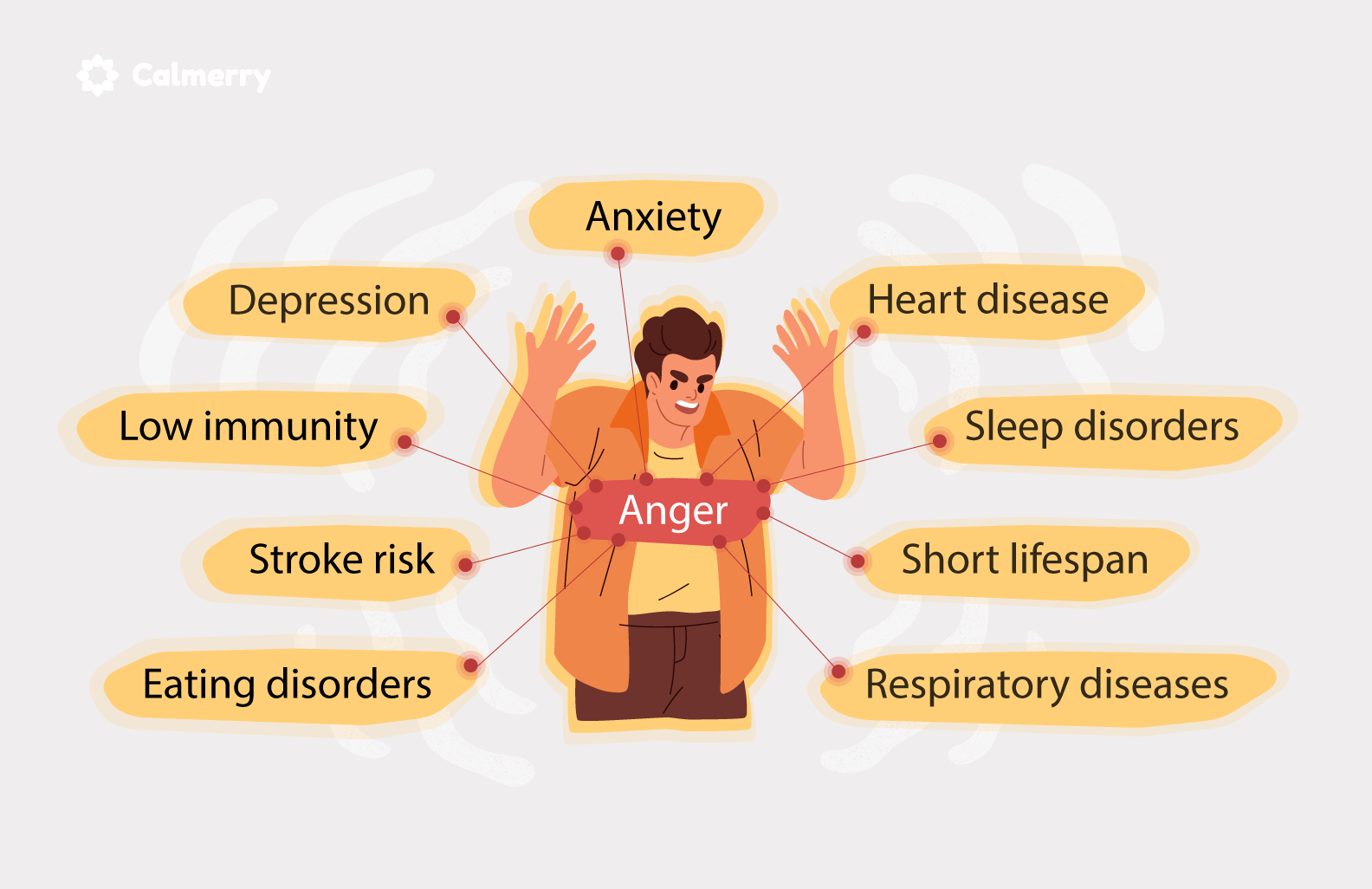
Anger Issues in Men: What’s Really Going On

https://calmerry.com/wp-content/uploads/2022/06/Anger-effects.png

A Psychological Look Beneath the Surface

Anger is often the emotion most visibly associated with men, especially in public and interpersonal settings. Society frequently interprets male anger as a personality flaw, a temperament problem, or a failure of self-control, focusing on the behavior rather than its meaning. However, from a psychological perspective, anger in men is rarely the core issue. More often, it functions as a surface emotion—a protective response that signals deeper, unrecognized, or unexpressed distress beneath it.

Feelings such as hurt, fear, shame, grief, helplessness, or emotional overwhelm often sit underneath anger but remain hidden because they feel unsafe or unacceptable to express. Anger, in contrast, feels powerful and socially permitted, making it the emotion that emerges. To truly understand anger issues in men, it is essential to look beyond the behavior itself and examine the emotional history, developmental experiences, and social conditioning that shape how men learn to cope with distress. Only by addressing these underlying factors can anger be understood, regulated, and transformed in a healthy way.

Anger Is Often a Secondary Emotion

From a psychological perspective, anger is rarely the first emotion that arises. More often, it functions as a secondary emotion, appearing in response to more vulnerable primary feelings such as:

  • Fear

  • Hurt

  • Shame

  • Rejection

  • Helplessness

  • Grief

These emotions tend to feel unsafe, exposing, or unacceptable to express—especially for men. As a result, they are pushed aside or remain unacknowledged. Anger then steps in as the emotion that becomes visible. It feels powerful, protective, and socially permitted, making it a safer outlet for underlying pain.

Why Anger Feels “Easier” Than Other Emotions

From an early age, many men receive clear messages about emotional expression, such as:

  • Don’t cry

  • Don’t show fear

  • Stay in control

  • Be strong

These messages encourage the suppression of emotions that signal vulnerability. Anger, however, is often tolerated or even rewarded because it aligns with cultural ideas of strength and dominance. Over time, the emotional system adapts to this pattern:

👉 When pain arises, anger becomes the expression.

This conditioning does not suggest that men lack emotional depth or sensitivity. Rather, it reflects that they have learned which emotions are acceptable to show and which must remain hidden.

Common Hidden Causes Behind Male Anger

1. Unrecognized Depression

Depression in men often does not present as visible sadness or withdrawal. Instead, it may show up through:

  • Irritability

  • A short temper

  • Emotional numbness

  • Sudden or explosive reactions

When sadness, hopelessness, or emptiness cannot be acknowledged or expressed, anger often becomes the outward outlet. In this way, anger masks the deeper emotional pain of depression.

2. Chronic Stress and Pressure

Many men live under continuous pressure related to:

  • Work performance and career expectations

  • Financial responsibility

  • Family and social roles

  • Constant comparison with others

When this stress goes unprocessed, the nervous system remains in a state of heightened alert. Over time, this constant activation lowers emotional tolerance and makes anger reactions more frequent and intense.

3. Emotional Suppression

When emotions are repeatedly pushed aside rather than processed:

  • Emotional awareness gradually decreases

  • Frustration tolerance weakens

  • Reactions become more impulsive and reactive

Suppressed emotions do not disappear. Instead, they accumulate beneath the surface and often re-emerge as anger, irritation, or sudden outbursts.

4. Shame and Threatened Identity

Anger commonly arises when a man experiences feelings such as:

  • Disrespect

  • Inadequacy

  • Criticism

  • Loss of control

Shame is one of the most uncomfortable emotions to sit with. Anger acts as a protective shield, redirecting that discomfort outward rather than inward.

5. Learned Family Patterns

Many men grow up in families where:

  • Anger was the only emotion openly expressed

  • Conflict replaced calm communication

  • Vulnerability was discouraged or absent

Without examples of healthy emotional expression, anger becomes the default emotional language. It is not chosen intentionally—it is learned through observation and repetition.

How Anger Shows Up in Daily Life

Anger issues in men do not always appear as obvious rage or aggression. More often, they surface in subtle, recurring patterns that affect daily functioning and relationships. Common expressions include:

  • Frequent irritation over small or minor matters

  • Sudden emotional outbursts that feel disproportionate to the situation

  • Passive-aggressive behaviors, such as sarcasm or withdrawal

  • Emotional shutdown followed by unexpected explosions of anger

  • Road rage, impulsive decisions, or other risky behaviors

  • Ongoing conflict in personal relationships and workplace interactions

These behaviors are rarely about the immediate situation. Instead, they often mask unmet emotional needs, unprocessed stress, or feelings that have gone unheard for a long time. Recognizing these patterns is the first step toward understanding what anger is truly communicating.

The Cost of Unaddressed Anger

When anger is misunderstood, ignored, or left unmanaged, its impact extends far beyond momentary outbursts. Over time, unresolved anger can contribute to:

  • Breakdown of intimate and family relationships

  • Ongoing conflict and difficulties in the workplace

  • Physical health problems such as high blood pressure, headaches, or fatigue

  • Increased reliance on substances as a coping mechanism

  • Growing emotional isolation and disconnection from others

Although anger may offer short-term protection by creating a sense of control or release, it often causes long-term damage to mental health, relationships, and overall well-being when its underlying causes are not addressed.

Anger Is a Signal, Not a Character Flaw

From a therapeutic perspective, anger is information rather than a defect. It serves as an internal signal that something important is happening beneath the surface. Anger often indicates that:

  • A personal boundary feels violated

  • An emotional or psychological need remains unmet

  • Pain or hurt has gone unheard or unacknowledged

  • Stress has exceeded the individual’s capacity to cope

When anger is treated as the enemy, its underlying message is missed. Understanding what anger is trying to communicate allows for healthier responses, emotional regulation, and meaningful change.

What Helps Men Manage Anger in a Healthy Way

Healthy anger management does not involve suppressing or denying anger. Instead, it focuses on understanding what anger is communicating. When anger is explored rather than avoided, it becomes easier to respond thoughtfully rather than react impulsively.

Helpful steps include:

  • Learning to identify the underlying emotions driving anger, such as fear, hurt, or shame

  • Expanding emotional vocabulary to better name and express inner experiences

  • Developing pause and regulation skills that allow space between feeling and action

  • Addressing sources of chronic stress that keep the nervous system activated

  • Seeking therapy or support without shame, recognizing it as a strength rather than a failure

When men learn to recognize what their anger is protecting, emotional balance and self-control become possible.

Redefining Strength

Explosive control is not strength.
Emotional awareness reflects strength.
Responding with intention shows strength.
Reaching out for help demonstrates strength.

Anger itself does not make a man weak. Ignoring the message behind it does. 

Final Thoughts

Anger issues in men are rarely about anger alone. They are often rooted in unspoken pain, unmet needs, and long-standing emotional silence.

When anger is understood instead of judged, it can become a gateway to insight and healing, rather than a source of harm. Supporting men in exploring what lies beneath anger is not only sound psychology—it is essential for building healthier individuals, stronger relationships, and more compassionate communities.

Frequently Asked Questions (FAQ)

1. Are anger issues common in men?

Yes. Anger is one of the most commonly expressed emotions in men due to social and cultural conditioning.

2. Is anger always the main problem?

No. Anger is often a secondary emotion that masks deeper feelings such as fear, shame, or hurt.

3. Can depression show up as anger in men?

Yes. Depression in men frequently presents as irritability, short temper, or emotional numbness rather than sadness.

4. Why do men express anger more than sadness?

Anger is socially accepted for men, while vulnerable emotions are often discouraged.

5. Does suppressing emotions increase anger?

Yes. Suppressed emotions accumulate and often resurface as anger or sudden outbursts.

6. Is anger a sign of weakness?

No. Anger is a natural emotional response and often signals unmet needs or violated boundaries.

7. Can stress trigger anger issues in men?

Chronic stress keeps the nervous system activated, lowering tolerance and increasing anger reactions.

8. Are anger issues linked to childhood experiences?

Yes. Growing up in environments where anger was the only expressed emotion can shape adult coping patterns.

9. How does anger affect relationships?

Unmanaged anger can lead to conflict, emotional distance, and relationship breakdowns.

10. Can anger cause physical health problems?

Yes. Chronic anger is linked to high blood pressure, headaches, fatigue, and other stress-related conditions.

11. Is therapy helpful for men with anger issues?

Yes. Therapy helps identify underlying emotions, develop regulation skills, and process unresolved pain.

12. Does anger management mean suppressing anger?

No. Healthy anger management focuses on understanding and responding to anger, not suppressing it.

13. Why does anger feel uncontrollable sometimes?

When underlying emotions go unrecognized, anger can surface suddenly and intensely.

14. Can men learn healthier ways to express anger?

Absolutely. Emotional awareness and regulation skills can be learned at any age.

15. What is the first step toward managing anger?

Recognizing anger as a signal rather than a character flaw is the first step toward change.

Written by Baishakhi Das

Counselor | Mental Health Practitioner
B.Sc, M.Sc, PG Diploma in Counseling


Reference 

This topic performs strongly because it addresses men’s mental health, emotional neglect, and loneliness stigma—issues with growing global search interest.


Why Men Struggle to Talk About Their Feelings

https://restorationpsychology.com/userfiles/2556/images/mens-mental-health.png?t=20240606110643

A Psychological and Social Perspective

Many men experience deep emotions—fear, sadness, loneliness, love, and vulnerability—but struggle to put these feelings into words. This difficulty is not a personal flaw, emotional weakness, or lack of emotional capacity. Rather, it develops over time through social conditioning, cultural expectations, and learned coping strategies that teach men how they are supposed to feel and behave. From an early age, many men learn that emotional control is valued more than emotional expression, shaping how they relate to their inner world.

Understanding why men struggle to express their feelings is essential—not only for improving individual mental health, but also for creating healthier relationships, more emotionally safe workplaces, and stronger families. When emotional silence is misinterpreted as disinterest or strength, genuine needs go unnoticed. Greater awareness allows space for empathy, early support, and meaningful connection—helping men feel seen, heard, and understood rather than judged or overlooked.

Emotional Silence Is Learned, Not Inborn

Boys are not born emotionally closed or disconnected. In early childhood, boys and girls express emotions with similar intensity, openness, and range. They cry, seek comfort, show fear, and express joy freely. Over time, however, many boys begin to receive clear social messages—both spoken and unspoken—about which emotions are acceptable and which are not.

Common messages include:

  • “Be strong.”

  • “Don’t cry.”

  • “Handle it yourself.”

  • “Man up.”

These repeated messages gradually teach boys that vulnerability is a weakness and that emotional expression may lead to criticism, shame, or rejection. As a result, emotions are not explored or understood—they are suppressed, minimized, or hidden. What begins as adaptation to social expectations can later become emotional silence, making it difficult for men to recognize, express, or seek support for their inner experiences.

The Narrow Emotional Range Allowed to Men

Culturally, men are often permitted to express only a restricted set of emotions, most commonly those associated with strength or control, such as:

  • Anger

  • Pride

  • Confidence

In contrast, emotions like fear, sadness, shame, loneliness, or grief are frequently discouraged, ignored, or labeled as signs of weakness. When these vulnerable emotions arise, many men do not feel safe expressing them openly. Instead, they learn to translate emotional pain into anger—which is more socially acceptable—or into silence, which feels safer and less exposing.

Over time, this narrowing of emotional expression limits emotional awareness and connection. The original feelings remain unresolved, but their expression becomes indirect, making it harder for men to understand their own needs and for others to recognize their distress.

Lack of Emotional Language

Many men were never taught how to identify, label, or describe emotions beyond a few basic terms such as “fine,” “stressed,” or “angry.” When emotional vocabulary is limited, internal experiences remain vague and difficult to understand. As a result:

  • Feelings become confusing and hard to organize

  • Emotional expression feels overwhelming or unsafe

  • Silence becomes the easiest response

Simply put, what cannot be named cannot be shared, and unspoken emotions often remain unresolved.

Fear of Judgment and Rejection

For many men, opening up emotionally feels risky. There is often a fear that vulnerability will lead to:

  • Being seen as weak

  • Losing respect or authority

  • Burdening others

  • Being misunderstood, dismissed, or minimized

Past experiences—where emotions were mocked, ignored, or punished—strengthen the belief that silence is safer than honesty. Over time, emotional withholding becomes a protective habit rather than a conscious choice.

Identity Tied to Function, Not Feelings

Many men are taught to define their self-worth through what they do, rather than what they feel. Identity becomes closely linked to:

  • Productivity and achievement

  • Providing and responsibility

  • Problem-solving

  • Strength, control, and reliability

When identity is built around functioning and performance, emotions may be viewed as distractions, weaknesses, or failures, rather than important signals that require attention and care.

Emotional Expression Was Never Modeled

If a man grew up in a family where:

  • Emotions were ignored or dismissed

  • Conflict was avoided rather than addressed

  • Vulnerability was absent

He may never have witnessed healthy emotional expression. Without role models demonstrating how emotions can be shared safely, emotional openness can feel unfamiliar, uncomfortable, or even threatening in adulthood.

Emotional Suppression as Survival

For many men, emotional silence once served an important purpose. It may have:

  • Reduced conflict

  • Prevented shame or criticism

  • Ensured acceptance

  • Maintained a sense of control

However, coping strategies that were once protective can become harmful over time. Long-term suppression often contributes to:

  • Depression

  • Anxiety

  • Anger

  • Emotional numbness

  • Disconnection in relationships

What once helped a man survive can later prevent him from fully living.

The Cost of Not Talking

When emotions are not expressed, they do not disappear—they often find other outlets. Suppressed feelings may surface as:

  • Irritability or sudden rage

  • Physical symptoms such as fatigue or chronic pain

  • Substance use or unhealthy coping behaviors

  • Emotional withdrawal from relationships

  • Unexpected emotional breakdowns

Silence may feel safe in the short term, but it carries a significant long-term cost to mental health, relationships, and overall well-being.

Why Talking Feels Hard—even When Support Exists

Even in emotionally supportive environments, many men still struggle to open up. This difficulty is not due to unwillingness or lack of trust, but because emotional expression often feels unfamiliar and unsafe. Vulnerability can trigger deep feelings of shame, especially for those who were taught that emotions should be controlled or hidden.

For many men, words simply do not come easily. Emotional experiences are often held in the body first—as tension, restlessness, or discomfort—long before they are translated into language. When the body reacts before the mind can organize meaning, silence becomes the default response. This is not resistance or avoidance; it is conditioning shaped over years.

What Helps Men Begin to Open Up

Change rarely begins by forcing emotional expression. Instead, it develops gradually in the presence of:

  • Safety, where emotions are not judged or dismissed

  • Patience, allowing expression to unfold at its own pace

  • Non-judgment, removing fear of criticism or weakness

  • Listening without fixing, where being heard matters more than solutions

Often, men begin to open up through actions, shared activities, or subtle signals before they are able to put feelings into words. Trust grows first; language follows.

A Healthier Definition of Strength

Emotional silence is not a measure of strength.
True strength lies in self-awareness.
Reaching out for support reflects courage.
Being able to name what hurts is a sign of growth.

Talking about feelings is not a loss of control—it is a movement toward emotional balance, clarity, and connection.

Final Thoughts

Men struggle to talk about their feelings not because emotions are absent—but because they were taught not to show them.

When emotional expression is normalized and supported, men do not become weaker. They become more present, more connected, and more resilient.

Creating space for men to speak—without pressure, judgment, or expectations—is not just good psychology.
It is essential for mental health, healing, and human connection.

Frequently Asked Questions (FAQ): Why Men Struggle to Talk About Their Feelings

1. Why do many men find it hard to talk about their feelings?

Many men struggle because emotional expression was discouraged during childhood, leading emotions to be suppressed rather than understood or shared.

2. Is difficulty expressing emotions a biological trait in men?

No. Emotional silence is learned through social and cultural conditioning, not determined by biology.

3. Do men feel emotions less intensely than women?

No. Men experience emotions just as deeply, but they are often taught to hide or control emotional expression.

4. Why is anger more commonly expressed by men?

Anger is socially accepted as a “masculine” emotion, making it a safer outlet for underlying feelings like fear, sadness, or shame.

5. Can lack of emotional language affect mental health?

Yes. When emotions cannot be named or expressed, they may contribute to stress, anxiety, depression, or physical symptoms.

6. Why does vulnerability feel unsafe for many men?

Past experiences of being judged, mocked, or dismissed for emotional openness reinforce the belief that vulnerability leads to rejection.

7. Does emotional suppression protect men?

In the short term, suppression may reduce conflict or shame, but long-term suppression often harms mental health and relationships.

8. Can supportive environments alone help men open up?

Support helps, but conditioning may still make expression difficult. Safety and patience over time are essential.

9. Why do men express emotions through actions rather than words?

For many men, emotional awareness develops through behavior first because language for emotions was never modeled or encouraged.

10. Is silence a sign that a man doesn’t trust others?

Not necessarily. Silence often reflects learned coping patterns rather than lack of trust.

11. How does emotional suppression affect relationships?

It can lead to emotional distance, misunderstandings, unresolved conflict, and reduced intimacy.

12. Can therapy help men who struggle to talk about feelings?

Yes. Therapy provides a safe space to build emotional awareness, language, and expression gradually.

13. Does talking about feelings make men weaker?

No. Emotional expression supports resilience, self-awareness, and psychological strength.

14. What helps men begin to express emotions safely?

Non-judgmental listening, patience, emotional safety, and validation—without pressure to “open up.”

15. Can men learn emotional expression later in life?

Absolutely. Emotional skills can be learned and strengthened at any age.

Written by Baishakhi Das

Counselor | Mental Health Practitioner
B.Sc, M.Sc, PG Diploma in Counseling


Reference 


Depression in Men That Doesn’t Look Like Sadness

https://images.squarespace-cdn.com/content/v1/5ec33f400be7e16a9a6dc2af/5caa037a-e96f-4fe6-97d3-accb36237830/Feeling%2BFrustrated%2B%7C%2Bmen%27s%2Bcounseling%2Bin%2Bdetroit%2C%2Bmi%2B%7C%2Bcounselor%2Bfor%2Bmen%2Bin%2Bdetroit%2C%2Bmi%2B%7C%2Bmen%27s%2Btherapy%2Bin%2Bdetroit%2C%2Bmi%2B%7C%2Bmen%27s%2Bissues%2Btherapy%2Bin%2Bdetroit%2C%2Bmi%2B%7C%2Btherapist%2Bfor%2Bmen%2Bin%2Bmichigan%2B%7C%2B48230%2B%7C%2B48236%2B%7C%2B48207

A Psychological Perspective on the Hidden Face of Male Depression

When people think of depression, they often picture visible sadness, frequent crying, social withdrawal, or a clear sense of hopelessness. However, in many men, depression does not present in these familiar ways. Instead, it often hides behind behaviors that appear socially acceptable or even normal, such as anger, irritability, emotional silence, excessive work, substance use, or a persistent sense of numbness. These expressions are frequently overlooked because they do not fit the traditional or clinical stereotype of depression.

Because these signs are subtle or misunderstood, male depression is often missed, minimized, or misdiagnosed—sometimes labeled as stress, personality issues, or anger problems rather than emotional distress. As a result, many men continue to suffer silently, without recognition or support, until the emotional burden becomes overwhelming. Over time, this unaddressed distress may escalate into relationship breakdowns, physical health problems, risky behaviors, or psychological crisis, making early awareness and understanding critically important.

Why Depression Looks Different in Men

From early childhood, many boys are socialized—often subtly and repeatedly—to internalize certain beliefs about emotions and strength. Messages such as “don’t cry,” “be strong,” or “handle it yourself” teach them that emotional vulnerability equals weakness, that sadness should be hidden, and that fear or grief are unacceptable emotions. In contrast, anger is often tolerated or even encouraged, while independence is valued more than emotional expression.

Over time, these beliefs shape how psychological distress is experienced and expressed. Instead of turning inward with visible sadness or openly seeking support, many men learn to externalize pain through irritability or anger, or to shut down emotionally altogether. Emotional suppression can become a coping strategy—one that protects them from judgment but also prevents emotional release and connection.

This does not mean men feel less or experience depression less deeply. Rather, it often means they have been conditioned not to show what they feel, even to themselves. As a result, depression in men may remain hidden—expressed through behavior rather than words—until it reaches a breaking point.

Common Signs of Depression in Men (That Are Often Overlooked)

1. Irritability and Anger

Rather than appearing sad, depression in men often shows up as:

  • Frequent frustration

  • Short temper

  • Aggressive reactions

  • Emotional outbursts over small issues

Anger becomes a socially permitted outlet for deeper feelings like helplessness, shame, or grief.

2. Emotional Numbness

Some men do not feel sad—they feel nothing.

  • Loss of interest in life

  • Feeling disconnected from loved ones

  • Lack of emotional response (even to good news)

  • Sense of emptiness

This numbness is often mistaken for emotional coldness, but psychologically, it is a protective shutdown.

3. Overworking and Constant Busyness

Excessive work can function as emotional avoidance.

  • Working long hours

  • Inability to relax

  • Feeling valuable only when productive

  • Avoiding rest or intimacy

For many men, productivity replaces emotional expression.

4. Risk-Taking or Self-Destructive Behavior

Depression may be expressed through:

  • Reckless driving

  • Gambling

  • Substance use

  • Unsafe sexual behavior

These behaviors are often unconscious attempts to feel something or escape emotional pain.

5. Physical Symptoms Without Clear Medical Cause

Male depression frequently presents through the body:

  • Chronic fatigue

  • Headaches or body pain

  • Sleep disturbances

  • Digestive problems

Because emotional distress is not verbalized, it is somatized.

6. Withdrawal Without Visible Sadness

Men may withdraw silently:

  • Spending more time alone

  • Reduced communication

  • Emotional distance in relationships

  • Loss of interest in social connection

This is often misinterpreted as disinterest rather than distress.

Why Male Depression Is Often Missed

    • Emotional distress is often expressed through anger, irritability, or silence rather than sadness

    • Many men lack the language or permission to describe emotional pain

    • Common screening tools focus on stereotypical depressive symptoms

    • Substance use and risk-taking behaviors are treated as separate problems

    • Physical complaints are addressed without exploring emotional causes

    • Cultural norms discourage men from seeking psychological help

    • Fear of appearing weak delays disclosure and treatment

    • Depression is often recognized only after major personal or social consequences.

As a result, depression in men is frequently identified late, sometimes only after serious consequences.

The Cost of Ignoring Male Depression

When unrecognized, male depression can lead to:

  • Relationship breakdown

  • Workplace burnout

  • Substance dependence

  • Increased risk of suicide

Globally, men die by suicide at higher rates—not because they are weaker, but because their suffering is less visible and less supported.

Clinical and Counseling Perspective

In therapy, male depression often emerges indirectly:

  • Through anger complaints

  • Relationship conflicts

  • Work stress

  • Physical symptoms

Effective counseling focuses on:

  • Expanding emotional vocabulary

  • Normalizing vulnerability

  • Addressing shame

  • Creating safety for emotional expression

Depression is not removed by “being strong”—it is healed through connection, understanding, and support.

What Healing Can Look Like

Healing does not require dramatic emotional expression. It often begins with:

  • Naming internal experiences

  • Learning that emotions are not failures

  • Reconnecting with the body

  • Building safe emotional relationships

Strength is not the absence of pain—it is the willingness to face it.

Final Thoughts

Depression in men frequently presents without sadness.
It may manifest as anger or emotional withdrawal.
Sometimes it looks like success on the outside and emptiness inside.

Recognizing these hidden signs is not just psychological awareness—it is life-saving.

If you or someone you know fits these patterns, support is not a weakness.
It is a step toward healing.

Frequently Asked Questions (FAQ): Depression in Men That Doesn’t Look Like Sadness

1. Can depression exist without feeling sad?

Yes. Depression can appear as anger, emotional numbness, irritability, exhaustion, or withdrawal rather than visible sadness.

2. Why do men express depression differently than women?

Men are often socialized to suppress vulnerable emotions, leading distress to be expressed through behavior rather than words.

3. Is anger a symptom of depression in men?

Anger and irritability are common but often overlooked signs of depression in men.

4. Can overworking be a sign of depression?

Yes. Excessive work can function as emotional avoidance and a way to escape internal distress.

5. Why do some depressed men feel emotionally numb?

Emotional numbness can develop as a protective response when feelings have been suppressed for a long time.

6. Are substance use and depression connected in men?

Yes. Alcohol or substance use is often used to manage unrecognized or unexpressed depressive symptoms.

7. Can physical symptoms indicate depression in men?

Depression may present as fatigue, sleep problems, headaches, or unexplained body pain.

8. Why is male depression often misdiagnosed?

Symptoms may not fit traditional depression criteria and are often treated as anger, stress, or behavioral problems.

9. Do men seek help less often for depression?

Yes. Social stigma and fear of appearing weak often delay help-seeking.

10. Is male depression linked to higher suicide risk?

Men have higher suicide completion rates, partly due to delayed diagnosis and lack of emotional support.

11. Can relationships be affected by hidden depression?

Yes. Emotional withdrawal, irritability, and disconnection can strain intimate and family relationships.

12. Does talking about emotions make depression worse?

No. Emotional expression and validation are key components of healing.

13. Can therapy help men who don’t feel “sad”?

Yes. Therapy focuses on understanding emotional patterns, behaviors, and underlying distress—not just sadness.

14. Is male depression a sign of weakness?

No. Depression is a mental health condition, not a personal failure.

15. Can male depression be treated successfully?

Yes. With appropriate support, therapy, lifestyle changes, and sometimes medication, recovery is possible.

Written by Baishakhi Das

Counselor | Mental Health Practitioner
B.Sc, M.Sc, PG Diploma in Counseling


Reference Links

Classical Conditioning: Pavlov’s Theory in Real Life

https://www.simplypsychology.org/wp-content/uploads/Pavlovs-Dogs-Experiment.jpg

A Clear and Detailed Psychological Explanation

Classical conditioning is one of the most foundational concepts in psychology because it explains how learning can occur automatically through association, without conscious intention or deliberate effort. Both humans and animals constantly absorb patterns from their environment, linking events that repeatedly occur together. As a result, many emotional reactions—such as fear, comfort, attraction, or anxiety—are not logical choices, but learned responses that develop over time through repeated experiences. Once formed, these responses can be triggered instantly, often before rational thinking has a chance to intervene.

This theory was introduced by Ivan Pavlov and has had a lasting impact far beyond laboratory experiments. It helps explain everyday behaviors such as emotional triggers, habits, preferences, and aversions. Today, classical conditioning continues to influence modern psychology, education, therapy, marketing, and daily life, offering valuable insight into how past experiences shape present reactions—and how those reactions can be understood, modified, and healed through awareness and intervention.

What Is Classical Conditioning?

Classical conditioning is a form of learning through association, in which a stimulus that initially has no meaning gradually becomes linked to a stimulus that naturally produces a response. Over time, this association causes the previously neutral stimulus to evoke a learned reaction on its own.

In simple terms:
👉 When two events repeatedly occur together, the brain connects them.

Once this connection is established, the neutral stimulus no longer remains neutral. It becomes capable of triggering the response even in the absence of the original stimulus. This is why certain sounds, smells, places, or situations can automatically evoke emotions or physical reactions without conscious thought.

Pavlov’s Original Experiment Explained

The Discovery

While conducting research on digestion, Ivan Pavlov observed an unexpected pattern in his laboratory dogs. His original goal was to measure salivation as a physiological response to food. However, he noticed that the dogs began to salivate even before the food appeared. The response occurred when the dogs heard familiar sounds, such as the footsteps of the lab assistant, or when they saw visual cues that signaled feeding time.

This was a crucial observation because salivation was happening in the absence of food, which meant the response could not be explained by biology alone. The dogs had learned to associate certain environmental cues with feeding. Pavlov realized that learning was taking place through repeated pairing of events, rather than conscious decision-making. This insight shifted the focus of psychology toward observable behavior and measurable learning processes.

The Experiment Setup

To test this learning process under controlled conditions, Pavlov designed a series of structured experiments. Each component of the experiment had a specific role:

  • Food was used as a natural stimulus because it automatically caused salivation without any prior learning.

  • Salivation was measured carefully, as it was a clear, observable, and quantifiable response.

  • A bell sound was introduced as a neutral stimulus, meaning it did not initially trigger salivation or any meaningful response.

Pavlov then followed a precise sequence. The bell was rung immediately before the food was presented. This pairing was repeated many times across different trials. Gradually, the dogs began to anticipate the food as soon as they heard the bell. Their bodies responded automatically, producing saliva even before the food appeared.

Eventually, Pavlov tested the association by ringing the bell without presenting food. Remarkably, the dogs still salivated. This confirmed that the bell had become a meaningful signal through learning.

Why This Experiment Was Revolutionary

Pavlov’s experiment demonstrated that:

  • Learning can occur without conscious thought

  • Neutral stimuli can acquire emotional or physiological meaning

  • Responses can be shaped by experience and repetition

This challenged earlier beliefs that behavior was driven only by instinct or conscious reasoning. Pavlov’s work laid the foundation for behaviorism and influenced later psychological theories related to anxiety, trauma, habit formation, and emotional responses.

Lasting Impact

The significance of Pavlov’s experiment extends far beyond dogs and bells. It helps explain:

  • Why certain sounds, places, or smells trigger strong emotions

  • How fears and phobias develop

  • Why past experiences influence present reactions

Pavlov’s discovery showed that learning is deeply connected to experience, and that understanding these associations is key to understanding human behavior.

Key Components of Classical Conditioning

Classical conditioning is built on a clear sequence of stimuli and responses. Each component plays a specific role in how learning through association occurs.

1. Unconditioned Stimulus (UCS)

The unconditioned stimulus is something that naturally and automatically triggers a response, without any prior learning or conditioning. It has inherent meaning for the organism.

Example:
Food naturally causes salivation.

2. Unconditioned Response (UCR)

The unconditioned response is the automatic, involuntary reaction that occurs in response to the unconditioned stimulus. This response is innate and does not need to be learned.

Example:
Salivation that occurs when food is presented.

3. Neutral Stimulus (NS)

A neutral stimulus is something that initially does not trigger the target response. Before conditioning, it holds no particular significance in relation to the response.

Example:
A bell sound before any learning takes place does not cause salivation.

4. Conditioned Stimulus (CS)

After repeated pairing with the unconditioned stimulus, the neutral stimulus becomes a conditioned stimulus. At this stage, it has acquired meaning through association.

Example:
The bell sound after being repeatedly paired with food.

5. Conditioned Response (CR)

The conditioned response is the learned reaction that occurs when the conditioned stimulus is presented alone. Although it resembles the unconditioned response, it is now produced by learning rather than biology.

Example:
Salivation triggered by the bell sound, even when no food is present.

Together, these components explain how new responses are learned and why previously neutral cues can later evoke strong emotional or physical reactions.

Classical Conditioning in Real Life

https://themarketingagenda.com/wp-content/uploads/2013/11/coca-cola-classical-conditioning.png
Classical conditioning is not limited to laboratories—it operates constantly in daily life. 

Classical Conditioning in Real Life: Detailed Applications

1. Fear and Phobias

Many fears are not learned through logic or reasoning but through direct or indirect associations. When a frightening experience occurs alongside a specific stimulus, the brain links the two.

Example:

  • A child is bitten by a dog, experiencing pain and intense fear

  • The dog becomes associated with danger

  • Later, even seeing or hearing a dog triggers anxiety

This explains why phobias often feel irrational yet emotionally overwhelming. The reaction is not a conscious decision—it is a conditioned response stored in memory and the nervous system.

2. Anxiety and Panic Responses

In anxiety disorders, neutral places or situations can become powerful triggers due to conditioning.

Example:

  • A panic attack occurs in a crowded mall

  • The intense physical sensations pair the mall with danger

  • Future visits to malls trigger anxiety—even when no real threat exists

The body reacts first because the association was formed at a physiological level, bypassing rational thought. This is why reassurance alone often fails to reduce anxiety.

3. Hospital and Medical Anxiety

Medical settings commonly evoke conditioned fear responses.

  • Painful injections or procedures (Unconditioned Stimulus) → fear (Unconditioned Response)

  • Hospital smells, white coats, or medical equipment (Conditioned Stimulus) → fear (Conditioned Response)

As a result, some people feel anxious simply entering a clinic, even when no painful procedure is planned.

4. Food Preferences and Aversions

Classical conditioning strongly influences eating behavior, often beginning in childhood.

  • Sweets paired with celebrations → happiness and comfort

  • Food poisoning after a meal → long-term disgust or avoidance

Taste, smell, and emotion become tightly linked, explaining why certain foods trigger pleasure or nausea instantly.

5. Advertising and Branding

Marketing frequently relies on classical conditioning principles.

  • Pleasant music, attractive visuals, or admired celebrities evoke positive emotions

  • These emotions are repeatedly paired with a product

  • Eventually, the product alone triggers good feelings

This is why certain brands feel appealing even when we cannot logically explain why.

6. Relationships and Emotional Triggers

Emotional responses in relationships are often conditioned by past experiences.

Example:

  • Raised voices were previously paired with conflict, criticism, or harm

  • A loud tone now triggers fear, shutdown, or defensiveness—even in safe relationships

These reactions are learned and automatic, not intentional or reflective of current reality.

Key Processes in Classical Conditioning

Acquisition : The stage during which learning occurs. Repeated pairing of stimuli strengthens the association.

Extinction : When the conditioned stimulus appears repeatedly without the unconditioned stimulus, the learned response gradually weakens.

Example:
Bell rings repeatedly without food → salivation decreases over time.

Spontaneous Recovery: After extinction, the conditioned response may briefly return, even without new learning.

Generalization: Stimuli similar to the original conditioned stimulus trigger the same response.

Example:
Fear of one dog → fear of all dogs.

Discrimination: Learning to respond only to specific stimuli while ignoring similar ones.

Clinical and Therapeutic Importance

In psychology and counseling, classical conditioning helps explain:

  • Trauma responses

  • Anxiety disorders

  • Phobias

  • Emotional triggers

  • Somatic (body-based) reactions

Therapeutic approaches such as exposure therapy and systematic desensitization work by retraining conditioned associations, allowing the nervous system to relearn safety.

What Classical Conditioning Does Not Mean

  • Reactions are not a matter of conscious choice

  • Conditioned responses do not indicate weakness

  • Learned reactions are not permanent

Because they are learned, they can be modified or unlearned.

Why Pavlov’s Theory Still Matters

Classical conditioning helps us understand:

  • Why emotions arise automatically

  • Why certain triggers feel uncontrollable

  • How past experiences shape present reactions

Most importantly, it shows that behavior is deeply shaped by experience—and experience can be reshaped.

Final Thoughts

Classical conditioning reveals that the mind is constantly forming associations—some supportive, others limiting. When these patterns become conscious, individuals can:

  • Understand their emotional reactions

  • Reduce self-blame

  • Heal conditioned fears

  • Develop healthier responses

Learning may begin unconsciously—but healing begins with awareness.

Frequently Asked Questions (FAQ) 

1. What is classical conditioning?

Classical conditioning is defined as a learning process in which associations are formed between stimuli, leading to automatic responses being produced without conscious effort.

2. Who was classical conditioning introduced by?

The theory of classical conditioning was introduced by Ivan Pavlov through experiments conducted on dogs.

3. How is learning explained in classical conditioning?

Learning is explained as the result of repeated pairing between a neutral stimulus and a meaningful stimulus, through which a new response is gradually acquired.

4. Are conditioned responses consciously chosen?

Conditioned responses are not consciously chosen; they are triggered automatically once associations have been learned.

5. Can fears and phobias be explained using classical conditioning?

Yes, many fears and phobias are understood as conditioned responses formed after frightening or painful experiences are paired with specific stimuli.

6. Why do anxiety triggers feel irrational?

Anxiety triggers feel irrational because responses are activated by learned associations in the nervous system, rather than by conscious reasoning.

7. How is classical conditioning used in therapy?

Classical conditioning principles are applied in therapies such as exposure therapy and systematic desensitization, where conditioned fear responses are gradually weakened.

8. Can conditioned responses be unlearned?

Yes, conditioned responses can be reduced or eliminated through extinction, repeated safe exposure, and therapeutic intervention.

9. Is classical conditioning limited to animals?

No, classical conditioning is observed in humans as well and influences emotions, habits, relationships, preferences, and behavior.

10. Does classical conditioning explain all human behavior?

Classical conditioning does not explain all behavior, but it provides a foundational framework for understanding automatic emotional and physiological reactions.

11. Why is classical conditioning still relevant today?

Classical conditioning remains relevant because emotional learning, trauma responses, and anxiety patterns continue to be shaped through associative learning.

12. Is classical conditioning related to trauma?

Yes, trauma responses are often maintained through conditioned associations between cues and fear responses.

Written by Baishakhi Das

Counselor | Mental Health Practitioner
B.Sc, M.Sc, PG Diploma in Counseling


Reference 


How Birth Order Influences Personality

https://i.etsystatic.com/15493847/r/il/c4af4b/1307200366/il_570xN.1307200366_mis5.jpg

A Psychological Perspective with In-Depth Explanation

Birth order has long fascinated psychologists, parents, and researchers because siblings raised in the same family often develop strikingly different personalities, coping styles, and emotional patterns. Even when children share the same home, culture, and parenting values, their psychological experiences within the family are rarely the same. While genetics and environment play powerful roles in shaping personality, birth order adds another important psychological layer—influencing how children interpret attention, responsibility, competition, and belonging. Over time, these interpretations shape how individuals see themselves, relate to others, handle stress, and navigate the world.

The theory of birth order was first systematically explored by Alfred Adler, the founder of Individual Psychology. Adler believed that children are not shaped simply by objective family conditions, but by how they experience their position within the family. According to him, a child’s place among siblings creates unique emotional challenges and advantages, which influence motivation, self-concept, and interpersonal behavior. Birth order, in this view, affects the strategies children develop to gain significance, love, and a sense of belonging.

This article explains each birth order position in detail, exploring the typical strengths, challenges, and psychological patterns associated with first-borns, middle children, youngest children, and only children. At the same time, it is important to remember that birth order influences tendencies, not destiny. Personality remains flexible and is shaped continuously by life experiences, relationships, culture, and self-awareness. Understanding birth order is not about labeling people—but about gaining deeper insight into ourselves and others.

The Psychology Behind Birth Order

From a psychological standpoint, birth order influences how children interpret their place within the family system, and this interpretation affects several key developmental areas:

  • Parental attention – how much attention a child receives, when they receive it, and whether it feels secure or threatened

  • Expectations and responsibility – the level of pressure placed on a child to lead, comply, care for others, or achieve

  • Competition among siblings – how children compare themselves, seek uniqueness, or compete for recognition

  • Sense of belonging and significance – whether a child feels valued, noticed, and emotionally important within the family

Children are not passive recipients of these experiences. They adapt psychologically to their family role in order to secure love, attention, and emotional safety. Some learn to become responsible and dependable, others become agreeable peacemakers, while some rely on charm, independence, or achievement to feel valued. Over time, these early coping strategies become internalized patterns of thinking, feeling, and behaving, often solidifying into stable personality traits that continue to influence relationships and self-identity well into adulthood.

First-Born Child: The Responsible Leader

https://i0.wp.com/justaskyourmom.com/wp-content/uploads/2024/06/birth-order-traits-FB.jpg?resize=372%2C447&ssl=1

Psychological Environment

The first-born child begins life as the sole recipient of parental attention, care, and expectations. During this early period, they often experience a strong sense of importance and security. However, when a younger sibling is born, the first-born commonly goes through what psychologists describe as “dethronement”—a sudden shift from being the center of the family to having to share attention and resources. This experience can feel like a loss of status or security, even if parents remain loving. As a result, many first-borns adapt by becoming more compliant, responsible, or achievement-oriented in an effort to regain approval and maintain their sense of significance. This early transition plays a powerful role in shaping their personality.

Common Personality Traits

First-born children often develop traits that reflect their early responsibilities and expectations, such as:

  • A strong sense of responsibility and duty

  • Organized, disciplined, and rule-oriented behavior

  • Natural leadership tendencies

  • High achievement motivation

  • Emotional maturity that appears advanced for their age

These traits often emerge because first-borns learn early that reliability and competence bring positive attention.

Emotional Patterns

Emotionally, first-borns may carry an internal pressure to “do things right.” They often experience:

  • Pressure to be a role model for younger siblings

  • Fear of making mistakes or failing

  • Anxiety related to losing control or disappointing others

Because praise and attention may feel linked to performance, some first-borns begin to equate love with achievement, which can contribute to perfectionism and self-criticism.

In Adulthood

As adults, first-born individuals often:

  • Perform well in leadership, management, or authority roles

  • Are reliable, loyal, and conscientious in relationships

  • Take responsibility seriously in family and work settings

However, they may also struggle with rigidity, overcontrol, or difficulty relaxing and delegating. Learning to separate self-worth from performance is often an important part of their emotional growth.

Middle Child: The Diplomat and Negotiator

https://www.stuff4tots.com/wp-content/uploads/Middle-Child_Table2.jpg

Psychological Environment

Middle children often grow up feeling caught between siblings—no longer holding the privileges of the oldest, yet not receiving the special attention often given to the youngest. Because parental focus is frequently divided, middle children may perceive themselves as overlooked or less visible within the family. Psychologically, this experience encourages them to adapt by becoming highly aware of others’ needs and emotions. To maintain connection and belonging, they often learn to fit in, negotiate, and adjust—skills that foster strong social adaptability.

Common Personality Traits

As a result of this family position, middle children commonly develop traits such as:

  • Diplomatic and cooperative behavior

  • High emotional intelligence and social awareness

  • Flexibility and adaptability in changing situations

  • A strong sense of fairness and empathy

  • Independent thinking and problem-solving

They often carve out a unique identity by differentiating themselves from siblings rather than competing directly.

Emotional Patterns

Emotionally, middle children may develop:

  • Sensitivity to injustice or favoritism

  • A strong desire to be recognized for their individuality

  • Deep and meaningful peer relationships outside the family

They often learn early that connection is maintained through compromise, understanding others’ perspectives, and keeping harmony—sometimes at the cost of their own needs.

In Adulthood

In adult life, middle children often become:

  • Excellent mediators, negotiators, and team players

  • Loyal friends who value emotional balance and fairness

  • Socially skilled and adaptable in group settings

However, they may occasionally struggle with feeling unseen, undervalued, or unsure of their place, leading to periods of identity confusion. Learning to assert their own needs without fear of losing connection becomes an important part of their personal growth.

Youngest Child: The Charismatic Explorer

https://cdn.empoweringparents.com/attention-seeking-behavior.jpg

Psychological Environment

The youngest child typically grows up surrounded by older siblings and parents who are often more relaxed, experienced, and less rigid than they were with earlier children. Because much has already been “learned” by the family, the youngest may receive extra protection, indulgence, or leniency. Older siblings may also take on caregiving or directive roles. Psychologically, this environment encourages creativity, expressiveness, and social awareness, as the youngest learns to stand out and secure attention within an already established family system.

Common Personality Traits

Youngest children often develop traits that help them gain connection and recognition, such as:

  • Social and expressive communication style

  • Creativity and spontaneity

  • Willingness to take risks and explore new experiences

  • Strong sense of humor and playfulness

  • Attention-seeking behaviors

These traits often emerge as adaptive strategies to feel noticed and valued.

Emotional Patterns

Emotionally, youngest children may:

  • Use charm, humor, or charisma to gain approval

  • Avoid responsibility, especially if others tend to take charge

  • Fear not being taken seriously or being viewed as “the baby”

They often learn early that likability and emotional expressiveness are effective ways to build connection and maintain belonging.

In Adulthood

As adults, youngest children often grow into individuals who are:

  • Energetic, enthusiastic, and innovative

  • Comfortable in social settings with a strong interpersonal presence

  • Creative problem-solvers who bring fresh perspectives

However, they may struggle with discipline, consistency, or follow-through, especially in structured environments. They can also feel underestimated or dismissed, making it important for them to develop confidence in their competence alongside their natural charm.

Only Child: The Mature Individualist

https://ccy.jfcs.org/wp-content/uploads/2013/03/iS_000011653561Large21.jpg

Psychological Environment

Only children grow up in adult-centered environments without sibling rivalry or competition. They typically receive consistent, focused parental attention, which can foster security and emotional awareness. At the same time, the absence of siblings means fewer natural opportunities to practice sharing, negotiation, and conflict resolution in daily life. As a result, only children often become comfortable engaging with adults early on and may adopt more mature behaviors and communication styles than their peers.

Common Personality Traits

Only children frequently develop traits such as:

  • Emotional maturity and self-awareness

  • Strong self-reliance and independence

  • High achievement motivation

  • Comfort with solitude and self-directed activities

  • Well-developed verbal and communication skills

These traits often emerge from close interaction with adults and high parental involvement.

Emotional Patterns

Emotionally, only children may:

  • Develop perfectionistic tendencies

  • Feel intense pressure to succeed or meet expectations

  • Struggle with sharing control or delegating tasks

Because parental attention is often undivided, they may internalize high expectations, learning to equate success with approval.

In Adulthood

In adult life, only children are often:

  • Confident, self-directed, and internally motivated

  • Clear about their values and identity

  • Comfortable making independent decisions

However, they may sometimes struggle with collaboration, emotional vulnerability, or relying on others. Many only children are also deeply introspective, spending considerable time in self-reflection.

Important Moderating Factors

It is important to understand that birth order effects are not fixed or universal. Their influence depends heavily on context, including:

  • Age gaps between siblings

  • Gender roles and cultural expectations

  • Parenting style and emotional availability

  • Family stress, illness, or trauma

  • Blended, adoptive, or single-parent family structures

For example, a first-born with a large age gap may psychologically resemble an only child, while a middle child who assumes caregiving responsibilities may develop first-born–like traits. These moderating factors remind us that birth order shapes tendencies, but individual experience ultimately shapes personality.

What Birth Order Does Not Mean

It is important to approach birth order with balance and realism. Birth order influences tendencies, but it does not define a person’s full potential or future. Specifically, birth order:

Intellectual capacity is not fixed by birth order – it develops through a blend of genetic potential, education, cognitive stimulation, and access to opportunities

Mental health outcomes cannot be predicted by sibling position – psychological conditions arise from complex interactions among biology, environment, relationships, and life experiences

Personality is not permanently set by family position – it remains flexible and capable of change across the lifespan through growth, insight, and experience

Human personality remains plastic and adaptable, shaped by new experiences, self-awareness, therapy, meaningful relationships, and personal growth. Early patterns can be understood, questioned, and reshaped.

Clinical and Counseling Perspective

In counseling psychology, birth order is used as a framework for understanding, not a diagnostic tool. Exploring birth order can help therapists and clients gain insight into:

  • Core beliefs about worth, significance, and belonging

  • Repeated relationship patterns

  • Typical conflict styles and coping strategies

  • Emotional roles learned within the family system

When used thoughtfully, birth order offers valuable context about how early family dynamics influence adult behavior, emotional responses, and interpersonal choices—without reducing individuals to labels.

Final Thoughts

Birth order shapes how we adapt, not who we must become.

Each birth order position carries its own strengths, challenges, and emotional lessons. With awareness, individuals can:

  • Appreciate their inherent strengths

  • Heal outdated or limiting patterns

  • Break unconscious family roles

  • Develop a more flexible, authentic sense of self

Understanding birth order is not about comparison or categorization—it is about self-understanding, compassion, and psychological growth.

Frequently Asked Questions (FAQ)

1. What is birth order in psychology?

Birth order refers to a child’s position in the family (first-born, middle, youngest, or only child) and how this position influences psychological development, personality traits, and behavior patterns.

2. Who introduced the birth order theory?

The birth order theory was introduced by Alfred Adler, who believed personality is shaped by social context and early family experiences.

3. Does birth order really affect personality?

Birth order does not determine personality, but it can influence tendencies, coping styles, and interpersonal behaviors, especially in early life.

4. Are first-born children more responsible?

Many first-borns develop responsibility and leadership traits due to early parental expectations, but this is not universal and depends on family dynamics.

5. Why are middle children considered adaptable?

Middle children often learn flexibility and diplomacy as they navigate between older and younger siblings, helping them develop strong social skills.

6. Are youngest children always attention-seeking?

Not always. Youngest children may use charm or humor to connect, but many also become creative, confident, and socially skilled adults.

7. Are only children lonely or selfish?

No. Research shows only children are often emotionally mature, independent, and capable of strong relationships, though they may prefer autonomy.

8. Can birth order predict success in life?

Birth order alone cannot predict success. Motivation, opportunities, education, and emotional support play much larger roles.

9. Does birth order affect relationships?

Yes, it can influence communication styles, conflict handling, and emotional expectations in friendships and romantic relationships.

10. Can birth order effects change over time?

Yes. Personality is plastic and evolves with life experiences, therapy, self-awareness, and personal growth.

11. How do age gaps affect birth order influence?

Large age gaps can alter birth order effects. For example, a first-born with a large gap may function psychologically like an only child.

12. Does culture influence birth order traits?

Absolutely. Cultural expectations, gender roles, and parenting styles significantly shape how birth order traits develop.

13. Is birth order used in counseling or therapy?

Yes. Therapists use birth order as an exploratory tool to understand family roles, emotional patterns, and core beliefs—not as a label.

14. Can understanding birth order help with self-growth?

Yes. Awareness helps individuals recognize strengths, heal old patterns, and break unconscious family roles.

15. Is birth order more important than genetics?

No. Personality develops through an interaction of genetics, environment, relationships, and personal experiences—birth order is just one factor.

Written by Baishakhi Das

Counselor | Mental Health Practitioner
B.Sc, M.Sc, PG Diploma in Counseling


Reference Links