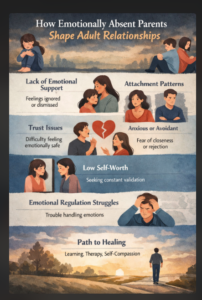
Parenting does not only concern feeding the children, educating them, and protecting them; but also establishing a deep emotional bond with children. Emotional availability is one of the crucial factors of good parenting. It is the capability of a parent to be emotionally attentive and responsive as well as sensitive, to the needs and emotions of their child. This significantly contributes to the psychological growth, character and general well-being of a child.
Emotional availability is manifested in a day to day life through small yet significant interactions. To illustrate, an emotionally available parent would listen to the issue, rather than dismissing the issue as one does, when a child arrives home, upset due to a conflict between them and a friend. Likewise, observing the shifts in the mood of a child, i.e., either he/she becomes quiet or irritable, and inquiring about the emotions of a child in a soft tone makes children feel that they are heard, and they are supported.
Emotional bonding is also reinforced in the daily life when people share meals, do homework, play together or talk before going to sleep. Such instances make children feel appreciated and promote free communication. Emotional availability is also necessary, particularly when the children commit wrong or display challenging behaviour. Rather than responding with direct punishment, encouraging parents attempt to empathise with the child and lead them to more constructive methods of affective expression.
Minor things such as attentiveness, providing comfort or quality time can make children feel emotionally secure even in a busy life. In the long run, children who are emotionally supported grow up with a better confidence level, emotional control, and positive relationships.
Understanding Emotional Availability
Emotional availability would imply that parents are responsive to the emotional world of the child. It entails the identification, validation and reaction of a child in a supportive and caring way. Being emotionally available parents provide a secure environment where children feel free to share their opinions, fears, and joy without being judged or shunned.
This does not imply that parents should be supermen and omnipresent. Rather, it is about being always receptive and encouraging when children are in need of emotional support or advice.
Importance of Emotional Availability in Child Development
1. Builds Secure Attachment
Children that feel emotionally secure through parents will develop feelings of security and trust. Healthy attachment makes children feel free to explore the surrounding environment and develop healthy relationships in the future. Children are likely to gain confidence and independence when they know that their parents will be there to support them emotionally.
2. Promotes Emotional Regulation
Availability parents provide emotional support to children in the management of their emotions. Parents should learn to manage the negative emotions of anger, sadness, or fear, as well as help children learn to cope with these feelings in a positive manner. This works to limit the chance of emotional tantrums and disciplinary issues.
3. Enhances Self-Esteem
Children will feel respected and accepted when their parents listen to them and appreciate their sentiments. This confirmation builds self-esteem and makes the children have a positive self-concept. When children grow up knowing that they are emotionally appreciated, they have a higher chance of building resiliency and confidence.
4. Strengthens Parent-Child Relationship
Emotional availability reinforces the connexion between children and parents as well as communication. Emotionally attached children would be more willing to communicate their issues and seek advice in case of tough times.
5. Supports Social and Psychological Well-being
Children who are nurtured emotionally grow and gain understanding in the field of socialisation and empathy. They get to know how to interpret the emotions of others and establish good friendships. The risk of anxiety, depression, and behavioural problems is also minimised through emotional availability.
Signs of Emotionally Available Parenting
- Actively listening to the child without interruption
- Validating the child’s emotions instead of dismissing them
- Showing warmth through affection and supportive communication
- Being patient and understanding during emotional distress
- Providing consistent reassurance and guidance
Barriers to Emotional Availability
Despite its importance, many parents struggle to remain emotionally available due to various challenges such as:
- Work stress and busy schedules
- Unresolved personal emotional difficulties
- Lack of awareness about emotional needs of children
- Cultural beliefs that discourage emotional expression
Recognizing these barriers is the first step toward improving emotional connection with children.
Ways Parents Can Improve Emotional Availability
-
Practice Active Listening
Give full attention when children speak. Avoid distractions like mobile phones or television. -
Validate Feelings
Instead of saying, “Don’t cry,” parents can say, “I understand you feel upset.” -
Spend Quality Time
Engage in activities like playing, storytelling, or simply talking about daily experiences. -
Manage Personal Stress
Parents who regulate their own emotions are better able to support their children emotionally. -
Encourage Emotional Expression
Allow children to express both positive and negative emotions openly.
Long-Term Impact of Emotional Availability
Children brought up by parents who are emotionally available, in most cases, become emotionally stable adults, and are also confident. When parents are always able to respond to emotional needs of a child with affection, compassion and understanding, it serves to mould emotional and social growth of the child. The availability of emotions during early childhood pre-disposes a person with solid psychological framework that facilitates healthy functioning in later stages of life.
1. Stronger Interpersonal Relationships
Children who feel emotional warmth in their homes know how to trust others and establish safe relationships. They develop with the knowledge of empathy, respect, and good communication. They have higher chances of having healthy friendship and love relations as well as work relations with others as they are more than likely to be comfortable in expressing emotions to people or understanding their feelings.
2. Better Coping Skills
Available parents show the children the way to deal with stress, failure, and disappointment. Children who are taught to express their feelings rather than hold them back come to learn healthy coping strategies. With age, they are now equipped to deal with life problems like school-related stress, job related stress or family conflicts.
3. Improved Mental Health
Children who have a sense of emotional support have reduced chances of being exposed to chronic anxiety, low self-esteem, or depression. Parental emotional validation assists the children to believe in their own positive self-image and has the opportunity of feeling emotionally safe. This defence mechanism eases exposure to psychological challenges in old age.
4. Development of Emotional Regulation
Emotionally available parenting teaches the children to manage their feelings and their feelings as well. They get to know how to show anger, sadness, or frustration in a socially acceptable manner. The skill enhances the level of decision making, impulse control, and problem solving in adulthood.
5. Increased Resilience and Confidence
When children grow up with the feeling of emotional security, they are bolder in trying new experiences and challenging. They become resilient, thus they are able to overcome disappointments and adjust to the dynamic situations in life. Parental support empowers them to have confidence in themselves.
On the whole, emotional availability is not away in parenting and its impact is felt throughout the life of a person. It aids people in gaining emotional stability, psychological stability, and skills to form meaningful relations that would ultimately lead to long-term well-being and quality of life.
Conclusion
Healthy parenting is based on emotional availability. It assists children to build on emotional power, self-esteem, and stable relationships. Although it is imperative to satisfy the physical needs, the emotional world of a child should also be supported. Through presence, the parents can create a supportive atmosphere that encourages the general child growth and psychology.
FAQ: Emotional Availability in Healthy Parenting
1. What is emotional availability in parenting?
Emotional availability refers to a parent’s ability to be emotionally present, responsive, and sensitive to a child’s emotional needs, feelings, and experiences.
2. Why is emotional availability important for children?
It helps children develop emotional security, confidence, healthy relationships, and better mental health.
3. How does emotional availability affect attachment?
Emotionally available parents promote secure attachment, which helps children feel safe, valued, and supported.
4. Can emotional availability improve a child’s behavior?
Yes, children who feel emotionally understood are less likely to show aggressive or problematic behavior and more likely to express emotions appropriately.
5. What are signs of emotionally available parenting?
Listening attentively, validating emotions, showing affection, maintaining open communication, and providing consistent reassurance.
6. What happens if parents are emotionally unavailable?
Children may develop low self-esteem, emotional insecurity, difficulty forming relationships, and increased risk of anxiety or behavioral problems.
7. Can working parents still be emotionally available?
Yes, emotional availability depends on quality of interaction rather than quantity of time. Even short meaningful conversations and bonding moments help.
8. How does emotional availability help emotional regulation?
Parents who guide children through emotions teach them how to identify, express, and manage feelings in healthy ways.
9. Is emotional availability the same as being permissive?
No, emotionally available parents provide support and understanding while also maintaining appropriate boundaries and discipline.
10. At what age is emotional availability most important?
It is important throughout childhood, but early childhood is particularly crucial because emotional foundations develop during this period.
11. How can parents improve emotional availability?
By practicing active listening, spending quality time, managing personal stress, and encouraging children to express emotions openly.
12. Can emotional availability influence academic performance?
Yes, emotionally secure children often show better concentration, motivation, and learning ability.
13. Does emotional availability help social development?
Yes, children learn empathy, communication, and conflict resolution skills, which improve social relationships.
14. How does emotional availability impact long-term mental health?
It reduces risk of depression, anxiety, and emotional instability while promoting resilience and self-confidence.
15. Can emotional availability strengthen parent-child bonding?
Yes, consistent emotional support builds trust, closeness, and long-lasting healthy relationships between parents and children.
Written by Baishakhi Das
Counselor | Mental Health Practitioner
B.Sc, M.Sc, PG Diploma in Counseling
Reference
-
Bowlby, J. (1988). A Secure Base: Parent-Child Attachment and Healthy Human Development.
https://www.simplypsychology.org/bowlby.html -
American Psychological Association – Parenting and Child Development
https://www.apa.org/topics/parenting -
UNICEF – Positive Parenting Guidelines
https://www.unicef.org/parenting -
Harvard Center on the Developing Child – Serve and Return Interaction
https://developingchild.harvard.edu/science/key-concepts/serve-and-return/ -
Siegel, D. & Bryson, T. (2012). The Whole-Brain Child.
https://drdansiegel.com/books/the-whole-brain-child/ - How Parenting Style Influences a Child’s Mental Health
This topic performs well due to rising searches around men’s mental health, workplace stress, and burnout recovery. Combining emotional insight with practical steps increases engagement and trust.