
Life is full of ups and downs — moments that lift us, and moments that shake us. Stressful situations, sudden changes, emotional setbacks, disappointments, and difficult transitions are a natural part of the human experience. Yet, while some people feel overwhelmed by these challenges, others seem to recover faster, stay grounded, and find a way forward. What makes the difference is not luck or personality — it is emotional resilience.
Emotional resilience is the inner capacity that helps you handle adversity without breaking down. It is the strength that allows you to feel your emotions fully without being consumed by them. Resilience does not mean ignoring your feelings, acting tough, or forcing positivity. Instead, it is about understanding your emotions, adapting to new realities, and responding to challenges with clarity, confidence, and self-compassion.
A resilient person still feels stress, sadness, fear, or confusion — but they also have the tools to navigate those emotions and bounce back. They know how to breathe through discomfort, reframe difficult situations, seek support when needed, and move forward step by step.
In today’s fast-paced world, where emotional and mental pressures are higher than ever, building emotional resilience is not just helpful — it is essential. It influences how you handle conflicts, cope with uncertainty, maintain relationships, and protect your mental well-being.
This article takes you through what emotional resilience truly means, why it is so important for your mental health, and practical, psychology-backed strategies to strengthen it. Whether you’re facing a current challenge or simply want to grow stronger emotionally, these insights will help you build a calmer, more grounded, and more resilient version of yourself.
What Is Emotional Resilience?
Emotional resilience is a powerful inner skill that shapes how you respond to life’s challenges. It acts like an emotional anchor, helping you stay steady even when circumstances feel unstable or overwhelming. When you build resilience, you develop the strength to:
- Cope with stress in healthier ways
Instead of reacting impulsively or shutting down, you learn to handle stress with calmness, clarity, and practical coping strategies. - Stay grounded during emotionally intense moments
You can acknowledge your feelings without letting them take control. You respond thoughtfully instead of reacting emotionally. - Adapt to change without breaking down
Transition, uncertainty, and unexpected events become easier to navigate when you can shift your mindset and adjust with flexibility. - Recover from setbacks faster
Challenges still hurt, but you bounce back with greater strength and understanding instead of staying stuck in frustration or sadness. - Maintain hope and perspective
Resilience helps you see the bigger picture. Instead of getting lost in fear or negativity, you hold on to optimism and inner stability. - Make decisions even in difficult situations
When emotions are intense, clear thinking becomes difficult. Resilience keeps your mind steady so you can make choices that support your long-term well-being.
The most important thing to remember is this:
Resilience is not something you’re born with — it is a skill you can build with practice.
Anyone, at any age, can strengthen emotional resilience through awareness, healthy habits, and consistent self-care.
Why Emotional Resilience Matters
Strong emotional resilience positively shapes every area of your life. It gives you the strength to face challenges while staying connected to your inner sense of stability. When your resilience is strong, you experience:
- Reduced stress and anxiety
You’re better equipped to manage everyday pressures. Stressful situations feel less overwhelming because you have emotional tools to cope. - Improved mental clarity
Resilience calms the mind, helping you think clearly even during difficult moments. This clarity allows you to respond wisely rather than react impulsively. - Better conflict management
When emotions are steady, communication becomes healthier. You can express your needs calmly, listen more openly, and resolve conflicts without escalating tension. - Prevention of burnout
Emotional resilience helps you know when to rest, recharge, and set boundaries — protecting your mental and physical energy. - Stronger relationships
Resilient individuals are more understanding, patient, and emotionally available. This creates healthier, more supportive connections with others. - Enhanced problem-solving abilities
Instead of feeling stuck, you stay solution-focused. Challenges become opportunities for learning and growth. - Greater overall life satisfaction
With emotional balance, you experience more joy, gratitude, and fulfillment. You handle life’s ups and downs with confidence.
Emotional resilience acts like a gentle emotional shield — not to block or ignore your feelings, but to help you feel them fully, understand them deeply, and move forward with strength and clarity.
Signs You May Need to Build More Resilience
Everyone experiences moments when their resilience feels low. Emotional strength naturally rises and falls depending on stress, environment, and life circumstances. However, certain patterns may indicate that you could benefit from strengthening your resilience skills.
You may need to build more resilience if you often experience:
- Feeling overwhelmed easily
Even small tasks feel heavy, and daily responsibilities drain your energy faster than usual. - Difficulty managing change
Transitions — whether big or small — feel unsettling, and adjusting to new situations becomes emotionally challenging. - Emotional exhaustion
You feel mentally or emotionally drained, even after rest. This often shows up as irritability, low motivation, or a sense of heaviness. - Being quickly triggered or reactive
Minor issues ignite strong emotional responses, making it hard to stay calm or think rationally in the moment. - Trouble bouncing back from setbacks
Disappointments linger longer than they should, making it difficult to regain your balance or optimism. - Feeling stuck or powerless
You may struggle to see solutions, feel trapped by circumstances, or lose confidence in your ability to cope. - Persistent negative thinking
Your mind keeps replaying fears, worst-case scenarios, or self-doubt, making challenges feel bigger than they truly are.
The encouraging truth is this:
Emotional resilience can be strengthened at any age.
With self-awareness, practice, and the right strategies, anyone can build a calmer, stronger, and more confident emotional foundation.
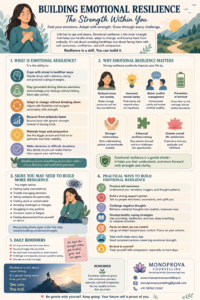
Strategies to Build Emotional Resilience
Building emotional resilience is not about becoming “stronger” overnight. It’s about developing habits, mindsets, and emotional skills that support you through stress and adversity. Below are research-backed strategies that help strengthen your emotional foundation over time.
1. Build Emotional Awareness
Resilience begins with truly understanding your inner world. When you know what you feel and why you feel it, you gain control over your reactions.
Ask yourself:
- “What emotion is showing up right now?”
- “Triggered it what?”
- “What do I need in this moment?”
Simply naming your emotions reduces their intensity and helps you respond thoughtfully rather than react impulsively. Awareness is the first step to healing.
2. Reframe Negative Thoughts
Your thoughts directly influence how you feel. When you shift your perspective, you shift your emotional experience.
Instead of thinking: “I can’t handle this.”
Try: “This is difficult, but I can take it one step at a time.”
Reframing isn’t about forced positivity — it’s about viewing challenges with balance, curiosity, and confidence. This mindset strengthens your ability to cope.
3. Create a Strong Support System
Emotionally resilient people don’t carry every burden alone. They share, express, and lean on trusted connections.
Connect with people who:
- Listen without judgement
- Encourage your growth
- Make you feel safe and understood
- Offer constructive advice when needed
Healthy relationships act as emotional anchors, providing stability during difficult times.
4. Practice Mindfulness & Grounding Techniques
Mindfulness keeps you centered and calm, even when life feels chaotic.
You can practice:
- Deep breathing exercises
- Body scan meditation
- The 5-4-3-2-1 grounding method
- Mindful walking or eating
These techniques lower stress, calm the nervous system, and bring your mind back to the present moment — where clarity lives.
5. Build Flexible Thinking
Resilience grows when you learn to adapt instead of resist the unexpected.
Ask yourself:
- “Is there another way to approach this?”
- “What can I control right now?”
- “What options do I have?”
Flexible thinking opens doors, reduces frustration, and helps you face challenges with a problem-solving mindset.
6. Strengthen Your Self-Care Routine
When the body is drained, the mind becomes fragile. Self-care is not optional — it is the foundation of resilience.
Focus on:
- Quality sleep
- Nutritious meals
- Regular physical movement
- Staying hydrated
- Intentional rest and recreation
When your body feels supported, your emotions stabilize naturally.
7. Set Healthy Boundaries
Saying “yes” to everything leaves you emotionally exhausted. Boundaries protect your energy, time, and mental space.
Learn to say “no,” limit draining interactions, and prioritise your needs. Boundaries give you the freedom to show up as your best self.
8. Accept What You Cannot Control
A major part of resilience is learning to let go. When you stop fighting situations you cannot change, emotional tension decreases.
Shift your focus to the things within your control — your choices, reactions, habits, and mindset. This reduces stress and increases inner peace.
9. Practice Self-Compassion
Treat yourself with the same kindness you offer others. You deserve empathy too.
Instead of: “I should be doing better.”
Try: “I’m trying my best. It’s okay to feel this way.”
Self-compassion builds emotional strength, encourages healing, and helps you recover from setbacks without self-blame.

5. How to Strengthen Resilience Over Time
Building emotional resilience is not about big, dramatic changes. It’s about small, intentional actions that slowly shape your inner strength. By practicing consistently, you train your mind and emotions to respond with clarity instead of overwhelm.
Here’s how you can nurture resilience day by day:
Start with small changes
You don’t need to transform your life overnight. Begin with simple shifts — a few minutes of deep breathing, journaling your emotions, or setting one healthy boundary. Small steps create meaningful progress.
Be patient — resilience grows slowly
Just like physical strength, emotional strength develops over time. Some days you will feel strong; others you may feel fragile. Both are normal. Give yourself the time and space to grow.
Take setbacks as learning
Challenges and setbacks are not signs of failure. They are part of the process. Instead of blaming yourself, ask:
“What is this situation teaching me?”
Each setback makes you wiser and more resilient.
Keep practicing emotional awareness
Check in with yourself regularly. Notice your feelings, triggers, and needs. The more aware you are, the easier it becomes to regulate your emotions and respond with intention.
Celebrate progress
Recognize every step forward — even the small ones. Whether you stayed calm during stress, set a boundary, or simply took a break when needed, celebrate it. Progress builds confidence.
Stay consistent
Resilience is built through daily habits and steady effort. The more consistent you are, the stronger your emotional foundation becomes.
Resilience is built through everyday choices, not overnight miracles.
Every moment you choose awareness, patience, and self-kindness, you strengthen your emotional core. Over time, these small choices create a calmer, more grounded, and more resilient version of you.
Conclusion
Emotional resilience is your inner strength — the quiet power that helps you handle stress, recover from challenges, and move forward with confidence. When you understand your emotions, build healthy habits, and treat yourself with compassion, you create a stronger foundation for every part of your life.
Investing in resilience means investing in a calmer, more grounded, and more empowered version of yourself — someone who can navigate life’s ups and downs with clarity and courage.
Frequently Asked Questions (FAQs)
1. What is emotional resilience?
Emotional resilience is the ability to cope with stress, adapt to challenges, and recover from setbacks.
2. Why is emotional resilience important?
It helps manage stress, improve mental health, and handle life’s difficulties effectively.
3. Can emotional resilience be learned?
Yes. It is a skill that can be developed through practice and self-awareness.
4. What are signs of low resilience?
Feeling overwhelmed, emotional exhaustion, overreacting, and difficulty handling change.
5. How can I build emotional resilience?
Through mindfulness, emotional awareness, positive thinking, and strong support systems.
6. Does resilience reduce anxiety?
Yes. It helps regulate emotions and reduces stress and anxiety levels.
7. How long does it take to build resilience?
It develops gradually through consistent daily habits.
8. Can resilience improve relationships?
Yes. It improves communication, patience, and emotional understanding.
9. Is self-care important for resilience?
Absolutely. Physical and emotional self-care strengthen resilience.
10. When should I seek help?
If stress or emotional struggles feel overwhelming or persistent.
Contact Us for Support
If you need guidance, emotional support, or wish to book a counselling session:
Reference
American Psychological Association. (n.d.). Resilience. https://www.apa.org/topics/resilience
Centers for Disease Control and Prevention. (n.d.). Mental health and coping skills. https://www.cdc.gov/mentalhealth/tools-resources
Mind. (n.d.). Building resilience. https://www.mind.org.uk/information-support/tips-for-everyday-living/building-resilience/
Verywell Mind. (n.d.). What is emotional resilience? https://www.verywellmind.com/what-is-emotional-resilience-2795160
Monoprova Counselling, (2026), “About Us”,
Monoprova Counselling, (2026), “Contact Us”,

Pingback: How to Stop Overthinking: Therapist-Backed Techniques