
Feeling “not good enough” is one of the most painful emotional experiences a person can go through. It’s quiet, invisible, and deeply personal. You may look confident to the world—yet silently, a voice inside whispers:
- “You’re not capable.”
- “Don’t deserve this.”
- “Others are better than you.”
- “You will fail.”
This inner feeling does not come from weakness. It’s a psychological wound born from experiences that shaped your self-worth. And the good news? It can be healed.
This article explains why you feel this way, how it affects your life, and evidence-based strategies to overcome the “not good enough” mindset and rebuild healthy self-worth.
What Does “Not Good Enough” Really Mean?
Feeling “not good enough” is not a fact—it’s a belief.
This belief often becomes a core part of your identity, making you view yourself negatively regardless of evidence.
It can show up as:
- Self-doubt: Questioning your abilities even when you’re capable
- Perfectionism: Believing anything less than perfect means failure
- Fear of failure: Avoiding opportunities to avoid disappointment
- Fear of rejection: Assuming you’ll be judged or abandoned
- Social comparison: Constantly measuring yourself against others
- People-pleasing: Trying to earn worth through approval
- Overthinking: Replaying mistakes or imagining worst-case scenarios
These patterns slowly erode your confidence and make your inner critic louder.
Why Do You Feel This Way?
Common Psychological Roots. The belief “I’m not good enough” rarely appears without reason. It usually develops over years through repeated emotional experiences.

Childhood Messages: Many people form this belief unconsciously in childhood. Examples:
- Parents who were too critical or demanding
- Expectations to excel academically or behave perfectly
- Emotional neglect (“no one cares about what I feel”)
- Comparisons with siblings or other children
- Feeling unseen, unheard, or invalidated
- Perfectionist family environment
These experiences teach the child: “I must be perfect to be loved.”
This becomes the adult belief: “If I’m not perfect, I’m not good enough.”
Trauma and Emotional Wounds: Emotional wounds such as rejection, bullying, betrayal, or humiliation can deeply damage self-worth.
Examples:
- A relationship where someone made you feel unlovable
- Teacher who mocked your abilities
- A workplace where your efforts were undervalued
- Childhood emotional abuse or neglect
These painful experiences create lasting psychological imprints that carry into adulthood.
Social Comparison: In the age of Instagram, achievement culture, and unrealistic beauty standards, comparing yourself with others becomes effortless—and toxic.
You may think:
- “Their life is perfect. Mine isn’t.”
- “They have achieved more than me.”
- “I should be doing better by now.”
But comparison is rarely fair. You compare your behind-the-scenes to someone else’s highlight reel.
Perfectionism
Perfectionism is one of the strongest predictors of low self-worth.
Perfectionists believe:
- Anything less than perfect is failure
- People will judge them for mistakes
- They must constantly prove their worth
This creates chronic stress, burnout, and constant pressure to do more—never allowing space for self-acceptance.
Negative Self-Talk: Over time, external criticism becomes internal. You begin talking to yourself the way others talked to you.
Thoughts like: “I’m so stupid.” “Always fail.” “Why can’t I do anything right?”
This internal voice becomes a mental prison that reinforces low self-worth.
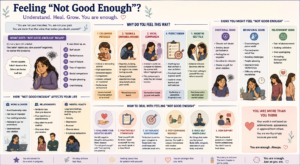
Signs You Might Feel “Not Good Enough”
People who struggle with this feeling often show subtle behavioral and emotional patterns.
- Emotional Signs: Chronic self-doubt, Anxiety about performance, Feeling like an “imposter”, Emotionally sensitive to criticism, Shame or guilt for small mistakes
- Behavioral Signs: Overworking to prove worth, Procrastination out of fear, Avoiding challenges, People-pleasing, Staying in toxic relationships, Difficulty setting boundaries
- Relationship Signs: Fear of abandonment, Seeking validation, Over-apologizing, Accepting disrespectful behavior
If you relate to these signs, you’re not alone—millions experience the same pattern, and it can be changed.
How “Not Good Enough” Affects Your Life
This belief is not just an emotion; it impacts every area of your life.
Work & Career
- You may avoid leadership roles
- Feel like an imposter
- You fear making mistakes
- Hesitate to ask for promotions
- You underestimate your abilities
Relationships
- You may settle for less than you deserve
- Fear rejection or abandonment
- You stay silent to avoid conflict
- Give more than you receive
Mental Health: Long-term feelings of inadequacy can lead to:
- Anxiety
- Depression
- Burnout
- Chronic stress
- Emotional exhaustion
Understanding the damage this belief causes is the first step toward healing.

How to Deal With Feeling “Not Good Enough”
Evidence-Based Strategies. Healing self-worth is not about forcing positive thinking. It’s about rewiring old beliefs, healing emotional wounds, and building new patterns. Below are 12 powerful, psychology-backed steps to overcome the “not good enough” feeling.
1. Identify Where the Belief Started
Ask yourself:
- When did I first feel “not good enough”?
- Who made me feel this way?
- What experiences taught me I had to earn worth?
Understanding the origin helps you separate your authentic self from the wounded self.
2. Practice Inner Child Healing
Many feelings of unworthiness belong to your younger self. Inner child work involves:
- Recognising your wounded inner child
- Allowing yourself to feel emotions you suppressed
- Reparenting yourself with compassion
- Speaking to yourself the way a loving caregiver would
Tell your inner child: “You are enough. You deserved love then, and you deserve it now.”
3. Challenge Negative Core Beliefs
When you think:
- “I’m not good enough”
- “Always fail”
- “I don’t deserve this”
Ask yourself:
- Is this objectively true?
- What evidence contradicts it?
- Would I say this to a friend?
Most negative beliefs collapse when questioned.
4. Stop Comparing Your Journey to Others
Comparison is a trap.
Instead:
- Compete with your past self, not others
- Celebrate your progress
- Remember that everyone struggles—even those who seem “perfect”
Your worth is not defined by where others are.
5. Set Realistic Expectations
Perfectionism creates unrealistic standards.
Instead of asking: “How can I be perfect?”
Ask:
- “What is good enough for today?”
- “One step I can take?”
Small, consistent progress builds confidence.
6. Practice Self-Compassion
Self-compassion is a proven tool for improving mental health.
It involves:
- Kindness: Treating yourself like someone you care about
- Common humanity: Realizing everyone makes mistakes
- Mindfulness: Observing thoughts without judgment
Self-compassion rewires your inner voice from critical to supportive.
7. Reduce People-Pleasing: People-pleasing comes from the belief:
“If others approve of me, I am worthy.”
To break this pattern:
- Start saying “no” to small things
- Set simple boundaries
- Prioritize your needs without guilt
You don’t need to earn worth through sacrifice.
8. Build Emotional Resilience: Resilient people don’t believe they must be perfect. They believe they can handle challenges.
Build resilience through: Journaling, Gratitude exercises, Mindfulness, Healthy routines, Emotional regulation
The stronger your inner foundation, the less external criticism hurts you.
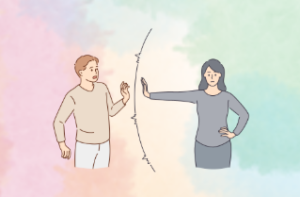
9. Surround Yourself With Supportive People: The people around you influence your self-worth.
Choose people who:
- Appreciate you
- Respect your boundaries
- Encourage your growth
- Celebrate your successes
Avoid people who constantly criticize, belittle, or manipulate you.
10. Allow Yourself to Make Mistakes: Mistakes do not define your worth—they define your growth.
Reframe mistakes as: Lessons, Data, Feedback, Opportunities
Every mistake is a step toward improvement.
11. Focus on Your Strengths: You have strengths—even if you don’t see them clearly.
Write down:
- What you’re good at
- Compliments you receive
- Achievements you’re proud of
- Skills you’ve developed
Your mind naturally focuses on flaws; you must intentionally notice strengths.
12. Seek Therapy When Needed
Talking to a professional can help you:
- Heal childhood wounds
- Build a healthier self-concept
- Rewire negative thinking
- Process trauma
- Develop self-worth
Therapy is not a sign of weakness. It’s a sign of strength.
The Psychology Behind Self-Worth
Self-worth is built on three pillars:
- Self-Image: How you see yourself.
- Self-Compassion: How you treat yourself.
- Self-Efficacy: Your belief in your ability to handle challenges.
Strengthening these pillars helps rebuild a confident, grounded sense of self.
What To Tell Yourself When You Feel “Not Good Enough”
Use these affirmations intentionally:
- “I am enough just as I am.”
- “Don’t have to be perfect to be worthy.”
- “My value is not decided by others.”
- “I accept myself fully.”
- “Deserve love, respect, and happiness.”
- “Progress is more important than perfection.”
Repeating these helps rewrite old beliefs.
How to Build Long-Term Self-Worth
Self-worth is not built in a day. It grows through consistent habits.
- Daily habits:
-
-
-
- 5 minutes of journaling
- 10 minutes of mindfulness
- Affirmations
- Gratitude practice
- Setting one small goal
-
-
2.Weekly habits:
-
-
-
- Digital detox from comparison
- Self-care routines
- Boundary check-ins
-
-
3. Monthly habits:
-
-
-
- Reflect on achievements
- Track progress
- Celebrate growth
-
-
These habits slowly strengthen your inner foundation.
You Are More Than Your Doubts
Feeling “not good enough” is a learned belief—not your identity. You were born worthy. Have value simply because you exist. Healing takes time, but every small shift rewires your mind toward self-acceptance.
Remember:
- You do not need to earn your worth.
- Already you have it.
Conclusion
Feeling “not good enough” is painful, but it is not permanent. It comes from old experiences, unmet emotional needs, and internalized criticism—but with awareness, compassion, and consistent effort, you can free yourself from this pattern.
When you:
- Heal your inner child
- Challenge negative beliefs
- Stop comparing yourself
- Practice self-compassion
- Build resilience
- Surround yourself with healthy people
…you begin to see yourself differently—not as someone who must prove their worth, but as someone who already is worthy.
You are enough, Have always been enough.
Reference