

Emotional abuse is one of the most silent and misunderstood forms of abuse. Unlike physical harm, it rarely leaves bruises or scars that outsiders can see. Instead, it chips away at a person’s self-worth, confidence, emotional safety, and sense of identity—slowly, invisibly, and often without the victim realizing it until much later. Because emotional abuse is subtle and gradual, many people normalize the behaviour or blame themselves. They may think, “Maybe I’m overreacting,” “Maybe it’s my fault,” “Maybe this is just how relationships are.”
But emotional abuse is real, damaging, and in many cases, more harmful than physical abuse. Whether it occurs in romantic relationships, families, friendships, or workplaces, its effects can last years.
This article explores the subtle signs of emotional abuse that many people miss, why people overlook them, the psychological impact, and how to heal safely.
What Is Emotional Abuse?
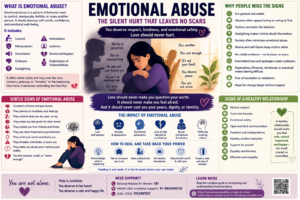
Emotional abuse refers to a pattern of behaviour where a person uses manipulation, control, humiliation, criticism, or emotional neglect to dominate or harm another person. It aims to weaken the victim’s sense of self and create emotional dependence.
Common elements of emotional abuse include:
- Control
- Manipulation
- Fear and intimidation
- Isolation
- Exploitation of vulnerabilities
- Belittling and humiliation
- Gaslighting
The abusive behaviour is often subtle at first. It may look like concern, care, jealousy, or “honesty,” but over time, it becomes controlling, demeaning, and psychologically harmful.
Why Do People Miss the Signs of Emotional Abuse?
Emotional abuse is tricky to recognize for several reasons:
- It is gradual and subtle. Emotional abuse usually starts with small, ambiguous actions—sarcastic remarks, possessive questions, “jokes” at the victim’s expense—that escalate over months or years. Because change is incremental, victims and observers often fail to notice the pattern until it’s entrenched.
- Abusers often appear loving or caring at first. They may be charming, attentive, or apologetic early in the relationship. This contrast between “good” behaviour and later abuse creates cognitive dissonance and makes it harder to accept that someone trusted is harmful.
- Victims normalize the behaviour. People raised in volatile or controlling environments may come to view manipulation, criticism, or silence as normal relationship dynamics. Cultural, religious, or family narratives that prioritize obedience, honor, or privacy can reinforce this normalization.
- Gaslighting makes victims doubt themselves. Repeated denial, reframing, or blaming erodes a person’s confidence in their memory, perceptions, and feelings. Self-doubt leads victims to minimize or rationalize the abuse.
- Society often minimizes emotional abuse. Myths—“it’s just words,” “they didn’t hit you,” “all relationships have problems”—discourage help-seeking and leave emotional abuse unaddressed.
- Shame and self-blame keep victims silent. Victims may feel embarrassed, guilty, or responsible for the abuser’s behaviour, fearing judgment or disbelief if they speak up.
- Emotional abuse leaves no visible evidence. Without physical marks, outsiders and professionals may overlook the harm; victims may lack “proof” and thus hesitate to report it.
- Intermittent reinforcement strengthens attachment. When abuse alternates with affection, praise, or apologies, it creates a powerful cycle: the victim clings to the relationship hoping for the return of positive moments.
- Dependency—financial, familial, or practical—reduces options. Economic dependence, shared children, immigration status, or cultural expectations can make leaving risky or unfeasible.
- Lack of education and language. People may not have the vocabulary to describe non-physical abuse. Without clear labels (gaslighting, triangulation, isolation), experiences remain vague and minimizing.
- Confusing co-occurring problems. Mental health issues, addiction, or stressors can blur the distinction between the person’s struggles and deliberate abusive tactics, making intent harder to discern.
- Fear of escalation or retaliation. Victims may worry that calling out the behaviour will lead to more intense abuse, loss of custody, or exposure of private matters.
- Support systems may side with the abuser. Family or friends who have closer ties to the abuser, or who benefit from maintaining the status quo, can invalidate the victim’s experience.
- Professional gaps. Some health, legal, or social service professionals lack training in recognizing emotional abuse or may prioritize physical safety only, leaving emotional harm unaddressed.
- Cognitive dissonance and hope for change. People often hold two incompatible beliefs—“this person loves me” and “this person hurts me.” Hope that the abuser will change or the relationship will improve prevents acknowledgment.
Example illustration (brief):
A partner makes small critical comments about appearance, then comforts the victim with gifts and apologies. Over time, the victim internalizes the criticisms, feels increasingly anxious, and isolates from friends—yet rationalizes the behaviour because of the partner’s affectionate moments and promises to change.
Adding awareness points: Clear examples, naming tactics (gaslighting, triangulation, silent treatment), and emphasizing that emotional abuse is serious even without physical violence help readers recognize patterns and seek help sooner.
Subtle Signs of Emotional Abuse Most People Miss
Emotional abuse is often invisible but deeply damaging: a pattern of subtle behaviours—criticism, control, humiliation, and manipulation—that slowly erode a person’s self‑worth, autonomy, and sense of safety. It rarely leaves physical marks, so people miss it, rationalize it, or blame themselves. Recognizing the quieter signs is the first step toward getting help and reclaiming emotional health.
Quiet disapproval and subtle sarcasm
- Description: Small gestures—eye-rolling, heavy sighs, sarcastic remarks, or dismissive facial expressions—communicate contempt without overt confrontation.
- Effect: These micro-aggressions accumulate, making the victim anxious and hypervigilant; they start walking on eggshells to avoid triggering the reaction.
- Example phrases: “Whatever,” “If that’s what you want,” or a slow, exaggerated exhale when you speak.
Minimizing your achievements
- Description: Downplaying or ignoring your successes, small wins, or hard work.
- Effect: Erodes self-esteem and motivation, steering you to seek their approval for validation.
- Example: Failing to congratulate you, changing the subject, or attributing your success to luck.
Hidden rules and tests
- Description: Expecting you to read their mind or meet undefined standards; setting up situations to “test” your loyalty or love.
- Effect: Creates confusion and self-doubt; you feel constantly judged and anxious about failing unseen expectations.
- Example: “If you really loved me, you’d know not to do X,” after you unknowingly do X.
Frequent sarcasm disguised as humour
- Description: Using humour to insult or demean while claiming “it was a joke” when confronted.
- Effect: Keeps the abuser from taking responsibility and leaves the victim unsure whether to react.
- Example: “I’m only joking—can’t you take a joke?” following a personal jab.
Subtle undermining of decisions
- Description: Quietly second-guessing choices, offering unsolicited “advice” that makes you doubt yourself.
- Effect: Reduces your confidence in decision-making and increases reliance on the abuser.
- Example: Criticizing your parenting choices or career moves in a tone that sounds helpful but is actually critical.
Passive-aggressive compliance
- Description: Agreeing outwardly but sabotaging outcomes through inaction, lateness, or doing tasks poorly.
- Effect: Makes you question whether you miscommunicated or are being unfair, while the abuser avoids open conflict.
- Example: They promise to help with something and then “forget” or do it incorrectly.
Emotional triangulation
- Description: Using others to send messages, create rivalry, or validate the abuser’s perspective (e.g., involving friends, children, or family members).
- Effect: Isolates you further and makes conflicts more complex and shameful.
- Example: Telling a mutual friend a distorted version of events to make you look unreasonable.
Strategic vulnerability-sharing
- Description: Confiding selective weaknesses to manipulate empathy or justify later hurtful behaviours.
- Effect: Keeps you emotionally invested and less likely to call out abuse because you feel protective or responsible.
- Example: “I had a terrible childhood, so I react this way” used to excuse ongoing criticism.
Conditional praise and affection
- Description: Compliments and warmth only when you meet their expectations; affection is withdrawn when you disappoint.
- Effect: Trains you to perform to earn basic emotional needs, reinforcing control.
- Example: Lavish praise after you follow their advice, silence when you assert independence.
Subtle threats and implied consequences
- Description: Hints about consequences (social embarrassment, withholding support, leaving) rather than explicit threats.
- Effect: Keeps you compliant out of fear without leaving a clear record of abuse.
- Example: “I guess if you leave, good luck finding anyone who’ll tolerate you.”
Using empathy as leverage
- Description: Framing their hurt as more important than yours or demanding that you prioritize their feelings over your own.
- Effect: Silences your needs and reinforces your role as caregiver or comforter for the abuser.
- Example: “I’m so upset—how can you be thinking about yourself right now?”
Chronic criticism masked as concern
- Description: Phrases framed as supportive (“I worry about you”) but that repeatedly highlight perceived flaws.
- Effect: Keeps attention on your deficits and justifies control or surveillance.
- Example: “I only check your messages because I’m worried you’re with the wrong people.”
Eroding boundaries slowly
- Description: Repeatedly ignoring requests, pressuring you to do things you’ve said no to, or dismissing your limits as unfair.
- Effect: Normalizes boundary violations and makes you doubt whether your needs are reasonable.
- Example: Repeatedly showing up uninvited after you asked for space.
Making private matters public
- Description: Sharing personal information or humiliating details about you with others to shame or control.
- Effect: Increases vulnerability and discourages you from confiding in support networks.
- Example: Revealing financial struggles or mental health history to friends as a means to guilt you.
Psychological Impact of Emotional Abuse
Emotional abuse deeply affects a person’s mental and emotional functioning, often in ways that persist long after the relationship ends. Below is an expanded, concise description you can use in an article or resource.
Low self‑esteem
Victims internalize negative messages and start to believe they are unworthy, unattractive, or “not good enough.” This undermines ambition, assertiveness, and willingness to ask for support.
Anxiety and hypervigilance
Constantly anticipating the abuser’s mood or reactions creates chronic stress. People become overly alert to small cues, have difficulty relaxing, and may develop panic attacks or generalized anxiety.
Depression and emotional exhaustion
Repeated demeaning experiences lead to sadness, loss of interest in activities, fatigue, and a bleak outlook. Some experience suicidal thoughts or self‑harm when despair becomes severe.
Trauma bonding and attachment confusion
Alternating kindness and abuse creates intense emotional ties (trauma bonds). Victims feel loyal to the abuser despite harm, rationalize the behaviour, and may return to the relationship repeatedly.
Self‑doubt and cognitive distortions
Gaslighting and continual invalidation make people question their memory, judgment, and perceptions. This leads to rumination, indecisiveness, and difficulty making ordinary choices.
Identity erosion and role shrinkage
Over time, victims may lose sight of their own values, interests, and goals. They adopt roles that please the abuser (people-pleaser, peacemaker) and struggle to rediscover their authentic selves.
Trust and intimacy difficulties
Future relationships can be fraught; victims may avoid closeness, micromanage partners, or become suspicious. Intimacy feels risky, and healthy boundaries can be hard to set or maintain.
Emotional numbing and dissociation
To survive sustained abuse, some people emotionally shut down or dissociate—feeling detached from thoughts, body, or emotions—which complicates later healing and therapy.
Sleep and concentration problems
Stress-related insomnia, nightmares, poor concentration, and memory lapses are common and can impair work, study, and daily functioning.
Physical health consequences
Chronic stress from emotional abuse increases risk of headaches, gastrointestinal problems, weakened immunity, and cardiovascular strain.
Maladaptive coping (substance use, self-blame)
To manage pain, some turn to alcohol, drugs, overeating, or risky behaviours. Others become excessively self-blaming, apologetic, or adopt extreme people-pleasing strategies.
Intergenerational effects
Children who witness emotional abuse can internalize harmful relationship patterns, increasing risk of emotional problems or repeating similar dynamics in adulthood.
Complicated recovery process
Healing often requires trauma-informed therapy, rebuilding social supports, relearning boundaries, and addressing practical barriers (financial dependence, shared caregiving). Progress is non-linear and may involve setbacks.
Why It’s So Hard to Leave an Emotionally Abusive Relationship
Leaving an emotionally abusive relationship is often far harder than outsiders expect. Below is a concise, expanded explanation you can use in an article or resource.
Trauma bonding
Repeated cycles of abuse followed by affection create powerful emotional ties. Intermittent reinforcement (punishment mixed with reward) strengthens attachment and makes the abuser’s occasional kindness feel like proof the relationship can be “saved.”
Fear of loneliness and loss of support
Abusers often isolate victims from friends, family, or community supports. Even if contact remains, victims may fear judgment, disbelief, or rejection if they disclose the abuse, so staying feels safer than risking isolation.
Hope and memory of better times
People remember the early loving, attentive phase and hold hope that their partner will return to that person. This hope fuels repeated attempts to fix the relationship and tolerate ongoing harm.
Normalization and learned helplessness
If someone grew up with similar dynamics or prolonged psychological control, abusive behaviours can feel familiar or “normal.” Repeated failure to affect change can lead to learned helplessness—believing there’s no point trying to leave.
Self-blame and internalized shame
Gaslighting, blame-shifting, and repeated criticism make victims doubt themselves and accept responsibility for the abuser’s actions. Shame and guilt keep them trying to “earn” safety or approval.
Practical and structural barriers
Financial dependence, shared children, immigration status, housing instability, or legal concerns create real obstacles to leaving. The risk of losing income, custody, or a place to live can make leaving dangerous or impossible without a plan.
Fear of escalation or retaliation
Confronting or leaving an abuser can increase short-term risk. Victims may worry about threats, increased aggression, stalking, or false accusations and therefore delay leaving until they have safety supports.
Emotional and cognitive impairment
Chronic abuse erodes confidence, decision-making ability, and memory. Anxiety, depression, and dissociation reduce the energy and clarity needed to plan and carry out an exit.
Concern for others (children, elders, pets)
Worry about children’s wellbeing, a partner’s promise to harm themselves, or who will care for dependents can keep victims trapped or negotiating continued exposure to harm.
Social and cultural pressures
Cultural, religious, or family expectations about marriage, honor, or gender roles can stigmatize leaving. Community pressure and fear of shame or ostracism often weigh heavily.
Lack of accessible resources
Limited access to confidential shelters, legal aid, mental health care, or culturally sensitive services reduces viable exit options, especially in low-resource settings.
Hope for gradual change and minimization by others
When friends, family, or professionals minimize the abuse (“It’s not that bad,” “Give them another chance”), victims may delay leaving and continue trying to repair the relationship.
Practical note: Safety planning, confidential support (helplines, domestic violence services, trauma-informed therapists), and practical steps (securing finances, legal advice, documenting abuse) reduce risk and increase the chance of a safe exit.
How to Recognize Emotional Abuse in Yourself
Ask yourself these questions. If you answer “yes” to several, you may be experiencing emotional abuse:
- Do I feel afraid to express my true feelings or needs around this person?
- Am I apologizing a lot—even when I haven’t done anything wrong?
- Do I often question my worth, intelligence, or decisions after talking with them?
- I hide parts of my life or lie to avoid arguments or criticism?
- Do I feel emotionally drained, confused, or “on edge” after interactions with them?
- I instinctively make excuses for their behaviour or minimize my hurt?
- Have I stopped doing things I used to enjoy because of their disapproval?
- Do I find myself constantly seeking reassurance from them?
- Do I avoid telling others about problems because I fear they won’t believe me or will blame me?
- I feel isolated from friends, family, or activities I once valued?
If several of these fit your experience, you deserve support. Consider talking to a trusted friend, a counsellor, or a local helpline for confidential advice and safety planning.
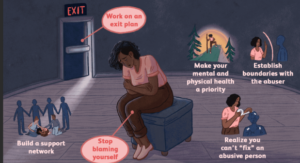
How to protect yourself (Emotional Abuse)
- Set clear boundaries. State simple, specific limits: “I don’t accept yelling, name-calling, or being ignored.” Repeat boundaries calmly and consistently.
- Use short, firm responses. Don’t get pulled into long debates or justifications; say “No,” “I won’t discuss this right now,” or “That’s not acceptable.”
- Reconnect with supportive people. Rebuild contact with friends, family, or groups who validate and respect you.
- Keep practical safety measures. If you feel threatened, have emergency numbers handy, share your plans with someone you trust, and consider safe places to go.
- Document incidents if needed. Save threatening texts, emails, or voice notes and keep a private record of dates and events—useful for legal or safety planning.
- Protect financial and practical independence. Open a separate bank account if possible, secure important documents (ID, passport, financial records), and know your options for housing and childcare.
- Limit exposure and control communication. Use apps or settings to block, restrict, or screen calls and messages if that reduces contact safely.
- Use a safety plan for escalation. Identify warning signs, a safe exit route, a packed bag with essentials, and a trusted contact to call if you leave suddenly.
- Seek confidential professional help. Talk to a therapist, domestic violence advocate, or legal advisor who understands emotional abuse.
- Prioritize immediate safety. If you ever feel in physical danger, call local emergency services right away.
How to begin healing
- Allow yourself to feel. Name emotions without judging them—anger, grief, relief, fear are all normal responses.
- Seek trauma-informed therapy. Therapies like CBT, EMDR, and narrative or attachment-based approaches help rebuild self-worth and process trauma.
- Re-establish and practice boundaries. Start with small, everyday situations to rebuild confidence in saying no and protecting your needs.
- Reconnect with identity and values. Do activities that reflect your interests, skills, and strengths—hobbies, volunteer work, classes, or creative projects.
- Rebuild trust slowly. Start with low-risk relationships and notice who honours your boundaries and respect.
- Develop healthy coping skills. Learn grounding exercises, breathing techniques, sleep hygiene, and routines that reduce anxiety and improve mood.
- Practice self-compassion and realistic expectations. Recovery is non-linear; celebrate small wins and expect setbacks without self-blame.
- Repair practical needs. Address finances, legal concerns, housing, and childcare with professional support where needed.
- Join peer support. Survivor groups, online forums, or group therapy normalize your experience and reduce isolation.
- Create a long-term safety and relapse plan. Know how you’ll respond to contact from the abuser, triggers, or attempts to reconcile; rehearse responses and reinforce boundaries.
Short example action plan
Today: Tell one trusted person what’s happening and save recent threatening messages.
This week: Make a basic safety bag (ID, cash, phone charger) and find a local helpline number.
This month: Book an initial appointment with a trauma-informed therapist or advocate; review finances and secure important documents.
Conclusion
Emotional abuse is powerful and often invisible. It operates through subtle manipulation, invalidation, guilt, and control—behaviours that can be mistaken for love, concern, or harmless joking until they have deeply eroded a person’s sense of self. Recognizing the signs is the first step toward reclaiming emotional freedom.
If this resonates with you, remember:
- Your feelings are valid.
- Experiences are real.
- You deserve safety, respect, and love that does not hurt.
Healing is possible. You are not alone — reach out to a trusted person, a counsellor, or a local support service for confidential help and safety planning.
FAQ
What is emotional abuse?
Emotional abuse is a repeated pattern of behaviour—such as manipulation, humiliation, control, gaslighting, or emotional neglect—intended to undermine a person’s self‑worth, autonomy, and emotional safety.
How is emotional abuse different from arguments or normal conflict?
Normal conflicts are occasional, reciprocal, and aimed at resolving problems. Emotional abuse is patterned, one‑sided, and used to dominate, belittle, or control. Look for persistent tactics (gaslighting, isolation, chronic criticism) rather than isolated angry exchanges.
Can emotional abuse happen without physical violence?
Yes. Emotional abuse can occur alone or alongside physical abuse. Even without physical harm, emotional abuse causes serious, long‑term psychological and physical health consequences.
Who can be an abuser or a victim (Emotional Abuse)?
Anyone. Emotional abuse can occur in intimate relationships, families, friendships, workplaces, schools, and institutions. Victims and abusers come from all genders, ages, cultures, and socioeconomic backgrounds.
What are common subtle signs to watch for (Emotional Abuse)?
Subtle signs include chronic belittling disguised as “jokes,” gaslighting, love‑bombing followed by devaluation, isolation, emotional withholding, moving goalposts, conditional affection, and passive‑aggressive behaviours.
Why do people stay in emotionally abusive relationships (Emotional Abuse)?
Reasons include trauma bonding, fear of loneliness, hope for change, financial or practical dependence, normalization of abuse, self‑blame, cultural pressures, and fear of escalation or retaliation.
How does emotional abuse affect mental health?
It can cause low self‑esteem, anxiety, depression, trauma bonding, identity erosion, sleep and concentration problems, emotional numbing, substance misuse, and long‑term stress‑related physical issues.
What should I do if I think I’m being emotionally abused (Emotional Abuse)?
Start by validating your experience. Tell a trusted friend or professional, document incidents if you feel unsafe, set clear boundaries, and create a safety plan. Seek confidential support from a therapist, domestic violence advocate, or local helpline.
How can friends or family help someone being emotionally abused (Emotional Abuse)?
Listen without judgment, believe and validate their experience, offer practical support (safe space, contacts, resources), help them create a safety plan, and encourage professional help. Avoid pressuring them to leave—leaving can be dangerous and requires planning.
Is recovery possible, and what helps healing (Emotional Abuse)?
Yes. Recovery often involves trauma‑informed therapy, rebuilding social supports, practicing boundaries, reconnecting with identity and activities, self‑compassion, and practical problem‑solving (financial, legal). Progress is gradual and non‑linear; peer support and specialized professionals help.
Reference
-
APA on Emotional Abuse: https://www.apa.org/topics/abuse/emotional
-
National Domestic Violence Hotline: https://www.thehotline.org
-
WHO on Violence & Mental Health: https://www.who.int
-
Mental Health Foundation (UK): https://www.mentalhealth.org.uk
- Contact Us
This article is written for knowledge purposes, aiming to help readers understand the topic better and gain useful insights for learning and awareness.
Pingback: 15 Signs of a Toxic Relationship & How to Recognize Them
Pingback: How Childhood Trauma Impacts Adult Romantic Relationships
Pingback: 5 Love Languages: Meaning, Examples & Real-Life Application
Pingback: Why Arguments Repeat: Psychology Behind Recurring Conflicts
Pingback: Anxious vs Avoidant Partners: The Push–Pull Cycle