


Introduction
Relationships are often shaped not just by love and compatibility, but by deep-rooted attachment styles formed in childhood. Among these, the most conflict-prone combination is the Anxious–Avoidant dynamic, commonly known as the push–pull pattern.
This pattern creates emotional rollercoasters—moments of intense closeness followed by sudden distance. Many couples find themselves stuck in this cycle without understanding why it happens or how to break free.
This article explains the psychology behind the anxious vs avoidant dynamic, why the push–pull pattern forms, common signs, emotional impacts, and ways to heal.
Understanding Attachment Styles
Attachment styles develop through early interactions with caregivers and influence how we relate to others in adulthood.
1. Anxious Attachment
People with anxious attachment:
-
Seek closeness and reassurance
-
Fear abandonment
-
Overthink minor issues
-
Feel insecure without emotional validation
-
Worry about losing the relationship
2. Avoidant Attachment
People with avoidant attachment:
-
Value independence
-
Fear losing personal space
-
Feel overwhelmed by emotional closeness
-
Avoid vulnerability
-
Shut down during conflict or intimacy
When these two styles pair up, they create a powerful—but often unstable—relationship dynamic.
What Is the Push–Pull Pattern?
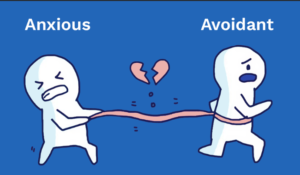
The push–pull pattern means:
-
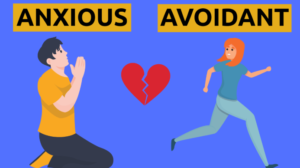
The anxious partner pulls (seeks closeness, reassurance, connection).
-
The avoidant partner pushes (withdraws, avoids, becomes distant).
This cycle keeps repeating, creating emotional highs and lows that can feel addictive yet exhausting.
Why Anxious and Avoidant Partners Attract
It may seem like opposites attract, but the psychology runs deeper.
1. Familiarity From Childhood
Both are repeating childhood emotional patterns:
-
The anxious person learned to chase love.
-
The avoidant person learned to suppress needs.
This feels familiar—even when it’s unhealthy.
2. Subconscious Needs
-
Anxious individuals crave connection.
-
Avoidant individuals crave independence.
Each offers what the other lacks, but the extremes clash.
3. Chemical Highs
The cycle of closeness → distance → reunion creates dopamine spikes, making the relationship feel intense and hard to leave.

How the Push–Pull Dynamic Works
Let’s break down the cycle step-by-step.
Step 1: The Honeymoon Phase
-
The avoidant partner feels comfortable because there’s no demand yet.
-
The anxious partner feels excited and hopeful.
Everything feels perfect.
Step 2: Emotional Closeness Increases
As intimacy grows:
-
The anxious partner becomes more emotionally expressive.
-
The avoidant partner starts feeling overwhelmed or trapped.
Step 3: Avoidant Partner Pulls Away
This can look like:
-
Becoming distant
-
Reducing communication
-
Avoiding deep conversations
-
Focusing on work or hobbies
-
Emotionally shutting down
Step 4: Anxious Partner Panics and Clings
The anxious partner:
-
Sends more messages
-
Seeks reassurance
-
Overanalyzes
-
Gets upset or emotional
They try harder, hoping to save the connection.
Step 5: Avoidant Pulls Further Away
Feeling pressured, the avoidant partner distances even more:
-
Cold responses
-
Withdrawal
-
Silent treatment
-
Physical or emotional space
Step 6: Emotional Breakdown or Breakup
This stage feels painful for both:
-
Anxious partner feels abandoned.
-
Avoidant partner feels suffocated.
Step 7: Reunion and Repair
Eventually, one reaches out:
-
Avoidant partner misses the connection
-
Anxious partner wants closeness again
They reconnect, but without healing, the cycle repeats.
Signs You’re in an Anxious–Avoidant Push–Pull Relationship
For the Anxious Partner
-
Fear of being ignored
-
Overthinking messages or tone
-
Feeling like you care more
-
Constant need for reassurance
-
Emotional highs and lows
For the Avoidant Partner
-
Feeling overwhelmed by closeness
-
Preference for logic over emotion
-
Needing space suddenly
-
Difficulty expressing feelings
-
Pulling away during stress or conflict
Relationship Patterns
-
Intense closeness followed by sudden distance
-
Mixed signals
-
Small issues become emotional crises
-
One feels needy, the other feels trapped
-
Relationship feels unstable or unpredictable
Psychology Behind the Push–Pull Pattern
1. Opposite Emotional Needs
-
The anxious partner needs closeness to feel safe.
-
The avoidant partner needs space to feel safe.
Their safety systems clash.
2. Different Conflict Styles
-
Anxious → confronts
-
Avoidant → withdraws
This mismatch fuels ongoing tension.
3. Fear-Based Behaviors
-
Anxious → fear of abandonment
-
Avoidant → fear of engulfment (being controlled or smothered)
Both fears trigger each other.
4. Past Trauma and Childhood Wounds
These often resurface in adult relationships:
-
Emotional neglect
-
Unpredictable caregiving
-
Inconsistent love
-
Limited emotional expression
5. Biological Stress Response
The nervous system plays a huge role:
-
Anxious → hyperactivated
-
Avoidant → deactivated
They process emotions differently, making mutual understanding harder.
Impact of the Push–Pull Pattern
1. Emotional Rollercoaster
Highs feel euphoric; lows feel devastating.
2. Loss of Trust
Both partners:
-
Question the relationship
-
Feel misunderstood
-
Doubt each other’s intentions
3. Low Self-Esteem
-
The anxious partner feels “not enough”
-
The avoidant partner feels “always wrong” or “too pressured”
4. Communication Breakdown
Conversations turn into:
-
Blame
-
Withdrawal
-
Emotional outbursts
-
Misinterpretation
5. Long-Term Instability
Without change, relationships either:
-
Become toxic
-
Drag on painfully
-
End abruptly
Can Anxious and Avoidant Partners Make It Work?
Yes—many couples with these attachment styles build healthy, loving relationships.
But it requires:
-
Self-awareness
-
Emotional healing
-
Secure communication
-
Willingness to grow
Let’s explore how.
How to Break the Push–Pull Cycle
1. Understanding Your Attachment Style
Recognize your patterns:
-
Do you chase or withdraw?
-
What triggers you?
-
How do you react to emotional closeness?
Self-awareness is the first step.
2. For the Anxious Partner
-
Practice self-soothing
-
Set healthy boundaries
-
Don’t jump to conclusions
-
Focus on secure behaviors
-
Communicate needs calmly
-
Build self-worth outside the relationship
3. For the Avoidant Partner
-
Learn emotional expression
-
Practice vulnerability gradually
-
Give reassurance even if it feels uncomfortable
-
Understand that closeness is not a threat
-
Communicate the need for space without withdrawing completely
4. Communicate in a Secure Way
-
Use “I feel” statements
-
Avoid blame
-
Listen without interrupting
-
Validate each other’s feelings
-
Discuss needs openly
5. Establish Safety in the Relationship
Both partners need:
-
Predictability
-
Honesty
-
Emotional consistency
-
Respect during disagreements
Safety dissolves the push–pull pattern.
6. Heal Past Emotional Wounds
This can be done through:
-
Therapy
-
Inner child work
-
Journaling
-
Couples counseling
-
Mindfulness and emotional regulation techniques
Healing reduces triggers and reactivity.
7. Build a Secure Attachment Together
Couples can create a secure bond by:
-
Offering reassurance
-
Being dependable
-
Responding to each other’s needs
-
Apologizing and repairing after conflict
Over time, even anxious and avoidant individuals can develop secure habits.
Conclusion
The anxious–avoidant push–pull dynamic is extremely common and often misunderstood. It’s not a sign that love doesn’t exist—it’s a reflection of deeper attachment wounds and differing emotional needs.
With awareness, communication, and healing, the cycle can be broken.
Relationships become stronger not by avoiding differences, but by understanding and growing through them.
Reference
1. The Gottman Institute – Attachment & Relationships
2. Verywell Mind – Anxious vs Avoidant Attachment
https://www.verywellmind.com/attachment-styles-2795344
3. American Psychological Association – Relationships & Attachment
https://www.apa.org/topics/relationships