

Love is not random. It is patterned.
The partners we choose, the way we express emotions, the way we fight, the way we forgive, the intensity of our expectations — all follow a blueprint created long before adult romance begins.
This blueprint is called attachment style.
Attachment theory proposes that our early interactions with caregivers form deep psychological expectations about love and safety. These expectations later influence how we behave in romantic relationships — often subconsciously.
How Attachment Styles Are Formed
Human babies are biologically dependent. When a caregiver responds to their cry with affection, warmth, and consistency, the baby learns:
“The world is safe, and I am worthy of love.”
But if caregivers are inconsistent, emotionally distant, frightening, or unpredictable, the child learns:
“Love is unreliable, dangerous, or conditional.”
These early emotional imprints become attachment patterns that continue into adulthood.
The Four Attachment Styles in Detail
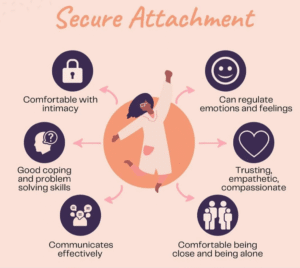
1. Secure Attachment — “Love is a Safe Home”
Core Beliefs
- I am lovable.
- Others can be trusted.
- Relationships are safe and comforting.
Typical Childhood Background
- Parents were emotionally available, attuned, and responsive.
- The child’s needs were met quickly and consistently.
- Expressing emotions was safe and accepted.
Traits in Romantic Relationships
- Comfortable with emotional intimacy.
- Able to depend on a partner without losing identity.
- Great listeners and good at conflict resolution.
- Forgiving and empathetic.
- Communicate feelings openly without fear.
Common saying from securely attached partners
- “We’ll figure it out together.”
- “I need some space, but I care about you.”
- “I trust you.”
Secure partners during conflicts
They don’t attack or withdraw — they solve.
Challenges they may face
- Feeling drained in relationships with insecure partners.
- Sometimes taking responsibility beyond their share.
2. Anxious / Preoccupied Attachment — “Love must be protected or it will disappear”
Core Beliefs
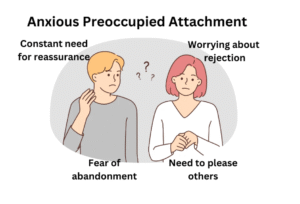
- I need constant reassurance to feel secure.
- I might not be good enough for my partner.
- What if I get abandoned?
Typical Childhood Background
- Caregiver love was inconsistent — sometimes warm, sometimes distant.
- Emotional needs were met unpredictably.
- The child learned that closeness is temporary.
Traits in Romantic Relationships
- Crave closeness intensely.
- Feel anxious when their partner becomes quiet or distant.
- Overthink small things (tone of voice, text delay, body language).
- May overgive or lose themselves to keep the relationship.
- Become hypervigilant to signs of rejection.
Internal monologue
- “Do they really love me?”
- “Why didn’t they reply?”
- “What if I’m being ignored?”
Anxious behavior patterns that partners notice
- Texting repeatedly if no reply.
- Difficulty sleeping when there’s relationship tension.
- Seeking validation through approval or affection.
The paradox
They love deeply, but the fear of losing love sometimes pushes love away.
3. Avoidant / Dismissive Attachment — “Love threatens independence”
Core Beliefs
- Emotions are unsafe.
- Depending on others leads to disappointment.
- I don’t need anyone.
Typical Childhood Background
- Caregivers minimized emotions or discouraged vulnerability.
- Praise was given for independence, not emotional needs.
- The child learned to soothe themselves alone.
Traits in Romantic Relationships
- Discomfort with emotional closeness.
- Difficulty expressing feelings.
- Values independence over connection.
- May enjoy relationships but feel trapped by expectations.
Internal monologue
- “Why do we need to talk about feelings?”
- “I need space.”
- “I’m better on my own.”
Behavior patterns partners notice
- Withdrawing during conflict.
- Becoming distant after intimacy.
- Avoiding labels and commitment.
- Busying themselves with work, hobbies, or screens when stressed.
Emotional truth
Avoidants do love, but expressing love scares them because intimacy feels like losing control.
4. Fearful–Avoidant / Disorganized Attachment — “I want love, but love terrifies me”
Core Beliefs
- I crave closeness, but closeness is dangerous.
- People who love me may hurt me.
- I must protect myself from the person I want.
Typical Childhood Background
- Caregivers were frightening, abusive, chaotic, or unpredictable.
- Child experienced love mixed with fear.
- The caregiver was both the source of safety and danger.
Traits in Romantic Relationships
- Intense desire for love, paired with intense fear.
- Push-pull dynamics: “Come closer — now stay away.”
- Difficulty regulating emotions.
- Trust issues and sensitivity to perceived rejection.
- Emotional rollercoasters.
Internal monologue
- “I want you… but I can’t trust you.”
- “Please love me… but don’t hurt me.”
- “If I get close, I’ll lose myself.”
Behavior patterns partners notice
- Sudden breakup after deep intimacy.
- Disappearing when things get serious.
- Apologizing and returning, then leaving again.
- Creating drama to test loyalty.
Root issue
Unhealed trauma makes love feel both paradise and danger.

How Attachment Styles Combine in Relationships
| Combination | Relationship Outcome |
| Secure + Secure | Supportive, growth-oriented, emotionally fulfilling |
| Secure + Anxious | Heals anxious partner over time |
| Secure + Avoidant | Avoidant gradually learns emotional safety |
| Anxious + Avoidant | Most unstable — triggers each other’s fears |
| Anxious + Fearful | Passionate but unpredictable and exhausting |
| Avoidant + Fearful | High walls, unresolved trauma |
| Fearful + Fearful | Intense but chaotic and rarely long-term |
The most challenging and common trauma bond:
Anxious + Avoidant → chasing vs withdrawing dyad
Psychological Mechanisms Behind Attachment
Neurochemistry of Attachment
Love activates chemicals in the brain:
| Hormone | Function |
| Oxytocin | Bonding, trust |
| Dopamine | Pleasure, attraction |
| Cortisol | Stress and insecurity |
| Serotonin | Emotional balance |
Anxious partners produce high cortisol during separation.
Avoidants produce cortisol during too much closeness.
Secure partners maintain hormonal balance through trust.
Attachment and Core Wounds
Each insecure attachment carries a deep core wound:
| Style | Core Wound |
| Anxious | “I am not enough.” |
| Avoidant | “I can rely only on myself.” |
| Fearful | “Love is danger.” |
Awareness of the wound is the first step toward healing.
Healing: Moving Toward Secure Attachment
Attachment style is changeable, not permanent.
General Healing Principles
- Recognize triggers instead of reacting impulsively
- Communicate needs rather than testing or assuming
- Build emotional regulation skills
- Choose partners who respect emotional safety
- Study childhood patterns without judgment
- Receive therapy / trauma-informed counselling if possible
Healing Exercises for Each Style
For Anxious Attachment
- Practice delayed response before reacting to fear.
- Journal thoughts instead of acting on them instantly.
- Ask directly for reassurance instead of testing love.
- Build self-worth from within, not from validation.
Helpful sentence to express needs:
“When messages stop suddenly, I feel anxious. Can we agree on a communication rhythm that feels safe for both of us?”
For Avoidant Attachment
- Label emotions instead of suppressing them.
- Practice vulnerability in small doses.
- Allow closeness without assuming loss of freedom.
- Learn to take emotional responsibility without shutting down.
Helpful sentence to express needs:
“I need some space right now, but I care about you and I’m not leaving.”
For Fearful–Avoidant Attachment
- Identify triggers that cause sudden withdrawal.
- Practice grounding techniques during emotional overwhelm.
- Challenge the belief that love = danger.
- Build trust slowly with consistent partners.
Helpful sentence to express needs:
“I want closeness, but sometimes it feels scary. Can we go slowly and check in emotionally?”
For Secure Attachment
- Maintain boundaries with insecure partners.
- Avoid becoming the “fixer” or emotional caretaker.
- Balance empathy with self-respect.
Becoming Secure Starts with One Core Truth
Love is not earned by fear, chasing, perfection, or self-sacrifice.
Love becomes secure when there is:
- Consistency
- Communication
- Emotional safety
- Trust Repair after rupture
Attachment style is not about blame — it is about understanding your emotional map so you can build healthier relationships.
Final Message
You don’t need a perfect childhood to experience healthy love.
You don’t need to fix everything before you deserve connection.
Healing is not becoming someone new — it is remembering who you were before fear taught you otherwise.
When you heal your attachment wounds:
- Love stops feeling like survival
- Connection becomes comfort instead of fear
- Intimacy becomes freedom instead of danger
- You become your own safe place — and love begins to thrive
Frequently Asked Questions (FAQs)
1. What are attachment styles in relationships?
Attachment styles are patterns of emotional bonding formed in childhood that affect adult relationships.
2. What are the four attachment styles?
Secure, anxious, avoidant, and fearful (disorganized).
3. Can attachment styles change over time?
Yes, with awareness, effort, and therapy, attachment styles can become more secure.
4. Which attachment style is the healthiest?
Secure attachment is considered the healthiest and most balanced.
5. Why do anxious and avoidant partners attract each other?
They trigger each other’s emotional patterns—one seeks closeness while the other seeks distance.
6. How does childhood affect adult relationships?
Early caregiver experiences shape beliefs about love, trust, and emotional safety.
7. What is anxious attachment?
It involves fear of abandonment, need for reassurance, and emotional dependency.
8. What is avoidant attachment?
It involves emotional distance, fear of intimacy, and strong independence.
9. What is fearful-avoidant attachment?
It is a mix of desire for closeness and fear of getting hurt.
10. How can I become securely attached?
Through self-awareness, emotional regulation, communication, and healthy relationships.
Written by Baishakhi Das
Counselor | Mental Health Practitioner
B.Sc, M.Sc, PG Diploma in Counseling
References
- Psychology Today
👉 https://www.psychologytoday.com/us/basics/attachment - PositivePsychology
👉 https://positivepsychology.com/attachment-theory/ - John Bowlby
👉 https://www.britannica.com/biography/John-Bowlby - Mary Ainsworth
👉 https://www.simplypsychology.org/mary-ainsworth.html - The Psychology of Care: Inside the Minds of Certified Nurses Balancing Empathy, Burnout, and Healing
This article is written for knowledge purposes, aiming to help readers understand the topic better and gain useful insights for learning and awareness.