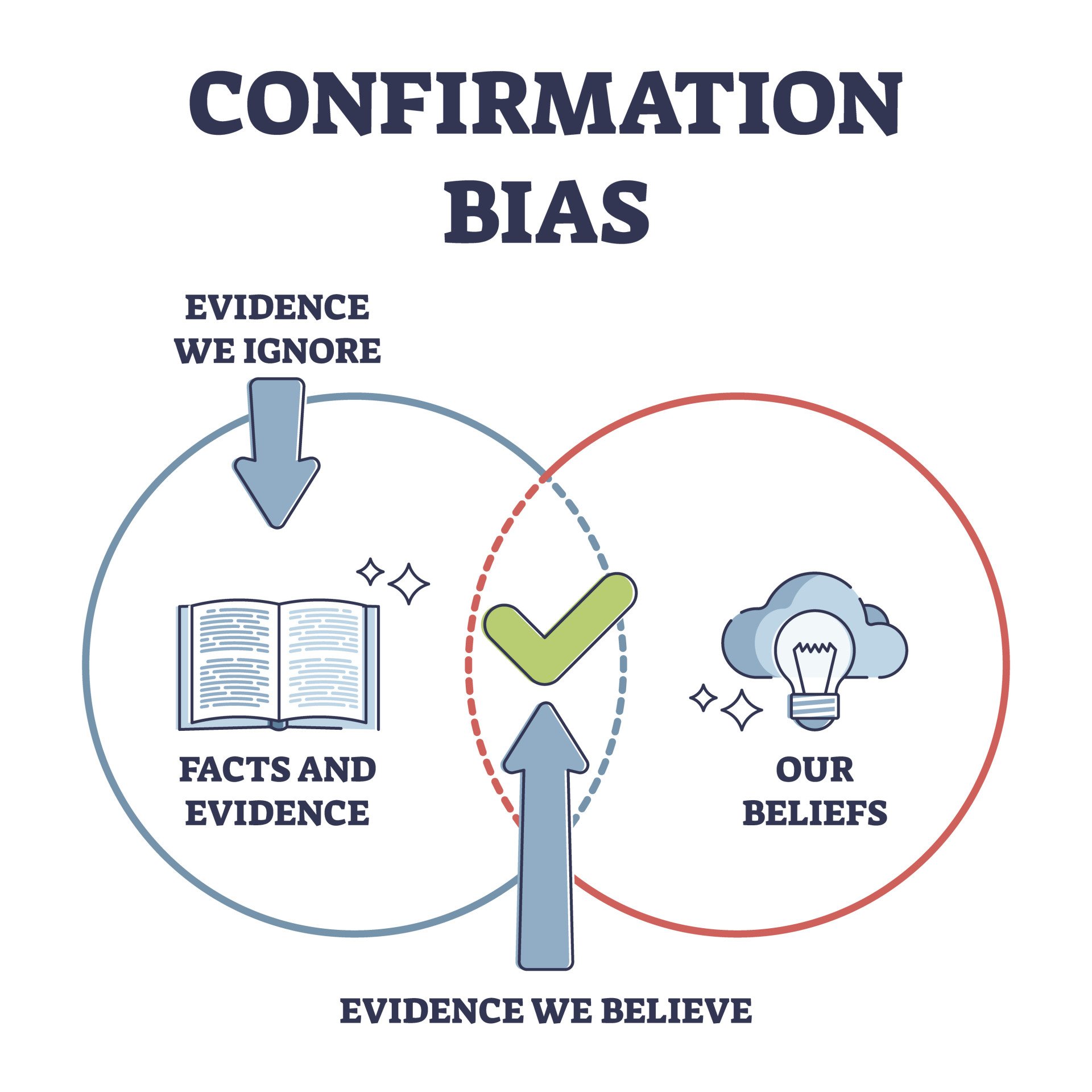
Why Your Brain Won’t Stop Replaying Past Conversations

Have you ever lay in bed or sitting there when suddenly you hear yourself conversing with someone in the past like your previous conversation? Something you said. Something that you wish you could have said. A tone you’re now questioning. The act recurs over and over, but it is not always comfortable, regrettable, or nervous. This is aggravated by the fact that these thoughts normally come when all the other things are silent at night, when you are taking a rest, or when you are supposed to be having a peaceful moment and you find yourself alone with your inner talk.

Such an experience is so widespread–and it does not mean that something is wrong with you. It is an indication that the brain attempts to defend, process and meaning making around social experiences. These moments come back into your mind to find meaning, closure, or reassurance, particularly when a conversation had been emotionally charged or unresolved. Instead of it being a weakness, this replay shows a very human desire to fit in, to be heard, and to feel emotionally secure in all our relationships with other people.
1. The Brain Is Wired for Social Survival

Humans are social beings. Thousands of years ago, being part of a group was the guarantee of protection, safety and existence. Due to this evolutionary output, the brain allocates additional significance to the social engagement, particularly to the ones, which are awkward, emotionally significant, or unbroken. We are in a state of constant scanning of signals to do with approval, denial, and relationship.

The brain is stressed when a conversation is confusing or uncomfortable, which is why it is important. The replaying of it is the manner in which the brain engages in an effort to comprehend and avoid pain in the future in a social context. The questions under the loop are silent, such as:
“Did I say something wrong?”
“Was I misunderstood?”
Will this alter the perception they have of me or change our relationship?

2. Unfinished Emotional Processing

Most of the discussions are cut short before feelings are well worked out. At the moment, you can suppress your emotions to be polite, calm, or emotionally restrained, particularly when you feel you are not safe, inconvenienced or inappropriate to express them. Those emotions are repressed by your body so that you can get through the interaction.

With time when the nervous system ultimately lets go, the emotions that have been repressed start to appear. That is the reason why the mind re-plays the dialogue in the silent times. The replay is not of the words spoken but of the unspoken emotions which were there, linked to the words, ready to be recognized, comprehended, and discharged.

3. Rumination: When Thinking Turns into a Loop

Rereading conversations could slowly degenerate into rumination a mental cycle in which the brain is continually processing the same incident without having a conclusion or a relief. This repetitive thinking can be a cause of more emotional distress instead of relief. Rumination usually presents itself in association with:

Anxiety
Low self-esteem
A history of trauma
Perfectionism

The mind continues to spin around the same thoughts appearing to replay details and imagine different solutions and events, hoping that at some point the explanation or relief will suddenly come. Sadly enough, this loop is not always answered, the loop only extends the emotional distress.

4. The Inner Critic Takes Over

In these mental acting games, most individuals become cruel and critical to themselves:

“Why did I say that?”
“I sounded stupid.”
“They must think badly of me.”

There is nothing true about this inner critic the criticism is based on the fear. It is attempting to shield you against rejection or embarrassment that might come later, although it is a painful way. This voice frequently expresses historical experiences in which a person was probably criticized, shamed, or punished instead of being patient and understanding. In the course of time, the mind gets to condition itself to pre-erect self, with the hope that the self-criticism will help to stop the external criticism, although it does not necessarily do good.

5. The Nervous System and the “Threat Response”

Psychologically, it is common to relate the re-enactment of conversations to the nervous system being in a high level of alertness. Your system, when subjected to any kind of emotional threat (rejection, conflict, embarrassment, or disapproval), finds it hard to settle down and achieve a relaxed, controlled state. The body and mind remains alert even after the scenario has been experienced.

In reaction the brain re-plays the situation, trying to theorize it and avoid such an emotional injury in future. This circularity is not meant to happen–this is survival by default because the human mind needs to feel safe and secure.

6. Trauma and Emotional Memory

In the case of persons who suffered emotional or relationship trauma, the replays may run deeper. The previous experiences of misunderstanding, being criticized, dismissed, or feeling unsafe may be triggered by old conversations. When this happens it does not mean the mind is reacting to the current interaction alone it is reacting to past emotional records.

It is not really a replay of this conversation. It is a question of what the moment will be embodying in its emotional aspect echoing old wounds that are not yet completely healed or recognized.

What Actually Helps

  • Name what you’re feeling, not just what you said
    (e.g., embarrassment, hurt, fear of rejection)
  • Gently interrupt the loop
    Try grounding techniques like slow breathing or noticing physical sensations.
  • Practice self-compassion
    Ask yourself: “What would I say to a friend in this situation?”
  • Accept imperfection
    No conversation is ever flawless. Human connection doesn’t require perfection—only presence.
  • If it’s persistent, therapeutic support can help uncover deeper patterns behind rumination and emotional looping.

A Reframe Worth Remembering

Your mind is not repeating some old discussions to torment or torment you. It is attempting – in many cases clumsy and unsuccessful – to keep you safe, to make sense out of what has occurred, to get you to feel secure and to belong. These emotional circles are the result of a profound human desire to fit in, to be comprehended and not to be hurt emotionally.

When you receive these thoughts with curiosity, not criticism, that is, by asking yourself questions like “What was I feeling?” and not What is wrong with me? the loop starts getting unstuck. Not instantly. Not completely. But gradually, gradually enough to make breathing room in your head.

And in some cases, that pity suffices to allow that dialogue to finally subside and does not have to be repeated to be listened to.

Frequently Asked Questions (FAQ)

1. Why do old conversations replay in my mind?
Because the brain tries to process unresolved emotions, social uncertainty, or perceived threats related to connection and belonging.

2. Is replaying conversations a sign of anxiety?
It can be associated with anxiety, but not everyone who replays conversations has an anxiety disorder.

3. Why does this happen more at night?
At night, distractions reduce and the nervous system slows down, allowing suppressed thoughts and emotions to surface.

4. Is this the same as overthinking?


Yes, it’s a form of overthinking, often linked specifically to social interactions and emotional safety.

5. What is rumination?
Rumination is repetitive thinking about past events without reaching resolution or relief.

6. Can trauma cause conversation replaying?
Yes. Emotional or relational trauma can make the brain more sensitive to social cues and perceived rejection.

7. Why am I so self-critical during these replays?
The inner critic often develops from past experiences where mistakes were judged harshly rather than met with understanding.

8. Do perfectionists replay conversations more?
Yes. Perfectionism increases fear of mistakes and social evaluation, fueling mental loops.

9. Is my brain trying to fix something?
Yes. The brain is attempting to prevent future emotional harm by analyzing past interactions.

10. Does replaying conversations mean I did something wrong?


Not necessarily. Often, it reflects emotional sensitivity rather than actual mistakes.

11. How can I stop replaying conversations?
Gentle grounding, naming emotions, self-compassion, and nervous system regulation help reduce the loop.

12. Should I distract myself when this happens?
Temporary distraction can help, but emotional acknowledgment leads to longer-term relief.

13. Can mindfulness help?
Yes. Mindfulness helps you observe thoughts without getting pulled into them.

14. When should I seek therapy?
If replaying conversations interferes with sleep, work, or emotional well-being, therapy can be helpful.

15. Will this ever stop completely?
The goal isn’t complete elimination but reducing intensity and responding with compassion instead of fear.

Written by Baishakhi Das

Counselor | Mental Health Practitioner
B.Sc, M.Sc, PG Diploma in Counseling


Reference 

This topic performs well due to rising searches around men’s mental health, workplace stress, and burnout recovery. Combining emotional insight with practical steps increases engagement and trust.
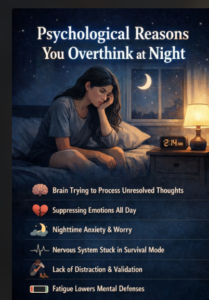

Reasons You Overthink at Night

During the day, your mind may feel manageable. You stay busy—distracted by work, conversations, responsibilities, and constant stimulation. Activity gives your thoughts direction and structure. But at night, when the world grows quiet and external demands fade, that structure disappears. In the stillness, your thoughts suddenly become louder. Memories replay without warning, worries multiply, and questions you avoided all day begin to surface, one after another. Sleep feels distant—not because your body isn’t tired, but because your mind doesn’t know how to slow down.

Night-time overthinking isn’t a weakness, a bad habit, or a lack of discipline. It’s often a psychological response rooted in how the brain processes stress, safety, and unresolved emotional experiences. When the day ends, your brain finally has the space it didn’t have before—to process what was postponed, suppressed, or emotionally unfinished.

In the absence of distractions, the mind turns inward. Thoughts that were held back by busyness seek resolution. If your nervous system has been under stress, the quiet of night can feel unfamiliar rather than soothing, causing the mind to stay alert instead of restful. Overthinking becomes the brain’s way of trying to protect you—by reviewing, analyzing, and anticipating—especially when it senses uncertainty.

This is why overthinking so often peaks at night. It’s not that your problems suddenly appear after dark. It’s that, for the first time all day, your mind is finally being heard.

1. The Brain Finally Has Space to Process

Throughout the day, tasks, conversations, screens, and responsibilities keep your mind externally focused. There is always something demanding attention—something to respond to, fix, or complete. This constant engagement leaves little room for reflection. At night, however, those distractions disappear. The external world quiets, and the brain naturally shifts inward, turning its attention to what has been left unprocessed.

Thoughts you postponed during the day—unresolved conflicts, unexpressed emotions, unfinished decisions, and lingering doubts—finally surface. With no immediate task to anchor your focus, the mind begins to revisit these experiences, searching for meaning or resolution. Overthinking, in this sense, isn’t your mind attacking you or trying to sabotage your rest; it’s your mind asking for attention when there is finally enough silence to listen.

2. Suppressed Emotions Rise When You Slow Down

Many people cope with emotional discomfort by staying busy. Productivity becomes a survival strategy—a way to avoid feeling what hasn’t been processed. During the day, there’s little space to pause, reflect, or emotionally register experiences. But when night arrives and activity slows, the emotional system no longer has distractions to hide behind.

Suppressed emotions such as sadness, fear, guilt, loneliness, or even unacknowledged anger begin to surface. These feelings don’t arrive gently; they emerge all at once because they’ve been waiting. The mind then tries to manage this emotional flood by thinking—analyzing situations, replaying conversations, imagining outcomes, or worrying excessively. Overthinking becomes an attempt to stay in control of emotions that were ignored or postponed during the day.

3. Anxiety Is Louder at Night

Anxiety thrives in uncertainty, and night naturally brings more of it. The environment is quieter, darker, and less predictable. There are fewer external cues of safety—fewer people awake, less activity, and limited immediate reassurance. As a result, the brain becomes more vigilant, scanning for potential threats.

This is why worries often take the form of:

  • “What if something goes wrong?”

  • “if I made the wrong decision?”

  • “What if the future doesn’t work out?”

At night, the mind shifts into anticipatory mode. It tries to protect you by rehearsing possible dangers and preparing for imagined problems. Unfortunately, this hyper-alertness keeps the nervous system activated, making rest feel difficult.

4. The Nervous System Stays in Survival Mode

If you live with chronic stress, unresolved trauma, or long-term emotional responsibility, your nervous system may rarely experience a sense of true safety. Even when your body is physically resting in bed, your internal system may remain on guard.

Overthinking is often a sign that the nervous system hasn’t transitioned from fight-or-flight into rest-and-digest mode. The mind stays active because it doesn’t yet feel safe enough to power down. Instead of settling, it continues monitoring, anticipating, and analyzing—mistaking mental activity for protection.

5. Night Removes External Validation

During the day, interactions and responsibilities provide constant feedback. You’re needed, productive, responsive, and engaged. These external signals help stabilize your sense of self. At night, when those roles pause, that validation disappears.

In the quiet, the mind often turns inward and begins self-evaluating:

  • “Am I doing enough?”
  • “I falling behind?”
  • “Why am I like this?”

Without external reassurance, overthinking fills the emotional gap left by silence. Rather than offering comfort, the mind becomes self-critical, searching for answers to questions rooted in insecurity and self-doubt.

6. Fatigue Weakens Mental Boundaries

As the day wears on, mental and emotional energy declines. When you’re tired, your brain’s ability to regulate and filter thoughts becomes weaker. The internal voice that usually says, this thought isn’t helpful right now, loses strength.

As a result, a single thought can quickly spiral into:

  • replaying past mistakes,
  • predicting worst-case futures,
  • questioning your worth, competence, or choices.

This isn’t over-dramatization or negativity—it’s cognitive fatigue. A tired brain struggles to maintain perspective, making thoughts feel heavier and more convincing than they actually are.

7. Overthinking as a Form of Control

For many people, thinking feels safer than feeling. Emotions can feel unpredictable and overwhelming, while thoughts create a sense of structure. Overthinking offers the illusion of control—the belief that if you analyze enough, anticipate enough, or prepare enough, you can prevent pain.

At night, when control feels limited and vulnerability increases, the mind leans more heavily on thinking as protection. Unfortunately, this strategy often backfires. Instead of reducing distress, it amplifies it—keeping the mind alert and the body tense, long after rest is needed.

Overthinking, then, is not a failure of self-control. It’s a protective response that has stayed active for too long.

Why Telling Yourself “Just Sleep” Doesn’t Work

Overthinking isn’t a switch you can turn off through willpower. It isn’t a bad habit that disappears because you command it to. It’s a signal—one your mind uses to communicate unmet emotional needs such as processing, reassurance, safety, or expression. When these needs go unaddressed, the mind keeps returning to them, especially in the quiet of night.

Telling yourself to “just sleep” often creates internal pressure. Instead of calming the system, it sends the message that your thoughts are a problem to be eliminated. The brain responds by becoming more alert, not less—because unresolved thoughts don’t disappear when they’re ignored.

Trying to silence your thoughts without understanding them often makes them louder. The mind resists being shut down when it feels unheard. Real rest begins not when thoughts are forced away, but when the nervous system feels safe enough to let go—when thoughts are acknowledged, emotions are allowed, and the need beneath the overthinking is gently met.

What Actually Helps With Night-Time Overthinking

Healing doesn’t come from forcing sleep. It comes from helping the nervous system feel safe.

Helpful approaches include:

  • Gentle grounding (slow breathing, body awareness)
  • Writing down thoughts to release mental load
  • Creating a consistent night routine that signals safety
  • Allowing emotions without immediately analyzing them
  • Therapy to process unresolved emotional patterns

A Gentle Reframe

If you overthink at night, it doesn’t mean you’re broken, weak, or incapable of rest. It means your mind has finally been given space—space it didn’t have during the noise and demands of the day. In that quiet, your inner world begins to speak. What you’re experiencing isn’t a failure of control; it’s a request for understanding.

Your thoughts are not the enemy. They are signals pointing toward emotions, needs, or experiences that haven’t yet been acknowledged. When met with compassion rather than resistance, they soften. When met with control or judgment, they often grow louder.

Rest doesn’t begin when thoughts disappear.
It begins when your mind feels safe enough to let go—safe enough to trust that it doesn’t have to stay alert, analyze everything, or protect you through constant thinking. That sense of safety is built through gentleness, patience, and allowing yourself to be human, even in the quiet of the night.

Frequently Asked Questions (FAQ)

1. Why do I overthink more at night than during the day?

At night, external distractions reduce, giving your mind space to process unresolved thoughts and emotions that were postponed during the day.

2. Is night-time overthinking a sign of anxiety?

Often yes. Anxiety tends to intensify at night due to uncertainty, reduced reassurance, and a heightened sense of vulnerability.

3. Can overthinking at night be linked to trauma?

Yes. Trauma and chronic stress can keep the nervous system in survival mode, making it hard for the mind to fully relax at night.

4. Why does my mind replay past events when I try to sleep?

When the brain is quiet, it revisits unfinished emotional experiences, attempting to process or make sense of them.

5. Does night-time overthinking mean I’m mentally weak?

No. It’s a protective psychological response, not a weakness or lack of discipline.

6. Why doesn’t telling myself to “stop thinking” help?

Because overthinking is a signal, not a switch. Suppressing thoughts often increases mental arousal rather than calming it.

7. Can fatigue make overthinking worse?

Yes. Cognitive fatigue weakens mental boundaries, allowing thoughts to spiral more easily at night.

8. Is overthinking a form of control?

For many people, yes. Thinking can feel safer than feeling, creating an illusion of control over uncertainty or emotional pain.

9. Why do my worries feel more realistic at night?

At night, the brain’s emotional regulation is lower, making thoughts feel more intense and believable.

10. Can suppressed emotions cause night-time overthinking?

Absolutely. Unexpressed emotions often surface when activity slows and the mind turns inward.

11. Does overthinking affect sleep quality?

Yes. It keeps the nervous system activated, making it harder to fall asleep or stay asleep.

12. Can routine help reduce night-time overthinking?

A consistent, calming night routine can signal safety to the nervous system and reduce mental alertness.

13. Is night-time overthinking common?

Very common. Many emotionally aware and high-functioning individuals experience it.

14. When should I seek professional help?

If overthinking regularly disrupts sleep, daily functioning, or emotional wellbeing, therapy can be very helpful.

15. Can night-time overthinking be healed?

Yes. With emotional processing, nervous system regulation, self-compassion, and support, it can significantly reduce over time.

Written by Baishakhi Das

Counselor | Mental Health Practitioner
B.Sc, M.Sc, PG Diploma in Counseling

Research 

Understanding rumination and worry (night-time repetitive thinking in anxiety & depression research) — National Institutes of Health (NIH)
The mind after midnight: nighttime wakefulness and cognitionNIH article on how night affects brain activity and sleep processes
Sleep anxiety and its causesCleveland Clinic overview on how anxiety and sleep are connected
Why anxiety can be worse at nightSleep Foundation expert guide on night-time anxiety causes and sleep interference
Circadian rhythms & introspective thought at nightMedium psychological discussion on why the brain becomes more self-referencing after dark

You’re Not Lazy — You’re Emotionally Exhausted

This topic performs well due to rising searches around men’s mental health, workplace stress, and burnout recovery. Combining emotional insight with practical steps increases engagement and trust.

You’re Not Lazy — You’re Emotionally Exhausted

Many people carry a quiet shame around productivity. You promise yourself you’ll get things done, yet find it hard to start. You procrastinate, feel drained, and then criticize yourself for being “lazy.” But what if laziness isn’t the problem at all? What if what you’re experiencing is emotional exhaustion?

Emotional exhaustion doesn’t always look dramatic. It doesn’t have to involve burnout from a high-powered job or a visible breakdown. Often, it shows up quietly—in the inability to focus, the constant urge to scroll, the heaviness in your body, or the sense that even small tasks feel overwhelming. From the outside, it may look like avoidance. On the inside, it feels like you have nothing left to give.

Emotional Exhaustion Is Not a Lack of Willpower

We tend to treat motivation as a moral quality. If you’re productive, you’re seen as disciplined, responsible, and capable. If you’re not, the label quickly becomes “lazy.” This way of thinking ignores how the nervous system actually works. Motivation does not come from force or pressure; it arises when there is enough emotional and psychological energy available to engage with life.

When you are emotionally exhausted, your system is no longer oriented toward growth or achievement. It is operating in survival mode. The brain shifts its priorities from long-term goals to immediate safety. Instead of asking, “What should I achieve today?” it asks, “How do I get through this without collapsing?” Focus narrows, energy drops, and even simple decisions can feel heavy.

In this state, behaviors like resting, zoning out, procrastinating, or withdrawing socially are not signs of weakness or failure. They are automatic, protective responses of a system that has been overextended for too long. The body is trying to conserve energy, reduce stimulation, and prevent further emotional overload. Judging these responses as laziness only deepens the exhaustion, while understanding them creates the conditions for real recovery.

How Emotional Exhaustion Builds Up

Emotional exhaustion is often the result of long-term emotional load rather than a single event. Constant responsibility, unresolved stress, people-pleasing, emotional neglect, or growing up in environments where your feelings were minimized can slowly drain your internal resources.

Many people learn early that they must stay strong, quiet, or useful to be accepted. Over time, this leads to chronic self-monitoring—always being alert, careful, and emotionally restrained. Even when life becomes calmer, the body doesn’t automatically relax. The exhaustion remains.

You may notice that you can function well for others but struggle to do things for yourself. Or that you feel tired even after resting. This is because emotional exhaustion is not cured by sleep alone; it requires emotional safety, validation, and release.

Why You Feel Stuck Instead of Rested

When you’re emotionally exhausted, resting doesn’t always feel refreshing. Instead of feeling restored, you may feel numb, guilty, or restless. This happens because your system never fully powers down. There is a background hum of stress—unfinished emotional business that hasn’t been acknowledged.

Your mind may keep replaying conversations, worries, or self-criticism. Your body may feel heavy or tense. In this state, starting tasks feels impossible, not because you don’t care, but because your system is already overloaded.

Calling yourself lazy in these moments only adds another layer of pressure. Shame is not motivating; it is draining. The more you criticize yourself, the more your system retreats.

The Difference Between Laziness and Exhaustion

Laziness is often misunderstood, but at its core, it reflects a lack of interest without inner conflict. There is little emotional struggle involved. A lazy state does not usually carry guilt, shame, or a deep wish to change. Emotional exhaustion, however, is marked by distress. It comes with frustration, self-criticism, and the painful awareness that you are not functioning the way you want to.

If you wish you could be more engaged, more focused, more active—but feel unable to access that energy—this is not laziness. This inner conflict is a key sign of exhaustion. You care, but your system is depleted. The desire is present; the capacity is not.

Emotionally exhausted

Emotionally exhausted people often care deeply about their work, relationships, and responsibilities. They want to show up, contribute, and live meaningfully. Many of them have spent years being reliable, emotionally available, or strong for others. Over time, this continuous emotional output drains internal resources. The problem is not a lack of values or discipline; it is a lack of emotional capacity after prolonged strain.

Another important difference lies in how the body responds. Laziness does not involve a stressed nervous system. Exhaustion does. When emotionally exhausted, the body may feel heavy, tense, foggy, or numb. Starting tasks feels overwhelming not because of unwillingness, but because the nervous system is already overloaded.

Understanding this distinction is crucial, because treating exhaustion as laziness leads to shame-based motivation—which only deepens burnout. Recognizing exhaustion allows space for compassion, rest, and repair.

Laziness Emotional Exhaustion
Lack of interest without distress Strong desire to do better accompanied by distress
No significant guilt or self-criticism High levels of guilt, frustration, and self-blame
Motivation is absent, but not missed Motivation is deeply wanted but inaccessible
Nervous system is relatively calm Nervous system is overloaded or in survival mode
Tasks are avoided casually Tasks feel overwhelming and draining
Rest feels neutral or pleasant Rest often feels unrefreshing or guilt-filled
Does not question self-worth Often questions self-worth and competence

What Actually Helps

Recovery from emotional exhaustion does not begin with pushing harder or trying to become more disciplined. It begins with listening differently. Instead of asking, “What’s wrong with me?” a more helpful and regulating question is, “What have I been carrying for too long without support?” This shift alone reduces shame and allows the nervous system to soften.

Emotional exhaustion develops when effort continues without adequate emotional processing, rest, or validation. Healing, therefore, is not about doing more—it is about repairing what has been depleted.

Small acts of self-compassion matter far more than productivity hacks or motivational strategies. Naming your feelings instead of suppressing them, setting gentle boundaries instead of over-explaining, and allowing yourself to slow down without guilt are not indulgences. They are essential repairs to a system that has been running on empty.

What genuinely helps includes:

  • Acknowledging exhaustion without self-judgment. Simply recognizing that you are emotionally tired—not lazy or broken—reduces internal resistance and shame.
  • Emotional naming and expression. Putting words to what you feel helps regulate the nervous system. Feelings that are acknowledged move through; feelings that are ignored accumulate.
  • Reducing emotional over-responsibility. Learning to say no, pause, or delegate protects emotional energy and prevents further depletion.
  • Rest that is intentional, not avoidant. True rest involves permission. It is not scrolling to escape guilt, but allowing your body and mind to settle without self-criticism.
  • Lowering unrealistic self-expectations.

    Exhaustion often comes from holding yourself to standards that ignore your current capacity.

  • Creating emotional safety. Spending time with people or environments where you do not have to perform, explain, or stay strong restores energy more effectively than isolation.

Therapeutic support can play a crucial role, especially when exhaustion is rooted in long-standing patterns, trauma, people-pleasing, or emotional neglect. Therapy offers something rest alone cannot: a space where your inner experience is witnessed, validated, and made sense of. This relational safety helps the nervous system move out of survival mode and gradually rebuild emotional capacity.

Recovery is rarely instant. Energy returns slowly, in moments of softness, understanding, and permission. But when exhaustion is met with compassion instead of pressure, the system begins to heal—and functioning becomes possible again.

A Reframe Worth Remembering

If you are struggling to function the way you think you should, it doesn’t mean you are weak or lazy. It may mean you are tired in a way that hasn’t been acknowledged yet.

You don’t need more pressure. You need understanding—especially from yourself. When emotional exhaustion is met with compassion instead of criticism, energy slowly returns. Not all at once, but enough to begin again.

And that is not laziness. That is healing.

Written by Baishakhi Das

Counselor | Mental Health Practitioner
B.Sc, M.Sc, PG Diploma in Counseling

Frequently Asked Questions (FAQ)

1. Is emotional exhaustion the same as burnout?
Emotional exhaustion is a core component of burnout, but it can exist even without work-related burnout. It may come from caregiving roles, emotional neglect, chronic stress, or long-term people-pleasing.

2. Can emotional exhaustion happen without a stressful job?
Yes. Emotional exhaustion often develops from invisible emotional labor, unresolved trauma, relationship strain, or growing up in emotionally unsafe environments.

3. How do I know if I’m emotionally exhausted or just unmotivated?
If you want to function better but feel unable to access energy—and this causes guilt or distress—it is more likely exhaustion than lack of motivation.

4. Why do I feel tired even after resting?
Because emotional exhaustion is not only physical. Without emotional safety, validation, and nervous system regulation, rest alone may not feel restorative.

5. Is procrastination a sign of emotional exhaustion?
Often, yes. Procrastination can be a protective response when the nervous system feels overwhelmed or overloaded.

6. Can emotional exhaustion cause physical symptoms?
Yes. Headaches, body heaviness, muscle tension, brain fog, digestive issues, and frequent fatigue are common.

7. Does emotional exhaustion mean I’m weak?
No. It usually means you have been strong for too long without enough support.

8. How long does recovery from emotional exhaustion take?
Recovery is gradual and varies by individual. Healing depends on reducing ongoing stress, increasing emotional safety, and receiving adequate support.

9. Can emotional exhaustion affect relationships?
Yes. It may lead to withdrawal, irritability, numbness, or difficulty communicating needs.

10. Is emotional exhaustion a mental illness?
No. It is a psychological and physiological state. However, if unaddressed, it can contribute to anxiety or depression.

11. Can therapy really help with emotional exhaustion?
Yes. Therapy helps identify patterns, process unresolved emotions, and regulate the nervous system—restoring emotional capacity over time.

12. What if I can’t afford therapy?**
Low-cost counseling services, support groups, self-help resources, and trauma-informed content can still be beneficial starting points.

13. Should I push myself to stay productive while exhausted?
Pushing through exhaustion often worsens it. Sustainable functioning comes from pacing, not pressure.

14. Can emotional exhaustion come from childhood experiences?
Yes. Emotional neglect, excessive responsibility, or lack of emotional safety in childhood can lead to chronic exhaustion in adulthood.

15. Will my motivation ever come back?
Yes. When exhaustion is met with compassion, boundaries, and support, motivation gradually returns.

References 

World Health Organization (WHO) – Burnout and mental health
Protecting health and care workers’ mental health and well-being: Technical Consultation Meeting

American Psychological Association (APA) – Stress, burnout, and emotional regulation
Stress in America™ 2025: A Crisis of Connection

National Institute of Mental Health (NIMH) – Mental health and emotional well-being
Caring for Your Mental Health – National Institute of Mental Health (NIMH)

How Childhood Silence Creates Emotionally Detached Adults

This topic performs well due to rising searches around men’s mental health, workplace stress, and burnout recovery. Combining emotional insight with practical steps increases engagement and trust.

 

How Childhood Silence Creates Emotionally Detached Adults

Silence in childhood is often misunderstood. From the outside, a quiet child may appear obedient, mature, or “well-behaved,” and is often praised for not causing trouble or demanding attention. Adults may assume the child is emotionally strong or easy to manage. But inside, that silence can be a powerful survival strategy—one learned in environments where emotions were ignored, dismissed, punished, or simply never welcomed. The child learns, often unconsciously, that expressing feelings leads to discomfort, rejection, or conflict, while staying quiet keeps them safe and accepted.

Over time, this pattern becomes deeply ingrained. The child stops checking in with their own emotions and instead focuses on reading the room, pleasing others, or staying invisible. Emotional needs are pushed aside because they feel inconvenient or dangerous. As the child grows, the silence doesn’t disappear; it evolves. In adulthood, it often shows up as emotional detachment—difficulty identifying feelings, discomfort with vulnerability, or a sense of numbness in relationships. What once protected the child becomes a barrier to connection, intimacy, and emotional fulfillment later in life.

When Silence Becomes Safety

Many children learn early that expressing feelings leads to negative outcomes. Crying may invite ridicule or anger, asking for comfort may be called weakness, and sharing thoughts may bring criticism or punishment. In such environments, silence becomes protection. The child learns, often unconsciously, “If I don’t speak, I won’t be hurt.” This is not a choice, but an adaptive response of the nervous system trying to ensure safety.

Over time, the child becomes highly attuned to others’ moods and expectations. Instead of expressing emotions, they monitor their surroundings and adjust themselves. Anger is suppressed, sadness swallowed, fear ignored—creating inner tension beneath a calm exterior.

When feelings are repeatedly invalidated, the child may disconnect from their inner world altogether. This can lead to emotional numbness, self-doubt, or confusion about what they truly feel. Silence helps them survive, but at the cost of emotional expression.

In adulthood, this pattern often continues as conflict avoidance, people-pleasing, or difficulty asking for help. What once kept the child safe becomes automatic. Understanding this allows silence to be seen not as weakness, but as resilience—and a starting point for healing.

Emotional Neglect and the Missing Mirror

Healthy emotional development depends on mirroring—caregivers noticing a child’s emotions, naming them, and responding with empathy. When a child is upset and an adult says, “You’re sad, and that makes sense,” the child learns to recognize, trust, and regulate their inner experience. This process builds emotional clarity and a sense of being understood.

When mirroring is absent, children are left alone with feelings they don’t understand. They may feel tightness in their chest, restlessness, or heaviness, but have no words or safe space to express it. Instead of learning what they feel and why, they learn that emotions are confusing, invisible, or unimportant.

Over time, the nervous system adapts by pushing emotions out of awareness. The child becomes skilled at suppression rather than processing. This can result in emotional numbness, chronic self-doubt, or a disconnection from one’s own needs. Without a mirror, the child grows up unsure of their emotional reality—learning how to function, but not how to feel.

The Freeze Response

Chronic emotional invalidation often activates a freeze response in the nervous system. When a child repeatedly learns that expressing emotions leads to dismissal, punishment, or shame, neither fighting nor fleeing feels safe. Instead, the body chooses shutdown. This response may appear as quietness or calm, but internally it is a state of immobilization and emotional holding.

Over time, the child becomes disconnected from their emotional signals as a way to endure the environment. In adulthood, this early survival strategy may show up as emotional flatness, delayed or muted reactions, difficulty expressing needs, or an inability to access feelings even during major life events. What once protected the child can later limit emotional engagement—until it is gently recognized and addressed.

Growing Up Without a Voice

Adults who grew up in emotional silence often struggle to express needs or boundaries. They may feel uncomfortable sharing feelings, fear being “too much,” or believe their emotions don’t matter. Relationships can feel confusing—they crave closeness but pull away when intimacy requires vulnerability. Emotional detachment becomes a learned way to stay safe.

Mislabelled as Cold or Uncaring

Emotionally detached adults are often misunderstood. They may be labeled as distant, cold, or emotionally unavailable. In reality, many of them feel deeply but learned early that emotional closeness was unsafe. To avoid pain, disappointment, or rejection, they adapted by disconnecting from their feelings.

Detachment is not a lack of emotion—it is a protective strategy. It develops when emotions were once overwhelming, ignored, or punished. While this defense can create distance in relationships, it also reflects resilience: a nervous system that learned how to survive when emotional safety was missing. Recognizing this reframes detachment not as a flaw, but as a response that can be softened with safety, awareness, and support.

Healing the Silence

Healing begins with recognizing that silence once served a purpose—it was a form of protection. Meeting this pattern with self-compassion is essential, not self-judgment. The goal is not to erase the past, but to understand it.

With support through therapy, journaling, and emotionally safe relationships, emotional awareness can slowly be rebuilt. Learning to notice sensations, name feelings, tolerate discomfort, and express needs helps the nervous system relearn safety. Over time, what was once silence used for survival can become a conscious choice—allowing space for voice, connection, and emotional presence.

A Final Reflection

If you struggle with emotional detachment, it does not mean you are broken or incapable of connection. It means you adapted to an environment where silence felt safer than expression, and emotional distance was a form of self-protection. These patterns were learned in response to what you needed to survive—not because there is something wrong with you.

What was learned for survival can be gently unlearned with time. Through patience, support, and emotionally safe relationships, the nervous system can relearn that it is okay to feel, to express, and to be seen. Healing is not about forcing emotions to appear, but about creating enough safety for them to emerge naturally.

Your emotions were always valid. They were never absent or weak—they were simply waiting for a space where they would not be judged, dismissed, or punished. And in the right conditions, they can find their voice again.

FAQs about Emotional Detachment

  1. What is emotional detachment?
    Emotional detachment refers to a reduced ability or unwillingness to connect emotionally with oneself or others. It can be voluntary or a coping strategy developed over time.
  2. Is emotional detachment the same as emotional numbness?
    They overlap. Emotional detachment often includes emotional numbness (flat affect), where one feels disconnected from feelings.
  3. Why do people become emotionally detached?
    It can develop from early life trauma, chronic invalidation, neglect, high stress, or as a protective strategy during overwhelming experiences.
  4. Can emotional detachment be temporary?

Yes — it can be a short-term response to acute stress or loss, and it can also become chronic if repeatedly reinforced.

5. What are common signs of emotional detachment?
These include difficulty expressing emotions, feeling disconnected, lack of empathy, withdrawal from relationships, or appearing unaffected by situations others find emotional.

6. Is emotional detachment a mental health disorder?
Not by itself — it’s a symptom or response pattern that can be part of other conditions (e.g., depression, PTSD) but not a standalone diagnosis in most systems.

7. How does childhood neglect contribute?
When caregivers consistently fail to recognize or validate a child’s feelings, the child may learn to shut down emotional awareness as a survival strategy.

8. Can medication cause emotional detachment?
Some medications, particularly certain antidepressants, can alter emotional responsiveness as a side effect.

9. Can emotional detachment interfere with relationships?
Yes — it can make intimacy, empathy, trust, and communication more challenging.

10. Is emotional detachment always bad?

Not always — in some situations, detachment can help maintain boundaries or protect mental health temporarily.

11. How can someone start reconnecting with feelings?
Therapy, mindfulness practices, journaling, and safe emotional relationships can help rebuild emotional awareness and expression.

12. How long does recovery take?
There’s no fixed timeline — progress depends on individual history, support systems, and consistency of healing practices. Therapeutic work often unfolds over months to years.

13. Can emotional detachment be fully healed?
Many people experience significant improvement with the right support, learning new emotional skills and safety over time.

14. Should I see a professional therapist if I struggle with detachment?

Yes — especially if detachment affects your relationships, daily functioning, or sense of self. A mental health professional can guide personalized healing.

15. Is emotional detachment common?
It’s relatively common, especially among people who’ve experienced chronic stress, early neglect, or trauma — and you’re not alone in it.

Written by Baishakhi Das

Counselor | Mental Health Practitioner
B.Sc, M.Sc, PG Diploma in Counseling

Reference

Emotional detachment overview (Wikipedia) — definition, causes, and psychological context. Emotional detachment – Wikipedia

Healthline article — explains what emotional detachment is and how it can develop as a response to stress or trauma. Emotional detachment: What it is and how to overcome it (Healthline)

Verywell Mind guide — accessible explanation of emotional detachment as a coping mechanism and its effects on well-being. How to Identify Emotional Detachment and Overcome It (Verywell Mind)

Psychology Today article — discusses emotional detachment and how it shows up in behavior and relationships. What It Means to Be Emotionally Detached (Psychology Today)

Why You Shut Down Instead of Crying: A Trauma Response

This topic performs well due to rising searches around men’s mental health, workplace stress, and burnout recovery. Combining emotional insight with practical steps increases engagement and trust.

Why You Shut Down Instead of Crying: A Trauma Response

Many people believe that emotional pain should be obvious and visible—expressed through tears, emotional outbursts, breaking down, or openly seeking comfort. Society often equates real suffering with how loudly it is shown. So when someone experiences pain in a quieter way—feeling numb, detached, frozen, or emotionally blank—they begin to question themselves.

They may wonder why they aren’t crying, why they don’t feel angry, or why there is no sense of release. This absence of visible emotion can create deep self-doubt, shame, and the belief that something is “wrong” with them or that their pain isn’t valid enough.

But shutting down is not a failure of emotion. It is the nervous system’s way of protecting itself when feelings once felt unsafe, overwhelming, or useless to express. When the body learns that showing pain doesn’t bring comfort—or might even bring harm—it adapts by turning inward and going quiet. In that sense, shutting down is not a weakness at all. It is a trauma response, shaped by past experiences where survival mattered more than expression.

The Body Chooses Survival Over Expression

When emotional pain feels too intense, unpredictable, or unsafe to show, the nervous system automatically steps in to protect you. Rather than moving into the fight or flight response—where emotions come out through crying, arguing, or panic—the body may choose a quieter survival strategy. It shifts into freeze or collapse mode, slowing everything down to reduce emotional overload.

In this state, the mind may go blank, the body may feel heavy or disconnected, and emotions seem distant or muted. This isn’t a conscious choice—it’s an automatic response designed to keep you functioning when expressing pain feels risky.

This response is especially common when:

  • You learned early in life that crying didn’t bring comfort, understanding, or support
  • Showing emotions led to punishment, ridicule, minimization, or emotional abandonment
  • You had to remain “strong,” mature, or composed in order to survive your environment

In these situations, your system learned that expressing pain didn’t lead to safety—it led to more hurt. Over time, shutting down became the safest option. It allowed you to endure, stay in control, and protect yourself when vulnerability wasn’t an option.

Emotional Numbness Is Not Emotional Absence

When you shut down, it may feel like emptiness, heaviness, or a kind of emotional flatness—as if your feelings have gone silent or distant. You might know intellectually that something hurts, yet feel unable to access the emotion itself. This doesn’t happen because you don’t care or because you are emotionally detached by nature.

It happens because your nervous system is trying to protect you by creating distance from feelings that once felt overwhelming, unsafe, or impossible to process. By turning down emotional intensity, your system gives you space to keep going when fully feeling everything might have been too much. This temporary disconnection is not a lack of emotion—it’s a protective pause, allowing you to survive when experiencing those feelings all at once would have felt unbearable.

This is often linked to:

  • Dissociation – mentally distancing yourself from distress
  • Emotional suppression – unconsciously blocking feelings to function
  • Learned helplessness – believing expression won’t change the outcome

Your body is saying: “Feeling this fully might be too much right now.”

Why Crying Feels Impossible

Crying requires a sense of safety—both emotional and physical. Your nervous system needs to believe that releasing emotions won’t lead to punishment, rejection, shame, or abandonment. When that sense of safety is present, the body allows feelings to rise and move through naturally.

But if your past experiences taught you that vulnerability led to harm, your nervous system remains guarded. Even when your mind knows you are safe now, your body may not fully believe it yet. It operates based on learned survival patterns, not logic alone. As a result, emotions stay contained, tears feel stuck, and shutting down becomes the default response—not because you don’t want to feel, but because your system is still protecting you from what once hurt.

That’s why you might:

  • Go numb during emotional conversations
  • Feel detached during loss or conflict
  • Shut down instead of reacting

This is not emotional coldness. It’s self-protection.

The Cost of Long-Term Shutdown

While shutting down once helped you survive, staying in this state for too long can lead to:

  • Chronic emotional exhaustion
  • Difficulty identifying your own feelings
  • Feeling disconnected from others and yourself
  • Guilt or shame for “not reacting normally”

Over time, unprocessed emotions don’t disappear—they settle in the body as tension, fatigue, or anxiety.

Healing Begins With Safety, Not Force

You cannot force yourself to cry or “open up” through willpower alone. Emotional expression isn’t something the body obeys on command. When the nervous system is in a protective state, it will resist vulnerability no matter how much you want to feel or release.

Healing begins when your nervous system gradually learns that feeling is no longer dangerous. This happens through repeated experiences of safety—being heard without judgment, allowed to feel without consequences, and supported rather than dismissed. With time, patience, and gentleness, the body starts to loosen its defenses. Emotions may return slowly, quietly, or in unexpected ways, but they return because safety has been restored—not because they were forced.

Helpful steps include:

  • Gentle self-awareness instead of self-judgment
  • Grounding practices that reconnect you to your body
  • Safe relationships where emotions are welcomed, not dismissed
  • Trauma-informed therapy that works with the nervous system

Crying may return gradually—or your healing may look quieter. Both are valid.

A Gentle Reminder

If you shut down instead of crying, it doesn’t mean you are broken, heartless, or emotionally unavailable. It doesn’t mean you lack depth or that your pain is somehow less real. It simply means your body learned—often very early on—that protecting yourself was more important than expressing what you felt.

Your nervous system adapted in the only way it could to keep you safe. That response helped you survive moments when vulnerability wasn’t met with care.

And now, with patience, compassion, and a growing sense of safety, your body can learn a new way. One that allows room for softness, for expression, for rest. There is no rush, no “right” way to heal—only a gradual return to feeling, at a pace that honors everything you’ve been through.

FAQ

1. Is shutting down an emotional weakness?
No. Shutting down is a nervous system survival response, not a character flaw or weakness.

2. Why do I feel numb instead of sad?
Emotional numbness often occurs when feelings feel too overwhelming or unsafe to process fully.

3. Is shutting down the same as dissociation?
It can include dissociation, but shutdown also involves emotional freezing and reduced responsiveness.

4. Why can’t I cry even when I want to?


Crying requires safety. If your body doesn’t feel safe, it may block emotional release.

5. Can trauma make emotions disappear?
Trauma doesn’t erase emotions—it suppresses access to them temporarily as protection.

6. Does this mean I’m emotionally unavailable?
No. It means your nervous system learned to guard emotions, not that you lack them.

7. Is shutdown linked to childhood experiences?
Yes. Emotional neglect, criticism, or punishment in childhood often condition shutdown responses.

8. Why do I go blank during emotional conversations?
Your nervous system may enter freeze mode to avoid perceived emotional threat.

9. Is shutting down the same as being calm?


No. Calm involves regulation; shutdown involves disconnection.

10. Can forcing myself to open up help?
Forcing vulnerability can backfire. Safety and patience are more effective.

11. How long does shutdown last?
It varies. For some it’s situational; for others it becomes a long-term pattern.

12. Does therapy help with shutdown responses?
Yes—especially trauma-informed and nervous-system-based therapies.

13. Will I ever feel emotions normally again?
Yes. With safety and support, emotional access often returns gradually.

14. Is shutdown related to depression?


It can overlap, but shutdown is primarily a trauma response, not a mood disorder.

15. What helps the most in healing shutdown?
Safety, self-compassion, body-based regulation, and supportive relationships.

Written by Baishakhi Das

Counselor | Mental Health Practitioner
B.Sc, M.Sc, PG Diploma in Counseling


Reference 

This topic performs well due to rising searches around men’s mental health, workplace stress, and burnout recovery. Combining emotional insight with practical steps increases engagement and trust.

Signs You Were Emotionally Neglected

When people hear the word neglect, they often imagine obvious abuse, abandonment, or lack of basic care. But emotional neglect is quieter, subtler, and often invisible—even to those who lived through it. Many individuals grow up in homes where parents provided food, education, discipline, and even affection, yet something essential was missing: emotional attunement.

Yes, your parents may have loved you deeply.
And still, you may have been emotionally neglected.

This article explores how that happens, what it looks like in adulthood, and why recognizing it can be profoundly healing.

What Is Emotional Neglect?

Emotional neglect occurs when a child’s emotional needs are consistently overlooked, minimized, or left unsupported, even when their physical needs are met. It is not always about obvious harm or cruelty, but about what was missing—emotional attunement, comfort, validation, and guidance during emotional moments.

Many parents do not neglect intentionally. Parents who are emotionally overwhelmed, stressed, traumatised, or who grew up without emotional validation may genuinely love their children but lack the skills to respond to emotions in a healthy way. As a result, feelings may be dismissed, ignored, or rushed through rather than understood.

Over time, the child learns that emotions are unimportant or unsafe to express and adapts by suppressing feelings, becoming overly independent, or emotionally disconnected. Emotional neglect is about absence, not abuse—and because it is subtle and invisible, its impact often goes unrecognized until adulthood.

Signs You May Have Experienced Emotional Neglect

1. You Struggle to Identify or Express Your Emotions

You may often find yourself saying things like:
“I don’t know what I’m feeling,”
“I feel blank or emotionally numb,” or
“My feelings don’t make sense to me.”

This difficulty usually develops when emotions were not named, acknowledged, or openly discussed during childhood. When a child’s feelings are ignored, dismissed, or rushed through, they don’t learn the language of emotions or how to understand what they are experiencing internally. Over time, this can lead to emotional confusion, suppression, or numbness in adulthood. Rather than feeling emotions clearly, you may feel disconnected from them or struggle to express them to others, even when something deeply affects you.

2. You Learned to Be “Low Maintenance”

As a child, you may have learned—often subtly—that expressing your needs created discomfort for others. Crying might have been dismissed with phrases like “Stop crying” or “You’re too sensitive,” while emotional independence and self-control were praised. Over time, you adapted by asking for less, needing less, and handling things on your own.

As an adult, this can look like pride in being strong, independent, and self-sufficient. You may rarely ask for help and feel uncomfortable relying on others. Yet beneath this independence, there is often a quiet sense of being unseen or emotionally unsupported—because the child in you learned that having needs was something to avoid rather than express.

3. You Feel Guilty for Having Needs

Even the most basic emotional needs—rest, reassurance, affection, or comfort—may trigger guilt, shame, or harsh self-criticism. You might feel weak for needing support or worry that you are burdening others by asking for care. As a result, you may suppress your needs until you feel emotionally overwhelmed or exhausted.

This pattern often develops in childhood environments where emotional needs were unintentionally treated as inconvenient, excessive, or something to quickly “get over.” When support was inconsistent or unavailable, you learned to silence your needs to maintain connection, carrying that belief into adulthood.

4. You Downplay Your Pain

You may automatically dismiss your struggles by telling yourself, “Others had it worse,” “My childhood was fine,” or “I shouldn’t complain.” Even when something hurts deeply, you may minimize it or push it aside, convincing yourself it doesn’t really matter.

This habit often develops in emotionally neglectful environments where feelings were not taken seriously or acknowledged. Over time, you internalize this response and begin invalidating yourself—repeating the same emotional dismissal you learned early on, even when your pain is real and deserving of care.

5. You Feel Emotionally Lonely—even in Relationships

You may be surrounded by people, in friendships or romantic relationships, and still feel deeply alone inside. While you might long for emotional closeness, true intimacy can feel unfamiliar, overwhelming, or even unsafe when it begins to develop.

This often happens when emotional connection was inconsistent or missing in childhood. As a result, you may crave closeness but feel disconnected or uncomfortable when it is actually offered. You might struggle to feel truly understood, seen, or emotionally held, even in relationships that appear close from the outside.

6. You’re Highly Self-Critical but Compassionate to Others

You may find it easy to offer empathy, patience, and understanding to friends, clients, or loved ones, yet struggle to extend that same kindness to yourself. Your inner dialogue may be harsh, critical, or demanding, especially when you make mistakes or feel emotionally vulnerable.

This pattern often reflects a childhood where emotional understanding was offered conditionally—or not at all. When compassion was missing or inconsistent, you may have learned to motivate yourself through self-criticism rather than self-acceptance, carrying this imbalance into adulthood.

7. Feel Responsible for Other People’s Emotions

You may notice that you quickly pick up on shifts in other people’s emotions and feel an internal pressure to maintain harmony. To prevent tension or unease, you might instinctively change your behavior, hold back your own feelings, or step into the role of emotional supporter for others—often putting their comfort ahead of your own emotional needs.

Many emotionally neglected children grow into adults who learned to manage others’ emotions because no one helped them understand or regulate their own. As a result, you may prioritize emotional harmony over authenticity, often at the cost of your own emotional needs.

8. You Struggle With Self-Worth Without External Validation

Praise may feel good for a moment, but the reassurance fades quickly. Achievements, recognition, or success rarely bring lasting satisfaction, leaving you feeling the need to do more or seek further approval. You may constantly look to others for reassurance that you are “good enough.”

When emotional validation was missing or inconsistent in childhood, self-worth often becomes tied to external feedback rather than an internal sense of value. Without learning to feel emotionally affirmed from within, approval from others can start to feel necessary for emotional stability.

“But My Parents Loved Me…”

This is often the most painful and confusing part to accept. Many people hesitate to acknowledge emotional neglect because they remember their parents as caring, responsible, or well-intentioned.

Emotional neglect does not mean your parents were bad, uncaring, or unloving. It means they were emotionally limited—often shaped by their own upbringing, stress, mental health struggles, or lack of emotional education. They may have provided safety, discipline, and even affection, yet still struggled to respond consistently to emotional needs.

Both truths can exist at the same time:

  • Your parents loved you.
  • Your emotional needs were not fully met.

Recognizing emotional neglect is not about blaming or rejecting your parents. It is about understanding your emotional experience with honesty and compassion—so that what was missing can finally be acknowledged and healed.

Why Naming Emotional Neglect Matters

Unrecognized emotional neglect can lead to:

  • Chronic emptiness

  • Emotional numbness

  • Anxiety or depression

  • Difficulty asking for help

  • Relationship struggles

  • Burnout from over-functioning

When named, it becomes something you can heal from, rather than silently live with.

Healing Begins With Emotional Reconnection

Healing emotional neglect involves:

  • Learning to identify and validate your emotions
  • Giving yourself permission to have needs
  • Building safe, emotionally responsive relationships
  • Practicing self-compassion instead of self-criticism
  • Seeking therapy or counselling when possible

What you didn’t receive consistently as a child can be learned and nurtured now.

Final Thoughts

If this article resonates with you, know this:

Nothing is “wrong” with you.
Your responses make sense in the context of what you didn’t receive.

Emotional neglect leaves no visible scars—but its impact is real. And so is the possibility of healing.

You deserved emotional safety, understanding, and validation then.
You still deserve them now. 🌱

Frequently Asked Questions (FAQs) 

1. What is emotional neglect?

Emotional neglect occurs when a child’s emotional needs are consistently unmet, ignored, or invalidated, even if physical needs are provided.

2. Is emotional neglect the same as emotional abuse?

No. Emotional neglect is about absence of emotional responsiveness, while emotional abuse involves active harm such as criticism, humiliation, or threats.

3. Can emotional neglect happen in loving families?

Yes. Parents may love their children deeply but still lack the emotional awareness or skills to meet emotional needs.

4. Why is emotional neglect hard to recognize?

Because it leaves no visible scars and often involves what didn’t happen, many people assume their childhood was “fine.”

5. How does emotional neglect affect adulthood?

It can lead to emotional numbness, low self-worth, anxiety, depression, relationship difficulties, and chronic emptiness.

6. Can emotional neglect cause trauma?

Yes. While subtle, long-term emotional neglect can be experienced as developmental or relational trauma.

7. Why do emotionally neglected adults struggle to ask for help?

They often learned early that their needs were unimportant or burdensome, leading to extreme self-reliance.

8. Is emotional numbness a sign of emotional neglect?

Yes. Emotional numbness is a common coping response when emotions were unsupported or dismissed over time.

9. Can emotional neglect affect romantic relationships?

Yes. It can create fear of intimacy, emotional withdrawal, people-pleasing, or difficulty feeling connected.

10. Does emotional neglect affect self-esteem?

Often deeply. Without emotional validation, self-worth may become dependent on achievement or external approval.

11. Can emotional neglect happen even without obvious family conflict?

Yes. Homes can appear calm and functional while emotional needs remain unmet.

12. How is emotional neglect different from strict parenting?

Strict parenting focuses on rules and discipline; emotional neglect involves lack of emotional responsiveness, regardless of structure.

13. Can emotional neglect be healed in adulthood?

Yes. With awareness, self-compassion, and supportive relationships or therapy, healing is very possible.

14. What kind of therapy helps with emotional neglect?

Trauma-informed therapy, attachment-based therapy, inner child work, and emotion-focused therapy are especially helpful.

15. Is it wrong to acknowledge emotional neglect if my parents tried their best?

No. Acknowledging emotional neglect is about understanding your experience—not blaming your parents.

Written by Baishakhi Das

Counselor | Mental Health Practitioner
B.Sc, M.Sc, PG Diploma in Counseling


References 

  1. Jonice Webb, PhD – Running on Empty: Overcome Your Childhood Emotional Neglect
    https://drjonicewebb.com

  2. American Psychological Association – Emotional Neglect & Child Development
    https://www.apa.org

  3. National Institute of Mental Health (NIMH) – Mental Health & Early Experiences
    https://www.nimh.nih.gov

  4. Bessel van der Kolk, MD – The Body Keeps the Score
    https://www.besselvanderkolk.com

  5. Attachment Theory Overview – Simply Psychology
    https://www.simplypsychology.org/attachment.html

  6. Psychology Today – Childhood Emotional Neglect
    https://www.psychologytoday.com

  7. The Psychology of Feeling Empty After Achieving Your Goals

This topic performs well due to rising searches around men’s mental health, workplace stress, and burnout recovery. Combining emotional insight with practical steps increases engagement and trust.
The Psychology of Feeling Empty After Achieving Your Goals

https://images.theconversation.com/files/583273/original/file-20240320-26-46trqd.jpg?auto=format&fit=crop&h=668&ixlib=rb-4.1.0&q=45&rect=0%2C30%2C4083%2C2041&w=1356

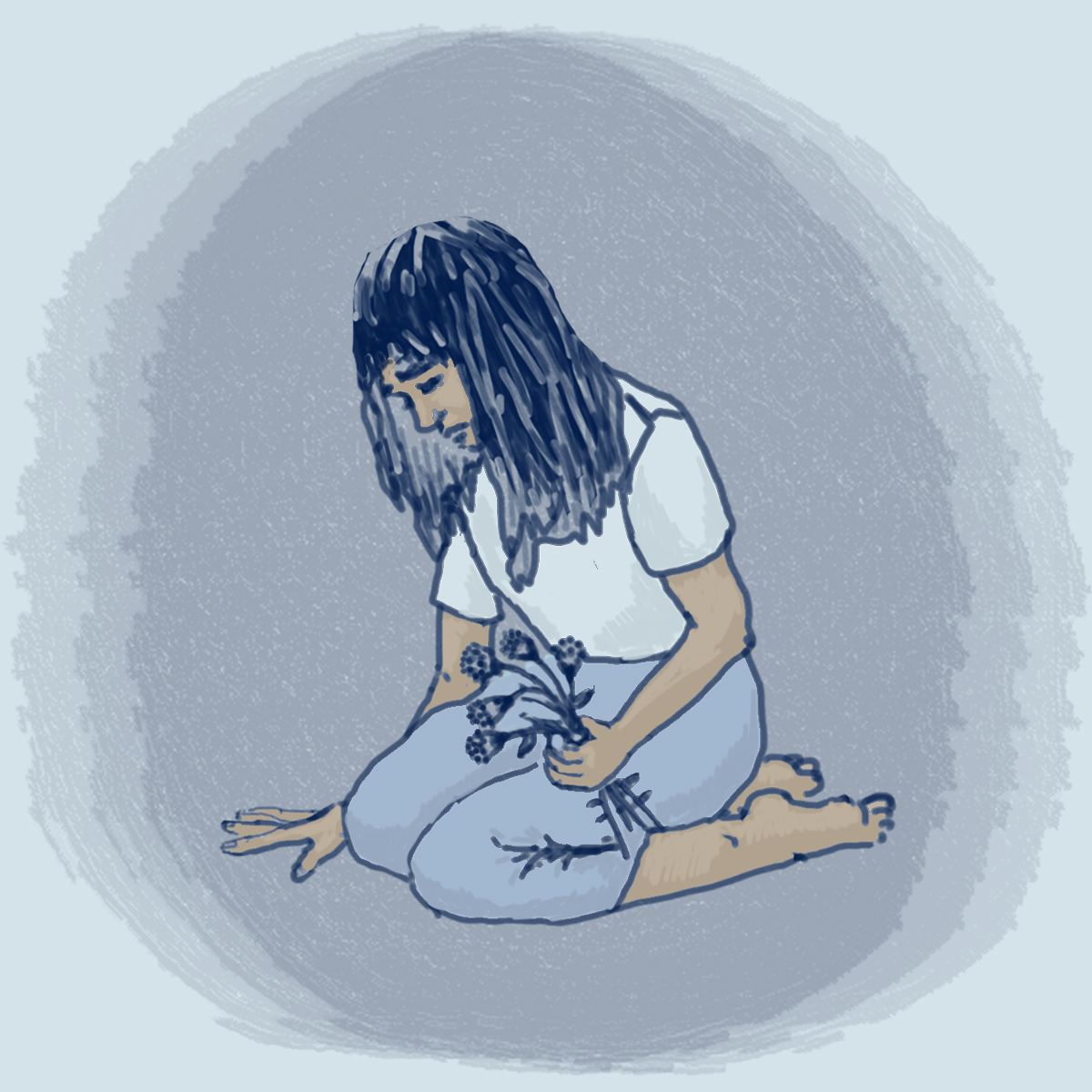
Achieving a long-awaited goal is supposed to bring happiness, satisfaction, and a sense of completion. From a young age, we are taught—explicitly and implicitly—that success is the destination where joy finally lives. We imagine that once we reach that milestone, life will feel lighter, more secure, and emotionally fulfilling. Yet for many people, the moment after success feels unexpectedly quiet, heavy, or emotionally flat.

Instead of excitement, there may be a strange emptiness, numbness, or even sadness. Some describe it as feeling “lost” or disconnected, as if something important has ended rather than begun. This emotional crash can be confusing and guilt-inducing—“I worked so hard for this, so why don’t I feel happy?” Because society rarely talks about the emotional aftermath of success, people often suffer in silence, believing something is wrong with them.

In reality, this experience is far more common than we realize and has deep psychological and neurobiological roots. The human mind thrives on pursuit, meaning, and emotional connection—not just achievement. When a goal is reached, the structure, motivation, and identity that once organized daily life can suddenly disappear, leaving an inner void. Understanding why this happens allows us to normalize the feeling, reduce self-blame, and learn how to relate to success in a healthier, more fulfilling way—one that supports long-term emotional well-being rather than momentary highs.

1. The “Arrival Fallacy”

Psychologists describe a common cognitive trap known as the arrival fallacy—the belief that once we reach a particular milestone, we will finally feel permanently happy, fulfilled, or complete. We tend to imagine success as an emotional finish line, assuming that all stress, self-doubt, or dissatisfaction will dissolve the moment we “arrive.”

During the pursuit of a goal, the brain remains energized by anticipation, hope, and forward momentum. Having something to chase gives structure to our days and meaning to our struggles. This sense of direction often keeps us emotionally engaged and motivated, even during difficult phases.

However, once the goal is achieved, that motivational fuel suddenly disappears. The excitement fades faster than expected, and the mind confronts an uncomfortable truth: life has not magically transformed. Daily responsibilities, emotional struggles, and unresolved inner conflicts still exist. The gap between what we expected to feel and what we actually feel can be jarring.

This emotional mismatch often manifests as emptiness, disappointment, or emotional flatness—not because the achievement was meaningless, but because happiness was placed entirely in the future. The arrival fallacy reminds us that fulfillment is not found in a single moment of success, but in ongoing meaning, connection, and inner alignment throughout the journey.

2. Dopamine Drops After Achievement

While working toward a goal, your brain actively releases dopamine, the neurotransmitter closely linked to motivation, reward, and drive. Dopamine is not just the “pleasure chemical” as it is often described; it is more accurately the chemical of anticipation. It fuels focus, persistence, and the excitement of moving closer to something desired.

During the pursuit phase, small wins, progress, and even the hope of success trigger dopamine spikes. This is why striving toward a goal often feels energizing and emotionally engaging. The brain is wired to enjoy the chase more than the finish line.

Once the goal is achieved, however, the brain no longer has something to anticipate. Dopamine levels drop sharply because the reward has already been received. This sudden neurochemical shift can leave you feeling flat, unmotivated, emotionally blank, or even mildly depressed—despite everything looking “perfect” from the outside.

Importantly, this does not mean the achievement was empty or that something is wrong with you. It simply reflects how the brain’s reward system is designed. Without a new source of meaning, curiosity, or growth, the mind struggles to sustain emotional momentum. Understanding this helps normalize post-achievement emptiness and highlights the importance of cultivating ongoing purpose rather than relying on a single success for emotional fulfillment.

3. Loss of Identity and Purpose

Many people unconsciously tie their sense of identity to the goals they are pursuing. Over time, the goal becomes more than a task—it becomes who they are. Statements like “I am the one preparing for exams,” “I am building my career,” or “I am chasing this dream” provide structure, direction, and a clear sense of self. Daily routines, decisions, and even self-worth start revolving around this single pursuit.

When the goal is finally achieved, that identity quietly dissolves. The role that once defined you no longer exists in the same way. Without a new purpose to replace it, the mind can experience a sudden sense of emptiness or disorientation. It may feel as though a part of you is missing, even though you have technically “succeeded.”

This is why the simple question “What now?” can feel surprisingly heavy. It is not just about choosing the next goal—it is about redefining who you are beyond achievement. For some, this transition triggers anxiety, restlessness, or a sense of inner void. Learning to build a more flexible identity—one rooted in values, relationships, and personal growth rather than a single goal—can help transform this empty space into an opportunity for deeper self-discovery.

4. Suppressed Emotions Surface

During intense goal-pursuit phases, the mind often operates in survival mode. Emotions such as loneliness, fear, self-doubt, grief, exhaustion, or even unresolved trauma are pushed aside to stay focused and productive. There is little emotional space to process feelings because all energy is directed toward “getting through” and reaching the finish line.

Achievement removes this distraction. Once the pressure lifts, the mind finally has room to feel. Suppressed emotions begin to surface, sometimes all at once. Because they were never consciously acknowledged, they may not appear as clear emotions but instead show up as emptiness, emotional numbness, restlessness, or unexplained sadness. This can feel confusing—especially when success should feel joyful. In reality, the emptiness is often a signal that your emotional world is asking to be seen and processed.

5. External Validation vs. Internal Fulfillment

Goals driven mainly by external validation—such as money, status, praise, comparison, or social approval—often feel rewarding only briefly. External rewards provide a short emotional high, but they fade quickly once the applause stops or the recognition becomes normal.

Without internal meaning, personal values, or emotional connection, success can feel strangely hollow. You may look accomplished from the outside yet feel disconnected on the inside. True fulfillment tends to come from goals aligned with inner values—growth, purpose, contribution, connection, or authenticity. When success lacks this inner alignment, emptiness often replaces excitement.

6. Burnout Disguised as Emptiness

Chronic stress, overwork, and prolonged self-pressure can quietly lead to burnout. During the pursuit phase, adrenaline and determination keep you going despite exhaustion. But once the goal is achieved, the body finally feels safe enough to stop pushing.

At this point, the nervous system reveals its true state—fatigue, emotional dullness, low motivation, and mental heaviness. What feels like emptiness may actually be burnout asking for rest and recovery. Instead of celebration, the body demands stillness. Without proper rest, this emptiness can deepen into prolonged emotional exhaustion.

7. Perfectionism’s Hidden Cost

For perfectionists, achievement rarely brings peace. The mind is trained to focus on flaws, what could have been better, or what comes next. Even after success, thoughts like “This isn’t enough,” “Others have done more,” or “I should feel happier” quickly take over.

The goalpost keeps moving. Satisfaction gets postponed indefinitely, and joy is never fully allowed to settle. Over time, this creates a persistent sense of inner emptiness—no matter how many goals are achieved. Perfectionism replaces fulfillment with constant self-pressure, making success feel emotionally unrewarding instead of nourishing.

How to Cope With Post-Achievement Emptiness

Normalize the feeling
Feeling empty after success does not mean you are ungrateful, weak, or unmotivated. It is a natural psychological response to the sudden shift from striving to stillness. When you stop judging the feeling and allow it to exist, it often loses some of its intensity. Normalizing the experience reduces shame and helps you respond with curiosity rather than self-criticism.

Reconnect with your values


Take time to reflect on why the goal mattered to you in the first place. Was it about security, freedom, growth, recognition, or belonging? Then ask yourself what truly gives your life meaning beyond achievements. Values such as connection, creativity, compassion, learning, and authenticity tend to provide deeper and more lasting fulfillment than outcomes alone.

Create purpose-based goals
Instead of setting goals focused only on results, shift toward purpose-based goals. These emphasize the process—personal growth, contribution to others, learning new skills, or nurturing relationships. Purpose-based goals keep the mind engaged and emotionally nourished, even after milestones are reached.

Allow rest and reflection


After long periods of striving, your mind and body need genuine recovery. Rest is not laziness; it is psychological repair. Give yourself permission to slow down, reflect on what you’ve been through, and emotionally integrate the journey you completed. Journaling, quiet time, or mindful reflection can help make sense of the transition.

Build a flexible identity
You are more than what you achieve. When identity is spread across multiple roles—friend, learner, creator, caregiver, partner, community member—loss of one role does not create an emotional collapse. Cultivating diverse interests and relationships helps maintain a stable sense of self, even during transitions.

Seek support when needed
If the emptiness feels intense, persistent, or begins to interfere with daily life, seeking professional support can be deeply helpful. Therapy provides a safe space to explore deeper emotional patterns, unresolved conflicts, burnout, or identity-related struggles that may be underlying the emptiness.

🌱 Post-achievement emptiness is not a dead end—it is often an invitation to build a more meaningful, emotionally balanced life beyond success.

Final Thoughts

Success does not guarantee fulfillment, and feeling empty after achieving your goals does not mean something is wrong with you. It does not invalidate your effort, your talent, or the importance of what you achieved. Instead, it highlights a deeper truth about human psychology: achievement satisfies milestones, not emotional needs.

Often, this emptiness is an invitation—a gentle but powerful signal to shift from doing to being, from endlessly chasing the next milestone to nurturing a meaningful inner life. It asks you to slow down and listen to parts of yourself that may have been ignored during the pursuit: your emotions, values, needs, and sense of purpose.

True fulfillment grows not only from what you achieve, but from how aligned your life is with your values, how connected you feel to yourself and others, and how authentically you are living. When success is integrated with self-awareness, rest, connection, and meaning, it becomes nourishing rather than hollow.

🌱 Sometimes, the emptiness after success is not a failure—it’s the beginning of deeper self-understanding, emotional maturity, and a more balanced relationship with success itself.

Frequently Asked Questions (FAQ)

1. Is it normal to feel empty after achieving a big goal?
Yes. Feeling empty, low, or emotionally flat after success is a common psychological experience and does not mean something is wrong with you.

2. Why do I feel sad instead of happy after success?
This can happen due to dopamine drops, loss of purpose, burnout, or unmet emotional expectations tied to the goal.

3. How long does post-achievement emptiness last?
It varies. For some, it lasts a few days or weeks; for others, it may persist longer if deeper emotional issues or burnout are involved.

4. Is post-achievement emptiness a sign of depression?


Not always. However, if emptiness is prolonged, intense, or affects daily functioning, it may overlap with depressive symptoms and should be evaluated by a professional.

5. What is the arrival fallacy in psychology?
It is the belief that reaching a specific milestone will bring lasting happiness, which often leads to disappointment when reality does not match expectations.

6. Why does motivation drop after reaching a goal?
Motivation is driven by anticipation and dopamine. Once the goal is achieved, the brain no longer has something to chase, leading to a motivational dip.

7. Can burnout feel like emotional emptiness?
Yes. Burnout often presents as numbness, detachment, or emptiness rather than obvious stress.

8. Do externally motivated goals cause more emptiness?


Goals focused mainly on external validation (money, status, praise) are more likely to feel empty compared to value-driven goals.

9. Why do perfectionists struggle to feel satisfied after success?
Perfectionism constantly raises standards, making satisfaction temporary or unreachable, which leads to chronic emptiness.

10. How can I prevent feeling empty after achieving goals?
Focus on purpose-based goals, maintain balance, nurture relationships, and build an identity beyond achievements.

11. Is rest important after achieving a goal?


Absolutely. Rest allows emotional and physical recovery and helps integrate the experience meaningfully.

12. Can therapy help with post-achievement emptiness?
Yes. Therapy can help explore identity, values, burnout, suppressed emotions, and unmet psychological needs.

13. Does everyone experience this feeling?
Not everyone, but many high-achieving or goal-driven individuals experience it at least once in life.

14. Is it wrong to want another goal immediately?


Not wrong, but constantly chasing goals without reflection may mask deeper emotional needs.

15. What does post-achievement emptiness teach us?
It teaches that fulfillment comes from alignment, meaning, connection, and self-awareness—not achievement alone.

Written by Baishakhi Das

Counselor | Mental Health Practitioner
B.Sc, M.Sc, PG Diploma in Counseling


Reference

  1. American Psychological Association – Motivation & Reward Systems
    https://www.apa.org

  2. Harvard Health Publishing – Dopamine and the Brain
    https://www.health.harvard.edu

  3. Psychology Today – The Arrival Fallacy
    https://www.psychologytoday.com

  4. World Health Organization – Burnout and Mental Health
    https://www.who.int

  5. National Institute of Mental Health – Emotional Well-being
    https://www.nimh.nih.gov

  6. Greater Good Science Center (UC Berkeley) – Meaning & Happiness
    https://greatergood.berkeley.edu

  7. How Childhood Emotional Neglect Affects Adults

This topic performs well due to rising searches around men’s mental health, workplace stress, and burnout recovery. Combining emotional insight with practical steps increases engagement and trust.
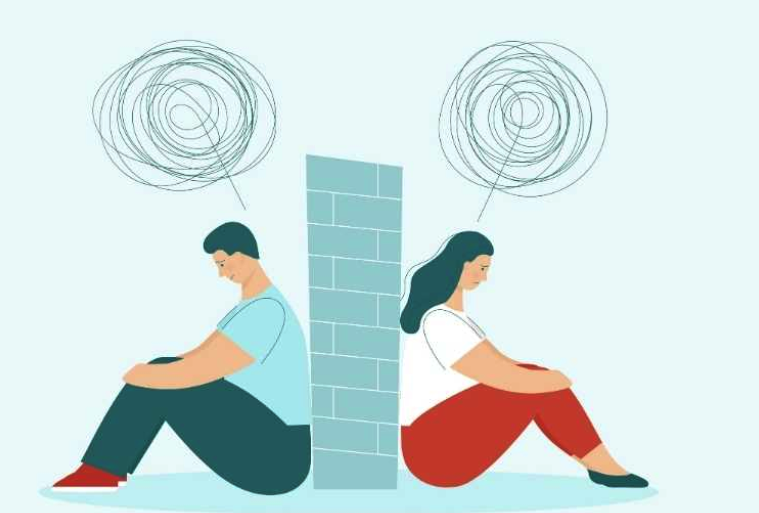
How Childhood Emotional Neglect Affects Adults

https://res.cloudinary.com/psychwire/image/upload/v1594102052/pw-client-uploads/ih1hfuxdufzxk4cmmfbl.jpg

Childhood Emotional Neglect (CEN) is not about what happened to a child, but about what didn’t happen. It occurs when a child’s emotional needs—such as validation, comfort, empathy, and attention—are repeatedly ignored or minimized by caregivers. While basic needs like food, shelter, and education may be met, the child’s inner emotional world remains unseen and unsupported.

Unlike abuse, emotional neglect is subtle and often unintentional, leaving no visible scars. Because nothing obviously “wrong” occurred, it frequently goes unnoticed. However, this ongoing lack of emotional attunement can deeply affect development, teaching the child to suppress feelings, become overly self-reliant, or believe their emotions don’t matter. Over time, this quiet absence can shape emotional well-being, relationships, and self-worth well into adulthood.

Understanding Childhood Emotional Neglect

Children depend on caregivers not only for food, shelter, and safety, but also for emotional guidance, reassurance, and connection. When parents are emotionally unavailable, dismissive, consistently busy, or preoccupied with their own struggles, a child’s emotional experiences may go unnoticed. Over time, the child may grow up feeling unseen, unheard, or emotionally unimportant.

As a result, emotionally neglected children often internalize painful but powerful beliefs such as:

  • “My feelings don’t matter.”
  • “I shouldn’t need help or support.”
  • “Something is wrong with me for feeling this way.”

These beliefs become part of their inner narrative and often carry into adulthood. They can shape how individuals experience emotions, relate to others, ask for support, and perceive their own worth—often without realizing the root lies in early emotional neglect.

Emotional Effects in Adulthood

One of the most common outcomes of childhood emotional neglect is emotional numbness. Many adults find it difficult to recognize, name, express, or even fully experience their emotions. Feelings may seem confusing, overwhelming, or distant, leading to a sense of being emotionally “shut down.”

Other emotional effects often include:

  • A persistent sense of emptiness or loneliness
  • Difficulty feeling joy, excitement, or satisfaction, even during positive experiences
  • Suppressed anger or unexplained sadness that appears without a clear reason
  • Guilt or shame for having emotional needs or wanting support

Because emotions were ignored or invalidated in childhood, many adults learn to disconnect from their feelings as a way to protect themselves. While this coping strategy once helped them survive emotionally, it can later limit emotional awareness, connection, and overall well-being.

Impact on Self-Esteem and Identity

Adults who experienced childhood emotional neglect often grow up without a clear or stable sense of self. Because their emotions were not acknowledged or valued, they may struggle to trust their own thoughts, feelings, and abilities. As a result, they may:

  • Constantly doubt themselves or their decisions
  • Rely heavily on external validation and approval
  • Feel “not good enough” despite achievements or success
  • Struggle with self-compassion and emotional kindness toward themselves

Since their feelings were never validated in childhood, they may learn to invalidate themselves in adulthood. This often shows up as harsh self-criticism, perfectionism, or an ongoing pressure to prove their worth, making it difficult to feel truly confident or secure in who they are.

Relationship Difficulties

https://images.squarespace-cdn.com/content/v1/624caf4ae8ab5b1a9759d517/179190b8-833e-480c-897d-33eec6eef46c/Screenshot%2B2025-01-07%2Bat%2B5.32.31%E2%80%AFPM.png
Childhood emotional neglect significantly affects adult relationships. Common patterns include:
  • Fear of emotional intimacy
  • Difficulty trusting others
  • Avoiding vulnerability
  • Becoming overly independent or emotionally dependent
  • People-pleasing to avoid rejection

Adults may either withdraw emotionally or cling to relationships, both rooted in unmet emotional needs from childhood.

Mental Health Consequences

Although childhood emotional neglect is subtle and often overlooked, it can significantly increase vulnerability to mental health difficulties in adulthood. When emotional needs go unmet for long periods, individuals may have fewer internal resources to cope with stress and emotional challenges.

Common mental health consequences include:

  • Anxiety and ongoing, chronic stress
  • Depression or persistent low mood
  • Low emotional resilience and difficulty coping with setbacks
  • Burnout and emotional exhaustion from constant self-reliance

Because their emotional needs were never acknowledged or responded to, many adults find it hard to ask for support. They may believe they should “handle everything alone,” viewing help-seeking as weakness rather than a healthy and necessary part of emotional well-being.

Why Childhood Emotional Neglect Often Goes Unnoticed

Many adults find it difficult to recognize or acknowledge childhood emotional neglect because it doesn’t fit the typical image of trauma. Often, their childhood appeared “normal” or even “privileged” from the outside.

Common reasons it goes unnoticed include:

  • Parents provided food, education, and material comfort
  • There was no obvious abuse, violence, or major trauma
  • Caregivers may have been well-intentioned or loving in practical ways

However, emotional neglect can exist even in caring and functional families. It is not defined by what caregivers did wrong, but by what was missing emotionally. The absence of emotional attunement—being seen, understood, and emotionally supported—can leave a lasting impact, even when no harm was intentionally done.

Healing from Childhood Emotional Neglect

Healing from childhood emotional neglect is possible, and awareness is the first and most important step. Once you recognize how early emotional experiences shaped you, change becomes achievable and empowering.

Recovery often involves:

  • Learning to identify, understand, and name your emotions
  • Validating your own feelings instead of dismissing them
  • Developing self-compassion and reducing self-criticism
  • Building emotionally safe and supportive relationships
  • Seeking therapy or counseling when additional guidance is needed

A powerful part of healing is emotional reparenting—learning to give yourself the care, empathy, protection, and validation you may not have received in childhood. Over time, this process can restore emotional connection, strengthen self-worth, and lead to deeper, healthier relationships.

Final Thoughts

Childhood Emotional Neglect does not define who you are, but it can help explain emotional patterns you may have struggled with for years. Understanding its impact allows you to move away from self-blame and toward self-awareness and compassion. Emotional needs are not weaknesses—they are a fundamental part of being human. Learning to acknowledge, express, and honor them is a powerful step toward healing, deeper connection, and lasting emotional well-being.

Frequently Asked Questions (FAQ) 

1. What is Childhood Emotional Neglect (CEN)?
CEN occurs when a child’s emotional needs—such as empathy, validation, and comfort—are consistently unmet by caregivers.

2. Is emotional neglect the same as abuse?
No. Abuse involves harmful actions, while emotional neglect involves the absence of emotional responsiveness.

3. Can emotional neglect happen in loving families?
Yes. Even well-meaning parents may unintentionally neglect emotional needs due to stress, mental health issues, or lack of awareness.

4. How is CEN different from emotional abuse?


Emotional abuse includes criticism or rejection; CEN is about emotional absence or lack of attunement.

5. Why don’t people remember emotional neglect clearly?
Because nothing overtly traumatic happened—there was simply something missing, making it harder to identify.

6. What are common adult signs of CEN?
Emotional numbness, low self-esteem, difficulty expressing feelings, people-pleasing, and fear of vulnerability.

7. Can CEN cause anxiety or depression?
Yes. Long-term emotional invalidation can increase vulnerability to anxiety, depression, and chronic stress.

8. Does CEN affect relationships?
Often yes. Adults may struggle with intimacy, trust, boundaries, or emotional communication.

9. Can CEN lead to perfectionism?


Yes. Many people try to earn validation through achievement because emotional validation was missing in childhood.

10. Is it too late to heal from emotional neglect?
No. Healing is possible at any age with awareness, self-work, and support.

11. What is emotional reparenting?
It means learning to give yourself the care, validation, and emotional safety you lacked growing up.

12. How does therapy help with CEN?
Therapy helps identify emotional patterns, build emotional awareness, and develop healthier coping and relationships.

13. Can CEN affect physical health?


Indirectly, yes—chronic stress and emotional suppression can impact sleep, immunity, and overall well-being.

14. Is emotional neglect always intentional?
No. Most cases are unintentional and stem from caregivers’ own limitations.

15. What is the first step toward healing?
Recognizing and validating your emotional experiences without minimizing them.

Written by Baishakhi Das

Counselor | Mental Health Practitioner
B.Sc, M.Sc, PG Diploma in Counseling

Reference

  1. Jonice Webb, PhD – Childhood Emotional Neglect
    https://drjonicewebb.com

  2. American Psychological Association – Emotional Neglect
    https://www.apa.org

  3. National Institute of Mental Health (NIMH)
    https://www.nimh.nih.gov

  4. Psychology Today – Childhood Emotional Neglect Articles
    https://www.psychologytoday.com

  5. NHS – Childhood Trauma and Emotional Well-being
    https://www.nhs.uk

  6. Psychology Theories Explained Through Bollywood Characters

This topic performs well due to rising searches around men’s mental health, workplace stress, and burnout recovery. Combining emotional insight with practical steps increases engagement and trust.

Psychology Theories Explained Through Bollywood Characters

Bollywood films are more than just entertainment—they are powerful reflections of the human mind. Through engaging stories and memorable characters, they portray emotions, behavior, personality development, trauma, conflict, and personal growth in ways that feel real and relatable.

Many iconic Bollywood characters beautifully represent core psychological theories we study in textbooks, such as learning, motivation, cognition, identity formation, and emotional healing. Their struggles with relationships, societal pressure, fear, loss, and self-discovery closely mirror real-life experiences, making complex psychological concepts easier to understand.

By exploring these films, we can see how thoughts shape behavior, childhood experiences influence personality, and empathy supports healing. In this article, we examine key psychology theories through popular Bollywood characters to show how cinema brings psychology to life.

1. Psychoanalytic Theory (Sigmund Freud)

Concept: Unconscious mind, childhood experiences, inner conflicts (Id–Ego–Superego)

https://miro.medium.com/1%2A6ab7X8jRknK_mVgDdMNG9g.jpeg

Movie Example: Taare Zameen Par
Character: Ishaan Awasthi

Ishaan’s learning difficulties and emotional withdrawal are repeatedly misinterpreted as laziness and misbehavior by adults around him. From a psychoanalytic perspective, Freud’s theory helps us understand that Ishaan’s behavior is not intentional defiance but a result of unexpressed emotions, fear, shame, and repeated experiences of failure. His academic struggles and emotional isolation create inner conflict, which manifests as withdrawal and silence.

Healing begins when his teacher offers emotional safety, empathy, and acceptance, creating a space where Ishaan feels seen and understood. This supportive relationship allows his repressed emotions to surface, reducing anxiety and helping him regain confidence and self-worth.

🔍 Psychological Insight: Behavioral symptoms often represent deeper emotional conflicts and unmet emotional needs, rather than laziness or deliberate misconduct.

2. Behaviorism (B.F. Skinner)

Concept: Behavior is learned through reinforcement and punishment

https://static.toiimg.com/thumb/msid-79945303%2Cwidth-400%2Cresizemode-4/79945303.jpg

Movie Example: 3 Idiots
Character: Chatur Ramalingam & Virus

Chatur represents a learning style driven by rote memorization, external rewards, and fear of punishment, where success is measured only through ranks and approval. His motivation is largely extrinsic—focused on rewards, competition, and validation—which leaves little room for curiosity or genuine understanding. In contrast, Rancho challenges this punishment-based education system by promoting conceptual learning, curiosity, and intrinsic motivation.

The rigid reinforcement style imposed by authority figures, especially through humiliation and fear of failure, creates intense academic pressure. This environment fosters performance anxiety, low emotional well-being, and a constant fear of making mistakes, rather than a love for learning.

🔍 Psychological Insight: When punishment and external rewards dominate the learning process, intrinsic motivation declines, creativity is suppressed, and learners become driven by fear rather than curiosity or growth.

3. Humanistic Theory (Carl Rogers & Abraham Maslow)

Concept: Self-actualization, unconditional positive regard, personal growth

https://64.media.tumblr.com/c525a6994a88a13942735a088fed3409/f2a0d2e2ee781b13-18/s1280x1920/d1ddb355bcd2983abbf3f0f10bd9534856c3f091.pnj

Movie Example: Dear Zindagi
Character: Kaira

Kaira’s therapy journey is a clear reflection of Carl Rogers’ client-centered (person-centered) approach, where healing occurs through empathy, genuineness, and unconditional positive regard rather than advice or judgment. Her therapist provides a safe, non-directive space that allows Kaira to openly express confusion, fear, anger, and vulnerability without feeling criticized or rushed to change.

Through this process of self-exploration, Kaira slowly becomes aware of her emotional patterns, unresolved fears, relationship expectations, and personal values. Instead of being “fixed,” she learns to understand herself better, make conscious choices, and take responsibility for her emotional well-being.

🔍 Psychological Insight: Psychological healing naturally unfolds when individuals feel deeply heard, emotionally accepted, and genuinely valued, enabling self-awareness, self-trust, and personal growth.

4. Social Learning Theory (Albert Bandura)

Concept: Learning through observation and imitation

https://npr.brightspotcdn.com/dims4/default/802fa6b/2147483647/strip/true/crop/640x360%2B0%2B0/resize/880x495%21/quality/90/?url=https%3A%2F%2Fmedia.npr.org%2Fassets%2Fimg%2F2017%2F01%2F19%2Fdangal_wide-45127619a690004d5abe71c4af3c30e9a39a5599.jpg

Movie Example: Dangal
Character: Geeta Phogat

Geeta develops discipline, confidence, and resilience largely by observing and imitating her father’s behavior, attitude, and dedication. According to Albert Bandura’s Social Learning Theory, learning does not occur only through direct instruction or reinforcement but also through observation, modeling, and imitation. Mahavir Phogat serves as a powerful role model whose actions consistently demonstrate perseverance, self-control, and commitment.

Through repeated exposure to her father’s behavior, Geeta internalizes these qualities, which later guide her own actions and decision-making in competitive and stressful situations. This highlights the strong influence of parental and adult figures in shaping a child’s beliefs, habits, and self-efficacy.

🔍 Psychological Insight: Children absorb values, coping styles, and behavior patterns more from what adults consistently do than from verbal instructions alone.

5. Cognitive Theory (Aaron Beck)

Concept: Thoughts influence emotions and behavior

https://akm-img-a-in.tosshub.com/indiatoday/images/bodyeditor/202002/ved-x435.PNG?dmIJTHgRpkG5mbp2lNnUn5nuR_c5Ja7Y%3Fsize=750%3A%2A

Movie Example: Tamasha
Character: Ved

Ved’s emotional struggle stems from maladaptive core beliefs such as “success means conforming to society’s expectations” and “my true self is unacceptable.” From a cognitive perspective, these rigid and distorted thought patterns create constant internal pressure, suppress creativity, and lead to emotional distress. He lives a life that aligns with external approval rather than his authentic desires.

His emotional breakdown reflects intense cognitive dissonance—a psychological conflict between his real self (creative, expressive, free) and the imposed identity shaped by societal and parental expectations. As this dissonance increases, it manifests as anxiety, irritability, emotional numbness, and loss of meaning.

🔍 Psychological Insight: When individuals recognize and challenge maladaptive thought patterns, they can reduce emotional distress and move toward healthier emotional well-being and authentic self-expression.

6. Trauma & PTSD Theory

Concept: Psychological impact of extreme stress or violence

https://thecitizensite.vocalwire.com/NewsImages/672683A%20still%20from%20the%20movie%20Haider.jpg

Movie Example: Haider
Character: Haider

Haider displays clear symptoms of psychological trauma, including intense anger, emotional confusion, mood instability, and impaired decision-making, rooted in profound personal loss and prolonged exposure to political violence. The uncertainty surrounding his father’s disappearance and the constant atmosphere of fear deeply disrupt his sense of safety and trust.

From a trauma-informed perspective, Haider’s reactions are not signs of inherent aggression but natural responses to unresolved grief, chronic stress, and traumatic experiences. His difficulty regulating emotions and maintaining stable relationships reflects how trauma can overwhelm coping mechanisms when left unprocessed.

🔍 Psychological Insight: When trauma remains unresolved, it often surfaces through aggression, emotional numbness or dissociation, depression, and maladaptive coping behaviors, rather than direct verbal expression of pain.

7. Identity & Self-Concept Theory

Concept: Struggle between real self vs ideal self

https://im.indiatimes.in/content/2019/Aug/rockstar_1565246175.jpg?cc=1&h=900&q=75&w=1200&webp=1

Movie Example: Rockstar
Character: Jordan

Jordan’s identity develops largely through pain, rejection, and intense emotional turmoil, which become the driving forces behind his creativity and self-definition. Early experiences of unfulfilled love and repeated emotional loss shape his belief that suffering is essential for artistic expression. As a result, pain becomes central to who he is.

While fame and success provide him with recognition and a public identity, they fail to offer emotional security or inner fulfillment. Instead of healing his wounds, fame amplifies his emotional instability, leaving him increasingly isolated and disconnected from himself and others.

🔍 Psychological Insight: When identity is constructed primarily around pain and suffering, it may lead to emotional emptiness, fragile self-worth, and difficulty experiencing stable, healthy relationships.

Conclusion 🌱

Bollywood characters function as living case studies of psychology, vividly portraying the complexities of the human mind. Through stories of childhood trauma, cognitive distortions, identity conflicts, motivation, resilience, and self-actualization, these films translate abstract psychological theories into emotionally engaging and relatable experiences.

By normalizing conversations around mental health, emotions, and personal struggles, Bollywood helps bridge the gap between academic psychology and everyday life. These narratives remind us that psychology is not confined to textbooks or classrooms—it is reflected in stories we watch, characters we connect with, and experiences we live every day.

🎥 Psychology is not just studied—it is felt, observed, and understood through human stories.

Frequently Asked Questions (FAQ) 

1. Why are Bollywood films useful for understanding psychology?
Because they portray emotions, relationships, trauma, and behavior in relatable, real-life contexts.

2. Can movies be used as psychological case studies?
Yes, characters often reflect symptoms, coping styles, and personality patterns similar to real clients.

3. Which psychology theories are commonly seen in Bollywood films?
Psychoanalytic, behaviorism, cognitive, humanistic, social learning, trauma theory, and identity theories.

4. How does Taare Zameen Par relate to psychology?


It highlights learning difficulties, emotional neglect, and the importance of empathy and emotional safety.

5. What psychological concept is shown in 3 Idiots?
Behaviorism—reward and punishment systems in education and their impact on motivation and anxiety.

6. How does Dear Zindagi represent therapy?
It demonstrates Carl Rogers’ client-centered therapy approach with empathy and unconditional acceptance.

7. What theory does Dangal reflect?
Albert Bandura’s Social Learning Theory—learning through observation and role modeling.

8. Which psychological issue is central in Tamasha?
Cognitive dissonance and maladaptive beliefs about success and identity.

9. How does trauma appear in Haider?


Through emotional instability, anger, grief, and symptoms of unresolved psychological trauma.

10. What identity issue is shown in Rockstar?
Identity formation rooted in pain, rejection, and emotional chaos.

11. Can films help reduce mental health stigma?
Yes, they normalize emotional struggles and encourage open conversations.

12. Are Bollywood portrayals always clinically accurate?
Not always, but many films capture emotional truths even if dramatized.

13. Can psychology students learn from films?
Yes, films are excellent supplementary tools for understanding theories.

14. How can counselors use movies therapeutically?


Through cinema therapy, discussion, reflection, and emotional identification.

15. Is psychology limited to textbooks?
No—psychology is present in everyday behavior, stories, and lived experiences.

Written by Baishakhi Das

Counselor | Mental Health Practitioner
B.Sc, M.Sc, PG Diploma in Counseling

Reference 

  1. American Psychological Association – Psychology Topics
    https://www.apa.org/topics

  2. Simply Psychology – Learning Theories & Cognitive Psychology
    https://www.simplypsychology.org

  3. Carl Rogers’ Person-Centered Therapy
    https://positivepsychology.com/client-centered-therapy/

  4. Albert Bandura – Social Learning Theory
    https://www.simplypsychology.org/bandura.html

  5. Trauma and PTSD Overview (APA)
    https://www.apa.org/topics/ptsd

  6. Psychology Theories Everyone Uses Without Knowing

This topic performs well due to rising searches around men’s mental health, workplace stress, and burnout recovery. Combining emotional insight with practical steps increases engagement and trust.

Psychology Theories Everyone Uses Without Knowing

We often assume psychology theories belong only in textbooks, therapy rooms, or university lectures—something abstract and academic. In reality, psychological theories are deeply woven into everyday life. They quietly shape how we think, feel, behave, make decisions, relate to others, and even how we talk to ourselves.

From motivating ourselves to get out of bed, justifying our mistakes, reacting to praise or criticism, to comparing our lives on social media—psychology is constantly at work. These processes operate automatically, guiding our coping styles, emotional reactions, and relationship patterns without us consciously noticing them.

Psychological theories don’t exist only in clinics or research papers; they function in homes, classrooms, workplaces, friendships, and romantic relationships. We use them daily—often unknowingly—to manage stress, handle failure, seek approval, and make sense of our experiences.

1. Cognitive Dissonance Theory

(Leon Festinger)

Cognitive Dissonance Theory explains the mental discomfort or psychological tension we experience when our beliefs, values, or attitudes conflict with our actions or decisions. Human beings naturally strive for internal consistency, so when this balance is disturbed, it creates unease that we feel compelled to reduce.

Everyday examples:

  • “I know smoking is harmful, but it helps me relax.”
  • “I shouldn’t eat junk food… but I had a stressful day.”
  • “This job makes me unhappy, but at least it pays the bills.”

Instead of changing the behavior—which often requires effort, discipline, or discomfort—we tend to adjust our thoughts to justify what we’ve already done. We may downplay the risks, exaggerate the benefits, or create rational explanations that make our actions feel acceptable.

This theory explains why people defend unhealthy habits, remain in unsatisfying relationships, or justify poor decisions after the fact. Cognitive dissonance acts as a psychological self-protection mechanism, helping us preserve our self-image and reduce guilt or anxiety. While this coping strategy is very human and often unconscious, becoming aware of it can help individuals make more intentional and healthier choices over time.

2. Social Comparison Theory

(Leon Festinger)

Social Comparison Theory suggests that human beings have a natural tendency to evaluate themselves by comparing their abilities, achievements, opinions, and appearance with others. When objective standards are unclear, we look to people around us to understand how well we are doing and where we stand.

Everyday examples:

  • Checking Instagram and thinking, “Everyone else is doing better than me.”
  • Feeling inadequate after seeing others’ success, beauty, or lifestyle
  • Feeling proud or confident when you perform better than your peers

These comparisons can be upward (comparing with someone perceived as better) or downward (comparing with someone perceived as worse). While downward comparison may temporarily boost self-esteem, upward comparison often leads to feelings of inadequacy, envy, or self-doubt—especially on social media, where people usually display only their best moments.

This theory helps explain why social media has such a powerful impact on self-esteem, anxiety, body image, and life satisfaction. Constant exposure to curated and idealized lives can distort reality, making individuals feel they are falling behind, even when they are doing well. Understanding Social Comparison Theory encourages more mindful media consumption and greater self-compassion in an increasingly comparison-driven world.

3. Operant Conditioning

(B. F. Skinner)

Operant Conditioning explains how our behavior is shaped and maintained by its consequences. According to this theory, actions followed by rewards are more likely to be repeated, while actions followed by punishment or negative consequences are less likely to occur again. Over time, these patterns strongly influence habits, motivation, and learning.

Everyday examples:

  • Studying harder after receiving praise, good grades, or recognition
  • Avoiding certain behaviors after being scolded or criticized
  • Checking your phone repeatedly because notifications, likes, or messages feel rewarding

Rewards do not always have to be tangible; verbal praise, attention, approval, or digital feedback can be powerful reinforcers. Similarly, punishment may be direct (scolding, penalties) or indirect (loss of privilege, social disapproval).

This theory is widely used—often unconsciously—in parenting, education, and workplaces, where rewards are used to encourage desired behavior and punishments to discourage unwanted actions. It is also heavily applied in app and social media design, where notifications, streaks, and likes are carefully structured to reinforce repeated engagement. Understanding Operant Conditioning helps explain why certain habits are hard to break and how behavior can be shaped more intentionally and ethically.

4. Attachment Theory

(John Bowlby)

Attachment Theory explains how our earliest emotional bonds—especially with primary caregivers—form an internal blueprint for how we relate to others throughout life. These early experiences shape our expectations about closeness, safety, trust, and emotional support.

Everyday examples:

  • Fear of abandonment or rejection in close relationships
  • Difficulty trusting others or opening up emotionally
  • Becoming overly dependent on partners for reassurance
  • Withdrawing or becoming emotionally distant when intimacy increases

Over time, these patterns develop into attachment styles (secure or insecure), which influence how individuals handle intimacy, conflict, and emotional expression. For example, someone with an anxious attachment style may seek constant reassurance, while someone with an avoidant style may value independence to the point of emotional distance.

Attachment Theory helps explain recurring relationship patterns and emotional reactions that often feel automatic. Our attachment style strongly influences romantic relationships, friendships, parenting behaviors, and emotional regulation, especially under stress. Becoming aware of one’s attachment patterns can be a powerful step toward healthier relationships and improved emotional well-being.

5. Defense Mechanisms

(Sigmund Freud)

https://www.earlyyears.tv/wp-content/uploads/2025/04/Defense-Mechanisms-1.png
Defense mechanisms are unconscious psychological strategies we use to protect ourselves from emotional pain, anxiety, guilt, or threats to our self-esteem. They work automatically—often without our awareness—helping us maintain a sense of psychological balance during stressful or uncomfortable situations.

Everyday examples:

  • Rationalization: “I failed because the exam was unfair.”
    (Making excuses to avoid feelings of failure or inadequacy)
  • Projection: Accusing others of feelings or traits we struggle to accept in ourselves
    (e.g., calling someone “angry” when we are the ones feeling angry)
  • Denial: Ignoring painful truths or realities
    (e.g., refusing to accept problems in a relationship or health issue)

Defense mechanisms are not inherently bad—in fact, they help us cope during emotionally overwhelming moments and protect us from immediate distress. However, when used excessively or rigidly, they can prevent self-awareness, honest reflection, and emotional growth.

Understanding defense mechanisms allows individuals to recognize their emotional reactions with greater clarity, take responsibility for their feelings, and move toward healthier coping strategies. Awareness is the first step from unconscious defense to conscious growth.

6. Self-Fulfilling Prophecy

(Robert K. Merton)

https://www.simplypsychology.org/wp-content/uploads/self-fulfilling-prophecy.jpg

The Self-Fulfilling Prophecy explains how our beliefs, expectations, or predictions about a situation can directly influence our behavior in ways that cause those beliefs to come true. In other words, what we expect often shapes how we act—and how we act shapes the outcome.

Everyday examples:

  • Believing “I’m bad at interviews” → feeling anxious and underconfident → giving short or hesitant answers → performing poorly
  • Believing “I can improve” → preparing more, staying motivated → performing better → achieving success

These expectations work subtly. Negative beliefs can lead to self-doubt, avoidance, or reduced effort, while positive beliefs can increase confidence, persistence, and resilience. Over time, repeated experiences reinforce the original belief, strengthening the cycle.

The Self-Fulfilling Prophecy plays a powerful role in education, workplace performance, relationships, and mental health. Expectations—whether our own or those placed on us by others—can limit or unlock potential. Becoming aware of this process helps individuals challenge negative self-beliefs and consciously adopt expectations that support growth and well-being.

7. Maslow’s Hierarchy of Needs

(Abraham Maslow)

https://upload.wikimedia.org/wikipedia/commons/9/95/Maslow%27s_Hierarchy_of_Needs_Pyramid_%28original_five-level_model%29.png

Maslow’s Hierarchy of Needs explains human motivation as a structured progression of needs, arranged from the most basic requirements for survival to the highest level of personal growth and fulfillment. According to Maslow, people are generally motivated to satisfy lower-level needs before they can focus on higher-level psychological and self-actualization needs.

Everyday examples:

  • Struggling to focus on dreams, creativity, or personal growth when financial security, health, or safety is unstable
  • Prioritizing a stable job and income before pursuing passion projects
  • Seeking respect, confidence, purpose, and meaning once basic needs like food, shelter, and safety are met

The hierarchy typically includes physiological needs, safety, love and belonging, esteem, and finally self-actualization. When lower needs remain unmet for long periods, individuals may experience stress, frustration, or burnout, even if they appear successful externally.

This theory helps explain motivation, burnout, life priorities, and emotional exhaustion. It reminds us that lack of motivation is often not laziness, but a signal that more fundamental needs require attention. Understanding this hierarchy encourages empathy toward ourselves and others, especially during times of struggle.

8. Confirmation Bias

https://www.simplypsychology.org/wp-content/uploads/confirmation-bias2.jpg

Confirmation bias refers to our natural tendency to seek out, interpret, and remember information that supports our existing beliefs, while ignoring, dismissing, or minimizing information that challenges them. This happens automatically and often without conscious awareness.

Everyday examples:

  • Reading news articles or watching videos that match our political or social opinions
  • Paying attention only to comments that agree with us while ignoring constructive criticism
  • Rejecting feedback that contradicts our self-image or long-held beliefs

Because confirmation bias feels comfortable, it protects our sense of certainty and identity. However, it can also limit learning, distort reality, and deepen misunderstandings. In arguments, people may selectively use facts that support their side, making productive dialogue difficult. In relationships, this bias can lead to unfair assumptions, where we only notice behaviors that confirm our negative expectations about others.

Confirmation bias plays a major role in conflicts, polarization, decision-making errors, and rigid thinking. Becoming aware of this bias encourages open-mindedness, critical thinking, and healthier communication. Actively considering alternative viewpoints is one of the most effective ways to reduce its impact and grow psychologically.

Why This Matters

Understanding these psychological theories is not just an academic exercise—it has practical value in everyday life. When we become aware of the hidden forces influencing our thoughts and behaviors, we gain the ability to respond more consciously rather than react automatically.

By understanding these theories, we can:

  • Become more self-aware: Recognize why we think, feel, or behave in certain ways, especially in stressful or emotional situations. This awareness helps us identify patterns that may be holding us back.
  • Improve relationships: Understanding concepts like attachment, defense mechanisms, and social comparison allows for greater empathy, clearer communication, and healthier emotional boundaries.
  • Reduce emotional reactivity: Awareness helps us pause, reflect, and regulate our emotions instead of reacting impulsively based on fear, insecurity, or past experiences.
  • Make healthier choices: When we understand how beliefs, rewards, and expectations shape behavior, we can challenge unhelpful thought patterns and make decisions aligned with our long-term well-being.

Psychology isn’t just something we study in books or classrooms—it’s something we live every day. The more we understand it, the better equipped we are to navigate life with insight, compassion, and intentionality.

Final Thought

Once you begin to recognize these psychological theories in your daily life, you start viewing your thoughts, emotions, and behaviors with greater clarity and compassion. Instead of judging yourself harshly for your reactions or habits, you begin to understand the deeper patterns and processes shaping them.

Awareness doesn’t mean perfection or constant self-correction. It simply means becoming curious about why we do what we do—why certain situations trigger us, why we repeat familiar patterns, and why change can feel difficult. This understanding creates space for self-acceptance, emotional growth, and more mindful choices.

When we understand ourselves better, we respond to life with patience rather than criticism, intention rather than impulse. In this way, psychology becomes not just a field of study, but a tool for living more consciously and compassionately every day.

Frequently Asked Questions (FAQ)

1. What does it mean to use psychology theories unconsciously?
It means we apply psychological principles in daily life without realizing there is a scientific theory behind our thoughts or behaviors.

2. Are psychology theories only useful for therapists or psychologists?
No. These theories are relevant to everyone because they explain everyday behavior, emotions, relationships, and decision-making.

3. Why do people justify their mistakes instead of changing behavior?


This is explained by Cognitive Dissonance Theory, which helps reduce mental discomfort when actions conflict with beliefs.

4. Why does social media affect self-esteem so strongly?
Because of Social Comparison Theory, where people compare themselves to others—often unrealistically.

5. How do rewards influence habits?
According to Operant Conditioning, behaviors followed by rewards are more likely to be repeated.

6. Can childhood experiences affect adult relationships?


Yes. Attachment Theory explains how early bonds shape emotional patterns in adulthood.

7. Are defense mechanisms unhealthy?
Not always. They help cope with stress, but overuse can block self-awareness and growth.

8. Why do negative beliefs often come true?
This happens due to the Self-Fulfilling Prophecy, where expectations influence behavior and outcomes.

9. Why is motivation low during stress or burnout?


Maslow’s Hierarchy of Needs explains that unmet basic needs reduce motivation for higher goals.

10. Why do people ignore opinions that challenge them?
Because of Confirmation Bias, which favors information that supports existing beliefs.

11. Can understanding psychology improve relationships?
Yes. It increases empathy, communication, and emotional regulation.

12. Is awareness enough to change behavior?
Awareness is the first step; consistent effort and reflection lead to lasting change.

13. Are these theories scientifically proven?


Most are supported by extensive research, though interpretations may evolve over time.

14. Can psychology theories help with mental health?
Yes. They form the foundation of counseling, therapy, and self-help approaches.

15. How can I apply these theories consciously?
By reflecting on your thoughts, questioning assumptions, and responding intentionally rather than automatically.

Written by Baishakhi Das

Counselor | Mental Health Practitioner
B.Sc, M.Sc, PG Diploma in Counseling


Reference

  1. American Psychological Association (APA)
    https://www.apa.org

  2. Simply Psychology – Psychology Theories Explained
    https://www.simplypsychology.org

  3. McLeod, S. A. (2023). Psychology Theories. Simply Psychology
    https://www.simplypsychology.org/psychology-theories.html

  4. Maslow, A. H. (1943). A Theory of Human Motivation
    https://psychclassics.yorku.ca/Maslow/motivation.htm

  5. Festinger, L. (1957). A Theory of Cognitive Dissonance
    https://doi.org/10.1037/10318-000

  6. Group Behavior & Conformity Theory

This topic performs well due to rising searches around men’s mental health, workplace stress, and burnout recovery. Combining emotional insight with practical steps increases engagement and trust.