Classical Conditioning: Pavlov’s Theory in Real Life

https://www.simplypsychology.org/wp-content/uploads/Pavlovs-Dogs-Experiment.jpg

A Clear and Detailed Psychological Explanation

Classical conditioning is one of the most foundational concepts in psychology because it explains how learning can occur automatically through association, without conscious intention or deliberate effort. Both humans and animals constantly absorb patterns from their environment, linking events that repeatedly occur together. As a result, many emotional reactions—such as fear, comfort, attraction, or anxiety—are not logical choices, but learned responses that develop over time through repeated experiences. Once formed, these responses can be triggered instantly, often before rational thinking has a chance to intervene.

This theory was introduced by Ivan Pavlov and has had a lasting impact far beyond laboratory experiments. It helps explain everyday behaviors such as emotional triggers, habits, preferences, and aversions. Today, classical conditioning continues to influence modern psychology, education, therapy, marketing, and daily life, offering valuable insight into how past experiences shape present reactions—and how those reactions can be understood, modified, and healed through awareness and intervention.

What Is Classical Conditioning?

Classical conditioning is a form of learning through association, in which a stimulus that initially has no meaning gradually becomes linked to a stimulus that naturally produces a response. Over time, this association causes the previously neutral stimulus to evoke a learned reaction on its own.

In simple terms:
👉 When two events repeatedly occur together, the brain connects them.

Once this connection is established, the neutral stimulus no longer remains neutral. It becomes capable of triggering the response even in the absence of the original stimulus. This is why certain sounds, smells, places, or situations can automatically evoke emotions or physical reactions without conscious thought.

Pavlov’s Original Experiment Explained

The Discovery

While conducting research on digestion, Ivan Pavlov observed an unexpected pattern in his laboratory dogs. His original goal was to measure salivation as a physiological response to food. However, he noticed that the dogs began to salivate even before the food appeared. The response occurred when the dogs heard familiar sounds, such as the footsteps of the lab assistant, or when they saw visual cues that signaled feeding time.

This was a crucial observation because salivation was happening in the absence of food, which meant the response could not be explained by biology alone. The dogs had learned to associate certain environmental cues with feeding. Pavlov realized that learning was taking place through repeated pairing of events, rather than conscious decision-making. This insight shifted the focus of psychology toward observable behavior and measurable learning processes.

The Experiment Setup

To test this learning process under controlled conditions, Pavlov designed a series of structured experiments. Each component of the experiment had a specific role:

  • Food was used as a natural stimulus because it automatically caused salivation without any prior learning.

  • Salivation was measured carefully, as it was a clear, observable, and quantifiable response.

  • A bell sound was introduced as a neutral stimulus, meaning it did not initially trigger salivation or any meaningful response.

Pavlov then followed a precise sequence. The bell was rung immediately before the food was presented. This pairing was repeated many times across different trials. Gradually, the dogs began to anticipate the food as soon as they heard the bell. Their bodies responded automatically, producing saliva even before the food appeared.

Eventually, Pavlov tested the association by ringing the bell without presenting food. Remarkably, the dogs still salivated. This confirmed that the bell had become a meaningful signal through learning.

Why This Experiment Was Revolutionary

Pavlov’s experiment demonstrated that:

  • Learning can occur without conscious thought

  • Neutral stimuli can acquire emotional or physiological meaning

  • Responses can be shaped by experience and repetition

This challenged earlier beliefs that behavior was driven only by instinct or conscious reasoning. Pavlov’s work laid the foundation for behaviorism and influenced later psychological theories related to anxiety, trauma, habit formation, and emotional responses.

Lasting Impact

The significance of Pavlov’s experiment extends far beyond dogs and bells. It helps explain:

  • Why certain sounds, places, or smells trigger strong emotions

  • How fears and phobias develop

  • Why past experiences influence present reactions

Pavlov’s discovery showed that learning is deeply connected to experience, and that understanding these associations is key to understanding human behavior.

Key Components of Classical Conditioning

Classical conditioning is built on a clear sequence of stimuli and responses. Each component plays a specific role in how learning through association occurs.

1. Unconditioned Stimulus (UCS)

The unconditioned stimulus is something that naturally and automatically triggers a response, without any prior learning or conditioning. It has inherent meaning for the organism.

Example:
Food naturally causes salivation.

2. Unconditioned Response (UCR)

The unconditioned response is the automatic, involuntary reaction that occurs in response to the unconditioned stimulus. This response is innate and does not need to be learned.

Example:
Salivation that occurs when food is presented.

3. Neutral Stimulus (NS)

A neutral stimulus is something that initially does not trigger the target response. Before conditioning, it holds no particular significance in relation to the response.

Example:
A bell sound before any learning takes place does not cause salivation.

4. Conditioned Stimulus (CS)

After repeated pairing with the unconditioned stimulus, the neutral stimulus becomes a conditioned stimulus. At this stage, it has acquired meaning through association.

Example:
The bell sound after being repeatedly paired with food.

5. Conditioned Response (CR)

The conditioned response is the learned reaction that occurs when the conditioned stimulus is presented alone. Although it resembles the unconditioned response, it is now produced by learning rather than biology.

Example:
Salivation triggered by the bell sound, even when no food is present.

Together, these components explain how new responses are learned and why previously neutral cues can later evoke strong emotional or physical reactions.

Classical Conditioning in Real Life

https://themarketingagenda.com/wp-content/uploads/2013/11/coca-cola-classical-conditioning.png
Classical conditioning is not limited to laboratories—it operates constantly in daily life. 

Classical Conditioning in Real Life: Detailed Applications

1. Fear and Phobias

Many fears are not learned through logic or reasoning but through direct or indirect associations. When a frightening experience occurs alongside a specific stimulus, the brain links the two.

Example:

  • A child is bitten by a dog, experiencing pain and intense fear

  • The dog becomes associated with danger

  • Later, even seeing or hearing a dog triggers anxiety

This explains why phobias often feel irrational yet emotionally overwhelming. The reaction is not a conscious decision—it is a conditioned response stored in memory and the nervous system.

2. Anxiety and Panic Responses

In anxiety disorders, neutral places or situations can become powerful triggers due to conditioning.

Example:

  • A panic attack occurs in a crowded mall

  • The intense physical sensations pair the mall with danger

  • Future visits to malls trigger anxiety—even when no real threat exists

The body reacts first because the association was formed at a physiological level, bypassing rational thought. This is why reassurance alone often fails to reduce anxiety.

3. Hospital and Medical Anxiety

Medical settings commonly evoke conditioned fear responses.

  • Painful injections or procedures (Unconditioned Stimulus) → fear (Unconditioned Response)

  • Hospital smells, white coats, or medical equipment (Conditioned Stimulus) → fear (Conditioned Response)

As a result, some people feel anxious simply entering a clinic, even when no painful procedure is planned.

4. Food Preferences and Aversions

Classical conditioning strongly influences eating behavior, often beginning in childhood.

  • Sweets paired with celebrations → happiness and comfort

  • Food poisoning after a meal → long-term disgust or avoidance

Taste, smell, and emotion become tightly linked, explaining why certain foods trigger pleasure or nausea instantly.

5. Advertising and Branding

Marketing frequently relies on classical conditioning principles.

  • Pleasant music, attractive visuals, or admired celebrities evoke positive emotions

  • These emotions are repeatedly paired with a product

  • Eventually, the product alone triggers good feelings

This is why certain brands feel appealing even when we cannot logically explain why.

6. Relationships and Emotional Triggers

Emotional responses in relationships are often conditioned by past experiences.

Example:

  • Raised voices were previously paired with conflict, criticism, or harm

  • A loud tone now triggers fear, shutdown, or defensiveness—even in safe relationships

These reactions are learned and automatic, not intentional or reflective of current reality.

Key Processes in Classical Conditioning

Acquisition : The stage during which learning occurs. Repeated pairing of stimuli strengthens the association.

Extinction : When the conditioned stimulus appears repeatedly without the unconditioned stimulus, the learned response gradually weakens.

Example:
Bell rings repeatedly without food → salivation decreases over time.

Spontaneous Recovery: After extinction, the conditioned response may briefly return, even without new learning.

Generalization: Stimuli similar to the original conditioned stimulus trigger the same response.

Example:
Fear of one dog → fear of all dogs.

Discrimination: Learning to respond only to specific stimuli while ignoring similar ones.

Clinical and Therapeutic Importance

In psychology and counseling, classical conditioning helps explain:

  • Trauma responses

  • Anxiety disorders

  • Phobias

  • Emotional triggers

  • Somatic (body-based) reactions

Therapeutic approaches such as exposure therapy and systematic desensitization work by retraining conditioned associations, allowing the nervous system to relearn safety.

What Classical Conditioning Does Not Mean

  • Reactions are not a matter of conscious choice

  • Conditioned responses do not indicate weakness

  • Learned reactions are not permanent

Because they are learned, they can be modified or unlearned.

Why Pavlov’s Theory Still Matters

Classical conditioning helps us understand:

  • Why emotions arise automatically

  • Why certain triggers feel uncontrollable

  • How past experiences shape present reactions

Most importantly, it shows that behavior is deeply shaped by experience—and experience can be reshaped.

Final Thoughts

Classical conditioning reveals that the mind is constantly forming associations—some supportive, others limiting. When these patterns become conscious, individuals can:

  • Understand their emotional reactions

  • Reduce self-blame

  • Heal conditioned fears

  • Develop healthier responses

Learning may begin unconsciously—but healing begins with awareness.

Frequently Asked Questions (FAQ) 

1. What is classical conditioning?

Classical conditioning is defined as a learning process in which associations are formed between stimuli, leading to automatic responses being produced without conscious effort.

2. Who was classical conditioning introduced by?

The theory of classical conditioning was introduced by Ivan Pavlov through experiments conducted on dogs.

3. How is learning explained in classical conditioning?

Learning is explained as the result of repeated pairing between a neutral stimulus and a meaningful stimulus, through which a new response is gradually acquired.

4. Are conditioned responses consciously chosen?

Conditioned responses are not consciously chosen; they are triggered automatically once associations have been learned.

5. Can fears and phobias be explained using classical conditioning?

Yes, many fears and phobias are understood as conditioned responses formed after frightening or painful experiences are paired with specific stimuli.

6. Why do anxiety triggers feel irrational?

Anxiety triggers feel irrational because responses are activated by learned associations in the nervous system, rather than by conscious reasoning.

7. How is classical conditioning used in therapy?

Classical conditioning principles are applied in therapies such as exposure therapy and systematic desensitization, where conditioned fear responses are gradually weakened.

8. Can conditioned responses be unlearned?

Yes, conditioned responses can be reduced or eliminated through extinction, repeated safe exposure, and therapeutic intervention.

9. Is classical conditioning limited to animals?

No, classical conditioning is observed in humans as well and influences emotions, habits, relationships, preferences, and behavior.

10. Does classical conditioning explain all human behavior?

Classical conditioning does not explain all behavior, but it provides a foundational framework for understanding automatic emotional and physiological reactions.

11. Why is classical conditioning still relevant today?

Classical conditioning remains relevant because emotional learning, trauma responses, and anxiety patterns continue to be shaped through associative learning.

12. Is classical conditioning related to trauma?

Yes, trauma responses are often maintained through conditioned associations between cues and fear responses.

Written by Baishakhi Das

Counselor | Mental Health Practitioner
B.Sc, M.Sc, PG Diploma in Counseling


Reference 


How Birth Order Influences Personality

https://i.etsystatic.com/15493847/r/il/c4af4b/1307200366/il_570xN.1307200366_mis5.jpg

A Psychological Perspective with In-Depth Explanation

Birth order has long fascinated psychologists, parents, and researchers because siblings raised in the same family often develop strikingly different personalities, coping styles, and emotional patterns. Even when children share the same home, culture, and parenting values, their psychological experiences within the family are rarely the same. While genetics and environment play powerful roles in shaping personality, birth order adds another important psychological layer—influencing how children interpret attention, responsibility, competition, and belonging. Over time, these interpretations shape how individuals see themselves, relate to others, handle stress, and navigate the world.

The theory of birth order was first systematically explored by Alfred Adler, the founder of Individual Psychology. Adler believed that children are not shaped simply by objective family conditions, but by how they experience their position within the family. According to him, a child’s place among siblings creates unique emotional challenges and advantages, which influence motivation, self-concept, and interpersonal behavior. Birth order, in this view, affects the strategies children develop to gain significance, love, and a sense of belonging.

This article explains each birth order position in detail, exploring the typical strengths, challenges, and psychological patterns associated with first-borns, middle children, youngest children, and only children. At the same time, it is important to remember that birth order influences tendencies, not destiny. Personality remains flexible and is shaped continuously by life experiences, relationships, culture, and self-awareness. Understanding birth order is not about labeling people—but about gaining deeper insight into ourselves and others.

The Psychology Behind Birth Order

From a psychological standpoint, birth order influences how children interpret their place within the family system, and this interpretation affects several key developmental areas:

  • Parental attention – how much attention a child receives, when they receive it, and whether it feels secure or threatened

  • Expectations and responsibility – the level of pressure placed on a child to lead, comply, care for others, or achieve

  • Competition among siblings – how children compare themselves, seek uniqueness, or compete for recognition

  • Sense of belonging and significance – whether a child feels valued, noticed, and emotionally important within the family

Children are not passive recipients of these experiences. They adapt psychologically to their family role in order to secure love, attention, and emotional safety. Some learn to become responsible and dependable, others become agreeable peacemakers, while some rely on charm, independence, or achievement to feel valued. Over time, these early coping strategies become internalized patterns of thinking, feeling, and behaving, often solidifying into stable personality traits that continue to influence relationships and self-identity well into adulthood.

First-Born Child: The Responsible Leader

https://i0.wp.com/justaskyourmom.com/wp-content/uploads/2024/06/birth-order-traits-FB.jpg?resize=372%2C447&ssl=1

Psychological Environment

The first-born child begins life as the sole recipient of parental attention, care, and expectations. During this early period, they often experience a strong sense of importance and security. However, when a younger sibling is born, the first-born commonly goes through what psychologists describe as “dethronement”—a sudden shift from being the center of the family to having to share attention and resources. This experience can feel like a loss of status or security, even if parents remain loving. As a result, many first-borns adapt by becoming more compliant, responsible, or achievement-oriented in an effort to regain approval and maintain their sense of significance. This early transition plays a powerful role in shaping their personality.

Common Personality Traits

First-born children often develop traits that reflect their early responsibilities and expectations, such as:

  • A strong sense of responsibility and duty

  • Organized, disciplined, and rule-oriented behavior

  • Natural leadership tendencies

  • High achievement motivation

  • Emotional maturity that appears advanced for their age

These traits often emerge because first-borns learn early that reliability and competence bring positive attention.

Emotional Patterns

Emotionally, first-borns may carry an internal pressure to “do things right.” They often experience:

  • Pressure to be a role model for younger siblings

  • Fear of making mistakes or failing

  • Anxiety related to losing control or disappointing others

Because praise and attention may feel linked to performance, some first-borns begin to equate love with achievement, which can contribute to perfectionism and self-criticism.

In Adulthood

As adults, first-born individuals often:

  • Perform well in leadership, management, or authority roles

  • Are reliable, loyal, and conscientious in relationships

  • Take responsibility seriously in family and work settings

However, they may also struggle with rigidity, overcontrol, or difficulty relaxing and delegating. Learning to separate self-worth from performance is often an important part of their emotional growth.

Middle Child: The Diplomat and Negotiator

https://www.stuff4tots.com/wp-content/uploads/Middle-Child_Table2.jpg

Psychological Environment

Middle children often grow up feeling caught between siblings—no longer holding the privileges of the oldest, yet not receiving the special attention often given to the youngest. Because parental focus is frequently divided, middle children may perceive themselves as overlooked or less visible within the family. Psychologically, this experience encourages them to adapt by becoming highly aware of others’ needs and emotions. To maintain connection and belonging, they often learn to fit in, negotiate, and adjust—skills that foster strong social adaptability.

Common Personality Traits

As a result of this family position, middle children commonly develop traits such as:

  • Diplomatic and cooperative behavior

  • High emotional intelligence and social awareness

  • Flexibility and adaptability in changing situations

  • A strong sense of fairness and empathy

  • Independent thinking and problem-solving

They often carve out a unique identity by differentiating themselves from siblings rather than competing directly.

Emotional Patterns

Emotionally, middle children may develop:

  • Sensitivity to injustice or favoritism

  • A strong desire to be recognized for their individuality

  • Deep and meaningful peer relationships outside the family

They often learn early that connection is maintained through compromise, understanding others’ perspectives, and keeping harmony—sometimes at the cost of their own needs.

In Adulthood

In adult life, middle children often become:

  • Excellent mediators, negotiators, and team players

  • Loyal friends who value emotional balance and fairness

  • Socially skilled and adaptable in group settings

However, they may occasionally struggle with feeling unseen, undervalued, or unsure of their place, leading to periods of identity confusion. Learning to assert their own needs without fear of losing connection becomes an important part of their personal growth.

Youngest Child: The Charismatic Explorer

https://cdn.empoweringparents.com/attention-seeking-behavior.jpg

Psychological Environment

The youngest child typically grows up surrounded by older siblings and parents who are often more relaxed, experienced, and less rigid than they were with earlier children. Because much has already been “learned” by the family, the youngest may receive extra protection, indulgence, or leniency. Older siblings may also take on caregiving or directive roles. Psychologically, this environment encourages creativity, expressiveness, and social awareness, as the youngest learns to stand out and secure attention within an already established family system.

Common Personality Traits

Youngest children often develop traits that help them gain connection and recognition, such as:

  • Social and expressive communication style

  • Creativity and spontaneity

  • Willingness to take risks and explore new experiences

  • Strong sense of humor and playfulness

  • Attention-seeking behaviors

These traits often emerge as adaptive strategies to feel noticed and valued.

Emotional Patterns

Emotionally, youngest children may:

  • Use charm, humor, or charisma to gain approval

  • Avoid responsibility, especially if others tend to take charge

  • Fear not being taken seriously or being viewed as “the baby”

They often learn early that likability and emotional expressiveness are effective ways to build connection and maintain belonging.

In Adulthood

As adults, youngest children often grow into individuals who are:

  • Energetic, enthusiastic, and innovative

  • Comfortable in social settings with a strong interpersonal presence

  • Creative problem-solvers who bring fresh perspectives

However, they may struggle with discipline, consistency, or follow-through, especially in structured environments. They can also feel underestimated or dismissed, making it important for them to develop confidence in their competence alongside their natural charm.

Only Child: The Mature Individualist

https://ccy.jfcs.org/wp-content/uploads/2013/03/iS_000011653561Large21.jpg

Psychological Environment

Only children grow up in adult-centered environments without sibling rivalry or competition. They typically receive consistent, focused parental attention, which can foster security and emotional awareness. At the same time, the absence of siblings means fewer natural opportunities to practice sharing, negotiation, and conflict resolution in daily life. As a result, only children often become comfortable engaging with adults early on and may adopt more mature behaviors and communication styles than their peers.

Common Personality Traits

Only children frequently develop traits such as:

  • Emotional maturity and self-awareness

  • Strong self-reliance and independence

  • High achievement motivation

  • Comfort with solitude and self-directed activities

  • Well-developed verbal and communication skills

These traits often emerge from close interaction with adults and high parental involvement.

Emotional Patterns

Emotionally, only children may:

  • Develop perfectionistic tendencies

  • Feel intense pressure to succeed or meet expectations

  • Struggle with sharing control or delegating tasks

Because parental attention is often undivided, they may internalize high expectations, learning to equate success with approval.

In Adulthood

In adult life, only children are often:

  • Confident, self-directed, and internally motivated

  • Clear about their values and identity

  • Comfortable making independent decisions

However, they may sometimes struggle with collaboration, emotional vulnerability, or relying on others. Many only children are also deeply introspective, spending considerable time in self-reflection.

Important Moderating Factors

It is important to understand that birth order effects are not fixed or universal. Their influence depends heavily on context, including:

  • Age gaps between siblings

  • Gender roles and cultural expectations

  • Parenting style and emotional availability

  • Family stress, illness, or trauma

  • Blended, adoptive, or single-parent family structures

For example, a first-born with a large age gap may psychologically resemble an only child, while a middle child who assumes caregiving responsibilities may develop first-born–like traits. These moderating factors remind us that birth order shapes tendencies, but individual experience ultimately shapes personality.

What Birth Order Does Not Mean

It is important to approach birth order with balance and realism. Birth order influences tendencies, but it does not define a person’s full potential or future. Specifically, birth order:

Intellectual capacity is not fixed by birth order – it develops through a blend of genetic potential, education, cognitive stimulation, and access to opportunities

Mental health outcomes cannot be predicted by sibling position – psychological conditions arise from complex interactions among biology, environment, relationships, and life experiences

Personality is not permanently set by family position – it remains flexible and capable of change across the lifespan through growth, insight, and experience

Human personality remains plastic and adaptable, shaped by new experiences, self-awareness, therapy, meaningful relationships, and personal growth. Early patterns can be understood, questioned, and reshaped.

Clinical and Counseling Perspective

In counseling psychology, birth order is used as a framework for understanding, not a diagnostic tool. Exploring birth order can help therapists and clients gain insight into:

  • Core beliefs about worth, significance, and belonging

  • Repeated relationship patterns

  • Typical conflict styles and coping strategies

  • Emotional roles learned within the family system

When used thoughtfully, birth order offers valuable context about how early family dynamics influence adult behavior, emotional responses, and interpersonal choices—without reducing individuals to labels.

Final Thoughts

Birth order shapes how we adapt, not who we must become.

Each birth order position carries its own strengths, challenges, and emotional lessons. With awareness, individuals can:

  • Appreciate their inherent strengths

  • Heal outdated or limiting patterns

  • Break unconscious family roles

  • Develop a more flexible, authentic sense of self

Understanding birth order is not about comparison or categorization—it is about self-understanding, compassion, and psychological growth.

Frequently Asked Questions (FAQ)

1. What is birth order in psychology?

Birth order refers to a child’s position in the family (first-born, middle, youngest, or only child) and how this position influences psychological development, personality traits, and behavior patterns.

2. Who introduced the birth order theory?

The birth order theory was introduced by Alfred Adler, who believed personality is shaped by social context and early family experiences.

3. Does birth order really affect personality?

Birth order does not determine personality, but it can influence tendencies, coping styles, and interpersonal behaviors, especially in early life.

4. Are first-born children more responsible?

Many first-borns develop responsibility and leadership traits due to early parental expectations, but this is not universal and depends on family dynamics.

5. Why are middle children considered adaptable?

Middle children often learn flexibility and diplomacy as they navigate between older and younger siblings, helping them develop strong social skills.

6. Are youngest children always attention-seeking?

Not always. Youngest children may use charm or humor to connect, but many also become creative, confident, and socially skilled adults.

7. Are only children lonely or selfish?

No. Research shows only children are often emotionally mature, independent, and capable of strong relationships, though they may prefer autonomy.

8. Can birth order predict success in life?

Birth order alone cannot predict success. Motivation, opportunities, education, and emotional support play much larger roles.

9. Does birth order affect relationships?

Yes, it can influence communication styles, conflict handling, and emotional expectations in friendships and romantic relationships.

10. Can birth order effects change over time?

Yes. Personality is plastic and evolves with life experiences, therapy, self-awareness, and personal growth.

11. How do age gaps affect birth order influence?

Large age gaps can alter birth order effects. For example, a first-born with a large gap may function psychologically like an only child.

12. Does culture influence birth order traits?

Absolutely. Cultural expectations, gender roles, and parenting styles significantly shape how birth order traits develop.

13. Is birth order used in counseling or therapy?

Yes. Therapists use birth order as an exploratory tool to understand family roles, emotional patterns, and core beliefs—not as a label.

14. Can understanding birth order help with self-growth?

Yes. Awareness helps individuals recognize strengths, heal old patterns, and break unconscious family roles.

15. Is birth order more important than genetics?

No. Personality develops through an interaction of genetics, environment, relationships, and personal experiences—birth order is just one factor.

Written by Baishakhi Das

Counselor | Mental Health Practitioner
B.Sc, M.Sc, PG Diploma in Counseling


Reference Links


Nature vs Nurture Debate in Personality Development

A detailed psychological exploration

https://www.earlyyears.tv/wp-content/uploads/2025/01/Nature-vs-Nurture-1.png

Introduction to the Nature vs Nurture Debate

The Nature vs Nurture debate is one of the oldest and most central discussions in personality psychology, forming the foundation for how psychologists understand human development. It seeks to answer a fundamental question:

Are we shaped more by our biological inheritance (nature) or by our life experiences and environment (nurture)?

Personality—our relatively stable patterns of thinking, feeling, and behaving—appears to be influenced by both genetic factors and environmental experiences. Genetic makeup may predispose individuals toward certain temperaments or emotional tendencies, while family dynamics, culture, education, relationships, and life events shape how these tendencies are expressed over time. For decades, psychologists have debated the relative contribution of each factor and the extent to which personality is fixed or flexible.

Importantly, this debate is not about choosing one side over the other. Modern psychology recognizes that personality develops through a dynamic interaction between biology and environment. Genes may create possibilities, but experiences influence how those possibilities unfold. Understanding this interaction helps explain why people with similar genetic backgrounds can develop very different personalities, and why meaningful change remains possible across the lifespan.

The “Nature” Perspective: Biological Foundations of Personality

The nature perspective argues that personality is largely shaped by genetic inheritance and biological processes that are present from birth. According to this view, individuals are born with certain predispositions that influence how they think, feel, and behave across their lifespan. While experiences may modify these tendencies, the underlying biological framework plays a significant role in shaping personality.

1. Genetic Influence on Personality

Research in personality psychology consistently suggests that many personality traits have a heritable component.

  • Traits such as temperament, emotional reactivity, sociability, and impulsivity are often observable very early in life

  • These traits tend to show stability across time, indicating a biological basis

  • Twin and adoption studies provide strong evidence for genetic influence

For example, identical twins raised apart have frequently been found to display similar levels of extraversion, emotional sensitivity, and impulsivity, despite growing up in different environments. Such findings suggest that genetics contribute significantly to personality development, independent of shared upbringing.

However, genetics do not determine behavior in a rigid way; rather, they create probabilities and tendencies that interact with life experiences.

2. Temperament: The Inborn Core of Personality

Temperament refers to innate emotional and behavioral tendencies that can be observed as early as infancy. Unlike learned behaviors, temperament is considered biologically based and relatively stable over time.

Common temperamental dimensions include:

  • Activity level – how energetic or physically active a person is

  • Emotional intensity – the strength of emotional reactions

  • Adaptability – how easily one adjusts to change

  • Sensitivity to stimulation – responsiveness to noise, light, or social input

These early temperamental patterns are believed to form the biological core of personality. While the environment shapes how temperament is expressed, it does not fully erase these inborn tendencies. For instance, a naturally sensitive child may learn coping skills, but the underlying sensitivity often remains.

3. Neurobiology and Brain Structure

Personality is also influenced by brain chemistry and neurological functioning.

  • Neurotransmitters such as dopamine, serotonin, and norepinephrine play key roles in mood regulation, motivation, reward-seeking, and impulse control

  • Variations in brain structures involved in emotion regulation, fear processing, and reward sensitivity contribute to individual differences in behavior

For example, higher dopamine sensitivity is often linked with novelty-seeking and extraversion, while differences in serotonin functioning are associated with emotional regulation and mood stability.

From the nature perspective, these biological differences help explain why people respond differently to the same situations.

4. Evolutionary Explanations of Personality

Evolutionary psychology suggests that certain personality traits developed because they enhanced survival and reproductive success in ancestral environments.

  • Traits like caution, vigilance, and anxiety may have helped protect early humans from predators and threats

  • Sociability and cooperation likely supported group living, resource sharing, and mutual protection

From this viewpoint, personality traits are seen as adaptive characteristics that were shaped and preserved over generations because they served important survival functions. Even traits that seem maladaptive today may have once been advantageous in earlier environments.

Summary of the Nature Perspective

The nature view emphasizes that personality is deeply rooted in genetics, biology, brain structure, and evolutionary history. These factors provide a foundational blueprint for personality, influencing emotional tendencies, behavioral styles, and stress responses from early life onward. However, modern psychology recognizes that biology sets the stage—it does not write the entire script—leaving room for environmental influence and personal growth.

The “Nurture” Perspective: Environmental Shaping of Personality

The nurture perspective emphasizes the powerful role of experience, learning, culture, and relationships in shaping personality. According to this view, personality is not something we are simply born with, but something that is continuously formed and modified through interactions with the environment across the lifespan.

1. Family and Parenting Styles

Early caregiving experiences are considered one of the strongest environmental influences on personality development.

  • Warm, responsive, and emotionally available parenting tends to foster emotional security, self-confidence, and healthy emotion regulation

  • Harsh, inconsistent, neglectful, or overly controlling parenting may contribute to anxiety, aggression, low self-esteem, or difficulty trusting others

Attachment patterns formed in early childhood often become internal working models that guide how individuals relate to others in adulthood. These patterns influence emotional regulation, conflict management, and expectations in close relationships.

2. Social Learning and Observation

According to social learning theory, personality develops through observation, imitation, and reinforcement.

  • Children learn behaviors by observing parents, peers, teachers, and other role models

  • Behaviors that are rewarded are more likely to be repeated, while punished behaviors tend to be reduced

  • Social feedback gradually shapes personality-related behaviors

For example, assertiveness may be reinforced and strengthened in some environments, while passivity or compliance may be encouraged in others. Over time, these learned behaviors become part of a person’s personality style.

3. Culture and Society

Culture plays a major role in shaping how personality traits are expressed, interpreted, and valued.

  • Individualistic cultures often promote independence, personal achievement, self-expression, and assertiveness

  • Collectivist cultures tend to emphasize cooperation, social harmony, emotional restraint, and group responsibility

As a result, culture influences not only outward behavior but also self-concept, identity, and emotional expression. The same personality trait may be encouraged in one culture and discouraged in another.

4. Life Experiences and Trauma

Significant life events can have a profound impact on personality development.

  • Traumatic experiences may increase vigilance, emotional sensitivity, avoidance, or withdrawal as protective responses

  • Supportive and validating experiences can foster resilience, confidence, emotional strength, and adaptability

From the nurture perspective, personality is viewed as malleable, meaning it can change in response to meaningful experiences, therapy, and personal growth.

Key Evidence: Twin, Adoption, and Longitudinal Studies

Scientific research supports the conclusion that both nature and nurture contribute to personality development.

  • Twin studies reveal genetic influences on traits such as extraversion, neuroticism, and emotional reactivity

  • Adoption studies highlight the role of environment in shaping values, beliefs, coping styles, and social behaviors

  • Longitudinal studies demonstrate that while certain personality traits remain relatively stable, gradual change occurs across different life stages

Together, these findings challenge the idea that personality is either entirely fixed or endlessly flexible. Instead, personality is best understood as stable yet adaptable, shaped by the ongoing interaction between biological predispositions and lived experiences.

Key insight:
The nurture perspective reminds us that experiences matter. Even when biological tendencies exist, the environments we grow up in—and the experiences we encounter—play a crucial role in determining how personality develops, adapts, and evolves over time.

Modern Interactionist View: Nature Through Nurture

Contemporary psychology adopts an interactionist perspective, recognizing that personality development cannot be explained by nature or nurture alone. Instead, personality is understood as the outcome of a continuous interaction between genetic predispositions and environmental experiences across the lifespan.

From this viewpoint:

  • Genes influence how individuals respond to their environments, shaping sensitivity, emotional reactivity, and stress tolerance

  • Environments influence how genetic tendencies are expressed, strengthened, or moderated over time

This dynamic process is commonly explained through gene–environment interaction, where biological vulnerabilities or strengths are either amplified or buffered by life experiences.

Example:
A child who is genetically predisposed to anxiety may develop strong coping skills and emotional stability in a supportive, nurturing environment, but may experience heightened anxiety and insecurity in a highly critical, unpredictable, or threatening environment. The same genetic tendency can therefore lead to very different outcomes depending on context.

Epigenetics: Bridging Nature and Nurture

Epigenetics provides a powerful scientific explanation for how environmental experiences influence biological functioning without changing the DNA sequence itself.

  • Factors such as chronic stress, trauma, nutrition, parenting, and social support can influence which genes are activated or suppressed

  • These changes can alter stress sensitivity, emotional regulation, and vulnerability to mental health difficulties

Epigenetics demonstrates that nurture can directly shape biological processes, explaining how early experiences may have long-lasting psychological and physiological effects while still allowing for change later in life.

Implications for Personality Development

Understanding the interaction between nature and nurture helps explain why:

  • Personality shows both stability and flexibility across the lifespan

  • Therapy, learning, and meaningful experiences can lead to lasting behavioral and emotional change

  • Early intervention can significantly reduce long-term psychological and emotional risk

Personality, therefore, is not destiny. It is developmental, shaped by ongoing interactions between biology, environment, and personal meaning-making.

Clinical and Counseling Relevance

In counseling and mental health practice, the nature–nurture framework helps professionals:

  • Avoid blaming individuals for traits influenced by biological vulnerability

  • Recognize the deep impact of trauma, attachment, and environmental stressors

  • Design interventions that support adaptive change, rather than attempting to eliminate personality traits

Therapy often focuses on working with biological tendencies—such as emotional sensitivity or reactivity—while reshaping environmental responses, coping strategies, and relational patterns. This balanced approach supports sustainable growth, resilience, and psychological well-being.

Clinical insight:
Healing does not require changing who someone is at their core—it involves creating conditions in which their natural tendencies can be expressed in healthier, safer, and more adaptive ways.

Final Thoughts

The nature vs nurture debate is no longer about choosing one side over the other. Modern psychology clearly demonstrates that personality develops through a dynamic and ongoing interplay between biological predispositions and lived experiences. Genetics may lay the foundation, but environment, relationships, and life events shape how that foundation is built upon over time.

We are born with certain tendencies, but we are shaped by what happens to us—and by how we learn to respond to those experiences. This understanding explains why personality can show both consistency and change across the lifespan, and why growth remains possible even in adulthood.

Recognizing this balance fosters compassion rather than blame, reduces stigma around personality and mental health differences, and supports meaningful psychological growth. It reminds us that while we cannot choose our biological starting point, we can influence how our personality evolves through awareness, support, and intentional change.

Frequently Asked Questions (FAQ)

1. What is the nature vs nurture debate in psychology?

It is a debate about whether personality is shaped more by genetic inheritance (nature) or by environment and life experiences (nurture).


2. Does personality come from genes or environment?

Personality develops through a combination of both genetics and environment, interacting continuously over time.


3. What does “nature” mean in personality development?

Nature refers to biological factors such as genetics, brain structure, temperament, and inherited traits.


4. What does “nurture” mean in personality development?

Nurture includes parenting, culture, education, relationships, trauma, learning, and life experiences.


5. What is temperament in personality psychology?

Temperament is an inborn emotional and behavioral style observed early in life, forming the biological core of personality.


6. How do genes influence personality?

Genes influence emotional reactivity, stress sensitivity, sociability, impulsivity, and other personality tendencies.


7. Can environment change genetically influenced traits?

Yes. Environment can strengthen, suppress, or reshape how genetic tendencies are expressed.


8. What is gene–environment interaction?

It refers to how genetic predispositions and environmental experiences influence each other in shaping personality.


9. What is epigenetics in simple terms?

Epigenetics explains how life experiences like stress or trauma can turn genes “on or off” without changing DNA.


10. Can personality change over time?

Yes. Personality shows stability, but meaningful change can occur through therapy, learning, and life experiences.


11. How does trauma affect personality?

Trauma can increase vigilance, emotional sensitivity, avoidance, or withdrawal, especially when support is lacking.


12. Why is the nature vs nurture debate important?

It helps explain individual differences, reduces blame, and guides effective psychological intervention.


13. How is this concept used in counseling?

Counselors use it to understand biological vulnerability, environmental impact, and pathways for change.


14. Does nature vs nurture affect mental health?

Yes. Mental health outcomes are influenced by genetic sensitivity interacting with environmental stressors or supports.


15. Is personality fixed from childhood?

No. Personality develops across the lifespan and remains responsive to experience and intervention.

Written by Baishakhi Das

Counselor | Mental Health Practitioner
B.Sc, M.Sc, PG Diploma in Counseling


Reference 

  1. American Psychological Association (APA) – Personality & Development
    https://www.apa.org

  2. McCrae, R. R., & Costa, P. T. (2008). The Five-Factor Theory of Personality
    https://psycnet.apa.org

  3. National Institute of Mental Health – Genetics and Behavior
    https://www.nimh.nih.gov

  4. Psychology Today – Nature vs Nurture
    https://www.psychologytoday.com

  5. Plomin, R. (2018). Blueprint: How DNA Makes Us Who We Are
    https://www.penguinrandomhouse.com

Type A & Type B Personality Theory

A detailed psychological explanation with real-life relevance

https://cdn.prod.website-files.com/65a301a1cef61ea07d3e7bcf/6818a09c8558feaa9f98372d_Type%20A%20vs%20Type%20B%20Personality%20Key%20Differences.png

Introduction to Type A & Type B Personality Theory

The Type A & Type B Personality Theory was introduced in the 1950s by cardiologists Meyer Friedman and Ray Rosenman. While patients suffering from coronary heart disease were being treated, it was noticed that similar behavioral and emotional patterns were being displayed by many of them, rather than only shared medical symptoms being observed.
These patients were often described as chronically rushed, highly competitive, impatient, and emotionally tense, even when no immediate stressors were present. Over time, it was proposed that vulnerability to heart disease was shaped not only by physical or biological factors, but also by long-standing behavioral stress patterns that were repeatedly activated in daily life.

Importantly, this theory was not intended to explain mental illness or psychopathology. Instead, attention was directed toward behavioral styles and coping patterns—the habitual ways in which thoughts, emotions, and behaviors are experienced and expressed in everyday situations. Through this framework, individual responses to pressure, competition, time constraints, frustration, and stress are more clearly understood, along with the ways their cumulative effects are exerted on both psychological well-being and physical health.

In this sense, Type A and Type B personalities are best understood as stress-response styles, through which insight is gained into why effective functioning under pressure is achieved by some individuals, while chronic strain and health-related consequences are experienced by others over time.

Type A Personality (The High-Drive Pattern)

Type A personality is characterized by urgency, competitiveness, and a strong drive for achievement. Individuals with this behavioral pattern are often found to function in a constant “doing mode,” in which productivity, speed, and results are given priority in daily life. Rest is frequently perceived as unproductive, and self-worth tends to be closely tied to accomplishment and performance outcomes.

1. Time Urgency

Type A individuals experience time as something that is always slipping away.

  • They multitask excessively

  • Become easily irritated by delays or inefficiency

  • Feel uncomfortable when they are not actively doing something

  • Tend to rush conversations, meals, and daily activities

Psychological impact:

Chronic time urgency keeps the nervous system activated in a state of sympathetic arousal (fight-or-flight mode). As a result, stress hormones such as cortisol and adrenaline are persistently elevated, which, over time, leads to physical exhaustion and a reduction in emotional regulation capacity.

2. Competitiveness

For Type A personalities, life is often perceived as a constant competition.

  • They frequently compare their achievements with others

  • Feel driven to outperform peers

  • Measure self-worth through success, status, or recognition

  • Experience discomfort or shame when losing or appearing average

Emotional consequence:
Because self-esteem is performance-dependent, setbacks feel like personal failures. This makes mistakes, criticism, or slowing down emotionally threatening rather than neutral learning experiences.

3. Achievement Obsession

In Type A behavior, success moves beyond being a goal—it becomes a core identity.

  • Overworking is normalized and even admired

  • Rest is associated with guilt or laziness

  • Productivity becomes equal to personal value

Behavioral pattern:
This often results in workaholism, chronic exhaustion, burnout, and an inability to feel satisfied even after major achievements. Success provides only brief relief before the next goal takes over.

4. Aggression & Hostility

Hostility is considered the most dangerous health component of Type A behavior.

  • Impatience with people and systems

  • Irritability in everyday interactions

  • Anger when things feel out of control

  • Low tolerance for frustration or mistakes

Research consistently shows that hostility and chronic anger—not ambition itself—are most strongly linked to heart disease, as they keep the body in a prolonged stress response.

5. Difficulty Relaxing

For Type A individuals, relaxation rarely feels truly relaxing.

  • Vacations may feel stressful rather than refreshing

  • The mind remains filled with to-do lists and unfinished tasks

  • Switching off mentally feels almost impossible

Internal experience:
Even during rest, the mind stays in performance mode, scanning for what needs to be done next. This prevents deep recovery and emotional restoration.

Health Implications of Type A Personality

Over time, unmanaged Type A behavior is associated with:

  • Increased risk of hypertension

  • Higher vulnerability to coronary heart disease

  • Stress-related disorders such as anxiety, insomnia, and burnout

  • Relationship conflicts due to impatience, control needs, and emotional reactivity

Key insight:
Type A traits like ambition and drive are not harmful on their own. The risk arises when urgency, hostility, and self-worth tied solely to achievement dominate daily life. Learning to slow down, regulate emotions, and detach self-value from productivity is essential for long-term mental and physical health.

Type B Personality (The Balanced Pattern)

Type B personality reflects a calm, flexible, and emotionally regulated way of living. Individuals with this pattern are generally able to balance ambition with well-being. They engage with life at a steady pace, allowing space for rest, relationships, and enjoyment without excessive guilt or pressure.

1. Relaxed Relationship with Time

Type B individuals experience time as flowing rather than chasing them.

  • Comfortable taking breaks

  • Able to wait without irritation or anxiety

  • More present-focused than future-rushed

Psychological benefit:
Because they do not perceive constant time pressure, their nervous system stays closer to its baseline state. This leads to lower chronic stress levels, better emotional regulation, and improved concentration.

2. Low Competitiveness

Type B personalities value personal satisfaction over social comparison.

  • Success is defined internally, not by others’ standards

  • They can genuinely appreciate others’ achievements

  • Prefer cooperation and teamwork over rivalry

This mindset reduces chronic self-evaluation, performance anxiety, and the emotional strain of constantly measuring oneself against others.

3. Healthy Achievement Orientation

Type B individuals are not unmotivated—they simply pursue goals without self-punishment.

  • Maintain clearer work–life boundaries

  • Can enjoy progress without rushing to the next goal

  • View success as meaningful, not urgent

Key difference:
For Type B personalities, achievement is one aspect of life, not the sole measure of self-worth. This protects self-esteem during setbacks or slow periods.

4. Emotional Stability

Type B individuals tend to respond thoughtfully rather than react impulsively.

  • Better anger and frustration regulation

  • Higher tolerance for uncertainty and change

  • Less emotionally explosive or defensive behavior

This emotional steadiness supports healthier relationships, improved conflict resolution, and stronger mental well-being.

5. Ease with Rest and Pleasure

Rest is viewed as necessary and restorative, not wasteful.

  • Able to enjoy leisure without guilt

  • Value hobbies, relationships, and downtime

  • Can mentally “switch off” from work and responsibility

This regular return to rest allows the nervous system to recover, preventing long-term stress accumulation.

Health Implications of Type B Personality

Because stress is better regulated, Type B behavior is associated with:

  • Lower risk of stress-related illnesses

  • Better cardiovascular health

  • Reduced likelihood of burnout

  • Greater overall life satisfaction, adaptability, and resilience 

Key insight:
Type B personality does not mean lack of ambition—it represents balanced ambition. By separating self-worth from constant productivity and allowing regular emotional and physical recovery, Type B individuals protect both mental and physical health over the long term.

Type A vs Type B: Key Psychological Differences

Dimension Type A Type B
Time perception Always rushing Flexible
Competition High Low
Stress response Intense, chronic Calm, adaptive
Anger expression Frequent Controlled
Work style Overdriven Balanced
Health risk Higher Lower

Important Psychological Clarifications

It is important to understand that Type A and Type B are not rigid categories. Most people do not fit entirely into one type.

  • Most individuals show a mix of Type A and Type B traits, depending on personality, life stage, and circumstances.

  • Behavior exists on a continuum, meaning a person may show stronger Type A traits at work and more Type B traits in personal or social settings.

  • Context matters: demanding environments, deadlines, or high-responsibility roles can temporarily activate Type A behaviors even in otherwise calm individuals.

  • Type A traits are not inherently negative. Qualities like drive, discipline, ambition, and goal orientation can be highly adaptive and successful when balanced and moderated.

  • Modern psychology emphasizes that Type A behavior is learned and modifiable, not fixed or permanent. With awareness and skill-building, individuals can shift toward healthier stress responses.

Clinical & Counseling Relevance

In counseling and mental health practice, strong or unmanaged Type A traits are frequently associated with:

  • Perfectionism, where self-worth depends on flawless performance

  • Anxiety disorders, especially those linked to control, urgency, and fear of failure

  • Burnout, caused by prolonged overwork and inadequate recovery

  • Anger and irritability, often rooted in frustration and loss of control

  • Stress-related physical symptoms, such as headaches, hypertension, digestive issues, and sleep disturbances.

Therapeutic Focus in Counseling

Counseling interventions typically aim to help clients:

  • Reduce hostility and chronic anger, which are key health-risk factors

  • Improve emotional awareness, allowing feelings to be recognized rather than suppressed or acted out

  • Develop a sense of self-worth beyond achievement and productivity

  • Learn nervous system regulation skills, such as relaxation, grounding, and paced breathing, to move out of chronic fight-or-flight mode.

Clinical insight:
The goal of therapy is not to eliminate ambition or motivation, but to help individuals achieve without self-destruction—creating a life where success, health, and emotional well-being can coexist.

Final Thoughts

The Type A & Type B Personality Theory remains relevant because it highlights a crucial psychological truth:

It’s not success that damages health—it’s how we chase it.

Ambition, discipline, and achievement can be powerful strengths. However, when driven by chronic urgency, hostility, or self-worth tied solely to productivity, they begin to strain both the mind and body. Over time, this imbalance increases vulnerability to stress-related psychological and physical health problems.

Learning to balance ambition with emotional regulation, self-awareness, and rest allows individuals to pursue goals without sacrificing well-being. When effort is guided by intention rather than pressure, success becomes sustainable, and mental and physical health are protected in the long run.

Ultimately, healthy achievement is not about slowing down—it is about moving forward without burning out.

Frequently Asked Questions (FAQ)

1. What is Type A and Type B Personality Theory?

It is a psychological theory that explains how people differ in their behavioral response to stress, time pressure, competition, and achievement.


2. Who introduced Type A and Type B personality types?

The theory was introduced in the 1950s by cardiologists Meyer Friedman and Ray Rosenman while studying heart disease patients.


3. Is Type A personality a mental disorder?

No. Type A personality is not a mental illness. It is a behavioral pattern or stress-response style.


4. What are the main traits of Type A personality?

Time urgency, competitiveness, high achievement drive, impatience, hostility, difficulty relaxing, and chronic stress.


5. What are the main traits of Type B personality?

Calmness, flexibility, emotional regulation, low competitiveness, balanced achievement, and comfort with rest.


6. Which personality type is healthier?

Type B personality is generally associated with lower stress and better health, but Type A traits can be healthy when well-managed.


7. Can a person be both Type A and Type B?

Yes. Most people show a mix of both traits depending on context, life stage, and environment.


8. Is Type A personality linked to heart disease?

Yes. Research shows that hostility and chronic stress in Type A behavior increase the risk of cardiovascular disease.


9. Can Type A personality be changed?

Yes. Type A behavior is learned and modifiable through awareness, stress management, and emotional regulation skills.


10. How does Type A personality affect mental health?

It is often linked to anxiety, perfectionism, burnout, anger issues, and stress-related physical symptoms.


11. Does Type B personality mean lack of ambition?

No. Type B individuals can be ambitious but pursue success without chronic pressure or self-criticism.


12. How is this theory used in counseling?

Counselors use it to understand stress patterns, work habits, emotional regulation, and health risks.


13. What are common therapy goals for Type A individuals?

Reducing hostility, managing stress, improving emotional awareness, and separating self-worth from productivity.


14. Is this theory still relevant today?

Yes. It remains useful in understanding modern stress, burnout, workplace pressure, and lifestyle-related health issues.


15. How can someone develop healthier balance between Type A and Type B traits?

By learning time flexibility, emotional regulation, relaxation techniques, and redefining success beyond constant achievement.

Written by Baishakhi Das
Counselor | Mental Health Practitioner
B.Sc | M.Sc | PG Diploma in Counseling
This article is written for mental health awareness and psychoeducation.


Reference 

  1. Friedman, M., & Rosenman, R. H. (1974). Type A Behavior and Your Heart. Knopf.

  2. American Psychological Association (APA) – Personality and stress research
    https://www.apa.org

  3. National Institutes of Health – Stress and cardiovascular health
    https://www.nih.gov

  4. Psychology Today – Personality, stress, and health articles
    https://www.psychologytoday.com

  5. People-Pleasing as a Trauma Response


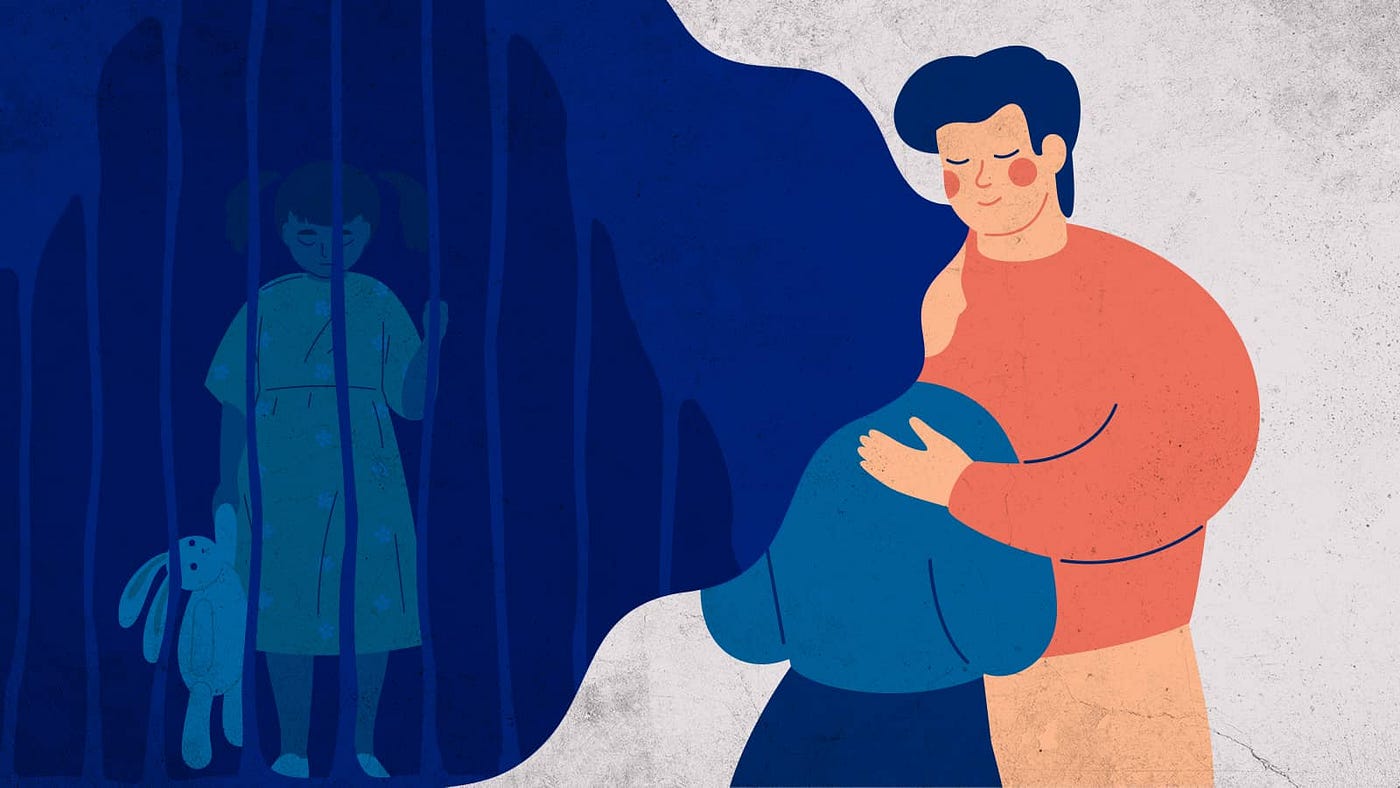
People-Pleasing as a Trauma Response

https://sp-ao.shortpixel.ai/client/to_webp%2Cq_glossy%2Cret_img%2Cw_1024%2Ch_683/https%3A//newperspectivescs.com/wp-content/uploads/2024/04/image.png
Introduction

People-pleasing is often misunderstood as kindness, politeness, or being “too nice.”
But psychologically, chronic people-pleasing can be something much deeper—a trauma response.

Many people who constantly prioritize others’ needs, avoid conflict, and fear disappointing anyone are not doing so by choice. They learned, often early in life, that safety, love, or acceptance depended on keeping others happy.

This article explains how people-pleasing develops as a trauma response, why it persists into adulthood, how it affects mental health and relationships, and what healing looks like.

What Is People-Pleasing?

People-pleasing is a behavioral pattern characterized by:

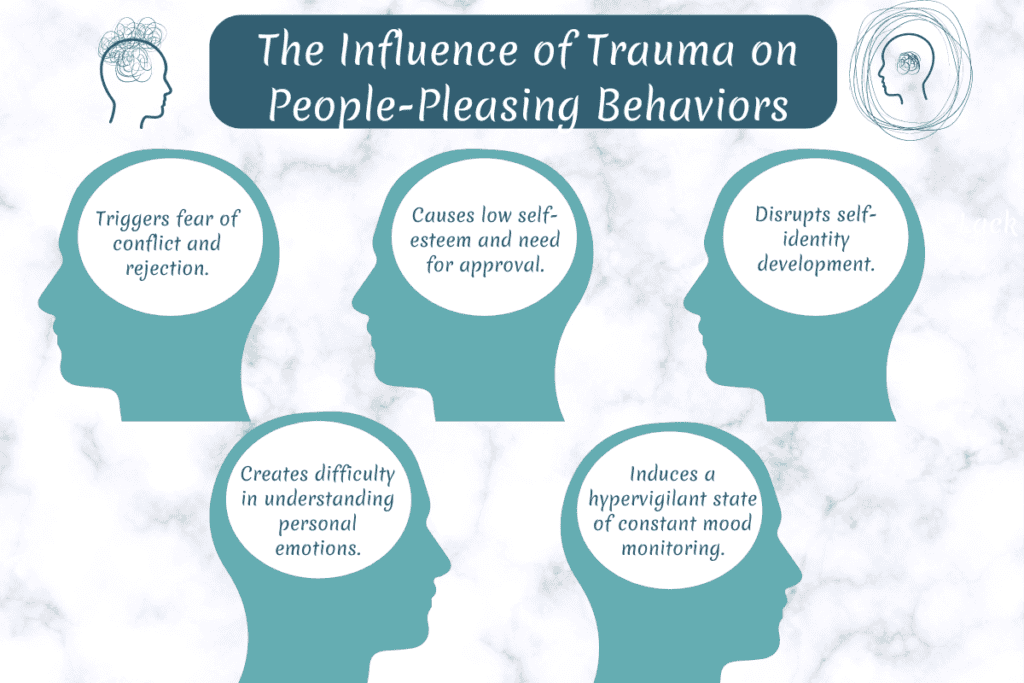
  • Excessive need for approval

  • Difficulty saying “no”

  • Fear of conflict or rejection

  • Over-responsibility for others’ emotions

  • Suppressing one’s own needs, feelings, or opinions

Occasional consideration for others is healthy. Chronic people-pleasing, however, is driven by fear rather than choice.

Trauma and Survival Responses

Trauma—especially relational or developmental trauma—changes how the nervous system responds to threat.

In addition to the well-known fight, flight, and freeze responses, trauma psychology recognizes a fourth response:

The Fawn Response

The fawn response involves appeasing, pleasing, or submitting to others to avoid harm.

For a child growing up in an unsafe emotional environment, pleasing others may have been the safest option available.

People-pleasing is not weakness—it is adaptation.

How Trauma Creates People-Pleasing

1. Childhood Emotional Insecurity

People-pleasing often develops in environments where:

  • Love was conditional

  • Caregivers were emotionally unpredictable

  • Anger, criticism, or withdrawal felt threatening

  • The child had to “read the room” to stay safe

The child learns:

“If I keep everyone happy, I won’t be hurt or abandoned.”

2. Parentification and Emotional Responsibility

Some children grow up taking care of adults’ emotions—comforting, mediating, or preventing conflict.

This creates a belief that:

  • Others’ feelings are my responsibility

  • My needs are less important

  • Saying no is selfish or dangerous

These beliefs persist into adulthood.

3. Fear-Based Attachment Patterns

People-pleasing is closely linked to anxious attachment and fearful-avoidant attachment.

Common attachment fears include:

  • Anxiety around abandonment
  • Sensitivity to rejection
  • Conflict-associated loss anxiety

As adults, these individuals may sacrifice authenticity to preserve connection.

Signs of Trauma-Based People-Pleasing

Not all people-pleasing is trauma-based. Trauma-related patterns often include:

  • Intense anxiety when setting boundaries

  • Guilt after saying “no”

  • Over-explaining decisions

  • Difficulty identifying personal needs

  • Resentment followed by self-blame

  • Emotional exhaustion and burnout

  • Feeling valued only for usefulness

Externally, such individuals appear “easy-going.” Internally, they are often hypervigilant and emotionally depleted.

Psychological Cost of People-Pleasing

1. Loss of Self-Identity

When survival required adapting to others, the individual may lose touch with:

  • Personal preferences

  • Desires

  • Values

Many people-pleasers ask:

“I know who others want me to be—but who am I?”

2. Chronic Anxiety and Burnout

Constant monitoring of others’ reactions keeps the nervous system in a state of alert.

This leads to:

  • Anxiety

  • Emotional fatigue

  • Irritability

  • Depression

3. Unbalanced Relationships

People-pleasers often attract:

  • Emotionally unavailable people

  • Controlling partners

  • One-sided friendships

Because boundaries are weak, reciprocity is low.

Why People-Pleasing Is So Hard to Stop

People-pleasing is reinforced because it once worked.

  • Helped avoid confrontation
  • It kept relationships intact
  • It offered short-term emotional security

The nervous system remembers this—even when the danger is no longer present.

Saying “no” may trigger:

  • Fear

  • Guilt

  • Shame

  • A sense of threat

Healing requires nervous system safety, not just willpower.

Healing People-Pleasing Patterns

1. Recognizing It as a Trauma Response

The first step is reframing:

“This behavior kept me safe once. I don’t need to punish myself for it.”

Self-compassion is essential.

2. Learning to Tolerate Discomfort

Healthy boundaries initially feel unsafe to a traumatized nervous system.

Healing involves slowly learning that:

  • Discomfort ≠ danger

  • Disapproval ≠ abandonment

3. Reconnecting With Personal Needs

Trauma recovery includes asking:

  • Current emotional state: ______
  • Primary unmet need: ______
  • Personal desire (self-directed): ______

This process often feels unfamiliar and requires patience.

4. Therapy and Trauma-Informed Support

Trauma-focused therapy helps:

  • Regulate the nervous system

  • Process attachment wounds

  • Build boundary tolerance

  • Develop a stable sense of self

People-pleasing is not a personality flaw—it is a learned survival strategy that can be unlearned.

Healthy Care vs People-Pleasing

Healthy Care Trauma-Based People-Pleasing
Choice-based Fear-based
Includes self Self-neglect
Has boundaries Boundary collapse
Reciprocal One-sided
Flexible Compulsive

Conclusion

People-pleasing is not about being “too nice.”
It is often about being afraid to lose safety, connection, or worth.

When viewed through a trauma lens, people-pleasing becomes understandable—and treatable.

Healing does not mean becoming selfish.
It means learning that your needs, feelings, and boundaries are safe to have.

True connection begins where self-abandonment ends.

FAQ

Q1. What does people-pleasing mean in psychology?
People-pleasing refers to a pattern of prioritizing others’ needs over one’s own to gain approval, avoid conflict, or prevent rejection.

Q2. How is people-pleasing related to trauma?
In many cases, people-pleasing develops as a trauma response, especially after childhood emotional neglect, abuse, or unstable caregiving.

Q3. What is the fawn response?
The fawn response is a trauma-based survival reaction where a person appeases or pleases others to avoid perceived threat or harm.

Q4. Is people-pleasing always caused by trauma?
No. Some people-pleasing is learned socially, but chronic, fear-driven people-pleasing is often trauma-related.

Q5. What kind of trauma leads to people-pleasing?
Common causes include emotional neglect, verbal abuse, parentification, conditional love, and unpredictable caregivers.

Q6. How does people-pleasing affect mental health?
It is linked to anxiety, burnout, resentment, depression, low self-worth, and emotional exhaustion.

Q7. Why do people-pleasers feel guilty when they say no?
Because the nervous system associates boundaries with danger, rejection, or abandonment based on past experiences.

Q8. Is people-pleasing linked to attachment styles?
Yes. It is commonly associated with anxious and fearful-avoidant attachment patterns.

Q9. How can I tell if my people-pleasing is trauma-based?
Signs include intense fear of conflict, identity confusion, emotional hypervigilance, and feeling valued only when useful.

Q10. Why is people-pleasing hard to stop?
Because it once worked as a survival strategy. The body remembers it as a way to stay safe.

Q11. Does healing mean becoming selfish?
No. Healing means learning healthy boundaries while still being caring and empathetic.

Q12. Can therapy help with people-pleasing?
Yes. Trauma-informed therapy helps regulate the nervous system and rebuild a sense of safety around boundaries.

Q13. What are healthy alternatives to people-pleasing?
Assertive communication, self-validation, boundary-setting, and reciprocal relationships.

Q14. How long does it take to heal people-pleasing patterns?
Healing is gradual and non-linear. Progress depends on safety, support, and self-compassion.

Q15. Can people-pleasing return under stress?
Yes. Under stress, old trauma responses may resurface, but awareness allows conscious choice instead of automatic reaction.

Written by Baishakhi Das

Counselor | Mental Health Practitioner
B.Sc, M.Sc, PG Diploma in Counseling


🔗 Reference


Five-Factor Model (Big Five) Explained With Daily Examples

https://www.simplypsychology.org/wp-content/uploads/big-5-personality.jpeg
Introduction

Why are some people naturally organized while others struggle with deadlines?
Why do some enjoy social gatherings, while others feel drained by them?

Personality psychology answers these questions through the Five-Factor Model, commonly known as the Big Five. It is the most scientifically supported and widely accepted model of personality today.

The Big Five explains personality using five broad, stable trait dimensions that describe how people think, feel, and behave in everyday life. Rather than labeling people into rigid types, this model views personality traits as continua, where everyone falls somewhere between two extremes.

What Is the Five-Factor Model?

The Five-Factor Model proposes that human personality can be systematically understood through five broad and fundamental dimensions. Rather than placing people into fixed “types,” this model views personality traits as continuous dimensions, meaning every individual falls somewhere along each spectrum.

The five core dimensions are:

  • Openness to Experience – curiosity, creativity, and openness to new ideas

  • Conscientiousness – organization, self-discipline, and responsibility

  • Extraversion – sociability, energy, and assertiveness

  • Agreeableness – empathy, cooperation, and trust

  • Neuroticism – emotional reactivity, anxiety, and stress sensitivity

Together, these traits provide a comprehensive framework for describing individual differences in personality.

Key Characteristics of the Big Five Traits

  • Relatively stable across adulthood
    Although personality can change gradually with life experiences, the Big Five traits show strong consistency over time, especially after early adulthood.

  • Present across cultures
    Extensive cross-cultural research has found these five dimensions in diverse societies, making the model one of the most universally supported personality frameworks.

  • Predictive of behavior, emotions, and life outcomes
    The Big Five traits are strongly linked to real-world outcomes such as:

    • Relationship quality

    • Academic and job performance

    • Stress response and emotional wellbeing

    • Leadership and teamwork styles

Because of this predictive power, the Five-Factor Model is widely used in psychological research, counseling, education, and organizational assessment, making it a cornerstone of modern personality psychology.

The Five Personality Traits 

1. Openness to Experience

Definition

Openness to Experience reflects the degree to which a person is curious, imaginative, creative, and mentally flexible. It describes how open someone is to new ideas, unfamiliar experiences, and abstract thinking.

People high in openness tend to seek novelty and enjoy exploring possibilities, while those low in openness prefer familiarity, structure, and tradition.

High Openness

Key characteristics

  • Curious and imaginative

  • Enjoys art, ideas, and learning

  • Comfortable with uncertainty and change

Daily-life examples

  • Enjoys trying new foods, cuisines, and travel destinations

  • Engages in creative hobbies such as painting, writing, music, or design

  • Enjoys philosophical discussions, documentaries, or learning new skills

  • Adapts easily to changes in routine or environment

High openness is often associated with creativity, innovation, and intellectual curiosity.

Low Openness

Key characteristics

  • Practical and reality-oriented

  • Values routine, tradition, and familiarity

  • Prefers concrete facts over abstract ideas

Daily-life examples

  • Orders the same food every time at a restaurant

  • Prefers fixed schedules and predictable routines

  • Avoids unconventional ideas or unfamiliar experiences

  • Feels uncomfortable with sudden changes

Low openness is not a weakness—it often supports stability, consistency, and practical decision-making.

2. Conscientiousness

Definition

Conscientiousness refers to self-discipline, organization, reliability, and goal-directed behavior. It reflects how carefully and consistently a person manages responsibilities.

This trait is strongly linked to self-control and long-term planning.

High Conscientiousness

Key characteristics

  • Organized, responsible, and dependable

  • Plans ahead and follows rules

  • Strong sense of duty

Daily-life examples

  • Maintains to-do lists and structured schedules

  • Completes assignments and work on time

  • Saves money and plans for future goals

  • Follows routines related to health, work, and time management

People high in conscientiousness tend to perform well in academics, careers, and leadership roles.

Research consistently shows conscientiousness as the strongest predictor of academic achievement and job performance.

Low Conscientiousness

Key characteristics

  • Disorganized and impulsive

  • Struggles with consistency and follow-through

Daily-life examples

  • Frequently forgets deadlines or appointments

  • Procrastinates tasks until the last moment

  • Acts without planning or considering consequences

  • Finds it difficult to maintain routines

Low conscientiousness may allow flexibility and spontaneity, but can create problems with responsibility and reliability.

3. Extraversion

Definition

Extraversion reflects sociability, energy level, assertiveness, and emotional expressiveness. It describes how much stimulation and social interaction a person prefers.

High Extraversion

Key characteristics

  • Outgoing, energetic, and expressive

  • Enjoys being around people

Daily-life examples

  • Enjoys parties, social gatherings, and group activities

  • Thinks aloud and easily starts conversations

  • Feels energized after spending time with others

  • Comfortable speaking in groups or leading discussions

Extraverts often thrive in social, collaborative, and leadership-oriented environments.

Low Extraversion (Introversion)

Key characteristics

  • Quiet, reflective, and reserved

  • Prefers low-stimulation environments

Daily-life examples

  • Enjoys reading, writing, or solo activities

  • Prefers deep one-on-one conversations over large groups

  • Feels drained after prolonged social interaction

  • Thinks carefully before speaking

Introversion is not shyness—it reflects a preference for lower levels of stimulation, not fear of people.

4. Agreeableness

Definition

Agreeableness reflects compassion, empathy, cooperation, and trust in interpersonal relationships. It influences how individuals relate to others and manage conflict.

High Agreeableness

Key characteristics

  • Kind, cooperative, and empathetic

  • Values harmony and avoids conflict

Daily-life examples

  • Listens patiently without interrupting

  • Helps others without expecting rewards

  • Easily forgives mistakes and misunderstandings

  • Shows concern for others’ feelings

High agreeableness supports healthy relationships, teamwork, and emotional connection.

Low Agreeableness

Key characteristics

  • Competitive, skeptical, or blunt

  • Less concerned with social harmony

Daily-life examples

  • Speaks directly, sometimes harshly

  • Enjoys debate, argument, or competition

  • Prioritizes self-interest over group harmony

  • Questions others’ motives

Low agreeableness can be useful in competitive, high-stakes, or decision-heavy roles, though it may strain relationships.

5. Neuroticism

Definition

Neuroticism reflects emotional sensitivity, stress reactivity, and vulnerability to negative emotions such as anxiety, sadness, and anger.

High Neuroticism

Key characteristics

  • Emotionally reactive

  • Prone to anxiety, worry, and mood swings

Daily-life examples

  • Overthinks small mistakes or feedback

  • Feels stressed easily in daily situations

  • Worries about future outcomes

  • Takes longer to recover emotionally after setbacks

High neuroticism is linked to stress-related difficulties, but also to emotional awareness.

Low Neuroticism (Emotional Stability)

Key characteristics

  • Calm, resilient, and emotionally balanced

  • Handles pressure well

Daily-life examples

  • Stays composed during conflicts or crises

  • Recovers quickly from disappointments

  • Rarely feels overwhelmed by stress

  • Maintains emotional control in challenging situations

Low neuroticism supports emotional resilience, mental wellbeing, and effective coping.

Final Note

Each Big Five trait exists on a continuum, and most people show a unique combination of high and low levels across traits. Understanding these dimensions helps explain everyday behavior, relationships, work habits, emotional patterns, and personal strengths—making the Five-Factor Model one of the most practical tools in modern psychology.

Why the Big Five Matters in Daily Life

The Five-Factor Model is widely used because it connects personality theory directly to real-life functioning. Rather than remaining abstract, the Big Five helps explain everyday patterns of behavior across major life domains.

  • Relationships
    The Big Five helps explain compatibility, communication styles, and conflict patterns.
    For example, high agreeableness supports empathy and cooperation, while differences in extraversion can affect social needs and intimacy. Understanding these traits improves emotional understanding and relationship satisfaction.

  • Work behavior
    Personality traits strongly influence leadership, teamwork, responsibility, and productivity.
    Conscientiousness predicts reliability and performance, extraversion relates to leadership and social roles, and emotional stability supports stress management at work.

  • Mental health
    Traits such as high neuroticism are linked to greater vulnerability to anxiety, depression, and stress-related difficulties, while emotional stability supports resilience and coping. Trait awareness helps in early identification of psychological risk factors.

  • Education
    The Big Five explains learning styles, discipline, motivation, and academic persistence.
    Conscientious students tend to perform better academically, while openness supports creativity and deep learning.

  • Counseling and therapy
    Therapists use trait profiles to design personalized interventions, understand coping styles, and build therapeutic rapport. Personality-informed counseling improves treatment planning and outcomes.

Because of this wide applicability, modern personality assessment, counseling practices, and organizational psychology rely heavily on the Big Five framework.

Strengths of the Big Five Model

The Big Five remains the dominant personality model due to several strengths:

  • Strong scientific evidence
    Decades of research support its reliability, validity, and predictive power.

  • Cross-cultural validity
    The five dimensions appear consistently across cultures, languages, and populations.

  • Predicts real-life outcomes
    Traits predict academic success, job performance, relationship quality, health behaviors, and emotional wellbeing.

  • Easy to understand and apply
    The model is simple enough for practical use while remaining scientifically rigorous.

  • Flexible and non-labeling
    Traits exist on continua, allowing for individual differences without rigid categorization.

Limitations of the Big Five Model

Despite its strengths, the Big Five also has limitations:

  • Does not explain why traits develop
    The model describes personality structure but offers limited explanation of developmental origins.

  • Limited focus on unconscious processes
    Unlike psychoanalytic theories, it gives little attention to unconscious motivations and conflicts.

  • May overlook situational influences
    Behavior can change depending on context, stress, or environment—factors not fully captured by traits alone.

  • Broad traits may miss subtle features
    Nuanced personality aspects such as values, identity, and moral reasoning may not be fully explained.

Conclusion

The Five-Factor Model (Big Five) provides a powerful yet practical framework for understanding personality in everyday life. Rather than labeling people as “good” or “bad,” it shows how individuals differ in consistent, measurable ways.

By understanding Openness, Conscientiousness, Extraversion, Agreeableness, and Neuroticism, we gain insight not only into others—but also into ourselves. This makes the Big Five invaluable in psychology, counseling, education, workplace settings, and personal growth, helping individuals make informed choices, build healthier relationships, and develop emotional self-awareness.

Frequently Asked Questions (FAQ)

Q1. What is the Five-Factor Model of personality?
The Five-Factor Model explains personality using five broad traits—Openness, Conscientiousness, Extraversion, Agreeableness, and Neuroticism—each existing on a continuum.

Q2. Is the Big Five scientifically supported?
Yes. It has strong empirical support, high reliability, and cross-cultural validation across decades of research.

Q3. Can personality traits change over time?
Traits are relatively stable in adulthood, but gradual changes can occur due to life experiences, roles, and sustained interventions.

Q4. How is the Big Five used in real life?
It’s used in counseling and therapy, education, career guidance, leadership development, recruitment, and mental health screening.

Q5. Is introversion the same as shyness?
No. Introversion reflects a preference for lower stimulation, while shyness involves fear or anxiety in social situations.

Q6. Does the Big Five explain mental disorders?
It does not diagnose disorders, but traits like high neuroticism are associated with higher vulnerability to anxiety and depression.

Q7. What are the limitations of the Big Five?
It explains what traits people have, not why they develop; it also gives limited attention to unconscious processes and situational effects.

Written by Baishakhi Das

Counselor | Mental Health Practitioner
B.Sc, M.Sc, PG Diploma in Counseling


🔗 Reference 

Trait Theory of Personality

https://cdn.prod.website-files.com/62daa860694c959c3cfdaaff/6709575514fe5222dd61c393_6695108105dced56e7eaafba_engl%252016PF%2520%28downsized%29.png
Introduction

Trait Theory of Personality explains this consistency by proposing that personality is composed of stable, measurable characteristics called traits. Traits are not momentary moods or temporary reactions; rather, they represent long-lasting tendencies that influence how individuals think, feel, and behave across time and diverse situations. Because traits are relatively stable, they allow psychologists to describe personality, compare individuals, and predict behavior with reasonable accuracy.

Unlike psychoanalytic theories, which emphasize unconscious conflicts and early childhood experiences, or humanistic theories, which focus on self-growth, free will, and self-actualization, trait theories adopt a more scientific and objective approach. Their primary goals are description, measurement, and prediction of behavior. This focus has made trait theory especially influential in psychological assessment, research, and applied fields such as counseling, education, and organizational psychology.

Three of the most influential contributors to trait theory are Gordon Allport, Raymond Cattell, and Hans Eysenck. Each approached the study of personality traits from a different scientific angle—Allport emphasized individual uniqueness, Cattell focused on statistical structure and measurement, and Eysenck highlighted biological foundations—together shaping the modern understanding of personality traits.

What Is a Trait?

A trait is a relatively enduring and consistent pattern of thoughts, emotions, and behaviors that distinguishes one individual from another. Traits help explain why people respond in predictable ways across different situations, even when external circumstances change.

Rather than describing isolated actions, traits represent general tendencies—for example, a person is not just talkative in one situation but tends to be sociable across many contexts. This makes traits central to understanding personality structure.

Key Features of Traits

  • Relatively stable over time
    Traits tend to remain consistent throughout adulthood, although they may gradually change with life experiences.

  • Consistent across situations
    A trait influences behavior in many settings (home, work, social life), even if its expression varies in intensity.

  • Measurable and observable
    Traits can be assessed using psychological tests, questionnaires, and behavioral observations.

  • Exist on a continuum
    Traits are not simply “present” or “absent.” Individuals fall at different points along a spectrum.

Examples of Trait Continua

  • Introversion ↔ Extraversion
    Ranging from reserved and inward-focused to outgoing and socially active.

  • Anxiety ↔ Emotional Stability
    Ranging from emotionally reactive and tense to calm and resilient.

This continuum-based understanding allows psychologists to compare individuals, predict behavior, and study personality scientifically, which is a core strength of trait theory.

Gordon Allport’s Trait Theory

Core Idea

Gordon Allport viewed personality as a dynamic and organized system of traits that makes each individual psychologically unique. He strongly opposed the idea that personality could be fully understood by reducing people to test scores or statistical averages. According to Allport, numbers may describe trends, but they often miss the richness of the individual person.

He introduced and strongly supported the idiographic approach, which focuses on studying the individual in depth—through life histories, personal documents, interviews, and observation. Allport believed that traits are real internal structures, not just convenient labels created by psychologists. These traits actively guide behavior and help individuals adapt to their environment in consistent ways.

Another important contribution of Allport was his emphasis on conscious motivation. Unlike Freud, who stressed unconscious drives, Allport argued that adult personality is largely shaped by present motives, values, and goals, not merely by childhood conflicts. This view made his theory more optimistic and future-oriented.

Types of Traits According to Allport

Allport proposed that traits differ in strength, scope, and influence. To explain this, he categorized traits into three hierarchical levels, depending on how central they are to personality organization.

1. Cardinal Traits

  • Extremely dominant traits that shape almost every aspect of a person’s life

  • Rare and found in only a few individuals

  • Behavior, values, lifestyle, and even identity revolve around this single trait

When a cardinal trait is present, the person becomes almost synonymous with that characteristic.

Examples:

  • Mother Teresa → Altruism

  • Mahatma Gandhi → Non-violence

Allport emphasized that most individuals do not possess a cardinal trait. These traits typically emerge in people whose lives are devoted to a powerful moral, religious, or ideological mission.

2. Central Traits

  • The core building blocks of personality

  • Usually around 5–10 traits are enough to describe a person meaningfully

  • Fairly consistent across situations and time

  • Easily noticed by others

Central traits explain a person’s typical behavior patterns and social reputation.

Examples:

  • Honest

  • Shy

  • Aggressive

  • Kind

  • Intelligent

When we say, “He is confident but reserved” or “She is kind and hardworking,” we are referring to central traits. These traits interact with each other to create a balanced and coherent personality.

3. Secondary Traits

  • More specific, situational, and limited in scope

  • Less consistent and less influential on overall personality

  • Often linked to preferences, habits, or temporary reactions

Secondary traits provide fine details that make personality more nuanced but do not define the individual as a whole.

Examples:

  • Nervousness before exams

  • Irritability when hungry or tired

  • Preference for certain music, foods, or clothing styles

These traits may appear strongly in one context and disappear in another, which is why they are considered secondary.

Functional Autonomy of Motives

One of Allport’s most important concepts is functional autonomy, which states that adult motives are independent of childhood motives. Behaviors that may have started for one reason can become self-sustaining over time.

Example:
A person may begin studying hard to gain parental approval, but later continues studying because they genuinely value knowledge and achievement.

This idea challenged psychoanalytic views and emphasized personal growth, choice, and maturity.

Strengths of Allport’s Theory

  • Highlights individual uniqueness

  • Emphasizes conscious motivation and personal responsibility

  • Connects personality to real-life behavior

  • Influenced humanistic and modern trait approaches

Limitations of Allport’s Theory

  • Lacks precise measurement tools

  • Difficult to test empirically

  • Limited predictive power compared to statistical models

  • More descriptive than explanatory

Overall Contribution

Allport’s trait theory played a crucial role in shifting personality psychology toward a scientific yet person-centered understanding. By balancing structure with individuality, his work laid the groundwork for later trait theorists while reminding psychology that every personality is more than a score—it is a lived experience.

Contributions of Allport

Gordon Allport played a pioneering role in shaping modern personality psychology. His contributions went beyond proposing traits; he changed how psychologists think about personality itself.

  • Introduced trait-based personality study
    Allport was one of the first psychologists to clearly define traits as the basic units of personality. At a time when psychology was dominated by psychoanalysis and behaviorism, he offered an alternative framework that focused on observable, consistent patterns of behavior. This shift laid the foundation for later trait models, including those of Cattell, Eysenck, and eventually the Big Five.

  • Emphasized the uniqueness of the individual
    Through his idiographic approach, Allport argued that personality cannot be fully understood by statistical averages alone. He emphasized personal values, goals, beliefs, and life experiences, highlighting that each individual organizes traits in a unique way. This perspective humanized personality psychology and influenced later humanistic and person-centered approaches.

  • Linked personality to real-life behavior
    Allport insisted that personality theories must explain how people actually live their lives. His focus on conscious motivation, life goals, and functional autonomy helped bridge the gap between theory and everyday behavior. This made his work especially relevant to counseling, education, and applied psychology.

  • Highlighted conscious motivation and maturity
    By rejecting the idea that adult behavior is solely driven by unconscious childhood conflicts, Allport emphasized personal responsibility, choice, and psychological maturity. His concept of the mature personality promoted growth, self-awareness, and ethical living.

Limitations of Allport’s Theory

Despite its conceptual strength, Allport’s theory also faced important criticisms:

  • Lacked objective measurement tools
    Allport did not develop standardized instruments to measure cardinal, central, or secondary traits. As a result, his theory could not be easily tested or replicated through empirical research.

  • Too descriptive and less predictive
    While Allport’s framework provides rich descriptions of personality, it offers limited guidance for predicting behavior across different situations. Compared to later statistical models, it lacks precision.

  • Difficult to test scientifically
    The reliance on case studies, personal documents, and qualitative methods made the theory methodologically weak by experimental standards. This reduced its acceptance among researchers seeking objective and quantifiable data.

  • Limited explanation of trait development
    Allport explained what traits are but offered less clarity on how traits develop and change over the lifespan.

Overall Evaluation

Allport’s trait theory is often seen as philosophically rich but methodologically limited. However, its lasting value lies in its emphasis on individuality, conscious motivation, and real-world behavior. Even today, his ideas remind psychologists that behind every personality score is a complex human being, making his work a vital cornerstone of personality psychology.

Raymond Cattell’s Trait Theory

Core Idea

Raymond Cattell sought to transform the study of personality into a rigorous scientific discipline. Unlike earlier theorists who relied mainly on description and observation, Cattell believed that personality traits could be objectively identified, measured, and classified using statistical methods.

His most important methodological contribution was the use of factor analysis, a statistical technique that identifies underlying patterns among large numbers of variables. By applying factor analysis to behavioral data, questionnaires, and ratings from others, Cattell aimed to uncover the basic building blocks of personality.

Types of Traits According to Cattell

Cattell distinguished between two major kinds of traits based on how they appear and function.

1. Surface Traits

  • Observable and measurable behaviors

  • Tend to appear together in everyday life

  • Represent clusters of responses that seem related on the surface

Example:
Shyness, silence, avoidance of social situations

These behaviors often occur together, but Cattell argued that surface traits are not the true causes of behavior. Instead, they are outward expressions of deeper personality structures.

2. Source Traits

  • Underlying and fundamental personality dimensions

  • More stable and consistent over time

  • Serve as the root causes of surface traits

Source traits explain why certain behaviors cluster together. For example, the surface traits of social withdrawal and silence may stem from a deeper source trait such as low social boldness or introversion.

Cattell considered source traits to be the true core of personality.

The 16 Personality Factors (16PF)

Through extensive research and repeated factor-analytic studies, Cattell identified 16 core source traits, collectively known as the 16 Personality Factors (16PF). These traits represent the fundamental dimensions along which human personality varies.

Some important 16PF dimensions include:

  • Warmth – from reserved to affectionate

  • Reasoning – from concrete to abstract thinking

  • Emotional Stability – from reactive to calm

  • Dominance – from submissive to assertive

  • Liveliness – from serious to enthusiastic

  • Social Boldness – from shy to confident

  • Sensitivity – from tough-minded to tender-minded

  • Vigilance – from trusting to suspicious

  • Perfectionism – from flexible to highly organized

These traits exist on continua, meaning individuals score at different levels rather than simply possessing or lacking a trait.

The 16PF Questionnaire

To measure these traits, Cattell developed the 16PF Questionnaire, a standardized personality assessment instrument. It provides a detailed personality profile based on an individual’s scores across the 16 factors.

The 16PF is widely used in:

  • Clinical psychology – for personality assessment and treatment planning

  • Career counseling – to understand strengths, preferences, and suitability for occupations

  • Organizational settings – for employee selection, leadership assessment, and team building

Significance of Cattell’s Theory

Cattell’s work marked a major step forward in personality psychology by combining theory, measurement, and statistics. His approach bridged the gap between descriptive trait concepts and empirically validated personality structure, influencing later models such as Eysenck’s dimensions and the Big Five.

Overall, Cattell’s trait theory provided a systematic and scientific framework for understanding personality differences, making it one of the most influential trait-based approaches in psychology.

Hans Eysenck’s Trait Theory

Core Idea

Hans Eysenck proposed that personality traits are deeply rooted in biology and genetics. Unlike Allport’s emphasis on individual uniqueness or Cattell’s complex statistical structure, Eysenck aimed for a simpler, more parsimonious model that could be empirically tested and linked directly to physiological processes.

He believed that to understand personality scientifically, traits must be connected to measurable biological mechanisms, such as brain arousal systems and nervous system reactivity. This made his theory especially influential in experimental and biological psychology.

Hierarchical Model of Personality

Eysenck described personality as a hierarchically organized system, moving from specific behaviors to broad dimensions:

  1. Specific responses
    Momentary reactions in particular situations
    Example: Feeling nervous before today’s presentation

  2. Habitual responses
    Repeated patterns of similar responses
    Example: Frequently feeling nervous in social situations

  3. Traits
    Stable tendencies formed by habitual responses
    Example: Anxiety

  4. Supertraits (Dimensions)
    Broad, higher-order personality dimensions that organize multiple traits

This hierarchy explains how everyday behaviors gradually form enduring personality dimensions, providing a clear structure from action to trait.

The PEN Model

Eysenck identified three major supertraits, collectively known as the PEN model.

1. Extraversion (E)

  • Extraverted end: Sociable, active, talkative, energetic

  • Introverted end: Quiet, reserved, reflective

Biological basis:
Extraversion is linked to cortical arousal levels in the brain.

  • Extraverts → lower baseline arousal → seek stimulation

  • Introverts → higher baseline arousal → avoid excessive stimulation

This explains why extraverts enjoy social activity, while introverts prefer calm environments.

2. Neuroticism (N)

  • Emotional instability

  • Anxiety, mood swings, irritability

  • Heightened emotional reactivity

Biological basis:
Neuroticism is associated with high reactivity of the autonomic nervous system, making individuals more sensitive to stress and emotional triggers.

People high in neuroticism tend to experience stronger emotional responses and slower emotional recovery.

3. Psychoticism (P)

  • Aggression

  • Impulsivity

  • Low empathy

  • Antisocial tendencies

Eysenck associated psychoticism with vulnerability to psychotic disorders, but emphasized that high psychoticism does not mean psychosis. Rather, it reflects personality tendencies such as toughness, nonconformity, and emotional coldness.

This dimension is considered the most controversial in his model.

Biological Basis of Personality

Eysenck strongly argued that:

  • Personality traits are largely inherited

  • Differences in behavior reflect neurophysiological differences

  • Learning and environment influence personality, but within biological limits

This biological orientation made his theory one of the earliest biopsychological models of personality.

Contributions of Eysenck

  • Integrated biology with personality
    Eysenck was among the first to systematically link personality traits to brain functioning and nervous system activity.

  • Created a concise and testable model
    His three-dimensional structure made personality easier to measure, research, and replicate compared to more complex models.

  • Advanced empirical research
    His theory encouraged experimental studies using physiological measures, genetics, and behavioral data.

  • Influenced later models
    Eysenck’s work strongly influenced the development of modern trait models, especially the Big Five, where Extraversion and Neuroticism remain core dimensions.

Limitations of Eysenck’s Theory

  • Oversimplifies personality complexity
    Reducing personality to three dimensions may ignore important traits such as openness, agreeableness, and conscientiousness.

  • Psychoticism dimension criticized
    The concept is considered vague, difficult to measure, and too broad, combining unrelated characteristics.

  • Cultural and social factors underemphasized
    The theory focuses heavily on biology and gives limited attention to culture, learning, and social context.

  • Deterministic tone
    Strong emphasis on genetics may underestimate human flexibility, growth, and environmental influence.

Overall Evaluation

Hans Eysenck’s trait theory stands out for its scientific clarity, biological grounding, and simplicity. While it may not capture the full richness of human personality, it played a crucial role in making personality psychology empirical, testable, and biologically informed, leaving a lasting impact on modern personality research.

Comparison of the Three Theorists

Aspect Allport Cattell Eysenck
Approach Idiographic Nomothetic Nomothetic
Focus Individual uniqueness Trait structure Biological dimensions
Number of Traits Thousands 16 factors 3 dimensions
Measurement Descriptive Statistical Biological + questionnaires
Complexity Low High Moderate

Strengths of Trait Theory (Overall)

Trait theory has remained influential because of several key strengths that make it both scientifically robust and practically useful:

  • Scientific and measurable
    Trait theories emphasize objectivity, reliability, and measurement. Personality traits can be assessed using standardized tools, making the study of personality systematic and evidence-based.

  • Useful in prediction of behavior
    Because traits are relatively stable, they help psychologists predict how individuals are likely to behave across situations—such as stress response, work performance, leadership style, or interpersonal behavior.

  • Widely applied across fields
    Trait-based assessments are extensively used in:

    • Counseling and clinical psychology – understanding personality patterns and vulnerabilities

    • Education – identifying learning styles and emotional needs

    • Organizations – employee selection, career guidance, leadership development

  • Foundation for modern personality models
    Almost all contemporary personality frameworks are rooted in trait theory, making it a cornerstone of modern personality psychology.

Criticisms of Trait Theory

Despite its strengths, trait theory also faces important criticisms:

  • Neglects situational influence
    Trait theory tends to underplay how situations and environments shape behavior. The same person may behave differently depending on context, stress level, or social expectations.

  • Limited explanation of personality development
    Trait theory explains what traits people have but offers less clarity on how traits develop, change, or evolve across the lifespan.

  • Less attention to unconscious processes
    Compared to psychoanalytic theories, trait theory gives limited importance to unconscious motives, conflicts, and emotional dynamics.

  • Cultural bias in trait definitions
    Many trait models were developed in Western contexts, raising concerns about their universality across cultures, values, and social systems.

Influence on Modern Personality Psychology

Trait theories directly influenced the development of the Big Five Personality Traits, which is currently the most widely accepted model of personality.

The Big Five dimensions include:

  • Openness – creativity, curiosity, openness to experience

  • Conscientiousness – organization, responsibility, self-discipline

  • Extraversion – sociability, energy, assertiveness

  • Agreeableness – cooperation, empathy, trust

  • Neuroticism – emotional instability, anxiety, stress sensitivity

Modern personality assessment, research, counseling, and organizational practices continue to rely heavily on these trait-based frameworks because of their reliability, cross-cultural validation, and predictive power.

Conclusion

Trait Theory of Personality explains human behavior through stable, measurable characteristics that shape how individuals think, feel, and act across time and situations.

  • Allport highlighted the uniqueness of the individual and conscious motivation

  • Cattell introduced scientific measurement and statistical structure

  • Eysenck connected personality to biological and genetic foundations

Together, their theories transformed personality psychology from philosophical speculation into a rigorous scientific discipline—one that continues to guide psychological assessment, research, and therapeutic understanding in contemporary psychology.

Reference

Fully Functioning Person: Psychological Meaning

https://cdn.prod.website-files.com/5b69a01ba2e409501de055d1/687789b406f106123225771d_6389ef9af6c1445fa9d62dbb_Carl%2520Rogers%2520theory%2520of%2520the%2520environment.png

The idea of a fully functioning person comes from humanistic psychology and offers one of the most optimistic views of human potential. Instead of concentrating on pathology, dysfunction, or diagnosis, this perspective shifts the focus toward growth, authenticity, and psychological health. It asks a fundamentally different question:

What does psychological health look like when a person is allowed to grow freely and live in alignment with their true self?

This approach moves away from fixing what is “wrong” and toward understanding what helps a person thrive. The answer does not lie in perfection, constant happiness, or rigid emotional control. A fully functioning person still experiences pain, fear, doubt, and uncertainty. What distinguishes psychological health is not the absence of struggle, but the ability to remain open and responsive to experience.

Psychological well-being, from this view, involves openness to emotions, flexibility in thinking, trust in one’s inner signals, and the capacity to live authentically rather than defensively. Instead of suppressing feelings or shaping the self to meet external expectations, a fully functioning person engages with life honestly, adapts to change, and continues to grow through experience.

This concept reframes mental health as a dynamic process of becoming, not a fixed state to be achieved.

Origin of the Concept

The concept of the fully functioning person emerged from the work of Carl Rogers, one of the founders of humanistic psychology. Rogers rejected the idea that human beings are inherently broken or flawed. Instead, he viewed people as naturally oriented toward growth, fulfillment, and psychological health. He called this innate drive the actualizing tendency.

Rogers argued that psychological distress does not arise because people lack potential. It emerges when environments interfere with natural growth. Conditions such as conditional acceptance, emotional invalidation, chronic criticism, or pressure to conform can block this process. When individuals feel they must deny parts of themselves to gain love or approval, they disconnect from their authentic experience.

A fully functioning person, in Rogers’ view, is someone whose growth has not been excessively restricted. Such a person remains free to experience emotions openly, trust their inner guidance, and continue developing in ways that feel genuine and self-directed. Psychological health, therefore, reflects not perfection, but the freedom to grow without fear of losing acceptance.

The Actualizing Tendency

At the heart of Rogers’ theory is the actualizing tendency—the natural drive within every individual to develop their abilities, express their true self, and move toward psychological wholeness.

This tendency:

  • Exists in all people

  • Operates naturally when conditions are supportive

  • Pushes toward growth, not destruction

When the environment allows emotional safety, empathy, and acceptance, this tendency guides a person toward healthy functioning.

Fully Functioning Person: Core Definition

A fully functioning person is not someone who has no problems or negative emotions. Instead, they are someone who:

  • Is open to inner experience

  • Trusts their feelings and perceptions

  • Lives authentically rather than defensively

  • Adapts flexibly to life’s challenges

  • Continues to grow psychologically

Rogers described this state as a process, not a fixed endpoint. A fully functioning person is always becoming.

Key Characteristics of a Fully Functioning Person

1. Openness to Experience

Fully functioning individuals remain open to both pleasant and unpleasant emotions. They do not deny, distort, or suppress their inner experiences to protect their self-image.

This includes:

  • Accepting sadness without shame

  • Acknowledging anger without guilt

  • Experiencing joy without fear

Emotions act as information, not threats.

2. Existential Living (Living in the Present)

Rather than rigidly following rules from the past or fears about the future, fully functioning people engage with life moment by moment.

They respond to situations as they are, not as they “should” be. This allows flexibility, creativity, and genuine engagement with reality.

3. Trust in the Organism

Rogers believed that psychologically healthy individuals trust their internal signals—emotions, intuition, bodily responses—when making decisions.

This does not mean impulsivity. It means:

  • Listening inward before seeking external validation

  • Using feelings as guides rather than enemies

  • Making choices aligned with inner values

This internal trust replaces dependence on approval.

4. Experiential Freedom

Fully functioning people experience a sense of choice in their lives. Recognize constraints but do not feel psychologically trapped by them.

  • They can choose responses even when situations are difficult

  • They are not controlled entirely by the past

  • Growth remains possible

This sense of agency supports resilience.

5. Creativity and Adaptability

Psychological openness fosters creativity—not only in art, but in problem-solving, relationships, and coping.

Fully functioning individuals:

  • Adapt rather than rigidly control

  • Learn from experience

  • Revise beliefs when new information appears

They remain flexible rather than defensive.

Fully Functioning Person vs Perfectionism

A common and critical misunderstanding is equating full functioning with perfection. In reality, these two reflect very different psychological processes.

A fully functioning person does not aim to eliminate fear, mistakes, or conflict. Instead, they relate to these experiences without allowing them to define their worth or identity. Such a person:

  • Feels fear but does not live in fear, allowing caution without paralysis

  • Makes mistakes without collapsing into shame, using errors as information rather than self-condemnation

  • Experiences conflict without losing identity, staying connected to self even during disagreement

  • Accepts limitations without self-rejection, recognizing limits as part of being human

Perfectionism, by contrast, grows out of conditions of worth. It ties value to performance, correctness, or approval and fuels constant self-monitoring and anxiety. Full functioning reflects unconditional self-regard—the ability to value oneself regardless of success, failure, or emotional state.

In short, perfectionism demands flawlessness to feel safe, while full functioning allows authenticity to guide growth.

Role of Unconditional Positive Regard

Carl Rogers emphasized that psychological growth flourishes in the presence of unconditional positive regard—the experience of being valued as a person regardless of behavior, success, or failure. This form of acceptance communicates a powerful message: your worth does not depend on performance or approval.

When children receive conditional acceptance—messages such as “You are good only if…”—they begin to organize their self-concept around external expectations. Over time, they may develop:

  • Conditions of worth, tying value to behavior or achievement

  • Defensive self-concepts, hiding parts of themselves to avoid rejection

  • Fear of authenticity, believing their true self is unacceptable

In contrast, when children experience unconditional acceptance, they internalize a stable sense of worth. This environment supports the development of:

  • Self-trust, allowing them to rely on their inner experience

  • Emotional openness, enabling healthy expression of feelings

  • Psychological flexibility, adapting to life without excessive defense

Therapy often aims to recreate these conditions by offering empathy, consistency, and nonjudgmental presence. Within such an environment, individuals naturally move toward greater authenticity, integration, and full psychological functioning.

Fully Functioning Person and Mental Health

Being a fully functioning person does not mean living without anxiety, sadness, stress, or emotional pain. Human experience naturally includes discomfort and uncertainty. Psychological health, from this perspective, lies not in eliminating these experiences but in the ability to relate to them without excessive defense, denial, or self-judgment.

In this view, mental health involves:

  • Emotional awareness — recognizing and understanding feelings as they arise

  • Acceptance rather than avoidance — allowing emotions to be experienced instead of suppressed or feared

  • Integration of experience — bringing thoughts, emotions, and actions into alignment

  • Ongoing growth — remaining open to change, learning, and self-development

Rather than aiming solely for symptom reduction, this perspective reframes mental health as self-congruence—living in harmony with one’s inner experience. When people feel free to acknowledge what they truly feel and need, distress loses its power to fragment the self, and growth becomes possible even in the presence of difficulty.

Fully Functioning Person in Relationships

In relationships, fully functioning individuals tend to:

  • Communicate honestly

  • Tolerate emotional intimacy

  • Respect boundaries

  • Repair conflicts rather than avoid them

  • Allow others to be different

They do not need to lose themselves to maintain connection.

Barriers to Becoming Fully Functioning

Common obstacles include:

  • Childhood emotional neglect

  • Conditional parenting

  • Trauma and chronic invalidation

  • Cultural pressure to conform

  • Fear-based self-esteem

These barriers do not eliminate the actualizing tendency—they restrict its expression.

Therapy and the Fully Functioning Person

Client-centered therapy aims to remove these barriers rather than “fix” the person.

Therapy provides:

  • Empathy

  • Congruence

  • Unconditional positive regard

Over time, clients naturally move toward greater openness, self-trust, and psychological integration.

A Process, Not a Destination

Rogers emphasized that full functioning is not a final state. It is a continuous process of becoming more open, more authentic, and more responsive to life.

There is no final version of the self—only deeper alignment.

A Gentle Closing Reflection

A fully functioning person is not fearless, flawless, or endlessly confident.
They are real.

Feel deeply without fear.
Respond honestly without defense.
Trust their inner experience without doubt.
Allow themselves to change without shame.

Psychological health is not about becoming someone else.
It is about becoming more fully yourself.

Frequently Asked Questions (FAQ)

1. What is a fully functioning person in psychology?

A fully functioning person is someone who lives with openness to experience, self-trust, emotional awareness, and psychological flexibility. The concept emphasizes growth and authenticity rather than perfection.


2. Who introduced the concept of the fully functioning person?

The concept was introduced by Carl Rogers, a founder of humanistic psychology, as part of his person-centered theory of psychological health.


3. Is a fully functioning person always happy?

No. Fully functioning individuals experience anxiety, sadness, and stress like anyone else. Psychological health lies in how they relate to these emotions—not in avoiding them.


4. How is full functioning different from perfectionism?

Perfectionism is driven by conditions of worth and fear of failure. Full functioning reflects unconditional self-regard, where mistakes and limitations do not threaten self-worth.


5. What role does unconditional positive regard play?

Unconditional positive regard allows individuals to feel valued regardless of behavior or success. This acceptance supports emotional openness, self-trust, and healthy psychological development.


6. Can therapy help someone become more fully functioning?

Yes. Person-centered and trauma-informed therapies aim to reduce defenses, increase self-congruence, and create conditions that support natural psychological growth.


7. Is being fully functioning a fixed state?

No. Rogers described full functioning as an ongoing process of becoming, not a final destination. Growth continues throughout life.

Written by Baishakhi Das

Counselor | Mental Health Practitioner
B.Sc, M.Sc, PG Diploma in Counseling


Reference 

Conditions of Worth & Self-Esteem Development

https://www.mollypotter.com/wp-content/uploads/2022/01/conditions-of-worthvv.png

A Deep Psychological Exploration

Self-esteem does not develop in isolation. Relationships—especially in childhood—shape, reinforce, and sometimes fracture it. One of the most powerful yet often overlooked influences on self-esteem development is the concept of conditions of worth.

Many adults struggle with chronic self-doubt, perfectionism, people-pleasing, fear of failure, or a persistent sense of “not being enough.” These struggles rarely reflect personality flaws. Instead, they reflect the emotional legacy of growing up believing that love, acceptance, or safety had to be earned.

This article examines conditions of worth in depth—explaining what they are, how they develop, how they shape self-esteem across the lifespan, how they appear in adulthood and relationships, and how healing becomes possible.

Understanding Conditions of Worth

The concept of conditions of worth comes from humanistic psychology, particularly the work of Carl Rogers. Rogers argued that every person enters the world with an innate drive toward growth, authenticity, and self-actualization—a natural motivation to become their true self. This developmental process, however, relies heavily on the emotional environment of childhood, especially the quality and consistency of acceptance offered by caregivers.

When caregivers provide warmth, empathy, and acceptance, children learn that their value exists simply because they exist. In contrast, when acceptance becomes inconsistent or conditional, children begin to form internal rules about what makes them “worthy.” Over time, these rules shape how children relate to themselves, evaluate their emotions, and measure their own value.

What Are Conditions of Worth?

Conditions of worth are the deeply internalized beliefs that one is worthy of love, acceptance, or respect only if certain conditions are met. These beliefs form early and often operate outside conscious awareness, quietly shaping self-esteem, motivation, and emotional expression.

They often sound like:

    • “Love feels available to me only when I behave well.”

    • “I feel valued mainly when I succeed.”

    • “I feel acceptable when I keep others comfortable.”

    • “Care feels earned, not given freely.”

Over time, these conditions teach the child to monitor, edit, and suppress parts of themselves to maintain connection. Emotions, needs, or traits that threaten approval are pushed aside, while approved behaviors are amplified. When love becomes conditional, the child learns a painful lesson: their authentic self is not enough—and worth must be earned rather than inherent.

Unconditional Positive Regard vs Conditional Acceptance

Carl Rogers emphasized the importance of unconditional positive regard—accepting and valuing a person regardless of behavior, success, or failure.

Unconditional Positive Regard

  • Love is consistent

  • Emotions are validated

  • Mistakes are tolerated

  • The child feels safe being authentic

Conditional Acceptance (Conditions of Worth)

  • Love is withdrawn or reduced when expectations aren’t met

  • Approval depends on performance or obedience

  • Emotions are judged or dismissed

  • The child learns to self-censor

When children receive conditional acceptance, they internalize the idea that worth must be earned.

How Conditions of Worth Develop in Childhood

Children are biologically wired for attachment. From the earliest years of life, their survival—both physical and emotional—depends on maintaining closeness with caregivers. To preserve this connection, children instinctively adapt themselves emotionally and behaviorally. They do not question whether the environment is healthy; instead, they change who they are to stay connected.

Conditions of worth typically develop in environments where acceptance feels uncertain, conditional, or unpredictable.

1. Love Is Performance-Based

When praise and attention are given mainly for achievements, good behavior, obedience, or emotional restraint, children begin to associate worth with performance.

Commonly rewarded traits include:

  • Academic success or talent

  • Being “well-behaved” or compliant

  • Meeting adult expectations

  • Suppressing strong emotions

Over time, the child learns: “I am valued for what I do, not for who I am.” 

2. Emotions Are Invalidated

When caregivers dismiss or criticize emotional expression, children learn that certain feelings make them less acceptable.

Messages such as:

  • “Stop crying.”

  • “You’re too sensitive.”

  • “Good children don’t get angry.”

teach the child to suppress emotions rather than understand them. Emotional expression becomes linked with shame or rejection.

3. Approval Is Inconsistent

When affection depends on a parent’s mood, stress level, or circumstances, children cannot rely on emotional safety. As a result, they become hypervigilant—constantly scanning for cues about how to behave to stay accepted.

This unpredictability teaches the child that love must be carefully managed.

4. Comparison Is Frequent

Being compared to siblings, peers, or ideal standards creates external benchmarks for worth. The child learns to evaluate themselves through others’ approval rather than inner experience.

Self-esteem becomes competitive rather than stable.

5. Parentification or Emotional Immaturity Exists

In families marked by emotional immaturity or role reversal, children may feel responsible for meeting adult emotional needs. They learn that their value lies in being helpful, mature, or emotionally accommodating—rather than simply being themselves.

In these environments, conditions of worth form quietly but deeply, shaping how the child understands love, safety, and self-acceptance well into adulthood.

Psychological Impact on Self-Esteem Development

Fragmented Self-Concept

When children must deny or hide parts of themselves in order to gain acceptance, the self gradually becomes divided. They learn that some feelings, needs, or traits are welcome—while others are not. Over time, this creates an internal split:

  • Real self – the child’s authentic feelings, needs, impulses, and desires

  • Ideal self – the version of themselves they believe they must become to be loved, accepted, or approved of

The greater the distance between these two selves, the more fragile self-esteem becomes. Living from the ideal self requires constant self-monitoring and suppression, leaving the person feeling disconnected from who they truly are.

Externalized Self-Worth

As conditions of worth take hold, self-esteem shifts from an inner sense of value to an external one. Worth becomes something to be measured and confirmed by others.

Self-esteem begins to depend on:

  • Validation from authority figures or peers

  • Achievement and productivity

  • Praise and positive feedback

  • Approval and acceptance

Without continuous external reinforcement, the individual may experience emptiness, anxiety, or a sudden collapse in self-worth. Confidence becomes unstable because it is no longer self-generated.

Fear-Based Motivation

Instead of acting from curiosity, interest, or joy, behavior becomes driven by fear. Choices are made not because they feel meaningful, but because they feel necessary for acceptance or safety.

This fear-based motivation often includes:

  • Rejection or loss of acceptance
  •  Failure and loss of worth
  • Fear of disappointing others and losing approval

Over time, this undermines intrinsic motivation and emotional well-being. Life becomes about avoiding loss rather than pursuing growth, leaving the person chronically tense, self-critical, and disconnected from genuine satisfaction.

How Conditions of Worth Appear in Adulthood

Conditions of worth do not disappear with age—they transform.

1. Perfectionism

Mistakes feel intolerable because they threaten worth, not just performance.

2. People-Pleasing

Saying “yes” becomes a survival strategy to maintain approval.

3. Chronic Self-Criticism

An internalized critical voice replaces external judgment.

4. Difficulty Receiving Love

Affection feels uncomfortable unless “earned.”

5. Emotional Suppression

Certain emotions still feel “unacceptable.”

6. Imposter Syndrome

Success never feels secure or deserved.

Conditions of Worth in Relationships

In adult relationships, conditions of worth often show up as:

  • Over-functioning to keep relationships stable

  • Fear of expressing needs or boundaries

  • Believing conflict equals rejection

  • Staying in unhealthy relationships to feel valued

  • Confusing self-sacrifice with love

Many relationship struggles are rooted not in incompatibility, but in conditional self-worth.

The Nervous System Connection

Conditions of worth shape not only thoughts, but also the nervous system.

When worth feels conditional:

  • The body stays in alert mode

  • Rejection feels threatening

  • Criticism triggers shame responses

  • Approval brings temporary relief, not safety

This keeps individuals stuck in cycles of anxiety and self-monitoring.

Self-Esteem vs Self-Worth

A critical distinction:

  • Self-esteem often depends on evaluation (“How good am I?”)

  • Self-worth is inherent (“Am I worthy?”)

Conditions of worth undermine self-worth, replacing it with fragile, performance-based esteem.

Cultural and Social Reinforcement

Conditions of worth are often reinforced by:

  • Academic pressure

  • Gender roles

  • Productivity culture

  • Social media validation

  • Comparison-driven environments

These forces normalize conditional value, making it harder to recognize the original wound.

Healing Conditions of Worth

Healing does not mean rejecting all standards or responsibilities. It means decoupling worth from performance.

1. Awareness

Identify internal “if–then” beliefs:

  • “If I fail, then I am worthless.”

  • “If I disappoint, then I will be rejected.”

2. Emotional Validation

Practice acknowledging feelings without judgment.

3. Self-Compassion

Replace self-criticism with understanding.

4. Reparenting

Offer yourself unconditional acceptance, especially in moments of failure.

5. Boundary Development

Learn that saying no does not equal losing worth.

6. Therapy

Humanistic, trauma-informed, or attachment-based therapy can help rebuild unconditional self-worth.

The Role of Therapy in Repair

Therapy provides what was missing:

  • Consistent acceptance

  • Emotional safety

  • Non-judgmental presence

  • Permission to be authentic

Over time, this helps integrate the real self and ideal self.

A Gentle Truth

If your self-esteem feels fragile, it does not mean you lack confidence.
It means your worth was made conditional before you had a choice.

You were not born believing you had to earn love.
You learned it.

And what is learned—can be unlearned.

Your value does not increase with success.
It does not decrease with mistakes.
It does not disappear when you rest.

Your worth was never conditional.
It was always inherent.

Frequently Asked Questions (FAQ)

1. What are conditions of worth in psychology?

Conditions of worth are internal beliefs that a person is worthy of love or acceptance only when certain expectations are met, such as good behavior, achievement, or emotional restraint.


2. Who introduced the concept of conditions of worth?

The concept comes from humanistic psychology and was introduced by Carl Rogers, who emphasized the importance of unconditional positive regard in healthy development.


3. How do conditions of worth affect self-esteem?

They make self-esteem fragile and externalized. Self-worth becomes dependent on approval, success, or validation rather than an inner sense of value.


4. Can conditions of worth exist without abuse?

Yes. Conditions of worth often develop in well-meaning families through emotional invalidation, high expectations, comparison, or inconsistent approval—even without overt abuse.


5. What is the difference between self-esteem and self-worth?

Self-esteem often reflects evaluation (“How well am I doing?”), while self-worth refers to inherent value (“Am I worthy?”). Conditions of worth undermine self-worth.


6. How do conditions of worth show up in adulthood?

They may appear as perfectionism, people-pleasing, fear of failure, chronic self-criticism, difficulty resting, or feeling undeserving of care or love.


7. Can conditions of worth be healed?

Yes. Through awareness, emotional validation, self-compassion, boundary-setting, and therapy, individuals can rebuild a sense of unconditional self-worth.

Written by Baishakhi Das

Counselor | Mental Health Practitioner
B.Sc, M.Sc, PG Diploma in Counseling


Reference 

How Childhood Trauma Shows Up in Adult Relationships

https://miro.medium.com/v2/resize%3Afit%3A1400/0%2AWmmPQKbxMQJvYHzk.jpg

Many adults enter relationships believing that love alone will heal the past. They hope that care, reassurance, or commitment will finally make old pain disappear. Yet despite genuine affection and effort, they often find themselves stuck in repeating patterns—fear of closeness, intense conflict, emotional shutdown, or constant self-doubt. These reactions can feel confusing or even shameful, especially when the present relationship does not resemble the painful experiences of the past. Often, the struggle is not truly about the current partner or situation at all. It is the nervous system responding to memories it learned long ago.

Childhood trauma does not stay confined to childhood. It quietly shapes how we attach, whom we trust, how we express emotions, and how safe vulnerability feels. Early experiences teach the brain what to expect from closeness—whether connection feels comforting or dangerous. In adult relationships, especially intimate ones, these early survival patterns resurface automatically, influencing reactions, expectations, and emotional responses before conscious thought can intervene.

What Is Childhood Trauma?

Childhood trauma refers to overwhelming experiences during early life that exceeded a child’s capacity to cope emotionally or psychologically. Trauma is not defined only by what happened—such as abuse or conflict—but also by what was missing, including safety, consistency, emotional attunement, and protection.

A child’s nervous system depends on caregivers to help regulate fear, distress, and emotions. When that support is absent or unpredictable, the child adapts in ways that ensure survival—but those adaptations can later interfere with healthy relationships.

Childhood trauma can include:

  • Emotional neglect or invalidation
    Feelings being ignored, dismissed, or minimized

  • Chronic criticism or rejection
    Being made to feel inadequate, unworthy, or “too much”

  • Exposure to conflict, abuse, or instability
    Living in environments marked by fear, chaos, or unpredictability

  • Parentification or role reversal
    Taking on adult responsibilities or emotional caretaking too early

  • Inconsistent caregiving or abandonment
    Not knowing when support will be available—or if it will come at all

  • Growing up with emotionally unavailable caregivers
    Parents who were physically present but emotionally distant or overwhelmed

Attachment theory, first developed by John Bowlby, explains how these early caregiving experiences shape our internal beliefs about love, safety, and connection. From childhood, we learn whether others are reliable, whether our needs matter, and whether closeness feels safe—or threatening. These beliefs often continue to guide relationships well into adulthood, especially during moments of vulnerability.

Why Relationships Trigger Old Wounds

Close relationships activate the same emotional and attachment systems that developed in childhood. When intimacy increases, the nervous system does not evaluate the situation only through logic or the present moment—it automatically scans for danger based on earlier experiences. What once helped a child survive becomes the lens through which adult relationships are interpreted.

As a result:

  • A partner’s silence may feel like abandonment, even if no rejection is intended

  • Conflict may feel threatening rather than solvable, triggering panic, anger, or shutdown

  • Emotional closeness may feel unsafe, leading to withdrawal or self-protection

  • Independence may feel like emotional distance, stirring fear of being left or replaced

These reactions often appear sudden or intense, but they are not overreactions. They are trauma responses—the nervous system responding to past relational wounds rather than present-day reality.

Understanding this helps replace self-criticism with compassion. The body is not trying to sabotage connection; it is trying to protect itself based on what it learned long ago.

Common Ways Childhood Trauma Appears in Adult Relationships

1. Fear of Abandonment

You may constantly worry that your partner will leave, lose interest, or replace you. This can lead to clinginess, reassurance-seeking, or emotional panic during minor conflicts.

2. Emotional Avoidance or Shutdown

Some adults learned early that expressing emotions led to rejection or punishment. As a result, they withdraw, go numb, or shut down during emotional moments.

3. People-Pleasing and Overgiving

You may prioritize your partner’s needs while neglecting your own, believing that love must be earned through sacrifice or usefulness.

4. Difficulty Trusting

Even in healthy relationships, you may expect betrayal, inconsistency, or disappointment—making it hard to fully relax or feel secure.

5. Repeating Familiar Dynamics

Trauma often draws people toward what feels familiar, not what is healthy. This can result in relationships that mirror childhood patterns of neglect, control, or emotional unavailability.

6. Intense Reactions to Conflict

Disagreements may trigger panic, rage, or collapse. The body reacts as if survival is at stake, even when the issue is minor.

7. Losing Yourself in Relationships

You may struggle to maintain boundaries, identity, or autonomy—fearing that being yourself will lead to rejection.

Attachment Styles and Trauma

Trauma often shapes attachment patterns:

  • Anxious attachment → fear of abandonment, emotional hypervigilance

  • Avoidant attachment → discomfort with closeness, emotional distancing

  • Fearful-avoidant attachment → craving intimacy while fearing it

These patterns are adaptive responses to early experiences—not personal flaws.

The Nervous System’s Role

Trauma does not live only in memory or thought—it also lives in the nervous system. Long after the original experiences have passed, the body can continue to react as if danger is still present. When something in a relationship feels familiar to past pain, the nervous system activates automatically, often before conscious awareness.

When triggered, the body may shift into survival responses such as:

  • Fight – anger, defensiveness, blaming, or sudden emotional intensity

  • Flight – avoidance, emotional distancing, withdrawing, or leaving situations

  • Freeze – numbness, shutdown, dissociation, or feeling stuck

  • Fawn – people-pleasing, appeasing, over-agreeing to maintain safety

These responses are not choices or personality flaws. They are learned survival strategies that once helped protect you.

Understanding the nervous system’s role reduces shame and self-criticism. Instead of asking “What’s wrong with me?”, you can begin to ask, “What is my body trying to protect me from?”—and respond with greater self-compassion.

How Childhood Trauma Affects Communication

Trauma can make it difficult to engage in relationships with openness and ease, especially during moments of emotional closeness or conflict. When past wounds are activated, the nervous system prioritizes protection over connection.

As a result, trauma can make it hard to:

  • Express needs directly, fearing rejection, conflict, or being “too much”

  • Tolerate vulnerability, because openness once felt unsafe or led to pain

  • Listen without defensiveness, as the body braces for threat rather than understanding

  • Feel safe during emotional conversations, even with caring or supportive partners

Because of this, many relationship conflicts are not truly about communication skills or wording. They are about emotional safety—whether the nervous system feels secure enough to stay present, open, and connected.

Healing Childhood Trauma in Relationships

Healing does not mean finding a “perfect” partner. It means learning to respond differently to old wounds.

Steps Toward Healing

1. Build Awareness
Notice patterns without judgment. Ask, “What does this situation remind me of?”

2. Regulate the Nervous System
Grounding techniques, breathwork, and somatic practices help calm trauma responses.

3. Develop Secure Boundaries
Boundaries create safety, not distance.

4. Practice Emotional Expression
Learn to name feelings and needs without fear or apology.

5. Choose Safe Relationships
Healing happens in relationships that offer consistency, respect, and repair.

6. Seek Trauma-Informed Therapy
Attachment-based or trauma-focused therapy provides support in processing early wounds safely.

A Gentle Reframe

If your relationships feel hard, it does not mean you are broken.
It means your nervous system learned to survive before it learned to feel safe.

Childhood trauma taught you strategies that once protected you.
Healing teaches you that connection no longer has to hurt.

You are not “too much.”
You are responding to what you learned.

And with awareness, safety, and support—new patterns are possible.

Frequently Asked Questions (FAQ)

1. Can childhood trauma affect adult relationships even years later?

Yes. Childhood trauma shapes the nervous system and attachment patterns. These early adaptations often resurface in adult relationships, especially during intimacy or conflict.


2. Why do I react so strongly to small relationship issues?

Strong reactions often reflect trauma responses rather than the present situation. The nervous system responds to familiar emotional threats based on past experiences.


3. Is fear of intimacy linked to childhood trauma?

Yes. When closeness felt unsafe or unpredictable in childhood, intimacy in adulthood can trigger fear, avoidance, or emotional shutdown.


4. Why do I repeat the same unhealthy relationship patterns?

Trauma tends to pull people toward what feels familiar, even if it is painful. Familiarity often feels safer than the unknown, despite the cost.


5. Can healthy relationships help heal trauma?

Yes. Safe, consistent relationships that allow repair, boundaries, and emotional presence can support healing—but awareness and inner work are essential.


6. Does trauma always come from abuse?

No. Trauma can also result from emotional neglect, inconsistency, parentification, or unmet emotional needs—even in families that appeared “normal.”


7. Can therapy help with relationship trauma?

Absolutely. Trauma-informed and attachment-based therapies help regulate the nervous system, process past wounds, and build healthier relational patterns.

Written by Baishakhi Das

Counselor | Mental Health Practitioner
B.Sc, M.Sc, PG Diploma in Counseling


Reference