

A Deep, Practice-Oriented Explanation
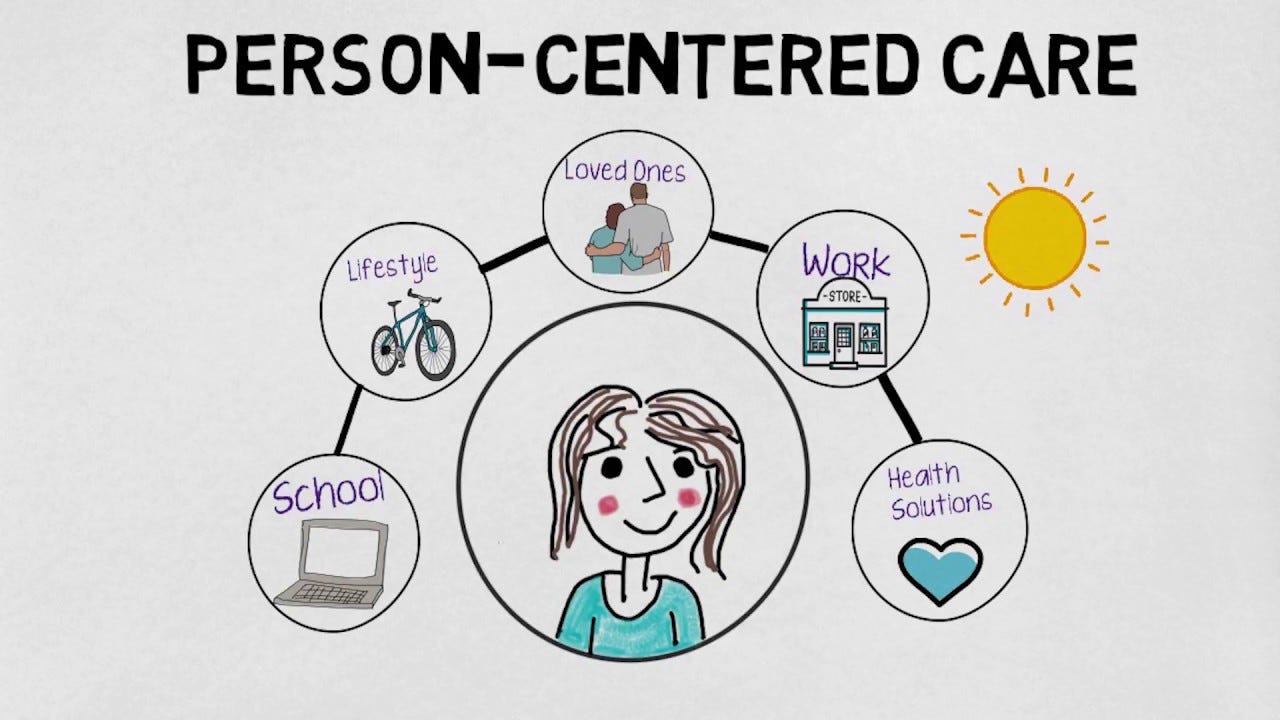
Developed by Carl Rogers, Person-Centered Therapy (PCT) transformed counseling practice by asserting a radical idea:
People are not broken.
They already possess the capacity to heal—when the right relational conditions are present.
This article explains the theory in depth, connecting its core principles with real counseling practice, mental health work, and modern therapeutic settings.
The Philosophical Foundation of Person-Centered Theory

Person-Centered Theory is grounded in humanistic philosophy, a perspective that views human beings as fundamentally capable, trustworthy, and oriented toward growth. Carl Rogers developed this approach during a time when psychology was dominated by two contrasting schools—both of which he felt overlooked the human experience of meaning, choice, and relationship.
Humanistic Psychology as a Response
Humanistic psychology emerged as a “third force” in psychology, responding to the limitations of earlier models:
-
Psychoanalysis emphasized pathology, unconscious conflict, and past trauma, often positioning the therapist as an interpreter of hidden meanings. While insightful, it could unintentionally frame clients as damaged or deficient.
-
Behaviorism focused on observable behavior, conditioning, and reinforcement. Though effective for behavior change, it largely ignored inner experience, emotions, and personal meaning.
Rogers believed both approaches underestimated a fundamental truth:
people are not passive recipients of forces—they are active participants in their own growth.
Core Beliefs About Human Nature
At the heart of Person-Centered Theory lies a profoundly optimistic view of human beings.
1. Humans Are Inherently Growth-Oriented
Rogers proposed that every person possesses an innate drive to grow, adapt, and move toward psychological health. This does not mean people are always happy or make healthy choices—but that even maladaptive behaviors are attempts to cope, survive, or meet unmet needs.
In counseling practice, this belief shifts the therapist’s stance from fixing problems to trusting the client’s inner capacity.
2. Psychological Distress Arises From Disconnection From the Authentic Self
Rogers observed that emotional suffering often develops when individuals:
-
Deny or distort their true feelings
-
Live according to others’ expectations
-
Suppress parts of themselves to gain acceptance
This inner conflict creates incongruence—a mismatch between lived experience and self-concept. Over time, incongruence leads to anxiety, low self-worth, emotional numbness, or depression.
Rather than seeing distress as illness alone, Rogers viewed it as a signal of lost authenticity.
3. Healing Happens Through Relationship, Not Correction
Perhaps Rogers’ most radical contribution was the idea that the therapeutic relationship itself is the primary agent of change.
He rejected the notion that:
-
Insight must be forced
-
Behavior must be controlled
-
Clients must be corrected or directed
Instead, Rogers demonstrated that when a person is met with empathy, acceptance, and genuineness, they naturally begin to:
-
Lower defenses
-
Explore emotions safely
-
Integrate disowned parts of self
-
Move toward healthier functioning
Healing, in this view, is not imposed—it emerges.
The Actualizing Tendency: The Heart of the Theory
The Actualizing Tendency is the foundational motivational force in Person-Centered Theory. It refers to the inherent drive within all living organisms to:
-
Maintain themselves
-
Enhance their capacities
-
Develop toward greater complexity and fulfillment
In humans, this tendency expresses itself as:
-
Desire for meaning and purpose
-
Striving for authenticity
-
Need for connection and self-acceptance
-
Movement toward psychological integration
Even behaviors that appear self-sabotaging are understood as distorted expressions of the actualizing tendency, shaped by fear, trauma, or conditions of worth.
Clinical Meaning of the Actualizing Tendency
In counseling practice, belief in the actualizing tendency means:
-
The therapist trusts the client’s inner direction
-
Resistance is reframed as self-protection
-
Growth is allowed to unfold at the client’s pace
-
The client is viewed as the expert on their own experience
When the right relational conditions are present, the actualizing tendency naturally guides the client toward healing—without force, judgment, or control.
Self-Concept and Incongruence
Rogers emphasized the importance of self-concept, which includes:
-
Self-image (how I see myself)
-
Self-esteem (how I value myself)
-
Ideal self (who I think I should be)
Incongruence
Psychological distress occurs when there is a gap between:
-
The real self (authentic feelings and experiences)
-
The ideal self (who one believes they must be to be accepted)
This incongruence often develops due to conditions of worth.
Conditions of Worth: The Root of Emotional Pain
Conditions of worth are messages learned early in life, such as:
-
“You are lovable only if you behave well”
-
“Your feelings are acceptable only if they don’t upset others”
-
“Your value depends on achievement or obedience”
Over time, individuals learn to:
-
Suppress emotions
-
Reject parts of themselves
-
Live for approval rather than authenticity
Counseling Relevance
Much of therapy involves undoing these conditions, allowing clients to reconnect with their true feelings without fear of rejection.
The Three Core Conditions of Person-Centered Therapy
Rogers identified three necessary and sufficient conditions for therapeutic change.
1. Unconditional Positive Regard (UPR)
Definition:
Accepting the client fully, without judgment, conditions, or evaluation.
This does not mean approving harmful behavior. It means:
-
Separating the person from the behavior
-
Communicating: “You are worthy, regardless of what you feel or have done.”
Impact in Practice:
-
Reduces shame
-
Encourages emotional honesty
-
Builds psychological safety
2. Empathy (Accurate Empathic Understanding)
Definition:
Deeply understanding the client’s internal world as if it were your own—without losing the “as if” quality.
Empathy involves:
-
Reflecting emotions
-
Understanding meaning beneath words
-
Being emotionally present
Impact in Practice:
-
Clients feel seen and understood
-
Emotional regulation improves
-
Insight emerges naturally
3. Congruence (Genuineness)
Definition:
The therapist is authentic, transparent, and emotionally real—rather than hiding behind a professional façade.
Congruence includes:
-
Emotional honesty
-
Appropriate self-awareness
-
Alignment between inner experience and outward behavior
Impact in Practice:
-
Builds trust
-
Models authenticity
-
Encourages clients to be real themselves
The Role of the Therapist in Person-Centered Counseling
Unlike directive approaches, the therapist does not:
-
Give advice
-
Interpret unconscious material
-
Set goals for the client
-
Diagnose or label as central focus
Instead, the therapist:
-
Creates a safe relational space
-
Trusts the client’s internal process
-
Follows the client’s lead
-
Facilitates self-exploration
The therapist is not an expert on the client’s life.
The client is.
What Change Looks Like in Person-Centered Therapy
Therapeutic change often includes:
-
Increased emotional awareness
-
Greater self-acceptance
-
Reduced defensiveness
-
Improved emotional regulation
-
More authentic relationships
-
Alignment between values and behavior
Importantly, change is organic, not forced.
Applications in Modern Counseling Practice
Person-Centered Theory is widely used in:
-
Individual counseling
-
Trauma-informed therapy
-
Child and adolescent counseling
-
Relationship counseling
-
Mental health rehabilitation
-
Community and NGO settings
It integrates well with:
-
CBT (as a relational foundation)
-
Trauma therapy
-
Attachment-based approaches
-
Integrative counseling models
Strengths of Person-Centered Therapy
- Honors the client’s autonomy and self-direction
- Strengthens the therapeutic alliance
- Minimizes shame and defensive responses
- Demonstrates effectiveness across diverse cultural contexts
- Supports sustained emotional and personal growth
Limitations
⚠ May be insufficient alone for:
-
Severe psychosis
-
Acute crisis requiring structure
-
Clients seeking directive guidance initially
However, even in structured therapies, Rogers’ core conditions remain essential for effectiveness.
Why Person-Centered Theory Still Matters Today
In a world driven by:
-
Performance
-
Productivity
-
Comparison
-
Labels and diagnoses
Person-Centered Therapy reminds us that healing happens in relationships where people feel safe, accepted, and understood.
People do not grow because they are corrected.
They grow because they are accepted.
Closing Reflection
Carl Rogers’ Person-Centered Theory is not just a counseling technique—it is a way of being with another human.
When empathy, acceptance, and genuineness are present:
-
Defenses soften
-
Authenticity emerges
-
Healing unfolds naturally
And often, that is enough.
Frequently Asked Questions (FAQ)
1. What is the philosophical foundation of Person-Centered Theory?
Person-Centered Theory is rooted in humanistic psychology, which views humans as inherently capable of growth, self-direction, and healing. It emphasizes subjective experience, personal meaning, and the healing power of relationships rather than pathology or control.
2. How is Person-Centered Theory different from psychoanalysis?
Psychoanalysis focuses on unconscious conflict and past experiences, often positioning the therapist as an expert interpreter. Person-Centered Theory, developed by Carl Rogers, focuses on the client’s present experience and trusts the client’s innate capacity for growth.
3. How does it differ from behaviorism?
Behaviorism emphasizes observable behavior, conditioning, and reinforcement. Person-Centered Theory prioritizes inner experience, emotions, self-concept, and authenticity, believing that lasting change occurs through understanding, not control.
4. What is the Actualizing Tendency?
The Actualizing Tendency is the innate drive within every human being to grow, heal, and move toward psychological wholeness. Even maladaptive behaviors are seen as attempts to cope or meet unmet needs.
5. Why does Carl Rogers believe distress comes from disconnection from the self?
Rogers observed that psychological distress arises when individuals deny or suppress their true feelings to meet external expectations. This creates incongruence between the real self and the ideal self, leading to anxiety, low self-worth, or emotional numbness.
6. Why is the therapeutic relationship so important in Person-Centered Therapy?
Because Rogers believed that empathy, unconditional positive regard, and genuineness are sufficient conditions for change. Healing happens when clients feel deeply understood and accepted, not corrected or judged.
7. Is Person-Centered Theory still relevant in modern counseling?
Yes. In trauma-informed, attachment-based, and integrative counseling, Person-Centered principles form the foundation of effective therapeutic relationships, even when other techniques are used.
Written by Baishakhi Das
Counselor | Mental Health Practitioner
B.Sc, M.Sc, PG Diploma in Counseling
Reference
-
Rogers, C. R. (1951). Client-Centered Therapy. Houghton Mifflin
https://www.simplypsychology.org/client-centred-therapy.html -
Rogers, C. R. (1961). On Becoming a Person. Houghton Mifflin
https://positivepsychology.com/on-becoming-a-person-carl-rogers/ -
American Psychological Association – Humanistic Psychology
https://www.apa.org -
McLeod, S. (2023). Person-Centered Therapy. Simply Psychology
https://www.simplypsychology.org/person-centred-therapy.html -
Corey, G. (2017). Theory and Practice of Counseling and Psychotherapy. Cengage Learning
- Information Processing Theory of Memory
- Maslow’s Hierarchy of Needs in Modern Life: