

Emotional abuse is one of the most silent and misunderstood forms of abuse. Unlike physical harm, it rarely leaves bruises or scars that outsiders can see. Instead, it chips away at a person’s self-worth, confidence, emotional safety, and sense of identity—slowly, invisibly, and often without the victim realizing it until much later. Because emotional abuse is subtle and gradual, many people normalize the behaviour or blame themselves. They may think, “Maybe I’m overreacting,” “Maybe it’s my fault,” “Maybe this is just how relationships are.”
But emotional abuse is real, damaging, and in many cases, more harmful than physical abuse. Whether it occurs in romantic relationships, families, friendships, or workplaces, its effects can last years.
This article explores the subtle signs of emotional abuse that many people miss, why people overlook them, the psychological impact, and how to heal safely.
What Is Emotional Abuse?
Emotional abuse refers to a pattern of behaviour where a person uses manipulation, control, humiliation, criticism, or emotional neglect to dominate or harm another person. It aims to weaken the victim’s sense of self and create emotional dependence.
Common elements of emotional abuse include:
- Control
- Manipulation
- Fear and intimidation
- Isolation
- Exploitation of vulnerabilities
- Belittling and humiliation
- Gaslighting
The abusive behaviour is often subtle at first. It may look like concern, care, jealousy, or “honesty,” but over time, it becomes controlling, demeaning, and psychologically harmful.
Why Do People Miss the Signs of Emotional Abuse?
Emotional abuse is tricky to recognize for several reasons:
1. It is gradual and subtle.
Unlike physical abuse, which can be sudden, emotional abuse builds slowly. It starts with minor comments or behaviours that are easy to dismiss.
2. Abusers often appear loving or caring at first.
They may use love, attention, or charm to mask manipulation. This creates confusion.
3. Victims normalize the behaviour.
Growing up with dysfunctional family patterns can make harmful behaviour feel “normal.”
4. Gaslighting makes victims doubt themselves.
Victims may think they are “too sensitive,” “imagining things,” or “misinterpreting.”
5. Society often minimizes emotional abuse.
People say things like “All couples fight,” “It’s normal,” or “Just ignore it.”
Because of this confusion, identifying subtle signs becomes crucial.
Subtle Signs of Emotional Abuse Most People Miss
1. Constant “Jokes” That Hurt Your Feelings
Mocking, teasing, or making fun of your insecurities is not harmless humour. If someone repeatedly jokes about your weight, dreams, abilities, personality, or intelligence—and gets angry when you don’t laugh—it’s emotional abuse.
Examples:
- “Calm down, it was just a joke. You’re so sensitive!”
- “You’ll never succeed; I was only joking.”
The intention is to belittle you while avoiding responsibility.
2. Gaslighting: Making You Question Your Reality
Gaslighting is one of the most powerful tools of emotional abusers. It involves making the victim doubt their memory, perception, or sanity.
Signs include:
- They deny things they clearly said.
- They say, “You’re imagining things.”
- They twist events to make you look wrong.
- They call you “crazy,” “dramatic,” or “overreacting.”
Over time, you stop trusting your own judgment.
3. Love Bombing Followed by Devaluation
At first, they treat you like royalty—excessive affection, attention, praise, gifts. Then slowly, the warmth disappears, replaced by criticism or distance.
This cycle creates dependency and emotional confusion.
Victims often think:
- “Maybe I did something wrong.”
- “If I behave better, they will love me like before.”
This repeated cycle is a form of manipulation
4. Subtle Control Over Your Choices
Instead of direct orders, abusers use emotional pressure:
- “Wear something else… that doesn’t suit you.”
- “Why do you want to meet your friends? Don’t you love me?”
- “You’re going out again? You don’t care about me.”
It sounds like concern, but the aim is to control.
5. Isolating You Without Making It Obvious
Abusers slowly distance you from friends and family:
- Criticizing the people you care about
- Creating conflicts when you plan to meet others
- Making you feel guilty for spending time away
- Saying “Only I understand you”
They don’t forbid you directly; they manipulate you into withdrawing.
6. Emotional Withholding (Silent Punishment)
They ignore you, give you the silent treatment, or withdraw affection to punish you.
This creates fear:
- “What if I upset them again?”
- “What if they leave me?”
Emotional withdrawal is a powerful control method.
7. Moving the Goalposts
Whatever you do is never enough.
You follow their expectations but suddenly the rules change.
Examples:
- “You should have called earlier.”
- “Why didn’t you do it exactly how I wanted?”
- “You’re still not good enough.”
No matter what you do, they find something wrong.
8. Excessive Criticism Disguised as “Helping You Improve”
They may comment on:
- Your appearance
- Your personality
- Your dreams
- Your achievements
- Your relationships
Instead of being supportive, they undermine your confidence.
Statements like:
- “I’m just being honest.”
- “I say this for your own good.”
are often excuses for emotionally abusive criticism.
9. Blaming You for Their Behaviour
Abusers rarely take responsibility.
Everything becomes your fault:
- “You made me angry.”
- “If you didn’t act this way, I wouldn’t yell.”
- “You’re the problem, not me.”
This creates guilt and keeps you trapped.
10. Making You Feel Guilty for Having Needs
If expressing needs leads to emotional punishment, guilt, or shame, it’s abuse.
Examples:
- “Why do you always need attention?”
- “You’re too demanding.”
- “Other people don’t need this much support.”
Over time, victims stop asking for emotional connection.
11. Keeping You in Constant Uncertainty
You never know:
- How they will react
- Whether they will be loving or angry
- Whether they will show up or disappear
This unpredictability creates emotional dependency.
12. Dismissing Your Emotions
Whenever you express feelings, they react with:
- “Don’t be dramatic.”
- “Stop overreacting.”
- “That’s not a big deal.”
Your emotions get invalidated constantly, making you distrust yourself.
13. Double Standards
They expect loyalty, respect, care, or transparency—but do not offer the same in return.
Examples:
- They check your phone but hide theirs.
- They get upset if you go out but they freely do.
- They demand emotional support but never give it.
This imbalance is a core feature of emotional abuse.
14. Making You Feel Like You Owe Them
Even small favours become “proof” of how much you are indebted to them.
Statements like:
- “After everything I do for you…”
- “You should be grateful.”
- “You owe me.”
They use guilt to control your choices.
15. Quiet Disapproval and Subtle Sarcasm
They don’t always yell. Sometimes emotional abuse is quiet:
- Eye-rolling
- Sarcastic comments
- Heavy sighing
- Passive-aggressive behaviour
This creates constant anxiety in the victim.
Psychological Impact of Emotional Abuse
Emotional abuse deeply affects mental health:
1. Low Self-Esteem
Victims begin to believe they are unworthy, unlovable, or “not good enough.”
2. Anxiety and Hypervigilance
Always walking on eggshells, trying not to upset the abuser.
3. Depression
Hopelessness, sadness, and emotional exhaustion become common.
4. Trauma Bonding
Victims develop emotional attachment to the abuser due to cycles of affection and punishment.
5. Self-Doubt
Victims lose confidence in their own perceptions and feelings.
6. Identity Loss
After prolonged abuse, people forget who they were before the relationship.
7. Difficulty Trusting Others
Future relationships become challenging due to fear of repeated abuse.
Why It’s So Hard to Leave an Emotionally Abusive Relationship
People often ask: “If it’s so bad, why don’t they leave?”
The reality is complex.
1. Trauma Bonding
The cycle of love and abuse creates strong emotional attachment.
2. Fear of Loneliness
Victims often lose their support system due to isolation.
3. Hope for Change
They remember the early loving phase and hope it will return.
4. Normalization of Toxic Behaviour
Past experiences may make abuse feel familiar.
5. Self-Blame
Victims believe they are responsible for the abuser’s behaviour.
How to Recognize Emotional Abuse in Yourself
Ask yourself:
- Do I feel afraid to express my feelings?
- Am I constantly apologizing?
- Do I question my worth?
- Do I hide things to avoid conflict?
- Do I feel drained after interactions with this person?
- Do I feel more confused than understood?
If you consistently feel small, guilty, anxious, or worthless around someone, it’s a sign of emotional abuse.
How to Protect Yourself
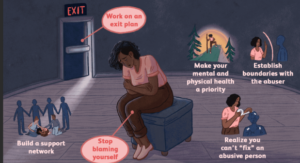
1. Set Clear Boundaries
State what you will and will not accept.
Example: “I don’t allow yelling or disrespectful comments.”
2. Don’t Justify or Over-explain
You don’t have to defend your feelings or decisions.
3. Reconnect with Support Systems
Talk to friends, family, or a therapist.
4. Keep Evidence If You Feel Unsafe
Document messages or incidents (useful in severe cases).
5. Strengthen Self-Worth
Affirm your right to be respected and emotionally safe.
6. Create an Exit Plan
If the abuse escalates or continues, consider safely leaving the relationship.
Healing from Emotional Abuse
Healing is possible, but it takes time and patience.
1. Allow Yourself to Feel
Suppressing emotions slows healing. Acknowledge the hurt.
2. Therapy Helps
A trained mental health professional can help rebuild identity and confidence.
3. Re-establish Boundaries
Practice saying “no,” “stop,” and “this hurts me.”
4. Rebuild Self-Esteem
Engage in activities that remind you of your strengths and identity.
5. Surround Yourself with Safe People
Positive connections help restore emotional balance.
6. Practice Self-Compassion
Healing is not linear—slow progress is still progress.
Conclusion
Emotional abuse is powerful, painful, and often invisible. It works through subtle manipulation, invalidation, guilt, and control. Many people miss the early signs because they seem harmless or disguised as love, care, or “jokes.”
Recognizing the signs is the first step toward reclaiming emotional freedom.
If you recognize yourself in this article, remind yourself:
- Your feelings are valid.
- Your experiences are real.
- You deserve safety, respect, and love that doesn’t hurt.
- Healing is possible, and you are not alone.
Reference
-
APA on Emotional Abuse: https://www.apa.org/topics/abuse/emotional
-
National Domestic Violence Hotline: https://www.thehotline.org
-
WHO on Violence & Mental Health: https://www.who.int
-
Mental Health Foundation (UK): https://www.mentalhealth.org.uk
- Contact Us
5 Replies to “Emotional Abuse: Subtle Signs Many People Miss”