


Emotional regulation is the psychological process that allows individuals to recognize, understand, manage, and respond to emotions in healthy and adaptive ways. Every human being experiences a full range of emotions—anger, fear, sadness, joy, frustration, excitement—but mental well-being depends not on what we feel, rather on how effectively we regulate those feelings. Emotions themselves are not harmful; difficulty arises when emotions become too intense, prolonged, or poorly managed.
Emotional Regulation Theory explains why some people are able to recover quickly from emotional distress, adapt to challenges, and return to emotional balance, while others feel easily overwhelmed, emotionally reactive, or shut down altogether. These differences are not signs of weakness or strength—they reflect variations in learned regulation skills, nervous system functioning, and early emotional experiences.
The theory provides a structured framework for understanding emotional balance, psychological resilience, and vulnerability to mental health difficulties. It helps explain patterns seen in conditions such as anxiety, depression, trauma-related disorders, and chronic stress, where emotions may feel uncontrollable or inaccessible. Importantly, Emotional Regulation Theory also highlights that regulation is a learned and modifiable process, meaning emotional skills can be developed over time through awareness, practice, and supportive environments.
Understanding emotional regulation shifts the focus from controlling emotions to responding to them with flexibility, awareness, and self-compassion, which forms the foundation of emotional health and long-term psychological well-being.
What Is Emotional Regulation?
In psychology, emotional regulation refers to the capacity to recognize, manage, and respond to emotional experiences in ways that are adaptive and contextually appropriate. It is a core skill that supports mental health, relationships, decision-making, and overall well-being.
Emotional regulation involves the ability to:
- Recognize emotions – accurately identifying what one is feeling and why
- Tolerate emotional intensity – staying present with strong emotions without becoming overwhelmed or shutting down
- Modulate emotional responses – adjusting the intensity or duration of emotional reactions when needed
- Express emotions appropriately – communicating feelings in ways that are healthy and respectful
Importantly, emotional regulation does not mean suppressing emotions, avoiding feelings, or maintaining constant calmness. Suppression often increases internal stress and leads to emotional rebound. Instead, regulation involves flexible and conscious responses to emotions, guided by situational demands and personal values.
When emotional regulation skills are underdeveloped or disrupted, individuals may experience:
- Impulsive or reactive behavior
- Emotional outbursts or irritability
- Avoidance of emotions or difficult situations
- Emotional numbness or shutdown
Emotional regulation theory emphasizes that these patterns are not character flaws—they reflect difficulties in managing emotional intensity. With awareness, practice, and support, emotional regulation skills can be strengthened, leading to greater emotional stability and psychological resilience.
Emotional Regulation Theory: A Core Psychological Model
One of the most influential and widely accepted frameworks of emotional regulation was developed by James Gross. His Process Model of Emotion Regulation explains how emotions develop over time and, crucially, where and how regulation can take place during that process.
According to this theory, emotions are not sudden or random events. They unfold in a sequence, and regulation can occur at multiple stages—before, during, or after an emotion fully develops.
The emotional process typically follows these stages:
- Situation – An internal or external event occurs
- Attention – The individual focuses on certain aspects of the situation
- Appraisal – Meaning is assigned to the situation
- Emotional Response – Emotional, physiological, and behavioral reactions arise
Emotional regulation can intervene at different points in this sequence, making some strategies more adaptive and others more costly over time.
The Five Emotion Regulation Strategies (Gross Model)
1. Situation Selection
This involves choosing or avoiding situations based on their likely emotional impact.
Example:
Avoiding emotionally demanding interactions when feeling exhausted or overwhelmed.
This strategy can be helpful when used flexibly, but excessive avoidance may limit growth or reinforce anxiety.
2. Situation Modification
This strategy involves actively changing aspects of a situation to reduce its emotional intensity.
Example:
Setting boundaries, asking for clarification, or changing the topic during a difficult conversation.
Situation modification supports emotional regulation while still engaging with the situation, making it more adaptive than avoidance.
3. Attentional Deployment
Here, regulation occurs by shifting attention within a situation to reduce emotional impact.
Example:
Using grounding techniques, focusing on breathing, or redirecting attention during moments of anxiety.
This strategy is especially useful when situations cannot be changed immediately.
4. Cognitive Reappraisal
Cognitive reappraisal involves changing the interpretation or meaning of a situation.
Example:
Viewing criticism as constructive feedback rather than personal rejection.
This is considered one of the healthiest and most effective emotion regulation strategies because it reduces emotional distress without suppressing emotional awareness. It is strongly associated with psychological resilience and well-being.
5. Response Modulation
Response modulation occurs after the emotion has already been activated and focuses on controlling emotional expression.
Example:
Suppressing anger, forcing calm behavior, or hiding emotional reactions.
While this strategy may be socially useful in the short term, chronic emotional suppression increases physiological stress, emotional dysregulation, and risk for mental health difficulties.
Psychological Insight
Gross’s model highlights an important principle:
Regulating emotions earlier in the emotional process is generally healthier and less costly than regulating them after they fully emerge.
This framework helps explain why some emotional strategies build resilience, while others contribute to burnout, emotional numbness, or reactivity. It also reinforces the idea that emotional regulation is a learned skill, not an inborn trait—and one that can be strengthened through awareness, practice, and therapeutic support.
The Brain and Emotional Regulation
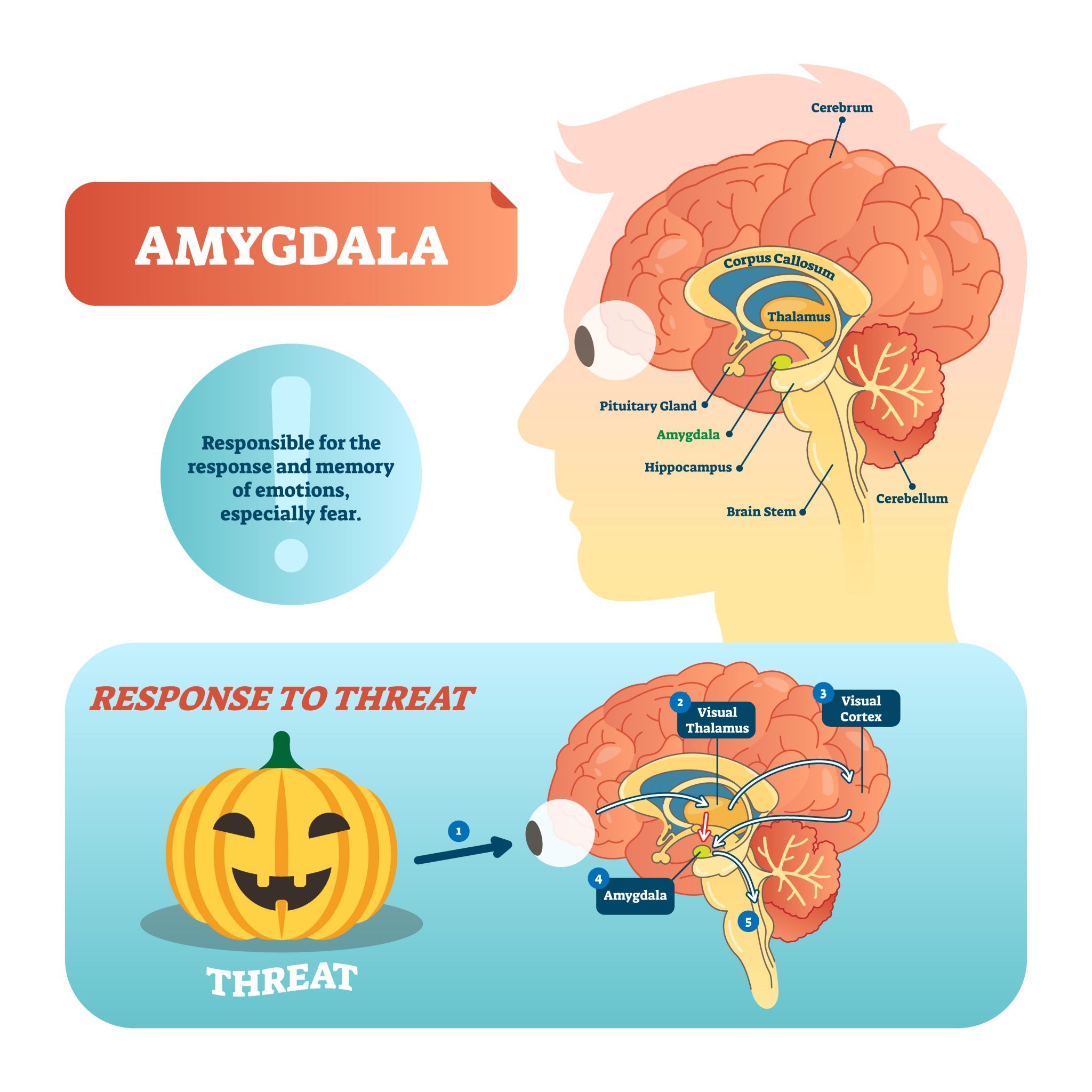
Emotional regulation involves coordination between key brain areas:
- Amygdala – detects threat and emotional intensity
- Prefrontal cortex – regulates, evaluates, and calms emotional responses
- Hippocampus – provides context and memory
Healthy regulation occurs when the prefrontal cortex can modulate amygdala reactivity. Under stress or trauma, this balance is disrupted, leading to emotional overwhelm or shutdown.
Emotional Dysregulation: When Regulation Breaks Down
Emotional dysregulation occurs when a person has difficulty managing the intensity, duration, or expression of emotions. Emotions may feel overwhelming, unpredictable, or completely inaccessible. Instead of rising and settling naturally, emotions either escalate too quickly or shut down entirely.
Common signs of emotional dysregulation include:
- Emotional outbursts or irritability that feel hard to control
- Chronic anxiety or panic, even in non-threatening situations
- Emotional numbness or shutdown, feeling disconnected from feelings
- Impulsivity, acting before thinking to escape emotional discomfort
- Difficulty calming down, even long after a trigger has passed
Emotional dysregulation is not a personality flaw—it reflects a nervous system that has learned to stay in survival mode.
It is commonly seen in:
- Anxiety disorders
- Depression
- Trauma-related conditions
- Borderline personality traits
- Chronic stress and burnout
In these conditions, emotions are not inherently stronger—the capacity to regulate them is compromised.
Development of Emotional Regulation
Emotional regulation skills are not innate; they develop early in life through relationships. Children are not born knowing how to calm themselves—they learn regulation through connection.
Healthy emotional regulation develops through:
- Co-regulation with caregivers – being soothed before learning self-soothing
- Emotional validation – having feelings acknowledged rather than dismissed
- Safe attachment – feeling emotionally and physically secure
When caregivers respond with calm presence, empathy, and consistency, children gradually internalize these regulation skills.
When emotional needs are ignored, punished, minimized, or invalidated, individuals may grow up without effective regulation strategies. As adults, this often shows up as:
- Emotional suppression
- Avoidance of feelings
- Emotional flooding or overwhelm
These patterns are learned adaptations, not personal failures.
Emotional Regulation vs Emotional Suppression
A critical distinction in emotional regulation theory is the difference between regulation and suppression:
- Regulation = awareness + choice
- Suppression = avoidance + control
Suppression involves pushing emotions away, ignoring them, or forcing oneself to appear “fine.” While it may seem effective in the short term, chronic suppression leads to:
- Increased physiological stress
- Emotional rebound (emotions returning more intensely)
- Worsening mental health symptoms
Healthy emotional regulation allows emotions to move through the system, be acknowledged, and settle naturally—rather than becoming trapped in the body or mind.
Emotional Regulation in Therapy and Mental Health
Emotional regulation is a foundational focus in many evidence-based therapeutic approaches, including:
- Cognitive Behavioral Therapy (CBT)
- Dialectical Behavior Therapy (DBT)
- Trauma-informed therapy
- Mindfulness-based interventions
Therapy helps individuals:
- Identify and name emotions accurately
- Build tolerance for emotional discomfort
- Develop flexible and adaptive coping strategies
- Restore balance within the nervous system
Rather than eliminating emotions, therapy teaches people how to relate to emotions differently.
Practical Emotional Regulation Skills
Effective emotional regulation skills are practical, learnable, and evidence-based. These include:
- Slow breathing and grounding to calm the nervous system
- Naming emotions accurately, which reduces emotional intensity
- Cognitive reappraisal, changing how situations are interpreted
- Body-based regulation, such as movement, stretching, or relaxation
- Self-compassion practices, reducing self-criticism during distress
Emotional regulation improves with practice, patience, and safety—not perfection.
Emotional Regulation Is Not About Control—It’s About Safety
From a psychological and neurobiological perspective, emotional regulation improves when the nervous system feels safe. People do not regulate emotions better because they “try harder” or exert more control. They regulate better when they feel:
- Supported
- Understood
- Emotionally safe
- Grounded in the present
When safety is restored, regulation follows naturally.
Emotional regulation is not about suppressing feelings—it is about creating the internal conditions where emotions no longer need to overwhelm or disappear to protect us.
Conclusion
Emotional Regulation Theory provides a powerful lens for understanding emotional health. It explains why emotions sometimes feel overwhelming and how regulation skills can be learned, strengthened, and restored.
Emotional regulation is not a personality trait—it is a learned capacity. With awareness, practice, and support, individuals can develop healthier relationships with their emotions and respond to life with greater balance and resilience.
Emotions do not need to be controlled. They need to be understood and guided.
Frequently Asked Questions (FAQ)
1. What is emotional regulation in psychology?
Emotional regulation is the ability to recognize, manage, and respond to emotions in flexible and adaptive ways without suppressing or being overwhelmed by them.
2. Is emotional regulation the same as emotional control?
No. Emotional regulation involves awareness and choice, while emotional control often involves suppression or avoidance, which can increase stress over time.
3. Why is emotional regulation important for mental health?
Healthy emotional regulation supports resilience, stable relationships, decision-making, and reduces the risk of anxiety, depression, and burnout.
4. What causes emotional dysregulation?
Emotional dysregulation can result from early emotional invalidation, trauma, chronic stress, insecure attachment, or underdeveloped coping skills.
5. What are common signs of emotional dysregulation?
Emotional outbursts, chronic anxiety, emotional numbness, impulsivity, difficulty calming down, and feeling overwhelmed by emotions.
6. How does emotional regulation develop?
Emotional regulation develops early through co-regulation with caregivers, emotional validation, and secure attachment experiences.
7. Can emotional regulation skills be learned later in life?
Yes. Emotional regulation is a learned capacity and can be strengthened at any age through therapy, practice, and supportive environments.
8. What is the Process Model of Emotion Regulation?
Developed by James Gross, it explains how emotions unfold and where regulation can occur during the emotional process.
9. Which emotional regulation strategies are healthiest?
Cognitive reappraisal, grounding, mindfulness, and situation modification are generally more adaptive than emotional suppression.
10. Why is emotional suppression harmful?
Chronic suppression increases physiological stress, emotional rebound, and vulnerability to mental health problems.
11. How does trauma affect emotional regulation?
Trauma can dysregulate the nervous system, making emotions feel overwhelming, blunted, or unsafe to experience.
12. What therapies focus on emotional regulation?
CBT, DBT, trauma-informed therapy, and mindfulness-based approaches strongly emphasize emotional regulation skills.
13. Is emotional regulation linked to the nervous system?
Yes. Regulation improves when the nervous system feels safe and balanced, not when emotions are forced under control.
14. Can emotional regulation reduce anxiety and stress?
Yes. Effective regulation helps calm the nervous system and prevents emotional escalation.
15. Is emotional regulation about staying calm all the time?
No. It is about responding to emotions appropriately, not eliminating or denying them.
Written by Baishakhi Das
Counselor | Mental Health Practitioner
B.Sc, M.Sc, PG Diploma in Counseling
Reference
-
American Psychological Association – Emotion Regulation
https://www.apa.org -
Gross, J. J. (1998). The Emerging Field of Emotion Regulation
https://psycnet.apa.org -
Gross, J. J. (2015). Emotion Regulation: Current Status and Future Prospects
https://www.ncbi.nlm.nih.gov -
National Institute of Mental Health – Stress & Emotional Health
https://www.nimh.nih.gov -
Linehan, M. (2015). DBT Skills Training Manual
https://behavioraltech.org -
Siegel, D. J. (2012). The Developing Mind
https://drdansiegel.com -
Simply Psychology – Emotion Regulation
https://www.simplypsychology.org - Burnout in Working Men: Signs and Recovery
This topic performs well due to rising searches around men’s mental health, workplace stress, and burnout recovery. Combining emotional insight with practical steps increases engagement and trust.
One Reply to “Emotional Regulation Theory Explained”