

Overthinking feels like a mental trap — your mind gets stuck replaying past events, imagining worst-case scenarios, or analysing situations until you feel emotionally drained. While thinking itself isn’t a problem, thinking too much becomes harmful when it leads to anxiety, self-doubt, insomnia, or difficulty making decisions.
As a therapist, I often explain that overthinking isn’t a personality flaw — it’s a habit, and like all habits, it can be unlearned with the right strategies. Here are scientifically supported, therapist-backed ways to break the cycle.
1. Understand What Overthinking Really Is
Overthinking is not just “thinking too much”—it’s thinking in ways that increase stress instead of solving problems. Psychologists usually divide it into two major patterns: rumination and worrying. Both look similar from the outside, but they affect your brain and emotions differently.
Rumination (Past-Focused Overthinking)
Rumination means mentally replaying past events over and over, often with a sense of guilt, shame, or self-blame. Instead of learning from the past, the mind gets stuck in a loop.
How Rumination Sounds:
- “Why did I say that?”
- “I should have handled it better.”
- “What if I hadn’t made that mistake?”
- “People must be judging me.”
Why It Happens:
Rumination is usually triggered by:
- unresolved conflicts
- embarrassment or regret
- fear of repeating mistakes
- perfectionism
- low self-esteem
Psychologically, the mind believes that replaying the incident will help “fix” it, but in reality, it only deepens emotional pain.
Impact on the Mind:
Rumination keeps your nervous system activated, making the brain re-experience old stress as if it’s happening again. Over time, this increases the risk of:
- anxiety
- depression
- self-criticism
- difficulty letting go of past events
It feels like driving with your eyes stuck on the rear-view mirror—you can’t move forward safely.
Worrying (Future-Focused Overthinking)
Worrying is the mental habit of imagining negative outcomes before they even happen. It revolves around fear, uncertainty, and the desire to control the future.
How Worrying Sounds:
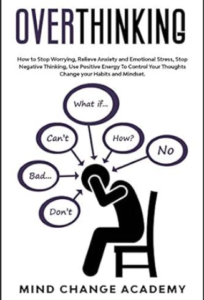
- “What if something goes wrong?”
- “What if I can’t handle it?”
- “What if they misunderstand me?”
- “What if I lose this opportunity?”
Why It Happens:
People worry because the brain tries to “prepare” for possible threats or avoid failure. It’s a survival mechanism that has become overactive.
Common triggers include:
- upcoming decisions
- health concerns
- financial stress
- relationship doubts
- fear of the unknown
Impact on the Mind:
Worrying puts your body in a state of constant “fight-or-flight.” This leads to:
- racing thoughts
- muscle tension
- sleep problems
- difficulty concentrating
- decision paralysis
Instead of protecting you, worrying makes the future feel more dangerous than it is.
Why Both Are Harmful
Even though rumination looks backward and worrying looks forward, both create similar emotional and physical effects. They:
- increase cortisol, the stress hormone
- disturb sleep cycles
- reduce clarity and problem-solving ability
- increase anxiety, irritability, and emotional exhaustion
- make small issues feel much bigger
Think of overthinking as a mental whirlpool—the more you struggle inside it, the deeper you sink.
2. Identify the Trigger Before You Control It
Like any emotional habit, overthinking starts with a trigger — something that sets your mind in motion.
Therapists often ask clients to pause when they notice:
- Physical signs: tight chest, restlessness, rapid heart rate
- Mental cues: repeating thoughts, indecisiveness, fear of mistakes
- Situational triggers: conflict, deadlines, social interactions
Awareness is the first step to breaking the loop.
3. Challenge Your Thoughts (CBT Technique)
Cognitive Behavioural Therapy (CBT) teaches that thoughts are not facts.
When a thought feels overwhelming, ask:
- Is this actually true?
- What evidence supports this thought?
- What evidence goes against it?
- If a friend felt this, what would I tell them?
This reframing reduces emotional intensity and stops catastrophic thinking.
4. Use the “Worry Window” Method
Instead of trying to stop worrying altogether — which usually backfires — therapists often recommend scheduling it.
How it works:
- Choose a 10–15 minute slot each day (e.g., 6:30–6:45 pm).
- When intrusive thoughts appear, tell yourself:
“I’ll think about this during my worry time.” - When the window ends, stop and redirect your mind.
This trains your brain to contain your worries.
5. Break the Thought-Loop With Grounding Techniques
Overthinking keeps you in your head.
Grounding brings you back to the present.
Try one of these:
• 5–4–3–2–1 sensory method
Identify 5 things you see, 4 you can touch, 3 you hear, 2 you smell, 1 you taste.
• Deep breathing (4–7–8 method)
Inhale 4 sec → hold 7 sec → exhale 8 sec.
• Physical grounding
Hold something cold, walk barefoot, stretch your body.
These techniques interrupt mental spirals instantly.
6. Switch to “Problem-Solving Mode”
Overthinking keeps you stuck.
Problem-solving moves you forward.
Ask yourself:
- What part of this situation is in my control?
- What concrete action can I take in the next 24 hours?
- What would be a small first step?
Action reduces anxiety more effectively than thinking.
7. Practice the “Thought Parking Lot” for Bedtime Overthinking
Night-time overthinking is common because the brain is finally quiet.
What to do:
Keep a notebook beside your bed.
When a thought arises, write it down as if you’re “parking” it.
This tells your mind that the thought is stored safely and doesn’t need to stay active.
8. Set Boundaries With Yourself
Some common boundaries:
- Limit how long you analyse a decision (e.g., 30 minutes).
- Avoid re-checking messages multiple times.
- Don’t revisit past conversations unless it helps growth.
Healthy boundaries reduce the mental space for overthinking.
9. Reduce Cognitive Load
Overthinking worsens when your brain is overloaded.
Strategies:
- Keep a simple daily routine
- Declutter your environment
- Use lists instead of storing tasks in your mind
- Prioritize what truly matters
A lighter mind is less likely to spiral.
10. Build Emotional Tolerance
Many people overthink because they fear negative emotions:
- rejection
- uncertainty
- failure
- imperfection
Therapy teaches you to tolerate discomfort instead of trying to mentally control everything.
Ask:
“What feeling am I trying to avoid right now?”
Naming the emotion reduces its power.
11. Lower Perfectionism
Perfectionism fuels overthinking:
- “I must get this right.”
- “What if I make a mistake?”
Shift to:
“Done is better than perfect.”
or
“I can improve as I go.”
Progress matters more than flawless outcomes.
12. Strengthen Mindfulness and Self-Compassion
Mindfulness teaches you to observe thoughts without getting stuck in them.
Self-compassion teaches you to treat yourself kindly during struggles.
Try:
- 5-minute mindfulness meditation
- Affirmations like:
“It’s okay not to have all the answers today.” - Appreciating small wins
People who practice self-kindness overthink less.
13. Know When to Seek Professional Support
Reach out to a therapist if overthinking:
- affects sleep
- impacts work or relationships
- leads to anxiety or panic
- causes physical symptoms
- makes decision-making extremely difficult
Therapy can help identify deeper roots such as trauma, rejection sensitivity, or chronic stress.

Final Thoughts
You can’t stop thoughts from appearing — but you can stop letting them dominate your life. Overthinking reduces when you build awareness, challenge unhelpful patterns, and replace them with healthier mental habits.
Small, consistent steps create profound change.
Choose one technique today and practise it daily — your mind will slowly learn to rest.
Reference
1. American Psychological Association (APA) – Anxiety & Overthinking
https://www.apa.org/topics/anxiety
2. National Institute of Mental Health (NIMH) – Generalized Anxiety & Worry
https://www.nimh.nih.gov/health/topics/generalized-anxiety-disorder-gad
3. Mayo Clinic – Anxiety Disorders Overview
https://www.mayoclinic.org/diseases-conditions/anxiety/symptoms-causes/syc-20350961
4. Mind UK – Anxiety & Worry Support