

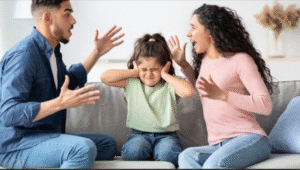
Parental conflict is one of the strongest predictors of a child’s emotional and behavioural difficulties. When children witness frequent disagreements, raised voices, silent tension, or unresolved arguments, they begin to feel unsafe in their own home environment.
Children don’t need “perfect parents”—they need parents who can manage disagreements respectfully and provide a sense of stability. A safe, predictable, and emotionally stable home acts as a protective shield for their mental health. But when conflicts become ongoing, intense, or emotionally charged, this sense of safety breaks down.
A child’s developing brain is extremely sensitive to emotional cues. Even if parents fight in another room or avoid directly involving the child, they can sense the tension—through tone, body language, silence, or changes in routine. This uncertainty makes them anxious and alert, as if they need to “monitor” the situation for danger.
As a result, family tensions affect a child at multiple levels:
- Emotionally, they may feel scared, confused, or responsible for the conflict.
- Socially, they may struggle with trust, communication, and forming healthy relationships.
- Cognitively, stress interferes with concentration, memory, and learning capacity.
For example, a child who regularly hears arguments may find it hard to sleep, may lose interest in studies, or may become clingy, aggressive, or withdrawn. The emotional climate at home shapes how they see themselves, others, and the world around them.
🔵 What is Parental Conflict?
Parental conflict refers to recurring disagreements, tension, or hostility between caregivers. It can show up in many forms, from visible arguments to subtle emotional distance. These conflicts don’t always have to be loud or dramatic—sometimes the silence between parents can be just as distressing for a child.
It may include:
- Frequent arguments:
Repeated shouting, harsh words, or heated disagreements create an atmosphere of instability, making children feel unsafe or anxious. - Silent treatment or emotional withdrawal:
When parents stop talking to each other, avoid eye contact, or move around the house with obvious tension, children sense something is wrong. This “quiet conflict” can be more confusing because nothing is explained. - Blaming and criticism:
Constant negativity, sarcasm, or blaming erodes emotional security. Children may fear becoming the reason for the next argument. - Physical aggression:
Any form of pushing, throwing objects, or violent behaviour can be deeply traumatic and can shape long-term emotional and behavioural difficulties. - High-stress environment, even without open fights (“cold conflict”):
A home doesn’t have to be loud to feel unsafe.
Cold conflict—tense silence, irritability, or emotional distance—can make the home environment unpredictable and stressful.
Children are highly sensitive to the emotional climate at home. Even if parents argue in private or try to hide their conflict, children often pick up on changes in tone, body language, routine, or the overall mood in the house. Their emotional radar is strong—they can feel tension even without seeing the fight.

🔶 How Parental Conflict Impacts Child Development
1️⃣ Emotional Development
Children feel emotionally unsafe when parents fight. Their minds interpret conflict as danger, and this emotional insecurity can shape their overall personality and mood.
This may lead to:
- Anxiety and excessive worry:
Children may constantly fear another argument. They stay alert, listen carefully to the parents’ tone, and anticipate the next conflict. - Low self-esteem (“It’s my fault”):
Many children internalize conflict and blame themselves, believing their behaviour caused the fight. - Guilt and confusion:
They may feel responsible for “fixing” the situation or feel guilty for not being able to help. - Persistent sadness or irritability:
Emotional instability at home often appears as moodiness, crying easily, or becoming easily frustrated. - Difficulty regulating emotions:
They may become overwhelmed by emotions because they don’t see calm conflict resolution at home.
Over time, children may internalize these emotions, leading to anxiety disorders, depression, emotional shutdown, or chronic stress.
2️⃣ Behavioural Development
Parental conflict often shows up in a child’s behaviour because children express stress through actions more than words.
Common behaviours include:
- Aggression, anger outbursts:
Imitating shouting or reacting strongly to minor triggers. - Oppositional or defiant behaviour:
Saying “no,” refusing tasks, or challenging authority figures. - Lying, attention-seeking:
Trying to gain control or secure emotional attention that feels missing at home. - Withdrawal or isolation:
Avoiding family, friends, or activities due to emotional overload. - Risk-taking behaviour during adolescence:
Such as substance experimentation or rebellion as a coping mechanism.
Kids learn by observing. When conflict is handled poorly, they may imitate similar behaviours in school, friendships, or future relationships because they believe this is “normal.”
3️⃣ Cognitive Development
A stressful home affects a child’s ability to think, learn, and focus. Their brain becomes preoccupied with emotional survival instead of academic tasks.
Effects include:
- Poor concentration:
They can’t pay attention because their mind is busy thinking about home issues. - Learning difficulties:
Emotional stress affects memory, comprehension, and processing speed. - Decline in academic performance:
Homework may be incomplete, grades drop, or interest in studies decreases. - Overthinking and rumination:
Constantly replaying arguments or worrying about “what will happen next.” - Difficulty making decisions:
Children from tense households fear making mistakes and struggle to think clearly.
Constant stress activates the brain’s survival mode, reducing the cognitive space needed for learning and problem-solving.

4️⃣ Social Development & Relationships
Children from high-conflict homes may struggle to connect with others because they have learned to associate relationships with tension and unpredictability.
This may show up as:
- Difficulty trusting others:
They expect disappointment, criticism, or rejection. - Fear of rejection:
They may avoid friendships or feel overly sensitive to small conflicts. - Problems making or maintaining friendships:
Either becoming too clingy or too distant. - Sensitive to criticism:
Even gentle feedback may feel threatening. - Avoidant, anxious, or aggressive communication:
They may mirror what they observe at home.
Later in life, these children may carry unhealthy relational patterns into adulthood—struggling with intimacy, communication, or conflict resolution.
5️⃣ Physical Health Impact
Chronic stress from parental conflict affects the body just as much as the mind.
Common symptoms include:
- Headaches, stomach aches:
Stress chemicals create physical discomfort. - Sleep disturbances:
Trouble falling asleep, nightmares, or waking up frequently. - Appetite changes:
Eating too little, too much, or showing picky eating. - Weakened immune system:
Frequent colds or illnesses due to prolonged stress. - Increased cortisol levels (stress hormone):
Long-term elevation contributes to fatigue, irritability, and health risks.
Unresolved stress can become a lifelong health concern, affecting growth and overall well-being.
🔷 Long-Term Effects in Adolescence & Adulthood
If conflict continues, its effects often follow children into their teen and adult years.
It may lead to:
- Relationship issues:
Difficulty understanding healthy communication or managing disagreements. - Difficulty managing emotions:
Either emotional shutdown or emotional overload. - Low confidence and self-worth:
Feeling “not good enough” or doubting their abilities. - Academic or career struggles:
Reduced motivation, poor decision-making, or stress intolerance. - Dependency issues or substance use:
Numbing emotional pain through coping behaviours. - Fear of commitment or intimacy:
Believing relationships are risky, unstable, or suffocating.
Early home experiences shape the internal blueprint for all future relationships, emotional responses, and even life choices.
🟢 What Helps Children Cope? (Solutions for Parents)
✔ Maintain Respect Even During Disagreements
Conflict is normal in every relationship—but how parents handle it shapes the child’s emotional safety.
Using calm tones, avoiding accusations, and taking breaks when emotions rise helps prevent arguments from turning harmful. When children see disagreements handled respectfully, they learn that conflict can be resolved without fear, shouting, or disrespect.
✔ Don’t Involve Children
Children should never be turned into messengers, judges, or mediators during disagreements.
This puts emotional pressure on them and makes them feel responsible for adult problems. Instead, reassure them gently:
“It’s not your fault. We’re handling it.”
This simple sentence can greatly reduce their anxiety and protect their sense of security.
✔ Model Healthy Conflict Resolution
Children absorb emotional behaviours by watching their parents.
When they see adults apologize, use kind language, listen actively, and repair after disagreements, they learn important life skills—such as empathy, patience, and emotional regulation.
Healthy conflict resolution at home becomes the template they use in school, friendships, and future relationships.

✔ Provide Emotional Security
A stable, predictable environment helps children cope better with stress. Parents can build emotional security by:
- Maintaining routines:
Regular mealtimes, bedtime schedules, and daily rituals help children feel safe and grounded. - Spending quality time:
Even 10–15 minutes of focused connection each day builds trust and emotional closeness. - Validating their feelings:
Acknowledge emotions with statements like “I understand you’re feeling upset” or “It’s okay to feel worried.” - Encouraging open communication:
Let children express their thoughts without fear of blame or punishment.
These small actions create a strong emotional foundation, even during stressful times.
✔ Seek Professional Support
Sometimes conflicts become overwhelming or too frequent.
In these situations, family counseling, couple therapy, or parenting guidance can help parents understand patterns, improve communication, and reduce emotional harm. Seeking help is not a failure—it is a step toward protecting the child’s well-being and creating a healthier family environment.
🟣 When to Seek Help?
• Conflicts are frequent and intense
When disagreements happen often or escalate into shouting, hostility, or long periods of silence, it can signal deeper unresolved issues. Professional support can help parents understand patterns and rebuild healthy communication.
• Children show behavioural or emotional changes
If a child suddenly becomes aggressive, withdrawn, anxious, fearful, or shows a decline in school performance, it may be a sign that the conflict at home is affecting them. Therapists can help both parents and children process these emotions safely.
• There is physical or emotional abuse
Any form of violence, intimidation, manipulation, threats, or constant criticism is harmful and requires immediate intervention. Safety and mental well-being must be prioritised for both the parent and the child.
• A parent feels overwhelmed or unable to cope
Feeling emotionally exhausted, helpless, or unsure how to handle conflict is a sign that support is needed. Seeking help early can prevent burnout and reduce tension within the family.
Early intervention prevents long-term damage.
Getting support at the right time helps restore stability, improves communication, and protects the child’s emotional, social, and psychological development. Even small changes guided by a professional can create a healthier and safer home environment.

🟡 Final Thoughts
Parental conflict does not just affect the momentary atmosphere at home—it shapes the child’s long-term emotional, cognitive, and social blueprint. The way parents communicate, express emotions, and resolve disagreements becomes the model children use to understand relationships and handle stress throughout life.
Children thrive when they feel safe, loved, and supported. A calm and predictable home environment helps them develop confidence, emotional resilience, and healthy coping skills. Even when disagreements happen, the way parents handle those moments can either strengthen or weaken a child’s sense of security.
By addressing conflicts respectfully, using healthy communication, and creating a secure emotional environment, parents can protect their child’s mental health and nurture positive development. Small changes in daily interactions—listening with empathy, apologizing when needed, staying calm during disagreements—can make a profound difference in how a child grows, thinks, and relates to the world.
Reference
1. American Psychological Association (APA) – Parenting & Child Development
https://www.apa.org/topics/parenting
2. UNICEF – Child Development Resources
https://www.unicef.org/parenting
3. CDC – Child Development & Mental Health
https://www.cdc.gov/child-development
4. National Institutes of Health (NIH) – Child Mental Health Research
https://www.nimh.nih.gov/health/topics/child-and-adolescent-mental-health
Positive Parenting Techniques
yourwebsite.com/positive-parenting
