

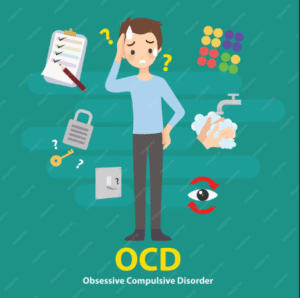
Obsessive-Compulsive Disorder (OCD) is a mental health condition where a person experiences unwanted thoughts (obsessions) and repeatedly engages in certain behaviours (compulsions) to reduce anxiety. These thoughts may feel intrusive, irrational, or disturbing—yet extremely difficult to ignore. Compulsions temporarily reduce the anxiety, but the relief doesn’t last, causing the cycle to repeat.
OCD can affect anyone—children, teenagers, or adults—and often becomes overwhelming if not identified early. Many people misunderstand OCD as simply “liking cleanliness” or “being too organised,” but in reality, it is a distressing cycle of fear, doubt, and repetitive behaviors that the person cannot control.
In this article, we will explore the most common symptoms of OCD, how they appear in real life, and when to seek professional help.
What Are Obsessions?
Obsessions are intrusive, distressing, and repetitive thoughts, images, or urges that enter a person’s mind without their control. Even when the person knows these thoughts are irrational, they still feel extremely real and disturbing. These obsessions create intense anxiety or discomfort, leading the person to perform certain actions (compulsions) to feel relieved.
Obsessions are not simply “overthinking”; they are persistent mental intrusions that interfere with daily life.
Common Obsession Symptoms (With Examples)
- Fear of Contamination
A persistent worry about germs, dirt, illness, or infection.
Example:
Rita avoids touching elevator buttons and washes her hands repeatedly because she fears she might catch a deadly disease—even though she is physically healthy.
- Intrusive Aggressive Thoughts
Unwanted thoughts of harming oneself or others, even though the person has no intention to act on them.
Example:
A father has sudden, disturbing images of accidentally harming his baby while holding them. These thoughts shock him, but they are completely unwanted and against his nature.
- Fear of Losing Control
A feeling that one might suddenly act out of character—shout, insult someone, or break something.
Example:
A student avoids sitting near windows in class because he fears he might impulsively throw something out, even though he never has.
- Perfectionism and Excessive Doubt
Endless worry about making mistakes or fear when things don’t feel “just right.”
Example:
Meera rewrites her notes again and again until the letters look perfect, causing her to fall behind in studying.
- Unwanted Sexual Thoughts
Disturbing, intrusive sexual images or urges that contradict a person’s values and cause guilt or confusion.
Example:
A teenager feels distressed because inappropriate sexual images pop into his mind during class. He doesn’t want these thoughts, but they keep returning.
- Religious or Moral Obsessions (Scrupulosity)
An intense fear of committing sin, breaking religious rules, or being spiritually impure.
Example:
Arjun repeats his prayer multiple times because he feels he did not recite it “perfectly,” fearing God will be displeased.

What Are Compulsions?
Compulsions are repetitive actions or mental rituals that a person feels forced to perform in order to reduce the anxiety created by obsessions. Even though these behaviors may bring temporary relief, the anxiety quickly returns—creating a difficult and exhausting cycle. Over time, compulsions begin to interfere with daily life, routines, relationships, and emotional well-being.
Common Compulsion Symptoms (With Examples)
-
Checking Behaviors
Repeatedly checking things due to fear, doubt, or imagined danger.
Examples:
- Checking the door lock 10–20 times before sleeping because “maybe it wasn’t locked properly.”
- Re-checking the stove even after leaving home, leading to repeated trips back.
- Reviewing a message again and again before sending it to ensure nothing “wrong” was written.
- A student repeatedly checks if they kept their pen, notebook, or ID in their bag.
-
Excessive Cleaning or Washing
Over-cleaning to reduce contamination-related fear.
Examples:
- Washing hands so frequently that the skin becomes dry and cracked.
- Taking long showers multiple times a day to feel “clean.”
- Cleaning the same table or object repeatedly even when it is already spotless.
- Avoiding touching objects in public, then sanitizing excessively when they do.
-
Repeating Actions
Doing an action a certain number of times or in a specific sequence so that it “feels right.”
Examples:
- Touching the doorknob 4 times before leaving the room.
- Walking back and forth on the same line until it feels balanced.
- Repeating a sentence until it sounds “perfect.”
- Tapping a surface several times to prevent something “bad” from happening.
-
Arranging or Ordering
Objects must be in perfect order—symmetrical, aligned, or placed in a specific pattern.
Examples:
- Rearranging books, pens, or clothes repeatedly until they look “exact.”
- Becoming anxious if someone moves an item even slightly.
- Spending excessive time organizing a desk because the items do not “feel right.”
-
Mental Rituals
Compulsions that happen inside the mind instead of through physical actions.
Examples:
- Repeating prayers silently again and again to neutralize a disturbing thought.
- Counting numbers mentally (e.g., 1–8 repeatedly) to feel safe.
- Mentally reviewing past conversations to ensure they didn’t offend anyone.
- Creating “good thoughts” to cancel out “bad thoughts.”
-
Avoidance
Avoiding situations, people, or places that trigger obsessions.
Examples:
- Avoiding hospitals or public transport due to fear of germs.
- Staying away from knives or sharp objects due to intrusive harm-related thoughts.
- Avoiding children because of unwanted intrusive thoughts.
- Skipping religious spaces due to guilt or perfectionism around prayers.

How OCD Affects Daily Life
Living with OCD can impact a person far beyond their thoughts and rituals. Because obsessions and compulsions take up significant mental and emotional energy, daily functioning gradually becomes harder. People with OCD often face challenges that others may not immediately notice, leading to frustration, fatigue, and emotional overwhelm.
Common Ways OCD Affects Everyday Life
-
Taking a long time to finish simple tasks
What should take a few minutes—like getting ready, locking the door, or writing an email—can take much longer because of repeated checking, correcting, or cleaning.
-
Feeling anxious, guilty, or ashamed
Intrusive thoughts can feel frightening or morally wrong, even when the person has no intention of acting on them. This creates unnecessary guilt and shame, making them hide their struggles from others.
-
Experiencing disturbed sleep
Constant worry, mental rituals, or late-night compulsions disrupt sleep patterns. Many people stay awake replaying events in their mind or performing rituals to feel safe.
-
Struggling with relationships
OCD can create misunderstandings. Loved ones may not understand the fears, rituals, or anxieties, causing tension or emotional distance. The person with OCD may avoid opening up to prevent judgment.
-
Avoiding responsibilities or outings
If certain places or situations trigger obsessions—like contamination fears or intrusive thoughts—the person may avoid social gatherings, work tasks, or daily responsibilities.
-
Feeling mentally exhausted or “stuck” in their own mind
The constant cycle of fear and ritual drains emotional energy. Many describe feeling trapped, overwhelmed, or mentally blocked, even when they want to move forward.
Long-Term Impact of Untreated OCD
If OCD is not treated, the symptoms often intensify with time. This can lead to:
- Increased stress and burnout
- Higher risk of depression
- Social withdrawal and isolation
- Lower productivity at school or work
- Reduced self-esteem and confidence
Early identification and treatment can prevent these long-term effects and help individuals return to a balanced, emotionally healthier life.

When to Seek Help
Recognising when OCD symptoms are becoming unmanageable is a crucial step toward healing. Many people try to cope silently, hoping their thoughts or rituals will “go away on their own,” but OCD rarely improves without proper support. Seeking help early can prevent symptoms from worsening and make treatment more effective.
Professional help is important if:
-
Symptoms continue for more than 2–4 weeks
If intrusive thoughts or compulsive behaviours persist for several weeks, it’s a sign that the brain is stuck in an anxiety–relief cycle that needs intervention.
-
Daily routine is affected
When ordinary tasks—such as getting ready, studying, working, or leaving the house—start taking longer than usual or feel overwhelming, OCD may be interfering with day-to-day functioning.
-
Anxiety becomes uncontrollable
If fears, doubts, or mental images create intense stress that feels difficult to manage, it’s a strong indication that professional guidance is needed.
-
You spend more than 1 hour a day on obsessions or compulsions
OCD often consumes mental and emotional energy. Spending long periods checking, cleaning, repeating, or performing rituals is a clear signal to seek support.
-
You feel embarrassed, guilty, or trapped by your thoughts
Many people with OCD feel ashamed or afraid to talk about their experiences. If your thoughts feel intrusive, disturbing, or “not like you,” reaching out to a mental health professional can help you understand what is happening without judgement.
Treatment Options
The good news is that OCD is one of the most treatable mental health conditions. The most effective treatment options include:
-
CBT (Cognitive Behavioural Therapy)
Specifically, Exposure and Response Prevention (ERP) helps individuals face their fears gradually while reducing compulsive behaviors, breaking the anxiety cycle.
-
Medication
In some cases, psychiatrists may prescribe medication (such as SSRIs) to help reduce intrusive thoughts and anxiety, allowing therapy to work more effectively.
Seeking help is not a sign of weakness—it is a sign of strength and self-care. With the right treatment, individuals can regain control, reduce their symptoms, and lead a healthy, fulfilling life.
Final Thoughts
OCD is a challenging condition, but the most important truth to remember is this: it is highly treatable, and recovery is absolutely possible. Many people live healthy, balanced, and fulfilling lives once they receive the right support and intervention. Early awareness plays a crucial role—it allows symptoms to be recognised before they become overwhelming, reducing emotional distress and improving daily functioning.
Understanding OCD also helps remove the shame often attached to intrusive thoughts or repetitive behaviours. These symptoms are not a sign of weakness, lack of control, or “overreacting”—they are part of a clinical condition that responds well to evidence-based treatment such as Cognitive Behavioural Therapy (CBT), especially Exposure and Response Prevention (ERP), and sometimes medication.
If you or someone you know is experiencing symptoms of OCD, remember that you don’t have to struggle alone. Reaching out to a mental health professional can be the first step toward healing. With consistent support, compassion, and the right therapeutic approach, the cycle of obsessions and compulsions can be broken, allowing individuals to regain control of their thoughts, behaviours, and life.
Healing is not only possible—it is within reach. All it takes is the courage to seek help and the willingness to take the first step toward recovery.
Frequently Asked Questions (FAQs)
1. What is OCD?
OCD is a mental health condition involving intrusive thoughts (obsessions) and repetitive behaviors (compulsions).
2. What are common OCD symptoms?
Obsessions like fear of contamination and compulsions like repeated checking or cleaning.
3. What are obsessions in OCD?
Unwanted, intrusive thoughts that cause anxiety.
4. What are compulsions in OCD?
Repetitive behaviors performed to reduce anxiety.
5. Can OCD be cured?
It can be effectively managed with therapy and sometimes medication.
6. What is ERP therapy?
Exposure and Response Prevention is a CBT-based treatment for OCD.
7. How does OCD affect daily life?
It can interfere with routines, relationships, and mental well-being.
8. When should I seek help for OCD?
If symptoms last more than 2–4 weeks or affect daily functioning.
9. Can children have OCD?
Yes, OCD can affect children, teens, and adults.
10. Is OCD just about cleanliness?
No, OCD includes many types of intrusive thoughts beyond cleanliness.
Written by Baishakhi Das
Counselor | Mental Health Practitioner
B.Sc, M.Sc, PG Diploma in Counseling
Reference
International OCD Foundation (IOCDF): Evidence-based resources on OCD
https://iocdf.org/
If you’re new here, learn more about our mission at
👉 Mono Prova Counselling – About Us
If you feel OCD is affecting your daily life, you can connect with us directly at
👉 Book a Counselling Session
This article is written for knowledge purposes, aiming to help readers understand the topic better and gain useful insights for learning and awareness.