


Social Anxiety Disorder (SAD), also known as Social Phobia, is a common yet often misunderstood mental health condition. It goes far beyond normal shyness or introversion. People with social anxiety experience intense fear about being judged, embarrassed, or humiliated in social situations—even when there is no real threat.
For example, a person with SAD may worry for days before attending a simple family gathering, imagining that everyone will notice their nervousness or criticize the way they speak. Someone else might avoid answering phone calls because they fear sounding “stupid” or making a mistake. Even routine activities like eating in public, introducing themselves in a meeting, or walking into a room full of people can trigger overwhelming anxiety.
This constant fear can interfere with everyday life—making it difficult to form friendships, participate in class or meetings, attend social events, or explore career opportunities. Many individuals skip job interviews, avoid promotions, or decline invitations simply because of the discomfort social situations bring.
Understanding the signs, causes, and coping strategies of social anxiety can help make the condition more manageable and less overwhelming. With awareness and support, people living with SAD can gradually rebuild confidence and learn to navigate social interactions with greater ease.
What Is Social Anxiety Disorder?
Social Anxiety Disorder is a persistent fear of social or performance situations where a person feels they are being watched, evaluated, or judged by others. This fear isn’t just mild nervousness—it’s a deep worry rooted in the belief that one might say or do something embarrassing, look awkward, or be rejected.
For example, someone may avoid speaking up in class or meetings because they fear others will think their ideas are “wrong” or “silly.” Another person might rehearse simple sentences repeatedly before ordering food at a restaurant, worried that their voice might shake or they might stutter. Even everyday moments—like walking past a group of people or making eye contact—can feel like intense pressure when someone believes others are scrutinizing them.
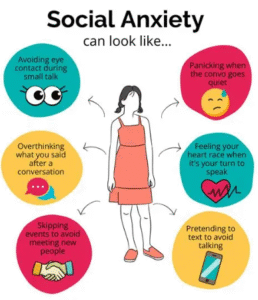
Social anxiety affects people of all ages, from school children who freeze during presentations to adults who decline work events, weddings, or parties. It can show up in different forms, such as avoiding conversations, canceling plans last minute, or experiencing extreme fear during public speaking, to the point where the person feels their heart racing, hands shaking, or mind going blank.

Common Signs & Symptoms
Social anxiety can show up emotionally, physically, and behaviourally. Many people experience a combination of these symptoms in different situations.
1. Emotional & Cognitive Symptoms
Fear of being judged or criticized
For example, a person may avoid giving opinions during meetings because they fear others will think they are “wrong” or “not smart enough.”
Intense worry before social events
Even a simple birthday party or office lunch can cause days of worry—thinking about what to wear, what to say, or how others might perceive them.
Overthinking past social interactions
Someone might replay a conversation repeatedly, thinking, “Did I sound rude?” or “Why did I say that?” even when nothing went wrong.
Fear of embarrassment or humiliation
A person may avoid eating in public because they fear spilling food or being noticed while chewing.
Feeling “on the spot” in social situations
Even when no one is paying attention, the individual may feel like all eyes are on them, especially when they walk into a room or speak in a group.
2. Physical Symptoms
- Rapid heartbeat: Before speaking or meeting people, the heart may race as if facing danger.
- Sweating or trembling: Hands may shake while holding a glass, or sweat may appear even in air-conditioned rooms.
- Dry mouth: The person may struggle to speak properly during introductions or presentations.
- Blushing: Many individuals fear their face turning red, which further increases their anxiety.
- Nausea or stomach discomfort: Some people feel like their stomach is “twisting” before talking to strangers or participating in group activities.
- Feeling faint or dizzy: Intense social fear can make someone feel weak, lightheaded, or disconnected from their surroundings.
3. Behavioural Symptoms
- Avoiding social situations: They may skip gatherings, presentations, or group discussions to avoid anxiety.
- Leaving events early: Someone might attend a function but leave within minutes because the pressure becomes overwhelming.
- Difficulty making eye contact: Not because they are rude—but because making eye contact increases their self-consciousness.
- Staying quiet or hiding in the background: The person may stay near a corner of the room or avoid engaging in conversation so they won’t be noticed.
- Relying on a “safe person” in social settings: They may only attend events if a trusted friend or family member is with them, and they depend on that person to speak or make decisions for them.

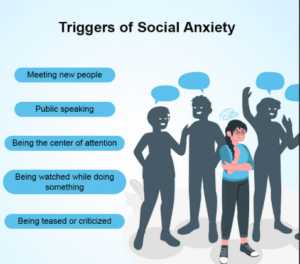
Common Triggers of Social Anxiety
Different people experience different triggers, but some common ones include:
1. Speaking in Public :Presentations, meetings, or giving opinions can trigger intense anxiety.
Example: A student may avoid giving a class presentation because their mind goes blank, or an employee may dread team meetings because they fear stumbling over their words.
2. Meeting New People: Fear of negative evaluation often peaks during introductions.
Example: Someone may practice their introduction repeatedly before meeting a friend’s family or new colleagues, worried that they will make a bad impression.
3. Being the Center of Attention: Birthdays, group discussions, or being called on unexpectedly can feel overwhelming.
Example: A person might feel panicked when everyone sings “Happy Birthday” to them or when a teacher asks them to answer a question in front of the class.
4. Social Gatherings: Parties, family functions, or crowded places can trigger discomfort.
Example: A person may enter a party but instantly feel overwhelmed by the noise, people, and social expectations, causing them to withdraw or leave early.
5. Performance Situations: Singing, dancing, or doing anything in front of others can heighten fear.
Example: Even if they enjoy singing, they might decline karaoke because they fear their voice will shake or people will laugh.
6. Eating or Writing in Public: The fear of being watched or judged plays a big role.
Example: Someone may avoid eating lunch at a restaurant alone because they worry about spilling food or being judged for how they eat.
Similarly, writing in front of others—like filling out a form at a counter—may cause trembling hands.
7. Being Observed by Others: Even simple tasks like walking or sitting can feel uncomfortable.
Example: A person may feel anxious walking across a room because they think others are judging their posture, clothes, or movements.
What Causes Social Anxiety Disorder?
Social anxiety develops due to a combination of factors, not just one single reason. Understanding these influences can help individuals be kinder to themselves and reduce self-blame.
1. Genetic Predisposition: Some people are naturally more sensitive or anxious because it runs in their family.
Example: If a parent or sibling struggles with anxiety, a child may also be more likely to develop similar symptoms due to inherited traits.
2. Traumatic Social Experiences: Negative or embarrassing events can have a long-lasting impact.
Example: A child who was bullied in school for their appearance or made fun of during a class presentation may grow up fearing similar situations.
Even one episode of public embarrassment—like forgetting lines on stage—can leave deep emotional marks.
3. Overprotective or Critical Parenting: How a child is raised shapes their confidence and perception of the world.
Example:
- Overprotective parents who constantly warn, “Don’t talk to strangers” or “You will mess up” can unintentionally make the child believe social situations are threatening.
- Critical parents who highlight mistakes more than achievements may cause a child to fear judgment from others.
4. Temperament (Naturally Shy or Introverted): Some individuals are born with a quiet or cautious temperament.
Example: Children who take longer to warm up in new environments or hesitate before joining group activities may carry this sensitivity into adulthood.
This natural tendency doesn’t cause social anxiety alone, but it makes someone more vulnerable if combined with other factors.
5. Overactive Fear Response in the Brain: In people with social anxiety, the brain’s “alarm system” reacts strongly even in non-threatening situations.
Example:
The amygdala (fear center) may interpret a simple situation—like someone glancing at them—as a danger signal, causing physical symptoms like sweating or a racing heart.
Understanding These Factors Matters
Knowing the roots of social anxiety helps individuals realise:
- It’s not their fault
- They are not “weak” or “overreacting”
- Their anxiety has understandable causes
This understanding builds self-compassion and motivates people to seek healthy coping strategies without guilt.
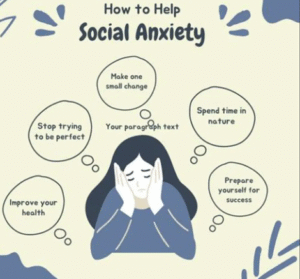
Coping Strategies for Social Anxiety
While social anxiety feels overwhelming, it is highly manageable with the right strategies, consistent practice, and professional guidance. Here are evidence-based coping methods explained with clear examples:
1. Practice Slow, Deep Breathing: Deep breathing helps calm the nervous system and reduces physical symptoms like a racing heart or trembling hands.
Example:
Before walking into a meeting or social event, take a moment to inhale for 4 seconds, hold for 2 seconds, and exhale for 6 seconds. This signals the brain that you’re safe.
2. Challenge Negative Thoughts: People with social anxiety often assume the worst (“Everyone will think I’m awkward”). Challenging these thoughts can reduce fear.
Ask yourself:
- “Is this fear based on facts or assumptions?”
- “What evidence do I have that something bad will happen?”
Example:
If you think, “Everyone will laugh at me if I speak up,” challenge it:
Evidence against: People rarely remember small mistakes; everyone else is focused on themselves.
This technique is part of Cognitive Behavioural Therapy (CBT).
3. Gradual Exposure: Instead of avoiding situations, slowly face them in manageable steps.
Example ladder:
- Step 1: Make small talk with a shopkeeper
- Step 2: Join a small group discussion
- Step 3: Attend a social gathering for 20 minutes
- Step 4: Share an opinion in a meeting
Over time, your fear reduces as your brain learns that the situation isn’t dangerous.
4. Develop Social Skills: Simple skills can boost confidence in interactions.
Examples:
- Practice greeting people with a smile
- Use active listening (nodding, maintaining comfortable eye contact)
- Learn basic assertive responses like “I need a moment to think” or “I’d prefer something else”
Improving these skills builds a sense of control in social situations.
5. Mindfulness Practices: Mindfulness helps you stay in the present rather than worrying about what others are thinking.
Example:
During a conversation, notice sensations like your feet on the ground or the sound of the person’s voice. This grounds you and reduces overthinking.

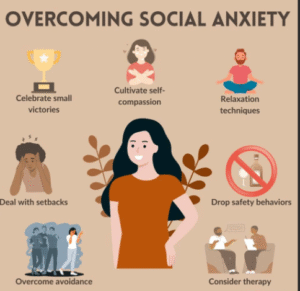
6. Limit Safety Behaviours: Safety behaviours temporarily reduce anxiety but keep the fear alive long-term.
Examples of safety behaviours:
- Avoiding eye contact
- Rehearsing lines before speaking
- Hiding behind your phone
- Relying on a friend to talk for you
Reducing these gradually builds authentic confidence.
7. Healthy Lifestyle Choices: A healthier body supports a calmer mind.
Examples:
- Adequate sleep: Improves emotional regulation
- Regular exercise: Releases mood-boosting hormones
- Reducing caffeine: Helps prevent jitteriness that mimics anxiety
- Balanced diet: Stabilizes mood and energy
These habits reduce overall anxiety levels.
8. Professional Support: Reaching out to a mental health professional can fast-track progress.
Effective therapies include:
- Cognitive Behavioural Therapy (CBT)
- Exposure therapy
- Mindfulness-based interventions
Example:
A therapist may guide you through gradual exposure exercises, help identify unhelpful thinking patterns, and teach coping skills tailored to your triggers.
In some cases, medication prescribed by a psychiatrist can help manage severe symptoms alongside therapy.
When to Seek Help
You should consider reaching out to a mental health professional if:
• Anxiety interferes with work, studies, or relationships
Example: You skip meetings, avoid group assignments, or struggle to talk to colleagues or classmates, and it’s affecting your performance or connections.
• You avoid important opportunities
Example: You turn down promotions, social events, or interviews simply because they involve interacting with people, even when you truly want those opportunities.
• You experience panic attacks in social situations
Example: Your heart races, breathing becomes difficult, or you feel faint when walking into a crowd, entering a classroom, or speaking to strangers.
• Your fear feels uncontrollable
Example: Even when you logically know nothing bad will happen, your body reacts with intense fear that you can’t manage on your own.
Seeking help is a strength—not a weakness.
Reaching out to a therapist or counselor shows courage and self-awareness. With the right support, many people learn effective tools to reduce anxiety, build confidence, and regain control over their social life.
Final Thoughts
Social Anxiety Disorder is highly treatable, and many people recover with the right combination of awareness, self-help strategies, and professional guidance. With small, consistent steps, individuals can gradually rebuild confidence, strengthen communication skills, and create meaningful relationships without the constant fear of judgment.
Example: Someone who once avoided social gatherings may slowly find themselves enjoying conversations, participating in group activities, or even speaking comfortably in meetings—all because they took the first step toward understanding and managing their anxiety.
You don’t have to face social anxiety alone. Whether it’s learning coping skills, seeking therapy, or opening up to a trusted person, healing begins with one small, brave step. With patience and support, a calmer, more confident version of you is absolutely possible.
Frequently Asked Questions (FAQs)
1. What is Social Anxiety Disorder?
Social Anxiety Disorder is a condition where a person experiences intense fear of being judged, embarrassed, or criticized in social situations.
2. Is social anxiety the same as shyness?
No, social anxiety is more intense and persistent than shyness and can interfere with daily life and relationships.
3. What are common symptoms of social anxiety?
Symptoms include fear of judgment, overthinking, sweating, trembling, avoiding social situations, and difficulty speaking in groups.
4. What causes social anxiety?
It can be caused by genetics, past experiences, personality traits, parenting style, and brain response to fear.
5. Can social anxiety go away on its own?
Mild cases may improve, but moderate to severe social anxiety often requires therapy and structured coping strategies.
6. How can I overcome social anxiety?
Techniques like CBT, gradual exposure, mindfulness, and social skills practice can help reduce symptoms.
7. Is social anxiety treatable?
Yes, social anxiety is highly treatable with therapy, lifestyle changes, and sometimes medication.
8. Can social anxiety cause physical symptoms?
Yes, it can cause sweating, rapid heartbeat, nausea, trembling, and dizziness.
9. When should I seek help for social anxiety?
If anxiety affects your work, studies, relationships, or daily functioning, professional help is recommended.
10. Can introverts have social anxiety?
Yes, but introversion and social anxiety are different. Introverts prefer solitude, while social anxiety involves fear and distress in social situations.
Reference
- National Institute of Mental Health – Social Anxiety
https://www.nimh.nih.gov/health/publications/social-anxiety-disorder - American Psychological Association – Social Anxiety Disorder
https://www.apa.org/topics/anxiety/social-anxiety - Mayo Clinic – Social Anxiety
https://www.mayoclinic.org/diseases-conditions/social-anxiety-disorder -
About Us Page
https://monoprovacounselling.in/about-us/ -
Contact for Counselling
https://monoprovacounselling.in/contact/