Attachment Styles in Relationships: How Your Childhood Shapes Your Love Life

Love is not random. It is patterned.
The partners we choose, the way we express emotions, the way we fight, the way we forgive, the intensity of our expectations — all follow a blueprint created long before adult romance begins.

This blueprint is called attachment style.

Attachment theory proposes that our early interactions with caregivers form deep psychological expectations about love and safety. These expectations later influence how we behave in romantic relationships — often subconsciously.

How Attachment Styles Are Formed

Human babies are biologically dependent. When a caregiver responds to their cry with affection, warmth, and consistency, the baby learns:

“The world is safe, and I am worthy of love.”

But if caregivers are inconsistent, emotionally distant, frightening, or unpredictable, the child learns:

“Love is unreliable, dangerous, or conditional.”

These early emotional imprints become attachment patterns that continue into adulthood.

The Four Attachment Styles in Detail

1. Secure Attachment — “Love is a Safe Home”

Core Beliefs

  • I am lovable.
  • Others can be trusted.
  • Relationships are safe and comforting.

Typical Childhood Background

  • Parents were emotionally available, attuned, and responsive.
  • The child’s needs were met quickly and consistently.
  • Expressing emotions was safe and accepted.

Traits in Romantic Relationships

  • Comfortable with emotional intimacy.
  • Able to depend on a partner without losing identity.
  • Great listeners and good at conflict resolution.
  • Forgiving and empathetic.
  • Communicate feelings openly without fear.

Common saying from securely attached partners

  • “We’ll figure it out together.”
  • “I need some space, but I care about you.”
  • “I trust you.”

Secure partners during conflicts

They don’t attack or withdraw — they solve.

Challenges they may face

  • Feeling drained in relationships with insecure partners.
  • Sometimes taking responsibility beyond their share.

screenshot 2025 11 24 234527

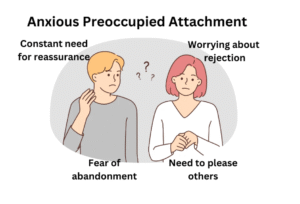
2. Anxious / Preoccupied Attachment — “Love must be protected or it will disappear”

Core Beliefs

  • I need constant reassurance to feel secure.
  • I might not be good enough for my partner.
  • What if I get abandoned?

Typical Childhood Background

  • Caregiver love was inconsistent — sometimes warm, sometimes distant.
  • Emotional needs were met unpredictably.
  • The child learned that closeness is temporary.

Traits in Romantic Relationships

  • Crave closeness intensely.
  • Feel anxious when their partner becomes quiet or distant.
  • Overthink small things (tone of voice, text delay, body language).
  • May overgive or lose themselves to keep the relationship.
  • Become hypervigilant to signs of rejection.

Internal monologue

  • “Do they really love me?”
  • “Why didn’t they reply?”
  • “What if I’m being ignored?”

Anxious behavior patterns that partners notice

  • Texting repeatedly if no reply.
  • Difficulty sleeping when there’s relationship tension.
  • Seeking validation through approval or affection.

The paradox

They love deeply, but the fear of losing love sometimes pushes love away.
screenshot 2025 11 24 234806

3. Avoidant / Dismissive Attachment — “Love threatens independence”

Core Beliefs

  • Emotions are unsafe.
  • Depending on others leads to disappointment.
  • I don’t need anyone.

Typical Childhood Background

  • Caregivers minimized emotions or discouraged vulnerability.
  • Praise was given for independence, not emotional needs.
  • The child learned to soothe themselves alone.

Traits in Romantic Relationships

  • Discomfort with emotional closeness.
  • Difficulty expressing feelings.
  • Values independence over connection.
  • May enjoy relationships but feel trapped by expectations.

Internal monologue

  • “Why do we need to talk about feelings?”
  • “I need space.”
  • “I’m better on my own.”

Behavior patterns partners notice

  • Withdrawing during conflict.
  • Becoming distant after intimacy.
  • Avoiding labels and commitment.
  • Busying themselves with work, hobbies, or screens when stressed.

Emotional truth

Avoidants do love, but expressing love scares them because intimacy feels like losing control.


4. Fearful–Avoidant / Disorganized Attachment — “I want love, but love terrifies me”

Core Beliefs

  • I crave closeness, but closeness is dangerous.
  • People who love me may hurt me.
  • I must protect myself from the person I want.

Typical Childhood Background

  • Caregivers were frightening, abusive, chaotic, or unpredictable.
  • Child experienced love mixed with fear.
  • The caregiver was both the source of safety and danger.

Traits in Romantic Relationships

  • Intense desire for love, paired with intense fear.
  • Push-pull dynamics: “Come closer — now stay away.”
  • Difficulty regulating emotions.
  • Trust issues and sensitivity to perceived rejection.
  • Emotional rollercoasters.

Internal monologue

  • “I want you… but I can’t trust you.”
  • “Please love me… but don’t hurt me.”
  • “If I get close, I’ll lose myself.”

Behavior patterns partners notice

  • Sudden breakup after deep intimacy.
  • Disappearing when things get serious.
  • Apologizing and returning, then leaving again.
  • Creating drama to test loyalty.

Root issue

Unhealed trauma makes love feel both paradise and danger.

screenshot 2025 11 24 235038

How Attachment Styles Combine in Relationships

Combination Relationship Outcome
Secure + Secure Supportive, growth-oriented, emotionally fulfilling
Secure + Anxious Heals anxious partner over time
Secure + Avoidant Avoidant gradually learns emotional safety
Anxious + Avoidant Most unstable — triggers each other’s fears
Anxious + Fearful Passionate but unpredictable and exhausting
Avoidant + Fearful High walls, unresolved trauma
Fearful + Fearful Intense but chaotic and rarely long-term

The most challenging and common trauma bond:
Anxious + Avoidant → chasing vs withdrawing dyad

Psychological Mechanisms Behind Attachment

Neurochemistry of Attachment

Love activates chemicals in the brain:

Hormone Function
Oxytocin Bonding, trust
Dopamine Pleasure, attraction
Cortisol Stress and insecurity
Serotonin Emotional balance

Anxious partners produce high cortisol during separation.

Avoidants produce cortisol during too much closeness.

Secure partners maintain hormonal balance through trust.

Attachment and Core Wounds

Each insecure attachment carries a deep core wound:

Style Core Wound
Anxious “I am not enough.”
Avoidant “I can rely only on myself.”
Fearful “Love is danger.”

Awareness of the wound is the first step toward healing.

Healing: Moving Toward Secure Attachment

Attachment style is changeable, not permanent.

General Healing Principles

  • Recognize triggers instead of reacting impulsively
  • Communicate needs rather than testing or assuming
  • Build emotional regulation skills
  • Choose partners who respect emotional safety
  • Study childhood patterns without judgment
  • Receive therapy / trauma-informed counselling if possible

Healing Exercises for Each Style

For Anxious Attachment

  • Practice delayed response before reacting to fear.
  • Journal thoughts instead of acting on them instantly.
  • Ask directly for reassurance instead of testing love.
  • Build self-worth from within, not from validation.

Helpful sentence to express needs:

“When messages stop suddenly, I feel anxious. Can we agree on a communication rhythm that feels safe for both of us?”

For Avoidant Attachment

  • Label emotions instead of suppressing them.
  • Practice vulnerability in small doses.
  • Allow closeness without assuming loss of freedom.
  • Learn to take emotional responsibility without shutting down.

Helpful sentence to express needs:

“I need some space right now, but I care about you and I’m not leaving.”

For Fearful–Avoidant Attachment

  • Identify triggers that cause sudden withdrawal.
  • Practice grounding techniques during emotional overwhelm.
  • Challenge the belief that love = danger.
  • Build trust slowly with consistent partners.

Helpful sentence to express needs:

“I want closeness, but sometimes it feels scary. Can we go slowly and check in emotionally?”

For Secure Attachment

  • Maintain boundaries with insecure partners.
  • Avoid becoming the “fixer” or emotional caretaker.
  • Balance empathy with self-respect.

Becoming Secure Starts with One Core Truth

Love is not earned by fear, chasing, perfection, or self-sacrifice.
Love becomes secure when there is:

  • Consistency
  • Communication
  • Emotional safety
  • Trust Repair after rupture
    Attachment style is not about blame — it is about understanding your emotional map so you can build healthier relationships.

Final Message

You don’t need a perfect childhood to experience healthy love.
You don’t need to fix everything before you deserve connection.
Healing is not becoming someone new — it is remembering who you were before fear taught you otherwise.

When you heal your attachment wounds:

  • Love stops feeling like survival
  • Connection becomes comfort instead of fear
  • Intimacy becomes freedom instead of danger
  • You become your own safe place — and love begins to thrive

Frequently Asked Questions (FAQs)

1. What are attachment styles in relationships?

Attachment styles are patterns of emotional bonding formed in childhood that affect adult relationships.

2. What are the four attachment styles?

Secure, anxious, avoidant, and fearful (disorganized).

3. Can attachment styles change over time?

Yes, with awareness, effort, and therapy, attachment styles can become more secure.

4. Which attachment style is the healthiest?

Secure attachment is considered the healthiest and most balanced.

5. Why do anxious and avoidant partners attract each other?

They trigger each other’s emotional patterns—one seeks closeness while the other seeks distance.

6. How does childhood affect adult relationships?

Early caregiver experiences shape beliefs about love, trust, and emotional safety.

7. What is anxious attachment?

It involves fear of abandonment, need for reassurance, and emotional dependency.

8. What is avoidant attachment?

It involves emotional distance, fear of intimacy, and strong independence.

9. What is fearful-avoidant attachment?

It is a mix of desire for closeness and fear of getting hurt.

10. How can I become securely attached?

Through self-awareness, emotional regulation, communication, and healthy relationships.

Written by Baishakhi Das

Counselor | Mental Health Practitioner
B.Sc, M.Sc, PG Diploma in Counseling

References

  1. Psychology Today
    👉 https://www.psychologytoday.com/us/basics/attachment
  2. PositivePsychology
    👉 https://positivepsychology.com/attachment-theory/
  3. John Bowlby
    👉 https://www.britannica.com/biography/John-Bowlby
  4. Mary Ainsworth
    👉 https://www.simplypsychology.org/mary-ainsworth.html
  5. The Psychology of Care: Inside the Minds of Certified Nurses Balancing Empathy, Burnout, and Healing

This article is written for knowledge purposes, aiming to help readers understand the topic better and gain useful insights for learning and awareness.
Attachment Theory Explained: Bowlby, Styles, Stages, and Real-Life Applications

Introduction 

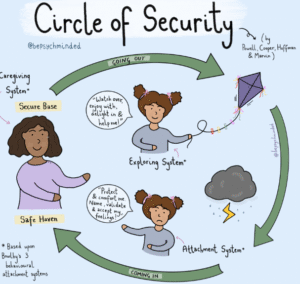
Attachment theory is a psychological framework developed by John Bowlby that explains the importance of the emotional bond between an infant and their primary caregiver for the child’s survival and healthy social-emotional development. It posits that infants instinctively seek to form attachments to caregivers who are consistently sensitive, responsive, and available, providing a secure base for exploration and a safe haven during distress or danger. This bond serves as the foundation for the child’s feelings of security and influences their emotional regulation and relationship patterns throughout life.

Attachment theory is subdivided into distinct attachment styles that describe patterns of bonding and behavior between children and their caregivers, as well as later in adult relationships. These subdivisions were originally identified in infancy but are also relevant across the lifespan.

Attachment theory, originally developed by John Bowlby and further expanded by Mary Ainsworth, provides a comprehensive framework for understanding how early relationships with caregivers shape emotional development and interpersonal relationships throughout life.

Core Concepts of Attachment Theory

Core concepts of attachment theory include Attachment Behavior, Secure Base and Safe Haven, and Internal Working Models. These concepts explain the emotional bond between infants and their caregivers and how this bond shapes lifelong social and emotional functioning.

Attachment Behavior

Attachment behaviors are innate actions infants use to maintain closeness to caregivers, especially in times of distress or danger. Examples include crying, clinging, reaching, smiling, and following. For instance, a baby crying loudly when left alone signals distress and prompts the caregiver to provide comfort and safety. These behaviors serve the biological purpose of ensuring the infant’s survival by keeping the caregiver close for protection and care.

Secure Base and Safe Haven

The caregiver provides a secure base, which allows the child to explore their environment confidently, knowing they can return to the caregiver if needed. At the same time, the caregiver acts as a safe haven—a source of comfort and reassurance during times of stress or fear. For example, a toddler playing in a park may explore freely but runs back to the parent when frightened by a loud noise, seeking reassurance and protection.

Internal Working Models

Early interactions with caregivers lead children to form internal working models—mental frameworks about the self and others in relationships. These models guide expectations and behavior in future relationships. For example, a child with sensitive, responsive caregivers may develop a model of themselves as worthy of love and others as reliable and trustworthy, fostering positive social interactions. Conversely, inconsistent caregiving may lead to models where the self is seen as unworthy and others as unpredictable, influencing anxiety and mistrust in relationships throughout life.

Attachment Phases (Bowlby’s Model)

Bowlby’s Attachment Theory describes four key phases of attachment development in children, each characterized by specific behaviors and emotional milestones, with examples illustrating how the infant and caregiver interact at each stage:

Pre-attachment Phase (0-6 weeks)

Infants show no preference for a specific caregiver but use innate signals such as crying, smiling, and grasping to attract attention from any adult.

Example: A newborn baby cries and smiles to anyone who responds, and does not show distress if picked up by a stranger, signaling indiscriminate social responsiveness.

Attachment-in-the-making (6 weeks to 6-8 months)

Infants begin to show a preference for familiar caregivers over strangers and start to recognize the caregiver’s voice and face.

Example: A 4-month-old may calm more quickly when soothed by their mother than by a stranger and shows more frequent smiles directed at the caregiver, indicating growing trust but still accepts care from others.

Clear-cut Attachment (6-8 months to 18-24 months)

Strong attachment behaviors emerge: infants clearly prefer their primary caregiver, show distress on separation (separation anxiety), and display wariness of strangers.

Example: A 10-month-old may cry intensely when the mother leaves the room and runs to her upon return, using her as a secure base for exploration while also showing stranger anxiety.

Goal-corrected Partnership (from 18-24 months onwards)

Children develop cognitive understanding of the caregiver’s needs and plans and can adjust their behavior accordingly. They negotiate closeness with more flexibility and consider the caregiver’s perspective.

Example: A 3-year-old understands that the caregiver may not always be immediately available; they might express their needs verbally and wait patiently for the caregiver to respond, such as waiting for a snack rather than demanding it immediately.

screenshot 2025 11 20 001009

These phases reflect an evolving attachment system that helps ensure the child’s safety while fostering independence and emotional regulation. The process is foundational for secure emotional bonds and social development throughout life.

Detailed Breakdown of Attachment Style

Attachment styles in children reflect distinct patterns of emotional bonding and responses to caregivers, which deeply impact their development and relationships.

  1. Secure Attachment:

Children with secure attachment have caregivers who are consistently responsive and sensitive to their needs. These children feel confident about their worth and trust others. They seek comfort when distressed but also freely explore their environment, using the caregiver as a “secure base.”
Example: A securely attached toddler happily plays with toys but looks back to their parent regularly. If distressed, they seek the parent’s comfort and are easily soothed, then return to play with renewed confidence.

  1. Anxious-Ambivalent Attachment :

This style arises from inconsistent caregiving, where caregivers are sometimes available and sometimes neglectful or unresponsive. Children become clingy, overly dependent, and fearful of abandonment. They have difficulty calming down and may display heightened distress when separated.
Example: An anxiously attached child may become extremely upset when a parent leaves and struggle to be comforted upon the parent’s return, often showing clinginess and needing constant reassurance.

  1. Avoidant Attachment:

Children with avoidant attachment experience caregivers who are emotionally unavailable, rejecting, or unresponsive. These children suppress their attachment needs, seeming emotionally distant or indifferent. They avoid seeking comfort or showing vulnerability.
Example: An avoidant child may not seek their caregiver when upset, may appear self-reliant, and avoid emotional closeness, even when frightened or hurt.

  1. Disorganized Attachment:

Disorganized attachment often stems from trauma, neglect, or frightening caregiving. Children display contradictory and confused behaviors, such as approaching the caregiver while also showing fear or avoidance. Their behavior signals emotional conflict and confusion.
Example: A child might freeze or show fear when the caregiver approaches or display both clinginess and withdrawal simultaneously, reflecting their conflicted feelings toward the caregiver. screenshot 2025 11 20 000712

These attachment styles significantly influence children’s emotional regulation, social development, and future relationship patterns. Understanding these examples helps caregivers and professionals provide appropriate support to foster secure, healthy attachments.


Attachment in Adults

These adult attachment styles influence how individuals approach relationships, handle conflict, and regulate emotions, often reflecting the internal working models developed in early childhood. Recognizing one’s attachment style can be empowering for personal growth and improving relationship dynamics.

Importance and Applications

Attachment theory plays a crucial role in several fields by providing practical tools and insights to enhance emotional wellbeing and interpersonal relationships, with real-world examples illustrating its impact:

Psychotherapy

Attachment theory informs therapeutic approaches by helping clinicians understand clients’ relational patterns and emotional regulation difficulties rooted in early attachment experiences. For example, therapists use attachment-based therapy to help clients with anxiety or trauma explore and heal early attachment wounds, fostering more secure relational dynamics. Emotionally Focused Therapy (EFT) for couples is a direct application, where partners learn to recognize attachment needs, respond sensitively, and rebuild trust, significantly improving relationship quality.

Parenting

Attachment theory guides parents toward responsive and sensitive caregiving that promotes secure attachment and healthy child development. Parenting programs often include psychoeducation and video feedback to help parents recognize their child’s signals and respond appropriately. For instance, a parent who learns to soothe a crying baby consistently helps the infant develop trust and emotional security, strengthening the parent-child bond and fostering the child’s resilience.

Education

Teachers applying attachment principles create supportive classroom environments where students feel safe to explore and learn. Programs like My Teaching Partner (MTP) train educators to act as a “secure base,” enhancing student engagement, emotional regulation, and academic success.

Healthcare and Social Care

Attachment-informed practices improve caregiving in hospitals, foster care, and social services by emphasizing consistent, nurturing relationships. For example, reducing caregiver turnover and promoting stable placements for children in foster care improves attachment security, leading to better mental health outcomes.

Relationships

Attachment awareness helps individuals understand their own and others’ relational behaviors. Couples can better navigate conflicts by recognizing attachment triggers and responding with empathy rather than defensiveness, fostering healthier, more secure partnerships.

Public Health and Policy

Attachment research has influenced child welfare policies by highlighting the importance of stable and sensitive caregiving for healthy development. Studies like Rene Spitz’s on hospitalism catalyzed reforms towards family-centered care in institutional settings, reducing childhood mortality and developmental delays.

In summary, attachment theory’s practical applications permeate psychotherapy, parenting, education, healthcare, relationships, and public policy, providing a universal framework to promote secure attachments and enhance emotional and social wellbeing throughout life.

Developmental Psychology

Attachment theory provides insights into emotional and social development milestones, highlighting how early attachment influences later mental health, social competence, and stress regulation. It informs research and interventions focused on promoting security and addressing vulnerabilities in childhood to foster lifelong wellbeing.

Overall, attachment theory is foundational in understanding human development and functioning, shaping clinical practice, parenting, and building stronger, more supportive relationships across the lifespan.

Conclusion

Attachment theory, pioneered by John Bowlby and expanded by Mary Ainsworth, emphasizes the crucial role early emotional bonds between infants and caregivers play in shaping social, emotional, and cognitive development throughout life.

The core concepts—attachment behaviors, secure base and safe haven, and internal working models—illustrate how infants instinctively seek proximity to sensitive and responsive caregivers for survival and emotional security. Bowlby’s attachment phases describe the evolving nature of this bond from birth through toddlerhood, highlighting the growing complexity of attachment behaviors and mutual understanding between child and caregiver.

Attachment styles—secure, anxious-ambivalent, avoidant, and disorganized—reflect patterns of caregiver responsiveness and shape the child’s expectations and strategies for managing relationships. These early attachments extend into adulthood, influencing romantic relationships and interpersonal dynamics, where secure attachment supports healthy intimacy while insecure styles may lead to difficulties in trust and emotional regulation.

The theory’s importance spans psychotherapy, parenting, relationships, and developmental psychology. Therapists use attachment insights to customize interventions that address relational issues and emotional trauma. Parenting guided by attachment principles promotes sensitive caregiving that fosters resilience and emotional well-being. Understanding attachment helps explain human behavior in relationships and guides efforts to support social and emotional development across the lifespan.

In conclusion, attachment theory provides a comprehensive framework to understand how foundational early relationships critically influence lifelong emotional health, social competence, and interpersonal fulfillment. It remains a cornerstone of psychological theory and practice, enriching clinical approaches, parenting, and research on human development.

Frequently Asked Questions (FAQs)

1. What is attachment theory?

Attachment theory explains how early emotional bonds with caregivers influence development and relationships.

2. Who developed attachment theory?

Attachment theory was developed by John Bowlby and expanded by Mary Ainsworth.

3. What are the main attachment styles?

The main styles are secure, anxious-ambivalent, avoidant, and disorganized.

4. What is a secure attachment?

Secure attachment occurs when caregivers are responsive, leading to trust and emotional stability.

5. What is an insecure attachment?

Insecure attachment includes anxious, avoidant, and disorganized styles, often due to inconsistent or neglectful caregiving.

6. What are Bowlby’s stages of attachment?

They are pre-attachment, attachment-in-the-making, clear-cut attachment, and goal-corrected partnership.

7. What is the role of caregivers in attachment theory?

Caregivers provide a secure base and safe haven for the child.

8. Can attachment styles change in adulthood?

Yes, with awareness and therapy, attachment styles can evolve over time.

9. How does attachment theory affect relationships?

It influences trust, emotional regulation, and communication in relationships.

10. Why is attachment theory important?

It helps understand emotional development, parenting, and mental health.

Written by Baishakhi Das

Counselor | Mental Health Practitioner
B.Sc, M.Sc, PG Diploma in Counseling

References

  1. Bowlby, J. (1969). Attachment and Loss.
  2. Ainsworth, M. D. S. (1978). Patterns of Attachment.
  3. “Practitioner Review: Clinical applications of attachment theory,” PMC, 2011.
  4. Positive Psychology, 2025, “Attachment Theory, Bowlby’s Stages & Attachment Styles.”
  5. “Attachment theory,” Wikipedia, 2004
  6. John Bowlby
    👉 https://www.britannica.com/biography/John-Bowlby
  7. Mary Ainsworth
    👉 https://www.simplypsychology.org/mary-ainsworth.html
  8. Verywell Mind
    👉 https://www.verywellmind.com/what-is-attachment-theory-2795337
  9. Simply Psychology
    👉 https://www.simplypsychology.org/attachment.html
  10. Language Development in Children: Stages, Theories (Why child not speaking clearly at age 2)

This article is written for knowledge purposes, aiming to help readers understand the topic better and gain useful insights for learning and awareness.