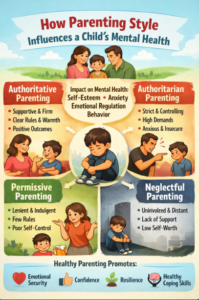
Parenting also has a significant role to play towards emotional, social, and psychological development of a child. The manner in which parents communicate, express feelings of love, and boundaries has a direct influence on the mental health of a child as well as his or her personalities. Studies indicate that parenting style impacts self esteem, emotional control, behaviour, and stress coping capability of the child.
This is can be observed in day to day life in simple interactions. When parents react with calmness on the mistakes made by the child, they get to learn that failure is a learning process. Nevertheless, negative criticism may raise fear and lack of confidence. Equally, parents who tune in to the feelings of a child and affirm them their emotions feel safe enough to express themselves and regulate their emotions better.
Another way of how parents shape behaviour is establishing regular rules concerning such patterns as studying time, using screens and social behaviour. Moderate approach to discipline enables children to become responsible and self-contained and extreme strictness or looseness can create behavioural problems.
Simple daily tasks like complimenting hard work, quality time and emotional support enable children to develop confidence and resilience. Generally, positive and supportive parenting can aid the development of healthy and sound mental health among children.
Understanding Parenting Styles
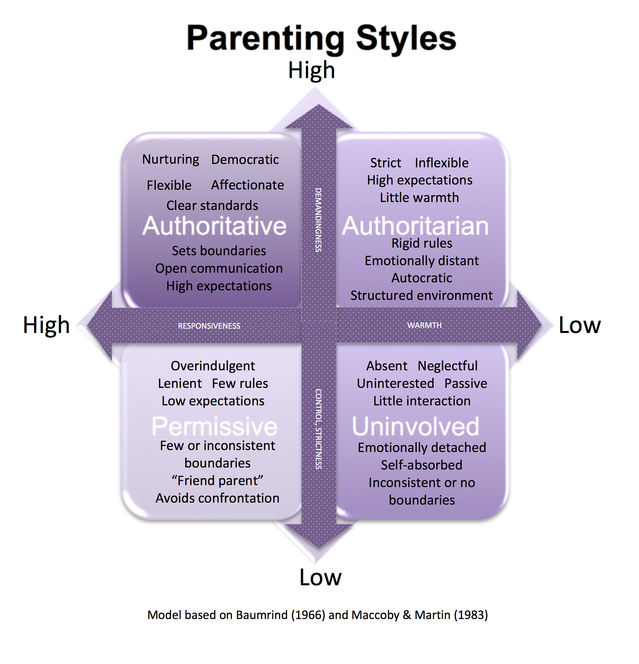
Diana Baumrind is a psychologist who came up with four major parenting styles that are common in psychological studies. The two notable dimensions on which these parenting styles are founded are warmth, which is emotional support, affection, and responsiveness and control, which is the extent of rules, discipline and expectations that the parents place on their children.
Warmth and control used in various combinations produce different parenting styles. There are parents who are both highly emotional and clear-cut in their guidance and those who pay more attention to discipline or leave children alone at full liberty. These differences in parenting styles have an impact on the manner in which children grow emotionally, socially and behaviorally.
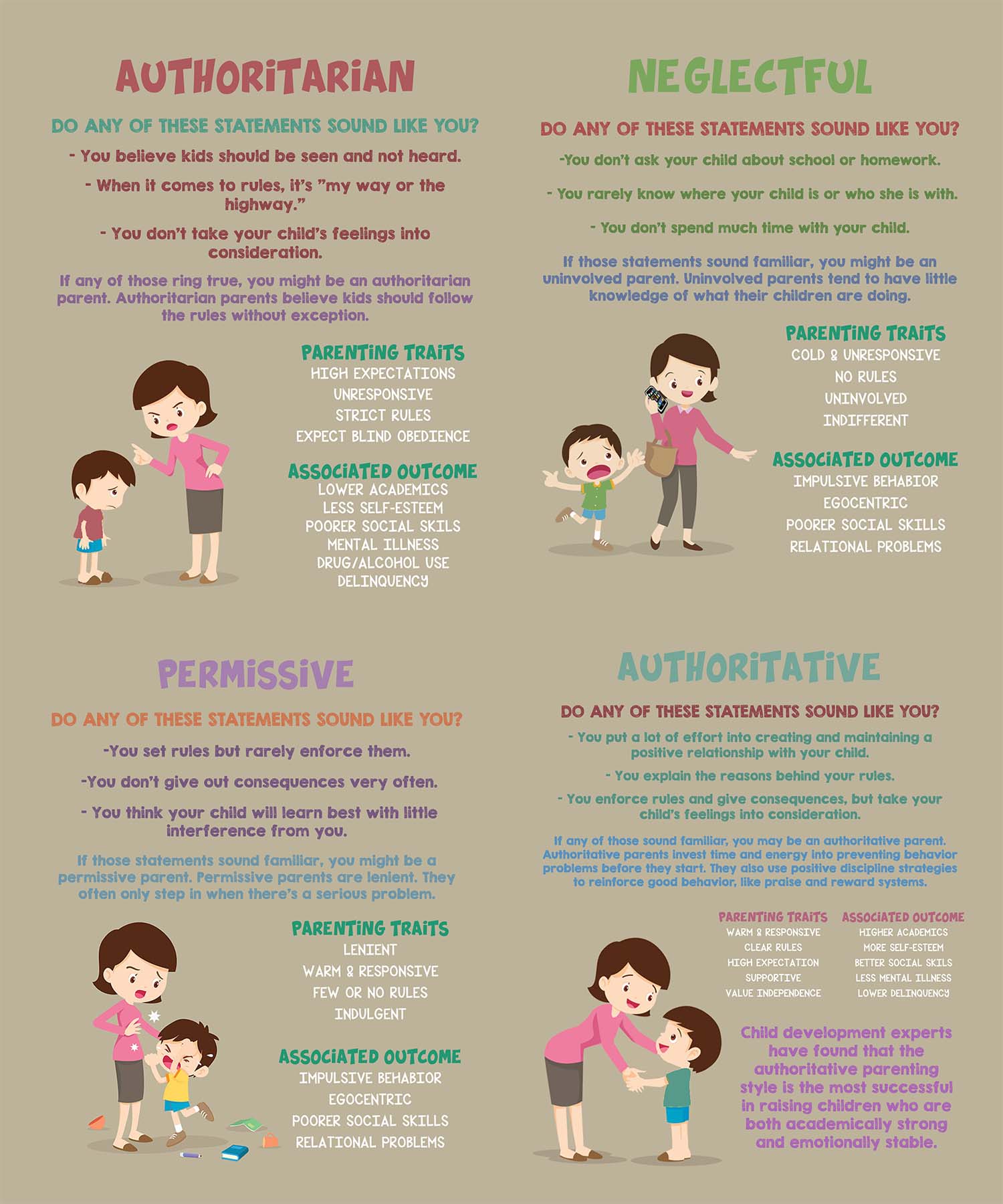
1. Authoritative Parenting
Authoritative parenting style is viewed as the most balanced and psychologically healthy style of parenting. The parents who utilise this style are highly structured in their rules and expectations but they are also warm, understanding and are open with communication.
Children raised with authoritative parenting often develop:
- Strong self-esteem
- Better emotional regulation
- Good social skills
- Higher academic performance
- Strong problem-solving abilities
These parents will promote autonomy but have the right supervision. Children think that they are safe to express their thoughts and emotions and this leads to emotional stability and mental resilience.
2. Authoritarian Parenting
Authoritarian parenting pays much attention to the rules, discipline, and obedience. Open communication and emotional warmth is usually restricted. Parents can anticipate that the children should accept authority.
Children raised under authoritarian parenting may experience:
- Low self-confidence
- High anxiety or fear of failure
- Difficulty expressing emotions
- Increased risk of depression or stress
- Poor decision-making skills due to lack of independence
While this style may encourage discipline, it can sometimes create emotional distance and reduce a child’s ability to develop healthy coping mechanisms.
3. Permissive Parenting
Permissive parents are highly affectionate and emotionally supportive but often set very few rules or boundaries. Children are given significant freedom, and discipline is minimal.
Children raised with permissive parenting may show:
- Poor self-discipline
- Difficulty following rules
- Impulsivity
- Emotional dependency
- Challenges in handling frustration or rejection
Although children may feel loved and accepted, lack of structure can make it difficult for them to develop responsibility and emotional self-control.
4. Neglectful or Uninvolved Parenting
Neglectful parenting involves limited emotional involvement and minimal supervision. Parents may be physically present but emotionally unavailable, or they may fail to meet the child’s basic emotional and developmental needs.
Children raised in neglectful environments are at higher risk of:
- Attachment issues
- Low self-worth
- Behavioral problems
- Academic difficulties
- Increased vulnerability to mental health disorders such as anxiety, depression, and conduct disorders
This parenting style can severely affect a child’s sense of security and emotional development.
Psychological Impact of Parenting on Mental Health
Parenting style influences several core aspects of mental health:
Emotional Regulation:
Children learn how to manage emotions by observing parental responses. Supportive parenting teaches healthy emotional expression, while harsh or neglectful parenting may lead to emotional suppression or dysregulation.
Attachment and Security:
Warm and responsive parenting helps children form secure attachments, which are essential for healthy relationships and emotional stability later in life.
Self-Esteem and Identity Formation:
Children who receive encouragement and validation are more likely to develop positive self-worth. Constant criticism or emotional neglect can result in self-doubt and identity confusion.
Stress Coping Mechanisms:
Children raised in nurturing environments often develop resilience and adaptive coping strategies, while those raised in high-stress or unsupportive environments may struggle with anxiety and maladaptive coping behaviors.
Cultural and Environmental Considerations
There are no parenting styles that are independent of each other. Cultural values, financial conditions, mental health of parents, and the general atmosphere in the family have a strong impact on them. To illustrate, rigid discipline can be considered an expression of respect and responsibility in one culture and more open communication and independence in another culture. In the same manner, financial strain, work strain, or emotional problems of parents may influence parent-child interaction.
Parenting style might vary depending on cultures and circumstances but there are factors that are universal. Children feel secure, safe and valued with the help of emotional availability, constant support and clear guidance. All these are significant factors in the healthy emotional growth and the healthy mental well-being of children irrespective of cultural diversity.
Promoting Healthy Parenting Practices
Healthy parenting does not require perfection but involves balance, awareness, and adaptability. Effective parenting practices include:
- Active listening and emotional validation
- Consistent but flexible discipline
- Encouraging independence and decision-making
- Providing a safe and supportive environment
- Modeling healthy emotional and social behavior
Conclusion
The style of parenting has a fundamental role in influencing the mental health of a child, the emotional well-being, and the personality growth of a child. Balanced parenting involving both warmth, structure, and communication will enable children to grow to be confident, resilient, and psychologically stable. The knowledge regarding the impact of parenting styles will enable caregivers and mental health professionals to ensure more favourable developmental outcomes and help the future generations become emotionally stable.
Frequently Asked Questions (FAQs)
1. What are parenting styles?
Parenting styles refer to the overall approach parents use to raise their children, including how they provide emotional support, set rules, and guide behavior.
2. How many parenting styles are there?
According to Diana Baumrind’s research, there are four main parenting styles: authoritative, authoritarian, permissive, and neglectful.
3. Which parenting style is considered the healthiest?
Authoritative parenting is generally considered the healthiest because it balances emotional warmth with clear rules and guidance.
4. Can parenting style affect a child’s mental health?
Yes, parenting style can influence self-esteem, emotional regulation, stress management, and overall psychological well-being.
5. How does strict parenting affect children?
Excessively strict parenting can sometimes lead to fear, anxiety, low confidence, and difficulty expressing emotions.
6. Is being too lenient harmful for children?
Permissive parenting, which lacks boundaries, may lead to impulsive behavior, poor self-discipline, and difficulty handling responsibilities.
7. What happens when parents are emotionally unavailable?
Emotional neglect can lead to attachment issues, low self-worth, behavioral problems, and increased risk of anxiety or depression.
8. Can parenting styles change over time?
Yes, parenting styles can change based on awareness, education, family situations, and parental personal growth.
9. Do cultural differences influence parenting styles?
Yes, cultural values strongly influence parenting practices, discipline methods, and communication patterns.
10. How does parenting affect a child’s self-esteem?
Supportive and encouraging parenting helps build confidence, while constant criticism or neglect may lower self-esteem.
11. How do parents help children develop emotional regulation?
By validating emotions, teaching problem-solving skills, and modeling calm behavior, parents help children manage emotions effectively.
12. Can parenting influence academic performance?
Yes, supportive parenting with proper guidance and structure often promotes better focus, motivation, and academic success.
13. How important is communication in parenting?
Open and respectful communication helps children feel safe sharing feelings and builds trust within the parent-child relationship.
14. Can working parents still provide healthy parenting?
Yes, quality emotional connection, consistent support, and spending meaningful time together are more important than the amount of time spent.
15. Can parenting mistakes harm children permanently?
Occasional mistakes are normal. Children benefit most when parents show consistency, emotional warmth, and willingness to improve.
Written by Baishakhi Das
Counselor | Mental Health Practitioner
B.Sc, M.Sc, PG Diploma in Counseling
Reference
-
Baumrind, D. (1991). Parenting Styles and Adolescent Development
https://psycnet.apa.org/record/1992-97930-001 -
American Psychological Association – Parenting and Child Development
https://www.apa.org/topics/parenting -
UNICEF – Positive Parenting Guidelines
https://www.unicef.org/parenting -
National Institute of Child Health and Human Development
https://www.nichd.nih.gov/health/topics/childdev -
CDC – Positive Parenting Tips
https://www.cdc.gov/parents/positiveparenting - How Parental Mental Health Issues Can Affect Children
This topic performs well due to rising searches around men’s mental health, workplace stress, and burnout recovery. Combining emotional insight with practical steps increases engagement and trust.