A Deep Psychological Explanation

“Why do I keep attracting emotionally unavailable partners?”
From a psychological perspective, this pattern is not accidental, nor is it a sign of poor judgment or low intelligence. It is usually the result of unconscious emotional learning, shaped by early attachment experiences, nervous system conditioning, and unmet emotional needs.
This article explains the pattern in depth, without blame—only awareness.
Understanding Emotional Unavailability
An emotionally unavailable partner often struggles to engage in relationships at a deeper emotional level, even if they appear caring or charming on the surface. They may avoid vulnerability and meaningful emotional conversations, steering discussions away from feelings, needs, or relational depth. During moments of conflict or emotional tension, they are likely to withdraw, shut down, or become distant, leaving issues unresolved rather than working through them together.
Affection from an emotionally unavailable partner is often inconsistent—warm and attentive at times, then suddenly distant or detached. This unpredictability can create confusion and emotional insecurity for the other person. They may also prioritize work, independence, hobbies, or external distractions over emotional intimacy, not necessarily because they value these things more, but because closeness feels overwhelming or threatening.
A common pattern is that they appear highly interested at the beginning of a relationship, when emotional demands are low and novelty is high. As intimacy deepens and emotional closeness is expected, they may begin to pull away, lose interest, or create distance, often without clear explanation.
Importantly, emotionally unavailable individuals are not always unkind, uncaring, or intentionally hurtful. In many cases, emotional unavailability is a form of self-protection. It often develops from unresolved attachment wounds, early experiences of emotional neglect, inconsistency, or relationships where closeness led to pain. To avoid vulnerability—and the risk of being hurt again—they learn to keep emotional distance, even when they desire connection.
Understanding this does not mean tolerating emotional neglect, but it helps reframe emotional unavailability as a psychological defense, not a personal rejection.
The Psychological Root: Attachment Theory
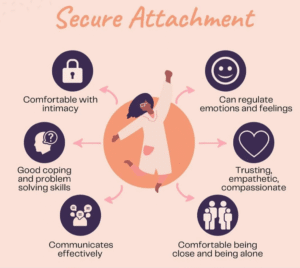
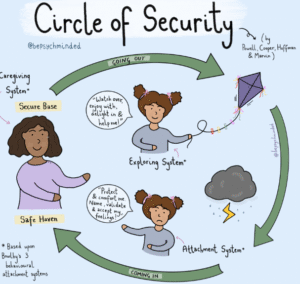
Attachment theory, developed by John Bowlby and later expanded through observational research by Mary Ainsworth, explains that our earliest emotional bonds shape how we experience love, safety, and closeness throughout life.
From infancy, human beings are biologically programmed to seek proximity to caregivers—not just for physical survival, but for emotional regulation and security. When a caregiver responds consistently and sensitively, the child’s nervous system learns that distress can be soothed through connection. When responses are inconsistent, dismissive, or frightening, the child adapts in order to preserve the relationship.
Over time, these repeated experiences form what attachment theory calls an internal working model—a deeply ingrained emotional blueprint about relationships. This model operates largely outside conscious awareness and becomes the lens through which we interpret intimacy, rejection, conflict, and emotional needs.
At its core, the internal working model answers three unconscious but powerful questions:
-
Am I worthy of love and care?
This shapes self-worth and how much love a person believes they deserve. -
Are others emotionally available and reliable?
This influences trust, dependency, and expectations from partners. -
Is closeness safe, or does it lead to pain, rejection, or loss?
This determines comfort with intimacy versus emotional distance.
These beliefs do not remain in childhood. They quietly guide adult relationship choices, influencing whom we feel attracted to, how we respond to emotional closeness, how we handle conflict, and what we tolerate in relationships. Often, people are not drawn to what is healthiest—but to what feels emotionally familiar to their nervous system.
Understanding attachment theory helps explain why relationship patterns repeat, why certain dynamics feel irresistible despite being painful, and why emotional unavailability can feel strangely compelling. These patterns are not conscious decisions—they are learned emotional strategies, shaped early in life and carried forward until they are gently questioned and healed.
1. Familiar Pain Feels Safer Than Unknown Safety
One of the strongest psychological reasons people attract emotionally unavailable partners is emotional familiarity.
If, in childhood:
-
Love was inconsistent
-
Caregivers were emotionally distant, preoccupied, or unpredictable
-
Affection had to be earned
then emotional unavailability becomes normal, even if painful.
The nervous system learns:
“This is what love feels like.”
As adults, emotionally available partners may feel:
-
“Too boring”
-
“Too intense”
-
“Uncomfortable”
-
“Unfamiliar”
While emotionally unavailable partners feel recognizable—and familiarity is often mistaken for chemistry.
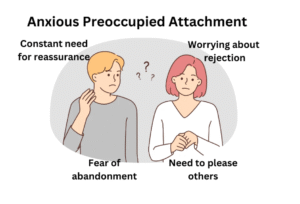
2. Anxious Attachment and the Need for Reassurance
People with anxious attachment are especially drawn to emotionally unavailable partners.
Psychologically:
-
Emotional distance activates attachment anxiety
-
The brain confuses longing with love
-
Intermittent affection increases emotional fixation
When a partner pulls away, the anxious nervous system responds with:
-
Overthinking
-
People-pleasing
-
Emotional pursuit
-
Self-doubt
This creates a pursue–withdraw cycle, where anxiety intensifies attraction rather than reducing it.
3. Trying to Heal Old Wounds Through New Relationships
As repetition compulsion—the tendency to replay unresolved emotional wounds in hopes of a different outcome.
The unconscious belief is:
“If I can make this emotionally unavailable person love me,
it will prove I am worthy.”
The relationship becomes less about the partner—and more about repairing the past.
4. Low Emotional Self-Worth (Not Low Self-Esteem)
Attraction to emotionally unavailable partners is often linked to emotional self-worth, not confidence.
You may:
-
Be successful and competent externally
-
Still feel internally unchosen or replaceable
-
Believe your needs are “too much”
-
Feel guilty for wanting consistency
Emotionally unavailable partners reinforce these beliefs—not because you deserve it, but because it matches your internal narrative.
5. Fear of True Intimacy (Often Unconscious)
Ironically, being drawn to unavailable partners can also reflect a fear of real intimacy.
Emotionally available relationships require:
-
Vulnerability
-
Being truly seen
-
Emotional accountability
-
Mutual dependence
For some, this feels unsafe.
Emotionally unavailable partners allow:
-
Distance with connection
-
Desire without deep exposure
-
Control without surrender
The relationship feels intense—but emotionally contained.
6. Trauma Bonding and Intermittent Reinforcement
Emotionally unavailable relationships often involve:
-
Hot–cold behavior
-
Inconsistent affection
-
Unpredictable closeness
Psychologically, this creates trauma bonding, where the brain becomes addicted to relief after emotional deprivation.
The cycle looks like:
Distance → Anxiety → Small reassurance → Relief → Stronger attachment
This is neurobiological conditioning, not weakness.
7. What This Pattern Is NOT
It is NOT:
- This pattern is not a reflection of your worth
- This pattern is shaped by emotional learning, not poor choices
- They are responses to emotional conditioning, not failure
- They arise from protection, not self-harm or suffering
It IS:
-
Learned emotional conditioning
-
Attachment-based attraction
-
Nervous system familiarity
How the Pattern Can Change
Attraction patterns shift when internal safety increases.
Psychological healing involves:
-
Identifying your attachment style
-
Learning to regulate emotional anxiety
-
Separating familiarity from compatibility
-
Building emotional self-worth
-
Tolerating the discomfort of healthy closeness
-
Experiencing safe, consistent relationships (including therapy)
With healing, emotionally unavailable partners stop feeling attractive—not because you force yourself to avoid them, but because your nervous system no longer recognizes them as “home.”
A Key Therapeutic Insight
You don’t attract emotionally unavailable partners because something is wrong with you.
You attract them because something familiar is asking to be healed.
Closing Reflection
Emotionally unavailable partners mirror unmet emotional needs, not personal failure. When you understand the psychology behind attraction, shame dissolves—and choice becomes possible.
Awareness is not the end of healing.
But it is always the beginning.
Frequently Asked Questions (FAQ)
1. What is attachment theory in psychology?
Attachment theory explains how early emotional bonds with caregivers shape a person’s sense of safety, love, and connection. These early experiences form patterns that continue to influence adult relationships, especially romantic ones.
2. Who developed attachment theory?
Attachment theory was developed by John Bowlby and later expanded by Mary Ainsworth, whose research identified different attachment styles based on caregiver responsiveness.
3. What is an internal working model?
An internal working model is an unconscious emotional blueprint formed in childhood that shapes beliefs about:
-
Self-worth
-
Emotional availability of others
-
Safety of closeness
It guides how individuals approach intimacy, conflict, and emotional needs in adulthood.
4. How does attachment theory affect adult relationships?
Attachment theory influences partner selection, emotional expression, fear of abandonment, comfort with intimacy, and reactions during conflict. Many adult relationship struggles reflect early attachment patterns rather than present-day problems.
5. Why do people repeat unhealthy relationship patterns?
People are often drawn to what feels emotionally familiar, even if it is painful. This familiarity comes from early attachment experiences and nervous system conditioning, not conscious choice.
6. Can attachment patterns be changed?
Yes. Attachment patterns are learned and can be reshaped through self-awareness, emotionally safe relationships, and therapeutic work. Many people develop earned secure attachment later in life.
7. How is attachment theory used in counseling?
In counseling, attachment theory helps identify relational patterns, emotional triggers, and unmet needs. The therapeutic relationship itself often becomes a corrective emotional experience.
Written by Baishakhi Das
Counselor | Mental Health Practitioner
B.Sc, M.Sc, PG Diploma in Counseling
Reference
-
Bowlby, J. (1969). Attachment and Loss: Vol. 1. Basic Books
https://www.simplypsychology.org/attachment.html -
Ainsworth, M. et al. (1978). Patterns of Attachment. Lawrence Erlbaum
https://www.simplypsychology.org/mary-ainsworth.html -
Mikulincer, M., & Shaver, P. R. (2016). Attachment in Adulthood. Guilford Press
-
American Psychological Association – Attachment & Relationships
https://www.apa.org -
National Institute of Mental Health – Relationships and Mental Health
https://www.nimh.nih.gov - Maslow’s Hierarchy of Needs in Modern Life: