Understanding Parentification and Its Psychological Effects

The conventional meaning of parenting is the process by which the adults are in charge of nurturing, guiding and supporting the emotional, physical, as well as psychological growth of children. In certain family settings, however, this is an inverted role structure. This phenomenon is termed parentification when children are dragged to play adult roles in the family set up. Even though some adaptive skills may be developed among the children as a result of this experience, in cases where parentification is excessive or chronic, there are serious psychological and emotional implications that might stay into adulthood.

What is Parentification?

A family role reversal involves parentification in which a child is supposed to perform the emotional or practical demands of their parents or siblings rather than being provided with the care that they should have during their respective developmental level. It is common in families that are affected by the stressors of financial hardness, mental health problems of parents, substance abuse, chronic conditions, or family discord.

Parentification is generally categorized into two major types:

1. Emotional Parentification

Parentification in emotional parenting is the reverse as the child is in charge of the emotional need of the parents or the care givers. The child can become someone to share with, become an in-between in times of parental disputes or even be a shoulder to lean on by frustrated parents. The child then learns with time how to override his or her emotional need to sustain the family.

2. Instrumental Parentification

Instrumental parentification is where children become responsible in either physical or practical chores in the home. These responsibilities can be taking care of their younger brothers or sisters or doing chores at home, financial management or providing care to sick or disabled family members. Although assisting in chores may facilitate maturity, too much burden may disrupt the normal development of childhood.

Causes of Parentification

Parentification does not occur randomly; it usually develops as an adaptive response to family circumstances. Some common causes include:

  • Parental separation or divorce
  • Chronic illness or disability of a parent
  • Parental mental health disorders
  • Substance abuse within the family
  • Economic hardship and financial instability
  • Death or absence of a caregiver
  • Lack of extended family or social support systems

In such situations, children often step into caregiving roles to maintain family functioning and emotional balance.

Psychological Effects of Parentification

Parentification may have a psychological effect that may produce differing effects depending on the seriousness, the period and support system of the child. Other children will grow to be resilient, responsible and empathetic. But parentification in the long term/or excessively will cause emotional and psychological problems.

1. EMOTIONAL SUPPRESSION

Parentified children often learn to disregard or repress their own feelings since they have to take care of the needs of other people. It can result in the inability to express feelings and sense of personal emotional needs in the future.

2. ANXIETY AND CHRONIC STRESS

Adult duties at a tender age may form a continuous stress and anxiety. Children can experience continuous pressure to preserve stability in the family and this causes hyper-responsibility and fear of failure.

3. The inability to establish boundaries.

Adults who have gone through parentification tend to have problems saying no and tend to be too accommodative in a relationship. They can be guilty of focusing on their needs.

4. LOW SELF-WORTH

Parentified children can make a self worth depending on their level of caring towards others. In cases where they fail to match unrealistic expectations they might have a sense of guilt, shame, or inadequacy.

5. RELATIONSHIP CHALLENGES

The concept of parentification may affect adult relationships because it establishes over-caretaking, codependent, or inability to trust others to offer support patterns.

6. Deprivation of childhood life.

Children who face parentification would lack the chance to play, explore and socialise which are important in normal emotional and cognitive growth.

Possible Positive Outcomes

While parentification is often associated with negative consequences, some individuals develop positive traits such as:

  • High empathy and emotional sensitivity
  • Strong sense of responsibility
  • Advanced problem-solving abilities
  • Increased independence and maturity

However, these strengths should not overshadow the emotional burden that parentified children often carry.

Signs That a Child May Be Experiencing Parentification

Some indicators include:

  • Excessive worry about family members
  • Taking care of siblings or managing household responsibilities beyond age expectations
  • Acting as emotional support for parents
  • Feeling guilty when focusing on personal needs
  • Showing unusually high maturity compared to peers
  • Difficulty relaxing or engaging in age-appropriate activities

Long-Term Impact into Adulthood

Some of the problems that adults who underwent parentification could encounter include burnout, perfectionism, relationship imbalance, and emotional exhaustion. They can also have problems recognising their needs and wants, as they tend to consider the well-being of other people over their mental well-being.

Prevention and Healing

Addressing parentification requires awareness, emotional validation, and supportive interventions.

For Families:

  • Encouraging age-appropriate responsibilities
  • Seeking professional support during family crises
  • Maintaining clear parent-child boundaries
  • Providing emotional reassurance to children

For Adults Who Experienced Parentification:

  • Engaging in psychotherapy or counseling
  • Learning healthy boundary-setting skills
  • Developing self-compassion and emotional awareness
  • Reconnecting with personal interests and identity

Conclusion

Parentification is a family process that is complicated and is caused by children taking up the roles of adults at an early age. Although it can lead to some adaptive skills, long-term parentifying experience can have a strong influence on emotional well-being, identity and pattern of relationships. Early identification of the signs and providing the persons with the necessary psychological assistance can assist people in overcoming the adverse consequences of it and achieving a more decent level of interpersonal and emotional operations.

FAQs on Parentification and Its Psychological Effects

1. What is parentification in simple terms?

Parentification has been defined as a condition in which a child performs functions and duties traditionally performed by parents like emotional support or caregiving.

2. Always harmful parentification?

Not always. Children can be assigned responsibilities of a light nature, which can make them mature and empathetic. Nevertheless, over parentification or prolonged parentification may adversely influence the development of emotions and psychological growth.

3. What are the principal forms of parentification?

There are two main types:

Emotional parentification- It occurs when a child helps parents to meet their emotional needs.

Instrumental parentification- This is where a child is involved in physical or housework duties.

4. Why do families undergo parentification?

It can be as a result of sickness of parents, economic strain, divorce, use of drugs, family feud, or unsupportive systems.

5. What is the way parentification can influence a child on an emotional level?

It can result in emotional stifling, anxiety, stress, guilt and inability to comprehend personal emotional requirements.

6. Do parentified children, in the future, develop mental health problems?

Sure, they can be more susceptible to anxiety disorders, depression, burnout, or relationship problems in adulthood.

7. What are the indicators of a child undergoing parentification?

Symptoms will be over-responsibility, worrying about family members, emotional thinking that is above age, trouble with relaxation and feeling guilty when attending to personal needs.

8. What is the impact of parentification on development in childhood?

It also has the ability to disrupt play, social interaction, expression of emotions and identity formation which are fundamental to healthy development.

9. Is parentification going to have any effect on adult relationships?

Yes, people might have issues with boundaries, may be too responsible to others, or may become codependents in relationships.

10. Do older siblings have a greater parentification experience?

Yes, the elder siblings are sometimes expected to look after the younger children which also might result in parentification.

11. Do positive personality traits arise out of parentification? 

Others also become very empathetic, strong, responsible, leaders as well as problem solvers.

12. What should parenting parents do so as to avoid parentification?

Parents are able to stay in their roles, share age-related responsibilities, offer emotional security, and find support when the family is falling.

13. What can adults do to overcome parentification in the course of childhood?

Therapy, learning of boundaries, the development of self-care habits, and self-awareness may help in the healing process.

14. Does parentification amount to emotional neglect?

In extreme situations, it may be associated with emotional neglect since emotional needs of the child are not taken into consideration.

15. Even when professional help is necessary?

Professional assistance is suggested in case parentification causes emotional distress, relationship issues, anxiety, depression, and inability to cope with daily life.

Written by Baishakhi Das

Counselor | Mental Health Practitioner
B.Sc, M.Sc, PG Diploma in Counseling


Reference 

  1. Hooper, L. M. (2007). The Application of Attachment Theory and Family Systems Theory to the Phenomenon of Parentification.
    https://psycnet.apa.org

  2. Chase, N. D. (1999). Burdened Children: Theory, Research, and Treatment of Parentification.
    https://www.taylorfrancis.com

  3. American Psychological Association – Family Dynamics and Child Development
    https://www.apa.org

  4. Jurkovic, G. J. (1997). Lost Childhoods: The Plight of the Parentified Child.
    https://www.routledge.com

  5. National Child Traumatic Stress Network – Family Stress and Child Development
    https://www.nctsn.org

  6. Impact of Parental Stress on Child Behavior

This topic performs well due to rising searches around men’s mental health, workplace stress, and burnout recovery. Combining emotional insight with practical steps increases engagement and trust.

Impact of Parental Stress on Child Behavior

The parenting process is an important factor that contributes to the development of a child in terms of his or her emotional, social and behavioural aspects. Although parents aim at ensuring the safe and supportive conditions, they are often exposed to various stressors that include financial hardship, career, relationship issues, and everyday parenting demands.

In case such stressors overwhelm, they have the ability to influence the emotional availability of a parent, his or her patience and the overall parenting style. Children are very sensitive to the attitude and behaviour of their caregivers and parental stress may impact on the way children think, feel and act in a significant way. It is critical to comprehend the effects of parental stress as the way of ensuring healthy child development and enhancing parent-child relationships.

Understanding Parental Stress

https://media.cnn.com/api/v1/images/stellar/prod/gettyimages-1326453317.jpg?c=original

Parenting is a very fulfilling process that is associated with various duties and stress. Parental stress occurs when parents are subjected to constant stress as a result of financial hardships, job stress, relationship problems, ill health, or social isolation or isolation. This stress may have a huge impact not only on the mental and emotional health of the parent but also on the psychological and behavioural growth of the child.

The emotional status of parents is very sensitive to children. They watch, internalise, and tend to emulate the feelings of their parents. The sense of security and the behavioural pattern of the child can be directly affected when the parents are often overwhelmed or not emotionally available.

Key Aspects of Parental Stress and Its Influence on Children

1. Emotional Transmission

Parents tend to transfer their feelings, which are frequently reflected by children. Children who witness anxiety, anger, or frustration frequently in their parents will develop comparable responses to it and have problems with emotional regulation.

2. Changes in Parenting Style
Stress by parents may result in irregular parenting. There are the parents who can be too strict or authoritarian, and others who can be emotionally distant or permissive, which can influence the behavioural development of a child.

3. Less Emotional availability.
Parents with the stress cannot easily be able to offer emotional warmth, attention, and reassurance. Children who are not responsive may become insecure and lack of emotional support.

4. Heightened Parent Child Contention.
Stress usually leads to lack of patience and tolerance and this predisposes more conflicts, arguments and harsh discipline, which may destroy the emotional status of a child.

5. Influence on the Child and his or her feeling of security.
Children need parents as a source of stability and safety. Children can be characterised by anxiety, fear, or behavioural problems when the stressful environment established by the parents is unpredictable or tense.

6. Coping Mechanisms Modelling.
Children are taught to cope as they observe their parents. In case the parents deal with stress using the unhealthy habits of being angry, avoiding, or withdrawing, children can develop the same maladaptive coping skills.

How Parental Stress Affects Child Behavior

1. Increased Emotional and Behavioral Problems

https://www.parents.com/thmb/zwB-QRBRky2Zlp3UQWNnCgMcaC0%3D/1500x0/filters%3Ano_upscale%28%29%3Amax_bytes%28150000%29%3Astrip_icc%28%29/Foap-Little_Miss_Temper-2e0af0dd61c04f2da9d743480ea8ee17.jpg
Behavioural problems as aggression, tantrums, irritability, stubbornness, and defiance are some of the issues associated with high parental stress levels among children. When parental reactions to frustration are easily elicited or reactive, children can also develop the same reactions to frustration. Also, this may cause emotional imbalance as the children may be confused by inconsistent discipline as a result of parental stress.

2. Insecure Attachment and Emotional Instability

https://images.openai.com/static-rsc-3/Kx0frFI61FxHlUagSL6rTU_NDXyCsl4rzr5TlfD2GAU64SPgPS0ATL430ukP6Z5IpcRK0cB4Ru2G-CBlIcUDFFQHgUJR_rfz0Gekr8s2Wao?purpose=fullsize&v=1
Emotional warmth, responsiveness, and reassurance should be provided to children by parents to achieve secure attachment. Parental stress may lead to chronic stress, which decreases emotional availability of the parents, causing children to feel neglected or unsafe. This can culminate into anxiety, low self esteem, withdrawal or clinginess.

3. Poor Social and Academic Performance

https://www.brainbalancecenters.com/hubfs/blog_tips-minimizing-homework-battle.jpg
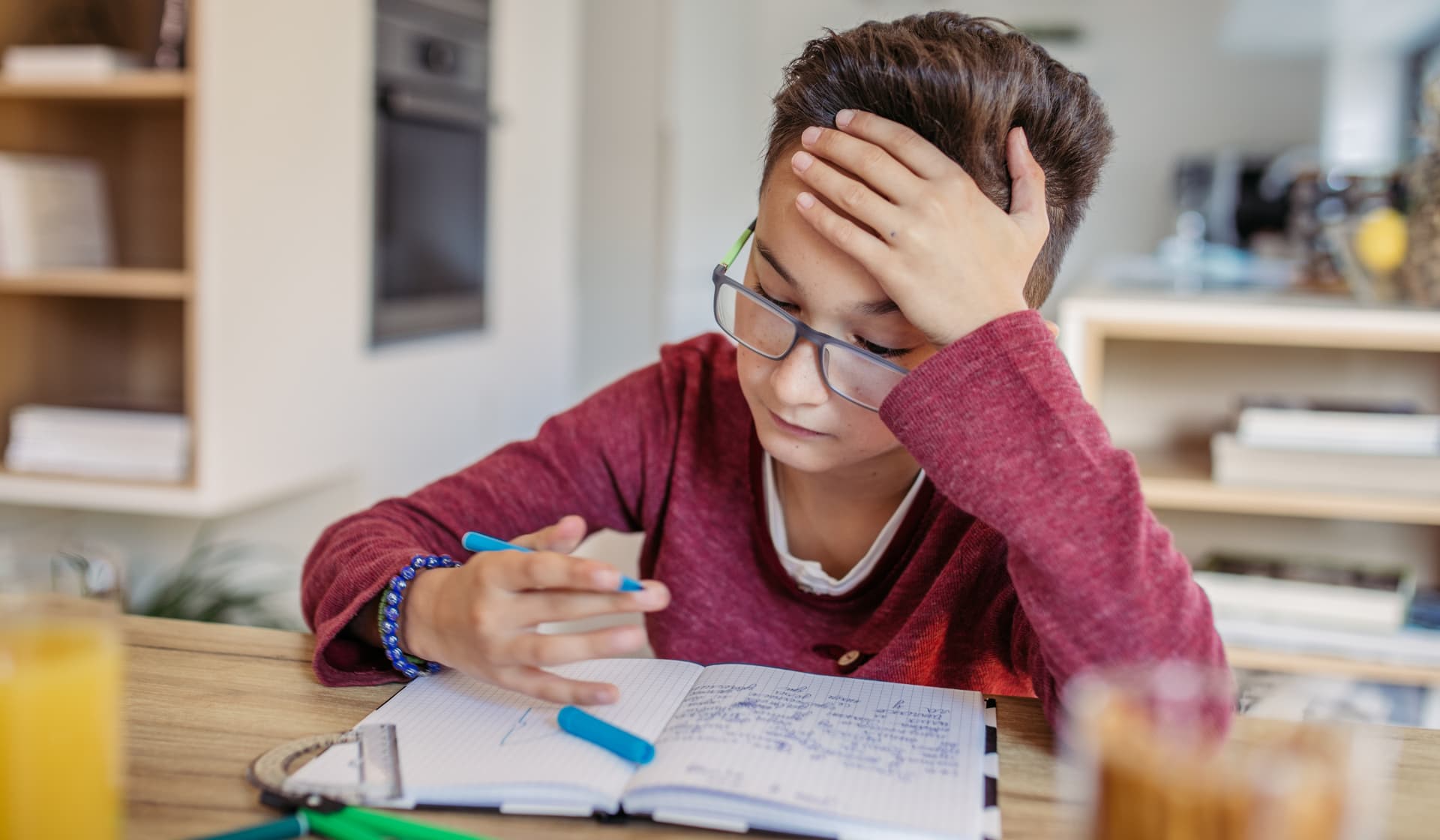
Children also become ineffective in school when they are subjected to stressful experiences at home and fail to focus on their education and healthy relationship with their peers. Emotional distress may have an impact on memory, learning ability and motivation, which result in poor academic outcomes and social problems.

4. Development of Maladaptive Coping Mechanisms

https://www.parents.com/thmb/4aQtxLEYqFnOY19siEz3_mFwuaQ%3D/1500x0/filters%3Ano_upscale%28%29%3Amax_bytes%28150000%29%3Astrip_icc%28%29/Parents-Toxic-Family-Dynamics-e29be2ff71ec4dc7a8bad5984465b282.jpg
The parental styles of coping are frequently imitated by the children. When parents manage stress by being angry, avoidant or emotionally withdrawing, children are likely to develop other maladaptive coping mechanisms including avoidance, emotional repression, or aggression.

Long-Term Psychological Impact

If parental stress is not resolved, then it can greatly predispose a child to diverse psychological and developmental problems. Children are very sensitive to the emotional environment and in case parents are always stressed, tense, or emotionally blocked, it tends to transfer the feeling of security and the general state of mind of a child. An elaborated description is given below with critical sub points:

1. High Risk of Anxiety and Depression.

The continuous stress that children are exposed to by their parents may result in an irregular emotional environment. Children can adopt such emotions when their parents often express worry, irritability or emotional withdrawal. In the long run, it can make them susceptible to anxiety disorders, low self-esteem, sadness, and depressive symptoms. The children will also become afraid or insecure of relationships and their environments all the time.

2. Conduct and Behavioural Problems Development.

Parental stress that has not been resolved can have an impact on parenting behaviour causing inconsistent discipline or harsh responses or a lack of emotional availability. This may lead to conduct issues showing themselves as aggression, defiance, impulsivity or inability to follow instructions in children. Children might also have difficulties in social relationship and be found to be incompetent in adapting to school settings.

3. Difficulties in Emotional Regulation.

Taking into account the experience with caregivers, children learn emotional regulation. In cases where the parents cannot cope with the stress on their side, they may inadvertently model behavioural patterns of conflict e.g. anger outburst, avoidance, or even the suppression of emotions. Consequently, this can make children struggle to recognise, communicate, and cope with their emotions, which affect their relationships and academic results.

4. Influence of Brain Development and Cognitive Functioning.

Exposure to chronic stress at a young age may alter the brain development of the child especially the part of the brain that controls emotions like prefrontal cortex and amygdala which are involved in controlling impulses and making decisions. The chronic stress can cause impairment of neural connectivity and the regulation of stress hormones, making an individual more susceptible to emotional instability, ineptitude in solving problems, and impairment in attention and learning.

5. Challenges on Long-Term Relationship and Attachment.

Children brought up in areas of high parental stress can be brought up insecure attachment patterns. They may find it difficult to trust, have emotional intimacy in future relationships and communication. This may have influence in friendships, romantic relationship and even in workplace during adulthood.

6. Enhanced Risk of Adaptive Coping Strategies.

Children who are subjected to continued stress levels on the part of parents might have unhealthy coping patterns that could include avoidance, withdrawal, risk-taking, or substance abuse in the future. These trends tend to crop up as efforts to cope with untreated emotional pain.

Factors That Moderate the Impact of Parental Stress

Not all children react to parental stress in the same way. Several protective factors can reduce its negative effects:

  • Strong emotional bonding with at least one caregiver
  • Supportive extended family or community
  • Healthy communication within the family
  • Positive parenting strategies
  • Stable and predictable home environment

Strategies to Reduce the Negative Impact

  1. Parental Self-Care: Managing personal stress through relaxation, hobbies, or professional support helps parents remain emotionally available.

  2. Mindful Parenting: Responding calmly and understanding the child’s emotions promotes healthy emotional development.

  3. Consistent Discipline: Setting clear boundaries with warmth and consistency builds security.

  4. Open Communication: Encouraging children to express feelings strengthens trust and emotional resilience.

  5. Seeking Professional Help: Counseling or parenting guidance can help parents develop stress management and positive parenting skills.

Conclusion

Parental stress is not a rare but a serious factor which affects the behaviour and the emotional development of children. Children also develop in a positive emotional and supportive atmosphere. Once parents learn to cope with stress, they do not only better themselves but they also provide a safe and supportive environment that promotes healthy behavioural and psychological development among children.

Frequently Asked Questions (FAQs) on Impact of Parental Stress on Child Behavior

1. What is parental stress?


Parental stress refers to the pressure and emotional strain parents experience while managing parenting responsibilities along with personal, financial, social, and professional challenges.

2. How does parental stress affect child behavior?


Parental stress can lead to behavioral problems in children such as aggression, tantrums, withdrawal, anxiety, and difficulty managing emotions.

3. Can children sense their parents’ stress?


Yes, children are highly sensitive to their parents’ emotional states and often observe and imitate their reactions and behaviors.

4. Does parental stress affect a child’s emotional development?


Chronic parental stress can affect a child’s emotional regulation, self-esteem, and ability to develop secure attachments.

5. Can parental stress impact a child’s academic performance?


Yes, children living in stressful home environments may face concentration difficulties, reduced motivation, and learning challenges.

6. Are younger children more affected by parental stress?


Younger children are often more emotionally dependent on parents, making them particularly sensitive to parental stress and emotional availability.

7. Can parental stress lead to mental health issues in children?


Prolonged exposure to parental stress may increase the risk of anxiety, depression, and behavioral disorders in children.

8. Does financial stress influence parenting and child behavior?


Financial stress can increase parental frustration, reduce emotional availability, and create an unstable home environment, which may affect child behavior.

9. How does marital conflict related to stress affect children?


Frequent parental conflicts can make children feel insecure, anxious, and emotionally distressed, sometimes leading to behavioral problems.

10. Can parental stress affect parent-child bonding?


Yes, high stress levels may reduce quality interaction time and emotional connection, weakening parent-child bonding.

11. Do children develop stress-coping skills by observing parents?


Children often learn coping strategies from parents. Healthy stress management by parents promotes positive coping skills in children.

12. How can parents reduce the negative impact of stress on children?


Parents can practice self-care, maintain open communication, seek social support, and adopt positive parenting strategies.

13. Is it normal for parents to experience stress?


Yes, parental stress is common. However, managing stress effectively is important for both parental and child well-being.

14. When should parents seek professional help?


Parents should seek counseling or professional support if stress becomes overwhelming, affects parenting, or leads to emotional or behavioral issues in children.

15. Can supportive family environments reduce the impact of parental stress?


Yes, emotional support from family members, stable routines, and healthy communication can protect children from the negative effects of parental stress.

Written by Baishakhi Das

Counselor | Mental Health Practitioner
B.Sc, M.Sc, PG Diploma in Counseling


Reference

  1. American Psychological Association (APA)
    https://www.apa.org

  2. Centers for Disease Control and Prevention (CDC) – Child Development
    https://www.cdc.gov/ncbddd/childdevelopment

  3. World Health Organization (WHO) – Child and Adolescent Mental Health
    https://www.who.int

  4. National Child Traumatic Stress Network
    https://www.nctsn.org

  5. UNICEF – Parenting and Child Development
    https://www.unicef.org/parenting

  6. Role of Emotional Availability in Healthy Parenting

This topic performs well due to rising searches around men’s mental health, workplace stress, and burnout recovery. Combining emotional insight with practical steps increases engagement and trust.

Role of Emotional Availability in Healthy Parenting

Parenting does not only concern feeding the children, educating them, and protecting them; but also establishing a deep emotional bond with children. Emotional availability is one of the crucial factors of good parenting. It is the capability of a parent to be emotionally attentive and responsive as well as sensitive, to the needs and emotions of their child. This significantly contributes to the psychological growth, character and general well-being of a child.

Emotional availability is manifested in a day to day life through small yet significant interactions. To illustrate, an emotionally available parent would listen to the issue, rather than dismissing the issue as one does, when a child arrives home, upset due to a conflict between them and a friend. Likewise, observing the shifts in the mood of a child, i.e., either he/she becomes quiet or irritable, and inquiring about the emotions of a child in a soft tone makes children feel that they are heard, and they are supported.

Emotional bonding is also reinforced in the daily life when people share meals, do homework, play together or talk before going to sleep. Such instances make children feel appreciated and promote free communication. Emotional availability is also necessary, particularly when the children commit wrong or display challenging behaviour. Rather than responding with direct punishment, encouraging parents attempt to empathise with the child and lead them to more constructive methods of affective expression.

Minor things such as attentiveness, providing comfort or quality time can make children feel emotionally secure even in a busy life. In the long run, children who are emotionally supported grow up with a better confidence level, emotional control, and positive relationships.

Understanding Emotional Availability

Emotional availability would imply that parents are responsive to the emotional world of the child. It entails the identification, validation and reaction of a child in a supportive and caring way. Being emotionally available parents provide a secure environment where children feel free to share their opinions, fears, and joy without being judged or shunned.

This does not imply that parents should be supermen and omnipresent. Rather, it is about being always receptive and encouraging when children are in need of emotional support or advice.

Importance of Emotional Availability in Child Development

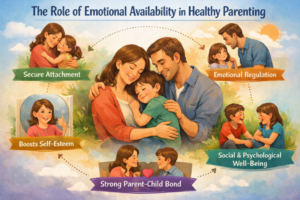
1. Builds Secure Attachment

Children that feel emotionally secure through parents will develop feelings of security and trust. Healthy attachment makes children feel free to explore the surrounding environment and develop healthy relationships in the future. Children are likely to gain confidence and independence when they know that their parents will be there to support them emotionally.

2. Promotes Emotional Regulation

Availability parents provide emotional support to children in the management of their emotions. Parents should learn to manage the negative emotions of anger, sadness, or fear, as well as help children learn to cope with these feelings in a positive manner. This works to limit the chance of emotional tantrums and disciplinary issues.

3. Enhances Self-Esteem

Children will feel respected and accepted when their parents listen to them and appreciate their sentiments. This confirmation builds self-esteem and makes the children have a positive self-concept. When children grow up knowing that they are emotionally appreciated, they have a higher chance of building resiliency and confidence.

4. Strengthens Parent-Child Relationship

Emotional availability reinforces the connexion between children and parents as well as communication. Emotionally attached children would be more willing to communicate their issues and seek advice in case of tough times.

5. Supports Social and Psychological Well-being

Children who are nurtured emotionally grow and gain understanding in the field of socialisation and empathy. They get to know how to interpret the emotions of others and establish good friendships. The risk of anxiety, depression, and behavioural problems is also minimised through emotional availability.

Signs of Emotionally Available Parenting

  • Actively listening to the child without interruption
  • Validating the child’s emotions instead of dismissing them
  • Showing warmth through affection and supportive communication
  • Being patient and understanding during emotional distress
  • Providing consistent reassurance and guidance

Barriers to Emotional Availability

Despite its importance, many parents struggle to remain emotionally available due to various challenges such as:

  • Work stress and busy schedules
  • Unresolved personal emotional difficulties
  • Lack of awareness about emotional needs of children
  • Cultural beliefs that discourage emotional expression

Recognizing these barriers is the first step toward improving emotional connection with children.

Ways Parents Can Improve Emotional Availability

  1. Practice Active Listening
    Give full attention when children speak. Avoid distractions like mobile phones or television.

  2. Validate Feelings
    Instead of saying, “Don’t cry,” parents can say, “I understand you feel upset.”

  3. Spend Quality Time
    Engage in activities like playing, storytelling, or simply talking about daily experiences.

  4. Manage Personal Stress
    Parents who regulate their own emotions are better able to support their children emotionally.

  5. Encourage Emotional Expression
    Allow children to express both positive and negative emotions openly.

Long-Term Impact of Emotional Availability

Children brought up by parents who are emotionally available, in most cases, become emotionally stable adults, and are also confident. When parents are always able to respond to emotional needs of a child with affection, compassion and understanding, it serves to mould emotional and social growth of the child. The availability of emotions during early childhood pre-disposes a person with solid psychological framework that facilitates healthy functioning in later stages of life.

1. Stronger Interpersonal Relationships

Children who feel emotional warmth in their homes know how to trust others and establish safe relationships. They develop with the knowledge of empathy, respect, and good communication. They have higher chances of having healthy friendship and love relations as well as work relations with others as they are more than likely to be comfortable in expressing emotions to people or understanding their feelings.

2. Better Coping Skills

Available parents show the children the way to deal with stress, failure, and disappointment. Children who are taught to express their feelings rather than hold them back come to learn healthy coping strategies. With age, they are now equipped to deal with life problems like school-related stress, job related stress or family conflicts.

3. Improved Mental Health

Children who have a sense of emotional support have reduced chances of being exposed to chronic anxiety, low self-esteem, or depression. Parental emotional validation assists the children to believe in their own positive self-image and has the opportunity of feeling emotionally safe. This defence mechanism eases exposure to psychological challenges in old age.

4. Development of Emotional Regulation

Emotionally available parenting teaches the children to manage their feelings and their feelings as well. They get to know how to show anger, sadness, or frustration in a socially acceptable manner. The skill enhances the level of decision making, impulse control, and problem solving in adulthood.

5. Increased Resilience and Confidence

When children grow up with the feeling of emotional security, they are bolder in trying new experiences and challenging. They become resilient, thus they are able to overcome disappointments and adjust to the dynamic situations in life. Parental support empowers them to have confidence in themselves.

On the whole, emotional availability is not away in parenting and its impact is felt throughout the life of a person. It aids people in gaining emotional stability, psychological stability, and skills to form meaningful relations that would ultimately lead to long-term well-being and quality of life.

Conclusion

Healthy parenting is based on emotional availability. It assists children to build on emotional power, self-esteem, and stable relationships. Although it is imperative to satisfy the physical needs, the emotional world of a child should also be supported. Through presence, the parents can create a supportive atmosphere that encourages the general child growth and psychology.

FAQ: Emotional Availability in Healthy Parenting

1. What is emotional availability in parenting?


Emotional availability refers to a parent’s ability to be emotionally present, responsive, and sensitive to a child’s emotional needs, feelings, and experiences.

2. Why is emotional availability important for children?
It helps children develop emotional security, confidence, healthy relationships, and better mental health.

3. How does emotional availability affect attachment?
Emotionally available parents promote secure attachment, which helps children feel safe, valued, and supported.

4. Can emotional availability improve a child’s behavior?
Yes, children who feel emotionally understood are less likely to show aggressive or problematic behavior and more likely to express emotions appropriately.

5. What are signs of emotionally available parenting?
Listening attentively, validating emotions, showing affection, maintaining open communication, and providing consistent reassurance.

6. What happens if parents are emotionally unavailable?
Children may develop low self-esteem, emotional insecurity, difficulty forming relationships, and increased risk of anxiety or behavioral problems.

7. Can working parents still be emotionally available?
Yes, emotional availability depends on quality of interaction rather than quantity of time. Even short meaningful conversations and bonding moments help.

8. How does emotional availability help emotional regulation?
Parents who guide children through emotions teach them how to identify, express, and manage feelings in healthy ways.

9. Is emotional availability the same as being permissive?
No, emotionally available parents provide support and understanding while also maintaining appropriate boundaries and discipline.

10. At what age is emotional availability most important?
It is important throughout childhood, but early childhood is particularly crucial because emotional foundations develop during this period.

11. How can parents improve emotional availability?
By practicing active listening, spending quality time, managing personal stress, and encouraging children to express emotions openly.

12. Can emotional availability influence academic performance?
Yes, emotionally secure children often show better concentration, motivation, and learning ability.

13. Does emotional availability help social development?
Yes, children learn empathy, communication, and conflict resolution skills, which improve social relationships.

14. How does emotional availability impact long-term mental health?
It reduces risk of depression, anxiety, and emotional instability while promoting resilience and self-confidence.

15. Can emotional availability strengthen parent-child bonding?
Yes, consistent emotional support builds trust, closeness, and long-lasting healthy relationships between parents and children.

Written by Baishakhi Das

Counselor | Mental Health Practitioner
B.Sc, M.Sc, PG Diploma in Counseling


Reference

  1. Bowlby, J. (1988). A Secure Base: Parent-Child Attachment and Healthy Human Development.
    https://www.simplypsychology.org/bowlby.html

  2. American Psychological Association – Parenting and Child Development
    https://www.apa.org/topics/parenting

  3. UNICEF – Positive Parenting Guidelines
    https://www.unicef.org/parenting

  4. Harvard Center on the Developing Child – Serve and Return Interaction
    https://developingchild.harvard.edu/science/key-concepts/serve-and-return/

  5. Siegel, D. & Bryson, T. (2012). The Whole-Brain Child.
    https://drdansiegel.com/books/the-whole-brain-child/

  6. How Parenting Style Influences a Child’s Mental Health

This topic performs well due to rising searches around men’s mental health, workplace stress, and burnout recovery. Combining emotional insight with practical steps increases engagement and trust.