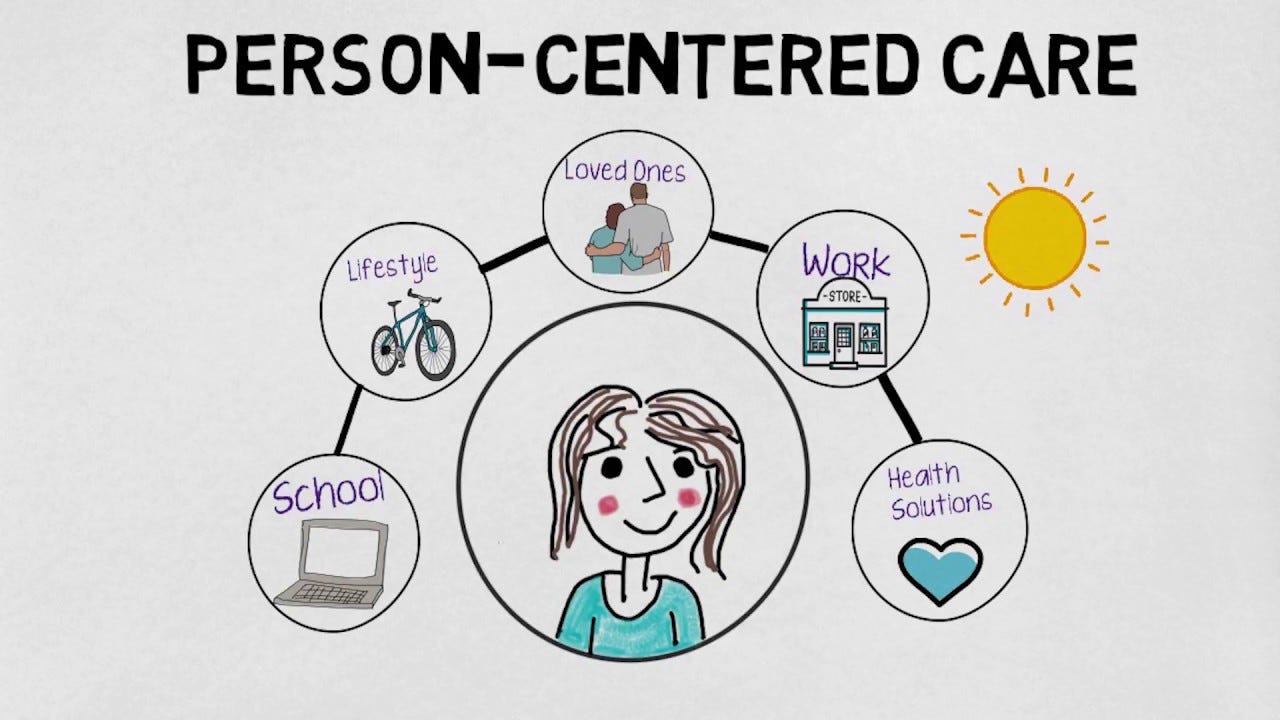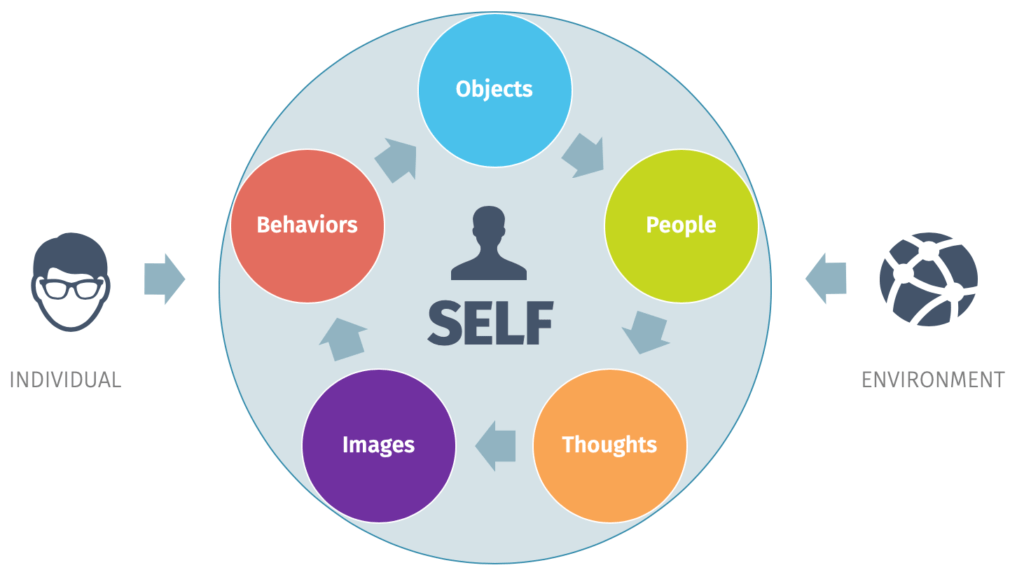
Fully Functioning Person: Psychological Meaning

https://cdn.prod.website-files.com/5b69a01ba2e409501de055d1/687789b406f106123225771d_6389ef9af6c1445fa9d62dbb_Carl%2520Rogers%2520theory%2520of%2520the%2520environment.png

The idea of a fully functioning person comes from humanistic psychology and offers one of the most optimistic views of human potential. Instead of concentrating on pathology, dysfunction, or diagnosis, this perspective shifts the focus toward growth, authenticity, and psychological health. It asks a fundamentally different question:

What does psychological health look like when a person is allowed to grow freely and live in alignment with their true self?

This approach moves away from fixing what is “wrong” and toward understanding what helps a person thrive. The answer does not lie in perfection, constant happiness, or rigid emotional control. A fully functioning person still experiences pain, fear, doubt, and uncertainty. What distinguishes psychological health is not the absence of struggle, but the ability to remain open and responsive to experience.

Psychological well-being, from this view, involves openness to emotions, flexibility in thinking, trust in one’s inner signals, and the capacity to live authentically rather than defensively. Instead of suppressing feelings or shaping the self to meet external expectations, a fully functioning person engages with life honestly, adapts to change, and continues to grow through experience.

This concept reframes mental health as a dynamic process of becoming, not a fixed state to be achieved.

Origin of the Concept

The concept of the fully functioning person emerged from the work of Carl Rogers, one of the founders of humanistic psychology. Rogers rejected the idea that human beings are inherently broken or flawed. Instead, he viewed people as naturally oriented toward growth, fulfillment, and psychological health. He called this innate drive the actualizing tendency.

Rogers argued that psychological distress does not arise because people lack potential. It emerges when environments interfere with natural growth. Conditions such as conditional acceptance, emotional invalidation, chronic criticism, or pressure to conform can block this process. When individuals feel they must deny parts of themselves to gain love or approval, they disconnect from their authentic experience.

A fully functioning person, in Rogers’ view, is someone whose growth has not been excessively restricted. Such a person remains free to experience emotions openly, trust their inner guidance, and continue developing in ways that feel genuine and self-directed. Psychological health, therefore, reflects not perfection, but the freedom to grow without fear of losing acceptance.

The Actualizing Tendency

At the heart of Rogers’ theory is the actualizing tendency—the natural drive within every individual to develop their abilities, express their true self, and move toward psychological wholeness.

This tendency:

  • Exists in all people

  • Operates naturally when conditions are supportive

  • Pushes toward growth, not destruction

When the environment allows emotional safety, empathy, and acceptance, this tendency guides a person toward healthy functioning.

Fully Functioning Person: Core Definition

A fully functioning person is not someone who has no problems or negative emotions. Instead, they are someone who:

  • Is open to inner experience

  • Trusts their feelings and perceptions

  • Lives authentically rather than defensively

  • Adapts flexibly to life’s challenges

  • Continues to grow psychologically

Rogers described this state as a process, not a fixed endpoint. A fully functioning person is always becoming.

Key Characteristics of a Fully Functioning Person

1. Openness to Experience

Fully functioning individuals remain open to both pleasant and unpleasant emotions. They do not deny, distort, or suppress their inner experiences to protect their self-image.

This includes:

  • Accepting sadness without shame

  • Acknowledging anger without guilt

  • Experiencing joy without fear

Emotions act as information, not threats.

2. Existential Living (Living in the Present)

Rather than rigidly following rules from the past or fears about the future, fully functioning people engage with life moment by moment.

They respond to situations as they are, not as they “should” be. This allows flexibility, creativity, and genuine engagement with reality.

3. Trust in the Organism

Rogers believed that psychologically healthy individuals trust their internal signals—emotions, intuition, bodily responses—when making decisions.

This does not mean impulsivity. It means:

  • Listening inward before seeking external validation

  • Using feelings as guides rather than enemies

  • Making choices aligned with inner values

This internal trust replaces dependence on approval.

4. Experiential Freedom

Fully functioning people experience a sense of choice in their lives. Recognize constraints but do not feel psychologically trapped by them.

  • They can choose responses even when situations are difficult

  • They are not controlled entirely by the past

  • Growth remains possible

This sense of agency supports resilience.

5. Creativity and Adaptability

Psychological openness fosters creativity—not only in art, but in problem-solving, relationships, and coping.

Fully functioning individuals:

  • Adapt rather than rigidly control

  • Learn from experience

  • Revise beliefs when new information appears

They remain flexible rather than defensive.

Fully Functioning Person vs Perfectionism

A common and critical misunderstanding is equating full functioning with perfection. In reality, these two reflect very different psychological processes.

A fully functioning person does not aim to eliminate fear, mistakes, or conflict. Instead, they relate to these experiences without allowing them to define their worth or identity. Such a person:

  • Feels fear but does not live in fear, allowing caution without paralysis

  • Makes mistakes without collapsing into shame, using errors as information rather than self-condemnation

  • Experiences conflict without losing identity, staying connected to self even during disagreement

  • Accepts limitations without self-rejection, recognizing limits as part of being human

Perfectionism, by contrast, grows out of conditions of worth. It ties value to performance, correctness, or approval and fuels constant self-monitoring and anxiety. Full functioning reflects unconditional self-regard—the ability to value oneself regardless of success, failure, or emotional state.

In short, perfectionism demands flawlessness to feel safe, while full functioning allows authenticity to guide growth.

Role of Unconditional Positive Regard

Carl Rogers emphasized that psychological growth flourishes in the presence of unconditional positive regard—the experience of being valued as a person regardless of behavior, success, or failure. This form of acceptance communicates a powerful message: your worth does not depend on performance or approval.

When children receive conditional acceptance—messages such as “You are good only if…”—they begin to organize their self-concept around external expectations. Over time, they may develop:

  • Conditions of worth, tying value to behavior or achievement

  • Defensive self-concepts, hiding parts of themselves to avoid rejection

  • Fear of authenticity, believing their true self is unacceptable

In contrast, when children experience unconditional acceptance, they internalize a stable sense of worth. This environment supports the development of:

  • Self-trust, allowing them to rely on their inner experience

  • Emotional openness, enabling healthy expression of feelings

  • Psychological flexibility, adapting to life without excessive defense

Therapy often aims to recreate these conditions by offering empathy, consistency, and nonjudgmental presence. Within such an environment, individuals naturally move toward greater authenticity, integration, and full psychological functioning.

Fully Functioning Person and Mental Health

Being a fully functioning person does not mean living without anxiety, sadness, stress, or emotional pain. Human experience naturally includes discomfort and uncertainty. Psychological health, from this perspective, lies not in eliminating these experiences but in the ability to relate to them without excessive defense, denial, or self-judgment.

In this view, mental health involves:

  • Emotional awareness — recognizing and understanding feelings as they arise

  • Acceptance rather than avoidance — allowing emotions to be experienced instead of suppressed or feared

  • Integration of experience — bringing thoughts, emotions, and actions into alignment

  • Ongoing growth — remaining open to change, learning, and self-development

Rather than aiming solely for symptom reduction, this perspective reframes mental health as self-congruence—living in harmony with one’s inner experience. When people feel free to acknowledge what they truly feel and need, distress loses its power to fragment the self, and growth becomes possible even in the presence of difficulty.

Fully Functioning Person in Relationships

In relationships, fully functioning individuals tend to:

  • Communicate honestly

  • Tolerate emotional intimacy

  • Respect boundaries

  • Repair conflicts rather than avoid them

  • Allow others to be different

They do not need to lose themselves to maintain connection.

Barriers to Becoming Fully Functioning

Common obstacles include:

  • Childhood emotional neglect

  • Conditional parenting

  • Trauma and chronic invalidation

  • Cultural pressure to conform

  • Fear-based self-esteem

These barriers do not eliminate the actualizing tendency—they restrict its expression.

Therapy and the Fully Functioning Person

Client-centered therapy aims to remove these barriers rather than “fix” the person.

Therapy provides:

  • Empathy

  • Congruence

  • Unconditional positive regard

Over time, clients naturally move toward greater openness, self-trust, and psychological integration.

A Process, Not a Destination

Rogers emphasized that full functioning is not a final state. It is a continuous process of becoming more open, more authentic, and more responsive to life.

There is no final version of the self—only deeper alignment.

A Gentle Closing Reflection

A fully functioning person is not fearless, flawless, or endlessly confident.
They are real.

Feel deeply without fear.
Respond honestly without defense.
Trust their inner experience without doubt.
Allow themselves to change without shame.

Psychological health is not about becoming someone else.
It is about becoming more fully yourself.

Frequently Asked Questions (FAQ)

1. What is a fully functioning person in psychology?

A fully functioning person is someone who lives with openness to experience, self-trust, emotional awareness, and psychological flexibility. The concept emphasizes growth and authenticity rather than perfection.


2. Who introduced the concept of the fully functioning person?

The concept was introduced by Carl Rogers, a founder of humanistic psychology, as part of his person-centered theory of psychological health.


3. Is a fully functioning person always happy?

No. Fully functioning individuals experience anxiety, sadness, and stress like anyone else. Psychological health lies in how they relate to these emotions—not in avoiding them.


4. How is full functioning different from perfectionism?

Perfectionism is driven by conditions of worth and fear of failure. Full functioning reflects unconditional self-regard, where mistakes and limitations do not threaten self-worth.


5. What role does unconditional positive regard play?

Unconditional positive regard allows individuals to feel valued regardless of behavior or success. This acceptance supports emotional openness, self-trust, and healthy psychological development.


6. Can therapy help someone become more fully functioning?

Yes. Person-centered and trauma-informed therapies aim to reduce defenses, increase self-congruence, and create conditions that support natural psychological growth.


7. Is being fully functioning a fixed state?

No. Rogers described full functioning as an ongoing process of becoming, not a final destination. Growth continues throughout life.

Written by Baishakhi Das

Counselor | Mental Health Practitioner
B.Sc, M.Sc, PG Diploma in Counseling


Reference 

Conditions of Worth & Self-Esteem Development

https://www.mollypotter.com/wp-content/uploads/2022/01/conditions-of-worthvv.png

A Deep Psychological Exploration

Self-esteem does not develop in isolation. Relationships—especially in childhood—shape, reinforce, and sometimes fracture it. One of the most powerful yet often overlooked influences on self-esteem development is the concept of conditions of worth.

Many adults struggle with chronic self-doubt, perfectionism, people-pleasing, fear of failure, or a persistent sense of “not being enough.” These struggles rarely reflect personality flaws. Instead, they reflect the emotional legacy of growing up believing that love, acceptance, or safety had to be earned.

This article examines conditions of worth in depth—explaining what they are, how they develop, how they shape self-esteem across the lifespan, how they appear in adulthood and relationships, and how healing becomes possible.

Understanding Conditions of Worth

The concept of conditions of worth comes from humanistic psychology, particularly the work of Carl Rogers. Rogers argued that every person enters the world with an innate drive toward growth, authenticity, and self-actualization—a natural motivation to become their true self. This developmental process, however, relies heavily on the emotional environment of childhood, especially the quality and consistency of acceptance offered by caregivers.

When caregivers provide warmth, empathy, and acceptance, children learn that their value exists simply because they exist. In contrast, when acceptance becomes inconsistent or conditional, children begin to form internal rules about what makes them “worthy.” Over time, these rules shape how children relate to themselves, evaluate their emotions, and measure their own value.

What Are Conditions of Worth?

Conditions of worth are the deeply internalized beliefs that one is worthy of love, acceptance, or respect only if certain conditions are met. These beliefs form early and often operate outside conscious awareness, quietly shaping self-esteem, motivation, and emotional expression.

They often sound like:

    • “Love feels available to me only when I behave well.”

    • “I feel valued mainly when I succeed.”

    • “I feel acceptable when I keep others comfortable.”

    • “Care feels earned, not given freely.”

Over time, these conditions teach the child to monitor, edit, and suppress parts of themselves to maintain connection. Emotions, needs, or traits that threaten approval are pushed aside, while approved behaviors are amplified. When love becomes conditional, the child learns a painful lesson: their authentic self is not enough—and worth must be earned rather than inherent.

Unconditional Positive Regard vs Conditional Acceptance

Carl Rogers emphasized the importance of unconditional positive regard—accepting and valuing a person regardless of behavior, success, or failure.

Unconditional Positive Regard

  • Love is consistent

  • Emotions are validated

  • Mistakes are tolerated

  • The child feels safe being authentic

Conditional Acceptance (Conditions of Worth)

  • Love is withdrawn or reduced when expectations aren’t met

  • Approval depends on performance or obedience

  • Emotions are judged or dismissed

  • The child learns to self-censor

When children receive conditional acceptance, they internalize the idea that worth must be earned.

How Conditions of Worth Develop in Childhood

Children are biologically wired for attachment. From the earliest years of life, their survival—both physical and emotional—depends on maintaining closeness with caregivers. To preserve this connection, children instinctively adapt themselves emotionally and behaviorally. They do not question whether the environment is healthy; instead, they change who they are to stay connected.

Conditions of worth typically develop in environments where acceptance feels uncertain, conditional, or unpredictable.

1. Love Is Performance-Based

When praise and attention are given mainly for achievements, good behavior, obedience, or emotional restraint, children begin to associate worth with performance.

Commonly rewarded traits include:

  • Academic success or talent

  • Being “well-behaved” or compliant

  • Meeting adult expectations

  • Suppressing strong emotions

Over time, the child learns: “I am valued for what I do, not for who I am.” 

2. Emotions Are Invalidated

When caregivers dismiss or criticize emotional expression, children learn that certain feelings make them less acceptable.

Messages such as:

  • “Stop crying.”

  • “You’re too sensitive.”

  • “Good children don’t get angry.”

teach the child to suppress emotions rather than understand them. Emotional expression becomes linked with shame or rejection.

3. Approval Is Inconsistent

When affection depends on a parent’s mood, stress level, or circumstances, children cannot rely on emotional safety. As a result, they become hypervigilant—constantly scanning for cues about how to behave to stay accepted.

This unpredictability teaches the child that love must be carefully managed.

4. Comparison Is Frequent

Being compared to siblings, peers, or ideal standards creates external benchmarks for worth. The child learns to evaluate themselves through others’ approval rather than inner experience.

Self-esteem becomes competitive rather than stable.

5. Parentification or Emotional Immaturity Exists

In families marked by emotional immaturity or role reversal, children may feel responsible for meeting adult emotional needs. They learn that their value lies in being helpful, mature, or emotionally accommodating—rather than simply being themselves.

In these environments, conditions of worth form quietly but deeply, shaping how the child understands love, safety, and self-acceptance well into adulthood.

Psychological Impact on Self-Esteem Development

Fragmented Self-Concept

When children must deny or hide parts of themselves in order to gain acceptance, the self gradually becomes divided. They learn that some feelings, needs, or traits are welcome—while others are not. Over time, this creates an internal split:

  • Real self – the child’s authentic feelings, needs, impulses, and desires

  • Ideal self – the version of themselves they believe they must become to be loved, accepted, or approved of

The greater the distance between these two selves, the more fragile self-esteem becomes. Living from the ideal self requires constant self-monitoring and suppression, leaving the person feeling disconnected from who they truly are.

Externalized Self-Worth

As conditions of worth take hold, self-esteem shifts from an inner sense of value to an external one. Worth becomes something to be measured and confirmed by others.

Self-esteem begins to depend on:

  • Validation from authority figures or peers

  • Achievement and productivity

  • Praise and positive feedback

  • Approval and acceptance

Without continuous external reinforcement, the individual may experience emptiness, anxiety, or a sudden collapse in self-worth. Confidence becomes unstable because it is no longer self-generated.

Fear-Based Motivation

Instead of acting from curiosity, interest, or joy, behavior becomes driven by fear. Choices are made not because they feel meaningful, but because they feel necessary for acceptance or safety.

This fear-based motivation often includes:

  • Rejection or loss of acceptance
  •  Failure and loss of worth
  • Fear of disappointing others and losing approval

Over time, this undermines intrinsic motivation and emotional well-being. Life becomes about avoiding loss rather than pursuing growth, leaving the person chronically tense, self-critical, and disconnected from genuine satisfaction.

How Conditions of Worth Appear in Adulthood

Conditions of worth do not disappear with age—they transform.

1. Perfectionism

Mistakes feel intolerable because they threaten worth, not just performance.

2. People-Pleasing

Saying “yes” becomes a survival strategy to maintain approval.

3. Chronic Self-Criticism

An internalized critical voice replaces external judgment.

4. Difficulty Receiving Love

Affection feels uncomfortable unless “earned.”

5. Emotional Suppression

Certain emotions still feel “unacceptable.”

6. Imposter Syndrome

Success never feels secure or deserved.

Conditions of Worth in Relationships

In adult relationships, conditions of worth often show up as:

  • Over-functioning to keep relationships stable

  • Fear of expressing needs or boundaries

  • Believing conflict equals rejection

  • Staying in unhealthy relationships to feel valued

  • Confusing self-sacrifice with love

Many relationship struggles are rooted not in incompatibility, but in conditional self-worth.

The Nervous System Connection

Conditions of worth shape not only thoughts, but also the nervous system.

When worth feels conditional:

  • The body stays in alert mode

  • Rejection feels threatening

  • Criticism triggers shame responses

  • Approval brings temporary relief, not safety

This keeps individuals stuck in cycles of anxiety and self-monitoring.

Self-Esteem vs Self-Worth

A critical distinction:

  • Self-esteem often depends on evaluation (“How good am I?”)

  • Self-worth is inherent (“Am I worthy?”)

Conditions of worth undermine self-worth, replacing it with fragile, performance-based esteem.

Cultural and Social Reinforcement

Conditions of worth are often reinforced by:

  • Academic pressure

  • Gender roles

  • Productivity culture

  • Social media validation

  • Comparison-driven environments

These forces normalize conditional value, making it harder to recognize the original wound.

Healing Conditions of Worth

Healing does not mean rejecting all standards or responsibilities. It means decoupling worth from performance.

1. Awareness

Identify internal “if–then” beliefs:

  • “If I fail, then I am worthless.”

  • “If I disappoint, then I will be rejected.”

2. Emotional Validation

Practice acknowledging feelings without judgment.

3. Self-Compassion

Replace self-criticism with understanding.

4. Reparenting

Offer yourself unconditional acceptance, especially in moments of failure.

5. Boundary Development

Learn that saying no does not equal losing worth.

6. Therapy

Humanistic, trauma-informed, or attachment-based therapy can help rebuild unconditional self-worth.

The Role of Therapy in Repair

Therapy provides what was missing:

  • Consistent acceptance

  • Emotional safety

  • Non-judgmental presence

  • Permission to be authentic

Over time, this helps integrate the real self and ideal self.

A Gentle Truth

If your self-esteem feels fragile, it does not mean you lack confidence.
It means your worth was made conditional before you had a choice.

You were not born believing you had to earn love.
You learned it.

And what is learned—can be unlearned.

Your value does not increase with success.
It does not decrease with mistakes.
It does not disappear when you rest.

Your worth was never conditional.
It was always inherent.

Frequently Asked Questions (FAQ)

1. What are conditions of worth in psychology?

Conditions of worth are internal beliefs that a person is worthy of love or acceptance only when certain expectations are met, such as good behavior, achievement, or emotional restraint.


2. Who introduced the concept of conditions of worth?

The concept comes from humanistic psychology and was introduced by Carl Rogers, who emphasized the importance of unconditional positive regard in healthy development.


3. How do conditions of worth affect self-esteem?

They make self-esteem fragile and externalized. Self-worth becomes dependent on approval, success, or validation rather than an inner sense of value.


4. Can conditions of worth exist without abuse?

Yes. Conditions of worth often develop in well-meaning families through emotional invalidation, high expectations, comparison, or inconsistent approval—even without overt abuse.


5. What is the difference between self-esteem and self-worth?

Self-esteem often reflects evaluation (“How well am I doing?”), while self-worth refers to inherent value (“Am I worthy?”). Conditions of worth undermine self-worth.


6. How do conditions of worth show up in adulthood?

They may appear as perfectionism, people-pleasing, fear of failure, chronic self-criticism, difficulty resting, or feeling undeserving of care or love.


7. Can conditions of worth be healed?

Yes. Through awareness, emotional validation, self-compassion, boundary-setting, and therapy, individuals can rebuild a sense of unconditional self-worth.

Written by Baishakhi Das

Counselor | Mental Health Practitioner
B.Sc, M.Sc, PG Diploma in Counseling


Reference 

Carl Rogers’ Person-Centered Theory in Counseling Practice

A Deep, Practice-Oriented Explanation

https://interacw.com/wp-content/uploads/2024/02/person_centered_therapy.jpeg
Carl Rogers’ Person-Centered Theory is one of the most influential and humanistic approaches in counseling psychology. Rather than focusing on diagnosis, advice, or symptom control, this approach centers on the person, not the problem.

Developed by Carl Rogers, Person-Centered Therapy (PCT) transformed counseling practice by asserting a radical idea:

People are not broken.
They already possess the capacity to heal—when the right relational conditions are present.

This article explains the theory in depth, connecting its core principles with real counseling practice, mental health work, and modern therapeutic settings.

The Philosophical Foundation of Person-Centered Theory

https://www.thoughtco.com/thmb/hEHvakRGISFGKI6fomETN25uZe0%3D/1500x0/filters%3Ano_upscale%28%29%3Amax_bytes%28150000%29%3Astrip_icc%28%29/CarlRogers-5c78400d46e0fb00011bf28e.jpg

Person-Centered Theory is grounded in humanistic philosophy, a perspective that views human beings as fundamentally capable, trustworthy, and oriented toward growth. Carl Rogers developed this approach during a time when psychology was dominated by two contrasting schools—both of which he felt overlooked the human experience of meaning, choice, and relationship.

Humanistic Psychology as a Response

Humanistic psychology emerged as a “third force” in psychology, responding to the limitations of earlier models:

  • Psychoanalysis emphasized pathology, unconscious conflict, and past trauma, often positioning the therapist as an interpreter of hidden meanings. While insightful, it could unintentionally frame clients as damaged or deficient.

  • Behaviorism focused on observable behavior, conditioning, and reinforcement. Though effective for behavior change, it largely ignored inner experience, emotions, and personal meaning.

Rogers believed both approaches underestimated a fundamental truth:
people are not passive recipients of forces—they are active participants in their own growth. 

Core Beliefs About Human Nature

At the heart of Person-Centered Theory lies a profoundly optimistic view of human beings.

1. Humans Are Inherently Growth-Oriented

Rogers proposed that every person possesses an innate drive to grow, adapt, and move toward psychological health. This does not mean people are always happy or make healthy choices—but that even maladaptive behaviors are attempts to cope, survive, or meet unmet needs.

In counseling practice, this belief shifts the therapist’s stance from fixing problems to trusting the client’s inner capacity.

2. Psychological Distress Arises From Disconnection From the Authentic Self

Rogers observed that emotional suffering often develops when individuals:

  • Deny or distort their true feelings

  • Live according to others’ expectations

  • Suppress parts of themselves to gain acceptance

This inner conflict creates incongruence—a mismatch between lived experience and self-concept. Over time, incongruence leads to anxiety, low self-worth, emotional numbness, or depression.

Rather than seeing distress as illness alone, Rogers viewed it as a signal of lost authenticity.

3. Healing Happens Through Relationship, Not Correction

Perhaps Rogers’ most radical contribution was the idea that the therapeutic relationship itself is the primary agent of change.

He rejected the notion that:

  • Insight must be forced

  • Behavior must be controlled

  • Clients must be corrected or directed

Instead, Rogers demonstrated that when a person is met with empathy, acceptance, and genuineness, they naturally begin to:

  • Lower defenses

  • Explore emotions safely

  • Integrate disowned parts of self

  • Move toward healthier functioning

Healing, in this view, is not imposed—it emerges.

The Actualizing Tendency: The Heart of the Theory

The Actualizing Tendency is the foundational motivational force in Person-Centered Theory. It refers to the inherent drive within all living organisms to:

  • Maintain themselves

  • Enhance their capacities

  • Develop toward greater complexity and fulfillment

In humans, this tendency expresses itself as:

  • Desire for meaning and purpose

  • Striving for authenticity

  • Need for connection and self-acceptance

  • Movement toward psychological integration

Even behaviors that appear self-sabotaging are understood as distorted expressions of the actualizing tendency, shaped by fear, trauma, or conditions of worth.

Clinical Meaning of the Actualizing Tendency

In counseling practice, belief in the actualizing tendency means:

  • The therapist trusts the client’s inner direction

  • Resistance is reframed as self-protection

  • Growth is allowed to unfold at the client’s pace

  • The client is viewed as the expert on their own experience

When the right relational conditions are present, the actualizing tendency naturally guides the client toward healing—without force, judgment, or control.

Self-Concept and Incongruence

Rogers emphasized the importance of self-concept, which includes:

  • Self-image (how I see myself)

  • Self-esteem (how I value myself)

  • Ideal self (who I think I should be)

Incongruence

Psychological distress occurs when there is a gap between:

  • The real self (authentic feelings and experiences)

  • The ideal self (who one believes they must be to be accepted)

This incongruence often develops due to conditions of worth.

Conditions of Worth: The Root of Emotional Pain

Conditions of worth are messages learned early in life, such as:

  • “You are lovable only if you behave well”

  • “Your feelings are acceptable only if they don’t upset others”

  • “Your value depends on achievement or obedience”

Over time, individuals learn to:

  • Suppress emotions

  • Reject parts of themselves

  • Live for approval rather than authenticity

Counseling Relevance

Much of therapy involves undoing these conditions, allowing clients to reconnect with their true feelings without fear of rejection.

The Three Core Conditions of Person-Centered Therapy

Rogers identified three necessary and sufficient conditions for therapeutic change.

1. Unconditional Positive Regard (UPR)

Definition:
Accepting the client fully, without judgment, conditions, or evaluation.

This does not mean approving harmful behavior. It means:

  • Separating the person from the behavior

  • Communicating: “You are worthy, regardless of what you feel or have done.”

Impact in Practice:

  • Reduces shame

  • Encourages emotional honesty

  • Builds psychological safety

2. Empathy (Accurate Empathic Understanding)

Definition:
Deeply understanding the client’s internal world as if it were your own—without losing the “as if” quality.

Empathy involves:

  • Reflecting emotions

  • Understanding meaning beneath words

  • Being emotionally present

Impact in Practice:

  • Clients feel seen and understood

  • Emotional regulation improves

  • Insight emerges naturally

3. Congruence (Genuineness)

Definition:
The therapist is authentic, transparent, and emotionally real—rather than hiding behind a professional façade.

Congruence includes:

  • Emotional honesty

  • Appropriate self-awareness

  • Alignment between inner experience and outward behavior

Impact in Practice:

  • Builds trust

  • Models authenticity

  • Encourages clients to be real themselves

The Role of the Therapist in Person-Centered Counseling

Unlike directive approaches, the therapist does not:

  • Give advice

  • Interpret unconscious material

  • Set goals for the client

  • Diagnose or label as central focus

Instead, the therapist:

  • Creates a safe relational space

  • Trusts the client’s internal process

  • Follows the client’s lead

  • Facilitates self-exploration

The therapist is not an expert on the client’s life.
The client is. 

What Change Looks Like in Person-Centered Therapy

Therapeutic change often includes:

  • Increased emotional awareness

  • Greater self-acceptance

  • Reduced defensiveness

  • Improved emotional regulation

  • More authentic relationships

  • Alignment between values and behavior

Importantly, change is organic, not forced.

Applications in Modern Counseling Practice

Person-Centered Theory is widely used in:

  • Individual counseling

  • Trauma-informed therapy

  • Child and adolescent counseling

  • Relationship counseling

  • Mental health rehabilitation

  • Community and NGO settings

It integrates well with:

  • CBT (as a relational foundation)

  • Trauma therapy

  • Attachment-based approaches

  • Integrative counseling models

Strengths of Person-Centered Therapy

  • Honors the client’s autonomy and self-direction
  • Strengthens the therapeutic alliance
  • Minimizes shame and defensive responses
  • Demonstrates effectiveness across diverse cultural contexts
  • Supports sustained emotional and personal growth

Limitations 

⚠ May be insufficient alone for:

  • Severe psychosis

  • Acute crisis requiring structure

  • Clients seeking directive guidance initially

However, even in structured therapies, Rogers’ core conditions remain essential for effectiveness.

Why Person-Centered Theory Still Matters Today

In a world driven by:

  • Performance

  • Productivity

  • Comparison

  • Labels and diagnoses

Person-Centered Therapy reminds us that healing happens in relationships where people feel safe, accepted, and understood.

People do not grow because they are corrected.
They grow because they are accepted.

Closing Reflection

Carl Rogers’ Person-Centered Theory is not just a counseling technique—it is a way of being with another human.

When empathy, acceptance, and genuineness are present:

  • Defenses soften

  • Authenticity emerges

  • Healing unfolds naturally

And often, that is enough.

Frequently Asked Questions (FAQ)

1. What is the philosophical foundation of Person-Centered Theory?

Person-Centered Theory is rooted in humanistic psychology, which views humans as inherently capable of growth, self-direction, and healing. It emphasizes subjective experience, personal meaning, and the healing power of relationships rather than pathology or control.


2. How is Person-Centered Theory different from psychoanalysis?

Psychoanalysis focuses on unconscious conflict and past experiences, often positioning the therapist as an expert interpreter. Person-Centered Theory, developed by Carl Rogers, focuses on the client’s present experience and trusts the client’s innate capacity for growth.


3. How does it differ from behaviorism?

Behaviorism emphasizes observable behavior, conditioning, and reinforcement. Person-Centered Theory prioritizes inner experience, emotions, self-concept, and authenticity, believing that lasting change occurs through understanding, not control.


4. What is the Actualizing Tendency?

The Actualizing Tendency is the innate drive within every human being to grow, heal, and move toward psychological wholeness. Even maladaptive behaviors are seen as attempts to cope or meet unmet needs.


5. Why does Carl Rogers believe distress comes from disconnection from the self?

Rogers observed that psychological distress arises when individuals deny or suppress their true feelings to meet external expectations. This creates incongruence between the real self and the ideal self, leading to anxiety, low self-worth, or emotional numbness.


6. Why is the therapeutic relationship so important in Person-Centered Therapy?

Because Rogers believed that empathy, unconditional positive regard, and genuineness are sufficient conditions for change. Healing happens when clients feel deeply understood and accepted, not corrected or judged.


7. Is Person-Centered Theory still relevant in modern counseling?

Yes. In trauma-informed, attachment-based, and integrative counseling, Person-Centered principles form the foundation of effective therapeutic relationships, even when other techniques are used.

Written by Baishakhi Das

Counselor | Mental Health Practitioner
B.Sc, M.Sc, PG Diploma in Counseling


Reference