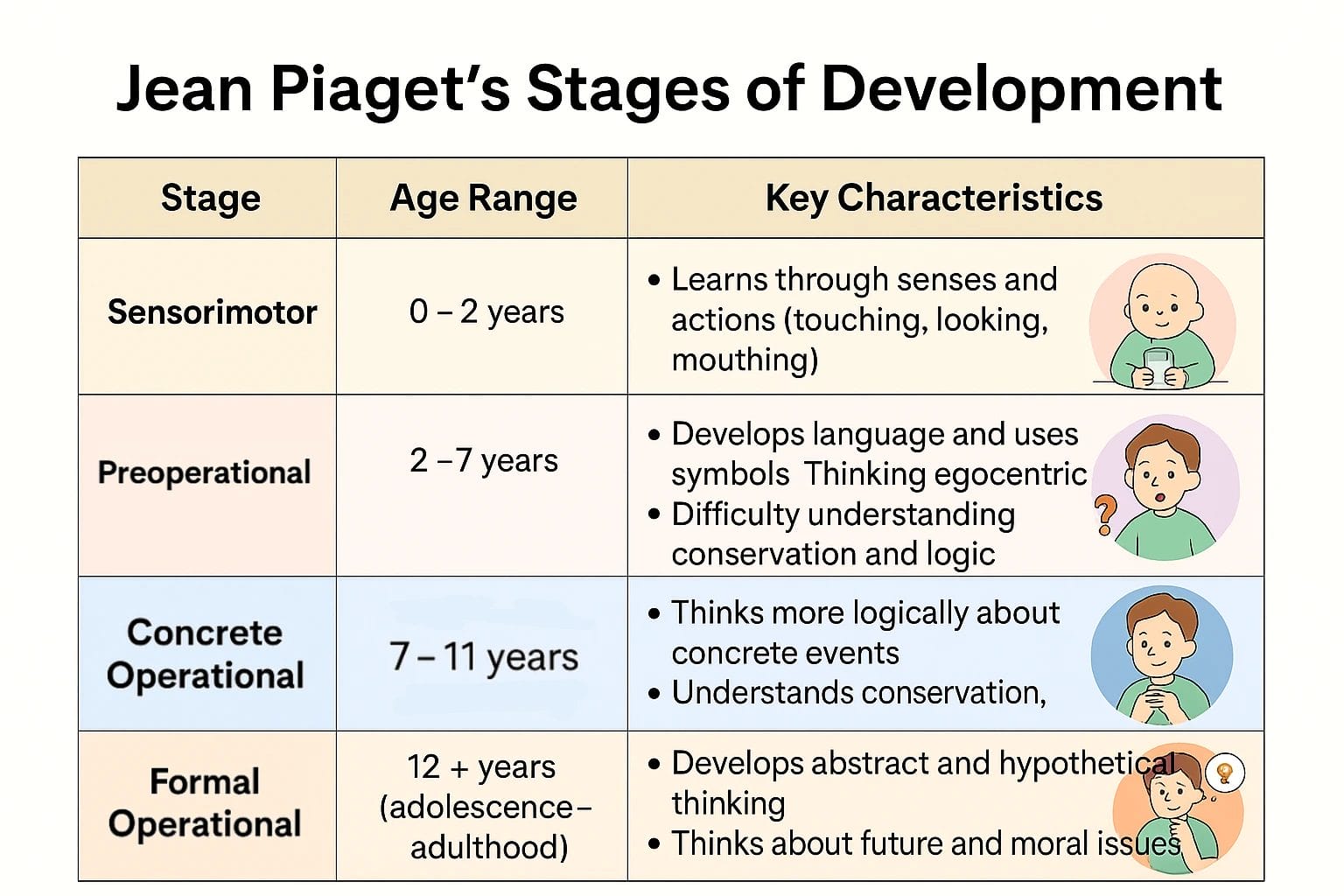
Behaviorism vs Cognitive Psychology

Understanding two major approaches to human behavior and the mind

https://ioannouolga.wordpress.com/wp-content/uploads/2018/08/behaviorism-cognitivism.gif?w=670

Introduction

Psychology has evolved through multiple schools of thought, each attempting to explain why humans think, feel, and behave the way they do. These perspectives developed in response to different questions—some focusing on what can be observed and measured, others exploring the invisible workings of the mind. Among these, Behaviorism and Cognitive Psychology stand out as two of the most influential—and contrasting—approaches in the history of psychology.

Behaviorism emerged in the early 20th century as a reaction against introspective methods. It argues that psychology should focus only on observable behavior and external consequences, because these can be scientifically measured and objectively studied. From this perspective, human behavior is shaped largely by the environment through learning, reinforcement, and punishment.

In contrast, Cognitive Psychology developed later, emphasizing that behavior cannot be fully understood without examining internal mental processes. It focuses on how people think, remember, interpret, problem-solve, and make meaning of their experiences. Cognitive psychologists view humans as active processors of information, whose beliefs, perceptions, and thoughts strongly influence emotions and actions.

Understanding the differences between behaviorism and cognitive psychology is essential for students, educators, therapists, and mental health practitioners, because these approaches influence how learning is taught, how behavior is managed, and how psychological difficulties are treated. Modern psychology increasingly integrates both perspectives, recognizing that behavior is shaped by external experiences and internal cognition working together, rather than by one alone.

What Is Behaviorism?

Behaviorism is a psychological approach that explains behavior as a result of environmental stimuli and learned responses. It argues that psychology should focus only on observable, measurable behavior, because behavior can be objectively studied, predicted, and controlled. From this viewpoint, internal mental states—such as thoughts, feelings, or intentions—are considered unnecessary for explaining behavior, as they cannot be directly observed.

Behaviorism emerged as a reaction against introspection-based psychology and aimed to make psychology a scientific, experimental discipline, similar to the natural sciences.

Key Contributors

  • John B. Watson – Founder of behaviorism; emphasized stimulus–response learning

  • B. F. Skinner – Developed operant conditioning; highlighted reinforcement and punishment

  • Ivan Pavlov – Discovered classical conditioning through conditioned reflexes

Each contributed to understanding how learning occurs through interaction with the environment.

Core Assumptions of Behaviorism

Behaviorism is based on several fundamental assumptions:

  • Behavior is learned, not innate
    Humans are not born with fixed behavioral patterns; behavior develops through experience.

  • Learning occurs through conditioning
    Repeated associations and consequences shape behavior.

  • Internal thoughts are not necessary to explain behavior
    Only observable actions are required for scientific explanation.

  • The environment shapes behavior
    External stimuli, rewards, and punishments determine how individuals act.

Key Concepts in Behaviorism

  • Classical Conditioning
    Learning through association between stimuli (e.g., Pavlov’s experiments).

  • Operant Conditioning
    Learning through consequences—reinforcement and punishment (Skinner).

  • Reinforcement and Punishment
    Consequences that increase or decrease behavior.

  • Stimulus–Response (S–R) Associations
    Behavior is seen as a direct response to environmental stimuli.

Example

A child studies more because good marks are rewarded.
→ The increased studying is explained through reinforcement, not through motivation, self-belief, or emotions.

From a behaviorist perspective, the reward strengthens the behavior, making internal thoughts unnecessary for explanation.

Key Insight

Behaviorism provides a clear, practical framework for understanding and modifying behavior, especially in areas like education, parenting, and behavior therapy. However, its focus on observable behavior alone is also what later led to the development of approaches—like cognitive psychology—that explore what happens inside the mind.

What Is Cognitive Psychology?

Cognitive psychology is a branch of psychology that focuses on how people process information—including thinking, reasoning, memory, attention, language, perception, and problem-solving. Rather than viewing humans as passive responders to external stimuli, this approach sees individuals as active processors of information who interpret, evaluate, and make meaning from their experiences.

Cognitive psychology emerged as a response to the limitations of behaviorism. Psychologists realized that understanding behavior requires exploring what happens inside the mind—how people think about situations, how they remember past experiences, and how they interpret the world around them.

Key Contributors

  • Jean Piaget – Explained how children’s thinking develops through distinct cognitive stages

  • Aaron Beck – Developed cognitive therapy, highlighting how thoughts influence emotions and behavior

Their work laid the foundation for understanding learning, development, and mental health through cognitive processes.

Core Assumptions of Cognitive Psychology

Cognitive psychology is built on several key assumptions:

  • Mental processes influence behavior
    What people think directly affects how they feel and act.

  • Thoughts, beliefs, and interpretations matter
    The same situation can lead to different behaviors depending on how it is perceived.

  • Humans actively construct meaning
    People are not passive learners; they organize and interpret information based on prior knowledge.

  • Behavior cannot be fully understood without understanding cognition
    Observable behavior is only one part of the picture—internal processes give it meaning.

Key Concepts in Cognitive Psychology

  • Schemas
    Mental frameworks that help organize and interpret information (e.g., beliefs about self or others).

  • Information Processing
    The way the mind encodes, stores, and retrieves information—often compared to a computer model.

  • Cognitive Distortions
    Inaccurate or biased thinking patterns that influence emotions and behavior.

  • Memory and Attention
    Processes that determine what information is noticed, remembered, or forgotten.

Example

A child avoids studying because they think, “I’m not smart enough.”
→ From a cognitive perspective, the behavior is explained by beliefs, self-perception, and thought patterns, not by rewards or punishment alone.

The problem is not just the behavior (avoiding study), but the underlying cognition shaping it.

Key Insight

Cognitive psychology helps us understand why behavior occurs, not just how it changes. By addressing thoughts, beliefs, and interpretations, this approach is especially valuable in education, counseling, and mental health interventions, where insight and emotional understanding are essential for lasting change.

Key Differences: Behaviorism vs Cognitive Psychology

Aspect Behaviorism Cognitive Psychology
Focus Observable behavior Internal mental processes
View of mind Not necessary to study Central to behavior
Learning Conditioning Information processing
Role of environment Primary influence Important but not sole factor
Role of thoughts Ignored Essential
Research methods Experiments, observation Experiments, models, self-report
Therapy focus Behavior change Thought + behavior change

Applications in Real Life

In Education

Both approaches strongly influence how teaching and learning are designed.

  • Behaviorism emphasizes observable performance.

    • Reward-based learning (grades, praise, stars)

    • Discipline systems with clear rules and consequences

    • Repetition and practice to build habits
      This approach is especially useful for classroom management, skill acquisition, and maintaining structure.

  • Cognitive Psychology focuses on how students think and understand.

    • Learning strategies (mnemonics, mind maps)

    • Problem-solving and critical thinking

    • Conceptual understanding rather than rote learning
      This helps students become active learners who understand why and how, not just what.

👉 Modern education blends both: reinforcement to motivate effort, and cognitive strategies to deepen understanding.

In Parenting

Parenting practices often reflect a mix of these two approaches.

  • Behaviorism in parenting involves:

    • Reinforcing good behavior (praise, attention, rewards)

    • Setting clear consequences for misbehavior

    • Consistency in responses
      This helps children learn boundaries and expectations.

  • Cognitive Psychology in parenting focuses on:

    • Understanding emotions behind behavior

    • Helping children identify self-talk (“I can’t do this”)

    • Supporting motivation, confidence, and emotional regulation

👉 Together, they allow parents to guide behavior while also nurturing emotional intelligence and self-esteem.

In Therapy

Therapeutic approaches clearly show the strengths of both perspectives.

  • Behaviorism contributes:

    • Behavior modification techniques

    • Exposure therapy for fears and phobias

    • Habit reversal strategies

  • Cognitive Psychology contributes:

    • Cognitive restructuring (challenging negative thoughts)

    • Changing maladaptive beliefs

    • Improving self-perception and emotional understanding

Modern therapies—especially Cognitive Behavioral Therapy (CBT)—integrate both approaches, targeting behavior change and thought patterns simultaneously for lasting mental health improvement.

Strengths and Limitations

Strengths of Behaviorism

  • Clear, measurable, and practical

  • Highly effective for habit formation

  • Widely useful in classrooms, parenting, and behavior therapy

Limitations of Behaviorism

  • Ignores emotions, thoughts, and meaning

  • Limited in explaining complex human behavior

  • Less effective for trauma-related or emotionally driven issues 

Strengths of Cognitive Psychology

  • Explains thinking, emotions, and meaning-making

  • Effective for anxiety, depression, and self-esteem concerns

  • Respects human agency, insight, and self-awareness

Limitations of Cognitive Psychology

  • Mental processes are harder to measure objectively

  • May overlook environmental and situational influences

  • Requires verbal ability and reflective capacity

Modern Perspective: Integration, Not Opposition

Today, psychology no longer treats behaviorism and cognitive psychology as opposing camps. Instead, they are understood as complementary perspectives.

  • Behaviorism explains how behavior is shaped through consequences and learning

  • Cognitive psychology explains why behavior happens through thoughts, beliefs, and interpretations

Integrated approaches recognize that behavior and cognition influence each other continuously.

Conclusion

Behaviorism and cognitive psychology offer two powerful lenses for understanding human behavior.
One focuses on what we do.
The other focuses on how we think.

Together, they provide a richer, more complete picture of human functioning.

Behavior can be shaped.
Thoughts can be changed.
And meaningful change happens when both are understood.

Frequently Asked Questions (FAQ)

1. What is the main difference between behaviorism and cognitive psychology?

Behaviorism focuses on observable behavior and external consequences, while cognitive psychology focuses on internal mental processes like thoughts and memory.

2. Who founded behaviorism?

Behaviorism was founded by John B. Watson.

3. Who are the major contributors to cognitive psychology?

Key contributors include Jean Piaget and Aaron Beck.

4. Why did behaviorists reject mental processes?

They believed thoughts and emotions could not be objectively measured and therefore should not be the focus of scientific psychology.

5. What does cognitive psychology focus on?

It focuses on thinking, memory, attention, perception, language, and problem-solving.

6. How does behaviorism explain learning?

Learning occurs through conditioning—via reinforcement, punishment, and stimulus–response associations.

7. How does cognitive psychology explain behavior?

Behavior is explained through beliefs, interpretations, schemas, and information processing.

8. Which approach is better for education?

Both are useful: behaviorism helps with discipline and habit formation, while cognitive psychology supports deep understanding and critical thinking.

9. Which approach is more effective in therapy?

Modern therapy combines both approaches, especially in Cognitive Behavioral Therapy.

10. Can behaviorism explain emotions?

No. One of its main limitations is ignoring emotions and internal experiences.

11. Can cognitive psychology explain habits?

Yes, but it may overlook the role of reinforcement and environment in habit formation.

12. Is behaviorism still relevant today?

Yes, especially in education, parenting, and behavior modification programs.

13. Is cognitive psychology more humanistic?

It is more person-centered than behaviorism, as it values thoughts, meaning, and insight.

14. Why are the two approaches integrated today?

Because behavior and cognition influence each other; understanding both leads to better outcomes.

15. What is the biggest takeaway from comparing these approaches?

Human behavior is best understood by combining external behavior patterns with internal mental processes.

Written by Baishakhi Das

Counselor | Mental Health Practitioner
B.Sc, M.Sc, PG Diploma in Counseling


Reference 

  1. Watson, J. B. (1913). Psychology as the Behaviorist Views It.

  2. Skinner, B. F. (1953). Science and Human Behavior.

  3. Piaget, J. (1952). The Origins of Intelligence in Children.

  4. Beck, A. T. (1976). Cognitive Therapy and the Emotional Disorders.

  5. American Psychological Association (APA) – Learning & Cognition
    https://www.apa.org

  6. McLeod, S. A. (2023). Behaviorism & Cognitive Psychology. Simply Psychology
    https://www.simplypsychology.org

  7. Anger Issues in Men: What’s Really Going On
 

Moral Development Theory: Piaget vs Kohlberg

Moral development theory explains how people learn to distinguish right from wrong, how moral reasoning changes with age, and why individuals justify moral decisions differently. It focuses not just on behavior, but on the thinking process behind moral judgments.

Two key contributors to this field are Jean Piaget and Lawrence Kohlberg. Piaget laid the foundation by showing that children actively construct their moral understanding as their thinking develops. He explained how children move from rigid, authority-based rules to a more flexible understanding of intentions and fairness through social interaction.

Building on this work, Kohlberg expanded moral development into a lifespan theory, proposing that moral reasoning progresses through six stages from childhood to adulthood. He emphasized that morality is best understood by examining how people justify their decisions, not simply what choice they make.

Together, Piaget and Kohlberg demonstrated that moral development is a gradual, developmental process shaped by cognitive growth and social experience.

Jean Piaget’s Theory of Moral Development (Expanded Explanation)

https://e5jup2y78j7.exactdn.com/wp-content/uploads/2024/04/piaget-stages-of-development-1536x1024-1.webp

Jean Piaget viewed moral development as a natural outcome of cognitive development. He believed that children are not born with an understanding of morality, nor do they simply absorb moral rules from adults. Instead, children are active thinkers who construct their moral understanding through interaction with their environment and with others. As children’s thinking becomes more sophisticated, their moral reasoning also becomes more flexible and mature.

Piaget emphasized that morality evolves alongside a child’s ability to think logically, take perspectives, and understand intentions. This means that moral development is developmental, not merely the result of discipline or instruction.

Core Assumptions of Piaget’s Theory

Piaget’s theory rests on several key ideas:

  • Morality develops through social interaction, particularly with peers rather than adults. Peer relationships allow children to negotiate, cooperate, and experience fairness.

  • Children gradually move from rule acceptance to rule negotiation, learning that rules are created by people and can be modified.

  • Cognitive maturity plays a central role in moral reasoning; children’s judgments depend on how they think, not just on fear of punishment.

  • Moral understanding shifts from an external authority-based system to an internal, reasoned system.

Based on these assumptions, Piaget identified two major stages of moral development.

Stage 1: Heteronomous Morality (Moral Realism)

Age Range: Approximately 4–7 years

In this early stage, children view morality as externally controlled.

Key Characteristics

  • Rules are seen as fixed, absolute, and unchangeable

  • Authority figures such as parents, teachers, or elders define what is right and wrong

  • Moral judgment is based on consequences, not intentions

  • Punishment is perceived as automatic and unavoidable (“If you do something wrong, you will be punished”)

Example

A child believes:

“Breaking five cups by accident is worse than breaking one cup on purpose.”

Here, the child focuses on the amount of damage rather than the intention behind the action.

Psychological Insight

This stage reflects egocentric thinking. Children are limited in their ability to take another person’s perspective and therefore struggle to understand intentions, motives, or situational factors.

Stage 2: Autonomous Morality (Moral Relativism)

Age Range: Around 8–12 years and beyond

As children grow cognitively and socially, they enter a more advanced form of moral reasoning.

Key Characteristics

  • Rules are understood as social agreements, not absolute laws

  • Intentions matter more than outcomes

  • Concepts of fairness, equality, and reciprocity become important

  • Children recognize that rules can be changed through mutual consent

  • Moral judgments become more flexible and context-sensitive

Example

A child believes:

“Breaking one cup on purpose is worse than breaking five accidentally.”

This reflects an understanding that intention is more important than the physical outcome.

Psychological Insight

Autonomous morality develops largely through peer interaction, where children experience cooperation, conflict resolution, and shared decision-making rather than one-sided authority.

Strengths of Piaget’s Theory

  • First systematic and scientific study of children’s moral reasoning

  • Highlighted the importance of intentions in moral judgment

  • Emphasized the crucial role of peer relationships in moral development

  • Shifted the view of children from passive learners to active moral thinkers

Limitations of Piaget’s Theory

  • Focused mainly on childhood, offering limited insight into adult moral development

  • Based on small and homogeneous samples

  • Underestimated younger children’s ability to show moral understanding

  • Did not fully account for emotional, cultural, or contextual influences on morality

Why Piaget’s Theory Still Matters

Despite its limitations, Piaget’s work laid the foundation for modern moral development theories, particularly influencing later theorists like Kohlberg. His central idea—that morality grows through thinking, interaction, and experience—remains a cornerstone in psychology, education, and child counseling.


Lawrence Kohlberg’s Theory of Moral Development

Lawrence Kohlberg expanded on Jean Piaget’s foundational ideas and proposed that moral reasoning develops through six distinct stages, organized into three hierarchical levels. Unlike Piaget, who focused mainly on childhood, Kohlberg argued that moral development is a lifelong process that can continue into adulthood, although not everyone reaches the highest stages.

Kohlberg’s theory places emphasis on moral reasoning rather than moral behavior. He was less interested in whether a person’s decision was “right” or “wrong” and more concerned with the reasoning used to justify that decision. According to Kohlberg, two people might make the same moral choice but be operating at very different levels of moral development, depending on whether their reasoning is based on fear of punishment, social approval, obedience to law, or internal ethical principles.

To study moral reasoning, Kohlberg used moral dilemmas, most famously the Heinz dilemma, where individuals were asked to explain what a person should do and, more importantly, why. The justification revealed the individual’s stage of moral development. This approach highlighted that moral growth involves a gradual shift from externally controlled reasoning (punishment and authority) to internally guided principles such as justice, rights, and human dignity.

Kohlberg’s Three Levels & Six Stages

https://www.simplypsychology.org/wp-content/uploads/kohlberg-moral-development.jpeg

Lawrence Kohlberg proposed that moral reasoning develops through three levels, each consisting of two stages. These stages represent increasingly complex ways of thinking about moral issues. Progression through the stages depends on cognitive growth, social experiences, and exposure to moral dilemmas, and not everyone reaches the highest levels.

Level 1: Preconventional Morality

Typical Age: Childhood

At this level, morality is externally controlled. Children understand right and wrong based on personal consequences, not social rules or ethical principles.

Stage 1: Obedience and Punishment Orientation

In the earliest stage, behavior is guided by the desire to avoid punishment.

Key Features

  • Authority figures are seen as all-powerful

  • Rules are fixed and unquestioned

  • Moral decisions are based on fear of consequences

Example

“Stealing is wrong because you’ll go to jail.”

Psychological Insight
Moral reasoning is egocentric and consequence-focused, similar to Piaget’s heteronomous morality.

Stage 2: Self-Interest Orientation

At this stage, children begin to recognize that others also have needs, but morality is still self-centered.

Key Features

  • Right action is what benefits oneself

  • Moral decisions are transactional (“You help me, I help you”)

  • Fairness is understood as equal exchange, not empathy

Example

“Heinz should steal the drug because he needs his wife.”

Psychological Insight
This stage reflects a pragmatic view of morality driven by personal gain rather than social norms.

Level 2: Conventional Morality

Typical Age: Adolescence to adulthood

Here, individuals internalize social norms and expectations. Morality is defined by the desire to maintain relationships and social order.

Stage 3: Good Boy / Good Girl Orientation

Key Features

  • Strong desire for social approval

  • Being “good” means meeting others’ expectations

  • Intentions and emotions begin to matter

Example

“People will think Heinz is a good husband.”

Psychological Insight
Moral behavior is motivated by empathy and the need to belong, rather than fear of punishment.

Stage 4: Law and Order Orientation

Key Features

  • Emphasis on law, authority, and duty

  • Rules are necessary to maintain social order

  • Moral reasoning extends beyond close relationships to society as a whole

Example

“If everyone steals, society will collapse.”

Psychological Insight
This stage reflects respect for institutions and the belief that laws must be obeyed to prevent chaos.

Level 3: Postconventional Morality

Typical Age: Adulthood (not all individuals reach this level)

At this highest level, morality is guided by internalized ethical principles, which may sometimes conflict with laws or social norms.

Stage 5: Social Contract Orientation

Key Features

  • Laws are viewed as social agreements

  • Emphasis on individual rights and democratic values

  • Rules can be changed if they no longer serve the greater good

Example

“Life is more important than property.”

Psychological Insight
Moral reasoning balances societal rules with human rights and ethical considerations.

Stage 6: Universal Ethical Principles

Key Features

  • Morality is based on self-chosen ethical principles

  • Principles such as justice, dignity, and equality guide decisions

  • Willingness to act according to conscience, even at personal cost

Example

“Human life must be protected regardless of law.”

Psychological Insight
This stage represents ideal moral reasoning, though very few people consistently operate at this level.

Strengths of Kohlberg’s Theory

  • Explains moral reasoning across the lifespan

  • Provides a clear, structured framework for understanding moral growth

  • Widely applied in education, ethics, law, and psychology

  • Emphasizes reasoning over blind rule-following

Limitations of Kohlberg’s Theory

  • Cultural bias toward Western, individualistic values

  • Overemphasis on justice-based reasoning, neglecting care, empathy, and emotion

  • Moral reasoning does not always translate into moral behavior

  • Many individuals function at different stages depending on context

Summary Insight

Kohlberg’s theory shows that moral development is a journey from self-interest to social responsibility to ethical principles. It highlights that morality is not static but evolves through reflection, experience, and increasing cognitive complexity.

Piaget vs Kohlberg: Key Differences

Aspect Piaget Kohlberg
Focus Children’s moral thinking Lifespan moral reasoning
Stages 2 stages 6 stages
Key Factor Cognitive development Moral reasoning structure
Role of Authority Strong in early stages Gradually replaced by principles
Method Observation & interviews Moral dilemmas

How Piaget and Kohlberg’s Theories Complement Each Other

Jean Piaget and Lawrence Kohlberg did not offer competing explanations of moral development; instead, their theories build upon one another, creating a more complete picture of how morality develops across the lifespan.

Piaget explains how moral understanding begins. His work focuses on early childhood and shows how children initially view rules as fixed and externally imposed, and gradually come to understand intentions, fairness, and mutual respect through cognitive growth and peer interaction. In this sense, Piaget identifies the origins of moral thinking, highlighting how basic moral concepts emerge alongside cognitive development.

Kohlberg takes these foundational ideas further by explaining how moral reasoning becomes more complex over time. Extending beyond childhood into adolescence and adulthood, Kohlberg demonstrates how individuals move from consequence-based reasoning to socially oriented thinking and, in some cases, to abstract ethical principles. His theory maps the progression and refinement of moral reasoning across different life stages.

Together, their theories show that morality is not a fixed trait or a set of rules learned once in childhood. Instead, morality is a dynamic, developmental process shaped by cognitive maturity, social relationships, and moral reflection. Piaget provides the roots—the early formation of moral understanding—while Kohlberg provides the branches, illustrating how that understanding expands, differentiates, and becomes principled over time.

Modern Psychological Perspective

Contemporary psychology recognizes that:

  • Emotion, empathy, and culture shape morality

  • Moral reasoning does not always predict behavior

  • Context matters (stress, trauma, social pressure)

Later theories (e.g., care-based ethics, social intuitionism) expand beyond strict stage models.

Conclusion

Piaget and Kohlberg transformed our understanding of moral development.
Piaget showed us how children begin to think morally, while Kohlberg demonstrated how moral reasoning can evolve into principled thinking.

Together, their theories remind us that morality is not taught—it is constructed, questioned, and refined over time.

Frequently Asked Questions (FAQ): Moral Development – Piaget & Kohlberg


1. What is moral development?

Moral development refers to the process by which individuals learn to distinguish right from wrong, develop moral values, and reason about ethical issues. It focuses on how people think about moral problems, not just how they behave.


2. How did Jean Piaget explain moral development?

Jean Piaget explained moral development as part of cognitive development. He believed children actively construct moral understanding through interaction with peers and their environment. According to Piaget, children move from seeing rules as fixed and authority-driven to understanding them as flexible social agreements based on intentions and fairness.


3. How is Kohlberg’s theory different from Piaget’s?

Lawrence Kohlberg expanded Piaget’s work by proposing a six-stage, lifespan model of moral development. While Piaget focused mainly on childhood, Kohlberg explained how moral reasoning can continue to evolve into adulthood. Kohlberg emphasized justifications for moral decisions, not the decisions themselves.


4. What are the three levels of Kohlberg’s moral development?

Kohlberg proposed three levels:

  • Preconventional – morality based on punishment and self-interest

  • Conventional – morality based on social approval and law

  • Postconventional – morality based on ethical principles and human rights

Each level contains two stages, making six stages in total.


5. Do all people reach the highest stage of moral development?

No. Kohlberg believed that not everyone reaches postconventional morality. Many adults function primarily at the conventional level, where maintaining social order and following laws are central.


6. Why is Kohlberg’s theory criticized?

Common criticisms include:

  • Cultural bias toward Western, justice-oriented values

  • Overemphasis on reasoning over emotion and care

  • Moral reasoning does not always predict moral behavior

Later theories (e.g., care ethics) addressed these gaps.


7. How do Piaget and Kohlberg’s theories complement each other?

Piaget explains how moral understanding begins in childhood, while Kohlberg explains how moral reasoning becomes more complex over time. Together, they show morality as a developmental process, not a fixed trait—Piaget provides the foundation, and Kohlberg maps its expansion.


8. Why are these theories important in psychology and education?

These theories help:

  • Teachers understand children’s moral reasoning

  • Counselors assess ethical thinking and decision-making

  • Psychologists study moral judgment across development

  • Parents guide discipline using age-appropriate reasoning

Written by Baishakhi Das

Counselor | Mental Health Practitioner
Qualifications: B.Sc in Psychology | M.Sc  | PG Diploma in Counseling


Reference Links (Authoritative Sources)