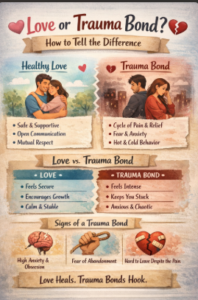
Differences between Love and Trauma Bond

Most individuals endure aching relationships not because they love the pain but the emotional attachment seems to be strong, absorbing and almost unbreakable. The relationship can be addictive and is characterized by a feeling of longingness, hope, fear, and short moments of intimacy that continue to draw them back. And even in situations where the relationship is distressing, anxiety-inducing or self-doubting, it can become more terrifying to quit the relationship than to remain.

This contradiction that is inside creates a very perplexing question:
Is it love, or is it a trauma connection?

The misunderstanding comes in the fact that the bonds of trauma may also disguise as love. Severity is confused with passion, drama and drama for emotions, and bonding with belonging. The inconsistent affection, which is handed over and withheld at random, causes the nervous system to be set into action which strengthens the bond between them by creating an emotional craving instead of emotion safety.

Emotional well-being, healthy attachment, and relational healing relies on the understanding of the distinction between love and trauma bonding. Unconsciously, individuals can carry on with accustoming themselves to pain, turning a blind eye to their needs, or remain in circles that are comfortable but utterly disappointing. Understanding what is occurring under the carpet is usually the initial step towards being able to select relationships that are not only emotionally potent- but emotionally secure.

What Is Love? (From a Psychological Perspective)

New romantic love is based on emotional safety, consistency, and respect. It does not need to be afraid, to be filled with doubts or to win affection. Rather, it builds up a relational atmosphere in which the two individuals feel safe enough to be themselves and vulnerable and emotionally available. Connection is not what you need to pursue in a healthy love it is a gift given without any fee and one of the aspects that are consistently sustained.

This type of love enables the two individuals to develop, both as individuals and as a couple. Personal development does not pose a threat to the relationship but is seen as an enhancement of the relationship. Diversity is considered and needs are addressed and individuality respected instead of being smothered out.

Key features of healthy love include:

  • Emotional availability and open communication – feelings, needs, and concerns can be expressed without fear of dismissal, ridicule, or punishment.

  • Consistency in care and behavior – affection, attention, and respect are stable, not dependent on moods, power, or control.

  • Respect for boundaries – “no” is honored, autonomy is valued, and personal limits are not crossed to maintain closeness.

  • Repair after conflict – disagreements are followed by accountability, understanding, and reconnection, not prolonged withdrawal or emotional punishment.

  • Feeling calm, secure, and valued – the relationship soothes the nervous system rather than constantly activating anxiety or fear.

  • Freedom to be yourself without fear – you don’t have to shrink, perform, or abandon parts of yourself to be loved.

There is no self-abandonment that is required of healthy love to survive. You do not need to repress, endure victimization or demonstrate your value all the time. Rather, love is your emotional safe haven, where association helps to sustain you and not your identity.

What Is a Trauma Bond?

Trauma bond is developed when emotional attachment is developed based on pain and relief repetitive cycles, instead of safety and consistency. The bonds tend to occur in relationships where emotional neglect, unpredictability, or abuse is involved and where there are moments of intimacy and then withdrawal, condemnation, or emotional abuse. Gradually, the nervous system begins to connote connection with distress and reprieve with love.

Psychologically, intermittent reinforcement is the cause of trauma bonding. This is found when affection, validation or attention is provided in varying ways, at one time warm and connecting, and at other times cold and rejecting. Since there is no predictability of the reward, the brain is made as more focused on it. The bonding occurs not due to a healthy relationship but as a result of the nervous system being trapped in the process of anticipation, anxiety and temporary relief.

Passion is confused with intensity and longing with love in the trauma-bonded relationships. The peaks are euphoric and the saddens devastating-forming a strong attachment loop which is hard to lure even in situations where the relationship inflicts great emotional pain.

Common conditions where trauma bonds form include:

  • Emotionally unavailable or inconsistent partners – affection is offered unpredictably, keeping the person in a constant state of hope and anxiety.

  • Relationships involving manipulation, gaslighting, or control – reality is distorted, self-trust erodes, and dependency increases.

  • One-sided emotional labor – one person carries the responsibility for maintaining connection, repair, and emotional stability.

  • Fear of abandonment or rejection – staying feels safer than the perceived pain of being alone, even when the relationship is harmful.

  • Childhood attachment wounds replayed in adulthood – early experiences of inconsistency or neglect shape what feels familiar, even when it is painful.

Trauma bonds do not reflect weakness or inability to make a good judgment. These are survival mechanisms of adaptation that are influenced by the brain and nervous system in a kind of environment where love and pain were brought together. The healing process starts not by self-blame, but by learning and understanding that love is not supposed to hurt in order to be experienced.

Love vs Trauma Bond: Key Differences

Love Trauma Bond
Feels safe and steady Feels intense and chaotic
Encourages growth Keeps you stuck in survival mode
You feel valued You feel anxious about losing them
Needs are acknowledged Needs are minimized or ignored
Conflict leads to repair Conflict leads to fear or withdrawal
Calm nervous system Activated, dysregulated nervous system

How Your Body Tells the Truth

A traumatic bond can be shown by your nervous system, not just your thoughts or feelings, as one of the most evident signs as to whether you are in love or a trauma bond. The truth is something that is usually known by the body much before the mind can comprehend it.

The nervous system of a healthy love is grounded and regulated. Even in the period of conflict or emotional distress, it has a sensual feeling of security. War is not something that soothes that the relationship is at risk. You can calm yourself down, interact, and hope that the bond will be re-established. Love can be rather provoking, but it does not put you in a state of constant fear.

The body in the trauma-bonded relationships always stays alert or in survival mode. This can be accompanied by constant overthinking, hypervigilance, disposition to messages, repeating messages, or tracking tone change. The fear of leaving people is put at the forefront, and the moods are oscillated between a high level of intimacy and a strong sense of distress. The mood swings and mood busts are not indicators of passion, but indicators of imbalance in the nervous system.

The body is able to become accustomed to relating anxiety to affiliation and reprieve to affection, as time passes. It is the reason why the state of being calm may be boring or new, whereas disorder is attractive and seductive. Peace is not always love when it is uncomfortable and instability is exciting and it might be conditioning due to past attachment wounds.

Healing is about educating the nervous system that it is not dull and safe and still, but safe. And that love neither needs fear to live.

Why Trauma Bonds Feel So Strong

Trauma bonds do not indicate personal weakness, bad judgment, and emotional dependency. These are survival strategies of adaptation- the mind/ body attempt to keep connected to those environments where safety and consistency were questionable. With little or unstable care, love, or confirmation, the nervous system comes to learn clinging desperately to whatever relief can be found.

The brain starts relating short episodes of love, warmth or care with elimination of emotional suffering. These occasions serve as emotional terms of consolation, soothing troublingness to an extent that strengthens the bond. This builds a strong commitment cycle whereby the relationship is bound not by constant affection, but by the pain-temporary relief contrast.

The repeated cycle results in the relationship not being built upon any sincerity but a lack of loss, leaving, or emotional retreat. The fear rather than the safety is the cement that binds the bond together. Even in the case where the relationship is most distressing, the prospect of losing the tie may cause a lot of anxiety, grief, or even panic.

This is the reason why it is easier to keep than to leave. To remain means familiarity, predictability and partial relief whereas to leave means to experience emotional free fall. It is essential to learn about this process, not to give oneself an excuse to feel bad but to acknowledge this with the purpose to substitute self-blame with clarity. The process of healing can start when the nervous system gradually gets to know that it does not have to be injured to be connected, that safety can be achieved without hurting.

Breaking the Trauma Bond Begins with Awareness

Healing does not start with blaming yourself or the other person. It begins with recognition.

Ask yourself:

  • Do I feel more anxious than safe in this relationship?

  • Am I staying for connection—or to avoid abandonment?

  • Do I feel seen, or am I constantly trying to be enough?

Choosing emotional safety over familiarity is not giving up on love—it is returning to yourself.


Love Heals. Trauma Bonds Hook.

Love broadens out your self-image.
It promotes interest, self-confidence and emotional expression. You are more yourself in love, not smaller or quieter or less worthy but complete and less airy.

Trauma bonds on the contrary reduce the self.
They make your emotional sphere smaller; about coping with anxiety and preemptive response and maintaining connection at all costs. In the long run, your needs, voice, and identity may be marginalized to the background with survival in the limelight.

Healing is not the fast track of detaching and moving on. It is initiated by self-compassion, which refers to the realization that your to which you were attached was logical considering what you went through. The body gradually discovers a new reality, though, that safety need not be learned by pain, by means of the nervous system control, emotional intuition, and even professional help.

As this healing progresses it is possible to find what seemed magnetic to grow wearying. The anarchy that seemed like unity might become deceptive. And what used to seem strange–or even dull,–the quiet, the sameness, the tranquil existence, may gradually start to represent home.

Frequently Asked Questions (FAQ)

1. Can love and trauma bonding coexist in the same relationship?

Yes. Love may be present in a relationship and yet traumatized. This does not necessarily imply that the bond is healthy because of the presence of a caring individual. It is whether the relationship is sustained on the basis of emotional protection and stability or fear, anxiety and intermittent reinforcement.

2. Why does a trauma bond have more strength than healthy love?

Trauma bonds balance the brain reward system together with the stress system. The uncertainty of affection heightens emotional desire such that the attachment becomes desperate and very strong. Healthy love is smoother and it may not seem exciting at first in case the nerve system is programmed to madness.

3. Can a trauma bond be dissolved without a relationship?

In other instances, recovery is possible when the relationship grows to be reliable, responsible, and responsive in the long run. Nevertheless, the length of trauma bonds might demand physical space or physical separation of the nervous system so that it re-tunes- particularly in the presence of abuse, manipulation, or chronic neglect.

4. Why am I missing the person who abused me?

Not wanting someone who hurt you does not imply you are a weak or disoriented person. The emotional and bodily brain is not the only place of storing attachment but logic. The desire is usually a depiction of unfinished attachment needs, and not the yearning to go back to hurt.

5. What is the duration of healing a trauma bond?

There is no fixed timeline. The factors that determine healing include attachment history, regulation of the nervous system, emotional support and work therapy. Consciousness and understanding are slowly reduced, and the mind becomes clearer.

6. Is it true that therapy is beneficial to trauma bonding?

Yes. Therapy, particularly attachment-informed, trauma-informed or somatic treatment, assists people to comprehend patterns, manage the nervous system, repair self-trust and create more healthy templates of relationships.

7. What are some of the signs that I am heading to healthy love?

There are indications such as being relaxed instead of anxious, being able to communicate needs without fear, confidence in consistency, and the absence of mistaking intensity and intimacy. Peace starts to get safe, not tedious.

Written by Baishakhi Das

Counselor | Mental Health Practitioner
B.Sc, M.Sc, PG Diploma in Counseling


References & Further Reading

  • American Psychological Association (APA)
    https://www.apa.org
    (Attachment, trauma, relationship psychology)

  • National Institute of Mental Health (NIMH)
    https://www.nimh.nih.gov
    (Trauma, emotional regulation, mental health)

  • Bowlby, J. (1988). A Secure Base: Parent-Child Attachment and Healthy Human Development
    (Foundational attachment theory)

  • Herman, J. L. (1992). Trauma and Recovery
    (Psychological trauma and relational impact)

  • van der Kolk, B. (2014). The Body Keeps the Score
    (Trauma, nervous system, and healing)

  • Linehan, M. (2015). DBT Skills Training Manual
    (Emotion regulation and interpersonal effectiveness)

  • Why You Miss People Who Hurt You

This topic performs well due to rising searches around men’s mental health, workplace stress, and burnout recovery. Combining emotional insight with practical steps increases engagement and trust.
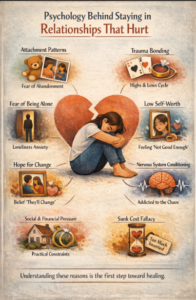

Psychology Behind Staying in Relationships That Hurt

It is a question that persists among many individuals as to why a person would continue to be in a relationship that brings in emotional hurt or neglect. It is a matter of mere words, it appears that it is not so complicated, and when it hurts, one should leave. Psychology however demonstrates that maintaining is hardly weakness. They are aware that they are being hurt, they can feel it in over and over disappointments, need denials and emotional lack of companionship. Leaving is not only a logical process; it is also an emotional process and a process of the nervous system.

In the everyday life, this usually appears in the form of excuse-making over rudeness, clinging to tiny surfaces of tenderness, or wishing that things could go back to their old ways. Pain is familiar to a number of people since the relationships they had in early stages of life taught them that love is inconsistent or emotionally taxing. The unknown may be unsafe in comparison with what is familiar.

The fear of being alone, self-doubt and social pressure may silently hold people back. They could downsize the needs over the years, evade conflict, and modify themselves to the relationship. Knowledge of these patterns can be used to find an alternative to self-blame of self-compassion-and the initial step to recovery and better relationships.

1. Attachment Patterns Formed in Childhood

The experiences of being close to someone in our adulthood are influenced by our first relationships. The attachment theory states that the manner in which our emotions, needs, and distress were addressed by caregivers was a template to love and connection that would be kept as an internal record.

  • In anxious attachment,
    relationships usually make life worryful and prone to thinking. The fear of being deserted can be very strong due to a delay in the response, a change in the tone, or distance in nature. Human beings can be in painful relationships, as the fear of losing an individual being felt more than the pain of remaining. They can be over-giving, people-pleasing or bury their needs to ensure that the relationship remains alive.
  • In the avoidant attachment,
    emotional distance may seem normal. Such one can manifest itself in everyday communication (reducing self-importance, not talking deeply or too closely). Negligence or emotional unavailability is not necessarily experienced as an issue since an early teaching of independence and emotional self-reliance was a source of defense.
  • Fearful-avoidant attachment

    tends to be confusing in push-pull fashion. Someone might want to be intimate, reassured, and close, but when he or she does, he/she will feel overwhelmed and unsafe. In real life, this might present itself as the desire to connect and then withdraw after emotional experiences, initiating fights after intimacy, or being ambivalent about remaining or leaving.

In cases where love during childhood was absent, or lacking, or conditional, the nervous system learns to be vigilant. Emotional instability can be comfortable to adults, whereas stability can be alien and even boring. What is familiar may become familiar as right, even in cases where it is painful, not because it is healthy, but because it is familiar.

Knowing these patterns of attachment makes individuals understand that their relationship problems are not personal failures, but acquired emotional reactions, and that such patterns can be addressed with understanding and secure connection.

2. Trauma Bonding and Intermittent Reinforcement

Trauma bonding is one of the potent psychological traps, as a cycle of emotional pain, after which there is a short period of affection, apology, or hope. In our everyday lives, this can be in form of constant quarrels, emotional withdrawal, and offensive behavior, followed by brief bursts of kindness, vows to change, or extreme intimacy. Such brief good moments may be a relief and very significant following a period of pain.

This tendency operates based on the intermittent reinforcement, which is the same psychological process that is observed in gambling. Since love and care cannot be forecasted, the mind will be preoccupied with the next good time to occur. The doubt leaves an individual emotionally engaged even in a case where the relationship is largely torturous.

The brain releases dopamine when one chooses to reconcile, an apology, a loving message or even when you physically get closer to a person, this is what creates a feeling of relief and emotional reward. It can even be a relief, as love. The bond becomes even stronger with time, and the reason is not that the relationship is healthy, but due to the conditioning of the nervous system to find some relief against distress.

As time passes, the relationship turns less about caring about each other and more about suffering in that quest to expand on those short periods of intercourse. Knowing about trauma bonding can make people understand that they are not addicted to an individual, it is just that they have gotten stuck in a strong cycle of psychology, which can be freed with awareness, safety, and support.

3. Fear of Loneliness and Abandonment

To a great number of individuals, the prospect of being alone is more terrifying than living in emotional distress. Loneliness may trigger profound survival anxiety, particularly in the persons who were conditioned at their early years of life that they are loved and needed and are chosen. Solitude will not only be uncomfortable, but unsafe.

This fear manifests itself in daily life in silent forms such as, at least I am not alone or this is a lot better than nothing. Individuals can remain at such relationships when they feel unnoticed or emotionally deprived just because the company of a person is better than being lonely. Common practices, communications, or even complaints may seem as comforting as nothing at all.

The relationship eventually becomes an antidote to loneliness and not a place of actual connection. The feeling needs gradually grow smaller, self-esteem is bound to the presence of the relationship, and suffering is accepted to not be alone. Coming to terms with this fear can make individuals realize that survival is frequently about being strong, rather than being weak, and that learning to feel safe on your own is a strong move towards healthier relationships.

4. Low Self-Worth and Internalized Beliefs

People who stay in hurtful relationships often carry internalized beliefs such as:

  • “I don’t deserve better”

  • “This is the best I can get”

  • “Love always hurts”

Such beliefs might be a result of criticism experienced in the past, emotional neglect or repeated invalidation. The normalization of pain and healthy love may be strange and undeserving over time.

5. Hope for Change and the “Potential” Trap

People tend to stay in the agonizing relationships due to the fact that they are in love with whom the individual would be, rather than with whom he/she would remain to be all the time. They desperately cling to the memories of how things used to be in the start or to the few occasions when the partner takes care, is warm or understanding. In everyday life, this manifests itself as waiting until the better side of the individual comes back and that love, patience or sacrifice will one day result in an enduring change.

Mental images like the ones that state that they have not always been that way or that they will change in case one loves them sufficiently can have one emotionally involved even after being disappointed many times. With every minor change or a note of apology, hope is strengthened, although the general trend is the same.

This is psychologically reinforced by cognitive dissonance. The mind is torn between two painful truths at the same time that someone is both loved and hurting at the same time many times. The mind dwells on potential, intentions or promises in the future instead of current conduct to minimize this inner conflict. Hope is developed as a coping mechanism.

This might overtime make people become tolerant to some circumstances that they would never recommend other people to tolerate. Knowing this tendency can assist in moving the focus off of what one may be to how the relationship actually is day after day- and knowing it it tends to happen can be the first step to change.

6. Nervous System Conditioning

The nervous system of a person might become dysregulated when he/she lives in the state of chronic emotional stress and gets used to the level of tension, uncertainty, or emotional ups and downs. With time, the body gets to be on high alert. In everyday life, this can manifest itself in the form of constantly anticipating a conflict, overthinking the approach or mannerism, or being anxious when there would be nothing to be bad.

Consequently, disorder and emotional instability come to be normal and predictable, stable, steady relationships may become foreign or even dangerous. Others refer to healthy relationships as being boring not that it is not a connection, but due to the fact that a nervous system is not used to being calm.

That is why individuals might be uncomfortable in steady respectful relationships there is no adrenaline, no emotional hunt, and no necessity to remain hyper-vigilant. The body mixes passion with passion and indifference with apathy. The healing process consists of gradually reconditioning the nervous system to perceive safety, balance and emotional expression as indicators of authentic connection and not threat.

7. Social, Cultural, and Practical Pressures

Beyond internal psychology, external factors also play a role:

  • Societal expectations around marriage or commitment

  • Fear of judgment, especially for women

  • Financial dependence or shared responsibilities

  • Concern for children or family reputation

These pressures can reinforce endurance over emotional safety, making leaving feel like failure rather than self-preservation.

8. Emotional Investment and the Sunk Cost Fallacy

And the longer a relationship spans the more difficult it may be to quit. In the long run, common memories, emotional commitment, sacrifices, habits, and even a collective identity form a sense of duty. The concept of leaving can be daunting, because one learns to live in the day, routine, family ties, dreams and aspirations, and it seems that they lose a part of themselves in the process.

In this case, the sunk cost fallacy becomes influential. One might be tempted to believe that he/she has already devoted so much of his/her time, love, and effort to it, and, by departing, he/she will only render it pointless. The history of investment starts justifying the current suffering. Rather than inquiring about the healthiness of the relationship at the moment, the question is how much has been lost already.

This in real life can manifest itself in terms of staying a little more, hoping that things will get better to make the hard work worth it. Endurance is not an indicator of psychological well being. Surviving is not an indication of strength or love. The process of healing starts when individuals give themselves permission to select emotional safety and self-respect in place of the stress to make past hurt count.

Moving Toward Healing

Remaining in a painful relationship does not imply that one is weak. In more instances, it refers to the fact that they had to learn to survive on the basis of attachment, hope and perseverance. These tendencies used to make them feel secure, related or less isolated-although now they are painful. What appears as a case of staying too long to the external world is in most cases an internal struggle to defend the self emotionally.

It starts with consciousness during healing. Self-blame gives way to self-compassion when individuals see the reason why they remain. Awareness introduces the spaciousness to challenge traditional patterns and hear emotional requirements and envision relationships that are not because they are familiar but safe. Through this, change can be effected not by coercion, but through enlightenment and nurturing.

Helpful steps include:

  • Exploring attachment patterns through therapy

  • Learning nervous system regulation

  • Rebuilding self-worth and boundaries

  • Redefining love as safety, consistency, and emotional presence

Closing Thought

You do not hang about because you are mended. It remain because sometime in your life your brain and body have come to realize that love came with conditions. You were taught to adapt, wait, bear the pain, and hope, as these were the methods used to enable you to feel a part of or not so lonely. What seems to be endurance in these days was in the past a survival.

When love was forced to wait, or to keep still, or to sacrifice oneself, your system had been taught to believe that work is equal to value. You might have been taught to downplay your requirements, question your emotions, or hold that pangs are just part of intimacy. This can over time make emotional anguish, familiar to the self protection, unfamiliar or even egoistic.

Love should not be made to undermine you. It is not to get you to doubt your value, think on toes or dismiss your emotional reality. Healthy love gives you room to be safe, consistent and care about each other- it does not necessitate you to vanish and keep the relationship alive.

Making a choice is not to give up on oneself. It is not abandoning and losing love. Appreciating the fact that emotional well-being is important. It is the silent gesture of coming back to yourself after having spent years in remaining where you were not noticed. And with that decision, healing commences–not with a dramatic climax, but with an honest, sincere start.

Frequently Asked Questions (FAQ)

1. What provokes people to remain in relationships that are harmful to them?

Since psychological aspects such as attachment styles, fear of abandonment, trauma bonding, and conditioning of the nervous system can make leaving more dangerous than remaining.

2. Does that make one weak to remain in a painful relationship?

No. It is frequently a survival mechanism that is based on previous experiences, unfulfilled emotional needs, and acquired coping mechanisms.

3. What is trauma bonding?

Trauma bonding refers to an emotional bonding derived by the presence of pain and release that the short moments of affection strengthen the attachment in spite of the harm.

4. What is the impact of childhood on relationship in adulthood?

Premature relationships form inner models of affection and protection, which affect the way proximity, discord, and emotional demands are fulfilled in adulthood.

5. How does the attachment theory contribute to unhealthy relationships?

Styles of attachment (anxious, avoidant, fearful-avoidant) influence the way individuals react to intimacy conflict, and emotional availability.

6. What is so addictive about emotional unpredictability?

Intermittent reinforcement stimulates the release of dopamine which the brain becomes preferentially conditioned to seeking relief following distress like addictive behavior.

7. What is so strong about the fear of loneliness?

The loneliness may trigger the deepest of deep-seated survival fears, in part because of the tendency to equate self-worth with being chosen or needed.

8. What is cognitive dissonance within relationships?

It is the emotional uncomfortable nature of loving someone who makes someone suffer, usually being solved by holding onto hope, or possibility as opposed to reality.

9. When do healthy relationships get boring?

The nervous system can regulate itself in a way that considers love as something intense, and calmness and consistency become strange and unsafe.

10. What is sunk cost fallacy in relationships?

One of the beliefs is that breaking away would be a waste of time and effort put in even in the case where the relationship is bad.

11. Is that the unlearnability of such patterns?

Yes. Attachment and nervous system patterns can be cured with awareness, therapy, and safe relationships.

12. Is it necessary to love someone and tolerate pain?

No. Healthy love is about emotional safety, mutual respect and consistency- not self erasure and endurance.

13. Why do individuals wish that their partner should change?

The emotional investment, early bonding and the inability to accept loss or disappointments often lead to hope.

14. Is self-selection equivalent to self-sacrifice?

No. Making a choice in favor of oneself is an expression of self-respect and recovery, but not desertion.

15. In cases where is it appropriate to seek professional assistance?

Repeated patterns are used when the emotional pain seems too great, and it is not possible to get out of the situation despite the persistent harm.

Written by Baishakhi Das

Counselor | Mental Health Practitioner
B.Sc, M.Sc, PG Diploma in Counseling


Reference

  1. American Psychological Association (APA) – Relationships & Attachment
    https://www.apa.org/topics/relationships

  2. Psychology Today – Attachment Theory
    https://www.psychologytoday.com/intl/basics/attachment

  3. Psychology Today – Trauma Bonding
    https://www.psychologytoday.com/intl/basics/trauma-bonding

  4. National Institute of Mental Health (NIMH) – Mental Health & Relationships
    https://www.nimh.nih.gov/health/topics

  5. Harvard Health Publishing – Stress & the Nervous System
    https://www.health.harvard.edu/staying-healthy/understanding-the-stress-response

  6. The Gottman Institute – Healthy vs Unhealthy Relationships
    https://www.gottman.com/blog/category/relationships/

  7. Cleveland Clinic – Trauma Responses
    https://my.clevelandclinic.org/health/diseases/trauma

  8. Mind UK – Emotional Well-being & Relationships
    https://www.mind.org.uk/information-support/relationships/

  9. APA Dictionary of Psychology – Cognitive Dissonance
    https://dictionary.apa.org/cognitive-dissonance

  10. Why Emotionally Unavailable People Feel So Familiar

This topic performs well due to rising searches around men’s mental health, workplace stress, and burnout recovery. Combining emotional insight with practical steps increases engagement and trust.
Why You Feel Safe With Someone but Still Fear Commitment

You feel calm around them.
You are softening your body, not holding it together.
Your nervous system does not over drive.
You do not have to act like you are yourself, you do not have to pretend, do not have to think carefully before saying the words so as to remain accepted.

The relationship is easy. Silence doesn’t feel awkward. Presence feels grounding.

And yet, as the relationship is flowing in the direction of commitment: labels, future planning, emotional permanence, there is a feeling deep within you that is pulling away. Not in a dramatic but in a timorous way. A tightening in the chest. A sudden urge for distance. An idea which is incompletely elaborable: I need space.

This internal conflict is even very perplexing.

Whom can be so safe, and, at the same time, so frightening?

The fact is that such experience is much more widespread than one may care to admit- and has little to do with not liking a person enough, inability to get emotionally involved, lack of depth. It is so frequently the nervous system reacting to a history that it remembers in some way.

Being relaxed around a person is a means that your body is confident in the moment.
Being afraid of commitment is that your body would be in doubt of what would happen in case the moment turns permanent.

To most people, intimacy with time has been succeeded by some form of loss, disappointment or emotional hurts. And as a relationship begins to grow into anything more, the system that had been protecting you takes action once again and slowly drags you back, not to destroy love, but to save you the pain that this system had learned to fear.

It’s not a lack of desire.
A protective pause.

And knowing that difference has the power of transforming your image of yourself and your relationships completely.

Safety and Commitment Are Not the Same to the Nervous System

To feel safe with a person it is as though your body is not under imminent danger. Your muscles are being relaxed, your breath is being huffed up, your nervous system is calmed down to the present moment. One does not have to be on watch, to look around and guard against possible emotional attack.

To be afraid of being committed, though, usually implies that your nervous system has learned to perceive intimacy over the years as a threat. It is not that it is wrong today, but the history of your body has demonstrated to you that whatever is safe today might turn painful later. The promise of sustainability, addiction and emotional vulnerability- and in the case of a trauma-forming nervous system, the promise can cause fear.

To most individuals and most especially to the ones with relational trauma, safety lies in the present. The present seems to be manageable. But dedication is to the future and the future is to remember loss, abandonment, emotional uncertainty or betrayal. And you may say in your head, This man is good. this is well, says your body, What happens when you are fixed?

This is why fear may also manifest itself in safe, loving relationships. It is not about the individual opposite you, it is a record of what has been locked up under the conscious mind.

The mind is forgetful of what your body will recall.
And it is not responding to logic, but to the habits of surviving that it had learnt long before.

When Safety Was Once Conditional

In case your background was such that love was not always there, conditional, emotionally intermittent, or was followed by abandonment, criticism, or neglect, your nervous system was taught a valuable lesson that connection was not to be trusted.

It had also learned that without warning one could have love taken away.
Pain may come after that intimacy.
Clinging was to be at risk of loss or hurt of feeling.

So your body adapted. It aroused the alertness, self-defensive and suspiciousness towards protracted intimacy. Although love may be good at that time, your nervous system will remain on alert of what is yet to happen. It is not pessimism it is experience-conditioned survival intelligence.

This may manifest itself in form of being safe with someone as an adult but not able to commit fully. Your head might desire intimacy, but your body is recalling the moment when love was something that had its consequences. To cause a distance, or hesitation, or doubt,–not to destroy happiness, but in order that a sort of hurt familiarity might be averted.

What you previously used to survive with, now presents itself as fear.
And knowing this is the initial healing of it.

Connection is good–but never lasts.

Thus, when a relationship begins to become more serious, the body is ready to be hit- even in case the individual is gentle.

This isn’t self-sabotage.
It is self-defense through experience.

Fear of Commitment Is Often Fear of Loss

It is not the fear of commitment that many people have.
They are afraid of commitment as it used to be.

They are afraid of relying on someone and be betrayed when that support runs out.
They are afraid to open up to others only to find themselves abandoned after they are completely observed.
They are afraid of losing their independence, reducing their demands, scopes or selfhood in order to preserve a relationship.
They are afraid of repeating some emotional trauma they had endured in the past without knowing it.

Commitment requires a faith in the continuity: the faith that care will be there, that relationship will no longer break down, that affection will be drawn away when it is most needed. Trauma disrupts this belief. It reminds the nervous system that nothing is ever to be expected particularly people.

Even in the safe, stable, and gentle relationships, the nervous system can remain sensitive. It does not respond to reassurances as such, but it responds to regularities acquired with time. And with devotion comes the murmuring question, the accustomed, a reassuring question:

What happens in the case I become attached and it gets hurty again?

This question does not indicate the rejection of love.
It is a resonance of a wound that is not yet healed that this may be the case.

Emotional Safety Can Feel Boring to a Trauma-Wired Brain

When disorder was a natural part of childhood, order may be alien even disturbing.

And once your early relationships were characterized by uncertainty, emotional ups and downs or continuous tension, what your brain came to know was intensity as connection. Love was emphatic, desperate, or emotional. Adrenaline, anxiety and hypervigilance turned accordingly to be attachment signals.

Stability, however, lacked an explicit point of reference. In case a relationship seems stable, dignified, and emotionally secure, your nervous system might not and cannot respond as it used to learn about love. It has the comfort, but not the hurry. Safety, but not the spike.

This discongruence might produce guilt and framing doubt:
Why should I be drawing out of a person who does me well?
“What’s wrong with me?”

Nothing is wrong with you.

The lack of disorder does not imply the lack of contact. It is an experience of novelty to your nervous system. It is the education that love does not need to be passionate so that it is real, and that being quiet does not mean being dangerous or dull.

It is not an absence of love, it is just a nervous system getting used to a new language, the language where there is peace instead of survival, safety instead of fear.

Commitment Means Being Seen Long-Term

Dedication does not consist of picking a person.
It is being comfortable to be known- day in day out, in depth, and with time.

This type of intimacy is intensely revealing to those who have been conditioned to survive by remaining emotionally closed/low maintenance or by not having needs. Being seen in their entirety may become a danger instead of a relief when your safety previously relied on not demanding much, not occupying space, and not being dependent.

Independence in such situations was not a personality characteristic, it was defense. The needs were reduced to prevent disappointment. All the emotions were kept private to avoid repulsion. When commitment is the call to collective vulnerability, emotional dependence, long-lasting presence, then the nervous system will rebel.

Safety now seems manageable. You can appear, unite, love and then withdraw back into you. However, having your vulnerabilities, gaps, and needs noticed over time can be horrifying. It implies remaining open without knowing the consistency with which you will be received.

This is not the fear of not wanting to be close.
It is the part of knowing, of knowledge, learning to know that being well-known does not necessarily mean being wounded.

Healing Isn’t Forcing Yourself to Commit

Healing does not involve forced relationships; it does not involve committed relationships just to show that you are growing. Stress can only inform the nervous system that intimacy entails submergence.

Healing is knowing your styles of attachment- not judging them as being dysfunctional but realizing that they were your survival mechanisms in the past. It is to hear with interest rather than pounce judgment on fear and letting it tell you everything without giving it the last word.

It implies training to be able to tolerate proximity over time: remaining longer, revealing more, noticing that it is possible to feel safe without needing to withdraw. This is not a rush process, since trust is developed by repetitions of consistency.

Most of all, the healing is in establishing security within yourself and not solely putting the responsibility of security on any other human being. When you discover how to self-calm, establish limits and respect your pace, relationships cease to be a challenge to your sense of self-sufficiency.

There is no need to hurry to make a commitment to show that you are healed.
The process of healing involves the choice of your own pace.

You Are Not Broken for Wanting Safety and Space

It is possible to care about a person and have time.
Can be safe and be scared at the same time.
You might desire to love so much, but you are not prepared to commit it.

These experiences are not contradictions–they are indications. They are the manifestations of a nervous system striving to adjust the desire to connect with a conditioned necessity to protect.

The fear of commitment is not something bad or wrong. It’s information. It narrates an account of how propinquity once charged you and how your flesh remains to protect against. This fear does not necessarily have to turn into avoidance as long as it is approached with compassion rather than judgment, both towards yourself, and towards others. It can soften.

Fear starts to slip its knots with time, patience, comprehension, and repeated experiences of safety. Not a single time, but gradually, in the ways that are bearable and natural.

Since it is not about forcing yourself to be there and going beyond your capabilities.
The idea is to train your nervous system to relax, every time, it is possible to remain safe.

Frequently Asked Questions (FAQ)

1. Am I emotionally safe enough to be afraid of commitment?

Yes. Present moment emotional safety and fear of long term attachment may coincide particularly when the nervous system links long term proximity to previous pain.

2. Does commitment phobia imply that I do not love the individual enough?

No. The fear to commit is usually based on self-defense, rather than on absence of love or interest.

3. Are attachment styles connected with fear of commitment?

Yes. It is typically linked to avoidant or fearful-avoidant attachment patterns that were developed in the early relationships.

4. Why will commitment cause anxiety even in healthy relationships?

Since commitment is a form of future vulnerability, dependency, and emotional exposure, which can be marked off as unsafe by trauma.

5. Does childhood experience influence adult commitment phobias?

Absolutely. The inconsistency, conditional, or unpredictable caregiving has a significant effect on the response of the nervous system to proximity in adulthood.

6. Why is it so that calm is even dull or even uncomfortable?

When chaos was a childhood way of life then the brain can equate intensity with love and confuse stillness with emotional distance or danger.

7. Does this mean that they are emotionally unavailable?

Not necessarily. Most individuals afraid of commitment are emotionally rich and loving but apprehensive because of the wounds in relationships in the past.

8. Is there something that can be done to overcome fear of commitment?

Yes. Fear can be managed by using trauma-informed therapy, attachment-based therapy, and somatic approaches to establish relational safety.

9. Am I obliged to make myself get over the fear?

No. Coerced commitment may cause more distress of the nervous system. The healing process occurs through consensual intimacy.

10. What do I do when I am not sure that my fear is intuitition or trauma?

The emotion of intuition is so peaceful and serene; the fear caused by trauma is so pressing, disorienting, and connected to the past and not to the facts on the ground.

11. Is fears of commitment manifested strictly after relationships get serious?

Yes. Most find it okay to date casually but find it tricky when emotional permanence or planning of future is introduced.

12. Does it require space so that I will never be able to commit?

No. Requirement of space usually implies that your system is self-regulating. Safety and awareness can make capacity to commit increase.

13. Is it possible that a supportive partner would help decrease this fear?

Yes–but the partner cannot be depended upon alone in the work. In-house safety and self-regulation are a necessity.

14. Is commitment phobia here to stay?

No. It is an acquired reaction, not a personality. As a person heals, the nervous system is able to adapt.

15. What is the purpose of mending the fear to commit?

Not being overbearing to remain, but teaching your nervous system to allow intimacy to be safe with time.

Written by Baishakhi Das

Counselor | Mental Health Practitioner
B.Sc, M.Sc, PG Diploma in Counseling


References 

Attached – Amir Levine & Rachel Heller
https://www.attachedbook.com

  1. The Body Keeps the Score – Dr. Bessel van der Kolk
    https://www.besselvanderkolk.com/resources

  2. Polyvagal Theory – Dr. Stephen Porges
    https://www.polyvagalinstitute.org

  3. Adult Attachment Theory – Psychology Today
    https://www.psychologytoday.com/us/basics/attachment

  4. Trauma and the Nervous System – NICABM
    https://www.nicabm.com

  5. Somatic Experiencing – Peter A. Levine
    https://traumahealing.org

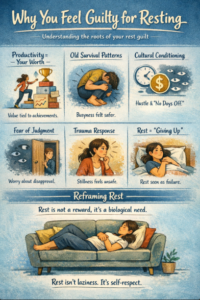
  6. Why You Feel Guilty for Resting

This topic performs well due to rising searches around men’s mental health, workplace stress, and burnout recovery. Combining emotional insight with practical steps increases engagement and trust.

Why You Feel Guilty for Resting

You finally sit down. The work is paused. Your body asks for stillness.
And then—guilt arrives.

It doesn’t come loudly. It creepily creeps in being nearly responsible, like it is being motivated. A tightness in your chest. A restlessness in your hands. There is a faint desire to look into your phone, organize something, be useful once again.

There is a hushed voice that says: You ought to be doing something.
Another says: you have not yet deserved this.
Soon rest ceases to be a care, and begins to be an error.

You look through to-do lists that cannot be seen. Your flesh does not permit to rest. You even stand up in stillness–you are stiffening–you are waiting to be judged–you are waiting.

This is not a personal vice of guilt. It’s learned.

It was taught when rest was disregarded, discouraged or only permitted when fatigued. Where productivity equaled acceptance and slacking equaled lagging. Your nervous system eventually internalized a belief: you should not rest unless you have a reason to.

And then when you stop, your body will feel as though you are violating some unspoken rule. The guilt does not lie in the fact that you are lazy but rather because you were trained to associate the value with performance.

Rest didn’t fail you.
You have been taught to distrust it.

1. Productivity Was Tied to Your Worth

Most of us grew up in such circumstances where we received praise only when we have achieved something, rather than when we are present. Love was conditional-it was when you did something right, acted like an adult and when you met expectations. Useful, responsible, capable, you were appreciated. Being there, lying down, or being a patient hardly ever received equal warmth.

It was the results that made Rest popular.

Gradually, mute, your system was taking a lesson it still studies to-day:
When I fail to be productive, then I am not safe. Provided that I am not performing, I am not appreciated.

This was not a belief that had been developed through logic, it was developed through repetition. By taking chances when doing more resulted in less criticism. When being fatigued was rejected. When it became dangerous to slow down since it could result in disappointment, withdrawal, or shame.

And this way, you no longer sleep knowing that it is something safe to your body.
It interprets it as danger.

Your heart races. Your mind searches for tasks. Guilt is raised, not that rest is evil, but that inertia is against the survival tactic that used to serve your defense.

And it is not a malfunctioning of your body.
It’s remembering.

2. Rest Triggers Old Survival Patterns

To individuals, who had grown up in changeable or emotionally taxing conditions, being busy was not a choice, it was a means to survive. Being busy implied having to be on the alert. Acting in a certain way; in any way, it gave some degree of control over the circumstances where not much could be controlled. Movement meant vigilance. Busyness meant readiness.

In such places, it may feel unsafe to slack. There was tension left by silence. Silentness increased the intensity of feelings. Thus the body got used to being in a state of motion, as motion was more comfortable than rest.

Rest removes distraction.
It deprives it of the doing it is always doing that keeps deeper feelings at bay.
And in case the body eventually slows down what has been put on hold finally starts to emerge, grief, fear, anger, loneliness, unmet needs.

That is why rest may seem oppressive rather than relaxing.

Conscience usually comes to the rescue in the form of guilt. It draws you out of doing nothing, back to familiarity. Higher is the fear which lurks beneath that guilt:
When I take a break, something will overtake me.
A memory. A feeling. One thing you did not even have room to withhold at the time.

Your body is not against taking rest the reason is that it is not broken.
It is fighting against it because rest used to imply exposure-unsafely.

3. Capitalism Trained You to Ignore Your Body

Our culture is the one which glorifies fatigue. Hustle is praised. Burnout is the trophy of pride. Busyness is synonymous with importance, commitments, worthiness. Rest, however, is treated with suspicion, which can only be permitted in case it can be justified, optimized, or transformed into a better productivity in the future.

This framing silently redefines our relationship with ourselves.

It teaches a folly involving danger:
your body is no guide, but a hindrance.
There was something to get at, to conquer, to smother.

Fatigue becomes weakness. To make it slow is to make failures. Listening to the end is like running in a race which has no finish line.

And when your body wants to rest, with its heaviness and headaches, loss of concentration, emotional bombardment, your mind does not listen to it and say it is wisdom. It hears it as a flaw. And it responds with shame.

You say yourself that you ought to be stronger. More disciplined. More motivated. You overrule the signal and not respect it.

But it is your body that is betraying you.
It’s communicating.

And the embarrassment you experience is not an indication that you are doing something wrong, it is rather a sign of a culture that trained you to feel distrust of your needs.

4. You Learned to Anticipate Judgment

Most people sleep even when nobody is around just in case someone may come in and frown on them. Your muscles remain half-corded, your brain on the alert, as though you had to protect your sleep at any hour. You are not entirely at ease you keep watch of yourself.

This is internalized policing.

After some time, the voices of parents, teachers, bosses, and the society move in. You have no longer to rely on external pressure; it is in you. Before it occurs, you expect to be judged. You put yourself in the right beforehand. You hurry your sleep, excuse it or make it take a pass.

In a sense even solitude is performative, something that you can only do under specific circumstances.

It is not really the guilt over rest.
It concerns the perceived outcomes of being caught taking a break.

Being labeled lazy. Irresponsible. Ungrateful. Falling behind. Losing approval. Losing worth.

Your nervous system got to know that visibility and rest is the same as risk. So the guilt comes in and tells you to go back into the world of productivity where you are safe being approved.

Nothing is wrong with you.
You are reacting to rules which have been written when you were still young.

5. Rest Feels Unsafe When You’re Trauma-Conditioned

Controlled nervous system will enable rest to be nourishing. Stillness is a feeling of ease in that state. The body is able to relax without fear and the rest does not disturb but invigorates.

The manifestation of dysregulated nervous system stillness is extremely different. Having clustering to be formed by a chronic stress, unpredictability or emotional danger, calm does not feel safe, it feels alien. And unaccustomed, to the nervous system, is often dangerous.

Rest may be very uncomfortable in case you use your system to fight, fly or freeze. The quiet is too loud. It is the slackening that is exposing. Your body will remain on edge anticipating the next thing that will go wrong.

Guilt comes in to play in such situations as a form of coping. It creates urgency. It starts you again into action, into action, into habits of doing, into habits of acting, which even when they are wearying are familiar. Motion is safer than inactivity since it is the way your nervous system is accustomed to.

This is not a deficiency in discipline or attentiveness.
It is a nervous system doing just what it had been trained to do to survive.

Not by trying to make yourself relax does Rest become healing; but gradually by degrees your body is learning that motion is not again a threat.

6. You Confuse Rest with Giving Up

Most individuals assume that rest involves ceasing to be- no longer to move forward, to become out-of-shape, to become so old-fashioned or obsolete. Rest becomes confused when he starts giving up and assumes that slowing down entails that one will never get going again.

But rest is not quitting.
It’s repair.

It is rest that enables the stretched muscles, overstrained minds and exhausted nervous systems to adjust. It is not the contrary of effort, but it is that which makes effort possible.

Effort is gradually consumed without rest. You continue, yet more blurred, less tolerant, less good. What once was meaningful becomes encumbrant. Burnout does not come in one moment, it comes gradually in the lack of rest.

Through rest, labor becomes long-term. You come back with greater capacity not by having forcibly imposed yourself but by having given yourself rest. Creativity resurfaces. Focus sharpens. Motivation is not pressurizing but rather a choice.

Rest does not deprive you of something.
It returns to you all that constant doing wears.

By resting you do not end up behind.
You disintegrate by never giving up.

Reframing Rest

You do not work to get rest.
Neither is a reward after surviving or work.
Is a biological need, and as fundamental as breathing, hydration, and safety.

There is no need to have your body take leave. It does not ask you to demonstrate that you have done enough, toiled enough, and donated enough. The fact that one needs a rest is not a sign of moral incompetence, it is a physiological indicator.

You do not have to explain it to someone.
No need to tell you why you are tired.
You do not have to make rest out of self-improvement or efficiency.

Nor do you at all have to be entirely shattered to have a right to it.

You can only learn that it is too late to take care of your body. It is gentleness, consistent, which makes one strong, not weak, which Rest has proposed before.

You may have a break with no excuse.
Granted the liberty to be pitifully tired.

Rest is not indulgence.
It is the self-respect in its most elementary form.

A Gentle Reminder

Feeling guilty about taking a break does not imply that you do not have discipline and motivation. It implies that you were conditioned, either directly or indirectly, to disown yourself so that you can fit in. To conquer your needs, forget about your constriction and continue running even when your body wanted you to quit.

You had heard that the approval was gained by forcing through. That care was conditional. The reason of such pausing must have been.

The process of healing commences with breaking the pattern.

When you can afford to rest–no excuse, no reasons, no conversion of rest to productive employment. When you stick with the pain to demonstrate to your body that nothing horrible occurs when you pursue yourself.

This is not easy work. It is contrary to years of conditioning. However, at every moment of permitted rest the message which your nervous system carries is rewritten.

Because rest isn’t laziness.
It isn’t weakness.
Isn’t it failure.

Rest is self-respect.

Frequently Asked Questions (FAQ)

1. Why do I feel guilty where I know I have to have rest?

Guilt is learnt, not logical. The nervous system of your body can possibly relate rest to danger, judgment, or losing value because of earlier conditioning.

2. Does being guilty of resting make one lazy?

No. Laziness is more of a moral than a psychological diagnosis. Guilt around rest tends to be an indication of chronic stress, trauma conditioning, or self-worth that is based on productivity.

3. Would childhood experiences have any implication on my rest as an adult?

Yes. Childhood experiences define brain reaction. In case of insecurity, lack of attention, or disapproval, even though you were not resting, your body can still have a response of protection by remaining still.

4. And why sometimes will rest make me anxious?

Rest removes distractions. When the body goes slow, they can bring forward repressed emotions and thoughts causing anxiety rather than relief.

5. What does being internalized surveillance mean?

It is when the outer authority (parents, teachers, bosses, society) is internalized. You spy and evaluate yourself even in the absence of a person.

6. What does the hustle culture do to rest guilt?

Hustle culture puts the value of productivity equal to the value of worth and makes burnout a matter of course that people should learn to view rest as a sign of weakness unless it increases output.

7. Do you really need rest to be mentally healthy?

Yes. The nervous system, emotional processing, cognitive enhancement, burnout and depression prevention are under the control of Rest.

8. Why do I not feel safe in my immobility?

An unregulated nervous system can perceive calmness as a new experience. Stillness may be an intimidator in case of your body is trained to fight, fly or freeze.

9. Is guilt a coping mechanism?

Often, yes. The feeling of guilt may force you to resume doing what you are doing because of emotional exposure, uncertainty and the old memories that are awakened when you take a break.

10. Will taking a break make me demotivated and undisciplined?

No. Rest is a proponent of sustainable motivation. Devoid of rest, discipline becomes depletion and burnout.

11. What is the difference between rest and avoidance?

Rest is deliberate recovery. Avoidance is the evading of responsibility. Trauma-informed rest restores the capacity and not diminishes it.

12. Is it possible to treat rest guilt without treatment?

Others are able to do so through awareness, practices of regulating the nervous system and through self-compassion. This process can be fastened and intensified with the help of therapy.

13. What does rest find to be safer?

Start small. Pausing, grounding activities, routine habits, and self- affirming self-talk re-train the nervous system.

14. How come I need to earn my rest?

Since most systems are encouraging performance, and not humanity. You had been taught that rest must be justified and not as a need to be respected.

15. What is my main point which I should keep in mind?

Rest is not a reward.
Is not laziness.

Rest is self-respect.

Written by Baishakhi Das

Counselor | Mental Health Practitioner
B.Sc, M.Sc, PG Diploma in Counseling


References 

  1. van der Kolk, B.The Body Keeps the Score
    https://www.besselvanderkolk.com/resources/the-body-keeps-the-score

  2. Polyvagal Theory (Stephen Porges) – Nervous system regulation
    https://www.polyvagalinstitute.org

  3. American Psychological Association (APA) – Stress & burnout
    https://www.apa.org/topics/stress

  4. World Health Organization (WHO) – Burnout as an occupational phenomenon
    https://www.who.int/news/item/28-05-2019-burn-out-an-occupational-phenomenon

  5. Tricia Hersey (The Nap Ministry) – Rest as resistance
    https://thenapministry.com

  6. Cleveland Clinic – Effects of chronic stress on the body
    https://health.clevelandclinic.org/effects-of-stress-on-the-body

  7. Procrastination Nobody Talks About

This topic performs well due to rising searches around men’s mental health, workplace stress, and burnout recovery. Combining emotional insight with practical steps increases engagement and trust.

Procrastination Nobody Talks About

The majority believes that procrastination is a matter of laziness, time wastage or lack of discipline.
It isn’t.

In the case that it is just a productivity problem, such tips as planners, reminders, deadlines, or just try harder will fix all the problems. But to most individuals, those tools do not work- or they do work temporarily and then fail thereafter. The reason is that procrastination is typically quite unrelated to effort and everything to do with brain perceptions of discomfort.

Procrastination is not much of a product issue.
It is much more commonly an emotional regulation issue- and that is what no one speaks about.

When a task elicits unpleasant feelings such as anxiety, self doubt, fear of failure, fear of being judged or even fear of success, the mind seeks a quick fix. Putting the task off will decrease that emotional agony in the present, although it will lead to increased stress in the future. Psychologically, procrastination is not a vice; it is a form of coping mechanism.

That is, individuals do not procrastinate because it does not matter to them.
Their indecisiveness is due to the emotional insecurity of care.

No disciplining, motivating, time-management tips would bring any permanent change before that emotional layer is figured out and dealt with.

Procrastination Is an Emotional Avoidance Strategy

Procrastination is not about being at its most fundamental level, avoiding work.
It is about evading uncomfortable states of being in the inside.

When something makes one fearful of failure, fearful of success, self-doubting, feeling of shame, perfectionism, or overwhelmedness the experience itself is not just cognitive, but emotional and physiological. The body clams up, the mind gets clamorous and the task begins to seem heavier than it is. At that point, it is not the brain that concentrates on long-term consequences; it focuses on emotional safety.

There the brain finds reprieve.

Procrastination offers that relief, at least in the short run, by assisting the individual to avoid the uncomfortable feeling that is the task. Avoidance helps to decrease the anxiety in the short-run which trains the brain that postponing is effective. This is the reason why it may be oddly satisfying to procrastinate, although it will bring you stress in the future.

It is not something by chance, or even careless, to scroll on the phone, to clean the house, to sleep, to organize or to do something that is perceived as easier. These behaviors are foreseeable, common and lower-risk in terms of their nature. They relax the nervous system and make one feel in control. Psychologically, they act as self-comforting actions.

What is actually going on is a calculation of the nervous system:
This is something not quite comfortable at present. How can I make it stop?”

The solution lies in evading- not that the individual lacks discipline, but rather it is the brain that is opting to be comfortable in the present by not pursuing long-term objectives, which may involve short-term emotional discomfort. The process will still feel unsafe of initially commencing, regardless of the significance or importance of the goal, until the emotional charge surrounding the task is lessened.

.

The Nervous System’s Role (Not Willpower)

When something is perceived to be a threat, it is not perceived as a neutral activity in the brain, but rather as a stressor. Although the danger is not physical, the nervous system still reacts with a sense of something significant being endangered: self-esteem, safety, acceptance, and ability. This automatically triggers the threat system of the brain which is commonly referred to as the fight, flight or freeze system.

During a fight response, the individual can seem prolific on the surface, via over planning, fixation on details, re-writing and re-writing, or attempting to manipulate all the results. It is not done due to clarity, but due to anxiety and the necessity to avoid making mistakes.

The system is displaced in the direction of the source of discomfort in a flight response. This appears as avoidance, distraction, procrastination or continually delaying the task till later on. Similar to complete relief on the distance.

When there is a freeze response, the system fails. The individual might be in a given state of being stuck, blank in the mind, numb or cannot get moving even when the individual desires. This has commonly been confused as laziness whereas it is the overload of the nervous system.

Most frequently procrastination is as a result of freeze or flight rather than the absence of a motivation or interest. In reality, individuals would delay most activities that they do when they are concerned with them.

That is why it is not easy to force oneself to say just do it. When the nervous system is not regulated, the brain is not able to reach the part of the brain required to think, plan, and make decisions in order to act. Motivation should not be preceded by calm, but the reverse.

Perfectionism: The Socially Accepted Form of Procrastination

Perfectionism does not postpone work as standards are great.
It postpones work as self-worth is pegged on performance.

Achievement becomes a part of identity and any work becomes a mute measure of worth. When one does something badly, it does not really seem like a typical mistake but rather a failure in person. It is dangerous to begin in that emotional scenario. The mind is taught that it is not safer to start out, than to start out bad.

In case the state of doing badly is not emotionally safe, the brain delays the action.

This is the reason why perfectionistic procrastination always sounds logical on the surface. It hides evading in the pretext of preparation, high standards or responsibility.

Examples of common perfectionistic procrastination thoughts are:

When I am not capable of doing it perfectly, then I should not do it yet.

  • “I need to feel ready first.”
  • I will begin when I get my head straight.

These thoughts develop the illusion that the self would be confident, calm and completely prepared in the future. But that is not often the case, since clarity and confidence tend to follow the initiation, rather than precede it.

By doing this, readiness turns into a psychological illusion, that is, the readiness that helps to justify avoidance and protect an individual against the risk of failing to achieve something, appearing to be seen, and possibly failure.

Procrastination and Shame Cycles

The little known fact is that procrastination becomes a self-perpetuating psychological cycle, with each recurrence making it increased with time.

First, the task is delayed. Short-term relief is achieved by eliminating the immediate discomfort. But that relief doesn’t last. Very soon, the feeling of guilt and shame starts starting to appear: I should have done this already, why I cannot simply get myself together?

This leads to self-criticism. Rather than approaching the task, the mind goes in and assaults the self:
“What’s wrong with me?”
Everybody is able to cope, why not me?

Such ideas enhance emotional suffering further. There is increased anxiety, loss of self-confidence and the task has become heavier than previously. In a bid to get out of this heightened uncomfortable situation, the nervous system opts once more to avoid it, this time procrastination emerges as the escape mechanism.

The task in itself changes psychologically over time. It ceases to be merely work, but it begins to possess an emotional tint: shame, dread and self-distrust. It is no longer a task but rather an emotional meaning behind it.

That is why it is more difficult to start the later.
Not that you are not as good as you once were, but that the job now symbolizes all that you have been telling yourself about your value, discipline and skills.

Procrastination Can Be a Learned Survival Response

To most individuals, the problem of procrastination did not start at the adult stage, but earlier.

When you were raised in a place where mistakes were corrected instead of punished, expectations were vague or kept changing, you never felt like you were doing enough or doing too much, you never felt as much achievement as it caused you to feel pressure, and your nervous system developed an association, making it think that action causes emotional pain.

In these environments, neutrality was not trying. It was risky.
To be seen was to be criticized.
Errors were an embarrassment, a critique or a denial of favor.

The nervous system became adapted with time. It came to understand that it was safer not to act, not to attempt, or not to take time than to go all the way. Avoidance minimized exposure to emotion. Procrastination was adopted to deal with threat, not intentionally, but automatically.

Therefore when the same emotional stimuli occur later in life like a deadline, a review, a boss, a demanding task the body reacts like it is in that former setting. The reaction of stress takes place without the logic being given a chance to respond.

In this regard, procrastination is not a vice or a deficiency of character.
It is an acquired survival skill- a skill that at one time served the purpose of ensuring emotional safety, but which at present stands in the way of development.

Why Motivation Advice Often Fails

Discipline, routines, rewards and accountability are covered by the majority of productivity advice. These strategies are effective in the eyes of some individuals.

However, their only work is done when there is emotional safety.

As the nervous system becomes relaxed and secure, structure may aid action. The same tools take the form of pressure when it does not. Scripted practices are stifling. Responsibility is embarrassing. Rewards feel undeserved. Punishment becomes self-discipline.

As long as the deeper layers are not addressed, including fear, shame, the self-worth based on performance, and dysregulation of the nervous system, the productivity tools begin to make people exhausted instead of empowered. Every unsuccessful experience strengthens a traumatic thought: I am not a good person when it comes to consistency.

The same belief will create another barrier emotionally, so the succeeding attempt will be more difficult.

It is a more humane and truer fact.

  • You’re not inconsistent.
  • Not unmotivated.
  • You’re not broken.

You are emotionally overcharged–you attempt to operate some mechanism that requires result without having provided security.

What Actually Helps (That Isn’t Talked About Enough)

1. Lower the emotional cost of starting
Don’t ask, “Can I finish this?”
Ask, “Can I tolerate 2 minutes of this?”

2. Separate identity from output
Your worth is not on trial because a task exists.

3. Name the feeling before the task
Instead of forcing action, acknowledge:
“I’m avoiding because I feel anxious / unsure / afraid of messing up.”

Awareness reduces internal threat.

4. Focus on safety, not pressure
Calm precedes action. Not the other way around.

A Reframe Worth Remembering

You are not lazy and that is why you procrastinate.
You delay by procrastination because the mind is attempting to shield you against pain of which it is not yet conscious how to deal.

This is not a logical or intentional protection but an automatic protection. What the brain is engaged in is the best thing it has learned to do; it has minimized emotional suffering, prevented danger, and maintained a feeling of safety. The nervous system focuses on the short-term relief rather than long-term consequences even in cases where avoidance results in long-term stressors.

In this case, procrastination is not a personal failure.
It is communication.

It’s an indicator that something within requires taking care of -fear that has not been called by name, shame that has not been de-fanged, pressure that has not been diffused, expectations that are too weighty to bear by themselves.

Once you begin to see procrastination as a friend and listen to it attentively, then things are different. You do not impose yourself into anything by feeling guilty or punishing yourself but by giving room to knowing and controlling.

And there transformation can be witnessed, not by coercion and embarrassment, but by comfort, understanding, and slow building of confidence in oneself.

Frequently Asked Questions (FAQs)

1. Is being a procrastinator the same as being a lazy person?
No. Laziness means indifference. The cause of procrastination is normally emotional distress, anxiety, or fear- usually with something that is of importance to the individual.

2. Why do I put off on significant jobs?
Due to the fact that important tasks are usually emotional, fear of failure, judgment, or self-worth assessment stimulates the threat system of the brain.

3. Is it possible that anxiety causes procrastination?
Yes. One of the most widespread underlying causes of procrastination is anxiety, in particular, performance anxiety and anxiety-driven avoidance.

4. Is mental health associated with procrastination?
Anxiety, depression, ADHD, perfectionism, and chronic stress are some of the most common disorders that are related to procrastination, which is not a diagnosis.

5. Why does procrastination have a relieving effect?
Avoidance leads to less emotional distress in the short-term, which strengthens the behavior neurologically by learning through relief.

6. Why should it be more difficult the more I take to begin?
Due to the fact that the feeling of guilt, shame, and self-criticism piled up as time passes, making the task emotionally heavier.

7. Are perfectionism and procrastination one and the same thing?
Yes. Perfectionism is known to procrastinate, as errors are not perceived as risky, and self-esteem is linked to success.

8. So why not just be disciplined does not work with me?
The dysregulated nervous system makes discipline interventions ineffective. Sustained action cannot take place without emotional safety.

9. What is the association between the nervous system and procrastination?
Fight, flight, or freeze reactions to perceived emotional threat are often manifested in procrastination.

10. Are childhood experiences able to affect procrastination?
Yes. The early experiences of high criticism, penalties on errors or lack of consistency in expectations can result in avoidance being a safety measure.

11. Is it a deliberate action to procrastinate?
Usually not. It is a safety reaction that is automatic and not a conscious choice.

12. Is action preceded by motivation?
Not always. Emotional regulation often leads to action rather than motivation.

13. What can I do to minimize procrastination, without criticizing myself?
By managing emotional triggers, reducing the pressure to deliver, and focusing on safety instead of productivity.

14. Does procrastination have permanency?
No. After the underlying emotional patterns have been known and controlled, the procrastination can also be greatly minimized.

15. How can procrastination be seen in a kind of manner?
As an indicator, not a defect, of unmet emotional needs or unconquered fear.

Written by Baishakhi Das

Counselor | Mental Health Practitioner
B.Sc, M.Sc, PG Diploma in Counseling


References 

  1. Steel, P. (2007). The Nature of Procrastination: A Meta-Analytic and Theoretical Review.
    Psychological Bulletin
    https://doi.org/10.1037/0033-2909.133.1.65

  2. Sirois, F. M., & Pychyl, T. A. (2013). Procrastination and the Priority of Short-Term Mood Regulation.
    European Review of Social Psychology
    https://doi.org/10.1080/10463283.2013.760835

  3. Pychyl, T. A. (2013). Solving the Procrastination Puzzle.
    Penguin Random House
    https://www.procrastination.ca

  4. Gilbert, P. (2010). Compassion Focused Therapy.
    Routledge
    https://compassionatemind.co.uk

  5. van der Kolk, B. (2014). The Body Keeps the Score.
    Penguin Books
    https://www.besselvanderkolk.com

  6. Sapolsky, R. M. (2004). Why Zebras Don’t Get Ulcers.
    Holt Paperbacks

  7. Brown, B. (2012). Daring Greatly.
    Gotham Books
    https://brenebrown.com

  8. The Cost of Always Being the Strong One

This topic performs well due to rising searches around men’s mental health, workplace stress, and burnout recovery. Combining emotional insight with practical steps increases engagement and trust.
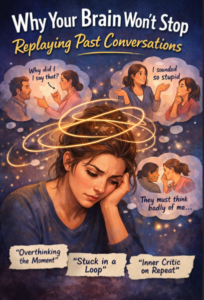
The Cost of Always Being the Strong One

People come to you when everything goes wrong.
You remain composed when things are out of control and even when your own chest is tight.
You are a good listener, able to listen without interruption, a good non-judgemental holder of space, a problem-solver who is quiet enough to have your own feelings on the backburner.

And nobody seems to see when you are tired–because you have perfected concealing it.

It is commonly endorsed as resilience, maturity, or emotional intelligence to be the strong one. Your composure and steadiness is the admiration of people. However, under the admiration, there is an emotional price that is seldom realized. When strength becomes a role rather than a choice, it gradually becomes a burden, a burden that you bear without any more than an expression, without any protest, because that is what you are supposed to bear.

Your own strength, previously your safeguard, and formerly your strength, starts to suck you out. And not because you are weak, but because the greatest nervous system, the strongest system, must rest and have care and be supported.

The Invisible Contract of Strength

Most individuals grow up to be the strong one at a young age not necessarily of their choice, but due to circumstances. Grit was not an option; rather it was a coping mechanism of survival.

  • You learned that you must not cry as it was the reliance of others that demanded you not to cry and express yourself, as it was unsafe or inconvenient.
  • learned to contain emotions, instead of displaying them and turn feelings into something that could be controlled, and not shared.
  • You were taught that you could postpone meeting your needs–sometimes forever–because keeping it together was the first before you put in your clothes.

This gradually leads to the establishment of an unwritten agreement with the world: I will remain calm in order to make other people feel safe.
You are the one that sticks, the one that can be depended on, the one that does not disintegrate at least not before anyone can notice.

With time, strength ceases to be a characteristic one draws and a character one lives within. And identities and those which are founded on survival are difficult to get out of, even when they have begun to cost you, your rest, your tenderness, and your feeling of being taken care of.

Emotional Labor Without Rest

Being the strong one can be doing all the time emotional work, the work that goes unseen, unpaid, and unrecognized.

  • You also control your emotions so that you do not disturb other people and learn to make your pain as insignificant as possible to make their life comfortable.
  • Take on the burden of other people without offloading your own, to be the vessel that holds the unhappy feelings that no one can express.
  • You are the safe haven of the rest of them but you seldom get heard.

Slowly your nervous system is kept in a kind of silent watchfulness–in a permanent state of alertness, in an intermittent state of rest. You are held in position even when you are not in motion, trying to figure out what is going to happen next.

This is not draining you emotionally because you are weak, but this is not the purpose of human beings to shoulder emotional burden alone. Connection is to be two-way. The exhaustion is not a vice when the support is flowing in one way only: it is a biological and emotional phenomenon.

When Support Becomes One-Directional

Powerful individuals are commonly believed to be fine. Their silence is interpreted as the fact that nothing is amiss, and their quietness is perceived as power instead of the struggle.

  • No one, then, looks deep in–enquiries are superficial–asked at all.

  • we are silent, therefore, thinking that it is stable and that we are not talking about pain, that it is not there.
  • Your limits are hardly ever questioned, as it is believed that you can do more, be more, take more.

Gradually, the requesting of assistance can gradually cease to occur, not because the need has been fulfilled, but because it no longer feels necessary to strain others, or because there are times when assistance has come at all when it has been requested. Needs are privatised, expectations are reduced and self-sufficiency is the surest way out.

Isolating emotionally is created gradually, not with a bang, but with a whimper, in the name of being independent. At first sight, it can seem to be strength. On the one hand, it can be rather like being alone with too much to be carried.

The Hidden Grief of the Strong

It is sorrowful to be the strong one–sorrow that is not much spoken, and is seldom named, and has to be borne by the individual.

  • Sorrow in the embrace that you did not have at the time you needed it the most.
  • The sweetness which you had delayed, and said you would sleep by and by, and feel by and by, and be by and by.
  • Sorrow over the weakness you ingested, knowing since you were young that weakness can be neither safe nor desirable to express.

Accomplishing this sadness, there might also be guilt in desiring rest as though fatigue is a personal vice. Shame can be experienced in being tired when you are managing everything. And confusion may come to rest in where nothingness appears despite doing everything and keeping it all together.

But emotional exhaustion is not failure–it is a message. A silent communication of your nervous system requesting you to be noticed, nurtured and given to take a break after carrying too much far too long.

Strength Is Not the Absence of Need

Emotional suppression is not a strength.
It is not being quiet, accepting whatever, or doing it by any means.
Emotional honesty is the real strength and that is the strength to be truthful to what is in your heart.

It is permitting oneself to say, without any explanation or apology:

  • “I’m not okay today.”
  • “need support too.”
  • “I don’t have to earn rest.”

The process of healing starts with strength being loose instead of hard, with stamina being soft as well as strong, with self-reliance allowing connection. You do not need to work hard to earn your safety, when you permit yourself to be grasped, not to grasp others, your nervous system comes to understand that you do not need to work hard to get safety. There are cases when it is just received.

Relearning Balance

When you are the strong, ask yourself–ask him–ask me–ask him:

And when I am not okay, where did I get to know that I always have to be okay?
What will I be when I cease to act out resilience and permit myself to exist?
What do you think it would be like to have that same care, patience and understanding given to me with the same free hand that I so readily dispense to others?

Such questions are not to be answered in a short period. They are entreaties to observe that which has long been carried.

  • Resting does not make you lose your power.
  • Do not shrink into ineptitude by seeking assistance.
  • It is not being a human that disappoints anyone.

Power was not supposed to entail self-abandonment. It was to be combined with tenderness, support and rest.

A Reframe Worth Remembering

You are not so tough in that you can take everything and not break.

You are tough since you evolved-because you studied to live in places where you needed to be strong before you were prepared to be strong.

  • Now you may have something new.
  • Connection over endurance.
  • Support over silence.
  • Power.

When you rest you do not lose your strength. It evolves. It is something that you live on, not something that you pay on.

FAQs

1. Why is it so emotionally exhausting to be the strong one?

Since it is a matter of constant emotional control, personal needs repression, and one-sided aid, exhausting the nervous system in the long run.

2. Does emotional exhaustion mean one is weak?

No. Emotional exhaustion is a biological and mental reaction to the stress and to unmet emotion needs over a long period of time.

3. Why do powerful individuals hardly obtain support?

They are presumed to be fine and that is why other people forget that they need to be cared about and have emotional check-ins.

4. Is there a role of childhood experiences that forms the strong one?

Yes. Strength is taken by many as an early survival tactic in an emotionally unsafe or demanding environment.

5. What is emotional labor?

Emotional labor is the process of controlling emotions – yours and those of other people – to ensure stability, comfort or harmony.

6. What is the impact of emotion suppression on mental health?

It exerts more stress, emotional numbness, anxiety, burnout, and may lead to depression in the long run.

7. Why has it happened that tough individuals are guilty of taking a break?

Since being useful, enduring, or responsible has already associated the self-worth of the person, rest might feel unworthy.

8. What is it like to experience nervous system exhaustion?

Constant fatigue, emotional detachment, irritability, hyper vigilance, inability to relax or being empty.

9. Is it always healthy to be independent?

Not when it covers emotional isolation. The capacity to be assisted is also a part of healthy independence.

10. How can powerful individuals embark on seeking assistance?

Their small steps can help them: first naming their feelings, selective sharing, and reminding themselves that support is not their responsibility.

11. What does it mean by trauma-informed strength?

Power which is flexible, emotional integrity, rest and relationship as opposed to perpetual effort.

12. Do we need therapy among people who are always strong?

Yes. In therapy there is a safe space where suppressed emotions are relieved and learning reciprocal care re-learned.

13. Why is it that being strong causes burnout?

The continuous self-control in the absence of emotional discharge is too much to the mind and body.

14. What is your ratio of strength and softness?

Trying to be vulnerable, demarcating boundaries and providing yourself with the kind of care you provide to others.

15. How do you begin healing the emotional fatigue?

Not being ashamed of feeling tired and allowing yourself to require assistance.

Written by Baishakhi Das

Counselor | Mental Health Practitioner
B.Sc, M.Sc, PG Diploma in Counseling


✅ Reference

  1. American Psychological Association – Stress & Burnout
    https://www.apa.org/topics/stress

  2. National Institute of Mental Health – Coping With Stress
    https://www.nimh.nih.gov/health/topics/stress

  3. Polyvagal Theory & Nervous System Regulation – Dr. Stephen Porges
    https://www.polyvagalinstitute.org

  4. Emotional Labor & Mental Health – Psychology Today
    https://www.psychologytoday.com/us/basics/emotional-labor

  5. Trauma and the Body – Bessel van der Kolk
    https://www.traumaresearchfoundation.org

  6. Feeling Behind “Not Good Enough”

This topic performs well due to rising searches around men’s mental health, workplace stress, and burnout recovery. Combining emotional insight with practical steps increases engagement and trust.

Why Your Brain Won’t Stop Replaying Past Conversations

Have you ever lay in bed or sitting there when suddenly you hear yourself conversing with someone in the past like your previous conversation? Something you said. Something that you wish you could have said. A tone you’re now questioning. The act recurs over and over, but it is not always comfortable, regrettable, or nervous. This is aggravated by the fact that these thoughts normally come when all the other things are silent at night, when you are taking a rest, or when you are supposed to be having a peaceful moment and you find yourself alone with your inner talk.

Such an experience is so widespread–and it does not mean that something is wrong with you. It is an indication that the brain attempts to defend, process and meaning making around social experiences. These moments come back into your mind to find meaning, closure, or reassurance, particularly when a conversation had been emotionally charged or unresolved. Instead of it being a weakness, this replay shows a very human desire to fit in, to be heard, and to feel emotionally secure in all our relationships with other people.

1. The Brain Is Wired for Social Survival

Humans are social beings. Thousands of years ago, being part of a group was the guarantee of protection, safety and existence. Due to this evolutionary output, the brain allocates additional significance to the social engagement, particularly to the ones, which are awkward, emotionally significant, or unbroken. We are in a state of constant scanning of signals to do with approval, denial, and relationship.

The brain is stressed when a conversation is confusing or uncomfortable, which is why it is important. The replaying of it is the manner in which the brain engages in an effort to comprehend and avoid pain in the future in a social context. The questions under the loop are silent, such as:
“Did I say something wrong?”
“Was I misunderstood?”
Will this alter the perception they have of me or change our relationship?

2. Unfinished Emotional Processing

Most of the discussions are cut short before feelings are well worked out. At the moment, you can suppress your emotions to be polite, calm, or emotionally restrained, particularly when you feel you are not safe, inconvenienced or inappropriate to express them. Those emotions are repressed by your body so that you can get through the interaction.

With time when the nervous system ultimately lets go, the emotions that have been repressed start to appear. That is the reason why the mind re-plays the dialogue in the silent times. The replay is not of the words spoken but of the unspoken emotions which were there, linked to the words, ready to be recognized, comprehended, and discharged.

3. Rumination: When Thinking Turns into a Loop

Rereading conversations could slowly degenerate into rumination a mental cycle in which the brain is continually processing the same incident without having a conclusion or a relief. This repetitive thinking can be a cause of more emotional distress instead of relief. Rumination usually presents itself in association with:

Anxiety
Low self-esteem
A history of trauma
Perfectionism

The mind continues to spin around the same thoughts appearing to replay details and imagine different solutions and events, hoping that at some point the explanation or relief will suddenly come. Sadly enough, this loop is not always answered, the loop only extends the emotional distress.

4. The Inner Critic Takes Over

In these mental acting games, most individuals become cruel and critical to themselves:

“Why did I say that?”
“I sounded stupid.”
“They must think badly of me.”

There is nothing true about this inner critic the criticism is based on the fear. It is attempting to shield you against rejection or embarrassment that might come later, although it is a painful way. This voice frequently expresses historical experiences in which a person was probably criticized, shamed, or punished instead of being patient and understanding. In the course of time, the mind gets to condition itself to pre-erect self, with the hope that the self-criticism will help to stop the external criticism, although it does not necessarily do good.

5. The Nervous System and the “Threat Response”

Psychologically, it is common to relate the re-enactment of conversations to the nervous system being in a high level of alertness. Your system, when subjected to any kind of emotional threat (rejection, conflict, embarrassment, or disapproval), finds it hard to settle down and achieve a relaxed, controlled state. The body and mind remains alert even after the scenario has been experienced.

In reaction the brain re-plays the situation, trying to theorize it and avoid such an emotional injury in future. This circularity is not meant to happen–this is survival by default because the human mind needs to feel safe and secure.

6. Trauma and Emotional Memory

In the case of persons who suffered emotional or relationship trauma, the replays may run deeper. The previous experiences of misunderstanding, being criticized, dismissed, or feeling unsafe may be triggered by old conversations. When this happens it does not mean the mind is reacting to the current interaction alone it is reacting to past emotional records.

It is not really a replay of this conversation. It is a question of what the moment will be embodying in its emotional aspect echoing old wounds that are not yet completely healed or recognized.

What Actually Helps

  • Name what you’re feeling, not just what you said
    (e.g., embarrassment, hurt, fear of rejection)
  • Gently interrupt the loop
    Try grounding techniques like slow breathing or noticing physical sensations.
  • Practice self-compassion
    Ask yourself: “What would I say to a friend in this situation?”
  • Accept imperfection
    No conversation is ever flawless. Human connection doesn’t require perfection—only presence.
  • If it’s persistent, therapeutic support can help uncover deeper patterns behind rumination and emotional looping.

A Reframe Worth Remembering

Your mind is not repeating some old discussions to torment or torment you. It is attempting – in many cases clumsy and unsuccessful – to keep you safe, to make sense out of what has occurred, to get you to feel secure and to belong. These emotional circles are the result of a profound human desire to fit in, to be comprehended and not to be hurt emotionally.

When you receive these thoughts with curiosity, not criticism, that is, by asking yourself questions like “What was I feeling?” and not What is wrong with me? the loop starts getting unstuck. Not instantly. Not completely. But gradually, gradually enough to make breathing room in your head.

And in some cases, that pity suffices to allow that dialogue to finally subside and does not have to be repeated to be listened to.

Frequently Asked Questions (FAQ)

1. Why do old conversations replay in my mind?
Because the brain tries to process unresolved emotions, social uncertainty, or perceived threats related to connection and belonging.

2. Is replaying conversations a sign of anxiety?
It can be associated with anxiety, but not everyone who replays conversations has an anxiety disorder.

3. Why does this happen more at night?
At night, distractions reduce and the nervous system slows down, allowing suppressed thoughts and emotions to surface.

4. Is this the same as overthinking?


Yes, it’s a form of overthinking, often linked specifically to social interactions and emotional safety.

5. What is rumination?
Rumination is repetitive thinking about past events without reaching resolution or relief.

6. Can trauma cause conversation replaying?
Yes. Emotional or relational trauma can make the brain more sensitive to social cues and perceived rejection.

7. Why am I so self-critical during these replays?
The inner critic often develops from past experiences where mistakes were judged harshly rather than met with understanding.

8. Do perfectionists replay conversations more?
Yes. Perfectionism increases fear of mistakes and social evaluation, fueling mental loops.

9. Is my brain trying to fix something?
Yes. The brain is attempting to prevent future emotional harm by analyzing past interactions.

10. Does replaying conversations mean I did something wrong?


Not necessarily. Often, it reflects emotional sensitivity rather than actual mistakes.

11. How can I stop replaying conversations?
Gentle grounding, naming emotions, self-compassion, and nervous system regulation help reduce the loop.

12. Should I distract myself when this happens?
Temporary distraction can help, but emotional acknowledgment leads to longer-term relief.

13. Can mindfulness help?
Yes. Mindfulness helps you observe thoughts without getting pulled into them.

14. When should I seek therapy?
If replaying conversations interferes with sleep, work, or emotional well-being, therapy can be helpful.

15. Will this ever stop completely?
The goal isn’t complete elimination but reducing intensity and responding with compassion instead of fear.

Written by Baishakhi Das

Counselor | Mental Health Practitioner
B.Sc, M.Sc, PG Diploma in Counseling


Reference 

This topic performs well due to rising searches around men’s mental health, workplace stress, and burnout recovery. Combining emotional insight with practical steps increases engagement and trust.

You’re Not Lazy — You’re Emotionally Exhausted

Many people carry a quiet shame around productivity. You promise yourself you’ll get things done, yet find it hard to start. You procrastinate, feel drained, and then criticize yourself for being “lazy.” But what if laziness isn’t the problem at all? What if what you’re experiencing is emotional exhaustion?

Emotional exhaustion doesn’t always look dramatic. It doesn’t have to involve burnout from a high-powered job or a visible breakdown. Often, it shows up quietly—in the inability to focus, the constant urge to scroll, the heaviness in your body, or the sense that even small tasks feel overwhelming. From the outside, it may look like avoidance. On the inside, it feels like you have nothing left to give.

Emotional Exhaustion Is Not a Lack of Willpower

We tend to treat motivation as a moral quality. If you’re productive, you’re seen as disciplined, responsible, and capable. If you’re not, the label quickly becomes “lazy.” This way of thinking ignores how the nervous system actually works. Motivation does not come from force or pressure; it arises when there is enough emotional and psychological energy available to engage with life.

When you are emotionally exhausted, your system is no longer oriented toward growth or achievement. It is operating in survival mode. The brain shifts its priorities from long-term goals to immediate safety. Instead of asking, “What should I achieve today?” it asks, “How do I get through this without collapsing?” Focus narrows, energy drops, and even simple decisions can feel heavy.

In this state, behaviors like resting, zoning out, procrastinating, or withdrawing socially are not signs of weakness or failure. They are automatic, protective responses of a system that has been overextended for too long. The body is trying to conserve energy, reduce stimulation, and prevent further emotional overload. Judging these responses as laziness only deepens the exhaustion, while understanding them creates the conditions for real recovery.

How Emotional Exhaustion Builds Up

Emotional exhaustion is often the result of long-term emotional load rather than a single event. Constant responsibility, unresolved stress, people-pleasing, emotional neglect, or growing up in environments where your feelings were minimized can slowly drain your internal resources.

Many people learn early that they must stay strong, quiet, or useful to be accepted. Over time, this leads to chronic self-monitoring—always being alert, careful, and emotionally restrained. Even when life becomes calmer, the body doesn’t automatically relax. The exhaustion remains.

You may notice that you can function well for others but struggle to do things for yourself. Or that you feel tired even after resting. This is because emotional exhaustion is not cured by sleep alone; it requires emotional safety, validation, and release.

Why You Feel Stuck Instead of Rested

When you’re emotionally exhausted, resting doesn’t always feel refreshing. Instead of feeling restored, you may feel numb, guilty, or restless. This happens because your system never fully powers down. There is a background hum of stress—unfinished emotional business that hasn’t been acknowledged.

Your mind may keep replaying conversations, worries, or self-criticism. Your body may feel heavy or tense. In this state, starting tasks feels impossible, not because you don’t care, but because your system is already overloaded.

Calling yourself lazy in these moments only adds another layer of pressure. Shame is not motivating; it is draining. The more you criticize yourself, the more your system retreats.

The Difference Between Laziness and Exhaustion

Laziness is often misunderstood, but at its core, it reflects a lack of interest without inner conflict. There is little emotional struggle involved. A lazy state does not usually carry guilt, shame, or a deep wish to change. Emotional exhaustion, however, is marked by distress. It comes with frustration, self-criticism, and the painful awareness that you are not functioning the way you want to.

If you wish you could be more engaged, more focused, more active—but feel unable to access that energy—this is not laziness. This inner conflict is a key sign of exhaustion. You care, but your system is depleted. The desire is present; the capacity is not.

Emotionally exhausted

Emotionally exhausted people often care deeply about their work, relationships, and responsibilities. They want to show up, contribute, and live meaningfully. Many of them have spent years being reliable, emotionally available, or strong for others. Over time, this continuous emotional output drains internal resources. The problem is not a lack of values or discipline; it is a lack of emotional capacity after prolonged strain.

Another important difference lies in how the body responds. Laziness does not involve a stressed nervous system. Exhaustion does. When emotionally exhausted, the body may feel heavy, tense, foggy, or numb. Starting tasks feels overwhelming not because of unwillingness, but because the nervous system is already overloaded.

Understanding this distinction is crucial, because treating exhaustion as laziness leads to shame-based motivation—which only deepens burnout. Recognizing exhaustion allows space for compassion, rest, and repair.

Laziness Emotional Exhaustion
Lack of interest without distress Strong desire to do better accompanied by distress
No significant guilt or self-criticism High levels of guilt, frustration, and self-blame
Motivation is absent, but not missed Motivation is deeply wanted but inaccessible
Nervous system is relatively calm Nervous system is overloaded or in survival mode
Tasks are avoided casually Tasks feel overwhelming and draining
Rest feels neutral or pleasant Rest often feels unrefreshing or guilt-filled
Does not question self-worth Often questions self-worth and competence

What Actually Helps

Recovery from emotional exhaustion does not begin with pushing harder or trying to become more disciplined. It begins with listening differently. Instead of asking, “What’s wrong with me?” a more helpful and regulating question is, “What have I been carrying for too long without support?” This shift alone reduces shame and allows the nervous system to soften.

Emotional exhaustion develops when effort continues without adequate emotional processing, rest, or validation. Healing, therefore, is not about doing more—it is about repairing what has been depleted.

Small acts of self-compassion matter far more than productivity hacks or motivational strategies. Naming your feelings instead of suppressing them, setting gentle boundaries instead of over-explaining, and allowing yourself to slow down without guilt are not indulgences. They are essential repairs to a system that has been running on empty.

What genuinely helps includes:

  • Acknowledging exhaustion without self-judgment. Simply recognizing that you are emotionally tired—not lazy or broken—reduces internal resistance and shame.
  • Emotional naming and expression. Putting words to what you feel helps regulate the nervous system. Feelings that are acknowledged move through; feelings that are ignored accumulate.
  • Reducing emotional over-responsibility. Learning to say no, pause, or delegate protects emotional energy and prevents further depletion.
  • Rest that is intentional, not avoidant. True rest involves permission. It is not scrolling to escape guilt, but allowing your body and mind to settle without self-criticism.
  • Lowering unrealistic self-expectations.

    Exhaustion often comes from holding yourself to standards that ignore your current capacity.

  • Creating emotional safety. Spending time with people or environments where you do not have to perform, explain, or stay strong restores energy more effectively than isolation.

Therapeutic support can play a crucial role, especially when exhaustion is rooted in long-standing patterns, trauma, people-pleasing, or emotional neglect. Therapy offers something rest alone cannot: a space where your inner experience is witnessed, validated, and made sense of. This relational safety helps the nervous system move out of survival mode and gradually rebuild emotional capacity.

Recovery is rarely instant. Energy returns slowly, in moments of softness, understanding, and permission. But when exhaustion is met with compassion instead of pressure, the system begins to heal—and functioning becomes possible again.

A Reframe Worth Remembering

If you are struggling to function the way you think you should, it doesn’t mean you are weak or lazy. It may mean you are tired in a way that hasn’t been acknowledged yet.

You don’t need more pressure. You need understanding—especially from yourself. When emotional exhaustion is met with compassion instead of criticism, energy slowly returns. Not all at once, but enough to begin again.

And that is not laziness. That is healing.

Written by Baishakhi Das

Counselor | Mental Health Practitioner
B.Sc, M.Sc, PG Diploma in Counseling

Frequently Asked Questions (FAQ)

1. Is emotional exhaustion the same as burnout?
Emotional exhaustion is a core component of burnout, but it can exist even without work-related burnout. It may come from caregiving roles, emotional neglect, chronic stress, or long-term people-pleasing.

2. Can emotional exhaustion happen without a stressful job?
Yes. Emotional exhaustion often develops from invisible emotional labor, unresolved trauma, relationship strain, or growing up in emotionally unsafe environments.

3. How do I know if I’m emotionally exhausted or just unmotivated?
If you want to function better but feel unable to access energy—and this causes guilt or distress—it is more likely exhaustion than lack of motivation.

4. Why do I feel tired even after resting?
Because emotional exhaustion is not only physical. Without emotional safety, validation, and nervous system regulation, rest alone may not feel restorative.

5. Is procrastination a sign of emotional exhaustion?
Often, yes. Procrastination can be a protective response when the nervous system feels overwhelmed or overloaded.

6. Can emotional exhaustion cause physical symptoms?
Yes. Headaches, body heaviness, muscle tension, brain fog, digestive issues, and frequent fatigue are common.

7. Does emotional exhaustion mean I’m weak?
No. It usually means you have been strong for too long without enough support.

8. How long does recovery from emotional exhaustion take?
Recovery is gradual and varies by individual. Healing depends on reducing ongoing stress, increasing emotional safety, and receiving adequate support.

9. Can emotional exhaustion affect relationships?
Yes. It may lead to withdrawal, irritability, numbness, or difficulty communicating needs.

10. Is emotional exhaustion a mental illness?
No. It is a psychological and physiological state. However, if unaddressed, it can contribute to anxiety or depression.

11. Can therapy really help with emotional exhaustion?
Yes. Therapy helps identify patterns, process unresolved emotions, and regulate the nervous system—restoring emotional capacity over time.

12. What if I can’t afford therapy?**
Low-cost counseling services, support groups, self-help resources, and trauma-informed content can still be beneficial starting points.

13. Should I push myself to stay productive while exhausted?
Pushing through exhaustion often worsens it. Sustainable functioning comes from pacing, not pressure.

14. Can emotional exhaustion come from childhood experiences?
Yes. Emotional neglect, excessive responsibility, or lack of emotional safety in childhood can lead to chronic exhaustion in adulthood.

15. Will my motivation ever come back?
Yes. When exhaustion is met with compassion, boundaries, and support, motivation gradually returns.

References 

World Health Organization (WHO) – Burnout and mental health
Protecting health and care workers’ mental health and well-being: Technical Consultation Meeting

American Psychological Association (APA) – Stress, burnout, and emotional regulation
Stress in America™ 2025: A Crisis of Connection

National Institute of Mental Health (NIMH) – Mental health and emotional well-being
Caring for Your Mental Health – National Institute of Mental Health (NIMH)

How Childhood Silence Creates Emotionally Detached Adults

This topic performs well due to rising searches around men’s mental health, workplace stress, and burnout recovery. Combining emotional insight with practical steps increases engagement and trust.