
Psychology Theories Everyone Uses Without Knowing

We often assume psychology theories belong only in textbooks, therapy rooms, or university lectures—something abstract and academic. In reality, psychological theories are deeply woven into everyday life. They quietly shape how we think, feel, behave, make decisions, relate to others, and even how we talk to ourselves.

From motivating ourselves to get out of bed, justifying our mistakes, reacting to praise or criticism, to comparing our lives on social media—psychology is constantly at work. These processes operate automatically, guiding our coping styles, emotional reactions, and relationship patterns without us consciously noticing them.

Psychological theories don’t exist only in clinics or research papers; they function in homes, classrooms, workplaces, friendships, and romantic relationships. We use them daily—often unknowingly—to manage stress, handle failure, seek approval, and make sense of our experiences.

1. Cognitive Dissonance Theory

(Leon Festinger)

Cognitive Dissonance Theory explains the mental discomfort or psychological tension we experience when our beliefs, values, or attitudes conflict with our actions or decisions. Human beings naturally strive for internal consistency, so when this balance is disturbed, it creates unease that we feel compelled to reduce.

Everyday examples:

  • “I know smoking is harmful, but it helps me relax.”
  • “I shouldn’t eat junk food… but I had a stressful day.”
  • “This job makes me unhappy, but at least it pays the bills.”

Instead of changing the behavior—which often requires effort, discipline, or discomfort—we tend to adjust our thoughts to justify what we’ve already done. We may downplay the risks, exaggerate the benefits, or create rational explanations that make our actions feel acceptable.

This theory explains why people defend unhealthy habits, remain in unsatisfying relationships, or justify poor decisions after the fact. Cognitive dissonance acts as a psychological self-protection mechanism, helping us preserve our self-image and reduce guilt or anxiety. While this coping strategy is very human and often unconscious, becoming aware of it can help individuals make more intentional and healthier choices over time.

2. Social Comparison Theory

(Leon Festinger)

Social Comparison Theory suggests that human beings have a natural tendency to evaluate themselves by comparing their abilities, achievements, opinions, and appearance with others. When objective standards are unclear, we look to people around us to understand how well we are doing and where we stand.

Everyday examples:

  • Checking Instagram and thinking, “Everyone else is doing better than me.”
  • Feeling inadequate after seeing others’ success, beauty, or lifestyle
  • Feeling proud or confident when you perform better than your peers

These comparisons can be upward (comparing with someone perceived as better) or downward (comparing with someone perceived as worse). While downward comparison may temporarily boost self-esteem, upward comparison often leads to feelings of inadequacy, envy, or self-doubt—especially on social media, where people usually display only their best moments.

This theory helps explain why social media has such a powerful impact on self-esteem, anxiety, body image, and life satisfaction. Constant exposure to curated and idealized lives can distort reality, making individuals feel they are falling behind, even when they are doing well. Understanding Social Comparison Theory encourages more mindful media consumption and greater self-compassion in an increasingly comparison-driven world.

3. Operant Conditioning

(B. F. Skinner)

Operant Conditioning explains how our behavior is shaped and maintained by its consequences. According to this theory, actions followed by rewards are more likely to be repeated, while actions followed by punishment or negative consequences are less likely to occur again. Over time, these patterns strongly influence habits, motivation, and learning.

Everyday examples:

  • Studying harder after receiving praise, good grades, or recognition
  • Avoiding certain behaviors after being scolded or criticized
  • Checking your phone repeatedly because notifications, likes, or messages feel rewarding

Rewards do not always have to be tangible; verbal praise, attention, approval, or digital feedback can be powerful reinforcers. Similarly, punishment may be direct (scolding, penalties) or indirect (loss of privilege, social disapproval).

This theory is widely used—often unconsciously—in parenting, education, and workplaces, where rewards are used to encourage desired behavior and punishments to discourage unwanted actions. It is also heavily applied in app and social media design, where notifications, streaks, and likes are carefully structured to reinforce repeated engagement. Understanding Operant Conditioning helps explain why certain habits are hard to break and how behavior can be shaped more intentionally and ethically.

4. Attachment Theory

(John Bowlby)

Attachment Theory explains how our earliest emotional bonds—especially with primary caregivers—form an internal blueprint for how we relate to others throughout life. These early experiences shape our expectations about closeness, safety, trust, and emotional support.

Everyday examples:

  • Fear of abandonment or rejection in close relationships
  • Difficulty trusting others or opening up emotionally
  • Becoming overly dependent on partners for reassurance
  • Withdrawing or becoming emotionally distant when intimacy increases

Over time, these patterns develop into attachment styles (secure or insecure), which influence how individuals handle intimacy, conflict, and emotional expression. For example, someone with an anxious attachment style may seek constant reassurance, while someone with an avoidant style may value independence to the point of emotional distance.

Attachment Theory helps explain recurring relationship patterns and emotional reactions that often feel automatic. Our attachment style strongly influences romantic relationships, friendships, parenting behaviors, and emotional regulation, especially under stress. Becoming aware of one’s attachment patterns can be a powerful step toward healthier relationships and improved emotional well-being.

5. Defense Mechanisms

(Sigmund Freud)

https://www.earlyyears.tv/wp-content/uploads/2025/04/Defense-Mechanisms-1.png
Defense mechanisms are unconscious psychological strategies we use to protect ourselves from emotional pain, anxiety, guilt, or threats to our self-esteem. They work automatically—often without our awareness—helping us maintain a sense of psychological balance during stressful or uncomfortable situations.

Everyday examples:

  • Rationalization: “I failed because the exam was unfair.”
    (Making excuses to avoid feelings of failure or inadequacy)
  • Projection: Accusing others of feelings or traits we struggle to accept in ourselves
    (e.g., calling someone “angry” when we are the ones feeling angry)
  • Denial: Ignoring painful truths or realities
    (e.g., refusing to accept problems in a relationship or health issue)

Defense mechanisms are not inherently bad—in fact, they help us cope during emotionally overwhelming moments and protect us from immediate distress. However, when used excessively or rigidly, they can prevent self-awareness, honest reflection, and emotional growth.

Understanding defense mechanisms allows individuals to recognize their emotional reactions with greater clarity, take responsibility for their feelings, and move toward healthier coping strategies. Awareness is the first step from unconscious defense to conscious growth.

6. Self-Fulfilling Prophecy

(Robert K. Merton)

https://www.simplypsychology.org/wp-content/uploads/self-fulfilling-prophecy.jpg

The Self-Fulfilling Prophecy explains how our beliefs, expectations, or predictions about a situation can directly influence our behavior in ways that cause those beliefs to come true. In other words, what we expect often shapes how we act—and how we act shapes the outcome.

Everyday examples:

  • Believing “I’m bad at interviews” → feeling anxious and underconfident → giving short or hesitant answers → performing poorly
  • Believing “I can improve” → preparing more, staying motivated → performing better → achieving success

These expectations work subtly. Negative beliefs can lead to self-doubt, avoidance, or reduced effort, while positive beliefs can increase confidence, persistence, and resilience. Over time, repeated experiences reinforce the original belief, strengthening the cycle.

The Self-Fulfilling Prophecy plays a powerful role in education, workplace performance, relationships, and mental health. Expectations—whether our own or those placed on us by others—can limit or unlock potential. Becoming aware of this process helps individuals challenge negative self-beliefs and consciously adopt expectations that support growth and well-being.

7. Maslow’s Hierarchy of Needs

(Abraham Maslow)

https://upload.wikimedia.org/wikipedia/commons/9/95/Maslow%27s_Hierarchy_of_Needs_Pyramid_%28original_five-level_model%29.png

Maslow’s Hierarchy of Needs explains human motivation as a structured progression of needs, arranged from the most basic requirements for survival to the highest level of personal growth and fulfillment. According to Maslow, people are generally motivated to satisfy lower-level needs before they can focus on higher-level psychological and self-actualization needs.

Everyday examples:

  • Struggling to focus on dreams, creativity, or personal growth when financial security, health, or safety is unstable
  • Prioritizing a stable job and income before pursuing passion projects
  • Seeking respect, confidence, purpose, and meaning once basic needs like food, shelter, and safety are met

The hierarchy typically includes physiological needs, safety, love and belonging, esteem, and finally self-actualization. When lower needs remain unmet for long periods, individuals may experience stress, frustration, or burnout, even if they appear successful externally.

This theory helps explain motivation, burnout, life priorities, and emotional exhaustion. It reminds us that lack of motivation is often not laziness, but a signal that more fundamental needs require attention. Understanding this hierarchy encourages empathy toward ourselves and others, especially during times of struggle.

8. Confirmation Bias
https://www.simplypsychology.org/wp-content/uploads/confirmation-bias2.jpg

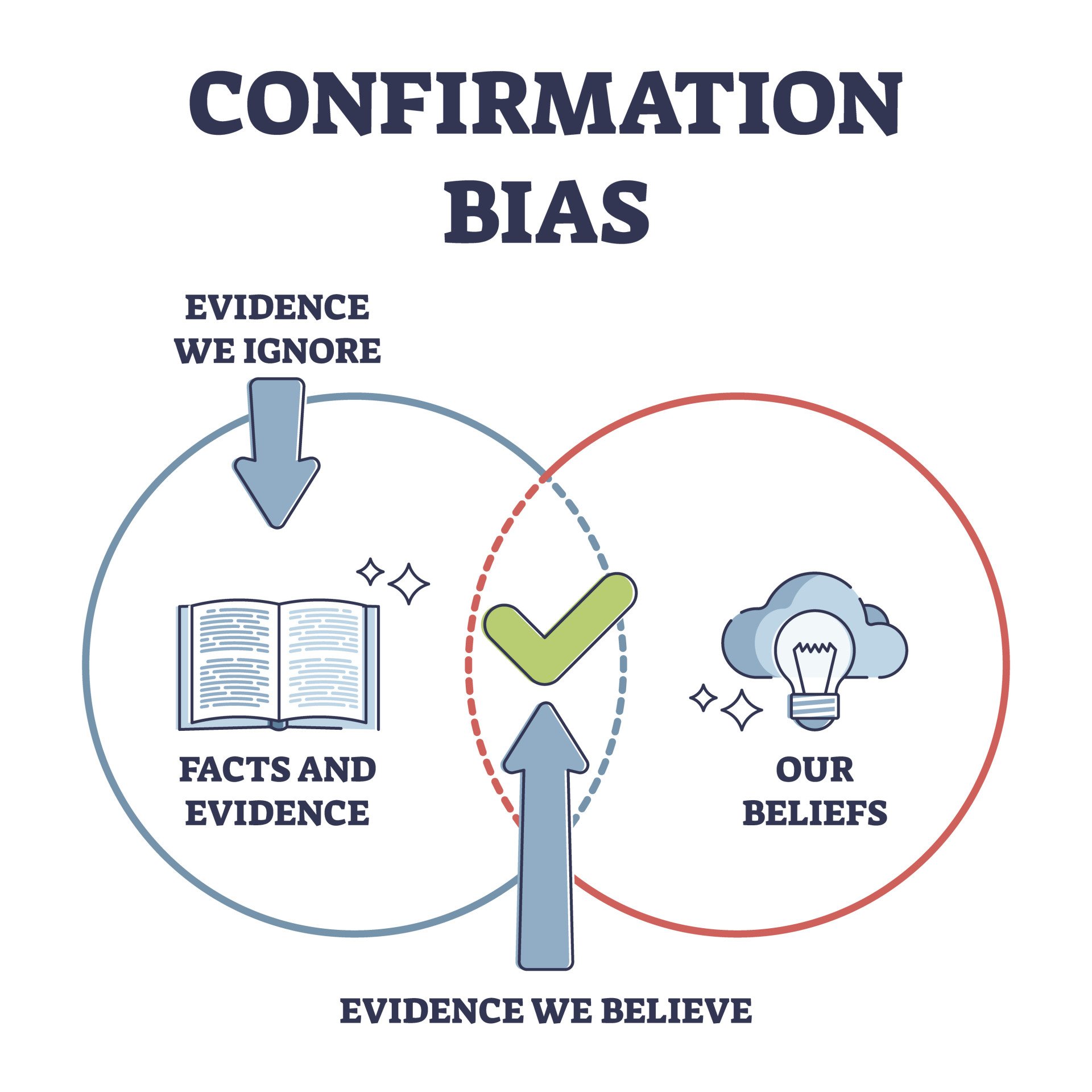
Confirmation bias refers to our natural tendency to seek out, interpret, and remember information that supports our existing beliefs, while ignoring, dismissing, or minimizing information that challenges them. This happens automatically and often without conscious awareness.

Everyday examples:

  • Reading news articles or watching videos that match our political or social opinions
  • Paying attention only to comments that agree with us while ignoring constructive criticism
  • Rejecting feedback that contradicts our self-image or long-held beliefs

Because confirmation bias feels comfortable, it protects our sense of certainty and identity. However, it can also limit learning, distort reality, and deepen misunderstandings. In arguments, people may selectively use facts that support their side, making productive dialogue difficult. In relationships, this bias can lead to unfair assumptions, where we only notice behaviors that confirm our negative expectations about others.

Confirmation bias plays a major role in conflicts, polarization, decision-making errors, and rigid thinking. Becoming aware of this bias encourages open-mindedness, critical thinking, and healthier communication. Actively considering alternative viewpoints is one of the most effective ways to reduce its impact and grow psychologically.

Why This Matters

Understanding these psychological theories is not just an academic exercise—it has practical value in everyday life. When we become aware of the hidden forces influencing our thoughts and behaviors, we gain the ability to respond more consciously rather than react automatically.

By understanding these theories, we can:

  • Become more self-aware: Recognize why we think, feel, or behave in certain ways, especially in stressful or emotional situations. This awareness helps us identify patterns that may be holding us back.
  • Improve relationships: Understanding concepts like attachment, defense mechanisms, and social comparison allows for greater empathy, clearer communication, and healthier emotional boundaries.
  • Reduce emotional reactivity: Awareness helps us pause, reflect, and regulate our emotions instead of reacting impulsively based on fear, insecurity, or past experiences.
  • Make healthier choices: When we understand how beliefs, rewards, and expectations shape behavior, we can challenge unhelpful thought patterns and make decisions aligned with our long-term well-being.

Psychology isn’t just something we study in books or classrooms—it’s something we live every day. The more we understand it, the better equipped we are to navigate life with insight, compassion, and intentionality.

Final Thought

Once you begin to recognize these psychological theories in your daily life, you start viewing your thoughts, emotions, and behaviors with greater clarity and compassion. Instead of judging yourself harshly for your reactions or habits, you begin to understand the deeper patterns and processes shaping them.

Awareness doesn’t mean perfection or constant self-correction. It simply means becoming curious about why we do what we do—why certain situations trigger us, why we repeat familiar patterns, and why change can feel difficult. This understanding creates space for self-acceptance, emotional growth, and more mindful choices.

When we understand ourselves better, we respond to life with patience rather than criticism, intention rather than impulse. In this way, psychology becomes not just a field of study, but a tool for living more consciously and compassionately every day.

Frequently Asked Questions (FAQ)

1. What does it mean to use psychology theories unconsciously?
It means we apply psychological principles in daily life without realizing there is a scientific theory behind our thoughts or behaviors.

2. Are psychology theories only useful for therapists or psychologists?
No. These theories are relevant to everyone because they explain everyday behavior, emotions, relationships, and decision-making.

3. Why do people justify their mistakes instead of changing behavior?


This is explained by Cognitive Dissonance Theory, which helps reduce mental discomfort when actions conflict with beliefs.

4. Why does social media affect self-esteem so strongly?
Because of Social Comparison Theory, where people compare themselves to others—often unrealistically.

5. How do rewards influence habits?
According to Operant Conditioning, behaviors followed by rewards are more likely to be repeated.

6. Can childhood experiences affect adult relationships?


Yes. Attachment Theory explains how early bonds shape emotional patterns in adulthood.

7. Are defense mechanisms unhealthy?
Not always. They help cope with stress, but overuse can block self-awareness and growth.

8. Why do negative beliefs often come true?
This happens due to the Self-Fulfilling Prophecy, where expectations influence behavior and outcomes.

9. Why is motivation low during stress or burnout?


Maslow’s Hierarchy of Needs explains that unmet basic needs reduce motivation for higher goals.

10. Why do people ignore opinions that challenge them?
Because of Confirmation Bias, which favors information that supports existing beliefs.

11. Can understanding psychology improve relationships?
Yes. It increases empathy, communication, and emotional regulation.

12. Is awareness enough to change behavior?
Awareness is the first step; consistent effort and reflection lead to lasting change.

13. Are these theories scientifically proven?


Most are supported by extensive research, though interpretations may evolve over time.

14. Can psychology theories help with mental health?
Yes. They form the foundation of counseling, therapy, and self-help approaches.

15. How can I apply these theories consciously?
By reflecting on your thoughts, questioning assumptions, and responding intentionally rather than automatically.

Written by Baishakhi Das

Counselor | Mental Health Practitioner
B.Sc, M.Sc, PG Diploma in Counseling


Reference

  1. American Psychological Association (APA)
    https://www.apa.org

  2. Simply Psychology – Psychology Theories Explained
    https://www.simplypsychology.org

  3. McLeod, S. A. (2023). Psychology Theories. Simply Psychology
    https://www.simplypsychology.org/psychology-theories.html

  4. Maslow, A. H. (1943). A Theory of Human Motivation
    https://psychclassics.yorku.ca/Maslow/motivation.htm

  5. Festinger, L. (1957). A Theory of Cognitive Dissonance
    https://doi.org/10.1037/10318-000

  6. Group Behavior & Conformity Theory

This topic performs well due to rising searches around men’s mental health, workplace stress, and burnout recovery. Combining emotional insight with practical steps increases engagement and trust.

Operant Conditioning: Rewards, Punishment & Motivation

A detailed psychological explanation

https://upload.wikimedia.org/wikipedia/commons/b/b4/Skinner_box_scheme_01.svg

Introduction

Operant conditioning is a foundational concept in psychology that explains how voluntary behavior is shaped, strengthened, or weakened by the consequences that follow it. The core assumption is simple yet powerful: behaviors are not random—they are influenced by what happens after we act. When an action leads to a desirable outcome, we are more likely to repeat it; when it leads to an unpleasant outcome, we tend to avoid it in the future.

Unlike classical conditioning, which focuses on learning through automatic associations between stimuli (such as salivating to a bell), operant conditioning focuses on intentional, goal-directed actions. It explains how rewards, incentives, feedback, and consequences guide decision-making over time. This makes operant conditioning especially relevant for understanding everyday behaviors like studying, working, parenting, following rules, or forming habits.

This theory was developed by B. F. Skinner, a leading figure in behaviorism, who emphasized that behavior can be scientifically studied by observing what people do and how the environment responds. Skinner argued that internal thoughts or emotions are less important than observable behavior when explaining learning—what matters most are the consequences that follow actions.

Today, operant conditioning is widely applied across many fields. In education, it shapes teaching methods and classroom management through rewards, feedback, and reinforcement. In parenting, it guides discipline strategies and habit formation. In therapy, especially behavioral and cognitive-behavioral approaches, it is used to modify maladaptive behaviors and reinforce healthier coping skills. In workplace settings, it explains motivation, productivity, incentives, and performance management. Overall, operant conditioning provides a practical framework for understanding why we do what we do—and how behavior can change over time through experience.

What Is Operant Conditioning?

Operant conditioning is a type of learning in which behavior is shaped by its consequences. It explains how individuals learn to behave in certain ways based on what happens after they act. The environment continuously responds to our behavior, and these responses play a crucial role in deciding whether a behavior will be repeated or reduced over time.

In operant conditioning:

  • Behaviors followed by positive outcomes are strengthened because they feel rewarding or beneficial.

  • Behaviors followed by negative outcomes are weakened because they lead to discomfort, loss, or unpleasant experiences.

In simple terms:
👉 We repeat what works. We avoid what hurts.

This process operates in everyday life, often without conscious awareness. Through repeated experiences, people learn which actions bring rewards and which lead to consequences.

Examples:

  • A child studies sincerely and receives praise or good marks → the child is more likely to study again.

  • An employee arrives late and receives a warning → the likelihood of coming late decreases.

Over time, these consequences shape habits, discipline, motivation, and decision-making. Operant conditioning helps explain how behaviors are learned, maintained, or changed—not through instruction alone, but through experience and feedback from the environment.

Core Components of Operant Conditioning

Operant conditioning has four main components:

  1. Positive Reinforcement

  2. Negative Reinforcement

  3. Positive Punishment

  4. Negative Punishment

These are often misunderstood, so let’s explain each clearly.

https://tractiondogtraining.com/wp-content/uploads/2024/12/IMG_1907.png

Below is a clear, structured, and slightly expanded explanation of the four components of operant conditioning, keeping your original content intact while adding depth and psychological clarity.

1. Positive Reinforcement (Adding Reward)

Definition

Positive reinforcement means adding something pleasant or rewarding after a behavior in order to increase the likelihood of that behavior happening again.

  • Positive → something is added

  • Reinforcement → behavior increases

Key Idea:
Behavior → Reward → Behavior increases

Examples

  • A student receives praise or good marks for strong performance

  • A child gets chocolate or appreciation for finishing homework

  • An employee receives a bonus or promotion for meeting targets

  • Social media likes and comments reinforce posting behavior

Psychological Impact

  • Builds motivation and engagement

  • Strengthens self-esteem and confidence

  • Encourages healthy habit formation

  • Creates a sense of competence and achievement

Positive reinforcement works because it links behavior with pleasure and success, making learning emotionally safe. It is considered the most effective and ethical method of behavior shaping, especially in children, education, and therapy settings.

2. Negative Reinforcement (Removing Discomfort)

Definition

Negative reinforcement means removing an unpleasant or uncomfortable stimulus after a behavior, which increases the likelihood of that behavior being repeated.

⚠️ Important:
Negative reinforcement is not punishment.
It still increases behavior, not decreases it.

  • Negative → something is removed

  • Reinforcement → behavior increases

Key Idea:
Behavior → Discomfort removed → Behavior increases

Examples

  • Buckling a seatbelt stops the warning alarm

  • Completing work ends a teacher’s scolding

  • Taking painkillers removes headache pain

  • Submitting assignments avoids penalties or reminders

Psychological Impact

  • Increases behavior through relief or escape

  • Often linked to avoidance-based motivation

  • Can increase stress or anxiety if overused

Negative reinforcement is effective in the short term, but when relied on too much, behavior becomes driven by fear of discomfort rather than interest or meaning, reducing intrinsic motivation.

3. Positive Punishment (Adding an Unpleasant Outcome)

Definition

Positive punishment means adding an unpleasant consequence after a behavior in order to reduce or stop that behavior.

  • Positive → something is added

  • Punishment → behavior decreases

Key Idea:
Behavior → Unpleasant consequence → Behavior decreases

Examples

  • Scolding a child for misbehavior

  • Paying fines for breaking traffic rules

  • Giving extra assignments as a penalty

  • Physical punishment (strongly discouraged)

Psychological Impact

  • May stop behavior temporarily

  • Can create fear, shame, anger, or resentment

  • Often damages trust and emotional safety

  • Does not teach alternative or healthy behavior

Psychology strongly recommends minimal and cautious use of positive punishment, especially with children, as it suppresses behavior without promoting understanding or growth.

4. Negative Punishment (Removing Something Pleasant)

Definition

Negative punishment involves removing a desirable or valued stimulus after a behavior to reduce that behavior.

  • Negative → something is removed

  • Punishment → behavior decreases

Key Idea:
Behavior → Loss of privilege → Behavior decreases

Examples

  • Taking away phone or screen time

  • Removing pocket money or rewards

  • Time-out from play or activities

  • Losing access to social privileges

Psychological Impact

  • More effective and humane than positive punishment

  • Encourages reflection and responsibility

  • Less emotionally damaging when applied calmly

  • Works best when rules are clear and consistent

Negative punishment is widely used in parenting, classrooms, and behavior therapy because it reduces behavior without fear or humiliation.

Key Psychological Insight

👉 Reinforcement builds behavior.
Punishment suppresses behavior.
Only reinforcement truly teaches.

For long-term learning, emotional safety, and motivation, reinforcement—especially positive reinforcement—is always preferred over punishment.

Rewards vs Punishment: A Psychological Comparison

Aspect Reinforcement Punishment
Goal Increase behavior Decrease behavior
Emotional effect Motivation, confidence Fear, avoidance
Long-term impact Habit formation Temporary suppression
Learning quality Teaches what to do Rarely teaches alternatives

Psychology favors reinforcement over punishment for long-term behavior change.

https://www.simplypsychology.org/wp-content/uploads/intrinsic-extrinsic-motivation.jpeg

Motivation in Operant Conditioning

Operant conditioning plays a central role in shaping motivation, because consequences such as rewards and punishments influence why we engage in certain behaviors. Motivation within operant conditioning is broadly divided into extrinsic and intrinsic motivation.

1. Extrinsic Motivation

Extrinsic motivation is driven by external rewards or the desire to avoid punishment. The behavior is performed not for its own sake, but for what it leads to.

Examples

  • Studying to obtain good marks or grades

  • Working to earn a salary, bonus, or promotion

  • Obeying rules to avoid fines, punishment, or criticism

Psychological Characteristics

  • Highly effective for initiating behavior

  • Useful for short-term goals and structure

  • Common in schools, workplaces, and rule-based systems

However, when behavior depends only on external rewards, motivation may drop once the reward is removed. This can create reward-dependence rather than genuine engagement.

2. Intrinsic Motivation

Intrinsic motivation comes from internal satisfaction, curiosity, interest, or personal values. The behavior itself is rewarding.

Examples

  • Learning out of curiosity or love for knowledge

  • Helping others for emotional fulfillment or empathy

  • Creating art, writing, or music for joy and self-expression

Psychological Characteristics

  • Leads to deeper learning and creativity

  • Promotes long-term engagement

  • Strongly linked to well-being and self-esteem

Intrinsic motivation develops best in environments that support autonomy, competence, and emotional safety.

💡 Important Insight: The Over justification Effect

Excessive use of external rewards can sometimes reduce intrinsic motivation—a phenomenon known as the over justification effect. When people begin to associate an activity only with rewards, they may lose interest once the rewards stop.

Example:
A child who loves drawing may stop enjoying it if constantly rewarded with money or prizes for each drawing.

Healthy Motivation: Finding the Balance

Healthy operant conditioning does not eliminate rewards—it uses them wisely.

  • External reinforcement helps start and structure behavior

  • Internal meaning sustains long-term motivation

  • Gradual shift from rewards to self-driven goals is ideal

👉 The healthiest motivation balances external reinforcement with internal purpose.
When people feel both rewarded and personally connected to what they do, behavior becomes stable, meaningful, and self-sustaining.

Applications of Operant Conditioning

Operant conditioning is not limited to laboratory experiments—it is actively used in real-life settings to guide learning, discipline, and motivation. When applied ethically, it helps shape behavior while preserving emotional well-being.

1. Education

In educational settings, operant conditioning supports learning by reinforcing effort, participation, and progress rather than fear of failure.

Common Applications

  • Reward-based learning: Praise, grades, certificates, or privileges encourage academic effort

  • Token economies: Students earn tokens or points for positive behavior, which can later be exchanged for rewards

  • Positive classroom management: Reinforcing discipline, cooperation, and attentiveness instead of focusing only on mistakes

Psychological Benefit

  • Increases engagement and motivation

  • Builds confidence and self-efficacy

  • Creates a safe learning environment where mistakes are part of growth

2. Parenting

In parenting, operant conditioning helps shape behavior while protecting the child’s emotional security and self-esteem.

Common Applications

  • Encouraging good behavior: Praise, affection, and attention for positive actions

  • Setting boundaries: Clear rules with consistent consequences

  • Discipline without fear: Using loss of privileges instead of threats or physical punishment

Psychological Benefit

  • Promotes secure attachment and trust

  • Teaches responsibility and self-control

  • Reduces power struggles and emotional harm

3. Therapy & Mental Health

Operant conditioning is widely used in behavioral and cognitive-behavioral therapies to replace maladaptive behaviors with healthier ones.

Common Applications

  • Behavior modification: Reinforcing adaptive behaviors and reducing harmful patterns

  • Addiction treatment: Rewarding abstinence, treatment adherence, and coping skills

  • Anxiety and habit reversal therapy: Gradual exposure and reinforcement of calm or alternative responses

Psychological Benefit

  • Encourages lasting behavior change

  • Helps clients feel empowered rather than punished

  • Supports recovery through structured, measurable progress 

4. Workplace

In organizational settings, operant conditioning explains how motivation and performance are shaped.

Common Applications

  • Incentives and bonuses: Financial rewards for performance and achievement

  • Performance feedback: Recognition and constructive feedback reinforce effective work behavior

  • Productivity systems: Clear goals, accountability, and reinforcement improve consistency

Psychological Benefit

  • Increases job satisfaction and engagement

  • Encourages goal-directed behavior

  • Reduces burnout when rewards are fair and meaningful

Ethical Considerations in Operant Conditioning

Ethical application is crucial. Misuse can harm emotional well-being and autonomy.

Key Principles

  • Reinforcement should be fair, consistent, and age-appropriate

  • Punishment should never involve humiliation, fear, or physical harm

  • Emotional safety is as important as behavior control

Modern psychology emphasizes understanding behavior rather than controlling people. The goal is not obedience, but learning, growth, and psychological well-being.

Conclusion

Operant conditioning explains a simple but powerful truth:

Behavior changes when consequences change.

Rewards encourage growth.
Punishment may stop behavior but rarely heals it.
Motivation thrives where learning feels safe and meaningful.

When used thoughtfully, operant conditioning becomes not a tool of control—but a tool for development, responsibility, and psychological well-being.

Frequently Asked Questions (FAQ)

1. What is operant conditioning in psychology?

Operant conditioning is a learning process where behavior is shaped by its consequences, such as rewards or punishments.

2. Who developed operant conditioning?

Operant conditioning was developed by B. F. Skinner, a key figure in behaviorism.

3. How is operant conditioning different from classical conditioning?

Classical conditioning focuses on automatic associations, while operant conditioning focuses on voluntary actions and their consequences.

4. What is positive reinforcement?

Positive reinforcement involves adding a reward after a behavior to increase its frequency.

5. What is negative reinforcement?

Negative reinforcement involves removing an unpleasant stimulus to strengthen a behavior. It is not punishment.

6. What is punishment in operant conditioning?

Punishment reduces behavior and can be positive (adding discomfort) or negative (removing privileges).

7. Which is more effective: reinforcement or punishment?

Reinforcement is more effective for long-term behavior change and emotional well-being.

8. How does operant conditioning influence motivation?

It shapes both extrinsic motivation (rewards, avoiding punishment) and intrinsic motivation (interest, satisfaction).

9. What is the overjustification effect?

It occurs when excessive rewards reduce intrinsic motivation for an activity that was previously enjoyable.

10. How is operant conditioning used in education?

Through reward-based learning, token economies, and positive classroom management.

11. How does operant conditioning help in parenting?

It encourages positive behavior, sets boundaries, and supports discipline without fear.

12. Is operant conditioning used in therapy?

Yes, especially in behavior therapy, addiction treatment, anxiety management, and habit reversal therapy.

13. Can punishment harm mental health?

Harsh or inconsistent punishment can lead to fear, shame, and emotional harm.

14. Is operant conditioning ethical?

Yes, when applied with fairness, consistency, and emotional safety.

15. Why is operant conditioning important in daily life?

It explains how habits form, motivation develops, and behavior changes across learning, work, and relationships.

Written by Baishakhi Das

Counselor | Mental Health Practitioner
B.Sc, M.Sc, PG Diploma in Counseling


Reference 

  1. Skinner, B. F. (1953). Science and Human Behavior.

  2. Skinner, B. F. (1938). The Behavior of Organisms.

  3. American Psychological Association (APA) – Learning & Behavior
    https://www.apa.org

  4. McLeod, S. A. (2023). Operant Conditioning. Simply Psychology
    https://www.simplypsychology.org

  5. Domjan, M. (2018). The Principles of Learning and Behavior. Cengage Learning.

  6. Anger Issues in Men: What’s Really Going On