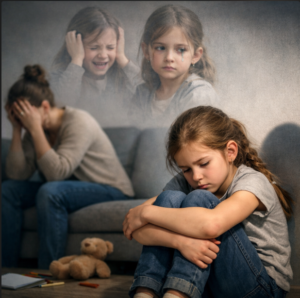
Mental health is a powerful determinant of the relationships among family members, the type of parenting and the emotional development of a child. The main emotional safety of a child lies in parents, and in case they have some problems, such as depression, anxiety, or stress, the behavioural and emotional problems of the child may arise.
During the everyday life, the parent who struggles with depression might be emotionally detached or less involved and this situation may cause a child to think he or she is neglected or unworthy. In a similar vein, nervous parents accidentally can make a fear-based or even overprotective atmosphere, causing children to be afraid of mistakes. The struggles of mental health may also cause inconsistency in parenting where the responses vary day to day cause confusion and insecurity to children.
In other occasions, children can assume adult roles like consoling the parents or concealing their self-emotions. This may influence their emotional growth and self esteem. Nevertheless, the resilience can also be developed in children when they are supported by their family members and teachers or mental health professionals. The seeking of help by parents does not only enhance their well being but also leads to healthier environment to their children.
Emotional Environment and Child Development
The first point of emotional security and comfort to a child is parents. In their everyday life, children learn how to interpret emotions, create trust, and have a sense of safety. In such cases as depression, anxiety, trauma, or mood disturbances of parents, emotional availability may become hard to maintain. The struggles a parent is going through might even make him/her adopt an unintentional attitude of being emotionally inaccessible, petulant or inconsistent in reaction.
Parents living in these conditions might not take much time to express their love, to comfort the child, and give them emotional stability. In the long run, this may instil a sense of insecurity, confusion, or fear in the child. Such emotional experiences may affect their general psychological and social development in a number of ways:
1. Attachment Difficulties
- Children may struggle to develop secure emotional bonds.
- They may become overly dependent or emotionally distant in relationships.
- Fear of abandonment or rejection may develop.
2. Emotional Regulation Problems
- Difficulty understanding or expressing emotions.
- Increased emotional outbursts or emotional suppression.
- Poor coping skills during stress or conflict.
3. Low Self-Esteem and Self-Blame
- Children may believe they are responsible for their parent’s distress.
- They may feel unworthy of love, attention, or care.
- Constant need for approval and validation may develop.
4. Behavioral and Social Challenges
- Difficulty forming healthy peer relationships.
- Increased risk of anxiety, withdrawal, or aggression.
- Problems with concentration and academic performance.
Understanding these impacts helps in promoting early emotional support and creating protective environments that support healthy child development.
Increased Risk of Emotional and Behavioral Problems
Children born in untreated mentally disturbed parents are prone to the development of emotional and behavioural challenges. They can be anxious, depressed, have low self esteem or be aggressive. The experience of indeterministic parental behaviour has the potential to cause chronic stress to children as they feel they are in charge of controlling the moods of their parents. In the long run, it can result in self-inflicted guilt, obsessive-compulsive or the inability to develop good relationships.
These effects can be observed in different areas of a child’s life:
1. Emotional Difficulties
- Persistent feelings of sadness, fear, or loneliness
- Increased sensitivity to criticism or rejection
- Difficulty expressing emotions in a healthy way
2. Behavioral Changes
- Aggressive behavior or frequent anger outbursts
- Social withdrawal or avoidance of interactions
- Risk-taking or attention-seeking behaviors
3. Parentification and Emotional Burden
- Feeling responsible for comforting or supporting the parent
- Suppressing personal needs and emotions
- Developing premature emotional maturity
4. Relationship and Trust Issues
- Difficulty trusting others or forming close bonds
- Fear of conflict or abandonment
- Challenges in maintaining stable friendships or relationships
Recognizing these patterns early can help caregivers, teachers, and mental health professionals provide timely emotional support and intervention.
Impact on Parenting Practices
Parenting ability can be greatly affected by the mental health struggles. Parents who experience high levels of stress or psychological torment might demonstrate inconsistent punishment, emotional aloofness or overprotectiveness. Other parents can inadvertently ignore the emotional needs of their children, whereas other parents can use children as sources of emotional support an occurrence termed as parentification. Such experiences may disrupt the feeling of safety and independence in a child, along with his or her general emotional growth.
These challenges may appear in different ways:
1. Inconsistent Parenting and Discipline
- Rules and expectations may change frequently.
- Children may feel confused about acceptable behavior.
- Lack of consistency can create insecurity and anxiety.
2. Emotional Unavailability
- Limited affection, reassurance, or emotional support.
- Reduced parent-child bonding and communication.
- Children may feel lonely or emotionally disconnected.
3. Overprotective Parenting
- Excessive control over a child’s activities or decisions.
- Restriction of independence and problem-solving skills.
- Increased fear and lack of confidence in children.
4. Parentification
- Children taking responsibility for the parent’s emotional needs.
- Managing household or caregiving roles beyond their age.
- Difficulty focusing on their own emotional and developmental needs.
Recognizing these patterns is important for supporting both parental well-being and healthy child development.
Cognitive and Social Development Challenges
Children who grow up in stressful families could suffer in their concentration, school ending results and social interactions. The sustained effects of stress on the brain development, processing emotion, and solving problems may occur. Such children could not find it easy to trust, communicate, and resolve conflicts in peer relationships and in adulthood.
These challenges often appear in the following areas:
1. Academic Difficulties
- Trouble concentrating or staying attentive in class
- Reduced motivation and learning difficulties
- Decline in academic performance
2. Emotional and Cognitive Impact
- Difficulty understanding and managing emotions
- Increased anxiety, frustration, or emotional sensitivity
- Poor decision-making and problem-solving skills
3. Social Relationship Challenges
- Difficulty trusting peers or authority figures
- Struggles with communication and expressing needs
- Problems handling disagreements or conflicts
4. Long-Term Developmental Effects
- Risk of forming unhealthy relationship patterns
- Low confidence and self-doubt in adulthood
- Difficulty managing stress and responsibilities later in life
Early emotional support and a stable environment can help children overcome these challenges and develop healthier coping skills.
Intergenerational Transmission of Mental Health Patterns
Mental health problems can also be transmitted between generations in terms of genetic susceptibility, acquired coping processes, and environmental exposure. Children tend to look at their parents and model their behaviour in terms of coping with stress, emotions, and relationships. Consequently, they could end up adopting maladaptive coping strategies that they see in their homesteads. Unless these patterns are properly supported and made aware, it may carry into the adulthood where it may influence future relationships and parenting styles.
This intergenerational impact can be seen in several ways:
1. Genetic and Biological Vulnerability
- Increased risk of developing similar mental health conditions
- Greater sensitivity to stress or emotional difficulties
- Possible impact on emotional and neurological development
2. Learned Coping Patterns
- Adopting avoidance, emotional suppression, or unhealthy stress responses
- Difficulty expressing emotions or seeking help
- Repeating unhealthy communication styles
3. Relationship and Parenting Patterns
- Struggling to form secure and trusting relationships
- Repeating similar emotional patterns in romantic or family relationships
- Risk of continuing the same parenting challenges with their own children
Recognizing these patterns early and seeking emotional support can help break the cycle and promote healthier coping and relationship skills across generations.
Protective Factors and Support
Nevertheless, in the presence of protective factors, many children demonstrate a great level of resilience despite their hardship. Positive attachment to caregivers, availability of mental health services, consistent routines and open communication can play a very important role in the reduction of adverse outcomes. Getting help by the parents, in addition to assisting the parents to have a better health, will also help provide the children with a healthier emotional environment.
Protective factors that support resilience include:
1. Supportive Relationships
- Emotional support from extended family members, teachers, or trusted adults
- Positive peer relationships that promote confidence and belonging
- Availability of a safe person to share feelings and concerns
2. Stable and Predictable Environment
- Consistent daily routines and clear boundaries
- Safe and nurturing home or school environment
- Encouragement of healthy emotional expression
3. Access to Mental Health Support
- Counseling or therapy for parents and children
- Awareness about emotional well-being and coping skills
- Early identification and intervention of psychological difficulties
4. Open Communication and Emotional Awareness
- Encouraging children to express emotions without fear
- Teaching healthy coping and problem-solving skills
- Strengthening parent-child emotional bonding
Promoting these protective factors helps children develop emotional strength, adaptability, and healthier relationship patterns in the long term.
Conclusion
The mental health of the parents plays a significant role on the emotional, psychological and social development of a child. The mental health issues of the parents are not only crucial to the recovery of the parent, but also crucial to child-rearing in good, safe, and caring environments. Proactive knowledge and therapy combined with family support systems can assist in the discontinuation of unhealthy cycles and encourage future generations to be healthier.
FAQ
1. What is the impact of mental health of parents on children?
The mental health of the parent has an impact on the emotional security of the child, children behaviour and their psychological development in general. Children can also get stressed, anxious, or change their behaviour when their parents have mental health problems.
2. Will children become mentally challenged when their parents are mentally challenged?
Yes, the children might be more vulnerable because of the genetic, environmental, and behavioural factors, but the risks can be minimised through the correct support and early intervention.
3. What is parentification?
Parentification happens when children become adults, i.e. supporting their parents emotionally or taking care of them.
4. So what could be the effects of parental depression in a child?
The depression of parents can cause emotional withdrawal, decrease in communication and engagement and that may influence the self-esteem of the child and emotional stability.
5. What is the impact of parental anxiety upon children?
It can make the atmosphere one of undue anxiety or overprotection, which results in children being afraid or too careful/overprotective.
6. Are children capable of grasping the parental mental health problems?
Children can experience emotional changes that they in most cases are unable to comprehend the reasons due to which they can get lost or blame themselves.
7. What are the behavioural symptoms that can suggest a child has been affected?
The indicators can be aggression, withdrawal, declined learning, over-worry, or sudden change in behaviour.
8. What are some of the effects that inconsistent parenting will have on children?
It may cause misunderstanding, emotional insecurity and lack of ability to comprehend rules or expectations.
9. Do supportive adults minimise the adverse impact on children?
Oh yes, kind teachers, family, or guardians can be able to offer emotional support and counsel.
10. What are the impacts of chronic stress on child development?
Stress may affect the development of the brain, emotional control, and learning abilities.
11. Is it possible to treat the family that has to cope with mental illness of parents?
Yes, treatment may assist in emotional recovery, enhance communication and strengthen family bonds.
12. What can parents do in order to protect children and deal with their mental health?
Through professional assistance, routine, open communication and emotional assurance.
13. Are not all children of mentally ill parents developing problems?
No, most children become resilient particularly where guardian support is in place.
14. What can schools do to help such challenged children?
Schools have the ability to offer counsel, emotional support as well as safe areas where kids can express themselves.
15. What is the value of communication in ensuring the safety of children?
Open communication makes children know how to feel, self-blame less, and helps to build trust in the family.
16. Does early intervention have a role to play in ending intergenerational mental health cycles?
Yes, the continuation of unhealthy patterns can be prevented with the help of early awareness, therapy and emotional support.
Written by Baishakhi Das
Counselor | Mental Health Practitioner
B.Sc, M.Sc, PG Diploma in Counseling
Research
-
WHO – Parenting and Mental Health Guidelines
https://www.ncbi.nlm.nih.gov/books/NBK589384/
➡ States that parental mental health directly affects childcare practices and may increase risk of child maltreatment. -
Maternal Depression and Child Development
https://pmc.ncbi.nlm.nih.gov/articles/PMC2724169/
➡ Explains how maternal depression affects children’s socio-emotional and cognitive development. -
Risk of Depression in Children of Depressed Parents
https://pmc.ncbi.nlm.nih.gov/articles/PMC7067707/
➡ Shows children of depressed parents have higher risk of developing depression. -
Long-Term Impact of Parental Mental Health on Children
https://pmc.ncbi.nlm.nih.gov/articles/PMC8172076/
➡ Research shows children exposed to poor parental mental health often experience greater distress into adulthood. -
Parental Depression and Child Behaviour Problems
https://pmc.ncbi.nlm.nih.gov/articles/PMC9941167/
➡ Links parental depression with internalizing (anxiety, sadness) and externalizing (aggression) child behaviour problems - How Emotionally Absent Parents Shape Adult Relationships
This topic performs well due to rising searches around men’s mental health, workplace stress, and burnout recovery. Combining emotional insight with practical steps increases engagement and trust.