
Why You Feel Safe With Someone but Still Fear Commitment

You feel calm around them.
You are softening your body, not holding it together.
Your nervous system does not over drive.
You do not have to act like you are yourself, you do not have to pretend, do not have to think carefully before saying the words so as to remain accepted.

The relationship is easy. Silence doesn’t feel awkward. Presence feels grounding.

And yet, as the relationship is flowing in the direction of commitment: labels, future planning, emotional permanence, there is a feeling deep within you that is pulling away. Not in a dramatic but in a timorous way. A tightening in the chest. A sudden urge for distance. An idea which is incompletely elaborable: I need space.

This internal conflict is even very perplexing.

Whom can be so safe, and, at the same time, so frightening?

The fact is that such experience is much more widespread than one may care to admit- and has little to do with not liking a person enough, inability to get emotionally involved, lack of depth. It is so frequently the nervous system reacting to a history that it remembers in some way.

Being relaxed around a person is a means that your body is confident in the moment.
Being afraid of commitment is that your body would be in doubt of what would happen in case the moment turns permanent.

To most people, intimacy with time has been succeeded by some form of loss, disappointment or emotional hurts. And as a relationship begins to grow into anything more, the system that had been protecting you takes action once again and slowly drags you back, not to destroy love, but to save you the pain that this system had learned to fear.

It’s not a lack of desire.
A protective pause.

And knowing that difference has the power of transforming your image of yourself and your relationships completely.

Safety and Commitment Are Not the Same to the Nervous System

To feel safe with a person it is as though your body is not under imminent danger. Your muscles are being relaxed, your breath is being huffed up, your nervous system is calmed down to the present moment. One does not have to be on watch, to look around and guard against possible emotional attack.

To be afraid of being committed, though, usually implies that your nervous system has learned to perceive intimacy over the years as a threat. It is not that it is wrong today, but the history of your body has demonstrated to you that whatever is safe today might turn painful later. The promise of sustainability, addiction and emotional vulnerability- and in the case of a trauma-forming nervous system, the promise can cause fear.

To most individuals and most especially to the ones with relational trauma, safety lies in the present. The present seems to be manageable. But dedication is to the future and the future is to remember loss, abandonment, emotional uncertainty or betrayal. And you may say in your head, This man is good. this is well, says your body, What happens when you are fixed?

This is why fear may also manifest itself in safe, loving relationships. It is not about the individual opposite you, it is a record of what has been locked up under the conscious mind.

The mind is forgetful of what your body will recall.
And it is not responding to logic, but to the habits of surviving that it had learnt long before.

When Safety Was Once Conditional

In case your background was such that love was not always there, conditional, emotionally intermittent, or was followed by abandonment, criticism, or neglect, your nervous system was taught a valuable lesson that connection was not to be trusted.

It had also learned that without warning one could have love taken away.
Pain may come after that intimacy.
Clinging was to be at risk of loss or hurt of feeling.

So your body adapted. It aroused the alertness, self-defensive and suspiciousness towards protracted intimacy. Although love may be good at that time, your nervous system will remain on alert of what is yet to happen. It is not pessimism it is experience-conditioned survival intelligence.

This may manifest itself in form of being safe with someone as an adult but not able to commit fully. Your head might desire intimacy, but your body is recalling the moment when love was something that had its consequences. To cause a distance, or hesitation, or doubt,–not to destroy happiness, but in order that a sort of hurt familiarity might be averted.

What you previously used to survive with, now presents itself as fear.
And knowing this is the initial healing of it.

Connection is good–but never lasts.

Thus, when a relationship begins to become more serious, the body is ready to be hit- even in case the individual is gentle.

This isn’t self-sabotage.
It is self-defense through experience.

Fear of Commitment Is Often Fear of Loss

It is not the fear of commitment that many people have.
They are afraid of commitment as it used to be.

They are afraid of relying on someone and be betrayed when that support runs out.
They are afraid to open up to others only to find themselves abandoned after they are completely observed.
They are afraid of losing their independence, reducing their demands, scopes or selfhood in order to preserve a relationship.
They are afraid of repeating some emotional trauma they had endured in the past without knowing it.

Commitment requires a faith in the continuity: the faith that care will be there, that relationship will no longer break down, that affection will be drawn away when it is most needed. Trauma disrupts this belief. It reminds the nervous system that nothing is ever to be expected particularly people.

Even in the safe, stable, and gentle relationships, the nervous system can remain sensitive. It does not respond to reassurances as such, but it responds to regularities acquired with time. And with devotion comes the murmuring question, the accustomed, a reassuring question:

What happens in the case I become attached and it gets hurty again?

This question does not indicate the rejection of love.
It is a resonance of a wound that is not yet healed that this may be the case.

Emotional Safety Can Feel Boring to a Trauma-Wired Brain

When disorder was a natural part of childhood, order may be alien even disturbing.

And once your early relationships were characterized by uncertainty, emotional ups and downs or continuous tension, what your brain came to know was intensity as connection. Love was emphatic, desperate, or emotional. Adrenaline, anxiety and hypervigilance turned accordingly to be attachment signals.

Stability, however, lacked an explicit point of reference. In case a relationship seems stable, dignified, and emotionally secure, your nervous system might not and cannot respond as it used to learn about love. It has the comfort, but not the hurry. Safety, but not the spike.

This discongruence might produce guilt and framing doubt:
Why should I be drawing out of a person who does me well?
“What’s wrong with me?”

Nothing is wrong with you.

The lack of disorder does not imply the lack of contact. It is an experience of novelty to your nervous system. It is the education that love does not need to be passionate so that it is real, and that being quiet does not mean being dangerous or dull.

It is not an absence of love, it is just a nervous system getting used to a new language, the language where there is peace instead of survival, safety instead of fear.

Commitment Means Being Seen Long-Term

Dedication does not consist of picking a person.
It is being comfortable to be known- day in day out, in depth, and with time.

This type of intimacy is intensely revealing to those who have been conditioned to survive by remaining emotionally closed/low maintenance or by not having needs. Being seen in their entirety may become a danger instead of a relief when your safety previously relied on not demanding much, not occupying space, and not being dependent.

Independence in such situations was not a personality characteristic, it was defense. The needs were reduced to prevent disappointment. All the emotions were kept private to avoid repulsion. When commitment is the call to collective vulnerability, emotional dependence, long-lasting presence, then the nervous system will rebel.

Safety now seems manageable. You can appear, unite, love and then withdraw back into you. However, having your vulnerabilities, gaps, and needs noticed over time can be horrifying. It implies remaining open without knowing the consistency with which you will be received.

This is not the fear of not wanting to be close.
It is the part of knowing, of knowledge, learning to know that being well-known does not necessarily mean being wounded.

Healing Isn’t Forcing Yourself to Commit

Healing does not involve forced relationships; it does not involve committed relationships just to show that you are growing. Stress can only inform the nervous system that intimacy entails submergence.

Healing is knowing your styles of attachment- not judging them as being dysfunctional but realizing that they were your survival mechanisms in the past. It is to hear with interest rather than pounce judgment on fear and letting it tell you everything without giving it the last word.

It implies training to be able to tolerate proximity over time: remaining longer, revealing more, noticing that it is possible to feel safe without needing to withdraw. This is not a rush process, since trust is developed by repetitions of consistency.

Most of all, the healing is in establishing security within yourself and not solely putting the responsibility of security on any other human being. When you discover how to self-calm, establish limits and respect your pace, relationships cease to be a challenge to your sense of self-sufficiency.

There is no need to hurry to make a commitment to show that you are healed.
The process of healing involves the choice of your own pace.

You Are Not Broken for Wanting Safety and Space

It is possible to care about a person and have time.
Can be safe and be scared at the same time.
You might desire to love so much, but you are not prepared to commit it.

These experiences are not contradictions–they are indications. They are the manifestations of a nervous system striving to adjust the desire to connect with a conditioned necessity to protect.

The fear of commitment is not something bad or wrong. It’s information. It narrates an account of how propinquity once charged you and how your flesh remains to protect against. This fear does not necessarily have to turn into avoidance as long as it is approached with compassion rather than judgment, both towards yourself, and towards others. It can soften.

Fear starts to slip its knots with time, patience, comprehension, and repeated experiences of safety. Not a single time, but gradually, in the ways that are bearable and natural.

Since it is not about forcing yourself to be there and going beyond your capabilities.
The idea is to train your nervous system to relax, every time, it is possible to remain safe.

Frequently Asked Questions (FAQ)

1. Am I emotionally safe enough to be afraid of commitment?

Yes. Present moment emotional safety and fear of long term attachment may coincide particularly when the nervous system links long term proximity to previous pain.

2. Does commitment phobia imply that I do not love the individual enough?

No. The fear to commit is usually based on self-defense, rather than on absence of love or interest.

3. Are attachment styles connected with fear of commitment?

Yes. It is typically linked to avoidant or fearful-avoidant attachment patterns that were developed in the early relationships.

4. Why will commitment cause anxiety even in healthy relationships?

Since commitment is a form of future vulnerability, dependency, and emotional exposure, which can be marked off as unsafe by trauma.

5. Does childhood experience influence adult commitment phobias?

Absolutely. The inconsistency, conditional, or unpredictable caregiving has a significant effect on the response of the nervous system to proximity in adulthood.

6. Why is it so that calm is even dull or even uncomfortable?

When chaos was a childhood way of life then the brain can equate intensity with love and confuse stillness with emotional distance or danger.

7. Does this mean that they are emotionally unavailable?

Not necessarily. Most individuals afraid of commitment are emotionally rich and loving but apprehensive because of the wounds in relationships in the past.

8. Is there something that can be done to overcome fear of commitment?

Yes. Fear can be managed by using trauma-informed therapy, attachment-based therapy, and somatic approaches to establish relational safety.

9. Am I obliged to make myself get over the fear?

No. Coerced commitment may cause more distress of the nervous system. The healing process occurs through consensual intimacy.

10. What do I do when I am not sure that my fear is intuitition or trauma?

The emotion of intuition is so peaceful and serene; the fear caused by trauma is so pressing, disorienting, and connected to the past and not to the facts on the ground.

11. Is fears of commitment manifested strictly after relationships get serious?

Yes. Most find it okay to date casually but find it tricky when emotional permanence or planning of future is introduced.

12. Does it require space so that I will never be able to commit?

No. Requirement of space usually implies that your system is self-regulating. Safety and awareness can make capacity to commit increase.

13. Is it possible that a supportive partner would help decrease this fear?

Yes–but the partner cannot be depended upon alone in the work. In-house safety and self-regulation are a necessity.

14. Is commitment phobia here to stay?

No. It is an acquired reaction, not a personality. As a person heals, the nervous system is able to adapt.

15. What is the purpose of mending the fear to commit?

Not being overbearing to remain, but teaching your nervous system to allow intimacy to be safe with time.

Written by Baishakhi Das

Counselor | Mental Health Practitioner
B.Sc, M.Sc, PG Diploma in Counseling


References 

Attached – Amir Levine & Rachel Heller
https://www.attachedbook.com

  1. The Body Keeps the Score – Dr. Bessel van der Kolk
    https://www.besselvanderkolk.com/resources

  2. Polyvagal Theory – Dr. Stephen Porges
    https://www.polyvagalinstitute.org

  3. Adult Attachment Theory – Psychology Today
    https://www.psychologytoday.com/us/basics/attachment

  4. Trauma and the Nervous System – NICABM
    https://www.nicabm.com

  5. Somatic Experiencing – Peter A. Levine
    https://traumahealing.org

  6. Why You Feel Guilty for Resting

This topic performs well due to rising searches around men’s mental health, workplace stress, and burnout recovery. Combining emotional insight with practical steps increases engagement and trust.

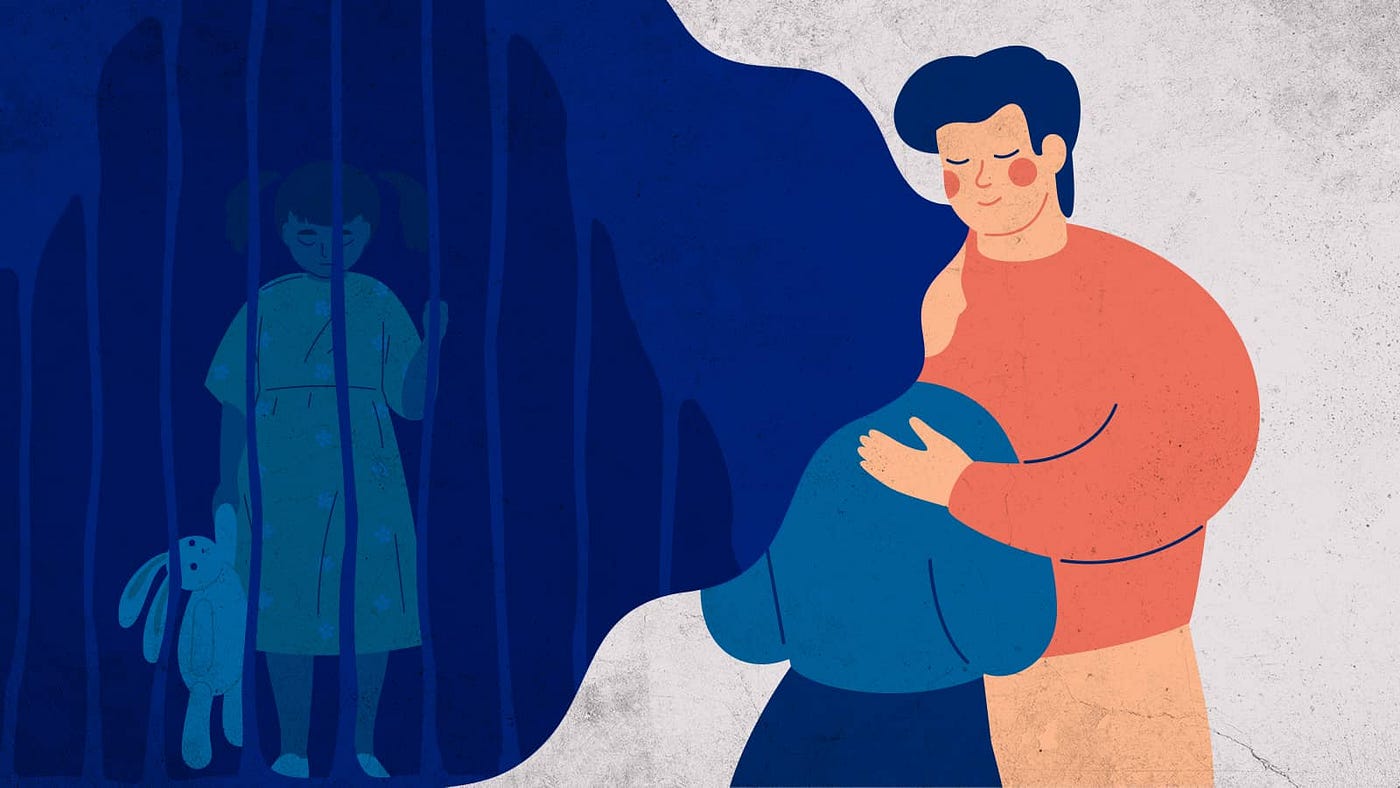
Feeling Behind “Not Good Enough”

It is a silent thought, a thought that hardly a person speaks about at a certain point in life:

“I’m not good enough.”

It does not necessarily come in the form of a theatrical meltdown or a high-volume self-doubting situation. In practice more frequently it creeps in unobtrusively and presents itself as an outwardly productive or responsible behavior. It can present itself as overworking to demonstrate its value, people-pleasing to evade rejection, procrastination because of fear of failure, or a general worry of being found out as a scammer even when it can be seen that it is capable.

Otherwise, this thought is veiled with perfectionism or self-criticism that is initially feels encouraging to you, as it drives you to perform better, exert more, be better. However, as time goes, this internal pressure gradually destroys the self-worth, and in its place, the confidence is substituted with fatigue and the trust in self is substituted with doubt.

The point to note is that, the experience of not being good enough is not an individual failure or character flaw. It is a mental process, a pattern, and in most cases, these patterns were formed in early age and reinforced by experience, relationships and social expectations and misinterpreted as a lack of confidence or competence.

In order to remedy it, we must go beyond outward conduct and self-occurrence and have a look at what is occurring under the surface.

1. “Not Good Enough” Is Rarely About Ability

There are numerous individuals who find themselves battling the sense of incompetence but in actuality, they are capable, intelligent, and emotionally competent. They may possess abilities, competence, and even external authentication, but people feel like they are not good enough. The reason is that it is not often a failure in capability. Rather it is the way the brain has been conditioned to assess safety, belonging and self worth.

Psychologically, competence is not the main concern of the mind. It is preoccupied with survival.

So it doesn’t ask:

  • “Am I capable?”
  • It asks:
  • “Am I safe, accepted, and valued?”

Once the acceptance, particularly during initial relationships, is perceived as conditional, then the brain will start identifying value as performance. Love, approval or attention are something one feels deserved not innate. This builds within it an internal perception that one needs to prove, achieve or live up to expectations in order to be valued.

Subsequently, even competent people can be left constantly feeling under competent not due to their ineptitude, but simply because their nervous system was taught that it is necessary to earn a place by performance.

2. Conditional Love and Early Programming

Among the most potent and the most neglected sources of inadequacy feeling is the conditional validation through childhood. As long as care, love, or emotional security was tied to some behavior, performance or emotional control, then the growing nervous system learned to tie love to performance.

Depended on when love, attention, or praise is required:

  • being well-behaved
  • achieving results
  • meeting expectations
  • not communicating hard, troublesome, and awkward feelings.

the child did not consciously believe that there is something wrong with the environment. Rather the mind evolved by creating a strong internal law:

I am supposed to be worthy when I do something right.

This conviction is not instilled in the mind, but in the nervous-system system. It sets an internal score board that never stops running – it measures behavior, tracks reactions and assesses whether one is doing enough to remain accepted.

The brain still searches to find indicators of approval or disapproval even in adulthood when the original environment is no longer the same:

  • Did I say the right thing?
  • Was I impressive enough?
  • Did I disappoint someone?

This self-monitoring constantly is mistaken with insecurity or having low confidence. Or, more accurately, it is survival learning the system which is created to preserve connection preventing the emotional loss.

3. The Inner Critic Is a Protective Voice, Not an Enemy

That terrible voice within that says:

  • “You should be better.”
  • “Others are ahead of you.”
  • “Don’t mess this up.”

is usually weighted down with misunderstanding. The majority efforts are making it silent, arguing with it or being ashamed to have it at all. Yet psychologically, the critic within did not evolve to your detriment, he evolved to your advantage.

The inner critic develops in early life as a defense against rejection, shame, punishment or failure. It thinks that, through keeping you alert, self-critical and striving at all times, it can assist you to escape emotional pain. To its reasoning, pressure is safety.

In the eyes of the nervous system, criticism is safer than getting taken unawares.

The issue does not lie in the presence of the inner critic. The problem is that:

  • it never renews its strategy.
  • is not aware that things have changed.
  • it knows not when you are now more familiar, more mature, more able.

So it proceeds to push, threaten and squeeze tighter- even after the real threat has passed. What at one time served to sustain your life now holds you in the fear, self-doubt and emotional exhaustion.

The process of healing does not start by fighting with the inner critic, but by knowing the reasons behind why it had learnt to talk that way in the first place.

4. Social Comparison Hijacks the Brain

The contemporary world makes inadequacy feelings significantly heavier with social comparison at all times. Although comparison is a common human behavior, the brain has never been created to handle the magnitude and frequency of occurrence of the act today.

The development of the human brain was such that it was developed to compare itself in small and familiar groups where context, mutual struggle and real life interactions could be seen. To-day however, the brain is expected to compare:

  • your behind-the-scenes life
  • and highlights of other people carefully edited.
  • This disproportion fills the nervous system.

Instead of causing motivation or development, constant comparison leads to the brain turning on the system of threat-detection that uses the same mechanism that identifies danger. When the brain thinks of others as being in front, it fails to give it out as a neutral information. It interprets it as risk.

Comparison results in most cases in lieu of inspiration:

  • shame
  • self-doubt
  • emotional apathy or closure.

A more profound level of interpretation of a fall behind by the brain is that it is a possible loss of belonging. And to a social nervous system, to lose belonging is very unsafe, almost the danger of being killed.

That is why comparison does not only damage confidence; it causes a disturbance in the emotional security.

5. Trauma and Emotional Neglect Amplify the Belief

The second belief is that I am not good enough, which is particularly widespread in the group of people who experienced in their childhood:

emotional neglect

variable or irregular care giving.

chronic criticism

minor nullification of feelings, needs or perceptions.

In such settings, lack of emotional sensitivity usually becomes more harmful than direct injury. When the emotions of the child are disregarded, downplayed, or misinterpreted, the child does not result in concluding that there is something wrong with the caregivers. Rather the growing psyche assimilates a much more agonistic conviction:

“Something about me is wrong.”

This ideology does not stay in childhood. Gradually it becomes incorporated into self-concept the prism through which experiences, relationships, even achievements are perceived. Success feels fragile. Connection feels uncertain. Acceptance feels temporary.

The nervous system is usually on alert even in secure supportive surrounding later in life. It still searches signals of rejection, disapproval, abandonment, not that danger exists, but that it has been taught to expect danger.

This is not oversensitivity. It is the print of a nervous system that is developed under not fulfilled emotional needs, and it is still attempting to defend itself.

6. Why Achievements Don’t Heal the Feeling

Many people carry the belief:

“Once I achieve more, I’ll finally feel enough.”

It is reasonable and even inspirational. However, in practice, success without emotional security does not even cure the sense of inadequacy, it simply does not pay much attention to it.

When success is attained, it may offer temporary relief, confirmation, or power. However, since the belief about the worth is the same, the relief is not permanent. The mind instantly puts the bar higher again, in quest of the next goal, next demonstration, next assurance.

The fundamental dogma is not changed:

  • worth is still conditional
  • rest still feels undeserved
  • success is still so very precarious and can be stolen.

Consequently, even the major achievements can be empty or distressing. Success may create more pressure, rather than confidence, -Now I have to keep it up.

That is why the struggles of many high-achievers are silent:

  • chronic anxiety
  • emotional emptiness
  • imposter syndrome
  • fear of being revealed when there is a show of competency.

Achievement is reduced to a treadmill instead of a fulfillment unless the deeper drive behind safety and unconditional self-worth is met.

7. Healing Begins with Safety, Not Self-Improvement

The postulation of non-goodness cannot be cured by being better, more robust or successful. It is cured being made safer in oneself. Once safety is achieved, it is not necessary to earn self-worth anymore.

Psychological healing does not mean forcing the change, but rather letting it gradually loosen. It involves:

  • the innermost critic being observed without being obeyed as of course.
  • validation of self-correction where self-correction was formerly the rule.
  • value to be divided off performance, productivity or approval.
  • the perfect regulation of the nervous-system, being peacefully constructed by unity and care.

The inner need to repair, demonstrate or defend starts to reduce as the security level rises. There is no longer a need to ensure that the system remains on high alert.

With time, the internal question is automatically changed. Instead of asking:

“How can I fix myself?”

a more profound, more sympathetic question arises:

What went on that taught my system I was not enough?

This reversal redefines everything not due to a problem being solved but because the individual is not being handled as the problem.

8. You Were Never Broken—You Adapted

A sense of being not good enough is not being weak, failure or lacking. It is evidence of adaptation. What your nervous system did was what it was supposed to do, it learned how to survive in a place where safety, love, consistency or validation was not so sure.

The mind also adapted through alertness, self monitoring and protection. Essays like overthinking, perfectionism, people-pleasing or emotional withdrawal were not weaknesses; they were clever reactions to situations which demanded carefulness.

What used to assist you to cope, no longer need be needed at this moment-but that is no fault in it. It only implies that your system has not yet been demonstrated that there is another way of being safe.

and that can be unlearned that had been learned. Awareness rather than self-blame, compassion rather than judgment, support rather than isolation, and these allow the nervous system to update its beliefs progressively.

You were never broken. You adjusted–and the first step towards healing is to be understood.

A Reframe Worth Remembering

You are not feeling insufficient since you are being underprivileged, broken, or lagging.

You are not good enough since your nervous system has been conditioned to believe that being worthy of living means being worthy of survival, and it was taught at a very young age. It discovered that to be accepted, loved, or safe, one had to be on his or her guard, act, or correct himself.

Such a belief could seem very real as it was needed at one time. But necessity is not truth.

and that belief, as powerful and perennial and persuasive as it may be, is not the truth of yourself. It is an acquired reaction, rather than an identity.

The nervous system, with the help of awareness, compassion and safety may learn something new:
that worth is not earned,
conditioned belonging is not,
and you were always enough.

Frequently Asked Questions (FAQs)

1. Why do I feel “not good enough” even when I’m doing well?

Because this feeling is rarely about ability. It is rooted in how your nervous system learned to associate worth with safety, acceptance, or performance—often early in life.

2. Is feeling “not good enough” a sign of low self-esteem?

Not always. Many people with this feeling are capable and confident in skills but struggle with conditional self-worth, not low ability.

3. Can childhood experiences really affect adult self-worth?

Yes. Early emotional environments shape attachment, nervous-system responses, and core beliefs about worth and belonging.

4. What is conditional love in psychology?

Conditional love occurs when affection or approval depends on behavior, achievement, or emotional compliance rather than being freely given.

5. Why does my inner critic feel so harsh?

The inner critic often develops as a protective mechanism to prevent rejection, shame, or failure—not to hurt you.

6. Is the inner critic bad or harmful?

It becomes harmful when it goes unexamined, but originally it formed to keep you safe in emotionally uncertain environments.

7. Why doesn’t success or achievement make me feel enough?

Because achievement doesn’t address the underlying belief that worth must be earned. Without emotional safety, success feels temporary and fragile.

8. Is this related to imposter syndrome?

Yes. Imposter syndrome often emerges from conditional self-worth and fear of losing belonging despite competence.

9. How does social media increase feelings of inadequacy?

It encourages constant comparison between your real life and others’ curated highlights, activating the brain’s threat system.

10. What role does emotional neglect play?

Emotional neglect teaches the child that their feelings don’t matter, often leading to the belief that something is inherently wrong with them.

11. Is this feeling a trauma response?

It can be. Chronic emotional invalidation, criticism, or inconsistency can leave trauma imprints even without obvious abuse.

12. Can this belief be unlearned?

Yes. With awareness, nervous-system regulation, therapy, and self-compassion, these patterns can change.

13. What does “healing through safety” mean?

It means creating internal and external conditions where the nervous system no longer feels threatened—rather than trying to “fix” yourself.

14. Do I need therapy to heal this?

Therapy can be very helpful, especially trauma-informed or attachment-based approaches, but healing can also begin through awareness and supportive relationships.

15. What’s the most important thing to remember?

You were never broken. You adapted. And adaptation can be gently unlearned.

Written by Baishakhi Das

Counselor | Mental Health Practitioner
B.Sc, M.Sc, PG Diploma in Counseling

References 

  1. Bessel van der KolkThe Body Keeps the Score
    https://www.besselvanderkolk.com/resources/the-body-keeps-the-score

  2. John Bowlby – Attachment Theory Overview
    https://www.simplypsychology.org/attachment.html

  3. Kristin Neff – Self-Compassion Research
    https://self-compassion.org/the-research/

  4. Pete Walker – Complex PTSD & Inner Critic
    https://www.pete-walker.com/shrinkingInnerCritic.htm

  5. Stephen Porges – Polyvagal Theory
    https://www.polyvagalinstitute.org/whatispolyvagaltheory

  6. APA – Trauma and Stress-Related Disorders
    https://www.apa.org/topics/trauma

Why Your Brain Won’t Stop Replaying Past Conversations

This topic performs well due to rising searches around men’s mental health, workplace stress, and burnout recovery. Combining emotional insight with practical steps increases engagement and trust.

How Childhood Trauma Shows Up in Adult Relationships

https://miro.medium.com/v2/resize%3Afit%3A1400/0%2AWmmPQKbxMQJvYHzk.jpg

Many adults enter relationships believing that love alone will heal the past. They hope that care, reassurance, or commitment will finally make old pain disappear. Yet despite genuine affection and effort, they often find themselves stuck in repeating patterns—fear of closeness, intense conflict, emotional shutdown, or constant self-doubt. These reactions can feel confusing or even shameful, especially when the present relationship does not resemble the painful experiences of the past. Often, the struggle is not truly about the current partner or situation at all. It is the nervous system responding to memories it learned long ago.

Childhood trauma does not stay confined to childhood. It quietly shapes how we attach, whom we trust, how we express emotions, and how safe vulnerability feels. Early experiences teach the brain what to expect from closeness—whether connection feels comforting or dangerous. In adult relationships, especially intimate ones, these early survival patterns resurface automatically, influencing reactions, expectations, and emotional responses before conscious thought can intervene.

What Is Childhood Trauma?

Childhood trauma refers to overwhelming experiences during early life that exceeded a child’s capacity to cope emotionally or psychologically. Trauma is not defined only by what happened—such as abuse or conflict—but also by what was missing, including safety, consistency, emotional attunement, and protection.

A child’s nervous system depends on caregivers to help regulate fear, distress, and emotions. When that support is absent or unpredictable, the child adapts in ways that ensure survival—but those adaptations can later interfere with healthy relationships.

Childhood trauma can include:

  • Emotional neglect or invalidation
    Feelings being ignored, dismissed, or minimized

  • Chronic criticism or rejection
    Being made to feel inadequate, unworthy, or “too much”

  • Exposure to conflict, abuse, or instability
    Living in environments marked by fear, chaos, or unpredictability

  • Parentification or role reversal
    Taking on adult responsibilities or emotional caretaking too early

  • Inconsistent caregiving or abandonment
    Not knowing when support will be available—or if it will come at all

  • Growing up with emotionally unavailable caregivers
    Parents who were physically present but emotionally distant or overwhelmed

Attachment theory, first developed by John Bowlby, explains how these early caregiving experiences shape our internal beliefs about love, safety, and connection. From childhood, we learn whether others are reliable, whether our needs matter, and whether closeness feels safe—or threatening. These beliefs often continue to guide relationships well into adulthood, especially during moments of vulnerability.

Why Relationships Trigger Old Wounds

Close relationships activate the same emotional and attachment systems that developed in childhood. When intimacy increases, the nervous system does not evaluate the situation only through logic or the present moment—it automatically scans for danger based on earlier experiences. What once helped a child survive becomes the lens through which adult relationships are interpreted.

As a result:

  • A partner’s silence may feel like abandonment, even if no rejection is intended

  • Conflict may feel threatening rather than solvable, triggering panic, anger, or shutdown

  • Emotional closeness may feel unsafe, leading to withdrawal or self-protection

  • Independence may feel like emotional distance, stirring fear of being left or replaced

These reactions often appear sudden or intense, but they are not overreactions. They are trauma responses—the nervous system responding to past relational wounds rather than present-day reality.

Understanding this helps replace self-criticism with compassion. The body is not trying to sabotage connection; it is trying to protect itself based on what it learned long ago.

Common Ways Childhood Trauma Appears in Adult Relationships

1. Fear of Abandonment

You may constantly worry that your partner will leave, lose interest, or replace you. This can lead to clinginess, reassurance-seeking, or emotional panic during minor conflicts.

2. Emotional Avoidance or Shutdown

Some adults learned early that expressing emotions led to rejection or punishment. As a result, they withdraw, go numb, or shut down during emotional moments.

3. People-Pleasing and Overgiving

You may prioritize your partner’s needs while neglecting your own, believing that love must be earned through sacrifice or usefulness.

4. Difficulty Trusting

Even in healthy relationships, you may expect betrayal, inconsistency, or disappointment—making it hard to fully relax or feel secure.

5. Repeating Familiar Dynamics

Trauma often draws people toward what feels familiar, not what is healthy. This can result in relationships that mirror childhood patterns of neglect, control, or emotional unavailability.

6. Intense Reactions to Conflict

Disagreements may trigger panic, rage, or collapse. The body reacts as if survival is at stake, even when the issue is minor.

7. Losing Yourself in Relationships

You may struggle to maintain boundaries, identity, or autonomy—fearing that being yourself will lead to rejection.

Attachment Styles and Trauma

Trauma often shapes attachment patterns:

  • Anxious attachment → fear of abandonment, emotional hypervigilance

  • Avoidant attachment → discomfort with closeness, emotional distancing

  • Fearful-avoidant attachment → craving intimacy while fearing it

These patterns are adaptive responses to early experiences—not personal flaws.

The Nervous System’s Role

Trauma does not live only in memory or thought—it also lives in the nervous system. Long after the original experiences have passed, the body can continue to react as if danger is still present. When something in a relationship feels familiar to past pain, the nervous system activates automatically, often before conscious awareness.

When triggered, the body may shift into survival responses such as:

  • Fight – anger, defensiveness, blaming, or sudden emotional intensity

  • Flight – avoidance, emotional distancing, withdrawing, or leaving situations

  • Freeze – numbness, shutdown, dissociation, or feeling stuck

  • Fawn – people-pleasing, appeasing, over-agreeing to maintain safety

These responses are not choices or personality flaws. They are learned survival strategies that once helped protect you.

Understanding the nervous system’s role reduces shame and self-criticism. Instead of asking “What’s wrong with me?”, you can begin to ask, “What is my body trying to protect me from?”—and respond with greater self-compassion.

How Childhood Trauma Affects Communication

Trauma can make it difficult to engage in relationships with openness and ease, especially during moments of emotional closeness or conflict. When past wounds are activated, the nervous system prioritizes protection over connection.

As a result, trauma can make it hard to:

  • Express needs directly, fearing rejection, conflict, or being “too much”

  • Tolerate vulnerability, because openness once felt unsafe or led to pain

  • Listen without defensiveness, as the body braces for threat rather than understanding

  • Feel safe during emotional conversations, even with caring or supportive partners

Because of this, many relationship conflicts are not truly about communication skills or wording. They are about emotional safety—whether the nervous system feels secure enough to stay present, open, and connected.

Healing Childhood Trauma in Relationships

Healing does not mean finding a “perfect” partner. It means learning to respond differently to old wounds.

Steps Toward Healing

1. Build Awareness
Notice patterns without judgment. Ask, “What does this situation remind me of?”

2. Regulate the Nervous System
Grounding techniques, breathwork, and somatic practices help calm trauma responses.

3. Develop Secure Boundaries
Boundaries create safety, not distance.

4. Practice Emotional Expression
Learn to name feelings and needs without fear or apology.

5. Choose Safe Relationships
Healing happens in relationships that offer consistency, respect, and repair.

6. Seek Trauma-Informed Therapy
Attachment-based or trauma-focused therapy provides support in processing early wounds safely.

A Gentle Reframe

If your relationships feel hard, it does not mean you are broken.
It means your nervous system learned to survive before it learned to feel safe.

Childhood trauma taught you strategies that once protected you.
Healing teaches you that connection no longer has to hurt.

You are not “too much.”
You are responding to what you learned.

And with awareness, safety, and support—new patterns are possible.

Frequently Asked Questions (FAQ)

1. Can childhood trauma affect adult relationships even years later?

Yes. Childhood trauma shapes the nervous system and attachment patterns. These early adaptations often resurface in adult relationships, especially during intimacy or conflict.


2. Why do I react so strongly to small relationship issues?

Strong reactions often reflect trauma responses rather than the present situation. The nervous system responds to familiar emotional threats based on past experiences.


3. Is fear of intimacy linked to childhood trauma?

Yes. When closeness felt unsafe or unpredictable in childhood, intimacy in adulthood can trigger fear, avoidance, or emotional shutdown.


4. Why do I repeat the same unhealthy relationship patterns?

Trauma tends to pull people toward what feels familiar, even if it is painful. Familiarity often feels safer than the unknown, despite the cost.


5. Can healthy relationships help heal trauma?

Yes. Safe, consistent relationships that allow repair, boundaries, and emotional presence can support healing—but awareness and inner work are essential.


6. Does trauma always come from abuse?

No. Trauma can also result from emotional neglect, inconsistency, parentification, or unmet emotional needs—even in families that appeared “normal.”


7. Can therapy help with relationship trauma?

Absolutely. Trauma-informed and attachment-based therapies help regulate the nervous system, process past wounds, and build healthier relational patterns.

Written by Baishakhi Das

Counselor | Mental Health Practitioner
B.Sc, M.Sc, PG Diploma in Counseling


Reference 

Why Jab We Met Is So Relatable: A Psychological Analysis of Aditya, Geet & Their Emotional Compatibility

Even years after its release, Jab We Met continues to feel deeply personal for audiences. It is quoted, revisited, and emotionally remembered not just as a romantic film, but as a mirror to our inner emotional world.
The reason for this timeless relatability lies not in grand romance — but in psychological truth.

At its core, Jab We Met is not a love story.
It is a story of two nervous systems, two attachment styles, and two wounded individuals finding emotional balance through connection.

Why Does Jab We Met Feel So Personal?

Most Bollywood romances idealize love. Jab We Met humanizes it.

People don’t relate to Aditya and Geet because they are perfect —
they relate because they are emotionally real.

  • Aditya represents emotional shutdown, burnout, and silent suffering.

  • Geet represents emotional intensity, impulsivity, and hidden insecurity.

Together, they reflect the two extremes most people oscillate between at different phases of life.

Aditya Kashyap: The Silent, Emotionally Wounded Personality

1. Psychological Profile of Aditya

Aditya begins the movie emotionally withdrawn, numb, and directionless. Psychologically, this reflects:

  • Situational depression

  • Emotional suppression

  • Learned helplessness

  • Loss of self-worth after relational rejection

He is not weak — he is emotionally exhausted.

2. Personality Traits

  • Introverted

  • Highly conscientious

  • Responsible and disciplined

  • Emotionally intelligent but emotionally closed

Aditya feels deeply but does not express pain outwardly. This inward processing is often misinterpreted as coldness, but in psychology, it reflects internalized coping.

3. Attachment Style: Secure but Temporarily Wounded

Despite his shutdown, Aditya shows signs of a secure attachment style:

  • He does not chase validation

  • He respects boundaries

  • He offers emotional safety

  • He remains stable during emotional chaos

His silence is not avoidance — it is emotional overload.

4. Aditya’s Growth Arc: Post-Traumatic Growth

Through Geet, Aditya experiences post-traumatic growth:

  • Reconnecting with joy

  • Regaining confidence

  • Rediscovering purpose

  • Reclaiming emotional expression

He does not change his personality —
he returns to himself.

Geet Dhillon: The Loud, Emotionally Intense Personality

1. Psychological Profile of Geet

Geet is expressive, impulsive, energetic, and emotionally driven. But beneath her confidence lies:

  • Fear of rejection

  • Fear of abandonment

  • Emotional dependency

  • Identity tied to relationships

Her loudness is not arrogance — it is emotional survival.

2. Personality Traits

  • Highly extroverted

  • Emotion-focused decision making

  • Expressive and spontaneous

  • Emotionally sensitive

Geet feels everything at full intensity — joy, love, excitement, and pain.

3. Attachment Style: Anxious-Preoccupied

Geet perfectly reflects the anxious attachment style:

  • Seeks reassurance

  • Fears being left

  • Loves intensely

  • Struggles with emotional regulation

Her positivity, jokes, and constant talking act as defense mechanisms to mask insecurity.

4. Emotional Collapse: When the Mask Breaks

When Geet’s relationship collapses, her entire identity collapses with it. This moment reveals a key psychological truth:

Loud people don’t feel less — they feel more.

Her breakdown shows emotional burnout, grief, and abandonment trauma surfacing once her emotional anchor disappears.

Why Aditya and Geet Work Together: Compatibility Psychology

1. Secure + Anxious Attachment Compatibility

Psychologically, their bond works because:

  • Geet’s anxious attachment finds safety in Aditya’s secure presence

  • Aditya’s emotional numbness is softened by Geet’s warmth

  • One regulates emotion; the other activates emotion

This is co-regulation, not dependence.

2. Emotional Balance, Not Emotional Rescue

Aditya does not “save” Geet.
Geet does not “fix” Aditya.

Instead:

  • Geet helps Aditya feel again

  • Aditya helps Geet feel safe

Healthy relationships don’t change personalities —
they stabilize nervous systems.

3. Anchor & Fire Dynamic

  • Aditya is the anchor — grounding, steady, calm

  • Geet is the fire — energetic, expressive, passionate

Fire without an anchor burns out.
An anchor without fire stays unmoved.

Together, they create emotional balance.

Why Modern Audiences Still Relate

In today’s world:

  • Many people feel emotionally numb like Aditya

  • Many feel emotionally overwhelmed like Geet

Jab We Met validates both experiences without judgment.

It shows:

  • You don’t need to be emotionally perfect to be loved

  • Healing happens through safety, not intensity

  • Emotional maturity is quieter than passion

The Deeper Message of Jab We Met

The film subtly teaches that:

  • Love should calm your nervous system, not confuse it

  • Emotional safety is more powerful than emotional drama

  • Compatibility is psychological, not just romantic

Conclusion: A Love Story That Heals, Not Hurts

Jab We Met remains relatable because it reflects real emotional struggles:

  • Silent suffering

  • Emotional chaos

  • Attachment wounds

  • Healing through connection

Aditya and Geet are not ideal lovers.
They are emotionally human — and that’s why they stay with us.

Sometimes love doesn’t arrive to excite you —
it arrives to regulate you.

Reference

Attachment Theory

Psychology Today – Attachment Styles
https://www.psychologytoday.com/us/basics/attachment

Verywell Mind – Anxious vs Secure Attachment
https://www.verywellmind.com/attachment-styles-2795344