Signs of a Toxic Relationship: A Complete Guide to Identifying Unhealthy Love

Relationships are meant to bring emotional nourishment, safety, companionship, and growth. But not all relationships do that. Some bonds feel draining, suffocating, confusing, or even frightening. These are often toxic relationships—connections where patterns of behavior cause emotional, psychological, or physical harm.

Many people fail to identify toxicity early because the signs can be subtle. What starts as love, passion, or care may gradually turn into control, fear, and emotional instability. This article will help you understand what a toxic relationship looks like, why people fall into it, and how to recognize the red flags before they damage your mental health.

1. What Is a Toxic Relationship?

A toxic relationship is one where negative behaviors—such as manipulation, control, disrespect, or emotional harm—outweigh positive ones. Toxic dynamics can exist in romantic relationships, friendships, family bonds, and even professional settings, but they are most damaging in intimate partnerships.

A relationship becomes toxic when:

  • One or both partners consistently feel drained

  • Emotional needs are ignored or invalidated

  • There is a lack of respect

  • One partner uses fear, guilt, or pressure to control the other

  • Growth, mental peace, and safety are consistently compromised

Toxicity is not always intentional, but it is always harmful.

2. Why People Stay in Toxic Relationships

It’s easy to wonder why someone doesn’t “just leave.” But psychology shows several reasons:

1. Trauma Bonding

When abusive partners alternate between affection and cruelty, it creates a chemical attachment that is extremely difficult to break.

2. Low Self-Esteem

People with low confidence may feel they don’t deserve better.

3. Fear of Being Alone

Loneliness or fear of starting over can keep someone trapped.

4. Hope for Change

People hold onto the loving moments and believe things will improve.

5. Social and Cultural Pressures

Family expectations, marriage stigma, children, or financial dependence often force people to stay.

Recognizing these dynamics is the first step toward breaking the cycle.

3. Early Warning Signs of a Toxic Relationship

These initial red flags often appear subtly but grow stronger over time.

1. Fast-Paced Intensity

In the beginning, things feel like a whirlwind—too much, too soon.
Statements such as “I’ve never felt this way before,” constant texting, and future-planning after just a few days can be a sign of love bombing.

2. Over-possessiveness

They want to know where you are, who you’re with, and what you’re doing—even when unnecessary. It starts as “care” but quickly becomes control.

3. Boundary Violations

They ignore your personal boundaries—emotional, physical, or digital.

4. Jealousy Disguised as Love

They claim they’re “protective,” but really they’re insecure and controlling.

5. Isolating Behavior

They subtly discourage you from meeting friends or family, making themselves the center of your life.

These early behaviors often escalate, forming the basis of a deeply toxic pattern.

4. Major Signs of a Toxic Relationship

Below are the most common and psychologically recognized signs:

1. Constant Criticism and Belittling

Toxic partners often:

  • Mock your dreams

  • Insult your intelligence

  • Dismiss your achievements

  • Humiliate you privately or in public

This repeated criticism weakens your self-esteem and keeps you dependent.

2. Gaslighting

Gaslighting is one of the most damaging forms of emotional abuse. It involves manipulating you into doubting your:

  • Memory

  • Feelings

  • Perception

  • Sanity

Common gaslighting phrases include:

  • “You’re overreacting.”

  • “You imagine things.”

  • “That never happened.”

  • “You’re too sensitive.”

Over time, you stop trusting yourself and rely on your partner’s distorted version of reality.

3. Control and Possessiveness

Control may appear through:

  • Checking your phone or messages

  • Monitoring your location

  • Questioning friendships

  • Restricting financial access

  • Dictating what you wear

A healthy relationship requires freedom; control destroys it.

4. Emotional Manipulation

A toxic partner might:

  • Use guilt to get what they want

  • Cry or create drama whenever you set boundaries

  • Play the victim

  • Threaten self-harm to control you

This traps you in a cycle of anxiety and emotional dependence.

5. Lack of Trust

Constant suspicion, accusations, and insecurity create a suffocating environment. Even innocent actions are questioned, and you feel like you must constantly defend yourself.

6. Blame-Shifting

They take no responsibility for their mistakes.

  • If they cheat, it’s because “you were not giving attention.”

  • If they shout, it’s because “you provoked them.”

You become the scapegoat for every problem.

7. Emotional Neglect

Your emotional needs—love, validation, care—are ignored. You may feel lonely even when you’re physically together.

Examples:

  • They don’t listen when you talk

  • Your feelings are dismissed

  • They avoid difficult conversations

  • They shut down emotionally

Over time, emotional neglect feels like abandonment.

8. Walking on Eggshells

You constantly fear:

  • Their anger

  • Their reactions

  • Triggering a fight

You modify your behavior to keep the peace, losing your identity in the process.

9. Repeated Breakups and Makeups

The relationship follows a toxic cycle:

Conflict → Breakup → Apology → Honeymoon phase → More conflict

This creates emotional instability and destroys trust.

10. Disrespecting Boundaries

A toxic partner often refuses to respect:

  • Personal space

  • Privacy

  • Opinions

  • Time

  • Social boundaries

You feel suffocated.

11. Co-dependency

You are made to feel responsible for their emotions and happiness. They may also depend entirely on you for validation, making the relationship draining.

12. Intimidation, Threats, or Anger Outbursts

This includes:

  • Yelling

  • Throwing objects

  • Threatening to leave

  • Threatening to harm you or themselves

These behaviors are red flags for abuse.

13. Physical or Sexual Coercion

Even mild forms—grabbing, pushing, forced intimacy, or pressure—are not acceptable. This is a severe form of toxicity requiring immediate help.

14. Keeping Secrets or Living a Double Life

Toxic partners may lie, hide information, or maintain parallel relationships. Trust erodes completely.

15. Feeling Drained After Every Interaction

Healthy relationships energize you. Toxic ones exhaust you mentally and emotionally.

If the relationship feels like a constant battle, it’s toxic.

  1. Psychological Effects of Toxic Relationships

Living in a toxic bond can deeply impact mental health:

  • Anxiety and constant worry

  • Depression or emotional numbness

  • Low self-esteem

  • Difficulty making decisions

  • Social withdrawal

  • Sleep disturbances

  • Guilt and self-blame

  • Hypervigilance (fear of being judged or attacked)

Long-term exposure may lead to:

  • Trauma bonding

  • PTSD-like symptoms

  • Emotional burnout

Recognizing the psychological impact is crucial for healing.

6. Toxic Relationship Patterns: Common Examples

1. The Dominant–Submissive Dynamic

One partner takes total control; the other becomes passive out of fear or exhaustion.

2. The Narcissist–Empath Pair

A narcissistic personality feeds on the empathy of the caring partner, draining them emotionally.

3. The Chaotic and Unstable Cycle

Frequent fights, apologies, and unpredictable behavior create emotional instability.

4. The Silent Destroyer

One partner slowly disconnects emotionally, withholding affection and stonewalling. No physical abuse—just slow psychological erosion.

Understanding these patterns helps you identify where your relationship falls.

7. Signs You Should Leave Immediately

Some situations require urgent exit:

  • Any form of physical abuse

  • Threats to your safety

  • Severe emotional manipulation

  • Forced control over money, movement, or communication

  • Threats of suicide used to control you

  • Sexual coercion

These are not “red flags.” They are deal-breakers.

8. How to Break Free from a Toxic Relationship

Leaving a toxic bond is emotionally difficult but possible with proper support.

1. Acknowledge the Toxicity

Acceptance reduces denial and helps you take action.

2. Talk to Someone You Trust

A friend, family member, or counselor can give perspective and safety.

3. Create Emotional Distance

Reduce communication and avoid arguments. Focus on yourself.

4. Build a Safety Plan

Especially if the partner is manipulative or violent.

This includes:

  • Saving important documents

  • Securing finances

  • Having emergency contacts

  • Knowing where to go if needed

5. Seek Professional Help

Counseling or therapy supports emotional healing and clarity.

6. Block Contact (If Needed)

No-contact helps break trauma bonds and regain stability.

7. Focus on Self-Healing

  • Journaling

  • Self-care

  • Reconnecting with loved ones

  • Rebuilding self-esteem

Leaving is not the end—it’s the beginning of rebuilding your mental and emotional health.

9. Can a Toxic Relationship Be Fixed?

Not all toxic relationships need to end. Some can improve IF BOTH partners:

  • Recognize the toxic patterns

  • Are willing to change

  • Commit to therapy

  • Communicate honestly

  • Follow consistent behavioral changes

However, if only one partner is trying, the relationship will remain toxic.

10. Healthy Relationship Checklist

To understand the difference, here are signs of a healthy relationship:

  • Mutual respect

  • Trust and honesty

  • Emotional safety

  • Freedom and independence

  • Stable communication

  • Healthy conflict resolution

  • Support for growth

  • Shared decision-making

  • Equality

  • Affection and empathy

A relationship should make you feel safe, valued, and seen—not small or scared.

11. When to Seek Professional Help

You should reach out to a mental health professional if you experience:

  • Confusion about your relationship

  • Unexplainable sadness or anxiety

  • Fear of your partner’s reactions

  • Difficulty making decisions

  • Feeling trapped or dependent

  • Loss of confidence

Therapists help break toxic cycles and rebuild emotional strength.

12. Final Thoughts

Toxic relationships are emotionally draining and psychologically harmful, yet many people remain stuck without realizing it. Recognizing the signs early can prevent long-term damage and guide you toward healthier relationships.

Love should never hurt your mental health.
Love should never make you feel afraid.
Love should never cost you your identity.

If any of the signs in this article resonate with your experience, know that you deserve better. Healing is possible, and you are not alone.

Reference 

American Psychological Association (APA) https://www.apa.org
(Information on emotional abuse, trauma, relationship psychology)

National Domestic Violence Hotline https://www.thehotline.org
(For help and safety planning)

Mental Health Foundation https://www.mentalhealth.org
(Research on mental health impact of toxic relationships)

Emotional Abuse: Subtle Signs Many People Miss

Contact Us

 

Emotional Abuse: Subtle Signs Many People Miss

Emotional abuse is one of the most silent and misunderstood forms of abuse. Unlike physical harm, it rarely leaves bruises or scars that outsiders can see. Instead, it chips away at a person’s self-worth, confidence, emotional safety, and sense of identity—slowly, invisibly, and often without the victim realizing it until much later. Because emotional abuse is subtle and gradual, many people normalize the behaviour or blame themselves. They may think, “Maybe I’m overreacting,” “Maybe it’s my fault,” “Maybe this is just how relationships are.”

But emotional abuse is real, damaging, and in many cases, more harmful than physical abuse. Whether it occurs in romantic relationships, families, friendships, or workplaces, its effects can last years.

This article explores the subtle signs of emotional abuse that many people miss, why people overlook them, the psychological impact, and how to heal safely.

What Is Emotional Abuse?

Emotional abuse refers to a pattern of behaviour where a person uses manipulation, control, humiliation, criticism, or emotional neglect to dominate or harm another person. It aims to weaken the victim’s sense of self and create emotional dependence.

Common elements of emotional abuse include:

  • Control

  • Manipulation

  • Fear and intimidation

  • Isolation

  • Exploitation of vulnerabilities

  • Belittling and humiliation

  • Gaslighting

The abusive behaviour is often subtle at first. It may look like concern, care, jealousy, or “honesty,” but over time, it becomes controlling, demeaning, and psychologically harmful.

Why Do People Miss the Signs of Emotional Abuse?

Emotional abuse is tricky to recognize for several reasons:

1. It is gradual and subtle.

Unlike physical abuse, which can be sudden, emotional abuse builds slowly. It starts with minor comments or behaviours that are easy to dismiss.

2. Abusers often appear loving or caring at first.

They may use love, attention, or charm to mask manipulation. This creates confusion.

3. Victims normalize the behaviour.

Growing up with dysfunctional family patterns can make harmful behaviour feel “normal.”

4. Gaslighting makes victims doubt themselves.

Victims may think they are “too sensitive,” “imagining things,” or “misinterpreting.”

5. Society often minimizes emotional abuse.

People say things like “All couples fight,” “It’s normal,” or “Just ignore it.”

Because of this confusion, identifying subtle signs becomes crucial.

Subtle Signs of Emotional Abuse Most People Miss

1. Constant “Jokes” That Hurt Your Feelings

Mocking, teasing, or making fun of your insecurities is not harmless humour. If someone repeatedly jokes about your weight, dreams, abilities, personality, or intelligence—and gets angry when you don’t laugh—it’s emotional abuse.

Examples:

  • “Calm down, it was just a joke. You’re so sensitive!”

  • “You’ll never succeed; I was only joking.”

The intention is to belittle you while avoiding responsibility.

2. Gaslighting: Making You Question Your Reality

Gaslighting is one of the most powerful tools of emotional abusers. It involves making the victim doubt their memory, perception, or sanity.

Signs include:

  • They deny things they clearly said.

  • They say, “You’re imagining things.”

  • They twist events to make you look wrong.

  • They call you “crazy,” “dramatic,” or “overreacting.”

Over time, you stop trusting your own judgment.

3. Love Bombing Followed by Devaluation

At first, they treat you like royalty—excessive affection, attention, praise, gifts. Then slowly, the warmth disappears, replaced by criticism or distance.

This cycle creates dependency and emotional confusion.

Victims often think:

  • “Maybe I did something wrong.”

  • “If I behave better, they will love me like before.”

This repeated cycle is a form of manipulation

4. Subtle Control Over Your Choices

Instead of direct orders, abusers use emotional pressure:

  • “Wear something else… that doesn’t suit you.”

  • “Why do you want to meet your friends? Don’t you love me?”

  • “You’re going out again? You don’t care about me.”

It sounds like concern, but the aim is to control.

5. Isolating You Without Making It Obvious

Abusers slowly distance you from friends and family:

  • Criticizing the people you care about

  • Creating conflicts when you plan to meet others

  • Making you feel guilty for spending time away

  • Saying “Only I understand you”

They don’t forbid you directly; they manipulate you into withdrawing.

6. Emotional Withholding (Silent Punishment)

They ignore you, give you the silent treatment, or withdraw affection to punish you.

This creates fear:

  • “What if I upset them again?”

  • “What if they leave me?”

Emotional withdrawal is a powerful control method.

7. Moving the Goalposts

Whatever you do is never enough.

You follow their expectations but suddenly the rules change.

Examples:

  • “You should have called earlier.”

  • “Why didn’t you do it exactly how I wanted?”

  • “You’re still not good enough.”

No matter what you do, they find something wrong.

8. Excessive Criticism Disguised as “Helping You Improve”

They may comment on:

  • Your appearance

  • Your personality

  • Your dreams

  • Your achievements

  • Your relationships

Instead of being supportive, they undermine your confidence.

Statements like:

  • “I’m just being honest.”

  • “I say this for your own good.”

are often excuses for emotionally abusive criticism.

9. Blaming You for Their Behaviour

Abusers rarely take responsibility.

Everything becomes your fault:

  • “You made me angry.”

  • “If you didn’t act this way, I wouldn’t yell.”

  • “You’re the problem, not me.”

This creates guilt and keeps you trapped.

10. Making You Feel Guilty for Having Needs

If expressing needs leads to emotional punishment, guilt, or shame, it’s abuse.

Examples:

  • “Why do you always need attention?”

  • “You’re too demanding.”

  • “Other people don’t need this much support.”

Over time, victims stop asking for emotional connection.

11. Keeping You in Constant Uncertainty

You never know:

  • How they will react

  • Whether they will be loving or angry

  • Whether they will show up or disappear

This unpredictability creates emotional dependency.

12. Dismissing Your Emotions

Whenever you express feelings, they react with:

  • “Don’t be dramatic.”

  • “Stop overreacting.”

  • “That’s not a big deal.”

Your emotions get invalidated constantly, making you distrust yourself.

13. Double Standards

They expect loyalty, respect, care, or transparency—but do not offer the same in return.

Examples:

  • They check your phone but hide theirs.

  • They get upset if you go out but they freely do.

  • They demand emotional support but never give it.

This imbalance is a core feature of emotional abuse.

14. Making You Feel Like You Owe Them

Even small favours become “proof” of how much you are indebted to them.

Statements like:

  • “After everything I do for you…”

  • “You should be grateful.”

  • “You owe me.”

They use guilt to control your choices.

15. Quiet Disapproval and Subtle Sarcasm

They don’t always yell. Sometimes emotional abuse is quiet:

  • Eye-rolling

  • Sarcastic comments

  • Heavy sighing

  • Passive-aggressive behaviour

This creates constant anxiety in the victim.

Psychological Impact of Emotional Abuse

Emotional abuse deeply affects mental health:

1. Low Self-Esteem

Victims begin to believe they are unworthy, unlovable, or “not good enough.”

2. Anxiety and Hypervigilance

Always walking on eggshells, trying not to upset the abuser.

3. Depression

Hopelessness, sadness, and emotional exhaustion become common.

4. Trauma Bonding

Victims develop emotional attachment to the abuser due to cycles of affection and punishment.

5. Self-Doubt

Victims lose confidence in their own perceptions and feelings.

6. Identity Loss

After prolonged abuse, people forget who they were before the relationship.

7. Difficulty Trusting Others

Future relationships become challenging due to fear of repeated abuse.

Why It’s So Hard to Leave an Emotionally Abusive Relationship

People often ask: “If it’s so bad, why don’t they leave?”

The reality is complex.

1. Trauma Bonding

The cycle of love and abuse creates strong emotional attachment.

2. Fear of Loneliness

Victims often lose their support system due to isolation.

3. Hope for Change

They remember the early loving phase and hope it will return.

4. Normalization of Toxic Behaviour

Past experiences may make abuse feel familiar.

5. Self-Blame

Victims believe they are responsible for the abuser’s behaviour.

How to Recognize Emotional Abuse in Yourself

Ask yourself:

  • Do I feel afraid to express my feelings?

  • Am I constantly apologizing?

  • Do I question my worth?

  • Do I hide things to avoid conflict?

  • Do I feel drained after interactions with this person?

  • Do I feel more confused than understood?

If you consistently feel small, guilty, anxious, or worthless around someone, it’s a sign of emotional abuse.

How to Protect Yourself

1. Set Clear Boundaries

State what you will and will not accept.
Example: “I don’t allow yelling or disrespectful comments.”

2. Don’t Justify or Over-explain

You don’t have to defend your feelings or decisions.

3. Reconnect with Support Systems

Talk to friends, family, or a therapist.

4. Keep Evidence If You Feel Unsafe

Document messages or incidents (useful in severe cases).

5. Strengthen Self-Worth

Affirm your right to be respected and emotionally safe.

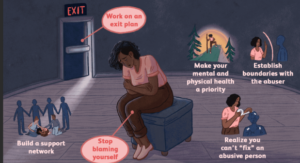
6. Create an Exit Plan

If the abuse escalates or continues, consider safely leaving the relationship.

Healing from Emotional Abuse

Healing is possible, but it takes time and patience.

1. Allow Yourself to Feel

Suppressing emotions slows healing. Acknowledge the hurt.

2. Therapy Helps

A trained mental health professional can help rebuild identity and confidence.

3. Re-establish Boundaries

Practice saying “no,” “stop,” and “this hurts me.”

4. Rebuild Self-Esteem

Engage in activities that remind you of your strengths and identity.

5. Surround Yourself with Safe People

Positive connections help restore emotional balance.

6. Practice Self-Compassion

Healing is not linear—slow progress is still progress.

Conclusion

Emotional abuse is powerful, painful, and often invisible. It works through subtle manipulation, invalidation, guilt, and control. Many people miss the early signs because they seem harmless or disguised as love, care, or “jokes.”

Recognizing the signs is the first step toward reclaiming emotional freedom.

If you recognize yourself in this article, remind yourself:

  • Your feelings are valid.

  • Your experiences are real.

  • You deserve safety, respect, and love that doesn’t hurt.

  • Healing is possible, and you are not alone.

Reference 

Love Bombing: Early Signs & How to Stay Safe

Introduction

Love is often described as warm, nurturing, and gradual—a bond that grows stronger over time through mutual trust, respect, and emotional connection. But not all intense affection is genuine. Sometimes, overwhelming praise, attention, and affection are used as manipulation tools. This tactic is known as love bombing, a behaviour often associated with narcissistic, controlling, or abusive individuals.

Love bombing may feel intoxicating in the beginning—like a dream come true. But behind the fast-paced romance, constant attention, and unrealistic promises lies a hidden motive: control.

This article explores what love bombing really is, the early signs you should watch for, why people use it, and, most importantly, how you can protect yourself from this subtle yet dangerous manipulation.

What is Love Bombing?

Love bombing is a form of manipulative affection where someone overwhelms you with excessive praise, gifts, attention, and promises early in the relationship. The goal is not to love you but to gain power, influence, and control over your emotions and behaviour.

Key Characteristics of Love Bombing:

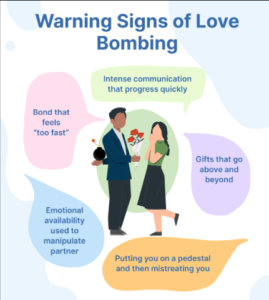
  • Intense and fast-paced affection

  • Idealization of the partner

  • Boundary violations

  • Rapid escalation of commitment

  • Emotional dependence

  • Manipulation disguised as love

It often occurs in the early stages of dating but can also appear in friendships, workplaces, or family dynamics.

Why Love Bombing Happens: The Psychology Behind It

Love bombing is not accidental or random. It is a tactic used consciously or unconsciously to create emotional dependency. The cycle usually follows the patterns seen in narcissistic abuse, trauma bonding, or controlling relationships.

1. Need for Power & Control

Manipulators use love bombing to make you emotionally attached. Once you are invested, they can influence your decisions, time, and self-perception.

2. Narcissistic Supply

Narcissists need admiration and validation. Love bombing helps them secure a constant source of approval and emotional energy.

3. Fear of Abandonment

Some individuals use intense affection because they fear losing you, even before the relationship has solidified.

4. Low Self-Esteem

Those who feel inadequate may use grand gestures to impress rather than build genuine connection.

5. Trauma Bonding Cycle

Love bombing is often followed by:
Idealization → Devaluation → Discard → Hoovering (pulling you back).

This push-and-pull dynamic creates confusion and emotional addiction.

Early Signs of Love Bombing: 20 Red Flags You Shouldn’t Ignore

Recognizing the early signs can help you protect your emotional well-being. Below are the most common indicators:

1. They Move Extremely Fast

Within days or weeks, they talk about:

  • “soulmates”

  • “fate”

  • “meant to be”

  • “I’ve never felt this way before”

Healthy relationships grow naturally. Love bombing rushes you into commitment.

2. Excessive Compliments

While compliments are healthy, love bombers go overboard:
“You’re perfect.”
“You’re the only person who understands me.”
“No one compares to you.”

These compliments are used to create emotional dependence.

3. Over-the-Top Gifts

They may give expensive presents, surprise trips, or grand gestures—even when you barely know them.

4. Constant Communication

They text or call nonstop:

  • “Good morning”

  • “What are you doing?”

  • “Why didn’t you reply?”

This creates a sense of obligation and emotional pressure.

5. They Demand Immediate Trust

They insist:
“Open up to me.”
“You can trust me fully.”
“We don’t need boundaries.”

This is a major red flag.

6. Jealousy Disguised as Love

They become possessive early:
“I just care about you too much.”
“I don’t want other people to hurt you.”

In reality, they are monitoring you.

7. Ignoring Your Boundaries

You say slow down, but they accelerate.
You set a boundary, but they minimize it.

8. They Put You on a Pedestal

You are seen as perfect, which feels flattering.
Until you do something they dislike—then comes devaluation.

9. They Want Exclusive Attention

They gently or aggressively try to isolate you from friends and family:
“You don’t need them.”
“Why talk to them when you have me?”

10. Future Faking

They plan:

  • marriage

  • kids

  • trips

  • a shared home

All within weeks.
This promises security but manipulates emotions.

11. Mood Shifts When You Set Limits

If you ask for space, they become:

  • sad

  • irritated

  • withdrawn

  • accusing

This teaches you that boundaries = conflict.

12. They Use Guilt for Control

“After everything I do for you, you’re not appreciating me.”

13. They Create an ‘Us vs Them’ Narrative

This isolates you emotionally.

14. They Don’t Know Much About You

Despite showering affection, they haven’t taken time to understand your personality, values, or history.

15. You Feel Overwhelmed, Not Loved

Your nervous system feels pressured, not peaceful.

16. They Ignore Your Need for Personal Space

Healthy partners respect independence.
Love bombers see it as a threat.

17. Unrealistic Expectations

“You should prioritize me always.”
“You should reply instantly.”

18. They Make You Feel Obligated

The goal is to create a debt—emotional or material.

19. They Rapidly Declare Commitment

“I want to spend my life with you.”
“You’re my everything.”

Sound romantic—but often manipulative.

20. Your Intuition Says Something Feels Off

Your inner voice recognizes discomfort before your mind makes sense of it.

Stages of Love Bombing

Love bombing is rarely constant. Instead, it follows a predictable emotional cycle:

1. Idealization Stage

They shower you with affection, gifts, and love.

2. Devaluation Stage

Once you’re attached, they begin to criticize, withdraw, or manipulate.

3. Discard Stage

They suddenly pull away, leaving you confused and anxious.

4. Hoovering Stage

After distancing themselves, they return with apologies, gifts, or love bombing again to pull you back.

This cycle keeps victims trapped.

The Impact of Love Bombing on Mental Health

Love bombing is emotionally damaging. Victims often experience:

1. Anxiety & Emotional Confusion

The sudden shifts create insecurity.

2. Low Self-Esteem

You begin questioning your worth when the affection stops.

3. Trauma Bonding

The highs and lows create an addictive emotional attachment.

4. Depression

Constant emotional instability can lead to sadness and hopelessness.

5. Loss of Personal Identity

You prioritize their needs, forgetting your own.

6. Fear of Abandonment

Their sudden withdrawals create long-term insecurity.

7. Hypervigilance

You become overly alert to mood changes.

Why Smart, Strong People Fall for Love Bombing

Anyone can fall for love bombing. Intelligence and strength don’t protect you from emotional manipulation.

1. Love Bombing Feels Good Initially

Humans crave connection, validation, and affection.

2. Social Conditioning

Movies romanticize intensity as “true love”.

3. Attachment Style Matters

People with:

  • anxious attachment

  • low self-esteem

  • unhealed trauma

are more vulnerable.

4. Manipulators are Skilled

Love bombers often appear confident, charming, and emotionally expressive.

How to Protect Yourself from Love Bombing

Here are practical steps to stay safe emotionally:

1. Slow Down the Pace

Healthy love grows slowly.
Take time to observe and understand the person.

2. Set Clear Boundaries

Tell them what is acceptable and what isn’t.

3. Maintain Your Support System

Stay connected with:

  • friends

  • family

  • colleagues

  • hobbies

Isolation increases vulnerability.

4. Do Not Justify Your Boundaries

Your feelings are enough reason to say “no”.

5. Look for Actions, Not Words

Consistency speaks louder than intensity.

6. Avoid Premature Commitments

Do not rush into marriage, moving in, or joint finances.

7. Reflect on How They Handle “No”

A healthy partner respects boundaries.
A love bomber pushes harder.

8. Trust Your Intuition

If something feels too intense, too soon—pause.

9. Seek Professional Support

Therapists or counselors can help identify manipulation patterns and rebuild self-esteem.

You can Contact Us

How to Respond to a Love Bomber

Here are some scripts you can use:

1. “I appreciate the affection, but I need things to move slowly.”

2. “I am not comfortable making big decisions so early.”

3. “I need space right now; please respect my boundaries.”

4. “I’m not ready for this level of intensity.”

If they react negatively, that is your answer.

Love Bombing vs Genuine Love: How to Tell the Difference

Love Bombing Healthy Love
Fast-paced Slow, steady
Overwhelming Balanced
Ignores boundaries Respects boundaries
Manipulative Supportive
Conditional Consistent
Idealizes you Knows you realistically

Healing After Love Bombing

Recovery takes time but is fully possible.

1. Acknowledge What Happened

Understanding manipulation is the first step.

2. Rebuild Self-Esteem

Engage in:

  • journaling

  • mindfulness

  • self-compassion practices

3. Strengthen Your Boundaries

Learn to identify red flags early.

4. Practice Emotional Regulation

Use CBT, grounding, and somatic techniques to manage triggers

5. Seek Therapy if Needed

Especially if you experienced trauma bonding or emotional abuse.

6. Surround Yourself with Supportive People

When to Walk Away

You should leave immediately if they:

  • violate your boundaries repeatedly

  • manipulate or guilt-trip you

  • isolate you from others

  • show possessive or controlling behaviour

  • refuse to slow down

  • punish you emotionally

Walking away is self-protection, not weakness.

Conclusion

Love bombing is not love—it is manipulation disguised as affection. Recognizing the early signs can protect your emotional well-being and help you build healthier, safer relationships. True love respects boundaries, grows gradually, and supports your autonomy.

By learning how to identify toxic patterns, trust your intuition, and set firm boundaries, you empower yourself to build relationships rooted in authenticity—not control.

Reference

Why People-Pleasing Happens & How to Stop It

People-pleasing may look like kindness on the surface. You’re helpful, dependable, and always there for others. But beneath the smile, there is often exhaustion, resentment, and emotional burnout. You say “yes” when you want to say “no.” You push your own needs aside. You feel guilty when you prioritize yourself. You fear that disappointing others means losing their love or approval.

Yet people-pleasing isn’t a personality trait—it’s a coping mechanism.
And the good news? It can be unlearned.

This in-depth guide helps you understand:

  • Why people-pleasing develops

  • Emotional, psychological, and relational consequences

  • How to set boundaries without guilt

  • How to build self-worth that isn’t based on pleasing others

  • Practical steps to stop the cycle

Let’s begin at the root.

1. What Is People-Pleasing?

People-pleasing is the habit of prioritizing others’ needs, wants, and emotions over your own—often at the cost of your mental health.

People-pleasers often:

  • Struggle to say no

  • Avoid conflict at all costs

  • Seek validation and approval

  • Overcommit and overwhelm themselves

  • Feel responsible for others’ happiness

  • Apologize too much

  • Fear rejection or disappointment

  • Suppress their true feelings

It may look like kindness, but it is actually self-neglect in disguise.

2. Why People-Pleasing Happens: The Psychological Roots

People-pleasing isn’t random. It develops through emotional learning, attachment patterns, and early experiences.

Let’s break down the key causes.

2.1 Childhood Conditioning

Many people-pleasers grew up in environments where love and acceptance were conditional.

Examples include:

  • Parents who demanded obedience

  • Caregivers who shamed the child for expressing needs

  • Growing up with emotionally unpredictable adults

  • Being praised only when you performed well

  • Being punished for speaking up

You learn:
“I must please to stay safe.”
“I must be good to be loved.”

This belief follows you into adulthood.

2.2 Fear of Rejection

People-pleasing is deeply connected to the fear of abandonment.

Your mind thinks:

  • “If I say no, they won’t like me.”

  • “If I upset someone, they will leave.”

  • “If I show my real feelings, I’ll be rejected.”

To avoid these imagined threats, you sacrifice your boundaries.

2.3 Trauma Responses: Fawn Mode

In trauma psychology, “fawning” is a survival response.

Fight – Flight – Freeze – Fawn

Fawning = appeasing others to avoid conflict or harm.

You people-please to:

  • Keep the peace

  • Diffuse tension

  • Protect yourself

  • Make yourself “less of a problem”

It is an unconscious attempt to stay emotionally safe.

2.4 Low Self-Worth

People-pleasers often believe:

  • “My value comes from what I do for others.”

  • “I must earn love.”

  • “Others’ needs matter more than mine.”

When you don’t feel inherently worthy, you try to earn worth through service, sacrifice, and compliance.

2.5 Perfectionism

Perfectionists often people-please because they:

  • Fear disappointing others

  • Want to be seen as competent or kind

  • Hate the idea of failure or criticism

The desire to maintain a perfect image pushes them to overgive.

2.6 Cultural and Social Conditioning

In many cultures (including Indian and collectivistic systems), people are taught to:

  • Respect elders unconditionally

  • Suppress individuality

  • Prioritize family/community needs

  • Avoid conflict or assertiveness

This teaches that saying “no” is rude or selfish.

2.7 Gender Expectations

Women especially experience pressure to be:

  • Nurturing

  • Cooperative

  • Agreeable

  • Self-sacrificing

This creates emotional labor that leads to chronic people-pleasing.

2.8 Codependency Patterns

People-pleasing is a major sign of codependency:

  • You feel responsible for others’ emotions

  • You believe it’s your job to fix people

  • You lose yourself in relationships

You’re afraid of what will happen if you stop pleasing.

3. Signs You Might Be a People-Pleaser

Here are clear indicators:

  • You never want anyone upset with you

  • You say “yes” automatically, then regret it

  • You apologize even when it’s not your fault

  • You struggle to express needs

  • You absorb others’ emotions

  • You avoid conflict

  • You feel guilty resting

  • You often feel used or unappreciated

  • You give far more than you receive

  • You fear being seen as “difficult”

This pattern damages your mental and emotional health over time.

4. How People-Pleasing Affects Your Life

People-pleasing may seem harmless—until you see its consequences.

4.1 Emotional Consequences

  • Burnout

  • Resentment

  • Anxiety

  • Emotional numbness

  • Feeling unseen

  • Low self-esteem

  • Anger at yourself for not speaking up

You carry the emotional load of everyone except yourself.

4.2 Mental Health Consequences

People-pleasing contributes to:

  • Depression

  • Anxiety disorders

  • Codependency

  • Identity confusion

  • Emotional exhaustion

  • Chronic stress

Your brain constantly anticipates others’ reactions.

4.3 Relationship Consequences

People-pleasers attract:

  • Narcissists

  • Manipulators

  • Takers

  • Emotionally unavailable people

Because you give endlessly, you end up with people who love taking advantage.

Healthy people may also distance themselves because:

  • You seem inauthentic

  • You never share true feelings

  • You avoid vulnerability

4.4 Identity Loss

When you live for others, you forget who you are.

People-pleasers struggle with:

  • “What do I want?”

  • “What makes me happy?”

  • “What do I believe?”

Your identity becomes shaped by others’ expectations.

4.5 Physical Consequences

Chronic people-pleasing leads to:

  • Headaches

  • Sleep problems

  • Fatigue

  • Heart issues

  • Emotional eating

  • Weakened immunity

Your body suffers when you carry emotional burdens.

5. Why Saying “No” Feels So Hard

For a people-pleaser, “no” feels dangerous.

Your brain associates saying no with:

❌ Rejection
❌ Conflict
❌ Shame
❌ Disapproval
❌ Guilt
❌ Losing connection

So even when your entire body says no, your mouth says yes.

This comes from emotional conditioning—not reality.

6. How to Stop People-Pleasing: The Full Guide

Breaking people-pleasing is not about becoming rude or selfish.

It’s about becoming balanced.

Here are powerful, evidence-based strategies to reclaim your emotional freedom.

1. Understand That You Have Needs Too

People-pleasers often believe:

“I don’t matter.”
“My needs are inconvenient.”
“Others come first.”

Challenge this belief:

Your needs deserve space.
Your emotions deserve attention.
You deserve respect.

2. Identify Your People-Pleasing Patterns

Ask yourself:

  • When do I say yes when I don’t want to?

  • Who do I fear disappointing?

  • What situations make me overgive?

  • What do I hope to get in return (approval, safety, love)?

Awareness is the first step to change.

3. Heal the Root: Childhood & Inner Child Work

Your inner child may still believe:

  • “I must please to be safe.”

  • “I will be punished for expressing needs.”

  • “I must earn love.”

Talk to your inner child:

“You are safe now.”
“Your needs matter.”
“You don’t have to perform for love.”

Healing the root frees you from old patterns.

4. Challenge Cognitive Distortions

People-pleasers often think in extremes:

  • “If I say no, they’ll hate me.”

  • “I must be agreeable to be loved.”

  • “I can’t handle conflict.”

Challenge these thoughts and replace them with realistic ones.

5. Learn to Tolerate Discomfort

Saying no feels uncomfortable at first.
Sit with it.

Growth happens outside your comfort zone.

6. Build Boundary Muscles

Start small.

Examples:

  • “I’m not available right now.”

  • “I can’t commit to that.”

  • “Let me think about it.”

  • “I’m focusing on other priorities.”

Your “no” doesn’t need to be explained excessively.

7. Practice Assertive Communication

Assertiveness means:

  • Being clear

  • Being respectful

  • Being honest

It is not aggression.
It is not selfishness.

Assertiveness gives your needs equal importance.

8. Stop Apologizing Excessively

Replace:

“Sorry for bothering you” → “Do you have a moment?”
“Sorry, I can’t” → “I’m not available.”
“Sorry I upset you” → “I understand how you feel.”

Apologies should be used only when truly necessary.

9. Declutter Your Relationships

Some people only like you when you overgive.

You may need to distance yourself from:

  • Narcissists

  • Takers

  • Manipulators

  • Emotionally draining people

Healthy relationships don’t require self-abandonment.

10. Build Self-Worth Independent of Approval

Affirm:

“I am enough even when I’m not pleasing others.”
“I deserve love for who I am, not what I do.”
“My voice matters.”

Self-worth is the antidote to people-pleasing.

11. Stop Fixing Others’ Emotions

You are not responsible for:

  • How others feel

  • How they respond to your boundaries

  • Their happiness

  • Their disappointment

Let people feel their feelings.
Your job is to be authentic—not perfect.

12. Create Space for Your True Self

Rediscover:

  • What you want

  • What you enjoy

  • What you value

  • What you believe

Becoming yourself is the opposite of people-pleasing.

6. Sample Scripts for Saying No

✔ Polite No

“I appreciate the offer, but I can’t right now.”

✔ Boundaried No

“That doesn’t work for me.”

✔ Delayed Response

“I’ll get back to you after checking my schedule.”

✔ Firm No

“No, I’m not available.”

✔ Emotional Boundary

“I’m not comfortable discussing this.”

Practice makes it easier.

7. What Happens When You Stop People-Pleasing

At first:

  • People may get upset

  • You may feel guilty

  • Your nervous system will resist change

Then gradually:

  • You feel empowered

  • You trust yourself

  • You develop confidence

  • Your relationships become healthier

  • You stop feeling exhausted

  • You regain your identity

  • You attract more respectful people

Saying “no” becomes natural.
Putting yourself first becomes normal.

8. When to Seek Professional Help

Therapy is helpful if:

  • You feel anxious saying no

  • You struggle with guilt

  • You attract toxic relationships

  • You were raised in a dysfunctional or abusive home

  • You lose yourself in relationships

Counselling helps you break lifelong patterns and develop a healthier sense of self.

Conclusion

People-pleasing is rooted in a deep fear that your worth depends on what you do for others. It begins in childhood, grows through emotional conditioning, and becomes a survival habit. But it is not who you truly are.

You can learn to:

  • Set boundaries

  • Prioritize yourself

  • Stop apologizing

  • Speak your truth

  • Reclaim your identity

  • Build healthier relationships

  • Say no without guilt

When you stop people-pleasing, you stop abandoning yourself.
You choose authenticity over approval.
You choose freedom over fear.
You choose yourself—finally.

Reference

How to Regulate Emotions Using CBT Techniques

Emotions influence everything—from the way we think and act to the way we connect with people and experience life. But when emotions become overwhelming, intense, or difficult to manage, they can affect mental health, decision-making, and relationships.

Cognitive Behavioral Therapy (CBT) is one of the most effective psychological approaches to emotional regulation. It teaches you to understand your thoughts, identify unhelpful patterns, and develop healthier ways to respond to difficult emotions.

This guide will help you understand:

  • How emotions work

  • Why some emotions feel unmanageable

  • How CBT techniques help regulate emotional responses

  • Step-by-step CBT tools you can start using today

  • Long-term strategies for emotional resilience

1. What Is Emotional Regulation?

Emotional regulation means:

  • Understanding your emotions

  • Managing them in a healthy way

  • Responding instead of reacting

  • Staying calm enough to think clearly

  • Making choices aligned with your values

It does not mean suppressing emotions or pretending everything is fine.
Healthy regulation allows you to feel emotions without being controlled by them.

Examples of regulated emotional responses include:

  • Taking deep breaths instead of yelling

  • Pausing before reacting

  • Reframing negative thoughts

  • Choosing a healthy coping strategy

  • Creating distance from triggers

Emotion regulation is a skill—and CBT provides the tools to learn it.

2. How CBT Helps With Emotional Regulation

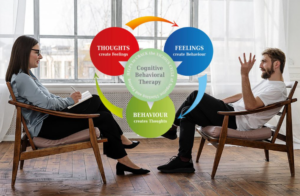
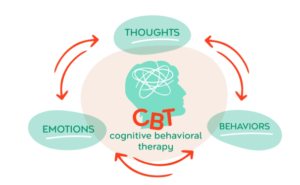
Cognitive Behavioral Therapy is based on a simple but powerful connection:

Thoughts → Feelings → Behaviors

This means:

  • Thoughts create emotions

  • Emotions influence behaviors

  • Behaviors reinforce beliefs

CBT helps you identify this cycle and change unhelpful patterns.

How CBT supports emotional regulation:

  • It identifies emotional triggers

  • It challenges distorted thinking

  • It replaces negative thoughts with realistic ones

  • It reduces emotional intensity

  • It strengthens coping skills

  • It prevents emotional spirals

Over time, CBT rewires the brain to respond more calmly and rationally.

3. Why Emotions Become Hard to Regulate

Certain emotional patterns make regulation difficult. Examples:

3.1 Cognitive Distortions

  • Catastrophizing

  • Black-and-white thinking

  • Personalization

  • Mind reading

  • Overgeneralization

These distortions make emotions stronger and more painful.

3.2 Unprocessed Trauma

Old wounds create emotional sensitivity.

3.3 Poor Boundaries

Saying yes when you want to say no leads to resentment and frustration.

3.4 Chronic Stress or Burnout

A constantly activated nervous system makes emotional regulation harder.

3.5 Lack of Coping Skills

Many people were never taught healthy emotional tools growing up.

CBT addresses these issues and builds emotional awareness and control.

4. Understanding the Cognitive Triangle

At the heart of CBT is the cognitive triangle:

Thoughts → Emotions → Behaviors

Example:

Thought: “I’m going to fail this presentation.”
Emotion: Anxiety
Behavior: Avoid preparing, sleep poorly, freeze during the presentation

CBT helps you modify the thought:

New Thought: “I can prepare well and do my best.”
New Emotion: Confidence
New Behavior: Prepare calmly and perform better

Changing one part of the triangle influences the others.

5. Identifying Emotional Triggers

You cannot regulate what you don’t understand.
Start by identifying triggers—situations, thoughts, or memories that create intense emotions.

Common Triggers:

  • Criticism

  • Conflict

  • Rejection

  • Feeling ignored

  • High-pressure situations

  • Past trauma reminders

  • Failure or mistakes

How to Identify Your Triggers

Use journaling prompts:

  • What happened?

  • What emotion did I feel?

  • What thought followed?

  • What did I do afterward?

Patterns will emerge.
CBT then helps you change the reaction to these triggers.

6. CBT Techniques for Emotional Regulation

Here are the most powerful CBT tools used by therapists to help clients manage emotions effectively.

Technique 1: Cognitive Restructuring

Cognitive restructuring helps you:

  • Identify negative thoughts

  • Challenge their accuracy

  • Replace them with balanced thoughts

This reduces emotional intensity instantly.

Steps:

  1. Identify the automatic negative thought (ANT).

  2. Ask: “Is this thought 100% true?”

  3. Look for evidence for and against the thought.

  4. Reframe it into a balanced thought.

Example:

Thought: “Nobody cares about me.”
Balanced Thought: “Some people care about me, even if not everyone shows it.”

This simple shift creates emotional relief.

Technique 2: Thought Challenging (The 5-Question Method)

Ask yourself:

  1. What is the evidence this thought is true?

  2. What is the evidence it isn’t true?

  3. Is there another way of viewing this situation?

  4. What would I tell a friend in this situation?

  5. What is the worst that could realistically happen—and how would I handle it?

This technique prevents emotional overreaction.

Technique 3: Identifying Cognitive Distortions

Recognizing distorted thinking helps you detach from emotional spirals.

Examples:

  • Catastrophizing: “Everything will go wrong.”

  • Mind Reading: “She must be angry with me.”

  • Overgeneralizing: “I failed once, I’ll always fail.”

  • Personalization: “It must be my fault.”

Once you name the distortion, your brain stops believing it.

Technique 4: Reframing Thoughts

Reframing helps you shift from negative conclusions to realistic perspectives.

Example:

Instead of: “I made a mistake. I’m useless.”
Reframe as: “I made a mistake. Everyone does. I can correct it.”

Reframing builds self-compassion and emotional balance.

Technique 5: The STOP Technique

A simple but powerful tool for emotional emergencies.

S – Stop.
Pause before reacting.

T – Take a breath.
Slow breathing activates the calm system.

O – Observe.
Notice thoughts and emotions without judgment.

P – Proceed mindfully.
Choose a healthy response instead of reacting impulsively.

This technique is excellent for anger, anxiety, and conflict situations.

Technique 6: The ABC Model

Used to break automatic emotional reactions.

A – Activating Event

What happened?

B – Belief

What did you think about it?

C – Consequence

How did you feel and behave?

Goal:

Change B to change C.

Example:

A: Someone didn’t reply to your message
B: “They are ignoring me.”
C: Sadness, anger

Reframed B: “Maybe they’re busy.”
New C: Calm, neutral

Technique 7: Behavioral Activation

This CBT tool teaches you to act opposite to your emotional impulses.

If your sadness tells you to isolate—take action instead: go for a walk, talk to someone, clean your room.

Behaviors shape emotions.

Technique 8: Exposure to Emotional Discomfort

Avoidance fuels emotional dysregulation.
CBT teaches that facing discomfort helps you manage it better.

Examples:

  • If you fear conflict → role-play communication

  • If you fear rejection → practice asking for small favors

  • If you fear failure → attempt new tasks gradually

Small exposures build resilience.

Technique 9: Problem-Solving Skills

Difficult emotions often come from unresolved stress.

CBT teaches structured problem-solving:

  1. Define the problem

  2. Brainstorm solutions

  3. Evaluate pros/cons

  4. Choose one solution

  5. Test it

  6. Review and revise

This reduces anxiety and helplessness.

Technique 10: Journaling (CBT Thought Records)

CBT uses worksheets to analyze and regulate emotional responses.

A thought record includes:

  • Situation

  • Emotions

  • Automatic Thoughts

  • Evidence for

  • Evidence against

  • Alternative thought

  • Outcome

Writing helps your brain slow down and think rationally.

Technique 11: Mindfulness & CBT (MBCT)

Mindfulness-Based Cognitive Therapy combines:

  • observing emotions

  • nonjudgmental awareness

  • grounding techniques

This helps regulate intense emotions like:

  • anger

  • anxiety

  • panic

  • sadness

Mindfulness reduces the power of intrusive thoughts.

Technique 12: The “Name It to Tame It” Method

When you label your emotion, your brain shifts activity from the emotional center (amygdala) to the logical center (prefrontal cortex).

Say:

  • “I’m feeling anxious.”

  • “I’m feeling overwhelmed.”

  • “I’m feeling hurt.”

Naming emotions reduces intensity.

7. Using CBT to Manage Specific Emotions

Let’s explore how CBT works for individual emotions.

Managing Anxiety With CBT

  • Challenge catastrophic thoughts

  • Test the feared outcome

  • Create realistic predictions

  • Use grounding techniques

  • Practice breathing exercises

CBT helps break the anxiety cycle quickly.

Managing Anger With CBT

  • Identify triggers

  • Use STOP technique

  • Challenge assumptions

  • Reframe interpretations

  • Practice assertive communication

CBT helps turn anger into controlled, constructive expression.

Managing Sadness With CBT

  • Challenge hopeless thoughts

  • Use behavioral activation

  • Reconnect with enjoyable activities

  • Challenge “all-or-nothing” thinking

CBT prevents sadness from becoming depression.

Managing Shame or Guilt With CBT

  • Challenge negative self-beliefs

  • Reframe self-criticism

  • Practice self-compassion

  • Separate behavior from identity

Shame dissolves when replaced with self-understanding.

8. Building Long-Term Emotional Resilience Using CBT

Emotional regulation becomes easier when you build resilience.

Long-term CBT strategies:

  • Maintain healthy routines

  • Sleep properly

  • Exercise regularly

  • Build supportive relationships

  • Practice gratitude

  • Set boundaries

  • Review thought patterns weekly

  • Avoid perfectionism

  • Reduce unhealthy coping (alcohol, avoidance, shutting down)

  • Celebrate small wins

These practices change your emotional system permanently.

9. CBT Worksheets You Can Use Daily

Here are simple tools you can print or use in a journal:

✔ Thought Record Worksheet

✔ ABC Model Template

✔ Cognitive Distortion Checklist

✔ Trigger Diary

✔ Emotion Intensity Scale

✔ Reframing Exercise

✔ Daily Behavioral Activation Planner

Using these consistently strengthens emotional control.

10. When You Should Seek Therapy

CBT works very well independently, but professional support is helpful if:

  • emotions feel unmanageable

  • you experience panic attacks

  • negative thoughts feel constant

  • you struggle with trauma

  • burnout feels severe

  • relationships are affected

  • coping skills aren’t enough

A trained therapist helps apply CBT deeply and safely.

Conclusion

Emotional regulation is not about eliminating feelings—it’s about understanding and managing them in healthy ways. CBT provides a clear, structured, and science-backed approach to:

  • identifying triggers

  • challenging negative thoughts

  • understanding emotional patterns

  • reducing emotional intensity

  • developing healthier coping strategies

By using CBT techniques consistently, you can cultivate emotional resilience, improve mental well-being, and respond to life’s challenges with clarity and confidence.

CBT teaches a powerful truth:

You may not control everything that happens, but you can control how you think about it—and that changes everything.

Reference

Stages of Burnout & How to Recover

Burnout is often described as the slow, silent collapse of your emotional, mental, and physical energy. It sneaks in gradually—one small sacrifice at a time—until one day, you wake up feeling drained, disconnected, and unable to keep going.

Burnout does not happen overnight.
It develops in stages, and understanding these stages is one of the most powerful ways to catch burnout early and heal effectively.

This long, in-depth guide explores:

  • What burnout really is

  • The 5 scientifically recognized stages

  • Signs your body and mind are burning out

  • The psychology behind chronic stress

  • How burnout affects work, relationships, and identity

  • Step-by-step evidence-based recovery strategies

What Is Burnout?

Burnout is a state of emotional, physical, and mental exhaustion caused by prolonged and excessive stress, especially related to work, caregiving, studies, and high-pressure environments.

The World Health Organization defines burnout as an occupational phenomenon characterized by:

  1. Emotional exhaustion

  2. Depersonalization or cynicism

  3. Reduced sense of personal accomplishment

Burnout is not just “being tired”—it is a long-term breakdown of your stress response system.

Why Burnout Happens: The Psychology Behind It

Burnout occurs when the demands placed on you chronically exceed your emotional and physical resources.

Factors include:

Excessive workload

Deadlines, multitasking, and constant pressure push your nervous system beyond its limits.

Lack of control

Feeling powerless or micromanaged increases stress.

Emotional labour

Professions like counselling, healthcare, teaching, childcare, or caregiving require constant emotional energy.

Perfectionism

High achievers often push themselves far beyond healthy limits.

Lack of boundaries

Saying “yes” too often drains energy and leaves no space for recovery.

Poor work-life balance

When work consumes your identity, rest becomes uncomfortable.

Unresolved trauma

Childhood or relationship wounds can make people overwork to seek approval.

Burnout is not weakness.
It is your mind and body telling you to slow down before something breaks.

The 5 Stages of Burnout

Burnout follows a predictable cycle.
Most people don’t recognize it until Stage 3 or 4, when symptoms feel overwhelming.

Let’s explore each stage deeply.

Stage 1: The Honeymoon Stage

At this stage, you feel:

  • Motivated

  • Energetic

  • Passionate

  • Driven

  • Willing to take on extra responsibilities

You may think:

“I love my work. I can handle anything.”

But beneath the enthusiasm, a pattern slowly forms:

  • Overcommitting

  • Ignoring early stress

  • Blurring boundaries

  • Skipping breaks

  • Putting work before rest

  • Seeking validation through performance

This stage feels productive, but it plants the seeds for burnout.

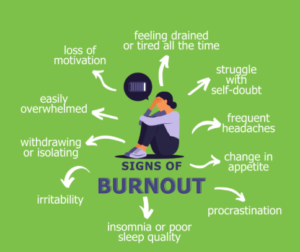
Signs You’re in Stage 1

  • Working late because you want to

  • Saying yes to everything

  • Feeling excited but restless

  • Neglecting self-care

  • Believing you can “push through” anything

If you don’t start regulating stress here, the burnout cycle intensifies.

Stage 2: Onset of Stress

Stress begins showing up more consistently.

Early Emotional Symptoms

  • Anxiety

  • Irritability

  • Feeling overwhelmed

  • Trouble relaxing

Physical Symptoms

  • Fatigue

  • Headaches

  • Stomach issues

  • Poor sleep quality

Behavioral Signs

  • Difficulty focusing

  • Small mistakes increasing

  • Reduced patience

  • Feeling guilty when resting

You start noticing something is wrong, but you may think:

“This is temporary.”
“I just need to work harder.”
“I’ll rest after this project.”

Most people ignore Stage 2—leading to full burnout.

Stage 3: Chronic Stress

This is the turning point.
Stress is no longer occasional; it becomes constant.

Emotional Signs

  • Persistent anxiety

  • Feeling out of control

  • Low motivation

  • Mood swings

  • Emotional numbness

Physical Symptoms

  • Frequent colds

  • Digestive issues

  • Chest tightness

  • Loss of appetite or emotional eating

Behavioral Signs

  • Procrastination

  • Withdrawal from others

  • Increased consumption of caffeine, sugar, or alcohol

  • Getting angry or crying easily

At this stage, burnout begins to damage your physical and mental health.

Stage 4: Burnout

This is the full collapse of emotional resilience.

Emotional Symptoms

  • Feelings of emptiness

  • Hopelessness

  • Detachment

  • Cynicism toward work

  • Feeling not good enough

  • Feeling trapped

Physical Symptoms

  • Chronic fatigue

  • Insomnia

  • Body pain

  • Weakened immunity

Cognitive Symptoms

  • Brain fog

  • Memory issues

  • Difficulty making decisions

Behavioral Signs

  • Avoiding responsibilities

  • Isolating yourself

  • Losing interest in life

  • Reduced productivity

At this stage, simple tasks feel impossible.
Your body enters “shutdown mode.”

Stage 5: Habitual Burnout

This is the most severe stage, when burnout becomes a long-term emotional condition.

Signs of Habitual Burnout

  • Continuous exhaustion

  • Chronic anxiety or depression

  • Deep emotional numbness

  • Loss of identity

  • Feeling disconnected from yourself

  • Loss of purpose

  • Health problems from prolonged stress

People in this stage often need professional help to heal.

How Burnout Affects Your Life

Burnout impacts every part of your well-being.

Mental health

  • Anxiety

  • Depression

  • Emotional instability

  • Feeling “switched off”

Physical health

  • Heart problems

  • Hormonal imbalance

  • Weak immune system

  • Gastrointestinal issues

Work and productivity

  • Errors and missed deadlines

  • Loss of motivation

  • Reduced creativity

Relationships

  • Reduced emotional availability

  • Increased conflict

  • Withdrawing from loved ones

  • Irritability

Self-worth

Burnout makes you believe:

“I am failing.”
“I am not enough.”
“I can’t do anything right.”

This emotional distortion becomes a psychological burden.

Burnout vs. Stress vs. Depression

Many confuse burnout with stress or depression.

Stress

You still believe things will get better.

Burnout

You feel empty and beyond caring.

Depression

You feel hopeless, powerless, and disconnected even from things you love.

Someone can have burnout AND depression simultaneously.

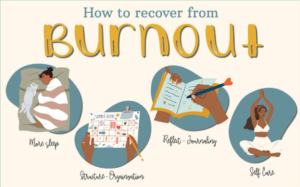
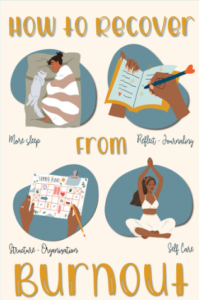
How to Recover From Burnout

A Step-by-Step Healing Guide**

Recovery isn’t a one-day change.
It is a gradual process of restoring your emotional and physical energy.

Here are complete, science-backed recovery strategies.

1. Acknowledge That You Are Burned Out

Acceptance is the first step.

Say to yourself:

“I am overwhelmed. I need rest.”
“I cannot continue like this.”
“My body is asking for healing.”

Awareness reduces guilt and opens the door to recovery.

2. Restore Your Nervous System

Burnout happens because the nervous system is stuck in fight or flight.

Use techniques that activate the parasympathetic (rest & digest) system:

  • Deep breathing

  • Progressive muscle relaxation

  • Gentle stretching

  • Nature walks

  • Mindfulness meditation

  • Slow music

  • Warm showers

These signal your brain:
“You are safe. You can relax.”

3. Prioritize Rest—Real Rest

Not scrolling.
Not watching TV.
Not collapsing into sleep after exhaustion.

Real rest = your mind and body fully switching off.

Try:

  • Power naps

  • Mindful rest

  • Quiet time without screens

  • Light journaling

  • Early bedtime

Rest is not laziness—it is medicine.

4. Reevaluate Your Boundaries

Burnout often comes from:

  • Saying yes when you mean no

  • Doing more than your capacity

  • Taking responsibility for others

  • Avoiding conflict

  • People-pleasing

You must learn to say:

“No, I can’t take this right now.”

Boundary exercises include:

  • Limiting your availability

  • Creating “no work after ___ PM” rules

  • Protecting weekends

  • Reducing emotional labour

Boundaries protect your energy like a shield.

5. Reconnect With Your Body

Burnout disconnects you from physical sensations.

Use grounding practices:

  • Yoga

  • Stretching

  • Somatic exercises

  • Slow breathing

  • Body scan meditation

The more you reconnect with your body, the faster you heal.

6. Redesign Your Work Habits

Small changes make a big difference:

  • Take micro-breaks every 50 minutes

  • Don’t skip meals

  • Reduce multitasking

  • Set realistic to-do lists

  • Stop pushing through exhaustion

Healthy work habits reduce future burnout.

7. Rebuild Self-Worth

Burnout often makes you feel “not enough.”

Rebuild self-worth by:

  • Challenging negative thoughts

  • Celebrating small wins

  • Practicing affirmations

  • Keeping a success journal

  • Tracking progress

  • Checking your inner critic

Your worth is not defined by productivity.

8. Seek Support

Healing becomes easier with the right support:

  • Therapy

  • Counselling

  • Supportive friends

  • Understanding coworkers

  • Mentors

Talking about burnout reduces shame and speeds recovery.

9. Reconnect With Joy

Burnout steals joy from life.
Recovery means rediscovering what brings you pleasure.

Try:

  • Hobbies

  • Creative activities

  • Music or dance

  • Reading

  • Travel

  • Cooking

  • Spending time with loved ones

Joy is a form of healing.

10. Rebuild Your Identity

Burnout often occurs when your identity revolves solely around work or caregiving.

Ask:

“Who am I beyond my responsibilities?”
“What do I value?”
“What do I want for my life?”

Rebuilding your sense of self prevents future burnout.

11. Create a Long-Term Wellness Plan

Burnout recovery requires consistent habits:

  • Sleep routines

  • Exercise

  • Healthy meals

  • Mindfulness practice

  • Time boundaries

  • Regular breaks

  • Limiting screen time

  • Saying no when necessary

Consistency transforms your energy system.

How Long Does Burnout Recovery Take?

It depends on:

  • Stage of burnout

  • Severity of stress

  • Whether you have support

  • Lifestyle changes

Recovery can take:

  • 2–6 weeks for early stages

  • 2–3 months for moderate burnout

  • 6–12 months for severe burnout

It’s not linear. Healing goes in waves.

Preventing Burnout in the Future

Once you recover, prevention becomes essential.

Maintain boundaries

Your energy is limited—protect it.

Build self-compassion

You don’t have to be perfect.

Schedule joy

Happiness is not optional.

Slow down

Your nervous system needs space.

Regular wellness check-ins

Ask yourself weekly:

“How am I feeling?”
“What do I need?”

Burnout starts when you stop listening to yourself.

You Are Not Meant to Live Exhausted

Burnout is not a badge of honour.
You are not meant to survive life—you are meant to live it.

If you are feeling overwhelmed, drained, or disconnected, remember:

You deserve rest.
You deserve balance.
You deserve a life that doesn’t exhaust you.
You deserve to be well.

There is a way back to yourself—slowly, gently, one step at a time.

Conclusion

Burnout is a gradual collapse of your emotional and physical energy.
But it is also reversible.
By understanding the stages of burnout and adopting science-based recovery strategies, you can rebuild a healthier, calmer, more balanced life.

Remember:
Healing is not a race.
It’s a gentle return to yourself.

Reference

How to Deal With Feeling “Not Good Enough”

Feeling “not good enough” is one of the most painful emotional experiences a person can go through. It’s quiet, invisible, and deeply personal. You may look confident to the world—yet silently, a voice inside whispers:

“You’re not capable.”
“You don’t deserve this.”
“Others are better than you.”
“You will fail.”

This inner feeling does not come from weakness. It’s a psychological wound born from experiences that shaped your self-worth. And the good news? It can be healed.

This article explains why you feel this way, how it affects your life, and evidence-based strategies to overcome the “not good enough” mindset and rebuild healthy self-worth.

What Does “Not Good Enough” Really Mean?

Feeling “not good enough” is not a fact—it’s a belief.
This belief often becomes a core part of your identity, making you view yourself negatively regardless of evidence.

It can show up as:

  • Self-doubt: Questioning your abilities even when you’re capable

  • Perfectionism: Believing anything less than perfect means failure

  • Fear of failure: Avoiding opportunities to avoid disappointment

  • Fear of rejection: Assuming you’ll be judged or abandoned

  • Social comparison: Constantly measuring yourself against others

  • People-pleasing: Trying to earn worth through approval

  • Overthinking: Replaying mistakes or imagining worst-case scenarios

These patterns slowly erode your confidence and make your inner critic louder.

Why Do You Feel This Way?

Common Psychological Roots**

The belief “I’m not good enough” rarely appears without reason. It usually develops over years through repeated emotional experiences.

2.1 Childhood Messages

Many people form this belief unconsciously in childhood. Examples:

  • Parents who were too critical or demanding

  • Expectations to excel academically or behave perfectly

  • Emotional neglect (“no one cares about what I feel”)

  • Comparisons with siblings or other children

  • Feeling unseen, unheard, or invalidated

  • Perfectionist family environment

These experiences teach the child:
“I must be perfect to be loved.”

This becomes the adult belief:
“If I’m not perfect, I’m not good enough.”

2.2 Trauma and Emotional Wounds

Emotional wounds such as rejection, bullying, betrayal, or humiliation can deeply damage self-worth.

Examples:

  • A relationship where someone made you feel unlovable

  • A teacher who mocked your abilities

  • A workplace where your efforts were undervalued

  • Childhood emotional abuse or neglect

These painful experiences create lasting psychological imprints that carry into adulthood.

2.3 Social Comparison

In the age of Instagram, achievement culture, and unrealistic beauty standards, comparing yourself with others becomes effortless—and toxic.

You may think:

  • “Their life is perfect. Mine isn’t.”

  • “They have achieved more than me.”

  • “I should be doing better by now.”

But comparison is rarely fair. You compare your behind-the-scenes to someone else’s highlight reel.

2.4 Perfectionism

Perfectionism is one of the strongest predictors of low self-worth.

Perfectionists believe:

  • Anything less than perfect is failure

  • People will judge them for mistakes

  • They must constantly prove their worth

This creates chronic stress, burnout, and constant pressure to do more—never allowing space for self-acceptance.

2.5 Negative Self-Talk

Over time, external criticism becomes internal.
You begin talking to yourself the way others talked to you.

Thoughts like:
“I’m so stupid.” “I always fail.” “Why can’t I do anything right?”

This internal voice becomes a mental prison that reinforces low self-worth.

Signs You Might Feel “Not Good Enough”

People who struggle with this feeling often show subtle behavioral and emotional patterns.

3.1 Emotional Signs

  • Chronic self-doubt

  • Anxiety about performance

  • Feeling like an “imposter”

  • Emotionally sensitive to criticism

  • Shame or guilt for small mistakes

3.2 Behavioral Signs

  • Overworking to prove worth

  • Procrastination out of fear

  • Avoiding challenges

  • People-pleasing

  • Staying in toxic relationships

  • Difficulty setting boundaries

3.3 Relationship Signs

  • Fear of abandonment

  • Seeking validation

  • Over-apologizing

  • Accepting disrespectful behavior

If you relate to these signs, you’re not alone—millions experience the same pattern, and it can be changed.

How “Not Good Enough” Affects Your Life

This belief is not just an emotion; it impacts every area of your life.

4.1 Work & Career

  • You may avoid leadership roles

  • You feel like an imposter

  • You fear making mistakes

  • You hesitate to ask for promotions

  • You underestimate your abilities

4.2 Relationships

  • You may settle for less than you deserve

  • You fear rejection or abandonment

  • You stay silent to avoid conflict

  • You give more than you receive

4.3 Mental Health

Long-term feelings of inadequacy can lead to:

  • Anxiety

  • Depression

  • Burnout

  • Chronic stress

  • Emotional exhaustion

Understanding the damage this belief causes is the first step toward healing.

How to Deal With Feeling “Not Good Enough”

Evidence-Based Strategies**

Healing self-worth is not about forcing positive thinking.
It’s about rewiring old beliefs, healing emotional wounds, and building new patterns.

Below are 12 powerful, psychology-backed steps to overcome the “not good enough” feeling.

1. Identify Where the Belief Started

Ask yourself:

  • When did I first feel “not good enough”?

  • Who made me feel this way?

  • What experiences taught me I had to earn worth?

Understanding the origin helps you separate your authentic self from the wounded self.

2. Practice Inner Child Healing

Many feelings of unworthiness belong to your younger self.

Inner child work involves:

  • Recognising your wounded inner child

  • Allowing yourself to feel emotions you suppressed

  • Reparenting yourself with compassion

  • Speaking to yourself the way a loving caregiver would

Tell your inner child:

“You are enough. You deserved love then, and you deserve it now.”

3. Challenge Negative Core Beliefs

When you think:

  • “I’m not good enough”

  • “I always fail”

  • “I don’t deserve this”

Ask yourself:

  • Is this objectively true?

  • What evidence contradicts it?

  • Would I say this to a friend?

Most negative beliefs collapse when questioned.

4. Stop Comparing Your Journey to Others

Comparison is a trap.

Instead:

  • Compete with your past self, not others

  • Celebrate your progress

  • Remember that everyone struggles—even those who seem “perfect”

Your worth is not defined by where others are.

5. Set Realistic Expectations

Perfectionism creates unrealistic standards.

Instead of asking:

  • “How can I be perfect?”

Ask:

  • “What is good enough for today?”

  • “What is one step I can take?”

Small, consistent progress builds confidence.

6. Practice Self-Compassion

Self-compassion is a proven tool for improving mental health.

It involves:

  • Kindness: Treating yourself like someone you care about

  • Common humanity: Realizing everyone makes mistakes

  • Mindfulness: Observing thoughts without judgment

Self-compassion rewires your inner voice from critical to supportive.

7. Reduce People-Pleasing

People-pleasing comes from the belief:

“If others approve of me, I am worthy.”

To break this pattern:

  • Start saying “no” to small things

  • Set simple boundaries

  • Prioritize your needs without guilt

You don’t need to earn worth through sacrifice.

8. Build Emotional Resilience

Resilient people don’t believe they must be perfect.
They believe they can handle challenges.

Build resilience through:

  • Journaling

  • Gratitude exercises

  • Mindfulness

  • Healthy routines

  • Emotional regulation

The stronger your inner foundation, the less external criticism hurts you.

9. Surround Yourself With Supportive People

The people around you influence your self-worth.

Choose people who:

  • Appreciate you

  • Respect your boundaries

  • Encourage your growth

  • Celebrate your successes

Avoid people who constantly criticize, belittle, or manipulate you.

10. Allow Yourself to Make Mistakes

Mistakes do not define your worth—they define your growth.

Reframe mistakes as:

  • Lessons

  • Data

  • Feedback

  • Opportunities

Every mistake is a step toward improvement.

11. Focus on Your Strengths

You have strengths—even if you don’t see them clearly.

Write down:

  • What you’re good at

  • Compliments you receive

  • Achievements you’re proud of

  • Skills you’ve developed

Your mind naturally focuses on flaws; you must intentionally notice strengths.

12. Seek Therapy When Needed

Talking to a professional can help you:

  • Heal childhood wounds

  • Build a healthier self-concept

  • Rewire negative thinking

  • Process trauma

  • Develop self-worth

Therapy is not a sign of weakness. It’s a sign of strength.

The Psychology Behind Self-Worth

Self-worth is built on three pillars:

1. Self-Image

How you see yourself.

2. Self-Compassion

How you treat yourself.

3. Self-Efficacy

Your belief in your ability to handle challenges.

Strengthening these pillars helps rebuild a confident, grounded sense of self.

What To Tell Yourself When You Feel “Not Good Enough”

Use these affirmations intentionally:

  • “I am enough just as I am.”

  • “I don’t have to be perfect to be worthy.”

  • “My value is not decided by others.”

  • “I accept myself fully.”

  • “I deserve love, respect, and happiness.”

  • “Progress is more important than perfection.”

Repeating these helps rewrite old beliefs.

How to Build Long-Term Self-Worth

Self-worth is not built in a day.
It grows through consistent habits.

Daily habits:

  • 5 minutes of journaling

  • 10 minutes of mindfulness

  • Affirmations

  • Gratitude practice

  • Setting one small goal

Weekly habits:

  • Digital detox from comparison

  • Self-care routines

  • Boundary check-ins

Monthly habits:

  • Reflect on achievements

  • Track progress

  • Celebrate growth

These habits slowly strengthen your inner foundation.

You Are More Than Your Doubts

Feeling “not good enough” is a learned belief—not your identity.
You were born worthy.
You have value simply because you exist.

Healing takes time, but every small shift rewires your mind toward self-acceptance.

Remember:

You do not need to earn your worth.
You already have it.

Conclusion

Feeling “not good enough” is painful, but it is not permanent.
It comes from old experiences, unmet emotional needs, and internalized criticism—but with awareness, compassion, and consistent effort, you can free yourself from this pattern.

When you:

  • Heal your inner child

  • Challenge negative beliefs

  • Stop comparing yourself

  • Practice self-compassion

  • Build resilience

  • Surround yourself with healthy people

…you begin to see yourself differently—not as someone who must prove their worth, but as someone who already is worthy.

You are enough.
You have always been enough.

Reference


Inner Child Healing: What It Is & Why It Matters

Introduction

Every adult carries within them a collection of memories, emotional experiences, beliefs, and impressions formed during childhood. Some of these early experiences are nurturing—moments of love, safety, and encouragement. Others are painful—rejection, scolding, neglect, abandonment, or trauma that the child did not understand. Although we grow up physically, parts of our emotional world remain rooted in these early experiences. These tender, sensitive, unprocessed layers are often described as the inner child.

Inner child healing is the process of recognizing, understanding, and nurturing those younger emotional parts of ourselves. It helps us reconnect with the unmet needs, unresolved feelings, and forgotten memories that still influence how we think, feel, and behave today.

This article explores the concept of the inner child, the signs of an inner child wound, the science behind emotional healing, how this affects relationships, and evidence-based practices to heal and reconnect with your inner self.

What Is the Inner Child?

The inner child is not a literal child inside you. It is a psychological and emotional construct representing:

  • Your childhood memories

  • Your early beliefs about yourself and the world

  • Your emotional responses formed during development

  • Your vulnerability, creativity, innocence, and spontaneity

  • Your unhealed wounds and unmet needs

Psychologists often use similar concepts—such as Freud’s “child ego state” or Carl Jung’s “divine child archetype”—to explain how early experiences influence adult personality.

Your inner child carries both:

1. The Wounded Child

This part holds:

  • Childhood pain or trauma

  • Fear, shame, guilt, insecurity

  • Feelings of being unwanted or unworthy

  • Suppressed emotions

2. The Free Child

This part carries:

  • Joy and curiosity

  • Creativity and imagination

  • Playfulness

  • Authentic expression

Inner child healing is about integrating these parts, not eliminating them. You learn to give your past self what you needed but did not receive—validation, care, safety, compassion, and boundaries.

Why the Inner Child Matters in Adulthood

Even if past experiences are forgotten consciously, the body keeps emotional memories. Childhood shapes:

  • Your attachment style

  • Self-esteem

  • Coping mechanisms

  • Beliefs about love, success, and safety

  • How you react to conflict or stress

  • How you handle emotions

When these childhood imprints are unprocessed, the inner child sends signals through behaviors, emotions, or triggers.

Examples:

  • Feeling rejected when someone says “no” → childhood abandonment wound

  • Feeling unworthy of success → childhood criticism or lack of validation

  • People-pleasing → fear of punishment or disapproval growing up

  • Difficulty expressing needs → was not allowed to speak or be heard as a child

This is why healing the inner child is essential for emotional freedom and a healthier adult life.

Signs Your Inner Child May Be Wounded

A wounded inner child shows up through patterns, reactions, and emotional struggles. Here are key signs:

A. Emotional Signs

  • Overreacting to small conflicts or criticism

  • Intense fear of rejection or abandonment

  • Feeling unloved, unseen, or not “good enough”

  • Deep guilt or shame

  • Emotional numbness or disconnection

  • Difficulty regulating emotions

B. Behavioral Patterns

  • People-pleasing

  • Self-sabotaging behavior

  • Avoidance of intimacy

  • Perfectionism

  • Overworking to feel worthy

  • Impulsivity or escapism

C. Relationship Problems

  • Fear of vulnerability

  • Trust issues

  • Attachment anxiety or avoidance

  • Clinging or pushing partners away

  • Choosing emotionally unavailable people

D. Physical & Somatic Signs

  • Chronic tension in body

  • Anxiety in chest or stomach

  • Feeling “small,” frozen, or scared

If any of these resonate, your inner child may be asking for healing.

How Inner Child Wounds Are Formed

Inner child wounds develop due to unmet emotional needs, not just physical or severe abuse. Even the most caring parents can inadvertently create wounds due to:

  • Emotional neglect

  • Excessive criticism

  • High expectations

  • Parental conflict

  • Being compared with siblings

  • Bullying

  • Lack of affection

  • Growing up too fast

  • Being shamed for emotions (“Stop crying! Don’t be dramatic!”)

  • Inconsistent parenting

Trauma does not always come from major events—it can form quietly, through chronic emotional deprivation.

Types of Childhood Wounds:

  1. Abandonment wound

  2. Rejection wound

  3. Injustice wound

  4. Trust wound

  5. Humiliation wound

  6. Neglect wound

Each wound influences adult behavior in predictable ways. For example:

  • Abandonment wound → clingy or avoidant relationships

  • Rejection wound → fear of expressing needs

  • Humiliation wound → excessive shame

Understanding your wound is the first step toward healing.

The Psychology & Neuroscience Behind Inner Child Work

Inner child healing is not just a spiritual or emotional idea—it has scientific grounding.

1. Memory Encoding in the Brain

During childhood, the brain is still developing. Emotional experiences embed strongly in the amygdala and limbic system, which manage emotional memory.

When a similar situation arises in adulthood, the brain reacts as it did in childhood—often with fear, anger, or withdrawal.

2. Attachment Theory

John Bowlby and Mary Ainsworth showed that childhood attachment patterns create templates for adult relationships.

Inner child healing helps shift unhealthy attachment patterns by reparenting the self.

3. Neuroplasticity

The brain can rewire itself throughout life. By nurturing the inner child, one can form new emotional pathways:

  • From shame → to acceptance

  • From fear → to safety

  • From self-criticism → to self-compassion

4. Somatic Memory

The body retains unprocessed trauma. Techniques like grounding, breathwork, and somatic experiencing help release stored tension linked to childhood pain.

What Happens if the Inner Child Is Not Healed?

Unhealed childhood wounds lead to emotional and interpersonal struggles:

A. Emotional Consequences

  • Anxiety, depression, low self-worth

  • Chronic guilt or self-blame

  • Difficulty trusting oneself

B. Relationship Consequences

  • Codependency

  • Controlling or avoidant behaviors

  • Attracting toxic or unavailable partners

C. Life Choices

  • Staying in unfulfilling jobs due to fear

  • Self-sabotage in career or finances

  • Difficulty taking risks or believing in oneself

D. Self-Identity

  • Confusion about personal boundaries

  • Inability to express needs

  • A harsh inner critic

Healing the inner child breaks these cycles and creates emotional freedom.

How Inner Child Healing Works

Inner child healing works through a combination of awareness, emotional processing, self-compassion, and reparenting.

Step 1: Awareness & Identification

This involves recognizing:

  • Your childhood story

  • Your wounds

  • Patterns repeating in adulthood

  • Emotions you suppress

Journaling and introspection are useful here.

Step 2: Connecting With the Inner Child

This means visualizing or imagining your younger self and building a compassionate internal relationship.
You learn to:

  • Listen

  • Validate

  • Understand their fears and needs

Step 3: Emotional Release

Healing requires allowing emotions that were suppressed during childhood:

  • Crying

  • Expressing anger

  • Speaking unspoken thoughts

  • Feeling sadness

This is done safely—often with therapeutic guidance.

Step 4: Reparenting the Inner Child

Reparenting means giving your inner child the care, guidance, and boundaries you did not receive.

You become the adult your younger self needed.

Reparenting includes:

  • Self-soothing

  • Self-validation

  • Setting healthy boundaries

  • Protecting your emotional space

  • Practicing self-compassion

Step 5: Integration

This is where the wounded child and the adult self work together.
You learn to:

  • Respond, not react

  • Make conscious decisions

  • Build healthy relationships

  • Express needs clearly

This integration leads to emotional maturity and stability.

Practical Tools for Inner Child Healing

Here are evidence-based strategies used in therapy:

1. Inner Child Journaling

Prompts you can use:

  • “What did I need as a child that I did not receive?”

  • “When do I feel small or scared?”

  • “What triggers remind me of childhood?”

  • “What would I say to my younger self today?”

Journaling brings clarity and emotional awareness.

2. Visualization & Guided Meditation

This involves imagining:

  • Your younger self

  • A safe space

  • Giving them comfort and reassurance

Visualizations help rewire emotional memory.

3. Writing a Letter to Your Inner Child

A nurturing letter might include:

  • “I see you.”

  • “I believe you.”

  • “It wasn’t your fault.”

  • “You deserved love, care, and safety.”

This supports emotional validation.

4. Reparenting Practices

Examples:

  • Celebrating small achievements

  • Speaking kindly to yourself

  • Staying consistent with self-care

  • Setting boundaries

  • Allowing time for rest and play

Reparenting heals self-worth and emotional security.

5. Affirmations for Inner Child Healing

  • “I am safe now.”

  • “My feelings matter.”

  • “I am allowed to rest.”

  • “I deserve love and kindness.”

Use gentle, validating language.

6. Somatic Practices

Since childhood trauma lives in the body:

  • Breathwork

  • Body scanning

  • Movement therapy

  • Grounding exercises

These help release stored tension.

7. Art, Music, and Creative Expression

Children express emotions through creativity.
Drawing, painting, singing, or dancing can reconnect you with emotional freedom.

8. Therapy Approaches That Support Inner Child Work

  • Inner child therapy

  • Schema therapy

  • EMDR

  • Cognitive Behavioral Therapy

  • Somatic Experiencing

  • Attachment-based therapy

A therapist can guide deep emotional healing in a structured, safe way.

How Inner Child Healing Improves Your Relationship with Yourself

Inner child healing transforms self-perception by helping you:

1. Build Self-Compassion

You understand the root of your behaviors and stop blaming yourself.

2. Silence the Inner Critic

The harsh, punishing voice becomes softer and kinder.

3. Develop Emotional Regulation

You learn to soothe fear instead of reacting impulsively.

4. Strengthen Self-Worth

You begin believing you deserve love, rest, success, and happiness.

5. Break Old Patterns

Self-awareness helps you choose consciously, not act from childhood conditioning.

How Inner Child Healing Transforms Relationships

Healing your inner child can dramatically improve how you relate to others.

A. Better Communication

You express needs without fear and listen without defensiveness.

B. Healthier Attachment

Fear-based relationships transform into secure and emotionally stable bonds.

C. Improved Conflict Resolution

Triggers reduce, and you respond more calmly.

D. Increased Intimacy

Vulnerability becomes safer, enabling deeper connection.

E. Breaking Toxic Cycles

You stop attracting emotionally unavailable or controlling partners.

F. Setting Healthy Boundaries

You learn to say no without guilt.

Inner child healing is therefore a relationship healing process as well—starting from the relationship with yourself.

Common Myths About Inner Child Healing

Myth 1: It’s only for people with trauma.

Truth: Everyone has childhood wounds, even from healthy families.

Myth 2: It’s about blaming parents.

Truth: It’s about understanding, not blaming. Healing is for you, not your parents.

Myth 3: It’s “childish” or unnecessary.

Truth: Emotional maturity requires addressing unmet childhood needs.

Myth 4: It’s too painful to look back.

Truth: Healing is painful, but remaining unhealed is even harder.

How to Know Your Inner Child Is Healing

You may notice:

  • Reduced emotional triggers

  • Less people-pleasing

  • Increased confidence and self-worth

  • Ability to say no

  • Better relationships

  • Feeling calmer and grounded

  • Clearer boundaries

  • More joy and creativity

Healing is not a linear process. It is a lifelong, gentle relationship with yourself.

Inner Child Healing for Parents & Caregivers

Healing your own inner child positively affects your parenting style. You become:

  • More emotionally aware

  • Less reactive

  • More empathetic

  • Better at boundary-setting

  • More consistent

  • More patient and compassionate

A healed parent raises emotionally secure children.

Inner Child Healing & Cultural Context

In many cultures, especially in South Asia, emotional needs are often dismissed:

  • “Don’t cry.”

  • “Be strong.”

  • “What will people say?”

  • “You must obey elders without question.”

As a result, adults grow up learning to suppress feelings.
Inner child healing challenges these generational patterns and encourages emotional growth.

Steps to Start Your Own Inner Child Healing Journey

Here is a structured 10-step path:

  1. Acknowledge your inner child exists

  2. Identify your wounds and emotional triggers

  3. Build awareness through journaling

  4. Create a safe inner space through visualization

  5. Revisit childhood memories gently

  6. Allow emotional expression

  7. Practice self-validation

  8. Develop reparenting habits

  9. Set boundaries with harmful people

  10. Seek therapeutic support when needed

Healing requires patience, compassion, and consistency.

Conclusion: Why Inner Child Healing Truly Matters

Inner child healing is not about living in the past. It is about freeing your present and empowering your future.

When you heal your inner child:

  • You cultivate emotional resilience

  • You strengthen self-worth

  • You unlearn harmful patterns

  • You build healthier relationships

  • You develop a deeper connection with yourself

  • You finally allow yourself to experience peace, joy, and authenticity

Everyone deserves a second chance at childhood—not through reliving it, but through healing the child who is still waiting to be seen, heard, and loved.

Your inner child holds your deepest wounds—but also your greatest potential.
Healing begins the moment you say, “I am ready to take care of you now.”

Reference

1. American Psychological Association (APA) – Childhood & Trauma Resources

https://www.apa.org/topics/trauma

2. National Institute of Mental Health (NIMH) – Trauma & Stress Disorders

https://www.nimh.nih.gov/health/topics/trauma-and-violence

3. Verywell Mind – Inner Child Healing & Therapy Articles

https://www.verywellmind.com/inner-child-work-7484127

4. Cleveland Clinic – Emotional Health & Trauma

https://my.clevelandclinic.org/health/articles/trauma

5. Psychology Today – Inner Child & Emotional Healing

https://www.psychologytoday.com/us/basics/inner-child

6. Setting Healthy Boundaries

7. Emotional Resilience Building


How to Set Healthy Boundaries in Relationships: A Complete Guide to Protect Your Emotional Well-Being

Healthy boundaries are the foundation of respectful, trusting, and emotionally balanced relationships—whether romantic, family, friendships, or professional. Yet many people struggle with setting boundaries because of fear, guilt, cultural expectations, or past experiences. Without boundaries, relationships often become draining, confusing, or even toxic. But with boundaries, relationships thrive with mutual respect, open communication, and emotional safety.

This comprehensive guide explores what boundaries are, why they matter, the different types, and how to set and maintain them—with real-life examples, psychology-backed strategies, scripts you can use, and warning signs that your boundaries are being violated.

Understanding Boundaries

What Are Boundaries?

A boundary is a psychological, emotional, or physical limit that defines what you are comfortable with and what you are not. It communicates your needs, protects your well-being, and helps others understand how to treat you.

Boundaries create a clear space where you can show up authentically without fear of being controlled, disrespected, or overwhelmed.

In simple terms:

A boundary is the line you draw that says:
“This is okay for me — and this is not.”

Why Are Boundaries Important in Relationships?

Boundaries are not walls. They don’t push people away. Instead, they make relationships healthier and more sustainable.

1. Boundaries Prevent Burnout

Without boundaries, you may constantly give more than you have, leading to emotional exhaustion.

2. Boundaries Build Trust

When people know your limits, they understand how to interact with you respectfully.

3. Boundaries Strengthen Emotional Safety

Healthy boundaries protect you from manipulation, emotional dumping, and unhealthy dependency.

4. Boundaries Create Balance

Boundaries ensure that both people’s needs are valued in a relationship—not just one.

5. Boundaries Improve Communication

They encourage honest conversations about comfort, expectations, and respect.

6. Boundaries Protect Self-Esteem

When you prioritize your needs, you reinforce your self-worth.

Why People Struggle with Boundaries

Most people aren’t taught how to set boundaries. Instead, they learn to:

  • Be “nice”

  • Avoid disappointing others

  • Put others first

  • Ignore their discomfort

  • Tolerate unpleasant behaviour

Psychologically, several reasons make boundaries challenging:

1. Fear of Rejection

Many worry that saying “No” will make others angry or distant.

2. Fear of Conflict

People often avoid boundaries to prevent arguments or tension.

3. Low Self-Esteem

If you believe your needs are less important, you hesitate to speak up.

4. Childhood Experiences

Growing up in families where emotions weren’t respected, or boundaries weren’t allowed, makes it difficult to set them as adults.

5. People-Pleasing Patterns

Common among individuals who equate approval with self-worth.

6. Cultural or Gender Conditioning

Certain cultures encourage self-sacrifice and silence over self-advocacy.

7. Guilt

Many feel guilty for putting themselves first—even when it’s necessary.

Types of Boundaries in Relationships

To build healthy relationships, you need clarity about the kinds of boundaries you can set.

1. Emotional Boundaries

Emotional boundaries protect your feelings and mental health.

Examples:

  • “I am not comfortable discussing that topic right now.”

  • “I cannot take responsibility for your emotions.”

  • “I need space when I’m upset.”

When emotional boundaries are violated:

  • Someone dismisses your feelings.

  • Someone blames you for their mood.

  • Someone emotionally overwhelms or manipulates you.

2. Physical Boundaries

These involve personal space, touch, and physical needs.

Examples:

  • “I need some alone time today.”

  • “I don’t like being touched without asking.”

  • “I’m not comfortable sharing my room.”

Violations include:

  • Unwanted touch

  • Invading your privacy

  • Pressuring you physically

3. Time Boundaries

These protect how you use your time and maintain balance.

Examples:

  • “I can meet you for 30 minutes, not the whole evening.”

  • “I’m not available after 10 PM.”

  • “I need an hour after work to decompress.”

Violations include:

  • Expecting immediate responses

  • Showing up unannounced

  • Demanding time you don’t have

4. Mental/Intellectual Boundaries

These protect your thoughts, opinions, and beliefs.

Examples:

  • “I respect your opinion, but I disagree.”

  • “Please don’t mock my beliefs.”

Violations include:

  • Judging your ideas

  • Pressuring you to think a certain way

5. Material Boundaries

These involve money, possessions, or personal belongings.

Examples:

  • “I don’t lend my car.”

  • “Please ask before borrowing my things.”

Violations include:

  • Taking your items without permission

  • Pressuring you to spend money

6. Sexual Boundaries

These relate to intimacy and consent.

Examples:

  • “I’m not comfortable with this activity.”

  • “Please ask before initiating sex.”

Violations include:

  • Sexual pressure

  • Non-consensual touch

7. Digital Boundaries

Crucial in modern relationships.

Examples:

  • “I don’t share passwords.”

  • “Please don’t check my phone.”

  • “I need downtime without messages.”

Violations include:

  • Constant calling/texting

  • Checking your private messages

Signs You Need Boundaries

If any of these feel familiar, you may need stronger boundaries:

Emotional Signs

  • Feeling drained after interactions

  • Anxiety when someone calls or messages

  • Feeling resentful toward others

  • Feeling taken for granted

Behavioural Signs

  • Saying “yes” when you want to say “no”

  • Overcommitting

  • Avoiding certain people

  • Feeling controlled

Relationship Signs

  • One-sided relationships

  • People expecting too much

  • Constant misunderstandings

  • Repeated guilt-tripping

How to Set Healthy Boundaries — Step-by-Step Guide

This is the heart of the article: a detailed roadmap.

Step 1: Identify Your Limits

Ask yourself:

  • What makes me uncomfortable?

  • What drains my energy?

  • What behaviours do I tolerate but don’t like?

  • What do I need to feel respected?

Self-awareness is the first step toward boundary clarity.

Step 2: Give Yourself Permission

Remind yourself:

  • Your needs matter

  • You deserve respect

  • Saying “no” is not rude

  • You can’t please everyone

This mindset shift is essential for healthy boundaries.

Step 3: Communicate Boundaries Clearly

Healthy boundaries are:

  • Direct

  • Respectful

  • Non-apologetic

  • Specific

Examples of clear communication:

  • “I’m not available to talk during work hours.”

  • “I can help, but only for 20 minutes.”

  • “Please don’t comment on my body.”

Step 4: Use “I” Statements

“I” statements reduce defensiveness.

Examples:

  • “I feel overwhelmed when you call repeatedly. I need more space.”

  • “I feel disrespected when my things are taken without asking.”

Step 5: Start Small

Begin with smaller boundaries, such as:

  • Asking someone to knock before entering

  • Saying no to a small request

  • Taking time before replying to messages

Small wins build confidence.

Step 6: Stay Consistent

If you set a boundary but don’t reinforce it, others may not take it seriously.

Consistency signals you mean what you say.

Step 7: Prepare for Pushback

Boundary-setting often triggers resistance because:

  • People are used to your old patterns

  • Some may lose privileges they enjoyed

  • Some may feel threatened by the change

But pushback doesn’t mean you’re wrong. It means your boundaries are working.

Step 8: Follow Through with Consequences

Boundaries without consequences become suggestions.

Examples:

  • “If you keep yelling, I will leave the room.”

  • “If you check my messages again, I will reconsider sharing my phone around you.”

  • “If you cancel last minute repeatedly, I won’t make future plans.”


Scripts You Can Use in Real Life

Here are practical phrases for different situations.

1. When Someone Asks for Too Many Favors

  • “I wish I could help, but I’m not available.”

  • “I can help this time, but not regularly.”

2. When You Need Personal Space

  • “I need some alone time to recharge.”

  • “I’m feeling overwhelmed; I’ll talk later.”

3. When Someone Speaks Rudely

  • “I can discuss this, but not when I’m being spoken to disrespectfully.”

4. When a Friend Dumps Emotions on You

  • “I want to support you, but I don’t have the emotional capacity right now.”

5. With Family Members

  • “I appreciate your concern, but this decision is mine.”

  • “Please don’t comment on my weight.”

6. In Romantic Relationships

  • “I need more clarity about plans; last-minute changes stress me out.”

  • “I’m uncomfortable with that behaviour.”

7. At Work

  • “I cannot take on additional responsibilities.”

  • “Please speak to me respectfully.”

What Healthy Boundaries Look Like in Different Relationships

1. Romantic Relationships

Healthy boundaries create trust, safety, and intimacy.

Key Healthy Boundaries Include:

  • Space for hobbies and friendships

  • Saying no without guilt

  • Privacy

  • Open communication

  • Respect for individuality

Couples who set boundaries report higher relationship satisfaction, according to multiple psychological studies.

2. Friendships

Healthy friendships respect:

  • Time

  • Energy

  • Emotional availability

  • Personal choices

Healthy Signs:

  • You don’t fear disappointing them

  • They respect your “no”

  • They celebrate your boundaries

3. Family

Family relationships often involve boundary challenges due to emotional closeness and cultural expectations.

Healthy family boundaries include:

  • Limiting intrusive questions

  • Protecting your privacy

  • Making your own decisions

  • Saying “No” without guilt

4. Workplace

Professional boundaries protect your time and mental health.

Examples:

  • Not checking emails after work hours

  • Saying no to unpaid overtime

  • Respectful communication

What Happens When You Don’t Set Boundaries

1. You Feel Drained and Overwhelmed

Constant giving leads to burnout.

2. You Experience Resentment

You feel used, unappreciated, or violated.

3. Relationships Become Unbalanced

One person gives, the other takes.

4. Your Self-Esteem Declines

Allowing poor treatment weakens self-worth.

5. You Lose Your Identity

You become what others expect rather than who you truly are.

Overcoming Guilt and Fear of Boundary Setting

Many people struggle with guilt, fear, or discomfort. Here’s how to overcome them.

1. Challenge the Belief: “I Must Please Everyone.”

This belief is unhealthy and unrealistic.

2. Accept That Discomfort is Normal

Boundaries may feel uncomfortable at first because they are new—but they are necessary.

3. Remember: You Are Responsible for Your Needs

No one can read your mind. You must communicate your needs.

4. Practice Self-Compassion

Speak to yourself kindly:
“You’re allowed to take care of yourself.”

5. Surround Yourself with People Who Respect Boundaries

Healthy people appreciate boundaries—they don’t punish you for them.

How to Maintain Boundaries

Setting a boundary once isn’t enough; maintaining it is key.

1. Reinforce Your Boundary When Needed

If someone pushes back, calmly repeat it.

2. Be Consistent with Consequences

Follow through respectfully, not aggressively.

3. Check in With Yourself

Ask:

  • “Do I feel respected?”

  • “Do I feel safe?”

  • “Am I maintaining my limits?”

4. Practice Assertive Communication

Assertiveness is:

  • Clear

  • Confident

  • Calm

Not aggressive.

5. Seek Support if Needed

Therapists and counselors can help unpack deep patterns.

Healthy Boundaries vs. Unhealthy Boundaries

Healthy Boundaries

  • Flexible

  • Respectful

  • Clearly communicated

  • Balanced

  • Protective but not controlling

Unhealthy Boundaries

  • Too rigid

  • Too loose

  • Based on fear or control

  • Not communicated

  • Violated repeatedly

Myths About Boundaries

Myth 1: Boundaries are selfish.

Truth: They protect your well-being and relationships.

Myth 2: Boundaries push people away.

Truth: They bring the right people closer.

Myth 3: If someone loves you, they should just know your boundaries.

Truth: No one can read minds.

Myth 4: Boundaries cause conflict.

Truth: They actually reduce conflict long-term.

Boundary Red Flags — Signs Someone Will Not Respect Your Boundaries

  • Frequent guilt-tripping

  • Ignoring your “no”

  • Acting offended when you set limits

  • Manipulation

  • Passive-aggressive responses

  • Blaming you for their feelings

If someone consistently disrespects boundaries, it may indicate a toxic dynamic.

Setting Boundaries While Still Being Kind

You can be both firm and kind.
Healthy boundary-setting tone includes:

  • Calm voice

  • Respectful language

  • No blame

  • No apologies for needs

  • Clear expectations

Long-Term Benefits of Healthy Boundaries

When you commit to healthy boundaries, your life changes.

1. Stronger Self-Worth

You stop tolerating disrespect.

2. Better Mental Health

Reduced anxiety, resentment, and emotional burden.

3. Healthier Relationships

People understand what you expect and value.

4. More Time and Energy

You prioritize what truly matters.

5. Sense of Independence

You live life on your terms.

6. Emotional Freedom

You are no longer controlled by fear or guilt.

Boundaries Are an Act of Self-Love

Setting healthy boundaries is one of the most powerful forms of self-care. It helps you build relationships that are emotionally safe, respectful, and fulfilling. Boundaries protect your needs, your mental health, your time, and your identity. They ensure your relationships support you—not drain you.

Whether you are just starting or rebuilding after years of people-pleasing, remember:

🌿 You deserve respect.
🌿 Your needs matter.
🌿 Saying “no” is your right.
🌿 You can set boundaries without losing love.
🌿 The people meant for you will honour your limits.

Healthy boundaries don’t just improve relationships—they transform your entire life.

Reference

Self-Esteem vs Self-Confidence: Know the Difference (Therapist-Backed Guide)

Most people use the terms self-esteem and self-confidence interchangeably. But psychologically, they are not the same. Understanding the difference is crucial if you want to build genuine emotional strength, healthier relationships, and lasting mental well-being.

In therapy, I often meet people who appear confident on the outside — they speak well, achieve goals, and seem socially active — but internally, they struggle with self-worth, fear of judgment, and feelings of “not being enough.” This happens because confidence and esteem develop differently, serve different purposes, and require different healing paths.

In this detailed guide, you’ll learn exactly what sets them apart, how to assess your own levels, and how to improve both in a balanced way.

1. What Is Self-Esteem?

Self-esteem refers to your internal sense of worth. It’s the emotional foundation that shapes how you view yourself, how you judge your value, and how you believe others perceive you.

It answers the question:
“Do I believe I am worthy, lovable, and enough?”

Key Features of Self-Esteem:

  • Deeply rooted and long-lasting

  • Formed through childhood experiences, relationships, and internal beliefs

  • Impacts how you handle failure, criticism, and rejection

  • Influences emotional resilience and mental health

  • Connected to self-respect, identity, and personal boundaries

Healthy Self-Esteem Looks Like:

  • You accept yourself despite imperfections

  • You treat yourself with compassion

  • You don’t tie your worth to achievements

  • You maintain boundaries without guilt

  • You can handle criticism without breaking down

Low Self-Esteem Looks Like:

  • Constant self-doubt and negative self-talk

  • Feeling “not good enough” compared to others

  • Fear of rejection or abandonment

  • Difficulty saying “no”

  • Seeking validation to feel valued

  • Sensitivity to criticism

Self-esteem is who you believe you are at your core.

2. What Is Self-Confidence?

Self-confidence refers to your belief in your abilities and skills. It’s about how capable you feel in specific areas like work, academics, relationships, or social situations.

It answers the question:
“Do I believe I can do this?”

Key Features of Self-Confidence:

  • Task-specific and can vary from situation to situation

  • Learned through experience, practice, and accomplishment

  • Visible through behaviour and performance

  • Influences decision-making and risk-taking

  • Easier to build through training and skill development

Healthy Self-Confidence Looks Like:

  • You believe you can learn new skills

  • You take initiative and try new things

  • You set and achieve goals

  • You bounce back after setbacks

  • You trust your abilities without arrogance

Low Self-Confidence Looks Like:

  • Fear of trying because of possible failure

  • Hesitating to speak up

  • Avoiding challenges

  • Over-relying on others

  • Underestimating your abilities

Self-confidence is what you think you can do.

3. Key Differences Between Self-Esteem and Self-Confidence

Though connected, they are far from identical. Here’s a breakdown:

Self-Esteem Self-Confidence
Sense of self-worth Sense of ability
Emotional Behavioural
More stable Changes with situation
Rooted in beliefs and identity Rooted in skills and experience
Developed early in life Developed through learning and practice
Affects emotional health Affects performance
Harder to build quickly Easier to build with action
Internal (“I am enough”) External (“I can do this”)

A person can be confident but have low self-esteem — and vice versa.

4. Can You Have Confidence Without Self-Esteem? Absolutely.

This is more common than people realize.

For example:

  • A successful teacher may deliver powerful lectures but still feel unlovable in relationships.

  • A skilled college student may top exams yet feel worthless when comparing themselves to others.

  • A CEO may appear bold in meetings but secretly fear rejection or failure.

These people are highly confident in skills but low in inner worth.

This creates:

  • emotional insecurity

  • people-pleasing

  • perfectionism

  • burnout

  • fear of vulnerability

They perform well but suffer internally.

5. Can You Have Self-Esteem Without Confidence? Yes.

Some people feel fundamentally worthy and secure in who they are, but they may lack confidence in certain areas.

For example:

  • A person may love and value themselves but fear public speaking.

  • Someone may have strong self-worth but avoid trying a new skill.

These individuals are emotionally healthy but may hesitate in performance-based situations.

6. How Childhood Shapes Self-Esteem and Self-Confidence

Self-Esteem Is Built Through:

  • consistent love

  • emotional validation

  • being accepted as you are

  • secure attachment

  • support during failures

  • respectful communication

When parents are critical, dismissive, or unpredictable, children internalize:
“I am not enough.”

Self-Confidence Is Built Through:

  • encouragement to try new things

  • celebrating effort, not results

  • opportunities to learn

  • freedom to experiment

  • guidance without overprotection

When children aren’t allowed to try, they internalize:
“I can’t do this.”

7. Signs You Have High Confidence but Low Self-Esteem

This is called the performance–worth gap.

You may notice:

  • You achieve a lot but still feel insecure

  • You fear others discovering your “flaws”

  • You take criticism personally

  • You depend on praise to feel good

  • You feel empty after success

  • You hide your struggles

  • You feel like an imposter

This can lead to anxiety, perfectionism, and burnout.

8. Signs You Have High Self-Esteem but Low Confidence

You may notice:

  • You know your worth but avoid new challenges

  • You don’t doubt your identity but hesitate in skills

  • You prefer staying in your comfort zone

  • You worry about failing even though you respect yourself

  • You struggle with assertiveness

This can limit growth but doesn’t harm emotional health.

9. Why Both Are Important for Mental Well-Being

To thrive emotionally and professionally, you need both:

Having Confidence Without Esteem Leads To:

  • burnout

  • anxiety

  • poor boundaries

  • emotional dependence

  • fear of failure

Having Esteem Without Confidence Leads To:

  • missed opportunities

  • limited professional growth

  • fear of trying new things

To live a balanced, resilient life, self-worth and self-belief must work together.

10. How to Build Genuine Self-Esteem (Therapist-Backed)

1. Practice Self-Compassion

Replace self-criticism with validation and kindness.

2. Challenge Negative Core Beliefs

Identify internal beliefs like:

  • “I am not enough.”

  • “No one will accept me.”

Then dispute them.

3. Build Healthy Boundaries

Saying “no” is a powerful way to honour your worth.

4. Stop Comparing Yourself

Comparison creates insecurity, even when you’re achieving a lot.

5. Surround Yourself With Respectful People

Esteem grows in emotionally safe environments.

6. Heal Past Experiences

Therapy helps address childhood wounds that shaped your self-image.

7. Practice Identity-Affirming Habits

For example:

  • positive affirmations

  • gratitude journaling

  • self-acceptance exercises

Self-esteem is slow but deep work.

11. How to Build Strong Self-Confidence (Skill-Based)

1. Start Small and Master One Skill

Confidence grows through action.

2. Set Achievable Goals

Break tasks into smaller steps.

3. Track Your Progress

Seeing improvement boosts self-belief.

4. Face Your Fears Gradually

Expose yourself to challenges step-by-step.

5. Learn New Skills Continuously

Skill development builds capability.

6. Celebrate Small Wins

Acknowledging success strengthens confidence.

7. Improve Body Language

Posture, eye contact, and tone directly influence confidence.

Confidence grows faster than esteem because it’s experience-based.

12. The Ideal Zone: High Self-Esteem + High Self-Confidence

When both are strong, life becomes more balanced:

You Are Able To:

  • take risks without fear

  • handle failure with resilience

  • navigate relationships with clarity

  • perform well without pressure

  • make decisions confidently

  • enjoy success without self-doubt

This combination creates emotional stability, inner peace, and personal power.

13. How Both Work Together

Think of self-esteem and self-confidence like the roots and branches of a tree:

  • Self-esteem is the root. It supports your identity, emotional health, and self-worth.

  • Self-confidence is the branch. It allows growth, action, and skill development.

Roots without branches = strong identity but no outward impact
Branches without roots = big achievements but unstable emotional life

A healthy life requires both.

14. Final Thoughts

Self-esteem and self-confidence may sound similar, but they shape completely different aspects of your life. Confidence helps you perform, while esteem helps you feel valued.

If you build both intentionally, you become emotionally stronger, more resilient, and more capable of navigating life’s challenges.

You don’t need to be perfect — you only need to understand yourself and take small, consistent steps toward growth.

Reference

1. American Psychological Association (APA) – Self-Esteem
https://dictionary.apa.org/self-esteem

2. APA – Self-Confidence
https://dictionary.apa.org/self-confidence

3. National Institute of Mental Health (NIMH) – Mental Health Information
https://www.nimh.nih.gov/health

4. Mayo Clinic – Mental Health & Well-being
https://www.mayoclinic.org/healthy-lifestyle

5. Contact Us