Screen Addiction in Children: Prevention & Solutions

In today’s digital age, screens are everywhere—TVs, smartphones, tablets, computers, gaming devices, and even smart toys. While technology offers educational benefits and entertainment, excessive and unregulated screen use can lead to screen addiction, especially in children whose brains are still developing.

Screen addiction is not simply “too much screen time.” It occurs when a child becomes unable to control their use, when screens replace physical activity, social interaction, sleep, and emotional development.

Understanding the risks, recognizing the warning signs, and applying practical solutions can help parents create healthier digital habits and protect their child’s well-being.

What Is Screen Addiction?

Screen addiction refers to the compulsive, excessive, and uncontrolled use of digital devices, where a child feels an overwhelming urge to stay connected to screens despite negative consequences. It can significantly affect the child’s behavior, mood, learning ability, sleep quality, social skills, and overall emotional development.

Unlike adults, children are still learning how to regulate their emotions and impulses, making them particularly vulnerable to digital overuse.

Children are especially at risk because:

✔ Their brain’s reward system is highly sensitive

A child’s developing brain responds strongly to rewards, excitement, and novelty. Fast-moving videos, colorful animations, and gaming achievements trigger dopamine—the “feel-good hormone.”
Over time, the child begins to seek screens repeatedly to experience this quick reward, creating a cycle of craving and dependency.

✔ Digital platforms are intentionally designed to be addictive

Apps, games, and videos use psychological tactics such as:

  • Auto-play

  • Endless scrolling

  • Bright visuals

  • Rewards and badges

  • Sudden surprises
    These design features keep children hooked for long periods, making it difficult for them to stop even when they want to.

✔ Screens become emotional shortcuts for boredom, stress, or loneliness

Instead of learning how to cope with emotions, children may turn to screens as the easiest escape.
They start using devices to:

  • Avoid boredom

  • Reduce stress

  • Distract themselves from loneliness or frustration
    This prevents them from developing healthy self-soothing skills, problem-solving abilities, and emotional resilience.

Signs of Screen Addiction in Children

Screen addiction often shows up gradually, and many parents may mistake the early signs as “normal behavior.” However, when screen use starts to interfere with a child’s mood, sleep, social life, and daily functioning, it becomes a cause for concern.

Below are the key indicators, expanded for clarity:

🔸 Behavioral Signs

  • Irritability when the screen is removed
    The child becomes unusually angry, upset, or frustrated the moment a device is taken away.

  • Tantrums or aggression over screen limits
    Even reasonable boundaries—like turning off the TV or stopping a game—trigger intense emotional reactions or physical aggression.

  • Sneaking devices or lying about usage
    Children may hide tablets, use phones late at night, or lie about how long they’ve been online.

  • Loss of interest in outdoor play, hobbies, or social interaction
    Activities they once enjoyed—drawing, cycling, playing with friends—slowly get replaced by screen time.

These behaviors show that the child is prioritizing screens over real-life experiences.

🔸 Emotional Signs

  • Mood swings
    The child may shift from excitement to irritability quickly, especially when screen access is restricted.

  • Anxiety or restlessness without screens
    They may constantly ask for the device, seem uneasy during screen-free time, or be unable to relax without it.

  • Emotional dependence on gaming or videos
    Screens become their primary source of comfort, entertainment, or stress relief—similar to an emotional coping mechanism.

This emotional reliance can delay the development of healthy coping skills.

🔸 Physical Signs

  • Poor sleep
    Blue light overstimulates the brain, leading to difficulty falling asleep or waking up tired.

  • Eye strain
    Dry eyes, burning sensation, or frequent blinking may occur due to prolonged screen exposure.

  • Headaches
    Extended screen use can trigger headaches or migraines in children.

  • Reduced physical activity
    Children become more sedentary, preferring screens over active play.

  • Poor posture or back/neck pain
    Slouching and long hours of sitting contribute to muscle strain and posture issues.

These physical symptoms often appear before parents realize the screen time has become excessive.

🔸 Daily-Life Impact

  • Academic decline
    Reduced focus and late-night screen use affect school performance and homework quality.

  • Difficulty concentrating
    Fast-paced videos and games can reduce attention span, making sustained focus challenging.

  • Skipping meals or delaying bathroom breaks
    Children may ignore basic needs to continue watching or playing.

  • Withdrawing from family time
    They prefer devices over conversations, meals, or bonding activities.

These daily disruptions show that screen habits are interfering with the child’s overall functioning.

🔸 When to Be Concerned

If multiple symptoms from the categories above are consistently present, the child may be experiencing screen addiction or developing problematic digital habits.

Early intervention—through routines, boundaries, and emotional support—can prevent long-term impact.

Why Children Get Addicted to Screens

Screen addiction does not happen overnight. It develops slowly as children repeatedly turn to screens for entertainment, comfort, or emotional stimulation. Several psychological and environmental factors make children particularly vulnerable:

1. Dopamine Reward System

Games, reels, and cartoons provide instant dopamine hits, which make children feel excited and rewarded. Every time they swipe, win a game, or see something funny, their brain gets a quick burst of pleasure.
Over time, the brain begins to crave this constant stimulation, creating a cycle where the child wants “just one more video” or “one more level.”

2. Emotional Escape

Screens become a shortcut for dealing with emotions. Instead of expressing boredom, frustration, sadness, or loneliness, children escape into cartoons, gaming, or mobile videos.
This prevents them from learning important skills like:

  • waiting patiently

  • self-soothing

  • problem-solving

  • coping with negative emotions

3. Lack of Boundaries

When screens are freely available at any time, children naturally use them more.
No rules = no limits.
Without clear boundaries around timing, content, or usage, devices slowly become the dominant activity in a child’s day.

4. Parent’s Screen Habits

Children learn more from what parents do than what they say.
If they see adults constantly scrolling, watching videos, or working on devices, they assume it is normal behavior.
Children may use screens to seek attention or connection if they notice parents are more focused on phones than on interactions.

5. Highly Stimulating Content

Reels, cartoons, and games are designed to be fast-paced, colorful, and highly engaging.
The constant movement, surprises, and bright visuals overstimulate the brain, making slower offline activities—like reading, talking, or outdoor play—feel “boring” in comparison.

6. Social Pressure

Friends, gaming communities, school groups, and online trends all play a role.
Children may feel the need to:

  • play games their friends play

  • stay updated with trends

  • engage in online challenges

  • maintain gaming “streaks” or virtual rewards

This peer pressure increases their dependency on screens for social belonging.

Short-Term Effects of Excessive Screen Time

Excessive screen usage can affect children immediately. These short-term impacts often appear within days or weeks and may worsen over time if not addressed.

🔹 Sleep Disturbances

Blue light from screens suppresses melatonin, making it harder for children to fall asleep and stay asleep. Late-night screen use can lead to poor-quality rest and daytime fatigue.

🔹 Reduced Concentration

Fast-paced content overstimulates the brain, making it harder for children to focus on slower, real-world tasks such as reading, homework, or conversations.

🔹 Impulsivity and Restlessness

Constant stimulation from reels, cartoons, and games reduces patience and increases impulsive behavior.

🔹 Eye Strain

Extended exposure causes dryness, burning, blurred vision, and frequent rubbing of eyes.

🔹 Delayed Speech (in toddlers)

Excessive screen exposure replaces caregiver interaction, limiting opportunities for children to learn words, tone, and language patterns.

🔹 Emotional Dysregulation

Children become overwhelmed easily and may struggle to manage frustration, disappointment, or boredom without screens.

Long-Term Effects

If screen addiction continues for months or years, it can significantly affect a child’s physical, emotional, and cognitive development.

🔹 Poor Academic Performance

Reduced focus, lack of sleep, and lower motivation affect school grades.

🔹 Aggression and Irritability

Digital overstimulation and high-intensity gaming can increase mood swings and aggressive responses.

🔹 Social Withdrawal

Children may prefer virtual interactions over real-life friendship, limiting social skill development.

🔹 Delayed Cognitive Development

Too much passive screen time slows down memory formation, problem-solving, and critical thinking.

🔹 Obesity and Low Physical Fitness

Sedentary screen habits reduce physical activity, increasing health risks.

🔹 Reduced Emotional Resilience

Easy access to screens prevents children from building frustration tolerance.

🔹 Problems with Empathy and Real-Life Social Skills

Limited face-to-face interaction hinders emotional understanding and communication skills.
Healthy Screen Time Guidelines (WHO & AAP)

Global health organizations provide age-appropriate recommendations to help parents create balance:

👶 Under 2 Years

🚫 No screen time, except for occasional video calls with family.

🧒 2–5 Years

⏱️ Maximum 1 hour/day, with caregiver supervision and educational content.

👦 6–12 Years

⏱️ 1–2 hours/day, balanced with outdoor play, schoolwork, and hobbies.

👧 Teenagers

⏱️ 2–3 hours/day, with digital boundaries and intentional usage.

Prevention Strategies for Parents

Creating healthy habits early can prevent screen addiction and promote balanced development.

1. Create Daily Screen-Time Limits

Set clear, consistent rules such as:

  • No screens during meals

  • No screens 1 hour before bedtime

  • Pre-decided viewing or gaming slots

2. Model Healthy Digital Behavior

Children learn most from what they see.

  • Avoid scrolling during family time

  • Put phones away during conversations

  • Practice screen-free evenings

3. Build a Balanced Routine

A well-rounded daily schedule keeps children engaged in meaningful activities:

  • Outdoor play

  • Storytime

  • Creative hobbies (drawing, music, crafts)

  • Family bonding sessions

4. Use Parental Controls

Enable tools that help manage usage:

  • Content filters

  • Screen-time trackers

  • Safe mode for YouTube & apps

  • Password requirement for downloads

5. Encourage Offline Interests

Introduce activities that spark creativity and movement:

  • Sports

  • Music or dance

  • Board games

  • Reading

  • Puzzles

6. Create Screen-Free Zones

Designate areas where devices are not allowed:

  • Bedrooms

  • Dining area

  • Short car rides

  • Study tables

7. Introduce “Boredom Tolerance”

Children should learn that boredom is normal. It develops imagination and problem-solving.

Solutions to Reduce Screen Addiction

If screen overuse is already a problem, these steps can help reverse it:

1. Gradual Reduction Method

Reduce time slowly—about 15 minutes less per week—to avoid major pushback.

2. Replace Screens with Engaging Alternatives

Offer fun, fulfilling options:

  • Outdoor sports

  • Arts & crafts

  • Board games

  • Storytelling sessions

3. Create Tech-Free Family Rituals

Build bonding routines that do not involve devices:

  • Evening family walks

  • Cooking together

  • Weekend nature trips

4. Emotional Coaching

Help children identify emotions instead of escaping into screens.
Ask:
✨ “Are you bored, tired, frustrated, or upset?”
This helps build emotional intelligence and resilience.

5. Positive Reinforcement

Encourage healthy habits through appreciation:

  • “I love how you spent time outdoors today!”

  • “Great job finishing homework before screen time.”

6. Involve Children in Rule-Making

Ask kids to help set limits:

  • “How much screen time do you think is healthy?”
    When children participate, they follow rules more willingly.

7. Seek Professional Support When Needed

If screen use is affecting:

  • Sleep

  • Mood

  • Relationships

  • School performance

A child psychologist can guide behavior change.

When to Seek Professional Help

Consult a mental health professional if your child shows:

  • Intense aggression when screens are removed

  • Complete withdrawal from offline activities

  • Academic decline

  • Signs of depression or anxiety

  • Behavior problems linked to screen usage

Early intervention helps prevent long-lasting developmental challenges.

Final Thoughts

Screen addiction is rising rapidly, but the good news is that with the right strategies and consistent guidance, healthy balance is absolutely achievable. Children don’t just need limits—they need connection, structure, emotional support, and meaningful offline experiences that enrich their growth. Simply removing screens isn’t enough; what matters is offering fulfilling alternatives that spark curiosity, creativity, and human connection.

By setting clear boundaries, modeling healthy digital habits, and creating a home environment where relationships matter more than devices, parents can help children learn to use technology wisely. These small, consistent efforts support the development of healthy digital habits, stronger emotional regulation, and the ability to build real-life relationships that nurture confidence and resilience.

With awareness and intentional parenting, screen use can become balanced—supporting learning and creativity without compromising emotional well-being.

Reference

1. WHO – Screen Time & Child Health

https://www.who.int/news/item/24-04-2019-to-grow-up-healthy-children-need-to-sit-less-and-play-more

2. American Academy of Pediatrics – Media Guidelines

https://www.aap.org/en/patient-care/media-and-children/

3. Harvard University – Developing Child

https://developingchild.harvard.edu/

Contact for counselling/therapy → contact-us

Attachment Styles in Children: Secure, Avoidant, Ambivalent & Disorganized

Understanding How Early Bonds Shape Emotional Development

A child’s first relationship—usually with a parent or primary caregiver—plays a powerful role in shaping how they understand love, trust, safety, and emotional connection. From the moment a baby is born, they begin forming impressions about the world: Is it safe? Will someone respond when I cry? Do my needs matter?

This early emotional bond is known as attachment, and it is one of the most important foundations of a child’s development. Attachment is not just a feeling—it’s a biological and psychological process that influences how the brain grows, how emotions are regulated, and how relationships are formed throughout life.

When caregivers are responsive, comforting, and emotionally attuned, children learn that the world is a secure place. But when caregiving is inconsistent, distant, or frightening, children adapt in different ways—sometimes by becoming overly clingy, sometimes by shutting down their emotions, and sometimes by showing confused or disorganized responses.

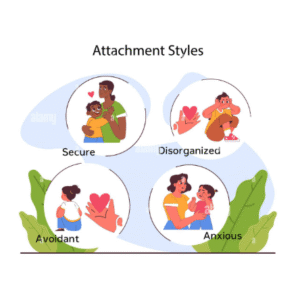
Because of these varied adaptations, psychologists generally categorize childhood attachment into four main styles:

1. Secure Attachment

2. Avoidant Attachment

3. Ambivalent (Resistant) Attachment

4. Disorganized Attachment

Each attachment style develops based on the child’s everyday experiences—how often they are comforted when distressed, how their emotions are responded to, and how predictable or unpredictable their caregivers are. These patterns shape the child’s sense of self, their ability to connect with others, and their emotional resilience well into adulthood.

In essence, attachment is the first lesson a child learns about relationships—

“Can I rely on others, and am I worthy of care?”

Understanding these attachment styles helps parents, teachers, and mental health professionals support healthier emotional development and repair insecure patterns early.

1. Secure Attachment: The Foundation of Emotional Well-being

Children with secure attachment grow up feeling safe, protected, valued, and emotionally understood. This style forms when a child consistently experiences warmth, comfort, and predictable care. As a result, they begin to trust that their emotional needs will be met, which becomes the cornerstone of healthy emotional development.

Why Secure Attachment Develops

Secure attachment is not about being a “perfect parent”—it’s about being consistently responsive and emotionally present. It develops when:

  • Caregivers respond consistently
    The child learns that their signals—crying, reaching out, seeking closeness—will be acknowledged rather than ignored.

  • Emotional needs are met
    When the child feels scared, overwhelmed, or uncomfortable, the caregiver responds with empathy and support.

  • Comfort is provided during distress
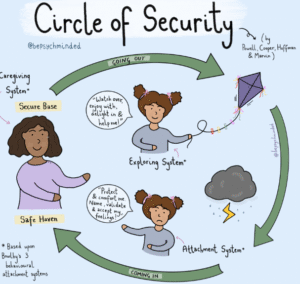
    The caregiver becomes a “safe base” where the child receives soothing, reassurance, and physical closeness when needed.

  • Caregiver is warm, predictable, and available
    Daily interactions such as smiling, talking, playing, and maintaining eye contact help the child feel emotionally connected and secure.

Through these repeated experiences, the child’s brain wires itself to expect safety, trust, and connection in relationships.

How a Securely Attached Child Behaves

Securely attached children show a healthy balance between independence and connection:

  • Explores the environment confidently
    They are curious and adventurous because they know they can return to their caregiver if they feel unsure.

  • Seeks comfort from caregiver when upset
    They don’t hesitate to ask for help, which shows trust in the caregiver.

  • Easily soothed
    After receiving comfort, they calm down quickly and return to play or exploration.

  • Shows a strong preference for the caregiver but is not clingy
    They enjoy closeness but also feel confident enough to separate and explore.

  • Builds healthy peer relationships
    Because they feel secure in themselves, they interact better with other children—sharing, taking turns, and forming friendships.

Long-Term Impact of Secure Attachment

Secure attachment supports long-lasting emotional, social, and cognitive development. Children who grow up with secure attachment often show:

  • Good self-esteem
    They feel worthy of love and believe their feelings matter.

  • Strong emotional regulation
    They can identify, express, and manage feelings more effectively.

  • Healthy relationships
    They form trusting bonds with peers, partners, teachers, and later in life, colleagues and romantic partners.

  • Better academic and social skills
    Their emotional stability helps them concentrate, participate in class, and communicate more effectively.

2. Avoidant Attachment: Independence with Hidden Anxiety

Avoidant attachment develops when a child repeatedly learns that expressing emotions is not safe, welcome, or effective. On the surface, these children may appear unusually independent or “low-maintenance,” but internally, they have learned to suppress their emotional needs to avoid rejection or disappointment.

Why Avoidant Attachment Develops

Avoidant attachment typically emerges when the caregiver is physically present but emotionally unavailable. This can happen when:

  • The caregiver is distant, dismissive, or emotionally unavailable
    They may care for the child’s physical needs but rarely respond to emotional cues such as crying, fear, or sadness.

  • The child’s feelings are minimized or dismissed
    Statements like “Stop crying”, “You’re fine”, or “Don’t make a fuss” teach the child that emotions are unacceptable or inconvenient.

  • Comfort is not consistently offered
    The child gradually learns that seeking closeness or reassurance does not lead to comfort, so they stop trying.

Over time, the child adapts by turning inward and relying on themselves—not because they don’t need connection, but because they assume it is unavailable.

How the Child Behaves

Children with avoidant attachment often display a surprising level of independence for their age:

  • Appears very independent
    They may prefer playing alone and managing situations without seeking help.

  • Avoids closeness or physical contact
    Hugs, cuddles, or affectionate gestures may make them uncomfortable.

  • Doesn’t seek comfort when distressed
    Even when hurt or scared, they suppress the instinct to reach out.

  • Shows little reaction when the caregiver leaves or returns
    This does not mean they don’t care—it means they learned to hide their distress.

These behaviors are coping mechanisms, not signs of emotional strength.

What’s Happening Internally

Even though they appear calm or detached, internally the child may be experiencing confusion, frustration, or anxiety.

The internal message becomes:

“My feelings won’t be understood or supported—
so it’s safer to handle things alone.”

Instead of learning emotional expression, they learn emotional avoidance.

Long-Term Impact

If avoidant attachment continues into later childhood or adulthood, it may shape emotional and relational patterns such as:

  • Difficulty expressing emotions
    They struggle to identify or share their feelings, often appearing emotionally “flat.”

  • Preference for emotional distance
    Close relationships can feel overwhelming or uncomfortable.

  • Discomfort with dependency or vulnerability
    They resist relying on others and may pull away when relationships feel too intimate.

Although these children may seem self-sufficient, they often carry unmet emotional needs beneath the surface.

3. Ambivalent (Resistant) Attachment: Clinginess & Uncertainty

Ambivalent attachment develops when a child experiences inconsistent caregiving—moments of warmth followed by moments of emotional unavailability. Because the child never knows whether their needs will be met, they become anxious, overly alert, and dependent on the caregiver for reassurance.

Why Ambivalent Attachment Develops

This attachment style forms when the caregiver’s attention and emotional availability are unpredictable. The child may receive love and comfort at times, but at other times, the caregiver may be distracted, overwhelmed, or unresponsive.

  • The caregiver is sometimes loving, sometimes unavailable
    The child cannot rely on consistent comfort or presence.

  • The child cannot predict when they will receive attention
    This unpredictability creates emotional confusion and insecurity.

  • Emotional needs are met inconsistently
    Sometimes the caregiver responds quickly; other times the child’s distress is ignored or misread.

Because of this inconsistency, the child becomes hyper-focused on the caregiver’s availability, trying harder and harder to get their attention.

How the Child Behaves

Children with ambivalent attachment often appear needy, clingy, or emotionally intense, but these behaviors are rooted in fear and confusion:

  • Very clingy or “hyper-attached”
    They stay close to the caregiver, fearing separation or rejection.

  • Becomes extremely distressed when the caregiver leaves
    Even short separations trigger strong emotional reactions.

  • Hard to soothe even when the caregiver returns
    They may cling but also resist comfort—crying, pushing away, or showing anger.

  • Appears anxious, insecure, or demanding
    They express big emotions and rely heavily on the caregiver for reassurance.

This pattern reflects their internal struggle to feel safe in a relationship that feels unpredictable.

What’s Happening Internally

Because they cannot rely on consistent caregiving, these children develop intense anxiety around separation and connection.

Their internal belief becomes:

“I don’t know when you’ll be there for me…
so I must cling tightly to make sure you don’t leave.”

This creates emotional hypervigilance—constantly checking for signs of love, attention, or abandonment.

Long-Term Impact

If ambivalent attachment continues without support or intervention, children may carry these emotional patterns into later life:

  • Heightened emotional sensitivity
    They feel emotions intensely and may struggle to self-soothe.

  • Fear of abandonment
    They may worry excessively about losing relationships or being left alone.

  • Difficulty with boundaries in relationships
    They may become overly dependent, controlling, or anxious in close relationships.

Although their behaviors may seem dramatic, these children are simply trying to feel secure in a relationship that feels uncertain.

4. Disorganized Attachment: Fear Without Solution

Disorganized attachment is considered the most complex and concerning attachment style because it develops when a child’s primary source of safety is also a source of fear. In this situation, the child’s attachment system becomes overwhelmed and confused, leading to chaotic or contradictory behaviors.

This style is often associated with significant stress, trauma, or disrupted caregiving patterns.

Why Disorganized Attachment Develops

Disorganized attachment forms when the caregiver—who should be a protector—becomes unpredictable, frightening, or emotionally unsafe. This leaves the child without a clear strategy for seeking comfort or security.

It often develops when:

  • The caregiver is frightening, unpredictable, or abusive
    The child may see threatening facial expressions, sudden anger, or aggression.

  • The child experiences trauma, neglect, or chronic stress
    Their nervous system becomes overwhelmed, making emotional regulation difficult.

  • The caregiver is both a source of comfort and fear
    The child becomes confused: they want closeness, but they also want to escape.

  • There is household chaos or violence
    Exposure to conflict, substance abuse, or instability disrupts the child’s sense of safety.

These mixed signals leave the child with no consistent way to seek help or feel protected.

How the Child Behaves

Children with disorganized attachment often display confusing, unpredictable, or contradictory behaviors. These behaviors reflect inner turmoil rather than intentional defiance.

Common behaviors include:

  • Confusing or contradictory actions
    Such as freezing, running away from the caregiver, rocking back and forth, or approaching and then suddenly withdrawing.

  • Fearful of the caregiver
    The child may show fear, flinching, or avoidance when the caregiver approaches.

  • Appears disoriented or overwhelmed
    They may stare blankly, seem “shut down,” or appear disconnected from their surroundings.

  • Sudden mood shifts
    Rapid changes from clinginess to withdrawal, or from calm to distressed, are common.

These behaviors are survival strategies in an environment that feels emotionally unsafe or unpredictable.

What’s Happening Internally

Inside, the child faces a painful and confusing paradox:

“The person who should protect me is the one I fear.”

The child’s attachment system becomes disorganized because they have no safe, predictable way to regulate emotions or seek comfort. Their brain shifts into survival mode—fight, flight, freeze, or dissociate.

Long-Term Impact

Without intervention or supportive caregiving, disorganized attachment may contribute to more serious emotional and behavioral challenges later in life:

  • Higher risk for emotional dysregulation
    Difficulty managing stress, fear, anger, and sadness.
  • Behavioral difficulties
    Aggression, oppositional behavior, withdrawal, or impulsivity.

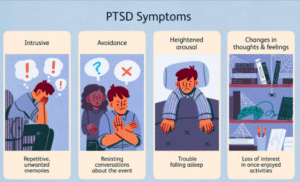
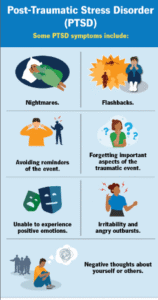
  • Dissociation or trauma-related symptoms
    Spacing out, feeling disconnected from the body, nightmares, or trauma responses.
  • Difficulty forming stable relationships
    Trouble trusting others, controlling behaviors, fear of intimacy, or chaotic relationship patterns.

Despite these risks, healing is absolutely possible with consistent caregiving, therapy, and trauma-informed support.

How Parents & Caregivers Can Build Secure Attachment

No parent is perfect—and attachment has never been about perfection. It is about the everyday consistency, emotional presence, and genuine responsiveness that help a child feel seen and supported. Children don’t need flawless parenting; they need caregivers who try, who show up, and who repair when things go wrong.

What Helps Build Secure Attachment

Simple, repeated acts of care can strengthen a child’s sense of safety and trust:

Responding to emotional needs promptly
Helps the child feel that their feelings matter and will be taken seriously.

Offering comfort without judgment
Accepting emotions—rather than criticizing or dismissing them—teaches children emotional safety.

Creating predictable routines
Daily structure gives children a sense of stability and reduces anxiety.

Showing warmth through touch, voice, and presence
A gentle tone, a warm hug, or engaged eye contact reassures the child that they are loved.

Encouraging independence with support
Letting children explore freely while being available when needed builds confidence.

Repairing conflicts (apologizing, reconnecting)
When misunderstandings or conflicts happen, reconnecting teaches the child that relationships can heal.

The Hopeful Truth: Attachment Can Change

Even if a child currently shows insecure attachment patterns, these are not permanent labels. With consistent, nurturing caregiving and, when needed, professional therapeutic support, children can develop more secure attachment over time. The brain is adaptable, relationships can be repaired, and emotional patterns can heal.

Every warm interaction, every moment of attunement, and every effort to understand a child’s feelings contributes to shaping a more secure, resilient future.

screenshot 2025 11 20 001009

Final Thoughts

Understanding attachment styles empowers parents, teachers, and mental health professionals to create safe, nurturing emotional environments for children. When caregivers recognize the patterns behind children’s behaviors—whether clinginess, withdrawal, fear, or confusion—they can respond with greater patience, empathy, and insight.

Early attachment experiences lay the foundation for how children learn to trust others, connect meaningfully, regulate their emotions, and build stable relationships throughout life. These first bonds shape not only emotional well-being, but also social development, self-esteem, and resilience.

The hopeful truth is that attachment is not fixed. With awareness, consistency, and psychological guidance, caregivers can strengthen or repair attachment patterns at any age. Through warmth, presence, and responsive caregiving, it is always possible to nurture healthier bonds and support a child’s journey toward emotional security and lifelong resilience.

Reference

American Psychological Association (APA) – Attachment Theory

https://www.apa.org/monitor/2019/05/ce-corner-attachment

2Harvard University – Center on the Developing Child

https://developingchild.harvard.edu/science/key-concepts/serve-and-return/

National Child Traumatic Stress Network (NCTSN)

https://www.nctsn.org/

Counselling supportContact Us

How to Handle Tantrums: Psychology-Based Techniques

Understanding the science behind big emotions and how to respond effectively

Tantrums are a normal and expected part of childhood. They happen when a child’s developing emotional system becomes overwhelmed by feelings they cannot yet understand or express. Whether it’s frustration, disappointment, sensory overload, or a sudden change in routine, young children often lack the language, impulse control, and emotional regulation skills needed to stay calm. As a result, their emotions spill out physically—through crying, screaming, throwing things, or refusing to cooperate.

While tantrums are common, the adult’s response plays a powerful role in shaping how the child learns to handle big emotions. A calm, supportive response can help the child regain control and feel secure, turning the moment into a learning opportunity. On the other hand, reacting with anger, threats, or punishment can intensify the child’s emotional distress, prolonging the meltdown and reinforcing fear or frustration.

This is where psychology-based techniques become invaluable. By understanding how the child’s brain works during a tantrum and responding with empathy, structure, and consistency, parents and caregivers can:

  • Reduce the frequency and intensity of tantrums

  • Teach children to self-regulate

  • Build emotional vocabulary

  • Strengthen the parent-child relationship

  • Create a calmer and more predictable environment

With the right strategies, every tantrum becomes not just a challenge—but a chance to help the child develop lifelong emotional coping skills and resilience.

Why Do Tantrums Happen? (The Psychology Behind Meltdowns)

Tantrums usually occur when a child’s “upstairs brain”—the part responsible for thinking, problem-solving, and self-control—is overwhelmed by the “downstairs brain,” which manages emotions, impulses, and survival reactions. Because children’s brains are still developing, especially the areas that regulate emotions, their emotional brain often takes charge much faster than their thinking brain can respond.

Common Triggers Behind Tantrums

Several everyday situations can overload a child’s emotional system, such as:

  • Frustration:
    When something doesn’t go as expected—like a toy not working or a game ending—they feel stuck and powerless.

  • Overstimulation:
    Too much noise, activity, or sensory input can overwhelm the nervous system, especially in sensitive children.

  • Sudden changes:
    Unexpected transitions (leaving the park, turning off the TV) can create emotional shock because children rely heavily on predictability.

  • Fatigue or hunger:
    A tired or hungry brain has less capacity to manage emotions, making meltdowns more likely.

  • Feeling unheard:
    When children believe their needs or feelings are being ignored, their emotions escalate quickly.

  • Lack of emotional vocabulary:
    Children who cannot express what they feel (angry, scared, disappointed, confused) often resort to crying, yelling, or physical behaviors.

What Happens in the Brain During a Tantrum

In the middle of a tantrum, the amygdala—the brain’s emotional alarm system—takes over. The child’s body releases stress hormones, their heart rate increases, and their ability to think logically shuts down. In this state, reasoning and discipline are ineffective, because the child is not capable of processing instructions.

This temporary loss of emotional control is not intentional misbehavior. It’s a sign that the child needs support to calm their nervous system before they can learn, listen, or problem-solve.

Psychology-Based Techniques to Handle Tantrums

1. Stay Calm and Regulated (Emotional Co-Regulation)

Children naturally absorb the emotional energy around them. When a parent becomes irritated, raises their voice, or looks frustrated, the child’s distress increases because they sense danger or rejection. Tantrums escalate when adults lose calm.

What to do:

  • Speak slowly and softly

  • Keep your shoulders relaxed

  • Take deep breaths

  • Maintain a neutral or gentle expression

  • Move slowly instead of rushing toward the child

Why it works:

Your calm presence co-regulates the child. Their emotional brain perceives safety, allowing the thinking brain to begin functioning again. When you stay regulated, the child learns to regulate too.

2. Validate the Emotion (Not the Behavior)

Emotional validation is one of the most powerful tools in calming a meltdown. When children feel understood, their brains stop fighting for connection.

Examples of validation:

  • “I can see you’re really upset.”

  • “It’s okay to feel angry. Everyone feels angry sometimes.”

  • “You’re sad because you wanted more playtime.”

  • “I understand this is hard for you.”

Why it works:

Validation reduces emotional intensity, prevents shame, and builds trust. It lets the child know their feelings are real and important—even if their behavior is not acceptable.

3. Use the “Connect Before Correct” Approach

Discipline or reasoning during a tantrum does not work because the child is in an emotional state, not a thinking state.

Connect first, then correct:

  • Connect: “That was frustrating, wasn’t it?”

  • Correct: “Next time, let’s try asking for help instead of shouting.”

Connect with empathy, then guide behavior once the child is calm.

Why it works:

Emotional connection activates the child’s social brain (prefrontal cortex). Once the child feels safe and understood, they are ready to learn and cooperate.

4. Offer Limited Choices (A Sense of Control)

Many tantrums arise from feeling powerless. Offering choices creates a sense of autonomy.

Examples:

  • “Do you want to wear the red t-shirt or the green one?”

  • “Should we clean up the toys together or one by one?”

  • “Do you want milk in the blue cup or yellow cup?”

  • “Shall we leave in 2 minutes or 5 minutes?”

Why it works:

Choices reduce defiance. When children feel in control of small decisions, they become more cooperative in bigger situations.

5. Use Distraction Strategically (For Younger Children)

Toddlers have short attention spans. Redirecting their focus can prevent escalation.

Examples:

  • “Let’s see what’s outside the window!”

  • “Can you help me find the red block?”

  • “Look at this funny picture!”

  • “Let’s play a quick game!”

Why it works:

Distraction interrupts the emotional buildup and gives the child something new to focus on. It works best for children under 4.

6. Teach Calm-Down Techniques (After the Tantrum)

During a tantrum, learning is impossible. But afterward, when the child is calm, you can teach emotional skills.

Helpful techniques:

  • Deep breathing: “Smell the flower, blow the candle.”

  • Counting slowly: 1 to 10 or backward.

  • Stress ball squeezing: releases physical tension.

  • Butterfly hug: crossing arms and tapping shoulders gently.

  • Calm corner: a safe, cozy space for relaxation.

Why it works:

These techniques train the nervous system to calm down and build emotional resilience for future challenges.

7. Maintain Predictable Routines

Children feel safer when their day is predictable. Many tantrums occur due to sudden transitions or surprises.

Helpful strategies:

  • Keep consistent meal, play, and sleep times

  • Use visual routine charts

  • Give reminders before transitions (“In 2 minutes, we will stop playing”)

  • Prepare them for changes in advance

Why it works:

Predictability lowers anxiety and helps children feel stable and in control, reducing emotional overwhelm.

8. Use Positive Reinforcement

Praise and encouragement strengthen healthy behavior far more effectively than punishment.

Examples of positive reinforcement:

  • “You calmed down so quickly, I’m proud of you!”

  • “Great job using your words instead of crying.”

  • “You asked for help—that was very responsible.”

  • “Thank you for listening right away!”

Why it works:

Positive reinforcement teaches children what to do instead of what not to do. It motivates them to use good coping skills.

9. Set Boundaries with Empathy

Some behaviors, such as hitting, kicking, and throwing, must have clear limits.

Firm but gentle boundary-setting:

  • “I won’t let you hit. That hurts.”

  • “Throwing is not safe. Let’s keep everyone safe.”

  • “You can be angry, but you cannot break things.”

Why it works:

Empathy + boundaries = emotional safety.
Children feel protected when adults are kind but firm.

10. Address Triggers and Build Emotional Vocabulary

Children have fewer tantrums when they know how to express feelings.

Use simple emotion words:

  • Angry

  • Sad

  • Scared

  • Frustrated

  • Excited

  • Confused

Activities to build emotional vocabulary:

  • Emotion flashcards

  • Storybooks that discuss feelings

  • Drawing faces showing different emotions

  • Role-play (e.g., “What does frustrated look like?”)

  • Feelings chart or thermometer

Why it works:

Naming emotions reduces their intensity and helps children communicate instead of acting out. When kids understand their feelings, they gain control over them.

When to Seek Professional Help

While tantrums are normal in early childhood, certain patterns may signal deeper emotional or developmental concerns that require the support of a child psychologist. Parents should consider professional help if tantrums are:

1. Extremely Frequent

If a child experiences tantrums multiple times a day or far more often than peers their age, it may indicate difficulties with emotional regulation, sensory processing, or anxiety.

2. Lasting Beyond Age 6–7

Most children outgrow intense tantrums by early school years. If meltdowns continue beyond this age, it can point to underlying issues such as ADHD, anxiety disorders, or developmental challenges.

3. Involving Aggression or Self-Harm

Tantrums that include hitting, kicking, biting, head-banging, scratching, or self-injury are red flags that require immediate evaluation. These behaviors suggest the child is overwhelmed beyond their coping abilities.

4. Interfering with School or Social Life

If tantrums disrupt classroom activities, prevent the child from forming friendships, or lead to isolation or behavioral complaints from teachers, psychological guidance can help address the root cause.

5. Difficult to Manage at Home

When parents feel exhausted, helpless, or unable to calm their child despite trying different strategies, a professional can provide personalized tools, behavior plans, and emotional support for the whole family.

Why Early Intervention Matters

Seeking help early does not mean something is “wrong” with the child—it means giving them the tools they need to thrive. Early intervention:

  • Builds emotional and behavioral skills

  • Reduces the long-term impact of stress and frustration

  • Helps children understand and express their feelings

  • Supports healthy brain development

  • Strengthens the parent-child relationship

With timely support, children learn to manage emotions effectively, reducing the likelihood of future behavioral or mental health challenges. Early help sets the foundation for lifelong emotional resilience.

Final Thoughts

Tantrums are not a sign of bad behavior—they are a sign of big emotions in a small body. Children express with intensity what they cannot yet express with words. When adults view tantrums through a lens of understanding rather than judgment, they create a safe emotional world where children feel seen, heard, and supported.

With empathy, consistency, and psychology-based strategies, parents can gradually teach children how to regulate their emotions, communicate their needs, and handle frustration in healthier ways. These early lessons shape a child’s long-term emotional intelligence and resilience.

Remember, during a tantrum, your calm presence is more powerful than any lecture. Your tone, your body language, and your willingness to stay connected send the message:
“You’re not alone. I’m here. We will get through this together.”

In the end, what truly helps a child grow into a confident, emotionally aware individual is not perfection from the parent—but patience, compassion, and the steady reassurance that their feelings matter.

Reference

Signs of Emotional Dysregulation in Children

How to recognize when a child is struggling to manage their emotions

Children experience big emotions every single day—excitement when they see something new, anger when a rule feels unfair, fear in unfamiliar situations, frustration when things don’t go as expected, and joy when they feel loved or successful. These emotions are a natural part of their growth. However, when these emotions become too intense, too frequent, or difficult to manage, it may signal emotional dysregulation.

Emotional dysregulation does not mean a child is “bad” or “disobedient.” Instead, it simply means the child’s emotional system is still developing, and they are struggling to understand their feelings, express them appropriately, or calm themselves down when overwhelmed. Their brains—especially the areas responsible for emotional control—are still growing, so they often need gentle guidance, not punishment.

Recognizing early signs of emotional dysregulation is extremely important. When parents, teachers, and caregivers notice the patterns early, they can provide the right support at the right time. This early understanding helps prevent long-term challenges such as:

  • Behavioral difficulties

  • Academic struggles

  • Low self-esteem

  • Social withdrawal or conflict with peers

  • Anxiety or mood-related issues later in life

By noticing these signals early and responding with empathy, structure, and skill-building, adults can help children develop healthy emotional habits, stronger self-control, and better emotional resilience. Early support creates a foundation for lifelong mental well-being.

1. Frequent and Intense Tantrums

Tantrums are normal for younger children, especially toddlers. But when a child experiences intense, prolonged, or unusually frequent tantrums, it may be a sign of emotional dysregulation. These tantrums often:

  • Last longer than 10–15 minutes

  • Occur several times a day or more often than developmental norms

  • Happen in response to very small triggers like “the cup is the wrong color”

  • Include screaming, collapsing on the floor, or aggression

A key indicator is that the child finds it extremely difficult to regain control. Even when adults offer soothing, distraction, or comfort, the child struggles to settle down. This suggests their emotional system is overwhelmed.

2. Difficulty Identifying Emotions

Children struggling with emotional regulation often cannot accurately understand or name their feelings. They may:

  • Cry without knowing why

  • Feel angry, scared, or restless without a clear reason

  • Mix emotions (“I feel bad,” “My heart feels funny”)

This difficulty in emotional awareness—known as poor emotional literacy—makes it harder to cope. Without the ability to label emotions, children cannot communicate their needs, leading to frustration and outbursts.

3. Overreacting to Minor Issues

Children may respond strongly to very small problems that adults view as insignificant. Examples include:

  • Spilling a few drops of water

  • Not getting a preferred seat

  • A toy not working perfectly

  • Someone speaking too loudly

  • A slight change in their usual routine

These minor incidents trigger disproportionate emotional reactions like intense crying, shouting, or physical restlessness. Their nervous system treats small stressors as big threats—often due to sensory sensitivities, anxiety, or developmental delays.

4. Impulsive or Aggressive Behavior

When overwhelmed, some children express emotions through actions rather than words. This may include:

  • Hitting, biting, or kicking peers

  • Throwing objects during frustration

  • Running away suddenly when upset

  • Destroying toys

  • Using harsh or hurtful language

These behaviors are not signs of “bad behavior.” Instead, they are indicators that a child lacks the internal skills to communicate their emotions. Their “fight or flight” system becomes easily activated.

5. Difficulty Calming Down (Poor Self-Soothing Skills)

Once emotionally activated, a child with dysregulation may stay upset for a prolonged period, sometimes 30 minutes or more. They may:

  • Cry nonstop

  • Remain physically tense (tight fists, stiff posture)

  • Need constant reassurance

  • Become clingy or overwhelmed

  • Breathe rapidly or show panic-like signs

This happens because their brain—especially the prefrontal cortex responsible for emotional control—is still developing. They rely heavily on adults to help them regulate.

6. Sudden Mood Swings

These mood changes can occur within minutes or even seconds. For example:

  • A child laughing during play suddenly becomes angry if another child takes a toy

  • A small disappointment causes a shift from excited to distressed

  • A calm child suddenly withdraws without explanation

These emotional fluctuations often reflect difficulty processing internal and external stimuli, making it hard to maintain stable emotional states.

7. Physical Signs of Stress

Children often show emotional distress through their bodies rather than words. Common physical symptoms include:

  • Frequent stomachaches during school or stressful tasks

  • Headaches without medical causes

  • Sweaty palms or a racing heartbeat

  • Fidgeting, nail-biting, hair twirling

  • Shallow breathing or sighing frequently

These physical signs indicate their body is in a heightened emotional state, often because they cannot express or process emotions verbally.

8. Avoidance or Withdrawal

Some children shut down emotionally rather than express their distress outwardly. They may:

  • Avoid social interactions

  • Refuse school tasks they find overwhelming

  • Prefer solitary play

  • Become quiet, clingy, or distant

  • Avoid eye contact

This form of emotional dysregulation is often misunderstood as “shyness” or “disinterest,” but it frequently reflects overwhelm, anxiety, or fear of failure.

9. Perfectionism or Fear of Mistakes

For some children, emotional dysregulation appears as extreme self-pressure. They may:

  • Erase work repeatedly until it looks “perfect”

  • Cry over small academic errors

  • Avoid tasks they fear they cannot do perfectly

  • Become upset when things don’t go exactly their way

  • Have a meltdown if someone criticizes them

This behavior often stems from anxiety, fear of judgment, or hyper-sensitivity to failure. They feel emotionally unsafe when mistakes happen.

10. Trouble Following Routines and Rules

Children with emotional dysregulation often have difficulty adapting to structure. They may:

  • Resist morning and bedtime routines

  • React strongly to transitions (e.g., from playtime to homework)

  • Become argumentative or oppositional when asked to follow rules

  • Need repeated reminders

  • Show frustration when routines change unexpectedly

This is usually not intentional defiance. Instead, these children find it emotionally challenging to switch tasks or manage expectations.

Why Early Identification Matters

Emotional dysregulation is not just about “bad behavior” or “big feelings.” If left unaddressed, it can impact many important areas of a child’s life. Understanding its effects helps caregivers recognize why early support is essential.

1. Social Relationships

Children who struggle to manage emotions may find it difficult to interact smoothly with peers. They might:

  • Get into frequent conflicts

  • Misinterpret others’ intentions

  • Have trouble sharing or taking turns

  • Withdraw from social interactions due to overwhelm

Over time, this can lead to loneliness, rejection, or difficulty making friends, which further affects emotional growth.

2. Academic Performance

A child’s ability to learn is closely tied to their emotional state. Emotional dysregulation can cause:

  • Difficulty focusing in class

  • Avoidance of challenging tasks

  • Frequent disruptions or incomplete work

  • Trouble managing classroom expectations

  • Anxiety about performance

When emotions overpower concentration, learning naturally becomes harder.

3. Self-Confidence

Children who frequently feel “out of control” may begin to think something is wrong with them. This can lead to:

  • Low self-esteem

  • Negative self-talk

  • Feeling incompetent or “not good enough”

  • Hesitation to try new things

Over time, this impacts their motivation, independence, and belief in their abilities.

4. Behavior

Unmanaged emotions can show up as challenging behaviors such as:

  • Aggression

  • Defiance

  • Avoidance

  • Impulsivity

  • Meltdowns

These behaviors are often misunderstood, leading to punishment instead of support. Proper guidance helps the child learn healthier behavioral responses.

5. Overall Mental Health

Chronic emotional dysregulation can increase vulnerability to:

  • Anxiety disorders

  • Depression

  • Behavioral disorders

  • Sleep disturbances

  • Stress-related physical symptoms

Supporting children early reduces these long-term risks.

The Importance of Early Support

When children receive understanding, emotional coaching, and structured guidance early in life, they learn:

  • How to label and understand their emotions

  • How to calm themselves during distress

  • How to communicate their needs

  • How to solve problems without acting out

This builds emotional resilience, strengthens their relationships, and sets the foundation for lifelong well-being. Early support transforms emotional difficulties into opportunities for growth.

How Parents and Caregivers Can Help

Supporting a child with emotional dysregulation requires patience, understanding, and consistent guidance. Parents and caregivers play a powerful role in teaching children how to understand and manage their emotions. Here are effective, evidence-based strategies:

1. Model Calm Behavior

Children learn emotional responses by watching adults. When parents remain calm during stressful moments, children absorb that emotional stability.

  • Speak slowly and softly during conflicts

  • Take a pause before reacting

  • Show how you handle frustration (“Let me take a deep breath before I talk”)

Your calmness becomes their emotional anchor.

2. Use Emotion Vocabulary Regularly

Help children build emotional awareness by naming feelings in everyday situations.
Examples:

  • “You look disappointed because the game ended.”

  • “Are you feeling frustrated with the puzzle?”

  • “It’s okay to feel scared. Everyone feels that sometimes.”

The more emotions are named and normalized, the easier it becomes for children to express them.

3. Offer Predictable Routines

Routines help children feel safe and reduce emotional overwhelm. Predictability gives them a sense of control.
Create consistent routines for:

  • Morning activities

  • Mealtimes

  • Play and study time

  • Bedtime

Even small visual schedules can help children transition smoothly between activities.

4. Practice Deep Breathing or Grounding Techniques

Teach calming tools that children can use when overwhelmed.
Simple techniques include:

  • Balloon breathing: Inhale slowly, pretend to blow up a balloon

  • Sensory grounding: “Name 5 things you can see, 4 you can touch…”

  • Teddy bear breathing: Place a soft toy on their stomach and watch it rise and fall

Practicing these daily builds emotional resilience and self-soothing skills.

5. Validate Their Feelings

Validation helps children feel understood and safe. Instead of dismissing emotions (“Don’t cry,” “Stop being silly”), acknowledge them.
Use supportive phrases like:

  • “I see you’re upset, and that’s okay.”

  • “It’s normal to feel angry when things don’t go your way.”

  • “I’m here with you. Let’s figure this out together.”

Validation does not mean agreeing—it simply means acknowledging their emotional world.

6. Seek Support from a Child Psychologist if Symptoms Persist

If emotional challenges continue for months, interfere with daily functioning, or escalate, it may be time to seek professional help.
A child psychologist can:

  • Assess emotional and behavioral development

  • Teach emotional regulation skills

  • Support parents with effective strategies

  • Provide guidance for school and home environments

Early intervention often leads to faster emotional improvement and healthier long-term outcomes.

Final Thoughts

Emotional dysregulation is not a sign of misbehavior—it is a signal that a child needs guidance, understanding, and support. When children feel overwhelmed by their emotions, they rely on the adults around them to help them make sense of their inner world. With patience, empathy, and consistent strategies, parents and caregivers can teach children how to express their feelings safely, calm themselves during distress, and build resilience for the future.

Every small effort—naming emotions, maintaining routines, offering comfort, or seeking professional help—contributes to a child’s long-term emotional well-being. Supporting children today lays the foundation for confident, emotionally aware, and mentally strong adults tomorrow.

Reference


Parenting & Children’s Mental Health: Building Strong Minds from the Start

Children don’t grow only physically—they grow emotionally, socially, and psychologically every single day, often in ways that adults don’t immediately notice. A child’s mind is constantly learning, absorbing, and interpreting the world around them. Long before they understand what “mental health” means, they are already forming beliefs about themselves, others, and life.

From the tone of our voice to the consistency of our routines, from how we handle stress to how we show affection—every interaction becomes a building block of their emotional world. This early environment shapes how a child learns to trust, express feelings, handle disappointments, and connect with others.

As parents and caregivers, the way we respond, communicate, and connect with children becomes the foundation of their emotional resilience. When they feel heard, supported, and valued, they develop confidence and inner strength. When they feel dismissed or misunderstood, confusion and insecurity can take root.

Understanding children’s mental health isn’t about identifying problems—it’s about creating the right environment where children feel safe to grow, explore, fail, try again, and become emotionally intelligent individuals.

Below is a clear, practical guide to understanding and nurturing children’s mental health—so that every child gets the chance to grow not just in height, but in heart, mind, and spirit.

🧠 Why Children’s Mental Health Matters

Children experience emotions intensely. Their feelings are often raw, unfiltered, and immediate. While they may not express emotions like adults or have the language to describe what’s happening inside them, they feel deeply — fear that seems overwhelming, frustration that turns into tears, shame that makes them withdraw, excitement that bursts out in laughter, curiosity that drives endless questions, and sadness that they may not know how to explain.

Their emotional world is powerful, and it shapes every aspect of their development.

When children receive the right emotional support, healthy mental development allows them to:

🌱 Build Strong Self-Esteem

They begin to see themselves as capable, valued, and worthy. Confidence grows when their feelings are acknowledged and their efforts are celebrated.

🤝 Form Secure and Trusting Relationships

Children learn to form healthy attachments with caregivers, friends, and teachers when they experience consistent love, safety, and understanding at home.

🌬️ Manage Stress and Emotions

With guidance, children learn how to calm themselves, express feelings appropriately, and understand that emotions are temporary and manageable.

🧩 Develop Problem-Solving Skills

When children feel supported, they are more willing to take risks, make decisions, and learn from mistakes — essential steps for cognitive and emotional growth.

🎒 Navigate School, Friendships, and Daily Life

Children with strong emotional grounding adjust better to classroom environments, build healthier friendships, and develop resilience to handle everyday challenges.

On the other hand, when emotional needs go unnoticed or unsupported, the foundation of mental health weakens. This can increase the risk of:

😟 Anxiety and Depression

Unprocessed emotions often show up later as persistent worry, sadness, or feelings of being overwhelmed.

⚠️ Behavioral Issues

Tantrums, aggression, defiance, or withdrawal may appear when children don’t have healthy outlets for expressing their inner struggles.

📚 Learning Difficulties

Emotional distress reduces concentration, memory, and cognitive processing, affecting academic performance.

🧍 Social Withdrawal

Children may isolate themselves, avoid interactions, or struggle with making and maintaining friendships.

🎯 Low Academic Achievement

Mental health and learning are deeply connected. When emotional well-being suffers, motivation and performance often decline.

👨‍👩‍👧 Key Parenting Factors That Shape Mental Health

1️⃣ Attachment & Emotional Security

Attachment is the very first emotional bond a child forms — and it becomes the blueprint for every future relationship. A consistent, comforting, and predictable relationship with caregivers builds a child’s first sense of safety.

Secure attachment is formed when parents are:

  • Responsive: They notice the child’s needs and respond in a timely, caring way.

  • Warm: They offer affection, gentleness, and reassurance.

  • Emotionally available: They listen, validate, and stay present even during a child’s difficult emotions.

When children experience this kind of dependable love, they grow up:

  • More confident in themselves

  • More empathetic toward others

  • More emotionally stable and resilient

  • Better at forming healthy relationships

A securely attached child carries an inner belief:
“I am safe. I am loved. I matter.”

2️⃣ Communication & Emotional Vocabulary

Young children feel emotions intensely but often lack the words to explain what they’re going through. This can lead to tantrums, withdrawal, or confusion. Adults play a crucial role in helping children understand and express their inner world.

By labeling feelings, we teach children emotional awareness:

  • I can see you are frustrated.

  • Are you feeling scared?

  • It’s okay to be sad. I’m here with you.

When a child’s emotions are acknowledged without judgment, they learn to:

  • Recognize their own feelings

  • Express them appropriately

  • Understand that emotions are normal and temporary

This builds emotional intelligence (EQ) — which research shows is more predictive of long-term success than IQ. EQ helps children in friendships, academics, communication, leadership, and even future relationships.

3️⃣ Behavior Modeling

Children don’t learn by hearing — they learn by watching.
Parents’ actions become a silent, powerful lesson.

If parents:

  • Yell → children learn yelling is a coping mechanism

  • Avoid emotions → they learn to suppress feelings

  • Communicate calmly → they learn emotional regulation

  • Show empathy → they develop empathy

  • Apologize when wrong → they learn accountability and humility

Your behavior becomes their roadmap. Every day, in small ways, children absorb how you deal with stress, conflict, love, frustration, and disappointment.

4️⃣ Establishing Boundaries

Boundaries are not about control — they are about safety, structure, and emotional growth. A predictable environment helps children understand what is acceptable and what is not.

Healthy boundaries teach children:

  • Self-control → how to pause, think, and respond

  • Respect → how to value their own space and others’

  • Problem-solving → understanding consequences and making choices

Children actually thrive with boundaries because they provide a sense of stability.
A child with clear limits thinks:
“I know what to expect. I know what is safe. I know my responsibilities.”

5️⃣ Play & Exploration

Play is not entertainment for children — it is their language, their therapy, their brain’s way of growing.

Through play, children:

  • Process emotions they don’t yet know how to verbalize

  • Improve cognitive skills such as memory, attention, and reasoning

  • Build social skills like sharing, negotiation, and cooperation

  • Enhance creativity by imagining worlds and solving problems

  • Develop resilience as they try, fail, and try again

Unstructured playtime — free play without rules or screens — is essential for healthy brain development. It allows children to explore, imagine, and express themselves freely.

A child who plays freely today becomes an adult who can think flexibly tomorrow.

🌟 Warning Signs of Children’s Mental Health Concerns

Children may not always have the words to tell you something is wrong, but their behavior often speaks for them. As caregivers, it’s important to pay attention to emotional and behavioral changes that persist over time.

Seek professional support if you notice any of the following:

😔 Persistent Sadness or Irritability

If a child seems unusually sad, low, angry, or easily annoyed for weeks, it may indicate deeper emotional distress rather than a “phase.”

🧍 Withdrawal from Friends or Activities

If they stop engaging in things they once enjoyed or avoid social interactions, it may signal anxiety, fear, or emotional overwhelm.

🍽️ Changes in Eating or Sleeping Patterns

Sleeping too much or too little, nightmares, loss of appetite, or overeating can all be signs of stress, sadness, or anxiety.

🧠 Difficulty Concentrating

Struggling to focus, forgetting tasks, or zoning out may reflect emotional strain, ADHD symptoms, or learning difficulties.

😟 Excessive Fear, Worry, or Tantrums

Frequent meltdowns, panic-like reactions, or intense worry about everyday situations are important indicators of emotional imbalance.

📉 Decline in Academic Performance

A drop in grades or reluctance to attend school often has emotional roots — such as bullying, anxiety, or low self-esteem.

⚠️ Aggression or Self-Harm Behaviors

Hitting, extreme anger, risky behaviors, or attempts to harm oneself are urgent warning signs requiring immediate professional help.

🌼 Why Early Intervention Matters

Children’s emotional patterns form early.
When challenges are identified and addressed at the right time:

  • Emotional struggles become easier to manage

  • Behavioral issues reduce

  • Learning difficulties can be supported

  • Children build confidence and resilience

  • Family relationships improve

  • Long-term mental health risks decrease

Early intervention can change the trajectory of a child’s life.
It gives them tools to understand their emotions, communicate better, and thrive emotionally, socially, and academically.

❤️ What Parents Can Do Every Day

Small, consistent actions at home create a big impact on a child’s emotional world. Here are simple but powerful parenting practices that build emotional strength, confidence, and resilience.

✔️ Validate Emotions

Children need to know their feelings are real, acceptable, and safe to express. Emotional validation builds trust and helps them develop healthy emotional expression.

Instead of saying “Don’t cry”, try:

  • “I know you’re upset. Let’s talk about it.”

  • “I’m here. Tell me what happened.”

  • “It’s okay to feel sad/angry/frustrated.”

Validation does not mean agreeing with the behavior — it means acknowledging the feeling behind it. When a child feels understood, the intensity of their emotion reduces naturally.

✔️ Maintain Routines

Children thrive on predictability. Routines give them a sense of stability and help reduce anxiety because they know what to expect next.

Daily routines such as:

  • Bedtime schedules

  • Meal times

  • Study/playtime

  • School preparation

…support emotional regulation and make children feel safe and grounded.

A predictable rhythm brings calm to a child’s mind.

✔️ Practice Positive Reinforcement

Praise isn’t just encouragement — it shapes behavior. But how we praise matters.

Focus on effort, not just results.

For example:

  • “You worked really hard on this!”

  • “I love how patiently you tried again.”

This builds:

  • Motivation

  • Confidence

  • Perseverance

  • A growth mindset

Children learn that effort is valuable and mistakes are part of learning.

✔️ Encourage Open Conversations

Create a home environment where feelings are welcomed, not judged. When mental health becomes a normal topic, children feel comfortable sharing their fears, questions, and experiences.

Try asking:

  • “How was your day? What made you happy today?”

  • “Did anything make you upset or confused?”

  • “Do you want to talk about something that’s on your mind?”

These small conversations build emotional connection and trust.

✔️ Limit Screen Time

Excessive screen use affects:

  • Sleep quality

  • Attention span

  • Mood

  • Behavior

  • Emotional control

Set healthy boundaries around device use and encourage:

  • Outdoor play

  • Creative activities

  • Family time

  • Reading

  • Hobbies

Screens should enhance learning, not replace real-life experiences.

✔️ Create a Safe Space

Children flourish when they know they won’t be judged or punished for mistakes.

A supportive environment teaches them:

  • It’s okay to make errors

  • It’s safe to ask questions

  • Learning takes time

  • Every problem has a solution

A growth mindset helps children build resilience — the ability to bounce back from challenges.

When home feels safe, a child’s mind feels free to grow.

🧩 Parent’s Mental Health Matters Too

A child’s emotional world is deeply connected to their parents’. Children are incredibly perceptive — they notice tone, energy, stress levels, and even the emotions parents try to hide. When parents feel overwhelmed, exhausted, anxious, or unsupported, children silently absorb that emotional atmosphere.

They may not understand why something feels heavy, but they feel the heaviness.
They may not know the source of stress, but they sense the tension.
A child’s emotional safety begins with the emotional stability of the adults around them.

That’s why taking care of your own mental wellbeing is not selfish — it is an act of love.
When a parent rests, heals, and seeks support, the child benefits.
When a parent is emotionally regulated, the child learns regulation.
When a parent practices self-care, the child learns that caring for oneself is important.

Your mental health sets the tone for your child’s mental health.

A calm, supported parent creates a calm, supported child.
Nurturing yourself is not a luxury —
It is a gift to your child, to your home, and to your family’s emotional future.

🌈 Conclusion

Parenting is not about being perfect; it’s about being present. Children don’t need flawless parents — they need parents who show up, listen, and try their best. What shapes a child’s emotional world is not grand gestures, but the consistent, everyday moments of connection.

A secure, understanding, and emotionally nurturing environment becomes a lifelong asset for a child’s mental health. It teaches them that the world is safe, that they are loved, and that their feelings matter.

Even the smallest daily efforts make a profound difference:

  • A moment of listening

  • A warm hug

  • A gentle validation

  • A word of encouragement

  • A patient explanation

  • A calm response during a meltdown

These tiny acts build strong, emotionally healthy individuals who grow up with confidence, resilience, and healthy relationships.

Children don’t remember perfect parents —
they remember how their parents made them feel.

And your presence, love, and effort are shaping a future filled with emotional strength and wellbeing.

Reference

High-Functioning Anxiety: The Hidden Struggle

When people hear the word anxiety, they often picture someone who looks visibly nervous—shaking hands, racing thoughts, panic attacks, or difficulty functioning in daily life. But anxiety doesn’t always look like this.
There is another form that hides in plain sight, beneath smiles, achievements, and responsibility. This quieter, more invisible version is known as High-Functioning Anxiety.

High-Functioning Anxiety is the kind of struggle that sits behind:

  • The colleague who always meets deadlines

  • The student who gets top grades

  • The parent who manages everything flawlessly

  • The friend who seems strong, organized, and composed

On the outside, these individuals appear calm, confident, and successful. They get things done, they show up for others, and they seem to have life under control. But inside, they may be fighting a very different battle—one filled with constant worry, self-doubt, pressure to perform, and a mind that rarely slows down.

Even though high-functioning anxiety is not an official clinical diagnosis, it is a very real and powerful emotional experience. Many people live with it for years without realizing that their productivity, perfectionism, and drive are being fueled by underlying fear rather than genuine ease.
Professionals, students, caregivers, and even the most capable individuals often carry this hidden weight every day—quietly, silently, and without anyone noticing.

This is the paradox of high-functioning anxiety:
You look fine on the outside, but inside, your mind is constantly fighting for peace.

What Is High-Functioning Anxiety?

High-functioning anxiety refers to a pattern where a person experiences persistent worry, overthinking, and internal tension, yet continues to function—often at a high level—in their daily life. Unlike more visible forms of anxiety, this one hides behind action, accomplishment, and control.

People with high-functioning anxiety often:

  • Perform exceptionally well at work or school

  • Meet deadlines consistently

  • Take care of responsibilities without fail

  • Show up for others even when emotionally drained

  • Appear calm, organized, and in control

But beneath this composed surface lies a different reality:

  • A mind that doesn’t switch off

  • A constant fear of making mistakes

  • Pressure to be perfect

  • Overthinking every decision or conversation

  • Feeling “tense” even during rest

  • Exhaustion from carrying invisible emotional weight

They seem “fine” to everyone else, but inside, they are overwhelmed.
The struggle isn’t about failing tasks—it’s about the heavy mental cost of completing them.

High-functioning anxiety is the invisible storm behind outward success, making individuals look strong while they silently fight their own thoughts.

Signs and Symptoms of High-Functioning Anxiety

Unlike traditional anxiety—where symptoms may be more visible, such as panic attacks or avoidance—high-functioning anxiety hides itself internally. On the surface, everything looks normal; beneath the surface, the mind is constantly battling tension, doubt, and fear.

Internal Signs of High-Functioning Anxiety

These symptoms are often silent, felt deeply but rarely seen by others:

• Constant Overthinking

The mind replays conversations, decisions, and future possibilities endlessly.

• Worst-Case Scenario Thinking

Even simple situations feel like they could lead to disaster.

• Feeling “On Edge” Even During Calm Moments

You may appear relaxed, but internally your body feels tight, restless, or uneasy.

• Difficulty Relaxing or Doing Nothing

Rest feels uncomfortable, and stillness makes the mind race even faster.

• Fear of Disappointing Others

A constant worry about letting people down, even when you’re doing your best.

• Over-Analyzing Conversations or Mistakes

Small things feel huge, and you revisit them repeatedly.

• Trouble Sleeping Due to a Busy Mind

Nighttime becomes the moment when worries grow louder and harder to ignore.

• Excessive Planning and Preparing

Needing to anticipate every detail to feel in control, even when it’s unnecessary.

Outward Behaviors That Hide the Anxiety

These behaviors look positive to others, but inside, they come from pressure—not peace:

• Perfectionism

You push yourself to extremely high standards and fear failure.

• Always Meeting Deadlines

You never miss a due date—but the process is filled with stress.

• Being Overly Productive

Constantly working, even when exhausted, because stopping feels unsafe.

• Saying “Yes” Even When Overwhelmed

Fear of letting others down makes it hard to set boundaries.

• Being Dependable for Everyone

People rely on you—but you rarely rely on anyone else.

• Being Highly Organized

Your structure and system impress others, but they are coping strategies, not preferences.

• Taking On More Responsibilities Than Needed

You handle more than your share to avoid appearing weak or incapable.

People with high-functioning anxiety often appear to “have it all together,” but internally, they carry self-doubt, pressure, and emotional exhaustion. This silent struggle is real—and it deserves understanding and compassion.

Why Does High-Functioning Anxiety Happen?

Several psychological, emotional, and environmental factors contribute to the development of high-functioning anxiety. It rarely comes from just one source—rather, it grows from patterns built over years.

1. High Expectations (Self or Family)

Many people with high-functioning anxiety grow up in environments where success is the standard, not the goal.
When parents, teachers, or even society expect excellence, children learn to equate self-worth with performance.
As adults, this mindset turns into:

  • Overworking

  • Difficulty accepting mistakes

  • Fear of failing or falling behind

High expectations become the invisible fuel that keeps anxiety running.

2. Perfectionistic Personality

Perfectionism is a major driver of high-functioning anxiety.
A person who needs everything to be “just right” constantly battles internal pressure:

  • Fear of imperfection

  • Fear of making mistakes

  • Fear of being judged

Even small errors feel huge and emotionally overwhelming, creating constant inner tension.

3. Stressful Environments

Environments with high pressure naturally intensify anxiety. These include:

  • Fast-paced jobs

  • Competitive academic settings

  • Unpredictable or unstable home life

  • Work cultures that reward overworking

Stress pushes people to perform more, give more, and stay alert—eventually blending productivity with anxiety.

4. Fear of Judgement

People with high-functioning anxiety often care deeply about how others perceive them. They worry about:

  • Being criticized

  • Appearing weak

  • Not meeting expectations

  • Being misunderstood

This fear leads them to work harder and act “perfect,” even when it drains their emotional energy.

5. Past Experiences

The roots of high-functioning anxiety often go back to earlier life events:

  • Childhood trauma

  • Growing up in a critical household

  • Being compared to others

  • Experiencing severe failure or humiliation

  • Early responsibilities that forced maturity

These experiences can create long-term patterns of overthinking, self-criticism, and striving to prove one’s worth.

screenshot 2025 11 25 004211

How High-Functioning Anxiety Impacts Daily Life

Although people with high-functioning anxiety appear strong, capable, and successful on the outside, the internal struggle is very real. The pressure to maintain perfection and stability often comes with a heavy emotional cost.

• Constant Mental Exhaustion

Their minds rarely stop thinking, planning, or worrying. Even simple decisions feel draining because the brain is always “on.”

• Difficulty Enjoying Achievements

No matter how much they accomplish, it never feels “good enough.” Success brings temporary relief, followed by new fears and new expectations.

• Feeling Like You Must Always “Be On”

There is a constant need to perform, appear composed, and hide any sign of weakness. Showing vulnerability feels risky, even when help is needed.

• Trouble Setting Boundaries

Saying “no” feels impossible. They take on extra responsibilities to avoid disappointing others, even when overwhelmed or exhausted.

• Overworking to Avoid Negative Thoughts

Work becomes a distraction—something to keep the mind too busy to spiral. Productivity becomes a coping mechanism, not a choice.

• Inability to Rest Without Guilt

Relaxation feels uncomfortable. Taking a break triggers thoughts like,
“I should be doing more.”
Rest becomes something to “earn,” not something naturally deserved.

• Fear of Burnout

Even while pushing themselves, they fear the moment they won’t be able to keep going. This creates a loop of fear → pressure → more fear.

Over time, this hidden anxiety can lead to emotional exhaustion, irritability, depression, physical tension, headaches, sleep problems, and even burnout.
What others admire as strength is often a mask covering deep internal stress.

Coping Strategies for High-Functioning Anxiety

There are effective ways to manage this silent struggle. With the right tools and guidance, people with high-functioning anxiety can create healthier habits and relieve the inner pressure they carry daily.

1. Cognitive-Behavioral Therapy (CBT)

CBT is one of the most effective approaches for high-functioning anxiety.
It helps you identify perfectionistic and fear-based thoughts, understand where they come from, and replace them with healthier, more balanced thinking.
Over time, CBT reduces overthinking, panic cycles, and emotional pressure.

2. Setting Healthy Boundaries

Boundaries protect your energy and mental peace.
Learning to say “No” without guilt is a skill that takes practice but can transform your emotional well-being.
Start small—limit unnecessary tasks, pause before agreeing to commitments, and honor your limits.

3. Mindfulness and Grounding Techniques

Mindfulness helps you step out of your racing thoughts and reconnect with the present moment.
Grounding exercises, deep breathing, body scans, or mindful activities can calm your nervous system, lower internal tension, and bring emotional clarity.

4. Break the Productivity Cycle

People with high-functioning anxiety often equate productivity with worth.
Start allowing yourself rest without labeling it as laziness or wasted time.
Rest is not optional—it is necessary for mental health, creativity, and long-term success.

5. Reduce Overcommitment

You don’t have to carry every responsibility alone.
Learn to delegate tasks, ask for help, and share responsibilities where possible.
Letting others support you doesn’t make you weak—it makes you human.

6. Self-Compassion

High-functioning anxiety often involves harsh self-criticism.
Practice talking to yourself the way you would talk to someone you love—with patience, understanding, and kindness.
Celebrate small wins and accept that it’s okay to have limits.

7. Professional Support

A therapist or counselor can help you understand the deeper patterns that fuel your anxiety—whether they come from childhood, past failures, or perfectionism.
Professional support offers tools, perspective, and guidance that help you break the cycle of overthinking and emotional tension.

When Should You Seek Help?

High-functioning anxiety is often hidden so well that even the person experiencing it may not realize how much it affects their life. But certain signs indicate that professional support could be beneficial:

• You constantly feel overwhelmed despite being productive

You get everything done, yet the workload feels heavier than it should, and even small tasks feel emotionally exhausting.

• You cannot relax without feeling guilty

Rest makes you uncomfortable. You feel like you must “earn” relaxation instead of seeing it as a basic human need.

• You experience frequent burnout

You push through deadlines, responsibilities, and expectations until your body or mind forces you to shut down. Burnout becomes a repeated cycle.

• Your thoughts race at night or disturb your sleep

Nighttime brings the mental replay: conversations, mistakes, fears, to-do lists—making it hard to sleep or stay asleep.

• You feel emotionally drained or disconnected

Even if you appear fine externally, internally you may feel numb, empty, or detached from your own achievements.

• You hide your stress from others to appear “strong”

You downplay your struggles, avoid sharing feelings, or keep a “strong” image because you fear being judged or misunderstood.

Therapy can help you understand these patterns, release the internal pressure, and create a healthier balance between achievement and well-being.
Reaching out for support is not a sign of weakness—it is an act of courage and self-care.

Final Thoughts

High-functioning anxiety often hides behind strength, productivity, and success. It lives quietly behind the smile of the reliable coworker, the achievements of the top performer, or the calmness of the friend who “never seems stressed.”
But being strong doesn’t mean you never struggle.
Being capable doesn’t mean you don’t feel overwhelmed.
And being productive doesn’t mean you are emotionally at peace.

If you relate to these signs, let this be your reminder:

Your value is not defined by how much you do.

You are worthy not because of your achievements, but simply because you exist.
Your worth is not measured in tasks, deadlines, or perfection.

You deserve rest, peace, and support too.

You don’t have to push through everything alone.
You don’t need to earn rest—it is your right.
Your feelings, needs, and boundaries matter.

Reaching out for help is not weakness—

it is self-awareness,
it is strength,
and it is an act of care for your mental well-being.

Seeking support means you are choosing healing over pressure, balance over burnout, and compassion over self-criticism.
And that is one of the bravest decisions anyone can make.

Reference

Health Anxiety (Hypochondria): Why You Always Fear Illness

Health is important—but when every small sensation in your body feels like a warning sign, life becomes overwhelming. A mild headache feels like a brain tumor. A skipped heartbeat feels like the beginning of a heart attack. A normal stomach ache becomes a sign of something life-threatening. These thoughts don’t come because you want them—they arrive suddenly, forcefully, and refuse to leave.

This constant fear is known as Health Anxiety, previously called Hypochondria. It is not “overreacting,” “imagining things,” or “being dramatic.” It is a real psychological condition where the mind becomes hyper-focused on the body, scanning every sensation and interpreting it as danger. Even when medical tests show everything is normal, the fear returns:
“What if the doctor missed something?”
“What if this is the early stage of a deadly disease?”
“What if I don’t catch it in time?”

For someone struggling with Health Anxiety, these fears are not just thoughts—they feel like alarms. The body reacts with stress, tension, increased heart rate, dizziness, and more, which further reinforces the belief that something is wrong. It becomes a cycle that feels impossible to break.

In reality, the fear is not about the body alone. It’s about the mind trying to protect you, even though the danger it senses isn’t real. The fear is powerful, intense, and often uncontrollable—but with the right support and understanding, it can be managed and healed.

What Is Health Anxiety?

Health Anxiety is an overwhelming and persistent fear about your health—far beyond normal concern. For someone experiencing it, the mind becomes a constant alarm system, interpreting every small ache or change in the body as a sign of something serious. This leads to repetitive, intrusive thoughts such as:

  • “What if this headache isn’t normal… what if it’s a brain tumor?”

  • “My heart just skipped a beat—does this mean I’m going to have a cardiac arrest?”

  • “The doctor said I’m fine, but what if the tests were wrong? What if something was missed?”

These thoughts don’t feel like imagination or exaggeration—they feel urgent, logical, and terrifying in the moment.

Even completely harmless bodily sensations—like acidity, gas, muscle tension, occasional dizziness, fatigue, or a twitch in the eye—can suddenly appear like warning signs of a life-threatening disease. A normal bodily reaction becomes a threat. A temporary discomfort becomes evidence of a hidden illness.

This heightened vigilance creates a loop: the more you scan your body, the more sensations you notice; the more sensations you notice, the more your anxiety grows. The brain, trying to protect you, misinterprets normal signals as danger, triggering unnecessary fear.

Understanding this pattern is the first step towards breaking it.

Why Does Health Anxiety Happen?

Several psychological and emotional factors contribute to the development and continuation of Health Anxiety. It is rarely caused by just one thing—it is usually a combination of how the mind perceives danger, how the body reacts to stress, and how past experiences shape one’s fears.

1. Hyper-awareness of Body Sensations

People with health anxiety often become highly sensitive to what’s happening inside their bodies.
A small muscle twitch, a slight chest tightness, or a moment of dizziness becomes magnified.
This constant “body scanning” turns normal sensations into alarming symptoms.
The brain, on high alert, misinterprets harmless signals as threats, triggering panic.

2. Fear of the Unknown

The human brain dislikes uncertainty.
When you don’t understand a sensation or symptom, the mind quickly fills in the blanks—usually with worst-case scenarios.
With unlimited medical information available online, self-diagnosis becomes dangerous.
A simple search for “headache causes” may lead you straight to rare, life-threatening conditions, feeding the anxiety spiral.

3. Past Illness or Trauma

A previous medical emergency, a family member’s illness, or witnessing someone suffer can leave a deep imprint.
Even if the event happened years ago, the emotional memory stays alive.
So when your body shows a mild symptom, the mind immediately connects it to that past fear.

4. Personality Factors

Certain personality traits can make someone more vulnerable to health anxiety:

  • Being cautious and overthinking decisions

  • Being sensitive to bodily sensations

  • Being perfectionistic and needing control

  • Tending to imagine worst-case scenarios
    These traits don’t cause the anxiety directly, but they create the mental environment where fear grows easily.

5. Stress and Life Changes

When life becomes uncertain—new job, relationship issues, financial pressure, or emotional exhaustion—the mind looks for outlets.
Stress heightens the body’s physical sensations, and the brain misreads them as signs of danger.
During stressful phases, even normal symptoms feel amplified and threatening.

6. The Reassurance-Seeking Cycle

People with health anxiety often seek reassurance to “feel safe.” They may:

  • Visit doctors repeatedly

  • Ask friends or family for validation

  • Check their pulse, blood pressure, or body repeatedly

  • Do multiple medical tests
    Although reassurance gives temporary relief, it strengthens the anxiety long-term.
    The brain learns: “Whenever I feel scared, I must check again.”
    This creates a cycle that becomes very hard to break without support.

Common Symptoms of Health Anxiety

People with Health Anxiety often experience a range of emotional, cognitive, and physical symptoms. These may not always appear together, but even a few of them can deeply affect daily life.

• Constant Worry About Illnesses

Health anxiety creates a constant background fear.
You may find yourself worrying throughout the day—during work, while eating, or even before sleep—thinking,
“What if something is seriously wrong?”
This worry feels uncontrollable and keeps cycling no matter how many times you’re told everything is normal.

• Googling Symptoms Repeatedly

The urge to search for symptoms online becomes irresistible.
You may start with a simple search for “headache causes” and end up reading about the rarest, deadliest diseases.
Each new article increases your fear, making you feel like the symptoms match perfectly—even when they don’t.

• Checking the Body (Pulse, Lumps, Skin Changes)

People with health anxiety frequently monitor their body:

  • Checking pulse multiple times

  • Examining skin for changes

  • Feeling for lumps

  • Taking temperature or blood pressure repetitively
    This constant checking makes the brain more alert to sensations, increasing anxiety further.

• Avoiding Hospitals OR Visiting Too Often

Health anxiety shows up in two opposite behaviors:
Avoidance: Some people avoid hospitals or medical tests out of fear that the results will reveal something terrible.
Overuse: Others visit doctors repeatedly, hoping for reassurance.
Both patterns create stress, confusion, and emotional exhaustion.

• Difficulty Relaxing Because of “What If” Thoughts

“What if it’s something serious?”
“What if this pain gets worse?”
“What if I’m ignoring warning signs?”
These persistent “what if” thoughts keep the mind in a constant state of alertness, making relaxation almost impossible.
Even enjoyable activities are overshadowed by fear.

• Physical Sensations Increasing During Stress

Stress amplifies normal body sensations.
Tight chest, breathlessness, nausea, dizziness, stomach discomfort—all become more intense during anxious moments.
Unfortunately, these sensations are often misinterpreted as evidence of illness, reinforcing the fear and continuing the cycle.

How Health Anxiety Affects Daily Life

Living with Health Anxiety doesn’t just affect the mind—it reshapes your entire life. The constant fear and overthinking begin to interfere with normal routines and relationships.

• You may avoid activities thinking they might harm you

Simple, everyday activities start to feel risky.
You might avoid exercise fearing it could “trigger something,” skip social events because you’re worried you’ll feel unwell, or stop traveling due to fear of medical emergencies.
Life gradually becomes smaller, restricted by fear rather than safety.

• Work and relationships suffer

Health anxiety demands enormous mental energy.
This can affect your concentration at work, reduce productivity, and create misunderstandings with colleagues.
In relationships, constant worry or reassurance-seeking can strain connections, making others feel helpless or confused.

• You feel emotionally drained

The mind is constantly in fight-or-flight mode, scanning for threats.
This emotional overload leads to fatigue, irritability, and a sense of being overwhelmed.
Even when nothing is physically wrong, you may feel exhausted from the fear itself.

• You spend money on unnecessary tests

To feel safe, you might undergo repeated medical tests, specialist consultations, or scans—even after receiving normal results.
While reassurance brings temporary relief, the fear soon returns, leading to more expenses and emotional stress.

• Your confidence in doctors decreases

Because the anxiety feels so real, normal test results may not feel convincing.
You may believe doctors “missed something,” or worry that your condition is rare or undetectable.
This lack of trust keeps you stuck in the cycle of fear and uncertainty.

• This ongoing cycle can feel exhausting, isolating, and frustrating

Over time, the repeated loop of fear → checking → temporary relief → fear again can slowly drain your emotional strength.
You may feel alone, misunderstood, and trapped in your own thoughts.
Breaking this cycle can feel impossible—but it is possible with the right understanding and support.

How to Manage Health Anxiety

Managing Health Anxiety involves a combination of self-awareness, psychological strategies, and healthy lifestyle habits. Recovery doesn’t happen overnight, but small changes can gradually weaken the cycle of fear and overthinking.

1. Cognitive-Behavioral Therapy (CBT)

CBT is one of the most effective treatments for health anxiety.
It helps you identify and challenge irrational thoughts—like assuming the worst or catastrophizing minor symptoms.
Through structured techniques, CBT teaches your mind to interpret bodily sensations more realistically, reducing fear and restoring a sense of control.

2. Limit Googling Symptoms

Googling symptoms often leads to worst-case scenarios and increases anxiety.
Set a firm boundary: avoid searching for health issues unless it’s from a reliable, verified medical source.
If the urge becomes overwhelming, remind yourself:
“I’ve been triggered before—this won’t help me feel better.”

3. Understand Normal Body Sensations

The human body is not silent—it moves, shifts, aches, and reacts to stress, food, posture, and daily activities.
Bodies can:

  • Tingle

  • Twitch

  • Hurt

  • Skip beats

  • Feel tight during stress
    These are usually normal, not dangerous.
    Learning what everyday sensations mean reduces misinterpretation and panic.

4. Practice Mindfulness

Mindfulness and grounding exercises help slow down the racing mind.
Instead of jumping into “what if” stories, mindfulness brings your focus back to the present moment.
Deep breathing, body scans, or simple sensory grounding techniques can reduce fear and calm the nervous system.

5. Focus on Lifestyle

A healthy body supports a calmer mind.
Regular sleep stabilizes mood, balanced meals prevent irritability, hydration improves clarity, and physical activity naturally reduces anxiety chemicals in the brain.
Simple daily routines can dramatically lower the intensity of symptoms.

6. Build Tolerance for Uncertainty

A major root of health anxiety is the need for absolute certainty:
“I must know exactly what’s happening in my body.”
But in reality, nobody has complete certainty about health—ever.
Learning to accept some uncertainty frees you from constant checking, researching, or worrying.
The more you practice this mindset, the weaker the anxiety becomes.

7. Seek Professional Help When Needed

If your fears feel too big to manage alone, reaching out to a mental health professional is a strong and positive step.
A psychologist can guide you through therapy, teach coping skills, and help break long-term patterns.
A psychiatrist can support with medication if anxiety is severe or persistent.
Professional support provides clarity, reassurance, and long-term healing.

screenshot 2025 11 25 004211

When Should You See a Mental Health Professional?

When Should You Seek Professional Help?

Health Anxiety can slowly take over your daily life without you even realizing how deeply it’s affecting you. It’s important to seek help when the fear begins to interfere with your ability to live normally. Consider reaching out to a mental health professional if:

• Your fear of illness is affecting work or relationships

If you find it difficult to focus at work, miss deadlines, avoid conversations, or argue frequently due to your worries, it’s a sign that anxiety is taking control.

• You feel anxious daily

Persistent anxiety—especially around health—can drain your energy and make even simple tasks feel overwhelming.

• You avoid going out or doing activities

When fear stops you from exercising, traveling, socializing, or doing things you previously enjoyed, it’s a sign that the anxiety has become restrictive.

• You constantly check your body or seek reassurance

Repeatedly checking your pulse, skin, or symptoms, or asking friends and family “Am I okay?” may give temporary relief but strengthens the anxiety cycle.

• Medical tests keep coming normal, yet the fear remains

If multiple doctors and investigations have reassured you that you’re healthy but your mind continues to assume the worst, therapy can help you break this pattern.

You Are Not Alone — and You Can Heal

Health Anxiety is one of the most treatable forms of anxiety.
With therapy, lifestyle changes, and the right coping skills, people often experience dramatic improvement.

You don’t have to live in constant fear.
Reaching out for support is not a sign of weakness—it’s a step toward regaining control, peace, and confidence in your body again.

Final Thoughts

Health is important, but health anxiety can quietly steal your peace, your confidence, and your ability to enjoy life. When every sensation feels threatening, the mind becomes trapped in a cycle of fear and doubt. But this fear does not define you—nor does it have to control your future.

Understanding where this anxiety comes from, recognizing the thoughts that fuel it, and slowly breaking the reassurance-seeking cycle can help you reclaim clarity and calm. As you learn to trust your body again, you’ll discover that most sensations are simply part of being human, not signs of danger.

And remember—if you are experiencing these symptoms, reaching out for support is a sign of strength, not weakness. Seeking help means you value your well-being, you want to heal, and you are ready to take back the peace you deserve. With the right guidance and tools, living a calmer, healthier, and more grounded life is absolutely possible.

Reference

ADHD in Adults: Symptoms, Red Flags & Myths

ADHD (Attention-Deficit/Hyperactivity Disorder) is often misunderstood as a condition that only affects children, usually identified through hyperactivity, impulsiveness, or difficulty paying attention in school. However, research now shows that ADHD is a lifelong neurodevelopmental condition, and a significant number of individuals continue to experience symptoms well into adulthood.

For many adults, these symptoms remain undiagnosed or misdiagnosed, leading to years of self-blame and confusion. Instead of recognizing the neurological basis of their struggles, society often labels them as “careless,” “lazy,” “unreliable,” or “too emotional.” This misunderstanding causes deep frustration and affects self-esteem. Many adults with ADHD describe feeling like they are constantly “trying harder” than others just to manage everyday tasks.

Adult ADHD doesn’t always appear as physical hyperactivity. In fact, it often shows up as mental restlessness, chronic disorganization, emotional sensitivity, inconsistent productivity, or difficulty managing responsibilities. These symptoms can create challenges in work, academic functioning, financial management, and personal relationships.

But understanding ADHD beyond childhood allows us to see the bigger picture:
It is not a weakness or character flaw—it is a distinct way the brain processes information, emotions, and tasks. Recognizing adult ADHD opens doors to proper support, structured strategies, and treatment options. This awareness not only improves productivity and focus, but also enhances emotional well-being and relationship satisfaction. When adults finally understand the reason behind their lifelong patterns, it can be deeply validating and transformative.

What Is Adult ADHD?

ADHD is a neurodevelopmental condition that affects key brain functions such as attention, impulse control, emotional regulation, planning, and working memory. While the term is often associated with children who are overly active or easily distracted, adult ADHD looks very different.

Adults with ADHD may not appear outwardly hyperactive. Instead, they often struggle internally, dealing with mental restlessness, difficulty staying organized, or intense emotional reactions that seem disproportionate to the situation. Their symptoms are more subtle and can easily be mistaken for stress, anxiety, or personality flaws.

Examples of How Adult ADHD Appears in Daily Life:

  • Attention & Focus:
    You sit down to work on an important task, but your mind jumps between thoughts, tabs, and tasks. Even reading a short article feels like a challenge.

  • Organization & Planning:
    You intend to clean your room or workspace, but end up starting several tasks at once—folding clothes, rearranging books, checking messages—without finishing any.

  • Impulse Control:
    You suddenly buy something online because it feels exciting in the moment, only to regret it later when you check your budget.

  • Emotional Regulation:
    A small comment from a colleague feels like harsh criticism, and you stay upset for hours even when you know it wasn’t meant negatively.

  • Working Memory:
    You walk into another room and forget why you went there or repeatedly miss deadlines because you genuinely forget, not because you don’t care.

Adult ADHD is not about incompetence—it’s about the brain processing information differently. Understanding this helps reduce guilt and opens the door to effective support and strategies.

Core Symptoms of Adult ADHD

1. Inattention Symptoms

These symptoms impact productivity, planning, and day-to-day functioning. Adults with ADHD often struggle not because they don’t want to focus, but because their brain has difficulty regulating attention.

Key Symptoms with Examples:

  • Difficulty focusing on tasks, especially long or boring ones
    Example: You start reading a report, but after two paragraphs your mind drifts to unrelated thoughts, or you feel the urge to check your phone.

  • Starting multiple tasks but struggling to finish
    Example: You begin cleaning your room, then switch to sorting clothes, then organizing files—ending up with several half-completed tasks.

  • Constantly losing items (phone, keys, important papers)
    Example: You search for your keys every morning even though you thought you placed them “somewhere safe” the night before.

  • Poor time management and frequent procrastination
    Example: You underestimate how long tasks take and often rush at the last minute, or delay starting important work because it feels overwhelming.

  • Forgetting deadlines, appointments, or daily chores
    Example: You miss meetings or forget to pay bills, even after setting reminders or telling yourself you won’t forget.

  • Difficulty prioritizing tasks
    Example: You know what needs to be done but feel frozen trying to decide where to start, so you end up doing nothing or focusing on easier but less important tasks.

  • Mind wandering during conversations
    Example: Someone is talking to you, but your attention drifts mid-conversation—you nod politely while realizing you missed half of what they said.

2. Hyperactivity Symptoms

In adults, hyperactivity is usually internal rather than obvious physical movement. It shows up in the mind and behavior, often in subtle but exhausting ways.

Key Symptoms with Examples:

  • Feeling “restless from inside”
    Example: You sit at your desk, but your body feels tense or uncomfortable—like you need to move, stretch, or walk around, even if you stay seated.

  • Difficulty relaxing or sitting still
    Example: When watching a movie or sitting in a meeting, you constantly shift positions, tap your foot, or feel compelled to check your phone because being still feels uncomfortable.

  • Talking excessively
    Example: You find yourself oversharing in conversations, speaking quickly, interrupting unintentionally, or filling every silence because your thoughts come out faster than you can manage.

  • Fast thought speed or “mental noise”
    Example: Your mind runs like multiple tabs open at once—planning, remembering, worrying, imagining—all happening at the same time, making it hard to slow down or 3. Impulsivity Symptoms

These symptoms affect decision-making, emotional control, and relationships. Impulsivity in adults with ADHD is not about being careless—it often comes from acting quickly to relieve internal discomfort or overwhelming thoughts.

Key Symptoms with Examples:

  • Saying things without thinking
    Example: You blurt out a comment during a discussion and later realize it sounded rude or inappropriate, even though you didn’t intend it that way.

  • Interrupting others frequently
    Example: During conversations, you jump in before the other person finishes because you’re afraid you’ll forget your point or because the urge to speak feels too strong.

  • Impulsive spending or emotional decisions
    Example: You buy something expensive on the spot because it excites you, or you make sudden plans/choices driven by emotion rather than logic—later regretting the outcome.

  • Difficulty waiting in lines
    Example: Standing in queues feels frustrating or unbearable, and you find yourself tapping your foot, getting irritated, or considering leaving even if you need the service.

  • Risk-taking behavior
    Example: You say “yes” to things without fully thinking them through—like driving too fast, taking on commitments you can’t manage, or trying something risky for the thrill.

Red Flags of Undiagnosed Adult ADHD

Red Flags of Undiagnosed Adult ADHD

1. Chronic Disorganization

Adults with ADHD often struggle to keep their physical and digital spaces in order.
Example:
Your desk is always cluttered, your phone gallery is full of unsorted photos, and you constantly promise yourself you’ll “organize it later,” but it never happens. Even planning a long-term goal or career path feels scattered. 

2. Emotional Dysregulation

Emotions tend to be more intense and harder to manage. Many experience Rejection Sensitive Dysphoria (RSD)—a powerful emotional reaction to criticism, rejection, or even perceived disapproval.
Example:
A small comment from a friend feels like a personal attack, and you stay upset longer than you expected. Minor setbacks like a traffic jam or mistake at work can trigger strong frustration.

3. “All or Nothing” Productivity

Energy levels swing between extremes—either hyper-productive or unable to start even a simple task.
Example:
One day you reorganize the whole house in a few hours; the next day you struggle to reply to a single email.

4. Relationship Strain

ADHD can affect communication, memory, and emotional responses, causing misunderstandings.
Partners may misinterpret symptoms as:

  • not listening (when your mind drifts unintentionally)

  • forgetting important dates (because working memory is weak)

  • being disinterested (when you struggle to maintain focus)

  • overreacting emotionally (due to emotional sensitivity)

Example:
Your partner is talking, and you care deeply—but your attention slips for a moment, and they think you’re ignoring them.

5. Career Instability

Adults with ADHD may feel trapped by routines or lose motivation quickly, leading to frequent job changes.
Example:
You start new jobs with excitement but soon feel bored or overwhelmed, resulting in switching roles often or feeling like you’re not achieving your full potential.

6. Hyperfocus Episodes

While ADHD affects attention, it can also cause hyperfocus—an intense, tunnel-like focus on things that are interesting or stimulating.
Example:
You begin a creative project “for a few minutes” and suddenly realize hours have passed, you skipped lunch, and you forgot about other responsibilities.

7. Decision Fatigue

Choosing between even small options—what to eat, what to wear, which email to answer first—can feel exhausting.
Example:
You spend 20 minutes deciding what to cook, feel overwhelmed, and end up ordering food instead.

8. Sleep Problems

Many adults with ADHD struggle with inconsistent sleep schedules. Their mind tends to be more active at night.
Example:
You feel tired all day, but the moment you lie in bed, your mind starts racing with ideas or unfinished tasks. You may stay up late being unexpectedly productive when the world is quiet.

Common Myths About Adult ADHD

Myth 1: “ADHD is only for children.”

Fact: ADHD is a lifelong neurodevelopmental condition. Around 60–70% of children with ADHD continue experiencing symptoms into adulthood. Many adults were never diagnosed as kids, especially if their symptoms were subtle.


Myth 2: “Adults with ADHD are just lazy.”

Fact: ADHD has nothing to do with laziness. It affects executive functions—the brain skills responsible for planning, organizing, emotional control, decision-making, and memory. When these skills are impaired, tasks that seem “simple” to others require enormous effort.


Myth 3: “Everyone gets distracted sometimes; it’s normal.”

Fact: Occasional distraction is normal, but ADHD symptoms are chronic, persistent, and significantly disruptive. They interfere with work, relationships, daily responsibilities, and long-term goals. ADHD distractibility is not occasional—it’s a constant challenge.


Myth 4: “Medication alone can fix ADHD.”

Fact: Medication can help improve focus and impulse control, but it is not a cure. Effective ADHD management often includes therapy, behavioral strategies, routines, organizational tools, sleep regulation, and emotional support. Medication is only one part of a comprehensive treatment plan.


Myth 5: “If you can hyperfocus, you can’t have ADHD.”

Fact: Hyperfocus—an intense, prolonged focus on highly stimulating activities—is actually a common symptom of ADHD. People with ADHD may struggle with routine tasks but can get absorbed for hours in something they find interesting or enjoyable.


Myth 6: “Girls/Women don’t get ADHD.”

Fact: Women absolutely do experience ADHD, but they are often underdiagnosed. Their symptoms tend to show up as quiet inattention, daydreaming, emotional sensitivity, or internal restlessness rather than overt hyperactivity, leading many to be missed or misdiagnosed for years.


How Adult ADHD Affects Daily Life

Adults living with ADHD often experience challenges that go far beyond distraction. These struggles impact emotional health, relationships, career growth, and self-confidence.

Difficulty managing money

Budgeting, tracking expenses, remembering due dates, and planning long-term finances can feel overwhelming.
Example: You may forget to pay bills, overspend impulsively, or struggle to save consistently.

Losing opportunities due to procrastination

Tasks get delayed not because of laziness, but because starting or planning feels mentally difficult.
Example: You may submit applications late, miss deadlines, or postpone important decisions until it’s too late.


Emotional burnout

Constantly trying to “keep up,” mask symptoms, or meet expectations can be exhausting.
Example: You may feel drained, overwhelmed, or mentally tired even with small responsibilities.


Low self-esteem from years of criticism

Many adults grow up hearing they are “careless,” “irresponsible,” or “not trying hard enough.”
Example: This leads to self-doubt, guilt, and a belief that they aren’t capable—even though the issue is neurological, not personal.


Overthinking and anxiety

Racing thoughts, worry about unfinished tasks, and fear of making mistakes can increase anxiety levels.
Example: You may replay conversations, overanalyze decisions, or feel mentally overloaded.


Problems with long-term goals

ADHD affects executive functioning, making it hard to stay consistent with long-term plans or routines.
Example: You start projects with enthusiasm but struggle to maintain momentum over weeks or months.


Why Early Identification Matters

Recognizing ADHD early can be life-changing. With proper support, adults can learn strategies that improve:

  • emotional balance

  • daily productivity

  • financial organization

  • confidence

  • communication within relationships

Early diagnosis helps individuals understand themselves better, reduce self-blame, and create a supportive structure that allows them to thrive.


When to Seek Professional Help

Getting assessed for ADHD can provide clarity, validation, and the right tools to manage daily challenges. Consider seeking an evaluation if any of the following apply to you:

Symptoms persist for 6+ months

ADHD symptoms are long-term and consistent, not temporary. If you’ve been experiencing difficulties with focus, organization, emotional control, or impulsivity for several months or more, an assessment may help.


They significantly impair work, study, or relationships

If your symptoms cause frequent mistakes at work, unfinished tasks, missed deadlines, conflicts with loved ones, or difficulty maintaining routines, it’s a sign that the challenges may be more than normal stress.


You’ve felt “different” or “disorganized” since childhood

Many adults with ADHD describe lifelong struggles such as daydreaming, forgetfulness, restlessness, or trouble following instructions—even if those issues were overlooked as a child.


You relate strongly to ADHD symptoms and red flags

If you find yourself saying, “This explains my entire life,” or identifying with multiple examples, it may be worthwhile to explore further with a professional.


Professional Evaluation

A trained psychologist, psychiatrist, or neurodevelopment specialist can conduct standardized assessments, which may include:

  • clinical interviews

  • ADHD rating scales

  • developmental history

  • observations of behavior

  • cognitive or executive functioning tests

An accurate diagnosis can guide effective treatment, support systems, and coping strategies that truly make a difference.


Treatment & Management

Treatment & Management of Adult ADHD

ADHD management is most effective when approached holistically, addressing both the neurological aspects and the practical challenges of daily life. A combination of therapy, routine-building, and supportive tools can significantly improve functioning and emotional well-being.

Cognitive-Behavioral Therapy (CBT)

CBT helps adults identify unhelpful thinking patterns, reduce overwhelm, and develop healthier coping strategies.
Example: Learning how to break big tasks into smaller steps or challenge self-critical thoughts that lower motivation.

Skill-Building Therapy

Specialized support focuses on strengthening executive functioning skills such as:

  • organization

  • time management

  • planning and prioritizing

  • emotional regulation

  • working memory

Example: A therapist may help you set up systems like weekly planners, color-coded reminders, or structured routines.


Medication (if recommended)

Medications can enhance focus, reduce impulsivity, and improve attention. They are often used alongside therapy, not as the only intervention.
Note: Medication decisions should always be made with a licensed psychiatrist.


Lifestyle Structure

Creating systems that support the brain’s natural challenges can make daily life easier:

  • using timers or alarms

  • breaking tasks into short blocks

  • keeping a consistent routine

  • using visual reminders and calendars

Example: Setting a 10-minute timer to start tasks can reduce procrastination and overwhelm.


Sleep and Diet Regulation

Adults with ADHD often have irregular sleep cycles. A stable routine, balanced diet, and reduced caffeine can improve focus and mood.
Example: Going to bed and waking up at the same time daily helps regulate attention and energy levels.


Mindfulness and Grounding Techniques

Mindfulness helps calm racing thoughts, increase awareness, and improve impulse control.
Example: Deep breathing, grounding exercises, or short mindful pauses during the day can reduce internal restlessness.


A Hopeful Outlook

With the right support, structure, and understanding, adults with ADHD can lead highly successful, creative, and fulfilling lives. Many people with ADHD possess strengths such as innovation, passion, problem-solving skills, empathy, and big-picture thinking. Proper management allows these strengths to shine and helps individuals thrive in both personal and professional areas.

Final Message

ADHD does not define a person—it simply reflects a unique way the brain processes information, emotions, and daily experiences. It is not a flaw, weakness, or limitation. With the right awareness, acceptance, and support, individuals with ADHD can build meaningful routines, strengthen emotional resilience, and unlock their full potential.

Understanding the condition is often the first step toward breaking years of confusion, self-blame, or frustration. Proper treatment and guidance can help transform daily functioning—making tasks feel more manageable, relationships more balanced, and life more fulfilling.

If you or someone you know resonates with these symptoms, consider reaching out to a trained mental health professional. A proper evaluation can bring clarity, validation, and access to tools that truly make a difference. Healing begins with awareness—and the courage to seek support.

Refence

Book a Counselling Session
👉 yourwebsite.com/contact

Childhood Depression: Signs Parents Often Miss

Depression is often thought of as an adult problem, but children can also experience deep emotional pain, sadness, and hopelessness. Unlike adults, children usually cannot express their feelings in words, so their depression appears through changes in behavior, school performance, mood, sleep, or physical health.

Because these signs are subtle, many parents mistake them for “normal childhood behavior,” moodiness, stubbornness, or attention-seeking. Understanding these hidden symptoms can help parents identify depression early and support their child before it becomes more severe.

What Is Childhood Depression?

Childhood depression is more than temporary sadness or a bad mood.
It is a persistent emotional state that affects a child’s:

  • Thoughts

  • Feelings

  • Behavior

  • Energy levels

  • Daily functioning

A child with depression may struggle in school, withdraw from friends, or lose interest in activities without being able to explain why. They often feel emotions they don’t understand—and cannot communicate the pain the way adults can.

Why Children Can’t Always Express Depression

Children may say:

  • “Nothing is fun anymore.”

  • “I feel weird.”

  • “My tummy hurts.”

  • “I don’t want to go to school.”

These are often emotional cries for help hidden behind simple words.

Examples of How Childhood Depression Appears in Real Life

1. Behavioral Changes

A usually cheerful child becomes irritable, quiet, or easily upset.

Example:
A child who used to enjoy playing outside now prefers sitting alone in their room, refusing to join family activities.

2. Changes in School Performance

A previously attentive student suddenly struggles with concentration or shows a drop in grades.

Example:
Teachers report that the child “daydreams” or “stares at the floor,” even during interesting activities.

3. Loss of Interest in Activities

Children may lose excitement for their favorite toys, hobbies, or games.

Example:
A child who loved drawing stops using their sketchbook and says, “I don’t feel like it anymore.”

4. Physical Symptoms Without Medical Cause

Depressed children often express emotional pain through physical complaints.

Example:
A child frequently complains of headaches or stomachaches, especially before school or social situations, but medical tests show no physical illness.

5. Social Withdrawal

They may start avoiding friends or family, preferring to be alone.

Example:
A child who once enjoyed playdates begins telling parents, “No, I don’t want to go,” or sits alone at school during lunch.

6. Emotional Sensitivity

Small issues may feel overwhelming.

Example:
The child cries over a simple mistake—like spilling water—and apologizes repeatedly, saying, “I’m so stupid.”

In Short

Childhood depression affects how a child feels inside and how they behave outside.
They may not say “I’m depressed,” but their behaviors, emotions, and physical complaints speak loudly.

Understanding these hidden signs is the first step toward helping them heal.

Signs of Childhood Depression Parents Often Miss

Below are the common but easily overlooked symptoms parents may not recognize.

1. Irritability Instead of Sadness

Children rarely express depression by saying “I feel sad” or “I’m depressed.”
Instead, their emotional pain often appears through irritability, anger, or frustration, because they don’t yet have the emotional vocabulary to describe what they’re feeling inside.

How Irritability Shows Up in Depressed Children

  • Frequent anger outbursts

  • Snapping at parents or siblings

  • Crying easily over minor issues

  • Sudden mood swings

  • Becoming extremely sensitive to small disappointments

To adults, these may look like misbehavior, stubbornness, or “bad attitude,” but they are often symptoms of internal emotional struggle.

Example:

A child becomes extremely upset if:

  • Their daily routine changes

  • They lose a game

  • A parent says “No”

  • They make a small mistake in homework

The child may yell, cry, or withdraw suddenly.
Parents may assume the child is being disobedient or dramatic, not realizing that the emotional reaction is coming from deep sadness, frustration, and overwhelming feelings the child doesn’t understand.

This irritability is the child’s way of expressing stress, fatigue, and inner pain that they cannot put into words.

2. Withdrawal from Social Activities

Children with depression often lose interest in things they previously enjoyed. This withdrawal is not laziness or disobedience—it’s a sign that the child is struggling internally and no longer feels the motivation or energy to participate.

Common Signs of Social Withdrawal

  • Avoiding playtime or sports

  • Staying alone in their room for long periods

  • Not wanting to meet or talk to friends

  • Saying “I don’t feel like playing” or “I want to be alone”

  • Turning quiet during family gatherings

  • Showing less excitement about birthdays, outings, or hobbies

This withdrawal can be gradual or sudden, and many parents mistake it for “growing up,” “being shy,” or just “having a phase.” But when it persists, it may indicate depression.

Example:

A child who once loved football suddenly stops joining practice.
They may:

  • Sit quietly on the sidelines

  • Prefer staying indoors rather than going out

  • Avoid talking about the game altogether

Parents may think the child is bored or losing interest, but often the child simply doesn’t have the emotional energy to participate, even in activities they used to love.

This kind of withdrawal is the child’s way of silently signaling emotional overwhelm.

3. Sudden Drop In School Performance

Depression affects a child’s concentration, memory, motivation, and ability to stay organized.
Because children cannot explain this internal struggle, the academic changes are often misunderstood as laziness, carelessness, or lack of discipline.

Common Academic Signs

  • Incomplete homework or difficulty finishing tasks

  • Lower grades, even in subjects the child previously excelled in

  • Difficulty focusing during class lessons

  • Teachers complaining that the child is “daydreaming,” “not paying attention,” or “distracted”

  • Forgetting assignments, books, or instructions

  • Slower learning pace or avoiding school altogether

These changes don’t happen because the child isn’t trying—they happen because depression makes mental tasks feel overwhelming.

Why This Happens

Depression can cause:

  • Reduced motivation

  • Trouble concentrating

  • Poor memory recall

  • Exhaustion

  • Overthinking or zoning out

A simple task like writing one paragraph or solving a math problem may feel too heavy for the child.

Example:

A child who previously completed homework quickly now struggles to finish even simple assignments.
They may:

  • Start writing but get stuck halfway

  • Stare at the book without reading

  • Forget what the teacher explained earlier

  • Look lost during class

Parents or teachers might label the child as “not trying” or “becoming lazy,” but in reality, the child is battling internal sadness, low energy, and mental fatigue—all symptoms of depression.

4. Frequent Physical Complaints

Children with depression often express emotional pain through the body.

Common psychosomatic symptoms include:

  • Headaches

  • Stomachaches

  • Nausea

  • Body pain

  • Fatigue

These symptoms often have no medical cause, but keep returning.

5. Sleep Disturbances

Changes in sleep patterns are a major indicator.

  • Difficulty falling asleep

  • Waking up frequently

  • Early-morning waking

  • Sleeping too much

Parents may think it’s a “sleep habit,” but it often reflects emotional distress.

6. Changes in Eating Habits

Depression can affect appetite in different ways:

  • Eating too little

  • Craving junk food

  • Sudden weight changes

  • Disinterest in meals

A child may say “I’m not hungry” even when they haven’t eaten.

7. Low Self-Esteem and Negative Self-Talk

Depressed children often have harsh inner thoughts.

  • “I’m not good at anything.”

  • “Nobody likes me.”

  • “I always make mistakes.”

  • “I’m a bad child.”

These statements reveal deep emotional pain.

8. Excessive Guilt or Sensitivity

Children may blame themselves for small things.

Examples:

  • Feeling guilty if a parent is upset

  • Apologizing repeatedly

  • Overreacting to criticism

They may also feel responsible for things out of their control.

9. Difficulty Managing Emotions

You may notice:

  • Crying easily

  • Meltdowns

  • Overreacting to minor problems

  • Feeling overwhelmed quickly

This happens because depression lowers emotional resilience.

10. Thoughts of Running Away or Talking About Death

This is a serious warning sign, even if said casually.

Statements like:

  • “I wish I could disappear.”

  • “It’s better if I wasn’t here.”

  • “I want to run away.”

should never be ignored.

Why Parents Often Miss These Signs

  • Many symptoms look like normal childhood behavior.

  • Children can hide emotions to avoid worrying parents.

  • Parents might think the child is just “moody,” “lazy,” or “misbehaving.”

  • Adults often underestimate how deeply children can feel pain or loneliness.

Recognizing early signs helps prevent the depression from worsening in adolescence.

screenshot 2025 11 25 004038

What Causes Childhood Depression?

Common contributing factors include:

  • Family conflict or inconsistent parenting

  • Bullying or peer rejection

  • Academic pressure

  • Trauma, abuse, or neglect

  • Parental mental health issues

  • Major life changes (divorce, moving homes, loss)

  • Chronic illness

  • Social isolation

Sometimes, depression has no single cause—it can develop from a combination of emotional, biological, and environmental factors.

When to Seek Professional Help

You should consider counselling or psychological support if your child:

  • Shows symptoms for more than two weeks

  • Avoids school or activities consistently

  • Has frequent mood swings or outbursts

  • Talks about self-harm, death, or running away

  • Withdraws from family and friends

  • Struggles to function normally

Early intervention leads to better emotional development and improved long-term wellbeing.

👉 If you need guidance or wish to book a counselling session for your child, reach out here:
Contact Us – Mono Prova Counselling

How Parents Can Support a Depressed Child

  • Listen without judging

  • Validate their feelings (“I understand this is hard for you.”)

  • Keep routines stable

  • Encourage open communication

  • Reduce pressure and criticism

  • Spend 1-on-1 bonding time daily

  • Monitor sleep, diet, and screen time

  • Seek help from a psychologist or counsellor

A child doesn’t need to “toughen up”—they need understanding and emotional safety.

Final Thoughts

Childhood depression is real, common, and treatable.
The earlier parents recognize the signs, the better the healing process.
With empathy, careful observation, and professional support, children can recover, build resilience, and grow into emotionally healthy adults.

Refence


PTSD Symptoms: Understanding Trauma Responses

Post-Traumatic Stress Disorder (PTSD) is a mental health condition that can develop after witnessing or experiencing a traumatic event—such as violence, abuse, accidents, natural disasters, medical emergencies, or any situation that threatens physical or emotional safety.
While many people feel stressed or shaken after trauma, PTSD develops when the emotional impact stays intense, continues for weeks or months, and begins to affect daily life, relationships, work, or overall wellbeing.

This article explains the core symptoms, how trauma affects the brain, and when to seek help.

Understanding PTSD: Why It Happens

PTSD is not a sign of weakness or inability to cope.
It is the brain’s survival alarm system becoming stuck in danger mode, even when the threat is no longer present.

After trauma, three key parts of the brain are affected:

1. Amygdala — The Fear Alarm

The amygdala becomes overactive, causing:

  • Intense fear

  • Sudden panic

  • Feeling constantly unsafe

Example:
A person who survived a car accident feels a strong fear when hearing a car horn, even if they are safely at home. The brain reacts as if another accident is happening.

2. Hippocampus — The Memory Organizer

The hippocampus helps sort memories and understand timelines. Trauma can disrupt it, leading to:

  • Confusing or fragmented memories

  • Difficulty recalling parts of the event

  • Memories that feel “stuck” or too vivid

Example:
A survivor of a violent incident may remember small details (a smell, a sound) very clearly but cannot recall the full sequence of events. The memory feels scattered and blurry.

3. Prefrontal Cortex — The Rational Thinker

This part helps with:

  • Decision-making

  • Emotional control

  • Understanding safety

Trauma makes the prefrontal cortex less active, so the person struggles to calm themselves even when they logically know they are safe.

Example:
Someone who experienced a medical emergency may panic at small physical symptoms (like a fast heartbeat) even though doctors have reassured them they are healthy.

Why Trauma Responses Affect Thoughts, Emotions, and the Body

Because the brain stays in survival mode, trauma symptoms show up in many ways:

Thoughts

  • “Something bad will happen again.”

  • “I am not safe anywhere.”

  • “It’s my fault.”

Emotions

  • Sudden fear or anger

  • Emotional numbness

  • Deep sadness or guilt

Body

  • Tight muscles

  • Sweating

  • Heart racing

  • Stomach pain or nausea

Real-Life Everyday Examples of PTSD Responses

Here are simple, relatable examples to help readers understand trauma responses:

Example 1: Loud Noises

After surviving domestic violence, a person may jump or panic when someone speaks loudly.
Their brain links the volume to danger, even if no threat is present.

Example 2: Avoiding Roads

A person who witnessed a road accident avoids walking near highways or refuses to sit near windows in vehicles.

Example 3: Emotional Numbness

A person who experienced trauma feels disconnected from loved ones.
They smile or behave normally on the outside but feel “empty” inside.

Example 4: Nightmares and Flashbacks

Someone who lived through a fire dreams repeatedly of the flames or smells smoke when there’s no fire.

Example 5: Safety Behaviors

After a burglary, a person checks their doors 3–4 times every night or cannot sleep unless the lights are on.

In Short

PTSD happens because the brain is trying to protect you, but it becomes over-protective.
The mind and body stay on high alert, even when danger is gone.

Core Symptoms of PTSD

PTSD symptoms generally fall into four main categories. Not everyone experiences all of them, and they can appear weeks, months, or even years after the trauma.

1. Intrusive Memories

Intrusive symptoms are unwanted and distressing experiences that suddenly push the traumatic memory back into the mind, often without any warning. These symptoms make the person feel trapped in the past, even though they are physically in the present.

Common Intrusive Symptoms

1. Flashbacks

Flashbacks feel as if the traumatic event is happening again in real time.
The person may temporarily disconnect from their surroundings and react strongly, thinking the danger is back.

Example:
A person who survived a road accident hears a loud braking sound and suddenly feels as if they are back inside the crash. Their heart races, and they may start crying or shaking.

2. Nightmares Related to the Trauma

Recurring dreams, sometimes exact scenes from the event or symbolic dreams that create fear and panic.

Example:
Someone who experienced a fire may dream repeatedly of burning buildings, smoke, or running to escape—waking up sweaty and terrified.

3. Intense Emotional or Physical Reactions to Reminders

Even simple reminders can cause:

  • Rapid heartbeat

  • Sweating

  • Panic

  • Shortness of breath

  • Shaking

  • Feeling frozen or overwhelmed

Example:
A survivor of emotional abuse may feel panic and breathlessness when they hear someone shouting, even if the argument has nothing to do with them.

4. Intrusive Thoughts or Images

These are sudden, unwanted mental pictures or thoughts related to the trauma.
They can appear during everyday activities like working, eating, or travelling.

Example:
A person who witnessed violence may suddenly imagine the harmful scene again while sitting at their desk or riding a bus.

What Triggers Intrusions?

Intrusions can be triggered by anything that resembles the traumatic event—even if it seems small or unrelated to others. Common triggers include:

  • Sounds: sirens, shouting, loud noises

  • Smells: smoke, perfume, hospital scents

  • Dates or anniversaries: the day the trauma happened

  • Visual cues: a similar car, building, or person

  • Random moments: sometimes intrusions appear without a clear trigger

Example:
A person assaulted in a dark alley may experience a sudden flashback simply by walking past a dim street or hearing footsteps behind them.

2. Avoidance

In PTSD, the brain’s main goal becomes protecting you from anything that feels dangerous, even if those things are no longer harmful. To achieve this, the mind starts avoiding anything connected to the traumatic experience.
While avoidance may reduce stress in the moment, it prevents healing and often makes symptoms stronger over time.

Common Avoidance Signs

1. Avoiding People, Places, or Situations That Remind You of the Trauma

The person may change routines, skip important events, or stay away from anything that feels similar to the traumatic environment.

Examples:

  • After a car crash, someone avoids highways or refuses to sit in a vehicle.

  • A person who experienced workplace harassment may avoid the office or feel panic when passing by that area.

  • Someone who survived domestic violence avoids crowded or loud places where they feel unsafe.

2. Refusing to Think or Talk About the Event

The mind blocks conversations, thoughts, or memories that feel too painful. This can look like shutting down emotionally or changing the topic instantly.

Examples:

  • When someone asks what happened, the person says “I don’t want to talk about it,” or becomes visibly tense.

  • They distract themselves with TV, mobile, or work whenever intrusive memories start coming back.

3. Emotional Numbness — Feeling Disconnected From Yourself or Others

To avoid feeling pain, the brain may shut down emotions altogether.
This detachment can look like coldness, lack of interest, or difficulty forming emotional bonds.

Examples:

  • A person feels “blank” even during happy moments.

  • They find it hard to express love, excitement, or sadness.

  • They feel like they are watching life from a distance rather than living it.

4. Using Distractions, Work, or Sleep to Avoid Painful Feelings

People may keep themselves constantly busy or exhausted to avoid facing the trauma.

Examples:

  • Working long hours to avoid being alone with thoughts.

  • Sleeping excessively to escape emotional pain.

  • Overuse of phone, social media, TV, or gaming to avoid thinking about the event.

  • Excessive cleaning or overplanning as a way to stay mentally occupied.

Why Avoidance Makes PTSD Worse Over Time

Avoidance provides temporary relief, but it prevents the brain from processing the trauma.
This keeps the fear “unresolved,” and triggers continue to grow stronger.

Eventually, avoidance can:

  • Shrink daily life

  • Damage relationships

  • Increase anxiety

  • Strengthen intrusive symptoms

Healing begins when the person slowly learns to face and process the trauma safely—usually with professional support.

3. Negative Changes in Thoughts & Mood

Trauma doesn’t just affect memories—it can also reshape the way a person sees themselves, other people, and the entire world. These changes can feel heavy, confusing, and deeply emotional. Many people with PTSD describe it as “carrying a weight they cannot explain.”

Common Signs of Negative Thought & Mood Changes

1. Persistent Sadness, Guilt, or Shame

These emotions often stay for a long time, even when the person logically knows they didn’t cause the trauma.

Examples:

  • Feeling guilty for surviving when others didn’t (“Survivor’s guilt”).

  • Blaming themselves for something they couldn’t control.

  • Feeling ashamed about how they reacted during the traumatic event.

2. Feeling Emotionally “Flat” or Detached

The person may feel disconnected from their own emotions, relationships, or surroundings.

Examples:

  • Not reacting emotionally to good or bad news.

  • Feeling like life is happening “far away” or like they’re watching it from outside their body.

  • Struggling to form or maintain emotional closeness with family or friends.

3. Loss of Interest in Activities Once Enjoyed

Things that previously brought happiness may no longer feel enjoyable or meaningful.

Examples:

  • A person who loved music or art suddenly stops engaging with it.

  • Someone who was social becomes withdrawn and avoids gatherings.

  • Hobbies, sports, or work no longer feel motivating.

4. Negative Beliefs About Self, Others, or the World

Trauma can rewrite core beliefs, making the world feel unsafe.

Examples:

  • “I am unsafe wherever I go.”

  • “People cannot be trusted.”

  • “I’m weak.”

  • “It was my fault.”

  • “Something bad will happen again.”

These beliefs may lead to constant fear, self-blame, or low self-worth.

5. Difficulty Experiencing Positive Emotions

Joy, love, or excitement may feel distant or completely absent.

Examples:

  • Feeling unable to enjoy family time or celebrations.

  • Feeling numb even when something good happens.

  • Having trouble expressing affection or happiness.

6. Memory Problems Related to the Trauma

Trauma affects how memories are formed and stored.
People may forget parts of the event or struggle with everyday concentration.

Examples:

  • Not remembering important details of the trauma.

  • Trouble focusing on conversations or tasks.

  • Confusion about timelines (“I don’t remember what happened first”).

Impact on Relationships

These emotional and cognitive changes may cause the person to pull back from others—not because they don’t care, but because they feel too overwhelmed or disconnected.

This can lead to:

  • Avoiding friends

  • Feeling misunderstood

  • Strained relationships

  • Reduced communication

Understanding these symptoms helps reduce judgment and encourages compassionate support.

4. Increased Arousal & Reactivity

The nervous system stays on high alert, as if danger is still present.

Symptoms include:

  • Irritability, sudden anger, or emotional outbursts

  • Hypervigilance—constantly scanning for danger

  • Sleep problems (insomnia, restless sleep)

  • Difficulty concentrating

  • Being easily startled

  • Risky or self-destructive behavior in some cases

This “fight-or-flight mode” can be exhausting emotionally and physically.

Common Trauma Responses That Are Often Misunderstood

Many trauma responses are not always recognized as PTSD. These can include:

Emotional responses

  • Feeling overwhelmed by small triggers

  • Strong guilt or feeling responsible for the trauma

  • Emotional numbness or detachment

Physical responses

  • Chronic pain or fatigue

  • Headaches, stomach issues

  • Increased heart rate or breathlessness without medical cause

Behavioral responses

  • Social withdrawal

  • Misusing alcohol, food, or substances

  • Overworking to avoid emotional pain

How PTSD Affects Daily Life

Untreated PTSD can affect:

  • Relationships

  • Work or academics

  • Sleep and physical health

  • Decision-making

  • Self-esteem

  • Overall sense of safety

Many people do not realize they have PTSD because symptoms can appear slowly or be mistaken for anxiety, depression, or anger issues.

When to Seek Help

You should consider professional support if:

  • Symptoms last longer than one month

  • They disrupt work, relationships, or daily functioning

  • You feel emotionally overwhelmed or unsafe

  • Nightmares or flashbacks are frequent

  • Avoidance is restricting your life

  • You feel disconnected, numb, or unable to cope with daily stress

PTSD is highly treatable with the right help.
Therapies like CBT, EMDR, trauma-focused counselling, and mind–body approaches can help you regain safety and emotional balance.

👉 If you need guidance or wish to book a counselling session, reach out here:
Contact Us

Effective Treatments for PTSD

Several evidence-based therapies help individuals process trauma safely:

  • Trauma-Focused Cognitive Behavioral Therapy (TF-CBT)

  • EMDR (Eye Movement Desensitization and Reprocessing)

  • Prolonged Exposure Therapy

  • Somatic therapies (body-focused)

  • Mindfulness-based therapies

  • Medication when needed (under psychiatric guidance)

Early intervention often leads to better recovery.

How to Support Someone With PTSD

  • Listen without judgment

  • Avoid pushing them to “move on”

  • Encourage professional help

  • Be patient—healing is not linear

  • Help create a safe, calm environment

Final Thoughts

PTSD is a real, valid, and treatable condition. Trauma changes how the brain perceives safety, but with proper therapy, emotional support, and coping strategies, individuals can heal and regain control of their lives.

If you or someone you know struggles with trauma responses, reaching out is the first step toward recovery.

Reference