Language Development in Children: Stages, Theories (Why child not speaking clearly at age 2)

One of the most outstanding skills of human beings is language. It enables us to share thoughts, emotion, needs and ideas, and it is the key to cognitive, social, and emotional development. Language development is a complex dynamic process that depends on biological, psychological and environmental factors and takes place since the first cry of a baby to complex storytelling in a child.

This paper will cover the steps, theories, determining variables and importance of language development giving a holistic idea of how human beings acquire and perfect this vital practise.

What is Language Development?

Language development can be defined as the process by which human beings learn to perceive, produce and utilise words to communicate. It entails receptive language (understanding) and expressive language (speaking or language production).

It has a close association with other spheres of development like cognition, social interaction, and emotional regulation. Language is not about words alone, but it has grammar, syntax, pragmatics, and even non-verbal communication such as gestures and facial expressions.

Stages of Language Development

The language development is normally in a predictable order and though the speed is not always consistent among people.

1. Pre-linguistic Stage (0–12 months)

This is the initial stage of the foundation of language.

  • 0-2 months: Reflexive crying and cooing.
  • 2–6 months: Cooing and laughter
  • 6–9 months: Babbling (e.g., “ba-ba”, “da-da”)
  • 9-12 months: Willful communication (gestures, pointing)

At this age, infants get to learn the rhythms and patterns of language. Babbling plays an important role because it trains the vocal apparatus to speech.

2. One-Word Stage (12–18 months)

[Why child not speaking clearly at age 2]

It is also referred to as the holophrastic stage that uses one word, which is a complete thought.

  • Example: Milk can have a meaning of I desire milk.
  • Vocabulary development is sluggish (approximately 1050 words)

Children use much context, tone, and gestures as a means of communication.

3. Two-Word Stage (18–24 months)

Children start to combine two words in order to form simple sentences.

  • Examples: “Mommy go,” “more juice”
  • Telegraphic speech (leaving out less significant words)

An initial grasp of syntax and interrelations between the words is noted during this stage.

4. Telegraphic Speech (2–3 years)

Sentences are prolonged but do not contain grammatical marks.

  • Example: “Daddy go work”
  • Word explosion Rapid vocabulary expansion.

Children start to understand simple rules of grammar, but the mistakes are frequent.

5. Early Multiword Stage (3–5 years)

There is more complexity and structure of language.

  • Plural, tense and prepositions.
  • Greater use of questions and storeys.
  • Children begin to talk and tell storeys.

6. Later Language Development (5+ years)

  • Language is more perfected and advanced. The interpretation of metaphors, humour, and abstract ideas.Better grammar and vocabulary. The stage is extended to adolescence when language becomes more subtle. Language Development Theories.

There are various theories that are trying to state how a language is learned:

1. Behaviourist Theory (B.F. Skinner)

Learning of language is done by imitation, reinforcement and conditioning. Children imitate adults. Appropriate answers are reinforced.

  • Limit: Not entirely able to describe how new sentences are created.

2. Nativist Theory (Noam Chomsky)

Suggests that humans have an inborn capacity to pick up language. Came up with the concept of Language Acquisition Device (LAD). Lays stress on universal grammar.

  • Strength: describes how language is acquired very fast.
  • Limitations: Misunderestimates environmental impact.

3. Cognitive Theory (Jean Piaget)

Language development is associated with cognitive development. Children need to know ideas first before articulating the ideas. Thinking is manifested in language.

4. Social Interactionist Theory (Lev Vygotsky)

  1. Language evolves in the socialisation process.
  2. Plays up importance of caregivers and environment.
  3. Zone of Proximal Development (ZPD) Concept.
  4. According to this theory, in language learning, communication is significant.
  5. Key Components of Language

Language is a complicated mechanism that includes a number of components:

  • Phonology: The sounds of language.
  • Morphology: Words structure.
  • Syntax: Sentence structure
  • Semantics: Meaning of words
  • Pragmatics: Applications of language in a context.

The components are developed progressively and interact with other components. Aspects that determine the development of language.

There is no developmental language that takes place in a vacuum. It depends on a number of factors:

1. Biological Factors

  • Brain maturation
  • Genetic predisposition
  • Hearing ability

2. Cognitive Development

  • Memory, attention and perception.
  • Symbolic thinking

3. Social Interaction

  • Parent-child communication
  • Quality and quantity of language exposure.

4. Socioeconomic Status

  • Access to resources
  • Educational environment

5. Cultural Context

  • Language norms
  • Communication styles
  • The part of Caregivers in the development of a Language.

Caregivers are very important in the development of language capabilities:

  1. Children speech (motherese): Minimal, exaggerated speech.
  2. Reading stories
  3. Encouraging conversation
  4. Reaction to attempts of child to communicate.

The language acquisition is greatly improved by a stimulating and responsive environment.

Language Development and Psychology.

Language is much related to psychological processes:

1. Cognitive Development: Language assists in solving problems and reasoning.

2. Emotional Expression: Feelings are expressed using language by children, which minimises frustration.

3. Social Development: Through language, one can interact, build relationships and understand socially.

4. Identity Formation: Language adds to self concept and culture.

Common Language Development Disorders.

Other children can have delays or problems:

1. Speech Delay: Delayed speech onset, no other developmental problems.

2. Specific Language Impairment (SLI): Language problems even with intellectual ability.

3. Autism spectrum disorder (ASD): It is  a condition that manifests in infancy and is characterised by difficulties in social interaction, language skills, and communication.<|human|>Autism Spectrum Disorder (ASD)

Difficulties in interaction and communication.

4. Hearing Impairment: Impairs language perception/production. It is important to identify and intervene early so as to improve.

Bilingualism and Language Development.

To learn two or more languages may be helpful:

  • Improves mental malleability.
  • Enhances executive functioning.
  • Enhances sensitivity to culture.

Bilingualism does not confuse children, as it is contrary to myths. They are able to distinguish languages successfully.

Critical Period Hypothesis

According to this idea, language can be taught in the best time (early childhood).

  • It is more difficult to learn a language beyond the age of puberty.
  • Based on the instances of language deprivation.
  • This brings out the significance of early exposure.
  • Contemporary Views on the Development of Language.

Researchers today consider language development to be a multi factorial process that involves:

  • Biological readiness
  • Cognitive growth
  • Social interaction
  • Environmental input

There is no one theory which can explain language acquisition, but rather an integrated approach is preferred.

Knowledge of language development is critical in the development of:

  • Parents and caregivers
  • Educators
  • Counsellors and psychologists.
  • How to encourage the development of language.
  • Talk to children frequently
  • Read books daily
  • Encourage questions
  • Limit screen time
  • Create an environment full of language.

Conclusion

The process of language development is an amazing process, which makes a helpless baby to become a talking and thinking person. It does not only refer to acquiring of words but to cognition of the world, establishment of connexions and asserting identity.

Starting with the babbling sounds and progressing to the meaningful conversational levels, each of the language development stages is characterised by the complex interplay of biology, cognition, and the environment. This is not only valuable as caregivers, educators, and mental health professionals must facilitate this development as it is vital to their holistic development.

Ultimately, language is not just communication, but the basis of human interaction, thinking and culture.

FAQs on Language Development

1. What is language development?

Language development refers to the process through which children acquire knowledge of how to understand and use language to communicate such as speaking, listening, and social interaction.

2. How does language develop? What are the key phases of language development?

The major stages include:

  • Pre-linguistic stage
  • One-word (holophrastic) stage
  • Two-word stage
  • Telegraphic speech
  • Multi-word/advanced stage

3. When do children begin to talk?

The majority of children start speaking their first words at the age of 12 months, but the process of language comprehension begins long before that period in infancy.

4. What is the “vocabulary spurt”?

It is the fast learning of words which occur at an age of about 18 months to 2 years when children develop their vocabulary at rapid rates.

5. What do we have in the important theories of language development?

  • Behaviorist Theory (Skinner)
  • Nativist Theory (Chomsky)
  • Cognitive Theory (Piaget)
  • Vygotsky Social Interactionist Theory.

6. What is the role of environment in the development of language?

The environment such as the interaction of the caregivers, language exposure and social interaction is a key determinant of language skills.

7. What is so significant about language development?

The language development facilitates:

  • Cognitive growth
  • Emotional expression
  • Social relationships
  • Academic learning

8. Is bilingualism a delaying factor in language development?

No, bilingualism does not retard development. It is possible to learn two or more languages with children and even demonstrate cognitive benefits.

9. What are typical language development disorders?

  • Speech delay
  • Specific Language impairment (SLI)
  • Communication problems associated with autism.
  • Hearing-related issues
  • Early intervention is significant in favourable results.

10. What can parents do to encourage language development?

  • Communicate with children a lot.
  • Read books daily
  • Encourage questions
  • Receive communication efforts.

Written by Baishakhi Das

Counselor | Mental Health Practitioner
B.Sc, M.Sc, PG Diploma in Counseling


Reference

  1. Language Acquisition Overview

  2. Introduction to Language Development (PMC)

  3. Theories of Language Development (LibreTexts)

  4. Language Acquisition Theory (Simply Psychology)

  5. Language Development in Early Childhood (Potomac)

  6. Stages of Language Acquisition in Children

  7. Language Development 0–8 Years Guide

  8. Research Review on Language Development

  9. The Psychology of Care: Inside the Minds of Certified Nurses Balancing Empathy, Burnout, and Healing

This article is written for knowledge purposes, aiming to help readers understand the topic better and gain useful insights for learning and awareness.


The Psychology of Care: Inside the Minds of Certified Nurses Balancing Empathy, Burnout, and Healing

Introduction

Certified Nurses Day goes beyond professional success and is more of a validation of the deep psychological acumen, emotional intelligence, and endurance that is necessary in nursing. Certified nurses are a group of medical professionals who have proven their higher level competency, yet more importantly than technical skills they are operating within a high-stress psychological environment on a daily basis.

The reason why nursing is all about care giving is caregiving psychology – the subject that studies the ways in which people show care, respond to hardship, and remain emotionally resilient under the pressure of difficult circumstances. Nurses are always facing pain, trauma, recovery, and in some cases death; hence, their profession is also one of the most emotionally facing.

The article discusses psychological aspects of nursing, including empathy, burnout, compassion fatigue, and prosocial behaviour, and attempts to identify how nurses manage their emotional reactions to maintain personal and patient outcomes.

1. Caregiving Psychology: The Foundation of Nursing

Caregiving psychology is the psychology of caring and supporting other people, particularly those in a vulnerable or diseased state. In nursing, caregiving is not merely a job, but a personality that is determined by the attachment theory, empathy, and prosocial motivation.

Psychologically speaking, the motivation behind care giving is:

  • Empathic concern – the skill of empathising with the patient.
  • Altruism- assisting without a reward.
  • Moral obligation – an internal sense of obligation.

Nurses tend to work in the context of what is referred by psychologists as a helper identity in which personal values are associated with well-being among others. Although this may be very profound, it may also lead to the susceptibility to emotional fatigue when there are no specific boundaries.

2. Empathy in Nursing: A Double-Edged Sword

Effective patient care is all about empathy. It is characterised by two significant elements:

  • Cognitive empathy – the ability to interpret a patient and see his thoughts.
  • Affective empathy- experiencing the emotions of a patient.

In nursing, empathy is enhanced:

  • Patient satisfaction
  • Treatment adherence
  • Recovery outcomes

This is in line with the prosocial behaviour as actions that help increase the common good.

Nonetheless, the overuse of affective empathy may result in emotional contagion in which the nurses take up the distress of patients. This can eventually lead to mental tension.

This is the reason the contemporary psychology focuses on empathy regulation the skill of establishing equilibrium between emotional involvement and professional non-involvement.

3. Empathy Regulation in High-Stress Caregiving Roles

The use of empathy is an essential skill that nurses should possess in the high-stress unit like ICUs, oncology wards, or emergency departments.

It involves:

  • Emotional boundary setting- having a separation between the self and the patient.
  • Cognitive restructuring – reworking painful events to minimise the effect of emotions.
  • Mindfulness – being here and now without being lost in the process.

As an example, rather than internalising the suffering that a patient is about to go through, a nurse can reframe the situation inside his or her mind as:

“I am not able to take away this pain, but I can lessen their suffering and to comfort them”.

This rotation hedges against empathic distress, which is an emotional sucking instead of a satisfaction-inspiring, type of helping.

4. Burnout in Healthcare Professionals

It is one of the most researched issues in the field of care giving, which is described as a state of exhaustion related to intense work stress that has been ineffective in its management.

Burnout is composed of three aspects according to the studies of psychology:

  • Emotional exhaustion- feeling fatigued and tired.
  • Depersonalization – acquisition of a cold-hearted or disillusioned attitude towards patients.
  • Less personal achievement- having a sense of ineffectiveness or inadequacy.

There is a lot of vulnerability among nurses because of:

  • Long working hours
  • High patient loads
  • Emotional demands
  • Lack of systemic support

Burnout is not a personal problem only, it is a manifestation of system problems in the healthcare setting.

5. Compassion Fatigue vs Burnout: Understanding the Difference

Fatigue and burnout are two different psychological concepts although they are commonly interchanged.

  • Compassion Fatigue
  • Has its origin in secondary traumatic stress.
  • The consequences of the continued exposure to the suffering of others.
  • The symptoms are emotional numbness, a lack of empathy, and intrusive thoughts.

Burnout

  • Arises as a result of prolonged occupational stress.
  • Connected with workload, organisational problems and the deficit of control.
  • These include fatigue and loss of concentration.

In simple terms:

  • Compassion fatigue = caring too much.
  • Burnout = tiredness due to overworking.

The two can coexist and this makes the burden on the psychological front heavier among the nurses.

6. Prosocial Behavior and Patient Care Outcomes

It is the foundation of nursing and can be described as voluntary activities aimed at doing good to others.

The social psychological research indicates that prosocial activity in healthcare results in:

  • Improved patient trust
  • Faster recovery rates
  • Improved interaction between provider and patient.

This is largely associated with the empathy altruism hypothesis, which implies that empathic care is inherently an invigorating factor in helping behaviour.

Certified nurses have a higher chance of demonstrating better levels of:

  • Clinical empathy
  • Ethical decision-making
  • Patient-centered care

Yet, to maintain the prosocial behaviour, there is need of psychological balancing. Unless there is adequate emotional control, aiding may result in empathic burnout.

7. The Role of Emotional Labor in Nursing

Nurses have a great deal of emotional work, which has been proposed by a sociologist, Arlie Hochschild.

Emotional labor involves:

  • Emotional control so as to be professional.
  • Being caring, calm and compassionate, even when stressed.

There are two types:

  • Surface acting- acting out emotions.
  • Deep acting – sincerely attempting to experience the need emotions.

The long surface acting is characterised by greater burnouts and deep acting may be more viable but still emotionally challenging.

8. Psychological Resilience in Certified Nurses

Nevertheless, it is possible to find a great number of nurses who show impressive psychological strength, stress adaptation, and recovery.

The major factors of resilience are:

  • Self-efficacy- a person believes that he/she can cope with challenges.
  • Skill of emotional regulation.
  • Social support systems
  • Meaning-making-purpose in care giving.

There is also the post-traumatic growth. According to some nurses, their personal development, growing empathy and enhanced emotional capacity have been experienced following challenging clinical experiences.

9. Coping Mechanisms and Mental Health Strategies

Nurses usually use different coping mechanisms in order to cope with psychological pressures of care giving:

  • Adaptive Coping
  • Relaxation and mindfulness methods.
  • Peer support and supervision.
  • Reflective practice
  • Work-life balance
  • Maladaptive Coping
  • Emotional suppression
  • Avoidance
  • Substance use

Adaptive coping should be strongly advocated through the provision of:

  • Mental health resources
  • Counseling services
  • Debriefing on a structured schedule.

10. The Importance of Organizational Support

Individual coping is also necessary, but the systemic change is necessary.

Psychological studies point at the role of:

  • Organisational justice –fair treatment, policies.
  • Perceived support – being valued by the institution.
  • Work autonomy- control over task.

A low rate of burnout and increased job satisfaction among nurses are observed in hospitals that focus on these factors.

11. Reframing Nursing Through a Psychological Lens

When we study nursing in terms of psychology, we can understand that a nurse is not merely a caregiver he or she is:

  • Emotional regulators
  • Crisis responders
  • Psychological sources of support.

Their job is constantly in contact with human suffering, and they should balance between solidarity and self-saving.

Conclusion

Certified Nurses Day is a strong reminder of the unseen psychological labour that nurses have to carry out in their daily lives. There is a complicated combination of empathy, emotional control, resilience, and prosocial motivation that should be found behind any clinical procedure.

As much as empathy is the motivation behind caregiving, it should be tempered with limits to avoid compassion fatigue. As much as performance is driven by dedication, systems should be used to avert burnout.

It is important to appreciate these psychological aspects not only to respect workers of nursing values, but also to safeguard their psychological state.

Since the health of the caregivers is eventually what defines the quality of care the caregivers offer.

And according to the caregiving psychology:

“You can not fill a cup which is empty-but, with a proper support, that cup may be filled with unparalleled medicine”.

FAQ 

1. What is Certified Nurses Day?

Certified Nurses Day is held as a reminder of those nurses who have been professionally certified, which shows their high level of knowledge, clinical skills, and dedication to quality patient care.

2. What is the psychology of caregiving in nursing?

Caregiving psychology is a discipline that focuses on the manner in which nurses offer emotional and physical assistance to the patient. It deals with empathy, attachment, altruism, and prosocial motivation, which facilitate the helping behaviour within the healthcare environment.

3. What is the significance of empathy in nursing?

Empathy improves patient satisfaction, trust and outcome of recovery. It enables nurses to empathise with patients by giving them insight into the emotional and physical experiences of patients and enhances patient-centred care.

4. What is compassion fatigue among the nurses?

Compassion fatigue- is the emotional, physical, and psychological burnout that comes as a result of extended contact with suffering patients. It is regarded as a professional risk factor in nursing.

5. What is the difference between compassion fatigue and burnout?

  • Compassion fatigue: A result of encountering the trauma of other people (secondary traumatic stress)
  • Burnout: Workload and constant stress in the workplace.

They both can be found simultaneous though they differ in their origin.

6. What are the compassion fatigue symptoms?

Common symptoms include:

  • Emotional numbness
  • Aggravated and careworn.
  • Sleep problems and fatigue
  • Reduced empathy
  • It may also impact on job performance and patient safety.

7. Why are nurses under a high risk of burn out?

Nurses face:

  • Long working hours
  • High emotional demands
  • Patient overload
  • Limited resources
  • Burnout has the capacity to decrease motivation, energy and quality care.

8. What is empathy regulation in medical care?

Empathy regulation can be defined as the capacity to mediate between the emotional engagement and professionalism. It eliminates empathic distress without compromising on compassionate care.

9. What is the impact of prosocial behaviour on patient outcomes?

Prosocial behaviour (helping actions) is improved:

  • Patient trust
  • Treatment adherence
  • Recovery rates

It is self-driven by empathy and altruism, which is the essence of nursing practise.

10. What can nurses do to make peace with compassion fatigue and burnout?

Strategies to consider are:

  • Meditation and stress relieving programmes.
  • Peer support (Code Lavender, etc.) programmes.
  • Psychological and counselling interventions.
  • Healthy work-life balance

Studies demonstrate psychological interventions to be able to decrease burnout and empathy fatigue by significant margins.

Written by Baishakhi Das

Counselor | Mental Health Practitioner
B.Sc, M.Sc, PG Diploma in Counseling


Reference

  1. Study on compassion fatigue in nurses (PMC):
    https://pmc.ncbi.nlm.nih.gov/articles/PMC10729325/

  2. Research on compassion fatigue, burnout & coping:
    https://pmc.ncbi.nlm.nih.gov/articles/PMC9835325/

  3. Empathy & compassion fatigue overview (AJNER):
    https://ajner.com/AbstractView.aspx?PID=2025-15-1-8

  4. Psychological interventions for empathy fatigue (Frontiers):
    https://www.frontiersin.org/articles/10.3389/fpubh.2022.952932

  5. Burnout & compassion fatigue in nursing (Curationis):
    https://curationis.org.za/index.php/curationis/article/view/1784

  6. Compassion fatigue theory (OJIN Nursing World):
    https://ojin.nursingworld.org

  7. Altruistic Sacrifice: The Psychology of Moral Courage in Extreme Situations

This article is written for knowledge purposes, aiming to help readers understand the topic better and gain useful insights for learning and awareness.
Altruistic Sacrifice: The Psychology of Moral Courage in Extreme Situations

(National Supreme Sacrifice Day Special 18/02)

History is full of examples of people who made other people a priority, heroes who ran into burning homes, military representatives who risked their lives to protect civilians, parents who risked their life to save their children, and even strangers who appeared when needed. These acts which can be termed as supreme sacrifice transcend a normal helping behaviour. They are the ultimate altruism, which is based on profound psychological, moral, and evolutionary processes.

But why would one risk or even sacrifice his life to save others? Is it an instinct, a morality or social conditioning or something deeper within the psychology of man? This paper discusses psychological theory of the origins of altruistic sacrifice, based on prosocial behaviour, moral courage and collective survival instincts.

Understanding Altruism: Beyond Self-Interest

Altruism is essentially a term used to describe the act where a person performs a behaviour that solely aims at benefiting others at a personal sacrifice. The classical psychological theories used to believe that human beings are self-centred, but social psychological studies and evolutionary psychological studies indicate otherwise.

There is the spectrum of altruism:

  • Low-cost altruism– assisting someone with bare minimum effort (e.g. giving directions)
  • High-cost altruism – putting life/resource in danger.
  • Extreme altruism (sacrifice) – taking or giving up one life in order to save others.

Supreme sacrifice is classified under the last category thus making it one of the most complicated human behaviours to explain.

Prosocial Behaviour: The Foundation of Sacrifice

Prosocial behaviour involves activities such as assistance, sharing, protection and cooperation. It is determined both by biology and culture.

Key Psychological Theories:
1. Empathy-Altruism Hypothesis (Batson)

According to this theory, empathy, which allows one to imagine what other person is undergoing, can result in truly altruistic actions.

  • Empathy leads to individuals assisting at the expense of themselves when it is high.
  • Emotional affinity supersedes sound self-preservation.

In very severe cases, like disasters, people tend to claim that they acted without thinking, being emotionally touched by the distress of other people.

2. Social Responsibility Norm

The society makes the society believe that they have a responsibility to assist the vulnerable or needy.

  • Helping behaviour is supported by cultural values.
  • Caregivers, soldiers, and doctors are some of the roles that are associated with moral expectations.

These norms when deep rooted can then encourage people to do things even under situations that are life-threatening.

3. Reciprocal and Kin Altruism

Evolutionarily, there are two possible scenarios that have not been explored:

Kin selection: We are more willing to make sacrifices on behalf of the family since this guarantees the survival of our genes.

Reciprocal altruism: Altruism benefits an individual by enhancing the chances of future altruism.

But even extreme altruism tends to extend beyond these explanations particularly when individuals do sacrifice strangers.

Moral Psychology: The Roots of Moral Courage

Moral courage refers to the readiness to be an advocate of ethical values under any circumstances even at the risk of social rejection, injury, or death.

1. Moral Identity

Individuals that perceive themselves as moral persons tend to perform bravely.

  • The values such as justice, compassion, and duty are included in their self concept.
  • These values are broken, and this leads to internal conflict.

In a severe case scenario, doing nothing can even be more psychologically difficult than losing life.

2. Cognitive Dissonance

People feel uncomfortable when they are in a scenario whereby their moral values are contravened by the action that they fail to take.

  • Assistance alleviates mental anxiety.
  • Sacrifice is an alternative of self-integrity.

3. Moral Elevation

It is possible to feel inspired to do the same things by watching an act of bravery or sacrifice.

  • Heroism exposes individuals to prosocial tendencies.
  • Leaves a wave of change in the society.

This is the reason why tales of sacrifice remain inspirational to generations.

Heroism: The Psychology of Extraordinary Action

Some individuals view heroism as something uncommon but the psychologists believe that given the right circumstances, all human beings can be heroes.

Characteristics of Heroes:

  • High empathy
  • Strong moral values
  • Sense of responsibility
  • The capability of responding to pressure.

Interestingly, most heroes do not consider themselves as extraordinary. They tend to say that they do what everyone would do implying that heroism is not as rare as we believe it to be.

The Role of Situational Factors

Not every sacrifice is done intentionally. A number of them take place in tense, stress-filled settings.

1. The Bystander vs Action Effect.

Although the effect of the bystander implies the smaller propensity to assist in groups, there are extreme cases that turn the opposite:

  • Existence outweighs indecision.
  • People assume responsibility voluntarily.

2. Time Pressure

People use instinct and internalised values when they have no time to think over the matter.

  • Moral conditioning is usually manifested in quick decisions.
  • Rational analysis is surpassed by emotional brain (limbic system).

3. Perceived Responsibility

Human beings tend to do things in a more responsible manner when they perceive personal responsibility.

  • Role responsibility (e.g. police, military).
  • Personal relationship with victims.

Collective Survival Instincts: Evolutionary Perspective

On the evolutionary perspective, a human being is a social animal whose survival is necessitated by cooperation.

1. Group Selection Theory

The groups that are cooperative and altruistic in nature, have bigger chances of survival.

  • To get long-term survival, the group needs to be sacrificed.
  • Promotes unity and trust

2. Emotional Wiring

It is biologically programmed in human beings to react when others are in distress.

  • Mirror neurons are authenticated when we observe suffering.
  • Gives rise to a self-motivated desire to assist.

3. Attachment and Bonding

  • Good social ties enhance readiness to make sacrifices.
  • The role is played by family, community and national identity.
  • “We” overtakes the significance of “I”.

Psychological Traits Linked to Altruistic Sacrifice

Studies have determined that there are a number of characteristics that correlate with extreme prosocial behaviour:

  • Compassion – the feeling of emotion toward others.
  • Compassion- wish to reduce suffering.
  • Self-efficacy- an opinion that one can help.
  • Risk-taking ability- the readiness to take a risk.
  • Moral conviction- high ethical beliefs.

Such characteristics are not in a vacuum, they are combined with situational and cultural factors.

Influences of Culture and Society.

Culture contributes a lot in determining the altruistic behaviour.

1. Collectivist Cultures

  • In cultures which promote group harmony:
  • People tend to put others higher in order of priority.
  • Sacrifice is regarded as noble.

2. Narratives and Role Models

  • Hero tales, martyr tales, and founder of caregivers build expectations in the society.
  • Venerate the power of sacrifice.
  • Offer behavioural prototypes.

3. Religious and Ethical Teachings.

  • A lot of belief systems focus on selflessness, compassion and service.
  • Enhance ethical incentives.
  • Give meaning to sacrifice.

The Paradox of Self-Sacrifice

The most interesting feature of altruistic sacrifice is that it seems to be selfless but it can be accompanied with emotional compensation:

  • Sense of purpose
  • Emotional fulfillment
  • Compliant with personal values.

This puts one in a paradox that, in fact, sacrificing oneself can be a very significant one to the individual.

What is the Time When Sacrifice is Risky?

Although altruism is mostly a good principle, there is moral and psychological concern when one goes too far in sacrificing:

  • Action on impulse vs. thoughtful action.
  • Social demands.
  • Burnout of helping professions.

It is important to learn about these boundaries, particularly among such professionals as healthcare workers, counsellors, and emergency responders.

Mental Health and Society Implications.

The benefits of the promotion of prosocial behaviour are far-reaching:

1. Enhances Social Cohesion

  • Develops loyalty and collaboration.
  • Reduces conflict

2. Improves Mental Well-being

  • Serving others makes one happier.
  • Lowers stress and depression.

3. Encourages Resilience

Societies, which have high altruism, recuperate more quickly than crises.

Is it Teachable to Perform Altruistic Sacrifice?

Even though there are things that a person is born with, most can be fostered:

  • The Guidance of empathy at an early age.
  • Encouraging perspective-taking
  • Promoting moral reasoning
  • Providing role models

Families and educational systems are significant in producing the future generations who will be morally courageous.

Conclusion: The Human Capacity for Selflessness

Altruistic sacrifice is the greatest manifestation of the human potential. It is the place of emotion, morality, and evolution where people are forced to do what is not in their own best interest.

When there is no chance of survival, and fear and survival instincts prevail, others follow another route, which is based on empathy, courage, and a strong sense of responsibility. Such performances are not only good to recall that human beings are not simply motivated by self-preservation but also that they can be very selfless.

When we consider these psychological aspects on the occasion of National Supreme Sacrifice Day, we can see that heroes are not born, but they are made through experiences and values and the unseen strands of human relationship.

After all, sacrifice ability is in all of us. It is not a question whether man is capable of being altruistic or not, but it is a question when that altruism becomes so exceptional.

FAQs on Altruistic Sacrifice & Moral Courage

1. What is altruistic sacrifice in psychology?

Altruistic sacrifice can be defined as extreme prosocial action in which a person voluntarily jeopardises or sacrifices his own safety, well-being, or life to other people. It transcends ordinary helping and is more of moral dedication and action benefit of empathy.

2. What is the difference between altruism and prosocial behaviour?

  • Prosocial behaviour: This can be any behaviour that aims at benefiting others (e.g., sharing, comforting).
  • Altruism: A prosocial behaviour that is a subset, the motivation of which is selfless, and does not presuppose reward.

Any prosocial is altruism, but not all the prosocial acts are altruistic in nature.

3. What is the psychological motivation to extreme sacrifice?

Key factors include:

  • Empathy (feeling others’ pain)
  • Moral identity (identifying oneself as ethical)
  • Sense of responsibility
  • Emotional arousal in crises
  • Internalized social norms

4. What is moral courage?

Moral courage is the skill to perform in line with personal values, even when this risks something, e.g. danger, censure, or loss. Sacrifice is the core of any sacrifice since each person values the morally right rather than the morally secure.

5. Is biological altruistic sacrifice?

Yes, partially. According to evolutionary psychology, it implies:

  • Kin selection (defending family)
  • Helping community survival (group survival instincts).
  • Such brain processes as mirror neurons foster empathy.

Nevertheless, there is no way that science of biology can explain sacrifice to strangers.

6. Why do individuals make sacrifices to strangers?

This is explained by:

  • Batson empathy-altruism hypothesis
  • Moral principles and values
  • Role models and social learning.
  • Immediate emotional crisis psychology over personal interest.

7. What role then does the bystander effect play in such cases?

In general, the bystander effect decreases the helping behaviour among groups.
But in extreme situations:

  • Urgency increases action
  • A single person can affect the action of the group.

8. Is it possible to teach altruistic behaviour?

Yes. It can be developed through:

  • Empathy training
  • Moral education
  • Perspective-taking exercises

Contact with role models and real life storeys of bravery.

9. Are selfless acts psychologically advantageous?

Even in the context of sacrifice:

  • Increased sense of purpose
  • Emotional fulfillment
  • However, congruence to personal values.
  • Increased psychological health.

10. Are there any possible instances of extreme altruism being bad?

Yes, if:

  • It turns reckless and forms without risk evaluation.
  • There is the social pressure on people to make sacrifices.
  • Causes burnout in the helping professions.
  • In prosocial roles, healthy boundaries are significant.
  • Written by Baishakhi Das

    Counselor | Mental Health Practitioner
    B.Sc, M.Sc, PG Diploma in Counseling

Reference Links (Credible Sources)

Here are some useful academic and psychological resources for deeper understanding:

  1. Batson, C. D. (1991). The Altruism Question: Toward a Social-Psychological Answer
    https://psycnet.apa.org/record/1991-97320-000

  2. American Psychological Association – Prosocial Behavior
    https://www.apa.org/monitor/2015/09/prosocial

  3. Greater Good Science Center (UC Berkeley) – Altruism & Compassion
    https://greatergood.berkeley.edu/topic/altruism

  4. Zimbardo, P. – The Heroic Imagination Project
    https://www.heroicimagination.org

  5. Evolutionary Basis of Altruism (Stanford Encyclopedia of Philosophy)
    https://plato.stanford.edu/entries/altruism-biological/

  6. The Psychology of Healthy Eating: How Habits and Self-Regulation Shape Our Nutritional Choices

This article is written for knowledge purposes, aiming to help readers understand the topic better and gain useful insights for learning and awareness.
When Play Becomes Growth: Constructive Play, Creativity, and the Flow State in Children’s Emotional Development

Introduction

Children do not play to get entertained; play is an influential psychological process, in which children explore their world, learn feelings, attain creativity, and construct cognitive skills. Since time immemorial, developmental psychologists have pointed out that the most natural and effective way of learning and emotional growth is through play. A constructive play, in which children develop, build, design, or create something is one of the many types of play, but it is especially significant in terms of both emotional development and creative thought.

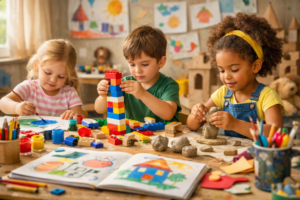
Activities in constructive play involve drawing, building blocks, crafting, clay modelling, storytelling, and art based learning. Through such activities, children are able to make imaginary things into real works. When children engage in this kind of play they frequently enter a psychological condition called flow, a complete resonance and concentration that makes learning, creativity and emotional fulfilment more profound.

The paper will discuss the psychological meaning of constructive play, the importance of creativity in emotion development and how the concept of flow in art based learning promotes the cognitive and emotional development of children.

Understanding Constructive Play

Constructive play is an activity whereby children use materials in order to make or build something new. Constructive play involves problem-solving, creativity and planning unlike simple play which may involve repetitive action.

Constructive play can be of the form:

  • Construction using blocks or Lego.
  • Creating, sketching, or designing.
  • Designing models or puzzles
  • Clay modeling or sculpting
  • Coming up with storeys or fantasy activities.

Constructive play is regarded by developmental psychologists as a transition between sensorimotor exploration and complex symbolic thought.

Developmental Perspective

The developmental psychology holds the view that play changes with age. At an early age, young children or children first play sensorimotor whereby they learn to touch and move things. Children develop into constructive play as cognitive skills increase whereby they design and make objects with a purpose.

This change is a reflection of the training of some significant psychological skills:

  • Cognitive planning
  • Spatial reasoning
  • Imagination
  • Emotional expression

Playing constructively, kids are the ones who experiment with the ideas and get to know that thoughts can be converted into reality.

Play Theory and Psychological Development

The field of play has received a lot of attention in the field of psychology. Scholars consider play as an important learning and emotional control process.

Cognitive Development.

Play enhances the development of the brain through curiosity and experimentation. When children construct something using blocks or draw a picture, they have to consider shapes, balance, patterns and results.

These activities support:

  • Problem-solving skills
  • Executive functioning
  • Memory and attention
  • Abstract thinking

Persistence is also taught to children when the structures fail or the drawings fail to work out. This process of trial and error makes one stronger and more flexible.

Emotional Development

Play can also help children to have a secure place to release emotions. As an illustration, a child can be happy by drawing pictures with colours or venting his/her anger by working with clay or being a creative builder.

This process is psychologically supportive of:

  • Emotional regulation
  • Self-expression
  • Stress reduction
  • Self-confidence development.

When children perceive their work appreciated in adults or other children, it helps to strengthen the feeling of competence and self-worth.

Creativity as a Tool for Emotional Growth

Creativity has usually been regarded as the artistic skills, however in the field of psychology, it is the power to come up with new ideas, solutions and expressions. Emotional intelligence is also closely related to creativity in the development of children.

Creative Expression and Processing of Emotions.

Children lack the words to explain complicated emotions. Emotional communication occurs through alternative modes through creative activities.

For example:

  • Drawing may symbolise emotions which children are not able to express.
  • Fears or hopes are processed symbolically by storytelling to the children.
  • Building fantasy worlds help children to experiment with identity and bonds.

This is especially symbolic in early childhood when the emotional consciousness is in the process of formation.

Developing Psychological Flexibility

Imaginative play helps children to think outside the box. A child is exercising cognitive flexibility when he or she thinks of how to construct a structure or design in a different way.

Cognitive flexibility is related to:

  • Versatility in innovation.
  • Improved problem-solving skills.
  • Better coping behaviours in emotions.

Creativity which is a result of positive play is therefore involved in intellectual and emotional growth.

The Concept of Flow in Learning

The flow state is one of the most interesting psychological experiences in the creative activities. Flow is a condition of total concentration on an activity in which time appears to fly fast and the person is immersed into it.

Flow usually takes place in children when it comes to art based learning or constructive play.

Characteristics of Flow

Once children go into a flow state, a number of psychological characteristics manifest:

  • Intense concentration
  • Loss of awareness of time
  • Intrinsic enjoyment
  • Deep engagement in the task
  • Challenge and skill using a middle ground.

As an illustration, the child who is assembling an intricate Lego construction can lose an hour in total concentration with no attention to the surrounding distractions.

The importance of flow in child development is why it is important.

Flow experiences are very precious in that they promote intrinsic motivation. Children do not do anything to get rewarded or praised, but do it because they enjoy and find it meaningful.

This personal drive results in:

  • Deeper learning
  • Improved creativity
  • Increased persistence
  • Increased emotional satisfaction.

Creative and artistic activities are frequently prescribed by educational psychologists as a part of learning settings since they invariably facilitate flow states.

Art-Based Learning and Psychological Development

Creative activities included in art-based learning include drawing, painting, music as well as design as part of the learning. Psychologically, this method facilitates cognitive as well as emotional growth.

Improving Attention and Focus.

A lot of concentration may be needed in the process of art. During the process of drawing and painting, children have to concentrate on shapes, colours, and patterns.

This process strengthens:

  • Attention span
  • Visual perception
  • Fine motor skills

These are also skills which are necessary in academic success.

Encouraging Self-Identity

Children are exposed to their own likes and ideas through creative activities. The paintings they do are an expression of their thoughts, feelings, and experiences.

In the long run, this leads to the creation of:

  • Personal identity
  • Self-confidence
  • Independent thinking

Children are more ready to give expression to their ideas when they realise their ideas are heard.

Constructive Play in Educational and Home Settings

Parents and educators have a significant part to play in the promotion of constructive play.

Developing Supportive Environments.

Children also enjoy environments that make them have access to various creative materials which include:

  • Building blocks
  • Art supplies
  • Craft materials
  • Clay or modeling tools
  • Storytelling props

The idea is not to regulate the activity but to give the children freedom to explore and experiment.

Promoting Process, Not Product.

Creating is more significant than the actual product in constructive play. When adults are outcome-oriented when they want to do the best drawing, the children may be anxious or perfectionistic.

Rather, constructive criticism must focus on producing and being creative.

Examples include:

  • I prefer various colours that you have used.
  • You were a hard-working man on that structure.

It is a strategy that enhances intrinsic motivation and self confidence.

Psychological Benefits of Constructive Play

Research in developmental psychology highlights several benefits of constructive play:

Cognitive Benefits

  • Improved spatial reasoning
  • Enhanced problem-solving skills
  • Greater creativity and imagination

Emotional Benefits

  • Healthy emotional expression
  • Reduced stress and anxiety
  • Stronger self-esteem

Social Benefits

When constructive play occurs in groups, children also develop:

  • Cooperation skills
  • Communication abilities
  • Empathy and perspective-taking

These skills are essential for healthy social relationships.

Challenges in Modern Childhood

Within the modern society, we tend to see the children spending more time on the digital devices. However, as much as technology presents learning possibilities, too much screen time may limit the possibility of constructive play.

In the absence of play experiences that are creative, children might be deprived of the following critical opportunities:

  • Emotional exploration
  • Sensory learning
  • Imaginative thinking

Thus, psychologists and educators focus on the balance between digital learning and physical, creative, and art-based learning.

Implications for Parents, Educators, and Mental Health Professionals

Constructive play can be an effective intervention tool among the professionals dealing with children, such as counsellors, psychologists, and educators.

Therapeutic methods, which are based on play, are frequently based on art, narration, and constructive play to assist children to develop emotions and work through experiences.

For example:

  • children can learn to talk about feelings using drawing activities.
  • The internal conflicts or fears can be disclosed by the creation of storeys.
  • Construction jobs are capable of reinforcing confidence and problem solving skills.

Such methods do not contradict the theories of developmental psychology and contribute to child development in their entirety.

Conclusion

Positive play is much more than the recreational activity, it is a basic psychological mechanism that enables children to think, feel, and create. By constructing, sketching, creating, and creative play, children get to learn how to express themselves, problem-solving, and how to interpret their feelings.

Flow is a further means of learning, enabling full engagement and intrinsic motivation and satisfaction affecting the creative activities. Learning settings built around art allowing exploration and creativity enable children to not only acquire academic abilities but also to become resilient, gain confidence and have psychological flexibility.

In a world where structured education and computer interaction are playing a bigger role, it is still necessary to retain the presence of positive play. Healthier emotional growth and lifelong interest can also be supported by encouraging creativity and flow experiences during childhood and fostering them through parents, educators, and mental health professionals.

Constructive play, then, is no longer play as such, but a potent medium in which children construct their own creations as well as the worlds within them.

Frequently Asked Questions (FAQ)

1. What is constructive play in child development?

Constructive play refers to activities where children create, build, or design something using materials such as blocks, clay, paper, or art supplies. In developmental psychology, this type of play helps children develop problem-solving skills, creativity, and emotional expression.

2. Why is constructive play important for children?

Constructive play supports multiple aspects of development including cognitive, emotional, and social growth. It improves imagination, encourages independent thinking, and allows children to explore ideas through hands-on experiences.

3. At what age does constructive play begin?

Constructive play typically begins around age 2–3 years when children start building simple structures with blocks or drawing basic shapes. As children grow older, the complexity of their creations and imagination increases.

4. How does constructive play support emotional development?

Creative activities allow children to express emotions that they may not be able to verbalize. Drawing, crafting, and storytelling help children process feelings, reduce stress, and develop emotional awareness.

5. What is the “flow state” in art-based learning?

Flow state is a psychological condition where a person becomes deeply absorbed in an activity, losing track of time and experiencing enjoyment. During creative play or art activities, children often experience flow, which enhances concentration and learning.

6. How does creativity influence child psychology?

Creativity encourages children to think flexibly, generate new ideas, and explore different solutions. It strengthens imagination, emotional intelligence, and cognitive adaptability, which are essential for lifelong learning.

7. What types of activities promote constructive play?

Common activities include:

  • Building blocks or Lego
  • Drawing and painting
  • Clay modeling
  • Crafting and DIY projects
  • Puzzle construction
  • Story creation and imaginative play

These activities stimulate both creativity and critical thinking.

8. Can constructive play improve academic learning?

Yes. Constructive play strengthens skills such as attention, memory, spatial reasoning, and problem-solving, which are important for subjects like mathematics, science, and language learning.

9. How can parents encourage constructive play at home?

Parents can encourage constructive play by providing creative materials, allowing open-ended exploration, and avoiding excessive screen time. Encouraging effort rather than perfection also helps children feel confident in their creations.

10. Why is constructive play important for mental health professionals working with children?

Psychologists and counselors often use play-based and art-based therapeutic techniques to help children communicate emotions, process experiences, and build coping skills. Constructive play can be an effective tool in child counseling and developmental therapy.

Written by Baishakhi Das

Counselor | Mental Health Practitioner
B.Sc, M.Sc, PG Diploma in Counseling

Reference

  1. American Academy of Pediatrics – The Power of Play
    https://publications.aap.org

  2. American Psychological Association – The Importance of Play in Promoting Healthy Child Development
    https://www.apa.org

  3. Csikszentmihalyi, M. (1990). Flow: The Psychology of Optimal Experience
    https://www.harpercollins.com/products/flow-mihaly-csikszentmihalyi

  4. Piaget, J. (1962). Play, Dreams and Imitation in Childhood
    https://www.routledge.com

  5. Vygotsky, L. (1978). Mind in Society: The Development of Higher Psychological Processes
    https://www.hup.harvard.edu

  6. National Association for the Education of Young Children (NAEYC) – Learning Through Play
    https://www.naeyc.org/resources/topics/play

  7. UNICEF – Learning Through Play: Strengthening Learning Through Play in Early Childhood Education
    https://www.unicef.org

  8. Berk, L. (2018). Development Through the Lifespan
    https://www.pearson.com

  9. The Psychology of Healthy Eating: How Habits and Self-Regulation Shape Our Nutritional Choices


The Psychology of Healthy Eating: How Habits and Self-Regulation Shape Our Nutritional Choices

Introduction

The issue of healthy dieting has been a problem in the contemporary world even in the face of great awareness on nutrition and health. Human beings are usually aware of what they are supposed to eat but their eating habits in day-to-day activities are often in conflict with what they know. This knowledge- behaviour gap underscores the role of behaviour change psychology in the determination of the way people develop, maintain, or change their eating behaviour.

Healthy eating does not only depend on nutritional information and availability of healthy foods. Rather, it is strongly subjective to the mechanisms of psychology like habit formation, self-regulation, motivation and the influence of the environment. The interaction of these mechanisms to influence dietary choices in the long run is the focus of behaviour change psychology.

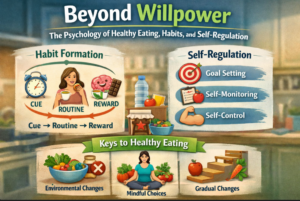
The Habit Formation Theory and Self-Regulation Theory are two significant psychological theories that are used to explain dietary behaviour. Habit formation is the explanation of how repetitive behaviours become automatic responses to surrounding conditions, whereas self-regulation theory is that of how people restrain their impulses, establish goals and watch their behaviour so that they can attain long-term health effects.

The knowledge gained with regard to such psychological processes is informative to individuals, health professionals and policy makers who seek to support sustainable healthy eating behaviours.

The Psychology Behind Eating Behaviour

There are a number of psychological, biological, and environmental factors that contribute to eating behaviour. Human beings can hardly base their food decisions solely on nutritional value. Rather, decisions are usually influenced by emotions, traditions, convenience, culture, and social pressure.

Psychologically, the eating behaviour can be explained by a number of processes:

  1. Automatic behaviour– Eating habits that are developed by repetition.
  2. Conscious decision-making– deliberate decisions regarding food.
  3. Emotional control – food coping.
  4. Environmental stimuli -presence, advertising, and social environment.

Food decisions that people make on a daily basis are not usually conscious. As an illustration, one might reach out to a sweet pastry in between working hours or get fast food after a long working day without thinking twice.

Due to this automatic nature, it is not always effective to just tell people to eat healthy. Rather, behaviour change involves the change of the psychological patterns that lead to the development of the habitual eating behaviour.

Habit Formation in Nutritional Choices

Understanding Habit Formation

The formation of habits is a natural psychological activity in the transformation of behaviour. Habit is a acquired behaviour that is subjected to repetition in a consistent environment to become automatic.

As per behavioural psychology, habits are developed where there is a cue-routine-reward loop:

  1. Cue- a stimulus that causes the behaviour.
  2. Routine- the behaviour itself.
  3. Reward – reward that reinforces the behaviour.

For example:

  1. Stimulus: Afternoon fatigue.
  2. Routine: Eating chocolate or sugary foods.
  3. Recompense: Temporary increase in energy and pleasure.

With time the behaviour becomes automatic because of the repeated exposure to this loop.

Habit Formation and Food Choices

Many nutritional behaviours operate through habit loops. Examples include:

  • Drinking tea with biscuits every morning
  • Snacking while watching television
  • Ordering fast food during late-night work sessions

These behaviours are not always maintained by hunger but by being habitually associated with certain situations or states of emotions.

It has been proposed that developing a new habit may require a few weeks to few months depending upon the complexity of the behaviour and the level of repetition.

Take a case of substituting sweet drinks with water which can be a habit when one always adopts the same thing in any circumstance.

Strategies for Building Healthy Eating Habits

Behaviour change psychology suggests several strategies for developing healthier dietary habits.

1. Environmental Restructuring

Environment plays a powerful role in shaping habits. People are more likely to eat what is visible, accessible, and convenient.

Practical changes include:

  • Keeping fruits and healthy snacks visible at home
  • Reducing availability of junk food
  • Preparing healthy meals in advance

When healthy options become the default choice, behaviour change becomes easier.

2. Implementation Intentions

Implementation intentions are specific action plans linking situations to behaviours.

Instead of setting a vague goal like:

“I will eat healthier.”

A more effective plan would be:

“If I feel hungry between meals, I will eat a fruit instead of processed snacks.”

This method strengthens the association between cues and healthier responses.

3. Gradual Behaviour Change

Sudden drastic changes in diet often fail because they conflict with established habits. Behavioural psychology recommends small incremental adjustments.

Examples include:

  • Replacing sugary drinks with unsweetened beverages
  • Adding one vegetable serving to daily meals
  • Reducing portion sizes gradually

Small changes accumulate over time and are more sustainable.

Self-Regulation Theory and Eating Behaviour

Although habits are used to explain automatic eating behaviour, self-regulation theory is used to explain how people consciously influence themselves in order to attain long-term objectives.

Self-regulation means that one can monitor behaviour, control the impulses and stick to the goal-oriented behaviour.

Self-regulation in the nutrition context assists one to overcome temptations to unhealthy foods and adhere to dietary plans.

Key Components of Self-Regulation

Self-regulation theory typically includes three main components:

1. Goal Setting

Healthy eating behaviour often begins with setting clear goals such as:

  • Reducing sugar intake
  • Eating balanced meals
  • Managing body weight

Goal clarity increases motivation and provides direction for behaviour change.

2. Self-Monitoring

Self-monitoring involves tracking one’s eating behaviour and evaluating progress.

Examples include:

  • Keeping a food diary
  • Using nutrition tracking apps
  • Monitoring portion sizes

Self-monitoring increases awareness and helps identify patterns such as emotional eating or late-night snacking.

3. Self-Control

Self-control refers to the ability to resist immediate temptations in favour of long-term benefits.

For example:

Choosing a healthy meal instead of fast food requires delaying immediate gratification.

Self-control is influenced by several psychological factors including stress, fatigue, and emotional state.

Emotional and Cognitive Influences on Eating Behaviour

Eating behaviour is not purely physiological. Psychological states often influence dietary choices.

Emotional Eating

Food is a stress, anxiety, sadness, or boredom coping mechanism used by many people. This is referred to as emotional eating.

Comfort foods usually are rich in sugar, fat or carbohydrate substances since they bring about the dopamine reward system in the brain and cause a temporary emotional satisfaction.

Nevertheless, emotional feeding results in poor eating habits and health complications in the long run.

Cognitive Biases in Food Decisions

Several cognitive biases influence eating behaviour:

Present Bias

Human beings are more concerned with short-term gratification at the expense of the health benefits in the long run.

Indicatively, the present day might experience the consumption of dessert as a reward compared to happening future health dangers.

Optimism Bias

People tend to dismiss the fact that they are susceptible to diseases brought about by unhealthy eating.

This perception can lower the intentions to change the eating behaviour.

Decision Fatigue

People lose self-control especially after making numerous decisions during the day and make unthoughtful decisions when it comes to food.

This justifies the reason why unhealthy eating is a habit that takes place at late night.

Behavioural Interventions for Healthy Eating

Psychological research has developed several interventions to encourage healthier dietary behaviour.

1. Nudging

Nudging involves subtly altering environments to guide healthier decisions without restricting choices.

Examples include:

  • Placing fruits near checkout counters
  • Offering smaller plate sizes
  • Displaying calorie information

These strategies influence behaviour through environmental cues rather than conscious effort.

2. Social Influence

Social norms and cultural practises have a great influence on eating behaviour.

Individuals have the tendency to reflect the food practises of their peers, family or social groups.

Group-based interventions are frequently utilised in promoting a positive change in behaviour as part of health promotion programmes.

3. Mindful Eating

Mindful eating encourages individuals to pay attention to hunger cues, taste, and satiety while eating.

Practicing mindfulness helps individuals:

  • Reduce overeating
  • Improve food awareness
  • Develop healthier relationships with food

Mindfulness techniques have shown promising results in addressing emotional eating and unhealthy dietary patterns.

The Role of Motivation in Dietary Behaviour

Motivation is a very important aspect in maintaining healthy eating habits.

Psychologists make a difference between two principal types of motivation:

Extrinsic Motivation

Action that is motivated by some outside force or pressure i.e., diet in order to conform to societal norms.

Intrinsic Motivation

The internal satisfaction leads to behaviour as in eating healthy in order to feel energetic and enhance wellbeing.

The intrinsic motivation to change diet is more sustainable in the long term as opposed to external pressure.

Challenges in Maintaining Healthy Eating Behaviour

Although the people are aware and motivated, it is difficult to sustain healthy eating habits.

There are a number of psychological obstacles to this challenge:

Habit Strength

Powerful habits can silence individual will to eat healthy.

Environmental Triggers

Unhealthy eating is usually promoted by food advertising, availability of processed foodstuffs and by social gatherings as well.

Stress and Emotional Distress.

Stress lowers self-control and enhances favorability of comfort foods of high calorie content.

Lack of Immediate Rewards

Eating healthy does not always bring short-term satisfaction but long-term results, which makes it more difficult to sustain.

Promoting Sustainable Dietary Behaviour Change

Psychological interventions that involve the formation of habits as well as self-control should be used to help the client adopt organic dietary changes in the long run.

The strategies that work are:

  • Building favourable food contexts.
  • Promoting the habitual use.
  • Enhancing personal control.
  • Probing the sources of emotions.
  • Encouraging intrinsic motivation.

Psychologists, counsellors and nutritionists constitute health professionals who have a significant role to play in helping individuals in sustainable behaviour change.

Conclusion

Healthy eating is not just an issue of will and knowledge. It is strongly influenced by psychological mechanisms such as habit development, self control, affective factors and external stimuli.

The formation of a habit gives an explanation of how the repetitive behaviours with regard to diet turn automatic and the theory of self-regulation underscores the importance of conscious regulation of impulses and goal of health.

Knowledge of these psychological processes enables individuals and health experts to develop more effective programmes of promoting healthy eating behaviour.

Sustainable behaviour change in nutrition can be realised by using a combination of habit-based interventions, self-regulation tricks, and supporting environments, and will eventually advance physical and psychological wellbeing.

Frequently Asked Questions (FAQs)

1. What is healthy eating behaviour change psychology?

Behaviour change psychology can be defined as a study of the psychology behind making people change and accept the healthier way to eat. It discusses motivation, formation of a habit, self-control and environmental factors, which influence food choices.

2. Why are people having a hard time keeping a healthy diet?

People find it difficult as the eating behaviour is affected by habits, emotions, association with the environment and social factors. Automatic habits and instant gratifications of unhealthy foods can be used even by those who are aware of what is healthy with the long-term health objectives.

3. What does it mean by becoming addicted to what you eat?

Habit formation is a term used to describe the development of eating behaviours as automatic reaction to some cues. As a case in point, consumption of snacks during television viewing may become a routine when one does the same at a given environment.

4. What is the eating behaviour habit loop?

There are three components of the habit loop:

  • Cue: An inducement of the eating behaviour (e.g. boredom or stress)
  • Routine: The behaviour as such (e.g., eating chips or sweets)
  • Reward: The satisfaction or release which comes with eating.

This loop gains strength and becomes automatic with time.

5. What is the self-regulation theory of eating behaviour?

Self-regulation theory describes the ability of human beings to manage their impulses and behaviours in order to accomplish long-term objectives. In the eating behaviour it is setting dietary goals, food monitoring and self-discipline over eating to keep healthy.

6. What is the role of self-monitoring in enhancing diet?

Self-monitoring makes people more aware of their eating habits. Monitoring meals, snacks, and quantities can help people discover their poor eating habits and make a rational choice to change their diet.

7. What is emotional eating?

Emotional eating happens when people eat when they feel stressed, sad, bored or when they are anxious, instead of feeling hungry. It is mostly linked to the comfort foods that are rich in sugar and fat.

8. What are the methods of developing healthy eating habits?

It is possible to develop healthy habits through:

  • Gradual incremental changes to diet.
  • Planning meals in advance
  • The availability of healthy food.
  • Minimising unhealthy food stimuli.
  • Habits require consistency and repetition.

9. What is the impact of the environment on eating behaviour?

Food preferences are very much affected by the environment. Some of the determinants that can promote or discourage healthy eating include the availability of foods, the size of portions, marketing and the social environment.

10. What is the importance of motivation in a healthy diet?

Motivation assists persons to maintain a long-term change in diet. In cases where individuals experience intrinsic motivations like the desire to have improved health or energy sources, these people will have a higher chance of staying healthy through eating.

Written by Baishakhi Das

Counselor | Mental Health Practitioner
B.Sc, M.Sc, PG Diploma in Counseling


Reference 

  1. World Health Organization – Healthy Diet
    https://www.who.int/news-room/fact-sheets/detail/healthy-diet

  2. Harvard T.H. Chan School of Public Health – Nutrition Source
    https://www.hsph.harvard.edu/nutritionsource

  3. National Institutes of Health – Eating Behavior Research
    https://www.nih.gov

  4. American Psychological Association – Psychology of Eating
    https://www.apa.org/topics/eating

  5. NHS – Healthy Eating Guidelines
    https://www.nhs.uk/live-well/eat-well

  6. Centers for Disease Control and Prevention – Healthy Eating
    https://www.cdc.gov/nutrition

  7. Frontiers in Psychology – Eating Behaviour Research
    https://www.frontiersin.org/journals/psychology

  8. Behaviour Change for Better Health – National Institute for Health and Care Excellence
    https://www.nice.org.uk/guidance

  9. British Psychological Society – Health Psychology Resources
    https://www.bps.org.uk

  10. PubMed Research Database (Psychology & Nutrition Studies)
    https://pubmed.ncbi.nlm.nih.gov/

  11. Breaking the Habit Loop: The Psychology Behind Quitting Smoking on National No Smoking Day


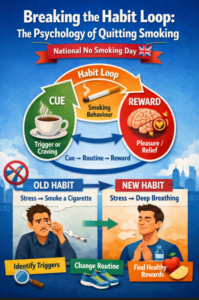
Breaking the Habit Loop: The Psychology Behind Quitting Smoking on National No Smoking Day

National No Smoking Day (UK) is a campaign aimed at raising awareness in thousands of individuals to make a step towards a healthier life by quitting smoking each year. With the physical evils of smoking, lung disease, heart, and cancer being common knowledge, the psychological processes that ensure people smoke are not well known. Smoking is both a chemical dependency on the nicotine and a highly developed behaviour pattern, conditioned by prompts and patterns and reinforced.

Knowledge of these mental patterns is crucial since cessation of smoking is seldom related to will power. It includes rewiring behaviour in the brain, defying automatic responses and substituting bad habits with better ones. Habit Loop Theory is one of the strongest concepts of studying this process and it is widely discussed in the behavioural psychology.

During the National No Smoking Day, it is possible to consider smoking in the prism of psychology, specifically addiction psychology, habit formation, and behavioural change and see how people might figure out why it is so hard to quit and how it is possible to sustain the change.

Smoking as Both Addiction and Habit

Nicotine dependence is among the most powerful chemical dependence. Once nicotine is in the brain it activates the release of dopamine, the neurotransmitter that is linked to pleasure and reward. This release of dopamine induces a brief sense of relaxation / satisfaction that strengthens the behaviour.

Nonetheless, smoking behaviour cannot be solely attributed to addiction. According to many smokers, in some cases, they automatically light a cigarette after meals, when being stressed, when drinking tea or coffee or during interpersonal communication. It is even in these instances that the behaviour is almost automatic.

It is at this point where psychology comes in. The habit of smoking is instilled in everyday life by habitual behaviour. With time, the brain becomes conditioned to relate some situational stimuli with smoking.

For example:

  • Stress → Smoke a cigarette
  • Tea break → Smoke a cigarette
  • Social gathering → Smoke a cigarette

These patterns become automatic because the brain prefers predictable routines that provide quick rewards.

Understanding the Habit Loop

Habit Loop Theory explains how behaviours become automatic through three interconnected components:

  1. Cue (Trigger)
  2. Routine (Behaviour)
  3. Reward (Outcome)

This cycle repeats continuously, reinforcing the behaviour over time.

Cue: The Trigger That Starts the Habit

The cue is the signal that initiates the behaviour. In smoking, cues can be external or internal.

Common cues include:

  • Feeling stressed or anxious
  • Drinking tea or coffee
  • Finishing a meal
  • Being around friends who smoke
  • Feeling bored or restless

From a psychological perspective, cues activate automatic behavioural responses stored in memory networks. Once the cue appears, the brain anticipates the reward associated with the behaviour.

For instance, a smoker may not consciously decide to smoke when feeling stressed. Instead, the brain automatically retrieves the learned response: stress → cigarette → relief. 

Routine: The Behaviour Itself

The action taken due to the cue is referred to as the routine. The pattern in the situation with smoking is the light and smoke a cigarette.

The routine has been ingrained in day to day life over a long period of time. Studies in behavioural psychology have demonstrated that habits are stored in the basal ganglia which is a section of the brain that auto stores behaviours. Once a habit becomes habitual it demands less conscious effort.

That is why smokers tend to tell about smoking unconsciously. The behaviour becomes automatic and not a choice.

Reward: The Reinforcement

The reward is the benefit that reinforces the behaviour and encourages repetition.

In smoking, rewards may include:

  • Temporary relaxation
  • Stress reduction
  • Social bonding
  • A break from work
  • Nicotine-induced dopamine release

Even if the reward is short-lived, it strengthens the neural association between cue and routine.

From the brain’s perspective, the cycle becomes:

Cue → Routine → Reward → Repeat

The stronger the reward, the stronger the habit loop becomes.

Why Quitting Smoking Is Psychologically Difficult

A number of smokers make several attempts before they win the battle. This is not the challenge of not being disciplined but an inability to break various psychological loops at the same time.

Quitting is difficult because of several psychological reasons:

1. Nicotine Withdrawal

Nicotine causes addiction among people and withdrawal symptoms occur when a person experiences a decrease in the nicotine levels, which lead to irritation, anxiety, restlessness, and inability to concentrate. These symptoms compel the brain to relapse into nicotine.

2. Environmental Triggers

Everyday life is full of stimuli that are related to smoking. In spite of quitting, these cues can trigger cravings.

3. Emotional Regulation

Other people smoke to relieve stress, depression or frustration. Getting rid of cigarettes and not substituting the coping mechanism may create emotional gaps.

4. Identity and Social Factors

Smoking may be incorporated into the group culture or social identity of an individual. The behaviour may be justified by social settings where smoking is widespread.

Rewiring the Habit Loop

One of the most effective psychological strategies for quitting smoking is modifying the habit loop rather than trying to eliminate it entirely.

The key principle is:
Keep the cue and reward but change the routine.

For example:

Cue: Stress
Old Routine: Smoke a cigarette
New Routine: Deep breathing or short walk
Reward: Feeling calmer

Similarly:

Cue: Tea break
Old Routine: Cigarette
New Routine: Chewing gum or talking with a friend

By replacing the routine, the brain gradually learns a new behavioural pathway.

Behavioural Change Strategies

Psychology offers several evidence-based strategies to break smoking habits.

1. Awareness of Triggers

The first step in behavioural change is identifying personal triggers. Keeping a smoking diary can help individuals track:

  • When they smoke
  • What they feel before smoking
  • What situation triggered the urge

This awareness helps break automatic behaviour.

2. Delaying the Habit

Cravings often last only 5–10 minutes. Delaying smoking by a few minutes can weaken the habit loop.

For instance, when the urge arises, individuals can:

  • Drink water
  • Take a short walk
  • Practice deep breathing

Often the craving fades before the cigarette is lit.

3. Replacement Behaviours

Substituting healthier behaviours can reduce cravings. Examples include:

  • Chewing sugar-free gum
  • Eating healthy snacks
  • Practicing mindfulness
  • Exercising

These alternatives provide similar psychological rewards without harmful consequences.

4. Social Support

When the environments are favourable, behavioural change is simplified. Individuals can be motivated during such hard times by friends and family, as well as support groups.

Counselling and behavioural therapy can as well assist people to come up with healthier coping mechanisms.

5. Cognitive Restructuring

Cognitive psychology emphasizes the role of thoughts in behaviour. Smokers may hold beliefs such as:

“I need a cigarette to relax.”
“Smoking helps me focus.”

Challenging these beliefs and replacing them with healthier perspectives—such as relaxation techniques or exercise—can support long-term change.

The Role of National No Smoking Day

National No Smoking Day is not a health campaign rather, it is a psychological behavioural change initiator.

Public awareness campaigns generate a moment at which each individual feels encouraged to reevaluate his or her habits. Motivation and accountability can be enhanced through social media discussions, community support and health campaigns.

From a psychological perspective, such campaigns help by:

  • Increasing self-awareness about smoking behaviour
  • Providing social reinforcement for quitting
  • Encouraging goal-setting and commitment

When people see others attempting to quit, the behaviour becomes socially normalized.

Long-Term Habit Transformation

Quitting the habit of smoking is not a one day affair. According to behavioural psychology, change in habits comes about after constant repetition of new habits.

The brain develops new neural circuits with time. The new habit develops at some point and the previous loop is substituted by the new loop of habit.

For example:

Stress → Deep breathing → Relief
Coffee break → Short walk → Relaxation

When these patterns repeat frequently, the brain gradually rewires its reward system.

A Psychological Perspective on Hope

The most significant impact of the National No Smoking Day is that smoking can be quitted. A lot of individuals manage to give up when they learn the psychological processes of their habits.

Psychology does not view smoking as a failure in will-power, but rather a learnt behavioural loop, something that can be changed and substituted.

Whenever a smoker takes a healthier response to a trigger, he or she undermines the previous habit loop and reinforces a new one.

Even minor changes in behaviour, which are repeated regularly, may result in significant changes in health and well-being.

Conclusion

Smoking is not just a physical addiction, but it is a strong psychological habit that is developed through the cycles of cues, routines, and rewards. The Habit Loop Theory is a useful theory when it comes to the reasons why smoking is automatic and the challenges of quitting.

Individuals can also transform their patterns of behaviour over time by trigger identification, routine modification and reinforcement of healthier rewarding behaviour. National No Smoking Day brings to our minds that change is based on awareness and then maintained by regular psychological effort.

Finally, the habit loop breaking is not only about the need to stop smoking but to regain the power over behaviour, health and future.

FAQs: Habit Loop & Quitting Smoking

1. What is the Habit Loop of psychology?

The model of behaviour is the Habit Loop that defines the mechanism of forming habits by using three components: cue (trigger), routine (behaviour), and reward (outcome). This cycle strengthens behaviour and makes it an automatic one with time.

2. What is the association between the habit loop and smoking addiction?

Smoking is a cycle that is repeated quite frequently:

  • Giving stimulus: Stress, coffee, social situation.
  • Habit: Smoking a cigarette.
  • Payoff: Relaxation or pleasure based on nicotine.
    Brain turns addicted to the habit of smoking due to repeated exposure to this cycle.

3. Why is it not easy to quit smoking psychologically?

Avoiding smoking is not easy since nicotine addiction is both a chemical and a behavioural habit. Even in the case of the person, who is already not smoking, environmental cues and cravings may activate a relapse.

4. What is the National No Smoking Day?

The national no smoking day is an on-going yearly health awareness campaign in the United Kingdom that takes place on the second Wednesday of March in order to motivate smokers to quit and to enhance their health.

5. Brain What are the ways that the brain upholds smoking?

Introducing nicotine into the brain, it activates the reward systems, releasing dopamine, which make people feel pleasant or relieved. This will reinforce the cue-routine-reward loop and reinforce the habit with time.

6. Can the habit loop be changed?

Yes. According to behavioural psychology, one can change the habit by determining the cue and reward and then replacing the routine with a healthier behaviour which can be exercise, breathing exercises or chewing gum.

7. What are the usual consequences that result in smoking?

Typical triggers to smoking are:

  • Stress or anxiety
  • Drinking coffee or alcohol
  • Social gatherings
  • Boredom
  • Seeing others smoke

The triggers stimulate the cravings and induce habitual behaviour.

8. How are the smoking cravings normally long?

The majority of cravings take a period of 5-10 minutes. Distraction or relaxation methods can be used to manage this short period to enable people to overcome the urge to smoke.

9. What are some of the psychological tactics that assist individuals to quit smoking?

Strategies that are evidence-based involve:

  • Identifying triggers
  • Replacing routines
  • Cognitive behavioural therapy (CBT)
  • Social support
  • Mindfulness and stress reduction.
  • The techniques assist in undermining the current habit loop.

10. Why do you think it is good to quit smoking?

Quitting smoking can lead to:

  • Less possibility of cancer or respiratory illnesses.
  • Better mood and mental wellbeing.
  • Increased energy
  • Money saved on non-cigarette purchase.

Written by Baishakhi Das

Counselor | Mental Health Practitioner
B.Sc, M.Sc, PG Diploma in Counseling


Reference Links

  1. https://pmc.ncbi.nlm.nih.gov/articles/PMC2563638/

  2. https://www.healthline.com/health/mental-health/habit-loop

  3. https://www.psychologytoday.com/us/basics/habit-formation

  4. https://pmc.ncbi.nlm.nih.gov/articles/PMC4562259/

  5. https://en.wikipedia.org/wiki/No_Smoking_Day

  6. https://www.healthhub.sg/well-being-and-lifestyle/mental-wellness/shake-up-old-habits-to-stub-out

  7. The Invisible Lens: How Implicit Bias Shapes Decision-Making in Leadership and the Judiciary


The Invisible Lens: How Implicit Bias Shapes Decision-Making in Leadership and the Judiciary

In modern societies, we often believe that decision-making—especially in leadership and judicial systems—is purely rational and objective. Judges evaluate evidence, leaders analyze facts, and decisions are expected to be impartial. However, psychology reveals a deeper truth: human decisions are rarely free from cognitive influences. One of the most powerful yet subtle influences is implicit bias.

Implicit bias refers to the unconscious attitudes or stereotypes that affect our understanding, actions, and judgments without conscious awareness. Unlike explicit prejudice, implicit biases operate silently, often contradicting our conscious beliefs about fairness and equality.

The Psychological Mechanism of Implicit Bias

From a cognitive psychology perspective, the human brain continuously relies on mental shortcuts known as heuristics to process the vast amount of information it encounters every day. Because our cognitive resources are limited, the brain cannot carefully analyze every situation in detail. Instead, heuristics allow individuals to make rapid judgments and decisions with minimal cognitive effort. These shortcuts are often useful and adaptive, helping us respond quickly in complex environments. However, they can also lead to systematic cognitive biases, especially when decisions are influenced by stereotypes, past experiences, cultural narratives, and social conditioning.

Over time, people internalize societal messages about gender roles, authority, and competence. These internalized patterns become part of our implicit cognitive schemas, which automatically shape perceptions and expectations. For instance, research in social and organizational psychology has shown that many individuals unconsciously associate leadership traits such as assertiveness, dominance, and authority with masculinity, while associating nurturing, caregiving, and emotional sensitivity with femininity. Importantly, these associations can operate even among individuals who consciously endorse gender equality and strongly believe in fairness.

This phenomenon can be better understood through the dual-process theory of cognition, which proposes that human thinking operates through two interacting systems.

  • System 1 thinking is fast, intuitive, automatic, and largely unconscious. It relies heavily on heuristics and learned associations, enabling people to make quick judgments without deliberate reasoning. Because it operates automatically, System 1 can easily activate implicit stereotypes and biases without the individual being aware of it.
  • In contrast, System 2 thinking is slow, deliberate, analytical, and effortful. It involves conscious reasoning, critical evaluation of evidence, and reflective decision-making. System 2 has the capacity to monitor and override automatic responses generated by System 1, but it requires attention and cognitive effort.

Implicit bias primarily operates through System 1 processing, influencing perceptions, evaluations, and judgments before conscious reasoning has the opportunity to intervene. As a result, individuals may unknowingly interpret behaviors, competence, or credibility through the lens of unconscious associations. Understanding this cognitive mechanism is crucial for recognizing how implicit bias can shape decision-making processes in areas such as leadership selection, workplace evaluation, and judicial reasoning, even when individuals strive to act fairly and objectively.

Implicit Bias in Leadership and Judicial Decision-Making

In leadership contexts, implicit bias can subtly influence a wide range of professional decisions, including hiring practices, promotion opportunities, performance evaluations, and perceptions of competence or authority. Even when organizations aim to promote fairness and merit-based evaluation, unconscious stereotypes may shape how leadership qualities are interpreted.

Women leaders, for example, often face what psychologists describe as the “double bind dilemma.” Leadership is traditionally associated with traits such as assertiveness, decisiveness, and dominance—qualities that are culturally coded as masculine. When women demonstrate these traits, they may be perceived as overly aggressive, unlikable, or difficult. Conversely, when they exhibit warmth, empathy, or cooperation—traits socially associated with femininity—they may be judged as less authoritative or less capable of leading effectively. This tension creates a psychological and social challenge where women leaders are evaluated through conflicting expectations.

Within judicial systems, implicit bias can also influence how information is perceived and interpreted. Judges, lawyers, and jurors are expected to make objective decisions based on evidence and legal reasoning; however, psychological research suggests that unconscious cognitive processes can still shape interpretations of evidence, credibility of witnesses, and behavioral judgments. For instance, stereotypes related to gender, race, social class, or cultural background may unconsciously affect how individuals interpret a person’s reliability, honesty, or responsibility. Studies in legal psychology have shown that subtle cues—such as appearance, speech patterns, or emotional expression—can sometimes influence perceptions of guilt, innocence, or moral accountability, even among highly trained professionals who consciously strive for neutrality.

It is important to emphasize that implicit bias does not necessarily reflect deliberate prejudice or intentional discrimination. Instead, it highlights how deeply embedded social stereotypes and automatic cognitive processes interact with institutional structures and professional decision-making. These unconscious influences illustrate the complex relationship between individual cognition and broader social norms, reminding us that achieving true fairness requires not only ethical commitment but also awareness of the psychological mechanisms that shape judgment and behavior.

Gender Dynamics and the Importance of Representation

The presence of women in leadership and judiciary roles plays a crucial role in promoting gender-sensitive perspectives and reducing systemic bias. From the perspective of social role theory, representation helps challenge traditional stereotypes about authority and competence.

Moreover, diverse leadership teams encourage cognitive diversity, which improves decision-making quality by incorporating multiple perspectives and reducing groupthink.

Psychological Strategies to Reduce Implicit Bias

Psychology also offers evidence-based approaches to minimize implicit bias in decision-making:

  1. Awareness Training
    Recognizing that everyone possesses implicit biases is the first step toward reducing their influence.

  2. Structured Decision-Making
    Using standardized evaluation criteria can reduce reliance on subjective judgments.

  3. Perspective-Taking
    Research shows that actively considering another person’s viewpoint can reduce stereotypical thinking.

  4. Diverse Environments
    Regular interaction with diverse groups helps weaken automatic stereotypes over time.

Toward More Conscious Leadership

Implicit bias reminds us that fairness is not only a moral commitment but also a psychological challenge. By understanding how unconscious processes influence judgment, institutions can design systems that promote equity, transparency, and accountability.

As more women step into leadership and judicial roles, they not only break structural barriers but also contribute to reshaping the psychological landscape of authority and decision-making.

Ultimately, the goal is not to eliminate human cognition—an impossible task—but to ensure that our decisions are guided more by awareness than by invisible biases.

Reference 

1. Implicit Bias and Social Cognition


Greenwald, A. G., & Banaji, M. R. (1995).
Implicit Social Cognition: Attitudes, Self-Esteem, and Stereotypes.
Journal Psychological Review.

🔗 https://doi.org/10.1037/0033-295X.102.1.4

2. Dual-Process Theory of Thinking

Kahneman, D. (2011).
Thinking, Fast and Slow.

🔗 https://us.macmillan.com/books/9780374533557/thinkingfastandslow

3. Gender Bias in Leadership Evaluation

Heilman, M. E. (2001).
Description and Prescription: How Gender Stereotypes Prevent Women’s Ascent Up the Organizational Ladder.
Journal of Social Issues.

🔗 https://doi.org/10.1111/0022-4537.00234

5. The Psychology of Protest: How Crowds Think, Feel, and Act Together

Written by Baishakhi Das

Counselor | Mental Health Practitioner
B.Sc, M.Sc, PG Diploma in Counseling