
Introduction
Love is often described as warm, nurturing, and gradual—a bond that grows stronger over time through mutual trust, respect, and emotional connection. But not all intense affection is genuine. Sometimes, overwhelming praise, attention, and affection are used as manipulation tools. This tactic is known as love bombing, a behaviour often associated with narcissistic, controlling, or abusive individuals.
Love bombing may feel intoxicating in the beginning—like a dream come true. But behind the fast-paced romance, constant attention, and unrealistic promises lies a hidden motive: control.
This article explores what love bombing really is, the early signs you should watch for, why people use it, and, most importantly, how you can protect yourself from this subtle yet dangerous manipulation.
What is Love Bombing?
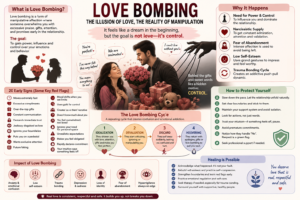
Love bombing is a form of manipulative affection where someone overwhelms you with excessive praise, gifts, attention, and promises early in the relationship. The goal is not to love you but to gain power, influence, and control over your emotions and behaviour.
Key Characteristics of Love Bombing:
- Intense and fast-paced affection
- Idealization of the partner
- Boundary violations
- Rapid escalation of commitment
- Emotional dependence
- Manipulation disguised as love
It often occurs in the early stages of dating but can also appear in friendships, workplaces, or family dynamics.
Why Love Bombing Happens: The Psychology Behind It
Love bombing is rarely random. It is often a psychological strategy—used consciously or unconsciously—to create emotional attachment, dependency, and influence. While not everyone who love bombs has a personality disorder, this behaviour is commonly observed in individuals with controlling tendencies, insecure attachment styles, or certain narcissistic traits. Over time, the intense affection may give way to manipulation, emotional instability, and unhealthy relationship dynamics.
1. Need for Power and Control
For some individuals, love bombing is a way to quickly establish emotional influence. By making you feel deeply valued and emotionally attached, they gain greater control over your time, decisions, emotions, and behaviour. Once this bond is established, it becomes easier to manipulate or dominate the relationship.
2. Desire for Validation (Narcissistic Supply)
Individuals with strong narcissistic traits often seek constant admiration, attention, and reassurance to maintain their self-esteem. Love bombing can become a way of securing a reliable source of validation, affection, and emotional attention. When that validation decreases, they may become distant, critical, or controlling.
3. Fear of Abandonment
Not everyone who love bombs intends to manipulate. Some people with an intense fear of rejection or abandonment may become overly affectionate and emotionally invested very early in a relationship. Although their behaviour may stem from insecurity rather than malicious intent, it can still create unhealthy pressure and blurred boundaries.
4. Low Self-Esteem
People with poor self-worth may rely on grand romantic gestures, excessive compliments, or constant attention to gain acceptance and affection. Instead of allowing trust and intimacy to develop naturally, they attempt to secure the relationship through intensity and overinvestment.
5. The Trauma Bonding Cycle
In unhealthy or abusive relationships, love bombing is often only the first stage of a repeating cycle:
Idealization → Devaluation → Discard → Hoovering
During the idealization phase, the partner is placed on a pedestal and overwhelmed with affection. This is followed by devaluation, where criticism, emotional withdrawal, or manipulation begins. In the discard phase, affection is withheld or the relationship is abruptly ended. Finally, during hoovering, the person attempts to draw their partner back through apologies, promises, or another round of intense affection.
This cycle creates confusion, emotional dependency, and what psychologists refer to as trauma bonding, making it increasingly difficult to leave the relationship.
Understanding the psychology behind love bombing helps you recognize that genuine love develops through consistency, mutual respect, and trust—not through overwhelming intensity or emotional pressure.

Early Signs of Love Bombing: 20 Red Flags You Shouldn’t Ignore
Stages of Love Bombing
The Impact of Love Bombing on Mental Health
Although love bombing may initially feel exciting and deeply romantic, its long-term psychological effects can be significant. The cycle of intense affection followed by withdrawal, criticism, or manipulation often leaves individuals feeling emotionally unstable, confused, and questioning their self-worth.
1. Anxiety and Emotional Confusion
The unpredictable shift between intense affection and emotional distance creates uncertainty and insecurity. You may constantly wonder where you stand in the relationship or worry about doing something that could change your partner’s behaviour.
2. Low Self-Esteem
When the overwhelming affection suddenly stops, many people begin blaming themselves. They may question their worth, attractiveness, or whether they somehow caused the change, leading to a gradual decline in self-confidence.
3. Trauma Bonding
The repeated cycle of emotional highs and lows creates a powerful psychological attachment known as trauma bonding. Intermittent affection reinforces hope that the relationship will return to its early “perfect” stage, making it difficult to leave despite ongoing emotional harm.
4. Depression
Living with constant emotional instability, rejection, and self-doubt can contribute to persistent sadness, hopelessness, loss of motivation, and symptoms of depression.
5. Loss of Personal Identity
As the relationship becomes increasingly consuming, you may begin prioritizing your partner’s needs, emotions, and expectations over your own. Over time, your interests, goals, values, and sense of identity may gradually fade into the background.
6. Fear of Abandonment
Repeated cycles of affection followed by emotional withdrawal can create a lasting fear of rejection or abandonment. Even in future relationships, you may become overly anxious about being left or not being “good enough.”
7. Hypervigilance
You may become constantly alert to changes in your partner’s mood, tone of voice, or behaviour, trying to prevent conflict or regain their affection. This heightened state of emotional vigilance can become exhausting and contribute to chronic stress and anxiety.
The emotional impact of love bombing often extends beyond the relationship itself. Without awareness and support, these experiences can affect future relationships, self-esteem, and overall mental well-being. Recognizing these psychological effects is an important step toward healing, rebuilding confidence, and developing healthier relationship patterns.
Why Smart, Strong People Fall for Love Bombing
One of the biggest misconceptions about love bombing is that only vulnerable or naïve people are affected. In reality, anyone can become a target of emotional manipulation, regardless of their intelligence, education, confidence, or life experience. Love bombing works by exploiting universal human needs for love, connection, and acceptance—not by targeting weakness.
1. Love Bombing Feels Good at First
Humans naturally seek affection, validation, and emotional connection. The intense attention, admiration, and excitement created during the early stages of love bombing can feel deeply rewarding, making it difficult to recognize that the affection may have hidden motives.
2. Social and Cultural Conditioning
Many movies, television shows, and romantic stories portray overwhelming passion, instant commitment, and grand romantic gestures as signs of “true love.” As a result, behaviours that may actually be warning signs are sometimes mistaken for deep affection and commitment.
3. Attachment Style and Past Experiences
Certain psychological factors can increase vulnerability to love bombing. Individuals with anxious attachment styles, low self-esteem, or unresolved childhood trauma or past relationship trauma may be more likely to seek reassurance and emotional closeness, making intense affection feel especially comforting.
However, it’s important to remember that these factors increase vulnerability—they do not guarantee someone will experience love bombing.
4. Manipulators Are Often Highly Skilled
Love bombers are frequently charismatic, attentive, confident, and emotionally expressive. They carefully observe what makes someone feel valued and then use that knowledge to build trust quickly. Because their behaviour initially appears caring and genuine, even emotionally intelligent people may struggle to recognize the manipulation until unhealthy patterns emerge.
Falling for love bombing is not a sign of weakness or poor judgment. It reflects normal human needs for connection, affection, and belonging. Developing awareness of these psychological tactics is one of the most effective ways to protect yourself and build relationships based on trust, respect, and genuine emotional intimacy.
How to Protect Yourself from Love Bombing
You can Contact Us

How to Respond to a Love Bomber
Here are some scripts you can use:
- “I appreciate the affection, but I need things to move slowly.”
- “Am not comfortable making big decisions so early.”
- “I need space right now; please respect my boundaries.”
- “I’m not ready for this level of intensity.”
If they react negatively, that is your answer.
Love Bombing vs Genuine Love: How to Tell the Difference
| Love Bombing | Healthy Love |
|---|---|
| Fast-paced | Slow, steady |
| Overwhelming | Balanced |
| Ignores boundaries | Respects boundaries |
| Manipulative | Supportive |
| Conditional | Consistent |
| Idealizes you | Knows you realistically |
Healing After Love Bombing
Recovering from love bombing takes time, patience, and self-compassion. Although the experience can leave lasting emotional wounds, healing is entirely possible. By understanding what happened and focusing on your emotional well-being, you can rebuild confidence, regain your sense of self, and develop healthier relationship patterns.
1. Acknowledge What Happened
The first step toward healing is recognizing that the relationship involved emotional manipulation rather than genuine love. Understanding the tactics used against you can help reduce self-blame and provide clarity about your experience.
2. Rebuild Your Self-Esteem
Love bombing often leaves people doubting their worth and judgment. Focus on activities that strengthen your confidence and reconnect you with yourself, such as:
- Journaling your thoughts and emotions
- Practising mindfulness and relaxation techniques
- Engaging in self-compassion and positive self-talk
- Pursuing hobbies and personal goals that bring you joy
3. Strengthen Your Boundaries
Healing involves learning to recognize unhealthy relationship patterns and feeling confident in saying “no.” Strong boundaries help protect your emotional well-being and reduce the risk of repeating similar relationship dynamics in the future.
4. Practice Emotional Regulation
Experiences such as trauma bonding can leave you emotionally overwhelmed or easily triggered. Evidence-based techniques—including Cognitive Behavioural Therapy (CBT) strategies, grounding exercises, mindfulness, and somatic practices—can help you manage difficult emotions and regain a sense of emotional stability.
5. Seek Professional Support When Needed
If you’ve experienced trauma bonding, emotional abuse, or significant emotional distress, working with a psychologist or counsellor can be highly beneficial. Therapy provides a safe space to process your experiences, rebuild self-esteem, develop healthier coping strategies, and foster more secure relationships.
6. Surround Yourself with Supportive People
Reconnect with friends, family members, or trusted individuals who make you feel respected, valued, and emotionally safe. Healthy relationships provide encouragement, perspective, and reassurance, reminding you that genuine love is based on trust, respect, and mutual care—not control or manipulation.
Healing after love bombing is not about forgetting the past—it is about understanding it, learning from it, and rebuilding a stronger, healthier relationship with yourself. With time, support, and self-compassion, it is possible to regain your confidence and create relationships founded on trust, authenticity, and emotional security.
When to Walk Away
You should leave immediately if they:
- violate your boundaries repeatedly
- manipulate or guilt-trip you
- isolate you from others
- show possessive or controlling behaviour
- refuse to slow down
- punish you emotionally
Walking away is self-protection, not weakness.
Conclusion
Love bombing is not love—it is manipulation disguised as affection. Recognizing the early signs can protect your emotional well-being and help you build healthier, safer relationships. True love respects boundaries, grows gradually, and supports your autonomy.
By learning how to identify toxic patterns, trust your intuition, and set firm boundaries, you empower yourself to build relationships rooted in authenticity—not control.
Frequently Asked Questions (FAQs) About Love Bombing
1. What is love bombing?
Love bombing is a form of emotional manipulation in which someone overwhelms another person with excessive affection, compliments, gifts, attention, and promises early in a relationship. While it may appear romantic, the goal is often to create emotional dependency, gain trust quickly, and establish control.
2. How can I tell the difference between love bombing and genuine love?
Genuine love develops gradually through mutual trust, respect, and consistent behaviour. Love bombing, on the other hand, feels rushed and overwhelming. It often involves excessive attention, unrealistic promises, pressure for quick commitment, and difficulty respecting healthy boundaries.
3. Is everyone who shows intense affection a love bomber?
No. Some people naturally express affection more openly than others, and not every intense relationship is unhealthy. Love bombing is identified by a pattern of behaviours—such as manipulation, control, boundary violations, emotional dependency, and inconsistency—rather than by a single romantic gesture or expression of love.
4. How can I protect myself from love bombing?
The best protection is to allow relationships to develop naturally. Set clear boundaries, maintain your friendships and independence, avoid rushing major commitments, pay attention to consistent actions rather than grand words, and trust your intuition if something feels too intense or emotionally overwhelming.
5. Can someone recover after experiencing love bombing?
Yes. Recovery is absolutely possible. With time, self-compassion, healthy boundaries, supportive relationships, and, when needed, professional therapy, individuals can rebuild their confidence, heal from trauma bonding, and develop healthier, more secure relationships in the future.
Reference
