
Introduction
Everyone feels tired sometimes. However, emotional burnout is different from ordinary tiredness. Long days, responsibilities, emotional demands, and ongoing stress can gradually leave you feeling emotionally and mentally drained. Unlike temporary fatigue, emotional burnout is not always relieved by sleep, rest, or a short break.
In fact, emotional burnout develops through prolonged stress, especially when it feels inescapable, unrecognized, or unsupported. Over time, it can reduce motivation, empathy, and a sense of meaning.
Yet, many people ignore the signs, telling themselves:
- “This is just stress.”
- “I should be able to handle this.”
- “Others have it worse.”
- “Once things settle down, I’ll feel better.”
However, burnout builds quietly. Therefore, recognizing it early is important for protecting your mental health, relationships, and overall well-being.
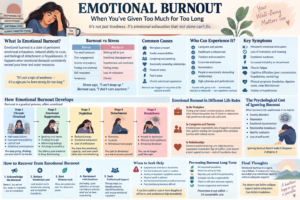
What Is Emotional Burnout?
Emotional burnout is marked by persistent emotional exhaustion, reduced ability to cope, and feelings of detachment or hopelessness. It often occurs when emotional demands consistently exceed a person’s available mental and emotional resources.
Burnout can commonly affect:
- Caregivers and parents
- Healthcare professionals
- Counselors and teachers
- Corporate employees
- Homemakers
- People in emotionally demanding relationships
However, burnout is not limited to the workplace. It can also develop because of chronic family conflict, financial stress, caregiving responsibilities, trauma, or prolonged emotional suppression. Over time, these ongoing pressures can leave a person feeling emotionally depleted and unable to cope as they once did.
Burnout vs Stress: Understanding the Difference
Stress involves too much pressure.
Burnout involves nothing left to give.
| Stress | Burnout |
|---|---|
| Over-engagement | Emotional disengagement |
| Anxiety and urgency | Hopelessness and numbness |
| Feeling overwhelmed | Feeling empty |
| Still motivated | Loss of motivation |
| Temporary | Chronic |
Stress says, “I can’t keep up.”
Burnout says, “I don’t care anymore.”
How Emotional Burnout Develops
Emotional burnout rarely happens overnight. Instead, it develops gradually when prolonged emotional demands continue without enough rest, support, recovery, or healthy boundaries. At first, a person may simply feel stressed or overwhelmed. However, if the pressure continues, emotional resources become depleted, and the person may slowly move from over-functioning to exhaustion, detachment, and eventually emotional shutdown.
Stage 1: Chronic Overload
Initially, the person may try to manage everything by working harder and taking on more responsibility. They may believe they simply need to “try harder” or that resting can wait.
Common signs include:
- High expectations of yourself
- Constant responsibility
- Difficulty saying “no”
- Taking care of everyone else first
- Lack of adequate rest
- Working or functioning beyond your limits
- Feeling that there is always something more to do
- Emotional overextension
- Ignoring early signs of exhaustion
At this stage, the person may still feel motivated and productive. Therefore, burnout can easily go unnoticed.
Stage 2: Emotional Suppression
As the pressure continues, the person may stop paying attention to their own emotional needs. Instead of addressing stress, they may simply push through it.
This can involve:
- Ignoring personal needs
- “Pushing through” exhaustion
- Minimizing emotional pain
- Avoiding vulnerability
- Suppressing anger, sadness, or frustration
- Feeling guilty about needing help
- Believing that expressing emotions is a sign of weakness
- Continually putting responsibilities before well-being
Consequently, emotions that are repeatedly ignored do not necessarily disappear. The person may become increasingly disconnected from what they actually need.
Stage 3: Emotional and Physical Depletion
Over time, constant stress and emotional suppression can leave fewer resources available for coping. What once felt manageable may now feel exhausting.
Common experiences include:
- Reduced energy
- Persistent emotional exhaustion
- Difficulty recovering after rest
- Loss of enthusiasm
- Reduced patience
- Difficulty concentrating
- Feeling overwhelmed by ordinary responsibilities
- Less interest in activities that once felt meaningful
At this point, even small demands may feel disproportionately difficult because the person has very little emotional capacity left.
Stage 4: Detachment and Emotional Numbness
As exhaustion deepens, the mind may begin distancing itself from situations that feel emotionally overwhelming. This can appear as emotional numbness rather than obvious distress.
A person may experience:
- Numbness
- Cynicism
- Irritability
- Withdrawal from people
- Reduced empathy
- Avoiding conversations
- Feeling disconnected from loved ones
- Losing interest in things they previously cared about
- Feeling emotionally “empty”
Importantly, detachment does not always mean that someone has stopped caring. Sometimes, it reflects how overwhelmed they have become.
Stage 5: Breakdown or Severe Burnout
If the underlying stress continues without meaningful recovery or support, burnout can become increasingly disruptive.
Possible experiences include:
- Increasing anxiety
- Depressive symptoms
- Persistent hopelessness
- Severe emotional exhaustion
- Physical health problems
- Sleep disturbances
- Difficulty functioning in daily life
- Emotional shutdown
- Feeling disconnected from yourself and others
At this stage, continuing to “push through” may no longer be sustainable. Professional support may become particularly important, especially when symptoms are persistent or significantly interfere with daily functioning.
Why Burnout Can Be Difficult to Recognize
One of the most challenging aspects of burnout is that people may continue functioning while becoming increasingly depleted internally. They may continue going to work, caring for their family, meeting responsibilities, and appearing “fine” to others.
As a result, the person may not recognize burnout until their emotional and physical resources are already severely depleted.
The Burnout Cycle
Burnout can also become a cycle:
High demands → Overworking → Ignoring needs → Emotional suppression → Exhaustion → Detachment → Reduced functioning → More stress
Therefore, breaking the cycle early is often easier than waiting until complete exhaustion occurs.
Recognizing the warning signs during chronic overload or emotional suppression can create an opportunity to reduce stress, establish boundaries, seek support, and begin recovery before burnout becomes more severe.
Emotional Burnout Symptoms You Shouldn’t Ignore
Emotional burnout does not always look like complete exhaustion. Instead, it can appear through subtle changes in your emotions, behavior, thinking, relationships, and physical well-being. While one difficult day does not necessarily indicate burnout, persistent or worsening symptoms deserve attention.
1. Persistent Emotional Exhaustion
You feel emotionally drained even after resting. Everyday emotional tasks—listening, caring, responding, supporting others, or managing conflict—may suddenly feel overwhelming.
You may think:
- “I have nothing left.”
- “Can’t i handle one more thing.”
- “I just want everyone to leave me alone.”
Unlike ordinary tiredness, emotional exhaustion can make even simple interactions feel like work.
2. Loss of Motivation and Meaning
Gradually, things that once felt important may begin to feel pointless. You may continue working, studying, caring for others, or completing responsibilities, but mainly because you feel obligated to do so.
Common thoughts include:
- “What’s the point?”
- “Nothing excites me anymore.”
- “I’m just going through the motions.”
- “I used to care about this, but now I don’t.”
This loss of motivation and meaning can be an important warning sign that your emotional resources are becoming depleted.
3. Emotional Numbness
Sometimes, burnout does not feel like intense emotion—it feels like the absence of emotion. Happiness, sadness, excitement, or even empathy may begin to feel distant.
You might notice:
- Difficulty feeling excited about good things
- Feeling disconnected from people you love
- Reduced emotional responsiveness
- A sense of emptiness
Importantly, emotional numbness should not automatically be interpreted as strength or indifference. It can occur when a person has been overwhelmed for an extended period and begins emotionally withdrawing from stress.
4. Increased Irritability or Detachment
As emotional reserves decrease, patience may decrease as well. Small inconveniences that previously felt manageable can suddenly trigger anger, frustration, or resentment.
You might:
- Become irritated over minor issues
- Withdraw from loved ones
- Avoid conversations
- Lose patience easily
- Feel emotionally detached
- Feel guilty for not having the energy to be available
Consequently, relationships may begin to feel like another source of emotional demand rather than a source of connection.
5. Chronic Fatigue
You may feel tired almost constantly, even when you have had adequate opportunities to rest. Getting through an ordinary day can start to feel like an accomplishment.
You may notice:
- Low energy throughout the day
- Difficulty getting started
- Feeling exhausted after routine tasks
- Needing frequent breaks
- Feeling physically and emotionally “worn out”
Burnout-related fatigue can feel deeper than ordinary tiredness because it often involves both physical exhaustion and emotional depletion.
6. Cognitive Difficulties
Burnout can also affect how effectively you think and process information. When your mental resources are stretched for too long, everyday cognitive tasks may become more difficult.
You may experience:
- Poor concentration
- Forgetfulness
- Indecisiveness
- Mental fog
- Difficulty completing tasks
- Trouble organizing your thoughts
As a result, you may begin questioning your abilities or productivity, which can create even more frustration and stress.
7. Physical Symptoms
Emotional strain can also be accompanied by physical symptoms. You may notice changes in your body alongside emotional and mental exhaustion, such as:
- Headaches
- Digestive discomfort
- Muscle or body aches
- Sleep disturbances
- Persistent fatigue
- Feeling physically run down
However, physical symptoms should not automatically be attributed to burnout. Persistent or unexplained symptoms deserve appropriate medical evaluation.
8. Increased Anxiety or Hopelessness
As burnout continues, emotional exhaustion may coexist with increasing psychological distress. You may experience:
- Anxiety
- Low mood
- Feelings of helplessness
- Constant worry
- Fear about the future
- Difficulty feeling hopeful
At this point, it is important not to simply assume that everything is “just burnout.” Burnout and mental-health conditions such as anxiety or depression can overlap, and persistent or severe symptoms may require professional assessment.
A Simple Question to Ask Yourself
If several of these symptoms have been present for a while, ask yourself: “Am I simply tired, or have I been running on empty for too long?”
Recognizing the pattern early does not mean something is wrong with you. Rather, it gives you an opportunity to understand what your mind and body may be trying to communicate—and to seek the support, rest, and changes you may need.
Emotional Burnout in Different Life Roles
Emotional burnout can develop in almost any area of life. Although the source of stress may differ, the underlying pattern is often similar: ongoing demands without enough emotional recovery, support, or boundaries.
Burnout in the Workplace
Workplace burnout can develop when professional demands remain high while a person feels undervalued, powerless, or constantly pressured.
Common experiences include:
- Feeling undervalued or unappreciated
- Constant pressure without enough control
- Emotional labor without recognition
- Fear of failure, criticism, or replacement
- Difficulty switching off after work
- Feeling that your work is never “enough”
Interestingly, high performers may be particularly vulnerable because they often set demanding standards for themselves and may continue pushing through exhaustion rather than slowing down.
Burnout in Caregivers and Parents
Similarly, caregivers and parents can experience burnout when caring for others becomes a constant responsibility with little time for themselves.
Common signs include:
- Emotional over-responsibility
- Lack of practical or emotional support
- Little or no personal time
- Constantly putting others’ needs first
- Guilt when taking a break
- Feeling responsible for everyone’s well-being
Because caregiving is often treated as an obligation rather than emotional labor, many caregivers normalize their exhaustion until they are completely depleted.
Burnout in Relationships
Burnout can also occur within emotionally demanding relationships, particularly when emotional responsibility becomes one-sided.
This may involve:
- Constant emotional giving
- One-sided emotional support
- Repeatedly putting your needs aside
- Suppressed resentment
- Fear of conflict
- Difficulty setting boundaries
Love alone does not prevent emotional burnout. Healthy relationships also require reciprocity, communication, emotional space, and boundaries.
Why Emotional Burnout Is Often Ignored
One reason burnout can be difficult to recognize is that it develops gradually. A person may continue working, caring for others, and fulfilling responsibilities while becoming increasingly exhausted internally.
Burnout is often ignored because:
- It develops gradually
- Productivity may remain intact
- Society often rewards overwork
- Emotional pain is minimized
- Rest can be mistaken for laziness
- Many people confuse burnout with personal weakness
- People may believe they simply need to “try harder”
As a result, someone can look perfectly functional on the outside while struggling significantly on the inside.
Ignoring burnout does not make it disappear. Instead, continued stress without adequate recovery can deepen exhaustion and emotional disconnection.
The Psychological Cost of Ignoring Burnout
When burnout remains unaddressed, its effects can extend beyond temporary tiredness. Persistent emotional exhaustion may interfere with relationships, self-perception, motivation, and overall psychological well-being.
Possible consequences include:
- Increased anxiety
- Depressive symptoms
- Emotional disconnection
- Relationship difficulties
- Identity confusion
- Reduced self-worth
- Loss of motivation
- Difficulty enjoying previously meaningful activities
Therefore, burnout should not be viewed as a personal failure. Rather, it can be a sign that a person has been carrying more emotional pressure than their available resources can sustainably handle.
Burnout does not mean you are weak. Sometimes, it means you have been strong for too long without enough support.
How Emotional Burnout Affects Identity
For many people, self-worth becomes closely connected to what they do rather than who they are. They may measure their value through:
- Productivity
- Caregiving
- Achievement
- Responsibility
- Being useful to others
Consequently, when burnout reduces their ability to function at their previous level, their identity can feel threatened.
They may begin asking: “If I can’t function like I used to, who am I?”
This is an important psychological shift. Recovery is not simply about becoming productive again; it is also about rebuilding a sense of self that does not depend entirely on performance or constant giving.
Recovery from Emotional Burnout: What Actually Helps
Recovery requires more than simply taking a day off. Because burnout often develops from ongoing emotional and environmental demands, meaningful recovery may require addressing the factors that created or maintained the exhaustion.
1. Acknowledge the Burnout
First, recognize what is happening instead of judging yourself for it.
Naming burnout can reduce shame and help you understand that exhaustion is not necessarily laziness, weakness, or ingratitude.
You are not failing because you need rest. You may simply be depleted.
2. Reduce Emotional Load, Not Just Tasks
Importantly, burnout is not always solved by better time management. You may have fewer tasks but still carry significant emotional responsibility.
Ask yourself:
- What am I emotionally carrying?
- Where am I over-giving?
- What responsibilities can I share?
- Which boundaries are missing?
- What am I continuing to tolerate despite being exhausted?
Reducing emotional overload is often just as important as reducing your workload.
3. Rest Without Guilt
Next, allow yourself to rest without turning rest into another performance goal.
True rest does not always need to be productive. It can simply mean allowing your mind and body to pause without self-judgment.
Burnout recovery requires permission to stop—not only permission to slow down.
4. Reconnect With Your Emotions Safely
When emotions have been suppressed for a long time, reconnecting with them may take patience.
Helpful approaches may include:
- Journaling
- Quiet reflection
- Talking with a trusted person
- Mindfulness practices
- Therapy
The goal is not to force yourself to feel everything at once. Rather, it is to gradually recognize, understand, and express emotions in healthier ways.
5. Seek Professional Support
If burnout is persistent, overwhelming, or affecting daily functioning, professional support can be valuable. Therapy may help you:
- Identify recurring burnout patterns
- Understand emotional triggers
- Process difficult emotions
- Establish healthier boundaries
- Develop sustainable coping strategies
- Improve emotional regulation
You do not need to wait until you reach a crisis point before asking for help.
When to Seek Professional Help
Consider seeking professional support when:
- Burnout symptoms persist for weeks or months
- You feel consistently emotionally numb or hopeless
- Anxiety or depressive symptoms are increasing
- Sleep or physical well-being is significantly affected
- Daily functioning becomes difficult
- You feel increasingly disconnected from yourself or loved ones
Most importantly, severe hopelessness or thoughts of self-harm require immediate professional or emergency support rather than being treated as ordinary burnout.
Burnout can improve, particularly when the underlying stressors are recognized and addressed early.
Preventing Emotional Burnout Long-Term
Recovery is important, but prevention is equally valuable. Long-term prevention involves creating a lifestyle in which rest, boundaries, support, and emotional awareness are treated as necessities rather than rewards.
Consider:
- Setting clear emotional boundaries
- Learning to say no when necessary
- Asking for help before reaching exhaustion
- Separating self-worth from productivity
- Scheduling regular periods of rest
- Sharing responsibilities
- Checking in with your emotions regularly
- Addressing stress before it becomes overwhelming
Ultimately, prevention is not selfish. It is a form of sustainable self-care that allows you to continue caring for yourself and others without constantly sacrificing your own well-being.
Final Thoughts
Emotional burnout is not simply a sign that you are tired. Instead, it can be a signal that your emotional demands have exceeded your available capacity for too long. Your mind and body may be asking for care, balance, boundaries, recognition, and support.
Therefore, instead of asking, “How much more can I tolerate?”, consider asking: “What needs to change so I no longer have to survive at my limit?” Listening to burnout symptoms early is an act of self-respect.
You deserve rest before collapse.
Support before exhaustion.
Care before breakdown.
Frequently Asked Questions (FAQ): Emotional Burnout
1. What is emotional burnout?
Emotional burnout is a state of chronic emotional, mental, and physical exhaustion caused by prolonged stress and emotional overload. It develops when demands consistently exceed a person’s capacity to cope, leading to exhaustion, detachment, and loss of motivation.
2. How is emotional burnout different from stress?
Stress involves feeling overwhelmed but still engaged and motivated. Burnout, on the other hand, is marked by emotional depletion, numbness, and disengagement. Stress says, “I have too much to do,” while burnout says, “I have nothing left to give.”
3. What are the early symptoms of emotional burnout?
Early signs include persistent fatigue, irritability, lack of motivation, emotional exhaustion, difficulty concentrating, sleep problems, and feeling detached from work or relationships. Ignoring these signs can lead to more serious mental health concerns.
4. Can emotional burnout affect physical health?
Yes. Emotional burnout often manifests physically through headaches, digestive issues, weakened immunity, muscle pain, sleep disturbances, and chronic fatigue. The body reflects prolonged emotional and psychological stress.
5. Who is most at risk of emotional burnout?
Burnout commonly affects caregivers, parents, healthcare professionals, teachers, counselors, corporate employees, and individuals in emotionally demanding roles or relationships. However, anyone experiencing prolonged stress without adequate support can develop burnout.
6. Is emotional burnout the same as depression?
No, but they can overlap. Burnout is primarily related to chronic stress and emotional overload, while depression is a clinical mood disorder. Untreated burnout can increase the risk of anxiety or depressive disorders over time.
7. Can emotional burnout be prevented?
Yes. Prevention includes setting emotional boundaries, balancing responsibilities, prioritizing rest, seeking social support, and addressing stress early. Regular emotional check-ins and self-care practices reduce the risk significantly.
8. How does therapy help with emotional burnout?
Therapy helps individuals identify burnout patterns, process suppressed emotions, rebuild boundaries, and develop healthier coping strategies. Approaches such as Cognitive Behavioral Therapy (CBT) and stress-management interventions are especially effective.
9. When should someone seek professional help for burnout?
You should seek professional help if burnout symptoms persist for weeks or months, interfere with daily functioning, cause emotional numbness or hopelessness, or are accompanied by anxiety, depression, or physical health problems.
Reference
-
World Health Organization – Burnout as an Occupational Phenomenon
https://www.who.int/news-room/fact-sheets/detail/mental-health-at-work -
American Psychological Association – Stress and Burnout
https://www.apa.org/topics/stress/burnout -
National Institute of Mental Health – Mental Health Basics
https://www.nimh.nih.gov/health -
Maslach, C., & Leiter, M. P. (2016). Burnout. Annual Review of Psychology
https://www.annualreviews.org/doi/10.1146/annurev-psych-122414-033623 -
Schaufeli, W. B., Leiter, M. P., & Maslach, C. (2009). Burnout: 35 years of research
https://onlinelibrary.wiley.com/doi/10.1002/job.595 - Anger Management: Understanding, Regulating, and Transforming Anger in Healthy Ways
- High-Functioning Anxiety: When You Look Fine but Aren’t
Pingback: Mental Exhaustion: Causes, Symptoms, and Recovery
Pingback: Anxious–Avoidant Relationship Cycle: Psychology Explained