Introduction
Cancer is not only a physical illness but also a deeply psychological and emotional experience. From diagnosis to treatment and survivorship (or end-of-life care), patients often face fear, uncertainty, depression, pain, financial stress, and changes in identity. Psychological counselling plays a vital role in improving patients’ quality of life, treatment adherence, and emotional resilience. While counselling does not cure cancer medically, it significantly supports healing, coping, and overall well-being.
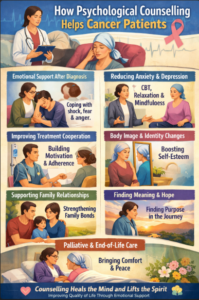
1. Emotional Support After Diagnosis
A cancer diagnosis often creates a strong psychological shock because it threatens a person’s life, identity, and future plans. Patients may experience multiple emotional reactions at the same time.
Common Emotional Reactions
1. Shock and Denial
- Patients may feel numb or unable to believe the diagnosis
- Some avoid discussing the illness or delay treatment decisions
- Denial sometimes works as a short-term protective mechanism
2. Fear of Death
- Worries about survival and life expectancy
- Fear of suffering, pain, or loss of independence
- Concerns about children, family, and unfinished responsibilities
3. Anxiety About Treatment
- Fear of chemotherapy, surgery, or radiation
- Worry about side-effects like hair loss, weakness, or nausea
- Uncertainty about treatment success
4. Anger, Helplessness, or “Why Me?” Feelings
- Anger toward fate, doctors, or oneself
- Feeling loss of control over life decisions
- Hopelessness about the future
How Counselling Helps in the Early Stage
Psychological counselling provides structured emotional support that helps patients adjust to the reality of illness.
1. Helps Patients Process the Diagnosis Gradually
- Counsellor explains emotional reactions as normal responses
- Patients are guided to accept information step by step
- Reduces emotional overload
2. Provides Safe Space to Express Emotions
- Patients can cry, express anger, or share fears freely
- Reduces emotional suppression and internal stress
- Builds therapeutic trust and rapport
3. Reduces Panic and Catastrophic Thinking
- Counsellor identifies irrational fears (“I will die immediately”)
- Uses CBT techniques to replace extreme thoughts
- Encourages realistic hope and coping
4. Helps Patients Feel Heard and Understood
- Active listening increases emotional validation
- Patients feel less alone in their experience
- Strengthens psychological resilience
Why Early Emotional Stabilization is Important
Early counselling support:
- Prevents severe depression and anxiety later
- Improves treatment cooperation
- Enhances decision-making ability
- Builds coping strength for the long treatment journey
Thus, psychological counselling in the initial phase of cancer is not just supportive but preventive, helping patients move from emotional shock to adaptive coping.
2. Reducing Anxiety, Depression, and Distress
Cancer patients commonly experience:
- Clinical depression
- Health anxiety
- Sleep disturbances
- Hopelessness
Psychological counselling uses techniques such as:
- Cognitive Behaviour Therapy (CBT) to reduce negative thoughts
- Relaxation training to manage stress
- Mindfulness techniques to reduce rumination
- Supportive therapy to increase emotional strength
Research shows that reduced psychological distress improves immune functioning, pain tolerance, and treatment response.
3. Improving Treatment Cooperation and Medical Outcomes
Many patients feel:
- Fear of chemotherapy/radiation
- Doubt about treatment success
- Fatigue from long medical procedures
Counselling helps patients:
- Understand treatment realistically
- Build motivation to continue therapy
- Manage side-effects psychologically
- Develop coping routines
Patients with psychological support are more likely to:
Continue treatment regularly
Follow medical advice
Maintain hope and engagement
4. Managing Body Image and Identity Changes
Cancer treatments can lead to:
- Hair loss
- Weight change
- Surgical scars
- Loss of physical strength
These changes may affect self-esteem and social confidence.
Counselling helps patients:
- Accept physical changes
- Rebuild self-identity beyond illness
- Improve confidence in social situations
- Reduce shame and isolation
5. Supporting Family and Social Relationships
Cancer affects not just the patient but the whole family system.
Counselling can:
- Improve communication between patient and family
- Reduce caregiver burnout
- Address guilt or dependency feelings
- Help families provide healthy emotional support
Family counselling often reduces conflict and increases emotional closeness.
6. Helping Patients Find Meaning and Hope
Many cancer patients ask:
- “Why did this happen to me?”
- “What is the meaning of my life now?”
- “Will happen to my family?”
Approaches like:
- Existential therapy
- Logotherapy (meaning-focused therapy)
- Spiritual counselling
help patients:
- Discover purpose despite illness
- Build emotional resilience
- Experience inner peace
This meaning-making process is strongly linked to better psychological adjustment.
7. Counselling in Palliative and End-of-Life Care
When cancer is advanced, counselling focuses on:
- Fear of death
- Unfinished life goals
- Family closure
- Emotional comfort
It helps patients:
- Accept reality gradually
- Reduce suffering and anxiety
- Strengthen emotional connections
- Experience dignity and peace
Conclusion
Psychological counselling does not medically cure cancer, but it plays a powerful healing role. It reduces emotional distress, improves coping skills, strengthens family relationships, and helps patients maintain hope and dignity throughout their journey. By addressing the psychological side of illness, counselling ensures that cancer care becomes truly holistic—treating not just the body, but the mind and the person as a whole.
FAQs: Psychological Counselling for Cancer Patients
1. Can psychological counselling cure cancer?
No. Counselling does not medically cure cancer, but it improves emotional well-being, coping ability, treatment adherence, and quality of life.
2. Why do cancer patients need counselling?
Because diagnosis and treatment often cause anxiety, depression, fear of death, body-image issues, and family stress. Counselling helps patients adjust emotionally.
3. When should counselling start for a cancer patient?
Ideally from the time of diagnosis. Early counselling prevents severe distress and helps patients make informed treatment decisions.
4. What psychological problems are most common in cancer patients?
- Anxiety
- Depression
- Fear of recurrence
- Sleep problems
- Hopelessness
- Social withdrawal
5. Which counselling approaches are used for cancer patients?
Common approaches include:
- Cognitive Behaviour Therapy (CBT)
- Supportive psychotherapy
- Mindfulness-based therapy
- Family counselling
- Existential therapy
- Psychoeducation
6. Does counselling help reduce treatment fear?
Yes. Counselling explains procedures, manages uncertainty, and teaches coping strategies, which reduces fear of chemotherapy, surgery, and side effects.
7. Can counselling improve treatment success?
Indirectly yes. Patients who receive psychological support are more likely to follow medical advice, attend treatment regularly, and maintain motivation.
8. How does counselling help with depression in cancer patients?
It helps patients express emotions, challenge negative thoughts, build hope, improve social support, and develop coping skills.
9. Does counselling help family members too?
Yes. Family counselling improves communication, reduces caregiver stress, and helps relatives support the patient effectively.
10. Can counselling help terminal cancer patients?
Yes. In palliative care, counselling reduces fear of death, helps emotional closure, strengthens relationships, and promotes dignity and peace.
11. How many counselling sessions does a cancer patient need?
There is no fixed number. It depends on emotional needs, illness stage, and treatment duration. Some need short-term support, others long-term therapy.
12. Is group counselling useful for cancer patients?
Yes. Support groups reduce isolation, increase hope, and allow patients to share experiences with others facing similar challenges.
13. Does counselling help with body-image issues after treatment?
Yes. It helps patients accept physical changes, rebuild confidence, and reconnect with their sense of identity.
14. Who provides counselling for cancer patients?
- Clinical psychologists
- Psycho-oncologists
- Psychiatric social workers
- Counsellors trained in medical settings
15. Is psychological counselling part of modern cancer care?
Yes. Most hospitals now follow a biopsychosocial approach, where emotional care is considered an essential part of treatment.
Written by Baishakhi Das
Counselor | Mental Health Practitioner
B.Sc, M.Sc, PG Diploma in Counseling
Reference
-
World Health Organization – Cancer Supportive Care
https://www.who.int/news-room/fact-sheets/detail/cancer -
National Cancer Institute – Coping with Cancer
https://www.cancer.gov/about-cancer/coping -
American Cancer Society – Emotional Support for Cancer Patients
https://www.cancer.org/treatment/treatments-and-side-effects/emotional-side-effects.html -
NHS – Cancer Psychological Support
https://www.nhs.uk/conditions/cancer/living-with-cancer/ -
Psycho-Oncology Journal (research source)
https://onlinelibrary.wiley.com/journal/10991611 - World Human Spirit Day: Psychological Meaning of the Human Spirit
This topic performs well due to rising searches around men’s mental health, workplace stress, and burnout recovery. Combining emotional insight with practical steps increases engagement and trust.