

Introduction
A child’s brain is not only shaped by genetics but profoundly molded by early relationships, especially the relationship with primary caregivers. Parenting provides the emotional, neurological, and psychological environment in which a child’s brain develops. When caregiving is nurturing, consistent, and emotionally responsive, the child’s brain wires itself for safety, regulation, learning, and healthy relationships. However, when parenting is toxic, neglectful, or emotionally harmful, it can alter brain development in ways that affect the child for a lifetime.
Toxic parenting does not necessarily mean intentional abuse. Many parents repeat harmful patterns unconsciously, influenced by their own unresolved trauma, stress, or lack of emotional awareness. Yet, regardless of intention, the child’s developing brain responds to chronic stress, fear, unpredictability, and emotional invalidation as threats.
This article explores how toxic parenting impacts a child’s brain development, the neurological mechanisms involved, long-term psychological consequences, and how healing is possible through awareness and intervention.
What Is Toxic Parenting?
Toxic parenting refers to consistent patterns of behavior that emotionally, psychologically, or sometimes physically harm a child’s sense of safety, self-worth, and emotional regulation.
Common Forms of Toxic Parenting
-
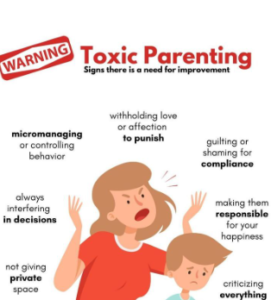
Emotional neglect (lack of warmth, validation, or attention)
-
Verbal abuse (shaming, yelling, humiliation)
-
Emotional manipulation (guilt-tripping, gaslighting)
-
Excessive control or over-criticism
-
Inconsistent parenting (unpredictable rules and reactions)
-
Conditional love (“I love you only if you succeed”)
-
Parentification (expecting the child to meet adult emotional needs)
-
Chronic invalidation of emotions
Toxic parenting creates an environment where the child feels:
-
Unsafe
-
Unseen
-
Unheard
-
Unworthy
-
Constantly on edge
For a developing brain, this environment activates survival mode, not growth mode.
Understanding Brain Development in Childhood
A child’s brain grows rapidly from birth through adolescence. By age 5, nearly 90% of the brain’s structure is formed, though refinement continues into the mid-20s.
Key Features of Brain Development
-
Brain development is experience-dependent
-
Neural connections strengthen with repeated experiences
-
Stress hormones influence brain architecture
-
Emotional safety supports higher cognitive functioning
The brain develops from bottom to top:
-
Brainstem (survival)
-
Limbic system (emotions)
-
Prefrontal cortex (thinking, regulation, decision-making)
When a child grows up in a toxic environment, the brain prioritizes survival over learning, affecting all three levels.
How Toxic Parenting Affects the Brain: The Stress Response System
Chronic Activation of the Stress Response
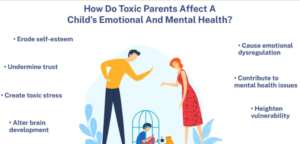
Children exposed to toxic parenting often live in a state of chronic stress. Their brains repeatedly activate the HPA axis (Hypothalamic-Pituitary-Adrenal axis), releasing stress hormones like cortisol.
Short-term stress can be adaptive. Chronic stress, however, becomes neurotoxic.
Effects of Prolonged Cortisol Exposure
-
Shrinks areas involved in memory and learning
-
Over-sensitizes fear circuits
-
Weakens emotional regulation pathways
-
Impairs immune and metabolic systems
Instead of learning curiosity and exploration, the brain learns:
“Stay alert. Stay small. Stay safe.”
Impact on Key Brain Regions
1. Amygdala: The Fear Center
The amygdala detects danger and triggers emotional responses like fear and anger.
Effects of Toxic Parenting on the Amygdala
-
Becomes hyperactive
-
Heightened fear responses
-
Increased anxiety and emotional reactivity
-
Difficulty distinguishing real threats from perceived ones
Children may appear:
-
Overly sensitive
-
Easily startled
-
Emotionally explosive
-
Hyper-vigilant
This wiring often continues into adulthood, leading to chronic anxiety and emotional overwhelm.

2. Hippocampus: Memory and Learning
The hippocampus helps regulate memory, learning, and emotional processing.
Impact of Toxic Parenting
-
Reduced hippocampal volume due to cortisol exposure
-
Difficulty forming coherent memories
-
Problems with learning and concentration
-
Increased vulnerability to depression
Children may struggle academically—not due to lack of intelligence, but due to stress-impaired memory processing.
3. Prefrontal Cortex: Emotional Regulation and Decision-Making
The prefrontal cortex (PFC) is responsible for:
-
Impulse control
-
Emotional regulation
-
Planning
-
Self-reflection
-
Empathy
How Toxic Parenting Affects the PFC
-
Delayed maturation
-
Poor impulse control
-
Difficulty managing emotions
-
Problems with decision-making
-
Low frustration tolerance
Because the PFC develops last, chronic stress in childhood significantly disrupts its growth.
4. Corpus Callosum: Brain Integration
The corpus callosum connects the left and right hemispheres of the brain.
Impact of Toxic Environments
-
Reduced integration between emotion and logic
-
Difficulty expressing feelings in words
-
Emotional flooding or emotional shutdown
This explains why many adults from toxic homes say:
“I feel things intensely but can’t explain them.”
Attachment, Parenting, and Brain Wiring
Attachment experiences directly shape neural pathways related to trust, safety, and relationships.
Secure Attachment
-
Predictable caregiving
-
Emotional validation
-
Safe emotional expression
This wires the brain for:
-
Emotional regulation
-
Healthy relationships
-
Self-soothing
Insecure or Disorganized Attachment (Common in Toxic Parenting)
-
Fear mixed with love
-
Inconsistent responses
-
Emotional unpredictability
This wires the brain for:
-
Hyper-independence or clinginess
-
Fear of abandonment
-
Difficulty trusting others
-
Confusion between love and pain
Toxic Parenting and Emotional Regulation Development
Children learn emotional regulation through co-regulation—caregivers helping them calm down.
In toxic environments:
-
Emotions are dismissed or punished
-
Children are told to “stop crying” or “be strong”
-
Emotional expression is unsafe
The brain learns:
-
Suppress emotions (leading to numbness)
-
Explode emotionally (no regulation skills)
-
Disconnect from internal signals
These patterns become deeply ingrained neural habits.
Cognitive and Learning Consequences
Chronic stress impacts a child’s ability to:
-
Focus
-
Process information
-
Retain memory
-
Think creatively
This can result in:
-
Academic underachievement
-
Misdiagnosis as “lazy” or “unmotivated”
-
Attention difficulties
-
Reduced executive functioning
Often, the issue is not intelligence—but a brain stuck in survival mode.
Behavioral and Emotional Outcomes Linked to Brain Changes
Children raised with toxic parenting may show:
In Childhood
-
Aggression or extreme compliance
-
Anxiety and fearfulness
-
Emotional outbursts
-
Withdrawal or shutdown
-
Difficulty with peers
In Adolescence
-
Risk-taking behaviors
-
Substance use
-
Self-harm
-
Emotional numbness
-
Identity confusion
In Adulthood
-
Chronic anxiety or depression
-
Relationship difficulties
-
Low self-esteem
-
People-pleasing or avoidance
-
Trauma responses (fight, flight, freeze, fawn)
Epigenetics: How Toxic Parenting Can Alter Gene Expression
Toxic stress does not change DNA—but it can change how genes are expressed.
Through epigenetic mechanisms:
-
Stress-related genes become overactive
-
Emotional regulation genes may be under-expressed
-
Vulnerability to mental health disorders increases
This means early experiences can biologically embed trauma responses—yet healing experiences can also reverse these effects.
Is the Damage Permanent?
No. The brain is plastic, meaning it can rewire throughout life.
While early trauma leaves an imprint, healing relationships, therapy, and self-awareness can create new neural pathways.
Factors That Promote Healing
-
Safe, supportive relationships
-
Trauma-informed therapy
-
Emotional awareness and regulation skills
-
Mindfulness and body-based practices
-
Corrective emotional experiences
Healing the Brain After Toxic Parenting
1. Therapy and Counseling
-
Trauma-focused CBT
-
Attachment-based therapy
-
EMDR
-
Somatic therapies
These approaches help regulate the nervous system and rewire stress responses.
2. Developing Emotional Literacy
-
Naming emotions
-
Understanding triggers
-
Validating inner experiences
This strengthens the prefrontal cortex and emotional integration.
3. Re-Parenting and Self-Compassion
-
Learning to provide safety internally
-
Setting healthy boundaries
-
Meeting unmet childhood needs consciously
4. Mind-Body Regulation
-
Breathwork
-
Yoga
-
Grounding exercises
-
Mindfulness
These calm the amygdala and regulate cortisol levels.
Breaking the Cycle: Healing for Future Generations
Many adults raised by toxic parents fear repeating the same patterns. Awareness is the first step to change.
Conscious parenting includes:
-
Reflecting on one’s triggers
-
Repairing ruptures with children
-
Validating emotions
-
Prioritizing connection over control
Healing yourself helps protect your child’s developing brain.
When to Seek Professional Help
Seek support if you or your child experience:
-
Persistent anxiety or depression
-
Emotional dysregulation
-
Trauma symptoms
-
Relationship difficulties
-
Parenting overwhelm rooted in past trauma
Early intervention creates long-term neurological and emotional benefits.
Conclusion
Toxic parenting does not just hurt feelings—it reshapes the developing brain. Chronic emotional stress alters fear circuits, impairs emotional regulation, and wires children for survival rather than safety. These changes can echo into adulthood, influencing mental health, relationships, and self-worth.
Yet, the story does not end with damage. The brain’s ability to heal means that awareness, support, and compassionate intervention can rewrite neural pathways. By understanding the impact of toxic parenting, we empower individuals and families to break cycles, heal wounds, and create emotionally safe environments where children’s brains—and lives—can truly thrive.
Healing the brain begins with safety, compassion, and connection.
Reference
Emotional Neglect in Childhood
👉 https://www.selfbloomcounsellinghub.com/emotional-neglect-in-children
Anchor: emotional neglectAttachment Styles and Childhood Experiences
👉 https://www.selfbloomcounsellinghub.com/attachment-styles-childhood
Anchor: attachment patternsHow Stress Affects the Brain
👉 https://www.selfbloomcounsellinghub.com/stress-and-brain-development
Signs of Behavioral Issues in Children (Age-Wise)
👉 https://www.selfbloomcounsellinghub.com/behavioral-issues-in-children
Healing the Inner Child
👉 https://www.selfbloomcounsellinghub.com/inner-child-healing
When to See a Child Psychologist
👉 https://www.selfbloomcounsellinghub.com/child-psychologist-consultationInner Child Healing: What It Is & Why It Matters
How to Improve Parent–Child Communication