
Introduction
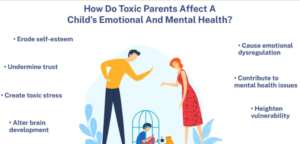
A child’s brain is shaped not only by genetics but also profoundly influenced by early relationships, particularly interactions with primary caregivers. From the earliest years of life, parenting provides the emotional, neurological, and psychological environment in which the developing brain learns what to expect from the world. When caregiving is nurturing, consistent, and emotionally responsive, these experiences support the development of safety, emotional regulation, learning, and healthy relationships. In contrast, toxic parenting —characterized by persistent patterns of emotionally harmful, neglectful, controlling, or unpredictable caregiving—may expose a child to repeated stress and insecurity, potentially influencing emotional, behavioral, and psychological development over time.
Importantly, toxic parenting does not necessarily involve intentional abuse. In many cases, parents may unconsciously repeat harmful patterns shaped by their own unresolved experiences, chronic stress, limited emotional awareness, or learned parenting behaviors. Nevertheless, regardless of the parent’s intention, a child’s developing nervous system can respond to repeated experiences of chronic stress, fear, unpredictability, and emotional invalidation as signals of threat. As a result, the child may become more focused on maintaining safety and anticipating danger than on exploration, learning, and emotional connection.
Therefore, this article explores how toxic parenting impacts a child’s brain development, including the neurological mechanisms involved, the potential long-term psychological consequences, and the ways awareness, supportive relationships, and appropriate intervention can promote healing and healthier development. Understanding these effects can also help us recognize the patterns associated with toxic parenting.

What Is Toxic Parenting?
Toxic parenting refers to consistent patterns of behavior that can emotionally, psychologically, or, in some cases, physically undermine a child’s sense of safety, self-worth, and ability to regulate emotions. Importantly, a single mistake, moment of frustration, or imperfect parenting decision does not automatically make a parent toxic. Rather, the concern arises when harmful patterns are repeated, persistent, and left unrepaired, creating an environment in which the child regularly feels unsafe, invalidated, or emotionally unsupported.
Common Forms of Toxic Parenting
Toxic parenting can take different forms, and although these behaviors may look different on the surface, they can have similar effects on a child’s emotional development. Common patterns include:
- Emotional neglect (lack of warmth, validation, or attention)
- Verbal abuse (shaming, yelling, or humiliation)
- Emotional manipulation (guilt-tripping or gaslighting)
- Excessive control or persistent criticism
- Inconsistent parenting (unpredictable rules, expectations, or reactions)
- Conditional love (“I love you only if you succeed”)
- Parentification (expecting a child to meet adult emotional needs)
- Chronic invalidation of emotions
As a result, children exposed to these patterns may gradually develop the belief that their emotional needs are unacceptable or that they must constantly adjust their behavior to maintain safety and approval. Consequently, they may begin to feel:
- Unsafe
- Unseen
- Unheard
- Unworthy
- Constantly on edge
Over time, repeated exposure to fear, unpredictability, criticism, or emotional invalidation can keep a child’s stress-response system activated. Therefore, instead of having the emotional security needed to explore, learn, connect, and develop healthy self-regulation, the child may become increasingly focused on anticipating threats and avoiding negative reactions. In this sense, the developing brain may spend more energy responding to perceived danger than supporting exploration and growth.
Understanding Brain Development in Childhood
A child’s brain develops rapidly from birth through adolescence, with early childhood representing a particularly important period of neural growth and organization. By around age 5, approximately 90% of adult brain volume has been reached; however, brain development is far from complete. Instead, neural connections continue to be refined, strengthened, and reorganized throughout childhood, adolescence, and into early adulthood.
Key Features of Brain Development
Several important principles help explain why a child’s environment matters so much for brain development:
- Brain development is experience-dependent
- Neural connections strengthen through repeated experiences and interactions
- Stress hormones can influence developing neural systems and brain functioning
- Emotional safety creates conditions that support learning, attention, and higher cognitive functioning
In other words, the developing brain is continually shaped by the experiences it encounters. Positive, predictable, and supportive experiences can strengthen pathways involved in emotional regulation, learning, and social connection. Conversely, repeated exposure to stress, fear, or unpredictability can influence how the brain responds to future experiences.
From Survival Systems to Higher-Level Regulation
The brain is sometimes described in a simplified “bottom-to-top” sequence to illustrate how different systems contribute to development and functioning:
- Brainstem — supports basic survival functions and physiological arousal
- Limbic system — plays a major role in emotion, motivation, and threat processing
- Prefrontal cortex — supports planning, decision-making, impulse control, and emotional regulation
Importantly, these systems do not develop completely independently or function as separate layers. Rather, they interact continuously as the child develops. Therefore, when a child grows up in a persistently stressful or unpredictable environment, the brain may devote greater resources to detecting and responding to potential threats. As a result, attention, emotional regulation, learning, and higher-order thinking may become more difficult, particularly when the child feels unsafe.
Thus, the concern is not that a toxic environment simply “damages” the brain, but that repeated stressful experiences can shape developing neural systems in ways that prioritize protection and threat detection over exploration, learning, and flexible emotional regulation.
How Toxic Parenting Affects the Brain: The Stress Response System
Chronic Activation of the Stress Response
Children exposed to persistently stressful or harmful parenting may experience repeated activation of the body’s stress-response system. In particular, the hypothalamic-pituitary-adrenal (HPA) axis plays a central role in coordinating the physiological response to stress, including the release of hormones such as cortisol.
Importantly, short-term stress is not inherently harmful. In fact, an appropriate stress response can help a child respond to challenges and return to a regulated state afterward. However, when stress is frequent, intense, or prolonged and the child has limited opportunities for safety and recovery, ongoing stress activation may interfere with healthy emotional, cognitive, and physiological development.
Potential Effects of Prolonged Stress Exposure
Repeated exposure to chronic stress may influence several systems involved in development, including:
- Brain systems involved in memory and learning
- Neural circuits involved in threat detection and emotional reactivity
- Pathways supporting emotional regulation
- Immune, metabolic, and other physiological processes
As a result, instead of consistently experiencing the world as a place for exploration and learning, a child may become increasingly focused on monitoring the environment for signs of threat. The internal message may become: “Stay alert. Stay small. Stay safe.”
Impact on Key Brain Regions
1. Amygdala: Threat Detection and Emotional Reactivity
The amygdala is involved in detecting potential threats and coordinating emotional and physiological responses, particularly in situations involving fear or danger. Therefore, repeated exposure to unpredictable, threatening, or emotionally intense environments may influence how strongly a child responds to perceived threats.
Potential Effects of Chronic Stress on the Amygdala
- Greater sensitivity to potential threats
- Heightened fear and anxiety responses
- Increased emotional reactivity
- Greater difficulty distinguishing between levels of threat in some situations
Consequently, a child may appear:
- Overly sensitive
- Easily startled
- Emotionally reactive or explosive
- Hypervigilant
Over time, these patterns may persist and contribute to difficulties with anxiety, emotional regulation, and a heightened sense of danger, particularly when stressful experiences continue.
2. Hippocampus: Memory and Learning
The hippocampus plays an important role in memory formation, learning, and aspects of emotional processing. Because it is sensitive to prolonged stress, repeated activation of the stress-response system may affect hippocampal functioning and its interaction with other brain systems.
Potential Impact of Chronic Stress
- Difficulties with memory and learning
- Problems with concentration and information processing
- Challenges organizing or recalling experiences
- Greater vulnerability to stress-related emotional difficulties
As a result, children experiencing chronic stress may struggle academically even when they have strong intellectual abilities. In other words, difficulties with concentration or memory should not automatically be interpreted as laziness, lack of motivation, or lack of intelligence; emotional stress can interfere with the cognitive resources needed for learning.
3. Prefrontal Cortex: Emotional Regulation and Decision-Making
The prefrontal cortex (PFC) supports several higher-order functions, including:
- Impulse control
- Emotional regulation
- Planning and organization
- Decision-making
- Self-reflection
- Social understanding and aspects of empathy
How Chronic Stress May Affect the PFC
When a child is repeatedly exposed to stress, the brain may prioritize rapid threat detection and immediate responses over slower, reflective forms of thinking. Consequently, the child may experience:
- Greater difficulty controlling impulses
- Difficulty managing strong emotions
- Problems with planning and decision-making
- Lower frustration tolerance
- Challenges using reflective thinking during periods of high emotional arousal
Importantly, the prefrontal cortex continues developing throughout childhood and adolescence. Therefore, chronic stress during these periods may interfere with the development and effective functioning of regulatory capacities, although the extent of these effects varies across individuals and depends on factors such as the duration of stress, supportive relationships, and opportunities for recovery.
4. Corpus Callosum: Communication Between Brain Regions
The corpus callosum is a major bundle of nerve fibers that facilitates communication between the brain’s two hemispheres. Because effective communication between different brain regions supports integrated processing, prolonged adversity may be associated with differences in brain connectivity and information integration.
Potential Effects of Chronic Adversity
- Difficulties integrating emotional and cognitive information
- Challenges identifying or verbalizing emotional experiences
- Emotional flooding during periods of high stress
- Emotional shutdown or disconnection as a coping response
Thus, some adults who grew up in highly stressful or emotionally invalidating environments may describe experiences such as: “I feel things intensely but can’t explain them.”
Ultimately, these experiences do not mean that the brain is permanently damaged. Rather, they illustrate how repeated stress and early relational experiences can shape patterns of emotional processing, attention, and regulation—and why supportive relationships and appropriate intervention can play an important role in recovery.
Attachment, Parenting, and Brain Wiring
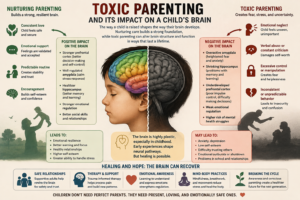
Attachment experiences play an important role in shaping developing neural systems involved in trust, safety, emotional regulation, and relationships. From early childhood onward, children learn through repeated interactions with caregivers whether relationships are generally predictable and supportive or uncertain and threatening. Consequently, the quality and consistency of caregiving can influence how children understand themselves, regulate emotions, and respond to other people.
Secure Attachment
Secure attachment is more likely to develop when caregivers provide:
- Predictable and responsive caregiving
- Emotional validation
- Safe opportunities for emotional expression
As a result, children have greater opportunities to develop:
- Emotional regulation
- Healthy relationship patterns
- Self-soothing and recovery after distress
Insecure or Disorganized Attachment
In contrast, inconsistent, frightening, or emotionally unpredictable caregiving can contribute to insecure or, in some circumstances, disorganized attachment patterns. For example, a child may experience fear, affection, rejection, or comfort from the same caregiver without being able to predict which response will occur.
These experiences may contribute to:
- Excessive self-reliance or heightened dependency
- Fear of abandonment
- Difficulty trusting others
- Confusion about whether closeness is associated with safety, rejection, or pain
Importantly, attachment patterns are not fixed personality traits or permanent outcomes. Rather, they can change through later relationships, supportive environments, and therapeutic experiences.
Toxic Parenting and Emotional Regulation Development
Children initially learn to regulate strong emotions through co-regulation—the process through which responsive caregivers help them feel safe, understand their emotions, and gradually return to a calmer state. Over time, these repeated experiences contribute to the development of independent emotional regulation.
However, when emotional expression is consistently dismissed, punished, or ignored, children may have fewer opportunities to learn these skills. For example:
- Emotions may be dismissed or punished
- Children may be told to “stop crying” or “be strong” rather than helped to understand what they are feeling
- Emotional expression may become associated with criticism, rejection, or conflict
Consequently, children may develop coping patterns such as:
- Suppressing emotions or becoming emotionally numb
- Expressing distress through intense emotional outbursts
- Disconnecting from bodily or emotional signals
Over time, these responses can become familiar coping strategies, particularly when the child repeatedly encounters similar emotional situations without adequate support or repair.
Toxic Parenting: Cognitive and Learning Consequences
Chronic stress can interfere with several cognitive processes that are important for learning, including the ability to:
- Focus and sustain attention
- Process information efficiently
- Retain and retrieve information
- Engage in flexible and creative thinking
As a result, some children experiencing persistent stress may show:
- Academic difficulties
- Being incorrectly labeled as “lazy” or “unmotivated”
- Attention and concentration difficulties
- Challenges with executive functioning
Importantly, these difficulties do not necessarily reflect a lack of intelligence or ability. Rather, when a child’s cognitive resources are repeatedly occupied by monitoring stress or threat, fewer resources may be available for learning, problem-solving, and exploration. Therefore, what appears to be a motivation or attention problem may sometimes reflect the effects of chronic stress or an emotionally unsafe environment.
Toxic Parenting: Behavioral and Emotional Outcomes Associated With Chronic Stress and Adversity
Children exposed to persistent harmful or stressful parenting may respond in different ways. However, there is no single behavioral profile, and outcomes vary depending on the child’s temperament, developmental stage, duration of adversity, and availability of supportive relationships.
In Childhood
- Aggression or extreme compliance
- Anxiety and fearfulness
- Emotional outbursts
- Withdrawal or emotional shutdown
- Difficulties with peers and social relationships
In Adolescence
- Risk-taking behaviors
- Substance use
- Self-harm
- Emotional numbness
- Identity-related difficulties or confusion
In Adulthood
- Persistent anxiety or depressive symptoms
- Relationship difficulties
- Low self-esteem
- People-pleasing or interpersonal avoidance
- Trauma-related responses, including fight, flight, freeze, or fawn patterns
Nevertheless, these outcomes should not be interpreted as inevitable consequences of toxic parenting. Rather, they represent possible patterns associated with chronic adversity, and supportive relationships, psychological intervention, and changes in the environment can significantly influence long-term outcomes.
Epigenetics: How Early Stress Can Influence Gene Expression
Early adversity does not change the underlying DNA sequence in the simple sense often implied by the phrase “trauma changes your genes.” Instead, stress and environmental experiences may influence gene expression and epigenetic processes, which affect how certain genes are regulated and expressed.
Research suggests that chronic stress can be associated with epigenetic changes in biological systems involved in stress regulation, although these relationships are complex and are still being investigated. Therefore, it would be inaccurate to conclude that toxic parenting permanently switches specific “trauma genes” on or off.
Nevertheless, early experiences can become biologically embedded through multiple interacting pathways. At the same time, later supportive experiences may also influence biological stress regulation and psychological functioning. Thus, epigenetics should be understood as one possible mechanism linking experience and biology—not as a biological destiny.
Toxic Parenting: Is the Damage Permanent?
No. The brain remains capable of adaptation and change throughout life, a capacity known as neuroplasticity. Although chronic childhood stress and adversity can leave lasting effects, these effects are not necessarily permanent or irreversible.
Moreover, supportive relationships, appropriate therapy, emotional learning, and safer environments can provide opportunities for new patterns of thinking, feeling, and responding to develop. Healing does not necessarily mean erasing every effect of the past; rather, it can involve developing greater regulation, self-understanding, relational safety, and psychological flexibility.
Factors That Can Promote Healing
- Safe and supportive relationships
- Trauma-informed psychological therapy
- Emotional awareness and regulation skills
- Mindfulness and appropriate body-based practices
- Corrective emotional and relational experiences
Toxic Parenting: Healing After Toxic Parenting
1. Therapy and Counseling
Depending on the person’s needs, evidence-based psychological approaches may include:
- Trauma-focused CBT
- Attachment-based therapy
- EMDR
- Appropriate somatic or body-oriented approaches
These approaches can help individuals understand trauma-related patterns, develop emotional regulation skills, process distressing experiences, and build safer ways of responding to stress. However, the most appropriate approach depends on the individual’s symptoms, history, preferences, and clinical needs.
2. Developing Emotional Literacy
Emotional literacy involves learning to:
- Name and differentiate emotions
- Recognize triggers and emotional patterns
- Validate and understand internal experiences
As a result, individuals may become better able to identify what they are experiencing before reacting automatically. This can support more deliberate emotional regulation and improve communication with others.
3. Re-Parenting and Self-Compassion
For some individuals, re-parenting practices can involve learning to respond to themselves with the safety, validation, boundaries, and compassion that may have been missing earlier in life. This may include:
- Developing a more compassionate internal dialogue
- Setting healthy boundaries
- Recognizing and responding to unmet emotional needs in healthier ways
Importantly, re-parenting should not be understood as literally changing the past. Rather, it is a way of developing healthier internal and relational patterns in the present.
4. Mind-Body Regulation
Practices that may support stress regulation include:
- Slow, regulated breathing
- Yoga or gentle movement
- Grounding exercises
- Mindfulness
When practiced appropriately, these strategies may help reduce physiological arousal and improve awareness of bodily and emotional states. However, they should complement rather than automatically replace professional treatment when significant trauma symptoms or mental health difficulties are present.
Breaking the Cycle: Healing for Future Generations
Many adults who experienced harmful parenting worry that they will unintentionally repeat the same patterns with their own children. Fortunately, awareness can create an opportunity to interrupt these cycles.
More conscious parenting may involve:
- Reflecting on personal triggers and emotional reactions
- Repairing relationship ruptures after conflict
- Validating children’s emotions while maintaining appropriate boundaries
- Prioritizing connection and guidance over fear-based control
Ultimately, healing does not require becoming a perfect parent. Rather, it involves recognizing harmful patterns, taking responsibility when mistakes occur, and repeatedly returning to connection and repair. In this way, healthier parenting can create a more emotionally supportive environment for the next generation.
Toxic Parenting: When to Seek Professional Help
Professional support may be appropriate when you or your child experiences:
- Persistent anxiety or depressive symptoms
- Significant difficulties with emotional regulation
- Trauma-related symptoms
- Ongoing relationship difficulties
- Parenting distress or overwhelm connected to past experiences
In particular, professional assessment can help distinguish between normal responses to stress and difficulties that may benefit from structured psychological intervention. Furthermore, seeking help does not mean that someone has failed as a parent or as an individual. Rather, early support can provide practical strategies, strengthen relationships, and reduce the likelihood that harmful patterns will continue.
Conclusion
Toxic parenting does not just hurt feelings—it reshapes the developing brain. Chronic emotional stress alters fear circuits, impairs emotional regulation, and wires children for survival rather than safety. These changes can echo into adulthood, influencing mental health, relationships, and self-worth.
Yet, the story does not end with damage. The brain’s ability to heal means that awareness, support, and compassionate intervention can rewrite neural pathways. By understanding the impact of toxic parenting, we empower individuals and families to break cycles, heal wounds, and create emotionally safe environments where children’s brains—and lives—can truly thrive. Healing the brain begins with safety, compassion, and connection.
Reference
-
Emotional Neglect in Childhood
👉 https://www.selfbloomcounsellinghub.com/emotional-neglect-in-children
Anchor: emotional neglect -
Attachment Styles and Childhood Experiences
👉 https://www.selfbloomcounsellinghub.com/attachment-styles-childhood
Anchor: attachment patterns -
How Stress Affects the Brain
👉 https://www.selfbloomcounsellinghub.com/stress-and-brain-development -
Signs of Behavioral Issues in Children (Age-Wise)
👉 https://www.selfbloomcounsellinghub.com/behavioral-issues-in-children -
Healing the Inner Child
👉 https://www.selfbloomcounsellinghub.com/inner-child-healing -
When to See a Child Psychologist
👉 https://www.selfbloomcounsellinghub.com/child-psychologist-consultation -
Inner Child Healing: What It Is & Why It Matters
-
How to Improve Parent–Child Communication
Pingback: Postpartum Depression: Signs New Mothers Often Ignore
Pingback: Why Postpartum Depression Happens After a Normal Delivery