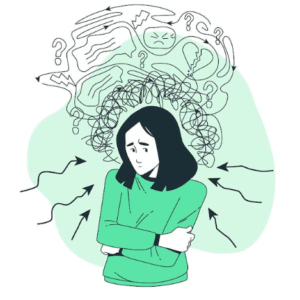
Why You Feel Emotionally Numb: When You Can’t Feel What You Know You Should

Introduction: The Quiet Absence of Feeling

You’re not sad.
You’re not happy.
You’re not angry or excited.

You just… feel nothing.

Emotional numbness is one of the most misunderstood and unsettling psychological experiences. People often describe it as feeling empty, flat, or disconnected from themselves and the world. You may still function—go to work, talk to people, fulfill responsibilities—but internally, something feels switched off.

What makes emotional numbness particularly distressing is that:

  • There may be no obvious reason for it

  • Others may say, “At least you’re not upset”

  • You may wonder if something is “wrong” with you

This article explores why emotional numbness happens, what it means psychologically, how it relates to stress, trauma, anxiety, and burnout, and how feeling can gradually return.

What Is Emotional Numbness?

Emotional numbness is a state in which a person experiences a reduced ability to feel emotions, both positive and negative. It is not the absence of emotions entirely, but rather a dampening or disconnection from them.

People experiencing emotional numbness often report:

  • Feeling detached from their emotions

  • Difficulty crying or feeling joy

  • Feeling “on autopilot”

  • Going through life without emotional engagement

  • Knowing they should feel something, but don’t

Importantly, emotional numbness is not a personality flaw. It is usually a protective psychological response.

Emotional Numbness Is Not the Same as Calm

Calmness is peaceful and grounded.
Numbness is hollow and disconnected.

When you are calm:

  • You feel present

  • You can access emotions if needed

  • There is inner clarity

When you are numb:

  • You feel distant from yourself

  • Emotions feel blocked or unreachable

  • There is a sense of inner emptiness

Many people mistake numbness for emotional strength—but numbness often signals overwhelm, not resilience.

Common Signs of Emotional Numbness

Emotional numbness can show up in subtle ways:

  • Feeling indifferent toward things that once mattered

  • Lack of emotional reaction to good or bad news

  • Difficulty feeling love, excitement, or empathy

  • Reduced emotional expression

  • Feeling disconnected from memories or experiences

  • Loss of pleasure (anhedonia)

  • Sense of being “behind glass” while life happens

You may still think clearly and behave normally—yet feel emotionally absent.

Why Emotional Numbness Happens: The Psychology Behind It

1. Emotional Overload and Burnout

One of the most common causes of emotional numbness is prolonged emotional overload.

When you’ve been:

  • Constantly stressed

  • Emotionally responsible for others

  • Overstimulated

  • Under-rested

  • Emotionally unsupported

…the nervous system may respond by shutting down emotional intensity.

This is not a failure—it is a survival response.

Your mind essentially says:

“Feeling everything right now is too much. Let’s reduce sensation.”

2. Trauma and the Freeze Response

Emotional numbness is closely linked to trauma.

When fight or flight isn’t possible, the nervous system may enter freeze mode, which includes:

  • Emotional shutdown

  • Dissociation

  • Detachment from feelings and body sensations

Trauma doesn’t have to be dramatic or violent. Emotional trauma can include:

  • Chronic emotional neglect

  • Long-term criticism

  • Feeling unsafe expressing emotions

  • Living in unpredictable environments

Numbness protects you from pain—but also from pleasure.

3. Suppressed Emotions Over Time

Many people are taught (directly or indirectly) to:

  • “Stay strong”

  • “Don’t overreact”

  • “Be practical”

  • “Control your emotions”

Over time, repeated emotional suppression can lead to disconnection from feelings altogether.

If emotions are consistently invalidated or unsafe to express, the brain learns:

“It’s better not to feel.”

4. Anxiety and Emotional Avoidance

Anxiety doesn’t always look like panic.

Chronic anxiety can lead to emotional numbness because:

  • Feeling emotions may trigger worry

  • Emotional intensity feels unsafe

  • The mind stays in constant vigilance mode

To avoid discomfort, the brain dampens emotional signals.

Ironically, emotional numbness can be an anxiety symptom, not the absence of anxiety.

5. Depression and Anhedonia

In depression, emotional numbness often appears as anhedonia—the inability to feel pleasure.

This can include:

  • No excitement about achievements

  • No enjoyment in hobbies

  • Emotional flatness in relationships

Unlike sadness, anhedonia feels empty and lifeless, which is often more frightening for individuals.

6. Grief and Emotional Protection

After loss, the psyche may temporarily numb emotions to prevent overwhelm.

Grief-related numbness can feel like:

  • “I know something terrible happened, but I don’t feel it”

  • Delayed emotional reactions

  • Feeling detached from the loss

This does not mean you don’t care—it means your mind is pacing your pain.

7. Dissociation: Feeling Disconnected from Yourself

Emotional numbness is often part of dissociation, a psychological response where:

  • You feel detached from your body or emotions

  • The world feels unreal or distant

  • You feel like an observer of your life

Dissociation develops when emotional intensity exceeds coping capacity.

Emotional Numbness in Daily Life

In Relationships

  • Difficulty feeling close

  • Reduced emotional responsiveness

  • Guilt for not feeling “enough”

  • Fear of hurting loved ones emotionally

Partners may misinterpret numbness as lack of care, which increases isolation.

At Work

  • Loss of motivation

  • Indifference to success or failure

  • Functioning without emotional engagement

  • Feeling drained but detached

High-functioning individuals often experience numbness silently.

In Parenthood or Caregiving

  • Feeling robotic

  • Guilt for lack of emotional warmth

  • Emotional exhaustion

  • Difficulty feeling joy or connection

Caregivers are especially vulnerable due to chronic emotional output.

Why Emotional Numbness Is So Disturbing

Emotional numbness creates identity confusion.

People often ask:

  • “Who am I if I don’t feel?”

  • “Am I broken?”

  • “Will I ever feel normal again?”

Because emotions are central to meaning, numbness can feel like losing yourself.

Emotional Numbness Is Not Permanent

This is crucial to understand:

Emotional numbness is a state, not a life sentence.

It is reversible when the underlying causes are addressed.

What Not to Do When You Feel Numb

  • Don’t force emotions

  • Don’t shame yourself

  • Don’t compare yourself to others

  • Don’t numb further with substances or overwork

  • Don’t assume it means you’re incapable of feeling

Numbness responds to gentle attention, not pressure.

How to Begin Reconnecting with Emotions

1. Focus on Safety, Not Feeling

Your nervous system needs safety before emotions can return.

Ask:

  • Where do I feel safest?

  • What reduces my tension?

2. Reconnect with the Body First

Emotions live in the body.

Helpful practices:

  • Gentle movement

  • Breathing exercises

  • Grounding techniques

  • Warmth (showers, blankets)

3. Allow Small Emotional Signals

Emotions often return subtly:

  • Mild irritation

  • Gentle sadness

  • Brief enjoyment

These are signs of reawakening, not setbacks.

4. Express Without Judgment

Journaling, art, or quiet reflection helps emotions surface without pressure.

5. Seek Therapeutic Support

Therapy helps by:

  • Creating emotional safety

  • Processing suppressed emotions

  • Regulating the nervous system

  • Understanding trauma or burnout patterns

You don’t need to know why you’re numb to seek help.

When to Seek Professional Help

Seek support if numbness:

  • Persists for months

  • Interferes with relationships

  • Is accompanied by hopelessness

  • Follows trauma or loss

  • Feels frightening or worsening

Emotional numbness deserves care—not dismissal.

Healing Is Not About “Feeling More” Immediately

Healing means:

  • Feeling safely

  • Feeling gradually

  • Feeling without overwhelm

Your nervous system will open when it no longer feels threatened.

Final Thoughts: Numbness Is a Message, Not a Failure

Emotional numbness is your mind and body saying:

“I’ve been carrying too much, for too long.”

It is not weakness.
It is not indifference.
It is not permanent.

Feeling will return—not by force, but by compassion, safety, and support.

You are not broken.
You are protecting yourself.
And you can heal.

FAQ


1. What does it mean to feel emotionally numb?

Emotional numbness means feeling disconnected from emotions, both positive and negative. A person may function normally but feel empty, detached, or unable to feel joy, sadness, or emotional connection.


2. Is emotional numbness a mental illness?

No. Emotional numbness is not a diagnosis but a symptom. It commonly appears in anxiety, depression, burnout, trauma responses, or prolonged emotional stress.


3. Can stress or burnout cause emotional numbness?

Yes. Long-term stress and emotional burnout can overwhelm the nervous system, leading it to reduce emotional intensity as a protective mechanism.


4. Is emotional numbness a trauma response?

Often, yes. Emotional numbness can be part of the freeze or dissociation response, especially after emotional neglect, chronic stress, or unresolved trauma.


5. How long does emotional numbness last?

It varies. For some, it lasts weeks; for others, months. Numbness usually improves when underlying stress, trauma, or emotional overload is addressed with support.


6. Can anxiety cause emotional numbness?

Yes. Chronic anxiety can lead to emotional shutdown because feeling emotions may increase fear or overwhelm. Numbness can coexist with anxiety.


7. Is emotional numbness the same as depression?

Not exactly. Depression may include sadness, hopelessness, or loss of pleasure (anhedonia). Emotional numbness can occur with or without depression.


8. How can I start feeling emotions again?

Healing involves:

  • Creating emotional safety

  • Reducing chronic stress

  • Reconnecting with the body

  • Allowing emotions gradually

  • Seeking professional support when needed

Forcing emotions often worsens numbness.


9. When should I seek professional help?

Seek help if numbness:

  • Lasts for months

  • Affects relationships or daily life

  • Is accompanied by anxiety, hopelessness, or trauma history

  • Feels frightening or worsening

Written by Baishakhi Das

Counselor | Mental Health Practitioner
Qualifications: B.Sc in Psychology | M.Sc  | PG Diploma in Counseling

REFERENCE 


High-Functioning Anxiety: Signs, Causes, and Coping Strategies

When people hear the word anxiety, they often picture someone who looks visibly nervous—shaking hands, racing thoughts, panic attacks, or difficulty functioning in daily life. But anxiety doesn’t always look like this.
There is another form that hides in plain sight, beneath smiles, achievements, and responsibility. This quieter, more invisible version is known as High-Functioning Anxiety.

High-Functioning Anxiety is the kind of struggle that sits behind:

  • The colleague who always meets deadlines
  • The student who gets top grades
  • The parent who manages everything flawlessly
  • The friend who seems strong, organized, and composed

On the outside, these individuals appear calm, confident, and successful. They get things done, they show up for others, and they seem to have life under control. But inside, they may be fighting a very different battle—one filled with constant worry, self-doubt, pressure to perform, and a mind that rarely slows down.

Even though high-functioning anxiety is not an official clinical diagnosis, it is a very real and powerful emotional experience. Many people live with it for years without realizing that their productivity, perfectionism, and drive are being fueled by underlying fear rather than genuine ease.
Professionals, students, caregivers, and even the most capable individuals often carry this hidden weight every day—quietly, silently, and without anyone noticing.

This is the paradox of high-functioning anxiety:
You look fine on the outside, but inside, your mind is constantly fighting for peace.

What Is High-Functioning Anxiety?

High-functioning anxiety refers to a pattern where a person experiences persistent worry, overthinking, and internal tension, yet continues to function—often at a high level—in their daily life. Unlike more visible forms of anxiety, this one hides behind action, accomplishment, and control.

People with high-functioning anxiety often:

  • Perform exceptionally well at work or school
  • Meet deadlines consistently
  • Take care of responsibilities without fail
  • Show up for others even when emotionally drained
  • Appear calm, organized, and in control

But beneath this composed surface lies a different reality:

  • A mind that doesn’t switch off
  • A constant fear of making mistakes
  • Pressure to be perfect
  • Overthinking every decision or conversation
  • Feeling “tense” even during rest
  • Exhaustion from carrying invisible emotional weight

They seem “fine” to everyone else, but inside, they are overwhelmed.
The struggle isn’t about failing tasks—it’s about the heavy mental cost of completing them.

High-functioning anxiety is the invisible storm behind outward success, making individuals look strong while they silently fight their own thoughts.

Signs and Symptoms of High-Functioning Anxiety

Unlike traditional anxiety—where symptoms may be more visible, such as panic attacks or avoidance—high-functioning anxiety hides itself internally. On the surface, everything looks normal; beneath the surface, the mind is constantly battling tension, doubt, and fear.

Internal Signs of High-Functioning Anxiety

These symptoms are often silent, felt deeply but rarely seen by others:

Constant Overthinking: The mind replays conversations, decisions, and future possibilities endlessly.

Worst-Case Scenario Thinking: Even simple situations feel like they could lead to disaster.

Feeling “On Edge” Even During Calm Moments: You may appear relaxed, but internally your body feels tight, restless, or uneasy.

Difficulty Relaxing or Doing Nothing: Rest feels uncomfortable, and stillness makes the mind race even faster.

Fear of Disappointing Others: A constant worry about letting people down, even when you’re doing your best.

Over-Analyzing Conversations or Mistakes: Small things feel huge, and you revisit them repeatedly.

Trouble Sleeping Due to a Busy Mind: Nighttime becomes the moment when worries grow louder and harder to ignore.

Excessive Planning and Preparing: Needing to anticipate every detail to feel in control, even when it’s unnecessary.

Outward Behaviors That Hide the Anxiety

These behaviors look positive to others, but inside, they come from pressure—not peace:

Perfectionism: You push yourself to extremely high standards and fear failure.

Always Meeting Deadlines: You never miss a due date—but the process is filled with stress.

Being Overly Productive: Constantly working, even when exhausted, because stopping feels unsafe.

Saying “Yes” Even When Overwhelmed: Fear of letting others down makes it hard to set boundaries.

Being Dependable for Everyone: People rely on you—but you rarely rely on anyone else.

Being Highly Organized: Your structure and system impress others, but they are coping strategies, not preferences.

Taking On More Responsibilities Than Needed: You handle more than your share to avoid appearing weak or incapable.

People with high-functioning anxiety often appear to “have it all together,” but internally, they carry self-doubt, pressure, and emotional exhaustion. This silent struggle is real—and it deserves understanding and compassion.

Why Does High-Functioning Anxiety Happen?

Several psychological, emotional, and environmental factors contribute to the development of high-functioning anxiety. It rarely comes from just one source—rather, it grows from patterns built over years.

1. High Expectations (Self or Family)

Many people with high-functioning anxiety grow up in environments where success is the standard, not the goal.
When parents, teachers, or even society expect excellence, children learn to equate self-worth with performance.
As adults, this mindset turns into:

  • Overworking
  • Difficulty accepting mistakes
  • Fear of failing or falling behind

High expectations become the invisible fuel that keeps anxiety running.

2. Perfectionistic Personality

Perfectionism is a major driver of high-functioning anxiety.
A person who needs everything to be “just right” constantly battles internal pressure:

  • Fear of imperfection
  • Of making mistakes
  • Fear of being judged

Even small errors feel huge and emotionally overwhelming, creating constant inner tension.

3. Stressful Environments

Environments with high pressure naturally intensify anxiety. These include:

  • Fast-paced jobs
  • Competitive academic settings
  • Unpredictable or unstable home life
  • Work cultures that reward overworking

Stress pushes people to perform more, give more, and stay alert—eventually blending productivity with anxiety.

4. Fear of Judgement

People with high-functioning anxiety often care deeply about how others perceive them. They worry about:

  • Being criticized
  • Appearing weak
  • Not meeting expectations
  • Being misunderstood

This fear leads them to work harder and act “perfect,” even when it drains their emotional energy.

5. Past Experiences

The roots of high-functioning anxiety often go back to earlier life events:

  • Childhood trauma
  • Growing up in a critical household
  • Being compared to others
  • Experiencing severe failure or humiliation
  • Early responsibilities that forced maturity

These experiences can create long-term patterns of overthinking, self-criticism, and striving to prove one’s worth.

screenshot 2025 11 25 004211

How High-Functioning Anxiety Impacts Daily Life

Although people with high-functioning anxiety appear strong, capable, and successful on the outside, the internal struggle is very real. The pressure to maintain perfection and stability often comes with a heavy emotional cost.

• Constant Mental Exhaustion: Their minds rarely stop thinking, planning, or worrying. Even simple decisions feel draining because the brain is always “on.”

• Difficulty Enjoying Achievements: No matter how much they accomplish, it never feels “good enough.” Success brings temporary relief, followed by new fears and new expectations.

• Feeling Like You Must Always “Be On”: There is a constant need to perform, appear composed, and hide any sign of weakness. Showing vulnerability feels risky, even when help is needed.

• Trouble Setting Boundaries: Saying “no” feels impossible. They take on extra responsibilities to avoid disappointing others, even when overwhelmed or exhausted.

• Overworking to Avoid Negative Thoughts: Work becomes a distraction—something to keep the mind too busy to spiral. Productivity becomes a coping mechanism, not a choice.

• Inability to Rest Without Guilt: Relaxation feels uncomfortable. Taking a break triggers thoughts like,
“I should be doing more.”
Rest becomes something to “earn,” not something naturally deserved.

• Fear of Burnout: Even while pushing themselves, they fear the moment they won’t be able to keep going. This creates a loop of fear → pressure → more fear.

Over time, this hidden anxiety can lead to emotional exhaustion, irritability, depression, physical tension, headaches, sleep problems, and even burnout.
What others admire as strength is often a mask covering deep internal stress.

Coping Strategies for High-Functioning Anxiety

There are effective ways to manage this silent struggle. With the right tools and guidance, people with high-functioning anxiety can create healthier habits and relieve the inner pressure they carry daily.

1. Cognitive-Behavioral Therapy (CBT)

CBT is one of the most effective approaches for high-functioning anxiety.
It helps you identify perfectionistic and fear-based thoughts, understand where they come from, and replace them with healthier, more balanced thinking.
Over time, CBT reduces overthinking, panic cycles, and emotional pressure.

2. Setting Healthy Boundaries

Boundaries protect your energy and mental peace.
Learning to say “No” without guilt is a skill that takes practice but can transform your emotional well-being.
Start small—limit unnecessary tasks, pause before agreeing to commitments, and honor your limits.

3. Mindfulness and Grounding Techniques

Mindfulness helps you step out of your racing thoughts and reconnect with the present moment.
Grounding exercises, deep breathing, body scans, or mindful activities can calm your nervous system, lower internal tension, and bring emotional clarity.

4. Break the Productivity Cycle

People with high-functioning anxiety often equate productivity with worth.
Start allowing yourself rest without labeling it as laziness or wasted time.
Rest is not optional—it is necessary for mental health, creativity, and long-term success.

5. Reduce Overcommitment

You don’t have to carry every responsibility alone.
Learn to delegate tasks, ask for help, and share responsibilities where possible.
Letting others support you doesn’t make you weak—it makes you human.

6. Self-Compassion

High-functioning anxiety often involves harsh self-criticism.
Practice talking to yourself the way you would talk to someone you love—with patience, understanding, and kindness.
Celebrate small wins and accept that it’s okay to have limits.

7. Professional Support

A therapist or counselor can help you understand the deeper patterns that fuel your anxiety—whether they come from childhood, past failures, or perfectionism.
Professional support offers tools, perspective, and guidance that help you break the cycle of overthinking and emotional tension.

When Should You Seek Help?

High-functioning anxiety is often hidden so well that even the person experiencing it may not realize how much it affects their life. But certain signs indicate that professional support could be beneficial:

• You constantly feel overwhelmed despite being productive

Get everything done, yet the workload feels heavier than it should, and even small tasks feel emotionally exhausting.

• You cannot relax without feeling guilty

Rest makes you uncomfortable. You feel like you must “earn” relaxation instead of seeing it as a basic human need.

• You experience frequent burnout

Push through deadlines, responsibilities, and expectations until your body or mind forces you to shut down. Burnout becomes a repeated cycle.

• Your thoughts race at night or disturb your sleep

Nighttime brings the mental replay: conversations, mistakes, fears, to-do lists—making it hard to sleep or stay asleep.

• You feel emotionally drained or disconnected

Even if you appear fine externally, internally you may feel numb, empty, or detached from your own achievements.

• You hide your stress from others to appear “strong”

Downplay your struggles, avoid sharing feelings, or keep a “strong” image because you fear being judged or misunderstood.

Therapy can help you understand these patterns, release the internal pressure, and create a healthier balance between achievement and well-being.
Reaching out for support is not a sign of weakness—it is an act of courage and self-care.

Final Thoughts

High-functioning anxiety often hides behind strength, productivity, and success. It lives quietly behind the smile of the reliable coworker, the achievements of the top performer, or the calmness of the friend who “never seems stressed.”
But being strong doesn’t mean you never struggle.
Being capable doesn’t mean you don’t feel overwhelmed.
And being productive doesn’t mean you are emotionally at peace.

If you relate to these signs, let this be your reminder:

Your value is not defined by how much you do.

You are worthy not because of your achievements, but simply because you exist.
Your worth is not measured in tasks, deadlines, or perfection.

You deserve rest, peace, and support too.

You don’t have to push through everything alone.
Don’t need to earn rest—it is your right.
Your feelings, needs, and boundaries matter.

Reaching out for help is not weakness—

it is self-awareness,
it is strength,
and it is an act of care for your mental well-being.

Seeking support means you are choosing healing over pressure, balance over burnout, and compassion over self-criticism.
And that is one of the bravest decisions anyone can make.

Frequently Asked Questions (FAQs)

1. What is high-functioning anxiety?

It is a form of anxiety where a person appears successful and in control but internally experiences stress and overthinking.

2. Is high-functioning anxiety a disorder?

It is not an official diagnosis but a widely recognized experience.

3. What are common signs of high-functioning anxiety?

Overthinking, perfectionism, difficulty relaxing, and constant internal pressure.

4. Why do people with high-functioning anxiety seem successful?

Their anxiety often drives productivity and achievement.

5. Can high-functioning anxiety lead to burnout?

Yes, constant pressure and overworking can cause emotional exhaustion and burnout.

6. How is it different from regular anxiety?

It is less visible and often hidden behind productivity and control.

7. Can therapy help high-functioning anxiety?

Yes, CBT and counseling are very effective.

8. Why is it hard to relax with this anxiety?

Because the mind associates rest with laziness or fear of falling behind.

9. How can I manage high-functioning anxiety?

By setting boundaries, practicing mindfulness, and reducing perfectionism.

10. When should I seek help?

When anxiety affects sleep, emotions, or daily functioning.

Written by Baishakhi Das

Counselor | Mental Health Practitioner
B.Sc, M.Sc, PG Diploma in Counseling

References

  1. National Institute of Mental Health
    👉 https://www.nimh.nih.gov/health/topics/anxiety-disorders
  2. Anxiety & Depression Association of America
    👉 https://adaa.org/understanding-anxiety
  3. About Us – Monoprova Counselling
    👉 https://monoprovacounselling.in/about-us/
  4. Contact / Book Appointment – Monoprova Counselling
    👉 https://monoprovacounselling.in/contact/

This article is written for knowledge purposes, aiming to help readers understand the topic better and gain useful insights for learning and awareness.