Emotional basis of the life of a person is the relationships between parents and children. Although the parents can offer physical attention like food, shelter and protection, the presence of emotional attention is vital in a healthy psychological growth. The children rely on caregivers to make them perceive and cope with their feelings, to teach them that they are not alone in their emotions, and that they feel safe and accepted.
Emotional absence does not necessarily imply apparent and unintentional neglect. Parents can be physically in the presence, accountable and affectionate, but detached emotionally or unwilling to assist a child with his or her emotional demands. They can place more emphasis on discipline, duties or performance and in the process forget about the emotional attachment. This is sometimes due to their stress levels, upbringing or due to emotional constraints.
Children raised with the lack of emotional support, tend to adapt to this by either repressing their emotions, or develop an over-interest in seeking approval. These childhood experiences may influence how they will conceptualise love, trust and relationships in their adulthood, and at times, grow up making emotional closeness to be perplexing or hard to sustain.
What Emotional Absence Looks Like
Parents who lack emotional presence will find it difficult to justify or give attention to the emotions of their child. The emotional experiences that the child undergoes may be eluded, avoided or misconstrued. Parents can emphasise on either discipline, achievement in school, or physical care giving and end up neglecting emotional attachment. With time, the children can start perceiving that their feelings are not important or become heavy, a fact that renders them incapable of grasping and expressing feelings in adulthood.
Common Signs of Emotional Absence
• Emotional Dismissal
Parents may minimise or ignore a child’s feelings by saying things like “Stop crying,” “You are overreacting,” or “It’s not a big deal.” This can make children feel invalidated and hesitant to share emotions.
• Limited Emotional Communication
There may be little space for open conversations about feelings. Children may not receive guidance on how to name, express, or manage their emotions.
• Overemphasis on Achievement or Behaviour
Some parents focus mainly on performance, discipline, or responsibilities, while emotional connection and reassurance receive less attention.
• Lack of Affection or Emotional Warmth
Parents may provide practical support but struggle to show affection, comfort, or empathy during emotional distress.
In other families, there can be discouragement of any expression of emotions. Children can be taught that it is not safe, weak, and or unnecessary to share feelings. Consequently, they can either repress emotions or have difficulties in relationships of being vulnerable. Other people may have parents who were stressed out, mentally challenged, or they had not resolved their own trauma. Such parents might not purposefully close their eyes to the feelings of their children but their personal challenges might restrict them to offer them regular emotional presence.
The Impact on Emotional Development
Children naturally rely on caregivers to acquire knowledge about understanding, expression and regulation of emotion. As a result of everyday socialisation, children can see how adults react to emotions, which can be fear, sadness, anger, or joy. When the caregivers are patient, comforting, and guiding, the children will learn slowly that it is safe to have emotions and express them. Nevertheless, in cases where emotional support is inconsistent or non-existent, children tend to adjust to be able to stay linked with caregivers.
Other children have a way of coping by holding down their feelings, getting trained to conceal sadness, fear or disappointment so that they are not rejected or criticised. Others can be too independent, and since they do not feel safe or effective to seek comfort, they end up taking up problems by themselves. Other children become highly approval seeking because they feel that they have to win the affection and the interest of others by good behaviour, achievements or obeying the expectations at all times.
These coping mechanisms may end up being deeply rooted emotional patterns over time. Individuals can have difficulty identifying or prioritising their emotional needs as adults. They can struggle to request help, establish limits, and be vulnerable in relationships. On the one hand, they can be not comfortable relying on other people, and on the other hand, they can be too dependent on external validation. These dynamics are frequently acquired as defence mechanisms during the childhood stage but may determine subsequent emotional attachment and relationship satisfaction.
Attachment Patterns and Adult Relationships
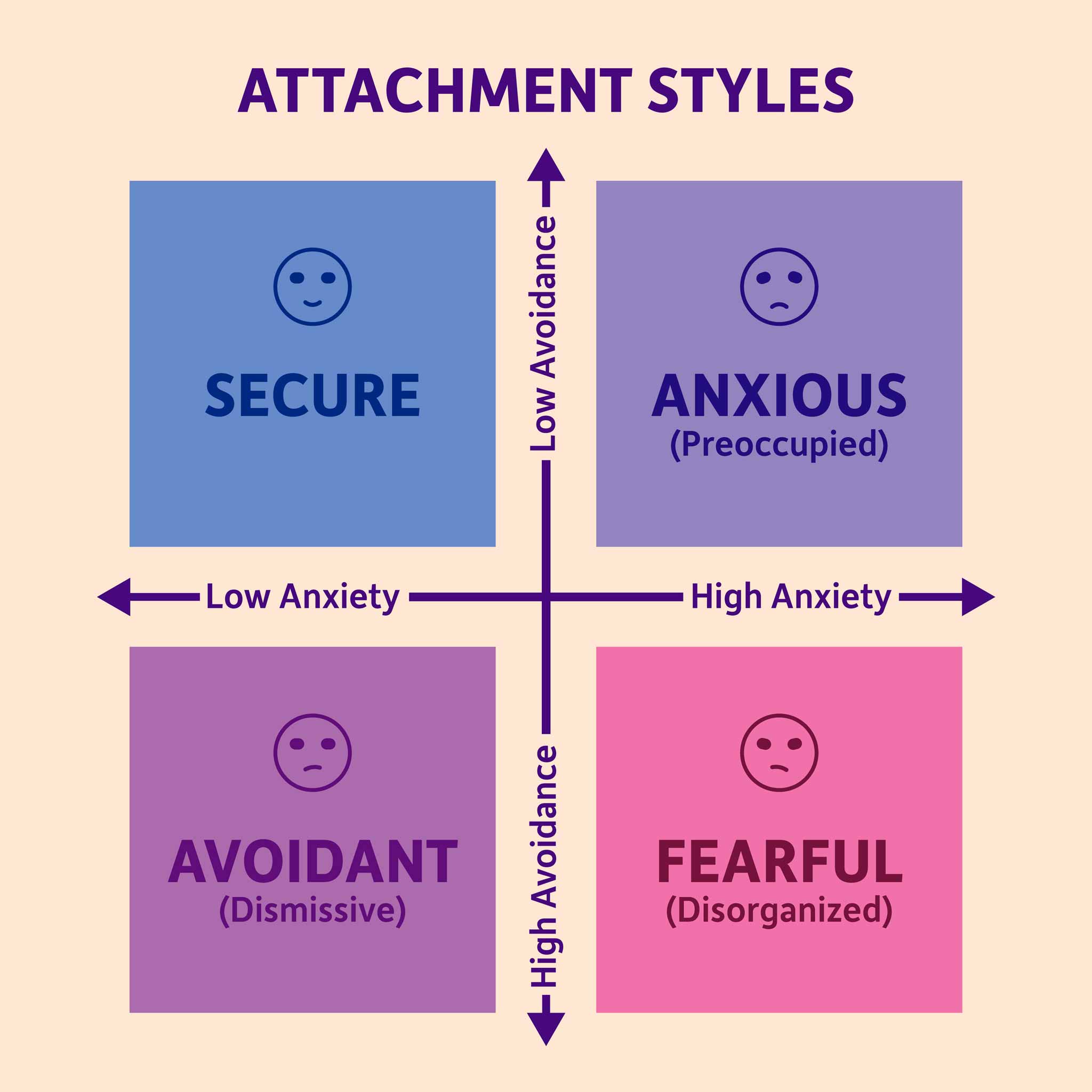
Attachment styles are highly determined by the emotional experiences in early childhood and they define the way people develop and sustain relationships in adulthood. With emotionally sensitive and stable caregivers, the children tend to feel secure within relationships. Nevertheless, the children brought up by parents with low emotional availability can acquire insecure attachments like anxious, avoidant, or fearful attachments. These patterns tend to demonstrate how children learnt to deal with the lack of emotional consistency or distance.
Types of Insecure Attachment Patterns
• Anxious Attachment
Individuals with anxious attachment often seek closeness but carry a strong fear of abandonment.
Common characteristics:
- Constant need for reassurance and validation
- Sensitivity to rejection or emotional distance
- Overthinking partner’s behaviour or communication
- Fear of being left or replaced
- Difficulty feeling secure even in stable relationships
• Avoidant Attachment
Individuals with avoidant attachment tend to value independence and may feel uncomfortable with emotional intimacy.
Common characteristics:
- Difficulty expressing emotions or vulnerability
- Preference for emotional distance and self-reliance
- Feeling overwhelmed when relationships become emotionally close
- Avoiding deep emotional conversations or conflicts
- Struggling to depend on others for support
• Fearful (Disorganised) Attachment
Some individuals develop a mixed pattern where they desire emotional closeness but also fear it.
Common characteristics:
- Strong desire for connection combined with fear of getting hurt
- Alternating between seeking closeness and withdrawing
- Difficulty trusting others emotionally
- Feeling confused or conflicted in relationships
- Experiencing intense emotional highs and lows
They are not personality defects but rather emotionally adjusted strategies that have been formed because of the early attachment experiences. Through emotional sensitivity, positive relationships, and at times therapeutic support, people will be able to slowly build more secure and stable pattern of relationships.
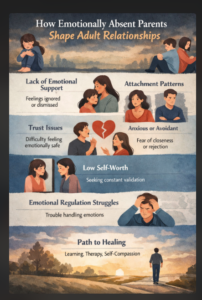
Difficulty Trusting Emotional Safety
Those who have not been able to receive emotional needs in their childhood years might find it hard to consider relationships as a source of true safety and stability. Devoid of early emotional assurances, trust and solace, they might be brought up uncertain of having to rely on others. Therefore, they might become attracted to emotionally unavailable partners since such a relationship pattern is well known to them even when it hurts or is not satisfying.
How This Pattern May Appear in Adult Relationships
• Attraction to Emotional Unavailability
Individuals may feel drawn to partners who are distant, inconsistent, or difficult to connect with emotionally because this pattern feels familiar and emotionally recognisable.
• Difficulty Trusting Stability
When relationships are calm, consistent, and emotionally safe, individuals may feel unsure or uncomfortable because they are not used to experiencing steady emotional support.
• Fear of Vulnerability
Emotional openness may feel risky or overwhelming. Individuals may struggle to express needs or feelings due to fear of rejection or emotional disappointment.
• Confusing Intensity with Connection
Emotionally unstable or unpredictable relationships can feel intense and emotionally stimulating, which may sometimes be mistaken for deep love or passion.
The relationships that are healthy, that is, emotionally open, consistent, and supportive, might be initially alien. With time, emotional sensitivity, and positive experiences, one can learn to interpret emotional safety as a state of comfort and not discomfort, which leads to the development of healthier and more stable relationships.
Struggles With Self-Worth and Validation
The lack of emotional parenting may have a great impact on self-esteem. Children who are raised in the lack of the emotional confirmation can start wondering about their value or feeling that their emotions are too intense or uninsignificant. When emotional needs are not addressed over an extended period of time, the children tend to believe that they have to transform themselves to be accepted or loved. These attitudes may persist into adulthood and influence the way people perceive themselves and relationship.
How Self-Esteem May Be Affected
• Seeking External Validation
Adults may depend heavily on partners or others for reassurance and approval to feel valued or secure.
• Over-Prioritising Relationships
Individuals may place others’ needs above their own, believing maintaining the relationship is more important than personal well-being.
• Fear of Rejection or Conflict
Expressing personal needs or disagreements may feel threatening, leading individuals to avoid confrontation even when they feel hurt or uncomfortable.
• Difficulty Setting Boundaries
Some individuals may struggle to say no, express limits, or protect their emotional space due to fear of losing connection or approval.
These are tendencies that are commonly formed during childhood as defence mechanisms. Through awareness, self-reflection, and positive relationships, the user can progressively develop better self-esteem, know how to appreciate their needs (emotional), and grow confident in establish respectful boundaries.
Emotional Regulation Challenges
It is the responsibility of the parent to teach the child the way to read and handle emotions. With help of the supportive and responsive interactions children learn how to cope with stress, how to deal with disappointments and how to express feelings in a healthy manner. Lacking regular emotional counselling, people will have difficulty controlling emotions in stressful or conflict situations or even relationship difficulties. They can have strong emotional responses of anger, nervousness or depression. Sometimes they can become emotionally numb and are unable to identify or relate to their emotions.
How Emotional Regulation Difficulties May Appear
• Strong Emotional Reactions
Individuals may feel overwhelmed during disagreements or stressful situations and struggle to calm themselves.
• Emotional Suppression or Numbness
Some may avoid or disconnect from their feelings as a way to protect themselves from emotional discomfort.
• Difficulty Expressing Feelings Clearly
They may struggle to communicate emotional needs or may express emotions in ways that are misunderstood by others.
• Challenges in Conflict Resolution
Emotional overwhelm or avoidance can make it difficult to manage disagreements in a calm and constructive way.
Such issues have the potential to affect communication, emotional intimacy, and trust in adult relations. Through emotional awareness, conducive conditions, and even treatment support, people can eventually acquire better means of learning how to perceive, express, and control their emotions.
The Possibility of Healing
Even though early emotional absence may have an effect on relationship patterns, these patterns are not incurable. The emotional development of humans is not rigid and individuals can acquire other forms of cognizing and experiencing relationships in the course of life. The awareness is the first step of healing. As soon as people start to realise the influence of childhood experiences on their emotional reactions, they become capable of making their relationship decisions to be more conscious and healthy.
Steps That Support Healing
• Developing Emotional Awareness
Learning to recognise, name, and understand personal emotions helps individuals respond to feelings rather than suppress or avoid them.
• Practicing Vulnerability
Gradually learning to express thoughts, fears, and emotional needs can help build deeper and more authentic relationships.
• Building Supportive Relationships
Connecting with emotionally safe and understanding people helps create new experiences of trust and stability.
• Seeking Professional Support
Counselling or therapy can provide guidance in understanding attachment patterns, emotional regulation, and self-worth.
Eventually, one might start to realise that his or her emotional needs are legitimate, and they require to be addressed. Through patience and positive experience, they will be able to build a relationship that is safe, respectful, and emotionally satisfying.
A Compassionate Perspective
Parents who are emotionally absent are not necessarily always bad on purpose. Most parents bring up children with their own emotional baggage, stress or unresolved experiences which, to some extent, influence their capacity to offer regular emotional support. Such knowledge does not imply the lack of attention to the role of emotional absence but can assist people in processing their childhood issues with more distinctness, stability, and self-pity than resentment.
The understanding that the childhood emotional environments determine relationships in adulthood provides a chance to change. Once people know about these patterns, they are able to start interrupting their unhealthy emotional patterns and start to build new and healthier patterns of relating to others. Through awareness, support, and emotional development, individuals will be able to create relationships founded on safety, respect and understanding, not only providing more healthy relationships themselves, but also providing more emotionally secure surroundings to their future generations.
Frequently Asked Questions (FAQ)
1. What is the meaning of emotionally absent parenting?
Emotionally absent parenting is a condition where parents are able to provide physical needs yet fail to address emotional needs of a child like validation, comfort and emotional support.
2. Do emotionally absent parents love their children?
Yes. Numerous parents who lack emotions in their lives love their children and cannot express their feelings because of stress, upbringing, and personal issues that are hard to overcome.
3. What are the impacts of emotional absence on the development of a child?
It may have an influence on emotional regulation, self-esteem, attachment patterns, and the capability of establishing emotionally safe relationships in adulthood.
4. Which attachment theories are associated with emotional absence?
The absence of emotion can be linked to anxious, avoidant, or fearful (disorganised) attachment styles.
5. Why are emotionally absent parents a problem with intimacy among adults?
Emotional intimacy can be strange or dangerous to them since they have not experienced emotional reassurance throughout their upbringing.
6. Do emotionally absent parents have an influence on self-esteem?
Yes. A child that lacks emotional validation can mature up questioning his/her value or believing that his/her feelings are irrelevant.
7. What is the reason why others become enticed to emotionally unavailable partners?
There is a tendency of people to become attracted to patterns of emotions they were familiar with in childhood, and they may be unhealthy.
8. Is it possible to be emotionally neglected without being intentional?
Yes. Emotional neglect can be very common when parents are stressed, traumatised or suffer mental issues instead of intentionally causing harm.
9. What is the influence of emotional absence on emotional regulation?
People can have problems of coping with stress, emotional expression, and relationship conflict management.
10. What are emotional neglect symptoms as a child?
Symptoms typical of this type are a sense that they are not listened to, that they are not able to express their feelings, fear of being vulnerable, and the need to be liked all the time.
11. Is it possible to recover emotionally when one was neglected?
Yes. Through awareness, empathetic relationships and in some cases professional counselling, one can come up with a more healthy pattern of emotions.
12. What is the role of therapy in people with emotionally absent parents?
Therapy makes people realise the ways they are attached to other people, enhance their emotional control, develop positive self-perception, and have better relationship behaviours.
13. Does the emotionally absentee parenting influence future parenting styles?
Yes. Others might have a habit of repeating emotional patterns unconsciously whereas others might make an effort to be emotionally available to their children.
14. What should one do to develop safe relationships after being neglected emotionally?
Through the creation of emotional awareness, vulnerability, boundary creation, and the creation of a relationship founded on trust and consistency.
15. Why is it significant to know childhood emotional experiences?
The knowledge of the early emotional experiences enables people to identify patterns, disrupt dysfunctional cycles, and establish more positive relationships in the adult stage.
Written by Baishakhi Das
Counselor | Mental Health Practitioner
B.Sc, M.Sc, PG Diploma in Counseling
Reference
-
Bowlby, J. (1988). A Secure Base: Parent-Child Attachment and Healthy Human Development.
-
Ainsworth, M. D. S. (1979). Infant-Mother Attachment. American Psychologist.
-
Siegel, D. J. (2012). The Developing Mind: How Relationships and the Brain Interact to Shape Who We Are.
-
Perry, B. D., & Szalavitz, M. (2017). The Boy Who Was Raised as a Dog.
-
Schore, A. N. (2003). Affect Regulation and the Repair of the Self.
-
American Psychological Association – Emotional Neglect & Attachment Research
https://www.apa.org -
National Child Traumatic Stress Network – Emotional Neglect Resources
https://www.nctsn.org - Differences between Love and Trauma Bond
This topic performs well due to rising searches around men’s mental health, workplace stress, and burnout recovery. Combining emotional insight with practical steps increases engagement and trust.