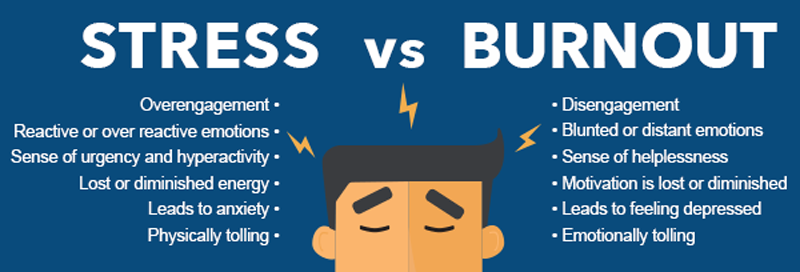
In today’s fast-paced world, feeling overwhelmed has become almost a normal part of daily life. Long work hours, constant digital connectivity, financial pressures, and growing personal responsibilities have blurred the line between productivity and exhaustion. As a result, many people use the terms stress and burnout interchangeably—but psychologically, they are not the same experience.
Understanding the difference between stress and burnout is crucial because they affect the mind and body in very different ways and require different responses. Stress is often a short-term reaction to pressure and can sometimes be managed with rest or problem-solving. Burnout, however, develops gradually from prolonged, unmanaged stress and leads to deep emotional, mental, and physical exhaustion.
When burnout is mistaken for ordinary stress and addressed only with quick fixes—such as taking a short break or pushing harder—it can silently worsen. Over time, this may contribute to anxiety, depression, physical illness, emotional numbness, and a loss of meaning or motivation.
What Is Stress?
Stress is the body’s natural response to pressure, challenge, or perceived demand. It arises when external situations or internal expectations feel greater than one’s current coping capacity. From a psychological perspective, stress is not inherently harmful—it is a signal, alerting the mind and body to mobilize resources for adaptation.
Stress is usually:
-
Situational – tied to a specific circumstance or phase of life
-
Short- to medium-term – it rises and falls as demands change
-
Demand-linked – connected to identifiable tasks, responsibilities, or pressures
Common stressors include work deadlines, academic exams, financial strain, caregiving roles, relationship conflicts, health concerns, or major life transitions. These stressors activate the body’s stress response system (sympathetic nervous system), preparing a person to respond, solve, or endure.
Psychological Experience of Stress
Psychologically, stress is often experienced as:
-
Feeling overwhelmed but still mentally engaged
-
Persistent worry, tension, or irritability
-
Racing or repetitive thoughts, especially about “what needs to be done”
-
Heightened alertness and a strong sense of urgency
-
Difficulty relaxing, even during rest periods
Despite discomfort, motivation is usually still present. The person may feel exhausted yet continues to push forward, believing effort will resolve the situation.
A key cognitive belief commonly seen in stress is:
“Once this situation improves, I’ll feel better.”
This belief reflects an important distinction:
Under stress, people generally retain hope and purpose. They expect relief once the pressure eases, which is why stress—though uncomfortable—often remains psychologically manageable in the short term.
When stress becomes chronic or unrelenting, however, this belief can begin to fade, increasing the risk of emotional exhaustion and burnout.
What Is Burnout?
Burnout is a state of chronic emotional, mental, and physical exhaustion that develops after prolonged exposure to stress that has not been adequately managed or relieved. It is most commonly associated with work, caregiving, and helping professions, where demands are continuous and recovery is limited or absent.
Unlike stress—which involves overactivation—burnout reflects depletion. The system no longer has enough emotional or psychological resources to respond.
The World Health Organization defines burnout as an occupational phenomenon characterized by three core dimensions:
-
Emotional exhaustion – feeling completely drained, depleted, and unable to give more
-
Mental distance, cynicism, or depersonalization – emotional withdrawal from work or responsibilities, often expressed as negativity or indifference
-
Reduced sense of effectiveness – feeling incompetent, unproductive, or that one’s efforts no longer matter
Burnout does not occur suddenly. It develops gradually, often disguised as “just being tired” or “having a bad phase,” and frequently goes unrecognized until daily functioning, relationships, or physical health are significantly affected.
Psychological Experience of Burnout
Psychologically, burnout is experienced very differently from stress:
-
Emotional numbness or emptiness, rather than anxiety
-
Detachment and cynicism, especially toward work, people, or responsibilities once cared about
-
Profound loss of motivation, meaning, and purpose
-
Feeling trapped, helpless, or stuck, with no sense of agency
-
Reduced emotional reactivity—both positive and negative feelings feel muted
While stressed individuals are often still striving and hoping for relief, burned-out individuals feel psychologically disconnected. Tasks that once felt manageable now feel pointless or unbearable.
A defining cognitive belief in burnout is:
“Nothing will change—even if the pressure stops.”
This belief reflects learned helplessness and emotional shutdown. Even rest or time off may not bring relief, because the nervous system and sense of meaning are already depleted.
Key Psychological Difference from Stress
-
Stress → “Too much to handle, but I must keep going.”
-
Burnout → “I have nothing left to give, and it doesn’t matter anymore.”
Burnout is not a personal failure or lack of resilience—it is a systemic response to prolonged overload without recovery, support, or control. Recovery therefore requires more than rest; it involves restoring meaning, boundaries, autonomy, and emotional safety.
Stress vs Burnout: Key Differences
| Aspect | Stress | Burnout |
|---|---|---|
| Duration | Short-term or episodic | Long-term, chronic |
| Energy | Overactive, tense | Depleted, exhausted |
| Emotions | Anxiety, irritability | Hopelessness, numbness |
| Motivation | Still present | Significantly reduced |
| Engagement | Over-engaged | Disengaged |
| Recovery | Improves with rest | Persists despite rest |
Emotional Signs: How They Feel Different
Stress Feels Like
- “Everything feels urgent.”
- “There’s no space to pause.”
- “If I rest, I’ll fall behind.”
Burnout Feels Like
-
“I don’t care anymore”
-
“I’m empty”
-
“I’m done, but I can’t leave”
Stress pushes you to keep going.
Burnout makes you want to stop altogether.
Behavioral Differences
Under Stress
-
Overworking
-
Difficulty relaxing
-
Short temper
-
Sleep problems
Under Burnout
-
Procrastination or withdrawal
-
Reduced performance
-
Emotional detachment
-
Avoidance of responsibility
Burnout often looks like laziness from the outside—but psychologically, it is exhaustion, not lack of effort.
Physical Symptoms
Both stress and burnout affect the body, but differently:
Stress
-
Headaches
-
Muscle tension
-
Rapid heartbeat
-
Digestive issues
Burnout
-
Chronic fatigue
-
Frequent illness
-
Sleep disturbances
-
Body aches with no clear cause
Burnout weakens the immune system due to prolonged nervous system overload.
Why Stress Turns Into Burnout
Stress becomes burnout when:
-
Recovery time is insufficient
-
Emotional needs are ignored
-
Boundaries are consistently crossed
-
Effort is high but control or reward is low
Caregiving professionals, healthcare workers, counselors, parents, and corporate employees are especially vulnerable.
Can You Be Stressed and Burned Out at the Same Time?
Yes. Many people experience high stress on top of burnout. This feels like:
-
Emotional emptiness + anxiety
-
Exhaustion + pressure to perform
-
Detachment + guilt
This combination significantly increases the risk of depression and anxiety disorders.
How to Respond: Stress vs Burnout
If It’s Stress
-
Time management
-
Short breaks
-
Relaxation techniques
-
Problem-solving
-
Temporary rest
If It’s Burnout
-
Reducing demands (not just resting)
-
Emotional support or therapy
-
Re-evaluating roles and boundaries
-
Restoring meaning and autonomy
-
Long-term lifestyle changes
Burnout cannot be healed by a weekend break.
When to Seek Professional Help
Consider professional support if:
-
Emotional numbness lasts weeks or months
-
You feel detached from people or work
-
Motivation does not return after rest
-
Physical symptoms persist without cause
The American Psychological Association emphasizes early intervention to prevent long-term mental health consequences.
Key Takeaways
-
Stress is about too much
-
Burnout is about nothing left
-
Stress responds to rest
-
Burnout requires deeper change
-
Recognizing the difference protects mental health
Final Reflection
Stress says:
“I can’t slow down.”
Burnout says:
“I can’t go on.”
Stress reflects pressure within capacity—painful, but still fueled by urgency and hope. Burnout reflects depletion beyond capacity—where motivation, meaning, and emotional energy are exhausted.
Listening carefully to this internal shift is critical. When “pushing through” turns into emotional numbness, detachment, or hopelessness, the body and mind are signaling the need for deeper intervention—not just rest.
Recognizing this difference early can prevent long-term emotional collapse, protect mental health, and create space for recovery before functioning is severely compromised.
Frequently Asked Questions (FAQ)
1. Is stress always harmful?
No. Stress is a normal psychological and physiological response to challenges. Short-term stress can improve focus and performance. It becomes harmful when it is chronic, intense, and unmanaged, increasing the risk of anxiety, depression, and burnout.
2. How is burnout different from stress?
Stress involves over-engagement—too much pressure and urgency. Burnout involves disengagement—emotional exhaustion, cynicism, and loss of meaning. Stress says “I must keep going,” while burnout says “I have nothing left.”
3. Can stress turn into burnout?
Yes. Prolonged stress without adequate rest, control, emotional support, or recovery can gradually develop into burnout. Burnout is often the result of long-term stress that feels unavoidable.
4. Is burnout a mental illness?
Burnout is not classified as a mental disorder. According to the World Health Organization, it is an occupational phenomenon. However, burnout can increase vulnerability to depression, anxiety disorders, and physical health problems.
5. Can taking a break cure burnout?
Short breaks may help stress, but burnout usually requires deeper changes, such as:
-
Reducing ongoing demands
-
Restoring boundaries and autonomy
-
Reconnecting with meaning and values
-
Psychological support or counseling
Without these, symptoms often return quickly.
6. Who is most at risk of burnout?
People in high-responsibility or caregiving roles, such as healthcare workers, counselors, teachers, parents, corporate employees, and caregivers—especially when there is high demand and low support.
7. When should someone seek professional help?
Professional support is recommended when symptoms include:
-
Persistent emotional numbness or hopelessness
-
Loss of motivation lasting weeks or months
-
Withdrawal from work or relationships
-
Physical symptoms (sleep issues, fatigue, frequent illness)
-
Feeling trapped or helpless
Early intervention can prevent long-term psychological and occupational damage.
Written by Baishakhi Das
Counselor | Mental Health Practitioner
B.Sc, M.Sc , PG Diploma in Counseling
Reference
-
World Health Organization (WHO)
Burn-out an occupational phenomenon
https://www.who.int/news/item/28-05-2019-burn-out-an-occupational-phenomenon -
American Psychological Association (APA)
Stress effects on the body
https://www.apa.org/topics/stress/body -
National Institute for Occupational Safety and Health (NIOSH)
Stress at work
https://www.cdc.gov/niosh/topics/stress -
Maslach, C., & Leiter, M. P. (2016).
Understanding the burnout experience. World Psychiatry
https://onlinelibrary.wiley.com/doi/10.1002/wps.20311 -
Harvard Health Publishing
Burnout: Symptoms and prevention
https://www.health.harvard.edu/blog/burnout-modern-affliction-or-human-condition-2017071912199 - Why You Feel Emotionally Numb: When You Can’t Feel What You Know You Should
- Emotional Burnout: Symptoms You Shouldn’t Ignore