Behaviorism vs Cognitive Psychology

Understanding two major approaches to human behavior and the mind

https://ioannouolga.wordpress.com/wp-content/uploads/2018/08/behaviorism-cognitivism.gif?w=670

Introduction

Psychology has evolved through multiple schools of thought, each attempting to explain why humans think, feel, and behave the way they do. These perspectives developed in response to different questions—some focusing on what can be observed and measured, others exploring the invisible workings of the mind. Among these, Behaviorism and Cognitive Psychology stand out as two of the most influential—and contrasting—approaches in the history of psychology.

Behaviorism emerged in the early 20th century as a reaction against introspective methods. It argues that psychology should focus only on observable behavior and external consequences, because these can be scientifically measured and objectively studied. From this perspective, human behavior is shaped largely by the environment through learning, reinforcement, and punishment.

In contrast, Cognitive Psychology developed later, emphasizing that behavior cannot be fully understood without examining internal mental processes. It focuses on how people think, remember, interpret, problem-solve, and make meaning of their experiences. Cognitive psychologists view humans as active processors of information, whose beliefs, perceptions, and thoughts strongly influence emotions and actions.

Understanding the differences between behaviorism and cognitive psychology is essential for students, educators, therapists, and mental health practitioners, because these approaches influence how learning is taught, how behavior is managed, and how psychological difficulties are treated. Modern psychology increasingly integrates both perspectives, recognizing that behavior is shaped by external experiences and internal cognition working together, rather than by one alone.

What Is Behaviorism?

Behaviorism is a psychological approach that explains behavior as a result of environmental stimuli and learned responses. It argues that psychology should focus only on observable, measurable behavior, because behavior can be objectively studied, predicted, and controlled. From this viewpoint, internal mental states—such as thoughts, feelings, or intentions—are considered unnecessary for explaining behavior, as they cannot be directly observed.

Behaviorism emerged as a reaction against introspection-based psychology and aimed to make psychology a scientific, experimental discipline, similar to the natural sciences.

Key Contributors

  • John B. Watson – Founder of behaviorism; emphasized stimulus–response learning

  • B. F. Skinner – Developed operant conditioning; highlighted reinforcement and punishment

  • Ivan Pavlov – Discovered classical conditioning through conditioned reflexes

Each contributed to understanding how learning occurs through interaction with the environment.

Core Assumptions of Behaviorism

Behaviorism is based on several fundamental assumptions:

  • Behavior is learned, not innate
    Humans are not born with fixed behavioral patterns; behavior develops through experience.

  • Learning occurs through conditioning
    Repeated associations and consequences shape behavior.

  • Internal thoughts are not necessary to explain behavior
    Only observable actions are required for scientific explanation.

  • The environment shapes behavior
    External stimuli, rewards, and punishments determine how individuals act.

Key Concepts in Behaviorism

  • Classical Conditioning
    Learning through association between stimuli (e.g., Pavlov’s experiments).

  • Operant Conditioning
    Learning through consequences—reinforcement and punishment (Skinner).

  • Reinforcement and Punishment
    Consequences that increase or decrease behavior.

  • Stimulus–Response (S–R) Associations
    Behavior is seen as a direct response to environmental stimuli.

Example

A child studies more because good marks are rewarded.
→ The increased studying is explained through reinforcement, not through motivation, self-belief, or emotions.

From a behaviorist perspective, the reward strengthens the behavior, making internal thoughts unnecessary for explanation.

Key Insight

Behaviorism provides a clear, practical framework for understanding and modifying behavior, especially in areas like education, parenting, and behavior therapy. However, its focus on observable behavior alone is also what later led to the development of approaches—like cognitive psychology—that explore what happens inside the mind.

What Is Cognitive Psychology?

Cognitive psychology is a branch of psychology that focuses on how people process information—including thinking, reasoning, memory, attention, language, perception, and problem-solving. Rather than viewing humans as passive responders to external stimuli, this approach sees individuals as active processors of information who interpret, evaluate, and make meaning from their experiences.

Cognitive psychology emerged as a response to the limitations of behaviorism. Psychologists realized that understanding behavior requires exploring what happens inside the mind—how people think about situations, how they remember past experiences, and how they interpret the world around them.

Key Contributors

  • Jean Piaget – Explained how children’s thinking develops through distinct cognitive stages

  • Aaron Beck – Developed cognitive therapy, highlighting how thoughts influence emotions and behavior

Their work laid the foundation for understanding learning, development, and mental health through cognitive processes.

Core Assumptions of Cognitive Psychology

Cognitive psychology is built on several key assumptions:

  • Mental processes influence behavior
    What people think directly affects how they feel and act.

  • Thoughts, beliefs, and interpretations matter
    The same situation can lead to different behaviors depending on how it is perceived.

  • Humans actively construct meaning
    People are not passive learners; they organize and interpret information based on prior knowledge.

  • Behavior cannot be fully understood without understanding cognition
    Observable behavior is only one part of the picture—internal processes give it meaning.

Key Concepts in Cognitive Psychology

  • Schemas
    Mental frameworks that help organize and interpret information (e.g., beliefs about self or others).

  • Information Processing
    The way the mind encodes, stores, and retrieves information—often compared to a computer model.

  • Cognitive Distortions
    Inaccurate or biased thinking patterns that influence emotions and behavior.

  • Memory and Attention
    Processes that determine what information is noticed, remembered, or forgotten.

Example

A child avoids studying because they think, “I’m not smart enough.”
→ From a cognitive perspective, the behavior is explained by beliefs, self-perception, and thought patterns, not by rewards or punishment alone.

The problem is not just the behavior (avoiding study), but the underlying cognition shaping it.

Key Insight

Cognitive psychology helps us understand why behavior occurs, not just how it changes. By addressing thoughts, beliefs, and interpretations, this approach is especially valuable in education, counseling, and mental health interventions, where insight and emotional understanding are essential for lasting change.

Key Differences: Behaviorism vs Cognitive Psychology

Aspect Behaviorism Cognitive Psychology
Focus Observable behavior Internal mental processes
View of mind Not necessary to study Central to behavior
Learning Conditioning Information processing
Role of environment Primary influence Important but not sole factor
Role of thoughts Ignored Essential
Research methods Experiments, observation Experiments, models, self-report
Therapy focus Behavior change Thought + behavior change

Applications in Real Life

In Education

Both approaches strongly influence how teaching and learning are designed.

  • Behaviorism emphasizes observable performance.

    • Reward-based learning (grades, praise, stars)

    • Discipline systems with clear rules and consequences

    • Repetition and practice to build habits
      This approach is especially useful for classroom management, skill acquisition, and maintaining structure.

  • Cognitive Psychology focuses on how students think and understand.

    • Learning strategies (mnemonics, mind maps)

    • Problem-solving and critical thinking

    • Conceptual understanding rather than rote learning
      This helps students become active learners who understand why and how, not just what.

👉 Modern education blends both: reinforcement to motivate effort, and cognitive strategies to deepen understanding.

In Parenting

Parenting practices often reflect a mix of these two approaches.

  • Behaviorism in parenting involves:

    • Reinforcing good behavior (praise, attention, rewards)

    • Setting clear consequences for misbehavior

    • Consistency in responses
      This helps children learn boundaries and expectations.

  • Cognitive Psychology in parenting focuses on:

    • Understanding emotions behind behavior

    • Helping children identify self-talk (“I can’t do this”)

    • Supporting motivation, confidence, and emotional regulation

👉 Together, they allow parents to guide behavior while also nurturing emotional intelligence and self-esteem.

In Therapy

Therapeutic approaches clearly show the strengths of both perspectives.

  • Behaviorism contributes:

    • Behavior modification techniques

    • Exposure therapy for fears and phobias

    • Habit reversal strategies

  • Cognitive Psychology contributes:

    • Cognitive restructuring (challenging negative thoughts)

    • Changing maladaptive beliefs

    • Improving self-perception and emotional understanding

Modern therapies—especially Cognitive Behavioral Therapy (CBT)—integrate both approaches, targeting behavior change and thought patterns simultaneously for lasting mental health improvement.

Strengths and Limitations

Strengths of Behaviorism

  • Clear, measurable, and practical

  • Highly effective for habit formation

  • Widely useful in classrooms, parenting, and behavior therapy

Limitations of Behaviorism

  • Ignores emotions, thoughts, and meaning

  • Limited in explaining complex human behavior

  • Less effective for trauma-related or emotionally driven issues 

Strengths of Cognitive Psychology

  • Explains thinking, emotions, and meaning-making

  • Effective for anxiety, depression, and self-esteem concerns

  • Respects human agency, insight, and self-awareness

Limitations of Cognitive Psychology

  • Mental processes are harder to measure objectively

  • May overlook environmental and situational influences

  • Requires verbal ability and reflective capacity

Modern Perspective: Integration, Not Opposition

Today, psychology no longer treats behaviorism and cognitive psychology as opposing camps. Instead, they are understood as complementary perspectives.

  • Behaviorism explains how behavior is shaped through consequences and learning

  • Cognitive psychology explains why behavior happens through thoughts, beliefs, and interpretations

Integrated approaches recognize that behavior and cognition influence each other continuously.

Conclusion

Behaviorism and cognitive psychology offer two powerful lenses for understanding human behavior.
One focuses on what we do.
The other focuses on how we think.

Together, they provide a richer, more complete picture of human functioning.

Behavior can be shaped.
Thoughts can be changed.
And meaningful change happens when both are understood.

Frequently Asked Questions (FAQ)

1. What is the main difference between behaviorism and cognitive psychology?

Behaviorism focuses on observable behavior and external consequences, while cognitive psychology focuses on internal mental processes like thoughts and memory.

2. Who founded behaviorism?

Behaviorism was founded by John B. Watson.

3. Who are the major contributors to cognitive psychology?

Key contributors include Jean Piaget and Aaron Beck.

4. Why did behaviorists reject mental processes?

They believed thoughts and emotions could not be objectively measured and therefore should not be the focus of scientific psychology.

5. What does cognitive psychology focus on?

It focuses on thinking, memory, attention, perception, language, and problem-solving.

6. How does behaviorism explain learning?

Learning occurs through conditioning—via reinforcement, punishment, and stimulus–response associations.

7. How does cognitive psychology explain behavior?

Behavior is explained through beliefs, interpretations, schemas, and information processing.

8. Which approach is better for education?

Both are useful: behaviorism helps with discipline and habit formation, while cognitive psychology supports deep understanding and critical thinking.

9. Which approach is more effective in therapy?

Modern therapy combines both approaches, especially in Cognitive Behavioral Therapy.

10. Can behaviorism explain emotions?

No. One of its main limitations is ignoring emotions and internal experiences.

11. Can cognitive psychology explain habits?

Yes, but it may overlook the role of reinforcement and environment in habit formation.

12. Is behaviorism still relevant today?

Yes, especially in education, parenting, and behavior modification programs.

13. Is cognitive psychology more humanistic?

It is more person-centered than behaviorism, as it values thoughts, meaning, and insight.

14. Why are the two approaches integrated today?

Because behavior and cognition influence each other; understanding both leads to better outcomes.

15. What is the biggest takeaway from comparing these approaches?

Human behavior is best understood by combining external behavior patterns with internal mental processes.

Written by Baishakhi Das

Counselor | Mental Health Practitioner
B.Sc, M.Sc, PG Diploma in Counseling


Reference 

  1. Watson, J. B. (1913). Psychology as the Behaviorist Views It.

  2. Skinner, B. F. (1953). Science and Human Behavior.

  3. Piaget, J. (1952). The Origins of Intelligence in Children.

  4. Beck, A. T. (1976). Cognitive Therapy and the Emotional Disorders.

  5. American Psychological Association (APA) – Learning & Cognition
    https://www.apa.org

  6. McLeod, S. A. (2023). Behaviorism & Cognitive Psychology. Simply Psychology
    https://www.simplypsychology.org

  7. Anger Issues in Men: What’s Really Going On


Automatic Thoughts & Cognitive Distortions in Anxiety

https://static.wixstatic.com/media/28dab0_94961311c1d24d97921c7e7c11eb7da3~mv2.jpg/v1/fill/w_1000%2Ch_777%2Cal_c%2Cq_85%2Cusm_0.66_1.00_0.01/28dab0_94961311c1d24d97921c7e7c11eb7da3~mv2.jpg

Anxiety is not only a physiological response or an emotional state—it is also a cognitive experience. While symptoms such as a racing heart, restlessness, or muscle tension are commonly recognized, the mental component of anxiety is often overlooked. People with anxiety frequently describe their mind as constantly busy, hyper-alert, or trapped in repetitive “what if” thinking, where potential threats are endlessly anticipated and replayed.

Cognitive psychology explains this experience through the interaction of automatic thoughts and cognitive distortions. These rapid, involuntary thoughts interpret situations as dangerous or overwhelming, while distorted thinking patterns exaggerate risk and minimize coping ability. Together, they create a mental environment in which anxiety is repeatedly triggered, sustained, and intensified—even in the absence of real or immediate danger.

This understanding is rooted in Cognitive Behavioral Theory developed by Aaron T. Beck. Beck’s framework helps explain why anxiety feels so real, convincing, and difficult to switch off. Because these thoughts arise automatically and feel believable, individuals often respond as if the threat is certain. Recognizing anxiety as a cognitive process, rather than merely an emotional or physical one, is a crucial step toward effective psychological intervention and long-term relief.

Understanding Automatic Thoughts in Anxiety

What Are Automatic Thoughts?

Automatic thoughts are immediate, involuntary interpretations that arise spontaneously in response to internal or external situations. They occur reflexively, without conscious effort or deliberate reasoning, and often pass so quickly that individuals are unaware of their presence. Yet, despite their subtlety, these thoughts have a powerful influence on emotional and physiological reactions.

In anxiety, automatic thoughts are typically threat-focused. The mind constantly scans for potential danger, uncertainty, or loss of control, interpreting even neutral situations as risky. Because these thoughts arise automatically and feel convincing, they trigger anxiety responses before logical evaluation can take place.

Common Features of Anxious Automatic Thoughts

  • Fast and repetitive
    They appear instantly and often repeat in a loop, making the mind feel busy or stuck.

  • Oriented toward danger or uncertainty
    Thoughts focus on “what if something goes wrong?” rather than what is actually happening.

  • Emotionally intense
    They provoke fear, tension, and unease, activating the body’s stress response.

  • Treated as facts rather than possibilities
    These thoughts are rarely questioned and are experienced as truths instead of hypotheses.

In effect, anxious automatic thoughts function like an internal alarm system that is oversensitive. While designed to protect, this alarm rarely switches off, sending repeated signals of threat even when no real danger exists. Over time, this constant activation maintains anxiety, exhausts mental resources, and reinforces the belief that the world is unsafe.

Recognizing automatic thoughts as mental events—not objective reality—is a crucial first step in reducing anxiety and restoring cognitive balance.

How Automatic Thoughts Trigger Anxiety

Automatic thoughts in anxiety usually involve overestimating threat and underestimating coping ability.

Example

  • Situation: Heart rate increases

  • Automatic thought: “Something is wrong with my heart.”

  • Emotion: Fear, panic

  • Behavior: Checking pulse, avoidance, reassurance-seeking

The anxiety is not caused by the bodily sensation itself, but by the interpretation of that sensation as dangerous.

Over time, this pattern conditions the mind to respond with fear even in neutral situations.

Cognitive Distortions: The Thinking Errors Behind Anxiety

Cognitive distortions are systematic errors in thinking that bias perception toward threat, danger, or catastrophe. In anxiety disorders, these distortions become habitual and automatic.

Below are the most common cognitive distortions seen in anxiety.

1. Catastrophizing

Assuming the worst possible outcome will occur.

“If I make a mistake, everything will fall apart.”

This distortion keeps the nervous system in a constant state of anticipation and fear.

2. Probability Overestimation

Overestimating how likely a feared event is.

“This will definitely go wrong.”

Even low-risk situations feel dangerous because the mind inflates threat probability.

3. Intolerance of Uncertainty

Believing uncertainty itself is unbearable.

“If I don’t know what will happen, I can’t cope.”

This drives excessive planning, reassurance-seeking, and avoidance.

4. Mind Reading

Assuming others are judging or criticizing you.

“They must think I’m incompetent.”

This distortion fuels social anxiety and self-consciousness.

5. Emotional Reasoning

Believing that feeling anxious means danger is real.

“I feel scared, so something must be wrong.”

Here, emotion becomes evidence, bypassing rational evaluation.

6. Selective Attention to Threat

Focusing only on signs of danger while ignoring safety cues.

An anxious mind scans constantly for threat, reinforcing hypervigilance.

The Anxiety Maintenance Cycle

Automatic thoughts and cognitive distortions work together to create a self-reinforcing loop that keeps anxiety active over time. This cycle explains why anxiety often persists even when situations are objectively safe and why temporary relief rarely leads to lasting change.

The cycle typically unfolds as follows:

  1. Trigger (internal or external)
    A trigger may be external (a situation, place, or interaction) or internal (a bodily sensation, memory, or thought). Even neutral stimuli can become triggers once anxiety is established.

  2. Automatic threat-based thought
    The mind immediately generates a threat-focused interpretation such as, “Something is wrong,” or “I won’t be able to handle this.” This thought arises automatically and is rarely questioned.

  3. Anxiety response (physical + emotional)
    The thought activates the body’s fight-or-flight response, leading to symptoms like increased heart rate, muscle tension, restlessness, and intense fear or worry.

  4. Safety behaviors (avoidance, checking, reassurance-seeking)
    To reduce distress, individuals engage in behaviors aimed at preventing danger or gaining certainty—avoiding situations, repeatedly checking, or seeking reassurance from others.

  5. Short-term relief
    These behaviors provide temporary comfort, reinforcing the belief that the threat was real and successfully avoided.

  6. Long-term increase in anxiety
    Because the feared outcome is never tested or disproven, the mind learns that safety depends on these behaviors. Anxiety becomes stronger, more frequent, and more generalized over time.

Crucially, safety behaviors prevent the disconfirmation of fear, meaning the individual never gets the opportunity to learn that the situation could be tolerated or was not truly dangerous. As a result, anxiety remains alive and self-perpetuating.

Understanding this cycle is essential in anxiety treatment, as lasting improvement comes not from eliminating anxiety triggers, but from gradually breaking the loop—especially by reducing safety behaviors and challenging threat-based interpretations.

Core Beliefs Underlying Anxiety

Beneath automatic thoughts lie core beliefs, often formed early in life:

  • “The world is dangerous.”

  • “I am not safe.”

  • “I cannot cope.”

These beliefs prime the mind to interpret ambiguous situations as threatening, making anxiety feel constant and uncontrollable.

Why Anxious Thoughts Feel So Convincing

Anxiety activates the fight-or-flight system, which prioritizes survival over accuracy. In this state:

  • The brain favors speed over logic

  • Threat interpretations dominate

  • Rational counter-arguments feel weak

This is why reassurance often provides only temporary relief—because the problem lies in how thoughts are generated, not whether they are logical.

Therapeutic Implications: How CBT Helps Anxiety

Cognitive Behavioral Therapy targets anxiety by working with both thoughts and behaviors.

Key CBT strategies include:

  • Identifying automatic thoughts

  • Labeling cognitive distortions

  • Evaluating threat realistically

  • Reducing safety behaviors

  • Increasing tolerance of uncertainty

Importantly, CBT does not aim to eliminate anxiety entirely—but to change the relationship with anxious thoughts.

Real-Life Impact of Cognitive Change

When automatic thoughts are recognized as mental events rather than facts:

  • Anxiety intensity decreases

  • Confidence in coping increases

  • Avoidance reduces

  • Emotional flexibility improves

This shift restores a sense of control and psychological safety.

Final Reflection

Automatic thoughts and cognitive distortions are not signs of weakness, lack of intelligence, or “overthinking.” They are learned cognitive habits shaped by life experiences, biological sensitivity, and environmental conditioning. Over time, the mind becomes trained to prioritize threat detection, even in situations that are objectively safe.

Anxiety persists not because danger is everywhere, but because the brain has learned to interpret the world through a lens of risk and uncertainty. When this lens remains unexamined, anxious thoughts feel automatic, convincing, and uncontrollable.

The hopeful message of cognitive psychology is this:

If anxious thoughts are learned, they can be questioned.
And when thinking changes, anxiety no longer has to control life.

Through awareness, practice, and therapeutic support, individuals can learn to recognize anxious thoughts as mental events rather than facts. As this shift occurs, the mind gradually regains flexibility, the nervous system settles, and anxiety loses its power to dominate daily life.

Change does not mean eliminating fear—it means learning that fear does not have to decide how you live.

Frequently Asked Questions (FAQ)

1. What are automatic thoughts in anxiety?

Automatic thoughts are immediate, involuntary interpretations that arise in response to situations, bodily sensations, or emotions. In anxiety, these thoughts are usually threat-focused and trigger fear before conscious reasoning can occur.


2. How are automatic thoughts different from worrying?

Automatic thoughts are brief, fast, and reflexive, while worry is more prolonged and repetitive. Automatic thoughts often trigger worry by signaling danger or uncertainty.


3. What are cognitive distortions in anxiety?

Cognitive distortions are systematic thinking errors that exaggerate threat and underestimate coping ability. Common distortions in anxiety include catastrophizing, probability overestimation, emotional reasoning, and intolerance of uncertainty.


4. Why do anxious thoughts feel so real and convincing?

Anxious thoughts activate the body’s fight-or-flight response, which prioritizes survival over accuracy. In this state, emotions feel like evidence, making thoughts seem factual even when they are not.


5. What are safety behaviors, and why do they maintain anxiety?

Safety behaviors (avoidance, checking, reassurance-seeking) reduce anxiety temporarily. However, they prevent the mind from learning that the feared situation is manageable, reinforcing anxiety in the long term.


6. Can anxiety exist without real danger?

Yes. Anxiety often persists not because danger is present, but because the mind has learned to interpret neutral or uncertain situations as threatening based on past experiences.


7. How does Cognitive Behavioral Therapy (CBT) help anxiety?

CBT helps by:

  • Identifying automatic thoughts

  • Recognizing cognitive distortions

  • Challenging threat-based interpretations

  • Reducing safety behaviors

  • Increasing tolerance of uncertainty

This breaks the anxiety maintenance cycle.


8. Are automatic thoughts a sign of weakness?

No. Automatic thoughts are learned cognitive habits, shaped by biology, environment, and experience. They are common and treatable, not signs of personal failure.

Written by Baishakhi Das

Counselor | Mental Health Practitioner
Qualifications: B.Sc in Psychology | M.Sc  | PG Diploma in Counseling

Reference 


Beck’s Cognitive Model of Depression: An In-Depth Explanation

https://upload.wikimedia.org/wikipedia/commons/0/0d/Beck%27s_CognitiveTriad.svg

Beck’s Cognitive Model of Depression is one of the most influential psychological frameworks for understanding why depression develops, persists, and often returns even after periods of improvement. Developed by Aaron T. Beck, this model shifted the understanding of depression away from viewing it solely as a mood disorder or a biological imbalance.

Instead, Beck proposed that depression is fundamentally a cognitive disorder, rooted in habitual patterns of distorted thinking that shape how individuals perceive themselves, their life experiences, and their future. These thinking patterns influence emotional reactions and behavioral choices, gradually creating and maintaining the depressive state.

At its core, the model proposes a powerful and clinically significant idea:

Depression is maintained by persistent negative interpretations of the self, life experiences, and the future.

According to Beck, these interpretations are not random or temporary thoughts. They are structured, predictable, and often automatic cognitive patterns that operate outside conscious awareness. Over time, they become deeply ingrained, making depression feel overwhelming, inevitable, and difficult to escape.

This article explores Beck’s Cognitive Model of Depression in depth—examining its theoretical structure, underlying psychological mechanisms, clinical relevance in therapy, and real-life implications for understanding and treating depressive disorders.

The Foundation of Beck’s Cognitive Model

Beck’s Cognitive Model emerged as a direct challenge to earlier psychological theories that explained depression primarily in terms of unconscious conflicts, unresolved childhood dynamics, or purely biological imbalances. While acknowledging that biological and developmental factors play a role, Beck argued that these explanations alone could not fully account for how depression is experienced and maintained in everyday life.

Through careful clinical observation, Aaron T. Beck noticed a consistent pattern among individuals suffering from depression: they tended to interpret themselves, their experiences, and their future through a systematically negative cognitive lens. These were not occasional pessimistic thoughts, but stable and repetitive thinking errors that appeared across situations.

According to Beck:

  • Depressed individuals do not perceive reality objectively
    Neutral or even positive events are often interpreted negatively, while successes are minimized or dismissed.

  • Their thinking follows predictable negative patterns
    These patterns include habitual self-criticism, pessimism, and rigid conclusions that resist contradictory evidence.

  • These cognitive patterns directly generate depressive emotions
    Feelings of sadness, hopelessness, guilt, and worthlessness arise as logical emotional responses to these distorted interpretations.

From this perspective, depression is not caused simply by external stressors or internal emotional weakness. Instead, emotional suffering emerges because thoughts shape emotional experience.

Thus, in Beck’s model, thoughts are not merely symptoms of depression—they are central mechanisms that create and maintain it. By identifying and modifying these maladaptive thought patterns, individuals can reduce emotional distress and regain psychological functioning, forming the foundation for cognitive-based therapeutic intervention.

The Cognitive Triad: The Core of Depression

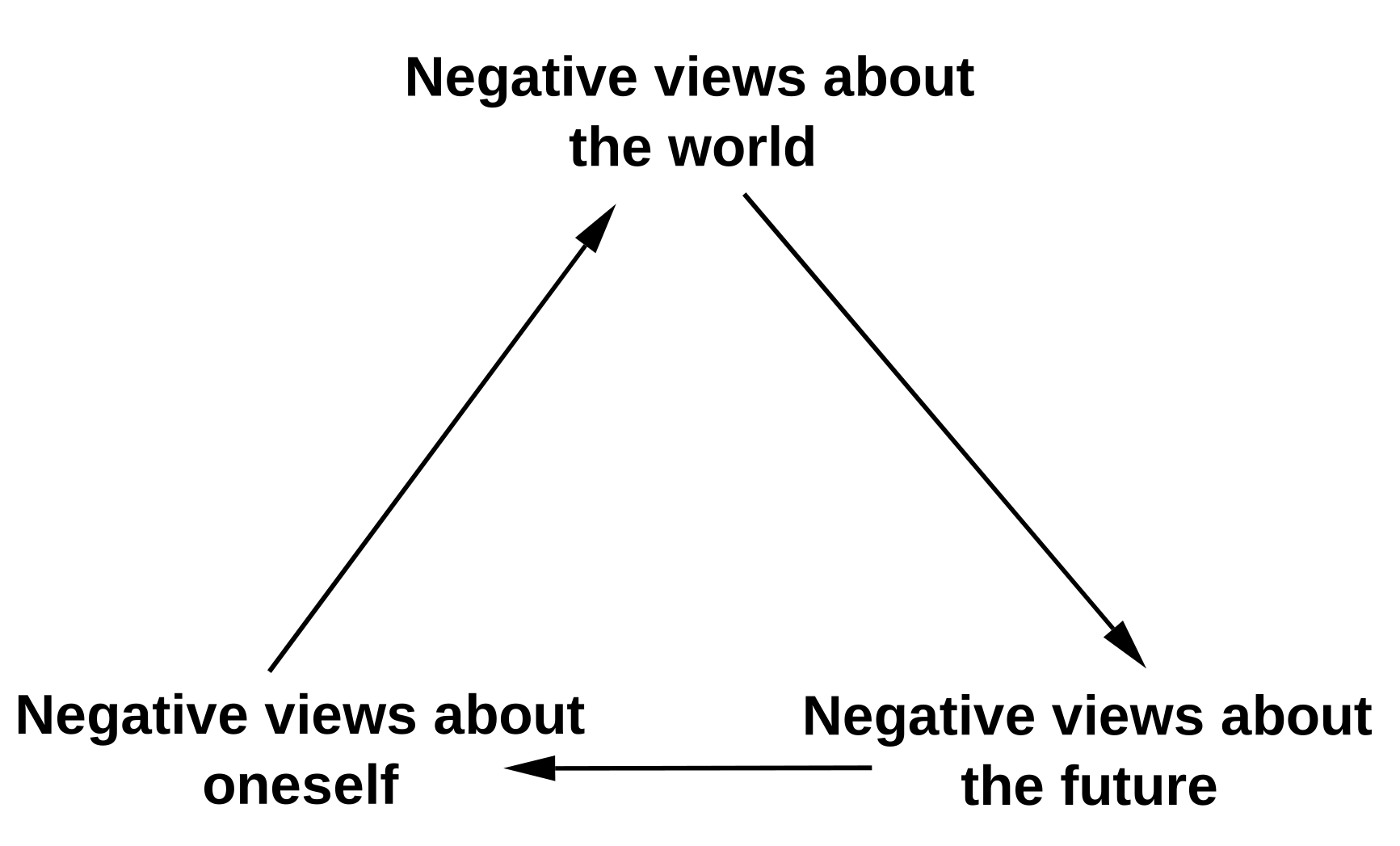
The heart of Beck’s model is the Cognitive Triad, which consists of three interrelated negative belief systems:

1. Negative View of the Self

“I am defective, unworthy, or inadequate.”

Common thoughts:

  • “I am a failure.”

  • “There is something wrong with me.”

  • “I’m not good enough.”

This leads to:

  • Low self-esteem

  • Shame and guilt

  • Self-criticism

2. Negative View of the World

“The world is unfair, demanding, or rejecting.”

Common thoughts:

  • “People don’t care about me.”

  • “Nothing ever works out.”

  • “Life is against me.”

This creates:

  • Withdrawal from relationships

  • Loss of interest in activities

  • Emotional numbness

3. Negative View of the Future

“Things will never get better.”

Common thoughts:

  • “Nothing will change.”

  • “There’s no point trying.”

  • “The future is hopeless.”

This fuels:

  • Helplessness

  • Loss of motivation

  • Suicidal ideation in severe cases

➡️ These three views reinforce each other, creating a closed depressive loop.

Automatic Thoughts: The Moment-to-Moment Triggers

Automatic thoughts are immediate, involuntary mental responses that arise spontaneously in reaction to everyday situations. They occur so rapidly that individuals are often unaware of their presence, experiencing only the emotional impact that follows. In Beck’s Cognitive Model, these thoughts are considered the moment-to-moment triggers that translate life events into emotional distress.

In depression, automatic thoughts tend to share several defining characteristics:

  • Negative – They focus on loss, failure, or inadequacy

  • Absolute – They are framed in extreme, all-or-nothing terms

  • Emotionally convincing – They feel true, regardless of evidence

  • Taken as facts – They are rarely questioned or examined

Because these thoughts arise automatically, they bypass rational evaluation and directly activate emotional responses.

Example

  • Situation: A mistake at work

  • Automatic thought: “I ruin everything.”

  • Emotion: Sadness, shame, worthlessness

  • Behavior: Withdrawal, avoidance, reduced effort

In this sequence, the emotional pain is not caused by the mistake itself, but by the interpretation of the mistake. A single error is cognitively transformed into a global judgment about the self.

Crucially, these thoughts occur so quickly and effortlessly that individuals often believe they are reacting emotionally to reality. In truth, they are reacting to their interpretation of reality. Over time, repeated automatic thoughts strengthen depressive beliefs, deepen emotional distress, and reinforce avoidant or withdrawn behavior—maintaining the depressive cycle.

Identifying and challenging automatic thoughts is therefore a central therapeutic task in cognitive-based interventions, as even small shifts in interpretation can lead to meaningful emotional relief.

Cognitive Distortions in Depression

Beck identified specific thinking errors that dominate depressive cognition:

  • All-or-nothing thinking
    “If I fail once, I’m a total failure.”

  • Overgeneralization
    “This always happens to me.”

  • Mental filtering
    Focusing only on negative details and ignoring positives.

  • Personalization
    “It’s my fault, even when it isn’t.”

  • Catastrophizing
    Expecting the worst possible outcome.

These distortions systematically bias perception toward negativity.

Core Beliefs and Schemas: The Deep Structure

Beyond surface thoughts, Beck emphasized core beliefs (schemas)—deep, rigid assumptions formed early in life.

Common depressive core beliefs:

  • “I’m not good enough to be loved.”

  • “Nothing I do changes anything.”

  • “I don’t have much worth.”

These schemas often develop through:

  • Childhood criticism or neglect

  • Emotional abuse

  • Repeated failure experiences

  • Insecure attachment

When life events activate these schemas, depressive thinking is triggered automatically.

The Depression Maintenance Cycle

Beck’s model explains why depression persists even when circumstances improve.

  1. Negative core beliefs shape perception

  2. Automatic thoughts interpret events negatively

  3. Depressive emotions emerge

  4. Withdrawal and inactivity increase

  5. Reduced positive experiences confirm negative beliefs

This self-reinforcing loop explains chronic and recurrent depression.

Behavioral Consequences of Depressive Thinking

Depression is not only cognitive—it is behavioral.

Common behaviors include:

  • Social withdrawal

  • Reduced activity

  • Avoidance of responsibility

  • Procrastination

These behaviors:

  • Reduce opportunities for pleasure or mastery

  • Increase isolation

  • Strengthen beliefs of inadequacy

Thus, behavior becomes evidence for distorted thoughts.

Therapeutic Implications: Why the Model Works

Beck’s model became the foundation of Cognitive Behavioral Therapy (CBT) because it is:

  • Structured and practical

  • Focused on present functioning

  • Collaborative and empowering

  • Skills-based and measurable

CBT targets:

  • Automatic thoughts

  • Cognitive distortions

  • Core beliefs

  • Avoidant behaviors

By modifying thinking patterns, emotional relief follows naturally.

Strengths of Beck’s Cognitive Model

  • Empirically supported across cultures

  • Effective for mild to severe depression

  • Teaches lifelong coping skills

  • Reduces relapse risk

It reframes depression from a personal failure to a treatable thinking pattern.

Limitations and Considerations

  • Severe depression may require medication alongside CBT

  • Trauma-based depression may need additional emotional processing

  • Cultural beliefs can shape cognitive content

Still, Beck’s model remains one of the most clinically effective frameworks in mental health.

Final Reflection

Beck’s Cognitive Model of Depression offers a compassionate yet structured framework for understanding psychological suffering. It reframes depression not as a personal flaw, weakness, laziness, or lack of gratitude, but as the result of maladaptive patterns of thinking that are learned, reinforced, and maintained over time—often in response to life experiences, relationships, and early environments.

This perspective is deeply validating. It removes moral judgment from depression and replaces it with understanding. When suffering is seen as a product of cognitive patterns rather than character defects, individuals can approach their struggles with curiosity instead of self-blame.

Most importantly, Beck’s model delivers hope grounded in psychology, not optimism alone:

If thoughts are learned, they can be unlearned.
And if thinking can change, recovery is possible.

Through awareness, reflection, and therapeutic intervention, individuals can learn to question automatic thoughts, soften rigid beliefs, and develop more balanced ways of interpreting themselves and the world. In doing so, emotional relief becomes not only possible—but sustainable.

Healing, in this model, is not about changing who you are.
It is about changing how you relate to your thoughts—and reclaiming agency over your inner life.

Frequently Asked Questions (FAQ)

1. What is Beck’s Cognitive Model of Depression?

Beck’s Cognitive Model explains depression as a result of persistent negative thinking patterns rather than personal weakness or only biological imbalance. It emphasizes how distorted thoughts about the self, world, and future create and maintain depressive emotions and behaviors.


2. Who developed the Cognitive Model of Depression?

The model was developed by Aaron T. Beck, the founder of Cognitive Therapy and one of the most influential figures in modern psychotherapy.


3. What is the Cognitive Triad in depression?

The cognitive triad refers to three interconnected negative beliefs:

  • A negative view of the self
    “I am inadequate or not good enough.”
  • A negative view of the world
    “The world is demanding, rejecting, or unfair.”
  • A negative view of the future
    “Nothing will change, and improvement is unlikely.”

These beliefs reinforce one another and deepen depressive symptoms.


4. Are negative thoughts a symptom or a cause of depression?

According to Beck’s model, negative thoughts are central causes, not just symptoms. Automatic thoughts and core beliefs directly shape emotional responses and behaviors that maintain depression.


5. What are automatic thoughts?

Automatic thoughts are immediate, involuntary interpretations that arise in response to situations. In depression, these thoughts are usually negative, absolute, and emotionally convincing, and they strongly influence mood and behavior.


6. Can Beck’s model help with severe depression?

Yes. Research shows Cognitive Behavioral Therapy (CBT), based on Beck’s model, is effective for mild, moderate, and severe depression, often in combination with medication for more severe cases.


7. How does CBT use Beck’s model in therapy?

CBT helps individuals:

  • Identify automatic negative thoughts

  • Recognize cognitive distortions

  • Challenge unhelpful beliefs

  • Replace them with balanced, realistic thoughts
    This process leads to emotional relief and healthier behavior patterns.


8. Is Beck’s Cognitive Model scientifically supported?

Yes. Beck’s model is one of the most empirically supported frameworks in psychology, with decades of research validating its effectiveness across cultures and age groups.

Written by Baishakhi Das

Counselor | Mental Health Practitioner
Qualifications: B.Sc in Psychology | M.Sc  | PG Diploma in Counseling

Reference 


Cognitive Behavioral Theory: How Thoughts Control Emotions

https://images.squarespace-cdn.com/content/v1/51e36ea9e4b0e2abc3eb9d10/1594338433181-WT9XX3CDDNJNG8O536YM/CBT%2BModel.jpeg

Why do two people react so differently to the same situation?
Why does one criticism lead to growth in someone, but deep emotional pain in another?

Cognitive Behavioral Theory (CBT) explains this clearly:
👉 It is not events that control our emotions—it is our thoughts about those events.

This article explores how thoughts shape emotions and behavior, the core principles of CBT, and why changing thinking patterns can transform emotional well-being.

What Is Cognitive Behavioral Theory?

Cognitive Behavioral Theory (CBT) is based on a simple but powerful idea:

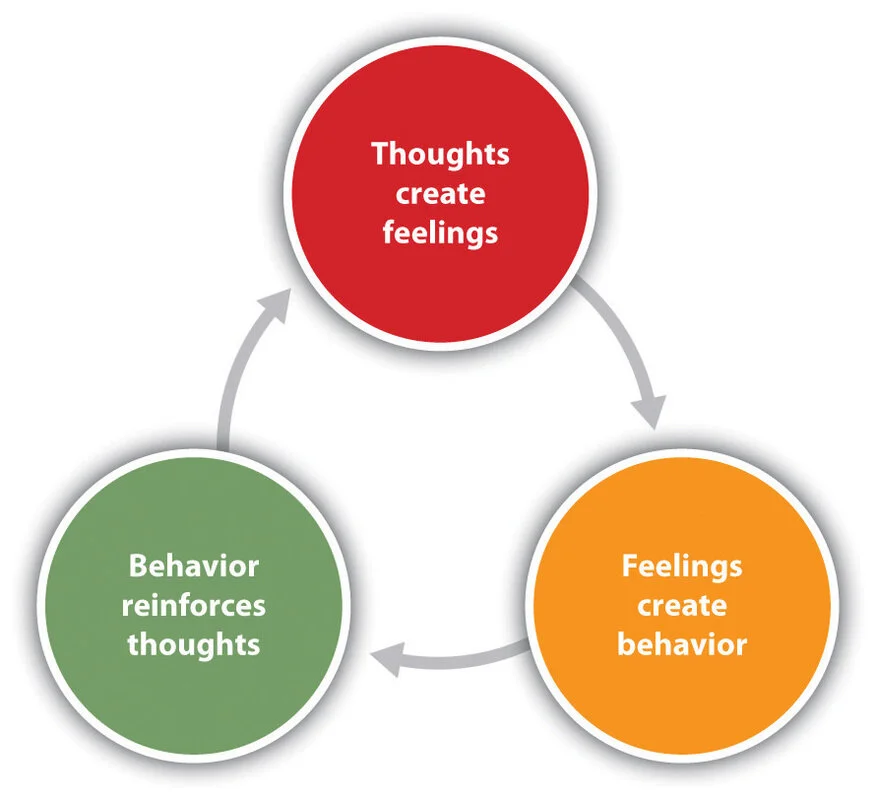
Thoughts → Emotions → Behaviors

This model explains that human emotions and actions do not arise directly from situations or events, but from the meaning we assign to those experiences. When something happens, the mind instantly interprets it through thoughts—often automatic, habitual, and outside conscious awareness. These thoughts then trigger emotional reactions, which in turn influence behavior.

For example, the same situation can lead to very different outcomes:

  • One person may interpret an event as a challenge, leading to motivation and problem-solving.

  • Another may interpret the same event as a threat or personal failure, leading to anxiety, sadness, or avoidance.

CBT highlights that emotions feel immediate and uncontrollable, but they are actually cognitively driven. By identifying and examining these underlying thoughts, individuals can understand why they feel the way they do and why they respond in certain patterns.

This principle is central to CBT because it shows that lasting emotional change becomes possible when thinking patterns change. When thoughts become more realistic, balanced, and flexible, emotional responses naturally soften, and behaviors become healthier and more adaptive.

The CBT Triangle: Thoughts, Emotions, Behaviors

At the heart of Cognitive Behavioral Therapy (CBT) lies the cognitive triangle, a model that explains the constant interaction between thoughts, emotions, and behaviors.

  • Thoughts – What we tell ourselves about a situation

  • Emotions – How those thoughts make us feel

  • Behaviors – How we act in response to those feelings

These three components are deeply interconnected. A change in one automatically influences the others. Negative or distorted thoughts can intensify emotional distress, which then drives unhelpful behaviors. In turn, those behaviors often reinforce the original thoughts, creating a self-maintaining cycle.

Example

Situation: You don’t receive a reply to your message.

  • Thought: “I’m being ignored. I don’t matter.”

  • Emotion: Sadness, anxiety, insecurity

  • Behavior: Withdrawal, overthinking, repeated checking, avoidance

Here, the emotional pain does not come from the lack of a reply itself, but from the meaning attached to it. The behavior that follows—withdrawal or avoidance—can further reinforce the belief of being unimportant, strengthening the cycle.

Now consider an alternative interpretation:

  • Thought: “They may be busy or haven’t seen it yet.”

  • Emotion: Mild concern or neutrality

  • Behavior: Waiting calmly, continuing daily activities

This shift in thought leads to a completely different emotional experience and behavioral response, even though the situation remains unchanged.

The cognitive triangle illustrates a key CBT principle: by changing the way we think about a situation, we can change how we feel and how we behave. This understanding empowers individuals to break unhelpful cycles and respond to life with greater emotional balance and flexibility.

Why Thoughts Have So Much Power Over Emotions

Thoughts act as mental filters. They give meaning to experiences.
The brain reacts emotionally not to facts, but to interpretations.

CBT emphasizes that:

  • Emotions feel automatic, but they are cognitively driven

  • Thoughts often happen so quickly we mistake them for truth

  • Long-standing thinking patterns become habits

Over time, repeated thoughts strengthen emotional responses and shape personality and coping styles.


Automatic Thoughts: The Hidden Drivers

Automatic thoughts are:

  • Fast

  • Involuntary

  • Often negative

  • Emotionally charged

They are shaped by early experiences, parenting, trauma, and social learning.

Common Automatic Thoughts

  • “I’m not good enough.”

  • “Something bad will happen.”

  • “People will reject me.”

  • “I must not fail.”

These thoughts directly trigger emotions like anxiety, shame, anger, or hopelessness.

Cognitive Distortions: When Thinking Becomes Unhelpful

CBT identifies cognitive distortions—systematic errors in thinking that intensify emotional distress.

Cognitive distortions are habitual errors in thinking that cause people to interpret situations in inaccurate, exaggerated, or unbalanced ways. In CBT, these distortions are important because they intensify emotional distress and maintain unhelpful behavior patterns. They often operate automatically and feel convincing, even when they are not based on facts.

All-or-Nothing Thinking
This distortion involves viewing situations in extreme, black-and-white terms.
“If I fail once, I’m a failure.”
There is no room for learning, growth, or partial success. This type of thinking fuels perfectionism, shame, and fear of mistakes, often leading to avoidance or overcompensation.

Catastrophizing
Here, the mind immediately jumps to the worst possible outcome.
A small problem is perceived as a disaster, and the ability to cope is underestimated. This distortion keeps the nervous system in a constant state of alert, strongly linked to anxiety and panic responses.

Mind Reading
Mind reading occurs when we assume we know what others are thinking—usually something negative—without evidence.
Beliefs like “They think I’m incompetent” or “They don’t like me” increase social anxiety, self-doubt, and withdrawal, even in neutral or supportive situations.

Overgeneralization
In overgeneralization, one negative experience is seen as a never-ending pattern.
A single rejection, mistake, or failure becomes “This always happens to me.” This distortion promotes hopelessness and reduces motivation to try again.

Emotional Reasoning
Emotional reasoning involves treating feelings as facts.
“I feel anxious, so something bad must be happening.”
This reinforces fear-based thinking and prevents reality testing, especially in anxiety and depression.

Together, these cognitive distortions magnify emotional pain by repeatedly reinforcing negative interpretations of reality. They also drive maladaptive behaviors such as avoidance, withdrawal, reassurance-seeking, or self-criticism, which further strengthen the original distorted beliefs. CBT works by helping individuals identify these distortions, question their accuracy, and replace them with more balanced and realistic ways of thinking.

How Thoughts Shape Different Emotions

In Cognitive Behavioral Therapy (CBT), emotional difficulties such as anxiety, depression, and anger are understood through the interaction between thoughts, emotions, and behaviors. Each emotional state is maintained by specific thinking patterns that trigger predictable emotional and behavioral responses.

Anxiety

  • Thought: “I can’t handle this.”

  • Emotion: Fear, panic, intense worry

  • Behavior: Avoidance, reassurance-seeking, over-preparation

In anxiety, the mind overestimates danger and underestimates personal coping ability. The thought “I can’t handle this” creates a sense of threat, activating the body’s fear response. Avoidance and reassurance-seeking may reduce anxiety temporarily, but they reinforce the belief that the situation is truly dangerous, keeping the anxiety cycle alive.

Depression

  • Thought: “Nothing will change.”

  • Emotion: Hopelessness, sadness, emptiness

  • Behavior: Withdrawal, inactivity, loss of motivation

Depressive thinking is often marked by hopelessness and negative expectations about the future. When the mind repeatedly tells itself that improvement is impossible, emotional energy diminishes. Withdrawal and inactivity then reduce positive experiences, further confirming the belief that nothing will change.

Anger

  • Thought: “I’m being disrespected.”

  • Emotion: Rage, frustration, resentment

  • Behavior: Aggression, conflict, verbal outbursts

Anger is frequently driven by interpretations of threat, injustice, or disrespect. When situations are automatically viewed as personal attacks, emotional arousal increases rapidly. Aggressive or confrontational behaviors may provide momentary relief but often escalate conflict and reinforce hostile beliefs.

How CBT Helps

CBT helps individuals identify these automatic thoughts, examine their accuracy, and replace them with more balanced interpretations. By intervening at the level of thinking—before emotions intensify—CBT reduces emotional reactivity and supports healthier behavioral choices.

Instead of reacting automatically, individuals learn to respond thoughtfully, breaking cycles of anxiety, depression, and anger before they escalate.

Core Beliefs: The Root of Emotional Patterns

Beneath automatic thoughts lie core beliefs—deeply held assumptions about the self, others, and the world.

Examples:

  • “I am unlovable.”

  • “The world is unsafe.”

  • “I must be perfect to be accepted.”

Core beliefs develop early and strongly influence emotional reactions. CBT works to gradually modify these beliefs through evidence-based questioning and behavioral change.

How CBT Helps Change Emotional Responses

CBT does not aim to eliminate emotions.
It helps people respond to emotions differently by changing unhelpful thinking.

Key CBT Techniques

  • Thought monitoring

  • Cognitive restructuring

  • Reality testing

  • Behavioral experiments

  • Skill-building (problem-solving, emotion regulation)

As thinking becomes more balanced, emotions naturally become more manageable.

CBT in Everyday Life

CBT is not only for therapy rooms. It applies to daily experiences:

  • Handling criticism at work

  • Managing relationship conflicts

  • Coping with stress and uncertainty

  • Reducing overthinking and self-criticism

By learning to question thoughts instead of accepting them as facts, emotional freedom increases.

Misconceptions About CBT

  • ❌ “CBT ignores emotions”
    ✅ CBT respects emotions but changes the thinking behind them

  • ❌ “Positive thinking only”
    ✅ CBT focuses on realistic, balanced thinking

  • ❌ “Thoughts are fully conscious”
    ✅ Many thoughts are automatic and learned

Why CBT Is So Effective

CBT is effective because it:

  • Targets root cognitive patterns

  • Is structured and goal-oriented

  • Empowers individuals with self-help skills

  • Is supported by strong scientific evidence

It teaches people how to become their own therapist.

Final Reflection

You cannot always control situations.
You cannot always control emotions.
But you can learn to change the thoughts that shape them.

CBT reminds us:

Thoughts are not facts.
And changing the way we think can change the way we live.

Frequently Asked Questions (FAQ)

1. How does CBT explain emotions like anxiety or depression?

CBT explains that emotions such as anxiety or depression are not caused directly by situations, but by thoughts and interpretations about those situations. When thoughts are negative, rigid, or catastrophic, they trigger intense emotional reactions and unhelpful behaviors.


2. Why do emotions feel automatic if they are driven by thoughts?

Thoughts often occur very quickly and outside conscious awareness, which makes emotions feel sudden and uncontrollable. CBT helps slow down this process so thoughts can be identified and evaluated.


3. How does CBT help with anxiety?

CBT helps people recognize anxious thoughts like “I can’t handle this”, challenge their accuracy, and test alternative perspectives. This reduces fear and gradually decreases avoidance and reassurance-seeking behaviors.


4. Can CBT help with depression and lack of motivation?

Yes. CBT targets hopeless thoughts such as “Nothing will change” and encourages small, meaningful behavioral changes. As thinking becomes more balanced and activity increases, mood often improves.


5. How does CBT address anger issues?

CBT helps identify interpretations related to threat or disrespect, examine evidence for those beliefs, and develop calmer, more assertive responses. This reduces emotional escalation and interpersonal conflict.


6. Is CBT about positive thinking?

No. CBT focuses on realistic and balanced thinking, not forced positivity. The goal is accuracy and flexibility, not denial of problems.


7. How long does CBT take to work?

CBT is usually short- to medium-term. Many people notice changes within a few weeks, especially when skills are practiced consistently outside sessions.


Written by Baishakhi Das

Counselor | Mental Health Practitioner
B.Sc (Psychology), M.Sc (Human Development), PG Diploma in Counseling

Reference 


How to Manage Anxiety as a Man: Practical Steps That Actually Work

Introduction: Why Men Experience Anxiety Differently

Anxiety is one of the most common mental health concerns worldwide, yet it remains deeply misunderstood among men. While women are more frequently diagnosed with anxiety disorders, research consistently shows that men experience anxiety at nearly equal rates—but express, cope with, and seek help for it very differently.

Men are often socialized to be strong, silent, independent, and emotionally controlled. From childhood, many boys hear messages like “don’t cry,” “man up,” or “handle it yourself.” These expectations don’t erase anxiety; they simply push it underground. As a result, male anxiety often shows up in ways that are easily overlooked or misinterpreted—such as irritability, anger, workaholism, substance use, emotional withdrawal, or physical symptoms.

This article explores:

  • How anxiety manifests uniquely in men

  • Why traditional coping advice often fails men

  • Evidence-based, practical strategies that actually work

  • When and how men can seek help without shame

Managing anxiety is not about becoming “less emotional.” It is about becoming more regulated, self-aware, and resilient.

Understanding Anxiety in Men

What Is Anxiety?

Anxiety is the body’s natural stress response, designed to protect us from danger. When functioning properly, it helps us stay alert and prepared. However, when anxiety becomes chronic, excessive, or disproportionate, it interferes with daily functioning and mental well-being.

Common anxiety disorders include:

  • Generalized Anxiety Disorder (GAD)

  • Panic Disorder

  • Social Anxiety Disorder

  • Health Anxiety

  • Performance Anxiety

  • Trauma-related anxiety

In men, anxiety frequently goes undiagnosed because symptoms may not match stereotypical descriptions.

How Anxiety Commonly Shows Up in Men

Men are less likely to say “I feel anxious.” Instead, anxiety often appears indirectly.

1. Irritability and Anger

Many men experience anxiety as constant frustration, short temper, or sudden anger outbursts. This is not a personality flaw—it’s a fight-or-flight response stuck in “on” mode.

2. Physical Symptoms

Men often report:

  • Chest tightness

  • Digestive issues

  • Headaches

  • Muscle tension

  • Fatigue

  • Sleep disturbances

These symptoms are frequently investigated medically, while the underlying anxiety remains untreated.

3. Overworking and Perfectionism

Using work as an escape is socially rewarded, but chronic overworking can be a sign of anxiety driven by fear of failure, inadequacy, or loss of control.

4. Emotional Withdrawal

Rather than expressing worry, men may shut down emotionally, avoid conversations, or isolate themselves.

5. Risk-Taking or Substance Use

Alcohol, nicotine, or risky behaviors are sometimes used to numb anxiety temporarily, often worsening it long-term.

Why Men Struggle to Seek Help for Anxiety

Cultural Expectations of Masculinity

Many men fear that acknowledging anxiety means weakness. Unfortunately, this belief delays treatment and increases suffering.

Lack of Emotional Language

Men are often not taught how to identify or verbalize emotions, making it harder to recognize anxiety early.

Fear of Being Judged

Men may worry about being perceived as unreliable, weak, or incapable—especially in professional or family roles.

Preference for Self-Reliance

While independence can be healthy, emotional self-isolation increases anxiety severity.

Practical Steps That Actually Work for Managing Anxiety

1. Reframe Anxiety as a Nervous System Issue (Not a Personal Failure)

Anxiety is not a character flaw. It is a physiological and psychological response shaped by genetics, life experiences, and stress exposure.

Understanding this reduces shame and increases willingness to engage in treatment.

Anxiety is not weakness—it’s a nervous system asking for regulation.

Body-Based Strategies: Regulating the Nervous System

2. Controlled Breathing Techniques

Breathing directly affects the autonomic nervous system.

Box Breathing (Highly Effective for Men):

  • Inhale for 4 seconds

  • Hold for 4 seconds

  • Exhale for 4 seconds

  • Hold for 4 seconds
    Repeat for 3–5 minutes.

This technique is widely used by military and law enforcement for stress control.

3. Physical Exercise (But the Right Kind)

Exercise is one of the most effective anxiety treatments.

Best options:

  • Strength training

  • Walking

  • Swimming

  • Yoga or stretching

  • Martial arts

Avoid overtraining, which can worsen anxiety by increasing cortisol.

4. Sleep Regulation

Poor sleep intensifies anxiety symptoms.

Key rules:

  • Fixed sleep and wake times

  • No screens 60 minutes before bed

  • Reduce caffeine after noon

  • Avoid alcohol as a sleep aid

Sleep is not optional—it is foundational to mental health.

Cognitive Strategies: Working with the Mind

5. Identify Anxiety-Driven Thought Patterns

Common patterns in men:

  • “If I fail, I’m worthless.”

  • “I must always be in control.”

  • “I can’t show weakness.”

  • “Something bad is going to happen.”

These thoughts feel true—but they are learned mental habits, not facts.

6. Cognitive Behavioral Techniques (CBT)

CBT helps men:

  • Identify distorted thinking

  • Challenge catastrophic beliefs

  • Develop realistic perspectives

Example:

Thought: “If I mess up this presentation, my career is over.”
Reframe: “One performance does not define my competence.”

CBT is one of the most evidence-based treatments for anxiety.

7. Reduce Overthinking Through Action

Men often respond better to action-oriented strategies than emotional processing alone.

Helpful techniques:

  • Write worries down, then schedule “worry time”

  • Break problems into small, actionable steps

  • Focus on what is controllable

Emotional Regulation Without Losing Masculinity

8. Redefine Emotional Strength

Emotional strength is not emotional suppression—it is emotional regulation.

Healthy regulation includes:

  • Naming emotions

  • Tolerating discomfort

  • Expressing feelings safely

  • Asking for support when needed

These skills increase confidence, not reduce it.

9. Journaling (Structured, Not Emotional Dumping)

Men often resist journaling—but structured formats work well.

Try:

  • “What stressed me today?”

  • “What is within my control?”

  • “What action can I take?”

Five minutes is enough.

Social Support: You Don’t Have to Do It Alone

10. Build One Safe Connection

Men do not need large emotional circles—one safe person is enough.

This could be:

  • A friend

  • A partner

  • A sibling

  • A therapist

Connection reduces anxiety by calming the nervous system.

11. Therapy Is a Tool, Not a Weakness

Therapy provides:

  • Skills, not dependency

  • Structure, not judgment

  • Confidentiality, not exposure

Men often prefer:

  • Goal-oriented therapy

  • CBT or solution-focused approaches

  • Clear strategies and progress tracking

Seeking help is a strategic decision, not an emotional failure.

Lifestyle Factors That Reduce Anxiety Long-Term

12. Limit Alcohol and Nicotine

Both temporarily reduce anxiety but increase baseline anxiety levels over time.

13. Nutrition and Anxiety

  • Stable blood sugar reduces anxiety

  • High caffeine increases symptoms

  • Balanced meals support nervous system health

14. Reduce Digital Overload

Constant notifications keep the brain in a stress loop.

Simple rule:

  • Phone-free first and last hour of the day

When Anxiety Requires Professional Help

Seek professional support if:

  • Anxiety lasts more than 6 months

  • Panic attacks occur

  • Sleep is consistently disturbed

  • Work or relationships suffer

  • You feel emotionally numb or hopeless

Medication may be helpful for some men and is not a failure—it is a medical intervention.

Breaking the Stigma: A New Definition of Masculinity

True strength includes:

  • Self-awareness

  • Emotional responsibility

  • Adaptability

  • Seeking help when needed

Men who manage anxiety effectively often report:

  • Better relationships

  • Improved performance

  • Increased confidence

  • Greater life satisfaction

Conclusion: Managing Anxiety Is a Skill—Not a Personality Trait

Anxiety does not define a man. How he responds to it does.

Managing anxiety is not about eliminating fear—it is about learning to function despite it, regulate it, and grow stronger through it.

Men deserve mental health support just as much as anyone else.

You are not weak for feeling anxious.
You are human—and capable of learning how to manage it.

(FAQ): Managing Anxiety in Men

1. How do men manage anxiety effectively?

Men manage anxiety most effectively by combining nervous system regulation (breathing, exercise, sleep) with cognitive strategies like CBT, structured problem-solving, and emotional awareness. Seeking support from a trusted person or therapist also significantly reduces symptoms.

2. What are common signs of anxiety in men?

Common signs of anxiety in men include irritability, anger, restlessness, overthinking, muscle tension, sleep problems, digestive issues, and emotional withdrawal. Many men experience anxiety physically rather than emotionally, which can delay recognition and treatment.

3. Why do men experience anxiety differently from women?

Men are often socialized to suppress emotions and appear strong, which causes anxiety to manifest through behavioral or physical symptoms rather than verbal emotional expression. Cultural expectations around masculinity also reduce help-seeking behavior in men.

4. Can anxiety in men cause anger or aggression?

Yes. Anxiety activates the body’s fight-or-flight response, which in men often presents as anger, irritability, or aggression. This does not mean the person is violent—it indicates unregulated anxiety and heightened stress hormones.

5. What coping strategies work best for men with anxiety?

Men often benefit from:

  • Structured breathing techniques

  • Strength training or physical activity

  • Cognitive Behavioral Therapy (CBT)

  • Action-based problem solving

  • Limited alcohol and caffeine intake

  • Consistent sleep routines

These strategies help regulate both the mind and nervous system.

6. Is therapy effective for men with anxiety?

Yes. Therapy—especially CBT, solution-focused therapy, and trauma-informed approaches—is highly effective for men. Therapy provides practical tools, emotional regulation skills, and a non-judgmental space to understand anxiety patterns.

7. Can men manage anxiety without medication?

Many men successfully manage anxiety without medication through therapy, lifestyle changes, stress management techniques, and emotional regulation skills. However, medication can be helpful in moderate to severe cases and should not be seen as a weakness.

8. How does masculinity affect anxiety in men?

Traditional masculinity norms often discourage emotional expression and vulnerability, increasing internalized stress and untreated anxiety. Redefining masculinity to include emotional awareness and help-seeking improves mental health outcomes.

9. When should a man seek professional help for anxiety?

A man should seek professional help if anxiety:

  • Lasts longer than six months

  • Causes panic attacks

  • Interferes with work or relationships

  • Affects sleep or physical health

  • Leads to emotional numbness or substance use

Early intervention leads to better recovery.

10. Is anxiety a sign of weakness in men?

No. Anxiety is a biological and psychological response, not a weakness. Learning to manage anxiety shows self-awareness, emotional intelligence, and strength. Seeking help is a responsible and proactive decision.

References

American Psychiatric Association. (2022).
Diagnostic and Statistical Manual of Mental Disorders (5th ed., text rev.; DSM-5-TR).
American Psychiatric Publishing.
🔗 https://www.psychiatry.org/psychiatrists/practice/dsm

Beck, J. S. (2011).
Cognitive behavior therapy: Basics and beyond (2nd ed.). Guilford Press.
🔗 https://www.guilford.com/books/Cognitive-Behavior-Therapy/Judith-Beck/9781609185046

Courtenay, W. H. (2000).
Constructions of masculinity and their influence on men’s well-being.
Social Science & Medicine, 50(10), 1385–1401.
🔗 https://doi.org/10.1016/S0277-9536(99)00390-1

Mahalik, J. R., et al. (2007).
Gender role conflict and psychological distress in men.
Journal of Counseling Psychology, 54(2), 163–175.
🔗 https://doi.org/10.1037/0022-0167.54.2.163

National Institute of Mental Health. (2023).
Anxiety Disorders.
🔗 https://www.nimh.nih.gov/health/topics/anxiety-disorders

World Health Organization. (2022).
Mental health of men and boys.
🔗 https://www.who.int/news-room/fact-sheets/detail/mental-health-of-men-and-boys

Signs of Depression: Understanding the Silent Struggle