How Birth Order Influences Personality

https://i.etsystatic.com/15493847/r/il/c4af4b/1307200366/il_570xN.1307200366_mis5.jpg

A Psychological Perspective with In-Depth Explanation

Birth order has long fascinated psychologists, parents, and researchers because siblings raised in the same family often develop strikingly different personalities, coping styles, and emotional patterns. Even when children share the same home, culture, and parenting values, their psychological experiences within the family are rarely the same. While genetics and environment play powerful roles in shaping personality, birth order adds another important psychological layer—influencing how children interpret attention, responsibility, competition, and belonging. Over time, these interpretations shape how individuals see themselves, relate to others, handle stress, and navigate the world.

The theory of birth order was first systematically explored by Alfred Adler, the founder of Individual Psychology. Adler believed that children are not shaped simply by objective family conditions, but by how they experience their position within the family. According to him, a child’s place among siblings creates unique emotional challenges and advantages, which influence motivation, self-concept, and interpersonal behavior. Birth order, in this view, affects the strategies children develop to gain significance, love, and a sense of belonging.

This article explains each birth order position in detail, exploring the typical strengths, challenges, and psychological patterns associated with first-borns, middle children, youngest children, and only children. At the same time, it is important to remember that birth order influences tendencies, not destiny. Personality remains flexible and is shaped continuously by life experiences, relationships, culture, and self-awareness. Understanding birth order is not about labeling people—but about gaining deeper insight into ourselves and others.

The Psychology Behind Birth Order

From a psychological standpoint, birth order influences how children interpret their place within the family system, and this interpretation affects several key developmental areas:

  • Parental attention – how much attention a child receives, when they receive it, and whether it feels secure or threatened

  • Expectations and responsibility – the level of pressure placed on a child to lead, comply, care for others, or achieve

  • Competition among siblings – how children compare themselves, seek uniqueness, or compete for recognition

  • Sense of belonging and significance – whether a child feels valued, noticed, and emotionally important within the family

Children are not passive recipients of these experiences. They adapt psychologically to their family role in order to secure love, attention, and emotional safety. Some learn to become responsible and dependable, others become agreeable peacemakers, while some rely on charm, independence, or achievement to feel valued. Over time, these early coping strategies become internalized patterns of thinking, feeling, and behaving, often solidifying into stable personality traits that continue to influence relationships and self-identity well into adulthood.

First-Born Child: The Responsible Leader

https://i0.wp.com/justaskyourmom.com/wp-content/uploads/2024/06/birth-order-traits-FB.jpg?resize=372%2C447&ssl=1

Psychological Environment

The first-born child begins life as the sole recipient of parental attention, care, and expectations. During this early period, they often experience a strong sense of importance and security. However, when a younger sibling is born, the first-born commonly goes through what psychologists describe as “dethronement”—a sudden shift from being the center of the family to having to share attention and resources. This experience can feel like a loss of status or security, even if parents remain loving. As a result, many first-borns adapt by becoming more compliant, responsible, or achievement-oriented in an effort to regain approval and maintain their sense of significance. This early transition plays a powerful role in shaping their personality.

Common Personality Traits

First-born children often develop traits that reflect their early responsibilities and expectations, such as:

  • A strong sense of responsibility and duty

  • Organized, disciplined, and rule-oriented behavior

  • Natural leadership tendencies

  • High achievement motivation

  • Emotional maturity that appears advanced for their age

These traits often emerge because first-borns learn early that reliability and competence bring positive attention.

Emotional Patterns

Emotionally, first-borns may carry an internal pressure to “do things right.” They often experience:

  • Pressure to be a role model for younger siblings

  • Fear of making mistakes or failing

  • Anxiety related to losing control or disappointing others

Because praise and attention may feel linked to performance, some first-borns begin to equate love with achievement, which can contribute to perfectionism and self-criticism.

In Adulthood

As adults, first-born individuals often:

  • Perform well in leadership, management, or authority roles

  • Are reliable, loyal, and conscientious in relationships

  • Take responsibility seriously in family and work settings

However, they may also struggle with rigidity, overcontrol, or difficulty relaxing and delegating. Learning to separate self-worth from performance is often an important part of their emotional growth.

Middle Child: The Diplomat and Negotiator

https://www.stuff4tots.com/wp-content/uploads/Middle-Child_Table2.jpg

Psychological Environment

Middle children often grow up feeling caught between siblings—no longer holding the privileges of the oldest, yet not receiving the special attention often given to the youngest. Because parental focus is frequently divided, middle children may perceive themselves as overlooked or less visible within the family. Psychologically, this experience encourages them to adapt by becoming highly aware of others’ needs and emotions. To maintain connection and belonging, they often learn to fit in, negotiate, and adjust—skills that foster strong social adaptability.

Common Personality Traits

As a result of this family position, middle children commonly develop traits such as:

  • Diplomatic and cooperative behavior

  • High emotional intelligence and social awareness

  • Flexibility and adaptability in changing situations

  • A strong sense of fairness and empathy

  • Independent thinking and problem-solving

They often carve out a unique identity by differentiating themselves from siblings rather than competing directly.

Emotional Patterns

Emotionally, middle children may develop:

  • Sensitivity to injustice or favoritism

  • A strong desire to be recognized for their individuality

  • Deep and meaningful peer relationships outside the family

They often learn early that connection is maintained through compromise, understanding others’ perspectives, and keeping harmony—sometimes at the cost of their own needs.

In Adulthood

In adult life, middle children often become:

  • Excellent mediators, negotiators, and team players

  • Loyal friends who value emotional balance and fairness

  • Socially skilled and adaptable in group settings

However, they may occasionally struggle with feeling unseen, undervalued, or unsure of their place, leading to periods of identity confusion. Learning to assert their own needs without fear of losing connection becomes an important part of their personal growth.

Youngest Child: The Charismatic Explorer

https://cdn.empoweringparents.com/attention-seeking-behavior.jpg

Psychological Environment

The youngest child typically grows up surrounded by older siblings and parents who are often more relaxed, experienced, and less rigid than they were with earlier children. Because much has already been “learned” by the family, the youngest may receive extra protection, indulgence, or leniency. Older siblings may also take on caregiving or directive roles. Psychologically, this environment encourages creativity, expressiveness, and social awareness, as the youngest learns to stand out and secure attention within an already established family system.

Common Personality Traits

Youngest children often develop traits that help them gain connection and recognition, such as:

  • Social and expressive communication style

  • Creativity and spontaneity

  • Willingness to take risks and explore new experiences

  • Strong sense of humor and playfulness

  • Attention-seeking behaviors

These traits often emerge as adaptive strategies to feel noticed and valued.

Emotional Patterns

Emotionally, youngest children may:

  • Use charm, humor, or charisma to gain approval

  • Avoid responsibility, especially if others tend to take charge

  • Fear not being taken seriously or being viewed as “the baby”

They often learn early that likability and emotional expressiveness are effective ways to build connection and maintain belonging.

In Adulthood

As adults, youngest children often grow into individuals who are:

  • Energetic, enthusiastic, and innovative

  • Comfortable in social settings with a strong interpersonal presence

  • Creative problem-solvers who bring fresh perspectives

However, they may struggle with discipline, consistency, or follow-through, especially in structured environments. They can also feel underestimated or dismissed, making it important for them to develop confidence in their competence alongside their natural charm.

Only Child: The Mature Individualist

https://ccy.jfcs.org/wp-content/uploads/2013/03/iS_000011653561Large21.jpg

Psychological Environment

Only children grow up in adult-centered environments without sibling rivalry or competition. They typically receive consistent, focused parental attention, which can foster security and emotional awareness. At the same time, the absence of siblings means fewer natural opportunities to practice sharing, negotiation, and conflict resolution in daily life. As a result, only children often become comfortable engaging with adults early on and may adopt more mature behaviors and communication styles than their peers.

Common Personality Traits

Only children frequently develop traits such as:

  • Emotional maturity and self-awareness

  • Strong self-reliance and independence

  • High achievement motivation

  • Comfort with solitude and self-directed activities

  • Well-developed verbal and communication skills

These traits often emerge from close interaction with adults and high parental involvement.

Emotional Patterns

Emotionally, only children may:

  • Develop perfectionistic tendencies

  • Feel intense pressure to succeed or meet expectations

  • Struggle with sharing control or delegating tasks

Because parental attention is often undivided, they may internalize high expectations, learning to equate success with approval.

In Adulthood

In adult life, only children are often:

  • Confident, self-directed, and internally motivated

  • Clear about their values and identity

  • Comfortable making independent decisions

However, they may sometimes struggle with collaboration, emotional vulnerability, or relying on others. Many only children are also deeply introspective, spending considerable time in self-reflection.

Important Moderating Factors

It is important to understand that birth order effects are not fixed or universal. Their influence depends heavily on context, including:

  • Age gaps between siblings

  • Gender roles and cultural expectations

  • Parenting style and emotional availability

  • Family stress, illness, or trauma

  • Blended, adoptive, or single-parent family structures

For example, a first-born with a large age gap may psychologically resemble an only child, while a middle child who assumes caregiving responsibilities may develop first-born–like traits. These moderating factors remind us that birth order shapes tendencies, but individual experience ultimately shapes personality.

What Birth Order Does Not Mean

It is important to approach birth order with balance and realism. Birth order influences tendencies, but it does not define a person’s full potential or future. Specifically, birth order:

Intellectual capacity is not fixed by birth order – it develops through a blend of genetic potential, education, cognitive stimulation, and access to opportunities

Mental health outcomes cannot be predicted by sibling position – psychological conditions arise from complex interactions among biology, environment, relationships, and life experiences

Personality is not permanently set by family position – it remains flexible and capable of change across the lifespan through growth, insight, and experience

Human personality remains plastic and adaptable, shaped by new experiences, self-awareness, therapy, meaningful relationships, and personal growth. Early patterns can be understood, questioned, and reshaped.

Clinical and Counseling Perspective

In counseling psychology, birth order is used as a framework for understanding, not a diagnostic tool. Exploring birth order can help therapists and clients gain insight into:

  • Core beliefs about worth, significance, and belonging

  • Repeated relationship patterns

  • Typical conflict styles and coping strategies

  • Emotional roles learned within the family system

When used thoughtfully, birth order offers valuable context about how early family dynamics influence adult behavior, emotional responses, and interpersonal choices—without reducing individuals to labels.

Final Thoughts

Birth order shapes how we adapt, not who we must become.

Each birth order position carries its own strengths, challenges, and emotional lessons. With awareness, individuals can:

  • Appreciate their inherent strengths

  • Heal outdated or limiting patterns

  • Break unconscious family roles

  • Develop a more flexible, authentic sense of self

Understanding birth order is not about comparison or categorization—it is about self-understanding, compassion, and psychological growth.

Frequently Asked Questions (FAQ)

1. What is birth order in psychology?

Birth order refers to a child’s position in the family (first-born, middle, youngest, or only child) and how this position influences psychological development, personality traits, and behavior patterns.

2. Who introduced the birth order theory?

The birth order theory was introduced by Alfred Adler, who believed personality is shaped by social context and early family experiences.

3. Does birth order really affect personality?

Birth order does not determine personality, but it can influence tendencies, coping styles, and interpersonal behaviors, especially in early life.

4. Are first-born children more responsible?

Many first-borns develop responsibility and leadership traits due to early parental expectations, but this is not universal and depends on family dynamics.

5. Why are middle children considered adaptable?

Middle children often learn flexibility and diplomacy as they navigate between older and younger siblings, helping them develop strong social skills.

6. Are youngest children always attention-seeking?

Not always. Youngest children may use charm or humor to connect, but many also become creative, confident, and socially skilled adults.

7. Are only children lonely or selfish?

No. Research shows only children are often emotionally mature, independent, and capable of strong relationships, though they may prefer autonomy.

8. Can birth order predict success in life?

Birth order alone cannot predict success. Motivation, opportunities, education, and emotional support play much larger roles.

9. Does birth order affect relationships?

Yes, it can influence communication styles, conflict handling, and emotional expectations in friendships and romantic relationships.

10. Can birth order effects change over time?

Yes. Personality is plastic and evolves with life experiences, therapy, self-awareness, and personal growth.

11. How do age gaps affect birth order influence?

Large age gaps can alter birth order effects. For example, a first-born with a large gap may function psychologically like an only child.

12. Does culture influence birth order traits?

Absolutely. Cultural expectations, gender roles, and parenting styles significantly shape how birth order traits develop.

13. Is birth order used in counseling or therapy?

Yes. Therapists use birth order as an exploratory tool to understand family roles, emotional patterns, and core beliefs—not as a label.

14. Can understanding birth order help with self-growth?

Yes. Awareness helps individuals recognize strengths, heal old patterns, and break unconscious family roles.

15. Is birth order more important than genetics?

No. Personality develops through an interaction of genetics, environment, relationships, and personal experiences—birth order is just one factor.

Written by Baishakhi Das

Counselor | Mental Health Practitioner
B.Sc, M.Sc, PG Diploma in Counseling


Reference Links


Fully Functioning Person: Psychological Meaning

https://cdn.prod.website-files.com/5b69a01ba2e409501de055d1/687789b406f106123225771d_6389ef9af6c1445fa9d62dbb_Carl%2520Rogers%2520theory%2520of%2520the%2520environment.png

The idea of a fully functioning person comes from humanistic psychology and offers one of the most optimistic views of human potential. Instead of concentrating on pathology, dysfunction, or diagnosis, this perspective shifts the focus toward growth, authenticity, and psychological health. It asks a fundamentally different question:

What does psychological health look like when a person is allowed to grow freely and live in alignment with their true self?

This approach moves away from fixing what is “wrong” and toward understanding what helps a person thrive. The answer does not lie in perfection, constant happiness, or rigid emotional control. A fully functioning person still experiences pain, fear, doubt, and uncertainty. What distinguishes psychological health is not the absence of struggle, but the ability to remain open and responsive to experience.

Psychological well-being, from this view, involves openness to emotions, flexibility in thinking, trust in one’s inner signals, and the capacity to live authentically rather than defensively. Instead of suppressing feelings or shaping the self to meet external expectations, a fully functioning person engages with life honestly, adapts to change, and continues to grow through experience.

This concept reframes mental health as a dynamic process of becoming, not a fixed state to be achieved.

Origin of the Concept

The concept of the fully functioning person emerged from the work of Carl Rogers, one of the founders of humanistic psychology. Rogers rejected the idea that human beings are inherently broken or flawed. Instead, he viewed people as naturally oriented toward growth, fulfillment, and psychological health. He called this innate drive the actualizing tendency.

Rogers argued that psychological distress does not arise because people lack potential. It emerges when environments interfere with natural growth. Conditions such as conditional acceptance, emotional invalidation, chronic criticism, or pressure to conform can block this process. When individuals feel they must deny parts of themselves to gain love or approval, they disconnect from their authentic experience.

A fully functioning person, in Rogers’ view, is someone whose growth has not been excessively restricted. Such a person remains free to experience emotions openly, trust their inner guidance, and continue developing in ways that feel genuine and self-directed. Psychological health, therefore, reflects not perfection, but the freedom to grow without fear of losing acceptance.

The Actualizing Tendency

At the heart of Rogers’ theory is the actualizing tendency—the natural drive within every individual to develop their abilities, express their true self, and move toward psychological wholeness.

This tendency:

  • Exists in all people

  • Operates naturally when conditions are supportive

  • Pushes toward growth, not destruction

When the environment allows emotional safety, empathy, and acceptance, this tendency guides a person toward healthy functioning.

Fully Functioning Person: Core Definition

A fully functioning person is not someone who has no problems or negative emotions. Instead, they are someone who:

  • Is open to inner experience

  • Trusts their feelings and perceptions

  • Lives authentically rather than defensively

  • Adapts flexibly to life’s challenges

  • Continues to grow psychologically

Rogers described this state as a process, not a fixed endpoint. A fully functioning person is always becoming.

Key Characteristics of a Fully Functioning Person

1. Openness to Experience

Fully functioning individuals remain open to both pleasant and unpleasant emotions. They do not deny, distort, or suppress their inner experiences to protect their self-image.

This includes:

  • Accepting sadness without shame

  • Acknowledging anger without guilt

  • Experiencing joy without fear

Emotions act as information, not threats.

2. Existential Living (Living in the Present)

Rather than rigidly following rules from the past or fears about the future, fully functioning people engage with life moment by moment.

They respond to situations as they are, not as they “should” be. This allows flexibility, creativity, and genuine engagement with reality.

3. Trust in the Organism

Rogers believed that psychologically healthy individuals trust their internal signals—emotions, intuition, bodily responses—when making decisions.

This does not mean impulsivity. It means:

  • Listening inward before seeking external validation

  • Using feelings as guides rather than enemies

  • Making choices aligned with inner values

This internal trust replaces dependence on approval.

4. Experiential Freedom

Fully functioning people experience a sense of choice in their lives. Recognize constraints but do not feel psychologically trapped by them.

  • They can choose responses even when situations are difficult

  • They are not controlled entirely by the past

  • Growth remains possible

This sense of agency supports resilience.

5. Creativity and Adaptability

Psychological openness fosters creativity—not only in art, but in problem-solving, relationships, and coping.

Fully functioning individuals:

  • Adapt rather than rigidly control

  • Learn from experience

  • Revise beliefs when new information appears

They remain flexible rather than defensive.

Fully Functioning Person vs Perfectionism

A common and critical misunderstanding is equating full functioning with perfection. In reality, these two reflect very different psychological processes.

A fully functioning person does not aim to eliminate fear, mistakes, or conflict. Instead, they relate to these experiences without allowing them to define their worth or identity. Such a person:

  • Feels fear but does not live in fear, allowing caution without paralysis

  • Makes mistakes without collapsing into shame, using errors as information rather than self-condemnation

  • Experiences conflict without losing identity, staying connected to self even during disagreement

  • Accepts limitations without self-rejection, recognizing limits as part of being human

Perfectionism, by contrast, grows out of conditions of worth. It ties value to performance, correctness, or approval and fuels constant self-monitoring and anxiety. Full functioning reflects unconditional self-regard—the ability to value oneself regardless of success, failure, or emotional state.

In short, perfectionism demands flawlessness to feel safe, while full functioning allows authenticity to guide growth.

Role of Unconditional Positive Regard

Carl Rogers emphasized that psychological growth flourishes in the presence of unconditional positive regard—the experience of being valued as a person regardless of behavior, success, or failure. This form of acceptance communicates a powerful message: your worth does not depend on performance or approval.

When children receive conditional acceptance—messages such as “You are good only if…”—they begin to organize their self-concept around external expectations. Over time, they may develop:

  • Conditions of worth, tying value to behavior or achievement

  • Defensive self-concepts, hiding parts of themselves to avoid rejection

  • Fear of authenticity, believing their true self is unacceptable

In contrast, when children experience unconditional acceptance, they internalize a stable sense of worth. This environment supports the development of:

  • Self-trust, allowing them to rely on their inner experience

  • Emotional openness, enabling healthy expression of feelings

  • Psychological flexibility, adapting to life without excessive defense

Therapy often aims to recreate these conditions by offering empathy, consistency, and nonjudgmental presence. Within such an environment, individuals naturally move toward greater authenticity, integration, and full psychological functioning.

Fully Functioning Person and Mental Health

Being a fully functioning person does not mean living without anxiety, sadness, stress, or emotional pain. Human experience naturally includes discomfort and uncertainty. Psychological health, from this perspective, lies not in eliminating these experiences but in the ability to relate to them without excessive defense, denial, or self-judgment.

In this view, mental health involves:

  • Emotional awareness — recognizing and understanding feelings as they arise

  • Acceptance rather than avoidance — allowing emotions to be experienced instead of suppressed or feared

  • Integration of experience — bringing thoughts, emotions, and actions into alignment

  • Ongoing growth — remaining open to change, learning, and self-development

Rather than aiming solely for symptom reduction, this perspective reframes mental health as self-congruence—living in harmony with one’s inner experience. When people feel free to acknowledge what they truly feel and need, distress loses its power to fragment the self, and growth becomes possible even in the presence of difficulty.

Fully Functioning Person in Relationships

In relationships, fully functioning individuals tend to:

  • Communicate honestly

  • Tolerate emotional intimacy

  • Respect boundaries

  • Repair conflicts rather than avoid them

  • Allow others to be different

They do not need to lose themselves to maintain connection.

Barriers to Becoming Fully Functioning

Common obstacles include:

  • Childhood emotional neglect

  • Conditional parenting

  • Trauma and chronic invalidation

  • Cultural pressure to conform

  • Fear-based self-esteem

These barriers do not eliminate the actualizing tendency—they restrict its expression.

Therapy and the Fully Functioning Person

Client-centered therapy aims to remove these barriers rather than “fix” the person.

Therapy provides:

  • Empathy

  • Congruence

  • Unconditional positive regard

Over time, clients naturally move toward greater openness, self-trust, and psychological integration.

A Process, Not a Destination

Rogers emphasized that full functioning is not a final state. It is a continuous process of becoming more open, more authentic, and more responsive to life.

There is no final version of the self—only deeper alignment.

A Gentle Closing Reflection

A fully functioning person is not fearless, flawless, or endlessly confident.
They are real.

Feel deeply without fear.
Respond honestly without defense.
Trust their inner experience without doubt.
Allow themselves to change without shame.

Psychological health is not about becoming someone else.
It is about becoming more fully yourself.

Frequently Asked Questions (FAQ)

1. What is a fully functioning person in psychology?

A fully functioning person is someone who lives with openness to experience, self-trust, emotional awareness, and psychological flexibility. The concept emphasizes growth and authenticity rather than perfection.


2. Who introduced the concept of the fully functioning person?

The concept was introduced by Carl Rogers, a founder of humanistic psychology, as part of his person-centered theory of psychological health.


3. Is a fully functioning person always happy?

No. Fully functioning individuals experience anxiety, sadness, and stress like anyone else. Psychological health lies in how they relate to these emotions—not in avoiding them.


4. How is full functioning different from perfectionism?

Perfectionism is driven by conditions of worth and fear of failure. Full functioning reflects unconditional self-regard, where mistakes and limitations do not threaten self-worth.


5. What role does unconditional positive regard play?

Unconditional positive regard allows individuals to feel valued regardless of behavior or success. This acceptance supports emotional openness, self-trust, and healthy psychological development.


6. Can therapy help someone become more fully functioning?

Yes. Person-centered and trauma-informed therapies aim to reduce defenses, increase self-congruence, and create conditions that support natural psychological growth.


7. Is being fully functioning a fixed state?

No. Rogers described full functioning as an ongoing process of becoming, not a final destination. Growth continues throughout life.

Written by Baishakhi Das

Counselor | Mental Health Practitioner
B.Sc, M.Sc, PG Diploma in Counseling


Reference 

How Childhood Emotional Neglect Affects Adults

A Deep Psychological Explanation

https://res.cloudinary.com/psychwire/image/upload/v1594102052/pw-client-uploads/ih1hfuxdufzxk4cmmfbl.jpg

Childhood Emotional Neglect (CEN) remains one of the most overlooked yet deeply impactful psychological wounds. Unlike abuse, it centers not on harmful events, but on what caregivers failed to provide—emotional attunement, validation, and responsiveness.

Many adults experience emptiness, emotional confusion, relationship difficulties, or chronic self-doubt without recognizing these struggles as trauma. They often dismiss their pain because nothing “obviously bad” happened. However, the lack of emotional care shapes development in powerful and lasting ways.

This article explores how childhood emotional neglect influences adults, drawing on psychological theory and counseling practice to explain its long-term effects.

What Is Childhood Emotional Neglect?

Childhood Emotional Neglect (CEN) occurs when caregivers consistently do not respond to a child’s emotional needs, even while they meet physical and material needs. Rather than involving cruelty or intentional harm, emotional neglect stems from emotional absence—the care, attunement, and validation the child needed but did not receive.

Emotional neglect happens when caregivers regularly do not:

  • Notice a child’s emotions (sadness, fear, excitement, anger)

  • Respond with empathy and validation (“I see you,” “That makes sense”)

  • Help the child understand and regulate emotions, especially during distress

Over time, the child learns that caregivers ignore or minimize emotions and treat them as inconvenient. In response, the child turns feelings inward, suppresses emotional expression, and dismisses personal needs.

Emotional Neglect Is Often Missed

Importantly, childhood emotional neglect can exist even in families that appear:

  • Stable

  • Well-intentioned

  • Financially secure

  • Non-abusive

Caregivers may provide food, shelter, education, and discipline—yet lack emotional attunement. They may be emotionally unavailable due to stress, mental health struggles, generational patterns, or simply never having learned emotional skills themselves.

Because nothing “obviously bad” happened, emotional neglect often goes unrecognized—by parents, professionals, and even the child themselves.

A child in such an environment may think:

  • “I shouldn’t feel this way.”

  • “My feelings don’t matter.”

  • “I should handle things on my own.”

These beliefs form quietly and early, shaping emotional development without leaving clear memories.

The Invisible Nature of Emotional Neglect

Psychologist Jonice Webb famously describes childhood emotional neglect as “the invisible trauma.” Unlike abuse or overt neglect, it leaves:

  • There is no single defining event
  • There are no clear memories or narratives
  • The impact exists without visible evidence

Instead, it leaves long-term emotional consequences—such as emotional numbness, emptiness, difficulty identifying feelings, and struggles with connection in adulthood.

The pain of emotional neglect is not about what happened.
It is about what never happened when it mattered most.

A Key Understanding

Childhood emotional neglect does not mean caregivers did not love the child.
It means the child’s emotional world was not sufficiently seen, named, or supported.

And because emotional skills are learned through relationship, what was missed in childhood can still be learned later—with awareness, compassion, and the right support.

How Emotional Neglect Develops 

Emotional neglect does not usually occur because caregivers are intentionally harmful. More often, it develops in environments where caregivers are unable—not unwilling—to meet a child’s emotional needs.

Emotional neglect commonly arises when caregivers are:

  • Emotionally unavailable or chronically overwhelmed, leaving little space for emotional attunement

  • Depressed, anxious, or under severe stress, making it difficult to notice or respond to a child’s inner world

  • Focused on achievement, behavior, or performance rather than feelings and emotional expression

  • Uncomfortable with emotions, whether their own or the child’s, often dismissing feelings as weakness, drama, or inconvenience

In such environments, emotions are not explicitly rejected—but they are consistently unmet.

The Child’s Psychological Adaptation

Children are biologically wired to maintain connection with caregivers. When emotional needs are not responded to, children do not conclude that caregivers are failing. Instead, they turn the meaning inward.

Rather than blaming caregivers, the child adapts by adjusting their emotional expression and expectations. This adaptation is a survival response—not a conscious choice.

Over time, the child learns powerful internal messages such as:

  • “My feelings don’t matter.”

  • “I shouldn’t need help.”

  • “Something is wrong with me for feeling this way.”

These beliefs help the child reduce emotional expression to preserve attachment and avoid further emotional disappointment.

Emotional Learning Before Words

Crucially, these lessons are learned before language fully develops. They are not stored as clear thoughts or memories, but as felt experiences in the nervous system.

As a result, emotional neglect becomes part of the child’s:

  • Emotional regulation patterns

  • Self-worth

  • Comfort with vulnerability

  • Ability to seek support

Because this learning is pre-verbal, adults often struggle to explain why they feel emotionally numb, overly independent, or undeserving of care. The feelings exist without a story.

A Key Insight

Emotional neglect is not about what children are told—it is about what they repeatedly experience.

And what is learned through early emotional absence becomes part of emotional wiring—until it is gently recognized and healed later in life.

The Core Psychological Impact

1. Disconnection From Emotions

One of the most significant effects of childhood emotional neglect is emotional disconnection.

As adults, individuals may:

  • Struggle to identify what they feel

  • Feel emotionally numb or empty

  • Say “I don’t know” when asked about emotions

  • Suppress feelings automatically

This is not emotional weakness—it is a learned survival strategy.

2. Chronic Emptiness and “Something Is Missing”

Many adults affected by emotional neglect describe:

  • A persistent inner emptiness

  • A sense that life feels flat or unfulfilling

  • Difficulty enjoying achievements or relationships

Because emotions were never mirrored or validated, the inner emotional world feels underdeveloped, leading to a quiet but constant sense of lack.

3. Low Emotional Self-Worth

Emotional neglect teaches a child that:

  • Their inner experiences are unimportant

  • Needs are burdensome

  • Asking for support is unsafe

As adults, this shows up as:

  • Minimizing personal needs

  • Feeling undeserving of care

  • Guilt for wanting attention or reassurance

  • Difficulty receiving help

This is not low confidence—it is low emotional self-worth.

Effects on Adult Relationships

4. Difficulty With Intimacy and Vulnerability

Adults who experienced emotional neglect often struggle to:

  • Express needs clearly

  • Share emotions comfortably

  • Trust others with vulnerability

They may appear independent and self-sufficient, but internally feel disconnected or lonely.

Closeness can feel unfamiliar—or even unsafe.

5. Attraction to Emotionally Unavailable Partners

Because emotional absence was familiar in childhood, adults may feel drawn to:

  • Distant partners

  • Inconsistent relationships

  • One-sided emotional dynamics

This is not poor choice—it is nervous system familiarity. The body recognizes emotional distance as “normal.”

6. Fear of Being a Burden

Many adults with emotional neglect history:

  • Avoid asking for support

  • Downplay struggles

  • Over-function in relationships

  • Feel ashamed of emotional needs

They learned early that emotions were ignored, so they protect themselves by needing less.

Impact on Mental Health

Childhood emotional neglect is linked to:

  • Anxiety

  • Depression

  • Emotional numbness

  • Burnout

  • Perfectionism

  • Chronic self-criticism

  • Difficulty with self-compassion

Often, people seek therapy saying:

“Nothing terrible happened, but I don’t feel okay.”

That “nothing” is often emotional neglect.

Why Emotional Neglect Is Hard to Recognize

Emotional neglect is difficult to identify because:

  • There are no clear memories of harm

  • Caregivers may have meant well

  • Society minimizes emotional needs

  • The pain is internal, not visible

Many adults invalidate their own experiences, believing:

  • “Others had it worse.”

  • “I shouldn’t feel this way.”

This self-doubt is itself a consequence of neglect.

Healing From Childhood Emotional Neglect

Healing does not involve blaming caregivers. It involves meeting unmet emotional needs—now.

Psychological healing includes:

  • Learning emotional awareness

  • Naming and validating feelings

  • Building emotional self-compassion

  • Allowing needs without shame

  • Experiencing safe emotional relationships

  • Therapy that emphasizes emotional attunement

The goal is not to relive the past, but to re-parent the emotional self with care and consistency.

A Crucial Therapeutic Insight

Childhood emotional neglect does not mean you were unloved.
It means your emotional world was not fully seen.

And what was missed can still be learned.

Closing Reflection

Childhood emotional neglect shapes adults quietly, deeply, and invisibly. But awareness transforms invisibility into understanding—and understanding opens the door to healing.

You are not broken.
You were emotionally unsupported.
And support can still be built.

Frequently Asked Questions (FAQ)

1. What causes childhood emotional neglect?

Childhood emotional neglect develops when caregivers are emotionally unavailable, overwhelmed, or uncomfortable with emotions. It is often unintentional and linked to stress, mental health struggles, or generational patterns of emotional suppression.


2. Can emotional neglect happen in loving families?

Yes. Emotional neglect can occur in families that are loving, stable, and well-intentioned. A child may receive food, shelter, and education, yet lack emotional validation, attunement, and guidance.


3. Why don’t children blame caregivers for emotional neglect?

Children are biologically wired to maintain attachment. To preserve connection, they adapt by blaming themselves rather than questioning caregivers. This self-blame becomes internalized as emotional beliefs.


4. How does emotional neglect affect emotional development?

Emotional neglect interferes with the development of emotional awareness, regulation, and self-worth. Children learn to suppress feelings, minimize needs, and become emotionally self-reliant too early.


5. Why is emotional neglect hard to remember?

Because emotional neglect is about absence, not events. It is learned pre-verbally and stored in the nervous system rather than as clear memories, making it difficult to identify in adulthood.


6. Can emotional neglect be healed later in life?

Yes. Emotional skills can be learned at any age. Healing involves emotional awareness, self-compassion, safe relationships, and therapy that focuses on emotional attunement and regulation.


7. Is emotional neglect considered trauma?

Yes. Many psychologists consider emotional neglect a form of relational or developmental trauma, even though it may not involve overt abuse or single traumatic events.

Written by Baishakhi Das

Counselor | Mental Health Practitioner
B.Sc, M.Sc, PG Diploma in Counseling


Reference


Why You Attract Emotionally Unavailable Partners

A Deep Psychological Explanation

https://www.loveontheautismspectrum.com/wp-content/uploads/2025/08/Emotionally-Unavailable-Partner-1080x675.png
Many people ask this question with confusion, frustration, or self-blame:

“Why do I keep attracting emotionally unavailable partners?”

From a psychological perspective, this pattern is not accidental, nor is it a sign of poor judgment or low intelligence. It is usually the result of unconscious emotional learning, shaped by early attachment experiences, nervous system conditioning, and unmet emotional needs.

This article explains the pattern in depth, without blame—only awareness.

Understanding Emotional Unavailability

An emotionally unavailable partner often struggles to engage in relationships at a deeper emotional level, even if they appear caring or charming on the surface. They may avoid vulnerability and meaningful emotional conversations, steering discussions away from feelings, needs, or relational depth. During moments of conflict or emotional tension, they are likely to withdraw, shut down, or become distant, leaving issues unresolved rather than working through them together.

Affection from an emotionally unavailable partner is often inconsistent—warm and attentive at times, then suddenly distant or detached. This unpredictability can create confusion and emotional insecurity for the other person. They may also prioritize work, independence, hobbies, or external distractions over emotional intimacy, not necessarily because they value these things more, but because closeness feels overwhelming or threatening.

A common pattern is that they appear highly interested at the beginning of a relationship, when emotional demands are low and novelty is high. As intimacy deepens and emotional closeness is expected, they may begin to pull away, lose interest, or create distance, often without clear explanation.

Importantly, emotionally unavailable individuals are not always unkind, uncaring, or intentionally hurtful. In many cases, emotional unavailability is a form of self-protection. It often develops from unresolved attachment wounds, early experiences of emotional neglect, inconsistency, or relationships where closeness led to pain. To avoid vulnerability—and the risk of being hurt again—they learn to keep emotional distance, even when they desire connection.

Understanding this does not mean tolerating emotional neglect, but it helps reframe emotional unavailability as a psychological defense, not a personal rejection.

The Psychological Root: Attachment Theory

Attachment theory, developed by John Bowlby and later expanded through observational research by Mary Ainsworth, explains that our earliest emotional bonds shape how we experience love, safety, and closeness throughout life.

From infancy, human beings are biologically programmed to seek proximity to caregivers—not just for physical survival, but for emotional regulation and security. When a caregiver responds consistently and sensitively, the child’s nervous system learns that distress can be soothed through connection. When responses are inconsistent, dismissive, or frightening, the child adapts in order to preserve the relationship.

Over time, these repeated experiences form what attachment theory calls an internal working model—a deeply ingrained emotional blueprint about relationships. This model operates largely outside conscious awareness and becomes the lens through which we interpret intimacy, rejection, conflict, and emotional needs.

At its core, the internal working model answers three unconscious but powerful questions:

  • Am I worthy of love and care?
    This shapes self-worth and how much love a person believes they deserve.

  • Are others emotionally available and reliable?
    This influences trust, dependency, and expectations from partners.

  • Is closeness safe, or does it lead to pain, rejection, or loss?
    This determines comfort with intimacy versus emotional distance.

These beliefs do not remain in childhood. They quietly guide adult relationship choices, influencing whom we feel attracted to, how we respond to emotional closeness, how we handle conflict, and what we tolerate in relationships. Often, people are not drawn to what is healthiest—but to what feels emotionally familiar to their nervous system.

Understanding attachment theory helps explain why relationship patterns repeat, why certain dynamics feel irresistible despite being painful, and why emotional unavailability can feel strangely compelling. These patterns are not conscious decisions—they are learned emotional strategies, shaped early in life and carried forward until they are gently questioned and healed.

1. Familiar Pain Feels Safer Than Unknown Safety

One of the strongest psychological reasons people attract emotionally unavailable partners is emotional familiarity.

If, in childhood:

  • Love was inconsistent

  • Caregivers were emotionally distant, preoccupied, or unpredictable

  • Affection had to be earned

then emotional unavailability becomes normal, even if painful.

The nervous system learns:

“This is what love feels like.”

As adults, emotionally available partners may feel:

  • “Too boring”

  • “Too intense”

  • “Uncomfortable”

  • “Unfamiliar”

While emotionally unavailable partners feel recognizable—and familiarity is often mistaken for chemistry.

2. Anxious Attachment and the Need for Reassurance

People with anxious attachment are especially drawn to emotionally unavailable partners.

Psychologically:

  • Emotional distance activates attachment anxiety

  • The brain confuses longing with love

  • Intermittent affection increases emotional fixation

When a partner pulls away, the anxious nervous system responds with:

  • Overthinking

  • People-pleasing

  • Emotional pursuit

  • Self-doubt

This creates a pursue–withdraw cycle, where anxiety intensifies attraction rather than reducing it.

3. Trying to Heal Old Wounds Through New Relationships


As repetition compulsion—the tendency to replay unresolved emotional wounds in hopes of a different outcome.

The unconscious belief is:

“If I can make this emotionally unavailable person love me,
it will prove I am worthy.”

The relationship becomes less about the partner—and more about repairing the past.

4. Low Emotional Self-Worth (Not Low Self-Esteem)

Attraction to emotionally unavailable partners is often linked to emotional self-worth, not confidence.

You may:

  • Be successful and competent externally

  • Still feel internally unchosen or replaceable

  • Believe your needs are “too much”

  • Feel guilty for wanting consistency

Emotionally unavailable partners reinforce these beliefs—not because you deserve it, but because it matches your internal narrative.

5. Fear of True Intimacy (Often Unconscious)

Ironically, being drawn to unavailable partners can also reflect a fear of real intimacy.

Emotionally available relationships require:

  • Vulnerability

  • Being truly seen

  • Emotional accountability

  • Mutual dependence

For some, this feels unsafe.

Emotionally unavailable partners allow:

  • Distance with connection

  • Desire without deep exposure

  • Control without surrender

The relationship feels intense—but emotionally contained.

6. Trauma Bonding and Intermittent Reinforcement

Emotionally unavailable relationships often involve:

  • Hot–cold behavior

  • Inconsistent affection

  • Unpredictable closeness

Psychologically, this creates trauma bonding, where the brain becomes addicted to relief after emotional deprivation.

The cycle looks like:
Distance → Anxiety → Small reassurance → Relief → Stronger attachment

This is neurobiological conditioning, not weakness.

7. What This Pattern Is NOT

It is NOT:

  • This pattern is not a reflection of your worth
  • This pattern is shaped by emotional learning, not poor choices
  • They are responses to emotional conditioning, not failure
  • They arise from protection, not self-harm or suffering

It IS:

  • Learned emotional conditioning

  • Attachment-based attraction

  • Nervous system familiarity

How the Pattern Can Change

Attraction patterns shift when internal safety increases.

Psychological healing involves:

  • Identifying your attachment style

  • Learning to regulate emotional anxiety

  • Separating familiarity from compatibility

  • Building emotional self-worth

  • Tolerating the discomfort of healthy closeness

  • Experiencing safe, consistent relationships (including therapy)

With healing, emotionally unavailable partners stop feeling attractive—not because you force yourself to avoid them, but because your nervous system no longer recognizes them as “home.”

A Key Therapeutic Insight

You don’t attract emotionally unavailable partners because something is wrong with you.
You attract them because something familiar is asking to be healed.

Closing Reflection

Emotionally unavailable partners mirror unmet emotional needs, not personal failure. When you understand the psychology behind attraction, shame dissolves—and choice becomes possible.

Awareness is not the end of healing.
But it is always the beginning.

Frequently Asked Questions (FAQ)

1. What is attachment theory in psychology?

Attachment theory explains how early emotional bonds with caregivers shape a person’s sense of safety, love, and connection. These early experiences form patterns that continue to influence adult relationships, especially romantic ones.


2. Who developed attachment theory?

Attachment theory was developed by John Bowlby and later expanded by Mary Ainsworth, whose research identified different attachment styles based on caregiver responsiveness.


3. What is an internal working model?

An internal working model is an unconscious emotional blueprint formed in childhood that shapes beliefs about:

  • Self-worth

  • Emotional availability of others

  • Safety of closeness

It guides how individuals approach intimacy, conflict, and emotional needs in adulthood.


4. How does attachment theory affect adult relationships?

Attachment theory influences partner selection, emotional expression, fear of abandonment, comfort with intimacy, and reactions during conflict. Many adult relationship struggles reflect early attachment patterns rather than present-day problems.


5. Why do people repeat unhealthy relationship patterns?

People are often drawn to what feels emotionally familiar, even if it is painful. This familiarity comes from early attachment experiences and nervous system conditioning, not conscious choice.


6. Can attachment patterns be changed?

Yes. Attachment patterns are learned and can be reshaped through self-awareness, emotionally safe relationships, and therapeutic work. Many people develop earned secure attachment later in life.


7. How is attachment theory used in counseling?

In counseling, attachment theory helps identify relational patterns, emotional triggers, and unmet needs. The therapeutic relationship itself often becomes a corrective emotional experience.

Written by Baishakhi Das

Counselor | Mental Health Practitioner
B.Sc, M.Sc, PG Diploma in Counseling


 Reference 


Maslow’s Hierarchy of Needs in Modern Life:

A Deep Psychological Perspective

Maslow’s Hierarchy of Needs is one of the most enduring frameworks in psychology. Proposed by Abraham Maslow, the theory explains what motivates human behavior—not through pathology or illness, but through human potential, growth, and meaning.

In modern life—marked by digital overload, economic uncertainty, social comparison, and emotional burnout—Maslow’s theory feels more relevant than ever. However, the way these needs are met today looks very different from Maslow’s original context.

This article explores each level of Maslow’s hierarchy, how it appears in contemporary life, and why unmet needs often show up as stress, anxiety, relationship issues, and emotional exhaustion.


Understanding Maslow’s Hierarchy of Needs

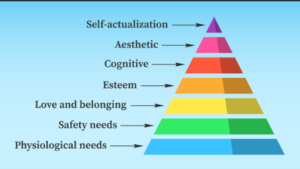
Maslow proposed that human needs are organized in a hierarchical structure, often represented as a pyramid. According to the theory:

  • Lower-level needs must be reasonably satisfied before higher-level needs become dominant

  • Human motivation is driven by unmet needs

  • Psychological health is not just the absence of illness, but the presence of growth

The five classic levels are:

  1. Physiological Needs

  2. Safety Needs

  3. Love and Belonging

  4. Esteem

  5. Self-Actualization

(Modern psychology also recognizes Self-Transcendence as an extension.)

1. Physiological Needs: Survival in a Fast-Paced World

Core needs

Food, water, sleep, shelter, rest, physical health

Expanded Modern-Life Reality

On the surface, many people appear to meet these needs. However, modern life often satisfies quantity but neglects quality.

People may have:

  • Food, but not nutritional balance

  • Shelter, but not restful sleep

  • Medical access, but not preventive care

  • Beds, but not true rest

Late-night screen use, irregular work hours, financial stress, and constant mental stimulation keep the nervous system in a state of physiological overdrive. The body remains alert when it should be restoring.

Many individuals normalize exhaustion, headaches, gut issues, hormonal imbalance, and chronic pain—treating them as “part of life” rather than warning signals.

Expanded Psychological Impact

When physiological needs are compromised:

  • The brain’s emotional regulation system weakens

  • Stress tolerance drops sharply

  • Small problems feel overwhelming

  • Anxiety intensifies because the nervous system lacks stability

  • Concentration, memory, and decision-making decline

From a therapeutic perspective, psychological insight cannot integrate into a dysregulated body. Talk therapy, motivation techniques, and self-help strategies often fail because the foundation—biological stability—is missing.

💡 Many symptoms labeled as “mental illness” reduce significantly when sleep cycles, nutrition, hydration, and rest are restored consistently.

2. Safety Needs: Emotional and Psychological Security Today

Core needs

Physical safety, financial security, health stability, predictability

Expanded Modern-Life Reality

Unlike earlier eras, danger today is often chronic, invisible, and psychological rather than immediate or physical.

Modern insecurity comes from:

  • Unstable employment and income uncertainty

  • Rising healthcare costs and fear of illness

  • Relationship unpredictability and emotional inconsistency

  • Constant exposure to distressing global news

  • Unresolved childhood trauma resurfacing under adult stress

Even when life appears “stable,” the body may not feel safe. For many adults, early experiences of neglect, abuse, or chaos create a permanent internal alarm system.

Expanded Psychological Impact

When safety needs are unmet, the nervous system remains in survival mode:

  • Generalized anxiety and constant worry emerge

  • Hypervigilance becomes normal

  • Control issues develop as a way to feel safe

  • Trust becomes difficult, even in healthy relationships

  • Emotional numbness replaces vulnerability as self-protection

🔍 Clinically, many high-functioning individuals are unknowingly stuck at the safety level, chasing success or relationships while their nervous system is still focused on survival, not growth.

3. Love and Belonging: Connection in the Age of Isolation

Core needs

Love, affection, intimacy, friendship, belongingness

Expanded Modern-Life Reality

Modern society offers connection without closeness.

People may have:

  • Hundreds of contacts but no emotional safety

  • Online visibility but offline loneliness

  • Relationships based on roles, performance, or utility

  • Fear of vulnerability due to past attachment wounds

Many individuals learned early that love was conditional—earned through obedience, achievement, or emotional suppression. As adults, this translates into people-pleasing, fear of abandonment, or avoidance of intimacy.

Expanded Psychological Impact

When belonging needs are unmet:

  • Loneliness persists even in relationships

  • Depression deepens due to emotional isolation

  • Trauma bonds feel intense and “addictive”

  • Individuals tolerate disrespect to avoid being alone

  • Self-worth becomes externally regulated

❤️ From a healing perspective, humans are biologically wired to heal in safe connection. Emotional safety is not dependency—it is a core developmental need.

4. Esteem Needs: Self-Worth in a Comparison Culture

Core needs

Self-respect, confidence, recognition, competence, autonomy

Maslow distinguished between:

  • Internal esteem: self-worth, mastery, autonomy

  • External esteem: validation, praise, status

Expanded Modern-Life Reality

Today’s culture heavily prioritizes external esteem:

  • Likes, followers, visibility

  • Salary, productivity, titles

  • Achievement over authenticity

Social comparison has become constant and unavoidable. People are exposed to curated success stories without seeing effort, failure, or emotional cost.

Expanded Psychological Impact

When esteem needs are unmet or externally dependent:

  • Imposter syndrome becomes chronic

  • Perfectionism masks deep insecurity

  • Burnout develops from overcompensation

  • Fear of failure prevents exploration

  • Approval becomes addictive

⚠️ When self-worth depends entirely on external validation, emotional stability becomes fragile—rising and falling with feedback.

5. Self-Actualization: Becoming Who You Truly Are

Core needs

Purpose, creativity, authenticity, personal growth, meaning

Self-actualization is not about achievement—it is about alignment between inner values and outer life.

Expanded Modern-Life Reality

Many people appear successful but feel internally disconnected:

  • Careers chosen for security, not meaning

  • Creativity suppressed for approval

  • Identity shaped by expectations

  • A persistent sense of “something is missing”

This level is often blocked not by lack of ability, but by unresolved lower-level needs—especially safety, belonging, and esteem.

Expanded Psychological Impact

Blocked self-actualization often shows up as:

  • Existential anxiety

  • Midlife or identity crises

  • Emotional numbness despite comfort

  • Chronic dissatisfaction without clear cause

🌱 True self-actualization requires:

  • Emotional awareness and honesty

  • Healing unresolved trauma

  • Permission to be authentic

  • Autonomy and self-acceptance

  • Psychological safety to explore identity

Beyond Maslow: Self-Transcendence in Modern Psychology

Later in life, Maslow proposed Self-Transcendence—going beyond the self.

Examples include:

  • Service to others

  • Spiritual growth

  • Contribution to community

  • Legacy and meaning beyond personal gain

In modern therapy, this appears as:

  • Values-based living

  • Compassion-focused work

  • Purpose-driven careers

  • Healing not just for self, but for others

Why Maslow’s Theory Still Matters Today

Maslow’s hierarchy reminds us that:

  • Positive thinking cannot replace a lack of safety.
  • Emotional healing is impossible in a state of exhaustion.
  • Purpose cannot emerge in the absence of human connection.

Mental health struggles are often needs deficits, not personal failures.

Clinical Insight 

As a counselor, you may notice:

  • Anxiety clients often struggle with safety needs

  • Depressed clients often lack belonging or esteem

  • Burnout clients are blocked from self-actualization

  • Trauma survivors are stuck in survival mode

Effective healing requires meeting unmet needs—not just managing symptoms.

Final Reflection

Maslow’s Hierarchy of Needs is not outdated—it is misunderstood.

Modern life pushes people to chase the top of the pyramid while ignoring the foundation. True psychological well-being comes from alignment, safety, connection, self-worth, and meaning—in that order, and often repeatedly.

Healing is not about climbing the pyramid once.
It is about learning where you are—and giving yourself what you need.

Frequently Asked Questions (FAQ)

1. What is Maslow’s Hierarchy of Needs in simple terms?

Maslow’s Hierarchy of Needs explains human motivation as a progression of needs—from basic survival (food, sleep, safety) to higher psychological growth (self-esteem, purpose, self-actualization). People are motivated to meet unmet needs, starting from the most basic.


2. Is Maslow’s Hierarchy still relevant in modern life?

Yes. While lifestyles have changed, human needs have not. In modern life, unmet needs often appear as stress, anxiety, burnout, relationship issues, and emotional emptiness, making Maslow’s framework highly relevant for mental health and counseling.


3. Can higher needs be pursued without meeting basic needs?

Partially—but not sustainably. For example, someone may pursue success or relationships while lacking sleep or emotional safety, but this often leads to burnout, anxiety, or dissatisfaction. Long-term well-being requires a stable foundation.


4. How does Maslow’s theory relate to mental health problems?

Many mental health symptoms are not disorders but signals of unmet needs:

  • Anxiety → unmet safety needs

  • Depression → unmet belonging or esteem needs

  • Burnout → blocked self-actualization
    Therapy becomes more effective when these needs are addressed holistically.


5. What is self-actualization in real life?

Self-actualization means living in alignment with your values, abilities, and authentic self. It includes creativity, purpose, personal growth, and meaning—not perfection or constant happiness.


6. Why do people feel empty even after achieving success?

Because success without emotional safety, connection, and self-worth does not meet deeper psychological needs. This often reflects unmet belonging, esteem, or self-actualization needs.


7. How can therapy help with unmet needs?

Therapy helps identify where a person is stuck in the hierarchy, regulate the nervous system, heal past trauma, improve relationships, rebuild self-worth, and support purposeful living.

Written by Baishakhi Das

Counselor | Mental Health Practitioner
B.Sc, M.Sc, PG Diploma in Counseling


Reference

Abraham Maslow – Original theory
https://www.simplypsychology.org/maslow.html

Trauma Bond vs Love: How to Tell the Difference

Understanding Attachment, Control, and Emotional Safety in Relationships

https://cdn.prod.website-files.com/61258807d2d4f9553cc9d3e6/66e33823113138397e2be541_66e33815e5ee0a673dab7370_Stages%2520of%2520Trauma%2520Bonding.webp

Introduction

Many people remain in painful relationships not because they enjoy suffering, but because the connection feels intense, familiar, and emotionally gripping. The bond may feel deeply meaningful, even when it is harmful, making it incredibly difficult to walk away. This is where confusion often arises between trauma bonding and love. Both can feel powerful and consuming, creating a strong emotional pull that is difficult to ignore. However, psychologically, they are fundamentally different experiences with very different emotional and relational outcomes.

Understanding this difference is crucial. Trauma bonds are built through cycles of pain, relief, fear, and hope, which keep individuals emotionally stuck and dependent. In contrast, love is rooted in safety, consistency, and mutual respect, allowing individuals to feel secure, valued, and supported. While trauma bonds trap people in survival mode, love encourages emotional growth, self-worth, and freedom of choice. Recognizing this distinction is often the first step toward healing and reclaiming healthy connection.

What Is a Trauma Bond?

A trauma bond is an emotional attachment formed through cycles of harm and relief, often seen in abusive, neglectful, or highly unstable relationships. The bond is strengthened not by safety, but by intermittent reinforcement—periods of pain followed by moments of affection, apology, or closeness.

Common Features of Trauma Bonds

  • Emotional highs followed by deep lows

  • Apologies after hurtful behavior

  • Fear of abandonment mixed with longing

  • Feeling “addicted” to the relationship

  • Staying despite harm, disrespect, or fear

Trauma bonds are not about love; they are about survival, attachment, and hope for relief.

What Does Healthy Love Look Like?

Healthy love is built on emotional safety, consistency, and mutual respect. While all relationships have conflict, love does not require suffering to feel real.

Core Features of Healthy Love

  • Emotional stability

  • Mutual respect and care

  • Open communication

  • Repair after conflict

  • Feeling safe being yourself

Love may feel deep, but it does not feel consuming, chaotic, or fear-driven.

Key Differences: Trauma Bond vs Love

Although trauma bonds and love can feel equally intense, they operate on very different emotional systems. Understanding these differences helps clarify whether a relationship is rooted in survival and fear or in safety and growth.

1. Intensity vs Stability

  • Trauma bond: Intense, overwhelming, emotionally dramatic

  • Love: Calm, steady, and grounding

Trauma bonds often feel stronger because the nervous system is constantly activated—moving between anxiety, hope, relief, and fear. This emotional roller coaster creates intensity that can be mistaken for passion. Love, on the other hand, feels quieter and less dramatic, but it offers emotional stability and safety. What feels less intense may actually be more secure.

2. Fear vs Safety

  • Trauma bond: Fear of losing the person, fear of conflict, fear of being alone

  • Love: Emotional safety, trust, and reassurance

In trauma bonds, fear plays a central role. You may stay because you are afraid of abandonment, loneliness, or emotional collapse. In love, there is a sense of safety—even during disagreements. If fear is the primary reason you remain in a relationship, it is likely rooted in trauma bonding rather than love.

3. Control vs Choice

  • Trauma bond: One person holds emotional power; you feel trapped or dependent

  • Love: Both partners choose each other freely

Trauma bonds often involve subtle or overt control, where one partner’s moods, approval, or presence determines your emotional state. Love is based on mutual choice, not obligation or fear. Healthy love does not rely on guilt, emotional pressure, or power imbalance to keep the relationship intact.

4. Confusion vs Clarity

  • Trauma bond: Constant self-doubt—“Is it my fault?”

  • Love: Emotional clarity and mutual understanding

Trauma bonds create confusion. You may constantly question your perceptions, blame yourself for problems, or feel unsure about where you stand. Love brings clarity. Even during conflict, you feel seen, understood, and emotionally anchored. Love helps you understand yourself better; trauma bonds make you question your worth.

5. Survival Mode vs Growth

  • Trauma bond: Focus on keeping peace, avoiding conflict, or earning love

  • Love: Growth, healing, and emotional support

In trauma bonds, much of your energy goes into survival—preventing conflict, managing the other person’s emotions, or proving your worth. Love allows space for growth. You feel supported to evolve, heal, and become more fully yourself. Love expands your world, while trauma bonds gradually shrink it.

Core Takeaway

The difference between trauma bonding and love is not how deeply you feel—but how safe, free, and whole you feel in the relationship.
Love does not require you to abandon yourself to stay connected.

Why Trauma Bonds Feel So Powerful

Trauma bonds activate the brain’s stress–reward cycle:

  • Stress hormones during conflict

  • Dopamine release during reconciliation

  • Relief mistaken for love

Over time, the nervous system learns:

“Pain followed by relief equals connection.”

This is conditioning, not love.

Common Signs You’re in a Trauma Bond

When everything is quiet, you might experience restlessness, or a state of being on edge, as emotional stability is something that is strange or unsafe. You can either justify or downplay habitual destructive behavior, and in many cases come up with justifications to do so. You step into an unnecessary and excessively big role of mending the relationship, when it is not your fault. The fear of terminating the relationship is more serious than the fear of continuing to get emotionally hurt, and the feeling of separation or being alone is more frightening than the feeling of being in a painful or unhealthy position. Love does not diminish your personality.

Can Trauma Bonds Exist Without Physical Abuse?

Yes. Trauma bonds often form through:

  • Emotional manipulation

  • Inconsistent affection

  • Silent treatment

  • Gaslighting

  • Chronic emotional neglect

Physical violence is not required for a trauma bond to develop.

Why People Confuse Trauma Bonds with Love

  • Familiarity from childhood patterns

  • Cultural messages equating pain with passion

  • Fear of loneliness

  • Hope that love will “heal” the other person

However, love is not proven by endurance of pain.

How to Break a Trauma Bond

Breaking a trauma bond is difficult—but possible.

Helpful Steps:

  • Name the pattern without self-blame

  • Reduce contact if possible

  • Strengthen external support systems

  • Work with a trauma-informed therapist

  • Relearn what emotional safety feels like

Healing involves rewiring both emotional beliefs and nervous system responses.

How to Move Toward Healthy Love

Healthy love feels:

  • Respectful, even during conflict

  • Predictable, not volatile

  • Supportive of boundaries

  • Safe for vulnerability

If love requires you to abandon yourself, it isn’t love.

Conclusion

The difference between trauma bonding and love is not how strong the connection feels—but how safe it is.

  • Trauma bonds keep you stuck in cycles of pain and hope.

  • Love offers consistency, care, and emotional security.

Real love does not ask you to suffer to belong.
It allows you to rest, grow, and be whole.

Frequently Asked Questions (FAQ)

1. What is the main difference between a trauma bond and love?

The key difference lies in emotional safety. Trauma bonds are driven by fear, inconsistency, and cycles of pain and relief, whereas love is built on stability, respect, and emotional security.


2. Can a relationship have both love and a trauma bond?

Yes. Many trauma-bonded relationships include genuine feelings of care. However, the bond is maintained by fear, hope, and emotional dependency, rather than mutual growth and safety.


3. Why does a trauma bond feel so intense?

Trauma bonds activate the brain’s stress–reward cycle, where emotional pain is followed by relief or affection. This intermittent reinforcement creates a powerful attachment that can feel stronger than love.


4. Is trauma bonding the same as being in an abusive relationship?

Trauma bonding often occurs in abusive relationships, but abuse does not have to be physical. Emotional manipulation, neglect, gaslighting, or inconsistent affection can also create trauma bonds.


5. How can I tell if I’m staying because of fear rather than love?

If you stay mainly because you fear abandonment, loneliness, or emotional collapse—and your self-worth has decreased over time—it may indicate a trauma bond rather than healthy love.


6. Can trauma bonds form without intention or awareness?

Yes. Trauma bonds are unconscious psychological responses. People do not choose them deliberately; they develop through repeated emotional conditioning.


7. Why do trauma bonds feel familiar?

Trauma bonds often mirror early attachment experiences, especially if love and pain were intertwined in childhood. Familiarity can be mistaken for compatibility.


8. Can trauma bonds be broken?

Yes. Trauma bonds can be broken through awareness, emotional regulation, reduced contact, supportive relationships, and trauma-informed therapy. Healing takes time but is absolutely possible.


9. What does healthy love feel like emotionally?

Healthy love feels calm, safe, consistent, respectful, and supportive. Conflict exists, but fear, control, and emotional chaos do not dominate the relationship.


10. When should someone seek professional help?

Professional support is recommended if the relationship involves emotional harm, repeated cycles of breakup and reunion, fear-driven attachment, or loss of self-worth.

Written by Baishakhi Das
Counselor / Mental Health Practitioner

Qualification: B.Sc, MSc, PG Diploma In counselling psychology


Reference

  1. American Psychological Association – Trauma and Relationships
    https://www.apa.org/topics/trauma

  2. Simply Psychology – Trauma Bonding
    https://www.simplypsychology.org/trauma-bonding.html

  3. National Institute of Mental Health – Trauma & Stress Disorders
    https://www.nimh.nih.gov/health/topics/post-traumatic-stress-disorder-ptsd

  4. Gottman Institute – Healthy vs Unhealthy Relationships
    https://www.gottman.com/blog

  5. World Health Organization – Interpersonal Violence & Mental Health
    https://www.who.int/teams/mental-health-and-substance-use

  6. Signs You Are Emotionally Unavailable


Learned Helplessness Theory

https://upload.wikimedia.org/wikipedia/commons/thumb/9/9c/Shuttle_Box_Dog_Orange.png/330px-Shuttle_Box_Dog_Orange.png

Introduction

Learned Helplessness Theory explains how repeated exposure to uncontrollable and unavoidable negative experiences can gradually lead individuals to believe that their actions no longer make a meaningful difference.

Consequently, individuals start anticipating failure no matter how hard they struggle. This belief system continuously and steadily leads to passivity, lack of motivation, emotional distress, and distorted ways of thinking, even in cases when the actual change opportunities are presented. As a result, people end up not even trying, in most instances, not due to lack of ability but because they have been taught that it is pointless that they make efforts. Through this, helplessness becomes a vicious cycle, which eventually inhibits action, growth and adaptive coping.

In addition to that, the theory has significantly impacted psychology because it provides a simple and organized system through which individuals can explain why they cannot come out of destructive circumstances. Specifically, it has played a significant role in describing the conditions of depression, trauma-related disorders, anxiety, detachment at school, workplace burnout, and the psychological effects of chronic abuse or neglect over time.

Therapeutic Approach

As a therapeutic approach, this one emphasizes the fact that helplessness is not a genetic characteristic, but rather a learned behavior as a result of constant loss of control. Thus, and last, but not least, it points out that helplessness is something that can be reversed and taught out with the help of supportive interventions, empowering ones, and skill-based interventions.

It thus also highlights that helplessness can be learnt out by the use of supportive, empowering, and skills based intervention.

Origin of Learned Helplessness Theory

The theory was first proposed by Martin Seligman in the late 1960s, based on experimental research examining how animals and humans respond to situations where outcomes appear independent of their behavior.

Seligman’s work challenged the assumption that individuals always learn to act in their best interest.

The Classic Experiments

In the original experiments, dogs were repeatedly exposed to unavoidable electric shocks in situations where no escape was possible. At first, the animals were in distress and were trying to escape the shocks. But with time, they even ceased to make any attempts. Subsequently, dogs that were put in a different environment where escape appeared to be evident, did not take the initiative to escape even when that meant very little effort.

Key Observations

  • First, the dogs had learned that their actions were ineffective in influencing outcomes.

  • Second, this learning generalized to new situations, even when those situations were controllable.

  • Consequently, passivity gradually replaced active problem-solving behavior.

This pattern of learned passivity and expectation of failure became known as learned helplessness.

⚠️ Importantly, the dogs were not physically incapable of escaping. Rather, they were psychologically conditioned to expect failure, which prevented them from taking action.

Core Assumptions of Learned Helplessness Theory

Based on these findings, the Learned Helplessness Theory rests on three fundamental assumptions that explain how helplessness develops and persists.

1. Perceived Lack of Control

When individuals are repeatedly exposed to situations in which outcomes appear independent of their efforts, they begin to develop a belief that they have no control over what happens. Over time, this leads to the expectation:

“Nothing I do will change the result.”

As a result, motivation decreases and effort feels meaningless.

2. Generalization of Helplessness

Importantly, this belief does not remain confined to the original situation. Instead, it spreads to other areas of life, even when control and choice are actually available. For example, a person who feels helpless in one domain may begin to feel ineffective in relationships, work, or academics.

3. Expectancy of Failure

Finally, individuals begin to anticipate negative outcomes before taking action. Consequently, they experience reduced motivation, emotional distress, and impaired cognitive functioning. Problem-solving becomes more difficult, and avoidance often replaces effort.

Key Insight

Together, these assumptions explain why learned helplessness is not a lack of ability, but a learned belief system shaped by repeated experiences of uncontrollability. Therefore, understanding this process is essential for reversing helplessness and restoring a sense of agency.

The Three Components of Learned Helplessness

Learned helplessness affects individuals on motivational, cognitive, and emotional levels. Together, these components explain why people stop trying, struggle to think clearly, and experience deep emotional distress, even when change is possible.

1. Motivational Deficits

First and foremost, learned helplessness leads to significant motivational deficits. Individuals show a noticeable reduction in effort and initiative, often giving up quickly when faced with obstacles. Over time, challenges begin to feel overwhelming, and avoidance replaces active engagement.

  • Reduced effort and initiative

  • Giving up easily

  • Avoidance of challenges

As a result, individuals stop trying—not because they lack ability, but because effort feels pointless. Repeated experiences of failure teach them that action will not lead to improvement, weakening motivation further.

2. Cognitive Deficits

In addition to motivational changes, learned helplessness produces cognitive impairments that affect how individuals think, interpret situations, and solve problems. People may struggle to learn new responses or adapt to changing circumstances, even when solutions are available.

  • Difficulty learning new responses

  • Impaired problem-solving abilities

  • Persistent negative self-beliefs

Common thought patterns include:

  • “I’m incapable.”

  • “There’s no solution.”

  • “I always fail.”

Consequently, these distorted beliefs reinforce helplessness by convincing individuals that success is unattainable, further reducing effort and flexibility in thinking.

3. Emotional Deficits

Finally, learned helplessness is accompanied by profound emotional deficits. Persistent feelings of sadness, hopelessness, and anxiety often emerge. In some cases, individuals may also experience emotional numbness, where they feel disconnected from both positive and negative emotions.

  • Sadness and hopelessness

  • Anxiety and emotional numbness

  • Low self-worth and self-esteem

Importantly, these emotional responses closely resemble clinical depression, which explains why learned helplessness is strongly associated with depressive disorders and trauma-related conditions.

Integrative Insight

Taken together, these three components form a self-reinforcing cycle. Reduced motivation limits action, distorted thinking undermines confidence, and emotional distress deepens withdrawal. Therefore, effective intervention must address all three levels—restoring motivation, challenging cognitive distortions, and supporting emotional healing.

Learned Helplessness and Depression

Learned helplessness became a cornerstone in psychological explanations of depression. Many depressive symptoms—such as hopelessness, withdrawal, and low motivation—can be understood as consequences of perceived uncontrollability.

Later refinements introduced the concept of attributional style:

  • Internal (“It’s my fault”)

  • Stable (“It will never change”)

  • Global (“It affects everything”)

This pattern is especially linked to chronic depression.

Learned Helplessness in Real Life

1. Childhood and Parenting

  • Harsh criticism

  • Inconsistent discipline

  • Emotional or physical abuse

Children may learn that effort does not lead to safety or approval, shaping lifelong patterns of helplessness.

2. Education

Students who repeatedly fail despite effort may conclude:

“I’m bad at studying.”

This can lead to academic disengagement, not lack of ability.

3. Relationships

In abusive or controlling relationships, individuals may feel:

  • Trapped

  • Powerless

  • Unable to leave or seek help

Even when support becomes available, action feels impossible.

4. Workplace

  • Chronic micromanagement

  • Unfair evaluations

  • Lack of recognition

Employees may disengage, showing burnout and resignation rather than motivation.

Learned Helplessness and Trauma

Trauma—especially chronic or interpersonal trauma—strongly reinforces learned helplessness. When escape or resistance repeatedly fails, the nervous system adapts by shutting down effort as a survival strategy.

This explains why trauma survivors may:

  • Freeze instead of act

  • Struggle with decision-making

  • Feel powerless long after danger has passed

From Learned Helplessness to Learned Hopefulness

Later research, including Seligman’s own work, emphasized that helplessness is learned—and therefore unlearnable.

Key Interventions:

  • Restoring a sense of control

  • Teaching problem-solving skills

  • Challenging negative attributional styles

  • Encouraging small, successful actions

This shift led to the concept of learned optimism.

Therapeutic Implications

Cognitive Behavioral Therapy (CBT)

  • Identifies helpless beliefs

  • Challenges distorted attributions

  • Builds mastery experiences

Trauma-Informed Therapy

  • Emphasizes safety and choice

  • Avoids re-creating powerlessness

  • Respects the pace of the client

Counseling and Education

  • Reinforces effort–outcome connections

  • Focuses on strengths and agency

  • Uses gradual exposure to success

Strengths of the Theory

  • Explains passivity in depression and trauma

  • Strong empirical foundation

  • Practical applications in therapy, education, and social policy

Limitations of the Theory

  • Early animal research raised ethical concerns

  • Does not fully account for resilience

  • Overemphasis on cognition may underplay biological factors

Conclusion

The Learned Helplessness Theory reveals a powerful psychological truth:

When people learn that their actions don’t matter, they stop acting—even when change is possible.

Understanding learned helplessness allows psychologists, counselors, educators, and caregivers to replace resignation with agency, helplessness with hope, and passivity with empowerment.

Healing begins not with forcing action—but by restoring belief in control.

Frequently Asked Questions (FAQ)

1. What is Learned Helplessness Theory?

Learned Helplessness Theory explains how repeated exposure to uncontrollable and unavoidable negative experiences leads individuals to believe that their actions no longer influence outcomes, resulting in passivity and withdrawal.


2. Who proposed the Learned Helplessness Theory?

The theory was proposed by psychologist Martin E. Seligman, based on experimental research conducted in the late 1960s and early 1970s.


3. How does learned helplessness develop?

Learned helplessness develops when repeated failures or uncontrollable events teach individuals that effort does not lead to success, causing them to stop trying even when change is possible.


4. What are the main components of learned helplessness?

Learned helplessness involves three key components:

  • Motivational deficits (reduced effort and initiative)

  • Cognitive deficits (negative beliefs and poor problem-solving)

  • Emotional deficits (sadness, anxiety, hopelessness)


5. How is learned helplessness related to depression?

Learned helplessness is closely linked to depression because both involve hopelessness, passivity, low motivation, and negative thinking patterns, especially when individuals feel powerless over life events.


6. Can learned helplessness affect children and students?

Yes. In educational settings, repeated academic failure or harsh criticism can cause students to believe they are incapable, leading to academic disengagement and avoidance of challenges.


7. How does trauma contribute to learned helplessness?

Chronic trauma, abuse, or neglect often involves repeated loss of control, which reinforces helplessness and explains why trauma survivors may feel stuck, powerless, or unable to act, even after the threat has passed.


8. Is learned helplessness permanent?

No. Learned helplessness is not an inherent trait. Because it is learned, it can also be unlearned through therapy, supportive environments, skill-building, and experiences that restore a sense of control.


9. How is learned helplessness treated in therapy?

Therapeutic approaches such as Cognitive Behavioral Therapy (CBT) and trauma-informed counseling help individuals challenge helpless beliefs, rebuild confidence, and reconnect effort with positive outcomes.


10. Why is Learned Helplessness Theory important?

The theory helps explain why people remain stuck in harmful situations and provides a foundation for interventions aimed at restoring agency, motivation, and psychological resilience.

Written by Baishakhi Das
Counselor | Mental Health Practitioner
B.Sc, M.Sc, PG Diploma in Counseling


Reference 

  1. American Psychological Association – Learned Helplessness
    https://dictionary.apa.org/learned-helplessness

  2. Simply Psychology – Learned Helplessness
    https://www.simplypsychology.org/learned-helplessness.html

  3. Seligman, M. E. P. (1975). Helplessness: On Depression, Development, and Death
    https://psycnet.apa.org/record/1976-21548-000

  4. Verywell Mind – Learned Helplessness Explained
    https://www.verywellmind.com/what-is-learned-helplessness-2795326

  5. National Institute of Mental Health (NIMH) – Depression Overview
    https://www.nimh.nih.gov/health/topics/depression

  6. World Health Organization – Mental Health and Trauma
    https://www.who.int/teams/mental-health-and-substance-use

  7. Cognitive Behavioral Theory: How Thoughts Control Emotions


Automatic Thoughts & Cognitive Distortions in Anxiety

https://static.wixstatic.com/media/28dab0_94961311c1d24d97921c7e7c11eb7da3~mv2.jpg/v1/fill/w_1000%2Ch_777%2Cal_c%2Cq_85%2Cusm_0.66_1.00_0.01/28dab0_94961311c1d24d97921c7e7c11eb7da3~mv2.jpg

Anxiety is not only a physiological response or an emotional state—it is also a cognitive experience. While symptoms such as a racing heart, restlessness, or muscle tension are commonly recognized, the mental component of anxiety is often overlooked. People with anxiety frequently describe their mind as constantly busy, hyper-alert, or trapped in repetitive “what if” thinking, where potential threats are endlessly anticipated and replayed.

Cognitive psychology explains this experience through the interaction of automatic thoughts and cognitive distortions. These rapid, involuntary thoughts interpret situations as dangerous or overwhelming, while distorted thinking patterns exaggerate risk and minimize coping ability. Together, they create a mental environment in which anxiety is repeatedly triggered, sustained, and intensified—even in the absence of real or immediate danger.

This understanding is rooted in Cognitive Behavioral Theory developed by Aaron T. Beck. Beck’s framework helps explain why anxiety feels so real, convincing, and difficult to switch off. Because these thoughts arise automatically and feel believable, individuals often respond as if the threat is certain. Recognizing anxiety as a cognitive process, rather than merely an emotional or physical one, is a crucial step toward effective psychological intervention and long-term relief.

Understanding Automatic Thoughts in Anxiety

What Are Automatic Thoughts?

Automatic thoughts are immediate, involuntary interpretations that arise spontaneously in response to internal or external situations. They occur reflexively, without conscious effort or deliberate reasoning, and often pass so quickly that individuals are unaware of their presence. Yet, despite their subtlety, these thoughts have a powerful influence on emotional and physiological reactions.

In anxiety, automatic thoughts are typically threat-focused. The mind constantly scans for potential danger, uncertainty, or loss of control, interpreting even neutral situations as risky. Because these thoughts arise automatically and feel convincing, they trigger anxiety responses before logical evaluation can take place.

Common Features of Anxious Automatic Thoughts

  • Fast and repetitive
    They appear instantly and often repeat in a loop, making the mind feel busy or stuck.

  • Oriented toward danger or uncertainty
    Thoughts focus on “what if something goes wrong?” rather than what is actually happening.

  • Emotionally intense
    They provoke fear, tension, and unease, activating the body’s stress response.

  • Treated as facts rather than possibilities
    These thoughts are rarely questioned and are experienced as truths instead of hypotheses.

In effect, anxious automatic thoughts function like an internal alarm system that is oversensitive. While designed to protect, this alarm rarely switches off, sending repeated signals of threat even when no real danger exists. Over time, this constant activation maintains anxiety, exhausts mental resources, and reinforces the belief that the world is unsafe.

Recognizing automatic thoughts as mental events—not objective reality—is a crucial first step in reducing anxiety and restoring cognitive balance.

How Automatic Thoughts Trigger Anxiety

Automatic thoughts in anxiety usually involve overestimating threat and underestimating coping ability.

Example

  • Situation: Heart rate increases

  • Automatic thought: “Something is wrong with my heart.”

  • Emotion: Fear, panic

  • Behavior: Checking pulse, avoidance, reassurance-seeking

The anxiety is not caused by the bodily sensation itself, but by the interpretation of that sensation as dangerous.

Over time, this pattern conditions the mind to respond with fear even in neutral situations.

Cognitive Distortions: The Thinking Errors Behind Anxiety

Cognitive distortions are systematic errors in thinking that bias perception toward threat, danger, or catastrophe. In anxiety disorders, these distortions become habitual and automatic.

Below are the most common cognitive distortions seen in anxiety.

1. Catastrophizing

Assuming the worst possible outcome will occur.

“If I make a mistake, everything will fall apart.”

This distortion keeps the nervous system in a constant state of anticipation and fear.

2. Probability Overestimation

Overestimating how likely a feared event is.

“This will definitely go wrong.”

Even low-risk situations feel dangerous because the mind inflates threat probability.

3. Intolerance of Uncertainty

Believing uncertainty itself is unbearable.

“If I don’t know what will happen, I can’t cope.”

This drives excessive planning, reassurance-seeking, and avoidance.

4. Mind Reading

Assuming others are judging or criticizing you.

“They must think I’m incompetent.”

This distortion fuels social anxiety and self-consciousness.

5. Emotional Reasoning

Believing that feeling anxious means danger is real.

“I feel scared, so something must be wrong.”

Here, emotion becomes evidence, bypassing rational evaluation.

6. Selective Attention to Threat

Focusing only on signs of danger while ignoring safety cues.

An anxious mind scans constantly for threat, reinforcing hypervigilance.

The Anxiety Maintenance Cycle

Automatic thoughts and cognitive distortions work together to create a self-reinforcing loop that keeps anxiety active over time. This cycle explains why anxiety often persists even when situations are objectively safe and why temporary relief rarely leads to lasting change.

The cycle typically unfolds as follows:

  1. Trigger (internal or external)
    A trigger may be external (a situation, place, or interaction) or internal (a bodily sensation, memory, or thought). Even neutral stimuli can become triggers once anxiety is established.

  2. Automatic threat-based thought
    The mind immediately generates a threat-focused interpretation such as, “Something is wrong,” or “I won’t be able to handle this.” This thought arises automatically and is rarely questioned.

  3. Anxiety response (physical + emotional)
    The thought activates the body’s fight-or-flight response, leading to symptoms like increased heart rate, muscle tension, restlessness, and intense fear or worry.

  4. Safety behaviors (avoidance, checking, reassurance-seeking)
    To reduce distress, individuals engage in behaviors aimed at preventing danger or gaining certainty—avoiding situations, repeatedly checking, or seeking reassurance from others.

  5. Short-term relief
    These behaviors provide temporary comfort, reinforcing the belief that the threat was real and successfully avoided.

  6. Long-term increase in anxiety
    Because the feared outcome is never tested or disproven, the mind learns that safety depends on these behaviors. Anxiety becomes stronger, more frequent, and more generalized over time.

Crucially, safety behaviors prevent the disconfirmation of fear, meaning the individual never gets the opportunity to learn that the situation could be tolerated or was not truly dangerous. As a result, anxiety remains alive and self-perpetuating.

Understanding this cycle is essential in anxiety treatment, as lasting improvement comes not from eliminating anxiety triggers, but from gradually breaking the loop—especially by reducing safety behaviors and challenging threat-based interpretations.

Core Beliefs Underlying Anxiety

Beneath automatic thoughts lie core beliefs, often formed early in life:

  • “The world is dangerous.”

  • “I am not safe.”

  • “I cannot cope.”

These beliefs prime the mind to interpret ambiguous situations as threatening, making anxiety feel constant and uncontrollable.

Why Anxious Thoughts Feel So Convincing

Anxiety activates the fight-or-flight system, which prioritizes survival over accuracy. In this state:

  • The brain favors speed over logic

  • Threat interpretations dominate

  • Rational counter-arguments feel weak

This is why reassurance often provides only temporary relief—because the problem lies in how thoughts are generated, not whether they are logical.

Therapeutic Implications: How CBT Helps Anxiety

Cognitive Behavioral Therapy targets anxiety by working with both thoughts and behaviors.

Key CBT strategies include:

  • Identifying automatic thoughts

  • Labeling cognitive distortions

  • Evaluating threat realistically

  • Reducing safety behaviors

  • Increasing tolerance of uncertainty

Importantly, CBT does not aim to eliminate anxiety entirely—but to change the relationship with anxious thoughts.

Real-Life Impact of Cognitive Change

When automatic thoughts are recognized as mental events rather than facts:

  • Anxiety intensity decreases

  • Confidence in coping increases

  • Avoidance reduces

  • Emotional flexibility improves

This shift restores a sense of control and psychological safety.

Final Reflection

Automatic thoughts and cognitive distortions are not signs of weakness, lack of intelligence, or “overthinking.” They are learned cognitive habits shaped by life experiences, biological sensitivity, and environmental conditioning. Over time, the mind becomes trained to prioritize threat detection, even in situations that are objectively safe.

Anxiety persists not because danger is everywhere, but because the brain has learned to interpret the world through a lens of risk and uncertainty. When this lens remains unexamined, anxious thoughts feel automatic, convincing, and uncontrollable.

The hopeful message of cognitive psychology is this:

If anxious thoughts are learned, they can be questioned.
And when thinking changes, anxiety no longer has to control life.

Through awareness, practice, and therapeutic support, individuals can learn to recognize anxious thoughts as mental events rather than facts. As this shift occurs, the mind gradually regains flexibility, the nervous system settles, and anxiety loses its power to dominate daily life.

Change does not mean eliminating fear—it means learning that fear does not have to decide how you live.

Frequently Asked Questions (FAQ)

1. What are automatic thoughts in anxiety?

Automatic thoughts are immediate, involuntary interpretations that arise in response to situations, bodily sensations, or emotions. In anxiety, these thoughts are usually threat-focused and trigger fear before conscious reasoning can occur.


2. How are automatic thoughts different from worrying?

Automatic thoughts are brief, fast, and reflexive, while worry is more prolonged and repetitive. Automatic thoughts often trigger worry by signaling danger or uncertainty.


3. What are cognitive distortions in anxiety?

Cognitive distortions are systematic thinking errors that exaggerate threat and underestimate coping ability. Common distortions in anxiety include catastrophizing, probability overestimation, emotional reasoning, and intolerance of uncertainty.


4. Why do anxious thoughts feel so real and convincing?

Anxious thoughts activate the body’s fight-or-flight response, which prioritizes survival over accuracy. In this state, emotions feel like evidence, making thoughts seem factual even when they are not.


5. What are safety behaviors, and why do they maintain anxiety?

Safety behaviors (avoidance, checking, reassurance-seeking) reduce anxiety temporarily. However, they prevent the mind from learning that the feared situation is manageable, reinforcing anxiety in the long term.


6. Can anxiety exist without real danger?

Yes. Anxiety often persists not because danger is present, but because the mind has learned to interpret neutral or uncertain situations as threatening based on past experiences.


7. How does Cognitive Behavioral Therapy (CBT) help anxiety?

CBT helps by:

  • Identifying automatic thoughts

  • Recognizing cognitive distortions

  • Challenging threat-based interpretations

  • Reducing safety behaviors

  • Increasing tolerance of uncertainty

This breaks the anxiety maintenance cycle.


8. Are automatic thoughts a sign of weakness?

No. Automatic thoughts are learned cognitive habits, shaped by biology, environment, and experience. They are common and treatable, not signs of personal failure.

Written by Baishakhi Das

Counselor | Mental Health Practitioner
Qualifications: B.Sc in Psychology | M.Sc  | PG Diploma in Counseling

Reference 


Beck’s Cognitive Model of Depression: An In-Depth Explanation

https://upload.wikimedia.org/wikipedia/commons/0/0d/Beck%27s_CognitiveTriad.svg

Beck’s Cognitive Model of Depression is one of the most influential psychological frameworks for understanding why depression develops, persists, and often returns even after periods of improvement. Developed by Aaron T. Beck, this model shifted the understanding of depression away from viewing it solely as a mood disorder or a biological imbalance.

Instead, Beck proposed that depression is fundamentally a cognitive disorder, rooted in habitual patterns of distorted thinking that shape how individuals perceive themselves, their life experiences, and their future. These thinking patterns influence emotional reactions and behavioral choices, gradually creating and maintaining the depressive state.

At its core, the model proposes a powerful and clinically significant idea:

Depression is maintained by persistent negative interpretations of the self, life experiences, and the future.

According to Beck, these interpretations are not random or temporary thoughts. They are structured, predictable, and often automatic cognitive patterns that operate outside conscious awareness. Over time, they become deeply ingrained, making depression feel overwhelming, inevitable, and difficult to escape.

This article explores Beck’s Cognitive Model of Depression in depth—examining its theoretical structure, underlying psychological mechanisms, clinical relevance in therapy, and real-life implications for understanding and treating depressive disorders.

The Foundation of Beck’s Cognitive Model

Beck’s Cognitive Model emerged as a direct challenge to earlier psychological theories that explained depression primarily in terms of unconscious conflicts, unresolved childhood dynamics, or purely biological imbalances. While acknowledging that biological and developmental factors play a role, Beck argued that these explanations alone could not fully account for how depression is experienced and maintained in everyday life.

Through careful clinical observation, Aaron T. Beck noticed a consistent pattern among individuals suffering from depression: they tended to interpret themselves, their experiences, and their future through a systematically negative cognitive lens. These were not occasional pessimistic thoughts, but stable and repetitive thinking errors that appeared across situations.

According to Beck:

  • Depressed individuals do not perceive reality objectively
    Neutral or even positive events are often interpreted negatively, while successes are minimized or dismissed.

  • Their thinking follows predictable negative patterns
    These patterns include habitual self-criticism, pessimism, and rigid conclusions that resist contradictory evidence.

  • These cognitive patterns directly generate depressive emotions
    Feelings of sadness, hopelessness, guilt, and worthlessness arise as logical emotional responses to these distorted interpretations.

From this perspective, depression is not caused simply by external stressors or internal emotional weakness. Instead, emotional suffering emerges because thoughts shape emotional experience.

Thus, in Beck’s model, thoughts are not merely symptoms of depression—they are central mechanisms that create and maintain it. By identifying and modifying these maladaptive thought patterns, individuals can reduce emotional distress and regain psychological functioning, forming the foundation for cognitive-based therapeutic intervention.

The Cognitive Triad: The Core of Depression

The heart of Beck’s model is the Cognitive Triad, which consists of three interrelated negative belief systems:

1. Negative View of the Self

“I am defective, unworthy, or inadequate.”

Common thoughts:

  • “I am a failure.”

  • “There is something wrong with me.”

  • “I’m not good enough.”

This leads to:

  • Low self-esteem

  • Shame and guilt

  • Self-criticism

2. Negative View of the World

“The world is unfair, demanding, or rejecting.”

Common thoughts:

  • “People don’t care about me.”

  • “Nothing ever works out.”

  • “Life is against me.”

This creates:

  • Withdrawal from relationships

  • Loss of interest in activities

  • Emotional numbness

3. Negative View of the Future

“Things will never get better.”

Common thoughts:

  • “Nothing will change.”

  • “There’s no point trying.”

  • “The future is hopeless.”

This fuels:

  • Helplessness

  • Loss of motivation

  • Suicidal ideation in severe cases

➡️ These three views reinforce each other, creating a closed depressive loop.

Automatic Thoughts: The Moment-to-Moment Triggers

Automatic thoughts are immediate, involuntary mental responses that arise spontaneously in reaction to everyday situations. They occur so rapidly that individuals are often unaware of their presence, experiencing only the emotional impact that follows. In Beck’s Cognitive Model, these thoughts are considered the moment-to-moment triggers that translate life events into emotional distress.

In depression, automatic thoughts tend to share several defining characteristics:

  • Negative – They focus on loss, failure, or inadequacy

  • Absolute – They are framed in extreme, all-or-nothing terms

  • Emotionally convincing – They feel true, regardless of evidence

  • Taken as facts – They are rarely questioned or examined

Because these thoughts arise automatically, they bypass rational evaluation and directly activate emotional responses.

Example

  • Situation: A mistake at work

  • Automatic thought: “I ruin everything.”

  • Emotion: Sadness, shame, worthlessness

  • Behavior: Withdrawal, avoidance, reduced effort

In this sequence, the emotional pain is not caused by the mistake itself, but by the interpretation of the mistake. A single error is cognitively transformed into a global judgment about the self.

Crucially, these thoughts occur so quickly and effortlessly that individuals often believe they are reacting emotionally to reality. In truth, they are reacting to their interpretation of reality. Over time, repeated automatic thoughts strengthen depressive beliefs, deepen emotional distress, and reinforce avoidant or withdrawn behavior—maintaining the depressive cycle.

Identifying and challenging automatic thoughts is therefore a central therapeutic task in cognitive-based interventions, as even small shifts in interpretation can lead to meaningful emotional relief.

Cognitive Distortions in Depression

Beck identified specific thinking errors that dominate depressive cognition:

  • All-or-nothing thinking
    “If I fail once, I’m a total failure.”

  • Overgeneralization
    “This always happens to me.”

  • Mental filtering
    Focusing only on negative details and ignoring positives.

  • Personalization
    “It’s my fault, even when it isn’t.”

  • Catastrophizing
    Expecting the worst possible outcome.

These distortions systematically bias perception toward negativity.

Core Beliefs and Schemas: The Deep Structure

Beyond surface thoughts, Beck emphasized core beliefs (schemas)—deep, rigid assumptions formed early in life.

Common depressive core beliefs:

  • “I’m not good enough to be loved.”

  • “Nothing I do changes anything.”

  • “I don’t have much worth.”

These schemas often develop through:

  • Childhood criticism or neglect

  • Emotional abuse

  • Repeated failure experiences

  • Insecure attachment

When life events activate these schemas, depressive thinking is triggered automatically.

The Depression Maintenance Cycle

Beck’s model explains why depression persists even when circumstances improve.

  1. Negative core beliefs shape perception

  2. Automatic thoughts interpret events negatively

  3. Depressive emotions emerge

  4. Withdrawal and inactivity increase

  5. Reduced positive experiences confirm negative beliefs

This self-reinforcing loop explains chronic and recurrent depression.

Behavioral Consequences of Depressive Thinking

Depression is not only cognitive—it is behavioral.

Common behaviors include:

  • Social withdrawal

  • Reduced activity

  • Avoidance of responsibility

  • Procrastination

These behaviors:

  • Reduce opportunities for pleasure or mastery

  • Increase isolation

  • Strengthen beliefs of inadequacy

Thus, behavior becomes evidence for distorted thoughts.

Therapeutic Implications: Why the Model Works

Beck’s model became the foundation of Cognitive Behavioral Therapy (CBT) because it is:

  • Structured and practical

  • Focused on present functioning

  • Collaborative and empowering

  • Skills-based and measurable

CBT targets:

  • Automatic thoughts

  • Cognitive distortions

  • Core beliefs

  • Avoidant behaviors

By modifying thinking patterns, emotional relief follows naturally.

Strengths of Beck’s Cognitive Model

  • Empirically supported across cultures

  • Effective for mild to severe depression

  • Teaches lifelong coping skills

  • Reduces relapse risk

It reframes depression from a personal failure to a treatable thinking pattern.

Limitations and Considerations

  • Severe depression may require medication alongside CBT

  • Trauma-based depression may need additional emotional processing

  • Cultural beliefs can shape cognitive content

Still, Beck’s model remains one of the most clinically effective frameworks in mental health.

Final Reflection

Beck’s Cognitive Model of Depression offers a compassionate yet structured framework for understanding psychological suffering. It reframes depression not as a personal flaw, weakness, laziness, or lack of gratitude, but as the result of maladaptive patterns of thinking that are learned, reinforced, and maintained over time—often in response to life experiences, relationships, and early environments.

This perspective is deeply validating. It removes moral judgment from depression and replaces it with understanding. When suffering is seen as a product of cognitive patterns rather than character defects, individuals can approach their struggles with curiosity instead of self-blame.

Most importantly, Beck’s model delivers hope grounded in psychology, not optimism alone:

If thoughts are learned, they can be unlearned.
And if thinking can change, recovery is possible.

Through awareness, reflection, and therapeutic intervention, individuals can learn to question automatic thoughts, soften rigid beliefs, and develop more balanced ways of interpreting themselves and the world. In doing so, emotional relief becomes not only possible—but sustainable.

Healing, in this model, is not about changing who you are.
It is about changing how you relate to your thoughts—and reclaiming agency over your inner life.

Frequently Asked Questions (FAQ)

1. What is Beck’s Cognitive Model of Depression?

Beck’s Cognitive Model explains depression as a result of persistent negative thinking patterns rather than personal weakness or only biological imbalance. It emphasizes how distorted thoughts about the self, world, and future create and maintain depressive emotions and behaviors.


2. Who developed the Cognitive Model of Depression?

The model was developed by Aaron T. Beck, the founder of Cognitive Therapy and one of the most influential figures in modern psychotherapy.


3. What is the Cognitive Triad in depression?

The cognitive triad refers to three interconnected negative beliefs:

  • A negative view of the self
    “I am inadequate or not good enough.”
  • A negative view of the world
    “The world is demanding, rejecting, or unfair.”
  • A negative view of the future
    “Nothing will change, and improvement is unlikely.”

These beliefs reinforce one another and deepen depressive symptoms.


4. Are negative thoughts a symptom or a cause of depression?

According to Beck’s model, negative thoughts are central causes, not just symptoms. Automatic thoughts and core beliefs directly shape emotional responses and behaviors that maintain depression.


5. What are automatic thoughts?

Automatic thoughts are immediate, involuntary interpretations that arise in response to situations. In depression, these thoughts are usually negative, absolute, and emotionally convincing, and they strongly influence mood and behavior.


6. Can Beck’s model help with severe depression?

Yes. Research shows Cognitive Behavioral Therapy (CBT), based on Beck’s model, is effective for mild, moderate, and severe depression, often in combination with medication for more severe cases.


7. How does CBT use Beck’s model in therapy?

CBT helps individuals:

  • Identify automatic negative thoughts

  • Recognize cognitive distortions

  • Challenge unhelpful beliefs

  • Replace them with balanced, realistic thoughts
    This process leads to emotional relief and healthier behavior patterns.


8. Is Beck’s Cognitive Model scientifically supported?

Yes. Beck’s model is one of the most empirically supported frameworks in psychology, with decades of research validating its effectiveness across cultures and age groups.

Written by Baishakhi Das

Counselor | Mental Health Practitioner
Qualifications: B.Sc in Psychology | M.Sc  | PG Diploma in Counseling

Reference 


Real Stories: How Men Turned Their Mental Health Around

For many men, mental health struggles do not look like sadness or tears. They often show up as anger, emotional numbness, workaholism, isolation, addiction, or physical complaints. Social expectations around masculinity—“be strong,” “don’t talk,” “handle it yourself”—push many men to suffer silently for years.

This article shares real-life inspired stories (names changed for privacy) that reflect common patterns seen in counseling rooms. These stories show that healing is possible, not through sudden transformation, but through awareness, support, and small, consistent changes.

Story 1: “I Didn’t Know I Was Depressed Because I Was Still Functioning”

– Rakesh, 38, Corporate Professional

Rakesh had a stable job, a family, and financial security. From the outside, everything looked fine. Inside, he felt empty, irritable, and disconnected. He worked long hours, avoided emotional conversations, and snapped at his wife and children.

He didn’t identify as “depressed” because he was still going to work and meeting responsibilities. It was only after recurring headaches, insomnia, and a panic episode that he sought help.

Turning Point

In therapy, Rakesh realized he was experiencing high-functioning depression. He had learned early in life that emotions were weakness, so he coped by suppressing them.

What Helped

  • Psychoeducation about male depression

  • Learning emotional language

  • Weekly therapy sessions

  • Setting boundaries at work

Outcome

Over time, Rakesh reported feeling more present, less irritable, and emotionally available to his family. His biggest realization:

“I wasn’t broken—I was exhausted from pretending I was okay.”

Story 2: “Anger Was Easier Than Admitting I Was Hurt”

– Imran, 42, Small Business Owner

Imran was known for his temper. Family members described him as “short-fused” and “controlling.” What no one saw was his unprocessed childhood trauma—a violent home and constant emotional invalidation.

Whenever he felt criticized or ignored, his nervous system reacted as if he was under threat. Anger became his shield.

Turning Point

After his marriage reached the brink of separation, Imran agreed to counseling—reluctantly.

What Helped

  • Trauma-informed therapy

  • Understanding anger as a secondary emotion

  • Learning grounding and regulation skills

  • Exploring childhood emotional neglect

Outcome

Imran didn’t “lose” his anger—he learned to understand it. His reactions softened, and his relationships became less conflict-driven.

“Anger was protecting me. Once I felt safe, I didn’t need it as much.”

Story 3: “I Felt Like a Failure Because I Lost My Job”

– Suman, 35, IT Professional

When Suman was laid off during an economic downturn, his self-worth collapsed. He stopped socializing, avoided family gatherings, and felt deep shame. He believed:

“If I’m not earning, I’m nothing.”

His anxiety increased, sleep reduced, and he began withdrawing emotionally from his partner.

Turning Point

A friend encouraged him to speak to a counselor, framing it not as weakness but as support.

What Helped

  • Challenging identity tied only to productivity

  • Career counseling combined with emotional support

  • Routine building during unemployment

  • Normalizing grief around job loss

Outcome

Suman eventually found new work, but more importantly, he rebuilt a healthier sense of self not solely tied to income.

“Losing my job broke my confidence—but rebuilding it changed my life.”

Story 4: “I Didn’t Know How Lonely I Was Until I Spoke About It”

– Arjun, 29, Single, Living Alone

Arjun rarely talked about his feelings. He spent most evenings scrolling on his phone, gaming, or watching shows. He didn’t feel sad—just numb and disconnected.

He believed loneliness was something “weak people” complained about.

Turning Point

During a health checkup, the doctor asked about stress and sleep. For the first time, Arjun admitted he felt invisible.

What Helped

  • Normalizing male loneliness

  • Group therapy sessions

  • Building offline social routines

  • Learning to initiate emotional conversations

Outcome

Arjun didn’t suddenly become extroverted, but he developed meaningful connections.

“Loneliness wasn’t the absence of people—it was the absence of connection.”

Common Themes Across These Stories

Despite different backgrounds, these men shared common experiences:

  • Emotional suppression

  • Shame around vulnerability

  • Identity tied to productivity or control

  • Delayed help-seeking

  • Fear of being judged

And common healing factors:

  • Being heard without judgment

  • Understanding emotions, not fighting them

  • Safe therapeutic relationships

  • Small, consistent lifestyle changes

Why These Stories Matter

Men often don’t seek help until:

  • Relationships break down

  • Physical symptoms appear

  • Anger becomes unmanageable

  • Burnout sets in

Sharing real stories reduces stigma and sends a powerful message:

You don’t have to reach a breaking point to ask for help.

A Message to Men Who Are Struggling

You don’t need to have the “right words.”
You don’t need to be falling apart.
You don’t need to do this alone.

Mental health recovery is not about becoming someone else—it’s about becoming more yourself, with support.

Final Thought

These stories are not about dramatic transformations. They are about men choosing honesty over silence, support over isolation, and healing over endurance.

you can Also Read

7 Signs You Need to Talk to a Therapist — Don’t Ignore These

Top 7 Tools Men Can Use to Track Their Mental Wellness