Carl Rogers’ Person-Centered Theory in Counseling Practice

A Deep, Practice-Oriented Explanation
https://interacw.com/wp-content/uploads/2024/02/person_centered_therapy.jpeg
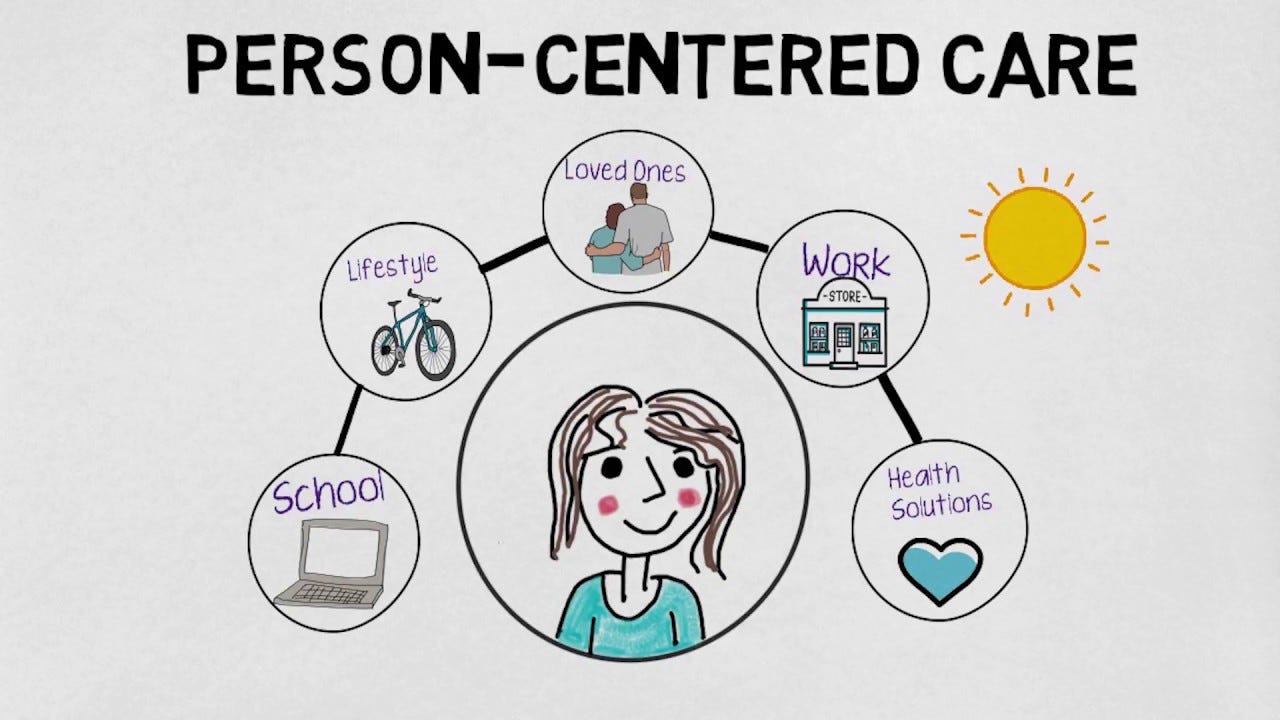
Carl Rogers’ Person-Centered Theory is one of the most influential and humanistic approaches in counseling psychology. Rather than focusing on diagnosis, advice, or symptom control, this approach centers on the person, not the problem.

Developed by Carl Rogers, Person-Centered Therapy (PCT) transformed counseling practice by asserting a radical idea:

People are not broken.
They already possess the capacity to heal—when the right relational conditions are present.

This article explains the theory in depth, connecting its core principles with real counseling practice, mental health work, and modern therapeutic settings.

The Philosophical Foundation of Person-Centered Theory

https://www.thoughtco.com/thmb/hEHvakRGISFGKI6fomETN25uZe0%3D/1500x0/filters%3Ano_upscale%28%29%3Amax_bytes%28150000%29%3Astrip_icc%28%29/CarlRogers-5c78400d46e0fb00011bf28e.jpg

Person-Centered Theory is grounded in humanistic philosophy, a perspective that views human beings as fundamentally capable, trustworthy, and oriented toward growth. Carl Rogers developed this approach during a time when psychology was dominated by two contrasting schools—both of which he felt overlooked the human experience of meaning, choice, and relationship.

Humanistic Psychology as a Response

Humanistic psychology emerged as a “third force” in psychology, responding to the limitations of earlier models:

  • Psychoanalysis emphasized pathology, unconscious conflict, and past trauma, often positioning the therapist as an interpreter of hidden meanings. While insightful, it could unintentionally frame clients as damaged or deficient.

  • Behaviorism focused on observable behavior, conditioning, and reinforcement. Though effective for behavior change, it largely ignored inner experience, emotions, and personal meaning.

Rogers believed both approaches underestimated a fundamental truth:
people are not passive recipients of forces—they are active participants in their own growth. 

Core Beliefs About Human Nature

At the heart of Person-Centered Theory lies a profoundly optimistic view of human beings.

1. Humans Are Inherently Growth-Oriented

Rogers proposed that every person possesses an innate drive to grow, adapt, and move toward psychological health. This does not mean people are always happy or make healthy choices—but that even maladaptive behaviors are attempts to cope, survive, or meet unmet needs.

In counseling practice, this belief shifts the therapist’s stance from fixing problems to trusting the client’s inner capacity.

2. Psychological Distress Arises From Disconnection From the Authentic Self

Rogers observed that emotional suffering often develops when individuals:

  • Deny or distort their true feelings

  • Live according to others’ expectations

  • Suppress parts of themselves to gain acceptance

This inner conflict creates incongruence—a mismatch between lived experience and self-concept. Over time, incongruence leads to anxiety, low self-worth, emotional numbness, or depression.

Rather than seeing distress as illness alone, Rogers viewed it as a signal of lost authenticity.

3. Healing Happens Through Relationship, Not Correction

Perhaps Rogers’ most radical contribution was the idea that the therapeutic relationship itself is the primary agent of change.

He rejected the notion that:

  • Insight must be forced

  • Behavior must be controlled

  • Clients must be corrected or directed

Instead, Rogers demonstrated that when a person is met with empathy, acceptance, and genuineness, they naturally begin to:

  • Lower defenses

  • Explore emotions safely

  • Integrate disowned parts of self

  • Move toward healthier functioning

Healing, in this view, is not imposed—it emerges.

The Actualizing Tendency: The Heart of the Theory

The Actualizing Tendency is the foundational motivational force in Person-Centered Theory. It refers to the inherent drive within all living organisms to:

  • Maintain themselves

  • Enhance their capacities

  • Develop toward greater complexity and fulfillment

In humans, this tendency expresses itself as:

  • Desire for meaning and purpose

  • Striving for authenticity

  • Need for connection and self-acceptance

  • Movement toward psychological integration

Even behaviors that appear self-sabotaging are understood as distorted expressions of the actualizing tendency, shaped by fear, trauma, or conditions of worth.

Clinical Meaning of the Actualizing Tendency

In counseling practice, belief in the actualizing tendency means:

  • The therapist trusts the client’s inner direction

  • Resistance is reframed as self-protection

  • Growth is allowed to unfold at the client’s pace

  • The client is viewed as the expert on their own experience

When the right relational conditions are present, the actualizing tendency naturally guides the client toward healing—without force, judgment, or control.

Self-Concept and Incongruence

Rogers emphasized the importance of self-concept, which includes:

  • Self-image (how I see myself)

  • Self-esteem (how I value myself)

  • Ideal self (who I think I should be)

Incongruence

Psychological distress occurs when there is a gap between:

  • The real self (authentic feelings and experiences)

  • The ideal self (who one believes they must be to be accepted)

This incongruence often develops due to conditions of worth.

Conditions of Worth: The Root of Emotional Pain

Conditions of worth are messages learned early in life, such as:

  • “You are lovable only if you behave well”

  • “Your feelings are acceptable only if they don’t upset others”

  • “Your value depends on achievement or obedience”

Over time, individuals learn to:

  • Suppress emotions

  • Reject parts of themselves

  • Live for approval rather than authenticity

Counseling Relevance

Much of therapy involves undoing these conditions, allowing clients to reconnect with their true feelings without fear of rejection.

The Three Core Conditions of Person-Centered Therapy

Rogers identified three necessary and sufficient conditions for therapeutic change.

1. Unconditional Positive Regard (UPR)

Definition:
Accepting the client fully, without judgment, conditions, or evaluation.

This does not mean approving harmful behavior. It means:

  • Separating the person from the behavior

  • Communicating: “You are worthy, regardless of what you feel or have done.”

Impact in Practice:

  • Reduces shame

  • Encourages emotional honesty

  • Builds psychological safety

2. Empathy (Accurate Empathic Understanding)

Definition:
Deeply understanding the client’s internal world as if it were your own—without losing the “as if” quality.

Empathy involves:

  • Reflecting emotions

  • Understanding meaning beneath words

  • Being emotionally present

Impact in Practice:

  • Clients feel seen and understood

  • Emotional regulation improves

  • Insight emerges naturally

3. Congruence (Genuineness)

Definition:
The therapist is authentic, transparent, and emotionally real—rather than hiding behind a professional façade.

Congruence includes:

  • Emotional honesty

  • Appropriate self-awareness

  • Alignment between inner experience and outward behavior

Impact in Practice:

  • Builds trust

  • Models authenticity

  • Encourages clients to be real themselves

The Role of the Therapist in Person-Centered Counseling

Unlike directive approaches, the therapist does not:

  • Give advice

  • Interpret unconscious material

  • Set goals for the client

  • Diagnose or label as central focus

Instead, the therapist:

  • Creates a safe relational space

  • Trusts the client’s internal process

  • Follows the client’s lead

  • Facilitates self-exploration

The therapist is not an expert on the client’s life.
The client is. 

What Change Looks Like in Person-Centered Therapy

Therapeutic change often includes:

  • Increased emotional awareness

  • Greater self-acceptance

  • Reduced defensiveness

  • Improved emotional regulation

  • More authentic relationships

  • Alignment between values and behavior

Importantly, change is organic, not forced.

Applications in Modern Counseling Practice

Person-Centered Theory is widely used in:

  • Individual counseling

  • Trauma-informed therapy

  • Child and adolescent counseling

  • Relationship counseling

  • Mental health rehabilitation

  • Community and NGO settings

It integrates well with:

  • CBT (as a relational foundation)

  • Trauma therapy

  • Attachment-based approaches

  • Integrative counseling models

Strengths of Person-Centered Therapy

  • Honors the client’s autonomy and self-direction
  • Strengthens the therapeutic alliance
  • Minimizes shame and defensive responses
  • Demonstrates effectiveness across diverse cultural contexts
  • Supports sustained emotional and personal growth

Limitations 

⚠ May be insufficient alone for:

  • Severe psychosis

  • Acute crisis requiring structure

  • Clients seeking directive guidance initially

However, even in structured therapies, Rogers’ core conditions remain essential for effectiveness.

Why Person-Centered Theory Still Matters Today

In a world driven by:

  • Performance

  • Productivity

  • Comparison

  • Labels and diagnoses

Person-Centered Therapy reminds us that healing happens in relationships where people feel safe, accepted, and understood.

People do not grow because they are corrected.
They grow because they are accepted.

Closing Reflection

Carl Rogers’ Person-Centered Theory is not just a counseling technique—it is a way of being with another human.

When empathy, acceptance, and genuineness are present:

  • Defenses soften

  • Authenticity emerges

  • Healing unfolds naturally

And often, that is enough.

Frequently Asked Questions (FAQ)

1. What is the philosophical foundation of Person-Centered Theory?

Person-Centered Theory is rooted in humanistic psychology, which views humans as inherently capable of growth, self-direction, and healing. It emphasizes subjective experience, personal meaning, and the healing power of relationships rather than pathology or control.


2. How is Person-Centered Theory different from psychoanalysis?

Psychoanalysis focuses on unconscious conflict and past experiences, often positioning the therapist as an expert interpreter. Person-Centered Theory, developed by Carl Rogers, focuses on the client’s present experience and trusts the client’s innate capacity for growth.


3. How does it differ from behaviorism?

Behaviorism emphasizes observable behavior, conditioning, and reinforcement. Person-Centered Theory prioritizes inner experience, emotions, self-concept, and authenticity, believing that lasting change occurs through understanding, not control.


4. What is the Actualizing Tendency?

The Actualizing Tendency is the innate drive within every human being to grow, heal, and move toward psychological wholeness. Even maladaptive behaviors are seen as attempts to cope or meet unmet needs.


5. Why does Carl Rogers believe distress comes from disconnection from the self?

Rogers observed that psychological distress arises when individuals deny or suppress their true feelings to meet external expectations. This creates incongruence between the real self and the ideal self, leading to anxiety, low self-worth, or emotional numbness.


6. Why is the therapeutic relationship so important in Person-Centered Therapy?

Because Rogers believed that empathy, unconditional positive regard, and genuineness are sufficient conditions for change. Healing happens when clients feel deeply understood and accepted, not corrected or judged.


7. Is Person-Centered Theory still relevant in modern counseling?

Yes. In trauma-informed, attachment-based, and integrative counseling, Person-Centered principles form the foundation of effective therapeutic relationships, even when other techniques are used.

Written by Baishakhi Das

Counselor | Mental Health Practitioner
B.Sc, M.Sc, PG Diploma in Counseling


Reference


Why You Feel Emotionally Numb: When You Can’t Feel What You Know You Should

Introduction: The Quiet Absence of Feeling

You’re not sad.
You’re not happy.
You’re not angry or excited.

You just… feel nothing.

Emotional numbness is one of the most misunderstood and unsettling psychological experiences. People often describe it as feeling empty, flat, or disconnected from themselves and the world. You may still function—go to work, talk to people, fulfill responsibilities—but internally, something feels switched off.

What makes emotional numbness particularly distressing is that:

  • There may be no obvious reason for it

  • Others may say, “At least you’re not upset”

  • You may wonder if something is “wrong” with you

This article explores why emotional numbness happens, what it means psychologically, how it relates to stress, trauma, anxiety, and burnout, and how feeling can gradually return.

What Is Emotional Numbness?

Emotional numbness is a state in which a person experiences a reduced ability to feel emotions, both positive and negative. It is not the absence of emotions entirely, but rather a dampening or disconnection from them.

People experiencing emotional numbness often report:

  • Feeling detached from their emotions

  • Difficulty crying or feeling joy

  • Feeling “on autopilot”

  • Going through life without emotional engagement

  • Knowing they should feel something, but don’t

Importantly, emotional numbness is not a personality flaw. It is usually a protective psychological response.

Emotional Numbness Is Not the Same as Calm

Calmness is peaceful and grounded.
Numbness is hollow and disconnected.

When you are calm:

  • You feel present

  • You can access emotions if needed

  • There is inner clarity

When you are numb:

  • You feel distant from yourself

  • Emotions feel blocked or unreachable

  • There is a sense of inner emptiness

Many people mistake numbness for emotional strength—but numbness often signals overwhelm, not resilience.

Common Signs of Emotional Numbness

Emotional numbness can show up in subtle ways:

  • Feeling indifferent toward things that once mattered

  • Lack of emotional reaction to good or bad news

  • Difficulty feeling love, excitement, or empathy

  • Reduced emotional expression

  • Feeling disconnected from memories or experiences

  • Loss of pleasure (anhedonia)

  • Sense of being “behind glass” while life happens

You may still think clearly and behave normally—yet feel emotionally absent.

Why Emotional Numbness Happens: The Psychology Behind It

1. Emotional Overload and Burnout

One of the most common causes of emotional numbness is prolonged emotional overload.

When you’ve been:

  • Constantly stressed

  • Emotionally responsible for others

  • Overstimulated

  • Under-rested

  • Emotionally unsupported

…the nervous system may respond by shutting down emotional intensity.

This is not a failure—it is a survival response.

Your mind essentially says:

“Feeling everything right now is too much. Let’s reduce sensation.”

2. Trauma and the Freeze Response

Emotional numbness is closely linked to trauma.

When fight or flight isn’t possible, the nervous system may enter freeze mode, which includes:

  • Emotional shutdown

  • Dissociation

  • Detachment from feelings and body sensations

Trauma doesn’t have to be dramatic or violent. Emotional trauma can include:

  • Chronic emotional neglect

  • Long-term criticism

  • Feeling unsafe expressing emotions

  • Living in unpredictable environments

Numbness protects you from pain—but also from pleasure.

3. Suppressed Emotions Over Time

Many people are taught (directly or indirectly) to:

  • “Stay strong”

  • “Don’t overreact”

  • “Be practical”

  • “Control your emotions”

Over time, repeated emotional suppression can lead to disconnection from feelings altogether.

If emotions are consistently invalidated or unsafe to express, the brain learns:

“It’s better not to feel.”

4. Anxiety and Emotional Avoidance

Anxiety doesn’t always look like panic.

Chronic anxiety can lead to emotional numbness because:

  • Feeling emotions may trigger worry

  • Emotional intensity feels unsafe

  • The mind stays in constant vigilance mode

To avoid discomfort, the brain dampens emotional signals.

Ironically, emotional numbness can be an anxiety symptom, not the absence of anxiety.

5. Depression and Anhedonia

In depression, emotional numbness often appears as anhedonia—the inability to feel pleasure.

This can include:

  • No excitement about achievements

  • No enjoyment in hobbies

  • Emotional flatness in relationships

Unlike sadness, anhedonia feels empty and lifeless, which is often more frightening for individuals.

6. Grief and Emotional Protection

After loss, the psyche may temporarily numb emotions to prevent overwhelm.

Grief-related numbness can feel like:

  • “I know something terrible happened, but I don’t feel it”

  • Delayed emotional reactions

  • Feeling detached from the loss

This does not mean you don’t care—it means your mind is pacing your pain.

7. Dissociation: Feeling Disconnected from Yourself

Emotional numbness is often part of dissociation, a psychological response where:

  • You feel detached from your body or emotions

  • The world feels unreal or distant

  • You feel like an observer of your life

Dissociation develops when emotional intensity exceeds coping capacity.

Emotional Numbness in Daily Life

In Relationships

  • Difficulty feeling close

  • Reduced emotional responsiveness

  • Guilt for not feeling “enough”

  • Fear of hurting loved ones emotionally

Partners may misinterpret numbness as lack of care, which increases isolation.

At Work

  • Loss of motivation

  • Indifference to success or failure

  • Functioning without emotional engagement

  • Feeling drained but detached

High-functioning individuals often experience numbness silently.

In Parenthood or Caregiving

  • Feeling robotic

  • Guilt for lack of emotional warmth

  • Emotional exhaustion

  • Difficulty feeling joy or connection

Caregivers are especially vulnerable due to chronic emotional output.

Why Emotional Numbness Is So Disturbing

Emotional numbness creates identity confusion.

People often ask:

  • “Who am I if I don’t feel?”

  • “Am I broken?”

  • “Will I ever feel normal again?”

Because emotions are central to meaning, numbness can feel like losing yourself.

Emotional Numbness Is Not Permanent

This is crucial to understand:

Emotional numbness is a state, not a life sentence.

It is reversible when the underlying causes are addressed.

What Not to Do When You Feel Numb

  • Don’t force emotions

  • Don’t shame yourself

  • Don’t compare yourself to others

  • Don’t numb further with substances or overwork

  • Don’t assume it means you’re incapable of feeling

Numbness responds to gentle attention, not pressure.

How to Begin Reconnecting with Emotions

1. Focus on Safety, Not Feeling

Your nervous system needs safety before emotions can return.

Ask:

  • Where do I feel safest?

  • What reduces my tension?

2. Reconnect with the Body First

Emotions live in the body.

Helpful practices:

  • Gentle movement

  • Breathing exercises

  • Grounding techniques

  • Warmth (showers, blankets)

3. Allow Small Emotional Signals

Emotions often return subtly:

  • Mild irritation

  • Gentle sadness

  • Brief enjoyment

These are signs of reawakening, not setbacks.

4. Express Without Judgment

Journaling, art, or quiet reflection helps emotions surface without pressure.

5. Seek Therapeutic Support

Therapy helps by:

  • Creating emotional safety

  • Processing suppressed emotions

  • Regulating the nervous system

  • Understanding trauma or burnout patterns

You don’t need to know why you’re numb to seek help.

When to Seek Professional Help

Seek support if numbness:

  • Persists for months

  • Interferes with relationships

  • Is accompanied by hopelessness

  • Follows trauma or loss

  • Feels frightening or worsening

Emotional numbness deserves care—not dismissal.

Healing Is Not About “Feeling More” Immediately

Healing means:

  • Feeling safely

  • Feeling gradually

  • Feeling without overwhelm

Your nervous system will open when it no longer feels threatened.

Final Thoughts: Numbness Is a Message, Not a Failure

Emotional numbness is your mind and body saying:

“I’ve been carrying too much, for too long.”

It is not weakness.
It is not indifference.
It is not permanent.

Feeling will return—not by force, but by compassion, safety, and support.

You are not broken.
You are protecting yourself.
And you can heal.

FAQ


1. What does it mean to feel emotionally numb?

Emotional numbness means feeling disconnected from emotions, both positive and negative. A person may function normally but feel empty, detached, or unable to feel joy, sadness, or emotional connection.


2. Is emotional numbness a mental illness?

No. Emotional numbness is not a diagnosis but a symptom. It commonly appears in anxiety, depression, burnout, trauma responses, or prolonged emotional stress.


3. Can stress or burnout cause emotional numbness?

Yes. Long-term stress and emotional burnout can overwhelm the nervous system, leading it to reduce emotional intensity as a protective mechanism.


4. Is emotional numbness a trauma response?

Often, yes. Emotional numbness can be part of the freeze or dissociation response, especially after emotional neglect, chronic stress, or unresolved trauma.


5. How long does emotional numbness last?

It varies. For some, it lasts weeks; for others, months. Numbness usually improves when underlying stress, trauma, or emotional overload is addressed with support.


6. Can anxiety cause emotional numbness?

Yes. Chronic anxiety can lead to emotional shutdown because feeling emotions may increase fear or overwhelm. Numbness can coexist with anxiety.


7. Is emotional numbness the same as depression?

Not exactly. Depression may include sadness, hopelessness, or loss of pleasure (anhedonia). Emotional numbness can occur with or without depression.


8. How can I start feeling emotions again?

Healing involves:

  • Creating emotional safety

  • Reducing chronic stress

  • Reconnecting with the body

  • Allowing emotions gradually

  • Seeking professional support when needed

Forcing emotions often worsens numbness.


9. When should I seek professional help?

Seek help if numbness:

  • Lasts for months

  • Affects relationships or daily life

  • Is accompanied by anxiety, hopelessness, or trauma history

  • Feels frightening or worsening

Written by Baishakhi Das

Counselor | Mental Health Practitioner
Qualifications: B.Sc in Psychology | M.Sc  | PG Diploma in Counseling

REFERENCE 


Real Stories: How Men Turned Their Mental Health Around

For many men, mental health struggles do not look like sadness or tears. They often show up as anger, emotional numbness, workaholism, isolation, addiction, or physical complaints. Social expectations around masculinity—“be strong,” “don’t talk,” “handle it yourself”—push many men to suffer silently for years.

This article shares real-life inspired stories (names changed for privacy) that reflect common patterns seen in counseling rooms. These stories show that healing is possible, not through sudden transformation, but through awareness, support, and small, consistent changes.

Story 1: “I Didn’t Know I Was Depressed Because I Was Still Functioning”

– Rakesh, 38, Corporate Professional

Rakesh had a stable job, a family, and financial security. From the outside, everything looked fine. Inside, he felt empty, irritable, and disconnected. He worked long hours, avoided emotional conversations, and snapped at his wife and children.

He didn’t identify as “depressed” because he was still going to work and meeting responsibilities. It was only after recurring headaches, insomnia, and a panic episode that he sought help.

Turning Point

In therapy, Rakesh realized he was experiencing high-functioning depression. He had learned early in life that emotions were weakness, so he coped by suppressing them.

What Helped

  • Psychoeducation about male depression

  • Learning emotional language

  • Weekly therapy sessions

  • Setting boundaries at work

Outcome

Over time, Rakesh reported feeling more present, less irritable, and emotionally available to his family. His biggest realization:

“I wasn’t broken—I was exhausted from pretending I was okay.”

Story 2: “Anger Was Easier Than Admitting I Was Hurt”

– Imran, 42, Small Business Owner

Imran was known for his temper. Family members described him as “short-fused” and “controlling.” What no one saw was his unprocessed childhood trauma—a violent home and constant emotional invalidation.

Whenever he felt criticized or ignored, his nervous system reacted as if he was under threat. Anger became his shield.

Turning Point

After his marriage reached the brink of separation, Imran agreed to counseling—reluctantly.

What Helped

  • Trauma-informed therapy

  • Understanding anger as a secondary emotion

  • Learning grounding and regulation skills

  • Exploring childhood emotional neglect

Outcome

Imran didn’t “lose” his anger—he learned to understand it. His reactions softened, and his relationships became less conflict-driven.

“Anger was protecting me. Once I felt safe, I didn’t need it as much.”

Story 3: “I Felt Like a Failure Because I Lost My Job”

– Suman, 35, IT Professional

When Suman was laid off during an economic downturn, his self-worth collapsed. He stopped socializing, avoided family gatherings, and felt deep shame. He believed:

“If I’m not earning, I’m nothing.”

His anxiety increased, sleep reduced, and he began withdrawing emotionally from his partner.

Turning Point

A friend encouraged him to speak to a counselor, framing it not as weakness but as support.

What Helped

  • Challenging identity tied only to productivity

  • Career counseling combined with emotional support

  • Routine building during unemployment

  • Normalizing grief around job loss

Outcome

Suman eventually found new work, but more importantly, he rebuilt a healthier sense of self not solely tied to income.

“Losing my job broke my confidence—but rebuilding it changed my life.”

Story 4: “I Didn’t Know How Lonely I Was Until I Spoke About It”

– Arjun, 29, Single, Living Alone

Arjun rarely talked about his feelings. He spent most evenings scrolling on his phone, gaming, or watching shows. He didn’t feel sad—just numb and disconnected.

He believed loneliness was something “weak people” complained about.

Turning Point

During a health checkup, the doctor asked about stress and sleep. For the first time, Arjun admitted he felt invisible.

What Helped

  • Normalizing male loneliness

  • Group therapy sessions

  • Building offline social routines

  • Learning to initiate emotional conversations

Outcome

Arjun didn’t suddenly become extroverted, but he developed meaningful connections.

“Loneliness wasn’t the absence of people—it was the absence of connection.”

Common Themes Across These Stories

Despite different backgrounds, these men shared common experiences:

  • Emotional suppression

  • Shame around vulnerability

  • Identity tied to productivity or control

  • Delayed help-seeking

  • Fear of being judged

And common healing factors:

  • Being heard without judgment

  • Understanding emotions, not fighting them

  • Safe therapeutic relationships

  • Small, consistent lifestyle changes

Why These Stories Matter

Men often don’t seek help until:

  • Relationships break down

  • Physical symptoms appear

  • Anger becomes unmanageable

  • Burnout sets in

Sharing real stories reduces stigma and sends a powerful message:

You don’t have to reach a breaking point to ask for help.

A Message to Men Who Are Struggling

You don’t need to have the “right words.”
You don’t need to be falling apart.
You don’t need to do this alone.

Mental health recovery is not about becoming someone else—it’s about becoming more yourself, with support.

Final Thought

These stories are not about dramatic transformations. They are about men choosing honesty over silence, support over isolation, and healing over endurance.

you can Also Read

7 Signs You Need to Talk to a Therapist — Don’t Ignore These

Top 7 Tools Men Can Use to Track Their Mental Wellness