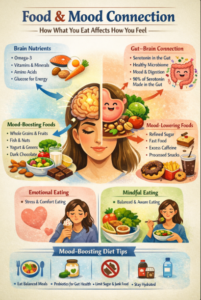
We often think of food as fuel for the body, something that keeps us physically active and healthy. However, food is not only nourishment for muscles and organs — it is also essential for the brain and emotional well-being. The food–mood connection refers to the powerful relationship between what we eat and how we feel, think, and respond to stress in our daily lives.
In recent years, scientific research in nutrition, psychology, and neuroscience has increasingly shown that diet plays a significant role in mental health. Nutrients from food help regulate brain chemistry, influence hormones, and support the production of neurotransmitters that control mood, sleep, motivation, and concentration. This means that our daily food choices can affect not only our physical energy but also our emotional stability, resilience, and cognitive functioning.
Many traditional cultures have long believed that food affects the mind as well as the body. Today, modern science supports this idea, showing that unhealthy eating patterns may contribute to fatigue, irritability, anxiety, and low mood, while balanced nutrition can support emotional balance, stress tolerance, and overall psychological well-being. In this way, food becomes more than a biological need — it becomes an important tool for mental health care.
1. The Brain Runs on Nutrients
Your brain is an organ that requires continuous nourishment to function effectively. It works 24/7, controlling thoughts, emotions, memory, and behaviour. To maintain mental clarity and emotional balance, the brain depends on several essential nutrients.
1. Glucose for Daily Energy
Glucose is the brain’s main fuel source.
In daily life this means:
- Skipping breakfast → feeling weak, dizzy, or unable to focus
- Long gaps between meals → sudden irritability or headache
- Balanced meals → steady energy and better productivity
2. Amino Acids for Mood Chemicals
Proteins provide amino acids that help produce neurotransmitters such as serotonin, dopamine, and GABA.
In daily life this shows up as:
- Low protein intake → low motivation, poor mood regulation
- Balanced protein meals → better emotional control and alertness
- Students or workers may notice improved focus after protein-rich meals
3. Fatty Acids for Brain Cell Health
Healthy fats, especially omega-3 fatty acids, help build brain cells and support emotional regulation.
In daily life this affects:
- Diets very low in healthy fats → poor concentration, mood swings
- Regular intake of nuts, seeds, or fish → improved memory and calmness
- People under stress often cope better with adequate healthy fats
4. Vitamins and Minerals for Mental Balance
Micronutrients such as B-vitamins, iron, magnesium, and zinc help regulate mood chemicals and nerve functioning.
In daily life this may appear as:
- Iron deficiency → tiredness, low mood, lack of motivation
- Low B-vitamins → forgetfulness or mental exhaustion
- Proper nutrition → sharper thinking and emotional stability
What Happens When the Brain Lacks Nutrients?
When the body does not receive proper nourishment, the brain struggles to function efficiently. This may lead to:
- Fatigue → feeling tired even after rest
- Irritability → reacting quickly or feeling emotionally sensitive
- Brain fog → difficulty thinking clearly or remembering things
- Low mood → reduced motivation or interest in daily activities
- Poor concentration → trouble focusing at work, study, or conversations
In everyday life, these symptoms often get blamed on stress or workload, but nutrition plays a major hidden role. Regular balanced meals can significantly improve mental clarity, emotional stability, and overall functioning.
2. Neurotransmitters and Food
Mood is largely controlled by neurotransmitters such as:
- Serotonin – regulates happiness, calmness, sleep
- Dopamine – linked to motivation and pleasure
- GABA – helps reduce anxiety
- Norepinephrine – affects alertness and focus
These chemicals are made from nutrients found in food.
For example:
- Tryptophan (from milk, nuts, seeds) → helps produce serotonin
- Protein (eggs, lentils, fish) → supports dopamine production
- Omega-3 fatty acids → improve emotional regulation
This means diet directly affects emotional balance.
3. The Gut–Brain Connection
The gut and brain communicate through the gut–brain axis.
The gut contains trillions of bacteria, called the microbiome, which influence:
- Mood
- Stress levels
- Inflammation
- Cognitive function
In fact, nearly 90% of serotonin is produced in the gut.
Foods that support gut health:
- Yogurt and fermented foods
- Fruits and vegetables
- Whole grains
- Fiber-rich foods
When gut health is poor, people may experience:
- Anxiety
- Low mood
- Poor sleep
- Digestive discomfort
4. How Different Foods Affect Mood
Mood-Boosting Foods
These help stabilize emotions and energy:
- Whole grains → steady glucose supply
- Fruits and vegetables → antioxidants reduce brain stress
- Nuts and seeds → healthy fats for brain cells
- Fish → omega-3 reduces depression risk
- Dark chocolate → improves serotonin and endorphins
Mood-Lowering Foods
These may worsen emotional stability:
- Refined sugar → causes energy crashes and irritability
- Ultra-processed foods → linked with higher depression risk
- Excess caffeine → increases anxiety and restlessness
- Skipping meals → leads to mood swings and poor focus
5. Emotional Eating vs. Mindful Eating
Many people use food to cope with emotions such as stress, loneliness, or boredom. This is known as emotional eating.
While it gives temporary comfort, it often leads to:
- Guilt
- Poor digestion
- Energy crashes
- Weight concerns
In contrast, mindful eating means:
- Eating slowly
- Noticing hunger cues
- Choosing foods that nourish body and mind
- Understanding emotional triggers
This approach improves both physical and psychological well-being.
6. Practical Tips to Improve Mood Through Food
- Eat balanced meals (carbs + protein + healthy fats)
- Do not skip breakfast
- Stay hydrated
- Include fermented foods for gut health
- Reduce refined sugar and junk food
- Eat at regular times
- Pay attention to how food affects your emotions
Conclusion
Food is more than nutrition — it is a psychological tool. A balanced diet supports emotional regulation, improves brain chemistry, and strengthens resilience against stress. While food alone cannot treat mental illness, it plays a powerful role in overall mental well-being.
Taking care of what you eat is, in many ways, taking care of how you feel.
FAQs: Food–Mood Connection
1. Can food really affect mental health?
Yes. Nutrients influence brain chemistry, neurotransmitter production, and inflammation levels, all of which affect mood and emotional stability.
2. Which foods help improve mood naturally?
Foods rich in omega-3s, whole grains, fruits, vegetables, nuts, seeds, and fermented foods support emotional balance and brain health.
3. Can skipping meals affect mood?
Yes. Skipping meals can cause low blood sugar, leading to irritability, fatigue, poor concentration, and mood swings.
4. Is there a link between sugar and anxiety?
High sugar intake may cause rapid energy spikes and crashes, which can increase restlessness, irritability, and anxiety-like symptoms.
5. Does caffeine influence mood?
Moderate caffeine may improve alertness, but excess intake can increase anxiety, sleep problems, and emotional instability.
6. How does gut health affect mental health?
The gut produces many neurotransmitters, including serotonin. Poor gut health is linked with stress sensitivity, anxiety, and low mood.
7. Can diet help with depression?
A healthy diet alone cannot replace treatment, but balanced nutrition can support brain function and improve overall emotional well-being.
8. What nutrients are most important for mental health?
Omega-3 fatty acids, B-vitamins, iron, magnesium, zinc, protein, and fiber are particularly important for brain and emotional health.
9. Can dehydration affect mood?
Yes. Even mild dehydration may cause fatigue, headaches, poor focus, and irritability.
10. Is emotional eating harmful?
Occasional comfort eating is normal, but frequent emotional eating may lead to guilt, weight issues, and unstable energy levels.
11. Does breakfast really matter for mood?
Yes. A balanced breakfast helps stabilize glucose levels, improving attention, patience, and emotional regulation during the day.
12. Can children’s behaviour be influenced by diet?
Yes. Nutritional deficiencies and high sugar intake may affect attention, energy levels, and emotional control in children.
13. How long does it take for diet changes to affect mood?
Some effects, like stable energy, may appear within days, while long-term mood improvement may take weeks of consistent healthy eating.
14. Are processed foods linked to mental health problems?
Research suggests that diets high in ultra-processed foods are associated with higher risk of depression, inflammation, and low energy.
15. What is one simple step to improve the food–mood connection?
Start by eating regular balanced meals with protein, whole grains, and vegetables to stabilize energy and support brain function.
Written by Baishakhi Das
Counselor | Mental Health Practitioner
B.Sc, M.Sc, PG Diploma in Counseling
Reference
-
Harvard Health Publishing
https://www.health.harvard.edu
(Articles on diet, brain health, and mood) -
World Health Organization – Nutrition & Mental Health
https://www.who.int -
American Psychological Association – Nutrition & Mental Health
https://www.apa.org -
National Institute of Mental Health (NIMH)
https://www.nimh.nih.gov -
Frontiers in Nutrition Journal (Diet and Depression research)
https://www.frontiersin.org/journals/nutrition -
The Lancet Psychiatry – Food and Mental Health Studies
https://www.thelancet.com/psychiatry -
Gut–Brain Axis Research Overview (Nature Reviews Gastroenterology)
https://www.nature.com - Importance of Secure Attachment in Childhood
This topic performs well due to rising searches around men’s mental health, workplace stress, and burnout recovery. Combining emotional insight with practical steps increases engagement and trust.

 1. The Brain Is Wired for Social Survival