
The Cost of Always Being the Strong One

People come to you when everything goes wrong.
You remain composed when things are out of control and even when your own chest is tight.
You are a good listener, able to listen without interruption, a good non-judgemental holder of space, a problem-solver who is quiet enough to have your own feelings on the backburner.

And nobody seems to see when you are tired–because you have perfected concealing it.

It is commonly endorsed as resilience, maturity, or emotional intelligence to be the strong one. Your composure and steadiness is the admiration of people. However, under the admiration, there is an emotional price that is seldom realized. When strength becomes a role rather than a choice, it gradually becomes a burden, a burden that you bear without any more than an expression, without any protest, because that is what you are supposed to bear.

Your own strength, previously your safeguard, and formerly your strength, starts to suck you out. And not because you are weak, but because the greatest nervous system, the strongest system, must rest and have care and be supported.

The Invisible Contract of Strength

Most individuals grow up to be the strong one at a young age not necessarily of their choice, but due to circumstances. Grit was not an option; rather it was a coping mechanism of survival.

  • You learned that you must not cry as it was the reliance of others that demanded you not to cry and express yourself, as it was unsafe or inconvenient.
  • learned to contain emotions, instead of displaying them and turn feelings into something that could be controlled, and not shared.
  • You were taught that you could postpone meeting your needs–sometimes forever–because keeping it together was the first before you put in your clothes.

This gradually leads to the establishment of an unwritten agreement with the world: I will remain calm in order to make other people feel safe.
You are the one that sticks, the one that can be depended on, the one that does not disintegrate at least not before anyone can notice.

With time, strength ceases to be a characteristic one draws and a character one lives within. And identities and those which are founded on survival are difficult to get out of, even when they have begun to cost you, your rest, your tenderness, and your feeling of being taken care of.

Emotional Labor Without Rest

Being the strong one can be doing all the time emotional work, the work that goes unseen, unpaid, and unrecognized.

  • You also control your emotions so that you do not disturb other people and learn to make your pain as insignificant as possible to make their life comfortable.
  • Take on the burden of other people without offloading your own, to be the vessel that holds the unhappy feelings that no one can express.
  • You are the safe haven of the rest of them but you seldom get heard.

Slowly your nervous system is kept in a kind of silent watchfulness–in a permanent state of alertness, in an intermittent state of rest. You are held in position even when you are not in motion, trying to figure out what is going to happen next.

This is not draining you emotionally because you are weak, but this is not the purpose of human beings to shoulder emotional burden alone. Connection is to be two-way. The exhaustion is not a vice when the support is flowing in one way only: it is a biological and emotional phenomenon.

When Support Becomes One-Directional

Powerful individuals are commonly believed to be fine. Their silence is interpreted as the fact that nothing is amiss, and their quietness is perceived as power instead of the struggle.

  • No one, then, looks deep in–enquiries are superficial–asked at all.

  • we are silent, therefore, thinking that it is stable and that we are not talking about pain, that it is not there.
  • Your limits are hardly ever questioned, as it is believed that you can do more, be more, take more.

Gradually, the requesting of assistance can gradually cease to occur, not because the need has been fulfilled, but because it no longer feels necessary to strain others, or because there are times when assistance has come at all when it has been requested. Needs are privatised, expectations are reduced and self-sufficiency is the surest way out.

Isolating emotionally is created gradually, not with a bang, but with a whimper, in the name of being independent. At first sight, it can seem to be strength. On the one hand, it can be rather like being alone with too much to be carried.

The Hidden Grief of the Strong

It is sorrowful to be the strong one–sorrow that is not much spoken, and is seldom named, and has to be borne by the individual.

  • Sorrow in the embrace that you did not have at the time you needed it the most.
  • The sweetness which you had delayed, and said you would sleep by and by, and feel by and by, and be by and by.
  • Sorrow over the weakness you ingested, knowing since you were young that weakness can be neither safe nor desirable to express.

Accomplishing this sadness, there might also be guilt in desiring rest as though fatigue is a personal vice. Shame can be experienced in being tired when you are managing everything. And confusion may come to rest in where nothingness appears despite doing everything and keeping it all together.

But emotional exhaustion is not failure–it is a message. A silent communication of your nervous system requesting you to be noticed, nurtured and given to take a break after carrying too much far too long.

Strength Is Not the Absence of Need

Emotional suppression is not a strength.
It is not being quiet, accepting whatever, or doing it by any means.
Emotional honesty is the real strength and that is the strength to be truthful to what is in your heart.

It is permitting oneself to say, without any explanation or apology:

  • “I’m not okay today.”
  • “need support too.”
  • “I don’t have to earn rest.”

The process of healing starts with strength being loose instead of hard, with stamina being soft as well as strong, with self-reliance allowing connection. You do not need to work hard to earn your safety, when you permit yourself to be grasped, not to grasp others, your nervous system comes to understand that you do not need to work hard to get safety. There are cases when it is just received.

Relearning Balance

When you are the strong, ask yourself–ask him–ask me–ask him:

And when I am not okay, where did I get to know that I always have to be okay?
What will I be when I cease to act out resilience and permit myself to exist?
What do you think it would be like to have that same care, patience and understanding given to me with the same free hand that I so readily dispense to others?

Such questions are not to be answered in a short period. They are entreaties to observe that which has long been carried.

  • Resting does not make you lose your power.
  • Do not shrink into ineptitude by seeking assistance.
  • It is not being a human that disappoints anyone.

Power was not supposed to entail self-abandonment. It was to be combined with tenderness, support and rest.

A Reframe Worth Remembering

You are not so tough in that you can take everything and not break.

You are tough since you evolved-because you studied to live in places where you needed to be strong before you were prepared to be strong.

  • Now you may have something new.
  • Connection over endurance.
  • Support over silence.
  • Power.

When you rest you do not lose your strength. It evolves. It is something that you live on, not something that you pay on.

FAQs

1. Why is it so emotionally exhausting to be the strong one?

Since it is a matter of constant emotional control, personal needs repression, and one-sided aid, exhausting the nervous system in the long run.

2. Does emotional exhaustion mean one is weak?

No. Emotional exhaustion is a biological and mental reaction to the stress and to unmet emotion needs over a long period of time.

3. Why do powerful individuals hardly obtain support?

They are presumed to be fine and that is why other people forget that they need to be cared about and have emotional check-ins.

4. Is there a role of childhood experiences that forms the strong one?

Yes. Strength is taken by many as an early survival tactic in an emotionally unsafe or demanding environment.

5. What is emotional labor?

Emotional labor is the process of controlling emotions – yours and those of other people – to ensure stability, comfort or harmony.

6. What is the impact of emotion suppression on mental health?

It exerts more stress, emotional numbness, anxiety, burnout, and may lead to depression in the long run.

7. Why has it happened that tough individuals are guilty of taking a break?

Since being useful, enduring, or responsible has already associated the self-worth of the person, rest might feel unworthy.

8. What is it like to experience nervous system exhaustion?

Constant fatigue, emotional detachment, irritability, hyper vigilance, inability to relax or being empty.

9. Is it always healthy to be independent?

Not when it covers emotional isolation. The capacity to be assisted is also a part of healthy independence.

10. How can powerful individuals embark on seeking assistance?

Their small steps can help them: first naming their feelings, selective sharing, and reminding themselves that support is not their responsibility.

11. What does it mean by trauma-informed strength?

Power which is flexible, emotional integrity, rest and relationship as opposed to perpetual effort.

12. Do we need therapy among people who are always strong?

Yes. In therapy there is a safe space where suppressed emotions are relieved and learning reciprocal care re-learned.

13. Why is it that being strong causes burnout?

The continuous self-control in the absence of emotional discharge is too much to the mind and body.

14. What is your ratio of strength and softness?

Trying to be vulnerable, demarcating boundaries and providing yourself with the kind of care you provide to others.

15. How do you begin healing the emotional fatigue?

Not being ashamed of feeling tired and allowing yourself to require assistance.

Written by Baishakhi Das

Counselor | Mental Health Practitioner
B.Sc, M.Sc, PG Diploma in Counseling


✅ Reference

  1. American Psychological Association – Stress & Burnout
    https://www.apa.org/topics/stress

  2. National Institute of Mental Health – Coping With Stress
    https://www.nimh.nih.gov/health/topics/stress

  3. Polyvagal Theory & Nervous System Regulation – Dr. Stephen Porges
    https://www.polyvagalinstitute.org

  4. Emotional Labor & Mental Health – Psychology Today
    https://www.psychologytoday.com/us/basics/emotional-labor

  5. Trauma and the Body – Bessel van der Kolk
    https://www.traumaresearchfoundation.org

  6. Feeling Behind “Not Good Enough”

This topic performs well due to rising searches around men’s mental health, workplace stress, and burnout recovery. Combining emotional insight with practical steps increases engagement and trust.

Stress vs Burnout: How to Tell the Difference

https://doctorondemand.com/wp-content/uploads/2022/04/stress-vs-burnout.png

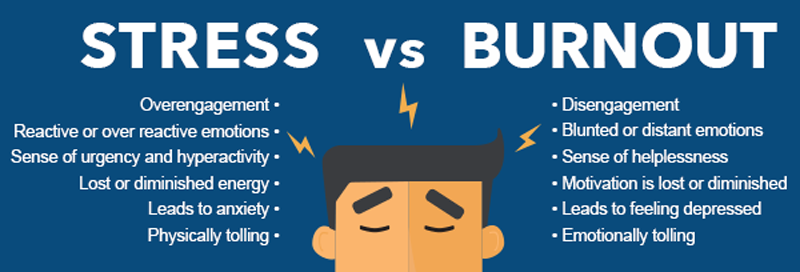
In today’s fast-paced world, feeling overwhelmed has become almost a normal part of daily life. Long work hours, constant digital connectivity, financial pressures, and growing personal responsibilities have blurred the line between productivity and exhaustion. As a result, many people use the terms stress and burnout interchangeably—but psychologically, they are not the same experience.

Understanding the difference between stress and burnout is crucial because they affect the mind and body in very different ways and require different responses. Stress is often a short-term reaction to pressure and can sometimes be managed with rest or problem-solving. Burnout, however, develops gradually from prolonged, unmanaged stress and leads to deep emotional, mental, and physical exhaustion.

When burnout is mistaken for ordinary stress and addressed only with quick fixes—such as taking a short break or pushing harder—it can silently worsen. Over time, this may contribute to anxiety, depression, physical illness, emotional numbness, and a loss of meaning or motivation.

What Is Stress?

Stress is the body’s natural response to pressure, challenge, or perceived demand. It arises when external situations or internal expectations feel greater than one’s current coping capacity. From a psychological perspective, stress is not inherently harmful—it is a signal, alerting the mind and body to mobilize resources for adaptation.

Stress is usually:

  • Situational – tied to a specific circumstance or phase of life

  • Short- to medium-term – it rises and falls as demands change

  • Demand-linked – connected to identifiable tasks, responsibilities, or pressures

Common stressors include work deadlines, academic exams, financial strain, caregiving roles, relationship conflicts, health concerns, or major life transitions. These stressors activate the body’s stress response system (sympathetic nervous system), preparing a person to respond, solve, or endure.

Psychological Experience of Stress

Psychologically, stress is often experienced as:

  • Feeling overwhelmed but still mentally engaged

  • Persistent worry, tension, or irritability

  • Racing or repetitive thoughts, especially about “what needs to be done”

  • Heightened alertness and a strong sense of urgency

  • Difficulty relaxing, even during rest periods

Despite discomfort, motivation is usually still present. The person may feel exhausted yet continues to push forward, believing effort will resolve the situation.

A key cognitive belief commonly seen in stress is:

“Once this situation improves, I’ll feel better.”

This belief reflects an important distinction:
Under stress, people generally retain hope and purpose. They expect relief once the pressure eases, which is why stress—though uncomfortable—often remains psychologically manageable in the short term.

When stress becomes chronic or unrelenting, however, this belief can begin to fade, increasing the risk of emotional exhaustion and burnout.

What Is Burnout?

Burnout is a state of chronic emotional, mental, and physical exhaustion that develops after prolonged exposure to stress that has not been adequately managed or relieved. It is most commonly associated with work, caregiving, and helping professions, where demands are continuous and recovery is limited or absent.

Unlike stress—which involves overactivation—burnout reflects depletion. The system no longer has enough emotional or psychological resources to respond.

The World Health Organization defines burnout as an occupational phenomenon characterized by three core dimensions:

  • Emotional exhaustion – feeling completely drained, depleted, and unable to give more

  • Mental distance, cynicism, or depersonalization – emotional withdrawal from work or responsibilities, often expressed as negativity or indifference

  • Reduced sense of effectiveness – feeling incompetent, unproductive, or that one’s efforts no longer matter

Burnout does not occur suddenly. It develops gradually, often disguised as “just being tired” or “having a bad phase,” and frequently goes unrecognized until daily functioning, relationships, or physical health are significantly affected.

Psychological Experience of Burnout

Psychologically, burnout is experienced very differently from stress:

  • Emotional numbness or emptiness, rather than anxiety

  • Detachment and cynicism, especially toward work, people, or responsibilities once cared about

  • Profound loss of motivation, meaning, and purpose

  • Feeling trapped, helpless, or stuck, with no sense of agency

  • Reduced emotional reactivity—both positive and negative feelings feel muted

While stressed individuals are often still striving and hoping for relief, burned-out individuals feel psychologically disconnected. Tasks that once felt manageable now feel pointless or unbearable.

A defining cognitive belief in burnout is:

“Nothing will change—even if the pressure stops.”

This belief reflects learned helplessness and emotional shutdown. Even rest or time off may not bring relief, because the nervous system and sense of meaning are already depleted.

Key Psychological Difference from Stress

  • Stress → “Too much to handle, but I must keep going.”

  • Burnout → “I have nothing left to give, and it doesn’t matter anymore.”

Burnout is not a personal failure or lack of resilience—it is a systemic response to prolonged overload without recovery, support, or control. Recovery therefore requires more than rest; it involves restoring meaning, boundaries, autonomy, and emotional safety.

Stress vs Burnout: Key Differences

Aspect Stress Burnout
Duration Short-term or episodic Long-term, chronic
Energy Overactive, tense Depleted, exhausted
Emotions Anxiety, irritability Hopelessness, numbness
Motivation Still present Significantly reduced
Engagement Over-engaged Disengaged
Recovery Improves with rest Persists despite rest

Emotional Signs: How They Feel Different

Stress Feels Like

  • “Everything feels urgent.”
  • “There’s no space to pause.”
  • “If I rest, I’ll fall behind.”

Burnout Feels Like

  • “I don’t care anymore”

  • “I’m empty”

  • “I’m done, but I can’t leave”

Stress pushes you to keep going.
Burnout makes you want to stop altogether.

Behavioral Differences

Under Stress

  • Overworking

  • Difficulty relaxing

  • Short temper

  • Sleep problems

Under Burnout

  • Procrastination or withdrawal

  • Reduced performance

  • Emotional detachment

  • Avoidance of responsibility

Burnout often looks like laziness from the outside—but psychologically, it is exhaustion, not lack of effort.

Physical Symptoms

Both stress and burnout affect the body, but differently:

Stress

  • Headaches

  • Muscle tension

  • Rapid heartbeat

  • Digestive issues

Burnout

  • Chronic fatigue

  • Frequent illness

  • Sleep disturbances

  • Body aches with no clear cause

Burnout weakens the immune system due to prolonged nervous system overload.

Why Stress Turns Into Burnout

Stress becomes burnout when:

  • Recovery time is insufficient

  • Emotional needs are ignored

  • Boundaries are consistently crossed

  • Effort is high but control or reward is low

Caregiving professionals, healthcare workers, counselors, parents, and corporate employees are especially vulnerable.

Can You Be Stressed and Burned Out at the Same Time?

Yes. Many people experience high stress on top of burnout. This feels like:

  • Emotional emptiness + anxiety

  • Exhaustion + pressure to perform

  • Detachment + guilt

This combination significantly increases the risk of depression and anxiety disorders.

How to Respond: Stress vs Burnout

If It’s Stress

  • Time management

  • Short breaks

  • Relaxation techniques

  • Problem-solving

  • Temporary rest

If It’s Burnout

  • Reducing demands (not just resting)

  • Emotional support or therapy

  • Re-evaluating roles and boundaries

  • Restoring meaning and autonomy

  • Long-term lifestyle changes

Burnout cannot be healed by a weekend break.

When to Seek Professional Help

Consider professional support if:

  • Emotional numbness lasts weeks or months

  • You feel detached from people or work

  • Motivation does not return after rest

  • Physical symptoms persist without cause

The American Psychological Association emphasizes early intervention to prevent long-term mental health consequences.

Key Takeaways

  • Stress is about too much

  • Burnout is about nothing left

  • Stress responds to rest

  • Burnout requires deeper change

  • Recognizing the difference protects mental health

Final Reflection

Stress says:
“I can’t slow down.”

Burnout says:
“I can’t go on.”

Stress reflects pressure within capacity—painful, but still fueled by urgency and hope. Burnout reflects depletion beyond capacity—where motivation, meaning, and emotional energy are exhausted.

Listening carefully to this internal shift is critical. When “pushing through” turns into emotional numbness, detachment, or hopelessness, the body and mind are signaling the need for deeper intervention—not just rest.

Recognizing this difference early can prevent long-term emotional collapse, protect mental health, and create space for recovery before functioning is severely compromised.

Frequently Asked Questions (FAQ)

1. Is stress always harmful?

No. Stress is a normal psychological and physiological response to challenges. Short-term stress can improve focus and performance. It becomes harmful when it is chronic, intense, and unmanaged, increasing the risk of anxiety, depression, and burnout.


2. How is burnout different from stress?

Stress involves over-engagement—too much pressure and urgency. Burnout involves disengagement—emotional exhaustion, cynicism, and loss of meaning. Stress says “I must keep going,” while burnout says “I have nothing left.”


3. Can stress turn into burnout?

Yes. Prolonged stress without adequate rest, control, emotional support, or recovery can gradually develop into burnout. Burnout is often the result of long-term stress that feels unavoidable.


4. Is burnout a mental illness?

Burnout is not classified as a mental disorder. According to the World Health Organization, it is an occupational phenomenon. However, burnout can increase vulnerability to depression, anxiety disorders, and physical health problems.


5. Can taking a break cure burnout?

Short breaks may help stress, but burnout usually requires deeper changes, such as:

  • Reducing ongoing demands

  • Restoring boundaries and autonomy

  • Reconnecting with meaning and values

  • Psychological support or counseling

Without these, symptoms often return quickly.


6. Who is most at risk of burnout?

People in high-responsibility or caregiving roles, such as healthcare workers, counselors, teachers, parents, corporate employees, and caregivers—especially when there is high demand and low support.


7. When should someone seek professional help?

Professional support is recommended when symptoms include:

  • Persistent emotional numbness or hopelessness

  • Loss of motivation lasting weeks or months

  • Withdrawal from work or relationships

  • Physical symptoms (sleep issues, fatigue, frequent illness)

  • Feeling trapped or helpless

Early intervention can prevent long-term psychological and occupational damage.


Written by Baishakhi Das

Counselor | Mental Health Practitioner
B.Sc, M.Sc , PG Diploma in Counseling

Reference 

  1. World Health Organization (WHO)
    Burn-out an occupational phenomenon
    https://www.who.int/news/item/28-05-2019-burn-out-an-occupational-phenomenon

  2. American Psychological Association (APA)
    Stress effects on the body
    https://www.apa.org/topics/stress/body

  3. National Institute for Occupational Safety and Health (NIOSH)
    Stress at work
    https://www.cdc.gov/niosh/topics/stress

  4. Maslach, C., & Leiter, M. P. (2016).
    Understanding the burnout experience. World Psychiatry
    https://onlinelibrary.wiley.com/doi/10.1002/wps.20311

  5. Harvard Health Publishing
    Burnout: Symptoms and prevention
    https://www.health.harvard.edu/blog/burnout-modern-affliction-or-human-condition-2017071912199

  6. Why You Feel Emotionally Numb: When You Can’t Feel What You Know You Should  
  7. Emotional Burnout: Symptoms You Shouldn’t Ignore


7 Signs You Need to Talk to a Therapist — Don’t Ignore These

Because waiting until “it gets worse” is often how people suffer longer than they need to

Introduction: Therapy Is Not Just for Crisis

Many people believe therapy is only for those who are “mentally ill,” broken, or unable to function. In reality, therapy is most effective before life feels unmanageable.

People often delay seeking help because:

  • “Others have it worse”

  • “I should handle this myself”

  • “It’s just a phase”

  • “I don’t want to be judged”

  • “I don’t even know what I’d say”

As a result, emotional distress builds quietly—showing up as irritability, exhaustion, disconnection, physical symptoms, or relationship problems.

This article explains 7 clear signs you may need to talk to a therapist, using real-life experiences—not labels—to help you recognize when support could make a meaningful difference.

🌱 You don’t need to be at rock bottom to ask for help. You just need to notice that something isn’t okay.

What Therapy Really Is (and Isn’t)

Before we explore the signs, let’s clear a few myths.

Therapy is:

  • A confidential space to think and feel clearly

  • Support for understanding patterns, not blaming yourself

  • A way to learn skills, not just talk about problems

  • Helpful even if you “can’t explain” what’s wrong

Therapy is not:

  • A sign of weakness

  • Only for severe mental illness

  • About being told what to do

  • Endless talking without change

Sign 1: Your Emotions Feel Overwhelming or Hard to Control

Everyone experiences emotions—but when feelings start to take over your daily life, it’s a signal worth paying attention to.

What This Can Look Like

  • Crying easily or feeling close to tears

  • Sudden anger or irritability

  • Emotional numbness or emptiness

  • Mood swings that feel unpredictable

  • Feeling “too much” or “not feeling anything”

You may notice yourself saying:

  • “I don’t know why I react like this”

  • “Small things set me off”

  • “I feel emotionally exhausted”

Why This Matters

When emotions feel unmanageable, it’s often because:

  • They’ve been suppressed for a long time

  • Stress has crossed your coping capacity

  • Past experiences are being triggered

  • You never learned emotional regulation skills

Therapy helps you understand, regulate, and respond to emotions instead of being controlled by them.

Sign 2: You’re Constantly Anxious, On Edge, or Overthinking

Anxiety doesn’t always look like panic attacks. Often, it shows up quietly as mental noise that never switches off.

Common Signs

  • Constant worrying about the future

  • Overanalyzing conversations or decisions

  • Difficulty relaxing, even during rest

  • Tight chest, racing thoughts, restlessness

  • Feeling unsafe without knowing why

You might tell yourself:

  • “This is just how my mind works”

  • “I’m just being responsible”

  • “Once this situation ends, I’ll be fine”

Why Therapy Helps

Chronic anxiety is exhausting. Therapy helps you:

  • Identify thinking patterns that fuel anxiety

  • Learn grounding and calming techniques

  • Understand the emotional roots of fear

  • Reduce avoidance and reassurance-seeking

🧠 An anxious mind isn’t a weak mind—it’s a tired one.

Sign 3: You Feel Persistently Low, Numb, or Disconnected

https://lonerwolf.com/wp-content/uploads/2022/11/feeling-disconnected-5.jpg

Not all depression looks like sadness.

Many people experience:

  • Emotional flatness

  • Loss of motivation

  • Feeling disconnected from themselves or others

  • Going through life on “autopilot”

Subtle Warning Signs

  • Nothing feels enjoyable anymore

  • You feel tired even after rest

  • You’re functioning, but not living

  • You feel empty rather than sad

This often gets dismissed as:

  • “Burnout”

  • “Adulthood”

  • “Just being practical”

Why You Shouldn’t Ignore This

Emotional numbness is often the mind’s way of protecting itself from overwhelm—but staying numb long-term disconnects you from joy, meaning, and relationships.

Therapy helps gently reconnect you to:

  • Emotions

  • Motivation

  • Purpose

  • A sense of self


Sign 4: Your Relationships Are Struggling or Repeating the Same Conflicts

https://www.verywellmind.com/thmb/QkCKcZABooPU0T2zDHgbG4YILLo%3D/1500x0/filters%3Ano_upscale%28%29%3Amax_bytes%28150000%29%3Astrip_icc%28%29/GettyImages-736992639-5aa2d5c13037130037d42e52.jpg

If relationship problems keep repeating—across partners, friendships, or family—it may not be “bad luck.”

Common Relationship Signs

  • Frequent misunderstandings or arguments

  • Emotional distance or withdrawal

  • Fear of intimacy or closeness

  • Difficulty trusting others

  • People saying you’re “hard to reach emotionally”

You might notice patterns like:

  • Choosing similar partners

  • Avoiding difficult conversations

  • Shutting down during conflict

How Therapy Helps

Therapy explores:

  • Attachment patterns

  • Emotional triggers

  • Communication styles

  • Unmet needs

It’s not about blaming anyone—it’s about understanding your role in relational dynamics and learning healthier ways to connect.

Sign 5: You’re Using Work, Substances, or Distractions to Cope

Coping isn’t the problem. Avoidant coping is.

Signs of Avoidance

  • Overworking to avoid feelings

  • Excessive scrolling, gaming, or binge-watching

  • Increased alcohol or substance use

  • Constant busyness to avoid stillness

You might say:

  • “I just don’t like sitting idle”

  • “This helps me relax”

  • “At least I’m productive”

What’s Really Happening

Avoidance provides short-term relief but long-term emotional cost. The feelings don’t disappear—they wait.

Therapy helps you:

  • Face emotions safely and gradually

  • Develop healthier coping tools

  • Reduce dependence on avoidance strategies

Sign 6: Past Experiences Still Affect You More Than You Realize

https://www.treatmentindiana.com/wp-content/uploads/2023/04/HSF-how-to-manage-stress-illustration.webp

You don’t need to label your past as “trauma” for it to have impact.

This May Look Like

  • Strong reactions to certain situations

  • Fear of abandonment or rejection

  • Difficulty trusting others

  • Feeling unsafe emotionally

  • Old memories resurfacing unexpectedly

Many people say:

  • “It wasn’t that bad”

  • “Others had it worse”

  • “I should be over it by now”

Important Truth

Your nervous system doesn’t respond to logic—it responds to experience.

Therapy helps you:

  • Process unresolved experiences

  • Reduce emotional reactivity

  • Build a sense of safety

  • Separate past from present

Sign 7: You Feel Stuck, Lost, or Unsure About Yourself

Sometimes the biggest sign isn’t distress—it’s confusion.

Common Experiences

  • Feeling disconnected from who you are

  • Questioning life direction or purpose

  • Feeling stuck despite external success

  • Loss of meaning or motivation

You might wonder:

  • “Is this all there is?”

  • “Why don’t I feel fulfilled?”

  • “I don’t recognize myself anymore”

How Therapy Supports Growth

Therapy isn’t only about fixing problems—it’s about:

  • Self-discovery

  • Clarifying values

  • Making aligned life choices

  • Personal growth and identity development

Why People Delay Therapy (And Why You Don’t Have To)

Common barriers:

  • Fear of judgment

  • Belief you should “handle it alone”

  • Not knowing how to start

  • Worry about cost or time

But therapy is most effective before problems become crises.

🌱 You don’t need a diagnosis to deserve support.

What Happens in Therapy (Realistically)

  • You talk at your own pace

  • Silence is okay

  • You don’t need to have the right words

  • Therapy is collaborative, not forced

  • Progress looks like clarity, not perfection

When to Seek Immediate Help

If you experience:

  • Thoughts of self-harm or hopelessness

  • Feeling unsafe with yourself

  • Loss of control over impulses

Please seek immediate professional or emergency support. Help is available, and you are not alone.

How to Take the First Step

  • Start with one session

  • Choose a therapist you feel comfortable with

  • It’s okay to switch if it doesn’t feel right

  • Therapy is a process, not a one-time fix

Conclusion: Listening Early Changes Everything

Ignoring emotional signs doesn’t make them disappear—it teaches them to speak louder.

Therapy is not about weakness. It’s about:

  • Awareness

  • Healing

  • Growth

  • Choosing yourself before burnout chooses for you

🧠 If something inside you is asking for attention, that itself is reason enough to listen.


Written by Baishakhi Das

Counselor | Mental Health Practitioner
Qualifications: B.Sc in Psychology | M.Sc  | PG Diploma in Counseling

FAQ Section 


1. How do I know if I really need therapy?

If emotional distress, anxiety, relationship problems, or feeling stuck is affecting your daily life, therapy can help—even if you don’t have a diagnosis.


2. Do I need to be depressed or anxious to see a therapist?

No. Therapy is also helpful for stress, burnout, emotional numbness, relationship issues, personal growth, and self-understanding.


3. What are early signs that therapy might help?

Early signs include constant overthinking, emotional overwhelm, sleep problems, irritability, withdrawal from others, and feeling stuck or disconnected.


4. Is it okay to seek therapy even if others seem to have bigger problems?

Yes. Pain is not a competition. If something is affecting you, it deserves attention and care.


5. How long should I wait before seeking professional help?

You don’t need to wait. Therapy is often more effective when started early, before stress or emotional pain becomes overwhelming.


6. What happens in the first therapy session?

The first session usually involves sharing what brought you to therapy, discussing goals, and understanding how therapy can support you—at your own pace.


7. Can therapy help if I don’t know what’s wrong?

Yes. Many people seek therapy because something feels “off” even if they can’t explain it. Therapy helps bring clarity.


8. Is therapy confidential?

Yes. Therapy sessions are confidential, with a few safety-related exceptions explained by the therapist.


9. How do I choose the right therapist?

Look for someone you feel comfortable with. It’s okay to ask questions, and it’s also okay to switch therapists if it doesn’t feel like the right fit.


10. Is seeking therapy a sign of weakness?

No. Seeking therapy is a sign of self-awareness, responsibility, and willingness to take care of your mental health.

Reference