Language Development in Children: Stages, Theories (Why child not speaking clearly at age 2)

One of the most outstanding skills of human beings is language. It enables us to share thoughts, emotion, needs and ideas, and it is the key to cognitive, social, and emotional development. Language development is a complex dynamic process that depends on biological, psychological and environmental factors and takes place since the first cry of a baby to complex storytelling in a child.

This paper will cover the steps, theories, determining variables and importance of language development giving a holistic idea of how human beings acquire and perfect this vital practise.

What is Language Development?

Language development can be defined as the process by which human beings learn to perceive, produce and utilise words to communicate. It entails receptive language (understanding) and expressive language (speaking or language production).

It has a close association with other spheres of development like cognition, social interaction, and emotional regulation. Language is not about words alone, but it has grammar, syntax, pragmatics, and even non-verbal communication such as gestures and facial expressions.

Stages of Language Development

The language development is normally in a predictable order and though the speed is not always consistent among people.

1. Pre-linguistic Stage (0–12 months)

This is the initial stage of the foundation of language.

  • 0-2 months: Reflexive crying and cooing.
  • 2–6 months: Cooing and laughter
  • 6–9 months: Babbling (e.g., “ba-ba”, “da-da”)
  • 9-12 months: Willful communication (gestures, pointing)

At this age, infants get to learn the rhythms and patterns of language. Babbling plays an important role because it trains the vocal apparatus to speech.

2. One-Word Stage (12–18 months)

[Why child not speaking clearly at age 2]

It is also referred to as the holophrastic stage that uses one word, which is a complete thought.

  • Example: Milk can have a meaning of I desire milk.
  • Vocabulary development is sluggish (approximately 1050 words)

Children use much context, tone, and gestures as a means of communication.

3. Two-Word Stage (18–24 months)

Children start to combine two words in order to form simple sentences.

  • Examples: “Mommy go,” “more juice”
  • Telegraphic speech (leaving out less significant words)

An initial grasp of syntax and interrelations between the words is noted during this stage.

4. Telegraphic Speech (2–3 years)

Sentences are prolonged but do not contain grammatical marks.

  • Example: “Daddy go work”
  • Word explosion Rapid vocabulary expansion.

Children start to understand simple rules of grammar, but the mistakes are frequent.

5. Early Multiword Stage (3–5 years)

There is more complexity and structure of language.

  • Plural, tense and prepositions.
  • Greater use of questions and storeys.
  • Children begin to talk and tell storeys.

6. Later Language Development (5+ years)

  • Language is more perfected and advanced. The interpretation of metaphors, humour, and abstract ideas.Better grammar and vocabulary. The stage is extended to adolescence when language becomes more subtle. Language Development Theories.

There are various theories that are trying to state how a language is learned:

1. Behaviourist Theory (B.F. Skinner)

Learning of language is done by imitation, reinforcement and conditioning. Children imitate adults. Appropriate answers are reinforced.

  • Limit: Not entirely able to describe how new sentences are created.

2. Nativist Theory (Noam Chomsky)

Suggests that humans have an inborn capacity to pick up language. Came up with the concept of Language Acquisition Device (LAD). Lays stress on universal grammar.

  • Strength: describes how language is acquired very fast.
  • Limitations: Misunderestimates environmental impact.

3. Cognitive Theory (Jean Piaget)

Language development is associated with cognitive development. Children need to know ideas first before articulating the ideas. Thinking is manifested in language.

4. Social Interactionist Theory (Lev Vygotsky)

  1. Language evolves in the socialisation process.
  2. Plays up importance of caregivers and environment.
  3. Zone of Proximal Development (ZPD) Concept.
  4. According to this theory, in language learning, communication is significant.
  5. Key Components of Language

Language is a complicated mechanism that includes a number of components:

  • Phonology: The sounds of language.
  • Morphology: Words structure.
  • Syntax: Sentence structure
  • Semantics: Meaning of words
  • Pragmatics: Applications of language in a context.

The components are developed progressively and interact with other components. Aspects that determine the development of language.

There is no developmental language that takes place in a vacuum. It depends on a number of factors:

1. Biological Factors

  • Brain maturation
  • Genetic predisposition
  • Hearing ability

2. Cognitive Development

  • Memory, attention and perception.
  • Symbolic thinking

3. Social Interaction

  • Parent-child communication
  • Quality and quantity of language exposure.

4. Socioeconomic Status

  • Access to resources
  • Educational environment

5. Cultural Context

  • Language norms
  • Communication styles
  • The part of Caregivers in the development of a Language.

Caregivers are very important in the development of language capabilities:

  1. Children speech (motherese): Minimal, exaggerated speech.
  2. Reading stories
  3. Encouraging conversation
  4. Reaction to attempts of child to communicate.

The language acquisition is greatly improved by a stimulating and responsive environment.

Language Development and Psychology.

Language is much related to psychological processes:

1. Cognitive Development: Language assists in solving problems and reasoning.

2. Emotional Expression: Feelings are expressed using language by children, which minimises frustration.

3. Social Development: Through language, one can interact, build relationships and understand socially.

4. Identity Formation: Language adds to self concept and culture.

Common Language Development Disorders.

Other children can have delays or problems:

1. Speech Delay: Delayed speech onset, no other developmental problems.

2. Specific Language Impairment (SLI): Language problems even with intellectual ability.

3. Autism spectrum disorder (ASD): It is  a condition that manifests in infancy and is characterised by difficulties in social interaction, language skills, and communication.<|human|>Autism Spectrum Disorder (ASD)

Difficulties in interaction and communication.

4. Hearing Impairment: Impairs language perception/production. It is important to identify and intervene early so as to improve.

Bilingualism and Language Development.

To learn two or more languages may be helpful:

  • Improves mental malleability.
  • Enhances executive functioning.
  • Enhances sensitivity to culture.

Bilingualism does not confuse children, as it is contrary to myths. They are able to distinguish languages successfully.

Critical Period Hypothesis

According to this idea, language can be taught in the best time (early childhood).

  • It is more difficult to learn a language beyond the age of puberty.
  • Based on the instances of language deprivation.
  • This brings out the significance of early exposure.
  • Contemporary Views on the Development of Language.

Researchers today consider language development to be a multi factorial process that involves:

  • Biological readiness
  • Cognitive growth
  • Social interaction
  • Environmental input

There is no one theory which can explain language acquisition, but rather an integrated approach is preferred.

Knowledge of language development is critical in the development of:

  • Parents and caregivers
  • Educators
  • Counsellors and psychologists.
  • How to encourage the development of language.
  • Talk to children frequently
  • Read books daily
  • Encourage questions
  • Limit screen time
  • Create an environment full of language.

Conclusion

The process of language development is an amazing process, which makes a helpless baby to become a talking and thinking person. It does not only refer to acquiring of words but to cognition of the world, establishment of connexions and asserting identity.

Starting with the babbling sounds and progressing to the meaningful conversational levels, each of the language development stages is characterised by the complex interplay of biology, cognition, and the environment. This is not only valuable as caregivers, educators, and mental health professionals must facilitate this development as it is vital to their holistic development.

Ultimately, language is not just communication, but the basis of human interaction, thinking and culture.

FAQs on Language Development

1. What is language development?

Language development refers to the process through which children acquire knowledge of how to understand and use language to communicate such as speaking, listening, and social interaction.

2. How does language develop? What are the key phases of language development?

The major stages include:

  • Pre-linguistic stage
  • One-word (holophrastic) stage
  • Two-word stage
  • Telegraphic speech
  • Multi-word/advanced stage

3. When do children begin to talk?

The majority of children start speaking their first words at the age of 12 months, but the process of language comprehension begins long before that period in infancy.

4. What is the “vocabulary spurt”?

It is the fast learning of words which occur at an age of about 18 months to 2 years when children develop their vocabulary at rapid rates.

5. What do we have in the important theories of language development?

  • Behaviorist Theory (Skinner)
  • Nativist Theory (Chomsky)
  • Cognitive Theory (Piaget)
  • Vygotsky Social Interactionist Theory.

6. What is the role of environment in the development of language?

The environment such as the interaction of the caregivers, language exposure and social interaction is a key determinant of language skills.

7. What is so significant about language development?

The language development facilitates:

  • Cognitive growth
  • Emotional expression
  • Social relationships
  • Academic learning

8. Is bilingualism a delaying factor in language development?

No, bilingualism does not retard development. It is possible to learn two or more languages with children and even demonstrate cognitive benefits.

9. What are typical language development disorders?

  • Speech delay
  • Specific Language impairment (SLI)
  • Communication problems associated with autism.
  • Hearing-related issues
  • Early intervention is significant in favourable results.

10. What can parents do to encourage language development?

  • Communicate with children a lot.
  • Read books daily
  • Encourage questions
  • Receive communication efforts.

Written by Baishakhi Das

Counselor | Mental Health Practitioner
B.Sc, M.Sc, PG Diploma in Counseling


Reference

  1. Language Acquisition Overview

  2. Introduction to Language Development (PMC)

  3. Theories of Language Development (LibreTexts)

  4. Language Acquisition Theory (Simply Psychology)

  5. Language Development in Early Childhood (Potomac)

  6. Stages of Language Acquisition in Children

  7. Language Development 0–8 Years Guide

  8. Research Review on Language Development

  9. The Psychology of Care: Inside the Minds of Certified Nurses Balancing Empathy, Burnout, and Healing

This article is written for knowledge purposes, aiming to help readers understand the topic better and gain useful insights for learning and awareness.

Role of Emotional Availability in Healthy Parenting

Parenting does not only concern feeding the children, educating them, and protecting them; but also establishing a deep emotional bond with children. Emotional availability is one of the crucial factors of good parenting. It is the capability of a parent to be emotionally attentive and responsive as well as sensitive, to the needs and emotions of their child. This significantly contributes to the psychological growth, character and general well-being of a child.

Emotional availability is manifested in a day to day life through small yet significant interactions. To illustrate, an emotionally available parent would listen to the issue, rather than dismissing the issue as one does, when a child arrives home, upset due to a conflict between them and a friend. Likewise, observing the shifts in the mood of a child, i.e., either he/she becomes quiet or irritable, and inquiring about the emotions of a child in a soft tone makes children feel that they are heard, and they are supported.

Emotional bonding is also reinforced in the daily life when people share meals, do homework, play together or talk before going to sleep. Such instances make children feel appreciated and promote free communication. Emotional availability is also necessary, particularly when the children commit wrong or display challenging behaviour. Rather than responding with direct punishment, encouraging parents attempt to empathise with the child and lead them to more constructive methods of affective expression.

Minor things such as attentiveness, providing comfort or quality time can make children feel emotionally secure even in a busy life. In the long run, children who are emotionally supported grow up with a better confidence level, emotional control, and positive relationships.

Understanding Emotional Availability

Emotional availability would imply that parents are responsive to the emotional world of the child. It entails the identification, validation and reaction of a child in a supportive and caring way. Being emotionally available parents provide a secure environment where children feel free to share their opinions, fears, and joy without being judged or shunned.

This does not imply that parents should be supermen and omnipresent. Rather, it is about being always receptive and encouraging when children are in need of emotional support or advice.

Importance of Emotional Availability in Child Development

1. Builds Secure Attachment

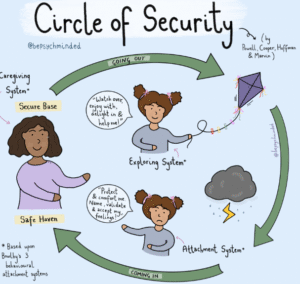
Children that feel emotionally secure through parents will develop feelings of security and trust. Healthy attachment makes children feel free to explore the surrounding environment and develop healthy relationships in the future. Children are likely to gain confidence and independence when they know that their parents will be there to support them emotionally.

2. Promotes Emotional Regulation

Availability parents provide emotional support to children in the management of their emotions. Parents should learn to manage the negative emotions of anger, sadness, or fear, as well as help children learn to cope with these feelings in a positive manner. This works to limit the chance of emotional tantrums and disciplinary issues.

3. Enhances Self-Esteem

Children will feel respected and accepted when their parents listen to them and appreciate their sentiments. This confirmation builds self-esteem and makes the children have a positive self-concept. When children grow up knowing that they are emotionally appreciated, they have a higher chance of building resiliency and confidence.

4. Strengthens Parent-Child Relationship

Emotional availability reinforces the connexion between children and parents as well as communication. Emotionally attached children would be more willing to communicate their issues and seek advice in case of tough times.

5. Supports Social and Psychological Well-being

Children who are nurtured emotionally grow and gain understanding in the field of socialisation and empathy. They get to know how to interpret the emotions of others and establish good friendships. The risk of anxiety, depression, and behavioural problems is also minimised through emotional availability.

Signs of Emotionally Available Parenting

  • Actively listening to the child without interruption
  • Validating the child’s emotions instead of dismissing them
  • Showing warmth through affection and supportive communication
  • Being patient and understanding during emotional distress
  • Providing consistent reassurance and guidance

Barriers to Emotional Availability

Despite its importance, many parents struggle to remain emotionally available due to various challenges such as:

  • Work stress and busy schedules
  • Unresolved personal emotional difficulties
  • Lack of awareness about emotional needs of children
  • Cultural beliefs that discourage emotional expression

Recognizing these barriers is the first step toward improving emotional connection with children.

Ways Parents Can Improve Emotional Availability

  1. Practice Active Listening
    Give full attention when children speak. Avoid distractions like mobile phones or television.

  2. Validate Feelings
    Instead of saying, “Don’t cry,” parents can say, “I understand you feel upset.”

  3. Spend Quality Time
    Engage in activities like playing, storytelling, or simply talking about daily experiences.

  4. Manage Personal Stress
    Parents who regulate their own emotions are better able to support their children emotionally.

  5. Encourage Emotional Expression
    Allow children to express both positive and negative emotions openly.

Long-Term Impact of Emotional Availability

Children brought up by parents who are emotionally available, in most cases, become emotionally stable adults, and are also confident. When parents are always able to respond to emotional needs of a child with affection, compassion and understanding, it serves to mould emotional and social growth of the child. The availability of emotions during early childhood pre-disposes a person with solid psychological framework that facilitates healthy functioning in later stages of life.

1. Stronger Interpersonal Relationships

Children who feel emotional warmth in their homes know how to trust others and establish safe relationships. They develop with the knowledge of empathy, respect, and good communication. They have higher chances of having healthy friendship and love relations as well as work relations with others as they are more than likely to be comfortable in expressing emotions to people or understanding their feelings.

2. Better Coping Skills

Available parents show the children the way to deal with stress, failure, and disappointment. Children who are taught to express their feelings rather than hold them back come to learn healthy coping strategies. With age, they are now equipped to deal with life problems like school-related stress, job related stress or family conflicts.

3. Improved Mental Health

Children who have a sense of emotional support have reduced chances of being exposed to chronic anxiety, low self-esteem, or depression. Parental emotional validation assists the children to believe in their own positive self-image and has the opportunity of feeling emotionally safe. This defence mechanism eases exposure to psychological challenges in old age.

4. Development of Emotional Regulation

Emotionally available parenting teaches the children to manage their feelings and their feelings as well. They get to know how to show anger, sadness, or frustration in a socially acceptable manner. The skill enhances the level of decision making, impulse control, and problem solving in adulthood.

5. Increased Resilience and Confidence

When children grow up with the feeling of emotional security, they are bolder in trying new experiences and challenging. They become resilient, thus they are able to overcome disappointments and adjust to the dynamic situations in life. Parental support empowers them to have confidence in themselves.

On the whole, emotional availability is not away in parenting and its impact is felt throughout the life of a person. It aids people in gaining emotional stability, psychological stability, and skills to form meaningful relations that would ultimately lead to long-term well-being and quality of life.

Conclusion

Healthy parenting is based on emotional availability. It assists children to build on emotional power, self-esteem, and stable relationships. Although it is imperative to satisfy the physical needs, the emotional world of a child should also be supported. Through presence, the parents can create a supportive atmosphere that encourages the general child growth and psychology.

FAQ: Emotional Availability in Healthy Parenting

1. What is emotional availability in parenting?


Emotional availability refers to a parent’s ability to be emotionally present, responsive, and sensitive to a child’s emotional needs, feelings, and experiences.

2. Why is emotional availability important for children?
It helps children develop emotional security, confidence, healthy relationships, and better mental health.

3. How does emotional availability affect attachment?
Emotionally available parents promote secure attachment, which helps children feel safe, valued, and supported.

4. Can emotional availability improve a child’s behavior?
Yes, children who feel emotionally understood are less likely to show aggressive or problematic behavior and more likely to express emotions appropriately.

5. What are signs of emotionally available parenting?
Listening attentively, validating emotions, showing affection, maintaining open communication, and providing consistent reassurance.

6. What happens if parents are emotionally unavailable?
Children may develop low self-esteem, emotional insecurity, difficulty forming relationships, and increased risk of anxiety or behavioral problems.

7. Can working parents still be emotionally available?
Yes, emotional availability depends on quality of interaction rather than quantity of time. Even short meaningful conversations and bonding moments help.

8. How does emotional availability help emotional regulation?
Parents who guide children through emotions teach them how to identify, express, and manage feelings in healthy ways.

9. Is emotional availability the same as being permissive?
No, emotionally available parents provide support and understanding while also maintaining appropriate boundaries and discipline.

10. At what age is emotional availability most important?
It is important throughout childhood, but early childhood is particularly crucial because emotional foundations develop during this period.

11. How can parents improve emotional availability?
By practicing active listening, spending quality time, managing personal stress, and encouraging children to express emotions openly.

12. Can emotional availability influence academic performance?
Yes, emotionally secure children often show better concentration, motivation, and learning ability.

13. Does emotional availability help social development?
Yes, children learn empathy, communication, and conflict resolution skills, which improve social relationships.

14. How does emotional availability impact long-term mental health?
It reduces risk of depression, anxiety, and emotional instability while promoting resilience and self-confidence.

15. Can emotional availability strengthen parent-child bonding?
Yes, consistent emotional support builds trust, closeness, and long-lasting healthy relationships between parents and children.

Written by Baishakhi Das

Counselor | Mental Health Practitioner
B.Sc, M.Sc, PG Diploma in Counseling


Reference

  1. Bowlby, J. (1988). A Secure Base: Parent-Child Attachment and Healthy Human Development.
    https://www.simplypsychology.org/bowlby.html

  2. American Psychological Association – Parenting and Child Development
    https://www.apa.org/topics/parenting

  3. UNICEF – Positive Parenting Guidelines
    https://www.unicef.org/parenting

  4. Harvard Center on the Developing Child – Serve and Return Interaction
    https://developingchild.harvard.edu/science/key-concepts/serve-and-return/

  5. Siegel, D. & Bryson, T. (2012). The Whole-Brain Child.
    https://drdansiegel.com/books/the-whole-brain-child/

  6. How Parenting Style Influences a Child’s Mental Health

This topic performs well due to rising searches around men’s mental health, workplace stress, and burnout recovery. Combining emotional insight with practical steps increases engagement and trust.

Screen Addiction in Children: Signs, Effects, and How to Reduce Screen Time Effectively

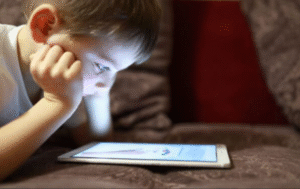
In today’s digital age, screens are everywhere—TVs, smartphones, tablets, computers, gaming devices, and even smart toys. While technology offers educational benefits and entertainment, excessive and unregulated screen use can lead to screen addiction, especially in children whose brains are still developing.

Screen addiction is not simply “too much screen time.” It occurs when a child becomes unable to control their use, when screens replace physical activity, social interaction, sleep, and emotional development.

Understanding the risks, recognizing the warning signs, and applying practical solutions can help parents create healthier digital habits and protect their child’s well-being.

What Is Screen Addiction?

Screen addiction refers to the compulsive, excessive, and uncontrolled use of digital devices, where a child feels an overwhelming urge to stay connected to screens despite negative consequences. It can significantly affect the child’s behavior, mood, learning ability, sleep quality, social skills, and overall emotional development.

Unlike adults, children are still learning how to regulate their emotions and impulses, making them particularly vulnerable to digital overuse.

Children are especially at risk because:

Their brain’s reward system is highly sensitive

A child’s developing brain responds strongly to rewards, excitement, and novelty. Fast-moving videos, colorful animations, and gaming achievements trigger dopamine—the “feel-good hormone.”
Over time, the child begins to seek screens repeatedly to experience this quick reward, creating a cycle of craving and dependency.

Digital platforms are intentionally designed to be addictive

Apps, games, and videos use psychological tactics such as:

  • Auto-play
  • Endless scrolling
  • Bright visuals
  • Rewards and badges
  • Sudden surprises
    These design features keep children hooked for long periods, making it difficult for them to stop even when they want to. 

Screens become emotional shortcuts for boredom, stress, or loneliness

Instead of learning how to cope with emotions, children may turn to screens as the easiest escape.
They start using devices to:

  • Avoid boredom
  • Reduce stress
  • Distract themselves from loneliness or frustration
    This prevents them from developing healthy self-soothing skills, problem-solving abilities, and emotional resilience.

Signs of Screen Addiction in Children

Screen addiction often shows up gradually, and many parents may mistake the early signs as “normal behavior.” However, when screen use starts to interfere with a child’s mood, sleep, social life, and daily functioning, it becomes a cause for concern.

Below are the key indicators, expanded for clarity:

Behavioral Signs

  • Irritability when the screen is removed
    The child becomes unusually angry, upset, or frustrated the moment a device is taken away.
  • Tantrums or aggression over screen limits
    Even reasonable boundaries—like turning off the TV or stopping a game—trigger intense emotional reactions or physical aggression.
  • Sneaking devices or lying about usage
    Children may hide tablets, use phones late at night, or lie about how long they’ve been online.
  • Loss of interest in outdoor play, hobbies, or social interaction
    Activities they once enjoyed—drawing, cycling, playing with friends—slowly get replaced by screen time.

These behaviors show that the child is prioritizing screens over real-life experiences.

Emotional Signs

  • Mood swings: The child may shift from excitement to irritability quickly, especially when screen access is restricted.
  • Anxiety or restlessness without screens: They may constantly ask for the device, seem uneasy during screen-free time, or be unable to relax without it.
  • Emotional dependence on gaming or videos: Screens become their primary source of comfort, entertainment, or stress relief—similar to an emotional coping mechanism.

This emotional reliance can delay the development of healthy coping skills.

Physical Signs

  • Poor sleep: Blue light overstimulates the brain, leading to difficulty falling asleep or waking up tired.
  • Eye strain: Dry eyes, burning sensation, or frequent blinking may occur due to prolonged screen exposure.
  • Headaches: Extended screen use can trigger headaches or migraines in children.
  • Reduced physical activity: Children become more sedentary, preferring screens over active play.
  • Poor posture or back/neck pain: Slouching and long hours of sitting contribute to muscle strain and posture issues.

These physical symptoms often appear before parents realize the screen time has become excessive.

Daily-Life Impact

  • Academic decline: Reduced focus and late-night screen use affect school performance and homework quality.
  • Difficulty concentrating: Fast-paced videos and games can reduce attention span, making sustained focus challenging.
  • Skipping meals or delaying bathroom breaks: Children may ignore basic needs to continue watching or playing.
  • Withdrawing from family time: They prefer devices over conversations, meals, or bonding activities.

These daily disruptions show that screen habits are interfering with the child’s overall functioning.

When to Be Concerned

If multiple symptoms from the categories above are consistently present, the child may be experiencing screen addiction or developing problematic digital habits.

Early intervention—through routines, boundaries, and emotional support—can prevent long-term impact.

Why Children Get Addicted to Screens

Screen addiction does not happen overnight. It develops slowly as children repeatedly turn to screens for entertainment, comfort, or emotional stimulation. Several psychological and environmental factors make children particularly vulnerable:

1. Dopamine Reward System

Games, reels, and cartoons provide instant dopamine hits, which make children feel excited and rewarded. Every time they swipe, win a game, or see something funny, their brain gets a quick burst of pleasure.
Over time, the brain begins to crave this constant stimulation, creating a cycle where the child wants “just one more video” or “one more level.”

2. Emotional Escape

Screens become a shortcut for dealing with emotions. Instead of expressing boredom, frustration, sadness, or loneliness, children escape into cartoons, gaming, or mobile videos.
This prevents them from learning important skills like:

  • Waiting patiently
  • Self-soothing
  • Problem-solving
  • Coping with negative emotions

3. Lack of Boundaries

When screens are freely available at any time, children naturally use them more.
No rules = no limits.
Without clear boundaries around timing, content, or usage, devices slowly become the dominant activity in a child’s day.

4. Parent’s Screen Habits

Children learn more from what parents do than what they say.
If they see adults constantly scrolling, watching videos, or working on devices, they assume it is normal behavior.
Children may use screens to seek attention or connection if they notice parents are more focused on phones than on interactions.

5. Highly Stimulating Content

Reels, cartoons, and games are designed to be fast-paced, colorful, and highly engaging.
The constant movement, surprises, and bright visuals overstimulate the brain, making slower offline activities—like reading, talking, or outdoor play—feel “boring” in comparison.

6. Social Pressure

Friends, gaming communities, school groups, and online trends all play a role.
Children may feel the need to:

  • Play games their friends play
  • Stay updated with trends
  • Engage in online challenges
  • Maintain gaming “streaks” or virtual rewards

This peer pressure increases their dependency on screens for social belonging.

Short-Term Effects of Excessive Screen Time

Excessive screen usage can affect children immediately. These short-term impacts often appear within days or weeks and may worsen over time if not addressed.

  • Sleep Disturbances: Blue light from screens suppresses melatonin, making it harder for children to fall asleep and stay asleep. Late-night screen use can lead to poor-quality rest and daytime fatigue.
  • Reduced Concentration: Fast-paced content overstimulates the brain, making it harder for children to focus on slower, real-world tasks such as reading, homework, or conversations.
  • Impulsivity and Restlessness: Constant stimulation from reels, cartoons, and games reduces patience and increases impulsive behavior.
  • Eye Strain: Extended exposure causes dryness, burning, blurred vision, and frequent rubbing of eyes.
  • Delayed Speech (in toddlers): Excessive screen exposure replaces caregiver interaction, limiting opportunities for children to learn words, tone, and language patterns.
  • Emotional Dysregulation: Children become overwhelmed easily and may struggle to manage frustration, disappointment, or boredom without screens.

Long-Term Effects

If screen addiction continues for months or years, it can significantly affect a child’s physical, emotional, and cognitive development.

  • Poor Academic Performance: Reduced focus, lack of sleep, and lower motivation affect school grades.
  • Aggression and Irritability: Digital overstimulation and high-intensity gaming can increase mood swings and aggressive responses.
  • Social Withdrawal: Children may prefer virtual interactions over real-life friendship, limiting social skill development.
  • Delayed Cognitive Development: Too much passive screen time slows down memory formation, problem-solving, and critical thinking.
  • Obesity and Low Physical Fitness: Sedentary screen habits reduce physical activity, increasing health risks.
  • Reduced Emotional Resilience: Easy access to screens prevents children from building frustration tolerance.
  • Problems with Empathy and Real-Life Social Skills: Limited face-to-face interaction hinders emotional understanding and communication skills.

Healthy Screen Time Guidelines (WHO & AAP)

Global health organizations provide age-appropriate recommendations to help parents create balance:

  • Under 2 Years: No screen time, except for occasional video calls with family.
  •  2–5 Years: Maximum 1 hour/day, with caregiver supervision and educational content.
  •  6–12 Years: 1–2 hours/day, balanced with outdoor play, schoolwork, and hobbies.
  • Teenagers: 2–3 hours/day, with digital boundaries and intentional usage.

Prevention Strategies for Parents

Creating healthy habits early can prevent screen addiction and promote balanced development.

1. Create Daily Screen-Time Limits

Set clear, consistent rules such as:

  • No screens during meals
  • Never Screens 1 hour before bedtime
  • Pre-decided viewing or gaming slots

2. Model Healthy Digital Behavior

Children learn most from what they see.

  • Avoid scrolling during family time
  • Put phones away during conversations
  • Practice screen-free evenings

3. Build a Balanced Routine

A well-rounded daily schedule keeps children engaged in meaningful activities:

  • Outdoor play
  • Storytime
  • Creative hobbies (drawing, music, crafts)
  • Family bonding sessions

4. Use Parental Controls

Enable tools that help manage usage:

  • Content filters
  • Screen-time trackers
  • Safe mode for YouTube & apps
  • Password requirement for downloads

5. Encourage Offline Interests

Introduce activities that spark creativity and movement:

  • Sports
  • Music or dance
  • Board games
  • Reading
  • Puzzles

6. Create Screen-Free Zones

Designate areas where devices are not allowed:

  • Bedrooms
  • Dining area
  • Short car rides
  • Study tables

7. Introduce “Boredom Tolerance”

Children should learn that boredom is normal. It develops imagination and problem-solving.

Solutions to Reduce Screen Addiction

If screen overuse is already a problem, these steps can help reverse it:

1. Gradual Reduction Method

Reduce time slowly—about 15 minutes less per week—to avoid major pushback.

2. Replace Screens with Engaging Alternatives

Offer fun, fulfilling options:

  • Outdoor sports
  • Arts & crafts
  • Board games
  • Storytelling sessions

3. Create Tech-Free Family Rituals

Build bonding routines that do not involve devices:

  • Evening family walks
  • Cooking together
  • Weekend nature trips

4. Emotional Coaching

Help children identify emotions instead of escaping into screens.
Ask:
“Are you bored, tired, frustrated, or upset?”
This helps build emotional intelligence and resilience.

5. Positive Reinforcement

Encourage healthy habits through appreciation:

  • “I love how you spent time outdoors today!”
  • “Great job finishing homework before screen time.” 

6. Involve Children in Rule-Making

Ask kids to help set limits:

  • “How much screen time do you think is healthy?”
    When children participate, they follow rules more willingly.

7. Seek Professional Support When Needed

If screen use is affecting:

  • Sleep
  • Mood
  • Relationships
  • School performance

A child psychologist can guide behavior change.

When to Seek Professional Help

Consult a mental health professional if your child shows:

  • Intense aggression when screens are removed
  • Complete withdrawal from offline activities
  • Academic decline
  • Signs of depression or anxiety
  • Behavior problems linked to screen usage

Early intervention helps prevent long-lasting developmental challenges.

Final Thoughts

Screen addiction is rising rapidly, but the good news is that with the right strategies and consistent guidance, healthy balance is absolutely achievable. Children don’t just need limits—they need connection, structure, emotional support, and meaningful offline experiences that enrich their growth. Simply removing screens isn’t enough; what matters is offering fulfilling alternatives that spark curiosity, creativity, and human connection.

By setting clear boundaries, modeling healthy digital habits, and creating a home environment where relationships matter more than devices, parents can help children learn to use technology wisely. These small, consistent efforts support the development of healthy digital habits, stronger emotional regulation, and the ability to build real-life relationships that nurture confidence and resilience.

With awareness and intentional parenting, screen use can become balanced—supporting learning and creativity without compromising emotional well-being.

Frequently Asked Questions (FAQs)

1. What is screen addiction in children?

It is excessive and uncontrolled use of digital devices that affects a child’s behavior, mood, and development.

2. What are signs of screen addiction?

Irritability, sleep problems, loss of interest in activities, and excessive device use.

3. How much screen time is safe for children?

It depends on age, but generally 1–2 hours per day is recommended for school-age children.

4. Why are children addicted to screens?

Because of dopamine rewards, fast-paced content, and lack of emotional coping skills.

5. Can screen addiction affect mental health?

Yes, it can lead to anxiety, irritability, poor sleep, and emotional imbalance.

6. How does screen time affect sleep?

Blue light reduces melatonin, making it harder to fall asleep.

7. Can screen addiction affect academic performance?

Yes, it reduces concentration, motivation, and focus.

8. How can parents reduce screen time?

By setting limits, creating routines, and encouraging offline activities.

9. What activities can replace screen time?

Outdoor play, reading, hobbies, sports, and family interaction.

10. When should parents seek help?

If screen use affects behavior, sleep, school, or relationships.

Written by Baishakhi Das

Counselor | Mental Health Practitioner
B.Sc, M.Sc, PG Diploma in Counseling

References

  1. World Health Organization
    👉 https://www.who.int/news/item/24-04-2019-to-grow-up-healthy-children-need-to-sit-less-and-play-more
  2. American Academy of Pediatrics
    👉 https://www.aap.org/en/patient-care/media-and-children/
  3. Harvard Center on the Developing Child
    👉 https://developingchild.harvard.edu
  4. About Us – Monoprova Counselling
    👉 https://monoprovacounselling.in/about-us/
  5. Contact / Book Appointment – Monoprova Counselling
    👉 https://monoprovacounselling.in/contact/

This article is written for knowledge purposes, aiming to help readers understand the topic better and gain useful insights for learning and awareness.

Attachment Styles in Children: Types, Signs, and How They Shape Emotional Development

Understanding How Early Bonds Shape Emotional Development

A child’s first relationship—usually with a parent or primary caregiver—plays a powerful role in shaping how they understand love, trust, safety, and emotional connection. From the moment a baby is born, they begin forming impressions about the world: Is it safe? Will someone respond when I cry? Do my needs matter?

This early emotional bond is known as attachment, and it is one of the most important foundations of a child’s development. Attachment is not just a feeling—it’s a biological and psychological process that influences how the brain grows, how emotions are regulated, and how relationships are formed throughout life.

When caregivers are responsive, comforting, and emotionally attuned, children learn that the world is a secure place. But when caregiving is inconsistent, distant, or frightening, children adapt in different ways—sometimes by becoming overly clingy, sometimes by shutting down their emotions, and sometimes by showing confused or disorganized responses.

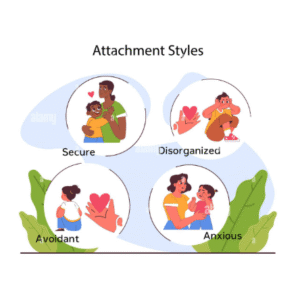
Because of these varied adaptations, psychologists generally categorize childhood attachment into four main styles:

1. Secure Attachment

2. Avoidant Attachment

3. Ambivalent (Resistant) Attachment

4. Disorganized Attachment

Each attachment style develops based on the child’s everyday experiences—how often they are comforted when distressed, how their emotions are responded to, and how predictable or unpredictable their caregivers are. These patterns shape the child’s sense of self, their ability to connect with others, and their emotional resilience well into adulthood.

In essence, attachment is the first lesson a child learns about relationships—

“Can I rely on others, and am I worthy of care?”

Understanding these attachment styles helps parents, teachers, and mental health professionals support healthier emotional development and repair insecure patterns early.

1. Secure Attachment: The Foundation of Emotional Well-being

Children with secure attachment grow up feeling safe, protected, valued, and emotionally understood. This style forms when a child consistently experiences warmth, comfort, and predictable care. As a result, they begin to trust that their emotional needs will be met, which becomes the cornerstone of healthy emotional development.

Why Secure Attachment Develops

Secure attachment is not about being a “perfect parent”—it’s about being consistently responsive and emotionally present. It develops when:

  • Caregivers respond consistently
    The child learns that their signals—crying, reaching out, seeking closeness—will be acknowledged rather than ignored.
  • Emotional needs are met
    When the child feels scared, overwhelmed, or uncomfortable, the caregiver responds with empathy and support.
  • Comfort is provided during distress
    The caregiver becomes a “safe base” where the child receives soothing, reassurance, and physical closeness when needed.
  • Caregiver is warm, predictable, and available
    Daily interactions such as smiling, talking, playing, and maintaining eye contact help the child feel emotionally connected and secure.

Through these repeated experiences, the child’s brain wires itself to expect safety, trust, and connection in relationships.

How a Securely Attached Child Behaves

Securely attached children show a healthy balance between independence and connection:

  • Explores the environment confidently
    They are curious and adventurous because they know they can return to their caregiver if they feel unsure.
  • Seeks comfort from caregiver when upset
    They don’t hesitate to ask for help, which shows trust in the caregiver.
  • Easily soothed
    After receiving comfort, they calm down quickly and return to play or exploration.
  • Shows a strong preference for the caregiver but is not clingy
    They enjoy closeness but also feel confident enough to separate and explore.
  • Builds healthy peer relationships
    Because they feel secure in themselves, they interact better with other children—sharing, taking turns, and forming friendships.

Long-Term Impact of Secure Attachment

Secure attachment supports long-lasting emotional, social, and cognitive development. Children who grow up with secure attachment often show:

  • Good self-esteem
    They feel worthy of love and believe their feelings matter.
  • Strong emotional regulation
    They can identify, express, and manage feelings more effectively.
  • Healthy relationships
    They form trusting bonds with peers, partners, teachers, and later in life, colleagues and romantic partners.
  • Better academic and social skills
    Their emotional stability helps them concentrate, participate in class, and communicate more effectively.

2. Avoidant Attachment: Independence with Hidden Anxiety

Avoidant attachment develops when a child repeatedly learns that expressing emotions is not safe, welcome, or effective. On the surface, these children may appear unusually independent or “low-maintenance,” but internally, they have learned to suppress their emotional needs to avoid rejection or disappointment.

Why Avoidant Attachment Develops

Avoidant attachment typically emerges when the caregiver is physically present but emotionally unavailable. This can happen when:

  • The caregiver is distant, dismissive, or emotionally unavailable
    They may care for the child’s physical needs but rarely respond to emotional cues such as crying, fear, or sadness.
  • The child’s feelings are minimized or dismissed
    Statements like “Stop crying”, “You’re fine”, or “Don’t make a fuss” teach the child that emotions are unacceptable or inconvenient.
  • Comfort is not consistently offered
    The child gradually learns that seeking closeness or reassurance does not lead to comfort, so they stop trying.

Over time, the child adapts by turning inward and relying on themselves—not because they don’t need connection, but because they assume it is unavailable.

How the Child Behaves

Children with avoidant attachment often display a surprising level of independence for their age:

  • Appears very independent
    They may prefer playing alone and managing situations without seeking help.
  • Avoids closeness or physical contact
    Hugs, cuddles, or affectionate gestures may make them uncomfortable.
  • Doesn’t seek comfort when distressed
    Even when hurt or scared, they suppress the instinct to reach out.
  • Shows little reaction when the caregiver leaves or returns
    This does not mean they don’t care—it means they learned to hide their distress.

These behaviors are coping mechanisms, not signs of emotional strength.

What’s Happening Internally

Even though they appear calm or detached, internally the child may be experiencing confusion, frustration, or anxiety.

The internal message becomes:

“My feelings won’t be understood or supported—
so it’s safer to handle things alone.”

Instead of learning emotional expression, they learn emotional avoidance.

Long-Term Impact

If avoidant attachment continues into later childhood or adulthood, it may shape emotional and relational patterns such as:

  • Difficulty expressing emotions
    They struggle to identify or share their feelings, often appearing emotionally “flat.”
  • Preference for emotional distance
    Close relationships can feel overwhelming or uncomfortable.
  • Discomfort with dependency or vulnerability
    They resist relying on others and may pull away when relationships feel too intimate.

Although these children may seem self-sufficient, they often carry unmet emotional needs beneath the surface.

3. Ambivalent (Resistant) Attachment: Clinginess & Uncertainty

Ambivalent attachment develops when a child experiences inconsistent caregiving—moments of warmth followed by moments of emotional unavailability. Because the child never knows whether their needs will be met, they become anxious, overly alert, and dependent on the caregiver for reassurance.

Why Ambivalent Attachment Develops

This attachment style forms when the caregiver’s attention and emotional availability are unpredictable. The child may receive love and comfort at times, but at other times, the caregiver may be distracted, overwhelmed, or unresponsive.

  • The caregiver is sometimes loving, sometimes unavailable
    The child cannot rely on consistent comfort or presence.
  • The child cannot predict when they will receive attention
    This unpredictability creates emotional confusion and insecurity.
  • Emotional needs are met inconsistently
    Sometimes the caregiver responds quickly; other times the child’s distress is ignored or misread.

Because of this inconsistency, the child becomes hyper-focused on the caregiver’s availability, trying harder and harder to get their attention.

How the Child Behaves

Children with ambivalent attachment often appear needy, clingy, or emotionally intense, but these behaviors are rooted in fear and confusion:

  • Very clingy or “hyper-attached”
    They stay close to the caregiver, fearing separation or rejection.
  • Becomes extremely distressed when the caregiver leaves
    Even short separations trigger strong emotional reactions.
  • Hard to soothe even when the caregiver returns
    They may cling but also resist comfort—crying, pushing away, or showing anger.
  • Appears anxious, insecure, or demanding
    They express big emotions and rely heavily on the caregiver for reassurance.

This pattern reflects their internal struggle to feel safe in a relationship that feels unpredictable.

What’s Happening Internally

Because they cannot rely on consistent caregiving, these children develop intense anxiety around separation and connection.

Their internal belief becomes:

“I don’t know when you’ll be there for me…
so I must cling tightly to make sure you don’t leave.”

This creates emotional hypervigilance—constantly checking for signs of love, attention, or abandonment.

Long-Term Impact

If ambivalent attachment continues without support or intervention, children may carry these emotional patterns into later life:

  • Heightened emotional sensitivity
    They feel emotions intensely and may struggle to self-soothe.
  • Fear of abandonment
    They may worry excessively about losing relationships or being left alone.
  • Difficulty with boundaries in relationships
    They may become overly dependent, controlling, or anxious in close relationships.

Although their behaviors may seem dramatic, these children are simply trying to feel secure in a relationship that feels uncertain.

4. Disorganized Attachment: Fear Without Solution

Disorganized attachment is considered the most complex and concerning attachment style because it develops when a child’s primary source of safety is also a source of fear. In this situation, the child’s attachment system becomes overwhelmed and confused, leading to chaotic or contradictory behaviors.

This style is often associated with significant stress, trauma, or disrupted caregiving patterns.

Why Disorganized Attachment Develops

Disorganized attachment forms when the caregiver—who should be a protector—becomes unpredictable, frightening, or emotionally unsafe. This leaves the child without a clear strategy for seeking comfort or security.

It often develops when:

  • The caregiver is frightening, unpredictable, or abusive
    The child may see threatening facial expressions, sudden anger, or aggression.
  • The child experiences trauma, neglect, or chronic stress
    Their nervous system becomes overwhelmed, making emotional regulation difficult.
  • The caregiver is both a source of comfort and fear
    The child becomes confused: they want closeness, but they also want to escape.
  • There is household chaos or violence
    Exposure to conflict, substance abuse, or instability disrupts the child’s sense of safety.

These mixed signals leave the child with no consistent way to seek help or feel protected.

How the Child Behaves

Children with disorganized attachment often display confusing, unpredictable, or contradictory behaviors. These behaviors reflect inner turmoil rather than intentional defiance.

Common behaviors include:

  • Confusing or contradictory actions
    Such as freezing, running away from the caregiver, rocking back and forth, or approaching and then suddenly withdrawing.
  • Fearful of the caregiver
    The child may show fear, flinching, or avoidance when the caregiver approaches.
  • Appears disoriented or overwhelmed
    They may stare blankly, seem “shut down,” or appear disconnected from their surroundings.
  • Sudden mood shifts
    Rapid changes from clinginess to withdrawal, or from calm to distressed, are common.

These behaviors are survival strategies in an environment that feels emotionally unsafe or unpredictable.

What’s Happening Internally

Inside, the child faces a painful and confusing paradox:

“The person who should protect me is the one I fear.”

The child’s attachment system becomes disorganized because they have no safe, predictable way to regulate emotions or seek comfort. Their brain shifts into survival mode—fight, flight, freeze, or dissociate.

Long-Term Impact

Without intervention or supportive caregiving, disorganized attachment may contribute to more serious emotional and behavioral challenges later in life:

  • Higher risk for emotional dysregulation
    Difficulty managing stress, fear, anger, and sadness.
  • Behavioral difficulties
    Aggression, oppositional behavior, withdrawal, or impulsivity.
  • Dissociation or trauma-related symptoms
    Spacing out, feeling disconnected from the body, nightmares, or trauma responses.
  • Difficulty forming stable relationships
    Trouble trusting others, controlling behaviors, fear of intimacy, or chaotic relationship patterns.

Despite these risks, healing is absolutely possible with consistent caregiving, therapy, and trauma-informed support.

How Parents & Caregivers Can Build Secure Attachment

No parent is perfect—and attachment has never been about perfection. It is about the everyday consistency, emotional presence, and genuine responsiveness that help a child feel seen and supported. Children don’t need flawless parenting; they need caregivers who try, who show up, and who repair when things go wrong.

What Helps Build Secure Attachment

Simple, repeated acts of care can strengthen a child’s sense of safety and trust:

  • Responding to emotional needs promptly: Helps the child feel that their feelings matter and will be taken seriously.
  • Offering comfort without judgment: Accepting emotions—rather than criticizing or dismissing them—teaches children emotional safety.
  • Creating predictable routines: Daily structure gives children a sense of stability and reduces anxiety.
  • Showing warmth through touch, voice, and presence: A gentle tone, a warm hug, or engaged eye contact reassures the child that they are loved.
  • Encouraging independence with support: Letting children explore freely while being available when needed builds confidence.
  • Repairing conflicts (apologizing, reconnecting): When misunderstandings or conflicts happen, reconnecting teaches the child that relationships can heal.

The Hopeful Truth: Attachment Can Change

Even if a child currently shows insecure attachment patterns, these are not permanent labels. With consistent, nurturing caregiving and, when needed, professional therapeutic support, children can develop more secure attachment over time. The brain is adaptable, relationships can be repaired, and emotional patterns can heal.

Every warm interaction, every moment of attunement, and every effort to understand a child’s feelings contributes to shaping a more secure, resilient future.

screenshot 2025 11 20 001009

Final Thoughts

Understanding attachment styles empowers parents, teachers, and mental health professionals to create safe, nurturing emotional environments for children. When caregivers recognize the patterns behind children’s behaviors—whether clinginess, withdrawal, fear, or confusion—they can respond with greater patience, empathy, and insight.

Early attachment experiences lay the foundation for how children learn to trust others, connect meaningfully, regulate their emotions, and build stable relationships throughout life. These first bonds shape not only emotional well-being, but also social development, self-esteem, and resilience.

The hopeful truth is that attachment is not fixed. With awareness, consistency, and psychological guidance, caregivers can strengthen or repair attachment patterns at any age. Through warmth, presence, and responsive caregiving, it is always possible to nurture healthier bonds and support a child’s journey toward emotional security and lifelong resilience.

Frequently Asked Questions (FAQs)

1. What are attachment styles in children?

Attachment styles are patterns of emotional bonding between a child and caregiver.

2. What are the four attachment styles?

Secure, avoidant, ambivalent (resistant), and disorganized attachment.

3. Which attachment style is the healthiest?

Secure attachment is considered the healthiest and most stable.

4. How does attachment affect emotional development?

It shapes how children regulate emotions, trust others, and build relationships.

5. Can attachment styles change over time?

Yes, with consistent caregiving and therapy, attachment patterns can improve.

6. What causes avoidant attachment?

Emotional unavailability or dismissive caregiving.

7. Why do some children become clingy?

Inconsistent caregiving can lead to ambivalent attachment.

8. What is disorganized attachment?

It occurs when the caregiver is both a source of comfort and fear.

9. How can parents build secure attachment?

By being responsive, emotionally available, and consistent.

10. Does attachment affect adult relationships?

Yes, early attachment patterns often influence adult emotional and relationship behaviors.

References

  1. American Psychological Association
    👉 https://www.apa.org/monitor/2019/05/ce-corner-attachment
  2. Harvard Center on the Developing Child
    👉 https://developingchild.harvard.edu/science/key-concepts/serve-and-return/
  3. National Child Traumatic Stress Network
    👉 https://www.nctsn.org
  4. About Us – Monoprova Counselling
    👉 https://monoprovacounselling.in/about-us/
  5. Contact / Book Appointment – Monoprova Counselling
    👉 https://monoprovacounselling.in/contact/

How to Handle Tantrums Without Yelling: Psychology-Based Techniques That Actually Work

Understanding the science behind big emotions and how to respond effectively

Tantrums are a normal and expected part of childhood. They happen when a child’s developing emotional system becomes overwhelmed by feelings they cannot yet understand or express. Whether it’s frustration, disappointment, sensory overload, or a sudden change in routine, young children often lack the language, impulse control, and emotional regulation skills needed to stay calm. As a result, their emotions spill out physically—through crying, screaming, throwing things, or refusing to cooperate.

While tantrums are common, the adult’s response plays a powerful role in shaping how the child learns to handle big emotions. A calm, supportive response can help the child regain control and feel secure, turning the moment into a learning opportunity. On the other hand, reacting with anger, threats, or punishment can intensify the child’s emotional distress, prolonging the meltdown and reinforcing fear or frustration.

This is where psychology-based techniques become invaluable. By understanding how the child’s brain works during a tantrum and responding with empathy, structure, and consistency, parents and caregivers can:

  • Reduce the frequency and intensity of tantrums
  • Teach children to self-regulate
  • Build emotional vocabulary
  • Strengthen the parent-child relationship
  • Create a calmer and more predictable environment

With the right strategies, every tantrum becomes not just a challenge—but a chance to help the child develop lifelong emotional coping skills and resilience.

Why Do Tantrums Happen? (The Psychology Behind Meltdowns)

Tantrums usually occur when a child’s “upstairs brain”—the part responsible for thinking, problem-solving, and self-control—is overwhelmed by the “downstairs brain,” which manages emotions, impulses, and survival reactions. Because children’s brains are still developing, especially the areas that regulate emotions, their emotional brain often takes charge much faster than their thinking brain can respond.

Common Triggers Behind Tantrums

Several everyday situations can overload a child’s emotional system, such as:

  • Frustration: When something doesn’t go as expected—like a toy not working or a game ending—they feel stuck and powerless.
  • Overstimulation: Too much noise, activity, or sensory input can overwhelm the nervous system, especially in sensitive children.
  • Sudden changes: Unexpected transitions (leaving the park, turning off the TV) can create emotional shock because children rely heavily on predictability.
  • Fatigue or hunger: A tired or hungry brain has less capacity to manage emotions, making meltdowns more likely.
  • Feeling unheard: When children believe their needs or feelings are being ignored, their emotions escalate quickly.
  • Lack of emotional vocabulary: Children who cannot express what they feel (angry, scared, disappointed, confused) often resort to crying, yelling, or physical behaviors.

What Happens in the Brain During a Tantrum

In the middle of a tantrum, the amygdala—the brain’s emotional alarm system—takes over. The child’s body releases stress hormones, their heart rate increases, and their ability to think logically shuts down. In this state, reasoning and discipline are ineffective, because the child is not capable of processing instructions.

This temporary loss of emotional control is not intentional misbehavior. It’s a sign that the child needs support to calm their nervous system before they can learn, listen, or problem-solve.

Psychology-Based Techniques to Handle Tantrums

1. Stay Calm and Regulated (Emotional Co-Regulation)

Children naturally absorb the emotional energy around them. When a parent becomes irritated, raises their voice, or looks frustrated, the child’s distress increases because they sense danger or rejection. Tantrums escalate when adults lose calm.

What to do:

  • Speak slowly and softly
  • Keep your shoulders relaxed
  • Take deep breaths
  • Maintain a neutral or gentle expression
  • Move slowly instead of rushing toward the child

Why it works:

Your calm presence co-regulates the child. Their emotional brain perceives safety, allowing the thinking brain to begin functioning again. When you stay regulated, the child learns to regulate too.

2. Validate the Emotion (Not the Behavior)

Emotional validation is one of the most powerful tools in calming a meltdown. When children feel understood, their brains stop fighting for connection.

Examples of validation:

  • “I can see you’re really upset.”
  • “It’s okay to feel angry. Everyone feels angry sometimes.”
  • “You’re sad because you wanted more playtime.”
  • “I understand this is hard for you.”

Why it works:

Validation reduces emotional intensity, prevents shame, and builds trust. It lets the child know their feelings are real and important—even if their behavior is not acceptable.

3. Use the “Connect Before Correct” Approach

Discipline or reasoning during a tantrum does not work because the child is in an emotional state, not a thinking state.

Connect first, then correct:

  • Connect: “That was frustrating, wasn’t it?”
  • Correct: “Next time, let’s try asking for help instead of shouting.”

Connect with empathy, then guide behavior once the child is calm.

Why it works:

Emotional connection activates the child’s social brain (prefrontal cortex). Once the child feels safe and understood, they are ready to learn and cooperate.

4. Offer Limited Choices (A Sense of Control)

Many tantrums arise from feeling powerless. Offering choices creates a sense of autonomy.

Examples:

  • “Do you want to wear the red t-shirt or the green one?”
  • “Should we clean up the toys together or one by one?”
  • “Do you want milk in the blue cup or yellow cup?”
  • “Shall we leave in 2 minutes or 5 minutes?”

Why it works:

Choices reduce defiance. When children feel in control of small decisions, they become more cooperative in bigger situations.

5. Use Distraction Strategically (For Younger Children)

Toddlers have short attention spans. Redirecting their focus can prevent escalation.

Examples:

  • “Let’s see what’s outside the window!”
  • “Can you help me find the red block?”
  • “Look at this funny picture!”
  • “Let’s play a quick game!”

Why it works:

Distraction interrupts the emotional buildup and gives the child something new to focus on. It works best for children under 4.

6. Teach Calm-Down Techniques (After the Tantrum)

During a tantrum, learning is impossible. But afterward, when the child is calm, you can teach emotional skills.

Helpful techniques:

  • Deep breathing: “Smell the flower, blow the candle.”
  • Counting slowly: 1 to 10 or backward.
  • Stress ball squeezing: releases physical tension.
  • Butterfly hug: crossing arms and tapping shoulders gently.
  • Calm corner: a safe, cozy space for relaxation.

Why it works:

These techniques train the nervous system to calm down and build emotional resilience for future challenges.

7. Maintain Predictable Routines

Children feel safer when their day is predictable. Many tantrums occur due to sudden transitions or surprises.

Helpful strategies:

  • Keep consistent meal, play, and sleep times
  • Use visual routine charts
  • Give reminders before transitions (“In 2 minutes, we will stop playing”)
  • Prepare them for changes in advance

Why it works:

Predictability lowers anxiety and helps children feel stable and in control, reducing emotional overwhelm.

8. Use Positive Reinforcement

Praise and encouragement strengthen healthy behavior far more effectively than punishment.

Examples of positive reinforcement:

  • “You calmed down so quickly, I’m proud of you!”
  • “Great job using your words instead of crying.”
  • “You asked for help—that was very responsible.”
  • “Thank you for listening right away!”

Why it works:

Positive reinforcement teaches children what to do instead of what not to do. It motivates them to use good coping skills.

9. Set Boundaries with Empathy

Some behaviors, such as hitting, kicking, and throwing, must have clear limits.

Firm but gentle boundary-setting:

  • “I won’t let you hit. That hurts.”
  • “Throwing is not safe. Let’s keep everyone safe.”
  • “You can be angry, but you cannot break things.”

Why it works:

Empathy + boundaries = emotional safety.
Children feel protected when adults are kind but firm.

10. Address Triggers and Build Emotional Vocabulary

Children have fewer tantrums when they know how to express feelings.

Use simple emotion words:

  • Angry
  • Sad
  • Scared
  • Frustrated
  • Excited
  • Confused

Activities to build emotional vocabulary:

  • Emotion flashcards
  • Storybooks that discuss feelings
  • Drawing faces showing different emotions
  • Role-play (e.g., “What does frustrated look like?”)
  • Feelings chart or thermometer

Why it works:

Naming emotions reduces their intensity and helps children communicate instead of acting out. When kids understand their feelings, they gain control over them.

When to Seek Professional Help

While tantrums are normal in early childhood, certain patterns may signal deeper emotional or developmental concerns that require the support of a child psychologist. Parents should consider professional help if tantrums are:

  • Extremely Frequent: If a child experiences tantrums multiple times a day or far more often than peers their age, it may indicate difficulties with emotional regulation, sensory processing, or anxiety.
  • Lasting Beyond Age 6–7: Most children outgrow intense tantrums by early school years. If meltdowns continue beyond this age, it can point to underlying issues such as ADHD, anxiety disorders, or developmental challenges.
  • Involving Aggression or Self-Harm: Tantrums that include hitting, kicking, biting, head-banging, scratching, or self-injury are red flags that require immediate evaluation. These behaviors suggest the child is overwhelmed beyond their coping abilities.
  • Interfering with School or Social Life: If tantrums disrupt classroom activities, prevent the child from forming friendships, or lead to isolation or behavioral complaints from teachers, psychological guidance can help address the root cause.
  • Difficult to Manage at Home: When parents feel exhausted, helpless, or unable to calm their child despite trying different strategies, a professional can provide personalized tools, behavior plans, and emotional support for the whole family.

Why Early Intervention Matters

Seeking help early does not mean something is “wrong” with the child—it means giving them the tools they need to thrive. Early intervention:

  • Builds emotional and behavioral skills
  • Reduces the long-term impact of stress and frustration
  • Helps children understand and express their feelings
  • Supports healthy brain development
  • Strengthens the parent-child relationship

With timely support, children learn to manage emotions effectively, reducing the likelihood of future behavioral or mental health challenges. Early help sets the foundation for lifelong emotional resilience.

Final Thoughts

Tantrums are not a sign of bad behavior—they are a sign of big emotions in a small body. Children express with intensity what they cannot yet express with words. When adults view tantrums through a lens of understanding rather than judgment, they create a safe emotional world where children feel seen, heard, and supported.

With empathy, consistency, and psychology-based strategies, parents can gradually teach children how to regulate their emotions, communicate their needs, and handle frustration in healthier ways. These early lessons shape a child’s long-term emotional intelligence and resilience.

Remember, during a tantrum, your calm presence is more powerful than any lecture. Your tone, your body language, and your willingness to stay connected send the message:
“You’re not alone. I’m here. We will get through this together.”

In the end, what truly helps a child grow into a confident, emotionally aware individual is not perfection from the parent—but patience, compassion, and the steady reassurance that their feelings matter.

Frequently Asked Questions (FAQs)

1. Why do children have tantrums?

Tantrums occur when children feel overwhelmed and cannot express or regulate their emotions.

2. Is it okay to ignore tantrums?

You should ignore the behavior but not the child—stay present and supportive.

3. What should I do during a tantrum?

Stay calm, validate feelings, and avoid arguing or punishing.

4. Why does yelling make tantrums worse?

Yelling increases fear and emotional distress, making it harder for the child to calm down.

5. How can I prevent tantrums?

By maintaining routines, giving choices, and preparing children for transitions.

6. What is co-regulation in parenting?

It is when a parent’s calm behavior helps a child regulate emotions.

7. At what age do tantrums stop?

Most children improve by age 4–6 with proper guidance.

8. What are signs of serious tantrum issues?

Frequent, aggressive, or long-lasting tantrums may need professional help.

9. Can tantrums be a sign of ADHD or anxiety?

Yes, persistent emotional dysregulation may be linked to underlying conditions.

10. When should I seek help for tantrums?

If tantrums affect daily life, school, or involve aggression or self-harm.

Written by Baishakhi Das

Counselor | Mental Health Practitioner
B.Sc, M.Sc, PG Diploma in Counseling

References

    1. Child Mind Institute
      👉 https://childmind.org
    2. American Academy of Pediatrics
      👉 https://www.aap.org
    3. Centers for Disease Control and Prevention
      👉 https://www.cdc.gov/ncbddd/childdevelopment
    4. About Us – Monoprova Counselling
      👉 https://monoprovacounselling.in/about-us/
    5. Contact / Book Appointment – Monoprova Counselling
      👉 https://monoprovacounselling.in/contact/

This article is written for knowledge purposes, aiming to help readers understand the topic better and gain useful insights for learning and awareness.
Emotional Dysregulation in Children: Signs, Causes, and How Parents Can Help

How to recognize when a child is struggling to manage their emotions

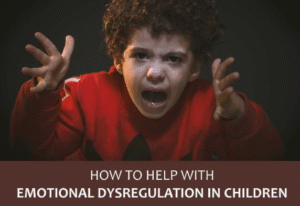
Children experience big emotions every single day—excitement when they see something new, anger when a rule feels unfair, fear in unfamiliar situations, frustration when things don’t go as expected, and joy when they feel loved or successful. These emotions are a natural part of their growth. However, when these emotions become too intense, too frequent, or difficult to manage, it may signal emotional dysregulation.

Emotional dysregulation does not mean a child is “bad” or “disobedient.” Instead, it simply means the child’s emotional system is still developing, and they are struggling to understand their feelings, express them appropriately, or calm themselves down when overwhelmed. Their brains—especially the areas responsible for emotional control—are still growing, so they often need gentle guidance, not punishment.

Recognizing early signs of emotional dysregulation is extremely important. When parents, teachers, and caregivers notice the patterns early, they can provide the right support at the right time. This early understanding helps prevent long-term challenges such as:

  • Behavioral difficulties
  • Academic struggles
  • Low self-esteem
  • Social withdrawal or conflict with peers
  • Anxiety or mood-related issues later in life

By noticing these signals early and responding with empathy, structure, and skill-building, adults can help children develop healthy emotional habits, stronger self-control, and better emotional resilience. Early support creates a foundation for lifelong mental well-being.

1. Frequent and Intense Tantrums

Tantrums are normal for younger children, especially toddlers. But when a child experiences intense, prolonged, or unusually frequent tantrums, it may be a sign of emotional dysregulation. These tantrums often:

  • Last longer than 10–15 minutes
  • Occur several times a day or more often than developmental norms
  • Happen in response to very small triggers like “the cup is the wrong color”
  • Include screaming, collapsing on the floor, or aggression

A key indicator is that the child finds it extremely difficult to regain control. Even when adults offer soothing, distraction, or comfort, the child struggles to settle down. This suggests their emotional system is overwhelmed.

2. Difficulty Identifying Emotions

Children struggling with emotional regulation often cannot accurately understand or name their feelings. They may:

  • Cry without knowing why
  • Feel angry, scared, or restless without a clear reason
  • Mix emotions (“I feel bad,” “My heart feels funny”)

This difficulty in emotional awareness—known as poor emotional literacy—makes it harder to cope. Without the ability to label emotions, children cannot communicate their needs, leading to frustration and outbursts.

3. Overreacting to Minor Issues

Children may respond strongly to very small problems that adults view as insignificant. Examples include:

  • Spilling a few drops of water
  • Not getting a preferred seat
  • A toy not working perfectly
  • Someone speaking too loudly
  • A slight change in their usual routine

These minor incidents trigger disproportionate emotional reactions like intense crying, shouting, or physical restlessness. Their nervous system treats small stressors as big threats—often due to sensory sensitivities, anxiety, or developmental delays.

4. Impulsive or Aggressive Behavior

When overwhelmed, some children express emotions through actions rather than words. This may include:

  • Hitting, biting, or kicking peers
  • Throwing objects during frustration
  • Running away suddenly when upset
  • Destroying toys
  • Using harsh or hurtful language

These behaviors are not signs of “bad behavior.” Instead, they are indicators that a child lacks the internal skills to communicate their emotions. Their “fight or flight” system becomes easily activated.

5. Difficulty Calming Down (Poor Self-Soothing Skills)

Once emotionally activated, a child with dysregulation may stay upset for a prolonged period, sometimes 30 minutes or more. They may:

  • Cry nonstop
  • Remain physically tense (tight fists, stiff posture)
  • Need constant reassurance
  • Become clingy or overwhelmed
  • Breathe rapidly or show panic-like signs

This happens because their brain—especially the prefrontal cortex responsible for emotional control—is still developing. They rely heavily on adults to help them regulate.

6. Sudden Mood Swings

These mood changes can occur within minutes or even seconds. For example:

  • A child laughing during play suddenly becomes angry if another child takes a toy
  • Small disappointment causes a shift from excited to distressed
  • A calm child suddenly withdraws without explanation

These emotional fluctuations often reflect difficulty processing internal and external stimuli, making it hard to maintain stable emotional states.

7. Physical Signs of Stress

Children often show emotional distress through their bodies rather than words. Common physical symptoms include:

  • Frequent stomachaches during school or stressful tasks
  • Headaches without medical causes
  • Sweaty palms or a racing heartbeat
  • Fidgeting, nail-biting, hair twirling
  • Shallow breathing or sighing frequently

These physical signs indicate their body is in a heightened emotional state, often because they cannot express or process emotions verbally.

8. Avoidance or Withdrawal

Some children shut down emotionally rather than express their distress outwardly. They may:

  • Avoid social interactions
  • Refuse school tasks they find overwhelming
  • Prefer solitary play
  • Become quiet, clingy, or distant
  • Avoid eye contact

This form of emotional dysregulation is often misunderstood as “shyness” or “disinterest,” but it frequently reflects overwhelm, anxiety, or fear of failure.

9. Perfectionism or Fear of Mistakes

For some children, emotional dysregulation appears as extreme self-pressure. They may:

  • Erase work repeatedly until it looks “perfect”
  • Cry over small academic errors
  • Avoid tasks they fear they cannot do perfectly
  • Become upset when things don’t go exactly their way
  • Have a meltdown if someone criticizes them

This behavior often stems from anxiety, fear of judgment, or hyper-sensitivity to failure. They feel emotionally unsafe when mistakes happen.

10. Trouble Following Routines and Rules

Children with emotional dysregulation often have difficulty adapting to structure. They may:

  • Resist morning and bedtime routines
  • React strongly to transitions (e.g., from playtime to homework)
  • Become argumentative or oppositional when asked to follow rules
  • Need repeated reminders
  • Show frustration when routines change unexpectedly

This is usually not intentional defiance. Instead, these children find it emotionally challenging to switch tasks or manage expectations.

Why Early Identification Matters

Emotional dysregulation is not just about “bad behavior” or “big feelings.” If left unaddressed, it can impact many important areas of a child’s life. Understanding its effects helps caregivers recognize why early support is essential.

1. Social Relationships

Children who struggle to manage emotions may find it difficult to interact smoothly with peers. They might:

  • Get into frequent conflicts
  • Misinterpret others’ intentions
  • Have trouble sharing or taking turns
  • Withdraw from social interactions due to overwhelm

Over time, this can lead to loneliness, rejection, or difficulty making friends, which further affects emotional growth.

2. Academic Performance

A child’s ability to learn is closely tied to their emotional state. Emotional dysregulation can cause:

  • Difficulty focusing in class
  • Avoidance of challenging tasks
  • Frequent disruptions or incomplete work
  • Trouble managing classroom expectations
  • Anxiety about performance

When emotions overpower concentration, learning naturally becomes harder.

3. Self-Confidence

Children who frequently feel “out of control” may begin to think something is wrong with them. This can lead to:

  • Low self-esteem
  • Negative self-talk
  • Feeling incompetent or “not good enough”
  • Hesitation to try new things

Over time, this impacts their motivation, independence, and belief in their abilities.

4. Behavior

Unmanaged emotions can show up as challenging behaviors such as:

  • Aggression
  • Defiance
  • Avoidance
  • Impulsivity
  • Meltdowns

These behaviors are often misunderstood, leading to punishment instead of support. Proper guidance helps the child learn healthier behavioral responses.

5. Overall Mental Health

Chronic emotional dysregulation can increase vulnerability to:

  • Anxiety disorders
  • Depression
  • Behavioral disorders
  • Sleep disturbances
  • Stress-related physical symptoms

Supporting children early reduces these long-term risks.

The Importance of Early Support

When children receive understanding, emotional coaching, and structured guidance early in life, they learn:

  • How to label and understand their emotions
  • To calm themselves during distress
  • How to communicate their needs
  • To solve problems without acting out

This builds emotional resilience, strengthens their relationships, and sets the foundation for lifelong well-being. Early support transforms emotional difficulties into opportunities for growth.

How Parents and Caregivers Can Help

Supporting a child with emotional dysregulation requires patience, understanding, and consistent guidance. Parents and caregivers play a powerful role in teaching children how to understand and manage their emotions. Here are effective, evidence-based strategies:

1. Model Calm Behavior

Children learn emotional responses by watching adults. When parents remain calm during stressful moments, children absorb that emotional stability.

  • Speak slowly and softly during conflicts
  • Take a pause before reacting
  • Show how you handle frustration (“Let me take a deep breath before I talk”)

Your calmness becomes their emotional anchor.

2. Use Emotion Vocabulary Regularly

Help children build emotional awareness by naming feelings in everyday situations.
Examples:

  • “You look disappointed because the game ended.”
  • “Are you feeling frustrated with the puzzle?”
  • “It’s okay to feel scared. Everyone feels that sometimes.”

The more emotions are named and normalized, the easier it becomes for children to express them.

3. Offer Predictable Routines

Routines help children feel safe and reduce emotional overwhelm. Predictability gives them a sense of control.
Create consistent routines for:

  • Morning activities
  • Mealtimes
  • Play and study time
  • Bedtime

Even small visual schedules can help children transition smoothly between activities.

4. Practice Deep Breathing or Grounding Techniques

Teach calming tools that children can use when overwhelmed.
Simple techniques include:

  • Balloon breathing: Inhale slowly, pretend to blow up a balloon
  • Sensory grounding: “Name 5 things you can see, 4 you can touch…”
  • Teddy bear breathing: Place a soft toy on their stomach and watch it rise and fall

Practicing these daily builds emotional resilience and self-soothing skills.

5. Validate Their Feelings

Validation helps children feel understood and safe. Instead of dismissing emotions (“Don’t cry,” “Stop being silly”), acknowledge them.
Use supportive phrases like:

  • “I see you’re upset, and that’s okay.”
  • “It’s normal to feel angry when things don’t go your way.”
  • “I’m here with you. Let’s figure this out together.”

Validation does not mean agreeing—it simply means acknowledging their emotional world.

6. Seek Support from a Child Psychologist if Symptoms Persist

If emotional challenges continue for months, interfere with daily functioning, or escalate, it may be time to seek professional help.
A child psychologist can:

  • Assess emotional and behavioral development
  • Teach emotional regulation skills
  • Support parents with effective strategies
  • Provide guidance for school and home environments

Early intervention often leads to faster emotional improvement and healthier long-term outcomes.

Final Thoughts

Emotional dysregulation is not a sign of misbehavior—it is a signal that a child needs guidance, understanding, and support. When children feel overwhelmed by their emotions, they rely on the adults around them to help them make sense of their inner world. With patience, empathy, and consistent strategies, parents and caregivers can teach children how to express their feelings safely, calm themselves during distress, and build resilience for the future.

Every small effort—naming emotions, maintaining routines, offering comfort, or seeking professional help—contributes to a child’s long-term emotional well-being. Supporting children today lays the foundation for confident, emotionally aware, and mentally strong adults tomorrow.

Frequently Asked Questions (FAQs)

1. What is emotional dysregulation in children?

It is when a child struggles to manage, express, or control their emotions effectively.

2. What causes emotional dysregulation in children?

It can be caused by developmental factors, stress, anxiety, or lack of emotional skills.

3. Are tantrums a sign of emotional dysregulation?

Frequent and intense tantrums can be a key indicator.

4. How can I help my child regulate emotions?

By modeling calm behavior, validating feelings, and teaching coping strategies.

5. Is emotional dysregulation normal in children?

Mild forms are normal, but persistent or severe symptoms may need support.

6. Can emotional dysregulation affect school performance?

Yes, it can impact focus, behavior, and learning ability.

7. What are physical signs of emotional dysregulation?

Stomachaches, headaches, restlessness, and sleep problems.

8. When should I seek professional help?

If symptoms persist for months or interfere with daily life.

9. Can therapy help children with emotional regulation?

Yes, therapy teaches emotional awareness and coping skills.

10. Is emotional dysregulation linked to anxiety or ADHD?

Yes, it is often associated with conditions like anxiety and ADHD.

Written by Baishakhi Das

Counselor | Mental Health Practitioner
B.Sc, M.Sc, PG Diploma in Counseling

References

  1. American Academy of Pediatrics
    👉 https://www.aap.org
  2. Child Mind Institute
    👉 https://childmind.org
  3. About Us – Monoprova Counselling
    👉 https://monoprovacounselling.in/about-us/
  4. Contact / Book Appointment – Monoprova Counselling
    👉 https://monoprovacounselling.in/contact/

This article is written for knowledge purposes, aiming to help readers understand the topic better and gain useful insights for learning and awareness.

Children’s Mental Health: Signs, Importance, and How Parents Can Support Emotional Wellbeing

Children don’t grow only physically—they grow emotionally, socially, and psychologically every single day, often in ways that adults don’t immediately notice. A child’s mind is constantly learning, absorbing, and interpreting the world around them. Long before they understand what “mental health” means, they are already forming beliefs about themselves, others, and life.

From the tone of our voice to the consistency of our routines, from how we handle stress to how we show affection—every interaction becomes a building block of their emotional world. This early environment shapes how a child learns to trust, express feelings, handle disappointments, and connect with others.

As parents and caregivers, the way we respond, communicate, and connect with children becomes the foundation of their emotional resilience. When they feel heard, supported, and valued, they develop confidence and inner strength. When they feel dismissed or misunderstood, confusion and insecurity can take root.

Understanding children’s mental health isn’t about identifying problems—it’s about creating the right environment where children feel safe to grow, explore, fail, try again, and become emotionally intelligent individuals.

Below is a clear, practical guide to understanding and nurturing children’s mental health—so that every child gets the chance to grow not just in height, but in heart, mind, and spirit.

Why Children’s Mental Health Matters

Children experience emotions intensely. Their feelings are often raw, unfiltered, and immediate. While they may not express emotions like adults or have the language to describe what’s happening inside them, they feel deeply — fear that seems overwhelming, frustration that turns into tears, shame that makes them withdraw, excitement that bursts out in laughter, curiosity that drives endless questions, and sadness that they may not know how to explain.

Their emotional world is powerful, and it shapes every aspect of their development.

When children receive the right emotional support, healthy mental development allows them to:
  • Build Strong Self-Esteem: They begin to see themselves as capable, valued, and worthy. Confidence grows when their feelings are acknowledged and their efforts are celebrated.
  • Form Secure and Trusting Relationships: Children learn to form healthy attachments with caregivers, friends, and teachers when they experience consistent love, safety, and understanding at home.
  • Manage Stress and Emotions: With guidance, children learn how to calm themselves, express feelings appropriately, and understand that emotions are temporary and manageable.
  • Develop Problem-Solving Skills: When children feel supported, they are more willing to take risks, make decisions, and learn from mistakes — essential steps for cognitive and emotional growth.
  • Navigate School, Friendships, and Daily Life” Children with strong emotional grounding adjust better to classroom environments, build healthier friendships, and develop resilience to handle everyday challenges.

On the other hand, when emotional needs go unnoticed or unsupported, the foundation of mental health weakens. This can increase the risk of:

  • Anxiety and Depression: Unprocessed emotions often show up later as persistent worry, sadness, or feelings of being overwhelmed.
  • Behavioral Issues: Tantrums, aggression, defiance, or withdrawal may appear when children don’t have healthy outlets for expressing their inner struggles.
  • Learning Difficulties: Emotional distress reduces concentration, memory, and cognitive processing, affecting academic performance.
  • Social Withdrawal: Children may isolate themselves, avoid interactions, or struggle with making and maintaining friendships.
  • Low Academic Achievement: Mental health and learning are deeply connected. When emotional well-being suffers, motivation and performance often decline.

Key Parenting Factors That Shape Mental Health

Attachment & Emotional Security

Attachment is the very first emotional bond a child forms — and it becomes the blueprint for every future relationship. A consistent, comforting, and predictable relationship with caregivers builds a child’s first sense of safety.

Secure attachment is formed when parents are:

  • Responsive: They notice the child’s needs and respond in a timely, caring way.
  • Warm: They offer affection, gentleness, and reassurance.
  • Emotionally available: They listen, validate, and stay present even during a child’s difficult emotions.

When children experience this kind of dependable love, they grow up:

  • More confident in themselves
  • Empathetic toward others
  • More emotionally stable and resilient
  • Better at forming healthy relationships 

A securely attached child carries an inner belief:
“I am safe. Am loved. I matter.”

Communication & Emotional Vocabulary

Young children feel emotions intensely but often lack the words to explain what they’re going through. This can lead to tantrums, withdrawal, or confusion. Adults play a crucial role in helping children understand and express their inner world.

By labeling feelings, we teach children emotional awareness:

  • I can see you are frustrated.
  • Are you feeling scared?
  • It’s okay to be sad. I’m here with you. 

When a child’s emotions are acknowledged without judgment, they learn to:

  • Recognize their own feelings
  • Express them appropriately
  • Understand that emotions are normal and temporary

This builds emotional intelligence (EQ) — which research shows is more predictive of long-term success than IQ. EQ helps children in friendships, academics, communication, leadership, and even future relationships.

Behavior Modeling

Children don’t learn by hearing — they learn by watching.
Parents’ actions become a silent, powerful lesson.

If parents:

  • Yell → children learn yelling is a coping mechanism
  • Avoid emotions → they learn to suppress feelings
  • Communicate calmly → they learn emotional regulation
  • Show empathy → they develop empathy
  • Apologize when wrong → they learn accountability and humility

Your behavior becomes their roadmap. Every day, in small ways, children absorb how you deal with stress, conflict, love, frustration, and disappointment.

Establishing Boundaries

Boundaries are not about control — they are about safety, structure, and emotional growth. A predictable environment helps children understand what is acceptable and what is not.

Healthy boundaries teach children:

  • Self-control → how to pause, think, and respond
  • Respect → how to value their own space and others’
  • Problem-solving → understanding consequences and making choices

Children actually thrive with boundaries because they provide a sense of stability.
A child with clear limits thinks:
“I know what to expect. Know what is safe. I know my responsibilities.”

Play & Exploration

Play is not entertainment for children — it is their language, their therapy, their brain’s way of growing.

Through play, children:

  • Process emotions they don’t yet know how to verbalize
  • Improve cognitive skills such as memory, attention, and reasoning
  • Build social skills like sharing, negotiation, and cooperation
  • Enhance creativity by imagining worlds and solving problems
  • Develop resilience as they try, fail, and try again

Unstructured playtime — free play without rules or screens — is essential for healthy brain development. It allows children to explore, imagine, and express themselves freely.

A child who plays freely today becomes an adult who can think flexibly tomorrow.

Warning Signs of Children’s Mental Health Concerns

Children may not always have the words to tell you something is wrong, but their behavior often speaks for them. As caregivers, it’s important to pay attention to emotional and behavioral changes that persist over time.

Seek professional support if you notice any of the following:

  • Persistent Sadness or Irritability: If a child seems unusually sad, low, angry, or easily annoyed for weeks, it may indicate deeper emotional distress rather than a “phase.”
  • Withdrawal from Friends or Activities: If they stop engaging in things they once enjoyed or avoid social interactions, it may signal anxiety, fear, or emotional overwhelm.
  • Changes in Eating or Sleeping Patterns: Sleeping too much or too little, nightmares, loss of appetite, or overeating can all be signs of stress, sadness, or anxiety.
  • Difficulty Concentrating: Struggling to focus, forgetting tasks, or zoning out may reflect emotional strain, ADHD symptoms, or learning difficulties.
  • Excessive Fear, Worry, or Tantrums: Frequent meltdowns, panic-like reactions, or intense worry about everyday situations are important indicators of emotional imbalance.
  • Decline in Academic Performance: A drop in grades or reluctance to attend school often has emotional roots — such as bullying, anxiety, or low self-esteem.
  • Aggression or Self-Harm Behaviors: Hitting, extreme anger, risky behaviors, or attempts to harm oneself are urgent warning signs requiring immediate professional help.

Why Early Intervention Matters

Children’s emotional patterns form early.
When challenges are identified and addressed at the right time:

  • Emotional struggles become easier to manage
  • Behavioral issues reduce
  • Learning difficulties can be supported
  • Children build confidence and resilience
  • Family relationships improve
  • Long-term mental health risks decrease

Early intervention can change the trajectory of a child’s life.
It gives them tools to understand their emotions, communicate better, and thrive emotionally, socially, and academically.

What Parents Can Do Every Day

Small, consistent actions at home create a big impact on a child’s emotional world. Here are simple but powerful parenting practices that build emotional strength, confidence, and resilience.

Validate Emotions

Children need to know their feelings are real, acceptable, and safe to express. Emotional validation builds trust and helps them develop healthy emotional expression.

Instead of saying “Don’t cry”, try:

  • “I know you’re upset. Let’s talk about it.”
  • “We are here. Tell me what happened.”
  • “It’s okay to feel sad/angry/frustrated.” 

Validation does not mean agreeing with the behavior — it means acknowledging the feeling behind it. When a child feels understood, the intensity of their emotion reduces naturally.

Maintain Routines

Children thrive on predictability. Routines give them a sense of stability and help reduce anxiety because they know what to expect next.

Daily routines such as:

  • Bedtime schedules
  • Meal times
  • Study/playtime
  • School preparation

…support emotional regulation and make children feel safe and grounded.

A predictable rhythm brings calm to a child’s mind.

Practice Positive Reinforcement

Praise isn’t just encouragement — it shapes behavior. But how we praise matters.

Focus on effort, not just results.

For example:

  • “You worked really hard on this!”
  • “I love how patiently you tried again.”

This builds:

  • Motivation
  • Confidence
  • Perseverance
  • A growth mindset

Children learn that effort is valuable and mistakes are part of learning.

Encourage Open Conversations

Create a home environment where feelings are welcomed, not judged. When mental health becomes a normal topic, children feel comfortable sharing their fears, questions, and experiences.

Try asking:

  • “How was your day? What made you happy today?”
  • “Did anything make you upset or confused?”
  • “Do you want to talk about something that’s on your mind?”

These small conversations build emotional connection and trust.

Limit Screen Time

Excessive screen use affects:

  • Sleep quality
  • Attention span
  • Mood
  • Behavior
  • Emotional control

Set healthy boundaries around device use and encourage:

  • Outdoor play
  • Creative activities
  • Family time
  • Reading
  • Hobbies

Screens should enhance learning, not replace real-life experiences.

Create a Safe Space

Children flourish when they know they won’t be judged or punished for mistakes.

A supportive environment teaches them:

  • It’s okay to make errors
  • Safe to ask questions
  • Learning takes time
  • Every problem has a solution

A growth mindset helps children build resilience — the ability to bounce back from challenges.

When home feels safe, a child’s mind feels free to grow.

Parent’s Mental Health Matters Too

A child’s emotional world is deeply connected to their parents’. Children are incredibly perceptive — they notice tone, energy, stress levels, and even the emotions parents try to hide. When parents feel overwhelmed, exhausted, anxious, or unsupported, children silently absorb that emotional atmosphere.

They may not understand why something feels heavy, but they feel the heaviness.
They may not know the source of stress, but they sense the tension.
A child’s emotional safety begins with the emotional stability of the adults around them.

That’s why taking care of your own mental wellbeing is not selfish — it is an act of love.

  • When a parent rests, heals, and seeks support, the child benefits.
  • A parent is emotionally regulated, the child learns regulation.
  • When a parent practices self-care, the child learns that caring for oneself is important.

Your mental health sets the tone for your child’s mental health.

A calm, supported parent creates a calm, supported child.
Nurturing yourself is not a luxury —
It is a gift to your child, to your home, and to your family’s emotional future.

Conclusion

Parenting is not about being perfect; it’s about being present. Children don’t need flawless parents — they need parents who show up, listen, and try their best. What shapes a child’s emotional world is not grand gestures, but the consistent, everyday moments of connection.

A secure, understanding, and emotionally nurturing environment becomes a lifelong asset for a child’s mental health. It teaches them that the world is safe, that they are loved, and that their feelings matter.

Even the smallest daily efforts make a profound difference:

  • A moment of listening
  • Warm hug
  • A gentle validation
  • Word of encouragement
  • A patient explanation
  • Calm response during a meltdown 

These tiny acts build strong, emotionally healthy individuals who grow up with confidence, resilience, and healthy relationships.

Children don’t remember perfect parents —
they remember how their parents made them feel.

And your presence, love, and effort are shaping a future filled with emotional strength and wellbeing.

Frequently Asked Questions (FAQs)

1. What is children’s mental health?

It refers to a child’s emotional, psychological, and social well-being.

2. Why is mental health important in children?

It helps in emotional regulation, learning, relationships, and overall development.

3. What are early signs of mental health problems in children?

Changes in behavior, mood swings, withdrawal, and difficulty concentrating.

4. How can parents support their child’s mental health?

By listening, validating emotions, maintaining routines, and providing a safe environment.

5. What role does attachment play in mental health?

Secure attachment builds confidence, trust, and emotional stability.

6. Can screen time affect children’s mental health?

Yes, excessive screen use can impact sleep, mood, and attention.

7. When should parents seek professional help?

If symptoms persist for weeks or affect daily functioning.

8. How does parenting style affect mental health?

Supportive and responsive parenting improves emotional development.

9. Can play improve mental health in children?

Yes, play helps emotional expression, creativity, and problem-solving.

10. Does parent mental health affect children?

Yes, children are deeply influenced by their parents’ emotional state.

Written by Baishakhi Das

Counselor | Mental Health Practitioner
B.Sc, M.Sc, PG Diploma in Counseling

References

  1. World Health Organization
    👉 https://www.who.int/health-topics/mental-health
  2. UNICEF
    👉 https://www.unicef.org/parenting
  3. American Psychological Association
    👉 https://www.apa.org/topics/child-development
  4. About Us – Monoprova Counselling
    👉 https://monoprovacounselling.in/about-us/
  5. Contact / Book Appointment – Monoprova Counselling
    👉 https://monoprovacounselling.in/contact/

This article is written for knowledge purposes, aiming to help readers understand the topic better and gain useful insights for learning and awareness.

Signs of Childhood Depression: 10 Warning Signs Parents Should Never Ignore

Depression is often thought of as an adult problem, but children can also experience deep emotional pain, sadness, and hopelessness. Unlike adults, children usually cannot express their feelings in words, so their depression appears through changes in behavior, school performance, mood, sleep, or physical health.

Because these signs are subtle, many parents mistake them for “normal childhood behavior,” moodiness, stubbornness, or attention-seeking. Understanding these hidden symptoms can help parents identify depression early and support their child before it becomes more severe.

What Is Childhood Depression?

Childhood depression is more than temporary sadness or a bad mood.
It is a persistent emotional state that affects a child’s:

  • Thoughts
  • Feelings
  • Behavior
  • Energy levels
  • Daily functioning

A child with depression may struggle in school, withdraw from friends, or lose interest in activities without being able to explain why. They often feel emotions they don’t understand—and cannot communicate the pain the way adults can.

Why Children Can’t Always Express Depression

Children may say:

  • “Nothing is fun anymore.”
  • “I feel weird.”
  • “My tummy hurts.”
  • “I don’t want to go to school.”

These are often emotional cries for help hidden behind simple words.

Examples of How Childhood Depression Appears in Real Life

1. Behavioral Changes: A usually cheerful child becomes irritable, quiet, or easily upset.

Example:
A child who used to enjoy playing outside now prefers sitting alone in their room, refusing to join family activities.

2. Changes in School Performance: A previously attentive student suddenly struggles with concentration or shows a drop in grades.

Example: Teachers report that the child “daydreams” or “stares at the floor,” even during interesting activities.

3. Loss of Interest in Activities: Children may lose excitement for their favorite toys, hobbies, or games.

Example: A child who loved drawing stops using their sketchbook and says, “I don’t feel like it anymore.”

4. Physical Symptoms Without Medical Cause: Depressed children often express emotional pain through physical complaints.

Example: A child frequently complains of headaches or stomachaches, especially before school or social situations, but medical tests show no physical illness.

5. Social Withdrawal: They may start avoiding friends or family, preferring to be alone.

Example: A child who once enjoyed playdates begins telling parents, “No, I don’t want to go,” or sits alone at school during lunch.

6. Emotional Sensitivity: Small issues may feel overwhelming.

Example: The child cries over a simple mistake—like spilling water—and apologizes repeatedly, saying, “I’m so stupid.”

In Short

Childhood depression affects how a child feels inside and how they behave outside.
They may not say “I’m depressed,” but their behaviors, emotions, and physical complaints speak loudly.

Understanding these hidden signs is the first step toward helping them heal.

Signs of Childhood Depression Parents Often Miss

Below are the common but easily overlooked symptoms parents may not recognize.

1. Irritability Instead of Sadness

Children rarely express depression by saying “I feel sad” or “I’m depressed.”
Instead, their emotional pain often appears through irritability, anger, or frustration, because they don’t yet have the emotional vocabulary to describe what they’re feeling inside.

How Irritability Shows Up in Depressed Children

  • Frequent anger outbursts
  • Snapping at parents or siblings
  • Crying easily over minor issues
  • Sudden mood swings
  • Becoming extremely sensitive to small disappointments

To adults, these may look like misbehavior, stubbornness, or “bad attitude,” but they are often symptoms of internal emotional struggle.

Example:

A child becomes extremely upset if:

  • Their daily routine changes
  • They lose a game
  • A parent says “No”
  • They make a small mistake in homework

The child may yell, cry, or withdraw suddenly.
Parents may assume the child is being disobedient or dramatic, not realizing that the emotional reaction is coming from deep sadness, frustration, and overwhelming feelings the child doesn’t understand.

This irritability is the child’s way of expressing stress, fatigue, and inner pain that they cannot put into words.

2. Withdrawal from Social Activities

Children with depression often lose interest in things they previously enjoyed. This withdrawal is not laziness or disobedience—it’s a sign that the child is struggling internally and no longer feels the motivation or energy to participate.

Common Signs of Social Withdrawal

  • Avoiding playtime or sports
  • Staying alone in their room for long periods
  • Not wanting to meet or talk to friends
  • Saying “I don’t feel like playing” or “I want to be alone”
  • Turning quiet during family gatherings
  • Showing less excitement about birthdays, outings, or hobbies

This withdrawal can be gradual or sudden, and many parents mistake it for “growing up,” “being shy,” or just “having a phase.” But when it persists, it may indicate depression.

Example:

A child who once loved football suddenly stops joining practice.
They may:

  • Sit quietly on the sidelines
  • Prefer staying indoors rather than going out
  • Avoid talking about the game altogether

Parents may think the child is bored or losing interest, but often the child simply doesn’t have the emotional energy to participate, even in activities they used to love.

This kind of withdrawal is the child’s way of silently signaling emotional overwhelm.

3. Sudden Drop In School Performance

Depression affects a child’s concentration, memory, motivation, and ability to stay organized.
Because children cannot explain this internal struggle, the academic changes are often misunderstood as laziness, carelessness, or lack of discipline.

Common Academic Signs

  • Incomplete homework or difficulty finishing tasks
  • Lower grades, even in subjects the child previously excelled in
  • Difficulty focusing during class lessons
  • Teachers complaining that the child is “daydreaming,” “not paying attention,” or “distracted”
  • Forgetting assignments, books, or instructions
  • Slower learning pace or avoiding school altogether

These changes don’t happen because the child isn’t trying—they happen because depression makes mental tasks feel overwhelming.

Why This Happens

Depression can cause:

  • Reduced motivation
  • Trouble concentrating
  • Poor memory recall
  • Exhaustion
  • Overthinking or zoning out

A simple task like writing one paragraph or solving a math problem may feel too heavy for the child.

Example:

A child who previously completed homework quickly now struggles to finish even simple assignments.
They may:

  • Start writing but get stuck halfway
  • Stare at the book without reading
  • Forget what the teacher explained earlier
  • Look lost during class

Parents or teachers might label the child as “not trying” or “becoming lazy,” but in reality, the child is battling internal sadness, low energy, and mental fatigue—all symptoms of depression.

4. Frequent Physical Complaints

Children with depression often express emotional pain through the body.

Common psychosomatic symptoms include:

  • Headaches
  • Stomachaches
  • Nausea
  • Body pain
  • Fatigue

These symptoms often have no medical cause, but keep returning.

5. Sleep Disturbances

Changes in sleep patterns are a major indicator.

  • Difficulty falling asleep
  • Waking up frequently
  • Early-morning waking
  • Sleeping too much

Parents may think it’s a “sleep habit,” but it often reflects emotional distress.

6. Changes in Eating Habits

Depression can affect appetite in different ways:

  • Eating too little
  • Craving junk food
  • Sudden weight changes
  • Disinterest in meals

A child may say “I’m not hungry” even when they haven’t eaten.

7. Low Self-Esteem and Negative Self-Talk

Depressed children often have harsh inner thoughts.

  • “I’m not good at anything.”
  • “Nobody likes me.”
  • “Always make mistakes.”
  • “I’m a bad child.”

These statements reveal deep emotional pain.

8. Excessive Guilt or Sensitivity

Children may blame themselves for small things.

Examples:

  • Feeling guilty if a parent is upset
  • Apologizing repeatedly
  • Overreacting to criticism

They may also feel responsible for things out of their control.

9. Difficulty Managing Emotions

You may notice:

  • Crying easily
  • Meltdowns
  • Overreacting to minor problems
  • Feeling overwhelmed quickly

This happens because depression lowers emotional resilience.

10. Thoughts of Running Away or Talking About Death

This is a serious warning sign, even if said casually.

Statements like:

  • “I wish I could disappear.”
  • “It’s better if I wasn’t here.”
  • “I want to run away.”

should never be ignored.

Why Parents Often Miss These Signs

  • Many symptoms look like normal childhood behavior.
  • Children can hide emotions to avoid worrying parents.
  • Parents might think the child is just “moody,” “lazy,” or “misbehaving.”
  • Adults often underestimate how deeply children can feel pain or loneliness.

Recognizing early signs helps prevent the depression from worsening in adolescence.

screenshot 2025 11 25 004038

What Causes Childhood Depression?

Common contributing factors include:

  • Family conflict or inconsistent parenting
  • Bullying or peer rejection
  • Academic pressure
  • Trauma, abuse, or neglect
  • Parental mental health issues
  • Major life changes (divorce, moving homes, loss)
  • Chronic illness
  • Social isolation

Sometimes, depression has no single cause—it can develop from a combination of emotional, biological, and environmental factors.

When to Seek Professional Help

You should consider counselling or psychological support if your child:

  • Shows symptoms for more than two weeks
  • Avoids school or activities consistently
  • Has frequent mood swings or outbursts
  • Talks about self-harm, death, or running away
  • Withdraws from family and friends
  • Struggles to function normally

Early intervention leads to better emotional development and improved long-term wellbeing.

👉 If you need guidance or wish to book a counselling session for your child, reach out here:
Contact Us – Mono Prova Counselling

How Parents Can Support a Depressed Child

  • Listen without judging
  • Validate their feelings (“I understand this is hard for you.”)
  • Keep routines stable
  • Encourage open communication
  • Reduce pressure and criticism
  • Spend 1-on-1 bonding time daily
  • Monitor sleep, diet, and screen time
  • Seek help from a psychologist or counsellor

A child doesn’t need to “toughen up”—they need understanding and emotional safety.

Final Thoughts

Childhood depression is real, common, and treatable.
The earlier parents recognize the signs, the better the healing process.
With empathy, careful observation, and professional support, children can recover, build resilience, and grow into emotionally healthy adults.

Frequently Asked Questions (FAQs)

1. What is childhood depression?

Childhood depression is a mental health condition that affects a child’s mood, behavior, and daily functioning.

2. What are the early signs of depression in children?

Irritability, withdrawal, low energy, and changes in sleep or eating habits.

3. Why do children show irritability instead of sadness?

Children often lack emotional vocabulary, so they express distress through anger or frustration.

4. Can depression affect school performance?

Yes, it can reduce concentration, memory, and motivation.

5. What are physical signs of depression in children?

Headaches, stomachaches, fatigue, and sleep disturbances.

6. What causes childhood depression?

Factors include family conflict, bullying, trauma, academic stress, and biological factors.

7. When should parents seek help?

If symptoms last more than two weeks or affect daily functioning.

8. Can childhood depression be treated?

Yes, with therapy, support, and sometimes medication.

9. How can parents support a depressed child?

By listening, validating emotions, maintaining routines, and seeking professional help.

10. Is childhood depression common?

Yes, it is more common than many people realize.

Written by Baishakhi Das

Counselor | Mental Health Practitioner
B.Sc, M.Sc, PG Diploma in Counseling

Refence

This article is written for knowledge purposes, aiming to help readers understand the topic better and gain useful insights for learning and awareness.


Positive Discipline: How to Set Boundaries Without Punishment (Complete Guide)

Parenting in the modern world comes with new challenges, new pressures, and new information. Yet one truth has remained constant across decades of child development research:

Children thrive in environments that balance warmth, emotional connection, and firm boundaries.

This balance is what Positive Discipline aims to teach.

Positive Discipline is not permissive parenting.
It is not harsh or authoritarian.
It is not based on fear, punishment, threats, or shame.

Instead, it is a respectful, evidence-based approach rooted in:

  • Developmental psychology
  • Attachment theory
  • Neuroscience
  • Social-emotional learning
  • Adlerian principles 

This article blends academic depth with a warm, parent-friendly tone, offering both the science behind Positive Discipline and practical tools you can use every day.

The Foundations of Positive Discipline

1.1 What Positive Discipline Really Means

Positive Discipline is built on five essential pillars:

  1. Connection before correction

Children are more likely to cooperate when they feel safe, loved, and understood.

  1. Kindness and firmness at the same time

Kind = empathy, respect, encouragement
Firm = clear expectations, predictable limits

  1. Teaching rather than punishing

Instead of “How do I stop this behavior right now?”
Positive Discipline asks:
“What skill does my child need to learn?”

  1. Long-term guidance, not short-term obedience

Fear-based discipline creates instant obedience,
but not emotional intelligence or resilience.

  1. Mutual respect

Respect is not demanded — it is modeled.

1.2 Why Punishment Fails (According to Science)

Punishment may stop behavior temporarily, but research shows it has negative long-term effects.

1. Punishment activates stress responses

Yelling, threats, and physical punishment activate the amygdala, making learning impossible.

2. Punishment teaches fear — not self-control

Children avoid YOU, not the behavior.

3. Punishment harms the parent–child relationship

Children become more secretive, anxious, or rebellious.

4. Punishment increases aggression

Research shows children who experience harsh discipline are more likely to hit, lie, or manipulate.

5. Punishment does not teach skills

It stops behavior without showing what to do instead.

Positive Discipline offers a healthier approach:
Teach. Guide. Model. Connect.

1.3 Why Children Misbehave (The Developmental Psychology Behind Behavior)

Misbehavior is not a character flaw.
It is communication.

  1. The brain is still developing

Impulse control, emotional regulation, and reasoning mature well into adolescence.

  1. Unmet needs

Hunger, fatigue, sensory overload, attention needs, or emotional distress.

  1. Lack of skills

Children act out because they don’t yet know healthy alternatives.

  1. Desire for autonomy

Limit testing is normal, healthy, and necessary.

  1. Emotional overflow

Children feel intensely but cannot express themselves effectively.

Understanding why a child behaves a certain way is essential before addressing how to change the behavior.

The Art of Setting Boundaries Without Punishment

Boundaries are love.
These are safety.
Boundaries are respect.

They teach children:

  • Responsibility
  • Cooperation
  • Respect
  • Emotional control
  • Safety
  • Independence 

But boundaries must be set with compassion and clarity.

In Positive Discipline, boundaries are:

  • Clear
  • Consistent
  • Calm
  • Predictable
  • Respectful

Not:

  • Threats
  • Yelling
  • Punishment
  • Shame
  • Manipulation

2.1 The 5-Step Positive Discipline Boundary Method

This is the heart of setting effective boundaries without punishment.

STEP 1: Connect First

Connection opens the brain to listening and cooperation.

Examples:

  • “Come sit with me.”
  • “I’m here.”
  • “can see this is hard.”
  • “Let’s take a breath together.” 

Connection reduces emotional resistance.

STEP 2: Validate the Emotion

Validation reduces emotional intensity and prevents power struggles.

Examples:

  • “You’re angry because he took your toy.”
  • “Disappointed we have to leave.”
  • “It’s hard to stop when you’re having fun.” 

Validation ≠ agreeing.
Validation = understanding.

STEP 3: Set the Boundary Calmly & Clearly

Boundaries must be simple and neutral.

Examples:

  • “Hitting is not okay.”
  • “It’s time to turn off the screen.”
  • “Food stays on the table.”
  • “We use gentle hands.” 

Parents often talk too much during boundaries.
One sentence is enough.

STEP 4: Offer a Positive Alternative

Children need to know what they can do.

Examples:

  • “You can hit the pillow, not people.”
  • “Can jump on the floor mat instead of the couch.”
  • “You can say ‘I need space.’”
  • “Can choose two more minutes of play or clean-up music.” 

Alternatives teach regulation.

STEP 5: Follow Through Consistently

  • Consistency = trust
  • Consistency = cooperation
  • Consistency = emotional safety

Follow-through does NOT mean punishment.
It means holding the limit with calm confidence.

Examples:

  • Turn off the screen.
  • End the activity if hitting continues.
  • Remove unsafe items.
  • Pause play until calm returns. 

Real-Life Boundary Examples (All Ages)

Below are practical, detailed examples for each developmental stage.

3.1 Toddlers (1–3 years): Boundaries for Big Feelings

Scenario: Toddler hits during play

  1. Connection: “You’re having big feelings.”
  2. Validation: “Are angry.”
  3. Boundary: “I won’t let you hit.”
  4. Alternative: “Hands can squeeze my hands or hit a pillow.”
  5. Follow-through: Move child away if needed, calmly. 

Why it works:

Toddlers need physical guidance, modeling, and repetition.

Scenario: Refusing to wear clothes

Parent:
“I know you don’t want clothes right now. But your body needs to stay warm.
Red shirt or blue shirt?”

Choices restore toddler autonomy.

3.2 Preschoolers (3–5 years): Boundaries for Independence

Scenario: Refusing to clean up

  1. “Cleaning up is hard after fun.”
  2. “But toys must be cleaned before TV.”
  3. “Should we start with blocks or dolls?”
  4. “Let’s do it together for 2 minutes.” 

Preschoolers need structured choices.

Scenario: Whining

“You’re upset, but whining hurts my ears.
Let’s try again with a calm voice.”

This teaches emotional communication.

3.3 School-Age Children (6–12 years): Boundaries for Responsibility

Scenario: Homework refusal

  1. “Homework feels boring today.”
  2. “Homework happens before screens.”
  3. “Break first or start now?”
  4. “I’ll help with the first two problems.” 

The boundary is the routine, not punishment.

Scenario: Sibling arguments

“Both of you want to be heard.
One talks, one listens.
Then switch.”

Teach conflict resolution, not blame.

3.4 Teens (13–18 years): Boundaries with Respect, Not Control

Scenario: Curfew negotiation

  1. “I know you want more freedom.”
  2. “Curfew is 9 PM for now, for safety.”
  3. “We can revisit it next month based on responsibility.”
  4. “Text me if plans change.” 

Teens respond to respect + negotiation, not control.

Natural and Logical Consequences (Non-Punitive Discipline)

Consequences are helpful when they are:

  • Related
  • Respectful
  • Reasonable
  • Revealed in advance

Not:

  • Revenge
  • Shame
  • Harsh punishment
  • Fear-based

4.1 Natural Consequences

These happen naturally without parental intervention.

Examples:

  • Child forgets lunch → feels hungry briefly
  • Child doesn’t wear jacket → feels cold
  • Child doesn’t do homework → teacher consequences

Natural consequences teach responsibility efficiently.

4.2 Logical Consequences

Parent creates a consequence linked to the behavior.

Logical:
If a child throws food → mealtime ends.

Logical:
If a child misuses a toy → the toy is put away.

Logical consequences are not punishments.
They are teaching tools.

15 Everyday Situations: How to Discipline Without Punishment

Here are 15 common real-life situations and how to respond positively.

5.1 When your child screams

Parent:
“I hear you’re upset.
Use your calm voice and I’ll listen.”

5.2 Hitting siblings

“I won’t let you hit.
Say ‘I don’t like that.’
Let’s practice.”

5.3 Lying

“You were scared to tell the truth.
Thank you for telling me now.
Let’s solve the problem together.”

5.4 Stealing

“You wanted it very much.
Next time, ask or save for it.
Let’s return it together.”

5.5 Talking back

“You can be angry.
But speak respectfully.
Try again.”

5.6 Refusing to listen

“I need your eyes before I speak.
Thank you.
Now we can talk.”

5.7 Throwing toys

“Throwing hurts things.
You can throw the soft balls only.”

5.8 Tantrums

“Your feelings feel big.
I’m here.
Let it out.”

5.9 Screen addiction

“Screen time ends at 7.
You can choose a book or a puzzle now.”

5.10 Not sharing

“You don’t have to share immediately.
But you can take turns.”

5.11 Backtalk during frustration

“I hear your anger.
Let’s take a breath and try again.”

5.12 Making a mess

“Oops! Messes happen.
Let’s clean together.”

5.13 Homework meltdown

“Let’s break this into small steps.
Which part should we start with?”

5.14 Sibling rivalry

“Both feelings matter.
Let’s listen one at a time.”

5.15 Unsafe behavior in public

“I won’t let you run.
Hold my hand or stay by the cart.”


Parent Emotional Regulation (The Most Important Skill)

Children borrow our regulation.

If we stay calm, they learn calm.
If we explode, they learn to explode.

Here are tools every parent needs:

6.1 Pause before reacting

A deep breath regulates your nervous system.

6.2 Walk away if needed

Say: “I need a moment. I’ll be right back.”

6.3 Use a calm tone on purpose

Lower volume = higher cooperation.

6.4 Rephrase your thoughts

Not: “He’s doing this to annoy me.”
But: “He’s struggling and needs help.”

6.5 Repair after mistakes

“I’m sorry I yelled. I love you. I’m working on staying calm.”

Repair builds trust.

Building a Positive Discipline Home Environment

7.1 Create predictable routines

Routines reduce misbehavior significantly.

7.2 Use visual charts

Great for ages 2–10.

7.3 Use connection rituals

5-minute morning cuddles
Bedtime conversations
“Special time”

7.4 Reduce overstimulation

A calm home environment supports regulation.

7.5 Encourage independence

Give small responsibilities daily.

Long-Term Benefits of Positive Discipline

Research shows children raised with this approach:

  • Have stronger emotional intelligence
  • Are more responsible
  • Perform better academically
  • Have better relationships
  • Learn real self-discipline
  • Show lower aggression
  • Have higher self-esteem
  • Become respectful adults

Punishment shapes behavior through fear.
Positive Discipline shapes behavior through security, understanding, and skill-building.

screenshot 2025 11 24 000209

Final Thoughts

Positive Discipline is not about perfection.
It is about being:

  • Present
  • Patient 
  • Consistent 
  • Respectful
  • Emotionally aware 

Setting boundaries without punishment teaches children:

  • How to regulate emotions
  • Handle frustration 
  • How to communicate 
  • To respect others 
  • How to make good decisions 

When children feel safe, respected, and understood, they naturally become:

  • cooperative
  • confident
  • resilient
  • responsible
  • emotionally intelligent

Positive Discipline doesn’t just change behavior —
it transforms the entire parent–child relationship.

Frequently Asked Questions (FAQs)

1. What is positive discipline?

Positive discipline is a parenting approach that teaches behavior through connection, respect, and guidance instead of punishment.

2. Does positive discipline mean no rules?

No, it includes clear boundaries with kindness and consistency.

3. Why is punishment harmful for children?

Punishment can create fear, reduce trust, and does not teach proper behavior.

4. How do you discipline a child without punishment?

By setting boundaries, teaching skills, and using logical consequences.

5. What are logical consequences in parenting?

They are consequences directly related to the child’s behavior, used to teach responsibility.

6. How can parents stay calm during conflict?

By pausing, breathing, and responding instead of reacting.

7. What is the difference between punishment and discipline?

Punishment focuses on control, while discipline focuses on teaching.

8. At what age can positive discipline be used?

It can be used from infancy through teenage years.

9. Can positive discipline improve behavior?

Yes, it builds emotional intelligence and long-term self-control.

10. What are the benefits of positive discipline?

Better relationships, emotional regulation, and responsible behavior.

Written by Baishakhi Das

Counselor | Mental Health Practitioner
B.Sc, M.Sc, PG Diploma in Counseling

Reference 

This article is written for knowledge purposes, aiming to help readers understand the topic better and gain useful insights for learning and awareness.

Raising Emotionally Intelligent Kids: Daily Habits Parents Can Practice

Emotional intelligence (EQ) is one of the strongest predictors of a child’s long-term success—often even more than IQ, grades, or academic achievements. While academic knowledge helps children excel in school, emotional intelligence determines how they navigate the world. Children with higher EQ grow into adults who form healthier relationships, communicate more effectively, manage stress with confidence, solve conflicts peacefully, and make thoughtful, balanced decisions. They are better equipped to handle challenges, adapt to change, and build meaningful connections—qualities essential for personal and professional success.

Developing emotional intelligence does not happen naturally or automatically. Just like language, motor skills, or academic abilities, EQ must be nurtured through practice, modeling, and environment. This is where parenting plays a transformative role. Children observe how adults respond to stress, express feelings, handle disagreements, and manage frustration. They absorb these behaviors and gradually internalize them as their own. In many ways, parents are their child’s first and most influential emotional teachers.

The encouraging news is that raising an emotionally intelligent child doesn’t require complex techniques or specialized training. Small, consistent habits practiced at home—simple interactions that take only minutes each day—can significantly shape a child’s emotional development. Everyday moments like conversations during meals, bedtime check-ins, reactions to tantrums, and responses to mistakes all serve as powerful teaching opportunities.

Why Emotional Intelligence Matters

Emotional intelligence is more than just a soft skill—it’s a core developmental capacity that shapes nearly every aspect of a child’s life, from early childhood into adulthood. While IQ and academics help children perform well in school, EQ determines how they understand themselves, relate to others, and respond to the world around them.

Emotional intelligence includes five foundational abilities:

  1. Self-awareness — identifying and understanding feelings

Children who can recognize their emotions (“I’m angry,” “I feel nervous,” “I’m disappointed”) are better able to express themselves clearly. This awareness reduces frustration and helps them ask for what they need instead of acting out.

  1. Self-regulation — managing impulses and calming the mind

A child who can pause, breathe, wait their turn, or handle “no” without melting down is practicing emotional self-control. These skills don’t appear automatically—they are learned through co-regulation with adults.

3. Empathy — understanding and caring about others’ feelings

Empathy allows children to consider another person’s perspective. Empathetic kids tend to show kindness, cooperation, and compassion—qualities that strengthen bonding and reduce conflict.

4. Social skills — communication, cooperation, and problem-solving in relationships

Emotionally intelligent children can share, negotiate, apologize, take turns, and work in teams. These abilities help them thrive in school, family life, and later in workplaces.

5. Problem-solving — navigating challenges and finding solutions

Children with strong EQ don’t just react—they think. They learn to evaluate situations, consider consequences, and choose healthier responses.

What Research Shows: The Powerful Impact of EQ

Studies from Harvard University, Yale Center for Emotional Intelligence, and decades of developmental research highlight the long-term impact of emotional intelligence:

Improves academic performance

Emotionally intelligent children focus better, manage test anxiety, communicate with teachers, and handle academic pressure more effectively. Research shows that EQ boosts grades and academic engagement.

Reduces anxiety and behavior problems

Children who can name and regulate their emotions experience fewer emotional outbursts, tantrums, and behavioral challenges. They cope better with stress and transitions.

Enhances resilience

EQ helps children bounce back from difficulties—whether it’s losing a game, facing failure, or dealing with disappointment. They learn that challenges are temporary and manageable.

Strengthens family and peer relationships

Kids with strong emotional skills communicate more openly, resolve conflicts peacefully, and form healthier friendships. These skills lay the groundwork for future romantic and professional relationships.

Helps children cope with rejection, frustration, and change

Instead of shutting down or erupting, emotionally intelligent children learn how to express feelings, seek support, and think through solutions.

Why EQ Must Be Nurtured Early

Emotional intelligence is not fixed—it develops through daily interactions with caregivers. When parents teach emotional skills early in life, children gain:

  • Stronger mental health 
  • Better communication habits 
  • Higher confidence 
  • Improved decision-making 
  • A stronger sense of self

By nurturing EQ early, parents equip their children with lifelong internal tools—tools that help them succeed not only in school, but in friendships, careers, and emotional well-being throughout adulthood.

Daily Habits Parents Can Practice

Emotional intelligence develops slowly, through hundreds of small interactions each day. These habits aren’t about perfection — they’re about presence, consistency, and modeling the emotional skills you want your child to absorb.

1. Name and Validate Emotions (Name It to Tame It)

Children experience emotions intensely, often without having the words or tools to express them. Naming the emotion helps translate their inner experiences into language they can understand.

How to Practice:

  • “You look frustrated because the tower fell.” 
  • “Sad because your friend didn’t share.” 
  • “It’s okay to feel angry. I’m here with you.” 
  • “Your body looks tense. Are you feeling worried?”

Why It Works:

Labeling emotions activates the prefrontal cortex, helping the child shift from overwhelm into understanding. Validation (“It makes sense you feel this way”) makes them feel safe, not judged.

Expanded Example:

Instead of saying “Stop crying!”, try:
“I see big tears. Something didn’t feel right. Tell me what happened.”
This approach lowers emotional intensity and invites communication.

2. Model Emotional Regulation

Children learn far more from what we do than what we say. When they see you manage stress calmly, take breaks, or talk through problems, they naturally mirror those behaviors.

How to Practice:

  • “I’m feeling overwhelmed. I’ll take a deep breath.” 
  • “I need a moment to calm my body before I talk.” 
  • “Got frustrated, but I’m trying again.” 
  • “I apologize for raising my voice. I’m working on calming down.”

Why It Works:

Modeling helps children internalize self-regulation techniques. It normalizes emotions and teaches that everyone—even adults—works on managing feelings.

Expanded Example:

When spilling milk, instead of reacting sharply, try:
“I’m annoyed, but accidents happen. Let’s clean it up together.”
This teaches calm problem-solving.

3. Create a Daily Emotional Check-In Routine

Regular emotional check-ins help children understand feelings as a normal part of daily life, not something that only happens during crises.

How to Practice:

  • Morning chart: “How do you feel starting today?” 
  • Evening reflection: “What felt good today? What felt tough?”

Use colors for younger children:

    • Red = Angry 
    • Yellow = Frustrated 
    • Blue = Sad 
    • Green = Calm / Happy

Why It Works:

Structured emotional reflection reduces impulsive behavior and increases emotional vocabulary.

Expanded Example:

Keep a simple “Mood Wheel” on the fridge and let the child point to a color every morning and night.

4. Teach Problem-Solving Skills

Instead of jumping in to fix every issue, guiding children to find solutions teaches independence and resilience.

How to Practice:

  • “What can we do next?” 
  • “What would help you right now?” 
  • “Should we take turns, ask for help, or choose a new activity?” 
  • “Let’s think of two solutions and pick one.”

Why It Works:

Problem-solving shifts the child from emotional response to cognitive thinking. It strengthens executive functioning.

Expanded Example:

If a sibling conflict arises, ask:
“What’s a fair way to solve this? Let’s think of options together.”
This teaches cooperation and negotiation.

5. Encourage Empathy Daily

Empathy allows children to connect with others, understand their feelings, and respond with kindness—key skills for future relationships.

How to Practice:

  • Discuss characters’ emotions in books or shows. 
  • “How do you think she felt when that happened?” 
  • Praise empathetic behavior: “You noticed your brother was sad. That was caring.” 
  • Encourage gentle behavior with pets and peers.

Why It Works:

Empathy strengthens social bonding and reduces aggressive or impulsive interactions.

Expanded Example:

If your child accidentally hurts someone, instead of forcing a quick “sorry,” guide them:
“Look at his face. How do you think he feels? What can we do to help?”

6. Set Consistent, Calm Boundaries

Children feel safe when they know what to expect. Boundaries provide structure, predictability, and emotional security.

How to Practice:

  • “I won’t let you hit.” 
  • “We clean up before bedtime.” 
  • “It’s okay to feel angry, but it’s not okay to throw things.” 
  • Always use calm tone + clear rule + safe alternative.

Why It Works:

Predictability reduces anxiety and behavioral outbursts. Calm enforcement teaches children that boundaries are stable, not emotional reactions.

Expanded Example:

Instead of shouting “Stop it!”, say:
“I can see you’re upset, but I won’t let you throw toys. Let’s find a safer way to show anger.”

7. Build Routines That Support Regulation

Daily routines help regulate the child’s nervous system, reducing emotional overload.

How to Practice:

  • Predictable sleep and wake-up times 
  • Scheduled snacks and hydration 
  • Quiet breaks after overstimulating activities 
  • Use visual routine charts for morning and night

Why It Works:

Consistency lowers stress hormones and creates emotional stability.

Expanded Example:

After returning from school or an event, offer:
“Let’s take 10 minutes of quiet time so your body can relax.”

8. Teach Healthy Expression Through Play

Children naturally express emotions through play—it’s their language of healing and communication.

Ways to Practice:

  • Drawing or coloring emotions 
  • Role play with toys: “What does the bear do when he’s sad?” 
  • Sensory play: clay, sand, water 
  • Calm-down jars, bubbles, breathing games, kids’ yoga

Why It Works:

Play reduces emotional tension and builds emotional vocabulary in a safe, enjoyable way.

Expanded Example:

Make a “Feelings Puppet” that expresses different emotions and ask your child to respond.

9. Practice Gratitude and Positive Reflection

Gratitude shifts attention from stress to appreciation, improving a child’s emotional balance.

How to Practice:

  • Night-time gratitude routine: “I’m thankful for…” 
  • “Tell me one thing that made you smile today.” 
  • Keep a Family Gratitude Jar—add a note each day.

Why It Works:

Gratitude increases optimism and reduces negativity or irritability.

Expanded Example:

Once a week, empty the jar and read the gratitude notes together.

10. Listen Without Judgment

Children open up when they feel safe, heard, and accepted. Listening is the foundation of emotional security.

How to Practice:

  • Give full attention—eye contact, gentle tone 
  • Don’t interrupt 
  • Avoid dismissing feelings (“You’re overreacting,” “Stop crying”)Use reflective listening:
    • “So you were upset when that happened?” 
    • “You felt nervous about the exam?”screenshot 2025 11 15 150108

Why It Works:

This builds trust, strengthens attachment, and teaches communication.

Expanded Example:

If a child says “I hate school,” avoid reacting immediately. Instead say:
“You’re feeling upset about school. Tell me what part felt hard today.”

Long-Term Benefits of Raising Emotionally Intelligent Kids

Emotionally intelligent children grow up to:

  • Handle stress and conflict better 
  • Form healthy friendships and relationships 
  • Cope with failure & disappointment 
  • Communicate openly 
  • Show kindness and empathy 
  • Make thoughtful decisions 
  • Develop resilience and confidence

EQ is a life skill that shapes their academic, social, and emotional future.

Final Thoughts

Raising emotionally intelligent kids doesn’t require perfection—just presence, patience, and consistency. Children don’t need flawless parents; they need caregivers who are willing to pause, listen, and guide them with understanding. Emotional intelligence grows slowly, through everyday moments: a comforting hug after a meltdown, a gentle boundary, a calm response during conflict, a conversation about feelings, or a moment of shared gratitude before bed.

Each of these small habits becomes a building block in your child’s emotional world. Over time, they learn how to name their feelings, soothe themselves, understand others, and navigate challenges with resilience. These aren’t just childhood skills—these are lifelong strengths that shape who they become as adults.

Mindful parenting helps children feel seen, valued, and supported. When a child grows up in an environment where emotions are accepted and understood, they develop a secure sense of self and a strong internal compass. They learn that mistakes are opportunities, emotions are manageable, and relationships are places of safety, not fear.

By practicing emotional awareness and modeling healthy regulation, you’re not merely teaching your child how to behave—you’re shaping how they think, feel, connect, and cope. You are giving them the emotional tools they need to thrive academically, socially, and mentally.

In the end, raising an emotionally intelligent child is one of the greatest gifts you can offer. It is an investment in their future relationships, confidence, stability, and happiness. And it starts with small, consistent acts of love and mindful parenting—one day at a time.
Frequently Asked Questions (FAQs)

1. What is emotional intelligence in children?

It is the ability to understand, express, and manage emotions effectively.

2. Why is emotional intelligence important for kids?

It helps in relationships, stress management, decision-making, and overall success.

3. At what age should emotional intelligence be taught?

It can be taught from early childhood through daily interactions.

4. How can parents develop emotional intelligence in children?

By modeling behavior, validating emotions, and teaching problem-solving skills.

5. What are the key components of emotional intelligence?

Self-awareness, self-regulation, empathy, social skills, and problem-solving.

6. Can emotional intelligence be learned?

Yes, it develops through practice, environment, and guidance.

7. How does EQ affect academic performance?

Children with high EQ focus better and manage stress effectively.

8. What are simple daily habits to build EQ?

Naming emotions, listening actively, and practicing gratitude.

9. How can parents teach empathy to children?

By discussing feelings, modeling kindness, and encouraging perspective-taking.

10. What are the long-term benefits of emotional intelligence?Better mental health, relationships, resilience, and life success.
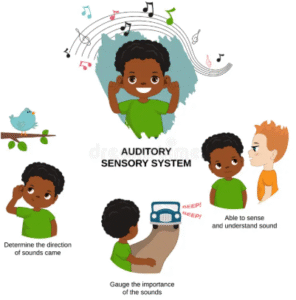
Written by Baishakhi Das

Counselor | Mental Health Practitioner
B.Sc, M.Sc, PG Diploma in Counseling

References

  1. Harvard Center on the Developing Child
    👉 https://developingchild.harvard.edu/
  2. Centers for Disease Control and Prevention
    👉 https://www.cdc.gov/ncbddd/childdevelopment
  3. Yale Center for Emotional Intelligence
    👉 https://www.ycei.org/
  4. The Gottman Institute
    👉 https://www.gottman.com/
  5. Language Development in Children: Stages, Theories (Why child not speaking clearly at age 2)

This article is written for knowledge purposes, aiming to help readers understand the topic better and gain useful insights for learning and awareness.