Role of Emotional Availability in Healthy Parenting

Parenting does not only concern feeding the children, educating them, and protecting them; but also establishing a deep emotional bond with children. Emotional availability is one of the crucial factors of good parenting. It is the capability of a parent to be emotionally attentive and responsive as well as sensitive, to the needs and emotions of their child. This significantly contributes to the psychological growth, character and general well-being of a child.

Emotional availability is manifested in a day to day life through small yet significant interactions. To illustrate, an emotionally available parent would listen to the issue, rather than dismissing the issue as one does, when a child arrives home, upset due to a conflict between them and a friend. Likewise, observing the shifts in the mood of a child, i.e., either he/she becomes quiet or irritable, and inquiring about the emotions of a child in a soft tone makes children feel that they are heard, and they are supported.

Emotional bonding is also reinforced in the daily life when people share meals, do homework, play together or talk before going to sleep. Such instances make children feel appreciated and promote free communication. Emotional availability is also necessary, particularly when the children commit wrong or display challenging behaviour. Rather than responding with direct punishment, encouraging parents attempt to empathise with the child and lead them to more constructive methods of affective expression.

Minor things such as attentiveness, providing comfort or quality time can make children feel emotionally secure even in a busy life. In the long run, children who are emotionally supported grow up with a better confidence level, emotional control, and positive relationships.

Understanding Emotional Availability

Emotional availability would imply that parents are responsive to the emotional world of the child. It entails the identification, validation and reaction of a child in a supportive and caring way. Being emotionally available parents provide a secure environment where children feel free to share their opinions, fears, and joy without being judged or shunned.

This does not imply that parents should be supermen and omnipresent. Rather, it is about being always receptive and encouraging when children are in need of emotional support or advice.

Importance of Emotional Availability in Child Development

1. Builds Secure Attachment

Children that feel emotionally secure through parents will develop feelings of security and trust. Healthy attachment makes children feel free to explore the surrounding environment and develop healthy relationships in the future. Children are likely to gain confidence and independence when they know that their parents will be there to support them emotionally.

2. Promotes Emotional Regulation

Availability parents provide emotional support to children in the management of their emotions. Parents should learn to manage the negative emotions of anger, sadness, or fear, as well as help children learn to cope with these feelings in a positive manner. This works to limit the chance of emotional tantrums and disciplinary issues.

3. Enhances Self-Esteem

Children will feel respected and accepted when their parents listen to them and appreciate their sentiments. This confirmation builds self-esteem and makes the children have a positive self-concept. When children grow up knowing that they are emotionally appreciated, they have a higher chance of building resiliency and confidence.

4. Strengthens Parent-Child Relationship

Emotional availability reinforces the connexion between children and parents as well as communication. Emotionally attached children would be more willing to communicate their issues and seek advice in case of tough times.

5. Supports Social and Psychological Well-being

Children who are nurtured emotionally grow and gain understanding in the field of socialisation and empathy. They get to know how to interpret the emotions of others and establish good friendships. The risk of anxiety, depression, and behavioural problems is also minimised through emotional availability.

Signs of Emotionally Available Parenting

  • Actively listening to the child without interruption
  • Validating the child’s emotions instead of dismissing them
  • Showing warmth through affection and supportive communication
  • Being patient and understanding during emotional distress
  • Providing consistent reassurance and guidance

Barriers to Emotional Availability

Despite its importance, many parents struggle to remain emotionally available due to various challenges such as:

  • Work stress and busy schedules
  • Unresolved personal emotional difficulties
  • Lack of awareness about emotional needs of children
  • Cultural beliefs that discourage emotional expression

Recognizing these barriers is the first step toward improving emotional connection with children.

Ways Parents Can Improve Emotional Availability

  1. Practice Active Listening
    Give full attention when children speak. Avoid distractions like mobile phones or television.

  2. Validate Feelings
    Instead of saying, “Don’t cry,” parents can say, “I understand you feel upset.”

  3. Spend Quality Time
    Engage in activities like playing, storytelling, or simply talking about daily experiences.

  4. Manage Personal Stress
    Parents who regulate their own emotions are better able to support their children emotionally.

  5. Encourage Emotional Expression
    Allow children to express both positive and negative emotions openly.

Long-Term Impact of Emotional Availability

Children brought up by parents who are emotionally available, in most cases, become emotionally stable adults, and are also confident. When parents are always able to respond to emotional needs of a child with affection, compassion and understanding, it serves to mould emotional and social growth of the child. The availability of emotions during early childhood pre-disposes a person with solid psychological framework that facilitates healthy functioning in later stages of life.

1. Stronger Interpersonal Relationships

Children who feel emotional warmth in their homes know how to trust others and establish safe relationships. They develop with the knowledge of empathy, respect, and good communication. They have higher chances of having healthy friendship and love relations as well as work relations with others as they are more than likely to be comfortable in expressing emotions to people or understanding their feelings.

2. Better Coping Skills

Available parents show the children the way to deal with stress, failure, and disappointment. Children who are taught to express their feelings rather than hold them back come to learn healthy coping strategies. With age, they are now equipped to deal with life problems like school-related stress, job related stress or family conflicts.

3. Improved Mental Health

Children who have a sense of emotional support have reduced chances of being exposed to chronic anxiety, low self-esteem, or depression. Parental emotional validation assists the children to believe in their own positive self-image and has the opportunity of feeling emotionally safe. This defence mechanism eases exposure to psychological challenges in old age.

4. Development of Emotional Regulation

Emotionally available parenting teaches the children to manage their feelings and their feelings as well. They get to know how to show anger, sadness, or frustration in a socially acceptable manner. The skill enhances the level of decision making, impulse control, and problem solving in adulthood.

5. Increased Resilience and Confidence

When children grow up with the feeling of emotional security, they are bolder in trying new experiences and challenging. They become resilient, thus they are able to overcome disappointments and adjust to the dynamic situations in life. Parental support empowers them to have confidence in themselves.

On the whole, emotional availability is not away in parenting and its impact is felt throughout the life of a person. It aids people in gaining emotional stability, psychological stability, and skills to form meaningful relations that would ultimately lead to long-term well-being and quality of life.

Conclusion

Healthy parenting is based on emotional availability. It assists children to build on emotional power, self-esteem, and stable relationships. Although it is imperative to satisfy the physical needs, the emotional world of a child should also be supported. Through presence, the parents can create a supportive atmosphere that encourages the general child growth and psychology.

FAQ: Emotional Availability in Healthy Parenting

1. What is emotional availability in parenting?


Emotional availability refers to a parent’s ability to be emotionally present, responsive, and sensitive to a child’s emotional needs, feelings, and experiences.

2. Why is emotional availability important for children?
It helps children develop emotional security, confidence, healthy relationships, and better mental health.

3. How does emotional availability affect attachment?
Emotionally available parents promote secure attachment, which helps children feel safe, valued, and supported.

4. Can emotional availability improve a child’s behavior?
Yes, children who feel emotionally understood are less likely to show aggressive or problematic behavior and more likely to express emotions appropriately.

5. What are signs of emotionally available parenting?
Listening attentively, validating emotions, showing affection, maintaining open communication, and providing consistent reassurance.

6. What happens if parents are emotionally unavailable?
Children may develop low self-esteem, emotional insecurity, difficulty forming relationships, and increased risk of anxiety or behavioral problems.

7. Can working parents still be emotionally available?
Yes, emotional availability depends on quality of interaction rather than quantity of time. Even short meaningful conversations and bonding moments help.

8. How does emotional availability help emotional regulation?
Parents who guide children through emotions teach them how to identify, express, and manage feelings in healthy ways.

9. Is emotional availability the same as being permissive?
No, emotionally available parents provide support and understanding while also maintaining appropriate boundaries and discipline.

10. At what age is emotional availability most important?
It is important throughout childhood, but early childhood is particularly crucial because emotional foundations develop during this period.

11. How can parents improve emotional availability?
By practicing active listening, spending quality time, managing personal stress, and encouraging children to express emotions openly.

12. Can emotional availability influence academic performance?
Yes, emotionally secure children often show better concentration, motivation, and learning ability.

13. Does emotional availability help social development?
Yes, children learn empathy, communication, and conflict resolution skills, which improve social relationships.

14. How does emotional availability impact long-term mental health?
It reduces risk of depression, anxiety, and emotional instability while promoting resilience and self-confidence.

15. Can emotional availability strengthen parent-child bonding?
Yes, consistent emotional support builds trust, closeness, and long-lasting healthy relationships between parents and children.

Written by Baishakhi Das

Counselor | Mental Health Practitioner
B.Sc, M.Sc, PG Diploma in Counseling


Reference

  1. Bowlby, J. (1988). A Secure Base: Parent-Child Attachment and Healthy Human Development.
    https://www.simplypsychology.org/bowlby.html

  2. American Psychological Association – Parenting and Child Development
    https://www.apa.org/topics/parenting

  3. UNICEF – Positive Parenting Guidelines
    https://www.unicef.org/parenting

  4. Harvard Center on the Developing Child – Serve and Return Interaction
    https://developingchild.harvard.edu/science/key-concepts/serve-and-return/

  5. Siegel, D. & Bryson, T. (2012). The Whole-Brain Child.
    https://drdansiegel.com/books/the-whole-brain-child/

  6. How Parenting Style Influences a Child’s Mental Health

This topic performs well due to rising searches around men’s mental health, workplace stress, and burnout recovery. Combining emotional insight with practical steps increases engagement and trust.
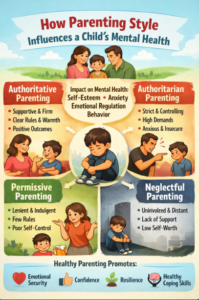

How Parenting Style Influences a Child’s Mental Health

Parenting also has a significant role to play towards emotional, social, and psychological development of a child. The manner in which parents communicate, express feelings of love, and boundaries has a direct influence on the mental health of a child as well as his or her personalities. Studies indicate that parenting style impacts self esteem, emotional control, behaviour, and stress coping capability of the child.

This is can be observed in day to day life in simple interactions. When parents react with calmness on the mistakes made by the child, they get to learn that failure is a learning process. Nevertheless, negative criticism may raise fear and lack of confidence. Equally, parents who tune in to the feelings of a child and affirm them their emotions feel safe enough to express themselves and regulate their emotions better.

Another way of how parents shape behaviour is establishing regular rules concerning such patterns as studying time, using screens and social behaviour. Moderate approach to discipline enables children to become responsible and self-contained and extreme strictness or looseness can create behavioural problems.

Simple daily tasks like complimenting hard work, quality time and emotional support enable children to develop confidence and resilience. Generally, positive and supportive parenting can aid the development of healthy and sound mental health among children.

Understanding Parenting Styles

Diana Baumrind is a psychologist who came up with four major parenting styles that are common in psychological studies. The two notable dimensions on which these parenting styles are founded are warmth, which is emotional support, affection, and responsiveness and control, which is the extent of rules, discipline and expectations that the parents place on their children.

Warmth and control used in various combinations produce different parenting styles. There are parents who are both highly emotional and clear-cut in their guidance and those who pay more attention to discipline or leave children alone at full liberty. These differences in parenting styles have an impact on the manner in which children grow emotionally, socially and behaviorally.

1. Authoritative Parenting

Authoritative parenting style is viewed as the most balanced and psychologically healthy style of parenting. The parents who utilise this style are highly structured in their rules and expectations but they are also warm, understanding and are open with communication.

Children raised with authoritative parenting often develop:

  • Strong self-esteem
  • Better emotional regulation
  • Good social skills
  • Higher academic performance
  • Strong problem-solving abilities

These parents will promote autonomy but have the right supervision. Children think that they are safe to express their thoughts and emotions and this leads to emotional stability and mental resilience.

2. Authoritarian Parenting

Authoritarian parenting pays much attention to the rules, discipline, and obedience. Open communication and emotional warmth is usually restricted. Parents can anticipate that the children should accept authority.

Children raised under authoritarian parenting may experience:

  • Low self-confidence
  • High anxiety or fear of failure
  • Difficulty expressing emotions
  • Increased risk of depression or stress
  • Poor decision-making skills due to lack of independence

While this style may encourage discipline, it can sometimes create emotional distance and reduce a child’s ability to develop healthy coping mechanisms.

3. Permissive Parenting

Permissive parents are highly affectionate and emotionally supportive but often set very few rules or boundaries. Children are given significant freedom, and discipline is minimal.

Children raised with permissive parenting may show:

  • Poor self-discipline
  • Difficulty following rules
  • Impulsivity
  • Emotional dependency
  • Challenges in handling frustration or rejection

Although children may feel loved and accepted, lack of structure can make it difficult for them to develop responsibility and emotional self-control.

4. Neglectful or Uninvolved Parenting

Neglectful parenting involves limited emotional involvement and minimal supervision. Parents may be physically present but emotionally unavailable, or they may fail to meet the child’s basic emotional and developmental needs.

Children raised in neglectful environments are at higher risk of:

  • Attachment issues
  • Low self-worth
  • Behavioral problems
  • Academic difficulties
  • Increased vulnerability to mental health disorders such as anxiety, depression, and conduct disorders

This parenting style can severely affect a child’s sense of security and emotional development.

Psychological Impact of Parenting on Mental Health

Parenting style influences several core aspects of mental health:

Emotional Regulation:
Children learn how to manage emotions by observing parental responses. Supportive parenting teaches healthy emotional expression, while harsh or neglectful parenting may lead to emotional suppression or dysregulation.

Attachment and Security:
Warm and responsive parenting helps children form secure attachments, which are essential for healthy relationships and emotional stability later in life.

Self-Esteem and Identity Formation:
Children who receive encouragement and validation are more likely to develop positive self-worth. Constant criticism or emotional neglect can result in self-doubt and identity confusion.

Stress Coping Mechanisms:
Children raised in nurturing environments often develop resilience and adaptive coping strategies, while those raised in high-stress or unsupportive environments may struggle with anxiety and maladaptive coping behaviors.

Cultural and Environmental Considerations

There are no parenting styles that are independent of each other. Cultural values, financial conditions, mental health of parents, and the general atmosphere in the family have a strong impact on them. To illustrate, rigid discipline can be considered an expression of respect and responsibility in one culture and more open communication and independence in another culture. In the same manner, financial strain, work strain, or emotional problems of parents may influence parent-child interaction.

Parenting style might vary depending on cultures and circumstances but there are factors that are universal. Children feel secure, safe and valued with the help of emotional availability, constant support and clear guidance. All these are significant factors in the healthy emotional growth and the healthy mental well-being of children irrespective of cultural diversity.

Promoting Healthy Parenting Practices

Healthy parenting does not require perfection but involves balance, awareness, and adaptability. Effective parenting practices include:

  • Active listening and emotional validation
  • Consistent but flexible discipline
  • Encouraging independence and decision-making
  • Providing a safe and supportive environment
  • Modeling healthy emotional and social behavior

Conclusion

The style of parenting has a fundamental role in influencing the mental health of a child, the emotional well-being, and the personality growth of a child. Balanced parenting involving both warmth, structure, and communication will enable children to grow to be confident, resilient, and psychologically stable. The knowledge regarding the impact of parenting styles will enable caregivers and mental health professionals to ensure more favourable developmental outcomes and help the future generations become emotionally stable.

Frequently Asked Questions (FAQs)

1. What are parenting styles?


Parenting styles refer to the overall approach parents use to raise their children, including how they provide emotional support, set rules, and guide behavior.

2. How many parenting styles are there?


According to Diana Baumrind’s research, there are four main parenting styles: authoritative, authoritarian, permissive, and neglectful.

3. Which parenting style is considered the healthiest?


Authoritative parenting is generally considered the healthiest because it balances emotional warmth with clear rules and guidance.

4. Can parenting style affect a child’s mental health?


Yes, parenting style can influence self-esteem, emotional regulation, stress management, and overall psychological well-being.

5. How does strict parenting affect children?


Excessively strict parenting can sometimes lead to fear, anxiety, low confidence, and difficulty expressing emotions.

6. Is being too lenient harmful for children?


Permissive parenting, which lacks boundaries, may lead to impulsive behavior, poor self-discipline, and difficulty handling responsibilities.

7. What happens when parents are emotionally unavailable?


Emotional neglect can lead to attachment issues, low self-worth, behavioral problems, and increased risk of anxiety or depression.

8. Can parenting styles change over time?


Yes, parenting styles can change based on awareness, education, family situations, and parental personal growth.

9. Do cultural differences influence parenting styles?


Yes, cultural values strongly influence parenting practices, discipline methods, and communication patterns.

10. How does parenting affect a child’s self-esteem?


Supportive and encouraging parenting helps build confidence, while constant criticism or neglect may lower self-esteem.

11. How do parents help children develop emotional regulation?


By validating emotions, teaching problem-solving skills, and modeling calm behavior, parents help children manage emotions effectively.

12. Can parenting influence academic performance?


Yes, supportive parenting with proper guidance and structure often promotes better focus, motivation, and academic success.

13. How important is communication in parenting?


Open and respectful communication helps children feel safe sharing feelings and builds trust within the parent-child relationship.

14. Can working parents still provide healthy parenting?


Yes, quality emotional connection, consistent support, and spending meaningful time together are more important than the amount of time spent.

15. Can parenting mistakes harm children permanently?


Occasional mistakes are normal. Children benefit most when parents show consistency, emotional warmth, and willingness to improve.

Written by Baishakhi Das

Counselor | Mental Health Practitioner
B.Sc, M.Sc, PG Diploma in Counseling


Reference 

  1. Baumrind, D. (1991). Parenting Styles and Adolescent Development
    https://psycnet.apa.org/record/1992-97930-001

  2. American Psychological Association – Parenting and Child Development
    https://www.apa.org/topics/parenting

  3. UNICEF – Positive Parenting Guidelines
    https://www.unicef.org/parenting

  4. National Institute of Child Health and Human Development
    https://www.nichd.nih.gov/health/topics/childdev

  5. CDC – Positive Parenting Tips
    https://www.cdc.gov/parents/positiveparenting

  6. How Parental Mental Health Issues Can Affect Children

This topic performs well due to rising searches around men’s mental health, workplace stress, and burnout recovery. Combining emotional insight with practical steps increases engagement and trust.
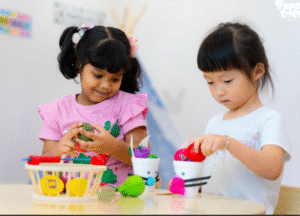
Raising Emotionally Intelligent Kids: Daily Habits Parents Can Practice

Emotional intelligence (EQ) is one of the strongest predictors of a child’s long-term success—often even more than IQ, grades, or academic achievements. While academic knowledge helps children excel in school, emotional intelligence determines how they navigate the world. Children with higher EQ grow into adults who form healthier relationships, communicate more effectively, manage stress with confidence, solve conflicts peacefully, and make thoughtful, balanced decisions. They are better equipped to handle challenges, adapt to change, and build meaningful connections—qualities essential for personal and professional success.

Developing emotional intelligence does not happen naturally or automatically. Just like language, motor skills, or academic abilities, EQ must be nurtured through practice, modeling, and environment. This is where parenting plays a transformative role. Children observe how adults respond to stress, express feelings, handle disagreements, and manage frustration. They absorb these behaviors and gradually internalize them as their own. In many ways, parents are their child’s first and most influential emotional teachers.

The encouraging news is that raising an emotionally intelligent child doesn’t require complex techniques or specialized training. Small, consistent habits practiced at home—simple interactions that take only minutes each day—can significantly shape a child’s emotional development. Everyday moments like conversations during meals, bedtime check-ins, reactions to tantrums, and responses to mistakes all serve as powerful teaching opportunities.

Why Emotional Intelligence Matters

Emotional intelligence is more than just a soft skill—it’s a core developmental capacity that shapes nearly every aspect of a child’s life, from early childhood into adulthood. While IQ and academics help children perform well in school, EQ determines how they understand themselves, relate to others, and respond to the world around them.

Emotional intelligence includes five foundational abilities:

  1. Self-awareness — identifying and understanding feelings

Children who can recognize their emotions (“I’m angry,” “I feel nervous,” “I’m disappointed”) are better able to express themselves clearly. This awareness reduces frustration and helps them ask for what they need instead of acting out.

  1. Self-regulation — managing impulses and calming the mind

A child who can pause, breathe, wait their turn, or handle “no” without melting down is practicing emotional self-control. These skills don’t appear automatically—they are learned through co-regulation with adults.

3. Empathy — understanding and caring about others’ feelings

Empathy allows children to consider another person’s perspective. Empathetic kids tend to show kindness, cooperation, and compassion—qualities that strengthen bonding and reduce conflict.

4. Social skills — communication, cooperation, and problem-solving in relationships

Emotionally intelligent children can share, negotiate, apologize, take turns, and work in teams. These abilities help them thrive in school, family life, and later in workplaces.

5. Problem-solving — navigating challenges and finding solutions

Children with strong EQ don’t just react—they think. They learn to evaluate situations, consider consequences, and choose healthier responses.

What Research Shows: The Powerful Impact of EQ

Studies from Harvard University, Yale Center for Emotional Intelligence, and decades of developmental research highlight the long-term impact of emotional intelligence:

Improves academic performance

Emotionally intelligent children focus better, manage test anxiety, communicate with teachers, and handle academic pressure more effectively. Research shows that EQ boosts grades and academic engagement.

Reduces anxiety and behavior problems

Children who can name and regulate their emotions experience fewer emotional outbursts, tantrums, and behavioral challenges. They cope better with stress and transitions.

Enhances resilience

EQ helps children bounce back from difficulties—whether it’s losing a game, facing failure, or dealing with disappointment. They learn that challenges are temporary and manageable.

Strengthens family and peer relationships

Kids with strong emotional skills communicate more openly, resolve conflicts peacefully, and form healthier friendships. These skills lay the groundwork for future romantic and professional relationships.

Helps children cope with rejection, frustration, and change

Instead of shutting down or erupting, emotionally intelligent children learn how to express feelings, seek support, and think through solutions.

Why EQ Must Be Nurtured Early

Emotional intelligence is not fixed—it develops through daily interactions with caregivers. When parents teach emotional skills early in life, children gain:

  • Stronger mental health 
  • Better communication habits 
  • Higher confidence 
  • Improved decision-making 
  • A stronger sense of self

By nurturing EQ early, parents equip their children with lifelong internal tools—tools that help them succeed not only in school, but in friendships, careers, and emotional well-being throughout adulthood.

Daily Habits Parents Can Practice

Emotional intelligence develops slowly, through hundreds of small interactions each day. These habits aren’t about perfection — they’re about presence, consistency, and modeling the emotional skills you want your child to absorb.

1. Name and Validate Emotions (Name It to Tame It)

Children experience emotions intensely, often without having the words or tools to express them. Naming the emotion helps translate their inner experiences into language they can understand.

How to Practice:

  • “You look frustrated because the tower fell.” 
  • “Sad because your friend didn’t share.” 
  • “It’s okay to feel angry. I’m here with you.” 
  • “Your body looks tense. Are you feeling worried?”

Why It Works:

Labeling emotions activates the prefrontal cortex, helping the child shift from overwhelm into understanding. Validation (“It makes sense you feel this way”) makes them feel safe, not judged.

Expanded Example:

Instead of saying “Stop crying!”, try:
“I see big tears. Something didn’t feel right. Tell me what happened.”
This approach lowers emotional intensity and invites communication.

2. Model Emotional Regulation

Children learn far more from what we do than what we say. When they see you manage stress calmly, take breaks, or talk through problems, they naturally mirror those behaviors.

How to Practice:

  • “I’m feeling overwhelmed. I’ll take a deep breath.” 
  • “I need a moment to calm my body before I talk.” 
  • “Got frustrated, but I’m trying again.” 
  • “I apologize for raising my voice. I’m working on calming down.”

Why It Works:

Modeling helps children internalize self-regulation techniques. It normalizes emotions and teaches that everyone—even adults—works on managing feelings.

Expanded Example:

When spilling milk, instead of reacting sharply, try:
“I’m annoyed, but accidents happen. Let’s clean it up together.”
This teaches calm problem-solving.

3. Create a Daily Emotional Check-In Routine

Regular emotional check-ins help children understand feelings as a normal part of daily life, not something that only happens during crises.

How to Practice:

  • Morning chart: “How do you feel starting today?” 
  • Evening reflection: “What felt good today? What felt tough?”

Use colors for younger children:

    • Red = Angry 
    • Yellow = Frustrated 
    • Blue = Sad 
    • Green = Calm / Happy

Why It Works:

Structured emotional reflection reduces impulsive behavior and increases emotional vocabulary.

Expanded Example:

Keep a simple “Mood Wheel” on the fridge and let the child point to a color every morning and night.

4. Teach Problem-Solving Skills

Instead of jumping in to fix every issue, guiding children to find solutions teaches independence and resilience.

How to Practice:

  • “What can we do next?” 
  • “What would help you right now?” 
  • “Should we take turns, ask for help, or choose a new activity?” 
  • “Let’s think of two solutions and pick one.”

Why It Works:

Problem-solving shifts the child from emotional response to cognitive thinking. It strengthens executive functioning.

Expanded Example:

If a sibling conflict arises, ask:
“What’s a fair way to solve this? Let’s think of options together.”
This teaches cooperation and negotiation.

5. Encourage Empathy Daily

Empathy allows children to connect with others, understand their feelings, and respond with kindness—key skills for future relationships.

How to Practice:

  • Discuss characters’ emotions in books or shows. 
  • “How do you think she felt when that happened?” 
  • Praise empathetic behavior: “You noticed your brother was sad. That was caring.” 
  • Encourage gentle behavior with pets and peers.

Why It Works:

Empathy strengthens social bonding and reduces aggressive or impulsive interactions.

Expanded Example:

If your child accidentally hurts someone, instead of forcing a quick “sorry,” guide them:
“Look at his face. How do you think he feels? What can we do to help?”

6. Set Consistent, Calm Boundaries

Children feel safe when they know what to expect. Boundaries provide structure, predictability, and emotional security.

How to Practice:

  • “I won’t let you hit.” 
  • “We clean up before bedtime.” 
  • “It’s okay to feel angry, but it’s not okay to throw things.” 
  • Always use calm tone + clear rule + safe alternative.

Why It Works:

Predictability reduces anxiety and behavioral outbursts. Calm enforcement teaches children that boundaries are stable, not emotional reactions.

Expanded Example:

Instead of shouting “Stop it!”, say:
“I can see you’re upset, but I won’t let you throw toys. Let’s find a safer way to show anger.”

7. Build Routines That Support Regulation

Daily routines help regulate the child’s nervous system, reducing emotional overload.

How to Practice:

  • Predictable sleep and wake-up times 
  • Scheduled snacks and hydration 
  • Quiet breaks after overstimulating activities 
  • Use visual routine charts for morning and night

Why It Works:

Consistency lowers stress hormones and creates emotional stability.

Expanded Example:

After returning from school or an event, offer:
“Let’s take 10 minutes of quiet time so your body can relax.”

8. Teach Healthy Expression Through Play

Children naturally express emotions through play—it’s their language of healing and communication.

Ways to Practice:

  • Drawing or coloring emotions 
  • Role play with toys: “What does the bear do when he’s sad?” 
  • Sensory play: clay, sand, water 
  • Calm-down jars, bubbles, breathing games, kids’ yoga

Why It Works:

Play reduces emotional tension and builds emotional vocabulary in a safe, enjoyable way.

Expanded Example:

Make a “Feelings Puppet” that expresses different emotions and ask your child to respond.

9. Practice Gratitude and Positive Reflection

Gratitude shifts attention from stress to appreciation, improving a child’s emotional balance.

How to Practice:

  • Night-time gratitude routine: “I’m thankful for…” 
  • “Tell me one thing that made you smile today.” 
  • Keep a Family Gratitude Jar—add a note each day.

Why It Works:

Gratitude increases optimism and reduces negativity or irritability.

Expanded Example:

Once a week, empty the jar and read the gratitude notes together.

10. Listen Without Judgment

Children open up when they feel safe, heard, and accepted. Listening is the foundation of emotional security.

How to Practice:

  • Give full attention—eye contact, gentle tone 
  • Don’t interrupt 
  • Avoid dismissing feelings (“You’re overreacting,” “Stop crying”)Use reflective listening:
    • “So you were upset when that happened?” 
    • “You felt nervous about the exam?”screenshot 2025 11 15 150108

Why It Works:

This builds trust, strengthens attachment, and teaches communication.

Expanded Example:

If a child says “I hate school,” avoid reacting immediately. Instead say:
“You’re feeling upset about school. Tell me what part felt hard today.”

Long-Term Benefits of Raising Emotionally Intelligent Kids

Emotionally intelligent children grow up to:

  • Handle stress and conflict better 
  • Form healthy friendships and relationships 
  • Cope with failure & disappointment 
  • Communicate openly 
  • Show kindness and empathy 
  • Make thoughtful decisions 
  • Develop resilience and confidence

EQ is a life skill that shapes their academic, social, and emotional future.

Final Thoughts

Raising emotionally intelligent kids doesn’t require perfection—just presence, patience, and consistency. Children don’t need flawless parents; they need caregivers who are willing to pause, listen, and guide them with understanding. Emotional intelligence grows slowly, through everyday moments: a comforting hug after a meltdown, a gentle boundary, a calm response during conflict, a conversation about feelings, or a moment of shared gratitude before bed.

Each of these small habits becomes a building block in your child’s emotional world. Over time, they learn how to name their feelings, soothe themselves, understand others, and navigate challenges with resilience. These aren’t just childhood skills—these are lifelong strengths that shape who they become as adults.

Mindful parenting helps children feel seen, valued, and supported. When a child grows up in an environment where emotions are accepted and understood, they develop a secure sense of self and a strong internal compass. They learn that mistakes are opportunities, emotions are manageable, and relationships are places of safety, not fear.

By practicing emotional awareness and modeling healthy regulation, you’re not merely teaching your child how to behave—you’re shaping how they think, feel, connect, and cope. You are giving them the emotional tools they need to thrive academically, socially, and mentally.

In the end, raising an emotionally intelligent child is one of the greatest gifts you can offer. It is an investment in their future relationships, confidence, stability, and happiness. And it starts with small, consistent acts of love and mindful parenting—one day at a time.

Frequently Asked Questions (FAQs)

1. What is emotional intelligence in children?

It is the ability to understand, express, and manage emotions effectively.

2. Why is emotional intelligence important for kids?

It helps in relationships, stress management, decision-making, and overall success.

3. At what age should emotional intelligence be taught?

It can be taught from early childhood through daily interactions.

4. How can parents develop emotional intelligence in children?

By modeling behavior, validating emotions, and teaching problem-solving skills.

5. What are the key components of emotional intelligence?

Self-awareness, self-regulation, empathy, social skills, and problem-solving.

6. Can emotional intelligence be learned?

Yes, it develops through practice, environment, and guidance.

7. How does EQ affect academic performance?

Children with high EQ focus better and manage stress effectively.

8. What are simple daily habits to build EQ?

Naming emotions, listening actively, and practicing gratitude.

9. How can parents teach empathy to children?

By discussing feelings, modeling kindness, and encouraging perspective-taking.

10. What are the long-term benefits of emotional intelligence?Better mental health, relationships, resilience, and life success.

Written by Baishakhi Das

Counselor | Mental Health Practitioner
B.Sc, M.Sc, PG Diploma in Counseling

References

  1. Harvard Center on the Developing Child
    👉 https://developingchild.harvard.edu/
  2. Centers for Disease Control and Prevention
    👉 https://www.cdc.gov/ncbddd/childdevelopment
  3. Yale Center for Emotional Intelligence
    👉 https://www.ycei.org/
  4. The Gottman Institute
    👉 https://www.gottman.com/
  5. Language Development in Children: Stages, Theories (Why child not speaking clearly at age 2)

This article is written for knowledge purposes, aiming to help readers understand the topic better and gain useful insights for learning and awareness.

Gentle Parenting: How to Raise Emotionally Strong and Confident Children

Parenting is not only about teaching a child how to behave — it’s also about shaping their emotional world. The words parents use, the tone they speak with, the safety a child feels, and the way mistakes are treated all become the blueprint for the child’s adult personality.

In recent years, millions of parents are shifting from fear-based parenting to emotionally nurturing parenting, popularly known as Gentle Parenting. This approach is backed by developmental psychology, attachment theory, and neuroscience.

Gentle Parenting does not mean being a “soft” parent. It means raising disciplined children through connection, respect, and emotional teaching — rather than punishment, shouting, or control.

What Gentle Parenting Really Means

Gentle parenting is built on the belief that children are not “mini adults.” Their brain, emotional skills, and impulse control are still developing. They don’t misbehave because they are bad — misbehave because:

  • on’t yet know how to regulate emotions
  • They struggle to express feelings with words
  • Get overwhelmed easily
  • They learn through trial and error

So the goal is not to control the child, but to coach the child.

🎯 Discipline through teaching, not through fear.

A gentle parent guides the child to understand:

  • What they are feeling
  • Why they are behaving a certain way
  • How they can behave differently next timescreenshot 2025 11 24 000049

🧠 Brain Development Behind Gentle Parenting (Why It Works)

Between ages 0–7, the emotional brain (amygdala) is highly active, and the rational brain (prefrontal cortex) is still immature. When a child has a meltdown, they are not choosing to misbehave — their brain is overwhelmed.

Traditional parenting says:

“Stop crying. Behave yourself.”

Gentle parenting says:

“I see you’re overwhelmed. I’m here. Let’s work through this.”

This approach teaches the brain:

  • Emotional vocabulary
  • Self-regulation skills
  • Problem-solving
  • Empathy

Children raised with empathy have fewer stress hormones (cortisol) and stronger neural circuits for emotional control and trust.

🌻 Core Values of Gentle Parenting

1️⃣ Connection

Children behave better when they feel connected to their caregivers.

2️⃣ Communication

Children need reasons, not orders. They listen more when they are spoken to respectfully.

3️⃣ Consistency

Rules are not random. They remain constant and predictable.

4️⃣ Compassion

Even when behavior is unacceptable, the child is still worthy of love and respect.

screenshot 2025 11 24 000126

🌼 What Gentle Parenting Looks Like in Real Life

Here are realistic examples many parents experience every day:

🧩 Scenario 1 — Tantrum

Child: cries uncontrollably at the supermarket

❌ Traditional reaction:
“Stop crying! You’re embarrassing me!”

✔ Gentle parenting response:
“I know you’re upset because you want that toy. Wanting things is normal. But we’re not buying toys today. I’ll stay with you while you calm down.”

Result: The child learns emotions are safe + limits still exist.

🧩 Scenario 2 — Backtalk

Child: “You’re mean! I don’t like you!”

❌ Traditional reaction:
“How dare you! Say sorry right now!”

✔ Gentle parenting response:
“You’re angry because I said no to more TV. You don’t have to like my decision, but you may not speak hurtfully.”

Result: The child learns emotional honesty + respectful communication.

🧩 Scenario 3 — Hitting

Child: hits sibling when upset

❌ Traditional reaction:
“If you hit again, I’ll hit you!”

✔ Gentle parenting response:
“I won’t let you hit. Hitting hurts people. If you’re angry, you can ask for space, talk to me, or squeeze a pillow.”

Result: The child learns alternative coping strategies.

🌟 How to Set Boundaries in Gentle Parenting

A common misconception is that gentle parenting means saying yes to everything. That is not true.

Boundaries are necessary — and gentle parents enforce them without humiliation, punishment, or threats.

Examples of Gentle Boundaries:

  • “I won’t let you jump on the sofa. You may jump on the floor or the trampoline.”
  • “It’s hard to stop playing, but screen time is over. We’ll do it again tomorrow.”
  • “You may feel angry, but you may not hurt people.”

The rule stays firm, but the emotional connection stays intact.

screenshot 2025 11 24 000209

🌷 When Not to Negotiate

Parents should not negotiate on:

  • Safety rules
  • Respect
  • Sleep routines
  • School responsibilities
  • Health essentials

Gentle does not mean permissive — it means firm but kind.

🌾 Long-Term Psychological Benefits

Research shows that children raised with empathy + structure develop:

✔ Strong emotional intelligence

They can identify, express, and regulate emotions.

✔ High self-esteem

They believe “I am worthy even when I make mistakes.”

✔ Healthy relationships

Because they grew up with respect, they give respect.

✔ Better mental health

Lower chances of anxiety, people-pleasing, emotional numbness.

✔ Self-discipline

Not because they fear punishment — because they understand consequences.

🌈 Gentle Parenting for Different Age Groups

👶 0–2 Years (Infants)

Needs: comfort, physical affection, responsiveness
Focus: forming secure attachment
Tip: pick up crying babies — you can’t “spoil” an infant with love.

🧒 2–5 Years (Toddlers)

Needs: understanding, patience, emotional vocabulary
Focus: naming emotions, setting limits
Tip: “You’re angry because the toy broke. It’s okay to be sad.”

🧑‍🦱 6–12 Years (Children)

Needs: independence + guidance
Focus: problem-solving, accountability
Tip: “What can we do differently next time?”

👦 13–19 Years (Teenagers)

Needs: respect, autonomy, emotional support
Focus: communication, trust, choices
Tip: “Let’s talk about what you’re feeling, not just what happened.”

🔥 Practical Tools for Gentle Parenting

Tool Example
Naming emotions “You’re frustrated because…”
Calm tone No yelling — speak slowly
Natural consequences “If water spills, we clean it.”
Choices “Blue shirt or red shirt?”
Reconnecting after conflict Hugs, reassurance
Family routine Predictability reduces fights

💬 Common Myths About Gentle Parenting

Myth Reality
“It makes kids weak” It makes kids emotionally strong and empathetic
“Kids will never learn discipline” Kids learn discipline based on understanding and consequences
“Parents can’t express anger” Parents can express emotions respectfully
“Children control the home” Parents set boundaries; children learn self-regulation

❓ Frequently Asked Questions (FAQ)

🔹 What if the child doesn’t listen?

Stay calm, repeat the same boundary, offer choices, follow through consistently.

🔹 What if relatives criticize gentle parenting?

Educate them if possible — but remember, your child’s emotional safety matters more than outsiders’ opinions.

🔹 Can gentle parenting work with neurodivergent children (ADHD, Autism)?

Yes — even more essential, because they require emotional coaching and sensory respect.

🔹 What if the parent loses patience?

Apologize, reconnect, and try again. Gentle parenting allows imperfection. Growth matters more than perfection.

🌺 Final Thoughts

Gentle parenting is not a technique — it is a mindset. It is not about controlling the child, but guiding the child. Not about winning battles, but building a lifelong relationship.

A gentle parent teaches the child:

  • Your feelings matter
  • You are safe with me
  • You are loved even when you struggle
  • Mistakes are learning opportunities

These messages build children who grow up to say:

“I know how to handle emotions.  How to love people. I know my worth.”

And that is the greatest gift a parent can ever give.

Frequently Asked Questions (FAQs)

1. What is gentle parenting?

Gentle parenting is an approach that focuses on empathy, respect, and emotional connection instead of punishment.

2. Does gentle parenting mean no discipline?

No, it includes discipline through teaching and boundaries, not fear or punishment.

3. Is gentle parenting effective?

Yes, research shows it improves emotional intelligence and mental health in children.

4. What are the core principles of gentle parenting?

Connection, communication, consistency, and compassion.

5. How do you set boundaries in gentle parenting?

By being firm but respectful, without yelling or threatening.

6. Can gentle parenting spoil children?

No, it teaches responsibility, self-regulation, and emotional awareness.

7. What should I do if my child has tantrums?

Stay calm, validate feelings, and maintain clear boundaries.

8. Is gentle parenting suitable for teenagers?

Yes, it helps build trust, communication, and independence.

9. What if I lose patience as a parent?

Apologize, reconnect, and try again—gentle parenting allows mistakes.

10. What are the benefits of gentle parenting?

Better emotional regulation, strong relationships, and improved mental health.

Written by Baishakhi Das

Counselor | Mental Health Practitioner
B.Sc, M.Sc, PG Diploma in Counseling

References

  1. John Bowlby
    👉 https://www.britannica.com/biography/John-Bowlby
  2. Mary Ainsworth
    👉 https://www.simplypsychology.org/mary-ainsworth.html
  3. American Academy of Pediatrics
    👉 https://www.aap.org
  4. Verywell Family
    👉 https://www.verywellfamily.com
  5. The Psychology of Care: Inside the Minds of Certified Nurses Balancing Empathy, Burnout, and Healing

This article is written for knowledge purposes, aiming to help readers understand the topic better and gain useful insights for learning and awareness.