
Parenting shapes far more than a child’s behavior — it sculpts their inner world. From the words caregivers choose and the tone they use, to the sense of safety a home provides and how mistakes are handled, these everyday moments lay the emotional blueprint for an adult’s personality. In recent years, millions of parents have moved away from fear-based tactics and toward emotionally attuned caregiving known as gentle parenting — a practical, research-backed approach rooted in developmental psychology, attachment theory, and neuroscience.
Gentle parenting is not the same as permissiveness. It teaches self-discipline through connection, respect, and emotional coaching rather than punishment, yelling, or rigid control. By prioritizing empathy, consistent boundaries, and repair after conflict, gentle parents help children develop emotional regulation, resilience, and secure relationships. Whether you’re a new parent curious about alternatives to traditional discipline or an experienced caregiver ready to shift your approach, gentle parenting offers tools that support long-term emotional health — and a calmer, more cooperative home.
What gentle parenting really means
Gentle parenting rests on a simple but powerful premise: children are not “mini adults.” Their brains, emotional skills, and impulse-control systems are still developing, so behaviour that looks deliberate or defiant is often the result of unmet developmental needs. Gentle parenting sees misbehaviour as information, not as moral failure. Children act out because they:
- Don’t yet know how to regulate strong emotions.
- Struggle to put feelings into words.
- Get overwhelmed easily by sensory or emotional overload.
- Learn through trial and error and need practice and guidance.
Definition
Gentle parenting is an approach that prioritizes connection, empathy, and respectful guidance over punishment and control. It combines age-appropriate limits with emotional coaching so children learn self-regulation, problem-solving, and empathy. The aim is not to suppress behaviour through fear but to teach skills that support long-term emotional and social development.
Core principles
- Emotional coaching: Help the child name and process feelings.
- Teaching over punishment: Use explanations, modeling, and practice to shape behaviour.
- Consistent boundaries: Set clear, achievable limits with predictable consequences focused on learning.
- Repair and connection: After conflicts, restore the relationship through apologies, discussion, and reassurance.
How it looks in practice
A gentle parent doesn’t simply stop bad behaviour; they guide the child to understand:
- What they are feeling.
- Why they are behaving that way.
- How they can behave differently next time.
Example: Instead of “Stop crying or you’ll get a time-out,” a gentle response might be, “I can see you’re really upset because we had to leave the park. It’s okay to be sad. Let’s take three deep breaths and think of one thing we can do when we get home.” This models emotional regulation, validates feelings, and offers a concrete alternative.

Brain development behind gentle parenting (why it works)
Young children’s brains develop unevenly. Between ages 0–7, the emotional brain (amygdala) is highly reactive while the prefrontal cortex—the area responsible for planning, impulse control, and calm thinking—remains immature. In moments of high stress or strong emotion, a child’s amygdala can “hijack” their behaviour, making it nearly impossible for them to think, reason, or follow commands. In short: during a meltdown, a child’s brain is overwhelmed, not willfully defiant.
Two parenting responses illustrate this difference:
- Traditional: “Stop crying. Behave yourself.” This expects an underdeveloped brain to act like an adult brain and often escalates stress.
- Gentle: “I see you’re overwhelmed. I’m here. Let’s work through this.” This reduces threat, helps the child downregulate, and creates an opportunity for learning.
How gentle parenting helps the brain
- Builds emotional vocabulary. Naming feelings (sad, frustrated, scared) strengthens the brain circuits that link emotion to language, making it easier for children to describe and manage states rather than act them out.
- Teaches self-regulation skills. Calming strategies (deep breaths, sensory breaks, rhythmic movement) become internal tools the child can call on as their prefrontal cortex matures.
- Strengthens problem-solving. When caregivers coach through conflict, children learn to plan alternatives and predict consequences rather than rely on avoidance or acting out.
- Fosters empathy and secure attachment. Consistent, attuned responses wire neural pathways for trust and social connection.
Physiology and long-term benefits
Research shows children raised with sensitive, attuned caregiving have lower baseline levels of stress hormones such as cortisol and more robust regulation of the stress response. Over time, this supports healthier emotional control, better attention, and stronger relationships.
Practical takeaways for parents
- Validate first, teach later. Start with a short empathic statement (“You’re really upset”) before giving direction.
- Use simple labels. Help build emotional vocabulary: “That was scary,” “You look frustrated.”
- Offer small, concrete tools. Teach one calming strategy at a time (counting, breathing, squeezing a ball).
- Repair after conflicts. If you lose your temper, apologize and model how to fix things—this teaches responsibility and restores safety.
- Repeat and practice. Skills form through repetition; expect setbacks and use them as learning moments.
Example: When a toddler melts down because you’re leaving the playground: crouch to their level, name the feeling (“I can see you’re sad we’re leaving”), give a brief reason (“We need to go home for lunch”), offer a choice or coping tool (“You can hold my hand or carry your toy; let’s take three big breaths together”), then follow through calmly.
Core Values of Gentle Parenting
- Connection: Children cooperate more easily when they feel emotionally connected to a caregiver. Connection looks like eye contact, shared play, physical closeness, and attuned responses to needs. When a child feels seen and safe, they’re more likely to accept limits and learn from guidance. For examples – “Let’s build this block tower together for two minutes before we tidy up.”
- Communication: Children respond better to reasons than orders. Explain choices and consequences in age-appropriate language, and speak with respect rather than using commands or shaming. Clear, calm explanations build understanding and model how to discuss feelings and solve problems. For examples – “We’re leaving in five minutes so we have time for lunch; which toy will you bring?”
- Consistency: It makes rules meaningful. Predictable limits and routines reduce anxiety and help children internalize expectations. When adults apply rules calmly and reliably, children learn cause-and-effect and feel secure in what’s allowed and what’s not. For examples- “Bedtime is 8 pm. We read one story and then lights out.”
- Compassion: It separates the child from their behavior. Even when actions are unacceptable, the child remains worthy of love and respect. Responding with empathy—while holding firm boundaries—teaches accountability, repair, and emotional safety. For examples – “It’s not okay to hit. Hitting hurts. I’ll help you use words.”
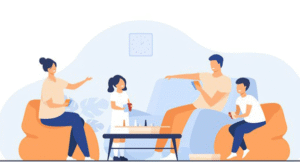
What Gentle Parenting Looks Like in Real Life
What gentle parenting looks like in real life
Scenario 1 — Tantrum
Child: cries uncontrollably in the supermarket
Traditional reaction: “Stop crying! You’re embarrassing me!”
Gentle parenting response: “I know you really wanted that toy. It’s okay to feel disappointed. We’re not buying toys today, but I’ll stay with you until you calm down.”
Result: The child learns emotions are safe and limits still exist. They begin to trust adults to help them manage big feelings.
Scenario 2 — Backtalk
Child: “You’re mean! I don’t like you!”
Traditional reaction: “How dare you! Say sorry right now!”
Gentle parenting response: “You sound really angry because I said no to more TV. You don’t have to like my decision, but you may not speak to me that way. Use your words or take a minute to cool down.”
Result: The child learns emotional honesty plus respectful communication and that feelings don’t erase boundaries.
Scenario 3 — Hitting
Child: hits a sibling when upset
Traditional reaction: “If you hit again, I’ll hit you!”
Gentle parenting response: “I won’t let you hit—hitting hurts. If you’re angry, you can ask for space, tell me how you feel, or try squeezing this pillow. Let’s help your sibling feel safe.”
Result: The child learns acceptable ways to express anger and that the caregiver protects others while teaching alternatives.
Mini tips for using these responses
- Keep statements short and calm. Long lectures won’t register during strong emotions.
- Combine empathy + limit: name the feeling, then state the boundary.
- Offer one concrete alternative (take a breath, use words, go to a quiet spot).
- Follow up later with a brief discussion or practice when everyone is calm.
How to Set Boundaries in Gentle Parenting
Gentle parenting does not mean saying yes to everything. Boundaries are essential for safety, predictability, and learning. Gentle parents enforce limits without humiliation, threats, or power struggles; they keep rules clear while preserving the child’s dignity and the parent–child connection.
Key features of gentle boundaries
- Firm but respectful. State the limit calmly and without moralizing: “No jumping on the sofa. You may jump on the trampoline.”
- Clear and simple. Use short, concrete language a child can understand.
- Predictable. Apply rules consistently so children know what to expect.
- Emotionally attuned. Acknowledge feelings before or while enforcing the rule: “I know you’re sad to stop playing, but screen time is over.”
- Teachable. Use limits as opportunities to coach alternatives and problem-solve.
Short scripts parents can use
- Safety: “I won’t let you run on the stairs. Let’s walk together so no one gets hurt.”
- Transition: “Five more minutes of play, then it’s time to wash up. Which toy will you bring with you?”
- Emotion + limit: “You can be upset, but you may not hit. Come tell me what’s wrong or squeeze this pillow.”
- Choice within limits: “You can wear the blue shirt or the red shirt, but we need to leave in five minutes.”
Practical steps to set effective gentle boundaries
- Decide the rule and why it matters (safety, health, fairness).
- Announce the limit calmly and briefly.
- Acknowledge the child’s feeling (one sentence).
- Offer an acceptable alternative or a small choice.
- Follow through consistently and calmly.
- Repair if things escalate—apologize if you lost your temper and restate the limit once calm.
Example: Instead of a power struggle over shoes: “We leave in two minutes. I know you want more time to play, and we need to go now. You can choose which shoes to wear, and I’ll help you put them on.”

When Not to Negotiate
Gentle parenting is firm, not permissive. Some rules are non-negotiable because they protect safety, wellbeing, or the structure children need to thrive. Avoid bargaining over these core areas so limits remain clear and predictable.
Non-negotiable areas
- Safety rules: seat belts, crossing the road, staying away from hot surfaces, not running near a pool.
- Respect: no hitting, name-calling, or verbally abusive behaviour toward others.
- Sleep routines: consistent bedtime and wake time that support health and mood.
- School responsibilities: attendance, homework deadlines, and respectful behaviour toward teachers.
- Health essentials: taking medicine when prescribed, basic hygiene (handwashing, toothbrushing), and required medical care.
Why these aren’t negotiable
- They protect physical or emotional wellbeing.
- Repeated negotiation creates uncertainty and anxiety.
- Consistent limits help children internalize expectations and develop self-discipline.
- Some rules (safety, health) have consequences adults must prevent, not debate.
How to enforce non-negotiables gently
- State the rule calmly and briefly: “We buckle up every time we get in the car.”
- Acknowledge feeling, then hold the limit: “I know you don’t like brushing teeth, but we do it every night to keep your teeth healthy.”
- Offer limited choices within the rule: “You can pick which toothpaste or which toothbrush, but we brush now.”
- Use natural, predictable consequences (not punishment): “If you don’t get to bed on time, we’ll need to skip the playground tomorrow so you can rest.”
- Repair after conflict: if the child resists and you become firm, reconnect afterwards—“I’m sorry I raised my voice. We still have to brush teeth. Let’s do it together.”
Short scripts to use
- Safety: “No running by the pool. You can walk quickly, or jump on the spot over here.”
- Respect: “We don’t hit. If you’re angry, tell me or go to the calm corner.”
- Sleep: “Bedtime is 8 pm. You can choose one book; after that lights out.”
- School: “Homework is done before screen time. You can choose whether to start math or reading first.”
- Health: “This medicine helps you feel better. You can have it with juice or water.”
When to be flexible
- Small preferences and nonessential choices (clothing color, snack variety) are fine to negotiate.
- Adjust routines briefly for special occasions (travel, celebrations) but return to normal afterward.
Long-term psychological benefits
Research indicates that children raised with a balance of empathy and consistent structure enjoy lasting psychological advantages:
- Strong emotional intelligence. They learn to identify, name, and manage feelings, making it easier to cope with stress and relate to others.
- Higher self-esteem. Consistent support plus accountability teaches children that they are inherently worthy even when they make mistakes.
- Healthier relationships. Having experienced respectful communication and repair, they tend to form trusting, reciprocal bonds as adults.
- Better mental health. Empathic caregiving is linked to lower risk of chronic anxiety, compulsive people-pleasing, emotional numbing, and social withdrawal.
- Genuine self-discipline. They follow rules because they understand reasons and consequences, not because they fear punishment.
Why this happens : Attuned, predictable caregiving shapes neural circuits for emotion regulation and stress management, reduces chronic activation of the stress-response system (cortisol), and models prosocial problem-solving. Over time these biological and social learning processes scaffold resilience, adaptive coping, and secure attachment patterns.
Evidence note: Longitudinal and developmental studies in attachment theory and child neuroscience support these outcomes; you can cite sources such as research on secure attachment, cortisol regulation in responsive caregiving, and interventions that improve emotional regulation (e.g., parent-training studies).
Gentle Parenting for Different Age Groups
0–2 Years (Infants)
Needs: comfort, physical affection, responsiveness
Focus: forming secure attachment
Tip: pick up crying babies — you can’t “spoil” an infant with love.
2–5 Years (Toddlers)
Needs: understanding, patience, emotional vocabulary
Focus: naming emotions, setting limits
Tip: “You’re angry because the toy broke. It’s okay to be sad.”
6–12 Years (Children)
Needs: independence + guidance
Focus: problem-solving, accountability
Tip: “What can we do differently next time?”
13–19 Years (Teenagers)
Needs: respect, autonomy, emotional support
Focus: communication, trust, choices
Tip: “Let’s talk about what you’re feeling, not just what happened.”
Quick cross-stage strategies
-
Always lead with connection before correction.
-
Match your language to their development: simple words for toddlers, collaborative language for school-age kids, respectful dialogue for teens.
-
Teach one skill at a time (breathing, using words, problem-solving).
-
Repair relationships after conflicts—this models responsibility and restores safety.
Practical Tools for Gentle Parenting
| Tool | Example |
| Naming emotions | “You’re frustrated because…” |
| Calm tone | No yelling — speak slowly |
| Natural consequences | “If water spills, we clean it.” |
| Choices | “Blue shirt or red shirt?” |
| Reconnecting after conflict | Hugs, reassurance |
| Family routine | Predictability reduces fights |
Common Myths About Gentle Parenting
| Myth | Reality |
| “It makes kids weak” | It makes kids emotionally strong and empathetic |
| “Kids will never learn discipline” | Kids learn discipline based on understanding and consequences |
| “Parents can’t express anger” | Parents can express emotions respectfully |
| “Children control the home” | Parents set boundaries; children learn self-regulation |
Final Thoughts
Gentle parenting is not a technique — it is a mindset. It is not about controlling the child, but guiding the child. Not about winning battles, but building a lifelong relationship.
A gentle parent teaches the child:
- Your feelings matter
- They are safe with me
- You are loved even when you struggle
- Mistakes are learning opportunities
Those messages grow children who become emotionally aware, compassionate adults who can say: “I know how to handle my emotions. I know how to love others. I know my worth.” That emotional resilience and secure connection is one of the greatest gifts a parent can give.
If you found this helpful, try one gentle response this week and notice what changes — then share your experience in the comments or subscribe for more practical tips.
Frequently Asked Questions (FAQs)
1. What is gentle parenting?
Gentle parenting is an approach that focuses on empathy, respect, and emotional connection instead of punishment.
2. Does gentle parenting mean no discipline?
No, it includes discipline through teaching and boundaries, not fear or punishment.
3. Is gentle parenting effective?
Yes, research shows it improves emotional intelligence and mental health in children.
4. What are the core principles of gentle parenting?
Connection, communication, consistency, and compassion.
5. How do you set boundaries in gentle parenting?
By being firm but respectful, without yelling or threatening.
6. Can gentle parenting spoil children?
No, it teaches responsibility, self-regulation, and emotional awareness.
7. What should I do if my child has tantrums?
Stay calm, validate feelings, and maintain clear boundaries.
8. Is gentle parenting suitable for teenagers?
Yes, it helps build trust, communication, and independence.
9. What if I lose patience as a parent?
Apologize, reconnect, and try again—gentle parenting allows mistakes.
10. What are the benefits of gentle parenting?
Better emotional regulation, strong relationships, and improved mental health.
References
- John Bowlby
👉 https://www.britannica.com/biography/John-Bowlby - Mary Ainsworth
👉 https://www.simplypsychology.org/mary-ainsworth.html - American Academy of Pediatrics
👉 https://www.aap.org - Verywell Family
👉 https://www.verywellfamily.com - The Psychology of Care: Inside the Minds of Certified Nurses Balancing Empathy, Burnout, and Healing
This article is written for knowledge purposes, aiming to help readers understand the topic better and gain useful insights for learning and awareness.
Pingback: Teenage Anger Management: Understanding the Storm and Guiding It Safely - MonoProva Healing Teen Anger Management: A Complete Psychology Guide