
The Psychology of Protest: How Crowds Think, Feel, and Act Together

Mass protests are among the most powerful expressions of human collective behavior. From independence movements to civil rights campaigns, from student uprisings to digital-era demonstrations, protests reveal something profound about the psychology of groups. They show how individual emotions transform into shared purpose, how moral conviction overcomes fear, and how crowds become agents of social change.

Understanding protests through psychology helps us move beyond seeing them as chaos or politics. Instead, they become windows into human identity, motivation, morality, and social influence.

This article explores four key psychological dimensions of protests: mass protest psychology, collective action, moral courage, and crowd behavior. 

1. Mass Protest Psychology: When Individual Minds Become a Shared Mind

At the core of any protest lies a psychological shift: people stop thinking only as individuals and begin thinking as part of a group.

Social psychology calls this process social identity activation. According to Social Identity Theory (Tajfel & Turner), individuals define themselves partly through group membership. During protests, identity shifts from “I am one person” to “I am part of us.”

This shift produces several psychological effects:

a. Emotional Contagion

In crowds, emotions spread rapidly. Anger, hope, grief, and solidarity become amplified. Neuroscience suggests mirror neuron systems help people automatically synchronize emotional states with others.

A person who might remain quiet alone may feel empowered when surrounded by hundreds chanting the same message.

b. Perceived Collective Power

Psychologist Albert Bandura’s idea of collective efficacy is crucial here. People protest when they believe the group can create change. Even if one individual feels powerless, a crowd creates the sense:

“Together, we matter.”

This perception often predicts whether protests escalate, sustain, or dissolve.

c. Legitimacy and Shared Narrative

Protests become psychologically stronger when participants share a moral story:

  • “We are oppressed”
  • “We deserve justice”
  • “This system is unfair”

This narrative builds cognitive unity, turning scattered frustrations into a common cause.

2. Collective Action: Why People Decide to Join Protests

Not everyone who feels injustice joins a protest. Psychology explains this through collective action models, especially the SIMCA Model (Social Identity Model of Collective Action).

It suggests three main factors drive participation:

1. Perceived Injustice

People must feel something is wrong. But injustice alone is not enough.

They must also feel:

  • The situation is unfair
  • Someone is responsible
  • Change is possible

This produces moral outrage, one of the strongest motivators for protest.

2. Group Identity

People protest when they feel psychologically connected to a group affected by the issue.

For example:

  • Students protest education policy
  • Workers protest labor rights
  • Women protest gender violence
  • Citizens protest corruption

Even allies join protests when they develop empathic identification with affected groups.

3. Belief in Effectiveness

If people believe protest is useless, they stay home. When they believe it can work, participation rises dramatically.

This explains why:

  • A small protest can suddenly become huge
  • One viral incident can mobilize thousands
  • Symbolic acts trigger mass response

Psychology calls this threshold activation: once enough people join, others feel safer joining too.

3. Moral Courage: The Psychological Engine Behind Protest

Perhaps the most fascinating part of protest psychology is moral courage — the willingness to stand for values despite fear, risk, or punishment.

Moral courage differs from physical bravery. It involves:

  • Social risk
  • Legal risk
  • Reputation risk
  • Emotional risk

a. Moral Conviction

Psychologist Linda Skitka describes moral conviction as beliefs tied to a person’s core values. When an issue becomes moralized, compromise feels impossible.

People then act not because they want to win, but because:

“It is the right thing to do.”

This explains why some protesters persist even when success seems unlikely.

b. Identity Fusion

Some individuals experience identity fusion — a deep psychological merging between personal identity and group cause.

In such cases:

  • Personal sacrifice feels meaningful
  • Fear reduces
  • Loyalty increases
  • Collective goals feel personal

This phenomenon is seen in freedom movements, resistance struggles, and humanitarian activism.

c. The Role of Witnessing Injustice

Research shows people are more likely to act when:

  • They directly witness injustice
  • Someone from their group is harmed
  • The event feels morally shocking

These moments create moral awakening, transforming passive observers into active participants.


4. Crowd Behavior: Are Crowds Irrational or Highly Structured?

Older theories, like Gustave Le Bon’s crowd psychology, described crowds as irrational and dangerous. Modern psychology challenges this.

Today, the Social Identity Model of Crowd Behavior (Reicher) suggests crowds are not chaotic — they are structured by shared norms and identity.

a. Norms Inside Crowds

Crowds do not behave randomly. They follow implicit rules such as:

  • Protect fellow protesters
  • Follow leaders or symbols
  • Stay united in messaging
  • Respond collectively to threat

Violence, when it occurs, often emerges not from irrationality but from perceived injustice or repression.

b. Deindividuation Revisited

Earlier psychology claimed anonymity in crowds causes loss of self-control (deindividuation theory). Modern research shows something different.

Instead of losing identity, people shift identity:

From personal self → social self

They don’t become mindless.
They become group-minded.

c. Interaction with Authorities

Crowd behavior changes dramatically depending on how authorities respond.

When authorities are perceived as:

  • Legitimate → crowds remain cooperative
  • Unfair → crowds become resistant
  • Aggressive → crowds unite defensively

This dynamic explains why some protests stay peaceful while others escalate.

5. The Psychological Functions of Protest

Beyond politics, protests serve important psychological roles for individuals and societies.

1. Restoring Agency

When people feel unheard, protest restores a sense of control over their lives.

2. Building Solidarity

Protests create social bonds. Participants often report feeling:

  • Less alone
  • More hopeful
  • More connected

3. Emotional Release

Protests act as collective emotional expression:

  • grief
  • anger
  • hope
  • pride

This emotional sharing strengthens group identity.

4. Shaping Social Memory

Protests become historical markers. They redefine what society considers acceptable or unjust.

6. The Double Edge of Crowd Psychology

While protests can empower, psychology also reminds us they carry risks.

Positive Outcomes

Social reform
 Empowerment
 Identity strengthening
 Democratic participation

Potential Risks

Polarization
 Rumor spread
 Group radicalization
 Us-vs-them thinking

The same psychological forces that build unity can also deepen divisions.

7. Protest in the Digital Age: A New Psychological Landscape

Social media has transformed protest psychology.

Now movements spread through:

  • Hashtags
  • Viral videos
  • Online outrage
  • Digital solidarity

Psychologists call this networked collective action.

It has two major effects:

1. Lower Entry Barrier

People can join movements with:

  • a post
  • a share
  • a digital signature

This increases participation but sometimes reduces long-term commitment.

2. Rapid Emotional Mobilization

Online platforms accelerate emotional contagion. Outrage spreads faster than ever before, sometimes mobilizing crowds within hours.

Conclusion: Protest as a Mirror of Human Social Nature

Mass protests are not simply political events — they are psychological phenomena that reveal that deeply humans are social beings.

  • how identity shapes action
  • morality fuels courage
  • how emotions spread across groups
  • collective belief creates power

At their best, protests represent humanity’s drive for justice, dignity, and voice. They remind us that individuals may feel small, but together people can reshape societies.

Understanding protest psychology does not tell us which protests are right or wrong. Instead, it helps us understand why people rise, unite, and act when they believe something must change.

FAQ

1. What does mass protest psychology mean?

The psychology of mass protest involves the examination of the way thoughts, feelings, and behaviours of people evolve when they participate in large scale protests. It is concerned with identity, feelings, group pressure and common morality.

2. Why normal citizens attend demonstrations?

According to research, individuals object when these three aspects are together:
perceived injustice
strong group identity
expectation that sharing power will lead to change.

This can be explained through the Social Identity Model of Collective Action (SIMCA).

3. Are multitudes non-intellectual or sentimental?

Modern psychology declares that crowds are not irrational. They abide by collective group norms, values and objectives. Behaviour is usually organised, intentional and identity based.

4. What does collective efficacy mean when protesting?

Collective efficacy refers to the fact that individuals are convinced that the group can bring about a change. This belief becomes so high that the participation in protests is increased manifold.

5. To what extent is emotions in protests important?

  • Emotions are central.
  • Anger motivates action
  • Hope sustains movements
  • Fear can put off participation.
  • Commitment is enhanced by solidarity.
  • Emotions are transferred in emotional contagion within crowds.

6. What is the moral courage in protest behaviour?

Moral courage is a readiness to defend values regardless of the danger or penalty. It is based on high moral conviction and identity motivation.

7. Why are there violent protests?

Violence can be a frequent occurrence when protesters believe that:

  • injustice from authorities
  • illegitimate force
  • suppressed expression of peace.

The research on the crowd psychology suggests that escalation is not spontaneous chaos but rather interaction-based.

8. What is identity fusion of protest movements?

Identity fusion happens when one is strongly integrated into a group or cause. This can be induced to make the willingness to sacrifice and long-term activism.

9. What is the effect of social media on protest psychology?

Social media accelerates:
emotional mobilization
information spread
group identity formation
rapid participation

Psychologists refer to this collective action networked.

  • 10. Are protests effective in transforming the society?

Mass protest has traditionally been a part of many significant reforms, such as the civil rights and labour regulations overhaul, the independence movements, and so on. Psychology demonstrates that protests influence the opinion of the population, social rules, political pressure.

11. Why are there those who offer support to protests and yet they do not even attend?

Barriers include:

  • fear of punishment
  • low perceived impact
  • deficit of group identification.
  • logistical constraints
  • Participation threshold theory explains this.

12. What are the psychological benefits of those participating?

Participants often report:
empowerment
belonging
emotional release
hope
increased civic identity

Psychological agency can be enhanced by protests.

13. Will protests make social polarisation go up?

Yes. Good group identity might at times lead to the inclination of us vs them thinking which can widen ideological differences in the absence of dialogue.

14. What goes psychologically well with a protest?

It has been proposed that success is determined by:

  • shared identity
  • clear narrative
  • perceived legitimacy
  • sustained participation
  • strategic leadership

15. What are the disciplines of the study of protest psychology?

  • The behaviour of mass protests is analysed in:
  • Social Psychology
  • Political Psychology
  • Sociology
  • Peace & Conflict Studies
  • Group behaviour Research.

Written by Baishakhi Das

Counselor | Mental Health Practitioner
B.Sc, M.Sc, PG Diploma in Counseling


Reference

  1. Social Identity Theory (Tajfel & Turner)
    https://www.simplypsychology.org/social-identity-theory.html

  2. Social Identity Model of Collective Action (SIMCA)
    https://doi.org/10.1037/a0021235

  3. Collective Efficacy – Albert Bandura
    https://psycnet.apa.org/record/2000-13324-003

  4. Crowd Behaviour – Stephen Reicher Research
    https://www.bbcprisonstudy.org/resources

  5. Moral Conviction – Linda Skitka
    https://doi.org/10.1177/0146167208316690

  6. The Language of the Heart: How Mother Tongue Shapes Identity, Memory, and Emotion

This topic performs well due to rising searches around men’s mental health, workplace stress, and burnout recovery. Combining emotional insight with practical steps increases engagement and trust.


The Language of the Heart: How Mother Tongue Shapes Identity, Memory, and Emotion

International Mother Language Day (UNESCO) – A Psychological Perspective

The linguistic diversity and cultural heritage are celebrated in the world each year on the International Mother Language Day. However, our mother tongue is not only relevant in communication, it has an immense influence on the way we think, feel, remember and know ourselves. Language is not merely a means according to psychology, it is also closely connected to identity, thinking, and emotional life.

Mother Tongue and Linguistic Identity

Since childhood, language turns into one of the most powerful bases of identity. Welcome, security and inclusion are the words that a child overhears most of the time when it is first uttered. Psychologists refer to such linguistic self identity the sense of self which is developed based on the native language.

Speaking one’s mother tongue often brings:

  • A stronger sense of cultural belonging
  • Emotional security
  • Intergenerational connection
  • Continuity of traditions and values

When people are unable to use their native language, they may experience identity conflict, cultural disconnection, or even lowered self-esteem.

The Sapir-Whorf Hypothesis: Does Language Shape Thought?

The Sapir-Whorf Hypothesis, also known as linguistic relativity, suggests that the language we speak influences how we perceive reality.

For example:

  • Some languages have multiple words for emotions that other languages lack.
  • Certain cultures describe time spatially (ahead/behind) while others use vertical metaphors.
  • Emotional vocabulary richness can affect emotional awareness.

Although there is controversy over strong determinism, it is advocated by modern psychology that there are moderate positions:
Thought is not entirely governed by language, however, it determines how experience is perceived, how it is classified and interpreted.

To put it briefly, language offers us a conceptual system with the help of which we interpret the world.

Mother Language and Memory Encoding

Research in cognitive psychology shows that memories are often encoded in the language in which the event occurred.

This means:

  • Childhood memories are more vivid in one’s native language
  • People recall autobiographical events more easily when prompted in their mother tongue
  • Emotional memories feel closer and more sensory-rich in native language

This phenomenon is called language-dependent memory.

For bilingual individuals, switching languages can sometimes feel like switching mental worlds — each language unlocks different memories and emotional tones.

Emotional Processing in Native Language

One of the most fascinating findings in psychology is that emotions are processed differently across languages.

Studies show:

  • Swear words feel stronger in native language
  • Trauma narratives sound more emotionally intense in mother tongue
  • Therapy in native language often leads to deeper emotional expression
  • Decision-making in a second language can feel more detached and rational

This happens because the native language is tied to early emotional learning, family interactions, and attachment experiences.

In counselling psychology, therapists often encourage clients to express deep emotions in their mother tongue because it allows more authentic emotional access.

Language Loss and Psychological Impact

When languages disappear or are discouraged, the impact goes beyond culture — it affects mental health.

Language suppression can lead to:

  • Cultural grief
  • Identity confusion
  • Intergenerational disconnection
  • Loss of oral history and collective memory

Conversely, preserving mother languages strengthens:
Community cohesion
 Cultural pride
 Psychological resilience
Social inclusion

Why Mother Language Day Matters Psychologically

International Mother Language Day is not only about linguistic preservation. It is about protecting:

  • Emotional expression
  • Cultural identity
  • Cognitive diversity
  • Human connection

Every language carries a unique worldview. When a language survives, a way of understanding life survives with it.

Conclusion

The first lullaby, our first sense of belonging, first comfort, is in our mother tongue. It influences our ability to recall the past, experience the present and envisage the future.

Promoting mother languages is not only a cultural thing to do, but a psychological one.
The language we grow up with in most aspects becomes our memory, our heart and in a sense our mind.

FAQs: Mother Language, Identity, Memory & Emotion

1. Why is mother tongue important for psychological development?

Mother tongue supports emotional bonding, cognitive development, and identity formation because early learning happens through this language.

2. What is linguistic identity in psychology?

Linguistic identity refers to how a person’s sense of self, belonging, and cultural connection is shaped by the language they grow up speaking.

3. What does the Sapir-Whorf Hypothesis say about language?

It proposes that language influences how people perceive, categorize, and interpret the world.

4. Does language really shape thinking?

Research suggests language does not fully determine thought, but it guides attention, memory organization, and emotional interpretation.

5. What is language-dependent memory?

It means people recall events more easily when the language used during recall matches the language in which the memory was formed.

6. Why do emotions feel stronger in our native language?

Because the native language is learned in emotionally rich contexts like family, attachment, and childhood experiences.

7. Can therapy be more effective in one’s mother tongue?

Yes. Clients often express deeper emotions and trauma narratives more naturally in their native language.

8. Why do bilingual people sometimes feel different in different languages?

Different languages activate different emotional associations, social identities, and memory networks.

9. What psychological impact can language loss cause?

Language loss can lead to identity confusion, cultural grief, reduced belongingness, and intergenerational disconnection.

10. How does mother tongue affect children’s learning ability?

Education in mother tongue improves comprehension, confidence, and cognitive flexibility in early schooling.

11. Does using a second language reduce emotional bias?

Studies show people may make more rational and less emotionally driven decisions in a non-native language.

12. Why is International Mother Language Day important for mental health awareness?

It highlights the link between language, cultural belonging, emotional expression, and social inclusion.

13. Can language influence emotional vocabulary?

Yes. Languages with richer emotion words can help people identify and regulate feelings more accurately.

14. What role does language play in cultural memory?

Language preserves stories, rituals, meanings, and shared experiences that form collective psychological identity.

15. How can people preserve their mother tongue psychologically?

By using it at home, teaching children, writing, storytelling, and including it in education and therapy spaces.

Written by Baishakhi Das

Counselor | Mental Health Practitioner
B.Sc, M.Sc, PG Diploma in Counseling


Reference 

  1. UNESCO – International Mother Language Day
    https://www.unesco.org/en/days/mother-language

  2. American Psychological Association – Language and Cognition
    https://www.apa.org

  3. Boroditsky, L. (2011). How language shapes thought (Scientific American)
    https://www.scientificamerican.com/article/how-language-shapes-thought/

  4. Pavlenko, A. (2005). Emotions and Multilingualism
    https://doi.org/10.1017/CBO9780511584304

  5. Marian & Neisser (2000) – Language-dependent memory in bilinguals
    https://doi.org/10.1037/0278-7393.26.3.703

  6. NHS / Cross-cultural therapy research summaries
    https://www.nhs.uk

  7. UNICEF – Mother tongue-based education research
    https://www.unicef.org

  8. Why Fairness Feels Personal: The Psychology Behind World Day of Social Justice

This topic performs well due to rising searches around men’s mental health, workplace stress, and burnout recovery. Combining emotional insight with practical steps increases engagement and trust.
Why Fairness Feels Personal: The Psychology Behind World Day of Social Justice

The World Day of Social Justice (UN), held on 20 February, is not any ordinary policy observance, it is, in fact, very psychological. Concepts of fairness, equality, and dignity are not merely social concepts; they determine how individuals think, feel, act, and have relationships with the society. Out of the tensions of inequality to the manner in which individuals rationalise unjust structures, psychology can provide effective responses as to why social justice is a concern to mental health.

1. Fairness Perception: Our Brain Is Wired for Justice

Humans have a strong fairness perception, a psychological tendency to evaluate whether outcomes, opportunities, and rewards are just.

Research in social psychology shows that even young children react strongly to unfair distribution of resources. Adults, too, experience emotional responses—anger, resentment, guilt—when fairness norms are violated.

Two important concepts explain this:

  • Equity Theory: People feel satisfied when effort and reward seem balanced. Perceived imbalance creates distress.
  • Procedural Justice: Not only outcomes but also how decisions are made affects acceptance.

When societies are perceived as unfair, individuals experience moral outrage, reduced trust, and lower life satisfaction.

2. Inequality Stress: The Hidden Mental Health Burden

Economic and social inequality does not just affect resources—it affects the mind.

Psychologists describe inequality stress as the chronic psychological strain caused by living in unequal environments. This includes:

  • Constant social comparison
  • Fear of exclusion or downward mobility
  • Feeling undervalued or powerless

Studies in health psychology link inequality to:

  • Higher anxiety and depression rates
  • Chronic stress activation (cortisol imbalance)
  • Reduced perceived control over life outcomes

This is connected to the Relative Deprivation Theory, which explains that distress comes not only from poverty itself, but from feeling worse off than others.

In short, injustice is not only political—it is emotionally exhausting.

3. Social Identity: Justice Shapes Who We Are

According to Social Identity Theory (Tajfel & Turner), people derive self-esteem from belonging to groups—such as gender, caste, class, religion, profession, or nationality.

When a group faces discrimination:

  • Members may experience identity threat
  • Collective self-esteem declines
  • Feelings of shame, anger, or alienation increase

On the other hand, social justice movements can strengthen:

  • Collective efficacy (belief that change is possible)
  • Group pride and resilience
  • Psychological empowerment

This is why campaigns for equality often have strong emotional resonance—they are not only about rights, but about identity validation.

4. System Justification: Why People Defend Unfair Systems

One of the most fascinating ideas in social psychology is System Justification Theory.

It proposes that people often defend existing social systems—even unfair ones—because:

  • They want to believe the world is stable and predictable
  • Accepting injustice creates cognitive discomfort
  • People fear uncertainty more than inequality

This leads to beliefs such as:

  • “Hard work always leads to success”
  • “People get what they deserve”
  • “Things are unfair, but changing them will make it worse”

These beliefs reduce cognitive dissonance, but they can also prevent social change.

Understanding this psychological mechanism is essential for designing effective social justice interventions.

5. Psychological Benefits of Social Justice

Promoting justice is not only ethically right—it is psychologically protective.

Societies perceived as fair tend to show:

  • Higher social trust
  • Greater life satisfaction
  • Stronger community belongingness
  • Lower crime and aggression levels

At the individual level, fairness supports:

  • Sense of dignity
  • Internal locus of control
  • Emotional security
  • Hope for the future

This aligns with principles from positive psychology, which emphasize that well-being grows in environments of respect, inclusion, and equal opportunity.

Conclusion

World Day of Social Justice makes us understand that justice is not a legal or a financial matter but it is a psychological need. Human beings require justice in order to feel secure, appreciated, and belonging.

When communities begin to shrink inequality, defend identities and confront inequitable systems, they are not only doing better at policy-making, they are doing better mental health together.

It is not just that after all, justice is rights.
It concerns the way human beings perceive themselves in the world.

FAQs 

1. What is World Day of Social Justice?

World Day of Social Justice is observed on 20 February by the United Nations to promote equality, human rights, and inclusive development worldwide.


2. Why is social justice important for mental health?

Perceived fairness increases psychological well-being, social trust, and life satisfaction, while inequality increases stress, anxiety, and emotional insecurity.


3. What is fairness perception in psychology?

Fairness perception refers to how individuals judge whether outcomes, treatment, and opportunities are just or unjust.


4. How does inequality affect psychological health?

Inequality can lead to chronic stress, depression, low self-esteem, and social comparison anxiety.


5. What is Relative Deprivation Theory?

It explains that people feel distressed not only because of poverty but because they perceive themselves as worse off than others.


6. What is Social Identity Theory?

This theory states that people derive self-esteem and belonging from their group identity (gender, caste, profession, nationality, etc.).


7. How does discrimination affect identity?

Discrimination can create identity threat, shame, anger, and feelings of exclusion, reducing psychological security.


8. What is System Justification Theory?

It suggests people often defend existing social systems—even unfair ones—to maintain stability and reduce uncertainty.


9. Why do people justify unfair systems?

To avoid cognitive dissonance, fear of change, and psychological discomfort caused by acknowledging injustice.


10. What is procedural justice?

Procedural justice refers to fairness in decision-making processes, not just outcomes.


11. Can social justice improve community mental health?

Yes. Fair societies tend to show higher trust, cooperation, safety, and collective well-being.


12. How does inequality influence children’s psychology?

Children exposed to unfair environments may develop learned helplessness, low confidence, and social withdrawal.


13. What role does psychology play in social justice movements?

Psychology helps understand group behavior, prejudice reduction, empowerment, and collective action.


14. Is social justice linked to positive psychology?

Yes. Inclusion, dignity, and equal opportunity enhance meaning in life, hope, resilience, and emotional security.


15. How can individuals promote social justice psychologically?

By practicing:

  • empathy
  • inclusive language
  • fairness in decisions
  • awareness of bias
  • support for marginalized voices

Written by Baishakhi Das

Counselor | Mental Health Practitioner
B.Sc, M.Sc, PG Diploma in Counseling


Reference Links

  1. United Nations – Social Justice
    https://www.un.org/en/observances/social-justice-day

  2. WHO – Social Determinants of Mental Health
    https://www.who.int/health-topics/social-determinants-of-health

  3. American Psychological Association – Discrimination & Mental Health
    https://www.apa.org/monitor/2016/11/discrimination-mental-health

  4. Wilkinson & Pickett – Inequality & Well-being research summary
    https://www.equalitytrust.org.uk/resources

  5. Tajfel & Turner – Social Identity Theory overview
    https://www.simplypsychology.org/social-identity-theory.html

  6. Jost & Banaji – System Justification Theory summary
    https://www.simplypsychology.org/system-justification-theory.html

  7. How Psychological Counselling Helps Cancer Patients

This topic performs well due to rising searches around men’s mental health, workplace stress, and burnout recovery. Combining emotional insight with practical steps increases engagement and trust.

How Psychological Counselling Helps Cancer Patients

Introduction

Cancer is not only a physical illness but also a deeply psychological and emotional experience. From diagnosis to treatment and survivorship (or end-of-life care), patients often face fear, uncertainty, depression, pain, financial stress, and changes in identity. Psychological counselling plays a vital role in improving patients’ quality of life, treatment adherence, and emotional resilience. While counselling does not cure cancer medically, it significantly supports healing, coping, and overall well-being.

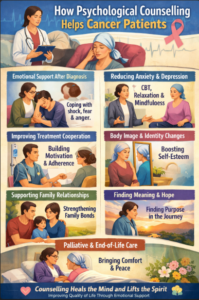
1. Emotional Support After Diagnosis

A cancer diagnosis often creates a strong psychological shock because it threatens a person’s life, identity, and future plans. Patients may experience multiple emotional reactions at the same time.

Common Emotional Reactions

1. Shock and Denial

  • Patients may feel numb or unable to believe the diagnosis
  • Some avoid discussing the illness or delay treatment decisions
  • Denial sometimes works as a short-term protective mechanism

2. Fear of Death

  • Worries about survival and life expectancy
  • Fear of suffering, pain, or loss of independence
  • Concerns about children, family, and unfinished responsibilities

3. Anxiety About Treatment

  • Fear of chemotherapy, surgery, or radiation
  • Worry about side-effects like hair loss, weakness, or nausea
  • Uncertainty about treatment success

4. Anger, Helplessness, or “Why Me?” Feelings

  • Anger toward fate, doctors, or oneself
  • Feeling loss of control over life decisions
  • Hopelessness about the future

How Counselling Helps in the Early Stage

Psychological counselling provides structured emotional support that helps patients adjust to the reality of illness.

1. Helps Patients Process the Diagnosis Gradually

  • Counsellor explains emotional reactions as normal responses
  • Patients are guided to accept information step by step
  • Reduces emotional overload

2. Provides Safe Space to Express Emotions

  • Patients can cry, express anger, or share fears freely
  • Reduces emotional suppression and internal stress
  • Builds therapeutic trust and rapport

3. Reduces Panic and Catastrophic Thinking

  • Counsellor identifies irrational fears (“I will die immediately”)
  • Uses CBT techniques to replace extreme thoughts
  • Encourages realistic hope and coping

4. Helps Patients Feel Heard and Understood

  • Active listening increases emotional validation
  • Patients feel less alone in their experience
  • Strengthens psychological resilience

Why Early Emotional Stabilization is Important

Early counselling support:

  • Prevents severe depression and anxiety later
  • Improves treatment cooperation
  • Enhances decision-making ability
  • Builds coping strength for the long treatment journey

Thus, psychological counselling in the initial phase of cancer is not just supportive but preventive, helping patients move from emotional shock to adaptive coping.

2. Reducing Anxiety, Depression, and Distress

Cancer patients commonly experience:

  • Clinical depression
  • Health anxiety
  • Sleep disturbances
  • Hopelessness

Psychological counselling uses techniques such as:

  • Cognitive Behaviour Therapy (CBT) to reduce negative thoughts
  • Relaxation training to manage stress
  • Mindfulness techniques to reduce rumination
  • Supportive therapy to increase emotional strength

Research shows that reduced psychological distress improves immune functioning, pain tolerance, and treatment response.

3. Improving Treatment Cooperation and Medical Outcomes

Many patients feel:

  • Fear of chemotherapy/radiation
  • Doubt about treatment success
  • Fatigue from long medical procedures

Counselling helps patients:

  • Understand treatment realistically
  • Build motivation to continue therapy
  • Manage side-effects psychologically
  • Develop coping routines

Patients with psychological support are more likely to:
Continue treatment regularly
Follow medical advice
Maintain hope and engagement

4. Managing Body Image and Identity Changes

Cancer treatments can lead to:

  • Hair loss
  • Weight change
  • Surgical scars
  • Loss of physical strength

These changes may affect self-esteem and social confidence.

Counselling helps patients:

  • Accept physical changes
  • Rebuild self-identity beyond illness
  • Improve confidence in social situations
  • Reduce shame and isolation

5. Supporting Family and Social Relationships

Cancer affects not just the patient but the whole family system.

Counselling can:

  • Improve communication between patient and family
  • Reduce caregiver burnout
  • Address guilt or dependency feelings
  • Help families provide healthy emotional support

Family counselling often reduces conflict and increases emotional closeness.

6. Helping Patients Find Meaning and Hope

Many cancer patients ask:

  • “Why did this happen to me?”
  • “What is the meaning of my life now?”
  • “Will happen to my family?”

Approaches like:

  • Existential therapy
  • Logotherapy (meaning-focused therapy)
  • Spiritual counselling

help patients:

  • Discover purpose despite illness
  • Build emotional resilience
  • Experience inner peace

This meaning-making process is strongly linked to better psychological adjustment.

7. Counselling in Palliative and End-of-Life Care

When cancer is advanced, counselling focuses on:

  • Fear of death
  • Unfinished life goals
  • Family closure
  • Emotional comfort

It helps patients:

  • Accept reality gradually
  • Reduce suffering and anxiety
  • Strengthen emotional connections
  • Experience dignity and peace

Conclusion

Psychological counselling does not medically cure cancer, but it plays a powerful healing role. It reduces emotional distress, improves coping skills, strengthens family relationships, and helps patients maintain hope and dignity throughout their journey. By addressing the psychological side of illness, counselling ensures that cancer care becomes truly holistic—treating not just the body, but the mind and the person as a whole.

FAQs: Psychological Counselling for Cancer Patients

1. Can psychological counselling cure cancer?

No. Counselling does not medically cure cancer, but it improves emotional well-being, coping ability, treatment adherence, and quality of life.

2. Why do cancer patients need counselling?

Because diagnosis and treatment often cause anxiety, depression, fear of death, body-image issues, and family stress. Counselling helps patients adjust emotionally.

3. When should counselling start for a cancer patient?

Ideally from the time of diagnosis. Early counselling prevents severe distress and helps patients make informed treatment decisions.

4. What psychological problems are most common in cancer patients?

  • Anxiety
  • Depression
  • Fear of recurrence
  • Sleep problems
  • Hopelessness
  • Social withdrawal

5. Which counselling approaches are used for cancer patients?

Common approaches include:

  • Cognitive Behaviour Therapy (CBT)
  • Supportive psychotherapy
  • Mindfulness-based therapy
  • Family counselling
  • Existential therapy
  • Psychoeducation

6. Does counselling help reduce treatment fear?

Yes. Counselling explains procedures, manages uncertainty, and teaches coping strategies, which reduces fear of chemotherapy, surgery, and side effects.

7. Can counselling improve treatment success?

Indirectly yes. Patients who receive psychological support are more likely to follow medical advice, attend treatment regularly, and maintain motivation.

8. How does counselling help with depression in cancer patients?

It helps patients express emotions, challenge negative thoughts, build hope, improve social support, and develop coping skills.

9. Does counselling help family members too?

Yes. Family counselling improves communication, reduces caregiver stress, and helps relatives support the patient effectively.

10. Can counselling help terminal cancer patients?

Yes. In palliative care, counselling reduces fear of death, helps emotional closure, strengthens relationships, and promotes dignity and peace.

11. How many counselling sessions does a cancer patient need?

There is no fixed number. It depends on emotional needs, illness stage, and treatment duration. Some need short-term support, others long-term therapy.

12. Is group counselling useful for cancer patients?

Yes. Support groups reduce isolation, increase hope, and allow patients to share experiences with others facing similar challenges.

13. Does counselling help with body-image issues after treatment?

Yes. It helps patients accept physical changes, rebuild confidence, and reconnect with their sense of identity.

14. Who provides counselling for cancer patients?

  • Clinical psychologists
  • Psycho-oncologists
  • Psychiatric social workers
  • Counsellors trained in medical settings

15. Is psychological counselling part of modern cancer care?

Yes. Most hospitals now follow a biopsychosocial approach, where emotional care is considered an essential part of treatment.

Written by Baishakhi Das

Counselor | Mental Health Practitioner
B.Sc, M.Sc, PG Diploma in Counseling


Reference 

  1. World Health Organization – Cancer Supportive Care
    https://www.who.int/news-room/fact-sheets/detail/cancer

  2. National Cancer Institute – Coping with Cancer
    https://www.cancer.gov/about-cancer/coping

  3. American Cancer Society – Emotional Support for Cancer Patients
    https://www.cancer.org/treatment/treatments-and-side-effects/emotional-side-effects.html

  4. NHS – Cancer Psychological Support
    https://www.nhs.uk/conditions/cancer/living-with-cancer/

  5. Psycho-Oncology Journal (research source)
    https://onlinelibrary.wiley.com/journal/10991611

  6. World Human Spirit Day: Psychological Meaning of the Human Spirit

This topic performs well due to rising searches around men’s mental health, workplace stress, and burnout recovery. Combining emotional insight with practical steps increases engagement and trust.
World Human Spirit Day: Psychological Meaning of the Human Spirit

World Human Spirit Day celebrates the strength, dignity, and resilience that allow human beings to endure hardship and still search for meaning, hope, and connection.
From a psychological perspective, the human spirit is not a mystical idea alone — it is reflected in our ability to cope, adapt, grow, and find purpose even in suffering.

Modern psychology links the human spirit with:

  • Meaning in life
  • Resilience
  • Hope and optimism
  • Existential awareness
  • Post-traumatic growth

This day is therefore deeply connected with mental health, coping, and psychological strength.

1. Meaning in Life: The Core of Human Spirit

One of the strongest psychological interpretations of the human spirit comes from Viktor Frankl, founder of Logotherapy.

Frankl’s Theory of Meaning

Frankl believed:

Human beings can survive almost any suffering if they find meaning in it.

According to Logotherapy, people find meaning through:

  1. Creative values – what we give to the world (work, service)
  2. Experiential values – what we receive (love, beauty, relationships)
  3. Attitudinal values – how we respond to suffering

This explains why some individuals remain psychologically strong even in illness, poverty, or trauma — their sense of purpose sustains the human spirit.

Research shows that meaning in life is linked to:

  • Lower depression
  • Greater life satisfaction
  • Better coping during crisis

2. Resilience: Psychological Strength of the Spirit

Resilience is the capacity to recover from adversity.
It represents the functional expression of the human spirit.

Resilience Theory

Psychologists define resilience as:

Positive adaptation despite significant adversity.

Key protective factors:

  • Secure attachment relationships
  • Emotional regulation skills
  • Social support
  • Sense of control
  • Future hope

Developmental Perspective

Research in Ann Masten described resilience as:

“Ordinary magic” — meaning resilience is not rare; it comes from normal human adaptive systems.

This supports the idea that the human spirit is not supernatural, but rooted in our biological, social, and psychological design.

3. Existential Psychology: Freedom, Responsibility, and Growth

Existential psychologists argue that the human spirit emerges when people confront life’s deepest realities:

  • Death
  • Isolation
  • Freedom
  • Meaninglessness

Existential Theory

Thinkers like Rollo May and Irvin Yalom proposed that:

Psychological growth occurs when individuals face existential anxiety rather than avoid it.

Facing life’s uncertainties can lead to:

  • Authentic living
  • Self-awareness
  • Value-driven choices
  • Psychological maturity

Thus, the human spirit is seen as the courage to live meaningfully despite uncertainty.

4. Optimism and Hope: The Cognitive Side of the Spirit

Positive psychology views the human spirit through hope and optimism.

Learned Optimism Theory

Psychologist Martin Seligman showed that people differ in their explanatory styles:

  • Optimists view problems as temporary and specific
  • Pessimists see them as permanent and global

Optimism predicts:

  • Better mental health
  • Lower stress response
  • Higher achievement
  • Stronger coping in illness

Hope Theory

According to Charles Snyder:
Hope has two components:

  1. Agency – belief that goals can be achieved
  2. Pathways – ability to generate solutions

Hope fuels perseverance — a core element of the human spirit.

5. Post-Traumatic Growth: When the Spirit Expands After Pain

Psychology now recognises that people may grow after trauma.

Post-Traumatic Growth Theory

Developed by Richard Tedeschi and Lawrence Calhoun, it suggests that adversity can lead to:

  • Stronger relationships
  • Deeper appreciation of life
  • Spiritual growth
  • New possibilities
  • Greater personal strength

This shows that the human spirit does not only survive trauma — it may transform through it.

Conclusion

World Human Spirit Day reminds us that psychological strength lies not in avoiding suffering, but in responding to it with meaning, courage, hope, and connection.

From Frankl’s search for meaning to modern resilience research, psychology confirms:

The human spirit is the capacity to find purpose, remain hopeful, and continue growing — even in the face of adversity.

This day encourages us to nurture:

  • Purpose
  • Emotional resilience
  • Supportive relationships
  • Hopeful thinking
  • Self-awareness

Because strengthening the human spirit ultimately strengthens mental health.

FAQ: World Human Spirit Day (Psychological Perspective)

1. What is World Human Spirit Day?

World Human Spirit Day is observed to celebrate human resilience, dignity, inner strength, and the ability to grow despite adversity.

2. How is the human spirit defined in psychology?

In psychology, the human spirit refers to the capacity for meaning-making, resilience, hope, and psychological growth.

3. Why is meaning in life important for mental health?

A sense of purpose is linked with lower depression, better coping skills, and higher life satisfaction.

4. Which psychologist focused on meaning in life?

Viktor Frankl developed Logotherapy, which states that humans are motivated by a search for meaning.

5. What is Logotherapy?

Logotherapy is a therapeutic approach that helps individuals find purpose in life, even during suffering.

6. What is resilience in psychology?

Resilience is the ability to adapt positively and recover from stress, trauma, or life challenges.

7. Can resilience be learned?

Yes. Resilience can be developed through emotional regulation, supportive relationships, problem-solving skills, and positive thinking.

8. What is existential psychology?

Existential psychology focuses on human freedom, responsibility, death awareness, and the search for meaning.

9. How does optimism affect mental health?

Optimism reduces stress, improves coping, strengthens motivation, and is associated with better physical and mental health.

10. What is learned optimism?

Learned optimism is the idea that people can train themselves to think more positively about setbacks.

11. What is Hope Theory?

Hope Theory explains that hope comes from goal motivation (agency) and the ability to find pathways to reach goals.

12. What is post-traumatic growth?

Post-traumatic growth refers to positive psychological changes that occur after trauma, such as stronger relationships and deeper life appreciation.

13. Why is World Human Spirit Day relevant to mental health awareness?

Because it highlights coping, emotional strength, purpose, and growth — all central themes in psychological well-being.

14. How can individuals nurture their human spirit?

By building meaning, maintaining relationships, practicing gratitude, setting goals, and developing emotional resilience.

15. How can counsellors use this day in awareness programs?

They can organize workshops, psychoeducation sessions, resilience training, storytelling events, and meaning-focused therapeutic discussions.

Written by Baishakhi Das

Counselor | Mental Health Practitioner
B.Sc, M.Sc, PG Diploma in Counseling


Reference

  1. Viktor Frankl – Man’s Search for Meaning
    https://www.goodreads.com/book/show/4069.Man_s_Search_for_Meaning

  2. American Psychological Association – Resilience
    https://www.apa.org/topics/resilience

  3. Positive Psychology Center (University of Pennsylvania)
    https://ppc.sas.upenn.edu

  4. Snyder’s Hope Theory overview
    https://positivepsychology.com/hope-theory

  5. Post-Traumatic Growth Research Group
    https://ptgi.uncc.edu

  6. Meaning in Life research review
    https://www.frontiersin.org/articles/10.3389/fpsyg.2018.01563/full

  7. Food–Mood Connection: How What You Eat Affects How You Feel

This topic performs well due to rising searches around men’s mental health, workplace stress, and burnout recovery. Combining emotional insight with practical steps increases engagement and trust.
Food–Mood Connection: How What You Eat Affects How You Feel

We often think of food as fuel for the body, something that keeps us physically active and healthy. However, food is not only nourishment for muscles and organs — it is also essential for the brain and emotional well-being. The food–mood connection refers to the powerful relationship between what we eat and how we feel, think, and respond to stress in our daily lives.

In recent years, scientific research in nutrition, psychology, and neuroscience has increasingly shown that diet plays a significant role in mental health. Nutrients from food help regulate brain chemistry, influence hormones, and support the production of neurotransmitters that control mood, sleep, motivation, and concentration. This means that our daily food choices can affect not only our physical energy but also our emotional stability, resilience, and cognitive functioning.

Many traditional cultures have long believed that food affects the mind as well as the body. Today, modern science supports this idea, showing that unhealthy eating patterns may contribute to fatigue, irritability, anxiety, and low mood, while balanced nutrition can support emotional balance, stress tolerance, and overall psychological well-being. In this way, food becomes more than a biological need — it becomes an important tool for mental health care.

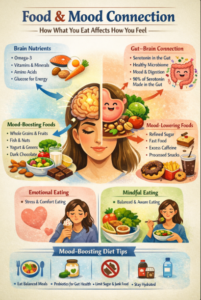
1. The Brain Runs on Nutrients

Your brain is an organ that requires continuous nourishment to function effectively. It works 24/7, controlling thoughts, emotions, memory, and behaviour. To maintain mental clarity and emotional balance, the brain depends on several essential nutrients.

1. Glucose for Daily Energy

Glucose is the brain’s main fuel source.

In daily life this means:

  • Skipping breakfast → feeling weak, dizzy, or unable to focus
  • Long gaps between meals → sudden irritability or headache
  • Balanced meals → steady energy and better productivity

2. Amino Acids for Mood Chemicals

Proteins provide amino acids that help produce neurotransmitters such as serotonin, dopamine, and GABA.

In daily life this shows up as:

  • Low protein intake → low motivation, poor mood regulation
  • Balanced protein meals → better emotional control and alertness
  • Students or workers may notice improved focus after protein-rich meals

3. Fatty Acids for Brain Cell Health

Healthy fats, especially omega-3 fatty acids, help build brain cells and support emotional regulation.

In daily life this affects:

  • Diets very low in healthy fats → poor concentration, mood swings
  • Regular intake of nuts, seeds, or fish → improved memory and calmness
  • People under stress often cope better with adequate healthy fats

4. Vitamins and Minerals for Mental Balance

Micronutrients such as B-vitamins, iron, magnesium, and zinc help regulate mood chemicals and nerve functioning.

In daily life this may appear as:

  • Iron deficiency → tiredness, low mood, lack of motivation
  • Low B-vitamins → forgetfulness or mental exhaustion
  • Proper nutrition → sharper thinking and emotional stability

What Happens When the Brain Lacks Nutrients?

When the body does not receive proper nourishment, the brain struggles to function efficiently. This may lead to:

  • Fatigue → feeling tired even after rest
  • Irritability → reacting quickly or feeling emotionally sensitive
  • Brain fog → difficulty thinking clearly or remembering things
  • Low mood → reduced motivation or interest in daily activities
  • Poor concentration → trouble focusing at work, study, or conversations

In everyday life, these symptoms often get blamed on stress or workload, but nutrition plays a major hidden role. Regular balanced meals can significantly improve mental clarity, emotional stability, and overall functioning.

2. Neurotransmitters and Food

Mood is largely controlled by neurotransmitters such as:

  • Serotonin – regulates happiness, calmness, sleep
  • Dopamine – linked to motivation and pleasure
  • GABA – helps reduce anxiety
  • Norepinephrine – affects alertness and focus

These chemicals are made from nutrients found in food.

For example:

  • Tryptophan (from milk, nuts, seeds) → helps produce serotonin
  • Protein (eggs, lentils, fish) → supports dopamine production
  • Omega-3 fatty acids → improve emotional regulation

This means diet directly affects emotional balance.

3. The Gut–Brain Connection

The gut and brain communicate through the gut–brain axis.
The gut contains trillions of bacteria, called the microbiome, which influence:

  • Mood
  • Stress levels
  • Inflammation
  • Cognitive function

In fact, nearly 90% of serotonin is produced in the gut.

Foods that support gut health:

  • Yogurt and fermented foods
  • Fruits and vegetables
  • Whole grains
  • Fiber-rich foods

When gut health is poor, people may experience:

  • Anxiety
  • Low mood
  • Poor sleep
  • Digestive discomfort

4. How Different Foods Affect Mood

Mood-Boosting Foods

These help stabilize emotions and energy:

  • Whole grains → steady glucose supply
  • Fruits and vegetables → antioxidants reduce brain stress
  • Nuts and seeds → healthy fats for brain cells
  • Fish → omega-3 reduces depression risk
  • Dark chocolate → improves serotonin and endorphins

Mood-Lowering Foods

These may worsen emotional stability:

  • Refined sugar → causes energy crashes and irritability
  • Ultra-processed foods → linked with higher depression risk
  • Excess caffeine → increases anxiety and restlessness
  • Skipping meals → leads to mood swings and poor focus

5. Emotional Eating vs. Mindful Eating

Many people use food to cope with emotions such as stress, loneliness, or boredom. This is known as emotional eating.

While it gives temporary comfort, it often leads to:

  • Guilt
  • Poor digestion
  • Energy crashes
  • Weight concerns

In contrast, mindful eating means:

  • Eating slowly
  • Noticing hunger cues
  • Choosing foods that nourish body and mind
  • Understanding emotional triggers

This approach improves both physical and psychological well-being.

6. Practical Tips to Improve Mood Through Food

  • Eat balanced meals (carbs + protein + healthy fats)
  • Do not skip breakfast
  •  Stay hydrated
  •  Include fermented foods for gut health
  •  Reduce refined sugar and junk food
  •  Eat at regular times
  •  Pay attention to how food affects your emotions

Conclusion

Food is more than nutrition — it is a psychological tool. A balanced diet supports emotional regulation, improves brain chemistry, and strengthens resilience against stress. While food alone cannot treat mental illness, it plays a powerful role in overall mental well-being.

Taking care of what you eat is, in many ways, taking care of how you feel.

FAQs: Food–Mood Connection

1. Can food really affect mental health?

Yes. Nutrients influence brain chemistry, neurotransmitter production, and inflammation levels, all of which affect mood and emotional stability.


2. Which foods help improve mood naturally?

Foods rich in omega-3s, whole grains, fruits, vegetables, nuts, seeds, and fermented foods support emotional balance and brain health.


3. Can skipping meals affect mood?

Yes. Skipping meals can cause low blood sugar, leading to irritability, fatigue, poor concentration, and mood swings.


4. Is there a link between sugar and anxiety?

High sugar intake may cause rapid energy spikes and crashes, which can increase restlessness, irritability, and anxiety-like symptoms.


5. Does caffeine influence mood?

Moderate caffeine may improve alertness, but excess intake can increase anxiety, sleep problems, and emotional instability.


6. How does gut health affect mental health?

The gut produces many neurotransmitters, including serotonin. Poor gut health is linked with stress sensitivity, anxiety, and low mood.


7. Can diet help with depression?

A healthy diet alone cannot replace treatment, but balanced nutrition can support brain function and improve overall emotional well-being.


8. What nutrients are most important for mental health?

Omega-3 fatty acids, B-vitamins, iron, magnesium, zinc, protein, and fiber are particularly important for brain and emotional health.


9. Can dehydration affect mood?

Yes. Even mild dehydration may cause fatigue, headaches, poor focus, and irritability.


10. Is emotional eating harmful?

Occasional comfort eating is normal, but frequent emotional eating may lead to guilt, weight issues, and unstable energy levels.


11. Does breakfast really matter for mood?

Yes. A balanced breakfast helps stabilize glucose levels, improving attention, patience, and emotional regulation during the day.


12. Can children’s behaviour be influenced by diet?

Yes. Nutritional deficiencies and high sugar intake may affect attention, energy levels, and emotional control in children.


13. How long does it take for diet changes to affect mood?

Some effects, like stable energy, may appear within days, while long-term mood improvement may take weeks of consistent healthy eating.


14. Are processed foods linked to mental health problems?

Research suggests that diets high in ultra-processed foods are associated with higher risk of depression, inflammation, and low energy.


15. What is one simple step to improve the food–mood connection?

Start by eating regular balanced meals with protein, whole grains, and vegetables to stabilize energy and support brain function.

Written by Baishakhi Das

Counselor | Mental Health Practitioner
B.Sc, M.Sc, PG Diploma in Counseling


Reference

  1. Harvard Health Publishing
    https://www.health.harvard.edu
    (Articles on diet, brain health, and mood)

  2. World Health Organization – Nutrition & Mental Health
    https://www.who.int

  3. American Psychological Association – Nutrition & Mental Health
    https://www.apa.org

  4. National Institute of Mental Health (NIMH)
    https://www.nimh.nih.gov

  5. Frontiers in Nutrition Journal (Diet and Depression research)
    https://www.frontiersin.org/journals/nutrition

  6. The Lancet Psychiatry – Food and Mental Health Studies
    https://www.thelancet.com/psychiatry

  7. Gut–Brain Axis Research Overview (Nature Reviews Gastroenterology)
    https://www.nature.com

  8. Importance of Secure Attachment in Childhood

This topic performs well due to rising searches around men’s mental health, workplace stress, and burnout recovery. Combining emotional insight with practical steps increases engagement and trust.
Importance of Secure Attachment in Childhood

One of the most valuable pillars of psychological, emotional, and social development of a child is secure attachment. Secure attachment was initially theorized in the Attachment Theory of John Bowlby but was elaborated on by observational theorists such as Mary Ainsworth, secure attachment is the intense emotional connection that develops when a caregiver is willing to support a child with warmth, sensitivity, and dependability. Experience of being comforted, understood, and protected many times leads to the child developing a sense of safety in the world.

This premature relationship goes much further than offering immediate comfort. It forms the framework within which children perceive relationships, control their emotions and form a sense of self. When the caregivers are emotionally present and predictable, children get to learn that they can trust other people, that their feelings are important to them, and they deserve love and care. In the long run, this feeling of safety enables them to venture into their world with a feeling of confidence, gain strength in stressful life issues and to form healthy relationships with others.

Through this, secure attachment is not only a characteristic of early childhood bonding; it is a developmental resource that predicts personality, mental health and patterns of relationship in the lifespan.

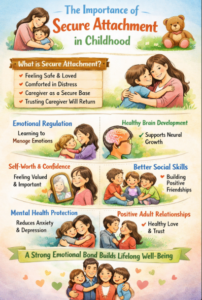
What is Secure Attachment?

Secure attachment develops when a child consistently experiences a sense of safety and emotional connection with their caregiver. It grows in everyday moments when the child feels:

  • Safe and protected, knowing someone will take care of their physical and emotional needs

  • Emotionally understood, as their feelings are noticed, named, and accepted rather than ignored or dismissed

  • Comforted during distress, with the caregiver offering reassurance, soothing, and presence when the child is upset or frightened

  • Confident that the caregiver will return, building trust that separations are temporary and relationships are reliable

These experiences repeated give the child a feeling of security within him or her. It is natural that such children start to rely on their caregiver as some safe point where they can feel secure and may seek to explore the world, experience new things and become independent. Meanwhile, the caregiver turns into a safe haven that he or she can come to to de-stress, be reassured and emotionally refuelled in the face of stress or uncertainty. This is the reason why this equilibrium between exploration and safety is a primary indicator of healthy attachment formation.

🧠 Why Secure Attachment is Important

1️⃣ Builds Emotional Regulation

Children with secure attachment learn how to manage emotions because caregivers help them calm down during distress. Over time, they internalize this ability and develop better self-control, frustration tolerance, and coping skills.

2️⃣ Shapes Brain Development

Early nurturing relationships influence neural pathways related to:

  • Stress response
  • Memory
  • Emotional processing
  • Social understanding

Consistent caregiving helps reduce toxic stress and supports healthy brain growth.

3️⃣ Develops Self-Worth and Confidence

When caregivers respond sensitively, children learn:

“I am valued”
“My needs matter”
“I am safe in relationships”

This becomes the base of healthy self-esteem and identity formation.

4️⃣ Improves Social Relationships

Securely attached children usually:

  • Show empathy toward others
  • Form friendships easily
  • Trust people appropriately
  • Communicate feelings better

They are less likely to develop aggressive or withdrawn social patterns.

5️⃣ Protects Mental Health

Research shows secure attachment lowers the risk of:

  • Anxiety disorders
  • Depression
  • Behavioural problems
  • Emotional dysregulation

It acts as a psychological buffer against trauma and stress later in life.

6️⃣ Influences Adult Relationships

Attachment patterns often continue into adulthood. Securely attached children are more likely to become adults who:

  • Maintain stable romantic relationships
  • Communicate openly
  • Handle conflict constructively
  • Trust without excessive fear of abandonment

👪 How Caregivers Can Promote Secure Attachment

Secure attachment does not require perfect parenting — it requires consistent emotional availability. Children do not need caregivers who never make mistakes; they need caregivers who are present, responsive, and willing to reconnect after difficult moments. It is this pattern of reliable care, rather than perfection, that helps a child feel emotionally safe.

Practical ways to nurture secure attachment include:

  • Responding to a child’s cries with warmth, showing them that their needs matter and that help is available
  • Maintaining eye contact and affectionate touch, which strengthens emotional connection and reassures the child of the caregiver’s presence
  • Listening to their feelings without dismissing or minimizing them, helping the child feel understood and emotionally validated
  • Being predictable in daily routines, so the child experiences stability, structure, and a sense of control in their environment
  • Repairing after conflict, for example saying, “I’m sorry I shouted, I was upset, but I still love you” — this teaches the child that relationships can recover after mistakes

Through these repeated experiences, children gradually internalize a sense of trust and security. Even small, everyday interactions — a comforting hug, a patient response, or a moment of shared attention — quietly build the foundation of attachment security that supports emotional wellbeing throughout life.

 Conclusion

Secure attachment is not just about childhood comfort — it is about lifelong psychological resilience. When children feel safe, seen, and supported, they grow into emotionally healthy, confident, and socially capable adults. Investing in early emotional bonding is therefore one of the most powerful ways to promote mental health across the lifespan.

FAQs: Secure Attachment in Childhood

1. What is secure attachment in simple terms?

Secure attachment is the emotional bond between a child and caregiver where the child feels safe, loved, and confident that their needs will be met.

2. At what age does secure attachment develop?

Attachment begins in infancy and becomes clearly visible between 6–24 months, though it continues to develop throughout early childhood.

3. Can working parents still build secure attachment?

Yes. Attachment depends on quality of interaction, not the number of hours spent. Consistent warmth, responsiveness, and emotional availability matter most.

4. What are signs of a securely attached child?

They usually:

  • Seek comfort from caregivers
  • Calm down when reassured
  • Explore confidently
  • Show empathy and social interest

5. What causes insecure attachment?

Inconsistent caregiving, emotional neglect, chronic stress, trauma, or frequent separations without reassurance may contribute to insecure attachment patterns.

6. Is secure attachment only about the mother?

No. Secure attachment can form with any consistent caregiver — father, grandparent, adoptive parent, or guardian.

7. Can attachment problems be fixed later?

Yes. Children can develop stronger attachment security through:

  • Therapy
  • Stable caregiving
  • Emotion coaching
  • Positive relational experiences

8. Does secure attachment make children dependent?

No. It actually promotes healthy independence, because children feel safe enough to explore the world.

9. How does secure attachment affect mental health?

It lowers risk of anxiety, depression, behavioural problems, and improves emotional regulation and resilience.

10. Can too much comfort spoil a child?

No. Responding to emotional needs builds security, not spoiling. Security actually reduces clinginess over time.

11. What is a “secure base”?

A caregiver who provides emotional safety so the child feels confident exploring new environments.

12. What is a “safe haven”?

A caregiver the child returns to for comfort during fear, stress, or sadness.

13. How do daily routines help attachment?

Predictable routines create a sense of stability and trust, which strengthens emotional security.

14. Can teachers help in attachment development?

Yes. Warm, responsive teachers can act as secondary attachment figures, supporting emotional development.

15. Is secure attachment important for adult relationships?

Yes. Early attachment influences how adults form trust, manage conflict, and maintain emotional closeness in relationships.

Written by Baishakhi Das

Counselor | Mental Health Practitioner
B.Sc, M.Sc, PG Diploma in Counseling


Reference

  1. Bowlby, J. (1969). Attachment and Loss, Vol. 1
    https://www.simplypsychology.org/bowlby.html

  2. Ainsworth, M. D. S. (1978). Patterns of Attachment
    https://www.simplypsychology.org/ainsworth-strange-situation.html

  3. American Psychological Association – Attachment
    https://www.apa.org/monitor/sep99/attachment

  4. Harvard Center on the Developing Child – Early Relationships
    https://developingchild.harvard.edu/science/key-concepts/serve-and-return/

  5. UNICEF – Early Childhood Development
    https://www.unicef.org/early-childhood-development

  6. Zero to Three – Attachment and Bonding
    https://www.zerotothree.org

  7. How Trauma in Parents Affects Child Development

This topic performs well due to rising searches around men’s mental health, workplace stress, and burnout recovery. Combining emotional insight with practical steps increases engagement and trust.

How Trauma in Parents Affects Child Development

Trauma is not restricted to the person who is subjected to it directly, but the trauma can even spread generational. But once parents undergo unresolved trauma, it tends to affect their emotional well being, parenting style, relationships and family set up. These elements are important in determining the psychological, emotional and social growth of a child. Learning the impact of trauma on children in their parents is crucial to early intervention and healthier family relationships.

Understanding Parental Trauma

Parental trauma is an unpleasant or overwhelming experience that parents have undergone at various points in their lives. They can be the childhood mistreatment or neglect, family violence, the loss of loved ones, major illness, natural calamities, exposure to war or conflict or long emotional strains. These experiences may profoundly influence the feeling of security, identity and emotion regulation capabilities in an individual. In most instances, the effects of trauma may not be resolved, i.e. the parent is still affected emotionally, cognitively as well as behaviorally even after the traumatic experience has passed. Unresolved trauma may influence the perception of relationships, coping with stress, and reaction to difficulties in the daily life of the parents.

The psychological manifestations of trauma can include anxiety, depression, emotional numbness, and irritability, hypervigilance, or mistrust of other people. The parents can be caught in emotional hot spots, flashbacks or a sense of excessive stress, trying to even imagine why they are reacting that way. Such emotional battles may affect the way parents treat their children unconsciously. An example is that due to emotional overload, a parent might not be able to give sufficient attention, warmth or reassurance as a child should have in order to develop in a healthy way. Eventually, these trends could affect emotional security, behaviour, and social functioning of the child.

1. Effects on Emotional Responsiveness

Parents with unresolved trauma would not be able to respond sensitively to the emotional needs of their child. They could end up being emotionally detached, hyper sensitive or intermittently inconsistent. Children rely on the consistent emotional support to be safe. Children would not be able to share their feelings or build their confidence in seeking help in case of inconsistent emotional responsibilities.

2. Effect on Stress and Coping Style.

The trauma may influence the coping of the parents with stress and difficulties. Parents will respond by being either angry, avoiding, or developing more fear, or overprotective or controlling. Children will tend to pick up coping mechanisms by observing their parents. In case parents develop unhealthy coping patterns to deal with stress, their children might follow them which can impact their emotional and behavioural developments.

3. Influencing Parent-Child Communication.

Communication may be challenging at times because of trauma. Parents can either not speak about feelings or any stressful situation, or they can not listen actively to their child concerns. A lack of emotional communication may lead to poor ability of a child to comprehend and communicate about his or her feelings, which might result in poor emotional intelligence and development of relationships.

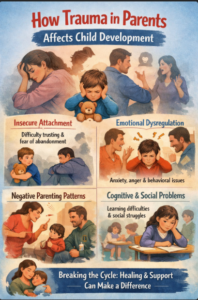
Attachment and Availability of Emotions.

Emotional availability is also one of the most important ways in which parental trauma impacts on child development. Parents provide emotional comfort, security of their children and advice. Parents can be unable to respond in a consistent and sensitive manner to the emotional needs of their child when they are overcome by their trauma.

This may lead to insecure attachment by children. Insecurely attached children might become trusting, abandonment phobic, or emotionally uncontrolling. Conversely, emotionally responsive parenting makes the children to feel more confident, resilient and learn to have healthy relationships with others.

Parenting Style and Behavior

Trauma may have a number of effects on parenting styles. Parents might end up being too protective and controlling because they are afraid that something bad might happen to their child. Others will grow to be emotionally distant or inconsistent due to the fact that they experience emotional closeness as isolating or instigating.

There are some instances when the parents who have witnessed severe or abusive parenting in their childhood may unconsciously recreate the same pattern, and this is called intergenerational transmission of trauma. The reason why this repetition takes place is not because parents desire to hurt their children but because unresolved traumas can influence beliefs on relationships, discipline and emotional expression.

Emotional Regulation and Modeling

Children figure out the ways of handling emotions mainly through watching their parents. Children who do not have many chances to acquire healthy coping skills might exist in a trauma-related scenario where parents are affected by traumatic events and have limited control over their emotions.

As an example, in case a parent often has anger, withdrawal and panic reactions, children can follow suit. In the long term, it has the potential of exposing the child to anxiety, behavioural issues, and stress management difficulties.

Effect on Cognitive and Social Development.

The impact that parental trauma has on cognitive and social development in a child is indirect. Home environment can be stressful and thus limit learning, communication and social interaction. Children who experience chronic parental stress are likely to lack concentration, experience poor performance in school or even lack friends.

Also, the family stress can trigger the system of stress response in a child. Critical early stress hormone activation may have an impact on brain development, memory and emotional processing.

Family Environment and Sense of Safety.

Children need to have something to hold on to in order to succeed. Parents with trauma might accidentally make volatile or stressful atmospheres. The constant fights, emotional alienation or outbursts of mood can cause children to feel unprotected or guilty to keep the family together.

Other children might end up caring to their parents a condition known as parentification. This may cause emotional load, untimely maturity and failure to concentrate on developmental needs of them.

Defensive Factors and Resilience.

Although these obstacles may be met, not every child of traumatised parents has unfavourable developmental outcomes. Parental trauma can be mitigated by a number of protective factors. These are favourable interactions with other caregivers, consistent family patterns, effective communication, and availability of mental health support.

Parents who realise that they are traumatised and seeking treatment can become much better parents. Parents can be assisted in the areas of therapy, psychoeducation, and emotional support to create healthier coping mechanisms and parent-child bonds.

Significance of Early Intervention.

It is important to recognise the effects and parental trauma early. Community support systems, educators, and mental health professionals are essential in the support of families. Approaches of trauma-informed parenting are aimed at explaining behaviour through the prism of emotional safety, empathy, and connexion instead of punishment.

It is possible to disrupt the intergenerational trauma cycle, by providing parents with coping mechanisms, emotional management techniques and parenting education and encouraging a healthier child growth.

Conclusion

Attachment patterns, parenting behaviour, emotional modelling, and family environment may deeply affect the emotional, social, and cognitive development of a child due to the effect of parental trauma. Nevertheless, trauma is not a predeterminant of destiny. Through education, counselling and reparation, parents are able to recover their past experiences, and provide healthy and secure homes that promote the growth and health of their children. The healing of trauma in parents is not only helpful to the parents but also an effective move towards producing strong and emotionally sound future generations.

Frequently Asked Questions (FAQs)

1. What is parental trauma?

Parental trauma is caused by distressing events that parents went through in the form of abuse, neglect, violence, loss, or serious illness, and still haunt them emotionally and psychologically.

2. What impact does the trauma of parents have on children?

Parenting behaviour, emotional, communication, and family stability may be affected by parental trauma, and therefore, have the potential to impact emotional, social, and psychological development of a child.

3. Are parents able to transfer trauma to their children?

Yes, the learned behaviour, emotional patterns, and parenting style can be transmitted to the next generation as a source of trauma. This is referred to as intergenerational trauma.

4. Are not all children of traumatised parents psychologically ill?

All children do not suffer adversely. Resilience can be fostered by protective factors like stable environments, supportive home and mental health support.

5. What is the contribution of parental trauma to attachment?

Emotional consistency can be a problem among traumatised parents and traumatised parents may not provide the children with the insecure attachment patterns that would influence the trust and emotional security.

6. What are the potential behavioural manifestations of children who experience parental trauma?

The children can be anxious, aggressive, withdrawn, low self-esteem, emotionally sensitive or have problems with social relationships.

7. What is the effects of parental trauma on emotional regulation among children?

Children acquire emotional management through observing their parents. In case the parents are unable to control emotions, the children can become affected by the same.

8. Does parental trauma influence academic performance of a child?

Yes, children who are subjected to chronic stress at home can have problems with concentration, learning and lower academic motivation.

9. How does communication contribute to the reduction of the effect of parental trauma?

The positive impact of parental trauma is minimised by open and supportive communication, which makes children feel safe, understood and emotionally secure.

10. Do therapy parents assist traumatised parents in parenting better?

Yes, therapy can assist parents to process trauma and acquire healthy coping strategies, as well as improve parent-child relationships.

11. What is parentification and how is it connected with trauma?

Parentification is whereby kids become caregivers to the parents. It may occur when parents are emotionally troubled because of trauma and emotional burden is put on children.

12. What can parents do to ensure that the trauma does not impact their children?

The parents will have an opportunity to undergo therapy, to engage in emotional regulation, to live by consistent schedules, and to establish positive relationships to shape a caring environment.

13. Is it possible that trauma can make an impact on the development of the brain in children?

Prolonged exposure to stress has the potential to affect the brain development, emotional processing and other stress response systems among children.

14. What protective variables are found to assist children in dealing with parental trauma?

Intense emotional attachment, favourable school climate, extended family support, and availability of mental health services contribute to the development of resilience in children.

15. At what point do parents seek professional help?

Parents are advised to request assistance in case of the trauma symptoms that impede the work in the daily routine, emotional regulation, personal relations, or parenting skills.

Written by Baishakhi Das

Counselor | Mental Health Practitioner
B.Sc, M.Sc, PG Diploma in Counseling


Reference 

  1. Impact of maternal childhood trauma on parenting and child behavior
    Research shows that a mother’s traumatic experiences influence her parenting style and can affect children’s emotional and behavioral outcomes.
    👉 https://pmc.ncbi.nlm.nih.gov/articles/PMC11545710/

  2. Intergenerational transmission of trauma and altered parenting skills
    Parents with trauma may have reduced capacity to empathize and provide emotional stability, affecting child attachment and development.
    👉 https://pmc.ncbi.nlm.nih.gov/articles/PMC9141097/

  3. Parental trauma influences long-term child development via emotion regulation and stress pathways
    Emotional dysregulation and poor mental health linked to trauma can affect parenting behaviors with long-lasting consequences for children.
    👉 https://pubmed.ncbi.nlm.nih.gov/33284991/

  4. Maternal trauma predicts child behavioral problems
    Maternal childhood trauma was significantly associated with internalizing and externalizing behaviors in young children.
    👉 https://pmc.ncbi.nlm.nih.gov/articles/PMC6994323/

  5. Intergenerational risk for PTSD and other psychopathology
    Maternal trauma exposure increases risk for trauma-related disorders in children, including PTSD and depression.
    👉 https://pmc.ncbi.nlm.nih.gov/articles/PMC7329591/

  6. Epigenetic effects of trauma across generations
    Trauma can affect children biologically, altering stress systems and risk for anxiety beyond parenting behavior alone.
    👉 https://pmc.ncbi.nlm.nih.gov/articles/PMC6127768/

  7. Parental trauma and children’s post-traumatic stress symptoms
    Patterns like overprotection and avoidance are consistently linked with child PTSD symptoms after trauma.
    👉 https://pmc.ncbi.nlm.nih.gov/articles/PMC9788707/

  8. Systematic evidence of intergenerational effects of trauma exposure
    Collective and individual trauma exposures show measurable psychological effects in descendants.
    👉 https://link.springer.com/article/10.1186/s40359-025-03012-4

  9. Recent research highlights ongoing psychological effects of intergenerational trauma
    Trauma can shape family dynamics, coping mechanisms, and emotional wellbeing across generations.
    👉 https://www.researchgate.net/publication/383190811_Examining_the_Psychological_Impact_of_Intergenerational_Trauma_on_Family_Dynamics_in_Post-Conflict_Societies

  10. Scientific overview of trauma transmission and epigenetics
    Research suggests trauma may influence gene expression and biological stress systems in children.
    👉 https://www.scientificamerican.com/article/how-parents-trauma-leaves-biological-traces-in-children/

  11. Understanding Parentification and Its Psychological Effects


This topic performs well due to rising searches around men’s mental health, workplace stress, and burnout recovery. Combining emotional insight with practical steps increases engagement and trust.

Understanding Parentification and Its Psychological Effects

The conventional meaning of parenting is the process by which the adults are in charge of nurturing, guiding and supporting the emotional, physical, as well as psychological growth of children. In certain family settings, however, this is an inverted role structure. This phenomenon is termed parentification when children are dragged to play adult roles in the family set up. Even though some adaptive skills may be developed among the children as a result of this experience, in cases where parentification is excessive or chronic, there are serious psychological and emotional implications that might stay into adulthood.

What is Parentification?

A family role reversal involves parentification in which a child is supposed to perform the emotional or practical demands of their parents or siblings rather than being provided with the care that they should have during their respective developmental level. It is common in families that are affected by the stressors of financial hardness, mental health problems of parents, substance abuse, chronic conditions, or family discord.

Parentification is generally categorized into two major types:

1. Emotional Parentification

Parentification in emotional parenting is the reverse as the child is in charge of the emotional need of the parents or the care givers. The child can become someone to share with, become an in-between in times of parental disputes or even be a shoulder to lean on by frustrated parents. The child then learns with time how to override his or her emotional need to sustain the family.

2. Instrumental Parentification

Instrumental parentification is where children become responsible in either physical or practical chores in the home. These responsibilities can be taking care of their younger brothers or sisters or doing chores at home, financial management or providing care to sick or disabled family members. Although assisting in chores may facilitate maturity, too much burden may disrupt the normal development of childhood.

Causes of Parentification

Parentification does not occur randomly; it usually develops as an adaptive response to family circumstances. Some common causes include:

  • Parental separation or divorce
  • Chronic illness or disability of a parent
  • Parental mental health disorders
  • Substance abuse within the family
  • Economic hardship and financial instability
  • Death or absence of a caregiver
  • Lack of extended family or social support systems

In such situations, children often step into caregiving roles to maintain family functioning and emotional balance.

Psychological Effects of Parentification

Parentification may have a psychological effect that may produce differing effects depending on the seriousness, the period and support system of the child. Other children will grow to be resilient, responsible and empathetic. But parentification in the long term/or excessively will cause emotional and psychological problems.

1. EMOTIONAL SUPPRESSION

Parentified children often learn to disregard or repress their own feelings since they have to take care of the needs of other people. It can result in the inability to express feelings and sense of personal emotional needs in the future.

2. ANXIETY AND CHRONIC STRESS

Adult duties at a tender age may form a continuous stress and anxiety. Children can experience continuous pressure to preserve stability in the family and this causes hyper-responsibility and fear of failure.

3. The inability to establish boundaries.

Adults who have gone through parentification tend to have problems saying no and tend to be too accommodative in a relationship. They can be guilty of focusing on their needs.

4. LOW SELF-WORTH

Parentified children can make a self worth depending on their level of caring towards others. In cases where they fail to match unrealistic expectations they might have a sense of guilt, shame, or inadequacy.

5. RELATIONSHIP CHALLENGES

The concept of parentification may affect adult relationships because it establishes over-caretaking, codependent, or inability to trust others to offer support patterns.

6. Deprivation of childhood life.

Children who face parentification would lack the chance to play, explore and socialise which are important in normal emotional and cognitive growth.

Possible Positive Outcomes

While parentification is often associated with negative consequences, some individuals develop positive traits such as:

  • High empathy and emotional sensitivity
  • Strong sense of responsibility
  • Advanced problem-solving abilities
  • Increased independence and maturity

However, these strengths should not overshadow the emotional burden that parentified children often carry.

Signs That a Child May Be Experiencing Parentification

Some indicators include:

  • Excessive worry about family members
  • Taking care of siblings or managing household responsibilities beyond age expectations
  • Acting as emotional support for parents
  • Feeling guilty when focusing on personal needs
  • Showing unusually high maturity compared to peers
  • Difficulty relaxing or engaging in age-appropriate activities

Long-Term Impact into Adulthood

Some of the problems that adults who underwent parentification could encounter include burnout, perfectionism, relationship imbalance, and emotional exhaustion. They can also have problems recognising their needs and wants, as they tend to consider the well-being of other people over their mental well-being.

Prevention and Healing

Addressing parentification requires awareness, emotional validation, and supportive interventions.

For Families:

  • Encouraging age-appropriate responsibilities
  • Seeking professional support during family crises
  • Maintaining clear parent-child boundaries
  • Providing emotional reassurance to children

For Adults Who Experienced Parentification:

  • Engaging in psychotherapy or counseling
  • Learning healthy boundary-setting skills
  • Developing self-compassion and emotional awareness
  • Reconnecting with personal interests and identity

Conclusion

Parentification is a family process that is complicated and is caused by children taking up the roles of adults at an early age. Although it can lead to some adaptive skills, long-term parentifying experience can have a strong influence on emotional well-being, identity and pattern of relationships. Early identification of the signs and providing the persons with the necessary psychological assistance can assist people in overcoming the adverse consequences of it and achieving a more decent level of interpersonal and emotional operations.

FAQs on Parentification and Its Psychological Effects

1. What is parentification in simple terms?

Parentification has been defined as a condition in which a child performs functions and duties traditionally performed by parents like emotional support or caregiving.

2. Always harmful parentification?

Not always. Children can be assigned responsibilities of a light nature, which can make them mature and empathetic. Nevertheless, over parentification or prolonged parentification may adversely influence the development of emotions and psychological growth.

3. What are the principal forms of parentification?

There are two main types:

Emotional parentification- It occurs when a child helps parents to meet their emotional needs.

Instrumental parentification- This is where a child is involved in physical or housework duties.

4. Why do families undergo parentification?

It can be as a result of sickness of parents, economic strain, divorce, use of drugs, family feud, or unsupportive systems.

5. What is the way parentification can influence a child on an emotional level?

It can result in emotional stifling, anxiety, stress, guilt and inability to comprehend personal emotional requirements.

6. Do parentified children, in the future, develop mental health problems?

Sure, they can be more susceptible to anxiety disorders, depression, burnout, or relationship problems in adulthood.

7. What are the indicators of a child undergoing parentification?

Symptoms will be over-responsibility, worrying about family members, emotional thinking that is above age, trouble with relaxation and feeling guilty when attending to personal needs.

8. What is the impact of parentification on development in childhood?

It also has the ability to disrupt play, social interaction, expression of emotions and identity formation which are fundamental to healthy development.

9. Is parentification going to have any effect on adult relationships?

Yes, people might have issues with boundaries, may be too responsible to others, or may become codependents in relationships.

10. Do older siblings have a greater parentification experience?

Yes, the elder siblings are sometimes expected to look after the younger children which also might result in parentification.

11. Do positive personality traits arise out of parentification? 

Others also become very empathetic, strong, responsible, leaders as well as problem solvers.

12. What should parenting parents do so as to avoid parentification?

Parents are able to stay in their roles, share age-related responsibilities, offer emotional security, and find support when the family is falling.

13. What can adults do to overcome parentification in the course of childhood?

Therapy, learning of boundaries, the development of self-care habits, and self-awareness may help in the healing process.

14. Does parentification amount to emotional neglect?

In extreme situations, it may be associated with emotional neglect since emotional needs of the child are not taken into consideration.

15. Even when professional help is necessary?

Professional assistance is suggested in case parentification causes emotional distress, relationship issues, anxiety, depression, and inability to cope with daily life.

Written by Baishakhi Das

Counselor | Mental Health Practitioner
B.Sc, M.Sc, PG Diploma in Counseling


Reference 

  1. Hooper, L. M. (2007). The Application of Attachment Theory and Family Systems Theory to the Phenomenon of Parentification.
    https://psycnet.apa.org

  2. Chase, N. D. (1999). Burdened Children: Theory, Research, and Treatment of Parentification.
    https://www.taylorfrancis.com

  3. American Psychological Association – Family Dynamics and Child Development
    https://www.apa.org

  4. Jurkovic, G. J. (1997). Lost Childhoods: The Plight of the Parentified Child.
    https://www.routledge.com

  5. National Child Traumatic Stress Network – Family Stress and Child Development
    https://www.nctsn.org

  6. Impact of Parental Stress on Child Behavior

This topic performs well due to rising searches around men’s mental health, workplace stress, and burnout recovery. Combining emotional insight with practical steps increases engagement and trust.

Impact of Parental Stress on Child Behavior

The parenting process is an important factor that contributes to the development of a child in terms of his or her emotional, social and behavioural aspects. Although parents aim at ensuring the safe and supportive conditions, they are often exposed to various stressors that include financial hardship, career, relationship issues, and everyday parenting demands.

In case such stressors overwhelm, they have the ability to influence the emotional availability of a parent, his or her patience and the overall parenting style. Children are very sensitive to the attitude and behaviour of their caregivers and parental stress may impact on the way children think, feel and act in a significant way. It is critical to comprehend the effects of parental stress as the way of ensuring healthy child development and enhancing parent-child relationships.

Understanding Parental Stress

https://media.cnn.com/api/v1/images/stellar/prod/gettyimages-1326453317.jpg?c=original

Parenting is a very fulfilling process that is associated with various duties and stress. Parental stress occurs when parents are subjected to constant stress as a result of financial hardships, job stress, relationship problems, ill health, or social isolation or isolation. This stress may have a huge impact not only on the mental and emotional health of the parent but also on the psychological and behavioural growth of the child.

The emotional status of parents is very sensitive to children. They watch, internalise, and tend to emulate the feelings of their parents. The sense of security and the behavioural pattern of the child can be directly affected when the parents are often overwhelmed or not emotionally available.

Key Aspects of Parental Stress and Its Influence on Children

1. Emotional Transmission

Parents tend to transfer their feelings, which are frequently reflected by children. Children who witness anxiety, anger, or frustration frequently in their parents will develop comparable responses to it and have problems with emotional regulation.

2. Changes in Parenting Style
Stress by parents may result in irregular parenting. There are the parents who can be too strict or authoritarian, and others who can be emotionally distant or permissive, which can influence the behavioural development of a child.

3. Less Emotional availability.
Parents with the stress cannot easily be able to offer emotional warmth, attention, and reassurance. Children who are not responsive may become insecure and lack of emotional support.

4. Heightened Parent Child Contention.
Stress usually leads to lack of patience and tolerance and this predisposes more conflicts, arguments and harsh discipline, which may destroy the emotional status of a child.

5. Influence on the Child and his or her feeling of security.
Children need parents as a source of stability and safety. Children can be characterised by anxiety, fear, or behavioural problems when the stressful environment established by the parents is unpredictable or tense.

6. Coping Mechanisms Modelling.
Children are taught to cope as they observe their parents. In case the parents deal with stress using the unhealthy habits of being angry, avoiding, or withdrawing, children can develop the same maladaptive coping skills.

How Parental Stress Affects Child Behavior

1. Increased Emotional and Behavioral Problems

https://www.parents.com/thmb/zwB-QRBRky2Zlp3UQWNnCgMcaC0%3D/1500x0/filters%3Ano_upscale%28%29%3Amax_bytes%28150000%29%3Astrip_icc%28%29/Foap-Little_Miss_Temper-2e0af0dd61c04f2da9d743480ea8ee17.jpg
Behavioural problems as aggression, tantrums, irritability, stubbornness, and defiance are some of the issues associated with high parental stress levels among children. When parental reactions to frustration are easily elicited or reactive, children can also develop the same reactions to frustration. Also, this may cause emotional imbalance as the children may be confused by inconsistent discipline as a result of parental stress.

2. Insecure Attachment and Emotional Instability

https://images.openai.com/static-rsc-3/Kx0frFI61FxHlUagSL6rTU_NDXyCsl4rzr5TlfD2GAU64SPgPS0ATL430ukP6Z5IpcRK0cB4Ru2G-CBlIcUDFFQHgUJR_rfz0Gekr8s2Wao?purpose=fullsize&v=1
Emotional warmth, responsiveness, and reassurance should be provided to children by parents to achieve secure attachment. Parental stress may lead to chronic stress, which decreases emotional availability of the parents, causing children to feel neglected or unsafe. This can culminate into anxiety, low self esteem, withdrawal or clinginess.

3. Poor Social and Academic Performance

https://www.brainbalancecenters.com/hubfs/blog_tips-minimizing-homework-battle.jpg
Children also become ineffective in school when they are subjected to stressful experiences at home and fail to focus on their education and healthy relationship with their peers. Emotional distress may have an impact on memory, learning ability and motivation, which result in poor academic outcomes and social problems.

4. Development of Maladaptive Coping Mechanisms

https://www.parents.com/thmb/4aQtxLEYqFnOY19siEz3_mFwuaQ%3D/1500x0/filters%3Ano_upscale%28%29%3Amax_bytes%28150000%29%3Astrip_icc%28%29/Parents-Toxic-Family-Dynamics-e29be2ff71ec4dc7a8bad5984465b282.jpg
The parental styles of coping are frequently imitated by the children. When parents manage stress by being angry, avoidant or emotionally withdrawing, children are likely to develop other maladaptive coping mechanisms including avoidance, emotional repression, or aggression.

Long-Term Psychological Impact

If parental stress is not resolved, then it can greatly predispose a child to diverse psychological and developmental problems. Children are very sensitive to the emotional environment and in case parents are always stressed, tense, or emotionally blocked, it tends to transfer the feeling of security and the general state of mind of a child. An elaborated description is given below with critical sub points:

1. High Risk of Anxiety and Depression.

The continuous stress that children are exposed to by their parents may result in an irregular emotional environment. Children can adopt such emotions when their parents often express worry, irritability or emotional withdrawal. In the long run, it can make them susceptible to anxiety disorders, low self-esteem, sadness, and depressive symptoms. The children will also become afraid or insecure of relationships and their environments all the time.

2. Conduct and Behavioural Problems Development.

Parental stress that has not been resolved can have an impact on parenting behaviour causing inconsistent discipline or harsh responses or a lack of emotional availability. This may lead to conduct issues showing themselves as aggression, defiance, impulsivity or inability to follow instructions in children. Children might also have difficulties in social relationship and be found to be incompetent in adapting to school settings.

3. Difficulties in Emotional Regulation.

Taking into account the experience with caregivers, children learn emotional regulation. In cases where the parents cannot cope with the stress on their side, they may inadvertently model behavioural patterns of conflict e.g. anger outburst, avoidance, or even the suppression of emotions. Consequently, this can make children struggle to recognise, communicate, and cope with their emotions, which affect their relationships and academic results.

4. Influence of Brain Development and Cognitive Functioning.

Exposure to chronic stress at a young age may alter the brain development of the child especially the part of the brain that controls emotions like prefrontal cortex and amygdala which are involved in controlling impulses and making decisions. The chronic stress can cause impairment of neural connectivity and the regulation of stress hormones, making an individual more susceptible to emotional instability, ineptitude in solving problems, and impairment in attention and learning.

5. Challenges on Long-Term Relationship and Attachment.

Children brought up in areas of high parental stress can be brought up insecure attachment patterns. They may find it difficult to trust, have emotional intimacy in future relationships and communication. This may have influence in friendships, romantic relationship and even in workplace during adulthood.

6. Enhanced Risk of Adaptive Coping Strategies.

Children who are subjected to continued stress levels on the part of parents might have unhealthy coping patterns that could include avoidance, withdrawal, risk-taking, or substance abuse in the future. These trends tend to crop up as efforts to cope with untreated emotional pain.

Factors That Moderate the Impact of Parental Stress

Not all children react to parental stress in the same way. Several protective factors can reduce its negative effects:

  • Strong emotional bonding with at least one caregiver
  • Supportive extended family or community
  • Healthy communication within the family
  • Positive parenting strategies
  • Stable and predictable home environment

Strategies to Reduce the Negative Impact

  1. Parental Self-Care: Managing personal stress through relaxation, hobbies, or professional support helps parents remain emotionally available.

  2. Mindful Parenting: Responding calmly and understanding the child’s emotions promotes healthy emotional development.

  3. Consistent Discipline: Setting clear boundaries with warmth and consistency builds security.

  4. Open Communication: Encouraging children to express feelings strengthens trust and emotional resilience.

  5. Seeking Professional Help: Counseling or parenting guidance can help parents develop stress management and positive parenting skills.

Conclusion

Parental stress is not a rare but a serious factor which affects the behaviour and the emotional development of children. Children also develop in a positive emotional and supportive atmosphere. Once parents learn to cope with stress, they do not only better themselves but they also provide a safe and supportive environment that promotes healthy behavioural and psychological development among children.

Frequently Asked Questions (FAQs) on Impact of Parental Stress on Child Behavior

1. What is parental stress?


Parental stress refers to the pressure and emotional strain parents experience while managing parenting responsibilities along with personal, financial, social, and professional challenges.

2. How does parental stress affect child behavior?


Parental stress can lead to behavioral problems in children such as aggression, tantrums, withdrawal, anxiety, and difficulty managing emotions.

3. Can children sense their parents’ stress?


Yes, children are highly sensitive to their parents’ emotional states and often observe and imitate their reactions and behaviors.

4. Does parental stress affect a child’s emotional development?


Chronic parental stress can affect a child’s emotional regulation, self-esteem, and ability to develop secure attachments.

5. Can parental stress impact a child’s academic performance?


Yes, children living in stressful home environments may face concentration difficulties, reduced motivation, and learning challenges.

6. Are younger children more affected by parental stress?


Younger children are often more emotionally dependent on parents, making them particularly sensitive to parental stress and emotional availability.

7. Can parental stress lead to mental health issues in children?


Prolonged exposure to parental stress may increase the risk of anxiety, depression, and behavioral disorders in children.

8. Does financial stress influence parenting and child behavior?


Financial stress can increase parental frustration, reduce emotional availability, and create an unstable home environment, which may affect child behavior.

9. How does marital conflict related to stress affect children?


Frequent parental conflicts can make children feel insecure, anxious, and emotionally distressed, sometimes leading to behavioral problems.

10. Can parental stress affect parent-child bonding?


Yes, high stress levels may reduce quality interaction time and emotional connection, weakening parent-child bonding.

11. Do children develop stress-coping skills by observing parents?


Children often learn coping strategies from parents. Healthy stress management by parents promotes positive coping skills in children.

12. How can parents reduce the negative impact of stress on children?


Parents can practice self-care, maintain open communication, seek social support, and adopt positive parenting strategies.

13. Is it normal for parents to experience stress?


Yes, parental stress is common. However, managing stress effectively is important for both parental and child well-being.

14. When should parents seek professional help?


Parents should seek counseling or professional support if stress becomes overwhelming, affects parenting, or leads to emotional or behavioral issues in children.

15. Can supportive family environments reduce the impact of parental stress?


Yes, emotional support from family members, stable routines, and healthy communication can protect children from the negative effects of parental stress.

Written by Baishakhi Das

Counselor | Mental Health Practitioner
B.Sc, M.Sc, PG Diploma in Counseling


Reference

  1. American Psychological Association (APA)
    https://www.apa.org

  2. Centers for Disease Control and Prevention (CDC) – Child Development
    https://www.cdc.gov/ncbddd/childdevelopment

  3. World Health Organization (WHO) – Child and Adolescent Mental Health
    https://www.who.int

  4. National Child Traumatic Stress Network
    https://www.nctsn.org

  5. UNICEF – Parenting and Child Development
    https://www.unicef.org/parenting

  6. Role of Emotional Availability in Healthy Parenting

This topic performs well due to rising searches around men’s mental health, workplace stress, and burnout recovery. Combining emotional insight with practical steps increases engagement and trust.