
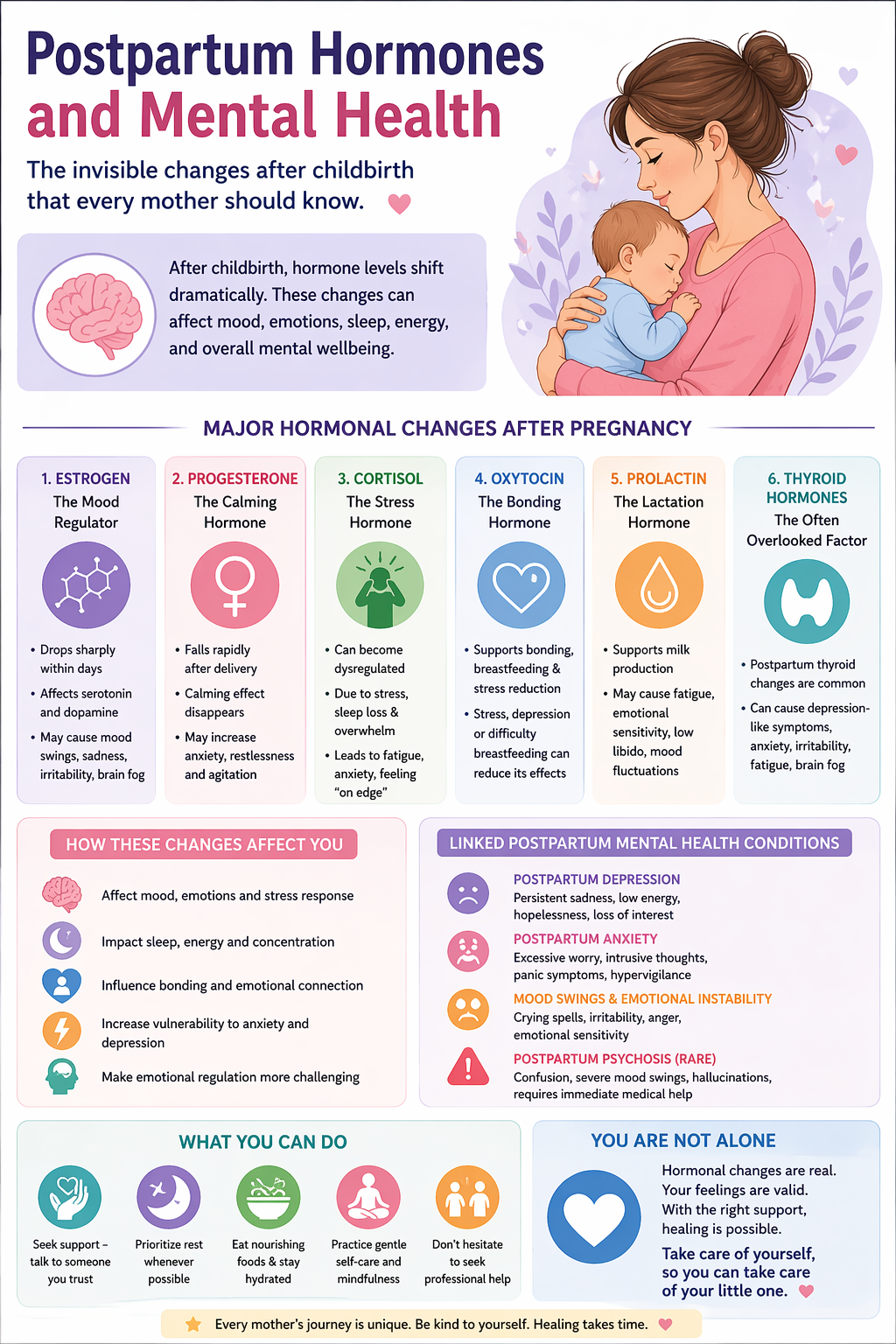
“Why do so many women feel emotionally overwhelmed after childbirth?”
Introduction: When the Body Changes Faster Than the Mind Can Catch Up
Pregnancy and childbirth are often described as miraculous, transformative experiences. While much attention is given to physical recovery after delivery, the invisible hormonal shifts that occur postpartum are equally profound—and often underestimated.
After childbirth, a woman’s body undergoes one of the most rapid hormonal transitions experienced in human biology. Hormones that supported pregnancy suddenly drop, others fluctuate unpredictably, and new hormonal rhythms begin to form. These changes do not just affect the body; they deeply influence mood, emotions, cognition, stress response, sleep, and overall mental health.
For many women, these hormonal shifts contribute to emotional vulnerability, anxiety, mood swings, postpartum depression, or a sense of emotional instability that feels confusing and frightening. Understanding the hormonal basis of postpartum mental health is essential—not to reduce emotional experiences to “just hormones,” but to validate them as real, biological, and treatable.
Understanding Hormones: The Body’s Chemical Messengers
Hormones are chemical messengers released by glands in the endocrine system. They regulate vital processes such as mood, sleep, appetite, energy levels, stress response, bonding, and emotional regulation.
During pregnancy, hormones operate in a finely tuned balance to support fetal development. After delivery, that balance shifts abruptly. The postpartum brain must quickly adapt to a new hormonal environment while coping with sleep deprivation, physical recovery, identity changes, and caregiving demands.
This combination places postpartum women at a uniquely high risk for mental health disturbances.
Major Hormonal Changes After Pregnancy
1. Estrogen: The Sudden Drop
Estrogen plays a crucial role in mood regulation, cognitive function, and emotional stability. During pregnancy, estrogen levels rise dramatically—up to 100 times higher than pre-pregnancy levels.
After childbirth:
- Estrogen levels drop sharply within days
- Neurotransmitters like serotonin and dopamine are affected
- Mood stability may decrease
Low estrogen levels are associated with:
- Depressive symptoms
- Irritability
- Brain fog
- Emotional sensitivity
This sudden withdrawal is one reason postpartum depression can emerge even in women with no prior mental health history.
2. Progesterone: From Calming to Collapsing
Progesterone has a natural calming, anti-anxiety effect. It supports sleep and emotional regulation during pregnancy.
After delivery:
- Progesterone levels fall rapidly
- The calming effect disappears
- Anxiety, restlessness, and agitation may increase
For some women, this hormonal crash contributes more to postpartum anxiety than depression, leading to symptoms like panic, intrusive thoughts, and hypervigilance.
3. Cortisol: The Stress Hormone in Overdrive
Cortisol helps the body respond to stress. During pregnancy, cortisol levels gradually increase to support fetal development.
Postpartum challenges:
- Chronic stress
- Sleep deprivation
- Emotional overload
These factors can dysregulate cortisol, leading to:
- Constant “on edge” feeling
- Emotional exhaustion
- Difficulty calming down
- Increased vulnerability to anxiety disorders
When cortisol remains elevated, it interferes with mood regulation and emotional recovery.
4. Oxytocin: The Bonding Hormone (With Complexity)
Oxytocin is often called the “love hormone.” It supports bonding, breastfeeding, emotional connection, and stress reduction.
However:
- Oxytocin release varies greatly
- Stress and depression can blunt its effects
- Difficult breastfeeding experiences can reduce oxytocin release
When oxytocin levels or sensitivity are low, mothers may feel:
- Disconnected from their baby
- Emotionally numb
- Guilty for not feeling bonded
This does not mean bonding is broken—it means the hormonal environment is strained.
5. Prolactin: Supporting Lactation, Affecting Mood
Prolactin supports milk production and maternal caregiving behaviors.
Possible mental health effects:
- Fatigue
- Emotional sensitivity
- Reduced libido
- Mood fluctuations
In some women, high prolactin combined with low estrogen contributes to emotional flatness or low motivation.

6. Thyroid Hormones: The Overlooked Factor
Postpartum thyroid changes are common and frequently missed.
Postpartum thyroid dysfunction may cause:
- Depression-like symptoms
- Anxiety
- Irritability
- Fatigue
- Brain fog
Both hypothyroidism and hyperthyroidism can emerge after pregnancy, significantly affecting mental health.
The Brain After Pregnancy: A Period of Rewiring
Pregnancy and postpartum are times of neuroplasticity. The brain adapts structurally and functionally to caregiving demands.
Hormonal shifts influence:
- Emotional processing
- Threat detection
- Empathy and responsiveness
- Stress sensitivity
While these changes are adaptive, they also make the brain more sensitive to emotional stress, increasing vulnerability to mood disorders.
Hormonal Changes and Postpartum Mental Health Conditions
Postpartum Depression
Hormonal withdrawal, particularly estrogen and progesterone decline, plays a major role in postpartum depression. When combined with psychosocial stressors, hormonal vulnerability can trigger persistent low mood, emotional numbness, guilt, and hopelessness.
Postpartum Anxiety
Hormonal imbalance can overstimulate the stress response system, leading to:
- Excessive worry
- Intrusive thoughts
- Panic symptoms
- Fear of harm coming to the baby
Anxiety may appear without sadness, making it harder to recognize.
Postpartum Mood Swings and Emotional Instability
Rapid hormonal fluctuations contribute to:
- Crying spells
- Irritability
- Anger
- Emotional sensitivity
These symptoms are often dismissed as “normal,” delaying support.
Postpartum Psychosis (Rare but Serious)
Extreme hormonal shifts combined with genetic vulnerability can contribute to postpartum psychosis—a psychiatric emergency requiring immediate care.
Why Some Women Are More Vulnerable Than Others
Hormonal changes affect all postpartum women, but mental health outcomes vary due to:
- Genetic sensitivity to hormonal shifts
- Previous depression or anxiety
- Trauma history
- Thyroid vulnerability
- Lack of social support
- Chronic stress and sleep deprivation
Hormones create vulnerability; environment determines outcome.
The Role of Sleep Deprivation
Sleep loss worsens hormonal dysregulation by:
- Increasing cortisol
- Reducing emotional regulation
- Intensifying mood symptoms
Sleep deprivation alone can mimic depression and anxiety—even without psychiatric illness.
Hormones vs “It’s All in Your Head”
Postpartum mental health struggles are often minimized as emotional weakness. In reality:
- Hormonal shifts are measurable
- Brain chemistry changes are real
- Emotional symptoms have biological roots
Acknowledging hormonal impact reduces shame and promotes early intervention.
Supporting Mental Health During Hormonal Transition
1. Medical Evaluation
- Screen for postpartum depression and anxiety
- Check thyroid levels if symptoms persist
- Monitor severe mood changes
2. Psychological Support: Therapy helps women
- Process identity changes
- Regulate emotions
- Reduce guilt and self-blame
- Build coping strategies
3. Medication (When Needed): Antidepressants or hormone-related treatments may be appropriate and safe for many postpartum women, including those who are breastfeeding.
4. Social Support and Practical Help: Reducing stress protects hormonal recovery. Practical support matters as much as emotional validation.
Cultural Myths That Harm Recovery
Harmful beliefs include:
- “Motherhood should feel natural”
- “Hormones are just excuses”
- “Strong women don’t struggle”
These myths silence women and delay care.
Long-Term Outlook: Do Hormones Stabilize?
Yes. For most women:
- Hormones gradually stabilize over months
- Mental health improves with support
- Recovery is the norm, not the exception
Early support accelerates healing.
When to Seek Immediate Help
Seek urgent care if there are:
- Thoughts of self-harm
- Severe mood changes
- Psychotic symptoms
- Inability to function
Postpartum mental health emergencies are medical conditions—not personal failures.
Conclusion: Hormones Matter, and So Do You
Hormonal changes after pregnancy are powerful, real, and deeply intertwined with mental health. Understanding their impact allows women, families, and professionals to respond with compassion rather than judgment.
Postpartum mental health struggles are not signs of weakness. They are signals from a body and brain undergoing immense transformation.
With awareness, support, and care, healing is possible—and so is emotional well-being after childbirth.
Frequently Asked Questions
1. Why do hormones affect mental health after pregnancy?
Because estrogen and progesterone drop rapidly, affecting brain chemicals like serotonin and dopamine.
2. What are common postpartum hormonal symptoms?
Mood swings, anxiety, irritability, fatigue, brain fog, and emotional sensitivity.
3. What is postpartum depression?
A mood disorder after childbirth involving sadness, low energy, and emotional distress.
4. Can hormonal changes cause anxiety after childbirth?
Yes. Hormonal shifts can overstimulate the stress system, leading to postpartum anxiety.
5. How long do postpartum hormonal changes last?
Hormones usually stabilize within a few months, but recovery varies.
6. What is the role of oxytocin after birth?
It supports bonding, but stress can reduce its effectiveness.
7. Can thyroid issues affect postpartum mental health?
Yes. Thyroid dysfunction can cause depression, anxiety, and fatigue.
8. When should I seek help?
If symptoms are severe, persistent, or include thoughts of self-harm.
9. Is postpartum mental health “just hormones”?
No. Hormones play a role, but emotional, social, and psychological factors also matter.
10. Can postpartum mental health improve?
Yes. With support, treatment, and time, recovery is very common.
Reference
-
World Health Organization (WHO). Maternal Mental Health.
https://www.who.int/teams/mental-health-and-substance-use/promotion-prevention/maternal-mental-health -
National Institute of Mental Health (NIMH). Postpartum Depression.
https://www.nimh.nih.gov/health/publications/postpartum-depression -
Bloch M, et al. (2003). Effects of gonadal steroids in women with a history of postpartum depression. American Journal of Psychiatry.
-
O’Hara MW, McCabe JE. (2013). Postpartum depression: current status and future directions. Annual Review of Clinical Psychology.
-
Stewart DE, Vigod S. (2016). Postpartum depression. New England Journal of Medicine.
-
Brummelte S, Galea LAM. (2016). Postpartum depression: Etiology, treatment and consequences for maternal care. Hormones and Behavior.
-
Stuebe AM, et al. (2013). Oxytocin and maternal mental health. Journal of Women’s Health.
-
American Thyroid Association. Postpartum Thyroiditis.
https://www.thyroid.org/postpartum-thyroiditis/ -
Skalkidou A, et al. (2012). Biological aspects of postpartum depression. Women’s Health.
-
Meltzer-Brody S, et al. (2018). Hormones and postpartum mood disorders. Psychiatric Clinics of North America.
- How Long Does Postpartum Depression Last? What Every Mother Needs to Know
-
Monoprova Counselling, (2026), “About Us”,
-
Monoprova Counselling, (2026), “Contact Us”,
This article is written for knowledge purposes, aiming to help readers understand the topic better and gain useful insights for learning and awareness.
Pingback: Joint Family Pressure & Postpartum Mental Health in India
Pingback: Why Indian Mothers Struggle to Ask for Help After Birth