
Introduction: “Will I Ever Feel Like Myself Again?”
One of the most painful questions mothers silently carry after childbirth is not always “Why do I feel this way?” but rather: “How long is this going to last?” For mothers experiencing postpartum depression, this question can become especially distressing. Days may begin to blur together, exhaustion can feel endless, and the future may seem difficult to imagine. Many mothers fear that what they are experiencing is permanent—that they will never feel like themselves again or fully enjoy motherhood.
This fear is understandable, particularly when postpartum depression is misunderstood, minimized, or dismissed. Some mothers are told, “It will pass,” while others hear, “You should be over this by now.” Although these comments may be intended to reassure, they can leave a struggling mother feeling unseen, guilty, or confused. Postpartum depression is not simply a phase that a mother should force herself to overcome. It is a real mental health condition that can affect mood, thinking, energy, relationships, and everyday functioning.
The truth is both nuanced and hopeful: there is no single timeline for postpartum depression, and recovery looks different for every mother. Some women begin to feel better with early support, while others may need longer-term treatment and ongoing care. What matters is that postpartum depression is treatable, and experiencing it does not mean that a mother has failed, that she is a bad parent, or that she will feel this way forever.
Understanding Postpartum Depression
What Is Postpartum Depression?
Postpartum depression (PPD), also called postnatal depression, is a depressive disorder that can develop during pregnancy or after childbirth. Symptoms may begin soon after birth or at any point during the first year after the baby is born. It can affect mood, enjoyment, thoughts, energy, sleep, self-esteem, relationships, and a mother’s ability to manage everyday responsibilities.
Unlike the temporary emotional changes commonly known as the baby blues, postpartum depression tends to be more persistent, more intense, and more disruptive. It may involve:
- Persistent sadness, emptiness, anxiety, or irritability
- Loss of interest or pleasure in activities
- Feelings of guilt, worthlessness, or being an inadequate parent
- Difficulty concentrating or making decisions
- Problems sleeping or sleeping excessively, beyond what can be explained by the baby’s routine
- Difficulty coping with everyday responsibilities or feeling unable to manage
- Difficulty bonding with or feeling emotionally connected to the baby
These symptoms are not a sign of personal weakness or failure. Postpartum depression is a real and treatable mental health condition, and seeking help is an appropriate part of recovery.
When Does Postpartum Depression Start?
A common misconception is that postpartum depression must begin immediately after delivery. In reality, its onset can vary. Depression may begin during pregnancy, soon after childbirth, or months after the baby is born.
It may become noticeable:
- In the first few weeks after birth
- During the first few months postpartum
- Later in the first year after childbirth
This later onset is one reason some mothers do not immediately connect their symptoms with the postpartum period. A mother does not need to be struggling from the first days after delivery for her symptoms to be taken seriously.
So, How Long Does Postpartum Depression Last?
The Short Answer
There is no single duration that applies to every mother. The course of postpartum depression depends on factors such as symptom severity, previous mental health difficulties, stress, available support, and whether effective treatment is received. The NHS notes that postnatal depression often improves within 3–6 months, but it can last considerably longer, particularly without treatment.
So rather than thinking of PPD as having a fixed “expiration date,” it is more accurate to think of it as a treatable condition with a variable course.
Why Early Support Matters
Early recognition matters because treatment can help reduce symptoms and improve functioning. Waiting for depression to disappear on its own can allow symptoms to persist and may make it harder for a mother to cope with sleep disruption, caregiving demands, relationships, and daily life. If symptoms are persistent, worsening, or interfering with functioning, professional assessment should not be delayed simply because the mother hopes they will pass.
Typical Duration: What Recovery Can Look Like
It is tempting to look for a precise number of weeks or months, but postpartum depression does not follow a predictable timetable. Recovery depends on the severity and type of symptoms, previous mental health difficulties, physical health, sleep disruption, stress, social support, and access to effective treatment. The timeframes below are therefore general patterns, not promises.
1. When Postpartum Depression Is Recognized and Treated Early
When postpartum depression is identified and appropriate support begins early:
- Symptoms may begin to improve over the following weeks
- Day-to-day functioning can gradually become easier
- Emotional symptoms may continue to improve over several months
- Some mothers recover relatively quickly, while others need longer-term treatment and follow-up
Early treatment does not guarantee a specific recovery time, but it can reduce suffering, improve functioning, and help prevent symptoms from becoming more persistent.
2. When Postpartum Depression Goes Untreated or Is Minimized
When postpartum depression is ignored, normalized, or mistaken for ordinary exhaustion, symptoms can persist for many months and may become more difficult to manage. A mother may experience:
- Increasing emotional exhaustion and hopelessness
- Greater anxiety, guilt, or irritability
- Difficulty functioning at home or work
- Strain in relationships and bonding with the baby
- A greater risk of depression becoming persistent or recurring
Untreated postpartum depression does not automatically “turn into” major depressive disorder as a separate condition; rather, it may persist as a depressive disorder or become more severe and chronic. This is one reason professional assessment is important when symptoms do not improve.
3. When Depression Is Severe or More Complex
Recovery may take longer when postpartum depression occurs alongside factors such as:
- A history of depression, anxiety, or trauma
- Severe postpartum anxiety
- Significant relationship or family stress
- Limited practical or emotional support
- Ongoing sleep disruption or physical health difficulties
- Symptoms that are severe, persistent, or difficult to treat
A longer recovery does not mean that recovery is impossible. Some mothers need a combination of psychotherapy, medication, practical support, medical care, and longer-term follow-up. The goal is not to meet an artificial deadline, but to steadily reduce symptoms and restore functioning and quality of life.
Why the Duration of Postpartum Depression Varies
Postpartum depression does not have one universal cause or one predictable course. Its duration can be influenced by biological, psychological, social, and environmental factors—and these factors often interact with one another. Understanding them can help mothers recognize that a longer recovery is not a sign of weakness or failure.
1. Biological Changes and Individual Sensitivity
After childbirth, major hormonal and physiological changes occur, including a rapid fall in estrogen and progesterone. These changes are part of the postpartum transition, but they do not explain every case of postpartum depression on their own. Individual biological vulnerability, physical recovery, thyroid problems, anemia, and other health factors can also influence mood and energy.
This is important because postpartum depression is not simply a matter of lacking resilience or trying hard enough to feel better. When symptoms persist, a medical assessment can help identify physical factors that may be contributing to them.
2. Sleep Deprivation and Ongoing Exhaustion
Sleep disruption is one of the most significant challenges of the postpartum period. Repeated night waking and chronic sleep loss can:
- Make emotional regulation more difficult
- Increase irritability and anxiety
- Reduce concentration and coping capacity
- Make everyday responsibilities feel more overwhelming
Poor sleep does not mean that a mother is doing something wrong. When possible, practical help with nighttime caregiving, feeding, household responsibilities, or daytime rest can become an important part of recovery.
3. Emotional and Practical Support
The quality of a mother’s support system can influence how manageable the postpartum period feels. Mothers may cope better when they have people who:
- Listen without judgment
- Validate their emotional experience
- Share practical caregiving responsibilities
- Encourage professional help when needed
In contrast, criticism, isolation, or pressure to “manage everything” can increase distress and make recovery more difficult. Support does not replace treatment when treatment is needed, but it can make treatment and everyday coping more sustainable.
4. Relationship and Family Stress
Conflict with a partner, lack of emotional intimacy, unequal caregiving responsibilities, financial stress, or feeling misunderstood can add significant pressure during an already demanding period.
Relationship difficulties do not cause every case of postpartum depression, but ongoing interpersonal stress can worsen symptoms and make recovery harder. Open communication, practical redistribution of responsibilities, couples support when appropriate, and individual therapy can all be helpful.
5. Cultural Expectations and Silence
Cultural expectations can also shape how mothers understand and respond to postpartum distress. In some families and communities, mothers may feel expected to:
- Adjust quietly
- Be grateful and never complain
- Put the baby’s needs before their own at all times
- Accept exhaustion as simply part of motherhood
These expectations can make it harder to recognize depression as a health condition and seek help. Needing support does not make a mother ungrateful or incapable. Emotional wellbeing is part of maternal health, not something that has to be sacrificed for the sake of caregiving.
6. Previous Mental Health Difficulties
A personal history of depression, anxiety, trauma, or other mental health difficulties can increase vulnerability to postpartum depression. Previous experiences of emotional neglect or significant adversity may also shape how a mother responds to the intense physical and emotional demands of the postpartum period.
This does not mean that postpartum depression is inevitable, nor does it mean that a mother has “failed” or simply returned to an old problem. It means that her history may be an important part of understanding her current symptoms and planning appropriate support.
Postpartum Depression vs Baby Blues: Duration Matters
| Feature | Baby Blues | Postpartum Depression |
|---|---|---|
| Onset | 2–5 days postpartum | Anytime within 1 year |
| Duration | Up to 2 weeks | Weeks to months |
| Intensity | Mild mood swings | Persistent distress |
| Recovery | Spontaneous | Needs support |
If symptoms last beyond two weeks or worsen, it is not baby blues.
What Recovery from Postpartum Depression Really Looks Like
Recovery from postpartum depression is usually gradual rather than sudden. Improvement does not necessarily mean waking up one morning and feeling completely like your old self. For many mothers, recovery happens through small changes that become more noticeable over time.
Recovery does not require:
- Feeling happy all the time
- Loving every part of motherhood
- Never feeling tired, anxious, or overwhelmed
- Returning immediately to exactly who you were before pregnancy
Recovery may instead look like:
- Less intense sadness, anxiety, or irritability
- More good or manageable days
- Greater ability to cope when difficult emotions arise
- Improved concentration and emotional clarity
- Gradually improving sleep and daily functioning
- Less guilt, shame, or self-blame
- Feeling more emotionally connected to yourself, your baby, or the people around you
Some days may still be difficult. A difficult day does not necessarily mean that treatment has failed or that recovery has gone backward. Healing is often uneven, and progress can still be real even when it is not linear.
Common Fear: “What If This Never Ends?”
One of the most frightening experiences of depression is the belief that the current emotional state will continue forever. A mother may think, “What if I never feel normal again?” or “What if I am always going to feel this disconnected?”
These thoughts can feel completely convincing when someone is depressed, but they are not reliable predictions about the future. Depression can narrow attention toward pain, hopelessness, and negative expectations, making it difficult to imagine improvement.
That does not mean every mother will recover on the same schedule or that recovery is always quick. It means that the way you feel today does not determine how you will feel months from now. With appropriate support and treatment, recovery is possible.
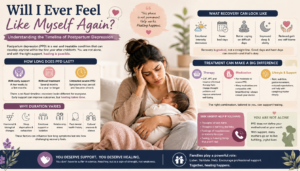
How Treatment Can Influence Recovery
Treatment does not guarantee a particular recovery timeline, but appropriate treatment can reduce symptoms, improve functioning, and lower the burden of suffering. The most appropriate approach depends on symptom severity, personal circumstances, medical history, preferences, and whether the mother is breastfeeding.
1. Therapy
Evidence-based psychological treatments can be effective for postpartum depression, particularly approaches such as:
- Cognitive Behavioral Therapy (CBT)
- Interpersonal Therapy (IPT)
- Other structured psychological therapies adapted to the mother’s needs
Therapy may help a mother:
- Identify and challenge unhelpful depressive thinking patterns
- Work through changes in identity, relationships, and expectations
- Develop healthier coping strategies
- Improve communication and interpersonal functioning
- Reduce guilt, shame, and self-criticism
For mothers with a history of trauma, a trauma-informed approach can also help ensure that treatment feels safe, collaborative, and sensitive to their experiences. Trauma-informed care does not mean that trauma must always be the focus of therapy.
2. Medication When Needed
For moderate to severe postpartum depression, or when symptoms do not improve sufficiently with psychological support, a healthcare professional may recommend antidepressant medication.
- Some antidepressants can be used during breastfeeding when clinically appropriate
- The choice of medication should be individualized by a qualified healthcare professional
- The benefits, possible side effects, breastfeeding considerations, and the mother’s medical history should all be discussed
Medication is not a sign that a mother is “too weak” to cope. For some women, it is an important part of treatment that helps reduce depressive symptoms enough to make daily life and psychological recovery more manageable.
3. Lifestyle and Practical Support
Lifestyle measures should not be presented as a substitute for professional treatment when depression is moderate or severe. However, practical support can make a meaningful difference alongside treatment.
Helpful areas may include:
- Protecting opportunities for sleep and rest
- Regular meals and adequate nutrition
- Gentle physical activity when medically appropriate
- Reducing unrealistic expectations of productivity
- Sharing childcare and household responsibilities
- Accepting help from trusted family members or friends
Recovery is not simply about “thinking positive.” It often requires changes in the environment around the mother as well as appropriate psychological or medical care.
What Can Happen If Postpartum Depression Is Left Untreated?
Postpartum depression should not be dismissed as something every mother simply has to endure. Without appropriate support or treatment, symptoms may:
- Persist for longer
- Become more severe or impairing
- Affect self-esteem and confidence
- Strain relationships and family functioning
- Interfere with daily responsibilities and quality of life
- Increase the risk of ongoing or recurrent depression
Untreated depression can also affect the wider family environment. This is not meant to frighten mothers or create guilt—it is a reason to make support easier to access. Seeking help early is an act of care, not a failure of motherhood.
Does Postpartum Depression Ever Come Back?
Yes. Some women experience depression again during a future pregnancy, after another birth, or during a later period of significant stress. Having experienced postpartum depression can increase vulnerability to depression in the future, but recurrence is not inevitable.
Knowing your history can be protective. A mother and her healthcare team can watch for early warning signs, discuss preventive strategies when appropriate, and seek treatment sooner if symptoms begin to return.
How Long Does Postpartum Anxiety Last?
Postpartum anxiety can occur alongside postpartum depression, but it can also occur on its own. Its course varies from person to person.
Some mothers notice that anxiety improves as depression improves, while others continue to experience excessive worry, intrusive thoughts, physical tension, or hypervigilance after their mood has started to recover. This is why persistent anxiety should be assessed rather than assumed to be simply part of motherhood.
Treatment for postpartum anxiety may include psychological therapy, practical support, and medication when clinically indicated. If anxiety is significantly interfering with sleep, functioning, relationships, or the ability to care for yourself, professional support is warranted.
When Should You Seek Help?
You do not have to wait until symptoms become severe before asking for help. Consider speaking with a doctor, psychiatrist, psychologist, or other qualified mental-health professional if:
- Symptoms persist beyond the first two weeks after childbirth
- Your mood is worsening rather than improving
- You are struggling to function in everyday life
- Sleep or appetite changes are severe or persistent
- You feel persistently numb, hopeless, worthless, or overwhelmed
- Anxiety, intrusive thoughts, or fear are interfering with daily life
The two-week distinction is particularly useful when differentiating postpartum depression from the baby blues, but significant or concerning symptoms can justify help sooner.
Seek Urgent Help If:
Immediate professional or emergency support is needed if a mother:
- Has thoughts of suicide or self-harm
- Has thoughts of harming the baby or someone else
- Feels unable to keep herself or the baby safe
- Experiences hallucinations, severe confusion, paranoia, or a loss of contact with reality
The last group of symptoms can indicate a psychiatric emergency such as postpartum psychosis, which requires immediate assessment and treatment.
Reassurance for Mothers: You Can Feel Like Yourself Again
Postpartum depression is treatable, but recovery does not follow a single timetable. It may take weeks for some mothers and months for others. What matters is not reaching an arbitrary deadline, but moving toward improved mood, functioning, connection, and quality of life.
Many mothers who once felt lost eventually describe recovery as a gradual return to themselves: “I slowly started feeling like myself again.”
If that is not how you feel today, it does not mean that this is how you will always feel.
How Families Can Support Recovery
Family members can play an important role in recovery by:
- Listening without immediately trying to solve the problem
- Validating the mother’s feelings rather than telling her to “be positive”
- Taking on practical childcare and household responsibilities
- Giving her opportunities to rest and attend appointments
- Encouraging professional help without criticism or pressure
- Checking in regularly and asking what kind of support would actually be useful
Sometimes the most helpful question is not “Why can’t you handle this?” but “What can I take off your plate today?”
Practical support, emotional validation, and professional care can work together. A mother should not have to earn support by becoming completely overwhelmed first.
Conclusion: Healing Is a Process, Not a Deadline
There is no single “correct” timeline for healing from postpartum depression. Some mothers improve within weeks, while others need months of treatment and support. A longer recovery does not mean that someone is failing.
What matters most is this:
- You do not have to suffer in silence.
- Do you not have to simply wait and hope it disappears.
- You deserve appropriate support and treatment.
- Your mental health matters alongside your baby’s wellbeing.
Postpartum depression can be persistent, but it is treatable, and recovery is possible. You are not defined by what you are experiencing right now.
If you are struggling, you do not need to have all the answers before asking for help. Taking the first step—telling someone you trust or speaking with a healthcare professional—can be the beginning of recovery.
Reference
-
World Health Organization (WHO) – Maternal Mental Health
🔗 https://www.who.int/teams/mental-health-and-substance-use/promotion-prevention/maternal-mental-health
Anchor text: maternal mental health after childbirth -
American Psychological Association (APA) – Postpartum Depression
🔗 https://www.apa.org/monitor/2019/02/postpartum-depression
Anchor text: clinical overview of postpartum depression -
NHS – Postnatal Depression
🔗 https://www.nhs.uk/mental-health/conditions/post-natal-depression/overview/
Anchor text: postnatal depression timeline and treatment -
Postpartum Depression: Signs New Mothers Often Ignore
- Contact Us
Pingback: Postpartum Depression Without Crying: Emotional Numbness
Pingback: Attachment Theory & Postpartum Depression: Mother–Baby Bond
Pingback: Hormonal Changes After Pregnancy & Mental Health Impact
Pingback: Childhood Trauma & Postpartum Depression Risk Explained
Pingback: Postpartum Depression in Indian Mothers: Cultural Pressure